


15522 Results
Form:
events
events
Description:
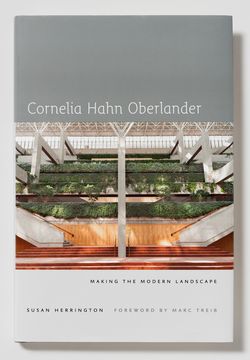
The first biography of one of the most influential landscape architects of the 20th century, Cornelia Hahn Oberlander: Making the Modern Landscape draws upon archival research, site analyses, and numerous interviews with Cornelia Oberlander and her collaborators. Author Susan Herrington joins Oberlander in conversation about her works and career. The series They want(...)
The first biography of one of the most influential landscape architects of the 20th century, Cornelia Hahn Oberlander: Making the Modern Landscape draws upon archival research, site analyses, and numerous interviews with Cornelia Oberlander and her collaborators. Author Susan Herrington joins Oberlander in conversation about her works and career. The series They want(...)
Date:
14 September 2014 , 3pm
14 September 2014 , 3pm
Title:
Cornelia Oberlander and Susan Herrington want to speak with you
Actions:
Description:
The first biography of one of the most influential landscape architects of the 20th century, Cornelia Hahn Oberlander: Making the Modern Landscape draws upon archival research, site analyses, and numerous interviews with Cornelia Oberlander and her collaborators. Author Susan Herrington joins Oberlander in conversation about her works and career. The series They want(...)
Cornelia Oberlander and Susan Herrington want to speak with you
Actions:
Description:
The first biography of one of the most influential landscape architects of the 20th century, Cornelia Hahn Oberlander: Making the Modern Landscape draws upon archival research, site analyses, and numerous interviews with Cornelia Oberlander and her collaborators. Author Susan Herrington joins Oberlander in conversation about her works and career. The series They want(...)
Form:
events
events
Date:
14 September 2014
3pm
14 September 2014
3pm
Form:
textual records
textual records
Reference number:
AP197.S1.SS9.001
Description:
This box contains notes, drafts, articles, book reviews and lectures by Kenneth Frampton. The materials are organized alphabetically by either title or the architect's last name, from A-Z. The contents are mostly older texts by Frampton, circa 1960-1990. Subjects and architects explored in these texts include: Raimund Abraham; Tadao Ando; contemporary architecture; the modern urban form; Gustave Eiffel; English neoclassicism; Louis Kahn; John Hejduk; Herman Hertzberger; postmodern theory; Steven Holl; industrialization; Le Corbusier; El Lissitzky; modernism; Palais Royale; Carlo Scarpa; James Stirling; Team 10; technology; and Otto Wagner.
AP197.S1.SS9.001
Description:
This box contains notes, drafts, articles, book reviews and lectures by Kenneth Frampton. The materials are organized alphabetically by either title or the architect's last name, from A-Z. The contents are mostly older texts by Frampton, circa 1960-1990. Subjects and architects explored in these texts include: Raimund Abraham; Tadao Ando; contemporary architecture; the modern urban form; Gustave Eiffel; English neoclassicism; Louis Kahn; John Hejduk; Herman Hertzberger; postmodern theory; Steven Holl; industrialization; Le Corbusier; El Lissitzky; modernism; Palais Royale; Carlo Scarpa; James Stirling; Team 10; technology; and Otto Wagner.
People:
Date:
circa 1964-1990
circa 1964-1990
Title:
Kenneth Frampton texts, articles and notes (A-Z)
Actions:
AP197.S1.SS9.001
Description:
This box contains notes, drafts, articles, book reviews and lectures by Kenneth Frampton. The materials are organized alphabetically by either title or the architect's last name, from A-Z. The contents are mostly older texts by Frampton, circa 1960-1990. Subjects and architects explored in these texts include: Raimund Abraham; Tadao Ando; contemporary architecture; the modern urban form; Gustave Eiffel; English neoclassicism; Louis Kahn; John Hejduk; Herman Hertzberger; postmodern theory; Steven Holl; industrialization; Le Corbusier; El Lissitzky; modernism; Palais Royale; Carlo Scarpa; James Stirling; Team 10; technology; and Otto Wagner.
Kenneth Frampton texts, articles and notes (A-Z)
Actions:
AP197.S1.SS9.001
Description:
This box contains notes, drafts, articles, book reviews and lectures by Kenneth Frampton. The materials are organized alphabetically by either title or the architect's last name, from A-Z. The contents are mostly older texts by Frampton, circa 1960-1990. Subjects and architects explored in these texts include: Raimund Abraham; Tadao Ando; contemporary architecture; the modern urban form; Gustave Eiffel; English neoclassicism; Louis Kahn; John Hejduk; Herman Hertzberger; postmodern theory; Steven Holl; industrialization; Le Corbusier; El Lissitzky; modernism; Palais Royale; Carlo Scarpa; James Stirling; Team 10; technology; and Otto Wagner.
Form:
textual records
textual records
Date:
circa 1964-1990
circa 1964-1990
People:
Level of archival description:
Project
Project
Actions:
Reference number:
AP056.S1.2000.PR05
Description:
This project series documents the James Stewart Centre for Mathematics at McMaster University in Hamilton, Ontario from 2000-2003. The office identified the project number as 2000-22. This project consisted of the complete interior renovation of Hamilton Hall, originally built in 1929, for use as a mathematics school at the University. An insulated envelope was added to the historic building in order to preserve its gothic exteriors, which were juxtaposed against new modern and abstract interior spaces. Transparent blue glass was used throughout the four-storey building for walls, ceilings and railings to draw sunlight deep into its interiors. A mix of enclosed rooms and open, interactive spaces were created and slate chalkboards were added throughout the building to inspire spontaneous thought and collaborative work.[1] This project was awarded a Governor General's Medal in Architecture in 2004. The project is recorded through drawings dating from around 2000 to around 2002, which include sketches, plans, elevations, sections, perspectives, details, presentation drawings and digital renderings. A large part of the sketches are drawings for custom furniture. [1]"James Stewart Centre for Mathematics, McMaster University." KPMB. Accessed April 12, 2019. http://www.kpmb.com/project/james-stewart-centre-for-mathematics/
AP056.S1.2000.PR05
Description:
This project series documents the James Stewart Centre for Mathematics at McMaster University in Hamilton, Ontario from 2000-2003. The office identified the project number as 2000-22. This project consisted of the complete interior renovation of Hamilton Hall, originally built in 1929, for use as a mathematics school at the University. An insulated envelope was added to the historic building in order to preserve its gothic exteriors, which were juxtaposed against new modern and abstract interior spaces. Transparent blue glass was used throughout the four-storey building for walls, ceilings and railings to draw sunlight deep into its interiors. A mix of enclosed rooms and open, interactive spaces were created and slate chalkboards were added throughout the building to inspire spontaneous thought and collaborative work.[1] This project was awarded a Governor General's Medal in Architecture in 2004. The project is recorded through drawings dating from around 2000 to around 2002, which include sketches, plans, elevations, sections, perspectives, details, presentation drawings and digital renderings. A large part of the sketches are drawings for custom furniture. [1]"James Stewart Centre for Mathematics, McMaster University." KPMB. Accessed April 12, 2019. http://www.kpmb.com/project/james-stewart-centre-for-mathematics/
People:
Date:
circa 2000-2002
circa 2000-2002
Title:
James Stewart Centre for Mathematics, McMaster University, Hamilton, Ontario (2000-2003)
Actions:
AP056.S1.2000.PR05
Description:
This project series documents the James Stewart Centre for Mathematics at McMaster University in Hamilton, Ontario from 2000-2003. The office identified the project number as 2000-22. This project consisted of the complete interior renovation of Hamilton Hall, originally built in 1929, for use as a mathematics school at the University. An insulated envelope was added to the historic building in order to preserve its gothic exteriors, which were juxtaposed against new modern and abstract interior spaces. Transparent blue glass was used throughout the four-storey building for walls, ceilings and railings to draw sunlight deep into its interiors. A mix of enclosed rooms and open, interactive spaces were created and slate chalkboards were added throughout the building to inspire spontaneous thought and collaborative work.[1] This project was awarded a Governor General's Medal in Architecture in 2004. The project is recorded through drawings dating from around 2000 to around 2002, which include sketches, plans, elevations, sections, perspectives, details, presentation drawings and digital renderings. A large part of the sketches are drawings for custom furniture. [1]"James Stewart Centre for Mathematics, McMaster University." KPMB. Accessed April 12, 2019. http://www.kpmb.com/project/james-stewart-centre-for-mathematics/
James Stewart Centre for Mathematics, McMaster University, Hamilton, Ontario (2000-2003)
Actions:
AP056.S1.2000.PR05
Description:
This project series documents the James Stewart Centre for Mathematics at McMaster University in Hamilton, Ontario from 2000-2003. The office identified the project number as 2000-22. This project consisted of the complete interior renovation of Hamilton Hall, originally built in 1929, for use as a mathematics school at the University. An insulated envelope was added to the historic building in order to preserve its gothic exteriors, which were juxtaposed against new modern and abstract interior spaces. Transparent blue glass was used throughout the four-storey building for walls, ceilings and railings to draw sunlight deep into its interiors. A mix of enclosed rooms and open, interactive spaces were created and slate chalkboards were added throughout the building to inspire spontaneous thought and collaborative work.[1] This project was awarded a Governor General's Medal in Architecture in 2004. The project is recorded through drawings dating from around 2000 to around 2002, which include sketches, plans, elevations, sections, perspectives, details, presentation drawings and digital renderings. A large part of the sketches are drawings for custom furniture. [1]"James Stewart Centre for Mathematics, McMaster University." KPMB. Accessed April 12, 2019. http://www.kpmb.com/project/james-stewart-centre-for-mathematics/
Level of archival description:
project
project
Date:
circa 2000-2002
circa 2000-2002
People:
Form:
research
research
Title:
Visiting Scholars 2006
Visiting Scholars 2006
Actions:
Description:
Jean Attali, École Nationale Supérieure dArchitecture de Paris-Malaquais, Paris, France Topic: Figures d’énonciation de la pensée architecturale et spatiale: manifestes et oppositions dans les oeuvres d’Aldo Rossi, Peter Eisenman et Rem Koolhaas Cammy Brothers, University of Virginia, Charlottesville, United States Topic: Drawing from Memory: Giuliano da Sangallo and(...)
Jean Attali, École Nationale Supérieure dArchitecture de Paris-Malaquais, Paris, France Topic: Figures d’énonciation de la pensée architecturale et spatiale: manifestes et oppositions dans les oeuvres d’Aldo Rossi, Peter Eisenman et Rem Koolhaas Cammy Brothers, University of Virginia, Charlottesville, United States Topic: Drawing from Memory: Giuliano da Sangallo and(...)
Date:
10 January 2006 to 15 September 2006
10 January 2006 to 15 September 2006
Title:
Visiting Scholars 2006
Actions:
Description:
Jean Attali, École Nationale Supérieure dArchitecture de Paris-Malaquais, Paris, France Topic: Figures d’énonciation de la pensée architecturale et spatiale: manifestes et oppositions dans les oeuvres d’Aldo Rossi, Peter Eisenman et Rem Koolhaas Cammy Brothers, University of Virginia, Charlottesville, United States Topic: Drawing from Memory: Giuliano da Sangallo and(...)
Visiting Scholars 2006
Actions:
Description:
Jean Attali, École Nationale Supérieure dArchitecture de Paris-Malaquais, Paris, France Topic: Figures d’énonciation de la pensée architecturale et spatiale: manifestes et oppositions dans les oeuvres d’Aldo Rossi, Peter Eisenman et Rem Koolhaas Cammy Brothers, University of Virginia, Charlottesville, United States Topic: Drawing from Memory: Giuliano da Sangallo and(...)
Form:
research
research
Date:
10 January 2006 to
15 September 2006
10 January 2006 to
15 September 2006
Form:
exhibitions
exhibitions
Title:
John Soane 1753-1837
John Soane 1753-1837
Actions:
Description:
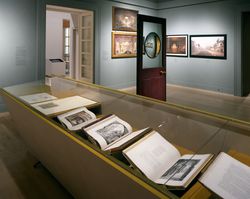
Described by Henry James as “one of the most curious things in London,” Sir John Soane’s Museum was built as the picturesque and enigmatic home, office, collector’s trove, and personal showplace of one of history’s most innovative architects. This exhibition is a major re-evaluation of Soane’s career, as well as a reconsideration of his importance to the history of modern(...)
Described by Henry James as “one of the most curious things in London,” Sir John Soane’s Museum was built as the picturesque and enigmatic home, office, collector’s trove, and personal showplace of one of history’s most innovative architects. This exhibition is a major re-evaluation of Soane’s career, as well as a reconsideration of his importance to the history of modern(...)
Location:
Main galleries
Main galleries
Date:
16 May 2001 to 3 September 2001
16 May 2001 to 3 September 2001
Title:
John Soane 1753-1837
Actions:
Description:
Described by Henry James as “one of the most curious things in London,” Sir John Soane’s Museum was built as the picturesque and enigmatic home, office, collector’s trove, and personal showplace of one of history’s most innovative architects. This exhibition is a major re-evaluation of Soane’s career, as well as a reconsideration of his importance to the history of modern(...)
John Soane 1753-1837
Actions:
Description:
Described by Henry James as “one of the most curious things in London,” Sir John Soane’s Museum was built as the picturesque and enigmatic home, office, collector’s trove, and personal showplace of one of history’s most innovative architects. This exhibition is a major re-evaluation of Soane’s career, as well as a reconsideration of his importance to the history of modern(...)
Form:
exhibitions
exhibitions
Date:
16 May 2001 to
3 September 2001
16 May 2001 to
3 September 2001
Location:
Main galleries
Main galleries
Form:
textual records
textual records
Reference number:
AP206.S2.072
Description:
File was originally housed in a binder along with content arranged in AP206.S2.073 and AP206.S2.074. This file includes the following papers: "Working with Le Corbusier," 1998 "How Chandigarh got Built" "Jane B. Drew," 1996 "Art as I see it," 1993 "Civilization, Art, Religion" Letters to newspaper editors, 1995 Newspaper articles and Aditya Prakash's response to them Newspaper articles by Aditya Prakash, 1993-1994 Urdu poetry "Modernity in Modern Homes," 1994 "The 'Neem' Soap" "Daydreaming" "A New Capital for Haryana" "Trishanku," 1993 "Oh! To be Equal" "Solar Passive/Active Architecture" "Human Habitat: Environmental Issues and Strategies" "The Maximum and the Minimum"
AP206.S2.072
Description:
File was originally housed in a binder along with content arranged in AP206.S2.073 and AP206.S2.074. This file includes the following papers: "Working with Le Corbusier," 1998 "How Chandigarh got Built" "Jane B. Drew," 1996 "Art as I see it," 1993 "Civilization, Art, Religion" Letters to newspaper editors, 1995 Newspaper articles and Aditya Prakash's response to them Newspaper articles by Aditya Prakash, 1993-1994 Urdu poetry "Modernity in Modern Homes," 1994 "The 'Neem' Soap" "Daydreaming" "A New Capital for Haryana" "Trishanku," 1993 "Oh! To be Equal" "Solar Passive/Active Architecture" "Human Habitat: Environmental Issues and Strategies" "The Maximum and the Minimum"
People:
Date:
1986-1998
1986-1998
Title:
Published and unpublished papers (folder 1 of 3)
Actions:
AP206.S2.072
Description:
File was originally housed in a binder along with content arranged in AP206.S2.073 and AP206.S2.074. This file includes the following papers: "Working with Le Corbusier," 1998 "How Chandigarh got Built" "Jane B. Drew," 1996 "Art as I see it," 1993 "Civilization, Art, Religion" Letters to newspaper editors, 1995 Newspaper articles and Aditya Prakash's response to them Newspaper articles by Aditya Prakash, 1993-1994 Urdu poetry "Modernity in Modern Homes," 1994 "The 'Neem' Soap" "Daydreaming" "A New Capital for Haryana" "Trishanku," 1993 "Oh! To be Equal" "Solar Passive/Active Architecture" "Human Habitat: Environmental Issues and Strategies" "The Maximum and the Minimum"
Published and unpublished papers (folder 1 of 3)
Actions:
AP206.S2.072
Description:
File was originally housed in a binder along with content arranged in AP206.S2.073 and AP206.S2.074. This file includes the following papers: "Working with Le Corbusier," 1998 "How Chandigarh got Built" "Jane B. Drew," 1996 "Art as I see it," 1993 "Civilization, Art, Religion" Letters to newspaper editors, 1995 Newspaper articles and Aditya Prakash's response to them Newspaper articles by Aditya Prakash, 1993-1994 Urdu poetry "Modernity in Modern Homes," 1994 "The 'Neem' Soap" "Daydreaming" "A New Capital for Haryana" "Trishanku," 1993 "Oh! To be Equal" "Solar Passive/Active Architecture" "Human Habitat: Environmental Issues and Strategies" "The Maximum and the Minimum"
Form:
textual records
textual records
Date:
1986-1998
1986-1998
People:
Form:
archives
Level of archival description:
Fonds
archives
Level of archival description:
Fonds
Reference number:
AP075
Synopsis:
The Cornelia Hahn Oberlander fonds documents Oberlander's professional activities as a landscape architect. It contains over 203 projects that span from 1950 to 2018 predominantly in Canada and in the United States, but also in Germany. The fonds is a complete record of Oberlander's work, and comprises her playground projects, roof gardens, and public space landscapes, as well as landscape designs for private residences, as well as administrative records from her practice, her professional engagements, and her research materials. The material in this fonds is dated from 1936 to 2021.
AP075
Synopsis:
The Cornelia Hahn Oberlander fonds documents Oberlander's professional activities as a landscape architect. It contains over 203 projects that span from 1950 to 2018 predominantly in Canada and in the United States, but also in Germany. The fonds is a complete record of Oberlander's work, and comprises her playground projects, roof gardens, and public space landscapes, as well as landscape designs for private residences, as well as administrative records from her practice, her professional engagements, and her research materials. The material in this fonds is dated from 1936 to 2021.
People:
Date:
1936-2021
1936-2021
Title:
Cornelia Hahn Oberlander fonds
Actions:
AP075
Synopsis:
The Cornelia Hahn Oberlander fonds documents Oberlander's professional activities as a landscape architect. It contains over 203 projects that span from 1950 to 2018 predominantly in Canada and in the United States, but also in Germany. The fonds is a complete record of Oberlander's work, and comprises her playground projects, roof gardens, and public space landscapes, as well as landscape designs for private residences, as well as administrative records from her practice, her professional engagements, and her research materials. The material in this fonds is dated from 1936 to 2021.
Cornelia Hahn Oberlander fonds
Actions:
AP075
Synopsis:
The Cornelia Hahn Oberlander fonds documents Oberlander's professional activities as a landscape architect. It contains over 203 projects that span from 1950 to 2018 predominantly in Canada and in the United States, but also in Germany. The fonds is a complete record of Oberlander's work, and comprises her playground projects, roof gardens, and public space landscapes, as well as landscape designs for private residences, as well as administrative records from her practice, her professional engagements, and her research materials. The material in this fonds is dated from 1936 to 2021.
Form:
archives
Level of archival description:
Fonds
archives
Level of archival description:
Fonds
Date:
1936-2021
1936-2021
People:
Form:
events
events
Title:
Speed and its Limits
Speed and its Limits
Actions:
Description:
Speed and its Limits explores the pivotal role played by speed in modern life: from art to architecture and urbanism to graphics and design to economics to the material culture of the eras of industry and information. A colloquium organised by the CCA, in collaboration with the Wolfsonian-Florida International University and Stanford Humanities Lab, in preparation for the(...)
Speed and its Limits explores the pivotal role played by speed in modern life: from art to architecture and urbanism to graphics and design to economics to the material culture of the eras of industry and information. A colloquium organised by the CCA, in collaboration with the Wolfsonian-Florida International University and Stanford Humanities Lab, in preparation for the(...)
Location:
Paul Desmarais Theatre
Paul Desmarais Theatre
Date:
21 June 2008, 9am - 5pm
21 June 2008, 9am - 5pm
Title:
Speed and its Limits
Actions:
Description:
Speed and its Limits explores the pivotal role played by speed in modern life: from art to architecture and urbanism to graphics and design to economics to the material culture of the eras of industry and information. A colloquium organised by the CCA, in collaboration with the Wolfsonian-Florida International University and Stanford Humanities Lab, in preparation for the(...)
Speed and its Limits
Actions:
Description:
Speed and its Limits explores the pivotal role played by speed in modern life: from art to architecture and urbanism to graphics and design to economics to the material culture of the eras of industry and information. A colloquium organised by the CCA, in collaboration with the Wolfsonian-Florida International University and Stanford Humanities Lab, in preparation for the(...)
Form:
events
events
Date:
21 June 2008
9am - 5pm
21 June 2008
9am - 5pm
Location:
Paul Desmarais Theatre
Paul Desmarais Theatre
Level of archival description:
Project
Project
Actions:
Reference number:
AP018.S1.1963.PR01
Description:
This project series documents the Place du Canada office building in Montreal from 1963-1967. The office identified the project number as 63M4. This project was commissioned by Canadian Pacific Investments and consisted of a 27-storey skyscraper with a penthouse and 5 levels of parking, located at the corners of St. Antoine and Windsor (modern day Peel) Streets. The building totaled 581,500 square feet and was built onto the historic Château Champlain hotel at its base where the two buildings shared a podium. It also included a plaza level with landscaped outdoor areas. The project is recorded through drawings, textual records and a presentation photo board dating from around 1966-1967. The drawings are all sets of reprographic copies of architectural, structural, electrical and mechanical drawings, while the textual records consist of specifications.
AP018.S1.1963.PR01
Description:
This project series documents the Place du Canada office building in Montreal from 1963-1967. The office identified the project number as 63M4. This project was commissioned by Canadian Pacific Investments and consisted of a 27-storey skyscraper with a penthouse and 5 levels of parking, located at the corners of St. Antoine and Windsor (modern day Peel) Streets. The building totaled 581,500 square feet and was built onto the historic Château Champlain hotel at its base where the two buildings shared a podium. It also included a plaza level with landscaped outdoor areas. The project is recorded through drawings, textual records and a presentation photo board dating from around 1966-1967. The drawings are all sets of reprographic copies of architectural, structural, electrical and mechanical drawings, while the textual records consist of specifications.
People:
Date:
1966
1966
Title:
Place du Canada Office Building, Montreal (1963-1967)
Actions:
AP018.S1.1963.PR01
Description:
This project series documents the Place du Canada office building in Montreal from 1963-1967. The office identified the project number as 63M4. This project was commissioned by Canadian Pacific Investments and consisted of a 27-storey skyscraper with a penthouse and 5 levels of parking, located at the corners of St. Antoine and Windsor (modern day Peel) Streets. The building totaled 581,500 square feet and was built onto the historic Château Champlain hotel at its base where the two buildings shared a podium. It also included a plaza level with landscaped outdoor areas. The project is recorded through drawings, textual records and a presentation photo board dating from around 1966-1967. The drawings are all sets of reprographic copies of architectural, structural, electrical and mechanical drawings, while the textual records consist of specifications.
Place du Canada Office Building, Montreal (1963-1967)
Actions:
AP018.S1.1963.PR01
Description:
This project series documents the Place du Canada office building in Montreal from 1963-1967. The office identified the project number as 63M4. This project was commissioned by Canadian Pacific Investments and consisted of a 27-storey skyscraper with a penthouse and 5 levels of parking, located at the corners of St. Antoine and Windsor (modern day Peel) Streets. The building totaled 581,500 square feet and was built onto the historic Château Champlain hotel at its base where the two buildings shared a podium. It also included a plaza level with landscaped outdoor areas. The project is recorded through drawings, textual records and a presentation photo board dating from around 1966-1967. The drawings are all sets of reprographic copies of architectural, structural, electrical and mechanical drawings, while the textual records consist of specifications.
Level of archival description:
Project
Project
Date:
1966
1966
People:
Form:
events
events
Actions:
Description:
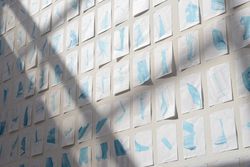
When Gordon Matta-Clark assembled the titles to and documentation of a dozen-odd small, vacant parcels of New York property between 1974 and 1977 (later assembled and exhibited as Reality Properties: Fake Estates in 1992), it was with no well-formed agenda—other than his view that the availability of vacant and underutilized parcels [was] a direct reminder of the fallacy(...)
When Gordon Matta-Clark assembled the titles to and documentation of a dozen-odd small, vacant parcels of New York property between 1974 and 1977 (later assembled and exhibited as Reality Properties: Fake Estates in 1992), it was with no well-formed agenda—other than his view that the availability of vacant and underutilized parcels [was] a direct reminder of the fallacy(...)
Location:
Paul Desmarais Theatre
Paul Desmarais Theatre
Date:
22 September 2016, 6pm
22 September 2016, 6pm
Title:
Nicholas de Monchaux: Local Code
Actions:
Description:
When Gordon Matta-Clark assembled the titles to and documentation of a dozen-odd small, vacant parcels of New York property between 1974 and 1977 (later assembled and exhibited as Reality Properties: Fake Estates in 1992), it was with no well-formed agenda—other than his view that the availability of vacant and underutilized parcels [was] a direct reminder of the fallacy(...)
Nicholas de Monchaux: Local Code
Actions:
Description:
When Gordon Matta-Clark assembled the titles to and documentation of a dozen-odd small, vacant parcels of New York property between 1974 and 1977 (later assembled and exhibited as Reality Properties: Fake Estates in 1992), it was with no well-formed agenda—other than his view that the availability of vacant and underutilized parcels [was] a direct reminder of the fallacy(...)
Form:
events
events
Date:
22 September 2016
6pm
22 September 2016
6pm
Location:
Paul Desmarais Theatre
Paul Desmarais Theatre


