


5582 Results
Form:
photographs
photographs
Actions:
Reference number:
PH1986:0406
Description:
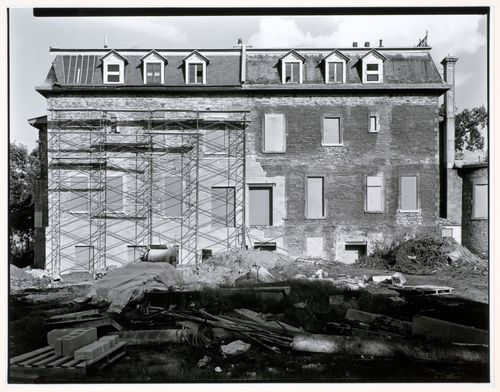
Commissioned by the Canadian Centre for Architecture, Montréal, for "CCA Building and Shaughnessy House," 1985-1989.
PH1986:0406
Description:
Commissioned by the Canadian Centre for Architecture, Montréal, for "CCA Building and Shaughnessy House," 1985-1989.
People:
Subject:
architecture
architecture
Date:
21 June 1985
21 June 1985
Title:
Exterior view of Shaughnessy House under renovation after the demolition of the additions, Montréal, Québec
Actions:
PH1986:0406
Description:
Commissioned by the Canadian Centre for Architecture, Montréal, for "CCA Building and Shaughnessy House," 1985-1989.
Exterior view of Shaughnessy House under renovation after the demolition of the additions, Montréal, Québec
Actions:
PH1986:0406
Description:
Commissioned by the Canadian Centre for Architecture, Montréal, for "CCA Building and Shaughnessy House," 1985-1989.
Form:
photographs
photographs
Date:
21 June 1985
21 June 1985
People:
Subject:
architecture
architecture
Form:
textual records
textual records
Title:
Media: Correspondence
Media: Correspondence
Actions:
Reference number:
ARCH252261
Description:
-Correspondence with journalists, photographers, filmmakers, television people re: IFCCA Prize -CCA internal correspondence re: journalists, procedure for distribution of press clippings, media relations strategy -Correspondence with the Kreisberg Group re: media strategy
ARCH252261
Description:
-Correspondence with journalists, photographers, filmmakers, television people re: IFCCA Prize -CCA internal correspondence re: journalists, procedure for distribution of press clippings, media relations strategy -Correspondence with the Kreisberg Group re: media strategy
People:
Date:
1998-1999
1998-1999
Title:
Media: Correspondence
Actions:
ARCH252261
Description:
-Correspondence with journalists, photographers, filmmakers, television people re: IFCCA Prize -CCA internal correspondence re: journalists, procedure for distribution of press clippings, media relations strategy -Correspondence with the Kreisberg Group re: media strategy
Media: Correspondence
Actions:
ARCH252261
Description:
-Correspondence with journalists, photographers, filmmakers, television people re: IFCCA Prize -CCA internal correspondence re: journalists, procedure for distribution of press clippings, media relations strategy -Correspondence with the Kreisberg Group re: media strategy
Form:
textual records
textual records
Date:
1998-1999
1998-1999
People:
Form:
events
events
Actions:
Description:
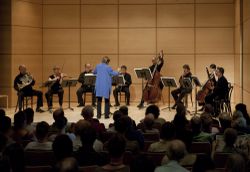
Although it has hosted concerts in the past, the Paul-Desmarais Theatre is better known for holding conferences and film screenings. Concerts traditionally held in the historic Chapelle historique du Bon-Pasteur will temporarily take place at the CCA and music will be reintroduced in the theatre, initiating new perceptions of sound, and of this space. Mindful of the(...)
Although it has hosted concerts in the past, the Paul-Desmarais Theatre is better known for holding conferences and film screenings. Concerts traditionally held in the historic Chapelle historique du Bon-Pasteur will temporarily take place at the CCA and music will be reintroduced in the theatre, initiating new perceptions of sound, and of this space. Mindful of the(...)
Location:
Paul-Desmarais Theatre Keyword(s):
CCA, Chapelle historique du Bon-Pasteur, concerts, chamber music, classical music, up-and-coming musicians.
Paul-Desmarais Theatre Keyword(s):
CCA, Chapelle historique du Bon-Pasteur, concerts, chamber music, classical music, up-and-coming musicians.
Date:
31 January 2024 to 17 May 2024
31 January 2024 to 17 May 2024
Title:
Chapelle historique du Bon-Pasteur Concerts
Actions:
Description:
Although it has hosted concerts in the past, the Paul-Desmarais Theatre is better known for holding conferences and film screenings. Concerts traditionally held in the historic Chapelle historique du Bon-Pasteur will temporarily take place at the CCA and music will be reintroduced in the theatre, initiating new perceptions of sound, and of this space. Mindful of the(...)
Chapelle historique du Bon-Pasteur Concerts
Actions:
Description:
Although it has hosted concerts in the past, the Paul-Desmarais Theatre is better known for holding conferences and film screenings. Concerts traditionally held in the historic Chapelle historique du Bon-Pasteur will temporarily take place at the CCA and music will be reintroduced in the theatre, initiating new perceptions of sound, and of this space. Mindful of the(...)
Form:
events
events
Date:
31 January 2024 to
17 May 2024
31 January 2024 to
17 May 2024
Location:
Paul-Desmarais Theatre Keyword(s):
CCA, Chapelle historique du Bon-Pasteur, concerts, chamber music, classical music, up-and-coming musicians.
Paul-Desmarais Theatre Keyword(s):
CCA, Chapelle historique du Bon-Pasteur, concerts, chamber music, classical music, up-and-coming musicians.
Form:
textual records
textual records
Title:
Fundraising, 1996-1999
Fundraising, 1996-1999
Actions:
Reference number:
ARCH183803
Description:
Fundraising, 1996-1999: Copies of correspondence and lists of sponsors, memos, documents prepared by the firm Ceasar & Washburn- meetings status reports; briefing memorandum. (from the office of Robert Spickler, Associate Director of the CCA)
ARCH183803
Description:
Fundraising, 1996-1999: Copies of correspondence and lists of sponsors, memos, documents prepared by the firm Ceasar & Washburn- meetings status reports; briefing memorandum. (from the office of Robert Spickler, Associate Director of the CCA)
People:
Date:
1996-1999
1996-1999
Title:
Fundraising, 1996-1999
Actions:
ARCH183803
Description:
Fundraising, 1996-1999: Copies of correspondence and lists of sponsors, memos, documents prepared by the firm Ceasar & Washburn- meetings status reports; briefing memorandum. (from the office of Robert Spickler, Associate Director of the CCA)
Fundraising, 1996-1999
Actions:
ARCH183803
Description:
Fundraising, 1996-1999: Copies of correspondence and lists of sponsors, memos, documents prepared by the firm Ceasar & Washburn- meetings status reports; briefing memorandum. (from the office of Robert Spickler, Associate Director of the CCA)
Form:
textual records
textual records
Date:
1996-1999
1996-1999
People:
Form:
archives
Level of archival description:
Collection
archives
Level of archival description:
Collection
Actions:
Reference number:
CD034
Synopsis:
The SAAL Process exhibition collection consists of reproductions of several objects used in the exhibition “The SAAL Process, Housing in Portugal 1974–76.” It was created by the Museu Serralves and travelled to the Canadian Center for Architecture (CCA) in 2015. The collection contains reproductions of drawings, presentation panels and photographs dating from 1974 to 1979. Born out of the Portuguese Revolution of 25 April 1974, the Serviço Ambulatório de Apoio Local (Local Ambulatory Support Service) was a pioneering architectural and political experiment designed to address extreme housing shortages and poor living conditions in Portuguese cities.
CD034
Synopsis:
The SAAL Process exhibition collection consists of reproductions of several objects used in the exhibition “The SAAL Process, Housing in Portugal 1974–76.” It was created by the Museu Serralves and travelled to the Canadian Center for Architecture (CCA) in 2015. The collection contains reproductions of drawings, presentation panels and photographs dating from 1974 to 1979. Born out of the Portuguese Revolution of 25 April 1974, the Serviço Ambulatório de Apoio Local (Local Ambulatory Support Service) was a pioneering architectural and political experiment designed to address extreme housing shortages and poor living conditions in Portuguese cities.
People:
Date:
1974-1979
1974-1979
Title:
The SAAL Process exhibition collection
Actions:
CD034
Synopsis:
The SAAL Process exhibition collection consists of reproductions of several objects used in the exhibition “The SAAL Process, Housing in Portugal 1974–76.” It was created by the Museu Serralves and travelled to the Canadian Center for Architecture (CCA) in 2015. The collection contains reproductions of drawings, presentation panels and photographs dating from 1974 to 1979. Born out of the Portuguese Revolution of 25 April 1974, the Serviço Ambulatório de Apoio Local (Local Ambulatory Support Service) was a pioneering architectural and political experiment designed to address extreme housing shortages and poor living conditions in Portuguese cities.
The SAAL Process exhibition collection
Actions:
CD034
Synopsis:
The SAAL Process exhibition collection consists of reproductions of several objects used in the exhibition “The SAAL Process, Housing in Portugal 1974–76.” It was created by the Museu Serralves and travelled to the Canadian Center for Architecture (CCA) in 2015. The collection contains reproductions of drawings, presentation panels and photographs dating from 1974 to 1979. Born out of the Portuguese Revolution of 25 April 1974, the Serviço Ambulatório de Apoio Local (Local Ambulatory Support Service) was a pioneering architectural and political experiment designed to address extreme housing shortages and poor living conditions in Portuguese cities.
Form:
archives
Level of archival description:
collection
archives
Level of archival description:
collection
Date:
1974-1979
1974-1979
People:
Level of archival description:
Sub-series
Sub-series
Reference number:
CI001.S1.D3
Description:
The urban and public architecture of Hubert Rohault de Fleury is insightful concerning both the stylistic directions of utilitarian architecture in France and the structure and role of the government architectural services (1) in the Empire and the Restoration. The drawings in the CCA collection depict built and unbuilt projects undertaken in the context of Hubert's positions in the government architectural services as well as private commissions. Hubert's principal official positions related to three branches of the French government: the Préfecture de la police, the Conseil général des hospices and the Conseil des Bâtiments Civils, a "division" of the Ministère de l'interieur. Hubert's work for the Préfecture de la police (which was also responsible for the gendarmerie and the sapeurs-pompiers barracks) is represented in the CCA collection by projects for four gendarmerie barracks (1821-1830) and alterations to the Préfecture de la Police (1833 ?) and nearby prison in Paris (1819)(DR1974:0002:016:001-070 / DR1974:0002:011:001-089 and DR1974:0002: 015:001-070). The drawings in these albums emphasize the planning (or re-arrangement) of the interior spaces. The album for the Préfecture de la police also includes record drawings for prisons in England and France as background material for Hubert's work and/or related to reports for the Conseil des Bâtiments Civils, which had an active role in the design of prisons throughout France during the early years of the nineteenth century (2). Although the CCA collection has no drawings directly related to Hubert's position as the architecte des hospices (3), drawings and prints are included for his earlier ideal hospitals (ca. 1810) (DR1974:0002:008:001-077). These projects continue the late 17th and 18th century tradition of monumental geometrically laid-out ideal hospitals. This album also contains prints and drawings of medical buildings by other architects (probably reference material), and drawings of Hubert's unexecuted proposal for the re-development of the École de médecine (Paris) and the surrounding buildings and urban spaces. Hubert was the architecte de l'École de medicine (4); a position that probably related to his work for the Ministère d'Interieur, which would have been responsible for this building. In general, Hubert's role and responsibilities within the Ministère de l'interieur and the associated Conseil de Bâtiment Civils (especially prior to his appointment to the position of inspecteur gènèral in 1830) are the least clear of his government positions. In addition to the École de medicine album, two other albums contain projects relating to the Ministère de l'Interieur: two proposals for Place Louis XV commissioned by the Ministre de l'interieur, Duc Decazes in 1821 (DR1974:0002:037:001-031), and drawings for the conversion or renovation of several Parisian hôtel particuliers (probably between 1810 and ca. 1820) including those used by the Ministère de l'interieur, Ministère de la Guerre and the Ministère des affaires étrangères (DR1974:0002;011:001-089). On other government commission of significance is represented in the CCA collection. In 1819, Hubert Rohault de Fleury in collaboration with Etienne Hyppolite Godde was commissioned to direct the restoration of the Thermes de Julien located under the Hôtel de Cluny. The CCA collection includes several letters and drawings, and a report related to this commission (DR1974:0002 :037:001-031). Hubert's private urban projects, mostly commissioned by private entrepreneurs or societies, were concerned with the expansion of the infrastructure of Paris and the surrounding communities as well as, to some extent, larger issues of urban development. One album contains projects dating from between 1819 and 1836 related horses - an essential part of 19th century urban life (5): a stud-farm (Haras de Madrid, Bois de Boulogne), an auction house and an infirmary (Clos St. Charles, Clos d'équarrissage, fôret de Bondy) and three slaughterhouses (Plaine de Grenelle, an unnamed project and La Villete (6))(DR1974:0002:014:001-104). These album also includes developmental studies for a new quartier of Paris - Nouveau Quartier Poissonière (the site of today's 10e arrondissement). A second album (ca. 1825) includes designs for a "maison de blanchisseur", an "entrepot de vins" with adjacent "guingette" and designs for structures at Parc de Clichy - a reservoir, a washhouse and a manège (DR1974:0002:009:001-079) (7). The drawings in these albums are particularly informative regarding the materials, structures and mechanical systems utilized. As with most of his government commissions, for these buildings, Hubert adopted a sparse architectural syntax of pared-down classical motifs and regimented plans grounded in the ideas of Durand and commonly used in utilitarian buildings during the 19th century. (1) These are discussed in some detail in Chapter 2 of David Van Zanten, 'Building Paris' (Cambridge: Cambridge University Press, 1994). (2) Van Zanten, 'Building Paris', 51-52. (3) The Cabinet des Estampes at the Musée Carnavalet in Paris has drawings related to Hubert's work for the Conseil général des hospices. (4) Evidence of this position is based on inscriptions on drawings in album, DR1974:0002:008:001-77. (5) Bergdoll, 4. (6) The La Villete slaughterhouse was designed by Charles Rohault de Fleury. (7) The source(s) of these commissions is unknown.
CI001.S1.D3
Description:
The urban and public architecture of Hubert Rohault de Fleury is insightful concerning both the stylistic directions of utilitarian architecture in France and the structure and role of the government architectural services (1) in the Empire and the Restoration. The drawings in the CCA collection depict built and unbuilt projects undertaken in the context of Hubert's positions in the government architectural services as well as private commissions. Hubert's principal official positions related to three branches of the French government: the Préfecture de la police, the Conseil général des hospices and the Conseil des Bâtiments Civils, a "division" of the Ministère de l'interieur. Hubert's work for the Préfecture de la police (which was also responsible for the gendarmerie and the sapeurs-pompiers barracks) is represented in the CCA collection by projects for four gendarmerie barracks (1821-1830) and alterations to the Préfecture de la Police (1833 ?) and nearby prison in Paris (1819)(DR1974:0002:016:001-070 / DR1974:0002:011:001-089 and DR1974:0002: 015:001-070). The drawings in these albums emphasize the planning (or re-arrangement) of the interior spaces. The album for the Préfecture de la police also includes record drawings for prisons in England and France as background material for Hubert's work and/or related to reports for the Conseil des Bâtiments Civils, which had an active role in the design of prisons throughout France during the early years of the nineteenth century (2). Although the CCA collection has no drawings directly related to Hubert's position as the architecte des hospices (3), drawings and prints are included for his earlier ideal hospitals (ca. 1810) (DR1974:0002:008:001-077). These projects continue the late 17th and 18th century tradition of monumental geometrically laid-out ideal hospitals. This album also contains prints and drawings of medical buildings by other architects (probably reference material), and drawings of Hubert's unexecuted proposal for the re-development of the École de médecine (Paris) and the surrounding buildings and urban spaces. Hubert was the architecte de l'École de medicine (4); a position that probably related to his work for the Ministère d'Interieur, which would have been responsible for this building. In general, Hubert's role and responsibilities within the Ministère de l'interieur and the associated Conseil de Bâtiment Civils (especially prior to his appointment to the position of inspecteur gènèral in 1830) are the least clear of his government positions. In addition to the École de medicine album, two other albums contain projects relating to the Ministère de l'Interieur: two proposals for Place Louis XV commissioned by the Ministre de l'interieur, Duc Decazes in 1821 (DR1974:0002:037:001-031), and drawings for the conversion or renovation of several Parisian hôtel particuliers (probably between 1810 and ca. 1820) including those used by the Ministère de l'interieur, Ministère de la Guerre and the Ministère des affaires étrangères (DR1974:0002;011:001-089). On other government commission of significance is represented in the CCA collection. In 1819, Hubert Rohault de Fleury in collaboration with Etienne Hyppolite Godde was commissioned to direct the restoration of the Thermes de Julien located under the Hôtel de Cluny. The CCA collection includes several letters and drawings, and a report related to this commission (DR1974:0002 :037:001-031). Hubert's private urban projects, mostly commissioned by private entrepreneurs or societies, were concerned with the expansion of the infrastructure of Paris and the surrounding communities as well as, to some extent, larger issues of urban development. One album contains projects dating from between 1819 and 1836 related horses - an essential part of 19th century urban life (5): a stud-farm (Haras de Madrid, Bois de Boulogne), an auction house and an infirmary (Clos St. Charles, Clos d'équarrissage, fôret de Bondy) and three slaughterhouses (Plaine de Grenelle, an unnamed project and La Villete (6))(DR1974:0002:014:001-104). These album also includes developmental studies for a new quartier of Paris - Nouveau Quartier Poissonière (the site of today's 10e arrondissement). A second album (ca. 1825) includes designs for a "maison de blanchisseur", an "entrepot de vins" with adjacent "guingette" and designs for structures at Parc de Clichy - a reservoir, a washhouse and a manège (DR1974:0002:009:001-079) (7). The drawings in these albums are particularly informative regarding the materials, structures and mechanical systems utilized. As with most of his government commissions, for these buildings, Hubert adopted a sparse architectural syntax of pared-down classical motifs and regimented plans grounded in the ideas of Durand and commonly used in utilitarian buildings during the 19th century. (1) These are discussed in some detail in Chapter 2 of David Van Zanten, 'Building Paris' (Cambridge: Cambridge University Press, 1994). (2) Van Zanten, 'Building Paris', 51-52. (3) The Cabinet des Estampes at the Musée Carnavalet in Paris has drawings related to Hubert's work for the Conseil général des hospices. (4) Evidence of this position is based on inscriptions on drawings in album, DR1974:0002:008:001-77. (5) Bergdoll, 4. (6) The La Villete slaughterhouse was designed by Charles Rohault de Fleury. (7) The source(s) of these commissions is unknown.
People:
Date:
1754-1875
1754-1875
Title:
Public and Urban architecture
CI001.S1.D3
Description:
The urban and public architecture of Hubert Rohault de Fleury is insightful concerning both the stylistic directions of utilitarian architecture in France and the structure and role of the government architectural services (1) in the Empire and the Restoration. The drawings in the CCA collection depict built and unbuilt projects undertaken in the context of Hubert's positions in the government architectural services as well as private commissions. Hubert's principal official positions related to three branches of the French government: the Préfecture de la police, the Conseil général des hospices and the Conseil des Bâtiments Civils, a "division" of the Ministère de l'interieur. Hubert's work for the Préfecture de la police (which was also responsible for the gendarmerie and the sapeurs-pompiers barracks) is represented in the CCA collection by projects for four gendarmerie barracks (1821-1830) and alterations to the Préfecture de la Police (1833 ?) and nearby prison in Paris (1819)(DR1974:0002:016:001-070 / DR1974:0002:011:001-089 and DR1974:0002: 015:001-070). The drawings in these albums emphasize the planning (or re-arrangement) of the interior spaces. The album for the Préfecture de la police also includes record drawings for prisons in England and France as background material for Hubert's work and/or related to reports for the Conseil des Bâtiments Civils, which had an active role in the design of prisons throughout France during the early years of the nineteenth century (2). Although the CCA collection has no drawings directly related to Hubert's position as the architecte des hospices (3), drawings and prints are included for his earlier ideal hospitals (ca. 1810) (DR1974:0002:008:001-077). These projects continue the late 17th and 18th century tradition of monumental geometrically laid-out ideal hospitals. This album also contains prints and drawings of medical buildings by other architects (probably reference material), and drawings of Hubert's unexecuted proposal for the re-development of the École de médecine (Paris) and the surrounding buildings and urban spaces. Hubert was the architecte de l'École de medicine (4); a position that probably related to his work for the Ministère d'Interieur, which would have been responsible for this building. In general, Hubert's role and responsibilities within the Ministère de l'interieur and the associated Conseil de Bâtiment Civils (especially prior to his appointment to the position of inspecteur gènèral in 1830) are the least clear of his government positions. In addition to the École de medicine album, two other albums contain projects relating to the Ministère de l'Interieur: two proposals for Place Louis XV commissioned by the Ministre de l'interieur, Duc Decazes in 1821 (DR1974:0002:037:001-031), and drawings for the conversion or renovation of several Parisian hôtel particuliers (probably between 1810 and ca. 1820) including those used by the Ministère de l'interieur, Ministère de la Guerre and the Ministère des affaires étrangères (DR1974:0002;011:001-089). On other government commission of significance is represented in the CCA collection. In 1819, Hubert Rohault de Fleury in collaboration with Etienne Hyppolite Godde was commissioned to direct the restoration of the Thermes de Julien located under the Hôtel de Cluny. The CCA collection includes several letters and drawings, and a report related to this commission (DR1974:0002 :037:001-031). Hubert's private urban projects, mostly commissioned by private entrepreneurs or societies, were concerned with the expansion of the infrastructure of Paris and the surrounding communities as well as, to some extent, larger issues of urban development. One album contains projects dating from between 1819 and 1836 related horses - an essential part of 19th century urban life (5): a stud-farm (Haras de Madrid, Bois de Boulogne), an auction house and an infirmary (Clos St. Charles, Clos d'équarrissage, fôret de Bondy) and three slaughterhouses (Plaine de Grenelle, an unnamed project and La Villete (6))(DR1974:0002:014:001-104). These album also includes developmental studies for a new quartier of Paris - Nouveau Quartier Poissonière (the site of today's 10e arrondissement). A second album (ca. 1825) includes designs for a "maison de blanchisseur", an "entrepot de vins" with adjacent "guingette" and designs for structures at Parc de Clichy - a reservoir, a washhouse and a manège (DR1974:0002:009:001-079) (7). The drawings in these albums are particularly informative regarding the materials, structures and mechanical systems utilized. As with most of his government commissions, for these buildings, Hubert adopted a sparse architectural syntax of pared-down classical motifs and regimented plans grounded in the ideas of Durand and commonly used in utilitarian buildings during the 19th century. (1) These are discussed in some detail in Chapter 2 of David Van Zanten, 'Building Paris' (Cambridge: Cambridge University Press, 1994). (2) Van Zanten, 'Building Paris', 51-52. (3) The Cabinet des Estampes at the Musée Carnavalet in Paris has drawings related to Hubert's work for the Conseil général des hospices. (4) Evidence of this position is based on inscriptions on drawings in album, DR1974:0002:008:001-77. (5) Bergdoll, 4. (6) The La Villete slaughterhouse was designed by Charles Rohault de Fleury. (7) The source(s) of these commissions is unknown.
Public and Urban architecture
CI001.S1.D3
Description:
The urban and public architecture of Hubert Rohault de Fleury is insightful concerning both the stylistic directions of utilitarian architecture in France and the structure and role of the government architectural services (1) in the Empire and the Restoration. The drawings in the CCA collection depict built and unbuilt projects undertaken in the context of Hubert's positions in the government architectural services as well as private commissions. Hubert's principal official positions related to three branches of the French government: the Préfecture de la police, the Conseil général des hospices and the Conseil des Bâtiments Civils, a "division" of the Ministère de l'interieur. Hubert's work for the Préfecture de la police (which was also responsible for the gendarmerie and the sapeurs-pompiers barracks) is represented in the CCA collection by projects for four gendarmerie barracks (1821-1830) and alterations to the Préfecture de la Police (1833 ?) and nearby prison in Paris (1819)(DR1974:0002:016:001-070 / DR1974:0002:011:001-089 and DR1974:0002: 015:001-070). The drawings in these albums emphasize the planning (or re-arrangement) of the interior spaces. The album for the Préfecture de la police also includes record drawings for prisons in England and France as background material for Hubert's work and/or related to reports for the Conseil des Bâtiments Civils, which had an active role in the design of prisons throughout France during the early years of the nineteenth century (2). Although the CCA collection has no drawings directly related to Hubert's position as the architecte des hospices (3), drawings and prints are included for his earlier ideal hospitals (ca. 1810) (DR1974:0002:008:001-077). These projects continue the late 17th and 18th century tradition of monumental geometrically laid-out ideal hospitals. This album also contains prints and drawings of medical buildings by other architects (probably reference material), and drawings of Hubert's unexecuted proposal for the re-development of the École de médecine (Paris) and the surrounding buildings and urban spaces. Hubert was the architecte de l'École de medicine (4); a position that probably related to his work for the Ministère d'Interieur, which would have been responsible for this building. In general, Hubert's role and responsibilities within the Ministère de l'interieur and the associated Conseil de Bâtiment Civils (especially prior to his appointment to the position of inspecteur gènèral in 1830) are the least clear of his government positions. In addition to the École de medicine album, two other albums contain projects relating to the Ministère de l'Interieur: two proposals for Place Louis XV commissioned by the Ministre de l'interieur, Duc Decazes in 1821 (DR1974:0002:037:001-031), and drawings for the conversion or renovation of several Parisian hôtel particuliers (probably between 1810 and ca. 1820) including those used by the Ministère de l'interieur, Ministère de la Guerre and the Ministère des affaires étrangères (DR1974:0002;011:001-089). On other government commission of significance is represented in the CCA collection. In 1819, Hubert Rohault de Fleury in collaboration with Etienne Hyppolite Godde was commissioned to direct the restoration of the Thermes de Julien located under the Hôtel de Cluny. The CCA collection includes several letters and drawings, and a report related to this commission (DR1974:0002 :037:001-031). Hubert's private urban projects, mostly commissioned by private entrepreneurs or societies, were concerned with the expansion of the infrastructure of Paris and the surrounding communities as well as, to some extent, larger issues of urban development. One album contains projects dating from between 1819 and 1836 related horses - an essential part of 19th century urban life (5): a stud-farm (Haras de Madrid, Bois de Boulogne), an auction house and an infirmary (Clos St. Charles, Clos d'équarrissage, fôret de Bondy) and three slaughterhouses (Plaine de Grenelle, an unnamed project and La Villete (6))(DR1974:0002:014:001-104). These album also includes developmental studies for a new quartier of Paris - Nouveau Quartier Poissonière (the site of today's 10e arrondissement). A second album (ca. 1825) includes designs for a "maison de blanchisseur", an "entrepot de vins" with adjacent "guingette" and designs for structures at Parc de Clichy - a reservoir, a washhouse and a manège (DR1974:0002:009:001-079) (7). The drawings in these albums are particularly informative regarding the materials, structures and mechanical systems utilized. As with most of his government commissions, for these buildings, Hubert adopted a sparse architectural syntax of pared-down classical motifs and regimented plans grounded in the ideas of Durand and commonly used in utilitarian buildings during the 19th century. (1) These are discussed in some detail in Chapter 2 of David Van Zanten, 'Building Paris' (Cambridge: Cambridge University Press, 1994). (2) Van Zanten, 'Building Paris', 51-52. (3) The Cabinet des Estampes at the Musée Carnavalet in Paris has drawings related to Hubert's work for the Conseil général des hospices. (4) Evidence of this position is based on inscriptions on drawings in album, DR1974:0002:008:001-77. (5) Bergdoll, 4. (6) The La Villete slaughterhouse was designed by Charles Rohault de Fleury. (7) The source(s) of these commissions is unknown.
Level of archival description:
File 3
File 3
Date:
1754-1875
1754-1875
People:
Form:
archives
Level of archival description:
Collection
archives
Level of archival description:
Collection
Title:
Georg Lippsmeier Collection
Georg Lippsmeier Collection
Reference number:
CD037
Synopsis:
The Georg Lippsmeier collection comprises the research collection of the Institut für Tropenbau. Founded by Georg Lippsmeier the Institute was active from the 1960s to the early 1990s. The collection includes research material on architecture in tropical climates and building technologies.
CD037
Synopsis:
The Georg Lippsmeier collection comprises the research collection of the Institut für Tropenbau. Founded by Georg Lippsmeier the Institute was active from the 1960s to the early 1990s. The collection includes research material on architecture in tropical climates and building technologies.
People:
Date:
1960s-2010
1960s-2010
Title:
Georg Lippsmeier Collection
Actions:
CD037
Synopsis:
The Georg Lippsmeier collection comprises the research collection of the Institut für Tropenbau. Founded by Georg Lippsmeier the Institute was active from the 1960s to the early 1990s. The collection includes research material on architecture in tropical climates and building technologies.
Georg Lippsmeier Collection
Actions:
CD037
Synopsis:
The Georg Lippsmeier collection comprises the research collection of the Institut für Tropenbau. Founded by Georg Lippsmeier the Institute was active from the 1960s to the early 1990s. The collection includes research material on architecture in tropical climates and building technologies.
Form:
archives
Level of archival description:
Collection
archives
Level of archival description:
Collection
Date:
1960s-2010
1960s-2010
People:
Form:
archives
Level of archival description:
Fonds
archives
Level of archival description:
Fonds
Title:
Pierre du Prey fonds
Pierre du Prey fonds
Actions:
Reference number:
AP133
Synopsis:
The Pierre du Prey fonds documents Pierre du Prey’s work as a researcher and writer on the history of architecture. The fonds contains documents related to his work for "The Villas of Pliny: from antiquity to posterity," published in 1994, and a catalog he produced on Ockham Park in Surrey, England. It also documents du Prey's professional activities as an architectural historian, such as his lectures or his attendance to congresses.
AP133
Synopsis:
The Pierre du Prey fonds documents Pierre du Prey’s work as a researcher and writer on the history of architecture. The fonds contains documents related to his work for "The Villas of Pliny: from antiquity to posterity," published in 1994, and a catalog he produced on Ockham Park in Surrey, England. It also documents du Prey's professional activities as an architectural historian, such as his lectures or his attendance to congresses.
People:
Date:
1967-2019
1967-2019
Title:
Pierre du Prey fonds
Actions:
AP133
Synopsis:
The Pierre du Prey fonds documents Pierre du Prey’s work as a researcher and writer on the history of architecture. The fonds contains documents related to his work for "The Villas of Pliny: from antiquity to posterity," published in 1994, and a catalog he produced on Ockham Park in Surrey, England. It also documents du Prey's professional activities as an architectural historian, such as his lectures or his attendance to congresses.
Pierre du Prey fonds
Actions:
AP133
Synopsis:
The Pierre du Prey fonds documents Pierre du Prey’s work as a researcher and writer on the history of architecture. The fonds contains documents related to his work for "The Villas of Pliny: from antiquity to posterity," published in 1994, and a catalog he produced on Ockham Park in Surrey, England. It also documents du Prey's professional activities as an architectural historian, such as his lectures or his attendance to congresses.
Form:
archives
Level of archival description:
Fonds
archives
Level of archival description:
Fonds
Date:
1967-2019
1967-2019
People:
Level of archival description:
Sub-series
Sub-series
Title:
Domestic Commissions
Domestic Commissions
Reference number:
CI001.S2.D2
Description:
Hubert and Charles Rohault de Fleury received domestic commissions for both urban housing -hôtel particuliers and apartment houses- and rural dwellings -châteaux, country houses and estates. Hubert also executed designs for furniture and garden pavilions. Hubert' work is characterized by restrained classical exteriors and luxurious Empire style interiors; both Charles' exteriors and interiors, especially those for Hôtels Sauvage and Soltykoff, reflect the exuberance of the Second Empire. The CCA albums include drawings from all stages of the design process but with an emphasis on design development drawings. Hubert's albums contain cost calculations and estimates, notes and letters. In general, the drawings by Charles are from a more developed phase of design than Hubert's; Hubert's commissions are more varied than Charles'. Charles' Hôtel Soltykoff (1854)(DR1974:0002:003:001-105) is exemplary of the Second Empire not only in its architectural language, programme and interior decoration, but also its use of mixed stone and iron construction. The album for Hôtel Soltykoff is one of the most comprehensive in the CCA collection. The drawings incorporate several phases of the design process from conceptual ideas to post-construction revisions. Numerous drawings for the structure and exterior ornamentation are included as well as drawings for the embellishment of the interior spaces. The interior drawings are especially interesting for evidence they provide of the palette of colours and ornamental motifs utilized in the Second Empire. Several prints (plates XIX - XXIII) in 'Oeuvre de C. Rohault de Fleury, architecte', which include general plans and elevations (few of which are included in the Hôtel Solytkoff album), are a useful complement to more specific drawings in the album. The Hôtel Sauvage (ca. 1862) album (DR1974:0002:006:001-024) - a set of 24 contract drawings- consists exclusively general plans, sections and elevations. This group of drawings give a good overall sense of both the interior and exterior. Hôtel Sauvage, like Hôtel Soltykoff is also typical of the Second Empire in style and programme. Château de Marcoussis (ca. 1861), for which a group of drawings were acquired in 1986, diverges somewhat in character from the other examples of Charles' domestic works represented in the CCA collection (DR1986:0379 - DR1986:0413). While most of the other houses are strictly classical in planning and design, for Château de Marcoussis, Charles adopted a more romantic asymmetrical château style design. The domestic commissions (1838-1856) in album, DR1974:0002:002:001-094, roughly fall into two categories. The first category consists of single residences - both town and country. The regimentation of plans and façades in the hôtel particular and country houses manifests the continued influence of Durand, yet Charles was also clearly affected by the Second Empire propensity for elaborate façade treatments with decoratively-shaped windows, complex mouldings and extensive rustication. The second category consists of urban apartment building with stores or occasionally offices on the ground floor, apartments, generally two per floor, above and often servants' rooms in the attic. These buildings are articulated in a restrained manner with mouldings, decorative ironwork and some stone ornament.
CI001.S2.D2
Description:
Hubert and Charles Rohault de Fleury received domestic commissions for both urban housing -hôtel particuliers and apartment houses- and rural dwellings -châteaux, country houses and estates. Hubert also executed designs for furniture and garden pavilions. Hubert' work is characterized by restrained classical exteriors and luxurious Empire style interiors; both Charles' exteriors and interiors, especially those for Hôtels Sauvage and Soltykoff, reflect the exuberance of the Second Empire. The CCA albums include drawings from all stages of the design process but with an emphasis on design development drawings. Hubert's albums contain cost calculations and estimates, notes and letters. In general, the drawings by Charles are from a more developed phase of design than Hubert's; Hubert's commissions are more varied than Charles'. Charles' Hôtel Soltykoff (1854)(DR1974:0002:003:001-105) is exemplary of the Second Empire not only in its architectural language, programme and interior decoration, but also its use of mixed stone and iron construction. The album for Hôtel Soltykoff is one of the most comprehensive in the CCA collection. The drawings incorporate several phases of the design process from conceptual ideas to post-construction revisions. Numerous drawings for the structure and exterior ornamentation are included as well as drawings for the embellishment of the interior spaces. The interior drawings are especially interesting for evidence they provide of the palette of colours and ornamental motifs utilized in the Second Empire. Several prints (plates XIX - XXIII) in 'Oeuvre de C. Rohault de Fleury, architecte', which include general plans and elevations (few of which are included in the Hôtel Solytkoff album), are a useful complement to more specific drawings in the album. The Hôtel Sauvage (ca. 1862) album (DR1974:0002:006:001-024) - a set of 24 contract drawings- consists exclusively general plans, sections and elevations. This group of drawings give a good overall sense of both the interior and exterior. Hôtel Sauvage, like Hôtel Soltykoff is also typical of the Second Empire in style and programme. Château de Marcoussis (ca. 1861), for which a group of drawings were acquired in 1986, diverges somewhat in character from the other examples of Charles' domestic works represented in the CCA collection (DR1986:0379 - DR1986:0413). While most of the other houses are strictly classical in planning and design, for Château de Marcoussis, Charles adopted a more romantic asymmetrical château style design. The domestic commissions (1838-1856) in album, DR1974:0002:002:001-094, roughly fall into two categories. The first category consists of single residences - both town and country. The regimentation of plans and façades in the hôtel particular and country houses manifests the continued influence of Durand, yet Charles was also clearly affected by the Second Empire propensity for elaborate façade treatments with decoratively-shaped windows, complex mouldings and extensive rustication. The second category consists of urban apartment building with stores or occasionally offices on the ground floor, apartments, generally two per floor, above and often servants' rooms in the attic. These buildings are articulated in a restrained manner with mouldings, decorative ironwork and some stone ornament.
People:
Date:
[between 1838 and 1861]
[between 1838 and 1861]
Title:
Domestic Commissions
CI001.S2.D2
Description:
Hubert and Charles Rohault de Fleury received domestic commissions for both urban housing -hôtel particuliers and apartment houses- and rural dwellings -châteaux, country houses and estates. Hubert also executed designs for furniture and garden pavilions. Hubert' work is characterized by restrained classical exteriors and luxurious Empire style interiors; both Charles' exteriors and interiors, especially those for Hôtels Sauvage and Soltykoff, reflect the exuberance of the Second Empire. The CCA albums include drawings from all stages of the design process but with an emphasis on design development drawings. Hubert's albums contain cost calculations and estimates, notes and letters. In general, the drawings by Charles are from a more developed phase of design than Hubert's; Hubert's commissions are more varied than Charles'. Charles' Hôtel Soltykoff (1854)(DR1974:0002:003:001-105) is exemplary of the Second Empire not only in its architectural language, programme and interior decoration, but also its use of mixed stone and iron construction. The album for Hôtel Soltykoff is one of the most comprehensive in the CCA collection. The drawings incorporate several phases of the design process from conceptual ideas to post-construction revisions. Numerous drawings for the structure and exterior ornamentation are included as well as drawings for the embellishment of the interior spaces. The interior drawings are especially interesting for evidence they provide of the palette of colours and ornamental motifs utilized in the Second Empire. Several prints (plates XIX - XXIII) in 'Oeuvre de C. Rohault de Fleury, architecte', which include general plans and elevations (few of which are included in the Hôtel Solytkoff album), are a useful complement to more specific drawings in the album. The Hôtel Sauvage (ca. 1862) album (DR1974:0002:006:001-024) - a set of 24 contract drawings- consists exclusively general plans, sections and elevations. This group of drawings give a good overall sense of both the interior and exterior. Hôtel Sauvage, like Hôtel Soltykoff is also typical of the Second Empire in style and programme. Château de Marcoussis (ca. 1861), for which a group of drawings were acquired in 1986, diverges somewhat in character from the other examples of Charles' domestic works represented in the CCA collection (DR1986:0379 - DR1986:0413). While most of the other houses are strictly classical in planning and design, for Château de Marcoussis, Charles adopted a more romantic asymmetrical château style design. The domestic commissions (1838-1856) in album, DR1974:0002:002:001-094, roughly fall into two categories. The first category consists of single residences - both town and country. The regimentation of plans and façades in the hôtel particular and country houses manifests the continued influence of Durand, yet Charles was also clearly affected by the Second Empire propensity for elaborate façade treatments with decoratively-shaped windows, complex mouldings and extensive rustication. The second category consists of urban apartment building with stores or occasionally offices on the ground floor, apartments, generally two per floor, above and often servants' rooms in the attic. These buildings are articulated in a restrained manner with mouldings, decorative ironwork and some stone ornament.
Domestic Commissions
CI001.S2.D2
Description:
Hubert and Charles Rohault de Fleury received domestic commissions for both urban housing -hôtel particuliers and apartment houses- and rural dwellings -châteaux, country houses and estates. Hubert also executed designs for furniture and garden pavilions. Hubert' work is characterized by restrained classical exteriors and luxurious Empire style interiors; both Charles' exteriors and interiors, especially those for Hôtels Sauvage and Soltykoff, reflect the exuberance of the Second Empire. The CCA albums include drawings from all stages of the design process but with an emphasis on design development drawings. Hubert's albums contain cost calculations and estimates, notes and letters. In general, the drawings by Charles are from a more developed phase of design than Hubert's; Hubert's commissions are more varied than Charles'. Charles' Hôtel Soltykoff (1854)(DR1974:0002:003:001-105) is exemplary of the Second Empire not only in its architectural language, programme and interior decoration, but also its use of mixed stone and iron construction. The album for Hôtel Soltykoff is one of the most comprehensive in the CCA collection. The drawings incorporate several phases of the design process from conceptual ideas to post-construction revisions. Numerous drawings for the structure and exterior ornamentation are included as well as drawings for the embellishment of the interior spaces. The interior drawings are especially interesting for evidence they provide of the palette of colours and ornamental motifs utilized in the Second Empire. Several prints (plates XIX - XXIII) in 'Oeuvre de C. Rohault de Fleury, architecte', which include general plans and elevations (few of which are included in the Hôtel Solytkoff album), are a useful complement to more specific drawings in the album. The Hôtel Sauvage (ca. 1862) album (DR1974:0002:006:001-024) - a set of 24 contract drawings- consists exclusively general plans, sections and elevations. This group of drawings give a good overall sense of both the interior and exterior. Hôtel Sauvage, like Hôtel Soltykoff is also typical of the Second Empire in style and programme. Château de Marcoussis (ca. 1861), for which a group of drawings were acquired in 1986, diverges somewhat in character from the other examples of Charles' domestic works represented in the CCA collection (DR1986:0379 - DR1986:0413). While most of the other houses are strictly classical in planning and design, for Château de Marcoussis, Charles adopted a more romantic asymmetrical château style design. The domestic commissions (1838-1856) in album, DR1974:0002:002:001-094, roughly fall into two categories. The first category consists of single residences - both town and country. The regimentation of plans and façades in the hôtel particular and country houses manifests the continued influence of Durand, yet Charles was also clearly affected by the Second Empire propensity for elaborate façade treatments with decoratively-shaped windows, complex mouldings and extensive rustication. The second category consists of urban apartment building with stores or occasionally offices on the ground floor, apartments, generally two per floor, above and often servants' rooms in the attic. These buildings are articulated in a restrained manner with mouldings, decorative ironwork and some stone ornament.
Level of archival description:
File 2
File 2
Date:
[between 1838 and 1861]
[between 1838 and 1861]
People:
Form:
textual records
textual records
Actions:
Reference number:
ARCH183804
Description:
-drafts of guest lists, menus and invitations, correspondence with caterer and event coordinating firm (Forward Miller & Company Ltd.), press releases, photographs of gala location (Tomar Studios, 601 West 26th Street, New York City), time tables, seating arrangements (from the office of Robert Spickler, Associate Director of the CCA)
ARCH183804
Description:
-drafts of guest lists, menus and invitations, correspondence with caterer and event coordinating firm (Forward Miller & Company Ltd.), press releases, photographs of gala location (Tomar Studios, 601 West 26th Street, New York City), time tables, seating arrangements (from the office of Robert Spickler, Associate Director of the CCA)
People:
Date:
1998-1999
1998-1999
Title:
IFCCA Prize Competition, Gala Evening, 28 June 1999 - New York. Logistique, event and list
Actions:
ARCH183804
Description:
-drafts of guest lists, menus and invitations, correspondence with caterer and event coordinating firm (Forward Miller & Company Ltd.), press releases, photographs of gala location (Tomar Studios, 601 West 26th Street, New York City), time tables, seating arrangements (from the office of Robert Spickler, Associate Director of the CCA)
IFCCA Prize Competition, Gala Evening, 28 June 1999 - New York. Logistique, event and list
Actions:
ARCH183804
Description:
-drafts of guest lists, menus and invitations, correspondence with caterer and event coordinating firm (Forward Miller & Company Ltd.), press releases, photographs of gala location (Tomar Studios, 601 West 26th Street, New York City), time tables, seating arrangements (from the office of Robert Spickler, Associate Director of the CCA)
Form:
textual records
textual records
Date:
1998-1999
1998-1999
People:


