


33488 Results
Level of archival description:
Sub-series
Sub-series
Reference number:
AP022.S3.SS3
Description:
Sub-series documents public relations, marketing activities and collaborations of the offices of Erickson / Massey and Arthur Erickson Architects in Vancouver, British columbia, and Toronto, Ontario. The material was intended for media and press releases, publications, photographs and information requests, presentations, publicity and marketing brochures, and includes project descriptions, photographs and slides, magazine articles and clippings, publication drawings, galley proofs for books and a Life Magazine article on the Graham House, correspondence, and printing plates for a publicity brochure. Sub-series also documents Erickson / Massey and Arthur Erickson Architects collaboration with Francisco Imported Furniture Ltd the company of Francisco Leopoldo Kripacz (b. 8 April, 1942 - d. 3 August, 2000). Kripacz was born in Caracas, Venezuela, educated in Europe, the United States, and studied design in Vancouver and New York. He also went to the University of British Columbia for a Bachelor of Commerce degree in 1964. He became a resident Canadian in 1961, and a Canadian citizen in 1973. In 1964 he founded an interior design and furniture import business in Vancouver with Arthur Erickson, and opened a showroom in Montreal (550 Sherbrooke St. West), in 1965. Kripacz designed the exhibition unit in Habitat 67 (by architect Moshe Safdie) for the 1967 World Exposition in Montreal, and created interiors for a private clientel as well as for many of Arthur Erickson's buildings. The latter included the Helmut Eppich House and Erickson's own residence in Vancouver, the Hilborn Residence in Ontario, the Prime Minister's office and resdence in Ottawa, the UBC Faculty Club, the Macmillan Blodel Bulding, Vancouver, the Bank of Canada Headquarters in Ottawa, the Student Union Building at Queen's University, Kingston, the Provincial Law Courts in Robson Square, Vancouver, Roy Thomson Hall and the Tech Mining offices in Toronto, the Canadian Chancery in Washington, D.C., amongst others. Material related to Francisco Imported Furniture Ltd Sub-series also contains professional correspondence with Arthur Erickson Architect, financial documents of Francisco Imported Furniture Ltd, furniture design proposals, photographs and personal correspondance files of Francisco Kripacz.
AP022.S3.SS3
Description:
Sub-series documents public relations, marketing activities and collaborations of the offices of Erickson / Massey and Arthur Erickson Architects in Vancouver, British columbia, and Toronto, Ontario. The material was intended for media and press releases, publications, photographs and information requests, presentations, publicity and marketing brochures, and includes project descriptions, photographs and slides, magazine articles and clippings, publication drawings, galley proofs for books and a Life Magazine article on the Graham House, correspondence, and printing plates for a publicity brochure. Sub-series also documents Erickson / Massey and Arthur Erickson Architects collaboration with Francisco Imported Furniture Ltd the company of Francisco Leopoldo Kripacz (b. 8 April, 1942 - d. 3 August, 2000). Kripacz was born in Caracas, Venezuela, educated in Europe, the United States, and studied design in Vancouver and New York. He also went to the University of British Columbia for a Bachelor of Commerce degree in 1964. He became a resident Canadian in 1961, and a Canadian citizen in 1973. In 1964 he founded an interior design and furniture import business in Vancouver with Arthur Erickson, and opened a showroom in Montreal (550 Sherbrooke St. West), in 1965. Kripacz designed the exhibition unit in Habitat 67 (by architect Moshe Safdie) for the 1967 World Exposition in Montreal, and created interiors for a private clientel as well as for many of Arthur Erickson's buildings. The latter included the Helmut Eppich House and Erickson's own residence in Vancouver, the Hilborn Residence in Ontario, the Prime Minister's office and resdence in Ottawa, the UBC Faculty Club, the Macmillan Blodel Bulding, Vancouver, the Bank of Canada Headquarters in Ottawa, the Student Union Building at Queen's University, Kingston, the Provincial Law Courts in Robson Square, Vancouver, Roy Thomson Hall and the Tech Mining offices in Toronto, the Canadian Chancery in Washington, D.C., amongst others. Material related to Francisco Imported Furniture Ltd Sub-series also contains professional correspondence with Arthur Erickson Architect, financial documents of Francisco Imported Furniture Ltd, furniture design proposals, photographs and personal correspondance files of Francisco Kripacz.
People:
Date:
1967-1988
1967-1988
Title:
Public relations, marketing and collaborations
Actions:
AP022.S3.SS3
Description:
Sub-series documents public relations, marketing activities and collaborations of the offices of Erickson / Massey and Arthur Erickson Architects in Vancouver, British columbia, and Toronto, Ontario. The material was intended for media and press releases, publications, photographs and information requests, presentations, publicity and marketing brochures, and includes project descriptions, photographs and slides, magazine articles and clippings, publication drawings, galley proofs for books and a Life Magazine article on the Graham House, correspondence, and printing plates for a publicity brochure. Sub-series also documents Erickson / Massey and Arthur Erickson Architects collaboration with Francisco Imported Furniture Ltd the company of Francisco Leopoldo Kripacz (b. 8 April, 1942 - d. 3 August, 2000). Kripacz was born in Caracas, Venezuela, educated in Europe, the United States, and studied design in Vancouver and New York. He also went to the University of British Columbia for a Bachelor of Commerce degree in 1964. He became a resident Canadian in 1961, and a Canadian citizen in 1973. In 1964 he founded an interior design and furniture import business in Vancouver with Arthur Erickson, and opened a showroom in Montreal (550 Sherbrooke St. West), in 1965. Kripacz designed the exhibition unit in Habitat 67 (by architect Moshe Safdie) for the 1967 World Exposition in Montreal, and created interiors for a private clientel as well as for many of Arthur Erickson's buildings. The latter included the Helmut Eppich House and Erickson's own residence in Vancouver, the Hilborn Residence in Ontario, the Prime Minister's office and resdence in Ottawa, the UBC Faculty Club, the Macmillan Blodel Bulding, Vancouver, the Bank of Canada Headquarters in Ottawa, the Student Union Building at Queen's University, Kingston, the Provincial Law Courts in Robson Square, Vancouver, Roy Thomson Hall and the Tech Mining offices in Toronto, the Canadian Chancery in Washington, D.C., amongst others. Material related to Francisco Imported Furniture Ltd Sub-series also contains professional correspondence with Arthur Erickson Architect, financial documents of Francisco Imported Furniture Ltd, furniture design proposals, photographs and personal correspondance files of Francisco Kripacz.
Public relations, marketing and collaborations
Actions:
AP022.S3.SS3
Description:
Sub-series documents public relations, marketing activities and collaborations of the offices of Erickson / Massey and Arthur Erickson Architects in Vancouver, British columbia, and Toronto, Ontario. The material was intended for media and press releases, publications, photographs and information requests, presentations, publicity and marketing brochures, and includes project descriptions, photographs and slides, magazine articles and clippings, publication drawings, galley proofs for books and a Life Magazine article on the Graham House, correspondence, and printing plates for a publicity brochure. Sub-series also documents Erickson / Massey and Arthur Erickson Architects collaboration with Francisco Imported Furniture Ltd the company of Francisco Leopoldo Kripacz (b. 8 April, 1942 - d. 3 August, 2000). Kripacz was born in Caracas, Venezuela, educated in Europe, the United States, and studied design in Vancouver and New York. He also went to the University of British Columbia for a Bachelor of Commerce degree in 1964. He became a resident Canadian in 1961, and a Canadian citizen in 1973. In 1964 he founded an interior design and furniture import business in Vancouver with Arthur Erickson, and opened a showroom in Montreal (550 Sherbrooke St. West), in 1965. Kripacz designed the exhibition unit in Habitat 67 (by architect Moshe Safdie) for the 1967 World Exposition in Montreal, and created interiors for a private clientel as well as for many of Arthur Erickson's buildings. The latter included the Helmut Eppich House and Erickson's own residence in Vancouver, the Hilborn Residence in Ontario, the Prime Minister's office and resdence in Ottawa, the UBC Faculty Club, the Macmillan Blodel Bulding, Vancouver, the Bank of Canada Headquarters in Ottawa, the Student Union Building at Queen's University, Kingston, the Provincial Law Courts in Robson Square, Vancouver, Roy Thomson Hall and the Tech Mining offices in Toronto, the Canadian Chancery in Washington, D.C., amongst others. Material related to Francisco Imported Furniture Ltd Sub-series also contains professional correspondence with Arthur Erickson Architect, financial documents of Francisco Imported Furniture Ltd, furniture design proposals, photographs and personal correspondance files of Francisco Kripacz.
Level of archival description:
sub-series
sub-series
Date:
1967-1988
1967-1988
People:
Level of archival description:
Project
Project
Reference number:
AP178.S1.1995.PR07
Description:
This project series documents the Renovação e extensão do Museu Stedelijk in Amsterdam, The Netherlands. While the records were held in the office’s archives this project was assigned the number 57/90. The office assigned the date 1995 to this project. At the beginning of the nineties, Rem Koolhaas, Wim Quist, Carel Weeber, and Robert Venturi were invited to propose a design for the extension and renovations of the Stedelijk Museum. Robert Venturi was the architect selected, but the project was suspended in 1993 due to the infeasibility of the program and budget restrictions. The following year, five applicants, including Siza, were asked to present a new design to a committee. In December 1995, Siza was officially announced as the new design architect for the project by the city of Amsterdam. The firm A+D+P was selected as the executive architect. Siza's first proposal was presented in 1998. His master plan included the demolition of the Marmottenhuis, the renovation of the 19th-century patios, and the relocation of the public toilets to the basement in order to create exhibition halls. The master plan also included the construction of three new wings and two underground passages to connect the newer and older buildings. A new wing, located to one side of Sandbergplein, included offices in the basement and on the ground floor as well as exhibition halls on the first floor. A new building surrounding the museum garden included storage space in the basement, a restaurant on the ground floor, and exhibition halls at the first floor. Construction work was projected to start in June 2000, however due to budget restrictions the project was not realized and a new competition was held in 2004. The firm Benthem Crouwel Architects realized the project. Documenting this project are sketches, studies, preliminary drawings, plans, and working drawings. Textual materials include project documentation and correspondence. Photographic materials document the models and project site.
AP178.S1.1995.PR07
Description:
This project series documents the Renovação e extensão do Museu Stedelijk in Amsterdam, The Netherlands. While the records were held in the office’s archives this project was assigned the number 57/90. The office assigned the date 1995 to this project. At the beginning of the nineties, Rem Koolhaas, Wim Quist, Carel Weeber, and Robert Venturi were invited to propose a design for the extension and renovations of the Stedelijk Museum. Robert Venturi was the architect selected, but the project was suspended in 1993 due to the infeasibility of the program and budget restrictions. The following year, five applicants, including Siza, were asked to present a new design to a committee. In December 1995, Siza was officially announced as the new design architect for the project by the city of Amsterdam. The firm A+D+P was selected as the executive architect. Siza's first proposal was presented in 1998. His master plan included the demolition of the Marmottenhuis, the renovation of the 19th-century patios, and the relocation of the public toilets to the basement in order to create exhibition halls. The master plan also included the construction of three new wings and two underground passages to connect the newer and older buildings. A new wing, located to one side of Sandbergplein, included offices in the basement and on the ground floor as well as exhibition halls on the first floor. A new building surrounding the museum garden included storage space in the basement, a restaurant on the ground floor, and exhibition halls at the first floor. Construction work was projected to start in June 2000, however due to budget restrictions the project was not realized and a new competition was held in 2004. The firm Benthem Crouwel Architects realized the project. Documenting this project are sketches, studies, preliminary drawings, plans, and working drawings. Textual materials include project documentation and correspondence. Photographic materials document the models and project site.
People:
Date:
1989-2002
1989-2002
Title:
Renovação e extensão do Museu Stedelijk [Restoration and extension of Stedelijk Museum], Amsterdam, The Netherlands (1995)
Actions:
AP178.S1.1995.PR07
Description:
This project series documents the Renovação e extensão do Museu Stedelijk in Amsterdam, The Netherlands. While the records were held in the office’s archives this project was assigned the number 57/90. The office assigned the date 1995 to this project. At the beginning of the nineties, Rem Koolhaas, Wim Quist, Carel Weeber, and Robert Venturi were invited to propose a design for the extension and renovations of the Stedelijk Museum. Robert Venturi was the architect selected, but the project was suspended in 1993 due to the infeasibility of the program and budget restrictions. The following year, five applicants, including Siza, were asked to present a new design to a committee. In December 1995, Siza was officially announced as the new design architect for the project by the city of Amsterdam. The firm A+D+P was selected as the executive architect. Siza's first proposal was presented in 1998. His master plan included the demolition of the Marmottenhuis, the renovation of the 19th-century patios, and the relocation of the public toilets to the basement in order to create exhibition halls. The master plan also included the construction of three new wings and two underground passages to connect the newer and older buildings. A new wing, located to one side of Sandbergplein, included offices in the basement and on the ground floor as well as exhibition halls on the first floor. A new building surrounding the museum garden included storage space in the basement, a restaurant on the ground floor, and exhibition halls at the first floor. Construction work was projected to start in June 2000, however due to budget restrictions the project was not realized and a new competition was held in 2004. The firm Benthem Crouwel Architects realized the project. Documenting this project are sketches, studies, preliminary drawings, plans, and working drawings. Textual materials include project documentation and correspondence. Photographic materials document the models and project site.
Renovação e extensão do Museu Stedelijk [Restoration and extension of Stedelijk Museum], Amsterdam, The Netherlands (1995)
Actions:
AP178.S1.1995.PR07
Description:
This project series documents the Renovação e extensão do Museu Stedelijk in Amsterdam, The Netherlands. While the records were held in the office’s archives this project was assigned the number 57/90. The office assigned the date 1995 to this project. At the beginning of the nineties, Rem Koolhaas, Wim Quist, Carel Weeber, and Robert Venturi were invited to propose a design for the extension and renovations of the Stedelijk Museum. Robert Venturi was the architect selected, but the project was suspended in 1993 due to the infeasibility of the program and budget restrictions. The following year, five applicants, including Siza, were asked to present a new design to a committee. In December 1995, Siza was officially announced as the new design architect for the project by the city of Amsterdam. The firm A+D+P was selected as the executive architect. Siza's first proposal was presented in 1998. His master plan included the demolition of the Marmottenhuis, the renovation of the 19th-century patios, and the relocation of the public toilets to the basement in order to create exhibition halls. The master plan also included the construction of three new wings and two underground passages to connect the newer and older buildings. A new wing, located to one side of Sandbergplein, included offices in the basement and on the ground floor as well as exhibition halls on the first floor. A new building surrounding the museum garden included storage space in the basement, a restaurant on the ground floor, and exhibition halls at the first floor. Construction work was projected to start in June 2000, however due to budget restrictions the project was not realized and a new competition was held in 2004. The firm Benthem Crouwel Architects realized the project. Documenting this project are sketches, studies, preliminary drawings, plans, and working drawings. Textual materials include project documentation and correspondence. Photographic materials document the models and project site.
Level of archival description:
Project
Project
Date:
1989-2002
1989-2002
People:
Form:
archives
Level of archival description:
Fonds
archives
Level of archival description:
Fonds
Reference number:
AP056
Synopsis:
The Kuwabara Payne McKenna Blumberg fonds documents the architectural projects of the firm from 1984-2003. 125 projects are recorded through drawings, photographs, models, textual records, periodicals and paintings. These projects include built work, proposals and competition entries.
AP056
Synopsis:
The Kuwabara Payne McKenna Blumberg fonds documents the architectural projects of the firm from 1984-2003. 125 projects are recorded through drawings, photographs, models, textual records, periodicals and paintings. These projects include built work, proposals and competition entries.
People:
Date:
1984-2003
1984-2003
Title:
Kuwabara Payne Mckenna Blumberg fonds
Actions:
AP056
Synopsis:
The Kuwabara Payne McKenna Blumberg fonds documents the architectural projects of the firm from 1984-2003. 125 projects are recorded through drawings, photographs, models, textual records, periodicals and paintings. These projects include built work, proposals and competition entries.
Kuwabara Payne Mckenna Blumberg fonds
Actions:
AP056
Synopsis:
The Kuwabara Payne McKenna Blumberg fonds documents the architectural projects of the firm from 1984-2003. 125 projects are recorded through drawings, photographs, models, textual records, periodicals and paintings. These projects include built work, proposals and competition entries.
Form:
archives
Level of archival description:
Fonds
archives
Level of archival description:
Fonds
Date:
1984-2003
1984-2003
People:
Form:
exhibitions
exhibitions
Description:
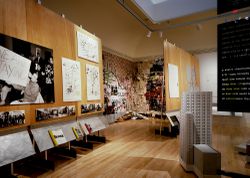
In the 1980s and 1990s, the trend in urban design shifted from the global planning approach—exemplified by the urban master plans of the 1950s and 1960s—to a sector based approach favouring gradual change rather than the rebuilding of cities. Urban Revisions: Current Projects for the Public Realm examines the physical and social space of the city, as seen by contemporary(...)
In the 1980s and 1990s, the trend in urban design shifted from the global planning approach—exemplified by the urban master plans of the 1950s and 1960s—to a sector based approach favouring gradual change rather than the rebuilding of cities. Urban Revisions: Current Projects for the Public Realm examines the physical and social space of the city, as seen by contemporary(...)
Location:
Main galleries
Main galleries
Date:
19 October 1994 to 8 January 1995
19 October 1994 to 8 January 1995
Title:
Urban Revisions: Current Projects for the Public Realm
Actions:
Description:
In the 1980s and 1990s, the trend in urban design shifted from the global planning approach—exemplified by the urban master plans of the 1950s and 1960s—to a sector based approach favouring gradual change rather than the rebuilding of cities. Urban Revisions: Current Projects for the Public Realm examines the physical and social space of the city, as seen by contemporary(...)
Urban Revisions: Current Projects for the Public Realm
Actions:
Description:
In the 1980s and 1990s, the trend in urban design shifted from the global planning approach—exemplified by the urban master plans of the 1950s and 1960s—to a sector based approach favouring gradual change rather than the rebuilding of cities. Urban Revisions: Current Projects for the Public Realm examines the physical and social space of the city, as seen by contemporary(...)
Form:
exhibitions
exhibitions
Date:
19 October 1994 to
8 January 1995
19 October 1994 to
8 January 1995
Location:
Main galleries
Main galleries
Form:
exhibitions
exhibitions
Actions:
Description:
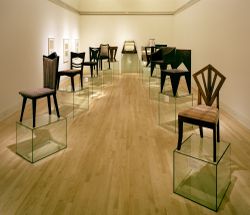
Combining enthusiasm for the radically new world view of cubist art with a desire to establish an autonomous aesthetic as well as political presence, the Czech cubists produced not only powerful visionary work, but also went beyond theory to practice. Czech Cubism: Architecture and Design, 1910–1925 brings together the work of a group of Czech artists, architects, and(...)
Combining enthusiasm for the radically new world view of cubist art with a desire to establish an autonomous aesthetic as well as political presence, the Czech cubists produced not only powerful visionary work, but also went beyond theory to practice. Czech Cubism: Architecture and Design, 1910–1925 brings together the work of a group of Czech artists, architects, and(...)
Location:
Main galleries
Main galleries
Date:
10 June 1992 to 2 August 1992
10 June 1992 to 2 August 1992
Title:
Czech Cubism: Architecture and Design, 1910–1925
Actions:
Description:
Combining enthusiasm for the radically new world view of cubist art with a desire to establish an autonomous aesthetic as well as political presence, the Czech cubists produced not only powerful visionary work, but also went beyond theory to practice. Czech Cubism: Architecture and Design, 1910–1925 brings together the work of a group of Czech artists, architects, and(...)
Czech Cubism: Architecture and Design, 1910–1925
Actions:
Description:
Combining enthusiasm for the radically new world view of cubist art with a desire to establish an autonomous aesthetic as well as political presence, the Czech cubists produced not only powerful visionary work, but also went beyond theory to practice. Czech Cubism: Architecture and Design, 1910–1925 brings together the work of a group of Czech artists, architects, and(...)
Form:
exhibitions
exhibitions
Date:
10 June 1992 to
2 August 1992
10 June 1992 to
2 August 1992
Location:
Main galleries
Main galleries
Form:
drawings
drawings
Title:
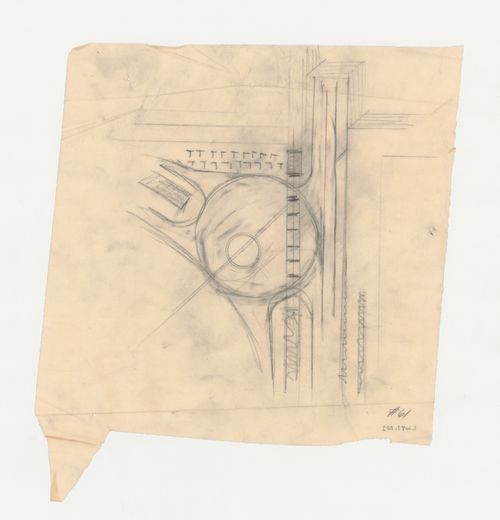
Lehigh Airports Competition Entry: Detail for airport plan showing airplane circulation pattern
Lehigh Airports Competition Entry: Detail for airport plan showing airplane circulation pattern
Actions:
Reference number:
DR1987:0348
Description:
- This detail shows the lower right corner of the airport, including the amphibian landing and station complex. The drawing is part of a series of eight drawings in which the architect works out the circulation route of taxiing airplanes, both incoming and outgoing by sea and by air, and particularly how they will pick up and deposit passengers at the station (DR1987:0347 - DR1987:0349, DR1987:0352 - DR1987:0354, DR1987:0358 and DR1987:0390).
DR1987:0348
Description:
- This detail shows the lower right corner of the airport, including the amphibian landing and station complex. The drawing is part of a series of eight drawings in which the architect works out the circulation route of taxiing airplanes, both incoming and outgoing by sea and by air, and particularly how they will pick up and deposit passengers at the station (DR1987:0347 - DR1987:0349, DR1987:0352 - DR1987:0354, DR1987:0358 and DR1987:0390).
People:
Subject:
architecture
architecture
Date:
1929
1929
Title:
Lehigh Airports Competition Entry: Detail for airport plan showing airplane circulation pattern
Actions:
DR1987:0348
Description:
- This detail shows the lower right corner of the airport, including the amphibian landing and station complex. The drawing is part of a series of eight drawings in which the architect works out the circulation route of taxiing airplanes, both incoming and outgoing by sea and by air, and particularly how they will pick up and deposit passengers at the station (DR1987:0347 - DR1987:0349, DR1987:0352 - DR1987:0354, DR1987:0358 and DR1987:0390).
Lehigh Airports Competition Entry: Detail for airport plan showing airplane circulation pattern
Actions:
DR1987:0348
Description:
- This detail shows the lower right corner of the airport, including the amphibian landing and station complex. The drawing is part of a series of eight drawings in which the architect works out the circulation route of taxiing airplanes, both incoming and outgoing by sea and by air, and particularly how they will pick up and deposit passengers at the station (DR1987:0347 - DR1987:0349, DR1987:0352 - DR1987:0354, DR1987:0358 and DR1987:0390).
Form:
drawings
drawings
Date:
1929
1929
People:
Subject:
architecture
architecture
Form:
drawings
drawings
Actions:
Reference number:
DR1987:0567
Description:
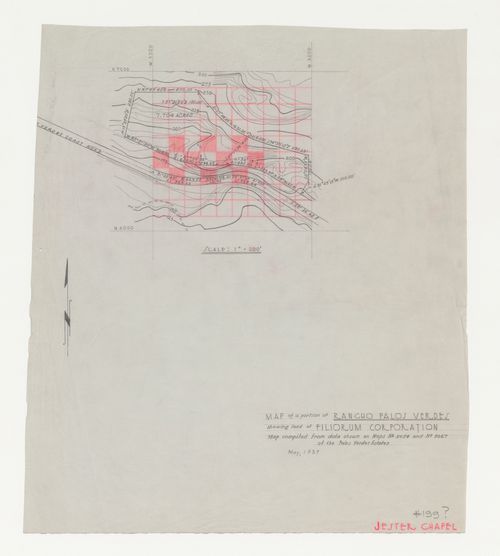
- This graphite drawing of the contour lines and topographical features of the property held by the Filiorum Corporation on the Palos Verdes estates shows the future site for Wayfarers' Chapel. The graphite drawing is partitioned with a square grid, which was possibly drawn by a member of Lloyd Wright's office, because it is in the same media as the inscription "JESTER CHAPEL", one of the early names used by the architect for the project.
DR1987:0567
Description:
- This graphite drawing of the contour lines and topographical features of the property held by the Filiorum Corporation on the Palos Verdes estates shows the future site for Wayfarers' Chapel. The graphite drawing is partitioned with a square grid, which was possibly drawn by a member of Lloyd Wright's office, because it is in the same media as the inscription "JESTER CHAPEL", one of the early names used by the architect for the project.
People:
Subject:
architecture, topographic
architecture, topographic
Date:
May 1937
May 1937
Title:
Wayfarers' Chapel, Palos Verdes, California: Contour map of Filiorum Corporation property, including chapel site
Actions:
DR1987:0567
Description:
- This graphite drawing of the contour lines and topographical features of the property held by the Filiorum Corporation on the Palos Verdes estates shows the future site for Wayfarers' Chapel. The graphite drawing is partitioned with a square grid, which was possibly drawn by a member of Lloyd Wright's office, because it is in the same media as the inscription "JESTER CHAPEL", one of the early names used by the architect for the project.
Wayfarers' Chapel, Palos Verdes, California: Contour map of Filiorum Corporation property, including chapel site
Actions:
DR1987:0567
Description:
- This graphite drawing of the contour lines and topographical features of the property held by the Filiorum Corporation on the Palos Verdes estates shows the future site for Wayfarers' Chapel. The graphite drawing is partitioned with a square grid, which was possibly drawn by a member of Lloyd Wright's office, because it is in the same media as the inscription "JESTER CHAPEL", one of the early names used by the architect for the project.
Form:
drawings
drawings
Date:
May 1937
May 1937
People:
Subject:
architecture, topographic
architecture, topographic
Level of archival description:
Sub-series
Sub-series
Title:
Wall House 2 (Bye House)
Wall House 2 (Bye House)
Reference number:
AP145.S2.D31.SD2
Description:
Sub-file documents a project for a house for landscape architect A.E. Bye for a site in Ridgefield, Connecticut. The original commission fell through, but the house was eventually built, enlarged by 20 percent, on a new commission in Groningen, Netherlands in 2001. Material in this file was produced between 1972 and 1976. Sub-file contains conceptual drawings, design development drawings, presentation drawings, working drawings, and textual records.
AP145.S2.D31.SD2
Description:
Sub-file documents a project for a house for landscape architect A.E. Bye for a site in Ridgefield, Connecticut. The original commission fell through, but the house was eventually built, enlarged by 20 percent, on a new commission in Groningen, Netherlands in 2001. Material in this file was produced between 1972 and 1976. Sub-file contains conceptual drawings, design development drawings, presentation drawings, working drawings, and textual records.
People:
Date:
1972-1976
1972-1976
Title:
Wall House 2 (Bye House)
Actions:
AP145.S2.D31.SD2
Description:
Sub-file documents a project for a house for landscape architect A.E. Bye for a site in Ridgefield, Connecticut. The original commission fell through, but the house was eventually built, enlarged by 20 percent, on a new commission in Groningen, Netherlands in 2001. Material in this file was produced between 1972 and 1976. Sub-file contains conceptual drawings, design development drawings, presentation drawings, working drawings, and textual records.
Wall House 2 (Bye House)
Actions:
AP145.S2.D31.SD2
Description:
Sub-file documents a project for a house for landscape architect A.E. Bye for a site in Ridgefield, Connecticut. The original commission fell through, but the house was eventually built, enlarged by 20 percent, on a new commission in Groningen, Netherlands in 2001. Material in this file was produced between 1972 and 1976. Sub-file contains conceptual drawings, design development drawings, presentation drawings, working drawings, and textual records.
Level of archival description:
Sub-file 2
Sub-file 2
Date:
1972-1976
1972-1976
People:
Level of archival description:
Project
Project
Title:
Expo'67 Stadium
Expo'67 Stadium
Reference number:
AP163.S2.SS1.D40
Description:
File documents Victor Prus's project for the Expo '67 Stadium in Montréal, in collaboration with architect Maurice Desnoyers. Materials in this file were produced between 1962 and 1971 but predominantly between 1962 and 1967. The file contains drawings, including conceptual, design development, presentation and working drawings, textual records, including correspondence, meetings notes, reports and specifications, periodical issues with articles about the Stadium and a book.
AP163.S2.SS1.D40
Description:
File documents Victor Prus's project for the Expo '67 Stadium in Montréal, in collaboration with architect Maurice Desnoyers. Materials in this file were produced between 1962 and 1971 but predominantly between 1962 and 1967. The file contains drawings, including conceptual, design development, presentation and working drawings, textual records, including correspondence, meetings notes, reports and specifications, periodical issues with articles about the Stadium and a book.
People:
Date:
1962-1971
1962-1971
Title:
Expo'67 Stadium
Actions:
AP163.S2.SS1.D40
Description:
File documents Victor Prus's project for the Expo '67 Stadium in Montréal, in collaboration with architect Maurice Desnoyers. Materials in this file were produced between 1962 and 1971 but predominantly between 1962 and 1967. The file contains drawings, including conceptual, design development, presentation and working drawings, textual records, including correspondence, meetings notes, reports and specifications, periodical issues with articles about the Stadium and a book.
Expo'67 Stadium
Actions:
AP163.S2.SS1.D40
Description:
File documents Victor Prus's project for the Expo '67 Stadium in Montréal, in collaboration with architect Maurice Desnoyers. Materials in this file were produced between 1962 and 1971 but predominantly between 1962 and 1967. The file contains drawings, including conceptual, design development, presentation and working drawings, textual records, including correspondence, meetings notes, reports and specifications, periodical issues with articles about the Stadium and a book.
Level of archival description:
File 40
File 40
Date:
1962-1971
1962-1971
People:
Level of archival description:
Project
Project
Actions:
Reference number:
AP066.S5.D1
Description:
Le dossier documente la participation de Rousseau à l'exposition "Les tables urbaines 1, une idée en or", tenue dans la Galerie Christiane Chassay, à Montréal, Québec, du 4 au 25 octobre 1986. L'exposition collective comptait 11 artistes et des architectes. Le dossier contient des documents textuels, des reprographies, des photographies et des dessins. Description du projet : "Dans la mesure du présentable et dans la démesure de l'imprésentable, la maquette de Jacques Rousseau met en situation deux lieux construits en parallèle, la surface terrestre et le sous-sol s'occultant réciproquement." Gaston St-Pierre, " Du poétique de la maquette et de ses répliques ", p. 5. 66-E-001-002T.
AP066.S5.D1
Description:
Le dossier documente la participation de Rousseau à l'exposition "Les tables urbaines 1, une idée en or", tenue dans la Galerie Christiane Chassay, à Montréal, Québec, du 4 au 25 octobre 1986. L'exposition collective comptait 11 artistes et des architectes. Le dossier contient des documents textuels, des reprographies, des photographies et des dessins. Description du projet : "Dans la mesure du présentable et dans la démesure de l'imprésentable, la maquette de Jacques Rousseau met en situation deux lieux construits en parallèle, la surface terrestre et le sous-sol s'occultant réciproquement." Gaston St-Pierre, " Du poétique de la maquette et de ses répliques ", p. 5. 66-E-001-002T.
People:
Date:
4-25 octobre 1986
4-25 octobre 1986
Title:
Du poétique de la maquette et de ses répliques - "Les tables urbaines I - une idée en or"
Actions:
AP066.S5.D1
Description:
Le dossier documente la participation de Rousseau à l'exposition "Les tables urbaines 1, une idée en or", tenue dans la Galerie Christiane Chassay, à Montréal, Québec, du 4 au 25 octobre 1986. L'exposition collective comptait 11 artistes et des architectes. Le dossier contient des documents textuels, des reprographies, des photographies et des dessins. Description du projet : "Dans la mesure du présentable et dans la démesure de l'imprésentable, la maquette de Jacques Rousseau met en situation deux lieux construits en parallèle, la surface terrestre et le sous-sol s'occultant réciproquement." Gaston St-Pierre, " Du poétique de la maquette et de ses répliques ", p. 5. 66-E-001-002T.
Du poétique de la maquette et de ses répliques - "Les tables urbaines I - une idée en or"
Actions:
AP066.S5.D1
Description:
Le dossier documente la participation de Rousseau à l'exposition "Les tables urbaines 1, une idée en or", tenue dans la Galerie Christiane Chassay, à Montréal, Québec, du 4 au 25 octobre 1986. L'exposition collective comptait 11 artistes et des architectes. Le dossier contient des documents textuels, des reprographies, des photographies et des dessins. Description du projet : "Dans la mesure du présentable et dans la démesure de l'imprésentable, la maquette de Jacques Rousseau met en situation deux lieux construits en parallèle, la surface terrestre et le sous-sol s'occultant réciproquement." Gaston St-Pierre, " Du poétique de la maquette et de ses répliques ", p. 5. 66-E-001-002T.
Level of archival description:
Dossier 1
Dossier 1
Date:
4-25 octobre 1986
4-25 octobre 1986
People:


