


1462 Results
Form:
books
books
Actions:
Price:
$44.95
(available to order)
Summary:
For Rebecca Bushnell, English gardening books tell a tale of the human love for plants and our will to make them do as we wish. These books evoke the desires of gardeners: they show us gardeners who, like poets, imagine not just what is but what should be. In particular, the earliest English garden books, such as Thomas Hill’s The Gardeners Labyrinth or Hugh Platt’s(...)
$44.95
(available to order)
Summary:
For Rebecca Bushnell, English gardening books tell a tale of the human love for plants and our will to make them do as we wish. These books evoke the desires of gardeners: they show us gardeners who, like poets, imagine not just what is but what should be. In particular, the earliest English garden books, such as Thomas Hill’s The Gardeners Labyrinth or Hugh Platt’s(...)
Title:
Green desire : imagining early modern English gardens
Actions:
Price:
$44.95
(available to order)
Summary:
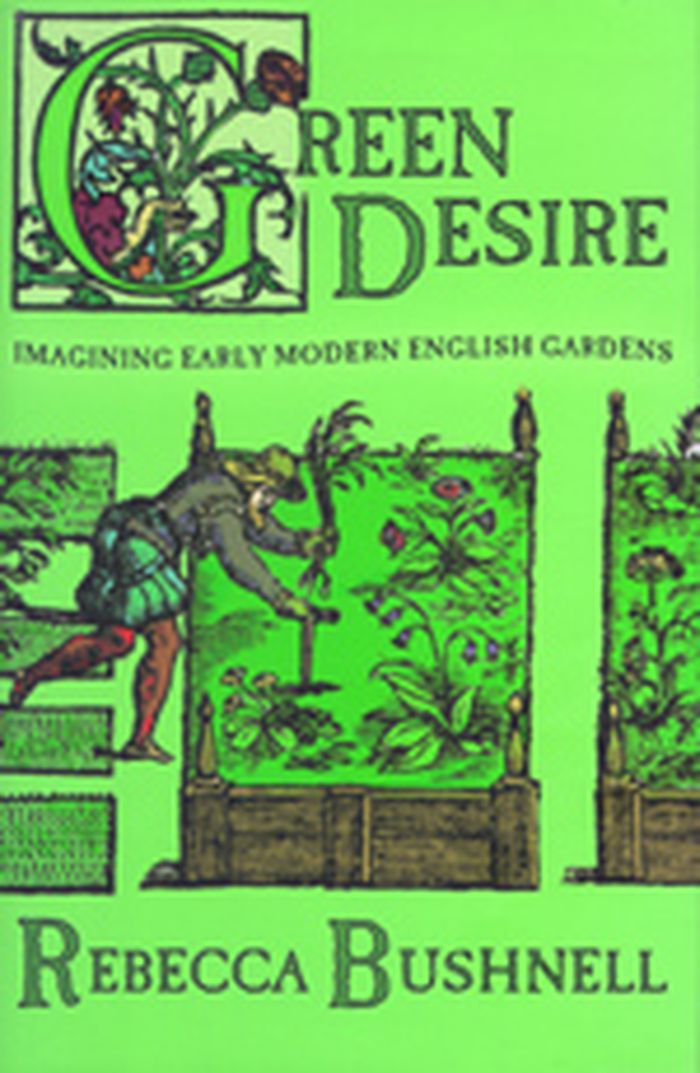
For Rebecca Bushnell, English gardening books tell a tale of the human love for plants and our will to make them do as we wish. These books evoke the desires of gardeners: they show us gardeners who, like poets, imagine not just what is but what should be. In particular, the earliest English garden books, such as Thomas Hill’s The Gardeners Labyrinth or Hugh Platt’s Floraes Paradise, mix magical practices with mundane recipes even when the authors insist that they rely completely on their own experience in these matters. Like early modern “books of secrets,” early gardening manuals often promise the reader power to alter the essential properties of plants: to make the gillyflower double, to change the lily’s hue, or to grow a cherry without a stone. "Green Desire" describes the innovative design of the old manuals, examining how writers and printers marketed them as fiction as well as practical advice for aspiring gardeners. Along with this attention to the delights of reading, it analyzes the strange dignity and pleasure of garden labor and the division of men’s and women’s roles in creating garden art. The book ends by recounting the heated debate over how much people could do to create marvels in their own gardens. For writers and readers alike, these green desires inspired dreams of power and self-improvement, fantasies of beauty achieved without work, and hopes for order in an unpredictable world.
Green desire : imagining early modern English gardens
Actions:
Price:
$44.95
(available to order)
Summary:
For Rebecca Bushnell, English gardening books tell a tale of the human love for plants and our will to make them do as we wish. These books evoke the desires of gardeners: they show us gardeners who, like poets, imagine not just what is but what should be. In particular, the earliest English garden books, such as Thomas Hill’s The Gardeners Labyrinth or Hugh Platt’s Floraes Paradise, mix magical practices with mundane recipes even when the authors insist that they rely completely on their own experience in these matters. Like early modern “books of secrets,” early gardening manuals often promise the reader power to alter the essential properties of plants: to make the gillyflower double, to change the lily’s hue, or to grow a cherry without a stone. "Green Desire" describes the innovative design of the old manuals, examining how writers and printers marketed them as fiction as well as practical advice for aspiring gardeners. Along with this attention to the delights of reading, it analyzes the strange dignity and pleasure of garden labor and the division of men’s and women’s roles in creating garden art. The book ends by recounting the heated debate over how much people could do to create marvels in their own gardens. For writers and readers alike, these green desires inspired dreams of power and self-improvement, fantasies of beauty achieved without work, and hopes for order in an unpredictable world.
Form:
books
books
Publication:
October 2003, Ithaca, New York
October 2003, Ithaca, New York
Subject:
Landscape Theory
Landscape Theory
Form:
books
books
Actions:
Price:
$52.00
(available to order)
Summary:
Romare Bearden (1911-1988) had a true Renaissance sensibility. He was a fine artist who also successfully turned his hand to printmaking, writing, costume and set design, as well as composing jazz music. In addition, he helped to found the Studio Museum in Harlem, New York's Cinque Gallery and the Black Academy of Arts and Letters, and was once even offered an opportunity(...)
$52.00
(available to order)
Summary:
Romare Bearden (1911-1988) had a true Renaissance sensibility. He was a fine artist who also successfully turned his hand to printmaking, writing, costume and set design, as well as composing jazz music. In addition, he helped to found the Studio Museum in Harlem, New York's Cinque Gallery and the Black Academy of Arts and Letters, and was once even offered an opportunity(...)
Subject:
Contemporary Art Monographs
Contemporary Art Monographs
Publication:
February 2008, New York
February 2008, New York
Title:
Romare Bearden a black odyssey
Actions:
Price:
$52.00
(available to order)
Summary:
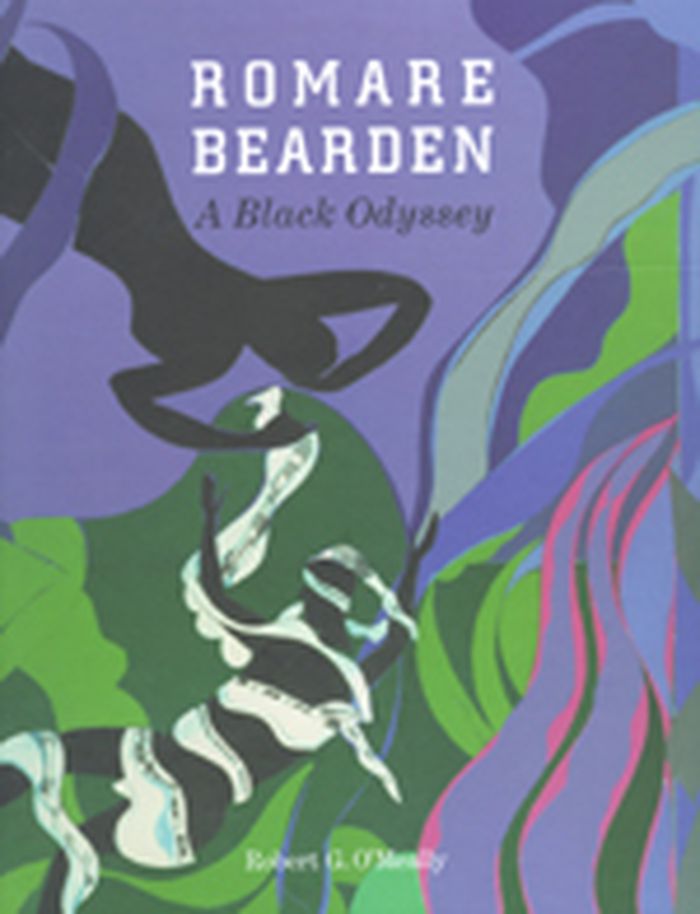
Romare Bearden (1911-1988) had a true Renaissance sensibility. He was a fine artist who also successfully turned his hand to printmaking, writing, costume and set design, as well as composing jazz music. In addition, he helped to found the Studio Museum in Harlem, New York's Cinque Gallery and the Black Academy of Arts and Letters, and was once even offered an opportunity to play professional baseball for the Philadelphia Athletics. But it is for his rich and textured collages that Bearden is best known today. In 1977, Bearden created a sequence of 20 collages based on episodes from Homer's Odyssey. It may come as a surprise to even his most avid followers that this devoted chronicler of African American culture and the Harlem Renaissance would gravitate to such a canonical text. But in the essay accompanying Romare Bearden: A Black Odyssey, scholar Robert G. O'Meally argues for their thematic consistency and suggests that, in the figures of Odysseus, Penelope, Poseidon, Nausicca and others, Bearden found themes sympathetic to the African American experience. These motifs of wandering, mourning and the questing for home--considering Bearden's scores of interiors and exteriors, country and city life and depictions of family love--emerge as the central themes of all his art. Romare Bearden: A Black Odyssey, the first in-depth consideration of these collages since they were originally exhibited 30 years ago, will prove a surprise to Bearden fans and newcomers alike.
Romare Bearden a black odyssey
Actions:
Price:
$52.00
(available to order)
Summary:
Romare Bearden (1911-1988) had a true Renaissance sensibility. He was a fine artist who also successfully turned his hand to printmaking, writing, costume and set design, as well as composing jazz music. In addition, he helped to found the Studio Museum in Harlem, New York's Cinque Gallery and the Black Academy of Arts and Letters, and was once even offered an opportunity to play professional baseball for the Philadelphia Athletics. But it is for his rich and textured collages that Bearden is best known today. In 1977, Bearden created a sequence of 20 collages based on episodes from Homer's Odyssey. It may come as a surprise to even his most avid followers that this devoted chronicler of African American culture and the Harlem Renaissance would gravitate to such a canonical text. But in the essay accompanying Romare Bearden: A Black Odyssey, scholar Robert G. O'Meally argues for their thematic consistency and suggests that, in the figures of Odysseus, Penelope, Poseidon, Nausicca and others, Bearden found themes sympathetic to the African American experience. These motifs of wandering, mourning and the questing for home--considering Bearden's scores of interiors and exteriors, country and city life and depictions of family love--emerge as the central themes of all his art. Romare Bearden: A Black Odyssey, the first in-depth consideration of these collages since they were originally exhibited 30 years ago, will prove a surprise to Bearden fans and newcomers alike.
Form:
books
books
Publication:
February 2008, New York
February 2008, New York
Subject:
Contemporary Art Monographs
Contemporary Art Monographs
Form:
books
books
Title:
Lost architectures
Lost architectures
Actions:
Price:
$55.50
(available to order)
Summary:
This book stands in opposition to the popular notion that the best architecture is built on compromise. Rather, Neil Spiller argues, the most original and brave products of the architectural mind are often to be found in those projects which, for whatever reason, never came to fruition. (...)
$55.50
(available to order)
Summary:
This book stands in opposition to the popular notion that the best architecture is built on compromise. Rather, Neil Spiller argues, the most original and brave products of the architectural mind are often to be found in those projects which, for whatever reason, never came to fruition. (...)
Subject:
Architecture since 1900, Europe
Architecture since 1900, Europe
Publication:
January 2001, Great Britain
January 2001, Great Britain
Title:
Lost architectures
Actions:
Price:
$55.50
(available to order)
Summary:
This book stands in opposition to the popular notion that the best architecture is built on compromise. Rather, Neil Spiller argues, the most original and brave products of the architectural mind are often to be found in those projects which, for whatever reason, never came to fruition. "Lost Architectures" presents an array of such projects from the last decades of the twentieth century, consituting the unrealised dreams of some of the most inspirational architects working in the period. Most of the projects featured here have seldom, if ever, been published before, and some represent the last hand-drawn work of their creators before the age of the computer finally came into full force. Whilst they do not follow any specific style, these projects embody a spirit defined by Spiller as New Romanticism - a spirit which combines elements of aesthetic decadence and a certain camp mannerism with a love of angularity and mechanised ritual. Some of the architects in question are still in practice, with a great deal of high-profile built work behind them; others have never been recognised as they perhaps should have been. In both cases, this book is an invaluable resource of information and inspiration for students of architecture, as well as for theorists, historians and lay readers. It provides essential exposure for a range of work of great vitality which might otherwise risk being lost in the course of time.
Lost architectures
Actions:
Price:
$55.50
(available to order)
Summary:
This book stands in opposition to the popular notion that the best architecture is built on compromise. Rather, Neil Spiller argues, the most original and brave products of the architectural mind are often to be found in those projects which, for whatever reason, never came to fruition. "Lost Architectures" presents an array of such projects from the last decades of the twentieth century, consituting the unrealised dreams of some of the most inspirational architects working in the period. Most of the projects featured here have seldom, if ever, been published before, and some represent the last hand-drawn work of their creators before the age of the computer finally came into full force. Whilst they do not follow any specific style, these projects embody a spirit defined by Spiller as New Romanticism - a spirit which combines elements of aesthetic decadence and a certain camp mannerism with a love of angularity and mechanised ritual. Some of the architects in question are still in practice, with a great deal of high-profile built work behind them; others have never been recognised as they perhaps should have been. In both cases, this book is an invaluable resource of information and inspiration for students of architecture, as well as for theorists, historians and lay readers. It provides essential exposure for a range of work of great vitality which might otherwise risk being lost in the course of time.
Form:
books
books
Publication:
January 2001, Great Britain
January 2001, Great Britain
Subject:
Architecture since 1900, Europe
Architecture since 1900, Europe
Form:
books
books
Title:
Agnes Martin: On beauty
Agnes Martin: On beauty
Actions:
Price:
$54.00
(available in store)
Summary:
"When I think of art I think of beauty. Beauty is the mystery of life," wrote Agnes Martin in 1989. Edited by Milly Glimcher, this handsomely produced volume collects writings by the artist centered around the theme of beauty, as well as a range of subjects related to her life and work, from the workings of nature and politics to the inspiration to be found in solitude(...)
$54.00
(available in store)
Summary:
"When I think of art I think of beauty. Beauty is the mystery of life," wrote Agnes Martin in 1989. Edited by Milly Glimcher, this handsomely produced volume collects writings by the artist centered around the theme of beauty, as well as a range of subjects related to her life and work, from the workings of nature and politics to the inspiration to be found in solitude(...)
Title:
Agnes Martin: On beauty
Actions:
Price:
$54.00
(available in store)
Summary:
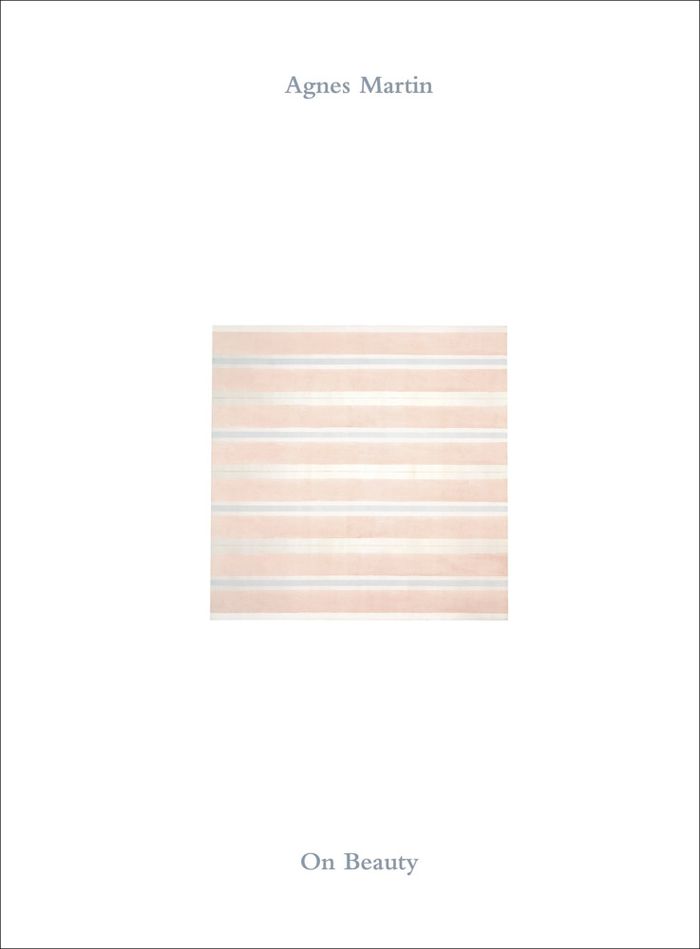
"When I think of art I think of beauty. Beauty is the mystery of life," wrote Agnes Martin in 1989. Edited by Milly Glimcher, this handsomely produced volume collects writings by the artist centered around the theme of beauty, as well as a range of subjects related to her life and work, from the workings of nature and politics to the inspiration to be found in solitude and silence. Poetic and reflective, these texts range from compact insights, as with "Underside of the Leaf" and "Awareness of Perfection," to longer meditations, such as "The Current of the River of Life Moves Us" and "The Untroubled Mind." ''On Beauty'' also includes reproductions of paintings such as Blessings (2000) and Tranquillity (2001), among others, while the front and back covers are debossed with reproductions of Affection (2001) and Little Children Playing with Love (2001). By providing a window into the thoughts and feelings that moved her, this title is the perfect companion for anyone who admires Martin's intuitive approach to art. Canadian American artist Agnes Martin (1912–2004) was one of the most influential painters of her generation and left an enduring mark on the history of modern and contemporary art. Characterized by austere lines and grids superimposed upon grounds of muted color, her paintings elegantly negotiate the confines of structure, space, draftsmanship and the metaphysical. Their underlying ideologies can be found in the writings she composed over the course of her career.
Agnes Martin: On beauty
Actions:
Price:
$54.00
(available in store)
Summary:
"When I think of art I think of beauty. Beauty is the mystery of life," wrote Agnes Martin in 1989. Edited by Milly Glimcher, this handsomely produced volume collects writings by the artist centered around the theme of beauty, as well as a range of subjects related to her life and work, from the workings of nature and politics to the inspiration to be found in solitude and silence. Poetic and reflective, these texts range from compact insights, as with "Underside of the Leaf" and "Awareness of Perfection," to longer meditations, such as "The Current of the River of Life Moves Us" and "The Untroubled Mind." ''On Beauty'' also includes reproductions of paintings such as Blessings (2000) and Tranquillity (2001), among others, while the front and back covers are debossed with reproductions of Affection (2001) and Little Children Playing with Love (2001). By providing a window into the thoughts and feelings that moved her, this title is the perfect companion for anyone who admires Martin's intuitive approach to art. Canadian American artist Agnes Martin (1912–2004) was one of the most influential painters of her generation and left an enduring mark on the history of modern and contemporary art. Characterized by austere lines and grids superimposed upon grounds of muted color, her paintings elegantly negotiate the confines of structure, space, draftsmanship and the metaphysical. Their underlying ideologies can be found in the writings she composed over the course of her career.
Form:
books
books
Publication:
March 2026
March 2026
Subject:
Contemporary Art Monographs
Contemporary Art Monographs
Form:
books
books
Actions:
Price:
$17.95
(available to order)
Summary:
Almost a half-century after Yayoi Kusama debuted her landmark installation Infinity Mirror Room - Phalli's Field (1965) in New York, the work remains challenging and unclassifiable. Shifting between the Pop-like and the Surreal, the Minimal and the metaphorical, the figurative and the abstract, the psychotic and the erotic, with references to "free love" and psychedelia,(...)
$17.95
(available to order)
Summary:
Almost a half-century after Yayoi Kusama debuted her landmark installation Infinity Mirror Room - Phalli's Field (1965) in New York, the work remains challenging and unclassifiable. Shifting between the Pop-like and the Surreal, the Minimal and the metaphorical, the figurative and the abstract, the psychotic and the erotic, with references to "free love" and psychedelia,(...)
Title:
Yayoi Kusuma : Infinity mirror room - Phalli's Field
Actions:
Price:
$17.95
(available to order)
Summary:
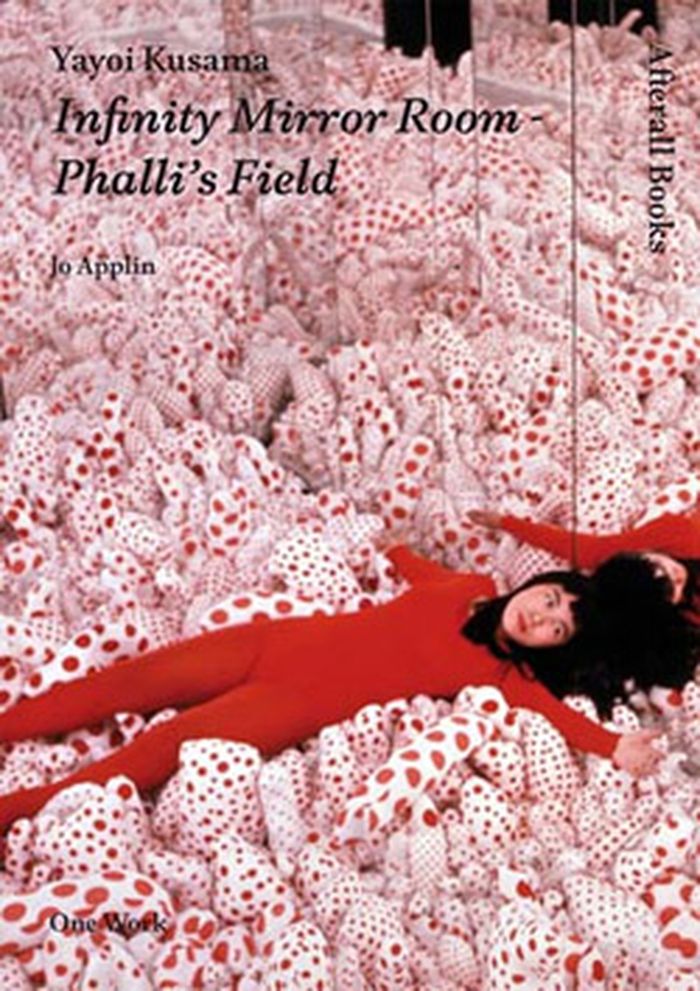
Almost a half-century after Yayoi Kusama debuted her landmark installation Infinity Mirror Room - Phalli's Field (1965) in New York, the work remains challenging and unclassifiable. Shifting between the Pop-like and the Surreal, the Minimal and the metaphorical, the figurative and the abstract, the psychotic and the erotic, with references to "free love" and psychedelia, it seemed to embody all that the 1960s was about, while at the same time denying the prevailing aesthetics of its time. The installation itself was a room lined with mirrored panels and carpeted with several hundred brightly polka-dotted soft fabric protrusions into which the visitor was completely absorbed. Kusama simply called it "a sublime, miraculous field of phalluses." A precursor of performance-based feminist art practice, media pranksterism, and "Occupy" movements, Kusama (born in 1929) was once as well known as her admirers - Andy Warhol, Donald Judd, and Joseph Cornell. In this first monograph on an epoch-defining work, Jo Applin looks at the installation in detail and places it in the context of subsequent art practice and theory as well as Kusama's own (as she called it) "obsessional art." Applin also discusses Kusama's relationship to her contemporaries, particularly those working with environments, abstract-erotic sculpture, and mirrors, and those grappling with such issues as abstraction, eroticism, sexuality, and softness. The work of Lee Lozano, Claes Oldenburg, Louise Bourgeois, and Eva Hesse is seen anew when considered in relation to Yayoi Kusama's.
Yayoi Kusuma : Infinity mirror room - Phalli's Field
Actions:
Price:
$17.95
(available to order)
Summary:
Almost a half-century after Yayoi Kusama debuted her landmark installation Infinity Mirror Room - Phalli's Field (1965) in New York, the work remains challenging and unclassifiable. Shifting between the Pop-like and the Surreal, the Minimal and the metaphorical, the figurative and the abstract, the psychotic and the erotic, with references to "free love" and psychedelia, it seemed to embody all that the 1960s was about, while at the same time denying the prevailing aesthetics of its time. The installation itself was a room lined with mirrored panels and carpeted with several hundred brightly polka-dotted soft fabric protrusions into which the visitor was completely absorbed. Kusama simply called it "a sublime, miraculous field of phalluses." A precursor of performance-based feminist art practice, media pranksterism, and "Occupy" movements, Kusama (born in 1929) was once as well known as her admirers - Andy Warhol, Donald Judd, and Joseph Cornell. In this first monograph on an epoch-defining work, Jo Applin looks at the installation in detail and places it in the context of subsequent art practice and theory as well as Kusama's own (as she called it) "obsessional art." Applin also discusses Kusama's relationship to her contemporaries, particularly those working with environments, abstract-erotic sculpture, and mirrors, and those grappling with such issues as abstraction, eroticism, sexuality, and softness. The work of Lee Lozano, Claes Oldenburg, Louise Bourgeois, and Eva Hesse is seen anew when considered in relation to Yayoi Kusama's.
Form:
books
books
Publication:
November 2012
November 2012
Subject:
Art Theory
Art Theory
Form:
books
books
Actions:
Price:
$55.00
(available to order)
Summary:
Over the past century, an art form has emerged that draws from the worlds of visual art and music. Sound art’s roots can be found in the experimental work of Italian Futurism, Dada, and later the Fluxus group and the pioneering efforts of the American composer and artist John Cage. In the wake of this groundbreaking work, sound art began to mature into a movement, and(...)
$55.00
(available to order)
Summary:
Over the past century, an art form has emerged that draws from the worlds of visual art and music. Sound art’s roots can be found in the experimental work of Italian Futurism, Dada, and later the Fluxus group and the pioneering efforts of the American composer and artist John Cage. In the wake of this groundbreaking work, sound art began to mature into a movement, and(...)
Title:
Sound art: beyond music, between categories
Actions:
Price:
$55.00
(available to order)
Summary:
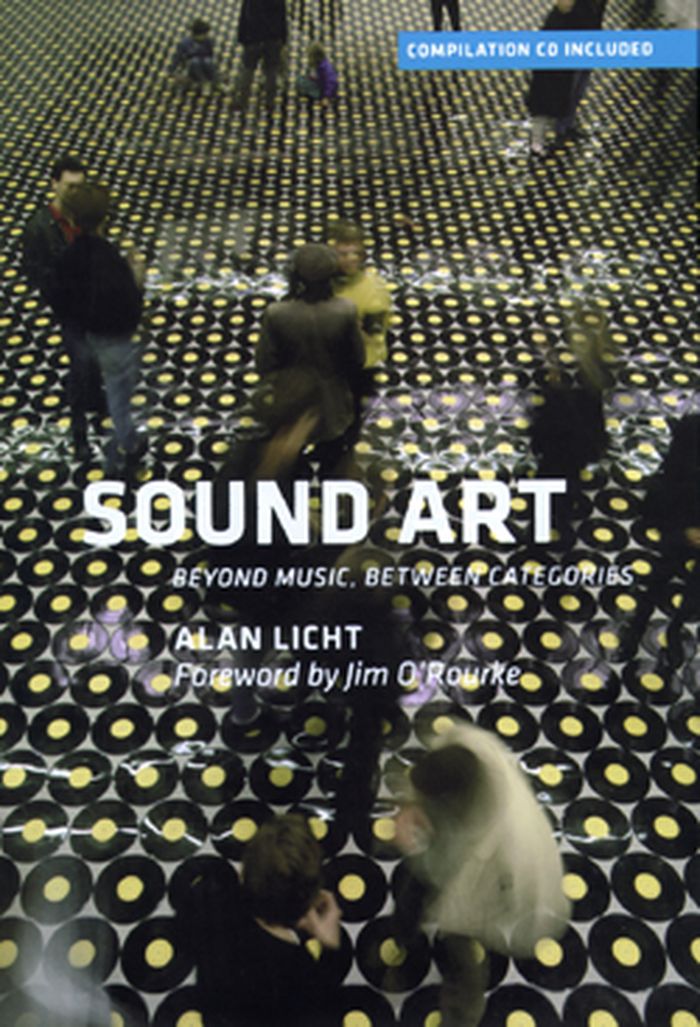
Over the past century, an art form has emerged that draws from the worlds of visual art and music. Sound art’s roots can be found in the experimental work of Italian Futurism, Dada, and later the Fluxus group and the pioneering efforts of the American composer and artist John Cage. In the wake of this groundbreaking work, sound art began to mature into a movement, and artists explored the interactive possibilities of sound and in turn created entirely new modes of experiencing and engaging with art. In this volume, the complete story of sound art is told by one of the country’s leading critics and scholars. The author traces the history of this form of art–highlighting the convergence of the indie world bands such as Sonic Youth with the art world–looking at the critical cross-pollination that has led to some of the most important and challenging art being produced today, including work by Christian Marclay, LaMonte Young, Janet Cardiff, Rodney Graham, and Laurie Anderson, among many others. Alan Licht is an American composer, guitarist, music writer, and a widely respected figure on the experimental music scene. He is not only responsible for important album reissues, but was a member of the cult classic NYC bands Love Child and Run On. He currently lives in New York City. Jim O’Rourke is an American musician and producer, and most widely known as a member of the rock band Sonic Youth. Considered an expert on experimental music, he has scored films for Werner Herzog and Olivier Assayas.
Sound art: beyond music, between categories
Actions:
Price:
$55.00
(available to order)
Summary:
Over the past century, an art form has emerged that draws from the worlds of visual art and music. Sound art’s roots can be found in the experimental work of Italian Futurism, Dada, and later the Fluxus group and the pioneering efforts of the American composer and artist John Cage. In the wake of this groundbreaking work, sound art began to mature into a movement, and artists explored the interactive possibilities of sound and in turn created entirely new modes of experiencing and engaging with art. In this volume, the complete story of sound art is told by one of the country’s leading critics and scholars. The author traces the history of this form of art–highlighting the convergence of the indie world bands such as Sonic Youth with the art world–looking at the critical cross-pollination that has led to some of the most important and challenging art being produced today, including work by Christian Marclay, LaMonte Young, Janet Cardiff, Rodney Graham, and Laurie Anderson, among many others. Alan Licht is an American composer, guitarist, music writer, and a widely respected figure on the experimental music scene. He is not only responsible for important album reissues, but was a member of the cult classic NYC bands Love Child and Run On. He currently lives in New York City. Jim O’Rourke is an American musician and producer, and most widely known as a member of the rock band Sonic Youth. Considered an expert on experimental music, he has scored films for Werner Herzog and Olivier Assayas.
Form:
books
books
Publication:
November 2007, New York
November 2007, New York
Subject:
Acoustics
Acoustics
Form:
books
books
Actions:
Price:
$40.00
(available to order)
Summary:
Wim Wenders (born 1945) started taking photographs at the age of 7. By the age of 12 he had equipped himself with his own darkroom, and by 17 he had acquired his first Leica. A few years later he was to emerge as a leading light in the New German Cinema movement of the late 1960s, making his feature-length directorial debut with Summer in the City (1970). Throughout his(...)
$40.00
(available to order)
Summary:
Wim Wenders (born 1945) started taking photographs at the age of 7. By the age of 12 he had equipped himself with his own darkroom, and by 17 he had acquired his first Leica. A few years later he was to emerge as a leading light in the New German Cinema movement of the late 1960s, making his feature-length directorial debut with Summer in the City (1970). Throughout his(...)
Title:
Wim Wenders : places, strange and quiet
Actions:
Price:
$40.00
(available to order)
Summary:
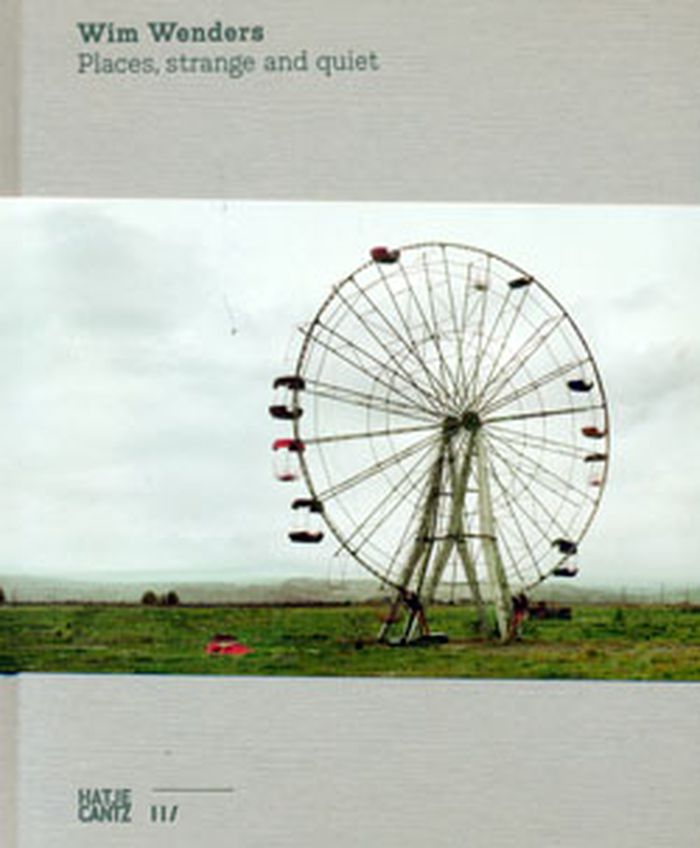
Wim Wenders (born 1945) started taking photographs at the age of 7. By the age of 12 he had equipped himself with his own darkroom, and by 17 he had acquired his first Leica. A few years later he was to emerge as a leading light in the New German Cinema movement of the late 1960s, making his feature-length directorial debut with Summer in the City (1970). Throughout his subsequent global acclaim as a director, Wenders has doggedly maintained his life as a photographer. In fact, the two careers have served each other well, as many of his photographs are created while location-scouting for films. His image repertoire of neglected industrial buildings, vacant lots, cemeteries, dilapidated urban niches and courtyards express a mixture of bemusement, melancholy and dislocation. “When you travel a lot, and when you love to just wander around and get lost, you can end up in the strangest spots,” Wenders says. “It must be some sort of built-in radar that often directs me to places that are strangely quiet, or quietly strange.” These strange and quiet color photographs are accompanied by poetical captions, some of which elucidate what is depicted, others of which lightly supplement with an anecdote (one characteristically deadpan caption accompanies an image of a cowboy clown standing at a rodeo: “It is amazing how many different ideas of 'fun' co-exist in this world” ). This publication gathers photographs from 1983 to 2011 in a full panorama of Wenders' photography to date.
Wim Wenders : places, strange and quiet
Actions:
Price:
$40.00
(available to order)
Summary:
Wim Wenders (born 1945) started taking photographs at the age of 7. By the age of 12 he had equipped himself with his own darkroom, and by 17 he had acquired his first Leica. A few years later he was to emerge as a leading light in the New German Cinema movement of the late 1960s, making his feature-length directorial debut with Summer in the City (1970). Throughout his subsequent global acclaim as a director, Wenders has doggedly maintained his life as a photographer. In fact, the two careers have served each other well, as many of his photographs are created while location-scouting for films. His image repertoire of neglected industrial buildings, vacant lots, cemeteries, dilapidated urban niches and courtyards express a mixture of bemusement, melancholy and dislocation. “When you travel a lot, and when you love to just wander around and get lost, you can end up in the strangest spots,” Wenders says. “It must be some sort of built-in radar that often directs me to places that are strangely quiet, or quietly strange.” These strange and quiet color photographs are accompanied by poetical captions, some of which elucidate what is depicted, others of which lightly supplement with an anecdote (one characteristically deadpan caption accompanies an image of a cowboy clown standing at a rodeo: “It is amazing how many different ideas of 'fun' co-exist in this world” ). This publication gathers photographs from 1983 to 2011 in a full panorama of Wenders' photography to date.
Form:
books
books
Publication:
July 2011
July 2011
Subject:
Photography monographs
Photography monographs
Form:
books
books
Price:
$49.00
(available to order)
Summary:
Buildings are more like us than we realize. They can be born into wealth or poverty, enjoying every privilege or struggling to make ends meet. They have parents - gods, kings and emperors, governments, visionaries and madmen - as well as friends and enemies. They have duties and responsibilities. They can endure crises of faith and purpose. They can succeed or fail. They(...)
$49.00
(available to order)
Summary:
Buildings are more like us than we realize. They can be born into wealth or poverty, enjoying every privilege or struggling to make ends meet. They have parents - gods, kings and emperors, governments, visionaries and madmen - as well as friends and enemies. They have duties and responsibilities. They can endure crises of faith and purpose. They can succeed or fail. They(...)
Title:
Fallen glory: the lives and deaths of history's greatest buildings
Actions:
Price:
$49.00
(available to order)
Summary:
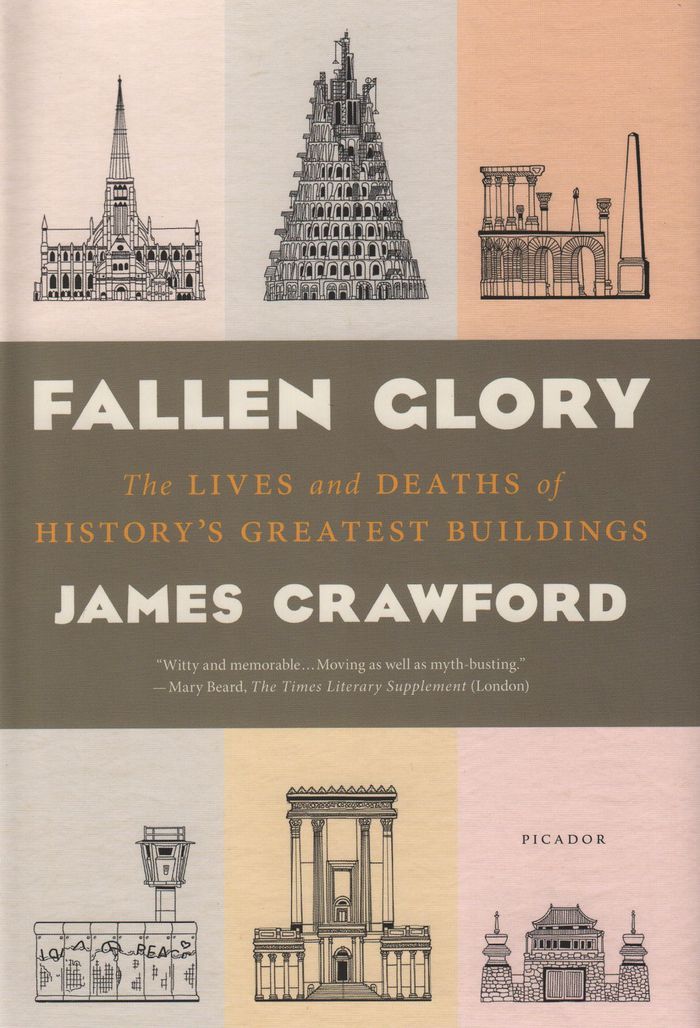
Buildings are more like us than we realize. They can be born into wealth or poverty, enjoying every privilege or struggling to make ends meet. They have parents - gods, kings and emperors, governments, visionaries and madmen - as well as friends and enemies. They have duties and responsibilities. They can endure crises of faith and purpose. They can succeed or fail. They can live. And, sooner or later, they die. In "Fallen glory", James Crawford uncovers the biographies of some of the world's most fascinating lost and ruined buildings, from the dawn of civilization to the cyber era. The lives of these iconic structures are packed with drama and intrigue. Soap operas on the grandest scale, they feature war and religion, politics and art, love and betrayal, catastrophe and hope. Frequently their afterlives have been no less dramatic - their memories used and abused down the millennia for purposes both sacred and profane. They provide the stage for a startling array of characters, including Gilgamesh, the Cretan Minotaur, Agamemnon, Nefertiti, Genghis Khan, Henry VIII, Catherine the Great, Adolf Hitler, and even Bruce Springsteen. The twenty-one structures Crawford focuses on include The Tower of Babel, The Temple of Jerusalem, The Library of Alexandria, The Bastille, Kowloon Walled City, the Berlin Wall, and the Twin Towers of the World Trade Center. Ranging from the deserts of Iraq, the banks of the Nile and the cloud forests of Peru, to the great cities of Jerusalem, Istanbul, Paris, Rome, London and New York, Fallen Glory is a unique guide to a world of vanished architecture. And, by picking through the fragments of our past, it asks what history's scattered ruins can tell us about our own future.
Fallen glory: the lives and deaths of history's greatest buildings
Actions:
Price:
$49.00
(available to order)
Summary:
Buildings are more like us than we realize. They can be born into wealth or poverty, enjoying every privilege or struggling to make ends meet. They have parents - gods, kings and emperors, governments, visionaries and madmen - as well as friends and enemies. They have duties and responsibilities. They can endure crises of faith and purpose. They can succeed or fail. They can live. And, sooner or later, they die. In "Fallen glory", James Crawford uncovers the biographies of some of the world's most fascinating lost and ruined buildings, from the dawn of civilization to the cyber era. The lives of these iconic structures are packed with drama and intrigue. Soap operas on the grandest scale, they feature war and religion, politics and art, love and betrayal, catastrophe and hope. Frequently their afterlives have been no less dramatic - their memories used and abused down the millennia for purposes both sacred and profane. They provide the stage for a startling array of characters, including Gilgamesh, the Cretan Minotaur, Agamemnon, Nefertiti, Genghis Khan, Henry VIII, Catherine the Great, Adolf Hitler, and even Bruce Springsteen. The twenty-one structures Crawford focuses on include The Tower of Babel, The Temple of Jerusalem, The Library of Alexandria, The Bastille, Kowloon Walled City, the Berlin Wall, and the Twin Towers of the World Trade Center. Ranging from the deserts of Iraq, the banks of the Nile and the cloud forests of Peru, to the great cities of Jerusalem, Istanbul, Paris, Rome, London and New York, Fallen Glory is a unique guide to a world of vanished architecture. And, by picking through the fragments of our past, it asks what history's scattered ruins can tell us about our own future.
Form:
books
books
Publication:
March 2017
March 2017
Subject:
Architectural Theory
Architectural Theory
Form:
books
books
Title:
Minka, my farmhouse in Japan
Minka, my farmhouse in Japan
Actions:
Price:
$27.95
(available to order)
Summary:
In 1959 the journalist John Roderick joined the Tokyo bureau of the Associated Press. There, he befriended a Japanese family, the Takishitas. After musing offhandedly that he would like to one day have his own house in Japan, the family unbeknownst to John set out to grant his wish. They found Roderick a 250-year-old minka, or hand-built farmhouse, with a thatched roof(...)
$27.95
(available to order)
Summary:
In 1959 the journalist John Roderick joined the Tokyo bureau of the Associated Press. There, he befriended a Japanese family, the Takishitas. After musing offhandedly that he would like to one day have his own house in Japan, the family unbeknownst to John set out to grant his wish. They found Roderick a 250-year-old minka, or hand-built farmhouse, with a thatched roof(...)
Title:
Minka, my farmhouse in Japan
Actions:
Price:
$27.95
(available to order)
Summary:
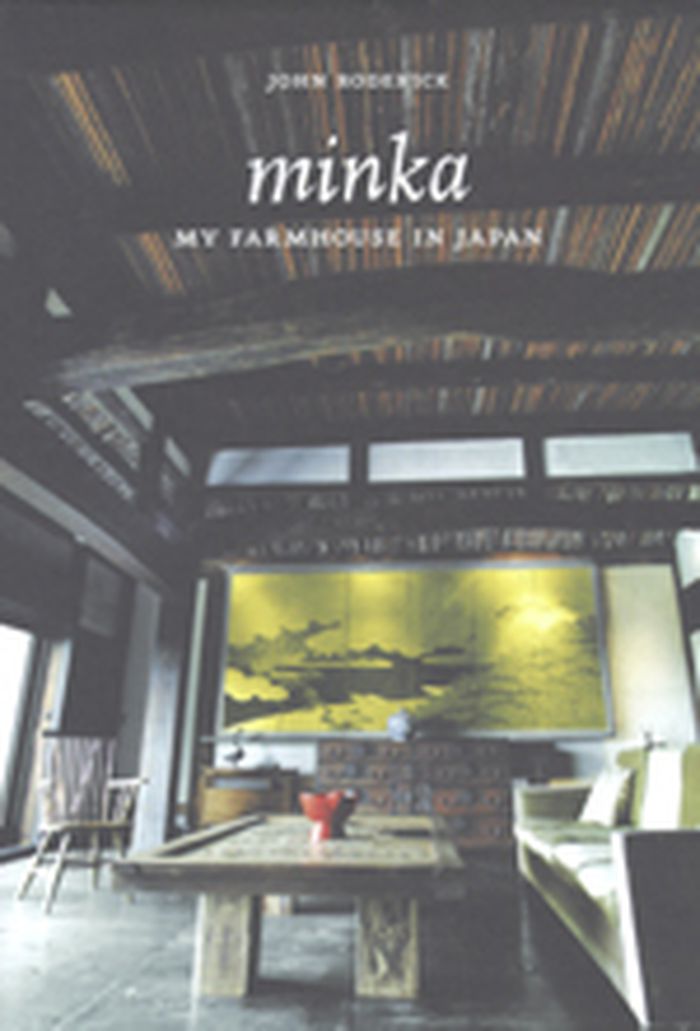
In 1959 the journalist John Roderick joined the Tokyo bureau of the Associated Press. There, he befriended a Japanese family, the Takishitas. After musing offhandedly that he would like to one day have his own house in Japan, the family unbeknownst to John set out to grant his wish. They found Roderick a 250-year-old minka, or hand-built farmhouse, with a thatched roof and held together entirely by wooden pegs and joinery. It was about to be washed away by flooding and was being offered for only fourteen dollars. Roderick graciously bought the house, but was privately dismayed at the prospect of living in this enormous old relic lacking heating, bathing, plumbing, and proper kitchen facilities. So the minka was dismantled and stored, where Roderick secretly hoped it would stay, as it did for several years. But Roderick's reverence for natural materials and his appreciation of traditional Japanese and Shinto craftsmanship eventually got the better of him. Before long a team of experienced carpenters were hoisting massive beams, laying wide wooden floors, and attaching the split-bamboo ceiling. In just forty days they rebuilt the house on a hill overlooking Kamakura, the ancient capital of Japan. Working together, they renovated the farmhouse, adding features such as floor-to-ceiling sliding glass doors and a modern kitchen, bath, and toilet. From these humble beginnings, Roderick's minka has become internationally known and has hosted such luminaries as Senator Hillary Clinton. John Roderick's architectural memoir "Minka" tells the compelling and often poignant story of how one man fell in love with the people, culture, and ancient building traditions of Japan, and reminds us all about the importance of craftsmanship and the meaning of place and home in the process.
Minka, my farmhouse in Japan
Actions:
Price:
$27.95
(available to order)
Summary:
In 1959 the journalist John Roderick joined the Tokyo bureau of the Associated Press. There, he befriended a Japanese family, the Takishitas. After musing offhandedly that he would like to one day have his own house in Japan, the family unbeknownst to John set out to grant his wish. They found Roderick a 250-year-old minka, or hand-built farmhouse, with a thatched roof and held together entirely by wooden pegs and joinery. It was about to be washed away by flooding and was being offered for only fourteen dollars. Roderick graciously bought the house, but was privately dismayed at the prospect of living in this enormous old relic lacking heating, bathing, plumbing, and proper kitchen facilities. So the minka was dismantled and stored, where Roderick secretly hoped it would stay, as it did for several years. But Roderick's reverence for natural materials and his appreciation of traditional Japanese and Shinto craftsmanship eventually got the better of him. Before long a team of experienced carpenters were hoisting massive beams, laying wide wooden floors, and attaching the split-bamboo ceiling. In just forty days they rebuilt the house on a hill overlooking Kamakura, the ancient capital of Japan. Working together, they renovated the farmhouse, adding features such as floor-to-ceiling sliding glass doors and a modern kitchen, bath, and toilet. From these humble beginnings, Roderick's minka has become internationally known and has hosted such luminaries as Senator Hillary Clinton. John Roderick's architectural memoir "Minka" tells the compelling and often poignant story of how one man fell in love with the people, culture, and ancient building traditions of Japan, and reminds us all about the importance of craftsmanship and the meaning of place and home in the process.
Form:
books
books
Publication:
November 2007, New York
November 2007, New York
Subject:
Contemporary Asian Architecture
Contemporary Asian Architecture
Form:
books
books
Actions:
Price:
$55.95
(available to order)
Summary:
For street photographers, New York has always been a city of unparalleled visual excitement, teeming with diverse people and distinctive neighborhoods. "New York: capital of photography" examines how photographers chronicled New York throughout the twentieth century, how the city changed their vision, and how their work affected ideas about New York throughout the(...)
$55.95
(available to order)
Summary:
For street photographers, New York has always been a city of unparalleled visual excitement, teeming with diverse people and distinctive neighborhoods. "New York: capital of photography" examines how photographers chronicled New York throughout the twentieth century, how the city changed their vision, and how their work affected ideas about New York throughout the(...)
Title:
New York : capital of photography
Actions:
Price:
$55.95
(available to order)
Summary:
For street photographers, New York has always been a city of unparalleled visual excitement, teeming with diverse people and distinctive neighborhoods. "New York: capital of photography" examines how photographers chronicled New York throughout the twentieth century, how the city changed their vision, and how their work affected ideas about New York throughout the world. This illustrated book presents the work of both famous and lesser-known photographers, many of them Jewish. An underlying theme in this pictorial history of New York is the critical role played by Jewish sensibility. Max Kozloff begins with the development of street photography that emerged in New York in the early 1900s with a local school of photographers led by Alfred Stieglitz. Documenting work, loneliness, play, conflict, love, and spectacle, this group came to define urban perception as the characteristic visual experience of modernity. Some photographers also became social activists, observing New York’s ethnic and racial diversity and focusing their lenses on newcomers and marginalized groups. From the 1930s to 1960s, Kozloff shows, members of the New York School envisioned the city in a different way, as a processing center for immigrants, a site of commercial display, and a crossroads of world culture. In the 1950s and 1960s, photographers saw New York as an uneasy battleground, and their pictures caught the forces of civil rights, sexual liberation, and leftist politics as they clashed with traditional powers. Finally, as the century waned, photographers became more self-conscious, exploring their own and their friends’ identities through the camera’s eye. From Lewis Hine’s 1905 picture of recent immigrants at Ellis Island to Nan Goldin’s portraits of her friends over the past thirty years, these photographs reveal the true vitality of New York. Max Kozloff, art critic and former executive editor of Artforum, has published widely on twentieth-century art and photography. Published in association with The Jewish Museum, New York.
New York : capital of photography
Actions:
Price:
$55.95
(available to order)
Summary:
For street photographers, New York has always been a city of unparalleled visual excitement, teeming with diverse people and distinctive neighborhoods. "New York: capital of photography" examines how photographers chronicled New York throughout the twentieth century, how the city changed their vision, and how their work affected ideas about New York throughout the world. This illustrated book presents the work of both famous and lesser-known photographers, many of them Jewish. An underlying theme in this pictorial history of New York is the critical role played by Jewish sensibility. Max Kozloff begins with the development of street photography that emerged in New York in the early 1900s with a local school of photographers led by Alfred Stieglitz. Documenting work, loneliness, play, conflict, love, and spectacle, this group came to define urban perception as the characteristic visual experience of modernity. Some photographers also became social activists, observing New York’s ethnic and racial diversity and focusing their lenses on newcomers and marginalized groups. From the 1930s to 1960s, Kozloff shows, members of the New York School envisioned the city in a different way, as a processing center for immigrants, a site of commercial display, and a crossroads of world culture. In the 1950s and 1960s, photographers saw New York as an uneasy battleground, and their pictures caught the forces of civil rights, sexual liberation, and leftist politics as they clashed with traditional powers. Finally, as the century waned, photographers became more self-conscious, exploring their own and their friends’ identities through the camera’s eye. From Lewis Hine’s 1905 picture of recent immigrants at Ellis Island to Nan Goldin’s portraits of her friends over the past thirty years, these photographs reveal the true vitality of New York. Max Kozloff, art critic and former executive editor of Artforum, has published widely on twentieth-century art and photography. Published in association with The Jewish Museum, New York.
Form:
books
books
Publication:
April 2002, New York
April 2002, New York
Subject:
Theory of Photography
Theory of Photography


