


1513 Results
Form:
books
books
Actions:
Price:
$65.00
(available to order)
Summary:
Claus Bury began his career as a jeweler, and the architectural sculpture he's been making since 1979 retains the rounded shapes, balance and smooth finish of his first trade. High Tide, Low Tide tracks Bury's most recent accomplishments, and, for the first time, includes excerpts from his sketchbooks and journals. Pages detailing his recent travels in Yucatan, Mexico(...)
$65.00
(available to order)
Summary:
Claus Bury began his career as a jeweler, and the architectural sculpture he's been making since 1979 retains the rounded shapes, balance and smooth finish of his first trade. High Tide, Low Tide tracks Bury's most recent accomplishments, and, for the first time, includes excerpts from his sketchbooks and journals. Pages detailing his recent travels in Yucatan, Mexico(...)
Subject:
Contemporary Art Monographs
Contemporary Art Monographs
Publication:
May 2007, Ostfildern
May 2007, Ostfildern
Title:
Claus Bury : High tide - low tide
Actions:
Price:
$65.00
(available to order)
Summary:
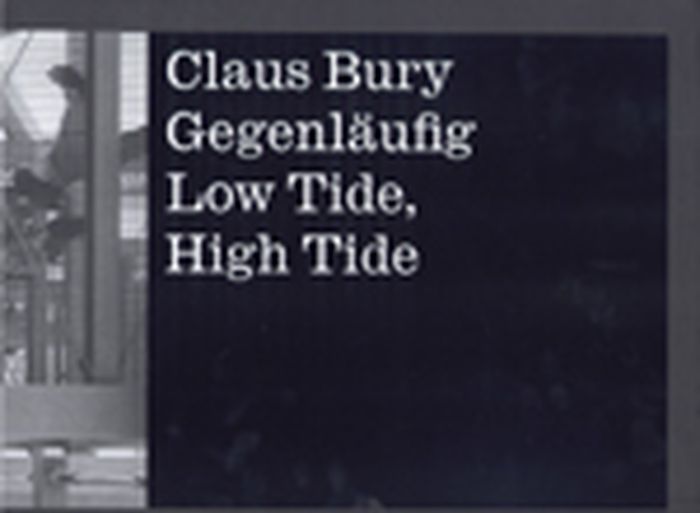
Claus Bury began his career as a jeweler, and the architectural sculpture he's been making since 1979 retains the rounded shapes, balance and smooth finish of his first trade. High Tide, Low Tide tracks Bury's most recent accomplishments, and, for the first time, includes excerpts from his sketchbooks and journals. Pages detailing his recent travels in Yucatan, Mexico appear alongside black-and-white photographs of Mayan temples. Photographs of Bury's farm works, made of bales of hay, show the influence of the Mayans' iconic geometric purity. Other materials illuminate the artist's latest curved and boned structures, many wooden, by comparing them to ships. And the production of his largest work to date, the 2006 "Bitterfeld Arch," a multi-story steel bridge to nowhere, is documented from the ground up--eight months from start to ribbon-cutting--and contrasted with the "Greenhouse for Thoughts," a 2005 wooden installation shaped like a house frame, with a forest of studs where the walls would be. Though Bury was trained in Germany and is based there, he has taught at RISD, won an NEA grant, and seen his work shown at The Metropolitan Museum of Art, New York.
Claus Bury : High tide - low tide
Actions:
Price:
$65.00
(available to order)
Summary:
Claus Bury began his career as a jeweler, and the architectural sculpture he's been making since 1979 retains the rounded shapes, balance and smooth finish of his first trade. High Tide, Low Tide tracks Bury's most recent accomplishments, and, for the first time, includes excerpts from his sketchbooks and journals. Pages detailing his recent travels in Yucatan, Mexico appear alongside black-and-white photographs of Mayan temples. Photographs of Bury's farm works, made of bales of hay, show the influence of the Mayans' iconic geometric purity. Other materials illuminate the artist's latest curved and boned structures, many wooden, by comparing them to ships. And the production of his largest work to date, the 2006 "Bitterfeld Arch," a multi-story steel bridge to nowhere, is documented from the ground up--eight months from start to ribbon-cutting--and contrasted with the "Greenhouse for Thoughts," a 2005 wooden installation shaped like a house frame, with a forest of studs where the walls would be. Though Bury was trained in Germany and is based there, he has taught at RISD, won an NEA grant, and seen his work shown at The Metropolitan Museum of Art, New York.
Form:
books
books
Publication:
May 2007, Ostfildern
May 2007, Ostfildern
Subject:
Contemporary Art Monographs
Contemporary Art Monographs
Form:
books
books
Actions:
Holdings:
Description:
xviii, 317 pages : illustrations, maps ; 25 cm
Description:
xviii, 317 pages : illustrations, maps ; 25 cm
Author:
Subject:
Publication:
New York, NY : Oxford University Press, [2023], ©2023
New York, NY : Oxford University Press, [2023], ©2023
Title:
Why public space matters / Setha Low.
Actions:
Holdings:
Description:
xviii, 317 pages : illustrations, maps ; 25 cm
Why public space matters / Setha Low.
Actions:
Holdings:
Description:
xviii, 317 pages : illustrations, maps ; 25 cm
Form:
books
books
Publication:
New York, NY : Oxford University Press, [2023], ©2023
New York, NY : Oxford University Press, [2023], ©2023
Author:
Subject:
Form:
books
books
Actions:
Holdings:
Description:
vii, 274 pages : illustrations ; 27 cm
Description:
vii, 274 pages : illustrations ; 27 cm
Author:
Subject:
Publication:
Cambridge, Massachusetts : The MIT Press, [2016], ©2016
Cambridge, Massachusetts : The MIT Press, [2016], ©2016
Title:
Whole Earth field guide / edited by Caroline Maniaque-Benton with Meredith Gaglio.
Actions:
Holdings:
Description:
vii, 274 pages : illustrations ; 27 cm
Whole Earth field guide / edited by Caroline Maniaque-Benton with Meredith Gaglio.
Actions:
Holdings:
Description:
vii, 274 pages : illustrations ; 27 cm
Form:
books
books
Publication:
Cambridge, Massachusetts : The MIT Press, [2016], ©2016
Cambridge, Massachusetts : The MIT Press, [2016], ©2016
Author:
Subject:
Form:
books
books
Title:
Tiny gardens everywhere : the past, present, and future of the self-provisioning city / Kate Brown.
Tiny gardens everywhere : the past, present, and future of the self-provisioning city / Kate Brown.
Actions:
Holdings:
Description:
320 pages : illustrations ; 24 cm
Description:
320 pages : illustrations ; 24 cm
Author:
Subject:
Publication:
New York, NY : W.W. Norton & Company, [2026], ©2026
New York, NY : W.W. Norton & Company, [2026], ©2026
Title:
Tiny gardens everywhere : the past, present, and future of the self-provisioning city / Kate Brown.
Actions:
Holdings:
Description:
320 pages : illustrations ; 24 cm
Tiny gardens everywhere : the past, present, and future of the self-provisioning city / Kate Brown.
Actions:
Holdings:
Description:
320 pages : illustrations ; 24 cm
Form:
books
books
Publication:
New York, NY : W.W. Norton & Company, [2026], ©2026
New York, NY : W.W. Norton & Company, [2026], ©2026
Author:
Subject:
Form:
books
books
Actions:
Price:
$26.95
(available to order)
Summary:
Matsutake is the most valuable mushroom in the world—and a weed that grows in human-disturbed forests across the northern hemisphere. Through its ability to nurture trees, matsutake helps forests to grow in daunting places. It is also an edible delicacy in Japan, where it sometimes commands astronomical prices. In all its contradictions, matsutake offers insights into(...)
$26.95
(available to order)
Summary:
Matsutake is the most valuable mushroom in the world—and a weed that grows in human-disturbed forests across the northern hemisphere. Through its ability to nurture trees, matsutake helps forests to grow in daunting places. It is also an edible delicacy in Japan, where it sometimes commands astronomical prices. In all its contradictions, matsutake offers insights into(...)
Publication:
September 2017
September 2017
Title:
The mushroom at the end of the world: on the possiblity of life in capitalist ruins
Actions:
Price:
$26.95
(available to order)
Summary:
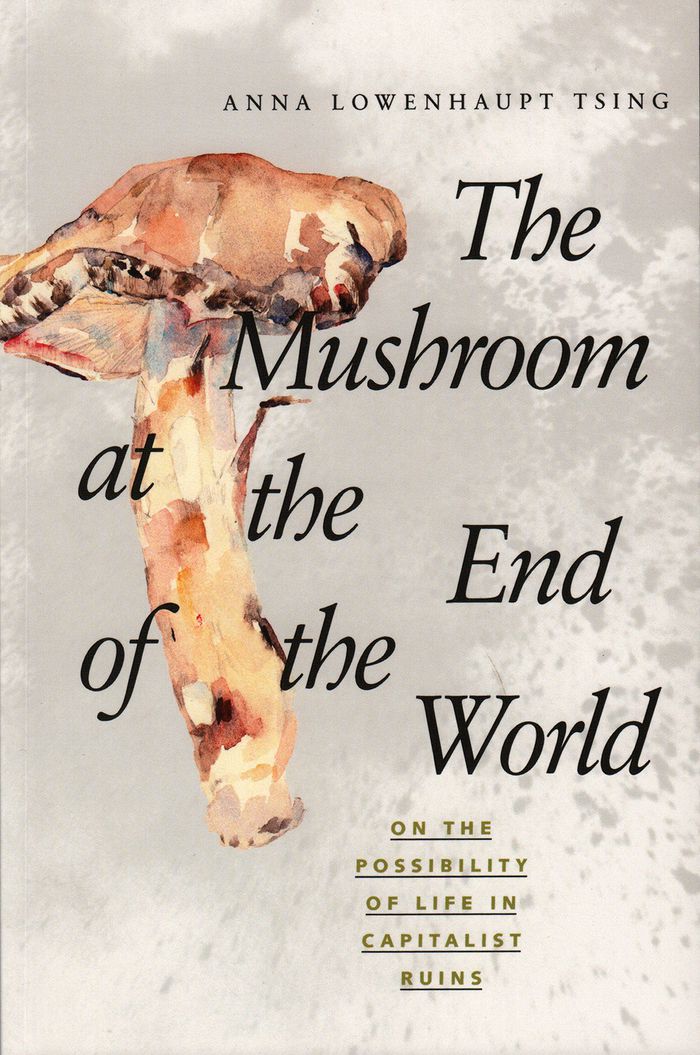
Matsutake is the most valuable mushroom in the world—and a weed that grows in human-disturbed forests across the northern hemisphere. Through its ability to nurture trees, matsutake helps forests to grow in daunting places. It is also an edible delicacy in Japan, where it sometimes commands astronomical prices. In all its contradictions, matsutake offers insights into areas far beyond just mushrooms and addresses a crucial question: what manages to live in the ruins we have made? A tale of diversity within our damaged landscapes, "The mushroom at the end of the world" follows one of the strangest commodity chains of our times to explore the unexpected corners of capitalism. Here, we witness the varied and peculiar worlds of matsutake commerce: the worlds of Japanese gourmets, capitalist traders, Hmong jungle fighters, industrial forests, Yi Chinese goat herders, Finnish nature guides, and more. These companions also lead us into fungal ecologies and forest histories to better understand the promise of cohabitation in a time of massive human destruction. By investigating one of the world's most sought-after fungi, The Mushroom at the End of the World presents an original examination into the relation between capitalist destruction and collaborative survival within multispecies landscapes, the prerequisite for continuing life on earth.
The mushroom at the end of the world: on the possiblity of life in capitalist ruins
Actions:
Price:
$26.95
(available to order)
Summary:
Matsutake is the most valuable mushroom in the world—and a weed that grows in human-disturbed forests across the northern hemisphere. Through its ability to nurture trees, matsutake helps forests to grow in daunting places. It is also an edible delicacy in Japan, where it sometimes commands astronomical prices. In all its contradictions, matsutake offers insights into areas far beyond just mushrooms and addresses a crucial question: what manages to live in the ruins we have made? A tale of diversity within our damaged landscapes, "The mushroom at the end of the world" follows one of the strangest commodity chains of our times to explore the unexpected corners of capitalism. Here, we witness the varied and peculiar worlds of matsutake commerce: the worlds of Japanese gourmets, capitalist traders, Hmong jungle fighters, industrial forests, Yi Chinese goat herders, Finnish nature guides, and more. These companions also lead us into fungal ecologies and forest histories to better understand the promise of cohabitation in a time of massive human destruction. By investigating one of the world's most sought-after fungi, The Mushroom at the End of the World presents an original examination into the relation between capitalist destruction and collaborative survival within multispecies landscapes, the prerequisite for continuing life on earth.
Form:
books
books
Publication:
September 2017
September 2017
Form:
books
books
Actions:
Holdings:
Description:
223 pages : color illustrations ; 25 cm
Description:
223 pages : color illustrations ; 25 cm
Author:
Subject:
Publication:
London ; New York : Tauris Parke Books, 1994.
London ; New York : Tauris Parke Books, 1994.
Title:
The birth of a century : early color photographs of America / text by Jim Hughes ; photographs by William Henry Jackson and the Detroit Photographic Company.
Actions:
Holdings:
Description:
223 pages : color illustrations ; 25 cm
The birth of a century : early color photographs of America / text by Jim Hughes ; photographs by William Henry Jackson and the Detroit Photographic Company.
Actions:
Holdings:
Description:
223 pages : color illustrations ; 25 cm
Form:
books
books
Publication:
London ; New York : Tauris Parke Books, 1994.
London ; New York : Tauris Parke Books, 1994.
Author:
Subject:
Form:
books
books
Actions:
Price:
$50.95
(available to order)
Summary:
What is the role of architecture if not to realize a shared vision of the “good life,” a vision that in the age of architectural modernism shaped—and was shaped by—a range of ideas about the home? With "The good life", Iñaki Ábalos serves as our guide for a tour of seven iconic twentieth-century homes that represent various concepts for living. Some of the homes were(...)
$50.95
(available to order)
Summary:
What is the role of architecture if not to realize a shared vision of the “good life,” a vision that in the age of architectural modernism shaped—and was shaped by—a range of ideas about the home? With "The good life", Iñaki Ábalos serves as our guide for a tour of seven iconic twentieth-century homes that represent various concepts for living. Some of the homes were(...)
Title:
The good life: a guided visit to the houses of modernity
Actions:
Price:
$50.95
(available to order)
Summary:
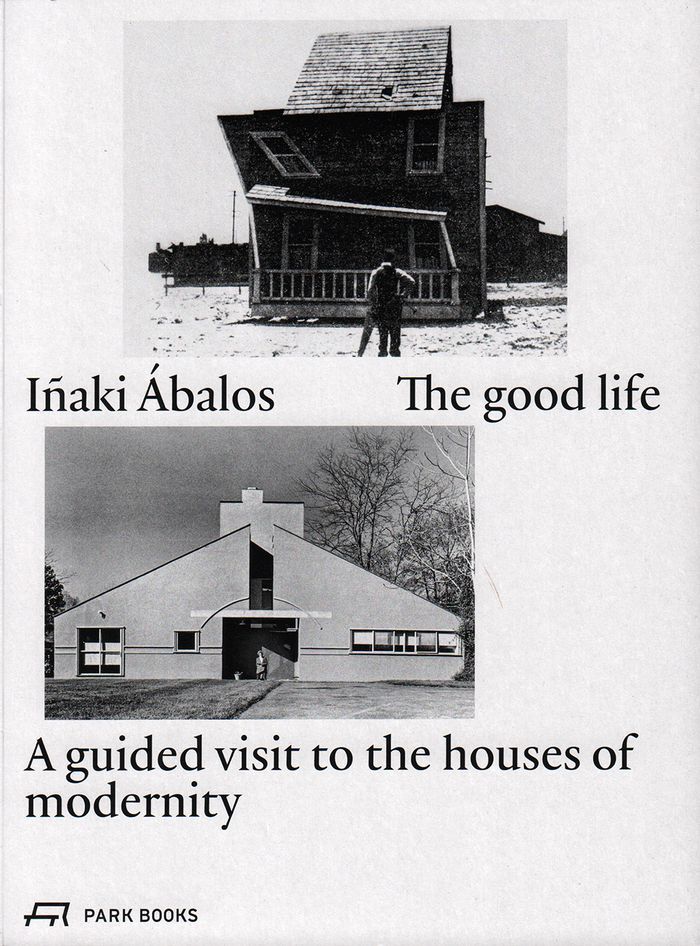
What is the role of architecture if not to realize a shared vision of the “good life,” a vision that in the age of architectural modernism shaped—and was shaped by—a range of ideas about the home? With "The good life", Iñaki Ábalos serves as our guide for a tour of seven iconic twentieth-century homes that represent various concepts for living. Some of the homes were actually built, while others were merely planned, painted, or created as part of a film set. We see Mies van der Rohe’s House with Three Patios, Martin Heidegger’s cabin in the Black Forest, Picasso’s Villa La Californie in Cannes, and the New York loft that Andy Warhol called The Factory. From the ultramodern geometric houses and gardens in Jacques Tati’s Mon Oncle, we travel to the famed hobby-kit house in Buster Keaton’s One Week and on to the sunny swimming pool and home in David Hockney’s painting A Bigger Splash. Ábalos guides readers through the key philosophical precepts that likely guided the creation of these homes, making insightful points about the relationship between ideas about a particular modern way of living and approaches to architecture and design. What he concludes is that modernism marks less a coherent triumph of positivism, as is often assumed, than a loose celebration of the radical pluralism of the twentieth century.
The good life: a guided visit to the houses of modernity
Actions:
Price:
$50.95
(available to order)
Summary:
What is the role of architecture if not to realize a shared vision of the “good life,” a vision that in the age of architectural modernism shaped—and was shaped by—a range of ideas about the home? With "The good life", Iñaki Ábalos serves as our guide for a tour of seven iconic twentieth-century homes that represent various concepts for living. Some of the homes were actually built, while others were merely planned, painted, or created as part of a film set. We see Mies van der Rohe’s House with Three Patios, Martin Heidegger’s cabin in the Black Forest, Picasso’s Villa La Californie in Cannes, and the New York loft that Andy Warhol called The Factory. From the ultramodern geometric houses and gardens in Jacques Tati’s Mon Oncle, we travel to the famed hobby-kit house in Buster Keaton’s One Week and on to the sunny swimming pool and home in David Hockney’s painting A Bigger Splash. Ábalos guides readers through the key philosophical precepts that likely guided the creation of these homes, making insightful points about the relationship between ideas about a particular modern way of living and approaches to architecture and design. What he concludes is that modernism marks less a coherent triumph of positivism, as is often assumed, than a loose celebration of the radical pluralism of the twentieth century.
Form:
books
books
Publication:
October 2017
October 2017
Subject:
Modernism
Modernism
Form:
books
books
Actions:
Holdings:
Description:
27, 43, 3 pages illustrations 19 cm.
Description:
27, 43, 3 pages illustrations 19 cm.
Author:
Subject:
Publication:
Barcelona, Editorial Noguer 1964.
Barcelona, Editorial Noguer 1964.
Title:
Avila. English translation by John Forrester.
Actions:
Holdings:
Description:
27, 43, 3 pages illustrations 19 cm.
Avila. English translation by John Forrester.
Actions:
Holdings:
Description:
27, 43, 3 pages illustrations 19 cm.
Form:
books
books
Publication:
Barcelona, Editorial Noguer 1964.
Barcelona, Editorial Noguer 1964.
Author:
Subject:
Form:
books
books
Price:
$32.95
(available to order)
Summary:
In 1949, the forest magnate, H.R. MacMillan, opened an exhibition at the Vancouver Art Gallery entitled “Design for Living,” a show which brought together design and artistic communities to create four imaginary households for postwar Vancouverites. It also heralded an unprecedented level of cooperation between the province’s industry and its artists and craftspeople – a(...)
$32.95
(available to order)
Summary:
In 1949, the forest magnate, H.R. MacMillan, opened an exhibition at the Vancouver Art Gallery entitled “Design for Living,” a show which brought together design and artistic communities to create four imaginary households for postwar Vancouverites. It also heralded an unprecedented level of cooperation between the province’s industry and its artists and craftspeople – a(...)
Title:
A Modern life : art and design in British Columbia, 1945-1960
Actions:
Price:
$32.95
(available to order)
Summary:
In 1949, the forest magnate, H.R. MacMillan, opened an exhibition at the Vancouver Art Gallery entitled “Design for Living,” a show which brought together design and artistic communities to create four imaginary households for postwar Vancouverites. It also heralded an unprecedented level of cooperation between the province’s industry and its artists and craftspeople – a relationship that seemed to hold great promise for the development of art, furniture, and craft in B.C. The celebration of the cooperative spirit between “architects, artists and designers,” between “potters, weavers and gardeners” is central to "A Modern Life", which examines the coming together of what were often very separate disciplines in post-World War II British Columbia, as well as the trend-setting design and use of materials that developed in the province, and the impact these had on the more traditional art community. "A Modern Life", demonstrates that the ideas of the artistic and design community as a whole during this vibrant period – an era of optimism and promise for the future, in a province that had reason to believe passionately in what was to come – have a continued relevance and importance for our understanding of the history of this community and the relationship of the built environment to the extraordinary landscape of British Columbia. With essays by Rachel Chinnery on ceramics, Scott Watson on fine arts, Alan Elder on collaboration, Allan Collier on wood and design, and Sherry McKay on architecture.
A Modern life : art and design in British Columbia, 1945-1960
Actions:
Price:
$32.95
(available to order)
Summary:
In 1949, the forest magnate, H.R. MacMillan, opened an exhibition at the Vancouver Art Gallery entitled “Design for Living,” a show which brought together design and artistic communities to create four imaginary households for postwar Vancouverites. It also heralded an unprecedented level of cooperation between the province’s industry and its artists and craftspeople – a relationship that seemed to hold great promise for the development of art, furniture, and craft in B.C. The celebration of the cooperative spirit between “architects, artists and designers,” between “potters, weavers and gardeners” is central to "A Modern Life", which examines the coming together of what were often very separate disciplines in post-World War II British Columbia, as well as the trend-setting design and use of materials that developed in the province, and the impact these had on the more traditional art community. "A Modern Life", demonstrates that the ideas of the artistic and design community as a whole during this vibrant period – an era of optimism and promise for the future, in a province that had reason to believe passionately in what was to come – have a continued relevance and importance for our understanding of the history of this community and the relationship of the built environment to the extraordinary landscape of British Columbia. With essays by Rachel Chinnery on ceramics, Scott Watson on fine arts, Alan Elder on collaboration, Allan Collier on wood and design, and Sherry McKay on architecture.
Form:
books
books
Publication:
October 2004, Vancouver
October 2004, Vancouver
Subject:
Architecture in Canada
Architecture in Canada
Form:
books
books
Price:
$26.95
(available to order)
Summary:
Timber is a vital resource that is all around us. It is the house that shelters us, the furniture we relax in, the books we read, the paper we print, the disposable diapers for our babies, and the boxes that contain our cereal, detergent, and new appliances. The way we produce and consume timber, however, is changing. With international timber companies and big box(...)
$26.95
(available to order)
Summary:
Timber is a vital resource that is all around us. It is the house that shelters us, the furniture we relax in, the books we read, the paper we print, the disposable diapers for our babies, and the boxes that contain our cereal, detergent, and new appliances. The way we produce and consume timber, however, is changing. With international timber companies and big box(...)
Title:
Timber
Actions:
Price:
$26.95
(available to order)
Summary:
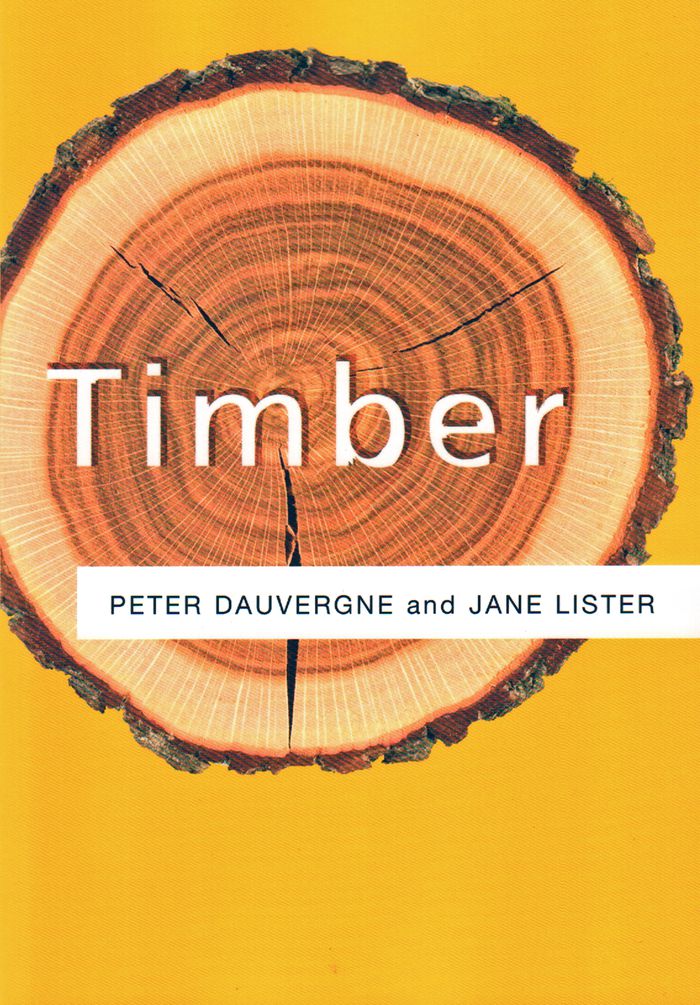
Timber is a vital resource that is all around us. It is the house that shelters us, the furniture we relax in, the books we read, the paper we print, the disposable diapers for our babies, and the boxes that contain our cereal, detergent, and new appliances. The way we produce and consume timber, however, is changing. With international timber companies and big box discount retailers increasingly controlling through global commodity chains where and how much timber is traded, the world's remaining old-growth forests, particularly in the developing world, are under threat of disappearing - all for the price of a consumer bargain. This trailblazing book is the first to expose what's happening inside corporate commodity chains with conclusions that fundamentally challenge our understanding of how and why deforestation persists. Authors Peter Dauvergne and Jane Lister reveal how timber now moves through long and complex supply chains from the forests of the global South through the factories of emerging economies like China to the big box retail shelves of Europe and North America. Well-off consumers are getting unprecedented deals. But the social and environmental costs are extraordinarily high as corporations mine the world's poorest regions and most vulnerable ecosystems. The growing power of big retail within these commodity chains is further increasing South-North inequities and unsustainable global consumption. Yet, as this book's highly original analysis uncovers, it is also creating some intriguing opportunities to promote more responsible business practices and better global forest governance.
Timber
Actions:
Price:
$26.95
(available to order)
Summary:
Timber is a vital resource that is all around us. It is the house that shelters us, the furniture we relax in, the books we read, the paper we print, the disposable diapers for our babies, and the boxes that contain our cereal, detergent, and new appliances. The way we produce and consume timber, however, is changing. With international timber companies and big box discount retailers increasingly controlling through global commodity chains where and how much timber is traded, the world's remaining old-growth forests, particularly in the developing world, are under threat of disappearing - all for the price of a consumer bargain. This trailblazing book is the first to expose what's happening inside corporate commodity chains with conclusions that fundamentally challenge our understanding of how and why deforestation persists. Authors Peter Dauvergne and Jane Lister reveal how timber now moves through long and complex supply chains from the forests of the global South through the factories of emerging economies like China to the big box retail shelves of Europe and North America. Well-off consumers are getting unprecedented deals. But the social and environmental costs are extraordinarily high as corporations mine the world's poorest regions and most vulnerable ecosystems. The growing power of big retail within these commodity chains is further increasing South-North inequities and unsustainable global consumption. Yet, as this book's highly original analysis uncovers, it is also creating some intriguing opportunities to promote more responsible business practices and better global forest governance.
Form:
books
books
Publication:
April 2011
April 2011
Subject:
Current Exhibitions
Current Exhibitions


