


1500 Results
Form:
books
books
Title:
Chinese Architecture
Chinese Architecture
Actions:
Price:
$93.95
(available to order)
Summary:
This book comprises a comprehensive and authoritative study of Chinese architecture from Neolithic times through the late nineteenth century. Six of China's leading architectural historians have joined with a Western scholar to write this book, the first in-depth, collaborative history of Chinese architecture in more than fifty years. Drawing on recent discoveries and(...)
$93.95
(available to order)
Summary:
This book comprises a comprehensive and authoritative study of Chinese architecture from Neolithic times through the late nineteenth century. Six of China's leading architectural historians have joined with a Western scholar to write this book, the first in-depth, collaborative history of Chinese architecture in more than fifty years. Drawing on recent discoveries and(...)
Subject:
History until 1900, Asia
History until 1900, Asia
Publication:
December 2002, New Haven and London
December 2002, New Haven and London
Title:
Chinese Architecture
Actions:
Price:
$93.95
(available to order)
Summary:
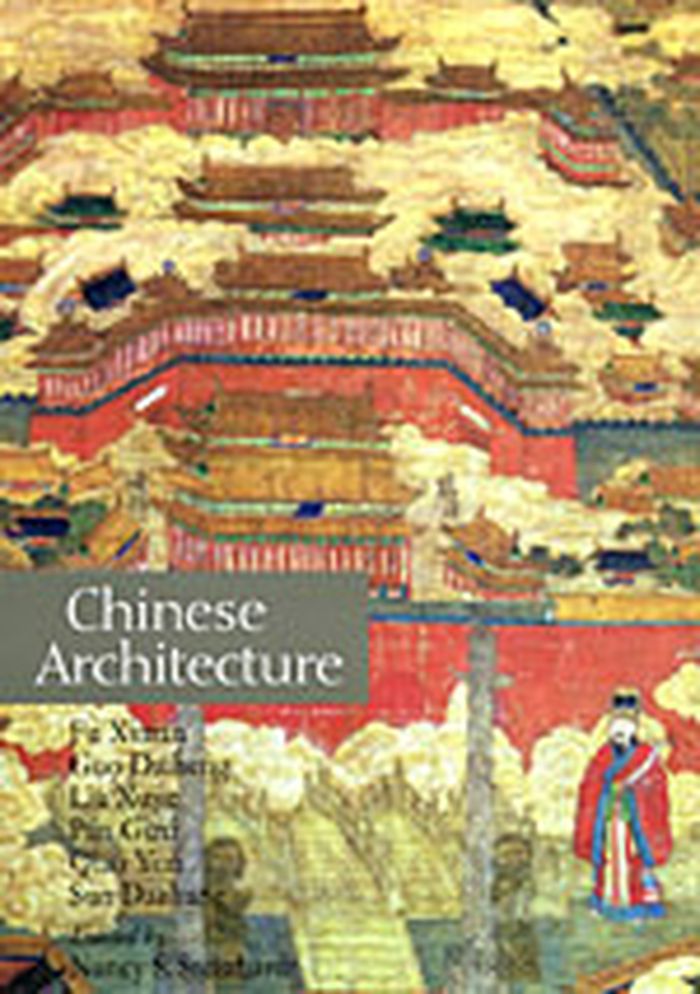
This book comprises a comprehensive and authoritative study of Chinese architecture from Neolithic times through the late nineteenth century. Six of China's leading architectural historians have joined with a Western scholar to write this book, the first in-depth, collaborative history of Chinese architecture in more than fifty years. Drawing on recent discoveries and current scholarly work inside China, this volume recounts the story of China's architectural achievements, the forms they took, and the historical, political, cultural, and social factors that shaped them. Each chapter includes sections on cities, palatial architecture, religious architecture, tombs, and gardens as well as discussions of bridges, walls, fortifications, academies, and architectural writings. The book is enhanced with color plates and line drawings, explanatory maps and charts, and an index that includes Chinese terms.
Chinese Architecture
Actions:
Price:
$93.95
(available to order)
Summary:
This book comprises a comprehensive and authoritative study of Chinese architecture from Neolithic times through the late nineteenth century. Six of China's leading architectural historians have joined with a Western scholar to write this book, the first in-depth, collaborative history of Chinese architecture in more than fifty years. Drawing on recent discoveries and current scholarly work inside China, this volume recounts the story of China's architectural achievements, the forms they took, and the historical, political, cultural, and social factors that shaped them. Each chapter includes sections on cities, palatial architecture, religious architecture, tombs, and gardens as well as discussions of bridges, walls, fortifications, academies, and architectural writings. The book is enhanced with color plates and line drawings, explanatory maps and charts, and an index that includes Chinese terms.
Form:
books
books
Publication:
December 2002, New Haven and London
December 2002, New Haven and London
Subject:
History until 1900, Asia
History until 1900, Asia
Form:
books
books
Actions:
Price:
$65.00
(available to order)
Summary:
Sir John Vanbrugh (1664-1726) was by turns businessman, soldier, playwright, herald and architect of some of the most important country houses of his era. In this book architectural historian Vaughan Hart draws on these diverse interests to examine afresh Vanbrugh's surviving, destroyed and unrealised buildings as well as the designs he executed in collaboration with(...)
$65.00
(available to order)
Summary:
Sir John Vanbrugh (1664-1726) was by turns businessman, soldier, playwright, herald and architect of some of the most important country houses of his era. In this book architectural historian Vaughan Hart draws on these diverse interests to examine afresh Vanbrugh's surviving, destroyed and unrealised buildings as well as the designs he executed in collaboration with(...)
Title:
Sir John Vanbrugh : storyteller in stone
Actions:
Price:
$65.00
(available to order)
Summary:
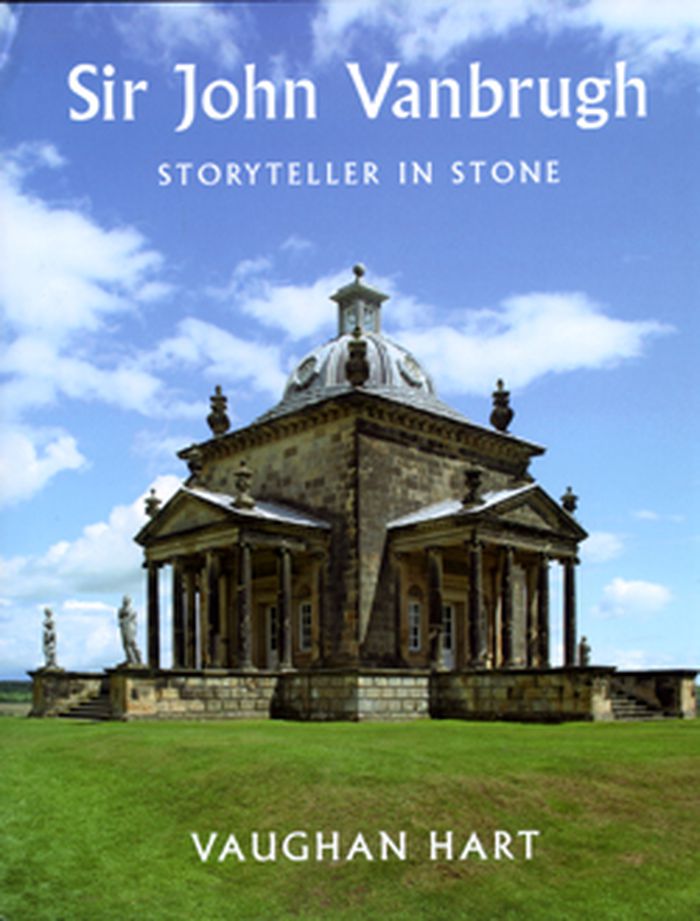
Sir John Vanbrugh (1664-1726) was by turns businessman, soldier, playwright, herald and architect of some of the most important country houses of his era. In this book architectural historian Vaughan Hart draws on these diverse interests to examine afresh Vanbrugh's surviving, destroyed and unrealised buildings as well as the designs he executed in collaboration with Nicholas Hawksmoor. It was the fate of Vanbrugh's buildings to be at first maligned and then misunderstood. Hart outlines the contemporary political and social events which influenced the architect and shows how his strikingly original houses, such as those as Seaton Delaval and Grimsthorpe, can be interpreted through reference to classical mythology, renaissance fortifications and medieval houses. Vaughan Hart is Professor of Architecture in the Department of Architecture and Civil Engineering at the University of Bath.
Sir John Vanbrugh : storyteller in stone
Actions:
Price:
$65.00
(available to order)
Summary:
Sir John Vanbrugh (1664-1726) was by turns businessman, soldier, playwright, herald and architect of some of the most important country houses of his era. In this book architectural historian Vaughan Hart draws on these diverse interests to examine afresh Vanbrugh's surviving, destroyed and unrealised buildings as well as the designs he executed in collaboration with Nicholas Hawksmoor. It was the fate of Vanbrugh's buildings to be at first maligned and then misunderstood. Hart outlines the contemporary political and social events which influenced the architect and shows how his strikingly original houses, such as those as Seaton Delaval and Grimsthorpe, can be interpreted through reference to classical mythology, renaissance fortifications and medieval houses. Vaughan Hart is Professor of Architecture in the Department of Architecture and Civil Engineering at the University of Bath.
Form:
books
books
Publication:
April 2008, New Haven, London
April 2008, New Haven, London
Subject:
Architecture Monographs
Architecture Monographs
Form:
books
books
Actions:
Holdings:
Description:
x, 611 pages : illustrations (some color), facsimiles, maps, portraits ; 25 cm
Description:
x, 611 pages : illustrations (some color), facsimiles, maps, portraits ; 25 cm
Author:
Subject:
Publication:
New York : Columbia University Press, [2022], ©2022
New York : Columbia University Press, [2022], ©2022
Title:
Before Central Park / Sara Cedar Miller.
Actions:
Holdings:
Description:
x, 611 pages : illustrations (some color), facsimiles, maps, portraits ; 25 cm
Before Central Park / Sara Cedar Miller.
Actions:
Holdings:
Description:
x, 611 pages : illustrations (some color), facsimiles, maps, portraits ; 25 cm
Form:
books
books
Publication:
New York : Columbia University Press, [2022], ©2022
New York : Columbia University Press, [2022], ©2022
Author:
Subject:
Form:
books
books
Actions:
Price:
$34.95
(available to order)
Summary:
Le palais des Beaux-Arts de Lille conserve depuis 1987 dans ses collections un ensemble de quinze maquettes historiques des villes fortifiées ayant assuré la défense du nord de la France face aux Pays-Bas espagnols à partir du règne de Louis XIV. La collection des plans-reliefs a été créée en 1668 par Louvois, ministre de la guerre de Louis XIV. Outils employés pour la(...)
$34.95
(available to order)
Summary:
Le palais des Beaux-Arts de Lille conserve depuis 1987 dans ses collections un ensemble de quinze maquettes historiques des villes fortifiées ayant assuré la défense du nord de la France face aux Pays-Bas espagnols à partir du règne de Louis XIV. La collection des plans-reliefs a été créée en 1668 par Louvois, ministre de la guerre de Louis XIV. Outils employés pour la(...)
Title:
Les plans en relief : des places fortes du nord
Actions:
Price:
$34.95
(available to order)
Summary:
Le palais des Beaux-Arts de Lille conserve depuis 1987 dans ses collections un ensemble de quinze maquettes historiques des villes fortifiées ayant assuré la défense du nord de la France face aux Pays-Bas espagnols à partir du règne de Louis XIV. La collection des plans-reliefs a été créée en 1668 par Louvois, ministre de la guerre de Louis XIV. Outils employés pour la conception de nouvelles fortifications, puis œuvres de prestige servant la glorification de la puissance des souverains, ces plans-reliefs, chefs-d'œuvre de miniaturisation, offrent le témoignage de plus de deux siècles d'histoire de la fortification bastionnée, de la guerre de siège et de la constitution du territoire, de Louis XIV au XIXe siècle. Ils constituent une source documentaire unique pour l'histoire de la fortification, de l'urbanisme, de l'architecture et du paysage des anciens Pays-Bas français.
Les plans en relief : des places fortes du nord
Actions:
Price:
$34.95
(available to order)
Summary:
Le palais des Beaux-Arts de Lille conserve depuis 1987 dans ses collections un ensemble de quinze maquettes historiques des villes fortifiées ayant assuré la défense du nord de la France face aux Pays-Bas espagnols à partir du règne de Louis XIV. La collection des plans-reliefs a été créée en 1668 par Louvois, ministre de la guerre de Louis XIV. Outils employés pour la conception de nouvelles fortifications, puis œuvres de prestige servant la glorification de la puissance des souverains, ces plans-reliefs, chefs-d'œuvre de miniaturisation, offrent le témoignage de plus de deux siècles d'histoire de la fortification bastionnée, de la guerre de siège et de la constitution du territoire, de Louis XIV au XIXe siècle. Ils constituent une source documentaire unique pour l'histoire de la fortification, de l'urbanisme, de l'architecture et du paysage des anciens Pays-Bas français.
Form:
books
books
Publication:
December 2006, Paris / Lille
December 2006, Paris / Lille
Subject:
Treatises
Treatises
Form:
books
books
Holdings:
Description:
xxii, 211 pages : illustrations (some color) ; 29 cm.
Description:
xxii, 211 pages : illustrations (some color) ; 29 cm.
Author:
Subject:
Publication:
University ParK, Pa. : Published for the American Academy in Rome by the Pennsylvania State University Press, 1993.
University ParK, Pa. : Published for the American Academy in Rome by the Pennsylvania State University Press, 1993.
Title:
Cosa IV : the houses / by Vincent J. Bruno and Russell T. Scott.
Actions:
Holdings:
Description:
xxii, 211 pages : illustrations (some color) ; 29 cm.
Cosa IV : the houses / by Vincent J. Bruno and Russell T. Scott.
Actions:
Holdings:
Description:
xxii, 211 pages : illustrations (some color) ; 29 cm.
Form:
books
books
Publication:
University ParK, Pa. : Published for the American Academy in Rome by the Pennsylvania State University Press, 1993.
University ParK, Pa. : Published for the American Academy in Rome by the Pennsylvania State University Press, 1993.
Author:
Subject:
Form:
books
books
Actions:
Price:
$81.50
(available to order)
Summary:
The years around 1700 were marked by transformations in European and colonial capital cities. This era saw the creation not only of palatial complexes and urban spaces appropriate to autocratic power, but also of essential infrastructure such as roads, ports, and fortifications. In addition, many of the civic structures and background buildings that form the familiar(...)
$81.50
(available to order)
Summary:
The years around 1700 were marked by transformations in European and colonial capital cities. This era saw the creation not only of palatial complexes and urban spaces appropriate to autocratic power, but also of essential infrastructure such as roads, ports, and fortifications. In addition, many of the civic structures and background buildings that form the familiar(...)
Title:
Circa 1700 : architecture in Europe and the Americas
Actions:
Price:
$81.50
(available to order)
Summary:
The years around 1700 were marked by transformations in European and colonial capital cities. This era saw the creation not only of palatial complexes and urban spaces appropriate to autocratic power, but also of essential infrastructure such as roads, ports, and fortifications. In addition, many of the civic structures and background buildings that form the familiar urban images of the eighteenth century date from this period. In all of this activity, architects and architectural ideas, formed mostly in Italy and influenced by the baroque architecture of Rome, especially the late works of Francesco Borromini and Gian Lorenzo Bernini, played a central role. Twelve contributors provide a comprehensive look at the design, renewal, and expansion of capitals and countries including Naples, Rome, Vienna, Stockholm, Saint Petersburg, England, Amsterdam, Cádiz, Lisbon, Quebec City, and Lima. The result is a fascinating cross section that allows a comparative reading of baroque architecture: from country to country, from region to region, and from the Old World to the New.
Circa 1700 : architecture in Europe and the Americas
Actions:
Price:
$81.50
(available to order)
Summary:
The years around 1700 were marked by transformations in European and colonial capital cities. This era saw the creation not only of palatial complexes and urban spaces appropriate to autocratic power, but also of essential infrastructure such as roads, ports, and fortifications. In addition, many of the civic structures and background buildings that form the familiar urban images of the eighteenth century date from this period. In all of this activity, architects and architectural ideas, formed mostly in Italy and influenced by the baroque architecture of Rome, especially the late works of Francesco Borromini and Gian Lorenzo Bernini, played a central role. Twelve contributors provide a comprehensive look at the design, renewal, and expansion of capitals and countries including Naples, Rome, Vienna, Stockholm, Saint Petersburg, England, Amsterdam, Cádiz, Lisbon, Quebec City, and Lima. The result is a fascinating cross section that allows a comparative reading of baroque architecture: from country to country, from region to region, and from the Old World to the New.
Form:
books
books
Publication:
January 1900, Washington
January 1900, Washington
Subject:
History until 1900
History until 1900
Form:
books
books
Actions:
Price:
$67.50
(available in store)
Summary:
Founded by Alexander the Great in 332 BC, Alexandria was for a long time the largest city in the ancient world. Flattened by a tsunami in 365 AD, it was little more than a fishing village when captured by Napoleon in 1798. The 19th century saw it become the center of the Egyptian cotton trade, bringing prosperity and an influx of European merchants. Then came the(...)
$67.50
(available in store)
Summary:
Founded by Alexander the Great in 332 BC, Alexandria was for a long time the largest city in the ancient world. Flattened by a tsunami in 365 AD, it was little more than a fishing village when captured by Napoleon in 1798. The 19th century saw it become the center of the Egyptian cotton trade, bringing prosperity and an influx of European merchants. Then came the(...)
Title:
Alexandria architectural guide
Actions:
Price:
$67.50
(available in store)
Summary:
Founded by Alexander the Great in 332 BC, Alexandria was for a long time the largest city in the ancient world. Flattened by a tsunami in 365 AD, it was little more than a fishing village when captured by Napoleon in 1798. The 19th century saw it become the center of the Egyptian cotton trade, bringing prosperity and an influx of European merchants. Then came the bombardment by the English in 1882, which almost flattened the city a second time, and the revolution of 1952, which in effect condemned many of its residential buildings to slow but picturesque decay. The ebbs and flows of history and different cultures (especially Arabic, Muslim, Greek, Italian, English, and, not least, Jewish) have all left their marks on Alexandria's architecture. There are classical ruins; Ottoman fortifications; Egyptian okelles (medieval merchants' buildings); a colorful fishing port; mosques, shrines, churches, and synagogues; mansions and apartment buildings in the neo-Renaissance, art deco, and international styles; brutalist post-revolutionary institutions. And then are oddities such as the Cotton Palace Tower, a skyscraper intended for use as the headquarters of the country s cotton industry but inexplicably abandoned before completion.
Alexandria architectural guide
Actions:
Price:
$67.50
(available in store)
Summary:
Founded by Alexander the Great in 332 BC, Alexandria was for a long time the largest city in the ancient world. Flattened by a tsunami in 365 AD, it was little more than a fishing village when captured by Napoleon in 1798. The 19th century saw it become the center of the Egyptian cotton trade, bringing prosperity and an influx of European merchants. Then came the bombardment by the English in 1882, which almost flattened the city a second time, and the revolution of 1952, which in effect condemned many of its residential buildings to slow but picturesque decay. The ebbs and flows of history and different cultures (especially Arabic, Muslim, Greek, Italian, English, and, not least, Jewish) have all left their marks on Alexandria's architecture. There are classical ruins; Ottoman fortifications; Egyptian okelles (medieval merchants' buildings); a colorful fishing port; mosques, shrines, churches, and synagogues; mansions and apartment buildings in the neo-Renaissance, art deco, and international styles; brutalist post-revolutionary institutions. And then are oddities such as the Cotton Palace Tower, a skyscraper intended for use as the headquarters of the country s cotton industry but inexplicably abandoned before completion.
Form:
books
books
Publication:
July 2021
July 2021
Subject:
City Guides
City Guides
Form:
books
books
Actions:
Price:
$39.95
(available in store)
Summary:
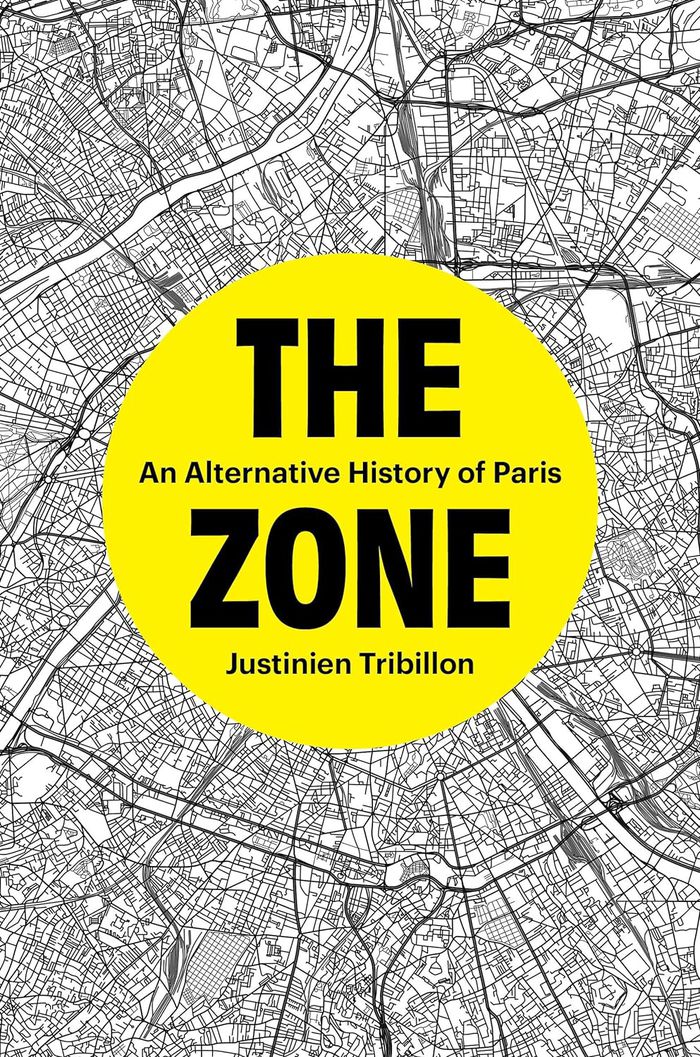
In "The Zone," Justinien Tribillon takes the reader on a tour of an eponymous Parisian hinterland. The site of dreams and nightmares, from Van Gogh’s paintings to the cinematic violence of La Haine, the Zone, so often misunderstood, is the key to understanding today’s Paris, and even France itself. Originally the site of defensive walls, alongside which mushroomed(...)
$39.95
(available in store)
Summary:
In "The Zone," Justinien Tribillon takes the reader on a tour of an eponymous Parisian hinterland. The site of dreams and nightmares, from Van Gogh’s paintings to the cinematic violence of La Haine, the Zone, so often misunderstood, is the key to understanding today’s Paris, and even France itself. Originally the site of defensive walls, alongside which mushroomed(...)
Title:
The zone: An alternative history of Paris
Actions:
Price:
$39.95
(available in store)
Summary:
In "The Zone," Justinien Tribillon takes the reader on a tour of an eponymous Parisian hinterland. The site of dreams and nightmares, from Van Gogh’s paintings to the cinematic violence of La Haine, the Zone, so often misunderstood, is the key to understanding today’s Paris, and even France itself. Originally the site of defensive walls, alongside which mushroomed makeshift housing, allotments, and dancehalls in the nineteenth century, the Zone has performed many functions and been a place of contention for two centuries. Dismantled in the 1920s, the fortifications were first replaced with gardens, stadia and homes. After the war came the Boulevard Périphérique, a ring road promising seamless travel in a futuristic car-centric Paris. With the ring road came new dreams of modernity in reinvented suburbs: new towns, high-rise architecture and social housing built at record speed. Yesterday’s Paris made way for tomorrow’s banlieue. But the metropolitan dream was never realised. The Zone became a symbol of division: between inner and outer cities; between the bourgeois centre and the working-class immigrant outskirts; between ‘us’ and ‘them’. The Zone, both a physical space and a powerful myth, came to crystallise the social, spatial and ethno-racial differences between Paris and the banlieue.
The zone: An alternative history of Paris
Actions:
Price:
$39.95
(available in store)
Summary:
In "The Zone," Justinien Tribillon takes the reader on a tour of an eponymous Parisian hinterland. The site of dreams and nightmares, from Van Gogh’s paintings to the cinematic violence of La Haine, the Zone, so often misunderstood, is the key to understanding today’s Paris, and even France itself. Originally the site of defensive walls, alongside which mushroomed makeshift housing, allotments, and dancehalls in the nineteenth century, the Zone has performed many functions and been a place of contention for two centuries. Dismantled in the 1920s, the fortifications were first replaced with gardens, stadia and homes. After the war came the Boulevard Périphérique, a ring road promising seamless travel in a futuristic car-centric Paris. With the ring road came new dreams of modernity in reinvented suburbs: new towns, high-rise architecture and social housing built at record speed. Yesterday’s Paris made way for tomorrow’s banlieue. But the metropolitan dream was never realised. The Zone became a symbol of division: between inner and outer cities; between the bourgeois centre and the working-class immigrant outskirts; between ‘us’ and ‘them’. The Zone, both a physical space and a powerful myth, came to crystallise the social, spatial and ethno-racial differences between Paris and the banlieue.
Form:
books
books
Publication:
July 2024
July 2024
Subject:
Urban Theory
Urban Theory
Form:
books
books
Actions:
Price:
$46.95
(available to order)
Summary:
La « Zone », c’est d’abord une bande de terre large de quelques centaines de mètres qui entoure Paris. Logée entre les fortifications de la ville, édifiées dans les années 1840, et sa banlieue, elle sert aux manœuvres militaires. Là, s’installe progressivement une population interlope – chiffonniers, mendiants, pauvres de toutes sortes – dans un fatras de roulottes, de(...)
$46.95
(available to order)
Summary:
La « Zone », c’est d’abord une bande de terre large de quelques centaines de mètres qui entoure Paris. Logée entre les fortifications de la ville, édifiées dans les années 1840, et sa banlieue, elle sert aux manœuvres militaires. Là, s’installe progressivement une population interlope – chiffonniers, mendiants, pauvres de toutes sortes – dans un fatras de roulottes, de(...)
Title:
Les sauvages de la civilisation : regards sur la Zone, d'hier à aujourd'hui
Actions:
Price:
$46.95
(available to order)
Summary:
La « Zone », c’est d’abord une bande de terre large de quelques centaines de mètres qui entoure Paris. Logée entre les fortifications de la ville, édifiées dans les années 1840, et sa banlieue, elle sert aux manœuvres militaires. Là, s’installe progressivement une population interlope – chiffonniers, mendiants, pauvres de toutes sortes – dans un fatras de roulottes, de tissus et de métaux. À la fin du siècle, chez ceux de l’extérieur, la Zone devient un objet : objet de curiosité, de fantasmes, d’angoisse, de commisération, de littérature et d’images. Bref, l’objet de perceptions hétérogènes les unes aux autres mais unies par une même tendance à regarder de haut cette population, à la dominer avec plus ou moins de bienveillance. De la Zone, aujourd’hui devenue, par extension, la désignation de toute forme de marginalité, Jérôme Beauchez propose une « archéographie » subtile et sensible, c’est-à-dire l’histoire des regards – ceux de la bohème artistique et des photographes, des chansonniers et des journalistes, des élus et des hygiénistes – qui, en la constituant en objet, ont fabriqué une catégorie d’étrangers de l’intérieur, de « sauvages de la civilisation », dont on perçoit encore la prégnance, bien longtemps après la destruction de cet espace. Des zoniers aux zonards et au-delà, ce livre raconte l’histoire des marges.
Les sauvages de la civilisation : regards sur la Zone, d'hier à aujourd'hui
Actions:
Price:
$46.95
(available to order)
Summary:
La « Zone », c’est d’abord une bande de terre large de quelques centaines de mètres qui entoure Paris. Logée entre les fortifications de la ville, édifiées dans les années 1840, et sa banlieue, elle sert aux manœuvres militaires. Là, s’installe progressivement une population interlope – chiffonniers, mendiants, pauvres de toutes sortes – dans un fatras de roulottes, de tissus et de métaux. À la fin du siècle, chez ceux de l’extérieur, la Zone devient un objet : objet de curiosité, de fantasmes, d’angoisse, de commisération, de littérature et d’images. Bref, l’objet de perceptions hétérogènes les unes aux autres mais unies par une même tendance à regarder de haut cette population, à la dominer avec plus ou moins de bienveillance. De la Zone, aujourd’hui devenue, par extension, la désignation de toute forme de marginalité, Jérôme Beauchez propose une « archéographie » subtile et sensible, c’est-à-dire l’histoire des regards – ceux de la bohème artistique et des photographes, des chansonniers et des journalistes, des élus et des hygiénistes – qui, en la constituant en objet, ont fabriqué une catégorie d’étrangers de l’intérieur, de « sauvages de la civilisation », dont on perçoit encore la prégnance, bien longtemps après la destruction de cet espace. Des zoniers aux zonards et au-delà, ce livre raconte l’histoire des marges.
Form:
books
books
Publication:
July 2022
July 2022
Subject:
Urban Theory
Urban Theory
Form:
books
books
Actions:
Price:
$39.95
(available to order)
Summary:
Après le succès de «L’histoire du Vieux-Montréal à travers son patrimoine», voici un second titre qui suscitera autant d’engouement. Le Vieux-Québec a toujours évoqué l’image d’un coin de la Vieille-France ancré en Amérique du Nord. La richesse de son patrimoine, la couleur de ce quartier historique et tous les trésors architecturaux qui le hantent comme des fantômes(...)
$39.95
(available to order)
Summary:
Après le succès de «L’histoire du Vieux-Montréal à travers son patrimoine», voici un second titre qui suscitera autant d’engouement. Le Vieux-Québec a toujours évoqué l’image d’un coin de la Vieille-France ancré en Amérique du Nord. La richesse de son patrimoine, la couleur de ce quartier historique et tous les trésors architecturaux qui le hantent comme des fantômes(...)
Title:
L'histoire du Vieux-Québec à travers son patrimoine
Actions:
Price:
$39.95
(available to order)
Summary:
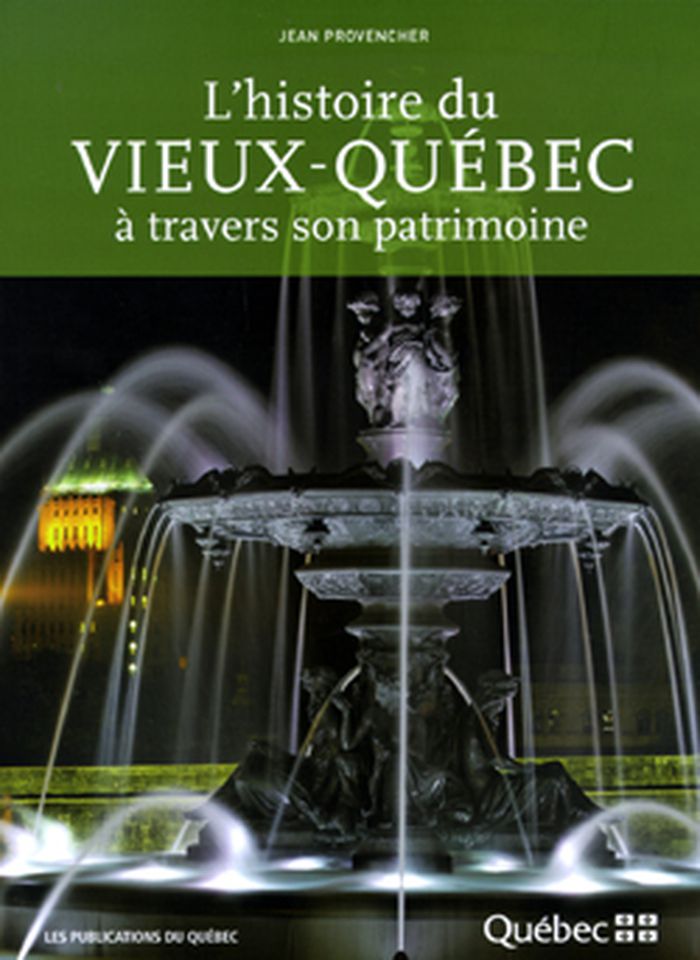
Après le succès de «L’histoire du Vieux-Montréal à travers son patrimoine», voici un second titre qui suscitera autant d’engouement. Le Vieux-Québec a toujours évoqué l’image d’un coin de la Vieille-France ancré en Amérique du Nord. La richesse de son patrimoine, la couleur de ce quartier historique et tous les trésors architecturaux qui le hantent comme des fantômes venus d’un lointain passé en font un des joyaux de la capitale et du Québec tout entier. Ce quartier s’est transformé, bien sûr, au fil du temps mais son âme s’est conservée à travers ses fortifications, ses portes, ses places, ses rues et ses édifices. Chacun des chapitres couvre une période distincte de son histoire et nous aide à mieux comprendre chaque époque à travers ses ressources patrimoniales. Un texte vivant et de superbes photographies et illustrations nous entraînent dans de belles randonnées au cœur de cet îlot historique. C’est un délice autant pour les yeux que pour l’esprit. Savourez ce magnifique volume et plongez au cœur de nos racines et de notre passé. Cet ouvrage passionnera non seulement les amoureux du Vieux-Québec mais aussi tous les autres qui découvriront un des quartiers les plus riches en histoire et en couleurs de tout le Québec. Des plans vous permettront de vous guider et d’aller voir sur place tout ce qui fait la richesse historique du quartier. Ce livre recèle autant de plans qu’il y a d’époques à retracer. Vous pouvez donc établir votre propre circuit du Vieux-Québec.
L'histoire du Vieux-Québec à travers son patrimoine
Actions:
Price:
$39.95
(available to order)
Summary:
Après le succès de «L’histoire du Vieux-Montréal à travers son patrimoine», voici un second titre qui suscitera autant d’engouement. Le Vieux-Québec a toujours évoqué l’image d’un coin de la Vieille-France ancré en Amérique du Nord. La richesse de son patrimoine, la couleur de ce quartier historique et tous les trésors architecturaux qui le hantent comme des fantômes venus d’un lointain passé en font un des joyaux de la capitale et du Québec tout entier. Ce quartier s’est transformé, bien sûr, au fil du temps mais son âme s’est conservée à travers ses fortifications, ses portes, ses places, ses rues et ses édifices. Chacun des chapitres couvre une période distincte de son histoire et nous aide à mieux comprendre chaque époque à travers ses ressources patrimoniales. Un texte vivant et de superbes photographies et illustrations nous entraînent dans de belles randonnées au cœur de cet îlot historique. C’est un délice autant pour les yeux que pour l’esprit. Savourez ce magnifique volume et plongez au cœur de nos racines et de notre passé. Cet ouvrage passionnera non seulement les amoureux du Vieux-Québec mais aussi tous les autres qui découvriront un des quartiers les plus riches en histoire et en couleurs de tout le Québec. Des plans vous permettront de vous guider et d’aller voir sur place tout ce qui fait la richesse historique du quartier. Ce livre recèle autant de plans qu’il y a d’époques à retracer. Vous pouvez donc établir votre propre circuit du Vieux-Québec.
Form:
books
books
Publication:
November 2007, Québec
November 2007, Québec
Subject:
Architecture du Québec
Architecture du Québec


