


1734 Results
Form:
books
books
Actions:
Holdings:
Description:
3 volumes (unpaged) : color illustrations ; 24-35 cm
Description:
3 volumes (unpaged) : color illustrations ; 24-35 cm
Author:
Subject:
Publication:
[London] : MACK, [2022], ©2022
[London] : MACK, [2022], ©2022
Title:
The citadel : a trilogy / Mame-Diarra Niang.
Actions:
Holdings:
Description:
3 volumes (unpaged) : color illustrations ; 24-35 cm
The citadel : a trilogy / Mame-Diarra Niang.
Actions:
Holdings:
Description:
3 volumes (unpaged) : color illustrations ; 24-35 cm
Form:
books
books
Publication:
[London] : MACK, [2022], ©2022
[London] : MACK, [2022], ©2022
Author:
Subject:
Form:
books
books
Actions:
Price:
$17.95
(available to order)
Summary:
The Lower Manhattan Expressway (LME) was first conceived by "master builder" Robert Moses in the late 1930s as an expressway system running across Lower Manhattan. The idea was revisited by architect Paul Rudolph in 1967 when the Ford Foundation commissioned a study of the project. Had it been constructed, this major urban design plan would have transformed New York(...)
$17.95
(available to order)
Summary:
The Lower Manhattan Expressway (LME) was first conceived by "master builder" Robert Moses in the late 1930s as an expressway system running across Lower Manhattan. The idea was revisited by architect Paul Rudolph in 1967 when the Ford Foundation commissioned a study of the project. Had it been constructed, this major urban design plan would have transformed New York(...)
Subject:
Architecture Monographs
Architecture Monographs
Publication:
October 2010
October 2010
Title:
Paul Rudolph: Lower Manhattan expressway
Actions:
Price:
$17.95
(available to order)
Summary:
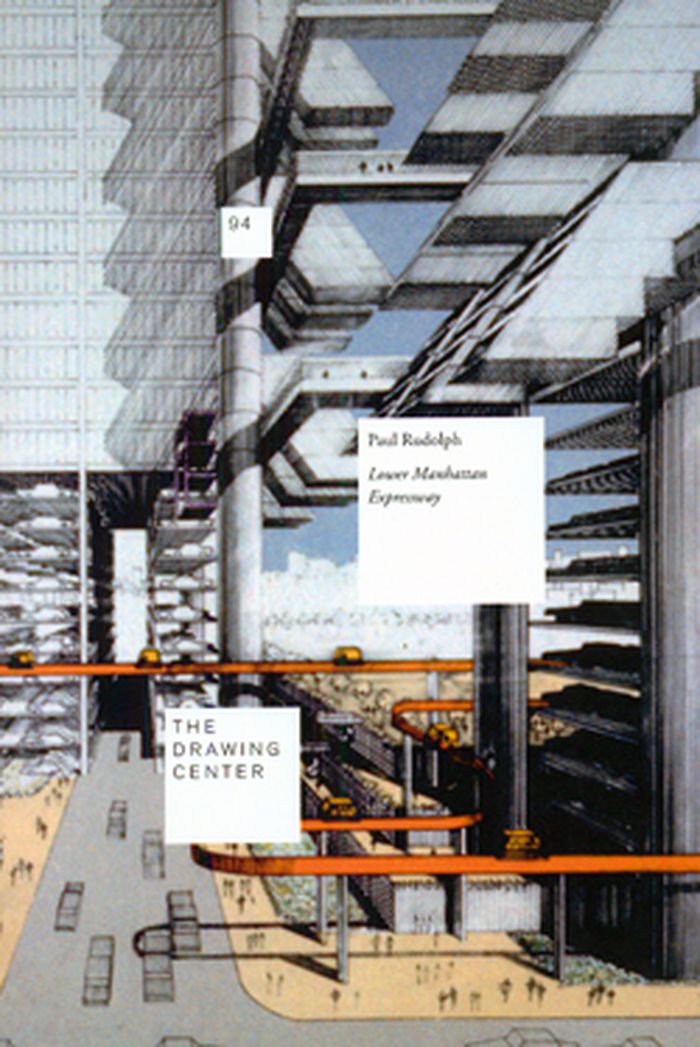
The Lower Manhattan Expressway (LME) was first conceived by "master builder" Robert Moses in the late 1930s as an expressway system running across Lower Manhattan. The idea was revisited by architect Paul Rudolph in 1967 when the Ford Foundation commissioned a study of the project. Had it been constructed, this major urban design plan would have transformed New York City’s topography and infrastructure. Presenting the only records of Rudolph’s visionary proposal, this exhibition catalog illuminates Rudolph’s unique approach to architectural drawing and highlights the fundamental importance of drawing in his overall practice.
Paul Rudolph: Lower Manhattan expressway
Actions:
Price:
$17.95
(available to order)
Summary:
The Lower Manhattan Expressway (LME) was first conceived by "master builder" Robert Moses in the late 1930s as an expressway system running across Lower Manhattan. The idea was revisited by architect Paul Rudolph in 1967 when the Ford Foundation commissioned a study of the project. Had it been constructed, this major urban design plan would have transformed New York City’s topography and infrastructure. Presenting the only records of Rudolph’s visionary proposal, this exhibition catalog illuminates Rudolph’s unique approach to architectural drawing and highlights the fundamental importance of drawing in his overall practice.
Form:
books
books
Publication:
October 2010
October 2010
Subject:
Architecture Monographs
Architecture Monographs
Form:
books
books
Actions:
Price:
$53.50
(available to order)
Summary:
After studying at the Catholic University of Chile, Alejandro Aravena (b 1967) established his own firm in 1994. Since 2006, Aravena has served as Executive Director of ELEMENTAL S.A., a non profit company with social interest working in projects of infrastructure, transportation, public space and housing, partnering with the Catholic University of Chile and COPEC(...)
$53.50
(available to order)
Summary:
After studying at the Catholic University of Chile, Alejandro Aravena (b 1967) established his own firm in 1994. Since 2006, Aravena has served as Executive Director of ELEMENTAL S.A., a non profit company with social interest working in projects of infrastructure, transportation, public space and housing, partnering with the Catholic University of Chile and COPEC(...)
Title:
Alejandro Aravena: the forces in architecture
Actions:
Price:
$53.50
(available to order)
Summary:
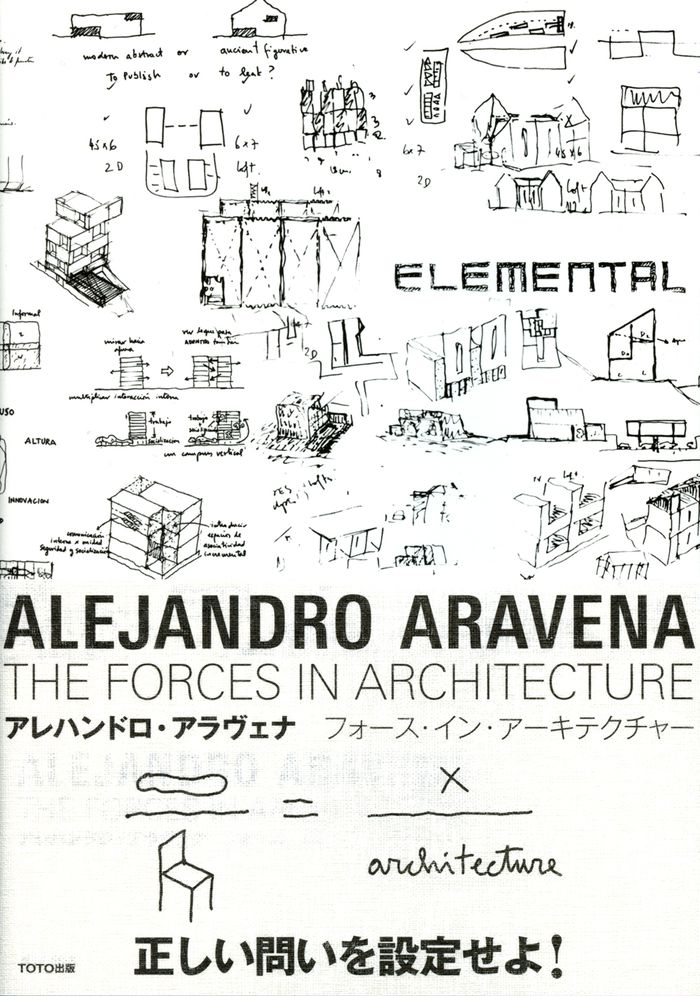
After studying at the Catholic University of Chile, Alejandro Aravena (b 1967) established his own firm in 1994. Since 2006, Aravena has served as Executive Director of ELEMENTAL S.A., a non profit company with social interest working in projects of infrastructure, transportation, public space and housing, partnering with the Catholic University of Chile and COPEC (Chilean Oil Company). His architectural projects include the Easter Island High School, a Montessori School, the Garib House, a Medical School, the Siamese Towers, the Pirehueico House, the School of Architecture, the Verbo Divino School all in Chile.
Alejandro Aravena: the forces in architecture
Actions:
Price:
$53.50
(available to order)
Summary:
After studying at the Catholic University of Chile, Alejandro Aravena (b 1967) established his own firm in 1994. Since 2006, Aravena has served as Executive Director of ELEMENTAL S.A., a non profit company with social interest working in projects of infrastructure, transportation, public space and housing, partnering with the Catholic University of Chile and COPEC (Chilean Oil Company). His architectural projects include the Easter Island High School, a Montessori School, the Garib House, a Medical School, the Siamese Towers, the Pirehueico House, the School of Architecture, the Verbo Divino School all in Chile.
Form:
books
books
Publication:
September 2011
September 2011
Subject:
Architecture Monographs
Architecture Monographs
Form:
journals and magazines
journals and magazines
Title:
Accattone 5: Armin Linke
Accattone 5: Armin Linke
Actions:
Price:
$42.00
(available in store)
Summary:
Based entirely on the work of Armin Linke, Accattone #5 explores photography in relation to the major architecture of public and private institutions: the infrastructure of the Roman Empire, neoclassical Athens, the United Nations headquarters, neo-liberal corporate environments and the fragile European institutions in Brussels. Monuments are carefully crafted to convey(...)
$42.00
(available in store)
Summary:
Based entirely on the work of Armin Linke, Accattone #5 explores photography in relation to the major architecture of public and private institutions: the infrastructure of the Roman Empire, neoclassical Athens, the United Nations headquarters, neo-liberal corporate environments and the fragile European institutions in Brussels. Monuments are carefully crafted to convey(...)
Title:
Accattone 5: Armin Linke
Actions:
Price:
$42.00
(available in store)
Summary:
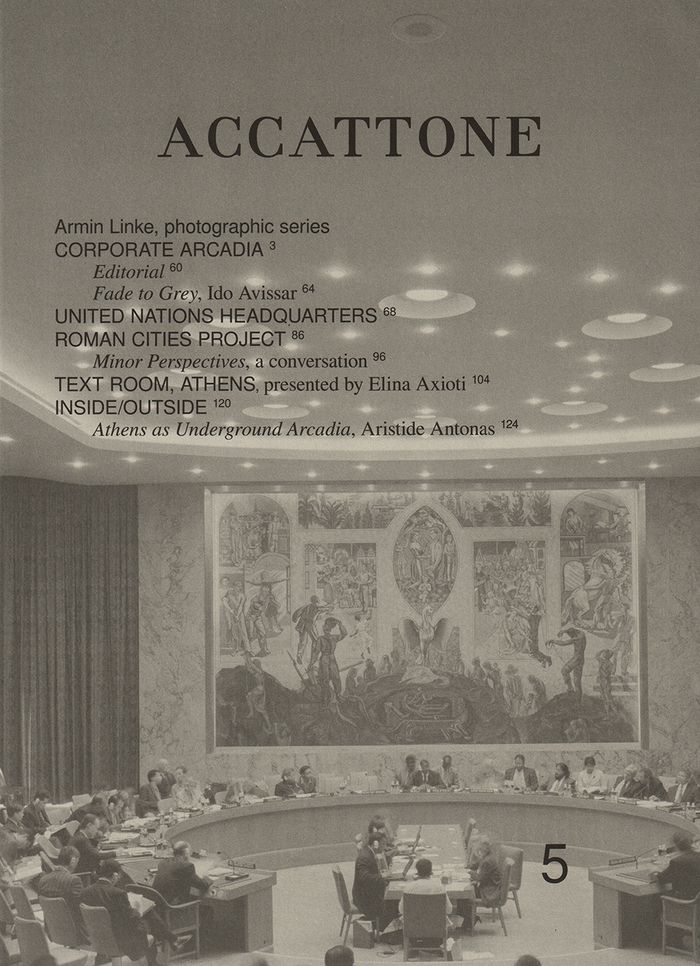
Based entirely on the work of Armin Linke, Accattone #5 explores photography in relation to the major architecture of public and private institutions: the infrastructure of the Roman Empire, neoclassical Athens, the United Nations headquarters, neo-liberal corporate environments and the fragile European institutions in Brussels. Monuments are carefully crafted to convey determined sets of aesthetic codes and political values, incorporated in a purportedly eternal and total character. Photography can challenge the power of such representations by bringing out their inherent glitches, small cracks and everyday ambiguities. It can reprogramme architecture.
Accattone 5: Armin Linke
Actions:
Price:
$42.00
(available in store)
Summary:
Based entirely on the work of Armin Linke, Accattone #5 explores photography in relation to the major architecture of public and private institutions: the infrastructure of the Roman Empire, neoclassical Athens, the United Nations headquarters, neo-liberal corporate environments and the fragile European institutions in Brussels. Monuments are carefully crafted to convey determined sets of aesthetic codes and political values, incorporated in a purportedly eternal and total character. Photography can challenge the power of such representations by bringing out their inherent glitches, small cracks and everyday ambiguities. It can reprogramme architecture.
Form:
journals and magazines
journals and magazines
Publication:
March 2018
March 2018
Subject:
Magazines
Magazines
Form:
books
books
Price:
$33.00
(available to order)
Summary:
This new edition of the classic work on the politics of architecture—and the architecture of politics—appears on the fiftieth anniversary of the Six-Day War, which expanded Israel’s domination over Palestinian lands. From the tunnels of Gaza to the militarized airspace of the Occupied Territories, Eyal Weizman unravels Israel’s mechanisms of control and its transformation(...)
$33.00
(available to order)
Summary:
This new edition of the classic work on the politics of architecture—and the architecture of politics—appears on the fiftieth anniversary of the Six-Day War, which expanded Israel’s domination over Palestinian lands. From the tunnels of Gaza to the militarized airspace of the Occupied Territories, Eyal Weizman unravels Israel’s mechanisms of control and its transformation(...)
Title:
Hollow land: Israel's architecture of occupation. 2nd edition
Actions:
Price:
$33.00
(available to order)
Summary:
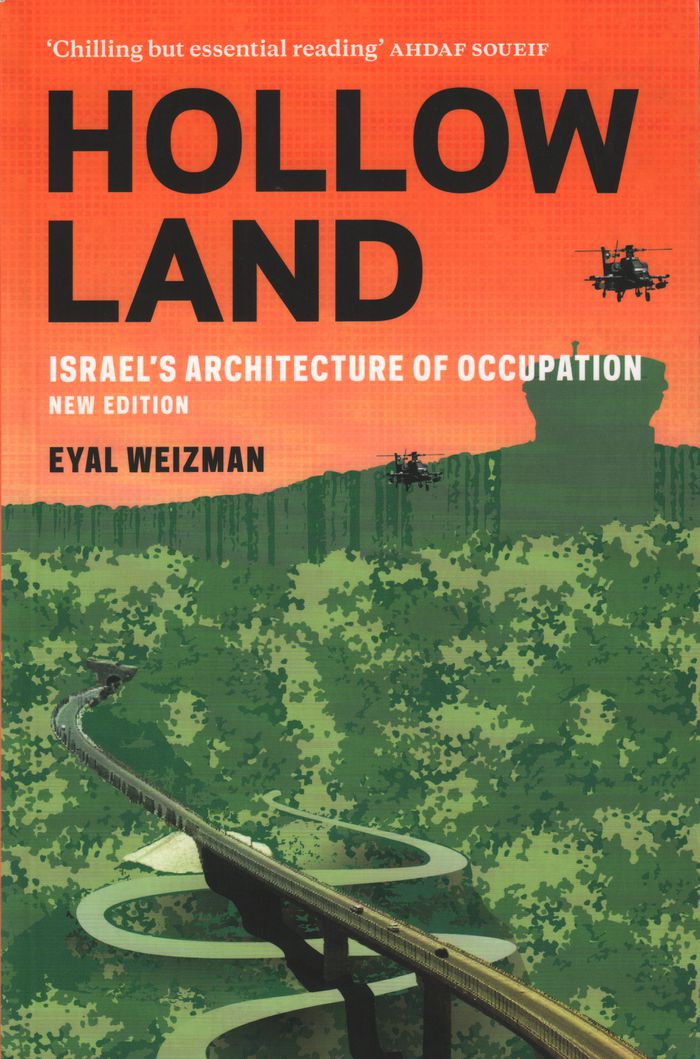
This new edition of the classic work on the politics of architecture—and the architecture of politics—appears on the fiftieth anniversary of the Six-Day War, which expanded Israel’s domination over Palestinian lands. From the tunnels of Gaza to the militarized airspace of the Occupied Territories, Eyal Weizman unravels Israel’s mechanisms of control and its transformation of Palestinian homes into a war zone under constant surveillance. This is essential reading for those seeking to understand how architecture and infrastructure are used as lethal weapons in the formation of Israel.
Hollow land: Israel's architecture of occupation. 2nd edition
Actions:
Price:
$33.00
(available to order)
Summary:
This new edition of the classic work on the politics of architecture—and the architecture of politics—appears on the fiftieth anniversary of the Six-Day War, which expanded Israel’s domination over Palestinian lands. From the tunnels of Gaza to the militarized airspace of the Occupied Territories, Eyal Weizman unravels Israel’s mechanisms of control and its transformation of Palestinian homes into a war zone under constant surveillance. This is essential reading for those seeking to understand how architecture and infrastructure are used as lethal weapons in the formation of Israel.
Form:
books
books
Publication:
July 2017
July 2017
Subject:
Architecture since 1900, Middle-East
Architecture since 1900, Middle-East
Form:
books
books
Actions:
Price:
$88.00
(available to order)
Summary:
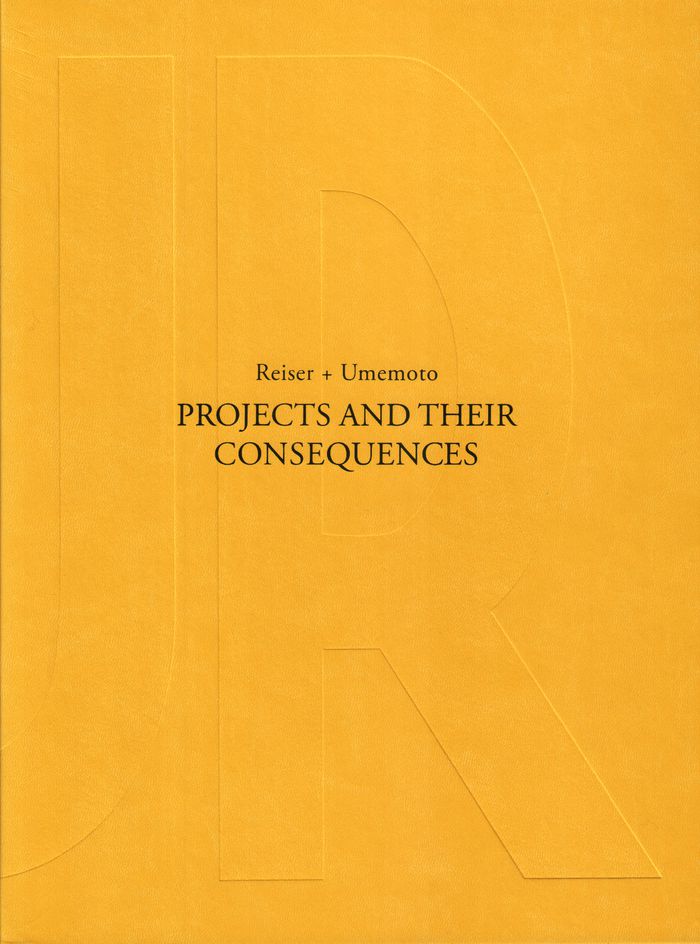
''Projects and Their Consequences'' presents fifteen key projects from leading architectural thinkers Reiser + Umemoto. This book traces thirty years of innovative, multidisciplinary investigations of form, structure, technique, and planning. Projects include large-scale studies of infrastructure for the East River Corridor and Hudson Yards areas in Manhattan and the(...)
$88.00
(available to order)
Summary:
''Projects and Their Consequences'' presents fifteen key projects from leading architectural thinkers Reiser + Umemoto. This book traces thirty years of innovative, multidisciplinary investigations of form, structure, technique, and planning. Projects include large-scale studies of infrastructure for the East River Corridor and Hudson Yards areas in Manhattan and the(...)
Title:
Reiser + Umemoto: projects and their consequences
Actions:
Price:
$88.00
(available to order)
Summary:
''Projects and Their Consequences'' presents fifteen key projects from leading architectural thinkers Reiser + Umemoto. This book traces thirty years of innovative, multidisciplinary investigations of form, structure, technique, and planning. Projects include large-scale studies of infrastructure for the East River Corridor and Hudson Yards areas in Manhattan and the Alishan Railway in Taiwan, as well as schemes for cultural institutions including the New Museum, Children's Museum of Pittsburgh, and University of Applied Arts Vienna. Also included are "textual projects": narrative works that blur the boundaries of art and architecture.
Reiser + Umemoto: projects and their consequences
Actions:
Price:
$88.00
(available to order)
Summary:
''Projects and Their Consequences'' presents fifteen key projects from leading architectural thinkers Reiser + Umemoto. This book traces thirty years of innovative, multidisciplinary investigations of form, structure, technique, and planning. Projects include large-scale studies of infrastructure for the East River Corridor and Hudson Yards areas in Manhattan and the Alishan Railway in Taiwan, as well as schemes for cultural institutions including the New Museum, Children's Museum of Pittsburgh, and University of Applied Arts Vienna. Also included are "textual projects": narrative works that blur the boundaries of art and architecture.
Form:
books
books
Publication:
March 2019
March 2019
Subject:
Architecture Monographs
Architecture Monographs
Form:
books
books
Actions:
Price:
$72.95
(available to order)
Summary:
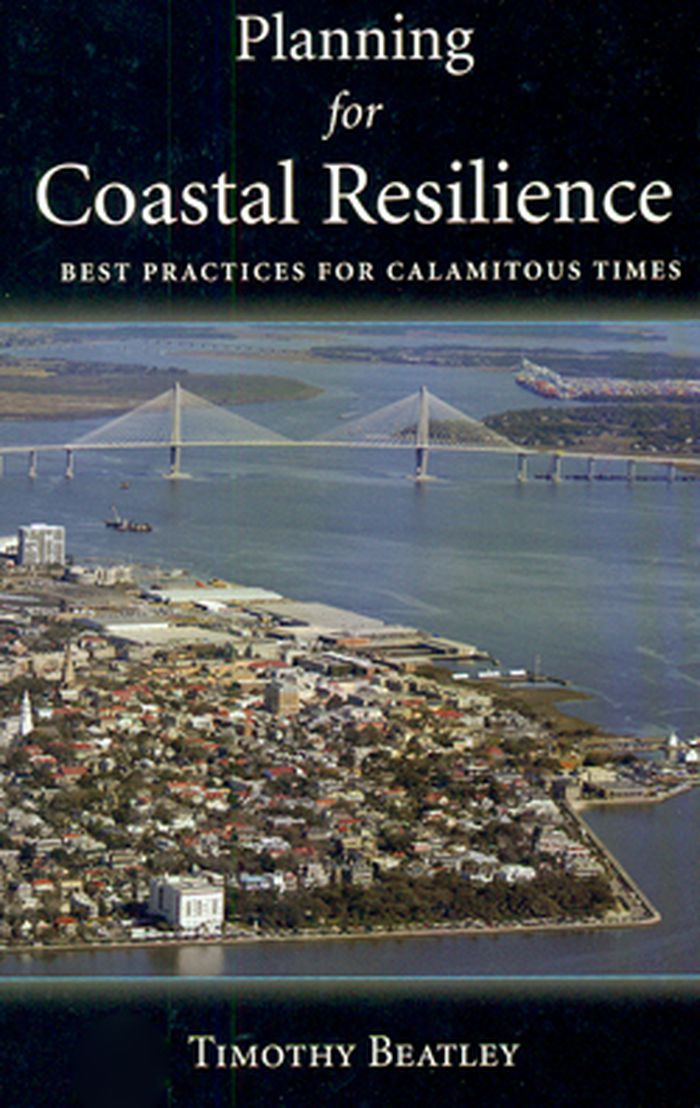
Climate change is predicted to increase the frequency and magnitude of coastal storms around the globe, and the anticipated rise of sea levels will have enormous impact on fragile and vulnerable coastal regions. In the U.S., more than 50% of the population inhabits coastal areas. In Planning for Coastal Resilience, Tim Beatley argues that, in the face of such threats, all(...)
$72.95
(available to order)
Summary:
Climate change is predicted to increase the frequency and magnitude of coastal storms around the globe, and the anticipated rise of sea levels will have enormous impact on fragile and vulnerable coastal regions. In the U.S., more than 50% of the population inhabits coastal areas. In Planning for Coastal Resilience, Tim Beatley argues that, in the face of such threats, all(...)
Title:
Planning for coastal resilience
Actions:
Price:
$72.95
(available to order)
Summary:
Climate change is predicted to increase the frequency and magnitude of coastal storms around the globe, and the anticipated rise of sea levels will have enormous impact on fragile and vulnerable coastal regions. In the U.S., more than 50% of the population inhabits coastal areas. In Planning for Coastal Resilience, Tim Beatley argues that, in the face of such threats, all future coastal planning and management must reflect a commitment to the concept of resilience. Coastal resilience must become the primary design and planning principle to guide all future development and all future infrastructure decisions.
Planning for coastal resilience
Actions:
Price:
$72.95
(available to order)
Summary:
Climate change is predicted to increase the frequency and magnitude of coastal storms around the globe, and the anticipated rise of sea levels will have enormous impact on fragile and vulnerable coastal regions. In the U.S., more than 50% of the population inhabits coastal areas. In Planning for Coastal Resilience, Tim Beatley argues that, in the face of such threats, all future coastal planning and management must reflect a commitment to the concept of resilience. Coastal resilience must become the primary design and planning principle to guide all future development and all future infrastructure decisions.
Form:
books
books
Publication:
July 2009
July 2009
Subject:
Urban Theory
Urban Theory
Form:
books
books
Actions:
Price:
$23.95
(available to order)
Summary:
Pamphlet Architecture 33: Islands and Atolls asks how architecture might critically repurpose its traditionally limited disciplinary tools in order to make a meaningful impact at a territorial scale. Functioning as a landscape architect in a country that has no infrastructure for such a profession, Luis Callejas (LCLA Office, Medellin, Colombia)questions pedagogical,(...)
$23.95
(available to order)
Summary:
Pamphlet Architecture 33: Islands and Atolls asks how architecture might critically repurpose its traditionally limited disciplinary tools in order to make a meaningful impact at a territorial scale. Functioning as a landscape architect in a country that has no infrastructure for such a profession, Luis Callejas (LCLA Office, Medellin, Colombia)questions pedagogical,(...)
Title:
Islands and atolls: Pamphlet Architecture 33
Actions:
Price:
$23.95
(available to order)
Summary:
Pamphlet Architecture 33: Islands and Atolls asks how architecture might critically repurpose its traditionally limited disciplinary tools in order to make a meaningful impact at a territorial scale. Functioning as a landscape architect in a country that has no infrastructure for such a profession, Luis Callejas (LCLA Office, Medellin, Colombia)questions pedagogical, disciplinary, and political norms at macro levels using micro tactics. As a result, PA 33 provocatively expands devices such as repetition and aggregation beyond their limits in scenarios where sociopolitical constraints seemingly prohibit what would normally be understood as an architectural intervention.
Islands and atolls: Pamphlet Architecture 33
Actions:
Price:
$23.95
(available to order)
Summary:
Pamphlet Architecture 33: Islands and Atolls asks how architecture might critically repurpose its traditionally limited disciplinary tools in order to make a meaningful impact at a territorial scale. Functioning as a landscape architect in a country that has no infrastructure for such a profession, Luis Callejas (LCLA Office, Medellin, Colombia)questions pedagogical, disciplinary, and political norms at macro levels using micro tactics. As a result, PA 33 provocatively expands devices such as repetition and aggregation beyond their limits in scenarios where sociopolitical constraints seemingly prohibit what would normally be understood as an architectural intervention.
Form:
books
books
Publication:
May 2013
May 2013
Subject:
Contemporary Architecture
Contemporary Architecture
Form:
books
books
Actions:
Price:
$129.00
(available to order)
Summary:
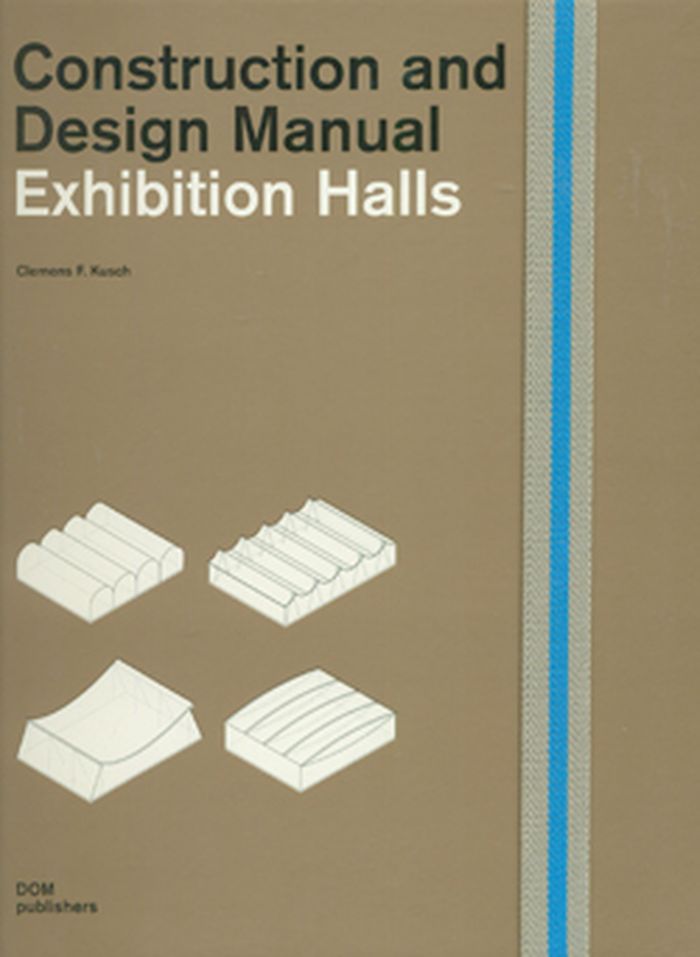
An exhibition centre is a central focus of a city s economic life, and in many cases a unique expression of its image. For this reason, as well as offering adequate space and infrastructure, it must make a strong, clearly recognizable architectural statement. Over the past couple of decades, new technology and globalization have transformed trade fairs: today they are not(...)
$129.00
(available to order)
Summary:
An exhibition centre is a central focus of a city s economic life, and in many cases a unique expression of its image. For this reason, as well as offering adequate space and infrastructure, it must make a strong, clearly recognizable architectural statement. Over the past couple of decades, new technology and globalization have transformed trade fairs: today they are not(...)
Title:
Exhibition halls: construction and design manual
Actions:
Price:
$129.00
(available to order)
Summary:
An exhibition centre is a central focus of a city s economic life, and in many cases a unique expression of its image. For this reason, as well as offering adequate space and infrastructure, it must make a strong, clearly recognizable architectural statement. Over the past couple of decades, new technology and globalization have transformed trade fairs: today they are not so much markets as forums for the exchange of information and contacts. This new volume spotlights twenty-two exemplary European buildings that have overcome the resulting architectural challenges.
Exhibition halls: construction and design manual
Actions:
Price:
$129.00
(available to order)
Summary:
An exhibition centre is a central focus of a city s economic life, and in many cases a unique expression of its image. For this reason, as well as offering adequate space and infrastructure, it must make a strong, clearly recognizable architectural statement. Over the past couple of decades, new technology and globalization have transformed trade fairs: today they are not so much markets as forums for the exchange of information and contacts. This new volume spotlights twenty-two exemplary European buildings that have overcome the resulting architectural challenges.
Form:
books
books
Publication:
October 2013
October 2013
Subject:
Museums and Universal Exhibitions
Museums and Universal Exhibitions
Form:
books
books
Actions:
Price:
$49.95
(available to order)
Summary:
Embracing that which could dominate us-the city, infrastructure, overpopulation and social chaos-has been part of the process of Steven Holl Architects as the office has taken on work of increasing complexity and scale in China over the past decade. The projects featured in this book play a serious game with scale and the dynamic between micro and macro. In content and(...)
$49.95
(available to order)
Summary:
Embracing that which could dominate us-the city, infrastructure, overpopulation and social chaos-has been part of the process of Steven Holl Architects as the office has taken on work of increasing complexity and scale in China over the past decade. The projects featured in this book play a serious game with scale and the dynamic between micro and macro. In content and(...)
Title:
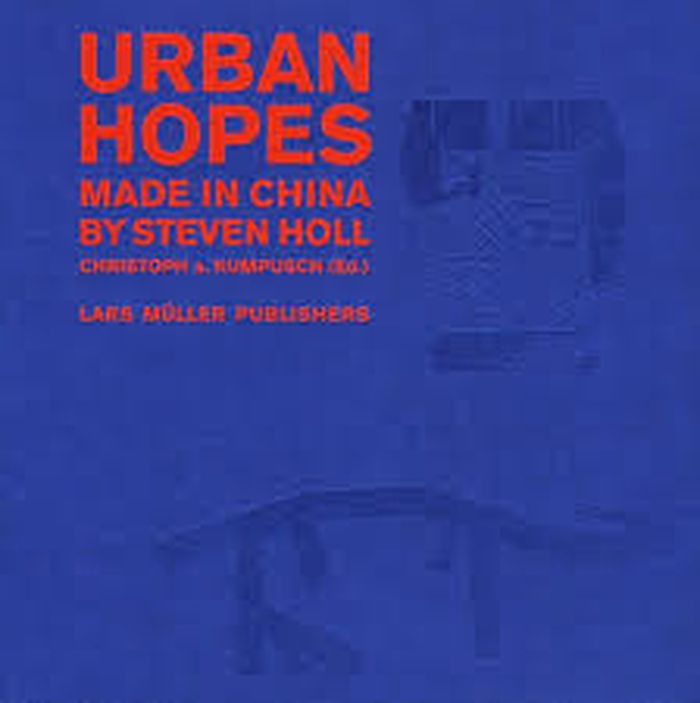
Urban hopes: made in China by Steven Holl
Actions:
Price:
$49.95
(available to order)
Summary:
Embracing that which could dominate us-the city, infrastructure, overpopulation and social chaos-has been part of the process of Steven Holl Architects as the office has taken on work of increasing complexity and scale in China over the past decade. The projects featured in this book play a serious game with scale and the dynamic between micro and macro. In content and format the book reflects such juxtaposition, featuring large format images and graphic documentation of Steven Holl's recent works realized in China alongside critiques and analyses offered by a new generation of theorists.
Urban hopes: made in China by Steven Holl
Actions:
Price:
$49.95
(available to order)
Summary:
Embracing that which could dominate us-the city, infrastructure, overpopulation and social chaos-has been part of the process of Steven Holl Architects as the office has taken on work of increasing complexity and scale in China over the past decade. The projects featured in this book play a serious game with scale and the dynamic between micro and macro. In content and format the book reflects such juxtaposition, featuring large format images and graphic documentation of Steven Holl's recent works realized in China alongside critiques and analyses offered by a new generation of theorists.
Form:
books
books
Publication:
October 2013
October 2013
Subject:
Architecture Monographs
Architecture Monographs


