


2990 Results
Level of archival description:
Project
Project
Actions:
Reference number:
AP018.S1.1983.PR14
Description:
This project series documents the National Aviation Museum which is part of Rockliffe Airport in Ottawa Ontario from 1983-1987. The office identified the project number as 8320. This project consisted of a building, commissioned by Public Works Canada, to house Canada's aviation museum collections. The basementless building was approximately five storeys in height, triangular shaped, and located between a runway and base building at the Rockcliffe Airport. This project is recorded through drawings, photographic materials and textual records dating from 1983-1987. The majority of the drawings are reprographic copies of details, arranged within the textual materials. Photographs and negative strips show the construction progress of the project. The textual records include correspondence, specifications, instructions to tenderers, schedules and financial documentation.
AP018.S1.1983.PR14
Description:
This project series documents the National Aviation Museum which is part of Rockliffe Airport in Ottawa Ontario from 1983-1987. The office identified the project number as 8320. This project consisted of a building, commissioned by Public Works Canada, to house Canada's aviation museum collections. The basementless building was approximately five storeys in height, triangular shaped, and located between a runway and base building at the Rockcliffe Airport. This project is recorded through drawings, photographic materials and textual records dating from 1983-1987. The majority of the drawings are reprographic copies of details, arranged within the textual materials. Photographs and negative strips show the construction progress of the project. The textual records include correspondence, specifications, instructions to tenderers, schedules and financial documentation.
People:
Date:
1983-1987
1983-1987
Title:
National Aviation Museum, Rockcliffe Airport, Ottawa, Ontario (1983-1987)
Actions:
AP018.S1.1983.PR14
Description:
This project series documents the National Aviation Museum which is part of Rockliffe Airport in Ottawa Ontario from 1983-1987. The office identified the project number as 8320. This project consisted of a building, commissioned by Public Works Canada, to house Canada's aviation museum collections. The basementless building was approximately five storeys in height, triangular shaped, and located between a runway and base building at the Rockcliffe Airport. This project is recorded through drawings, photographic materials and textual records dating from 1983-1987. The majority of the drawings are reprographic copies of details, arranged within the textual materials. Photographs and negative strips show the construction progress of the project. The textual records include correspondence, specifications, instructions to tenderers, schedules and financial documentation.
National Aviation Museum, Rockcliffe Airport, Ottawa, Ontario (1983-1987)
Actions:
AP018.S1.1983.PR14
Description:
This project series documents the National Aviation Museum which is part of Rockliffe Airport in Ottawa Ontario from 1983-1987. The office identified the project number as 8320. This project consisted of a building, commissioned by Public Works Canada, to house Canada's aviation museum collections. The basementless building was approximately five storeys in height, triangular shaped, and located between a runway and base building at the Rockcliffe Airport. This project is recorded through drawings, photographic materials and textual records dating from 1983-1987. The majority of the drawings are reprographic copies of details, arranged within the textual materials. Photographs and negative strips show the construction progress of the project. The textual records include correspondence, specifications, instructions to tenderers, schedules and financial documentation.
Level of archival description:
Project
Project
Date:
1983-1987
1983-1987
People:
Form:
exhibitions
exhibitions
Actions:
Description:
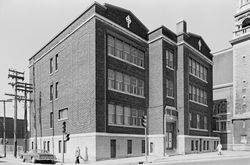
Trois Architectes, Trois Quartiers focuses on three Montréal-based architects whose work had a strong presence in a specific area of the city during the first half of the twentieth century: Ludger Lemieux (1872–1953) in St-Henri, Ernest lsbell Barott (1884–1966) in St-Antoine on the southern and western slopes of Mount Royal, and Ernest Cormier (1885–1980) at the(...)
Trois Architectes, Trois Quartiers focuses on three Montréal-based architects whose work had a strong presence in a specific area of the city during the first half of the twentieth century: Ludger Lemieux (1872–1953) in St-Henri, Ernest lsbell Barott (1884–1966) in St-Antoine on the southern and western slopes of Mount Royal, and Ernest Cormier (1885–1980) at the(...)
Location:
1440 rue Sainte-Catherine Ouest
1440 rue Sainte-Catherine Ouest
Date:
20 May 1983 to 19 August 1983
20 May 1983 to 19 August 1983
Title:
Trois architectes, trois quartiers : Ludger Lemieux (St. Henri), Ernest Cormier (Cité universitaire), Ernest Isbell Barott (St. Antoine)
Actions:
Description:
Trois Architectes, Trois Quartiers focuses on three Montréal-based architects whose work had a strong presence in a specific area of the city during the first half of the twentieth century: Ludger Lemieux (1872–1953) in St-Henri, Ernest lsbell Barott (1884–1966) in St-Antoine on the southern and western slopes of Mount Royal, and Ernest Cormier (1885–1980) at the(...)
Trois architectes, trois quartiers : Ludger Lemieux (St. Henri), Ernest Cormier (Cité universitaire), Ernest Isbell Barott (St. Antoine)
Actions:
Description:
Trois Architectes, Trois Quartiers focuses on three Montréal-based architects whose work had a strong presence in a specific area of the city during the first half of the twentieth century: Ludger Lemieux (1872–1953) in St-Henri, Ernest lsbell Barott (1884–1966) in St-Antoine on the southern and western slopes of Mount Royal, and Ernest Cormier (1885–1980) at the(...)
Form:
exhibitions
exhibitions
Date:
20 May 1983 to
19 August 1983
20 May 1983 to
19 August 1983
Location:
1440 rue Sainte-Catherine Ouest
1440 rue Sainte-Catherine Ouest
Form:
exhibitions
exhibitions
Description:
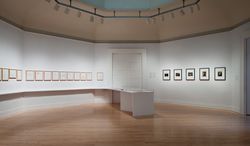
Portuguese architect Álvaro Siza travelled to Peru in 1995 with his usual baggage: only a few changes of clothes, some books of poetry, and a single sketchbook. This was the toolkit he used to interpret the voyage and integrate it into his architecture. More than half a century earlier, Peruvian photographer Martín Chambi had taken his famous series of portraits of the(...)
Portuguese architect Álvaro Siza travelled to Peru in 1995 with his usual baggage: only a few changes of clothes, some books of poetry, and a single sketchbook. This was the toolkit he used to interpret the voyage and integrate it into his architecture. More than half a century earlier, Peruvian photographer Martín Chambi had taken his famous series of portraits of the(...)
Location:
Octagonal gallery
Octagonal gallery
Date:
26 January 2012 to 29 April 2012
26 January 2012 to 29 April 2012
Title:
Alturas de Machu Picchu: Martín Chambi – Álvaro Siza at work
Actions:
Description:
Portuguese architect Álvaro Siza travelled to Peru in 1995 with his usual baggage: only a few changes of clothes, some books of poetry, and a single sketchbook. This was the toolkit he used to interpret the voyage and integrate it into his architecture. More than half a century earlier, Peruvian photographer Martín Chambi had taken his famous series of portraits of the(...)
Alturas de Machu Picchu: Martín Chambi – Álvaro Siza at work
Actions:
Description:
Portuguese architect Álvaro Siza travelled to Peru in 1995 with his usual baggage: only a few changes of clothes, some books of poetry, and a single sketchbook. This was the toolkit he used to interpret the voyage and integrate it into his architecture. More than half a century earlier, Peruvian photographer Martín Chambi had taken his famous series of portraits of the(...)
Form:
exhibitions
exhibitions
Date:
26 January 2012 to
29 April 2012
26 January 2012 to
29 April 2012
Location:
Octagonal gallery
Octagonal gallery
Form:
exhibitions
exhibitions
Title:
Starting From... Travel
Starting From... Travel
Actions:
Description:
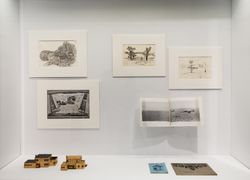
Interpreting the subject of travel to distant places, the exhibition charts an expanded notion of travel that spans imaginary journeys, strange sites, vanishing points, floating and portable houses, endless caves, swirling diamond domes, tombs, crypts and catacombs, tunnel adventures, formal studies, technical innovation, cultural imagination, and experimental(...)
Interpreting the subject of travel to distant places, the exhibition charts an expanded notion of travel that spans imaginary journeys, strange sites, vanishing points, floating and portable houses, endless caves, swirling diamond domes, tombs, crypts and catacombs, tunnel adventures, formal studies, technical innovation, cultural imagination, and experimental(...)
Location:
Hall cases
Hall cases
Date:
3 December 2008 to 1 May 2009
3 December 2008 to 1 May 2009
Title:
Starting From... Travel
Actions:
Description:
Interpreting the subject of travel to distant places, the exhibition charts an expanded notion of travel that spans imaginary journeys, strange sites, vanishing points, floating and portable houses, endless caves, swirling diamond domes, tombs, crypts and catacombs, tunnel adventures, formal studies, technical innovation, cultural imagination, and experimental(...)
Starting From... Travel
Actions:
Description:
Interpreting the subject of travel to distant places, the exhibition charts an expanded notion of travel that spans imaginary journeys, strange sites, vanishing points, floating and portable houses, endless caves, swirling diamond domes, tombs, crypts and catacombs, tunnel adventures, formal studies, technical innovation, cultural imagination, and experimental(...)
Form:
exhibitions
exhibitions
Date:
3 December 2008 to
1 May 2009
3 December 2008 to
1 May 2009
Location:
Hall cases
Hall cases
Form:
events
events
Title:
Siza Speaks
Siza Speaks
Actions:
Description:
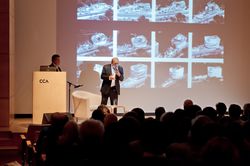
Portuguese architect and Pritzker prize-winner Álvaro Siza presents a rare lecture in North America on the design development of the Iberê Camargo Museum in Porto Alegre, a structure noted for its sculptural volumes and tight integration with a coastal escarpment. He discusses the key role of hand sketches in the design process, from massing studies to fine-tuning(...)
Portuguese architect and Pritzker prize-winner Álvaro Siza presents a rare lecture in North America on the design development of the Iberê Camargo Museum in Porto Alegre, a structure noted for its sculptural volumes and tight integration with a coastal escarpment. He discusses the key role of hand sketches in the design process, from massing studies to fine-tuning(...)
Location:
Paul-Desmarais Theater
Paul-Desmarais Theater
Date:
26 April 2012 , 7pm
26 April 2012 , 7pm
Title:
Siza Speaks
Actions:
Description:
Portuguese architect and Pritzker prize-winner Álvaro Siza presents a rare lecture in North America on the design development of the Iberê Camargo Museum in Porto Alegre, a structure noted for its sculptural volumes and tight integration with a coastal escarpment. He discusses the key role of hand sketches in the design process, from massing studies to fine-tuning(...)
Siza Speaks
Actions:
Description:
Portuguese architect and Pritzker prize-winner Álvaro Siza presents a rare lecture in North America on the design development of the Iberê Camargo Museum in Porto Alegre, a structure noted for its sculptural volumes and tight integration with a coastal escarpment. He discusses the key role of hand sketches in the design process, from massing studies to fine-tuning(...)
Form:
events
events
Date:
26 April 2012
7pm
26 April 2012
7pm
Location:
Paul-Desmarais Theater
Paul-Desmarais Theater
Form:
archives
Level of archival description:
Fonds
archives
Level of archival description:
Fonds
Title:
Pierre Jeanneret fonds
Pierre Jeanneret fonds
Reference number:
AP156
Synopsis:
Le Fonds Pierre Jeanneret documente la pratique professionnelle et la vie personnelle de l'architect Pierre Jeanneret de ses études et ses projets professionels en Europe à ses projets architecturaux à Chandigarh, en Inde. Les documents du Fonds consistent en des photographies, des dessins et des documents textuels relatifs à plus de 100 projets, principalement son travail pour le projet de la nouvelle ville de Chandigarh, en Inde, en 1951 à 1965. *** The Pierre Jeanneret fonds documents the professional practice and the personal life of architect Pierre Jeanneret from student and professional work in Europe to architectural projects in Chandigarh, India. The documents in the fonds consist of photographs, drawings and textual records relating to over 100 projects, predominantly his work for the project of the new city of Chandigarh, in India, in 1951 to 1965.
AP156
Synopsis:
Le Fonds Pierre Jeanneret documente la pratique professionnelle et la vie personnelle de l'architect Pierre Jeanneret de ses études et ses projets professionels en Europe à ses projets architecturaux à Chandigarh, en Inde. Les documents du Fonds consistent en des photographies, des dessins et des documents textuels relatifs à plus de 100 projets, principalement son travail pour le projet de la nouvelle ville de Chandigarh, en Inde, en 1951 à 1965. *** The Pierre Jeanneret fonds documents the professional practice and the personal life of architect Pierre Jeanneret from student and professional work in Europe to architectural projects in Chandigarh, India. The documents in the fonds consist of photographs, drawings and textual records relating to over 100 projects, predominantly his work for the project of the new city of Chandigarh, in India, in 1951 to 1965.
People:
Date:
1870s-2011
1870s-2011
Title:
Pierre Jeanneret fonds
Actions:
AP156
Synopsis:
Le Fonds Pierre Jeanneret documente la pratique professionnelle et la vie personnelle de l'architect Pierre Jeanneret de ses études et ses projets professionels en Europe à ses projets architecturaux à Chandigarh, en Inde. Les documents du Fonds consistent en des photographies, des dessins et des documents textuels relatifs à plus de 100 projets, principalement son travail pour le projet de la nouvelle ville de Chandigarh, en Inde, en 1951 à 1965. *** The Pierre Jeanneret fonds documents the professional practice and the personal life of architect Pierre Jeanneret from student and professional work in Europe to architectural projects in Chandigarh, India. The documents in the fonds consist of photographs, drawings and textual records relating to over 100 projects, predominantly his work for the project of the new city of Chandigarh, in India, in 1951 to 1965.
Pierre Jeanneret fonds
Actions:
AP156
Synopsis:
Le Fonds Pierre Jeanneret documente la pratique professionnelle et la vie personnelle de l'architect Pierre Jeanneret de ses études et ses projets professionels en Europe à ses projets architecturaux à Chandigarh, en Inde. Les documents du Fonds consistent en des photographies, des dessins et des documents textuels relatifs à plus de 100 projets, principalement son travail pour le projet de la nouvelle ville de Chandigarh, en Inde, en 1951 à 1965. *** The Pierre Jeanneret fonds documents the professional practice and the personal life of architect Pierre Jeanneret from student and professional work in Europe to architectural projects in Chandigarh, India. The documents in the fonds consist of photographs, drawings and textual records relating to over 100 projects, predominantly his work for the project of the new city of Chandigarh, in India, in 1951 to 1965.
Form:
archives
Level of archival description:
Fonds
archives
Level of archival description:
Fonds
Date:
1870s-2011
1870s-2011
People:
Form:
exhibitions
exhibitions

Actions:
Description:
At the beginning of powered flight, most airplanes required only a stretch of grassy plain 1,500 feet long for take-off and landing, and a converted barn served as both terminal and hangar. Only with the advent of a profitable commercial aviation industry in the late 1920s, some twenty-five years after Wilbur and Orville Wright’s historic flight, did the modern airport(...)
At the beginning of powered flight, most airplanes required only a stretch of grassy plain 1,500 feet long for take-off and landing, and a converted barn served as both terminal and hangar. Only with the advent of a profitable commercial aviation industry in the late 1920s, some twenty-five years after Wilbur and Orville Wright’s historic flight, did the modern airport(...)
Location:
Hall cases
Hall cases
Date:
12 June 1990 to 16 September 1990
12 June 1990 to 16 September 1990
Title:
Airport Origins: Three Projects by Lloyd Wright
Actions:
Description:
At the beginning of powered flight, most airplanes required only a stretch of grassy plain 1,500 feet long for take-off and landing, and a converted barn served as both terminal and hangar. Only with the advent of a profitable commercial aviation industry in the late 1920s, some twenty-five years after Wilbur and Orville Wright’s historic flight, did the modern airport(...)
Airport Origins: Three Projects by Lloyd Wright
Actions:
Description:
At the beginning of powered flight, most airplanes required only a stretch of grassy plain 1,500 feet long for take-off and landing, and a converted barn served as both terminal and hangar. Only with the advent of a profitable commercial aviation industry in the late 1920s, some twenty-five years after Wilbur and Orville Wright’s historic flight, did the modern airport(...)
Form:
exhibitions
exhibitions
Date:
12 June 1990 to
16 September 1990
12 June 1990 to
16 September 1990
Location:
Hall cases
Hall cases
Form:
archives
Level of archival description:
Fonds
archives
Level of archival description:
Fonds
Title:
Aditya Prakash fonds
Aditya Prakash fonds
Reference number:
AP206
Synopsis:
The Aditya Prakash fonds documents the professional practice of modernist Indian architect Aditya Prakash from his studies in London in 1947 to his death in 2008. His seminal work as a junior architect on the Chandigarh Capitol Project in the 1950s is recorded along with documentation from his solo career after 1960, including approximately 82 architectural projects. His professional work as an artist, photographer, writer, academic and theatre enthusiast are also well documented through drawings, photographic materials and textual records.
AP206
Synopsis:
The Aditya Prakash fonds documents the professional practice of modernist Indian architect Aditya Prakash from his studies in London in 1947 to his death in 2008. His seminal work as a junior architect on the Chandigarh Capitol Project in the 1950s is recorded along with documentation from his solo career after 1960, including approximately 82 architectural projects. His professional work as an artist, photographer, writer, academic and theatre enthusiast are also well documented through drawings, photographic materials and textual records.
People:
Date:
1947-2008
1947-2008
Title:
Aditya Prakash fonds
Actions:
AP206
Synopsis:
The Aditya Prakash fonds documents the professional practice of modernist Indian architect Aditya Prakash from his studies in London in 1947 to his death in 2008. His seminal work as a junior architect on the Chandigarh Capitol Project in the 1950s is recorded along with documentation from his solo career after 1960, including approximately 82 architectural projects. His professional work as an artist, photographer, writer, academic and theatre enthusiast are also well documented through drawings, photographic materials and textual records.
Aditya Prakash fonds
Actions:
AP206
Synopsis:
The Aditya Prakash fonds documents the professional practice of modernist Indian architect Aditya Prakash from his studies in London in 1947 to his death in 2008. His seminal work as a junior architect on the Chandigarh Capitol Project in the 1950s is recorded along with documentation from his solo career after 1960, including approximately 82 architectural projects. His professional work as an artist, photographer, writer, academic and theatre enthusiast are also well documented through drawings, photographic materials and textual records.
Form:
archives
Level of archival description:
Fonds
archives
Level of archival description:
Fonds
Date:
1947-2008
1947-2008
People:
Form:
photographs
photographs
Actions:
Reference number:
PH1989:0147
Description:
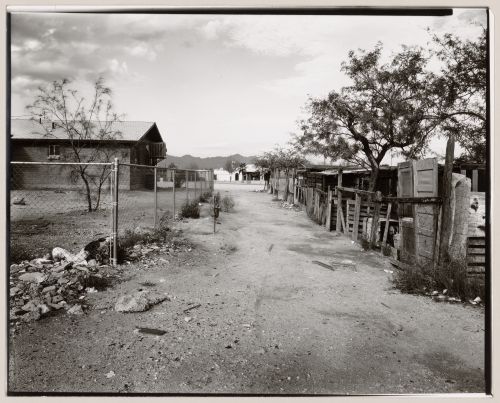
One of a series of forty-four photographs of the Yaqui community of Old Pascua by Lorne Greenberg. The photographs document the relationship of household and church in the Yaqui community. The photographs were exhibited at the Arizona State Museum in 1983. The CCA collection includes ten photographs from the series (PH1989:0147 - PH1989:0156). In 1978, the San Ignacio Yaqui Council applied for Community Development Block Grants (CDBG), which had been established by the United States Government in 1974. The community first received CDBG funding in 1979/1980. Since that time, most of the owner-occupied houses in Pascua Village have been torn down and new homes have been built.
PH1989:0147
Description:
One of a series of forty-four photographs of the Yaqui community of Old Pascua by Lorne Greenberg. The photographs document the relationship of household and church in the Yaqui community. The photographs were exhibited at the Arizona State Museum in 1983. The CCA collection includes ten photographs from the series (PH1989:0147 - PH1989:0156). In 1978, the San Ignacio Yaqui Council applied for Community Development Block Grants (CDBG), which had been established by the United States Government in 1974. The community first received CDBG funding in 1979/1980. Since that time, most of the owner-occupied houses in Pascua Village have been torn down and new homes have been built.
People:
Subject:
architecture
architecture
Date:
1981
1981
Title:
View of path to church, Old Pascua, Tucson, Arizona, United States (from a series documenting the Yaqui community of Old Pascua)
Actions:
PH1989:0147
Description:
One of a series of forty-four photographs of the Yaqui community of Old Pascua by Lorne Greenberg. The photographs document the relationship of household and church in the Yaqui community. The photographs were exhibited at the Arizona State Museum in 1983. The CCA collection includes ten photographs from the series (PH1989:0147 - PH1989:0156). In 1978, the San Ignacio Yaqui Council applied for Community Development Block Grants (CDBG), which had been established by the United States Government in 1974. The community first received CDBG funding in 1979/1980. Since that time, most of the owner-occupied houses in Pascua Village have been torn down and new homes have been built.
View of path to church, Old Pascua, Tucson, Arizona, United States (from a series documenting the Yaqui community of Old Pascua)
Actions:
PH1989:0147
Description:
One of a series of forty-four photographs of the Yaqui community of Old Pascua by Lorne Greenberg. The photographs document the relationship of household and church in the Yaqui community. The photographs were exhibited at the Arizona State Museum in 1983. The CCA collection includes ten photographs from the series (PH1989:0147 - PH1989:0156). In 1978, the San Ignacio Yaqui Council applied for Community Development Block Grants (CDBG), which had been established by the United States Government in 1974. The community first received CDBG funding in 1979/1980. Since that time, most of the owner-occupied houses in Pascua Village have been torn down and new homes have been built.
Form:
photographs
photographs
Date:
1981
1981
People:
Subject:
architecture
architecture
Form:
photographs
photographs
Actions:
Reference number:
PH1989:0148
Description:
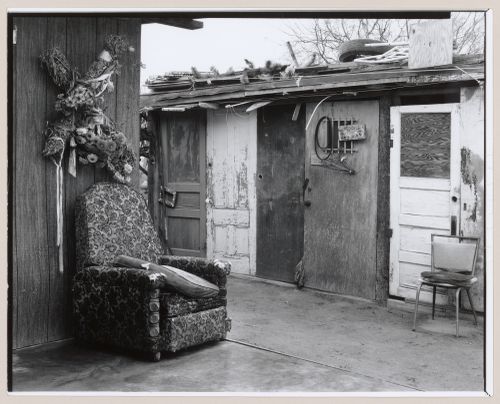
One of a series of forty-four photographs of the Yaqui community of Old Pascua by Lorne Greenberg. The photographs document the relationship of household and church in the Yaqui community. The photographs were exhibited at the Arizona State Museum in 1983. The CCA collection includes ten photographs from the series (PH1989:0147 - PH1989:0156). In 1978, the San Ignacio Yaqui Council applied for Community Development Block Grants (CDBG), which had been established by the United States Government in 1974. The community first received CDBG funding in 1979/1980. Since that time, most of the owner-occupied houses in Pascua Village have been torn down and new homes have been built.
PH1989:0148
Description:
One of a series of forty-four photographs of the Yaqui community of Old Pascua by Lorne Greenberg. The photographs document the relationship of household and church in the Yaqui community. The photographs were exhibited at the Arizona State Museum in 1983. The CCA collection includes ten photographs from the series (PH1989:0147 - PH1989:0156). In 1978, the San Ignacio Yaqui Council applied for Community Development Block Grants (CDBG), which had been established by the United States Government in 1974. The community first received CDBG funding in 1979/1980. Since that time, most of the owner-occupied houses in Pascua Village have been torn down and new homes have been built.
People:
Subject:
architecture
architecture
Date:
1980
1980
Title:
View of cross decorated with flowers hung above upholstered chair in outdoor space, Old Pascua, Tucson, Arizona, United States (from a series documenting the Yaqui community of Old Pascua)
Actions:
PH1989:0148
Description:
One of a series of forty-four photographs of the Yaqui community of Old Pascua by Lorne Greenberg. The photographs document the relationship of household and church in the Yaqui community. The photographs were exhibited at the Arizona State Museum in 1983. The CCA collection includes ten photographs from the series (PH1989:0147 - PH1989:0156). In 1978, the San Ignacio Yaqui Council applied for Community Development Block Grants (CDBG), which had been established by the United States Government in 1974. The community first received CDBG funding in 1979/1980. Since that time, most of the owner-occupied houses in Pascua Village have been torn down and new homes have been built.
View of cross decorated with flowers hung above upholstered chair in outdoor space, Old Pascua, Tucson, Arizona, United States (from a series documenting the Yaqui community of Old Pascua)
Actions:
PH1989:0148
Description:
One of a series of forty-four photographs of the Yaqui community of Old Pascua by Lorne Greenberg. The photographs document the relationship of household and church in the Yaqui community. The photographs were exhibited at the Arizona State Museum in 1983. The CCA collection includes ten photographs from the series (PH1989:0147 - PH1989:0156). In 1978, the San Ignacio Yaqui Council applied for Community Development Block Grants (CDBG), which had been established by the United States Government in 1974. The community first received CDBG funding in 1979/1980. Since that time, most of the owner-occupied houses in Pascua Village have been torn down and new homes have been built.
Form:
photographs
photographs
Date:
1980
1980
People:
Subject:
architecture
architecture


