


37065 Results
Form:
events
events
Actions:
Description:
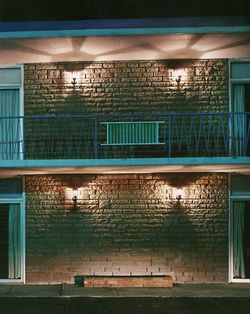
Architectural historian Barbara Penner traces the evolution of Niagara Falls – from its 19th-century honeymoon tourism to its state of post-industrial kitsch to its recent rebirth as a honeymoon destination. The photographer Alec Soth, whose work is the starting point for this lecture, compellingly portrays a ruined post-industrial landscape of love in his series Niagara(...)
Architectural historian Barbara Penner traces the evolution of Niagara Falls – from its 19th-century honeymoon tourism to its state of post-industrial kitsch to its recent rebirth as a honeymoon destination. The photographer Alec Soth, whose work is the starting point for this lecture, compellingly portrays a ruined post-industrial landscape of love in his series Niagara(...)
Location:
Paul Desmarais Theatre
Paul Desmarais Theatre
Date:
23 April 2009
23 April 2009
Title:
Learning from... Niagara Falls
Actions:
Description:
Architectural historian Barbara Penner traces the evolution of Niagara Falls – from its 19th-century honeymoon tourism to its state of post-industrial kitsch to its recent rebirth as a honeymoon destination. The photographer Alec Soth, whose work is the starting point for this lecture, compellingly portrays a ruined post-industrial landscape of love in his series Niagara(...)
Learning from... Niagara Falls
Actions:
Description:
Architectural historian Barbara Penner traces the evolution of Niagara Falls – from its 19th-century honeymoon tourism to its state of post-industrial kitsch to its recent rebirth as a honeymoon destination. The photographer Alec Soth, whose work is the starting point for this lecture, compellingly portrays a ruined post-industrial landscape of love in his series Niagara(...)
Form:
events
events
Date:
23 April 2009
23 April 2009
Location:
Paul Desmarais Theatre
Paul Desmarais Theatre
Level of archival description:
Sub-series
Sub-series
Reference number:
CI001.S2.D5
Description:
Charles Rohault de Fleury was architect for the Muséum national d'histoire naturelle from 1833 to 1862. His work for the Muséum is represented in the CCA collection by a diverse group of prints and drawings. In addition to documenting his built and unbuilt projects, the inclusion of prints and drawings of museum and zoo buildings by other architects record, if only partially, the resources available to Charles in designing his buildings. This reference material provides insight into the influences on Charles' work as well as the nature of the design process itself. His built works, with the exception of the 1854 addition to the greenhouses, are illustrated in a book of prints with a brief accompanying text - "Muséum d'histoire naturelle: serres chaudes, galeries de minéralogie, etc. etc." (published 1837) (DR1974:0002:004:001; a second copy is held by the CCA library) (1). While prints are included for the Galerie de minéralogie et de géologie, the monkey house and the reservoirs, the majority of the prints are of the greenhouses (serres chaudes) begun 1833 (2). Known for their technological innovations in iron construction, these greenhouses utilized the first multi-storey load-bearing cast-iron façades for the central pavilions as well as space frame roof structures and prefabricated parts. This structural system is well documented in the prints in the CCA collection. The design was apparently inspired by the English greenhouses - a plate of which are included in the book - that Charles saw on a tour of England. The use of prestressed beams and curved roofs in the lateral wings attest to this influence. Charles' greenhouses, in turn, influenced the design of other greenhouses in Europe especially those at the Jardins Botanique in Liège and Ghent, Belgium (3). Although Joseph Paxton saw the greenhouses in 1833, it is unclear if they had an impact on the design of the Crystal Palace constructed 1850-1851 (4). The innovations of Charles' greenhouses continued to be acknowledged into the 20th century. Giedion in "Space, Time and Architecture", while erroneously attributing them to Rouhault (5)(6), refers to the greenhouses as "the prototype of all large iron-framed conservatories" (7). In addition to the greenhouses for the Muséum, the CCA collection includes three proposals (dated 1841) for a private greenhouse designed by Charles Rohault de Fleury (DR1974:0002:002:008 - DR1974:0002:002:013). The designs utilize the same curved roofs as the wings of the greenhouses at the Muséum combined with classically detailed stonework. An different aspect of Charles' work for the Muséum national d'histoire naturelle is represented in the album of unexecuted proposals -the only design drawings for the Muséum in the collection - for a Galerie de zoologie (DR1974:0002:024:001-079). Building on the typology of his earlier classical Galerie de minéralogie et de géologie (constructed 1833 -1841), the proposals, which date from between 1838 and 1862, illustrate a gradual enrichment of Charles' classical architectural vocabulary (8). They vary in their spatial configurations and façade treatments ranging from austere colonnaded designs with little ornament to more elaborate ones with richly encrusted facades, complex rooflines and more dramatic interior spaces characteristic of the Second Empire. The majority of the proposals consist of preliminary drawings illustrating the essential formal, spatial and ornamental aspects of the building. One proposal, dated January 1846, is substantially more developed than the others; in addition to general plans, sections and elevations, more detailed drawings are included for the layout of spaces, the elaboration of the facades, the configuration of the structure and even the designs for the specimen display cases. It is also worth noting that this album includes several plans outlining Rohault de Fleury's ideas for the overall development of the Muséum national d'histoire naturelle. In 1846, an album of prints of the Museo di fiscia e storia naturelle in Florence (DR1974:0002:005:001-018) was presented to Charles by the Grand Duke of Tuscany in response to his request for tracings of that building. These prints were probably used as reference material for the design of the new Galerie de zoologie described above. The portfolio of record drawings (ca. 1862) of the zoos in Antwerp, Brussels, Marseille and Amsterdam (DR1974:0002:018:001-027) is probably a dummy for a publication on zoological gardens as well as background documentation for the renovation and expansion of the zoo at the Muséum national d'histoire naturelle in Paris. Both drawings of the facilities for the animals and visitors and general plans of the zoological gardens are included. The Paris zoo project was apparently never undertaken. (1) These prints were reused in the "Oeuvre de C. Rohault de Fleury, architecte" (published 1884) (DR1974:0002:029:001-044). (2) Rohault de Fleury's greenhouses were destroyed in the Prussian bombardments of 1870. The greenhouses, which now stand in their place, are similar in layout and appearance to the original design, but their structural system is different. (3) John Hix, 'The Glass House' (Cambridge, Mass.: The MIT Press, 1981), p. 115. (4) Ibid., p. 115. (5) This error has been repeated by other authors including Henry-Russell Hitchcock, 'Architecture: Nineteenth and Twentieth Centuries' (Baltimore, Maryland: Penguin Books, 1968), p. 120. (6) Leonardo Benevolo, 'History of Modern Architecture' Volume 1: The tradition of modern architecture (Cambridge, Mass.: The M.I.T. Press, 1971), p. 22. (7) Sigfried Giedion, 'Space, Time and Architecture; the growth of a new tradition' (Cambridge: Harvard University Press, 1941), p. 181. (8) Barry Bergdoll, "Charles Rohault de Fleury: Part two: Muséum d'Histoire Naturelle and Studies on analogous Constructions in Europe", 'CCA Research Report", n.d., p. 1.
CI001.S2.D5
Description:
Charles Rohault de Fleury was architect for the Muséum national d'histoire naturelle from 1833 to 1862. His work for the Muséum is represented in the CCA collection by a diverse group of prints and drawings. In addition to documenting his built and unbuilt projects, the inclusion of prints and drawings of museum and zoo buildings by other architects record, if only partially, the resources available to Charles in designing his buildings. This reference material provides insight into the influences on Charles' work as well as the nature of the design process itself. His built works, with the exception of the 1854 addition to the greenhouses, are illustrated in a book of prints with a brief accompanying text - "Muséum d'histoire naturelle: serres chaudes, galeries de minéralogie, etc. etc." (published 1837) (DR1974:0002:004:001; a second copy is held by the CCA library) (1). While prints are included for the Galerie de minéralogie et de géologie, the monkey house and the reservoirs, the majority of the prints are of the greenhouses (serres chaudes) begun 1833 (2). Known for their technological innovations in iron construction, these greenhouses utilized the first multi-storey load-bearing cast-iron façades for the central pavilions as well as space frame roof structures and prefabricated parts. This structural system is well documented in the prints in the CCA collection. The design was apparently inspired by the English greenhouses - a plate of which are included in the book - that Charles saw on a tour of England. The use of prestressed beams and curved roofs in the lateral wings attest to this influence. Charles' greenhouses, in turn, influenced the design of other greenhouses in Europe especially those at the Jardins Botanique in Liège and Ghent, Belgium (3). Although Joseph Paxton saw the greenhouses in 1833, it is unclear if they had an impact on the design of the Crystal Palace constructed 1850-1851 (4). The innovations of Charles' greenhouses continued to be acknowledged into the 20th century. Giedion in "Space, Time and Architecture", while erroneously attributing them to Rouhault (5)(6), refers to the greenhouses as "the prototype of all large iron-framed conservatories" (7). In addition to the greenhouses for the Muséum, the CCA collection includes three proposals (dated 1841) for a private greenhouse designed by Charles Rohault de Fleury (DR1974:0002:002:008 - DR1974:0002:002:013). The designs utilize the same curved roofs as the wings of the greenhouses at the Muséum combined with classically detailed stonework. An different aspect of Charles' work for the Muséum national d'histoire naturelle is represented in the album of unexecuted proposals -the only design drawings for the Muséum in the collection - for a Galerie de zoologie (DR1974:0002:024:001-079). Building on the typology of his earlier classical Galerie de minéralogie et de géologie (constructed 1833 -1841), the proposals, which date from between 1838 and 1862, illustrate a gradual enrichment of Charles' classical architectural vocabulary (8). They vary in their spatial configurations and façade treatments ranging from austere colonnaded designs with little ornament to more elaborate ones with richly encrusted facades, complex rooflines and more dramatic interior spaces characteristic of the Second Empire. The majority of the proposals consist of preliminary drawings illustrating the essential formal, spatial and ornamental aspects of the building. One proposal, dated January 1846, is substantially more developed than the others; in addition to general plans, sections and elevations, more detailed drawings are included for the layout of spaces, the elaboration of the facades, the configuration of the structure and even the designs for the specimen display cases. It is also worth noting that this album includes several plans outlining Rohault de Fleury's ideas for the overall development of the Muséum national d'histoire naturelle. In 1846, an album of prints of the Museo di fiscia e storia naturelle in Florence (DR1974:0002:005:001-018) was presented to Charles by the Grand Duke of Tuscany in response to his request for tracings of that building. These prints were probably used as reference material for the design of the new Galerie de zoologie described above. The portfolio of record drawings (ca. 1862) of the zoos in Antwerp, Brussels, Marseille and Amsterdam (DR1974:0002:018:001-027) is probably a dummy for a publication on zoological gardens as well as background documentation for the renovation and expansion of the zoo at the Muséum national d'histoire naturelle in Paris. Both drawings of the facilities for the animals and visitors and general plans of the zoological gardens are included. The Paris zoo project was apparently never undertaken. (1) These prints were reused in the "Oeuvre de C. Rohault de Fleury, architecte" (published 1884) (DR1974:0002:029:001-044). (2) Rohault de Fleury's greenhouses were destroyed in the Prussian bombardments of 1870. The greenhouses, which now stand in their place, are similar in layout and appearance to the original design, but their structural system is different. (3) John Hix, 'The Glass House' (Cambridge, Mass.: The MIT Press, 1981), p. 115. (4) Ibid., p. 115. (5) This error has been repeated by other authors including Henry-Russell Hitchcock, 'Architecture: Nineteenth and Twentieth Centuries' (Baltimore, Maryland: Penguin Books, 1968), p. 120. (6) Leonardo Benevolo, 'History of Modern Architecture' Volume 1: The tradition of modern architecture (Cambridge, Mass.: The M.I.T. Press, 1971), p. 22. (7) Sigfried Giedion, 'Space, Time and Architecture; the growth of a new tradition' (Cambridge: Harvard University Press, 1941), p. 181. (8) Barry Bergdoll, "Charles Rohault de Fleury: Part two: Muséum d'Histoire Naturelle and Studies on analogous Constructions in Europe", 'CCA Research Report", n.d., p. 1.
People:
Date:
[1837-ca. 1862]
[1837-ca. 1862]
Title:
Muséum nationale d'histoire naturelle
CI001.S2.D5
Description:
Charles Rohault de Fleury was architect for the Muséum national d'histoire naturelle from 1833 to 1862. His work for the Muséum is represented in the CCA collection by a diverse group of prints and drawings. In addition to documenting his built and unbuilt projects, the inclusion of prints and drawings of museum and zoo buildings by other architects record, if only partially, the resources available to Charles in designing his buildings. This reference material provides insight into the influences on Charles' work as well as the nature of the design process itself. His built works, with the exception of the 1854 addition to the greenhouses, are illustrated in a book of prints with a brief accompanying text - "Muséum d'histoire naturelle: serres chaudes, galeries de minéralogie, etc. etc." (published 1837) (DR1974:0002:004:001; a second copy is held by the CCA library) (1). While prints are included for the Galerie de minéralogie et de géologie, the monkey house and the reservoirs, the majority of the prints are of the greenhouses (serres chaudes) begun 1833 (2). Known for their technological innovations in iron construction, these greenhouses utilized the first multi-storey load-bearing cast-iron façades for the central pavilions as well as space frame roof structures and prefabricated parts. This structural system is well documented in the prints in the CCA collection. The design was apparently inspired by the English greenhouses - a plate of which are included in the book - that Charles saw on a tour of England. The use of prestressed beams and curved roofs in the lateral wings attest to this influence. Charles' greenhouses, in turn, influenced the design of other greenhouses in Europe especially those at the Jardins Botanique in Liège and Ghent, Belgium (3). Although Joseph Paxton saw the greenhouses in 1833, it is unclear if they had an impact on the design of the Crystal Palace constructed 1850-1851 (4). The innovations of Charles' greenhouses continued to be acknowledged into the 20th century. Giedion in "Space, Time and Architecture", while erroneously attributing them to Rouhault (5)(6), refers to the greenhouses as "the prototype of all large iron-framed conservatories" (7). In addition to the greenhouses for the Muséum, the CCA collection includes three proposals (dated 1841) for a private greenhouse designed by Charles Rohault de Fleury (DR1974:0002:002:008 - DR1974:0002:002:013). The designs utilize the same curved roofs as the wings of the greenhouses at the Muséum combined with classically detailed stonework. An different aspect of Charles' work for the Muséum national d'histoire naturelle is represented in the album of unexecuted proposals -the only design drawings for the Muséum in the collection - for a Galerie de zoologie (DR1974:0002:024:001-079). Building on the typology of his earlier classical Galerie de minéralogie et de géologie (constructed 1833 -1841), the proposals, which date from between 1838 and 1862, illustrate a gradual enrichment of Charles' classical architectural vocabulary (8). They vary in their spatial configurations and façade treatments ranging from austere colonnaded designs with little ornament to more elaborate ones with richly encrusted facades, complex rooflines and more dramatic interior spaces characteristic of the Second Empire. The majority of the proposals consist of preliminary drawings illustrating the essential formal, spatial and ornamental aspects of the building. One proposal, dated January 1846, is substantially more developed than the others; in addition to general plans, sections and elevations, more detailed drawings are included for the layout of spaces, the elaboration of the facades, the configuration of the structure and even the designs for the specimen display cases. It is also worth noting that this album includes several plans outlining Rohault de Fleury's ideas for the overall development of the Muséum national d'histoire naturelle. In 1846, an album of prints of the Museo di fiscia e storia naturelle in Florence (DR1974:0002:005:001-018) was presented to Charles by the Grand Duke of Tuscany in response to his request for tracings of that building. These prints were probably used as reference material for the design of the new Galerie de zoologie described above. The portfolio of record drawings (ca. 1862) of the zoos in Antwerp, Brussels, Marseille and Amsterdam (DR1974:0002:018:001-027) is probably a dummy for a publication on zoological gardens as well as background documentation for the renovation and expansion of the zoo at the Muséum national d'histoire naturelle in Paris. Both drawings of the facilities for the animals and visitors and general plans of the zoological gardens are included. The Paris zoo project was apparently never undertaken. (1) These prints were reused in the "Oeuvre de C. Rohault de Fleury, architecte" (published 1884) (DR1974:0002:029:001-044). (2) Rohault de Fleury's greenhouses were destroyed in the Prussian bombardments of 1870. The greenhouses, which now stand in their place, are similar in layout and appearance to the original design, but their structural system is different. (3) John Hix, 'The Glass House' (Cambridge, Mass.: The MIT Press, 1981), p. 115. (4) Ibid., p. 115. (5) This error has been repeated by other authors including Henry-Russell Hitchcock, 'Architecture: Nineteenth and Twentieth Centuries' (Baltimore, Maryland: Penguin Books, 1968), p. 120. (6) Leonardo Benevolo, 'History of Modern Architecture' Volume 1: The tradition of modern architecture (Cambridge, Mass.: The M.I.T. Press, 1971), p. 22. (7) Sigfried Giedion, 'Space, Time and Architecture; the growth of a new tradition' (Cambridge: Harvard University Press, 1941), p. 181. (8) Barry Bergdoll, "Charles Rohault de Fleury: Part two: Muséum d'Histoire Naturelle and Studies on analogous Constructions in Europe", 'CCA Research Report", n.d., p. 1.
Muséum nationale d'histoire naturelle
CI001.S2.D5
Description:
Charles Rohault de Fleury was architect for the Muséum national d'histoire naturelle from 1833 to 1862. His work for the Muséum is represented in the CCA collection by a diverse group of prints and drawings. In addition to documenting his built and unbuilt projects, the inclusion of prints and drawings of museum and zoo buildings by other architects record, if only partially, the resources available to Charles in designing his buildings. This reference material provides insight into the influences on Charles' work as well as the nature of the design process itself. His built works, with the exception of the 1854 addition to the greenhouses, are illustrated in a book of prints with a brief accompanying text - "Muséum d'histoire naturelle: serres chaudes, galeries de minéralogie, etc. etc." (published 1837) (DR1974:0002:004:001; a second copy is held by the CCA library) (1). While prints are included for the Galerie de minéralogie et de géologie, the monkey house and the reservoirs, the majority of the prints are of the greenhouses (serres chaudes) begun 1833 (2). Known for their technological innovations in iron construction, these greenhouses utilized the first multi-storey load-bearing cast-iron façades for the central pavilions as well as space frame roof structures and prefabricated parts. This structural system is well documented in the prints in the CCA collection. The design was apparently inspired by the English greenhouses - a plate of which are included in the book - that Charles saw on a tour of England. The use of prestressed beams and curved roofs in the lateral wings attest to this influence. Charles' greenhouses, in turn, influenced the design of other greenhouses in Europe especially those at the Jardins Botanique in Liège and Ghent, Belgium (3). Although Joseph Paxton saw the greenhouses in 1833, it is unclear if they had an impact on the design of the Crystal Palace constructed 1850-1851 (4). The innovations of Charles' greenhouses continued to be acknowledged into the 20th century. Giedion in "Space, Time and Architecture", while erroneously attributing them to Rouhault (5)(6), refers to the greenhouses as "the prototype of all large iron-framed conservatories" (7). In addition to the greenhouses for the Muséum, the CCA collection includes three proposals (dated 1841) for a private greenhouse designed by Charles Rohault de Fleury (DR1974:0002:002:008 - DR1974:0002:002:013). The designs utilize the same curved roofs as the wings of the greenhouses at the Muséum combined with classically detailed stonework. An different aspect of Charles' work for the Muséum national d'histoire naturelle is represented in the album of unexecuted proposals -the only design drawings for the Muséum in the collection - for a Galerie de zoologie (DR1974:0002:024:001-079). Building on the typology of his earlier classical Galerie de minéralogie et de géologie (constructed 1833 -1841), the proposals, which date from between 1838 and 1862, illustrate a gradual enrichment of Charles' classical architectural vocabulary (8). They vary in their spatial configurations and façade treatments ranging from austere colonnaded designs with little ornament to more elaborate ones with richly encrusted facades, complex rooflines and more dramatic interior spaces characteristic of the Second Empire. The majority of the proposals consist of preliminary drawings illustrating the essential formal, spatial and ornamental aspects of the building. One proposal, dated January 1846, is substantially more developed than the others; in addition to general plans, sections and elevations, more detailed drawings are included for the layout of spaces, the elaboration of the facades, the configuration of the structure and even the designs for the specimen display cases. It is also worth noting that this album includes several plans outlining Rohault de Fleury's ideas for the overall development of the Muséum national d'histoire naturelle. In 1846, an album of prints of the Museo di fiscia e storia naturelle in Florence (DR1974:0002:005:001-018) was presented to Charles by the Grand Duke of Tuscany in response to his request for tracings of that building. These prints were probably used as reference material for the design of the new Galerie de zoologie described above. The portfolio of record drawings (ca. 1862) of the zoos in Antwerp, Brussels, Marseille and Amsterdam (DR1974:0002:018:001-027) is probably a dummy for a publication on zoological gardens as well as background documentation for the renovation and expansion of the zoo at the Muséum national d'histoire naturelle in Paris. Both drawings of the facilities for the animals and visitors and general plans of the zoological gardens are included. The Paris zoo project was apparently never undertaken. (1) These prints were reused in the "Oeuvre de C. Rohault de Fleury, architecte" (published 1884) (DR1974:0002:029:001-044). (2) Rohault de Fleury's greenhouses were destroyed in the Prussian bombardments of 1870. The greenhouses, which now stand in their place, are similar in layout and appearance to the original design, but their structural system is different. (3) John Hix, 'The Glass House' (Cambridge, Mass.: The MIT Press, 1981), p. 115. (4) Ibid., p. 115. (5) This error has been repeated by other authors including Henry-Russell Hitchcock, 'Architecture: Nineteenth and Twentieth Centuries' (Baltimore, Maryland: Penguin Books, 1968), p. 120. (6) Leonardo Benevolo, 'History of Modern Architecture' Volume 1: The tradition of modern architecture (Cambridge, Mass.: The M.I.T. Press, 1971), p. 22. (7) Sigfried Giedion, 'Space, Time and Architecture; the growth of a new tradition' (Cambridge: Harvard University Press, 1941), p. 181. (8) Barry Bergdoll, "Charles Rohault de Fleury: Part two: Muséum d'Histoire Naturelle and Studies on analogous Constructions in Europe", 'CCA Research Report", n.d., p. 1.
Level of archival description:
File 5
File 5
Date:
[1837-ca. 1862]
[1837-ca. 1862]
People:
Form:
exhibitions
exhibitions
Description:
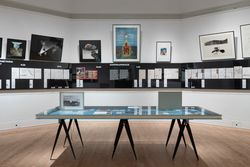
Alongside a growth in decentralized, experimental, and underground cinema at the end of the 1960s and in the early 1970s, many groups operating from inside the field of architecture such as Superstudio, Studio 9999, and Ant Farm explored the short film as a medium to expand architectural discourse, embed their projects with bold reflections and projections of society, and(...)
Alongside a growth in decentralized, experimental, and underground cinema at the end of the 1960s and in the early 1970s, many groups operating from inside the field of architecture such as Superstudio, Studio 9999, and Ant Farm explored the short film as a medium to expand architectural discourse, embed their projects with bold reflections and projections of society, and(...)
Location:
Octagonal gallery
Octagonal gallery
Date:
21 September 2018 to 19 May 2019
21 September 2018 to 19 May 2019
Title:
Scripts for a new world
Actions:
Description:
Alongside a growth in decentralized, experimental, and underground cinema at the end of the 1960s and in the early 1970s, many groups operating from inside the field of architecture such as Superstudio, Studio 9999, and Ant Farm explored the short film as a medium to expand architectural discourse, embed their projects with bold reflections and projections of society, and(...)
Scripts for a new world
Actions:
Description:
Alongside a growth in decentralized, experimental, and underground cinema at the end of the 1960s and in the early 1970s, many groups operating from inside the field of architecture such as Superstudio, Studio 9999, and Ant Farm explored the short film as a medium to expand architectural discourse, embed their projects with bold reflections and projections of society, and(...)
Form:
exhibitions
exhibitions
Date:
21 September 2018 to
19 May 2019
21 September 2018 to
19 May 2019
Location:
Octagonal gallery
Octagonal gallery
Form:
events
events
Actions:
Description:
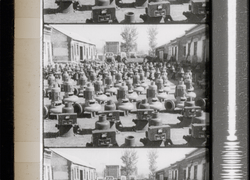
This talk revisits the contested visual legacy of Michelangelo Antonioni’s 1972 documentary Chung Kuo, Cina by placing it within a broader network of Cold War–era encounters between Western filmmakers and a carefully stage-managed People’s Republic of China. Connecting Antonioni’s state-sanctioned visit with projects by Shirley MacLaine, Jean Painlevé, and Canadian(...)
This talk revisits the contested visual legacy of Michelangelo Antonioni’s 1972 documentary Chung Kuo, Cina by placing it within a broader network of Cold War–era encounters between Western filmmakers and a carefully stage-managed People’s Republic of China. Connecting Antonioni’s state-sanctioned visit with projects by Shirley MacLaine, Jean Painlevé, and Canadian(...)
Location:
Paul-Desmarais Theatre
Paul-Desmarais Theatre
Date:
22 January 2026, 6pm to 7:30pm
22 January 2026, 6pm to 7:30pm
Title:
Screening of film excerpts and live annotation: Antonioni’s Chung Kuo, Cina (1972)
Actions:
Description:
This talk revisits the contested visual legacy of Michelangelo Antonioni’s 1972 documentary Chung Kuo, Cina by placing it within a broader network of Cold War–era encounters between Western filmmakers and a carefully stage-managed People’s Republic of China. Connecting Antonioni’s state-sanctioned visit with projects by Shirley MacLaine, Jean Painlevé, and Canadian(...)
Screening of film excerpts and live annotation: Antonioni’s Chung Kuo, Cina (1972)
Actions:
Description:
This talk revisits the contested visual legacy of Michelangelo Antonioni’s 1972 documentary Chung Kuo, Cina by placing it within a broader network of Cold War–era encounters between Western filmmakers and a carefully stage-managed People’s Republic of China. Connecting Antonioni’s state-sanctioned visit with projects by Shirley MacLaine, Jean Painlevé, and Canadian(...)
Form:
events
events
Date:
22 January 2026
6pm to 7:30pm
22 January 2026
6pm to 7:30pm
Location:
Paul-Desmarais Theatre
Paul-Desmarais Theatre
Form:
events
events
Description:
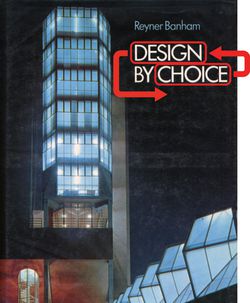
2011 Visiting Scholar Penelope Dean examines the forms of architectural and design history that dominated the twentieth century and speculates on a world in which choice is only imaginable through the prior and pervasive saturation of design. Click here for the Facebook event.
2011 Visiting Scholar Penelope Dean examines the forms of architectural and design history that dominated the twentieth century and speculates on a world in which choice is only imaginable through the prior and pervasive saturation of design. Click here for the Facebook event.
Location:
Shaughnessy House
Shaughnessy House
Date:
21 July 2011 , 6pm
21 July 2011 , 6pm
Title:
Visiting Scholar Seminar: Penelope Dean
Actions:
Description:
2011 Visiting Scholar Penelope Dean examines the forms of architectural and design history that dominated the twentieth century and speculates on a world in which choice is only imaginable through the prior and pervasive saturation of design. Click here for the Facebook event.
Visiting Scholar Seminar: Penelope Dean
Actions:
Description:
2011 Visiting Scholar Penelope Dean examines the forms of architectural and design history that dominated the twentieth century and speculates on a world in which choice is only imaginable through the prior and pervasive saturation of design. Click here for the Facebook event.
Form:
events
events
Date:
21 July 2011
6pm
21 July 2011
6pm
Location:
Shaughnessy House
Shaughnessy House
Form:
exhibitions
exhibitions
Title:
Civic Visions, World's Fairs
Civic Visions, World's Fairs
Actions:
Description:
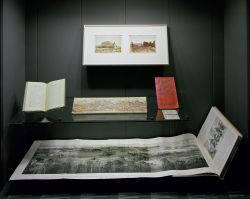
The dazzling energies of world’s fairs are well known —millions of visitors, encyclopaedic displays of goods and ideas, fantastic settings of pavilions and exhibition halls—but the sites that gather the exposition experience into a spatial unity are often overlooked. Civic Visions, World’s Fairs looks at the contribution of site planning to the history of international(...)
The dazzling energies of world’s fairs are well known —millions of visitors, encyclopaedic displays of goods and ideas, fantastic settings of pavilions and exhibition halls—but the sites that gather the exposition experience into a spatial unity are often overlooked. Civic Visions, World’s Fairs looks at the contribution of site planning to the history of international(...)
Location:
Hall cases
Hall cases
Date:
17 March 1993 to 1 August 1993
17 March 1993 to 1 August 1993
Title:
Civic Visions, World's Fairs
Actions:
Description:
The dazzling energies of world’s fairs are well known —millions of visitors, encyclopaedic displays of goods and ideas, fantastic settings of pavilions and exhibition halls—but the sites that gather the exposition experience into a spatial unity are often overlooked. Civic Visions, World’s Fairs looks at the contribution of site planning to the history of international(...)
Civic Visions, World's Fairs
Actions:
Description:
The dazzling energies of world’s fairs are well known —millions of visitors, encyclopaedic displays of goods and ideas, fantastic settings of pavilions and exhibition halls—but the sites that gather the exposition experience into a spatial unity are often overlooked. Civic Visions, World’s Fairs looks at the contribution of site planning to the history of international(...)
Form:
exhibitions
exhibitions
Date:
17 March 1993 to
1 August 1993
17 March 1993 to
1 August 1993
Location:
Hall cases
Hall cases
Form:
exhibitions
exhibitions
Actions:
Description:
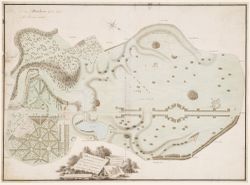
British gardens and garden buildings have held particular importance in British artistic and cultural life over the last four centuries, as well as influenced the development of the architectural and landscape ideas of the European and North American continents. An English Arcadia 1600–1990 documents the history of these gardens and buildings. The exhibition consists of(...)
British gardens and garden buildings have held particular importance in British artistic and cultural life over the last four centuries, as well as influenced the development of the architectural and landscape ideas of the European and North American continents. An English Arcadia 1600–1990 documents the history of these gardens and buildings. The exhibition consists of(...)
Location:
Main galleries
Main galleries
Date:
12 February 1992 to 19 April 1992
12 February 1992 to 19 April 1992
Title:
An English Arcadia, 1600-1990: Designs for Gardens and Garden Buildings in the Care of the National Trust with Selected Objects from the CCA Collections
Actions:
Description:
British gardens and garden buildings have held particular importance in British artistic and cultural life over the last four centuries, as well as influenced the development of the architectural and landscape ideas of the European and North American continents. An English Arcadia 1600–1990 documents the history of these gardens and buildings. The exhibition consists of(...)
An English Arcadia, 1600-1990: Designs for Gardens and Garden Buildings in the Care of the National Trust with Selected Objects from the CCA Collections
Actions:
Description:
British gardens and garden buildings have held particular importance in British artistic and cultural life over the last four centuries, as well as influenced the development of the architectural and landscape ideas of the European and North American continents. An English Arcadia 1600–1990 documents the history of these gardens and buildings. The exhibition consists of(...)
Form:
exhibitions
exhibitions
Date:
12 February 1992 to
19 April 1992
12 February 1992 to
19 April 1992
Location:
Main galleries
Main galleries
Form:
exhibitions
exhibitions

Actions:
Description:
Hochelaga Depicta: Documenting Montréal traces the urban and architectural development of Montreal since its founding in 1642. Engravings of different scenes of Montreal, guide books, postcards, and other documents from the CCA collection present this history. Curated by Joshua Wolfe, Héritage Montréal, and Helen Malkin, CCA.
Hochelaga Depicta: Documenting Montréal traces the urban and architectural development of Montreal since its founding in 1642. Engravings of different scenes of Montreal, guide books, postcards, and other documents from the CCA collection present this history. Curated by Joshua Wolfe, Héritage Montréal, and Helen Malkin, CCA.
Location:
Hall cases
Hall cases
Date:
7 May 1989 to 15 August 1989
7 May 1989 to 15 August 1989
Title:
Hochelaga Depicta: Documenting Montréal
Actions:
Description:
Hochelaga Depicta: Documenting Montréal traces the urban and architectural development of Montreal since its founding in 1642. Engravings of different scenes of Montreal, guide books, postcards, and other documents from the CCA collection present this history. Curated by Joshua Wolfe, Héritage Montréal, and Helen Malkin, CCA.
Hochelaga Depicta: Documenting Montréal
Actions:
Description:
Hochelaga Depicta: Documenting Montréal traces the urban and architectural development of Montreal since its founding in 1642. Engravings of different scenes of Montreal, guide books, postcards, and other documents from the CCA collection present this history. Curated by Joshua Wolfe, Héritage Montréal, and Helen Malkin, CCA.
Form:
exhibitions
exhibitions
Date:
7 May 1989 to
15 August 1989
7 May 1989 to
15 August 1989
Location:
Hall cases
Hall cases
Form:
events
events
Actions:
Description:
Soon after the opening of The University Is Now on Air: Broadcasting Modern Architecture, Tim Benton presents another reading of the new exhibition through a counter-tour. Rather than a tour through the galleries that gives voice to the curator’s ideas, counter-tours propose critical, subversive, corrective, or alternative versions of a given project through encounters(...)
Soon after the opening of The University Is Now on Air: Broadcasting Modern Architecture, Tim Benton presents another reading of the new exhibition through a counter-tour. Rather than a tour through the galleries that gives voice to the curator’s ideas, counter-tours propose critical, subversive, corrective, or alternative versions of a given project through encounters(...)
Date:
16 November 2017
16 November 2017
Title:
Counter-tour: Tim Benton’s Cut
Actions:
Description:
Soon after the opening of The University Is Now on Air: Broadcasting Modern Architecture, Tim Benton presents another reading of the new exhibition through a counter-tour. Rather than a tour through the galleries that gives voice to the curator’s ideas, counter-tours propose critical, subversive, corrective, or alternative versions of a given project through encounters(...)
Counter-tour: Tim Benton’s Cut
Actions:
Description:
Soon after the opening of The University Is Now on Air: Broadcasting Modern Architecture, Tim Benton presents another reading of the new exhibition through a counter-tour. Rather than a tour through the galleries that gives voice to the curator’s ideas, counter-tours propose critical, subversive, corrective, or alternative versions of a given project through encounters(...)
Form:
events
events
Date:
16 November 2017
16 November 2017
Form:
events
events

Title:
Maristella Casciato: Introducing Pierre Jeanneret—architect, designer, educator—in Chandigarh
Maristella Casciato: Introducing Pierre Jeanneret—architect, designer, educator—in Chandigarh
Actions:
Description:
On 18 November, Maristella Casciato, CCA Senior Mellon Fellow and Professor of Architectural History, School of Architecture “Aldo Rossi” at Cesena, University of Bologna, speaks on the pivotal contribution of Pierre Jeanneret to the construction of Chandigarh, India. The lesser-known cousin of the famous Le Corbusier, this seminar presents “another” view of Pierre Jeanneret.
On 18 November, Maristella Casciato, CCA Senior Mellon Fellow and Professor of Architectural History, School of Architecture “Aldo Rossi” at Cesena, University of Bologna, speaks on the pivotal contribution of Pierre Jeanneret to the construction of Chandigarh, India. The lesser-known cousin of the famous Le Corbusier, this seminar presents “another” view of Pierre Jeanneret.
Location:
Paul Desmarais Theatre
Presented in English Keyword(s):
Maristella Casciato, Pierre Jeanneret
Paul Desmarais Theatre
Presented in English Keyword(s):
Maristella Casciato, Pierre Jeanneret
Date:
18 November 2010 , 6PM
18 November 2010 , 6PM
Title:
Maristella Casciato: Introducing Pierre Jeanneret—architect, designer, educator—in Chandigarh
Actions:
Description:
On 18 November, Maristella Casciato, CCA Senior Mellon Fellow and Professor of Architectural History, School of Architecture “Aldo Rossi” at Cesena, University of Bologna, speaks on the pivotal contribution of Pierre Jeanneret to the construction of Chandigarh, India. The lesser-known cousin of the famous Le Corbusier, this seminar presents “another” view of Pierre Jeanneret.
Maristella Casciato: Introducing Pierre Jeanneret—architect, designer, educator—in Chandigarh
Actions:
Description:
On 18 November, Maristella Casciato, CCA Senior Mellon Fellow and Professor of Architectural History, School of Architecture “Aldo Rossi” at Cesena, University of Bologna, speaks on the pivotal contribution of Pierre Jeanneret to the construction of Chandigarh, India. The lesser-known cousin of the famous Le Corbusier, this seminar presents “another” view of Pierre Jeanneret.
Form:
events
events
Date:
18 November 2010
6PM
18 November 2010
6PM
Location:
Paul Desmarais Theatre
Presented in English Keyword(s):
Maristella Casciato, Pierre Jeanneret
Paul Desmarais Theatre
Presented in English Keyword(s):
Maristella Casciato, Pierre Jeanneret


