


1520 Results
Form:
books
books
Title:
Robert Adams : turning back
Robert Adams : turning back
Actions:
Price:
$56.95
(available to order)
Summary:
"Turning back: a photographic journal of re-exploration" is published to coincide with the bicentennial of the Lewis and Clark expedition. The narrative begins at the Pacific ocean and moves eastward through what was formerly one of the world’s great rain forests. Photographs at the center of the book report on the forest’s destruction. Elsewhere they trace a search for(...)
$56.95
(available to order)
Summary:
"Turning back: a photographic journal of re-exploration" is published to coincide with the bicentennial of the Lewis and Clark expedition. The narrative begins at the Pacific ocean and moves eastward through what was formerly one of the world’s great rain forests. Photographs at the center of the book report on the forest’s destruction. Elsewhere they trace a search for(...)
Title:
Robert Adams : turning back
Actions:
Price:
$56.95
(available to order)
Summary:
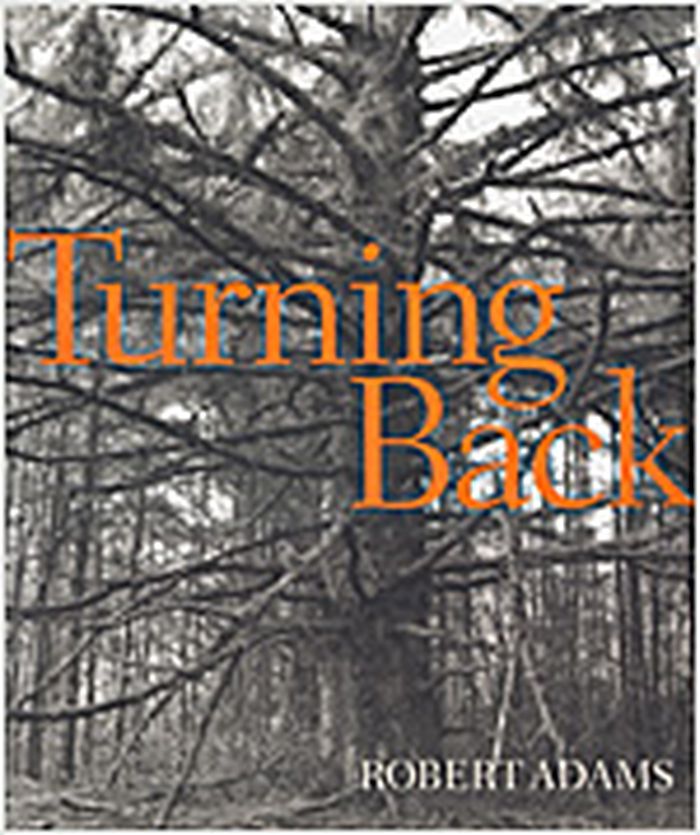
"Turning back: a photographic journal of re-exploration" is published to coincide with the bicentennial of the Lewis and Clark expedition. The narrative begins at the Pacific ocean and moves eastward through what was formerly one of the world’s great rain forests. Photographs at the center of the book report on the forest’s destruction. Elsewhere they trace a search for hope. Two hundred years ago, Lewis and Clark reported finding in the American Northwest a vast forest of ancient evergreens. In "Turning back", Robert Adams looks again at the region’s trees, discovering evidence both of America’s failure and of a continuing promise. President Jefferson’s primary charge to Lewis and Clark was to prepare the way for American commerce. Today, historians still speculate about why, upon his return, Lewis lapsed into depression and apparently committed suicide. "Going east," Adams suggests, "was more difficult than going west." So then, what is the future? "Turning back" documents two kinds of predictive evidence. On the one hand we observe the results of greed so unrestrained that they are indistinguishable from those of nihilism. On the other we see what still lives, whether by our design or neglect, or Providence; in these 164 pictures the tone is celebratory, as in a prayer book. From coastal landscapes populated with tourists to timber clear-cutting and small family farms in eastern Oregon, here we reflect on what was lost, what is retained, and what we value both regionally and as a people with a common history.
Robert Adams : turning back
Actions:
Price:
$56.95
(available to order)
Summary:
"Turning back: a photographic journal of re-exploration" is published to coincide with the bicentennial of the Lewis and Clark expedition. The narrative begins at the Pacific ocean and moves eastward through what was formerly one of the world’s great rain forests. Photographs at the center of the book report on the forest’s destruction. Elsewhere they trace a search for hope. Two hundred years ago, Lewis and Clark reported finding in the American Northwest a vast forest of ancient evergreens. In "Turning back", Robert Adams looks again at the region’s trees, discovering evidence both of America’s failure and of a continuing promise. President Jefferson’s primary charge to Lewis and Clark was to prepare the way for American commerce. Today, historians still speculate about why, upon his return, Lewis lapsed into depression and apparently committed suicide. "Going east," Adams suggests, "was more difficult than going west." So then, what is the future? "Turning back" documents two kinds of predictive evidence. On the one hand we observe the results of greed so unrestrained that they are indistinguishable from those of nihilism. On the other we see what still lives, whether by our design or neglect, or Providence; in these 164 pictures the tone is celebratory, as in a prayer book. From coastal landscapes populated with tourists to timber clear-cutting and small family farms in eastern Oregon, here we reflect on what was lost, what is retained, and what we value both regionally and as a people with a common history.
Form:
books
books
Publication:
May 2005, New York
May 2005, New York
Subject:
Photography monographs
Photography monographs
Form:
books
books
Price:
$49.95
(available to order)
Summary:
"Last Landscapes" is an exploration of the cult and celebration of death, loss and memory. It traces the history and design of burial places throughout Europe and the USA, ranging from the picturesque tradition of the village churchyard to tightly packed ‘cities of the dead’, such as the Jewish Cemetery in Prague and Père Lachaise in Paris. Other landscapes that feature(...)
$49.95
(available to order)
Summary:
"Last Landscapes" is an exploration of the cult and celebration of death, loss and memory. It traces the history and design of burial places throughout Europe and the USA, ranging from the picturesque tradition of the village churchyard to tightly packed ‘cities of the dead’, such as the Jewish Cemetery in Prague and Père Lachaise in Paris. Other landscapes that feature(...)
Title:
Last landscapes : the architecture of the cemetery in the west
Actions:
Price:
$49.95
(available to order)
Summary:
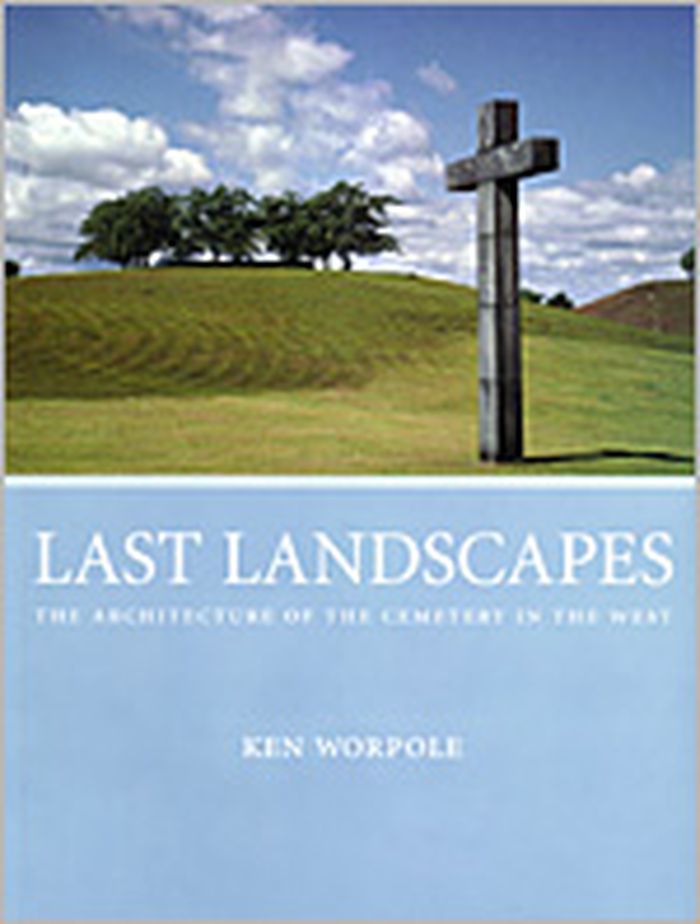
"Last Landscapes" is an exploration of the cult and celebration of death, loss and memory. It traces the history and design of burial places throughout Europe and the USA, ranging from the picturesque tradition of the village churchyard to tightly packed ‘cities of the dead’, such as the Jewish Cemetery in Prague and Père Lachaise in Paris. Other landscapes that feature in this book include the war cemeteries of northern France, Viking burial islands in central Sweden, Etruscan tombs and early Christian catacombs in Italy, the 17th-century Portuguese–Jewish cemetery 'Beth Haim' at Ouderkerk in the Netherlands, Forest Lawns in California, Derek Jarman’s garden in Kent and the Stockholm Woodland Cemetery. It is a fact that architecture ‘began with the tomb', yet, as Ken Worpole shows us in Last Landscapes, many historic cemeteries have been demolished or abandoned in recent times (notably the case with Jewish cemeteries in Eastern Europe), and there has been an increasing loss of inscription and memorialization in the modern urban cemetery. Too often cemeteries today are both poorly designed and physically and culturally marginalized. Worse, cremation denies a full architectural response to the mystery and solemnity of death. The author explores how modes of disposal – burial, cremation, inhumation in mausoleums and wall tombs – vary across Europe and North America, according to religious and other cultural influences. And Last Landscapes raises profound questions as to how, in an age of mass cremation, architects and landscape designers might create meaningful structures and settings in the absence of a body, since for most of history the human body itself has provided the fundamental structural scale. This evocative book also contemplates other forms of memorialization within modern societies, from sculptures to parks, most notably the extraordinary Duisberg Park, set in a former giant steelworks in Germany’s Ruhr Valley.
Last landscapes : the architecture of the cemetery in the west
Actions:
Price:
$49.95
(available to order)
Summary:
"Last Landscapes" is an exploration of the cult and celebration of death, loss and memory. It traces the history and design of burial places throughout Europe and the USA, ranging from the picturesque tradition of the village churchyard to tightly packed ‘cities of the dead’, such as the Jewish Cemetery in Prague and Père Lachaise in Paris. Other landscapes that feature in this book include the war cemeteries of northern France, Viking burial islands in central Sweden, Etruscan tombs and early Christian catacombs in Italy, the 17th-century Portuguese–Jewish cemetery 'Beth Haim' at Ouderkerk in the Netherlands, Forest Lawns in California, Derek Jarman’s garden in Kent and the Stockholm Woodland Cemetery. It is a fact that architecture ‘began with the tomb', yet, as Ken Worpole shows us in Last Landscapes, many historic cemeteries have been demolished or abandoned in recent times (notably the case with Jewish cemeteries in Eastern Europe), and there has been an increasing loss of inscription and memorialization in the modern urban cemetery. Too often cemeteries today are both poorly designed and physically and culturally marginalized. Worse, cremation denies a full architectural response to the mystery and solemnity of death. The author explores how modes of disposal – burial, cremation, inhumation in mausoleums and wall tombs – vary across Europe and North America, according to religious and other cultural influences. And Last Landscapes raises profound questions as to how, in an age of mass cremation, architects and landscape designers might create meaningful structures and settings in the absence of a body, since for most of history the human body itself has provided the fundamental structural scale. This evocative book also contemplates other forms of memorialization within modern societies, from sculptures to parks, most notably the extraordinary Duisberg Park, set in a former giant steelworks in Germany’s Ruhr Valley.
Form:
books
books
Publication:
June 2003, London
June 2003, London
Subject:
Gardens
Gardens
Form:
books
books
Actions:
Holdings:
Description:
72 pages, [3] folded leaves of plates : illustrations ; 21 cm
Description:
72 pages, [3] folded leaves of plates : illustrations ; 21 cm
Author:
Publication:
London : Printed by William Clowes and Sons, 1878.
London : Printed by William Clowes and Sons, 1878.
Title:
The design generally of iron bridges of very large span for railway traffic / by Thomas Curtis Clarke, with an abstract of the discussion upon the paper ; edited by James Forrest.
Actions:
Holdings:
Description:
72 pages, [3] folded leaves of plates : illustrations ; 21 cm
The design generally of iron bridges of very large span for railway traffic / by Thomas Curtis Clarke, with an abstract of the discussion upon the paper ; edited by James Forrest.
Actions:
Holdings:
Description:
72 pages, [3] folded leaves of plates : illustrations ; 21 cm
Form:
books
books
Publication:
London : Printed by William Clowes and Sons, 1878.
London : Printed by William Clowes and Sons, 1878.
Author:
Form:
books
books
Actions:
Holdings:
Description:
xiv, [2], 68 p., XVI leaves of plates : ill. ; 34 cm.
Description:
xiv, [2], 68 p., XVI leaves of plates : ill. ; 34 cm.
Author:
Subject:
Publication:
Edinburgh ; London : William Blackwood and Sons, 1851.
Edinburgh ; London : William Blackwood and Sons, 1851.
Title:
The geometric beauty of the human figure defined : to which is prefixed a system of aesthetic proportion applicable to architecture and the other formative arts / by D.R. Hay, F.R.S.E.
Actions:
Holdings:
Description:
xiv, [2], 68 p., XVI leaves of plates : ill. ; 34 cm.
The geometric beauty of the human figure defined : to which is prefixed a system of aesthetic proportion applicable to architecture and the other formative arts / by D.R. Hay, F.R.S.E.
Actions:
Holdings:
Description:
xiv, [2], 68 p., XVI leaves of plates : ill. ; 34 cm.
Form:
books
books
Publication:
Edinburgh ; London : William Blackwood and Sons, 1851.
Edinburgh ; London : William Blackwood and Sons, 1851.
Author:
Subject:
Form:
books
books
Actions:
Holdings:
Description:
ix, 245 pages : illustrations ; 22 cm
Description:
ix, 245 pages : illustrations ; 22 cm
Author:
Subject:
Publication:
Washington : New Republic Books ; New York : Trade distribution by Simon and Schuster, 1978.
Washington : New Republic Books ; New York : Trade distribution by Simon and Schuster, 1978.
Title:
Back to the drawing board! : Planning livable cities / Wolf von Eckardt ; illustrated by Forrest Wilson.
Actions:
Holdings:
Description:
ix, 245 pages : illustrations ; 22 cm
Back to the drawing board! : Planning livable cities / Wolf von Eckardt ; illustrated by Forrest Wilson.
Actions:
Holdings:
Description:
ix, 245 pages : illustrations ; 22 cm
Form:
books
books
Publication:
Washington : New Republic Books ; New York : Trade distribution by Simon and Schuster, 1978.
Washington : New Republic Books ; New York : Trade distribution by Simon and Schuster, 1978.
Author:
Subject:
Form:
books
books
Actions:
Holdings:
Description:
xix, 130 pages : illustrations (chiefly color) ; 24 cm.
Description:
xix, 130 pages : illustrations (chiefly color) ; 24 cm.
Author:
Subject:
Publication:
Calgary, Alberta : University of Calgary Press, [2019], ©2019.
Calgary, Alberta : University of Calgary Press, [2019], ©2019.
Title:
Intertwined histories : plants in their social contexts / edited by Jim Ellis.
Actions:
Holdings:
Description:
xix, 130 pages : illustrations (chiefly color) ; 24 cm.
Intertwined histories : plants in their social contexts / edited by Jim Ellis.
Actions:
Holdings:
Description:
xix, 130 pages : illustrations (chiefly color) ; 24 cm.
Form:
books
books
Publication:
Calgary, Alberta : University of Calgary Press, [2019], ©2019.
Calgary, Alberta : University of Calgary Press, [2019], ©2019.
Author:
Subject:
Form:
books
books
Actions:
Holdings:
Description:
xviii, 247 pages, 8 unnumbered pages of color plates : illustrations (some color) ; 23 cm.
Description:
xviii, 247 pages, 8 unnumbered pages of color plates : illustrations (some color) ; 23 cm.
Author:
Subject:
Publication:
Cardiff : University of Wales Press, 2014., ©2014
Cardiff : University of Wales Press, 2014., ©2014
Title:
American Gothic art and architecture in the age of Romantic literature / Kerry Dean Carso.
Actions:
Holdings:
Description:
xviii, 247 pages, 8 unnumbered pages of color plates : illustrations (some color) ; 23 cm.
American Gothic art and architecture in the age of Romantic literature / Kerry Dean Carso.
Actions:
Holdings:
Description:
xviii, 247 pages, 8 unnumbered pages of color plates : illustrations (some color) ; 23 cm.
Form:
books
books
Publication:
Cardiff : University of Wales Press, 2014., ©2014
Cardiff : University of Wales Press, 2014., ©2014
Author:
Subject:
Form:
books
books
Actions:
Price:
$24.95
(available to order)
Summary:
The artist's relationship to landscape was once invoked by a canvas on an easel in a picturesque vista. No more. In the 1960s, the Earth Artists started focusing on natural systems and entropy; in the 1970s, photographers in the New Topographics movement turned their attention unsentimentally to the industrialized "man-altered" environment; in the 1980s, artists animated(...)
$24.95
(available to order)
Summary:
The artist's relationship to landscape was once invoked by a canvas on an easel in a picturesque vista. No more. In the 1960s, the Earth Artists started focusing on natural systems and entropy; in the 1970s, photographers in the New Topographics movement turned their attention unsentimentally to the industrialized "man-altered" environment; in the 1980s, artists animated(...)
Title:
Badlands : new horizons in landscape
Actions:
Price:
$24.95
(available to order)
Summary:
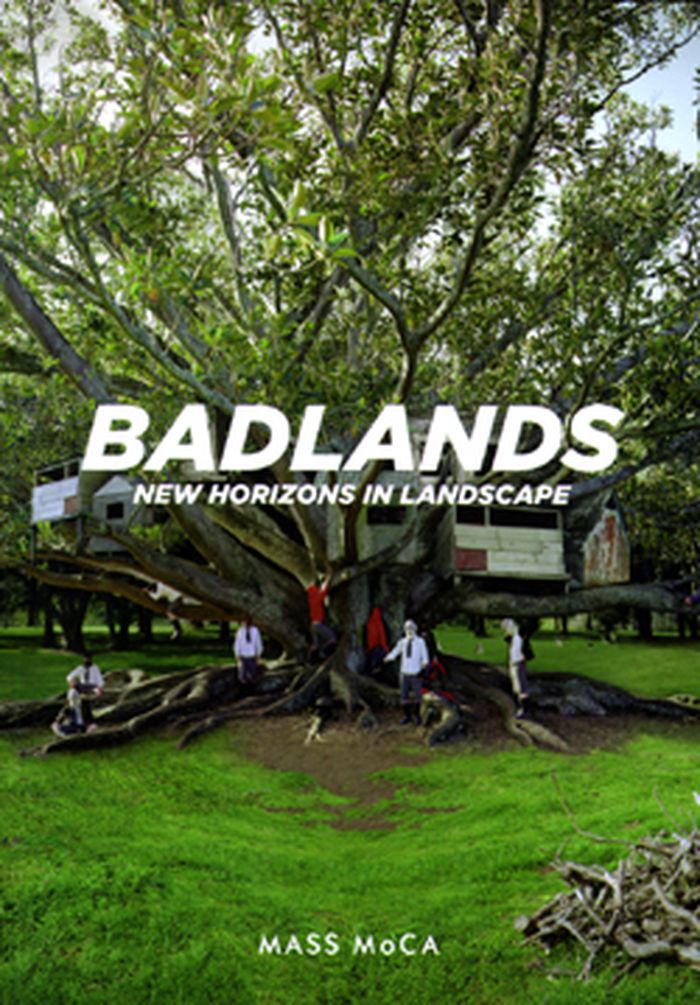
The artist's relationship to landscape was once invoked by a canvas on an easel in a picturesque vista. No more. In the 1960s, the Earth Artists started focusing on natural systems and entropy; in the 1970s, photographers in the New Topographics movement turned their attention unsentimentally to the industrialized "man-altered" environment; in the 1980s, artists animated the natural landscape with art, movement, and performance; and in the 1990s, Eco-Artists collaborated with scientists to address sustainability, pollution, and politics. "Badlands" explores the latest manifestations of artists’ fascination with the earth, gathering work by contemporary artists who approach landscape through history, culture, and science. "Badlands", which accompanies an exhibition at MASS MoCA, approaches landscape as a theme with variations, grouping artists and their art (which is shown in 150 color illustrations) by category : Historians, who recontextualize the history of landscape depiction; Explorers, who explore the environment and our place within it; Activists and Pragmatists, who alert us to problems in the natural world and suggest solutions; and the Aestheticists, who look at the beauty found in nature. Each section begins with an essay : Gregory Volk maps the evolution of the genre from the Hudson River School to Earth Art; Ginger Strand examines the relationship between man and landscape through our cultural history; Tensie Whelan discusses environmental science, sustainability, and climate change; and Denise Markonish considers the new genre of landscape that emerges from the work displayed in Badlands. As a physical object, Badlands supports the values represented by its intellectual and artistic content: it was produced using FSC (Forest Stewardship Council) certified techniques including paper, printing, and inks. Artists: Robert Adams, Vaughn Bell, Boyle Family, Melissa Brown, Center for Land Use Interpretation, Leila Daw, Gregory Euclide, J. Henry Fair, Mike Glier, Anthony Goicolea, Marine Hugonnier, Paul Jacobsen, Mitchell Joachim/ Terreform, Nina Katchadourian, Jane Marsching, Alexis Rockman, Ed Ruscha, Joseph Smolinski, Yutaka Sone, Jennifer Steinkamp, Mary Temple. Copublished with MASS MoCA
Badlands : new horizons in landscape
Actions:
Price:
$24.95
(available to order)
Summary:
The artist's relationship to landscape was once invoked by a canvas on an easel in a picturesque vista. No more. In the 1960s, the Earth Artists started focusing on natural systems and entropy; in the 1970s, photographers in the New Topographics movement turned their attention unsentimentally to the industrialized "man-altered" environment; in the 1980s, artists animated the natural landscape with art, movement, and performance; and in the 1990s, Eco-Artists collaborated with scientists to address sustainability, pollution, and politics. "Badlands" explores the latest manifestations of artists’ fascination with the earth, gathering work by contemporary artists who approach landscape through history, culture, and science. "Badlands", which accompanies an exhibition at MASS MoCA, approaches landscape as a theme with variations, grouping artists and their art (which is shown in 150 color illustrations) by category : Historians, who recontextualize the history of landscape depiction; Explorers, who explore the environment and our place within it; Activists and Pragmatists, who alert us to problems in the natural world and suggest solutions; and the Aestheticists, who look at the beauty found in nature. Each section begins with an essay : Gregory Volk maps the evolution of the genre from the Hudson River School to Earth Art; Ginger Strand examines the relationship between man and landscape through our cultural history; Tensie Whelan discusses environmental science, sustainability, and climate change; and Denise Markonish considers the new genre of landscape that emerges from the work displayed in Badlands. As a physical object, Badlands supports the values represented by its intellectual and artistic content: it was produced using FSC (Forest Stewardship Council) certified techniques including paper, printing, and inks. Artists: Robert Adams, Vaughn Bell, Boyle Family, Melissa Brown, Center for Land Use Interpretation, Leila Daw, Gregory Euclide, J. Henry Fair, Mike Glier, Anthony Goicolea, Marine Hugonnier, Paul Jacobsen, Mitchell Joachim/ Terreform, Nina Katchadourian, Jane Marsching, Alexis Rockman, Ed Ruscha, Joseph Smolinski, Yutaka Sone, Jennifer Steinkamp, Mary Temple. Copublished with MASS MoCA
Form:
books
books
Publication:
September 2008, North Adams
September 2008, North Adams
Subject:
Gardens
Gardens
Form:
books
books
Title:
Breathless
Breathless
Actions:
Price:
$25.00
(available in store)
Summary:
''Breathless'' is published as part of an upcoming exhibition taking place within a pavilion on The Power Plant’s South Terrace Summer 2022. ''Breathless'' shares contributions on the paradoxes of air, atmosphere and the breath with key texts and artworks. The book begins in the smog of our current predicament, with philosopher Dehlia Hannah proposing a new vocabulary(...)
$25.00
(available in store)
Summary:
''Breathless'' is published as part of an upcoming exhibition taking place within a pavilion on The Power Plant’s South Terrace Summer 2022. ''Breathless'' shares contributions on the paradoxes of air, atmosphere and the breath with key texts and artworks. The book begins in the smog of our current predicament, with philosopher Dehlia Hannah proposing a new vocabulary(...)
Title:
Breathless
Actions:
Price:
$25.00
(available in store)
Summary:
''Breathless'' is published as part of an upcoming exhibition taking place within a pavilion on The Power Plant’s South Terrace Summer 2022. ''Breathless'' shares contributions on the paradoxes of air, atmosphere and the breath with key texts and artworks. The book begins in the smog of our current predicament, with philosopher Dehlia Hannah proposing a new vocabulary for air in her text, ''Inversion Layer''. Following the flow of air, Flaka Haliti’s installation ''Speculating on the Blue'' opens a portal to an artificial atmosphere that defines boundaries of a closed reality. Connecting to parallel worlds, philosopher Achille Mbembe’s ''The Universal Right to Breathe'' captures a global perspective on breathing, offering alternative trajectories beyond suffocation. Marguerite Humeau’s speculative sculpture imagines a species that survives suffocation and evolves exclusively to breathe. Charles Stankievech exhumes the voices of Clarice Lispector and Lygia Clark as an interconnected mystical encounter in a text titled ''Breath with Me, A Breath of Life''. In ''Twilight of Sighs'', psychoanalyst and philosopher Alireza Taheri analyzes the sigh with a set of propositions. With the same intensity, Donna Kukama re-narrates history with her performance ''Chapter Q: Dem Short-Short-Falls'' as she breathes the memory of an invisible event. Invisibility of viral and virtual particles are positioned in the context of other historical times in Ala Roushan’s text ''Air of Our Closed World'', articulating the inversion experienced today within the domestic bubble/bunker. ''The Air Without'' by Kate Whiteway connects illness and metaphor to consider contradictions in the air that both oxygenates the lung while breathing diamond dust. With a granularity greater than dust, Heather Davis’s text ''Molecular Intimacy'' situates us at the nanoscale to position bodies within the atmosphere they breathe. This final text loops back to the start of the book in considering the air of our contemporary sky and the breath that exists in its precarious state. Under this arched sky, the book ends with ''Fire with Fire'', engulfed in the smoky aftermath of forest fires in the work of Julius von Bismarck.
Breathless
Actions:
Price:
$25.00
(available in store)
Summary:
''Breathless'' is published as part of an upcoming exhibition taking place within a pavilion on The Power Plant’s South Terrace Summer 2022. ''Breathless'' shares contributions on the paradoxes of air, atmosphere and the breath with key texts and artworks. The book begins in the smog of our current predicament, with philosopher Dehlia Hannah proposing a new vocabulary for air in her text, ''Inversion Layer''. Following the flow of air, Flaka Haliti’s installation ''Speculating on the Blue'' opens a portal to an artificial atmosphere that defines boundaries of a closed reality. Connecting to parallel worlds, philosopher Achille Mbembe’s ''The Universal Right to Breathe'' captures a global perspective on breathing, offering alternative trajectories beyond suffocation. Marguerite Humeau’s speculative sculpture imagines a species that survives suffocation and evolves exclusively to breathe. Charles Stankievech exhumes the voices of Clarice Lispector and Lygia Clark as an interconnected mystical encounter in a text titled ''Breath with Me, A Breath of Life''. In ''Twilight of Sighs'', psychoanalyst and philosopher Alireza Taheri analyzes the sigh with a set of propositions. With the same intensity, Donna Kukama re-narrates history with her performance ''Chapter Q: Dem Short-Short-Falls'' as she breathes the memory of an invisible event. Invisibility of viral and virtual particles are positioned in the context of other historical times in Ala Roushan’s text ''Air of Our Closed World'', articulating the inversion experienced today within the domestic bubble/bunker. ''The Air Without'' by Kate Whiteway connects illness and metaphor to consider contradictions in the air that both oxygenates the lung while breathing diamond dust. With a granularity greater than dust, Heather Davis’s text ''Molecular Intimacy'' situates us at the nanoscale to position bodies within the atmosphere they breathe. This final text loops back to the start of the book in considering the air of our contemporary sky and the breath that exists in its precarious state. Under this arched sky, the book ends with ''Fire with Fire'', engulfed in the smoky aftermath of forest fires in the work of Julius von Bismarck.
Form:
books
books
Publication:
December 2021
December 2021
Subject:
Group Exhibitions
Group Exhibitions
Form:
books
books
Title:
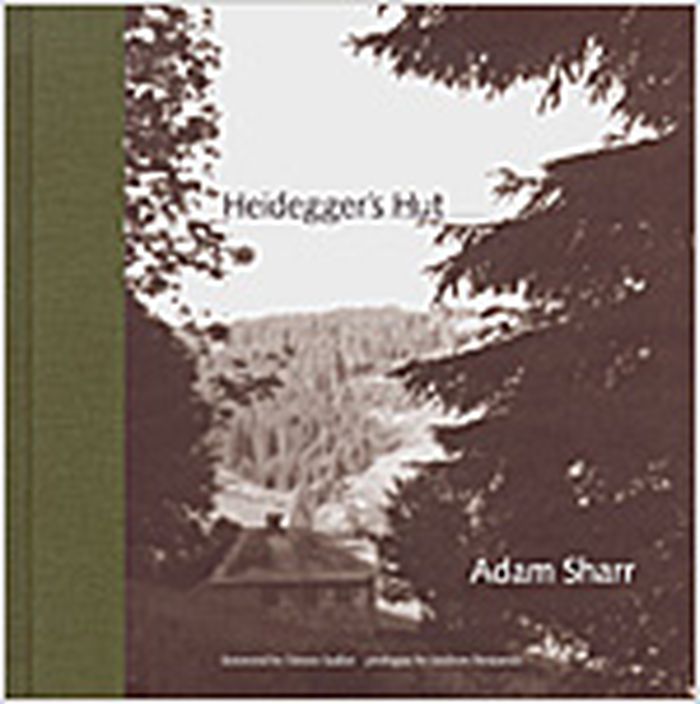
Heidegger's hut
Heidegger's hut
Actions:
Price:
$32.95
(available to order)
Summary:
"This is the most thorough architectural 'crit' of a hut ever set down, the justification for which is that the hut was the setting in which Martin Heidegger wrote phenomenological texts that became touchstones for late-twentieth-century architectural theory." --from the foreword by Simon Sadler Beginning in the summer of 1922, philosopher Martin Heidegger(...)
$32.95
(available to order)
Summary:
"This is the most thorough architectural 'crit' of a hut ever set down, the justification for which is that the hut was the setting in which Martin Heidegger wrote phenomenological texts that became touchstones for late-twentieth-century architectural theory." --from the foreword by Simon Sadler Beginning in the summer of 1922, philosopher Martin Heidegger(...)
Subject:
Architectural Theory
Architectural Theory
Publication:
October 2006, Cambridge / London
October 2006, Cambridge / London
Title:
Heidegger's hut
Actions:
Price:
$32.95
(available to order)
Summary:
"This is the most thorough architectural 'crit' of a hut ever set down, the justification for which is that the hut was the setting in which Martin Heidegger wrote phenomenological texts that became touchstones for late-twentieth-century architectural theory." --from the foreword by Simon Sadler Beginning in the summer of 1922, philosopher Martin Heidegger (1889-1976) occupied a small, three-room cabin in the Black Forest Mountains of southern Germany. He called it "die Hütte" ("the hut"). Over the years, Heidegger worked on many of his most famous writings in this cabin, from his early lectures to his last enigmatic texts. He claimed an intellectual and emotional intimacy with the building and its surroundings, and even suggested that the landscape expressed itself through him, almost without agency. In Heidegger's Hut, Adam Sharr explores this intense relationship of thought, place, and person. Heidegger's mountain hut has been an object of fascination for many, including architects interested in his writings about "dwelling" and "place." Sharr's account--the first substantive investigation of the building and Heidegger's life there--reminds us that, in approaching Heidegger's writings, it is important to consider the circumstances in which the philosopher, as he himself said, felt "transported" into the work's "own rhythm." Indeed, Heidegger's apparent abdication of agency and tendency toward romanticism seem especially significant in light of his troubling involvement with the Nazi regime in the early 1930s. Sharr draws on original research, including interviews with Heidegger's relatives, as well as on written accounts of the hut by Heidegger and his visitors. The book's evocative photographs include scenic and architectural views taken by the author and many remarkable images of a septuagenarian Heidegger in the hut taken by the photojournalist Digne Meller-Markovicz. There are many ways to interpret Heidegger's hut--as the site of heroic confrontation between philosopher and existence; as the petit bourgeois escape of a misguided romantic; as a place overshadowed by fascism; or as an entirely unremarkable little building. Heidegger's Hut does not argue for any one reading, but guides readers toward their own possible interpretations of the importance of "die Hütte."
Heidegger's hut
Actions:
Price:
$32.95
(available to order)
Summary:
"This is the most thorough architectural 'crit' of a hut ever set down, the justification for which is that the hut was the setting in which Martin Heidegger wrote phenomenological texts that became touchstones for late-twentieth-century architectural theory." --from the foreword by Simon Sadler Beginning in the summer of 1922, philosopher Martin Heidegger (1889-1976) occupied a small, three-room cabin in the Black Forest Mountains of southern Germany. He called it "die Hütte" ("the hut"). Over the years, Heidegger worked on many of his most famous writings in this cabin, from his early lectures to his last enigmatic texts. He claimed an intellectual and emotional intimacy with the building and its surroundings, and even suggested that the landscape expressed itself through him, almost without agency. In Heidegger's Hut, Adam Sharr explores this intense relationship of thought, place, and person. Heidegger's mountain hut has been an object of fascination for many, including architects interested in his writings about "dwelling" and "place." Sharr's account--the first substantive investigation of the building and Heidegger's life there--reminds us that, in approaching Heidegger's writings, it is important to consider the circumstances in which the philosopher, as he himself said, felt "transported" into the work's "own rhythm." Indeed, Heidegger's apparent abdication of agency and tendency toward romanticism seem especially significant in light of his troubling involvement with the Nazi regime in the early 1930s. Sharr draws on original research, including interviews with Heidegger's relatives, as well as on written accounts of the hut by Heidegger and his visitors. The book's evocative photographs include scenic and architectural views taken by the author and many remarkable images of a septuagenarian Heidegger in the hut taken by the photojournalist Digne Meller-Markovicz. There are many ways to interpret Heidegger's hut--as the site of heroic confrontation between philosopher and existence; as the petit bourgeois escape of a misguided romantic; as a place overshadowed by fascism; or as an entirely unremarkable little building. Heidegger's Hut does not argue for any one reading, but guides readers toward their own possible interpretations of the importance of "die Hütte."
Form:
books
books
Publication:
October 2006, Cambridge / London
October 2006, Cambridge / London
Subject:
Architectural Theory
Architectural Theory


