


1664 Results
Form:
books
books
Actions:
Price:
$28.00
(available in store)
Summary:
While the largest parts of icebergs — or islands — remain beneath the sea surface, often unmapped and perilous, a myriad of creatures and non-organic matter connect them to other lands. Nowadays, in the era of the climate crisis, what is hidden in the depths of the sea exponentially manifests the impact of anthropogenic activity on the planet. Plastic waste and pollution,(...)
$28.00
(available in store)
Summary:
While the largest parts of icebergs — or islands — remain beneath the sea surface, often unmapped and perilous, a myriad of creatures and non-organic matter connect them to other lands. Nowadays, in the era of the climate crisis, what is hidden in the depths of the sea exponentially manifests the impact of anthropogenic activity on the planet. Plastic waste and pollution,(...)
Title:
Mediterranean icebergs: Invisible connections underwater
Actions:
Price:
$28.00
(available in store)
Summary:
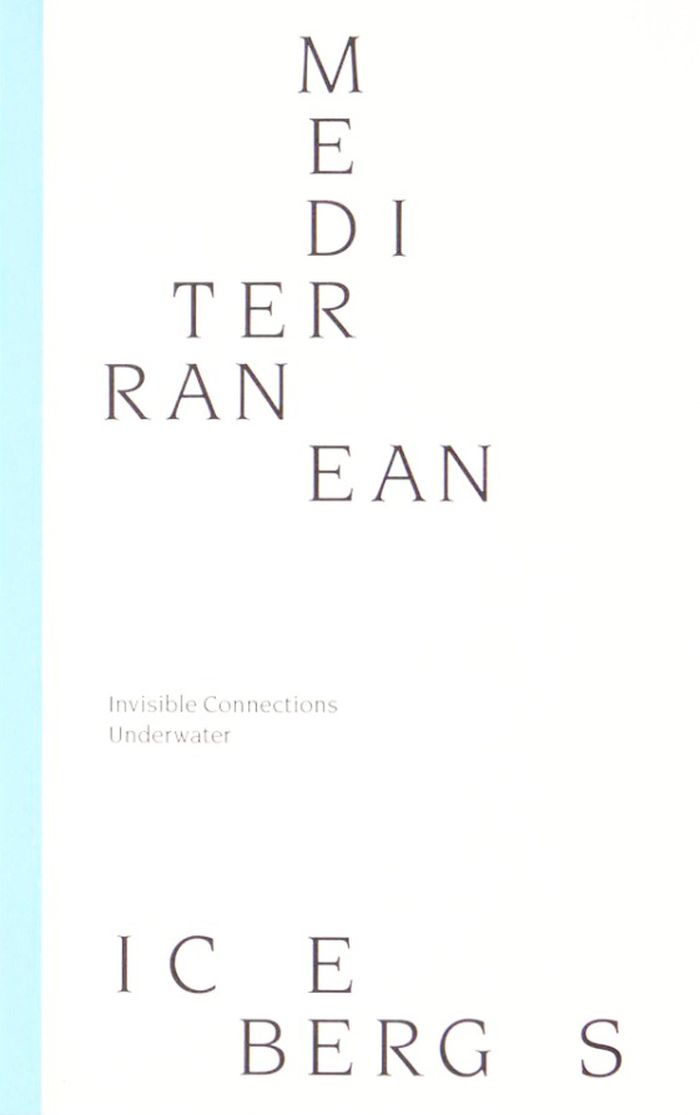
While the largest parts of icebergs — or islands — remain beneath the sea surface, often unmapped and perilous, a myriad of creatures and non-organic matter connect them to other lands. Nowadays, in the era of the climate crisis, what is hidden in the depths of the sea exponentially manifests the impact of anthropogenic activity on the planet. Plastic waste and pollution, deep sea mining, and undersea network infrastructures affect marine biodiversity and life on Earth at large. Mediterranean Icebergs sheds light on forms of agency, be it human, more-than-human, or machinic, that operate in marine environments, paying attention to their entanglements, encounters, and asymmetries. Addressing the interconnectedness of environmental, political, and legal issues, this book takes the Mediterranean as a starting point to discuss what is at stake for all lives depending on the planet’s seas and oceans.
Mediterranean icebergs: Invisible connections underwater
Actions:
Price:
$28.00
(available in store)
Summary:
While the largest parts of icebergs — or islands — remain beneath the sea surface, often unmapped and perilous, a myriad of creatures and non-organic matter connect them to other lands. Nowadays, in the era of the climate crisis, what is hidden in the depths of the sea exponentially manifests the impact of anthropogenic activity on the planet. Plastic waste and pollution, deep sea mining, and undersea network infrastructures affect marine biodiversity and life on Earth at large. Mediterranean Icebergs sheds light on forms of agency, be it human, more-than-human, or machinic, that operate in marine environments, paying attention to their entanglements, encounters, and asymmetries. Addressing the interconnectedness of environmental, political, and legal issues, this book takes the Mediterranean as a starting point to discuss what is at stake for all lives depending on the planet’s seas and oceans.
Form:
books
books
Publication:
March 2025
March 2025
Subject:
Landscape Theory
Landscape Theory
Form:
books
books
Actions:
Price:
$70.00
(available in store)
Summary:
« The Art and Science of Green Architecture » delves into the origins, ideas, and practices of green architecture and sustainable development. Through a series of real, time-tested green construction case studies, architects Wan Li, Liu Xiaoxue, and Chi Xin’an seek to clearly and concisely illustrate the concepts, strategies, and procedures of green building. The book(...)
$70.00
(available in store)
Summary:
« The Art and Science of Green Architecture » delves into the origins, ideas, and practices of green architecture and sustainable development. Through a series of real, time-tested green construction case studies, architects Wan Li, Liu Xiaoxue, and Chi Xin’an seek to clearly and concisely illustrate the concepts, strategies, and procedures of green building. The book(...)
Title:
The art and science of green architecture
Actions:
Price:
$70.00
(available in store)
Summary:
« The Art and Science of Green Architecture » delves into the origins, ideas, and practices of green architecture and sustainable development. Through a series of real, time-tested green construction case studies, architects Wan Li, Liu Xiaoxue, and Chi Xin’an seek to clearly and concisely illustrate the concepts, strategies, and procedures of green building. The book also explores the relationship between green building and sustainable development, offering a timely analysis amidst the catastrophic worsening of the climate crisis. The authors employ an accessible writing style to discernibly connect various aspects and dimensions of core knowledge and concepts, including intelligent systems that are fast growing, passive climate-responsive design, the social and economic benefits of green buildings, and the green building assessment system. Complete with illustrative diagrams and graphics, the book also includes student-friendly features such as information boxes and detailed tables.
The art and science of green architecture
Actions:
Price:
$70.00
(available in store)
Summary:
« The Art and Science of Green Architecture » delves into the origins, ideas, and practices of green architecture and sustainable development. Through a series of real, time-tested green construction case studies, architects Wan Li, Liu Xiaoxue, and Chi Xin’an seek to clearly and concisely illustrate the concepts, strategies, and procedures of green building. The book also explores the relationship between green building and sustainable development, offering a timely analysis amidst the catastrophic worsening of the climate crisis. The authors employ an accessible writing style to discernibly connect various aspects and dimensions of core knowledge and concepts, including intelligent systems that are fast growing, passive climate-responsive design, the social and economic benefits of green buildings, and the green building assessment system. Complete with illustrative diagrams and graphics, the book also includes student-friendly features such as information boxes and detailed tables.
Form:
books
books
Publication:
June 2026
June 2026
Subject:
Green Architecture
Green Architecture
Form:
books
books
Actions:
Price:
$32.95
(available to order)
Summary:
The coming energy crisis caused by a peak in global oil and natural gas production will profoundly affect the lives of all North Americans. As the price of these vital fuels rises, homeowners will scramble to cut their fuel bills. Two options for meeting the upcoming challenge are dramatic improvements in home energy efficiency and efforts to tap into clean, affordable,(...)
$32.95
(available to order)
Summary:
The coming energy crisis caused by a peak in global oil and natural gas production will profoundly affect the lives of all North Americans. As the price of these vital fuels rises, homeowners will scramble to cut their fuel bills. Two options for meeting the upcoming challenge are dramatic improvements in home energy efficiency and efforts to tap into clean, affordable,(...)
Title:
The homeowner's guide to renewable energy
Actions:
Price:
$32.95
(available to order)
Summary:
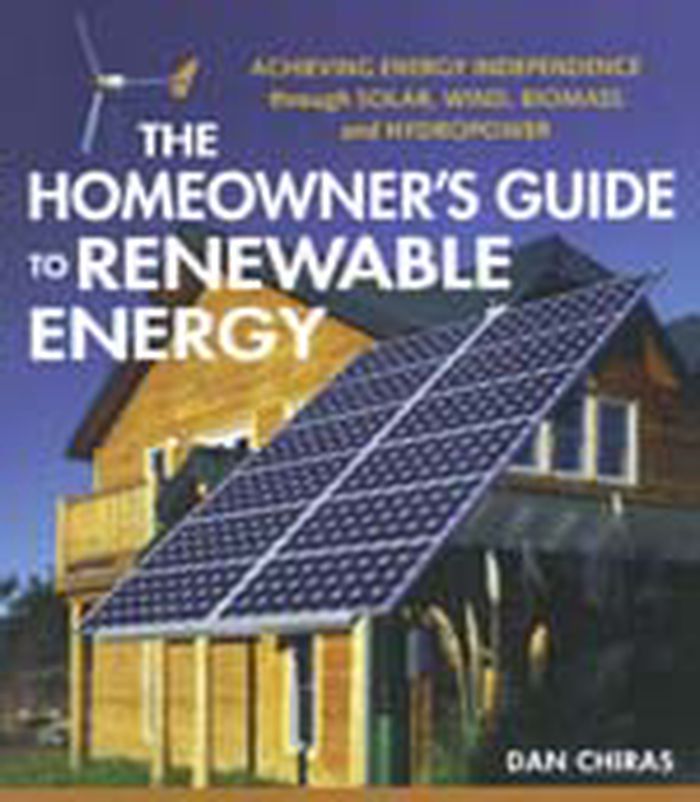
The coming energy crisis caused by a peak in global oil and natural gas production will profoundly affect the lives of all North Americans. As the price of these vital fuels rises, homeowners will scramble to cut their fuel bills. Two options for meeting the upcoming challenge are dramatic improvements in home energy efficiency and efforts to tap into clean, affordable, renewable energy resources to heat and cool homes, to provide hot water and electricity, and even to cook. These measures can result in huge savings and a level of energy independence. The Homeowner's Guide to Renewable Energy gives readers sufficient knowledge to hire and communicate effectively with contractors and, for those wanting do installations themselves, it recommends more detailed manuals. With a complete resource listing, this well-illustrated and accessible guide is a perfect companion for illuminating the coming dark age.
The homeowner's guide to renewable energy
Actions:
Price:
$32.95
(available to order)
Summary:
The coming energy crisis caused by a peak in global oil and natural gas production will profoundly affect the lives of all North Americans. As the price of these vital fuels rises, homeowners will scramble to cut their fuel bills. Two options for meeting the upcoming challenge are dramatic improvements in home energy efficiency and efforts to tap into clean, affordable, renewable energy resources to heat and cool homes, to provide hot water and electricity, and even to cook. These measures can result in huge savings and a level of energy independence. The Homeowner's Guide to Renewable Energy gives readers sufficient knowledge to hire and communicate effectively with contractors and, for those wanting do installations themselves, it recommends more detailed manuals. With a complete resource listing, this well-illustrated and accessible guide is a perfect companion for illuminating the coming dark age.
Form:
books
books
Publication:
February 2006, Gabriola Island
February 2006, Gabriola Island
Subject:
Green Architecture
Green Architecture
Form:
books
books

Actions:
Price:
$21.95
(available to order)
Summary:
We live an age of nostalgia, incarnated by populist fantasies of "taking back control" and making nations "great again". In the long aftermath of the 2007-08 economic crisis, nostalgia has been established as the cultural zeitgeist of Western society. Populist fantasies of nostalgia represent a cry for help against the demise of the societal model of the postwar era,(...)
$21.95
(available to order)
Summary:
We live an age of nostalgia, incarnated by populist fantasies of "taking back control" and making nations "great again". In the long aftermath of the 2007-08 economic crisis, nostalgia has been established as the cultural zeitgeist of Western society. Populist fantasies of nostalgia represent a cry for help against the demise of the societal model of the postwar era,(...)
Title:
Zeitgeist nostalgia: On populism, work and the 'Good Life'
Actions:
Price:
$21.95
(available to order)
Summary:
We live an age of nostalgia, incarnated by populist fantasies of "taking back control" and making nations "great again". In the long aftermath of the 2007-08 economic crisis, nostalgia has been established as the cultural zeitgeist of Western society. Populist fantasies of nostalgia represent a cry for help against the demise of the societal model of the postwar era, based on stable employment and mass consumption. The promise of an impossible return to the "good life" of the 20th century, Gandini contends, particularly appeals to the older generations, who are incapable of making sense of the evolution of Western societies after decades of globalization and neoliberal policies. The younger generations, in the meantime, are instead trying to build a new "good life" based on another form of return, this time to old practices of craft production and consumption.
Zeitgeist nostalgia: On populism, work and the 'Good Life'
Actions:
Price:
$21.95
(available to order)
Summary:
We live an age of nostalgia, incarnated by populist fantasies of "taking back control" and making nations "great again". In the long aftermath of the 2007-08 economic crisis, nostalgia has been established as the cultural zeitgeist of Western society. Populist fantasies of nostalgia represent a cry for help against the demise of the societal model of the postwar era, based on stable employment and mass consumption. The promise of an impossible return to the "good life" of the 20th century, Gandini contends, particularly appeals to the older generations, who are incapable of making sense of the evolution of Western societies after decades of globalization and neoliberal policies. The younger generations, in the meantime, are instead trying to build a new "good life" based on another form of return, this time to old practices of craft production and consumption.
Form:
books
books
Publication:
January 2021
January 2021
Subject:
Social
Social
Form:
books
books
Actions:
Price:
$32.00
(available to order)
Summary:
Drawing on a vast range of material, from critical theory to pop culture to the intimacies and plain exchanges of daily life, Nelson explores how we might think, experience, or talk about freedom in ways responsive to the conditions of our day. Her abiding interest lies in ongoing 'practices of freedom' by which we negotiate our interrelation with-- indeed, our(...)
$32.00
(available to order)
Summary:
Drawing on a vast range of material, from critical theory to pop culture to the intimacies and plain exchanges of daily life, Nelson explores how we might think, experience, or talk about freedom in ways responsive to the conditions of our day. Her abiding interest lies in ongoing 'practices of freedom' by which we negotiate our interrelation with-- indeed, our(...)
Title:
On freedom: four songs of care and constraint
Actions:
Price:
$32.00
(available to order)
Summary:
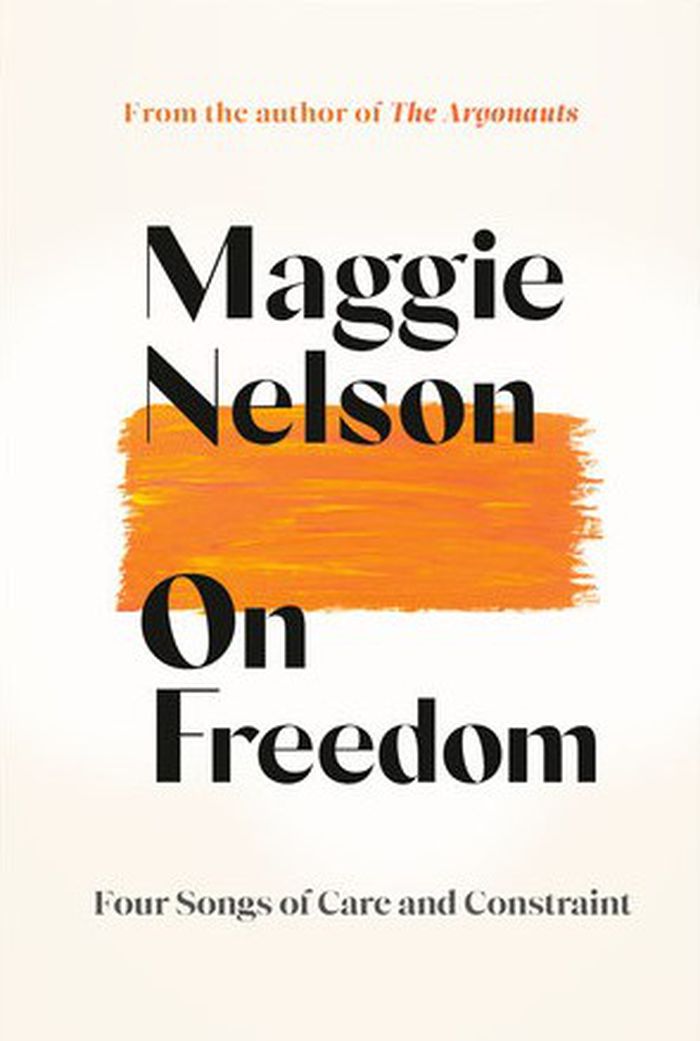
Drawing on a vast range of material, from critical theory to pop culture to the intimacies and plain exchanges of daily life, Nelson explores how we might think, experience, or talk about freedom in ways responsive to the conditions of our day. Her abiding interest lies in ongoing 'practices of freedom' by which we negotiate our interrelation with-- indeed, our inseparability from -- others, with all the care and constraint that relation entails, while accepting difference and conflict as integral to our communion. For Nelson, thinking publicly through the knots in our culture -- from recent art world debates to the turbulent legacies of sexual liberation, from the painful paradoxes of addiction to the lure of despair in the face of the climate crisis -- is itself a practice of freedom, a means of forging fortitude, courage, and company.
On freedom: four songs of care and constraint
Actions:
Price:
$32.00
(available to order)
Summary:
Drawing on a vast range of material, from critical theory to pop culture to the intimacies and plain exchanges of daily life, Nelson explores how we might think, experience, or talk about freedom in ways responsive to the conditions of our day. Her abiding interest lies in ongoing 'practices of freedom' by which we negotiate our interrelation with-- indeed, our inseparability from -- others, with all the care and constraint that relation entails, while accepting difference and conflict as integral to our communion. For Nelson, thinking publicly through the knots in our culture -- from recent art world debates to the turbulent legacies of sexual liberation, from the painful paradoxes of addiction to the lure of despair in the face of the climate crisis -- is itself a practice of freedom, a means of forging fortitude, courage, and company.
Form:
books
books
Publication:
September 2021
September 2021
Subject:
Social
Social
Form:
books
books
Title:
Platform capitalism
Platform capitalism
Actions:
Price:
$15.95
(available in store)
Summary:
What unites Google and Facebook, Apple and Microsoft, Siemens and GE, Uber and Airbnb? Across a wide range of sectors, these firms are transforming themselves into platforms: businesses that provide the hardware and software foundation for others to operate on. This transformation signals a major shift in how capitalist firms operate and how they interact with the rest of(...)
$15.95
(available in store)
Summary:
What unites Google and Facebook, Apple and Microsoft, Siemens and GE, Uber and Airbnb? Across a wide range of sectors, these firms are transforming themselves into platforms: businesses that provide the hardware and software foundation for others to operate on. This transformation signals a major shift in how capitalist firms operate and how they interact with the rest of(...)
Title:
Platform capitalism
Actions:
Price:
$15.95
(available in store)
Summary:
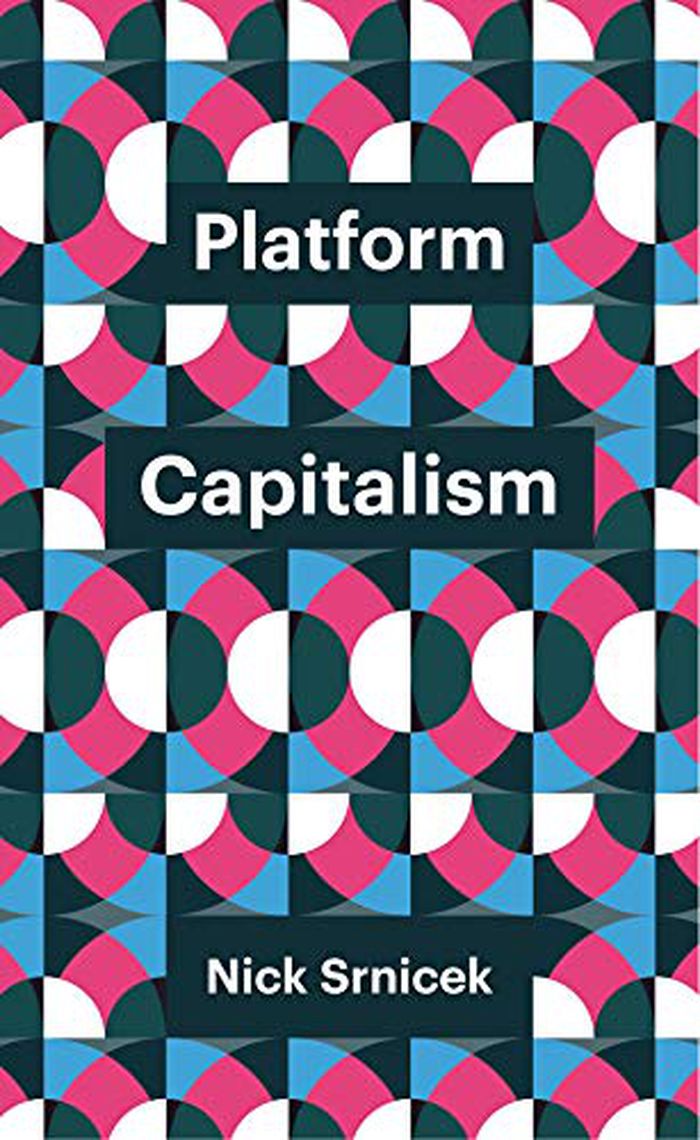
What unites Google and Facebook, Apple and Microsoft, Siemens and GE, Uber and Airbnb? Across a wide range of sectors, these firms are transforming themselves into platforms: businesses that provide the hardware and software foundation for others to operate on. This transformation signals a major shift in how capitalist firms operate and how they interact with the rest of the economy: the emergence of ‘platform capitalism’. This book critically examines these new business forms, tracing their genesis from the long downturn of the 1970s to the boom and bust of the 1990s and the aftershocks of the 2008 crisis. It shows how the fundamental foundations of the economy are rapidly being carved up among a small number of monopolistic platforms, and how the platform introduces new tendencies within capitalism that pose significant challenges to any vision of a post-capitalist future.
Platform capitalism
Actions:
Price:
$15.95
(available in store)
Summary:
What unites Google and Facebook, Apple and Microsoft, Siemens and GE, Uber and Airbnb? Across a wide range of sectors, these firms are transforming themselves into platforms: businesses that provide the hardware and software foundation for others to operate on. This transformation signals a major shift in how capitalist firms operate and how they interact with the rest of the economy: the emergence of ‘platform capitalism’. This book critically examines these new business forms, tracing their genesis from the long downturn of the 1970s to the boom and bust of the 1990s and the aftershocks of the 2008 crisis. It shows how the fundamental foundations of the economy are rapidly being carved up among a small number of monopolistic platforms, and how the platform introduces new tendencies within capitalism that pose significant challenges to any vision of a post-capitalist future.
Form:
books
books
Publication:
December 2016
December 2016
Subject:
Social
Social
Form:
books
books
Price:
$45.00
(available to order)
Summary:
The difficulty of reconciling our basic needs with the long history of cultural landscapes, in all their inherent beauty and sufficiency, has become clear. With our deep trust in modern technology, in progress and in a demanding global lifestyle we have become a real threat to our world. Yet, today the existential and elementary nature of landscapes remains the bearer of(...)
$45.00
(available to order)
Summary:
The difficulty of reconciling our basic needs with the long history of cultural landscapes, in all their inherent beauty and sufficiency, has become clear. With our deep trust in modern technology, in progress and in a demanding global lifestyle we have become a real threat to our world. Yet, today the existential and elementary nature of landscapes remains the bearer of(...)
Title:
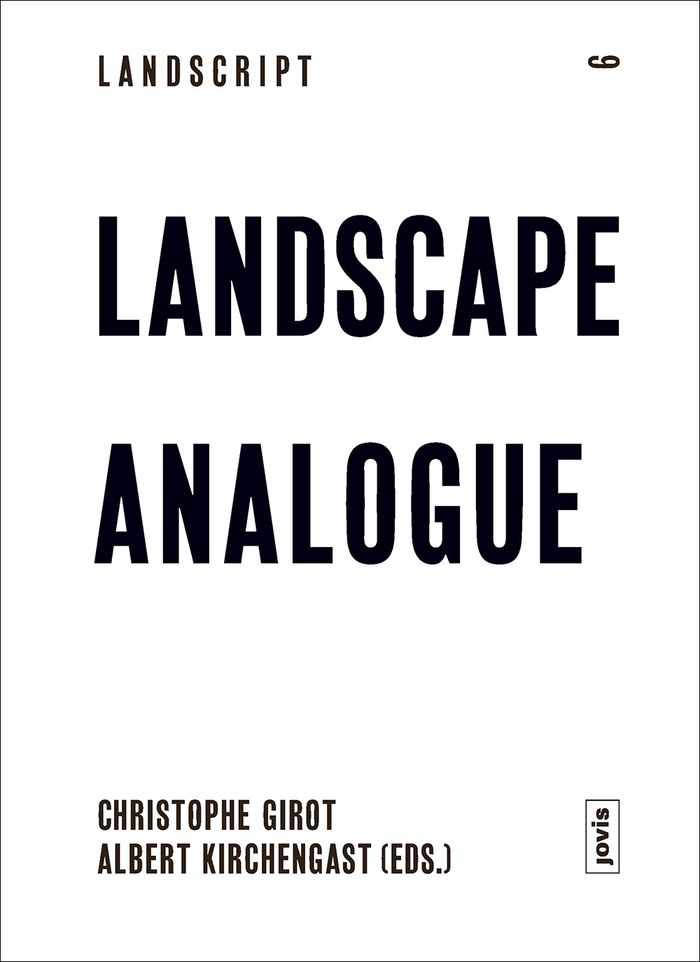
Landscape analogue: About material culture and idealism. landscript #6
Actions:
Price:
$45.00
(available to order)
Summary:
The difficulty of reconciling our basic needs with the long history of cultural landscapes, in all their inherent beauty and sufficiency, has become clear. With our deep trust in modern technology, in progress and in a demanding global lifestyle we have become a real threat to our world. Yet, today the existential and elementary nature of landscapes remains the bearer of a successful metaphor for “balance”. Why not draw—amidst a truly global crisis—conclusions out of our long history of designed nature, of places shaped by skilled labor and a quest for pleasure? This publication seeks to stimulate the “Analogue” dimension as a substantial concept for everyday landscape thinking. In an anthology of interdisciplinary essays, this volume stresses the necessity for a fundamental shift, within the likely framework of a future of restricted resources, a radically different mobility or “hot” cities.
Landscape analogue: About material culture and idealism. landscript #6
Actions:
Price:
$45.00
(available to order)
Summary:
The difficulty of reconciling our basic needs with the long history of cultural landscapes, in all their inherent beauty and sufficiency, has become clear. With our deep trust in modern technology, in progress and in a demanding global lifestyle we have become a real threat to our world. Yet, today the existential and elementary nature of landscapes remains the bearer of a successful metaphor for “balance”. Why not draw—amidst a truly global crisis—conclusions out of our long history of designed nature, of places shaped by skilled labor and a quest for pleasure? This publication seeks to stimulate the “Analogue” dimension as a substantial concept for everyday landscape thinking. In an anthology of interdisciplinary essays, this volume stresses the necessity for a fundamental shift, within the likely framework of a future of restricted resources, a radically different mobility or “hot” cities.
Form:
books
books
Publication:
May 2022
May 2022
Subject:
Landscape Theory
Landscape Theory
Form:
books
books

Actions:
Price:
$66.00
(available to order)
Summary:
An ironic take on the Case Study House Program--initiated in 1945 by Arts and Architecture magazine in an effort to develop low-priced single-family homes --German photographer Peter Bialobrzeski's Case Study Homes was shot at the Baseco compound, a squatter camp near the Port of Manila, which is home to an estimated 70,000 people. As Bialobrzeski was considering the(...)
$66.00
(available to order)
Summary:
An ironic take on the Case Study House Program--initiated in 1945 by Arts and Architecture magazine in an effort to develop low-priced single-family homes --German photographer Peter Bialobrzeski's Case Study Homes was shot at the Baseco compound, a squatter camp near the Port of Manila, which is home to an estimated 70,000 people. As Bialobrzeski was considering the(...)
Title:
Peter Bialobrzeski: case study homes
Actions:
Price:
$66.00
(available to order)
Summary:
An ironic take on the Case Study House Program--initiated in 1945 by Arts and Architecture magazine in an effort to develop low-priced single-family homes --German photographer Peter Bialobrzeski's Case Study Homes was shot at the Baseco compound, a squatter camp near the Port of Manila, which is home to an estimated 70,000 people. As Bialobrzeski was considering the series--startling images of provisional structures fashioned from slats, cardboard, corrugated metal and other cast-off materials and refuse--Lehman Brothers Bank collapsed and the media declared a global economic crisis. These recent events lend resonance to Bialobrzeski's images, which recall the photographs of impoverished rural Americans commissioned by the Farm Security Administration in the 1930s. Conceived as a sketchbook for a larger project, the images evidence the human will to survive and a profound resourcefulness.
Peter Bialobrzeski: case study homes
Actions:
Price:
$66.00
(available to order)
Summary:
An ironic take on the Case Study House Program--initiated in 1945 by Arts and Architecture magazine in an effort to develop low-priced single-family homes --German photographer Peter Bialobrzeski's Case Study Homes was shot at the Baseco compound, a squatter camp near the Port of Manila, which is home to an estimated 70,000 people. As Bialobrzeski was considering the series--startling images of provisional structures fashioned from slats, cardboard, corrugated metal and other cast-off materials and refuse--Lehman Brothers Bank collapsed and the media declared a global economic crisis. These recent events lend resonance to Bialobrzeski's images, which recall the photographs of impoverished rural Americans commissioned by the Farm Security Administration in the 1930s. Conceived as a sketchbook for a larger project, the images evidence the human will to survive and a profound resourcefulness.
Form:
books
books
Publication:
December 2009
December 2009
Subject:
Photography monographs
Photography monographs
Form:
books
books
Actions:
Price:
$61.00
(available to order)
Summary:
This follow-up to Kate Nesbitt's best-selling anthology Theorizing a New Agenda collects twenty-eight essays that address architecture theory from the mid-1990s, where Nesbitt left off, through the present. Kristin Sykes offers an overview of the myriad approaches and attitudes adopted by architects and architectural theorists during this era. Multiple themes—including(...)
$61.00
(available to order)
Summary:
This follow-up to Kate Nesbitt's best-selling anthology Theorizing a New Agenda collects twenty-eight essays that address architecture theory from the mid-1990s, where Nesbitt left off, through the present. Kristin Sykes offers an overview of the myriad approaches and attitudes adopted by architects and architectural theorists during this era. Multiple themes—including(...)
Title:
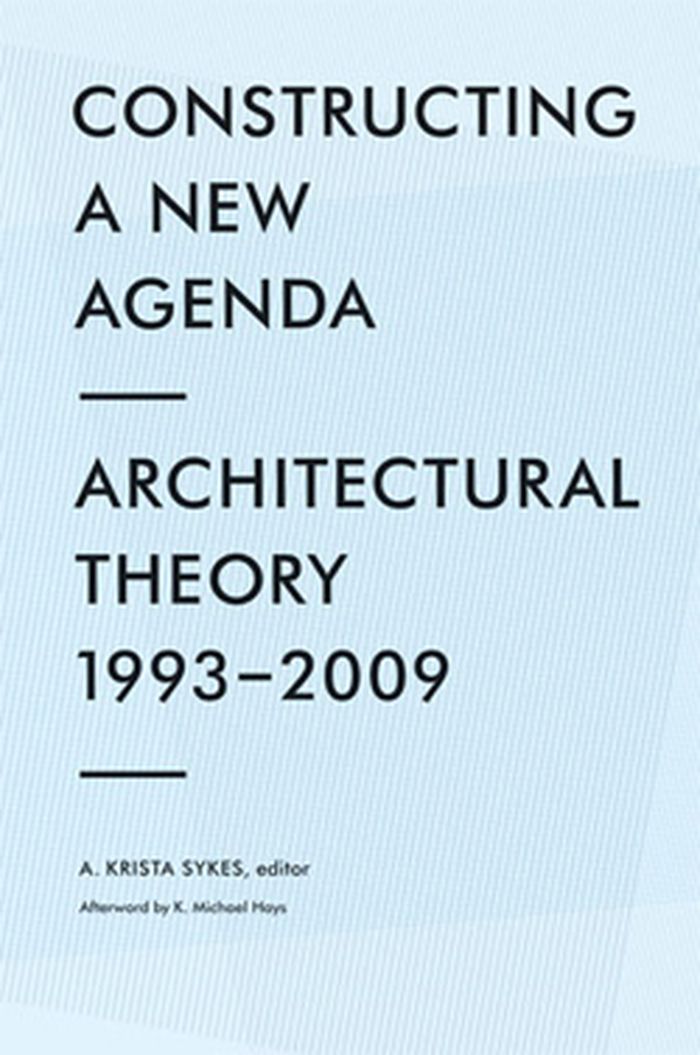
Constructing a new agenda: architectural theory, 1993-2009
Actions:
Price:
$61.00
(available to order)
Summary:
This follow-up to Kate Nesbitt's best-selling anthology Theorizing a New Agenda collects twenty-eight essays that address architecture theory from the mid-1990s, where Nesbitt left off, through the present. Kristin Sykes offers an overview of the myriad approaches and attitudes adopted by architects and architectural theorists during this era. Multiple themes—including the impact of digital technologies on processes of architectural design, production, materiality, and representation; the implications of globalization and networks of information; the growing emphasis on sustainable and green architecture; and the phenomenon of the "starchitect" and iconic architecture—appear against a background colored by architectural theory, as it existed from the 1960s on, in a period of transition (if not crisis) that centers around the perceived abyss between theory and practice. Theory's transitional state persists today, rendering its immediate history particularly relevant to contemporary thought and practice.
Constructing a new agenda: architectural theory, 1993-2009
Actions:
Price:
$61.00
(available to order)
Summary:
This follow-up to Kate Nesbitt's best-selling anthology Theorizing a New Agenda collects twenty-eight essays that address architecture theory from the mid-1990s, where Nesbitt left off, through the present. Kristin Sykes offers an overview of the myriad approaches and attitudes adopted by architects and architectural theorists during this era. Multiple themes—including the impact of digital technologies on processes of architectural design, production, materiality, and representation; the implications of globalization and networks of information; the growing emphasis on sustainable and green architecture; and the phenomenon of the "starchitect" and iconic architecture—appear against a background colored by architectural theory, as it existed from the 1960s on, in a period of transition (if not crisis) that centers around the perceived abyss between theory and practice. Theory's transitional state persists today, rendering its immediate history particularly relevant to contemporary thought and practice.
Form:
books
books
Publication:
March 2010
March 2010
Form:
books
books

Title:
The battle for Gotham
The battle for Gotham
Actions:
Price:
$35.50
(available to order)
Summary:
In the 1970s, New York City hit rock bottom. Crime was at its highest, the middle class exodus was in high gear, and bankruptcy loomed. Many people credit New York's master builder Robert Moses with turning Gotham around, despite his brutal, undemocratic and demolition-heavy ways. Urban critic and journalist Roberta Brandes Gratz contradicts this conventional view. New(...)
$35.50
(available to order)
Summary:
In the 1970s, New York City hit rock bottom. Crime was at its highest, the middle class exodus was in high gear, and bankruptcy loomed. Many people credit New York's master builder Robert Moses with turning Gotham around, despite his brutal, undemocratic and demolition-heavy ways. Urban critic and journalist Roberta Brandes Gratz contradicts this conventional view. New(...)
Title:
The battle for Gotham
Actions:
Price:
$35.50
(available to order)
Summary:
In the 1970s, New York City hit rock bottom. Crime was at its highest, the middle class exodus was in high gear, and bankruptcy loomed. Many people credit New York's master builder Robert Moses with turning Gotham around, despite his brutal, undemocratic and demolition-heavy ways. Urban critic and journalist Roberta Brandes Gratz contradicts this conventional view. New York City, Gratz argues, recovered precisely because of the waning power of Moses. His decline in the late 1960s and the drying up of big government funding for urban renewal projects allowed New York to organically regenerate according to the precepts defined by Jane Jacobs in her classic, The Death and Life of Great American Cities, and in contradiction to Moses's urban philosophy. As American cities face a devastating economic crisis, Jacobs's philosophy is again vital for the redevelopment of metropolitan life.
The battle for Gotham
Actions:
Price:
$35.50
(available to order)
Summary:
In the 1970s, New York City hit rock bottom. Crime was at its highest, the middle class exodus was in high gear, and bankruptcy loomed. Many people credit New York's master builder Robert Moses with turning Gotham around, despite his brutal, undemocratic and demolition-heavy ways. Urban critic and journalist Roberta Brandes Gratz contradicts this conventional view. New York City, Gratz argues, recovered precisely because of the waning power of Moses. His decline in the late 1960s and the drying up of big government funding for urban renewal projects allowed New York to organically regenerate according to the precepts defined by Jane Jacobs in her classic, The Death and Life of Great American Cities, and in contradiction to Moses's urban philosophy. As American cities face a devastating economic crisis, Jacobs's philosophy is again vital for the redevelopment of metropolitan life.
Form:
books
books
Publication:
April 2010
April 2010
Subject:
Urban Theory
Urban Theory


