


1751 Results
Form:
books
books
Title:
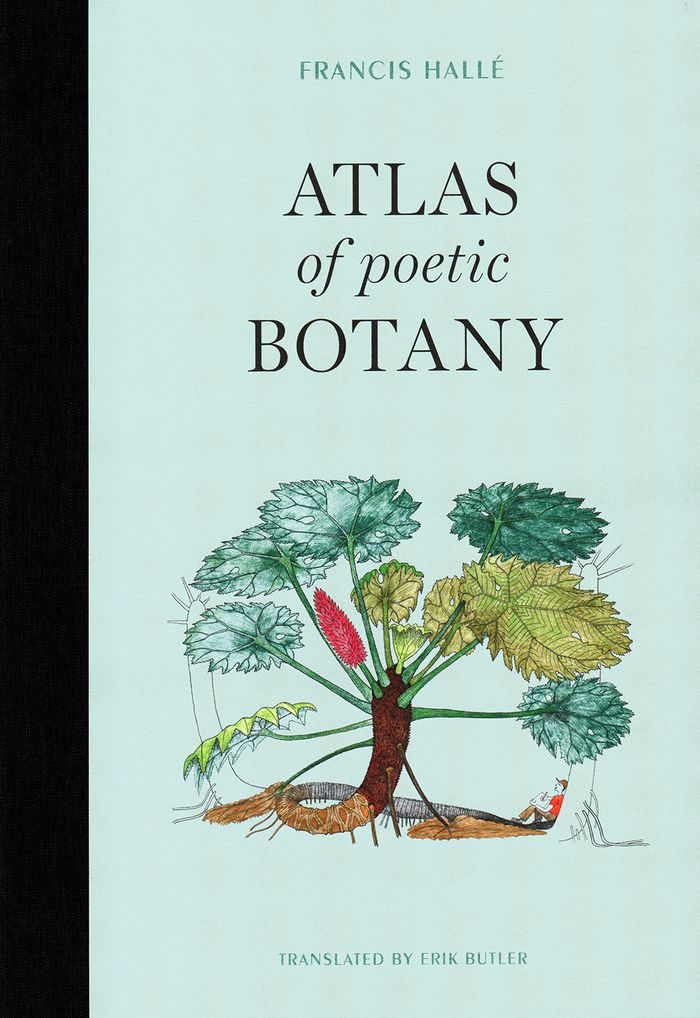
Atlas of poetic botany
Atlas of poetic botany
Actions:
Price:
$33.95
(available in store)
Summary:
This Atlas invites the reader to tour the farthest reaches of the rainforest in search of exotic—poetic—plant life. Guided in these botanical encounters by Francis Hallé, who has spent forty years in pursuit of the strange and beautiful plant specimens of the rainforest, the reader discovers a plant with just one solitary, monumental leaf; an invasive hyacinth; a tree(...)
$33.95
(available in store)
Summary:
This Atlas invites the reader to tour the farthest reaches of the rainforest in search of exotic—poetic—plant life. Guided in these botanical encounters by Francis Hallé, who has spent forty years in pursuit of the strange and beautiful plant specimens of the rainforest, the reader discovers a plant with just one solitary, monumental leaf; an invasive hyacinth; a tree(...)
Title:
Atlas of poetic botany
Actions:
Price:
$33.95
(available in store)
Summary:
This Atlas invites the reader to tour the farthest reaches of the rainforest in search of exotic—poetic—plant life. Guided in these botanical encounters by Francis Hallé, who has spent forty years in pursuit of the strange and beautiful plant specimens of the rainforest, the reader discovers a plant with just one solitary, monumental leaf; an invasive hyacinth; a tree that walks; a parasitic laurel; and a dancing vine. Further explorations reveal the Rafflesia arnoldii, the biggest flower in the world, with a crown of stamens and pistils the color of rotten meat that exude the stench of garbage in the summer sun; underground trees with leaves that form a carpet on the ground above them; and the biggest tree in Africa, which can reach seventy meters (more tha 200 feet) in height, with a four-meter (about 13 feet) diameter. Hallé's drawings, many in color, provide a witty accompaniment.
Atlas of poetic botany
Actions:
Price:
$33.95
(available in store)
Summary:
This Atlas invites the reader to tour the farthest reaches of the rainforest in search of exotic—poetic—plant life. Guided in these botanical encounters by Francis Hallé, who has spent forty years in pursuit of the strange and beautiful plant specimens of the rainforest, the reader discovers a plant with just one solitary, monumental leaf; an invasive hyacinth; a tree that walks; a parasitic laurel; and a dancing vine. Further explorations reveal the Rafflesia arnoldii, the biggest flower in the world, with a crown of stamens and pistils the color of rotten meat that exude the stench of garbage in the summer sun; underground trees with leaves that form a carpet on the ground above them; and the biggest tree in Africa, which can reach seventy meters (more tha 200 feet) in height, with a four-meter (about 13 feet) diameter. Hallé's drawings, many in color, provide a witty accompaniment.
Form:
books
books
Publication:
November 2018
November 2018
Form:
books
books
Actions:
Price:
$74.95
(available to order)
Summary:
How do we make better cities – places that work for people of all ages and backgrounds? How do we make cities that provide the obvious essentials – great transport, good places to work – as well as the softer elements that truly deliver quality of life, from urban swimming pools to rooftop clubs? Since its launch in 2007, Monocle has been passionate about making better(...)
$74.95
(available to order)
Summary:
How do we make better cities – places that work for people of all ages and backgrounds? How do we make cities that provide the obvious essentials – great transport, good places to work – as well as the softer elements that truly deliver quality of life, from urban swimming pools to rooftop clubs? Since its launch in 2007, Monocle has been passionate about making better(...)
Title:
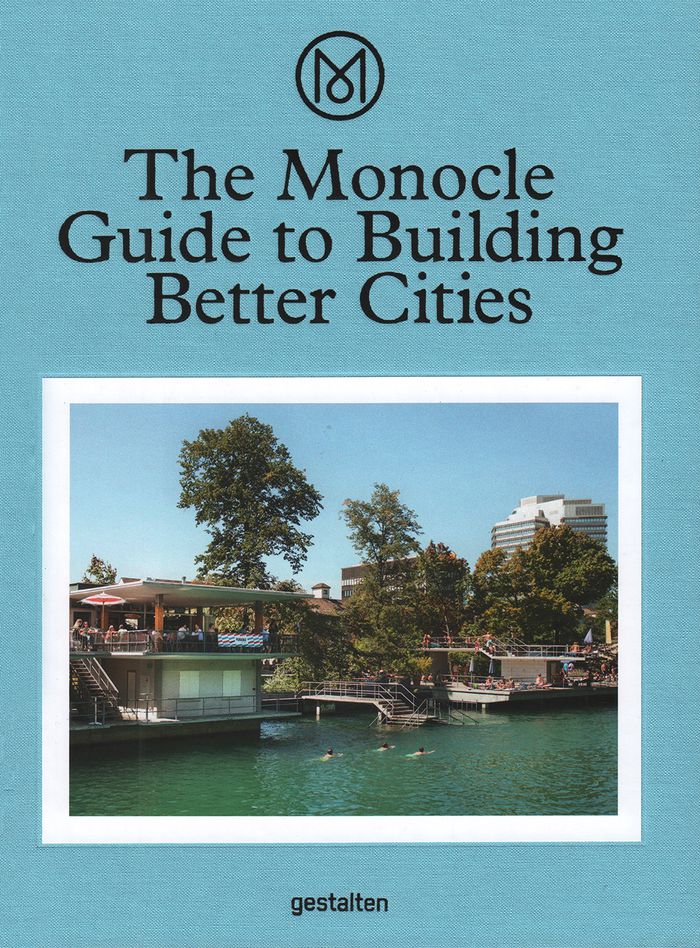
The Monocle guide to building better cities
Actions:
Price:
$74.95
(available to order)
Summary:
How do we make better cities – places that work for people of all ages and backgrounds? How do we make cities that provide the obvious essentials – great transport, good places to work – as well as the softer elements that truly deliver quality of life, from urban swimming pools to rooftop clubs? Since its launch in 2007, Monocle has been passionate about making better places to live. Every year it publishes a Quality of Life Survey, which names the top 25 cities to call home. In addition, across the issues, it has interviewed the best mayors, looked at the metropolises putting pedestrians first and met the people creating the best parks, both pocket and grand. Discover how you too can have a High Line, create the most covetable housing or turn a dirty river into a summer asset.
The Monocle guide to building better cities
Actions:
Price:
$74.95
(available to order)
Summary:
How do we make better cities – places that work for people of all ages and backgrounds? How do we make cities that provide the obvious essentials – great transport, good places to work – as well as the softer elements that truly deliver quality of life, from urban swimming pools to rooftop clubs? Since its launch in 2007, Monocle has been passionate about making better places to live. Every year it publishes a Quality of Life Survey, which names the top 25 cities to call home. In addition, across the issues, it has interviewed the best mayors, looked at the metropolises putting pedestrians first and met the people creating the best parks, both pocket and grand. Discover how you too can have a High Line, create the most covetable housing or turn a dirty river into a summer asset.
Form:
books
books
Publication:
September 2018
September 2018
Form:
books
books
Actions:
Price:
$61.00
(available to order)
Summary:
Traversing a varied and enchanting landscape with forays into the fields of geography, art, architecture, design, cartography and film, Giuliana Bruno's ''Atlas of Emotion'', winner of the 2004 Kraszna-Krausz award for ''the world's best book on the moving image,'' is a highly original endeavor to map a cultural history of spatio-visual arts. In an evocative montage of(...)
$61.00
(available to order)
Summary:
Traversing a varied and enchanting landscape with forays into the fields of geography, art, architecture, design, cartography and film, Giuliana Bruno's ''Atlas of Emotion'', winner of the 2004 Kraszna-Krausz award for ''the world's best book on the moving image,'' is a highly original endeavor to map a cultural history of spatio-visual arts. In an evocative montage of(...)
Title:
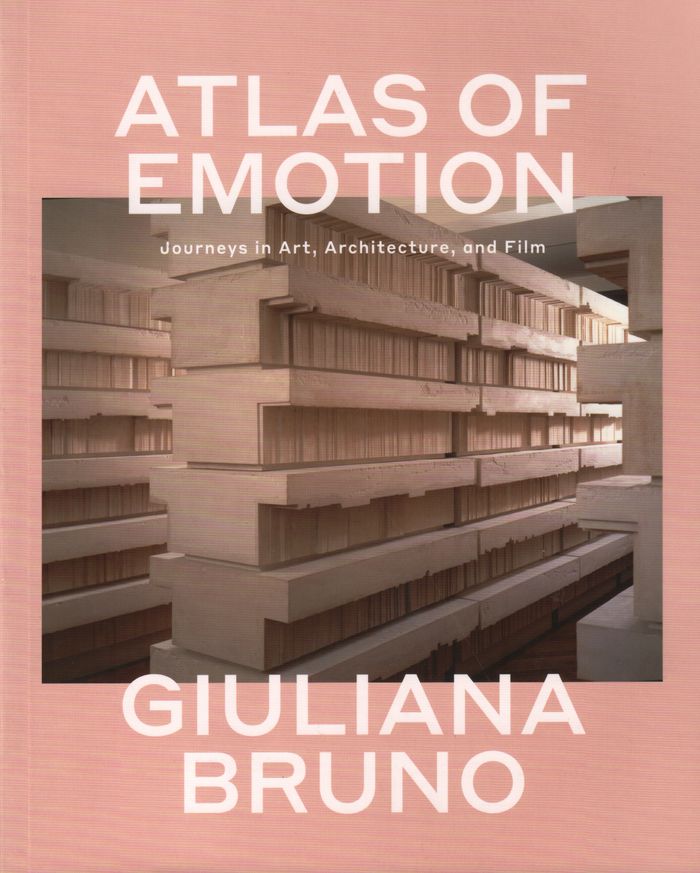
Atlas of emotion: journeys in art, architecture, and film
Actions:
Price:
$61.00
(available to order)
Summary:
Traversing a varied and enchanting landscape with forays into the fields of geography, art, architecture, design, cartography and film, Giuliana Bruno's ''Atlas of Emotion'', winner of the 2004 Kraszna-Krausz award for ''the world's best book on the moving image,'' is a highly original endeavor to map a cultural history of spatio-visual arts. In an evocative montage of words and pictures she emphasizes that ''sight" and "site" but also ''motion" and "emotion'' are irrevocably connected. In so doing, she touches on the art of Gerhard Richter and Annette Messagem: the film-making of Peter Greenaway and Michaelangelo Antonioni; the origins of the movie palace and its precursors, and on her own journeys to her native Naples. Visually luscious and daring in conception, Bruno opens new vistas and understandings at every turn.
Atlas of emotion: journeys in art, architecture, and film
Actions:
Price:
$61.00
(available to order)
Summary:
Traversing a varied and enchanting landscape with forays into the fields of geography, art, architecture, design, cartography and film, Giuliana Bruno's ''Atlas of Emotion'', winner of the 2004 Kraszna-Krausz award for ''the world's best book on the moving image,'' is a highly original endeavor to map a cultural history of spatio-visual arts. In an evocative montage of words and pictures she emphasizes that ''sight" and "site" but also ''motion" and "emotion'' are irrevocably connected. In so doing, she touches on the art of Gerhard Richter and Annette Messagem: the film-making of Peter Greenaway and Michaelangelo Antonioni; the origins of the movie palace and its precursors, and on her own journeys to her native Naples. Visually luscious and daring in conception, Bruno opens new vistas and understandings at every turn.
Form:
books
books
Publication:
July 2018
July 2018
Form:
books
books
Price:
$85.00
(available in store)
Summary:
In 1984, Giovanni Chiaramonte photographed Álvaro Siza's building in Berlin, on whose façade some young people had written Bonjour Tristesse. The image was published on the cover of the magazine Lotus International. The following year, Siza and Chiaramonte met in Évora, on the occasion of a new series by the Italian photographer featuring the buildings of the great(...)
$85.00
(available in store)
Summary:
In 1984, Giovanni Chiaramonte photographed Álvaro Siza's building in Berlin, on whose façade some young people had written Bonjour Tristesse. The image was published on the cover of the magazine Lotus International. The following year, Siza and Chiaramonte met in Évora, on the occasion of a new series by the Italian photographer featuring the buildings of the great(...)
Publication:
August 2018
August 2018
Title:
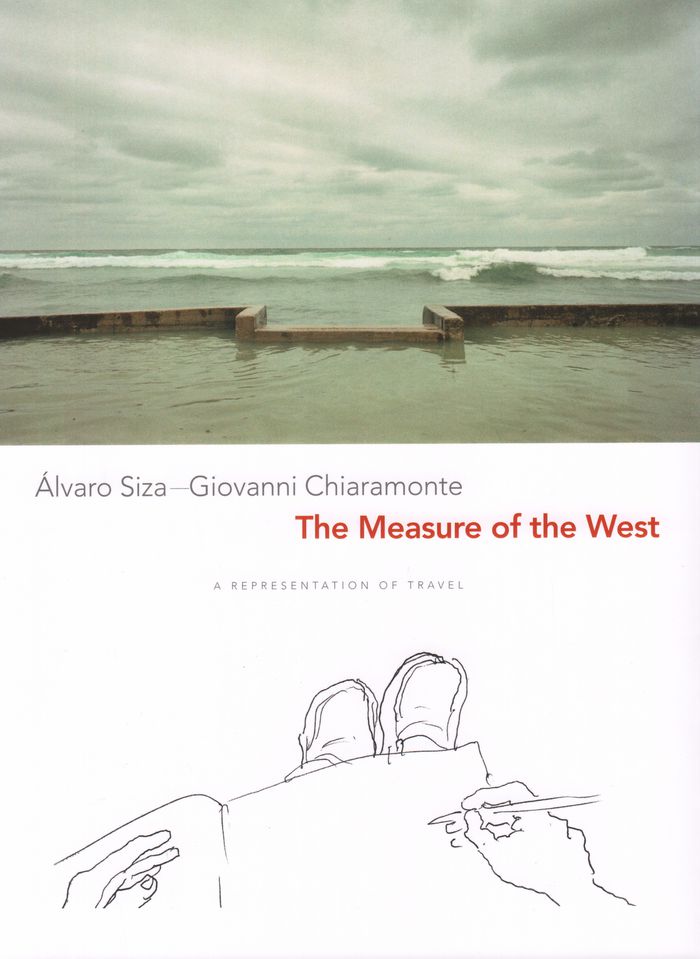
Siza. Chiaramonte. The measure of the west: a representation of travel
Actions:
Price:
$85.00
(available in store)
Summary:
In 1984, Giovanni Chiaramonte photographed Álvaro Siza's building in Berlin, on whose façade some young people had written Bonjour Tristesse. The image was published on the cover of the magazine Lotus International. The following year, Siza and Chiaramonte met in Évora, on the occasion of a new series by the Italian photographer featuring the buildings of the great Portuguese architect. It marked the beginning of a long friendship and a shared reflection on architecture, photography, and urban life. "The Measure of the West" presents a selection of fifty-seven drawings by Siza and forty photographs taken by Chiaramonte in cities around the world.
Siza. Chiaramonte. The measure of the west: a representation of travel
Actions:
Price:
$85.00
(available in store)
Summary:
In 1984, Giovanni Chiaramonte photographed Álvaro Siza's building in Berlin, on whose façade some young people had written Bonjour Tristesse. The image was published on the cover of the magazine Lotus International. The following year, Siza and Chiaramonte met in Évora, on the occasion of a new series by the Italian photographer featuring the buildings of the great Portuguese architect. It marked the beginning of a long friendship and a shared reflection on architecture, photography, and urban life. "The Measure of the West" presents a selection of fifty-seven drawings by Siza and forty photographs taken by Chiaramonte in cities around the world.
Form:
books
books
Publication:
August 2018
August 2018
Form:
books
books
Title:
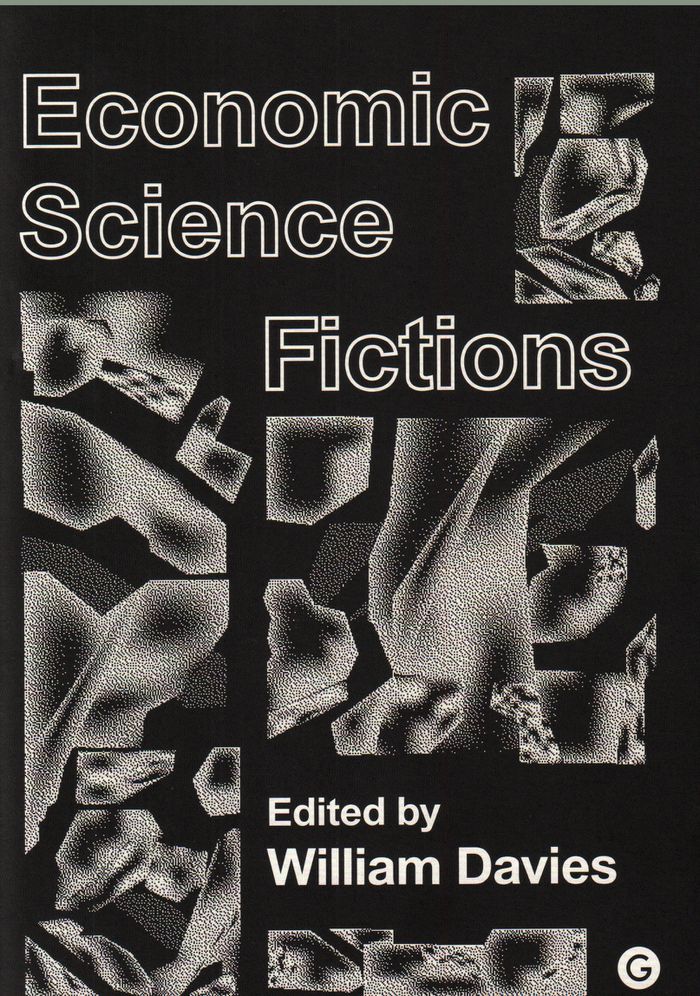
Economic science fictions
Economic science fictions
Actions:
Price:
$42.95
(available to order)
Summary:
From the libertarian economics of Ayn Rand to Aldous Huxley's consumerist dystopias, economics and science fiction have often orbited each other. In ''Economic Science Fictions'', editor William Davies has deliberately merged the two worlds, asking how we might harness the power of the utopian imagination to revitalize economic thinking.
$42.95
(available to order)
Summary:
From the libertarian economics of Ayn Rand to Aldous Huxley's consumerist dystopias, economics and science fiction have often orbited each other. In ''Economic Science Fictions'', editor William Davies has deliberately merged the two worlds, asking how we might harness the power of the utopian imagination to revitalize economic thinking.
Title:
Economic science fictions
Actions:
Price:
$42.95
(available to order)
Summary:
From the libertarian economics of Ayn Rand to Aldous Huxley's consumerist dystopias, economics and science fiction have often orbited each other. In ''Economic Science Fictions'', editor William Davies has deliberately merged the two worlds, asking how we might harness the power of the utopian imagination to revitalize economic thinking.
Economic science fictions
Actions:
Price:
$42.95
(available to order)
Summary:
From the libertarian economics of Ayn Rand to Aldous Huxley's consumerist dystopias, economics and science fiction have often orbited each other. In ''Economic Science Fictions'', editor William Davies has deliberately merged the two worlds, asking how we might harness the power of the utopian imagination to revitalize economic thinking.
Form:
books
books
Publication:
May 2018
May 2018
Form:
books
books
Actions:
Price:
$63.95
(available to order)
Summary:
In Soviet Salvage, Catherine Walworth explores how artists on the margins of the Constructivist movement of the 1920s rejected “elitist” media and imagined a new world, knitting together avant-garde art, imperial castoffs, and everyday life. Applying anthropological models borrowed from Claude Lévi-Strauss, Walworth shows that his mythmaker typologies—the “engineer”(...)
$63.95
(available to order)
Summary:
In Soviet Salvage, Catherine Walworth explores how artists on the margins of the Constructivist movement of the 1920s rejected “elitist” media and imagined a new world, knitting together avant-garde art, imperial castoffs, and everyday life. Applying anthropological models borrowed from Claude Lévi-Strauss, Walworth shows that his mythmaker typologies—the “engineer”(...)
Title:
Soviet salvage: Imperial debris, revolutionary reuse, and Russian Constructivism
Actions:
Price:
$63.95
(available to order)
Summary:
In Soviet Salvage, Catherine Walworth explores how artists on the margins of the Constructivist movement of the 1920s rejected “elitist” media and imagined a new world, knitting together avant-garde art, imperial castoffs, and everyday life. Applying anthropological models borrowed from Claude Lévi-Strauss, Walworth shows that his mythmaker typologies—the “engineer” and “bricoleur”—illustrate, respectively, the canonical Constructivists and artists on the movement’s margins who deployed a wide range of clever make-do tactics. Walworth explores the relationships of Nadezhda Lamanova, Esfir Shub, and others with Constructivists such as Aleksei Gan, Varvara Stepanova, and Aleksandr Rodchenko. Together, the work of these artists reflected the chaotic and often contradictory zeitgeist of the decade from 1918 to 1929 and redefined the concept of mass production. Reappropriated fragments of a former enemy era provided a wide range of play and possibility for these artists, and the resulting propaganda porcelain, film, fashion, and architecture tell a broader story of the unique political and economic pressures felt by their makers. An engaging multidisciplinary study of objects and their makers during the Soviet Union’s early years, this volume highlights a group of artists who hover like free radicals at the border of existing art-historical discussions of Constructivism and deepens our knowledge of Soviet art and material culture.
Soviet salvage: Imperial debris, revolutionary reuse, and Russian Constructivism
Actions:
Price:
$63.95
(available to order)
Summary:
In Soviet Salvage, Catherine Walworth explores how artists on the margins of the Constructivist movement of the 1920s rejected “elitist” media and imagined a new world, knitting together avant-garde art, imperial castoffs, and everyday life. Applying anthropological models borrowed from Claude Lévi-Strauss, Walworth shows that his mythmaker typologies—the “engineer” and “bricoleur”—illustrate, respectively, the canonical Constructivists and artists on the movement’s margins who deployed a wide range of clever make-do tactics. Walworth explores the relationships of Nadezhda Lamanova, Esfir Shub, and others with Constructivists such as Aleksei Gan, Varvara Stepanova, and Aleksandr Rodchenko. Together, the work of these artists reflected the chaotic and often contradictory zeitgeist of the decade from 1918 to 1929 and redefined the concept of mass production. Reappropriated fragments of a former enemy era provided a wide range of play and possibility for these artists, and the resulting propaganda porcelain, film, fashion, and architecture tell a broader story of the unique political and economic pressures felt by their makers. An engaging multidisciplinary study of objects and their makers during the Soviet Union’s early years, this volume highlights a group of artists who hover like free radicals at the border of existing art-historical discussions of Constructivism and deepens our knowledge of Soviet art and material culture.
Form:
books
books
Publication:
September 2018
September 2018
Form:
books
books
Title:
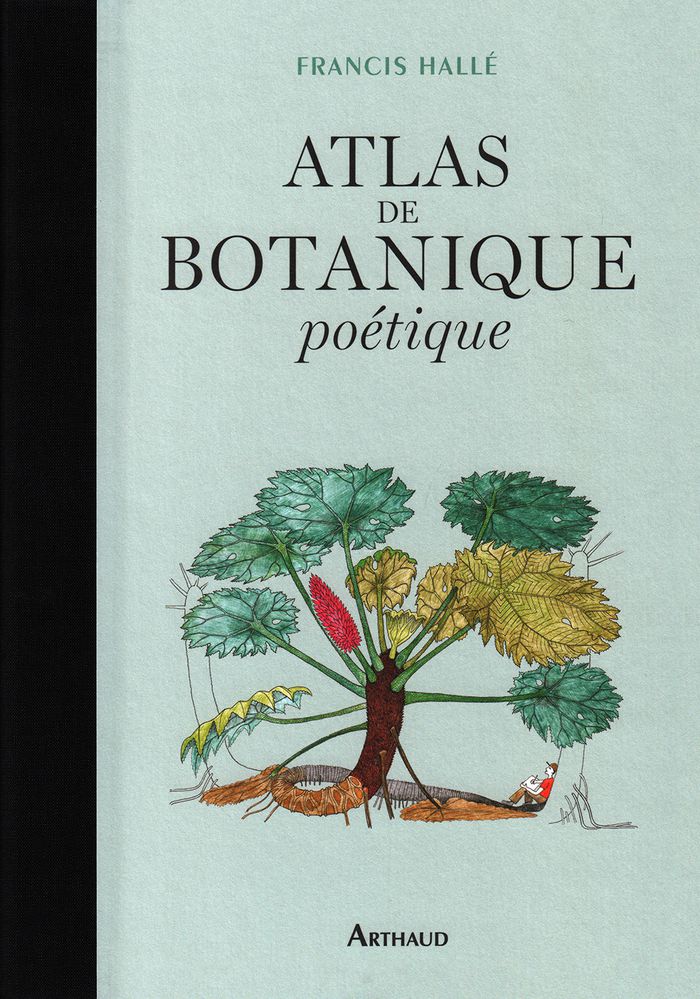
Atlas de botanique poétique
Atlas de botanique poétique
Actions:
Price:
$47.95
(available to order)
Summary:
Botaniste, explorateur des forêts tropicales équatoriales qu'il sillonne depuis quarante ans, carnet de croquis en main, Francis Hallé nous invite dans cet Atlas de botanique poétique à un voyage illustré à la rencontre de plantes extraordinaires. Des innombrables carnets d'expédition qui tapissent les étagères de son bureau à Montpellier, il a extrait un échantillon des(...)
$47.95
(available to order)
Summary:
Botaniste, explorateur des forêts tropicales équatoriales qu'il sillonne depuis quarante ans, carnet de croquis en main, Francis Hallé nous invite dans cet Atlas de botanique poétique à un voyage illustré à la rencontre de plantes extraordinaires. Des innombrables carnets d'expédition qui tapissent les étagères de son bureau à Montpellier, il a extrait un échantillon des(...)
Title:
Atlas de botanique poétique
Actions:
Price:
$47.95
(available to order)
Summary:
Botaniste, explorateur des forêts tropicales équatoriales qu'il sillonne depuis quarante ans, carnet de croquis en main, Francis Hallé nous invite dans cet Atlas de botanique poétique à un voyage illustré à la rencontre de plantes extraordinaires. Des innombrables carnets d'expédition qui tapissent les étagères de son bureau à Montpellier, il a extrait un échantillon des spécimens les plus étonnants. De Codariocalyx motorius, la plante qui danse, aux Solanaceae d'Argentine, ces arbres souterrains dont on n'aperçoit qu'un tapis de feuilles au sol, leurs modes de développement et d'adaptation dépassent souvent notre compréhension pour enchanter notre imagination. Exubérantes, énigmatiques, dotées d'aptitudes surprenantes, les merveilles végétales présentées dans ce cabinet de curiosités inattendu plaident en faveur de la sauvegarde des forêts tropicales aujourd'hui gravement menacées.
Atlas de botanique poétique
Actions:
Price:
$47.95
(available to order)
Summary:
Botaniste, explorateur des forêts tropicales équatoriales qu'il sillonne depuis quarante ans, carnet de croquis en main, Francis Hallé nous invite dans cet Atlas de botanique poétique à un voyage illustré à la rencontre de plantes extraordinaires. Des innombrables carnets d'expédition qui tapissent les étagères de son bureau à Montpellier, il a extrait un échantillon des spécimens les plus étonnants. De Codariocalyx motorius, la plante qui danse, aux Solanaceae d'Argentine, ces arbres souterrains dont on n'aperçoit qu'un tapis de feuilles au sol, leurs modes de développement et d'adaptation dépassent souvent notre compréhension pour enchanter notre imagination. Exubérantes, énigmatiques, dotées d'aptitudes surprenantes, les merveilles végétales présentées dans ce cabinet de curiosités inattendu plaident en faveur de la sauvegarde des forêts tropicales aujourd'hui gravement menacées.
Form:
books
books
Publication:
October 2016
October 2016
Form:
books
books
Actions:
Price:
$23.00
(available in store)
Summary:
As gentrification threatens to uproot neighbourhoods across the world, the flame of co-operative housing has been reignited while the concept of community landownership has the potential to turn the tide and put the destiny of our cities into the hands of residents.Villages in Cities takes us across North America to Montreal, Boston, Vermont, and Mississippi,(...)
$23.00
(available in store)
Summary:
As gentrification threatens to uproot neighbourhoods across the world, the flame of co-operative housing has been reignited while the concept of community landownership has the potential to turn the tide and put the destiny of our cities into the hands of residents.Villages in Cities takes us across North America to Montreal, Boston, Vermont, and Mississippi,(...)
Publication:
January 2019
January 2019
Title:
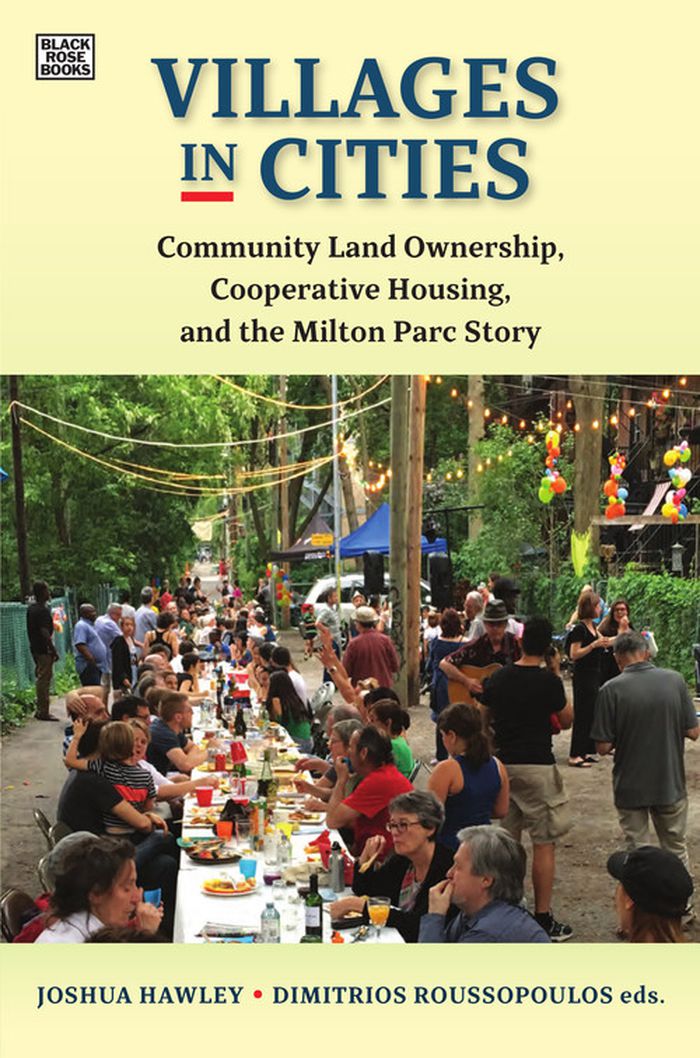
Villages in cities: community land ownership, cooperative housing, and the Milton Parc story
Actions:
Price:
$23.00
(available in store)
Summary:
As gentrification threatens to uproot neighbourhoods across the world, the flame of co-operative housing has been reignited while the concept of community landownership has the potential to turn the tide and put the destiny of our cities into the hands of residents.Villages in Cities takes us across North America to Montreal, Boston, Vermont, and Mississippi, presentingconcrete examples of citizens taking back the land and claiming their right to secure housing. It also acts as a guidebook to contemporary urban struggles through fertile archival material from the Milton Parc struggle, which is as relevant today as it was 50 years ago.Villages in Cities presents a succinct portrait of the problems facing the ownership of urban land, the challenge of contesting the State’s presupposed legitimacy in determining our urban future, and the contradictions these elements imply. n Montreal in 1968, speculators announced their ‘urban renewal’ plan to demolish six blocks of the downtown heritage neighborhood of Milton Parc in order to build enormous high-rise condos, hotels, office buildings, and shopping malls. The local community viewed this as a declaration of war. What followed was a remarkable struggle that not only saved the heritage architecture from destruction but also protected local residents from gentrification through the creation of the largest nonprofit cooperative housing project on an urban community land trust in North America. And Milton Parc is not unique. Villages in Cities takes us across North America—to New York, Boston, Burlington, Oakland, Jackson, Montreal, Toronto, Ottawa, and Vancouver—to show concrete examples of citizens taking back the land and claiming their right to secure housing. The book draws connections among these projects, examines their underlying causes, and connects them with a holistic “Right to the City” movement that is emerging internationally.
Villages in cities: community land ownership, cooperative housing, and the Milton Parc story
Actions:
Price:
$23.00
(available in store)
Summary:
As gentrification threatens to uproot neighbourhoods across the world, the flame of co-operative housing has been reignited while the concept of community landownership has the potential to turn the tide and put the destiny of our cities into the hands of residents.Villages in Cities takes us across North America to Montreal, Boston, Vermont, and Mississippi, presentingconcrete examples of citizens taking back the land and claiming their right to secure housing. It also acts as a guidebook to contemporary urban struggles through fertile archival material from the Milton Parc struggle, which is as relevant today as it was 50 years ago.Villages in Cities presents a succinct portrait of the problems facing the ownership of urban land, the challenge of contesting the State’s presupposed legitimacy in determining our urban future, and the contradictions these elements imply. n Montreal in 1968, speculators announced their ‘urban renewal’ plan to demolish six blocks of the downtown heritage neighborhood of Milton Parc in order to build enormous high-rise condos, hotels, office buildings, and shopping malls. The local community viewed this as a declaration of war. What followed was a remarkable struggle that not only saved the heritage architecture from destruction but also protected local residents from gentrification through the creation of the largest nonprofit cooperative housing project on an urban community land trust in North America. And Milton Parc is not unique. Villages in Cities takes us across North America—to New York, Boston, Burlington, Oakland, Jackson, Montreal, Toronto, Ottawa, and Vancouver—to show concrete examples of citizens taking back the land and claiming their right to secure housing. The book draws connections among these projects, examines their underlying causes, and connects them with a holistic “Right to the City” movement that is emerging internationally.
Form:
books
books
Publication:
January 2019
January 2019
Form:
books
books
Title:
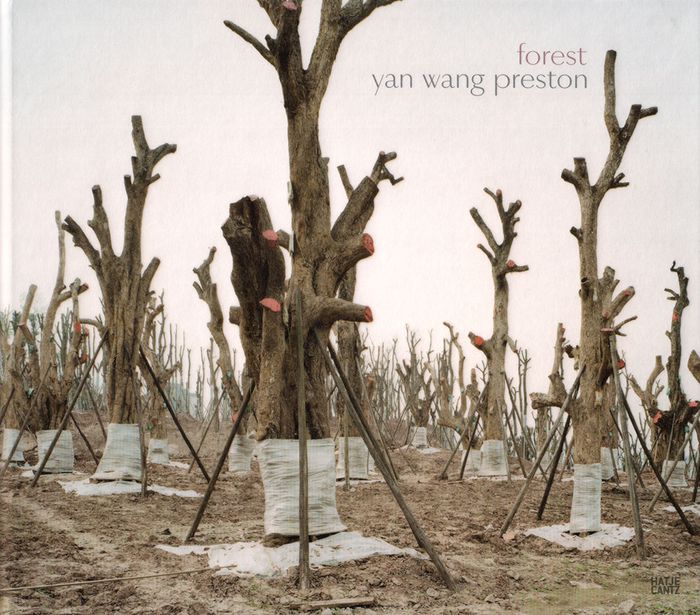
Yan Wang Preston: Forest
Yan Wang Preston: Forest
Actions:
Price:
$99.00
(available to order)
Summary:
In China, where new cities are constantly springing up, transplanting nature is big business. In her new photo series Forest, Preston tracks down uprooted trees that have been transferred to concrete deserts, questioning our sense of the meaning of homeland.
$99.00
(available to order)
Summary:
In China, where new cities are constantly springing up, transplanting nature is big business. In her new photo series Forest, Preston tracks down uprooted trees that have been transferred to concrete deserts, questioning our sense of the meaning of homeland.
Publication:
June 2018
June 2018
Title:
Yan Wang Preston: Forest
Actions:
Price:
$99.00
(available to order)
Summary:
In China, where new cities are constantly springing up, transplanting nature is big business. In her new photo series Forest, Preston tracks down uprooted trees that have been transferred to concrete deserts, questioning our sense of the meaning of homeland.
Yan Wang Preston: Forest
Actions:
Price:
$99.00
(available to order)
Summary:
In China, where new cities are constantly springing up, transplanting nature is big business. In her new photo series Forest, Preston tracks down uprooted trees that have been transferred to concrete deserts, questioning our sense of the meaning of homeland.
Form:
books
books
Publication:
June 2018
June 2018
Form:
books
books
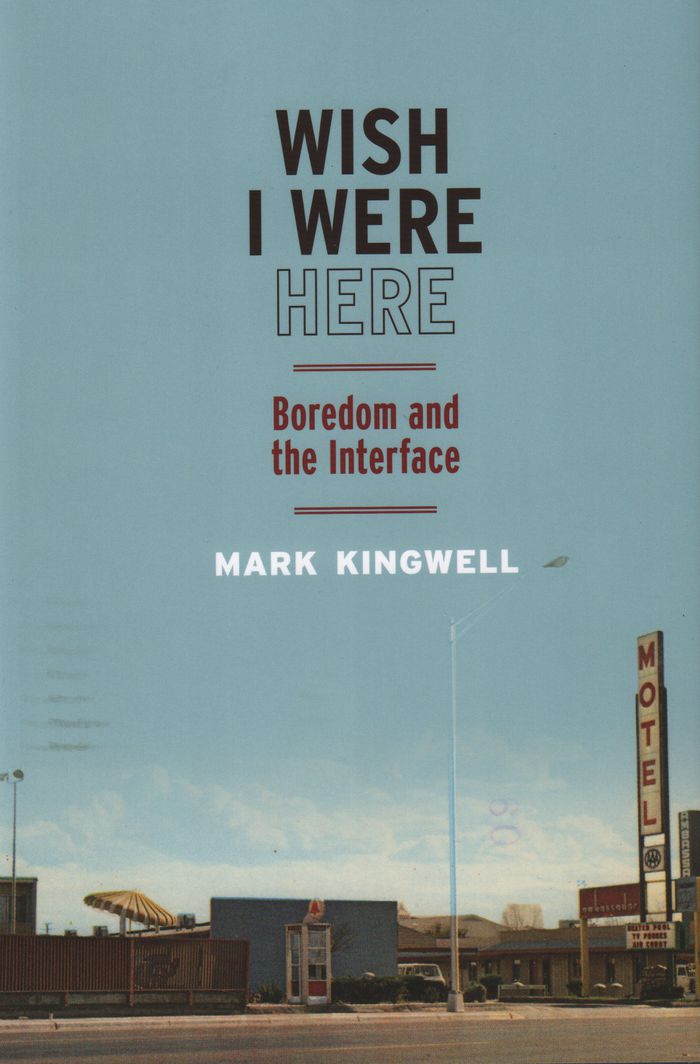
Actions:
Price:
$34.95
(available to order)
Summary:
Are you bored of the endless scroll of your social media feed? Do you swipe left before considering the human being whose face you just summarily rejected? Do you skim articles on your screen in search of intellectual stimulation that never arrives? If so, this book is the philosophical lifeline you have been waiting for. Offering a timely meditation on the profound(...)
$34.95
(available to order)
Summary:
Are you bored of the endless scroll of your social media feed? Do you swipe left before considering the human being whose face you just summarily rejected? Do you skim articles on your screen in search of intellectual stimulation that never arrives? If so, this book is the philosophical lifeline you have been waiting for. Offering a timely meditation on the profound(...)
Title:
Wish I were here: boredom and the interface
Actions:
Price:
$34.95
(available to order)
Summary:
Are you bored of the endless scroll of your social media feed? Do you swipe left before considering the human being whose face you just summarily rejected? Do you skim articles on your screen in search of intellectual stimulation that never arrives? If so, this book is the philosophical lifeline you have been waiting for. Offering a timely meditation on the profound effects of constant immersion in technology, also known as the ''Interface,'' ''Wish I Were Here'' draws on philosophical analysis of boredom and happiness to examine the pressing issues of screen addiction and the lure of online outrage. Without moralizing, Mark Kingwell takes seriously the possibility that current conditions of life and connection are creating hollowed-out human selves, divorced from their own external world.
Wish I were here: boredom and the interface
Actions:
Price:
$34.95
(available to order)
Summary:
Are you bored of the endless scroll of your social media feed? Do you swipe left before considering the human being whose face you just summarily rejected? Do you skim articles on your screen in search of intellectual stimulation that never arrives? If so, this book is the philosophical lifeline you have been waiting for. Offering a timely meditation on the profound effects of constant immersion in technology, also known as the ''Interface,'' ''Wish I Were Here'' draws on philosophical analysis of boredom and happiness to examine the pressing issues of screen addiction and the lure of online outrage. Without moralizing, Mark Kingwell takes seriously the possibility that current conditions of life and connection are creating hollowed-out human selves, divorced from their own external world.
Form:
books
books
Publication:
April 2019
April 2019


