


44145 Results
Level of archival description:
Project
Project
Title:
Quinta da Bela Flor, Lisboa
Quinta da Bela Flor, Lisboa
Actions:
Reference number:
CD034.S1.1976.PR01
Description:
This project series contains one reproduction of a photograph displayed in the exhibit to document the Quinta da Bela Flor neighbourhood, in Lisbon, Portugal. The exhibit text explained that: Artur Rosa's project in the neighbourhood grew out of a shanty town, built on a difficult site, dating back to the 19th century, with reports of families living in hillside caves that today flank the entrance to a nearby highway. The process was based on voluntary work, and its ending presented a huge disappointment to the local brigade. In 1976 and 1977, Artur Rosa, also a practicing artist, produced three works that reflected on SAAL, its failure and the subsequent sense of persecution felt by many brigade leaders. The decision not to present the project but rather the artistic interventions aims at revealing the performative nature of the process, its poetic intensity and the way it related to its protagonists. In 1977 the architect presented a performance at the Fine Arts Society in Lisbon in which he closed the documentation of the project in a darkened room. The following year, he presented a structure with the documentation closed inside, and finally he used the project drawings in a collage with photographs on the occasion of the first public tap in Quinta da Bela-Flor. Those poetic artistic interventions are his form of publicly mourning the end of the SAAL process. (The SAAL Process, Housing in Portugal 1974–76) Artur Rosa worked for SAAL/Lisbon and Central South with Etelvina José, Hélio Oliveira, José Luís Teles Rebolo, José Miguel Fonseca, Luís Pereira, Manuel Coutinho Raposo, Maria Fernanda Carvalho, Maria Isabel Rodrigues Lobo, Nuno Blanco Bártolo, Nuno Martins and the residents' association Cooperativa de Habitação Económica Bela Flor, that was founded on February 13th, 1976. The project included 288 dwellings. The operation began in September 1976, with a construction date in December 1976. This project series contains a reproduction of a photograph of a model. The original photograph was produced around 1976 and was reproduced in 2015 for the exhibit.
CD034.S1.1976.PR01
Description:
This project series contains one reproduction of a photograph displayed in the exhibit to document the Quinta da Bela Flor neighbourhood, in Lisbon, Portugal. The exhibit text explained that: Artur Rosa's project in the neighbourhood grew out of a shanty town, built on a difficult site, dating back to the 19th century, with reports of families living in hillside caves that today flank the entrance to a nearby highway. The process was based on voluntary work, and its ending presented a huge disappointment to the local brigade. In 1976 and 1977, Artur Rosa, also a practicing artist, produced three works that reflected on SAAL, its failure and the subsequent sense of persecution felt by many brigade leaders. The decision not to present the project but rather the artistic interventions aims at revealing the performative nature of the process, its poetic intensity and the way it related to its protagonists. In 1977 the architect presented a performance at the Fine Arts Society in Lisbon in which he closed the documentation of the project in a darkened room. The following year, he presented a structure with the documentation closed inside, and finally he used the project drawings in a collage with photographs on the occasion of the first public tap in Quinta da Bela-Flor. Those poetic artistic interventions are his form of publicly mourning the end of the SAAL process. (The SAAL Process, Housing in Portugal 1974–76) Artur Rosa worked for SAAL/Lisbon and Central South with Etelvina José, Hélio Oliveira, José Luís Teles Rebolo, José Miguel Fonseca, Luís Pereira, Manuel Coutinho Raposo, Maria Fernanda Carvalho, Maria Isabel Rodrigues Lobo, Nuno Blanco Bártolo, Nuno Martins and the residents' association Cooperativa de Habitação Económica Bela Flor, that was founded on February 13th, 1976. The project included 288 dwellings. The operation began in September 1976, with a construction date in December 1976. This project series contains a reproduction of a photograph of a model. The original photograph was produced around 1976 and was reproduced in 2015 for the exhibit.
People:
Date:
circa 1976
circa 1976
Title:
Quinta da Bela Flor, Lisboa
Actions:
CD034.S1.1976.PR01
Description:
This project series contains one reproduction of a photograph displayed in the exhibit to document the Quinta da Bela Flor neighbourhood, in Lisbon, Portugal. The exhibit text explained that: Artur Rosa's project in the neighbourhood grew out of a shanty town, built on a difficult site, dating back to the 19th century, with reports of families living in hillside caves that today flank the entrance to a nearby highway. The process was based on voluntary work, and its ending presented a huge disappointment to the local brigade. In 1976 and 1977, Artur Rosa, also a practicing artist, produced three works that reflected on SAAL, its failure and the subsequent sense of persecution felt by many brigade leaders. The decision not to present the project but rather the artistic interventions aims at revealing the performative nature of the process, its poetic intensity and the way it related to its protagonists. In 1977 the architect presented a performance at the Fine Arts Society in Lisbon in which he closed the documentation of the project in a darkened room. The following year, he presented a structure with the documentation closed inside, and finally he used the project drawings in a collage with photographs on the occasion of the first public tap in Quinta da Bela-Flor. Those poetic artistic interventions are his form of publicly mourning the end of the SAAL process. (The SAAL Process, Housing in Portugal 1974–76) Artur Rosa worked for SAAL/Lisbon and Central South with Etelvina José, Hélio Oliveira, José Luís Teles Rebolo, José Miguel Fonseca, Luís Pereira, Manuel Coutinho Raposo, Maria Fernanda Carvalho, Maria Isabel Rodrigues Lobo, Nuno Blanco Bártolo, Nuno Martins and the residents' association Cooperativa de Habitação Económica Bela Flor, that was founded on February 13th, 1976. The project included 288 dwellings. The operation began in September 1976, with a construction date in December 1976. This project series contains a reproduction of a photograph of a model. The original photograph was produced around 1976 and was reproduced in 2015 for the exhibit.
Quinta da Bela Flor, Lisboa
Actions:
CD034.S1.1976.PR01
Description:
This project series contains one reproduction of a photograph displayed in the exhibit to document the Quinta da Bela Flor neighbourhood, in Lisbon, Portugal. The exhibit text explained that: Artur Rosa's project in the neighbourhood grew out of a shanty town, built on a difficult site, dating back to the 19th century, with reports of families living in hillside caves that today flank the entrance to a nearby highway. The process was based on voluntary work, and its ending presented a huge disappointment to the local brigade. In 1976 and 1977, Artur Rosa, also a practicing artist, produced three works that reflected on SAAL, its failure and the subsequent sense of persecution felt by many brigade leaders. The decision not to present the project but rather the artistic interventions aims at revealing the performative nature of the process, its poetic intensity and the way it related to its protagonists. In 1977 the architect presented a performance at the Fine Arts Society in Lisbon in which he closed the documentation of the project in a darkened room. The following year, he presented a structure with the documentation closed inside, and finally he used the project drawings in a collage with photographs on the occasion of the first public tap in Quinta da Bela-Flor. Those poetic artistic interventions are his form of publicly mourning the end of the SAAL process. (The SAAL Process, Housing in Portugal 1974–76) Artur Rosa worked for SAAL/Lisbon and Central South with Etelvina José, Hélio Oliveira, José Luís Teles Rebolo, José Miguel Fonseca, Luís Pereira, Manuel Coutinho Raposo, Maria Fernanda Carvalho, Maria Isabel Rodrigues Lobo, Nuno Blanco Bártolo, Nuno Martins and the residents' association Cooperativa de Habitação Económica Bela Flor, that was founded on February 13th, 1976. The project included 288 dwellings. The operation began in September 1976, with a construction date in December 1976. This project series contains a reproduction of a photograph of a model. The original photograph was produced around 1976 and was reproduced in 2015 for the exhibit.
Level of archival description:
Project
Project
Date:
circa 1976
circa 1976
People:
Form:
photographs
photographs
Actions:
Reference number:
PH2018:0005:016
Description:
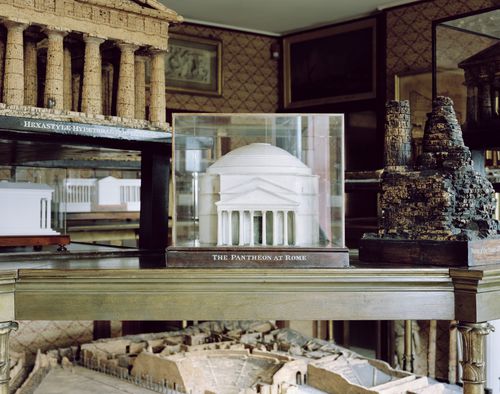
Photograph by Stefano Graziani of the following work: Model Room, Sir John Soane's Museum, London Questioning Pictures is a 36 photograph project commissioned by Fondazione Prada, Milan. Artist Stefano Graziani investigates archival and conservation systems in a number of museums. Through photographing museum objects, Graziani, focusing on the relationship between photographs, the museum objects and the power structures at play within institutions. The museums include the Canadian Centre for Architecture (CCA) in Montréal, Canada; Sir John Soane’s Museum in London, UK; the Kunstmuseum Basel, Switzerland; Museum Insel Hombroich in Neuss, Germany; the Museo di Castelvecchio in Verona, Italy; and the Plaster Cast Gallery at Museo Canova in Possagno, Italy.
PH2018:0005:016
Description:
Photograph by Stefano Graziani of the following work: Model Room, Sir John Soane's Museum, London Questioning Pictures is a 36 photograph project commissioned by Fondazione Prada, Milan. Artist Stefano Graziani investigates archival and conservation systems in a number of museums. Through photographing museum objects, Graziani, focusing on the relationship between photographs, the museum objects and the power structures at play within institutions. The museums include the Canadian Centre for Architecture (CCA) in Montréal, Canada; Sir John Soane’s Museum in London, UK; the Kunstmuseum Basel, Switzerland; Museum Insel Hombroich in Neuss, Germany; the Museo di Castelvecchio in Verona, Italy; and the Plaster Cast Gallery at Museo Canova in Possagno, Italy.
People:
Date:
2017
2017
Title:
Questioning Pictures: Photograph of Model Room at Sir John Soane's Museum, 2017
Actions:
PH2018:0005:016
Description:
Photograph by Stefano Graziani of the following work: Model Room, Sir John Soane's Museum, London Questioning Pictures is a 36 photograph project commissioned by Fondazione Prada, Milan. Artist Stefano Graziani investigates archival and conservation systems in a number of museums. Through photographing museum objects, Graziani, focusing on the relationship between photographs, the museum objects and the power structures at play within institutions. The museums include the Canadian Centre for Architecture (CCA) in Montréal, Canada; Sir John Soane’s Museum in London, UK; the Kunstmuseum Basel, Switzerland; Museum Insel Hombroich in Neuss, Germany; the Museo di Castelvecchio in Verona, Italy; and the Plaster Cast Gallery at Museo Canova in Possagno, Italy.
Questioning Pictures: Photograph of Model Room at Sir John Soane's Museum, 2017
Actions:
PH2018:0005:016
Description:
Photograph by Stefano Graziani of the following work: Model Room, Sir John Soane's Museum, London Questioning Pictures is a 36 photograph project commissioned by Fondazione Prada, Milan. Artist Stefano Graziani investigates archival and conservation systems in a number of museums. Through photographing museum objects, Graziani, focusing on the relationship between photographs, the museum objects and the power structures at play within institutions. The museums include the Canadian Centre for Architecture (CCA) in Montréal, Canada; Sir John Soane’s Museum in London, UK; the Kunstmuseum Basel, Switzerland; Museum Insel Hombroich in Neuss, Germany; the Museo di Castelvecchio in Verona, Italy; and the Plaster Cast Gallery at Museo Canova in Possagno, Italy.
Form:
photographs
photographs
Date:
2017
2017
People:
Form:
photographs
photographs
Actions:
Reference number:
PH2018:0005:020
Description:
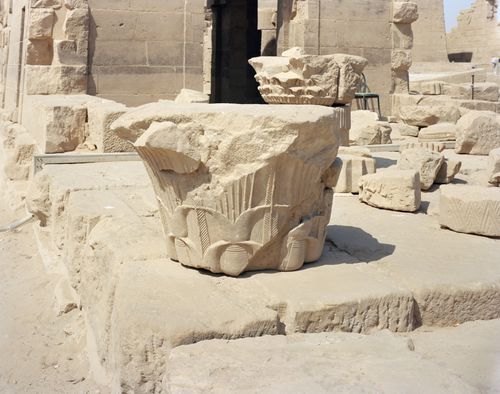
Photograph by Stefano Graziani of the following work: Viaggio de Karnak to the island of Philae Questioning Pictures is a 36 photograph project commissioned by Fondazione Prada, Milan. Artist Stefano Graziani investigates archival and conservation systems in a number of museums. Through photographing museum objects, Graziani, focusing on the relationship between photographs, the museum objects and the power structures at play within institutions. The museums include the Canadian Centre for Architecture (CCA) in Montréal, Canada; Sir John Soane’s Museum in London, UK; the Kunstmuseum Basel, Switzerland; Museum Insel Hombroich in Neuss, Germany; the Museo di Castelvecchio in Verona, Italy; and the Plaster Cast Gallery at Museo Canova in Possagno, Italy.
PH2018:0005:020
Description:
Photograph by Stefano Graziani of the following work: Viaggio de Karnak to the island of Philae Questioning Pictures is a 36 photograph project commissioned by Fondazione Prada, Milan. Artist Stefano Graziani investigates archival and conservation systems in a number of museums. Through photographing museum objects, Graziani, focusing on the relationship between photographs, the museum objects and the power structures at play within institutions. The museums include the Canadian Centre for Architecture (CCA) in Montréal, Canada; Sir John Soane’s Museum in London, UK; the Kunstmuseum Basel, Switzerland; Museum Insel Hombroich in Neuss, Germany; the Museo di Castelvecchio in Verona, Italy; and the Plaster Cast Gallery at Museo Canova in Possagno, Italy.
People:
Date:
2012
2012
Title:
Questioning Pictures: Photograph of column capital at Karnak in Philae
Actions:
PH2018:0005:020
Description:
Photograph by Stefano Graziani of the following work: Viaggio de Karnak to the island of Philae Questioning Pictures is a 36 photograph project commissioned by Fondazione Prada, Milan. Artist Stefano Graziani investigates archival and conservation systems in a number of museums. Through photographing museum objects, Graziani, focusing on the relationship between photographs, the museum objects and the power structures at play within institutions. The museums include the Canadian Centre for Architecture (CCA) in Montréal, Canada; Sir John Soane’s Museum in London, UK; the Kunstmuseum Basel, Switzerland; Museum Insel Hombroich in Neuss, Germany; the Museo di Castelvecchio in Verona, Italy; and the Plaster Cast Gallery at Museo Canova in Possagno, Italy.
Questioning Pictures: Photograph of column capital at Karnak in Philae
Actions:
PH2018:0005:020
Description:
Photograph by Stefano Graziani of the following work: Viaggio de Karnak to the island of Philae Questioning Pictures is a 36 photograph project commissioned by Fondazione Prada, Milan. Artist Stefano Graziani investigates archival and conservation systems in a number of museums. Through photographing museum objects, Graziani, focusing on the relationship between photographs, the museum objects and the power structures at play within institutions. The museums include the Canadian Centre for Architecture (CCA) in Montréal, Canada; Sir John Soane’s Museum in London, UK; the Kunstmuseum Basel, Switzerland; Museum Insel Hombroich in Neuss, Germany; the Museo di Castelvecchio in Verona, Italy; and the Plaster Cast Gallery at Museo Canova in Possagno, Italy.
Form:
photographs
photographs
Date:
2012
2012
People:
Form:
photographs
photographs
Actions:
Reference number:
PH2018:0005:029
Description:
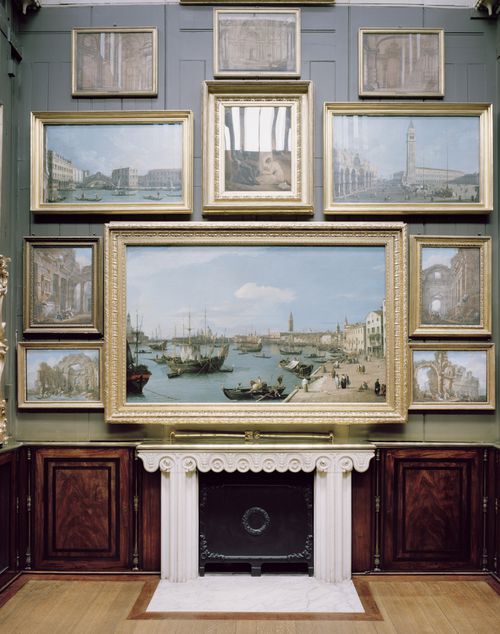
Photograph by Stefano Graziani of the following work: Painting Cabinet, Sir John Soane's Museum, London Questioning Pictures is a 36 photograph project commissioned by Fondazione Prada, Milan. Artist Stefano Graziani investigates archival and conservation systems in a number of museums. Through photographing museum objects, Graziani, focusing on the relationship between photographs, the museum objects and the power structures at play within institutions. The museums include the Canadian Centre for Architecture (CCA) in Montréal, Canada; Sir John Soane’s Museum in London, UK; the Kunstmuseum Basel, Switzerland; Museum Insel Hombroich in Neuss, Germany; the Museo di Castelvecchio in Verona, Italy; and the Plaster Cast Gallery at Museo Canova in Possagno, Italy.
PH2018:0005:029
Description:
Photograph by Stefano Graziani of the following work: Painting Cabinet, Sir John Soane's Museum, London Questioning Pictures is a 36 photograph project commissioned by Fondazione Prada, Milan. Artist Stefano Graziani investigates archival and conservation systems in a number of museums. Through photographing museum objects, Graziani, focusing on the relationship between photographs, the museum objects and the power structures at play within institutions. The museums include the Canadian Centre for Architecture (CCA) in Montréal, Canada; Sir John Soane’s Museum in London, UK; the Kunstmuseum Basel, Switzerland; Museum Insel Hombroich in Neuss, Germany; the Museo di Castelvecchio in Verona, Italy; and the Plaster Cast Gallery at Museo Canova in Possagno, Italy.
People:
Date:
2017
2017
Title:
Questioning Pictures: Photograph of Painting Cabinet, Sir John Soane's Museum, 2017
Actions:
PH2018:0005:029
Description:
Photograph by Stefano Graziani of the following work: Painting Cabinet, Sir John Soane's Museum, London Questioning Pictures is a 36 photograph project commissioned by Fondazione Prada, Milan. Artist Stefano Graziani investigates archival and conservation systems in a number of museums. Through photographing museum objects, Graziani, focusing on the relationship between photographs, the museum objects and the power structures at play within institutions. The museums include the Canadian Centre for Architecture (CCA) in Montréal, Canada; Sir John Soane’s Museum in London, UK; the Kunstmuseum Basel, Switzerland; Museum Insel Hombroich in Neuss, Germany; the Museo di Castelvecchio in Verona, Italy; and the Plaster Cast Gallery at Museo Canova in Possagno, Italy.
Questioning Pictures: Photograph of Painting Cabinet, Sir John Soane's Museum, 2017
Actions:
PH2018:0005:029
Description:
Photograph by Stefano Graziani of the following work: Painting Cabinet, Sir John Soane's Museum, London Questioning Pictures is a 36 photograph project commissioned by Fondazione Prada, Milan. Artist Stefano Graziani investigates archival and conservation systems in a number of museums. Through photographing museum objects, Graziani, focusing on the relationship between photographs, the museum objects and the power structures at play within institutions. The museums include the Canadian Centre for Architecture (CCA) in Montréal, Canada; Sir John Soane’s Museum in London, UK; the Kunstmuseum Basel, Switzerland; Museum Insel Hombroich in Neuss, Germany; the Museo di Castelvecchio in Verona, Italy; and the Plaster Cast Gallery at Museo Canova in Possagno, Italy.
Form:
photographs
photographs
Date:
2017
2017
People:
Form:
research
research
Title:
Visiting Scholars 2002–2003
Visiting Scholars 2002–2003
Actions:
Description:
Chiara Baglione, IUAV-Istituto Universitario di Archittetura di Venezia, Venice, Italy Topic: Becoming an Architect in the Rome of Urban VIII: Architectural Training and Early Works of Pietro da Cortona Laurent Baridon, Université Marc Bloch, Strasbourg, France Topic: Dinocrate ou l’architecte en représentation Martin Bressani, McGill University, Montreal,(...)
Chiara Baglione, IUAV-Istituto Universitario di Archittetura di Venezia, Venice, Italy Topic: Becoming an Architect in the Rome of Urban VIII: Architectural Training and Early Works of Pietro da Cortona Laurent Baridon, Université Marc Bloch, Strasbourg, France Topic: Dinocrate ou l’architecte en représentation Martin Bressani, McGill University, Montreal,(...)
Date:
5 January 2003 to 31 August 2003
5 January 2003 to 31 August 2003
Title:
Visiting Scholars 2002–2003
Actions:
Description:
Chiara Baglione, IUAV-Istituto Universitario di Archittetura di Venezia, Venice, Italy Topic: Becoming an Architect in the Rome of Urban VIII: Architectural Training and Early Works of Pietro da Cortona Laurent Baridon, Université Marc Bloch, Strasbourg, France Topic: Dinocrate ou l’architecte en représentation Martin Bressani, McGill University, Montreal,(...)
Visiting Scholars 2002–2003
Actions:
Description:
Chiara Baglione, IUAV-Istituto Universitario di Archittetura di Venezia, Venice, Italy Topic: Becoming an Architect in the Rome of Urban VIII: Architectural Training and Early Works of Pietro da Cortona Laurent Baridon, Université Marc Bloch, Strasbourg, France Topic: Dinocrate ou l’architecte en représentation Martin Bressani, McGill University, Montreal,(...)
Form:
research
research
Date:
5 January 2003 to
31 August 2003
5 January 2003 to
31 August 2003
Level of archival description:
Project
Project
Title:
Shopping Mall
Shopping Mall
Actions:
Reference number:
AP076.S3.D3
Description:
File documents an executed [?] project for a shopping mall. The drawing is initialed "D.S.J." [Donald S. Jackson?]. Donald S. Jackson (1917-1970) worked for Semmens Simpson from 1951-1954 before becoming a partner in Carlberg Jackson, Architects from 1954-1969. File contains a drawing.
AP076.S3.D3
Description:
File documents an executed [?] project for a shopping mall. The drawing is initialed "D.S.J." [Donald S. Jackson?]. Donald S. Jackson (1917-1970) worked for Semmens Simpson from 1951-1954 before becoming a partner in Carlberg Jackson, Architects from 1954-1969. File contains a drawing.
People:
Date:
n.d.
n.d.
Title:
Shopping Mall
Actions:
AP076.S3.D3
Description:
File documents an executed [?] project for a shopping mall. The drawing is initialed "D.S.J." [Donald S. Jackson?]. Donald S. Jackson (1917-1970) worked for Semmens Simpson from 1951-1954 before becoming a partner in Carlberg Jackson, Architects from 1954-1969. File contains a drawing.
Shopping Mall
Actions:
AP076.S3.D3
Description:
File documents an executed [?] project for a shopping mall. The drawing is initialed "D.S.J." [Donald S. Jackson?]. Donald S. Jackson (1917-1970) worked for Semmens Simpson from 1951-1954 before becoming a partner in Carlberg Jackson, Architects from 1954-1969. File contains a drawing.
Level of archival description:
File 3
File 3
Date:
n.d.
n.d.
People:
Form:
exhibitions
exhibitions
Actions:
Location:
Main galleries
Main galleries
Date:
1 May 2018 to 7 October 2018
1 May 2018 to 7 October 2018
Form:
exhibitions
exhibitions
Date:
1 May 2018 to
7 October 2018
1 May 2018 to
7 October 2018
Location:
Main galleries
Main galleries
Level of archival description:
Project
Project
Actions:
Reference number:
AP018.S1.1972.PR05
Description:
This project series documents the offices of law firm Davies, Ward and Beck in Toronto from 1972-1973. The office identified the project number as 7205. This project consisted of the design of the 47th floor of Commerce Court, some of which was to be used by the law firm, while the rest would be rented to subtenants. This was the first in a series of projects for this office, with several changes to occur in the subsequent decade. The planning for these future projects was already underway when this one began. This original project included 25 offices for lawyers, with the partners occupying corner offices, board and conference rooms, secretary and student offices, a library, a lunch room, a switchboard room and other work areas. The project is recorded through drawings and textual records dating from 1971-1976. The drawings are mostly reprographic copies that include plans, details and mechanical and electrical drawings. The textual materials include correspondence, certificates of payment, conference reports and change orders. Box AP018.S1.1972.PR05.003 contains an index to the textual records, which was created by the office.
AP018.S1.1972.PR05
Description:
This project series documents the offices of law firm Davies, Ward and Beck in Toronto from 1972-1973. The office identified the project number as 7205. This project consisted of the design of the 47th floor of Commerce Court, some of which was to be used by the law firm, while the rest would be rented to subtenants. This was the first in a series of projects for this office, with several changes to occur in the subsequent decade. The planning for these future projects was already underway when this one began. This original project included 25 offices for lawyers, with the partners occupying corner offices, board and conference rooms, secretary and student offices, a library, a lunch room, a switchboard room and other work areas. The project is recorded through drawings and textual records dating from 1971-1976. The drawings are mostly reprographic copies that include plans, details and mechanical and electrical drawings. The textual materials include correspondence, certificates of payment, conference reports and change orders. Box AP018.S1.1972.PR05.003 contains an index to the textual records, which was created by the office.
People:
Date:
1971-1976
1971-1976
Title:
Offices for Davies, Ward and Beck, 47th Floor Commerce Court, Toronto (1972-1973)
Actions:
AP018.S1.1972.PR05
Description:
This project series documents the offices of law firm Davies, Ward and Beck in Toronto from 1972-1973. The office identified the project number as 7205. This project consisted of the design of the 47th floor of Commerce Court, some of which was to be used by the law firm, while the rest would be rented to subtenants. This was the first in a series of projects for this office, with several changes to occur in the subsequent decade. The planning for these future projects was already underway when this one began. This original project included 25 offices for lawyers, with the partners occupying corner offices, board and conference rooms, secretary and student offices, a library, a lunch room, a switchboard room and other work areas. The project is recorded through drawings and textual records dating from 1971-1976. The drawings are mostly reprographic copies that include plans, details and mechanical and electrical drawings. The textual materials include correspondence, certificates of payment, conference reports and change orders. Box AP018.S1.1972.PR05.003 contains an index to the textual records, which was created by the office.
Offices for Davies, Ward and Beck, 47th Floor Commerce Court, Toronto (1972-1973)
Actions:
AP018.S1.1972.PR05
Description:
This project series documents the offices of law firm Davies, Ward and Beck in Toronto from 1972-1973. The office identified the project number as 7205. This project consisted of the design of the 47th floor of Commerce Court, some of which was to be used by the law firm, while the rest would be rented to subtenants. This was the first in a series of projects for this office, with several changes to occur in the subsequent decade. The planning for these future projects was already underway when this one began. This original project included 25 offices for lawyers, with the partners occupying corner offices, board and conference rooms, secretary and student offices, a library, a lunch room, a switchboard room and other work areas. The project is recorded through drawings and textual records dating from 1971-1976. The drawings are mostly reprographic copies that include plans, details and mechanical and electrical drawings. The textual materials include correspondence, certificates of payment, conference reports and change orders. Box AP018.S1.1972.PR05.003 contains an index to the textual records, which was created by the office.
Level of archival description:
project
project
Date:
1971-1976
1971-1976
People:
Level of archival description:
Project
Project
Reference number:
CI005.S1.1931.PR1
Description:
Oud's international reputation was cemented due in part to his work on the Weissenhofsiedlung, in Stuttgart, as well as to the praise of contemporary American art historian, Henry-Russell Hitchcock. Oud was commissioned in 1931 to design a private home for the mother of Oud's American friend, Philip Johnson, although the project was never realized due to the client's financial struggles in the economic Depression. Oud submitted drawings and a model of the design for Mrs H.H. Johnson's home to the Museum of Modern Art's 1932 "Modern Architecture – International Exhibition." Although Oud was generally praised for his exhibition entries, especially photographs of Hoek van Holland, he received little positive attention with his model submission of the House of Mrs H.H. Johnson. Oud began design for the house late in 1931 and designed a large villa with an open, spacious living room and dining room, strategic garden views, and a detached sunroom with a retractable roof (Taverne et al. 2001, 320). Project series includes photographs of the model of House for Mrs H.H. Johnson, as well as drawings of plans for the house.
CI005.S1.1931.PR1
Description:
Oud's international reputation was cemented due in part to his work on the Weissenhofsiedlung, in Stuttgart, as well as to the praise of contemporary American art historian, Henry-Russell Hitchcock. Oud was commissioned in 1931 to design a private home for the mother of Oud's American friend, Philip Johnson, although the project was never realized due to the client's financial struggles in the economic Depression. Oud submitted drawings and a model of the design for Mrs H.H. Johnson's home to the Museum of Modern Art's 1932 "Modern Architecture – International Exhibition." Although Oud was generally praised for his exhibition entries, especially photographs of Hoek van Holland, he received little positive attention with his model submission of the House of Mrs H.H. Johnson. Oud began design for the house late in 1931 and designed a large villa with an open, spacious living room and dining room, strategic garden views, and a detached sunroom with a retractable roof (Taverne et al. 2001, 320). Project series includes photographs of the model of House for Mrs H.H. Johnson, as well as drawings of plans for the house.
People:
Date:
1931
1931
Title:
House for Mrs H. H. Johnson, Pinehurst, North Carolina (1931)
Actions:
CI005.S1.1931.PR1
Description:
Oud's international reputation was cemented due in part to his work on the Weissenhofsiedlung, in Stuttgart, as well as to the praise of contemporary American art historian, Henry-Russell Hitchcock. Oud was commissioned in 1931 to design a private home for the mother of Oud's American friend, Philip Johnson, although the project was never realized due to the client's financial struggles in the economic Depression. Oud submitted drawings and a model of the design for Mrs H.H. Johnson's home to the Museum of Modern Art's 1932 "Modern Architecture – International Exhibition." Although Oud was generally praised for his exhibition entries, especially photographs of Hoek van Holland, he received little positive attention with his model submission of the House of Mrs H.H. Johnson. Oud began design for the house late in 1931 and designed a large villa with an open, spacious living room and dining room, strategic garden views, and a detached sunroom with a retractable roof (Taverne et al. 2001, 320). Project series includes photographs of the model of House for Mrs H.H. Johnson, as well as drawings of plans for the house.
House for Mrs H. H. Johnson, Pinehurst, North Carolina (1931)
Actions:
CI005.S1.1931.PR1
Description:
Oud's international reputation was cemented due in part to his work on the Weissenhofsiedlung, in Stuttgart, as well as to the praise of contemporary American art historian, Henry-Russell Hitchcock. Oud was commissioned in 1931 to design a private home for the mother of Oud's American friend, Philip Johnson, although the project was never realized due to the client's financial struggles in the economic Depression. Oud submitted drawings and a model of the design for Mrs H.H. Johnson's home to the Museum of Modern Art's 1932 "Modern Architecture – International Exhibition." Although Oud was generally praised for his exhibition entries, especially photographs of Hoek van Holland, he received little positive attention with his model submission of the House of Mrs H.H. Johnson. Oud began design for the house late in 1931 and designed a large villa with an open, spacious living room and dining room, strategic garden views, and a detached sunroom with a retractable roof (Taverne et al. 2001, 320). Project series includes photographs of the model of House for Mrs H.H. Johnson, as well as drawings of plans for the house.
Level of archival description:
project
project
Date:
1931
1931
People:
Level of archival description:
Sub-series
Sub-series
Title:
Maison de Verre (1965, 1969)
Maison de Verre (1965, 1969)
Reference number:
AP197.S1.SS1
Description:
Located on 31 Rue St Guillaume in Paris, France, Maison de Verre was designed between 1928 and 1931 by furniture designer and architect Pierre Chareau, architect Bernard Bijvoet, and metal craftsman Louis Dalbet. Although the home was built, no original drawings exist for this project. In 1965, as Hodder Fellow at Princeton University, Kenneth Frampton along with Robert Vickery and Michael Carapetian measured the home and its details. Originally, their intention was that this research lead to a book project, but they later published their work as an article entitled "Maison de Verre" in a 1969 issue of Perspecta. This subseries includes measurement sketches and sixteen axonometric representations on vellum that were produced from this research. Photographs document Maison de Verre and provide various interior and exterior views of the house. Photographs by Michael Carapetian, published in the Perspecta article, “Maison de Verre (1969),” are also included in this subseries. Textual documentation includes drafts of the publication on Maison de Verre, as well as notes, correspondence, and various research files on Paul Nelson, Pierre Chareau, and Maison de Verre.
AP197.S1.SS1
Description:
Located on 31 Rue St Guillaume in Paris, France, Maison de Verre was designed between 1928 and 1931 by furniture designer and architect Pierre Chareau, architect Bernard Bijvoet, and metal craftsman Louis Dalbet. Although the home was built, no original drawings exist for this project. In 1965, as Hodder Fellow at Princeton University, Kenneth Frampton along with Robert Vickery and Michael Carapetian measured the home and its details. Originally, their intention was that this research lead to a book project, but they later published their work as an article entitled "Maison de Verre" in a 1969 issue of Perspecta. This subseries includes measurement sketches and sixteen axonometric representations on vellum that were produced from this research. Photographs document Maison de Verre and provide various interior and exterior views of the house. Photographs by Michael Carapetian, published in the Perspecta article, “Maison de Verre (1969),” are also included in this subseries. Textual documentation includes drafts of the publication on Maison de Verre, as well as notes, correspondence, and various research files on Paul Nelson, Pierre Chareau, and Maison de Verre.
People:
Date:
1965-1981
1965-1981
Title:
Maison de Verre (1965, 1969)
Actions:
AP197.S1.SS1
Description:
Located on 31 Rue St Guillaume in Paris, France, Maison de Verre was designed between 1928 and 1931 by furniture designer and architect Pierre Chareau, architect Bernard Bijvoet, and metal craftsman Louis Dalbet. Although the home was built, no original drawings exist for this project. In 1965, as Hodder Fellow at Princeton University, Kenneth Frampton along with Robert Vickery and Michael Carapetian measured the home and its details. Originally, their intention was that this research lead to a book project, but they later published their work as an article entitled "Maison de Verre" in a 1969 issue of Perspecta. This subseries includes measurement sketches and sixteen axonometric representations on vellum that were produced from this research. Photographs document Maison de Verre and provide various interior and exterior views of the house. Photographs by Michael Carapetian, published in the Perspecta article, “Maison de Verre (1969),” are also included in this subseries. Textual documentation includes drafts of the publication on Maison de Verre, as well as notes, correspondence, and various research files on Paul Nelson, Pierre Chareau, and Maison de Verre.
Maison de Verre (1965, 1969)
Actions:
AP197.S1.SS1
Description:
Located on 31 Rue St Guillaume in Paris, France, Maison de Verre was designed between 1928 and 1931 by furniture designer and architect Pierre Chareau, architect Bernard Bijvoet, and metal craftsman Louis Dalbet. Although the home was built, no original drawings exist for this project. In 1965, as Hodder Fellow at Princeton University, Kenneth Frampton along with Robert Vickery and Michael Carapetian measured the home and its details. Originally, their intention was that this research lead to a book project, but they later published their work as an article entitled "Maison de Verre" in a 1969 issue of Perspecta. This subseries includes measurement sketches and sixteen axonometric representations on vellum that were produced from this research. Photographs document Maison de Verre and provide various interior and exterior views of the house. Photographs by Michael Carapetian, published in the Perspecta article, “Maison de Verre (1969),” are also included in this subseries. Textual documentation includes drafts of the publication on Maison de Verre, as well as notes, correspondence, and various research files on Paul Nelson, Pierre Chareau, and Maison de Verre.
Level of archival description:
Subseries
Subseries
Date:
1965-1981
1965-1981
People:


