


44145 Results
Form:
photographs
photographs
Actions:
Reference number:
PH2018:0005:014
Description:
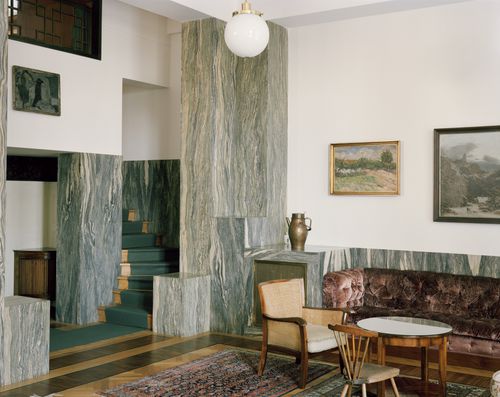
Photograph by Stefano Graziani of the following work: Adolf Loos, Villa Muller, 1928, The City of Prague Museum Questioning Pictures is a 36 photograph project commissioned by Fondazione Prada, Milan. Artist Stefano Graziani investigates archival and conservation systems in a number of museums. Through photographing museum objects, Graziani, focusing on the relationship between photographs, the museum objects and the power structures at play within institutions. The museums include the Canadian Centre for Architecture (CCA) in Montréal, Canada; Sir John Soane’s Museum in London, UK; the Kunstmuseum Basel, Switzerland; Museum Insel Hombroich in Neuss, Germany; the Museo di Castelvecchio in Verona, Italy; and the Plaster Cast Gallery at Museo Canova in Possagno, Italy.
PH2018:0005:014
Description:
Photograph by Stefano Graziani of the following work: Adolf Loos, Villa Muller, 1928, The City of Prague Museum Questioning Pictures is a 36 photograph project commissioned by Fondazione Prada, Milan. Artist Stefano Graziani investigates archival and conservation systems in a number of museums. Through photographing museum objects, Graziani, focusing on the relationship between photographs, the museum objects and the power structures at play within institutions. The museums include the Canadian Centre for Architecture (CCA) in Montréal, Canada; Sir John Soane’s Museum in London, UK; the Kunstmuseum Basel, Switzerland; Museum Insel Hombroich in Neuss, Germany; the Museo di Castelvecchio in Verona, Italy; and the Plaster Cast Gallery at Museo Canova in Possagno, Italy.
People:
Date:
2017
2017
Title:
Questioning Pictures: Photograph of Villa Muller, inkjet print by Adolf Loos, 1928
Actions:
PH2018:0005:014
Description:
Photograph by Stefano Graziani of the following work: Adolf Loos, Villa Muller, 1928, The City of Prague Museum Questioning Pictures is a 36 photograph project commissioned by Fondazione Prada, Milan. Artist Stefano Graziani investigates archival and conservation systems in a number of museums. Through photographing museum objects, Graziani, focusing on the relationship between photographs, the museum objects and the power structures at play within institutions. The museums include the Canadian Centre for Architecture (CCA) in Montréal, Canada; Sir John Soane’s Museum in London, UK; the Kunstmuseum Basel, Switzerland; Museum Insel Hombroich in Neuss, Germany; the Museo di Castelvecchio in Verona, Italy; and the Plaster Cast Gallery at Museo Canova in Possagno, Italy.
Questioning Pictures: Photograph of Villa Muller, inkjet print by Adolf Loos, 1928
Actions:
PH2018:0005:014
Description:
Photograph by Stefano Graziani of the following work: Adolf Loos, Villa Muller, 1928, The City of Prague Museum Questioning Pictures is a 36 photograph project commissioned by Fondazione Prada, Milan. Artist Stefano Graziani investigates archival and conservation systems in a number of museums. Through photographing museum objects, Graziani, focusing on the relationship between photographs, the museum objects and the power structures at play within institutions. The museums include the Canadian Centre for Architecture (CCA) in Montréal, Canada; Sir John Soane’s Museum in London, UK; the Kunstmuseum Basel, Switzerland; Museum Insel Hombroich in Neuss, Germany; the Museo di Castelvecchio in Verona, Italy; and the Plaster Cast Gallery at Museo Canova in Possagno, Italy.
Form:
photographs
photographs
Date:
2017
2017
People:
Level of archival description:
Project
Project
Actions:
Reference number:
AP056.S1.1986.PR02
Description:
This project series documents an addition and renovations to Woodsworth College at the University of Toronto from 1986-1991. The office identified the project number as 18603. Before this work, the existing property consisted of four Victorian houses: the main College building at 119 St. George Street that had a large drill hall connected to the back, a house next to the drill hall, the Centre for Industrial Relations located at 121 St. Georges Street, and the Media Centre located at 123 St. Georges Street. This project consisted of interior renovations to the houses and the addition of an L-shaped building at the back of the property that connected to the drill hall and turned at the corner of the property towards the Media Centre house. This created a central courtyard in the centre of the property, between all the buildings. The new building was two storeys with an arcade toward the courtyard, a red brick facade and sheet metal roofing. This housed audio-visual rooms, editing rooms, offices and a workroom in the basement, classrooms and meeting rooms on the ground floor, and faculty offices, lounges and administrative areas on the second floor. A new entry tower and hall were constructed for the main College building. This building consisted of mechanical and electrical rooms in the basement, student spaces and administrative offices on the ground floor, and administrative offices and meeting rooms on the second and third floors. Barton Myers Associates worked as the consulting architects on this project. The project is recorded through drawings and photographic materials dating from 1986-1991. The drawings include sketches, drawings for the project model, sections, floor and site plans, elevations, details, axonometric drawings, perspectives, and structural drawings. There are a large number of detail drawings for furnishings and architectural elements. The photographic materials consist of aerial views and photographs of the finished project.
AP056.S1.1986.PR02
Description:
This project series documents an addition and renovations to Woodsworth College at the University of Toronto from 1986-1991. The office identified the project number as 18603. Before this work, the existing property consisted of four Victorian houses: the main College building at 119 St. George Street that had a large drill hall connected to the back, a house next to the drill hall, the Centre for Industrial Relations located at 121 St. Georges Street, and the Media Centre located at 123 St. Georges Street. This project consisted of interior renovations to the houses and the addition of an L-shaped building at the back of the property that connected to the drill hall and turned at the corner of the property towards the Media Centre house. This created a central courtyard in the centre of the property, between all the buildings. The new building was two storeys with an arcade toward the courtyard, a red brick facade and sheet metal roofing. This housed audio-visual rooms, editing rooms, offices and a workroom in the basement, classrooms and meeting rooms on the ground floor, and faculty offices, lounges and administrative areas on the second floor. A new entry tower and hall were constructed for the main College building. This building consisted of mechanical and electrical rooms in the basement, student spaces and administrative offices on the ground floor, and administrative offices and meeting rooms on the second and third floors. Barton Myers Associates worked as the consulting architects on this project. The project is recorded through drawings and photographic materials dating from 1986-1991. The drawings include sketches, drawings for the project model, sections, floor and site plans, elevations, details, axonometric drawings, perspectives, and structural drawings. There are a large number of detail drawings for furnishings and architectural elements. The photographic materials consist of aerial views and photographs of the finished project.
People:
Date:
1986-1991
1986-1991
Title:
Woodsworth College, University of Toronto (1986-1991)
Actions:
AP056.S1.1986.PR02
Description:
This project series documents an addition and renovations to Woodsworth College at the University of Toronto from 1986-1991. The office identified the project number as 18603. Before this work, the existing property consisted of four Victorian houses: the main College building at 119 St. George Street that had a large drill hall connected to the back, a house next to the drill hall, the Centre for Industrial Relations located at 121 St. Georges Street, and the Media Centre located at 123 St. Georges Street. This project consisted of interior renovations to the houses and the addition of an L-shaped building at the back of the property that connected to the drill hall and turned at the corner of the property towards the Media Centre house. This created a central courtyard in the centre of the property, between all the buildings. The new building was two storeys with an arcade toward the courtyard, a red brick facade and sheet metal roofing. This housed audio-visual rooms, editing rooms, offices and a workroom in the basement, classrooms and meeting rooms on the ground floor, and faculty offices, lounges and administrative areas on the second floor. A new entry tower and hall were constructed for the main College building. This building consisted of mechanical and electrical rooms in the basement, student spaces and administrative offices on the ground floor, and administrative offices and meeting rooms on the second and third floors. Barton Myers Associates worked as the consulting architects on this project. The project is recorded through drawings and photographic materials dating from 1986-1991. The drawings include sketches, drawings for the project model, sections, floor and site plans, elevations, details, axonometric drawings, perspectives, and structural drawings. There are a large number of detail drawings for furnishings and architectural elements. The photographic materials consist of aerial views and photographs of the finished project.
Woodsworth College, University of Toronto (1986-1991)
Actions:
AP056.S1.1986.PR02
Description:
This project series documents an addition and renovations to Woodsworth College at the University of Toronto from 1986-1991. The office identified the project number as 18603. Before this work, the existing property consisted of four Victorian houses: the main College building at 119 St. George Street that had a large drill hall connected to the back, a house next to the drill hall, the Centre for Industrial Relations located at 121 St. Georges Street, and the Media Centre located at 123 St. Georges Street. This project consisted of interior renovations to the houses and the addition of an L-shaped building at the back of the property that connected to the drill hall and turned at the corner of the property towards the Media Centre house. This created a central courtyard in the centre of the property, between all the buildings. The new building was two storeys with an arcade toward the courtyard, a red brick facade and sheet metal roofing. This housed audio-visual rooms, editing rooms, offices and a workroom in the basement, classrooms and meeting rooms on the ground floor, and faculty offices, lounges and administrative areas on the second floor. A new entry tower and hall were constructed for the main College building. This building consisted of mechanical and electrical rooms in the basement, student spaces and administrative offices on the ground floor, and administrative offices and meeting rooms on the second and third floors. Barton Myers Associates worked as the consulting architects on this project. The project is recorded through drawings and photographic materials dating from 1986-1991. The drawings include sketches, drawings for the project model, sections, floor and site plans, elevations, details, axonometric drawings, perspectives, and structural drawings. There are a large number of detail drawings for furnishings and architectural elements. The photographic materials consist of aerial views and photographs of the finished project.
Level of archival description:
Project
Project
Date:
1986-1991
1986-1991
People:
Form:
events
events
Actions:
Description:
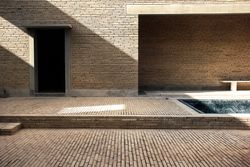
Architect Bijoy Jain of Studio Mumbai present[ed] his latest work. Rooms You May Have Missed: Bijoy Jain, Umberto Riva present[ed] the work of Bijoy Jain and Umberto Riva, architects deeply engaged with architectural processes, materials and craft.
Architect Bijoy Jain of Studio Mumbai present[ed] his latest work. Rooms You May Have Missed: Bijoy Jain, Umberto Riva present[ed] the work of Bijoy Jain and Umberto Riva, architects deeply engaged with architectural processes, materials and craft.
Location:
Paul Desmarais Theatre
Paul Desmarais Theatre
Date:
6 November 2014 , 6pm
6 November 2014 , 6pm
Title:
Rooms in Mumbai: a Discussion with Bijoy Jain
Actions:
Description:
Architect Bijoy Jain of Studio Mumbai present[ed] his latest work. Rooms You May Have Missed: Bijoy Jain, Umberto Riva present[ed] the work of Bijoy Jain and Umberto Riva, architects deeply engaged with architectural processes, materials and craft.
Rooms in Mumbai: a Discussion with Bijoy Jain
Actions:
Description:
Architect Bijoy Jain of Studio Mumbai present[ed] his latest work. Rooms You May Have Missed: Bijoy Jain, Umberto Riva present[ed] the work of Bijoy Jain and Umberto Riva, architects deeply engaged with architectural processes, materials and craft.
Form:
events
events
Date:
6 November 2014
6pm
6 November 2014
6pm
Location:
Paul Desmarais Theatre
Paul Desmarais Theatre
Form:
photographs
photographs
Actions:
Reference number:
ARCH256440
Description:
"Au vol d'oiseau, voici l'île Sainte-Hélène à son état naturel, il y a deux ans, avant le début des travaux de récupération qui ont presque triplé la superficie afin d'y loger l'Exposition universelle de 1967. Le magnifique parc boisé restera tel quel pour l'agrément des visiteurs. / Air view of Ile Sainte-Hélène, as of July 23, 1963, just before work began on the enlargement of the island to provide the ground for Expo 67. View is from the upstream end of the island. Stipulation in the program for building Expo 67 is the condition that the original Ile Sainte-Helene public park be left untouched."--Description.
ARCH256440
Description:
"Au vol d'oiseau, voici l'île Sainte-Hélène à son état naturel, il y a deux ans, avant le début des travaux de récupération qui ont presque triplé la superficie afin d'y loger l'Exposition universelle de 1967. Le magnifique parc boisé restera tel quel pour l'agrément des visiteurs. / Air view of Ile Sainte-Hélène, as of July 23, 1963, just before work began on the enlargement of the island to provide the ground for Expo 67. View is from the upstream end of the island. Stipulation in the program for building Expo 67 is the condition that the original Ile Sainte-Helene public park be left untouched."--Description.
People:
Date:
23 July 1963
23 July 1963
Title:
Aerial views of the Île Sainte-Hélène and Île Notre-Dame sites prior the enlargement and the creation phases were completed, Expo 67, Montréal, Québec
Actions:
ARCH256440
Description:
"Au vol d'oiseau, voici l'île Sainte-Hélène à son état naturel, il y a deux ans, avant le début des travaux de récupération qui ont presque triplé la superficie afin d'y loger l'Exposition universelle de 1967. Le magnifique parc boisé restera tel quel pour l'agrément des visiteurs. / Air view of Ile Sainte-Hélène, as of July 23, 1963, just before work began on the enlargement of the island to provide the ground for Expo 67. View is from the upstream end of the island. Stipulation in the program for building Expo 67 is the condition that the original Ile Sainte-Helene public park be left untouched."--Description.
Aerial views of the Île Sainte-Hélène and Île Notre-Dame sites prior the enlargement and the creation phases were completed, Expo 67, Montréal, Québec
Actions:
ARCH256440
Description:
"Au vol d'oiseau, voici l'île Sainte-Hélène à son état naturel, il y a deux ans, avant le début des travaux de récupération qui ont presque triplé la superficie afin d'y loger l'Exposition universelle de 1967. Le magnifique parc boisé restera tel quel pour l'agrément des visiteurs. / Air view of Ile Sainte-Hélène, as of July 23, 1963, just before work began on the enlargement of the island to provide the ground for Expo 67. View is from the upstream end of the island. Stipulation in the program for building Expo 67 is the condition that the original Ile Sainte-Helene public park be left untouched."--Description.
Form:
photographs
photographs
Date:
23 July 1963
23 July 1963
People:
Level of archival description:
Project
Project
Actions:
Reference number:
AP164.S1.1997.D1
Description:
The project series documents an entry for a competition organised by the Ajuntament de Palma to transform an old factory into a cultural center. The firm identified this project as number 100. Abalos & Herreros worked with Arturo Vila, Jose Luis Pujol and Angel Jaramillo. Documenting the project are conceptual and design development drawings, and textual documentation.
AP164.S1.1997.D1
Description:
The project series documents an entry for a competition organised by the Ajuntament de Palma to transform an old factory into a cultural center. The firm identified this project as number 100. Abalos & Herreros worked with Arturo Vila, Jose Luis Pujol and Angel Jaramillo. Documenting the project are conceptual and design development drawings, and textual documentation.
People:
Date:
1994-1997
1994-1997
Title:
Centro Flassaders en Palma de Mallorca, Spain (1997)
Actions:
AP164.S1.1997.D1
Description:
The project series documents an entry for a competition organised by the Ajuntament de Palma to transform an old factory into a cultural center. The firm identified this project as number 100. Abalos & Herreros worked with Arturo Vila, Jose Luis Pujol and Angel Jaramillo. Documenting the project are conceptual and design development drawings, and textual documentation.
Centro Flassaders en Palma de Mallorca, Spain (1997)
Actions:
AP164.S1.1997.D1
Description:
The project series documents an entry for a competition organised by the Ajuntament de Palma to transform an old factory into a cultural center. The firm identified this project as number 100. Abalos & Herreros worked with Arturo Vila, Jose Luis Pujol and Angel Jaramillo. Documenting the project are conceptual and design development drawings, and textual documentation.
Level of archival description:
Project
Project
Date:
1994-1997
1994-1997
People:
Level of archival description:
Project
Project
Reference number:
AP180.S1.1987.PR05
Description:
This project series documents the realized redesign for the Casa Insinga, an apartment in Milan, Italy. Riva worked on this project in 1987. The aim of the project was to redesign the interior of an apartment which was reduced in size after a restructuring of the building. The project is recorded though design development drawings and includes sections, floor plans, and details for furnishings.
AP180.S1.1987.PR05
Description:
This project series documents the realized redesign for the Casa Insinga, an apartment in Milan, Italy. Riva worked on this project in 1987. The aim of the project was to redesign the interior of an apartment which was reduced in size after a restructuring of the building. The project is recorded though design development drawings and includes sections, floor plans, and details for furnishings.
People:
Date:
1987
1987
Title:
Casa Insinga [Insinga house], Milan, Italy (1987)
Actions:
AP180.S1.1987.PR05
Description:
This project series documents the realized redesign for the Casa Insinga, an apartment in Milan, Italy. Riva worked on this project in 1987. The aim of the project was to redesign the interior of an apartment which was reduced in size after a restructuring of the building. The project is recorded though design development drawings and includes sections, floor plans, and details for furnishings.
Casa Insinga [Insinga house], Milan, Italy (1987)
Actions:
AP180.S1.1987.PR05
Description:
This project series documents the realized redesign for the Casa Insinga, an apartment in Milan, Italy. Riva worked on this project in 1987. The aim of the project was to redesign the interior of an apartment which was reduced in size after a restructuring of the building. The project is recorded though design development drawings and includes sections, floor plans, and details for furnishings.
Level of archival description:
Project
Project
Date:
1987
1987
People:
Level of archival description:
Project
Project
Actions:
Reference number:
AP180.S1.1989.PR02
Description:
This project series documents the Centro Civico, a two-storey built civic centre in Salemi, Italy. Riva worked on this project in 1989. The project series contains studies and sketches for sections and exterior elevations. It also contains design development drawings, including exterior elevations, interior elevations, sections, and floor plans.
AP180.S1.1989.PR02
Description:
This project series documents the Centro Civico, a two-storey built civic centre in Salemi, Italy. Riva worked on this project in 1989. The project series contains studies and sketches for sections and exterior elevations. It also contains design development drawings, including exterior elevations, interior elevations, sections, and floor plans.
People:
Date:
1989
1989
Title:
Centro civico [Civic Centre], Salemi, Italy (1989)
Actions:
AP180.S1.1989.PR02
Description:
This project series documents the Centro Civico, a two-storey built civic centre in Salemi, Italy. Riva worked on this project in 1989. The project series contains studies and sketches for sections and exterior elevations. It also contains design development drawings, including exterior elevations, interior elevations, sections, and floor plans.
Centro civico [Civic Centre], Salemi, Italy (1989)
Actions:
AP180.S1.1989.PR02
Description:
This project series documents the Centro Civico, a two-storey built civic centre in Salemi, Italy. Riva worked on this project in 1989. The project series contains studies and sketches for sections and exterior elevations. It also contains design development drawings, including exterior elevations, interior elevations, sections, and floor plans.
Level of archival description:
Project
Project
Date:
1989
1989
People:
Level of archival description:
Project
Project
Reference number:
AP180.S1.1972.PR01
Description:
This project series documents the Casa Tabanelli, a built one-storey private residence in Stintino, Italy. Riva worked on this project in 1974. The project is recorded through studies and includes a perspective sketch, as well as design development drawings, including interior and exterior elevations, sections, site plans, and details, such as furnishing details.
AP180.S1.1972.PR01
Description:
This project series documents the Casa Tabanelli, a built one-storey private residence in Stintino, Italy. Riva worked on this project in 1974. The project is recorded through studies and includes a perspective sketch, as well as design development drawings, including interior and exterior elevations, sections, site plans, and details, such as furnishing details.
People:
Date:
1972-1974
1972-1974
Title:
Casa Tabanelli [Tabanelli house], Stintino, Italy (1972-1973)
Actions:
AP180.S1.1972.PR01
Description:
This project series documents the Casa Tabanelli, a built one-storey private residence in Stintino, Italy. Riva worked on this project in 1974. The project is recorded through studies and includes a perspective sketch, as well as design development drawings, including interior and exterior elevations, sections, site plans, and details, such as furnishing details.
Casa Tabanelli [Tabanelli house], Stintino, Italy (1972-1973)
Actions:
AP180.S1.1972.PR01
Description:
This project series documents the Casa Tabanelli, a built one-storey private residence in Stintino, Italy. Riva worked on this project in 1974. The project is recorded through studies and includes a perspective sketch, as well as design development drawings, including interior and exterior elevations, sections, site plans, and details, such as furnishing details.
Level of archival description:
Project
Project
Date:
1972-1974
1972-1974
People:
Level of archival description:
Sub-series
Sub-series
Reference number:
AP178.S1.1988.PR07.SS8
Description:
This project series documents the restoration of the Grandella building in Lisbon, Portugal. While the records were held in the office’s archives this project was assigned the number 58/80 N5. The office assigned the date 1988-1998 for this project. The destructive fire of 1988 started in The Grandella building. It was part of Bloco C and identified as building 5 in Siza's reconstruction plan. It was originally designed by French architect George Demaye and built by Francisco de Almeida Grandella in 1907. Siza's program included the introduction of new functions, including cultural, administrative, and retail activities. Due to the historic importance of the building in Lisbon, a particular effort was made to restore the original façade. Drawings include studies, working drawings, mechanical drawings and structural drawings. Textual materials include project documentation, studies, meeting reports and correspondence. Photographic material includes photographs of the building before the fire, ruins, and construction work. There is also a study model for this project. Documentation can also be found in subseries Master plans and exterior spaces (AP178.S1.1988.PR07.SS1) and Bloco C (AP178.S1.1988.PR07.SS7).
AP178.S1.1988.PR07.SS8
Description:
This project series documents the restoration of the Grandella building in Lisbon, Portugal. While the records were held in the office’s archives this project was assigned the number 58/80 N5. The office assigned the date 1988-1998 for this project. The destructive fire of 1988 started in The Grandella building. It was part of Bloco C and identified as building 5 in Siza's reconstruction plan. It was originally designed by French architect George Demaye and built by Francisco de Almeida Grandella in 1907. Siza's program included the introduction of new functions, including cultural, administrative, and retail activities. Due to the historic importance of the building in Lisbon, a particular effort was made to restore the original façade. Drawings include studies, working drawings, mechanical drawings and structural drawings. Textual materials include project documentation, studies, meeting reports and correspondence. Photographic material includes photographs of the building before the fire, ruins, and construction work. There is also a study model for this project. Documentation can also be found in subseries Master plans and exterior spaces (AP178.S1.1988.PR07.SS1) and Bloco C (AP178.S1.1988.PR07.SS7).
People:
Date:
1948-1999
1948-1999
Title:
Recuperação do Edifício Grandella, Bloco C, Reconstrução do Chiado [Restoration of Grandella building, Block C, Reconstruction of the Chiado], Lisbon, Portugal (1988-1998)
Actions:
AP178.S1.1988.PR07.SS8
Description:
This project series documents the restoration of the Grandella building in Lisbon, Portugal. While the records were held in the office’s archives this project was assigned the number 58/80 N5. The office assigned the date 1988-1998 for this project. The destructive fire of 1988 started in The Grandella building. It was part of Bloco C and identified as building 5 in Siza's reconstruction plan. It was originally designed by French architect George Demaye and built by Francisco de Almeida Grandella in 1907. Siza's program included the introduction of new functions, including cultural, administrative, and retail activities. Due to the historic importance of the building in Lisbon, a particular effort was made to restore the original façade. Drawings include studies, working drawings, mechanical drawings and structural drawings. Textual materials include project documentation, studies, meeting reports and correspondence. Photographic material includes photographs of the building before the fire, ruins, and construction work. There is also a study model for this project. Documentation can also be found in subseries Master plans and exterior spaces (AP178.S1.1988.PR07.SS1) and Bloco C (AP178.S1.1988.PR07.SS7).
Recuperação do Edifício Grandella, Bloco C, Reconstrução do Chiado [Restoration of Grandella building, Block C, Reconstruction of the Chiado], Lisbon, Portugal (1988-1998)
Actions:
AP178.S1.1988.PR07.SS8
Description:
This project series documents the restoration of the Grandella building in Lisbon, Portugal. While the records were held in the office’s archives this project was assigned the number 58/80 N5. The office assigned the date 1988-1998 for this project. The destructive fire of 1988 started in The Grandella building. It was part of Bloco C and identified as building 5 in Siza's reconstruction plan. It was originally designed by French architect George Demaye and built by Francisco de Almeida Grandella in 1907. Siza's program included the introduction of new functions, including cultural, administrative, and retail activities. Due to the historic importance of the building in Lisbon, a particular effort was made to restore the original façade. Drawings include studies, working drawings, mechanical drawings and structural drawings. Textual materials include project documentation, studies, meeting reports and correspondence. Photographic material includes photographs of the building before the fire, ruins, and construction work. There is also a study model for this project. Documentation can also be found in subseries Master plans and exterior spaces (AP178.S1.1988.PR07.SS1) and Bloco C (AP178.S1.1988.PR07.SS7).
Level of archival description:
Project
Project
Date:
1948-1999
1948-1999
People:
Level of archival description:
Project
Project
Reference number:
AP178.S1.2001.PR04
Description:
This project series documents the Casa em Palma de Maiorca in Palma de Maiorca, Spain. While the records were held in the office’s archives this project was assigned the number 28/00. The office assigned the date 2001 to this project. The project site is located in Palma, a Spanish island in the Mediterranean sea. The summer house is divided into three blocks, each divided into smaller parts. The two-story house was built on sloping land and completed in 2008. Collaborators on this project were Atsushi Ueno, Fafel Moranta, and Miquel Capllonch. The eastern wing includes the master bedroom and guest bedroom. The western wing has three bedrooms and a living room. The western block connects the northeast and eastern wings. The northeast block, with two rooms and a living room, hosts the housekeeper. The private spaces are all located on the upper section and the public sections are on the ground level. Documenting this project are sketches, studies, preliminary drawings, plans, working drawings, and technical drawings. Textual material includes project documentation and correspondence. Photographic material documents construction work and the built project.
AP178.S1.2001.PR04
Description:
This project series documents the Casa em Palma de Maiorca in Palma de Maiorca, Spain. While the records were held in the office’s archives this project was assigned the number 28/00. The office assigned the date 2001 to this project. The project site is located in Palma, a Spanish island in the Mediterranean sea. The summer house is divided into three blocks, each divided into smaller parts. The two-story house was built on sloping land and completed in 2008. Collaborators on this project were Atsushi Ueno, Fafel Moranta, and Miquel Capllonch. The eastern wing includes the master bedroom and guest bedroom. The western wing has three bedrooms and a living room. The western block connects the northeast and eastern wings. The northeast block, with two rooms and a living room, hosts the housekeeper. The private spaces are all located on the upper section and the public sections are on the ground level. Documenting this project are sketches, studies, preliminary drawings, plans, working drawings, and technical drawings. Textual material includes project documentation and correspondence. Photographic material documents construction work and the built project.
People:
Date:
2001-2008
2001-2008
Title:
Casa em Palma de Maiorca [House in Palma de Maiorca], Palma de Mallorca, Spain (2001)
Actions:
AP178.S1.2001.PR04
Description:
This project series documents the Casa em Palma de Maiorca in Palma de Maiorca, Spain. While the records were held in the office’s archives this project was assigned the number 28/00. The office assigned the date 2001 to this project. The project site is located in Palma, a Spanish island in the Mediterranean sea. The summer house is divided into three blocks, each divided into smaller parts. The two-story house was built on sloping land and completed in 2008. Collaborators on this project were Atsushi Ueno, Fafel Moranta, and Miquel Capllonch. The eastern wing includes the master bedroom and guest bedroom. The western wing has three bedrooms and a living room. The western block connects the northeast and eastern wings. The northeast block, with two rooms and a living room, hosts the housekeeper. The private spaces are all located on the upper section and the public sections are on the ground level. Documenting this project are sketches, studies, preliminary drawings, plans, working drawings, and technical drawings. Textual material includes project documentation and correspondence. Photographic material documents construction work and the built project.
Casa em Palma de Maiorca [House in Palma de Maiorca], Palma de Mallorca, Spain (2001)
Actions:
AP178.S1.2001.PR04
Description:
This project series documents the Casa em Palma de Maiorca in Palma de Maiorca, Spain. While the records were held in the office’s archives this project was assigned the number 28/00. The office assigned the date 2001 to this project. The project site is located in Palma, a Spanish island in the Mediterranean sea. The summer house is divided into three blocks, each divided into smaller parts. The two-story house was built on sloping land and completed in 2008. Collaborators on this project were Atsushi Ueno, Fafel Moranta, and Miquel Capllonch. The eastern wing includes the master bedroom and guest bedroom. The western wing has three bedrooms and a living room. The western block connects the northeast and eastern wings. The northeast block, with two rooms and a living room, hosts the housekeeper. The private spaces are all located on the upper section and the public sections are on the ground level. Documenting this project are sketches, studies, preliminary drawings, plans, working drawings, and technical drawings. Textual material includes project documentation and correspondence. Photographic material documents construction work and the built project.
Level of archival description:
Project
Project
Date:
2001-2008
2001-2008
People:


