


1623 Results
Form:
books
books
Actions:
Holdings:
Description:
367 pages : illustrations (some color), maps (some color) ; 26 cm
Description:
367 pages : illustrations (some color), maps (some color) ; 26 cm
Author:
Subject:
Publication:
New York : Monacelli Press, 1999.
New York : Monacelli Press, 1999.
Title:
Venturi, Scott Brown & Associates : buildings and projects, 1986-1998 / Stanislaus von Moos ; with project descriptions by Denise Scott Brown and Robert Venturi and an interview by Mary McLeod.
Actions:
Holdings:
Description:
367 pages : illustrations (some color), maps (some color) ; 26 cm
Venturi, Scott Brown & Associates : buildings and projects, 1986-1998 / Stanislaus von Moos ; with project descriptions by Denise Scott Brown and Robert Venturi and an interview by Mary McLeod.
Actions:
Holdings:
Description:
367 pages : illustrations (some color), maps (some color) ; 26 cm
Form:
books
books
Publication:
New York : Monacelli Press, 1999.
New York : Monacelli Press, 1999.
Author:
Subject:
Form:
archives
archives
Actions:
Holdings:
Description:
approximately 45,313 items, 17.2 linear meters of textual records, 0.05 linear meter of graphic materials., Arranged by series. 1- Architectural projects, service...
Description:
approximately 45,313 items, 17.2 linear meters of textual records, 0.05 linear meter of graphic materials., Arranged by series. 1- Architectural projects, service...
Author:
Subject:
Title:
Abalos & Herreros fonds, 1920-2009.
Actions:
Holdings:
Description:
approximately 45,313 items, 17.2 linear meters of textual records, 0.05 linear meter of graphic materials., Arranged by series. 1- Architectural projects, service...
Abalos & Herreros fonds, 1920-2009.
Actions:
Holdings:
Description:
approximately 45,313 items, 17.2 linear meters of textual records, 0.05 linear meter of graphic materials., Arranged by series. 1- Architectural projects, service...
Form:
archives
archives
Author:
Subject:
Form:
books
books
Title:
Everyday urbanism : Margaret Crawford vs. Michael Speaks, Michigan debates on urbanism vol. I
Everyday urbanism : Margaret Crawford vs. Michael Speaks, Michigan debates on urbanism vol. I
Actions:
Price:
$20.00
(available to order)
Summary:
Everyday Urbanism is one of three books in the "Michigan Debates on Urbanism" series that also features New Urbanism and Post Urbanism. Each book represents a distinct, inevitable, but still-emerging paradigm in contemporary urbanism, and is an elaboration on public debates held at the University of Michigan's Taubman College of Architecture and Urban Planning during the(...)
$20.00
(available to order)
Summary:
Everyday Urbanism is one of three books in the "Michigan Debates on Urbanism" series that also features New Urbanism and Post Urbanism. Each book represents a distinct, inevitable, but still-emerging paradigm in contemporary urbanism, and is an elaboration on public debates held at the University of Michigan's Taubman College of Architecture and Urban Planning during the(...)
Title:
Everyday urbanism : Margaret Crawford vs. Michael Speaks, Michigan debates on urbanism vol. I
Actions:
Price:
$20.00
(available to order)
Summary:
Everyday Urbanism is one of three books in the "Michigan Debates on Urbanism" series that also features New Urbanism and Post Urbanism. Each book represents a distinct, inevitable, but still-emerging paradigm in contemporary urbanism, and is an elaboration on public debates held at the University of Michigan's Taubman College of Architecture and Urban Planning during the winter of 2004. In this volume Margaret Crawford, co-author of "Everyday Urbanism" and Professor of Architecture at Harvard University, is the protagonist. She presents the case for an informal, bottom-up urbanism that celebrates and builds on everyday, ordinary life and reality, with little pretense about the possibility of a tidy or ideal built environment. Michael Speaks, Graduate Program Director at the Southern California Institute of Architecture and a widely published author, is the respondent. Rahul Mehrotra, Associate Professor of Architecture and Urban Design at the University of Michigan and award-winning Bombay designer, introduces and moderates the exchange.
Everyday urbanism : Margaret Crawford vs. Michael Speaks, Michigan debates on urbanism vol. I
Actions:
Price:
$20.00
(available to order)
Summary:
Everyday Urbanism is one of three books in the "Michigan Debates on Urbanism" series that also features New Urbanism and Post Urbanism. Each book represents a distinct, inevitable, but still-emerging paradigm in contemporary urbanism, and is an elaboration on public debates held at the University of Michigan's Taubman College of Architecture and Urban Planning during the winter of 2004. In this volume Margaret Crawford, co-author of "Everyday Urbanism" and Professor of Architecture at Harvard University, is the protagonist. She presents the case for an informal, bottom-up urbanism that celebrates and builds on everyday, ordinary life and reality, with little pretense about the possibility of a tidy or ideal built environment. Michael Speaks, Graduate Program Director at the Southern California Institute of Architecture and a widely published author, is the respondent. Rahul Mehrotra, Associate Professor of Architecture and Urban Design at the University of Michigan and award-winning Bombay designer, introduces and moderates the exchange.
Form:
books
books
Publication:
February 2005, Ann Arbor
February 2005, Ann Arbor
Subject:
Urban Theory
Urban Theory
Form:
books
books
Price:
$32.95
(available to order)
Summary:
At a time when many of the past decades' urban renewal projects are facing the wrecking ball, Detroit's Lafayette Park continues to be a model of urban livability. This in-depth look at the project explores why. Amid the oppressive urban blight of post-World War II Detroit, the Lafayette Park project emerged as a vibrant point of optimism and viability. Planned by Ludwig(...)
$32.95
(available to order)
Summary:
At a time when many of the past decades' urban renewal projects are facing the wrecking ball, Detroit's Lafayette Park continues to be a model of urban livability. This in-depth look at the project explores why. Amid the oppressive urban blight of post-World War II Detroit, the Lafayette Park project emerged as a vibrant point of optimism and viability. Planned by Ludwig(...)
Title:
Case : Hilberseimer/ Mies van der Rohe Lafayette park Detroit
Actions:
Price:
$32.95
(available to order)
Summary:
At a time when many of the past decades' urban renewal projects are facing the wrecking ball, Detroit's Lafayette Park continues to be a model of urban livability. This in-depth look at the project explores why. Amid the oppressive urban blight of post-World War II Detroit, the Lafayette Park project emerged as a vibrant point of optimism and viability. Planned by Ludwig Hilberseimer, with concrete, glass, and steel buildings designed by Mies van der Rohe, and a park and gardens designed by Alfred This latest volume in the CASE series published in collaboration with the Harvard University's Graduate School of Design examines an often-overlooked paragon of modern architecture's highest goals. Today, while public housing and other urban renewal projects are being abandoned and even torn down, this volume discusses not only the significance of Lafayette Park's singular achievement, but also its relevance to the continuing debates about the status of public housing in the contemporary city.
Case : Hilberseimer/ Mies van der Rohe Lafayette park Detroit
Actions:
Price:
$32.95
(available to order)
Summary:
At a time when many of the past decades' urban renewal projects are facing the wrecking ball, Detroit's Lafayette Park continues to be a model of urban livability. This in-depth look at the project explores why. Amid the oppressive urban blight of post-World War II Detroit, the Lafayette Park project emerged as a vibrant point of optimism and viability. Planned by Ludwig Hilberseimer, with concrete, glass, and steel buildings designed by Mies van der Rohe, and a park and gardens designed by Alfred This latest volume in the CASE series published in collaboration with the Harvard University's Graduate School of Design examines an often-overlooked paragon of modern architecture's highest goals. Today, while public housing and other urban renewal projects are being abandoned and even torn down, this volume discusses not only the significance of Lafayette Park's singular achievement, but also its relevance to the continuing debates about the status of public housing in the contemporary city.
Form:
books
books
Publication:
June 2004, Berlin, London, New York
June 2004, Berlin, London, New York
Subject:
Food
Food
Form:
books
books
Actions:
Price:
$19.50
(available to order)
Summary:
In "The Freedom of the Architect", Pritzker Prize-winning architect Rafael Moneo speaks on form, language and history, broadly, and as represented in examples of his own work. He elaborates on how architects today have disassociated their work from the environment, creating autonomous landmarks with little relationship to their surroundings and how the architect as(...)
$19.50
(available to order)
Summary:
In "The Freedom of the Architect", Pritzker Prize-winning architect Rafael Moneo speaks on form, language and history, broadly, and as represented in examples of his own work. He elaborates on how architects today have disassociated their work from the environment, creating autonomous landmarks with little relationship to their surroundings and how the architect as(...)
Subject:
small format
small format
Publication:
July 2003, Ann Arbor
July 2003, Ann Arbor
Title:
The freedom of the architect : Rafael Moneo
Actions:
Price:
$19.50
(available to order)
Summary:
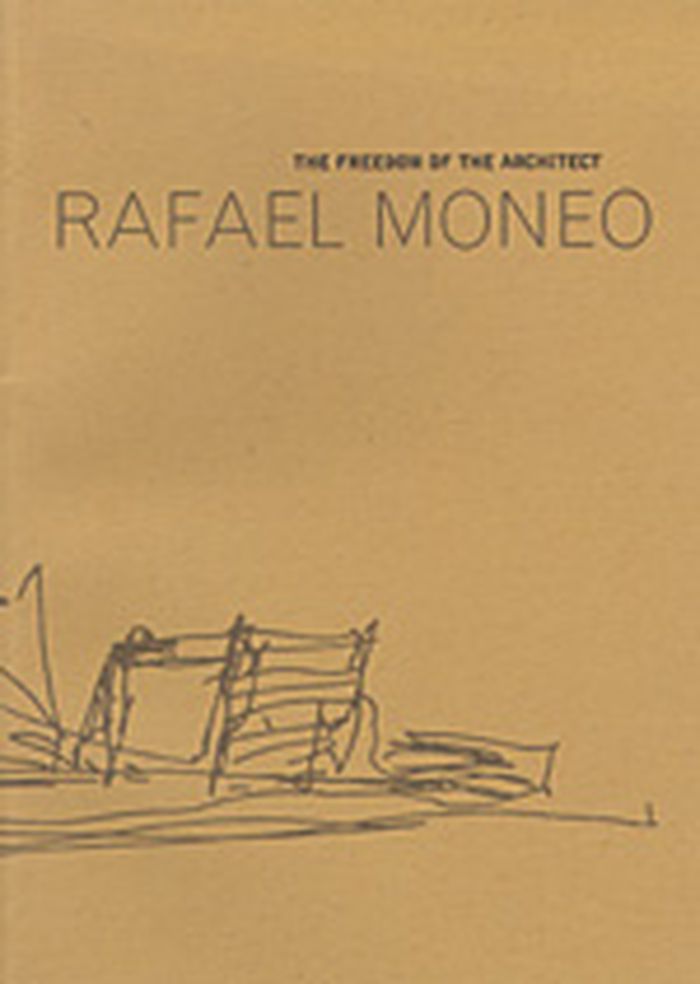
In "The Freedom of the Architect", Pritzker Prize-winning architect Rafael Moneo speaks on form, language and history, broadly, and as represented in examples of his own work. He elaborates on how architects today have disassociated their work from the environment, creating autonomous landmarks with little relationship to their surroundings and how the architect as individual challenges the role of history in the built environment. Moneo’s reflections on his own work include: The City Hall of Murcia, Spain, The Museum of Fine Arts Houston, the Kursaal Auditorium in San Sebastian, Spain, and the acclaimed Our Lady of the Angels Cathedral in Los Angeles. Spanish born, Madrid-based Moneo’s work unites tradition and innovation. He has developed an extensive body of work as an architectural critic and theoretician and his writing has appeared in "Oppositions" and "Lotus". He is a committed educator, having chaired the Harvard Graduate School of Design and lectured internationally.
The freedom of the architect : Rafael Moneo
Actions:
Price:
$19.50
(available to order)
Summary:
In "The Freedom of the Architect", Pritzker Prize-winning architect Rafael Moneo speaks on form, language and history, broadly, and as represented in examples of his own work. He elaborates on how architects today have disassociated their work from the environment, creating autonomous landmarks with little relationship to their surroundings and how the architect as individual challenges the role of history in the built environment. Moneo’s reflections on his own work include: The City Hall of Murcia, Spain, The Museum of Fine Arts Houston, the Kursaal Auditorium in San Sebastian, Spain, and the acclaimed Our Lady of the Angels Cathedral in Los Angeles. Spanish born, Madrid-based Moneo’s work unites tradition and innovation. He has developed an extensive body of work as an architectural critic and theoretician and his writing has appeared in "Oppositions" and "Lotus". He is a committed educator, having chaired the Harvard Graduate School of Design and lectured internationally.
Form:
books
books
Publication:
July 2003, Ann Arbor
July 2003, Ann Arbor
Subject:
small format
small format
Form:
books
books
Actions:
Price:
$110.00
(available to order)
Summary:
Peter Latz and Partners specialize in a contemporary, intelligent use of alternative technologies and the regeneration of industrial wastelands. They have worked with Norman Foster among others. The trademark of the works of the firm, which was founded in 1968, is its ability to express ecological and social concerns in a strong aesthetic language. Process orientation(...)
$110.00
(available to order)
Summary:
Peter Latz and Partners specialize in a contemporary, intelligent use of alternative technologies and the regeneration of industrial wastelands. They have worked with Norman Foster among others. The trademark of the works of the firm, which was founded in 1968, is its ability to express ecological and social concerns in a strong aesthetic language. Process orientation(...)
Subject:
Gardens
Gardens
Publication:
September 2007, Basel, Boston, Berlin
September 2007, Basel, Boston, Berlin
Title:
Syntax of landscape : the landscape architecture of Peter Latz and partners
Actions:
Price:
$110.00
(available to order)
Summary:
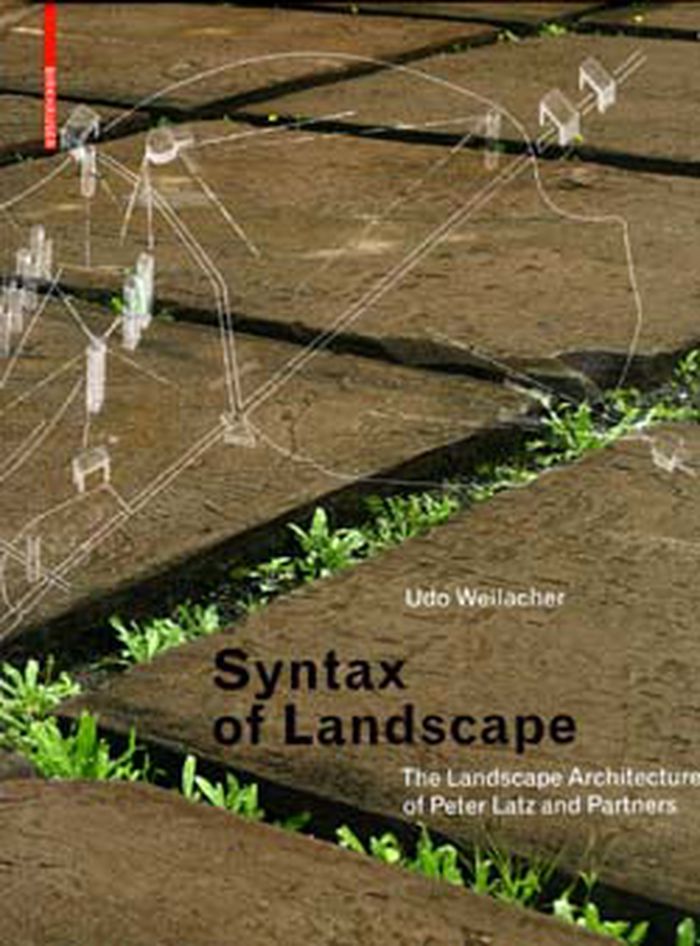
Peter Latz and Partners specialize in a contemporary, intelligent use of alternative technologies and the regeneration of industrial wastelands. They have worked with Norman Foster among others. The trademark of the works of the firm, which was founded in 1968, is its ability to express ecological and social concerns in a strong aesthetic language. Process orientation and the revealing of chronological layers of a site are the focus of design. The firm’s current projects include the design of large-scale street and park environments on the Plateau de Kirchberg in the European City of Luxembourg, the Parco Dora in Turin, Italy, and the conversion of a disused waste disposal site in Ayalon Park near Tel Aviv, Israel. Peter Latz teaches at the Technical University) in Munich-Weihenstephan and has held guest professorships at the University of Pennsylvania and Harvard University. Udo Weilacher is dean of the Fakultät für Architektur und Landschaft (School of Architecture and Landscape) at Hanover University.
Syntax of landscape : the landscape architecture of Peter Latz and partners
Actions:
Price:
$110.00
(available to order)
Summary:
Peter Latz and Partners specialize in a contemporary, intelligent use of alternative technologies and the regeneration of industrial wastelands. They have worked with Norman Foster among others. The trademark of the works of the firm, which was founded in 1968, is its ability to express ecological and social concerns in a strong aesthetic language. Process orientation and the revealing of chronological layers of a site are the focus of design. The firm’s current projects include the design of large-scale street and park environments on the Plateau de Kirchberg in the European City of Luxembourg, the Parco Dora in Turin, Italy, and the conversion of a disused waste disposal site in Ayalon Park near Tel Aviv, Israel. Peter Latz teaches at the Technical University) in Munich-Weihenstephan and has held guest professorships at the University of Pennsylvania and Harvard University. Udo Weilacher is dean of the Fakultät für Architektur und Landschaft (School of Architecture and Landscape) at Hanover University.
Form:
books
books
Publication:
September 2007, Basel, Boston, Berlin
September 2007, Basel, Boston, Berlin
Subject:
Gardens
Gardens
Form:
books
books
Actions:
Price:
$39.95
(available to order)
Summary:
Transformative Avant-Garde and Other Writings is a comprehensive collection of writings by the artist Krzysztof Wodiczko spanning from the 1970s to the present day. Known for his large-scale, politically charged video and slide projections onto prominent architectural structures, this publication explores the development of Wodiczko's political, theoretical and social(...)
$39.95
(available to order)
Summary:
Transformative Avant-Garde and Other Writings is a comprehensive collection of writings by the artist Krzysztof Wodiczko spanning from the 1970s to the present day. Known for his large-scale, politically charged video and slide projections onto prominent architectural structures, this publication explores the development of Wodiczko's political, theoretical and social(...)
Title:
Transformative Avant-Garde and Other Writings
Actions:
Price:
$39.95
(available to order)
Summary:
Transformative Avant-Garde and Other Writings is a comprehensive collection of writings by the artist Krzysztof Wodiczko spanning from the 1970s to the present day. Known for his large-scale, politically charged video and slide projections onto prominent architectural structures, this publication explores the development of Wodiczko's political, theoretical and social motivations in relation to his practice. These writings encompass the artist's ongoing critique of public space and his argument for the integral role that art plays in challenging the institutionalised and national narratives inscribed in the architecture of urban environments, and therefore in the democratic process. Working with marginalised city residents since the 1980s as active, critical democratic agents, Wodizcko explores the political and psychological potential of "fearless" or parrhesiastic speaking in the reanimation of our public spaces and monuments.Krzysztof Wodiczko is Professor in Residence at Harvard University and was awarded the Hiroshima Prize in 1998 for his contribution as an artist to world peace.
Transformative Avant-Garde and Other Writings
Actions:
Price:
$39.95
(available to order)
Summary:
Transformative Avant-Garde and Other Writings is a comprehensive collection of writings by the artist Krzysztof Wodiczko spanning from the 1970s to the present day. Known for his large-scale, politically charged video and slide projections onto prominent architectural structures, this publication explores the development of Wodiczko's political, theoretical and social motivations in relation to his practice. These writings encompass the artist's ongoing critique of public space and his argument for the integral role that art plays in challenging the institutionalised and national narratives inscribed in the architecture of urban environments, and therefore in the democratic process. Working with marginalised city residents since the 1980s as active, critical democratic agents, Wodizcko explores the political and psychological potential of "fearless" or parrhesiastic speaking in the reanimation of our public spaces and monuments.Krzysztof Wodiczko is Professor in Residence at Harvard University and was awarded the Hiroshima Prize in 1998 for his contribution as an artist to world peace.
Form:
books
books
Publication:
October 2016
October 2016
Subject:
Art Theory
Art Theory
Form:
books
books
Title:
Be here now
Be here now
Actions:
Price:
$23.23
(available to order)
Summary:
In March 1961, Professor Richard Alpert - later renamed Ram Dass - held appointments in four departments at Harvard University. He published books, drove a Mercedes and regularly vacationed in the Caribbean. By most societal standards, he had achieved great success... And yet he couldn't escape the feeling that something was missing. Psilocybin and LSD changed that.(...)
$23.23
(available to order)
Summary:
In March 1961, Professor Richard Alpert - later renamed Ram Dass - held appointments in four departments at Harvard University. He published books, drove a Mercedes and regularly vacationed in the Caribbean. By most societal standards, he had achieved great success... And yet he couldn't escape the feeling that something was missing. Psilocybin and LSD changed that.(...)
Title:
Be here now
Actions:
Price:
$23.23
(available to order)
Summary:
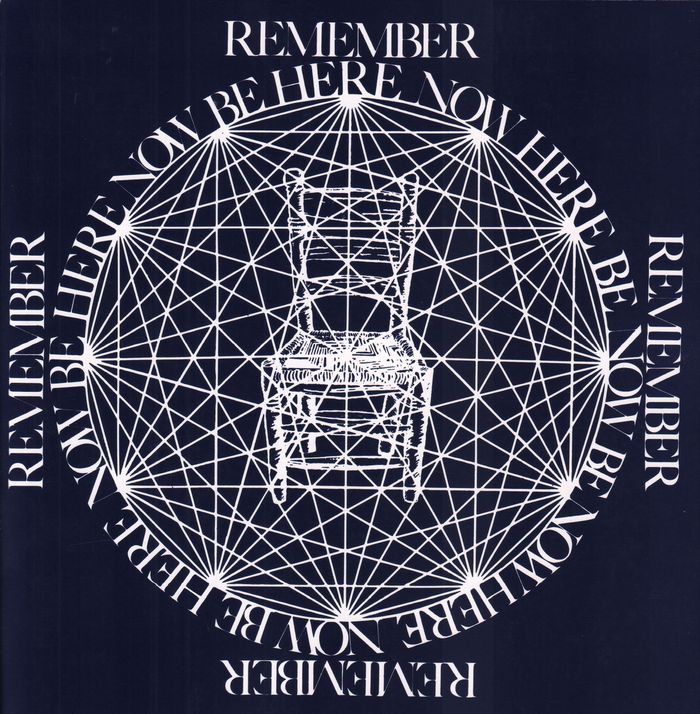
In March 1961, Professor Richard Alpert - later renamed Ram Dass - held appointments in four departments at Harvard University. He published books, drove a Mercedes and regularly vacationed in the Caribbean. By most societal standards, he had achieved great success... And yet he couldn't escape the feeling that something was missing. Psilocybin and LSD changed that. During a period of experimentation, Alpert peeled away each layer of his identity, disassociating from himself as a professor, a social cosmopolite, and lastly, as a physical being. Fear turned into exaltation upon the realization that at his truest, he was just his inner-self: a luminous being that he could trust indefinitely and love infinitely. And thus, a spiritual journey commenced. Alpert headed to India where his guru renamed him Baba Ram Dass - "servant of God." He was introduced to mindful breathing exercises, hatha yoga, and Eastern philosophy. If he found himself reminiscing or planning, he was reminded to "Be Here Now."
Be here now
Actions:
Price:
$23.23
(available to order)
Summary:
In March 1961, Professor Richard Alpert - later renamed Ram Dass - held appointments in four departments at Harvard University. He published books, drove a Mercedes and regularly vacationed in the Caribbean. By most societal standards, he had achieved great success... And yet he couldn't escape the feeling that something was missing. Psilocybin and LSD changed that. During a period of experimentation, Alpert peeled away each layer of his identity, disassociating from himself as a professor, a social cosmopolite, and lastly, as a physical being. Fear turned into exaltation upon the realization that at his truest, he was just his inner-self: a luminous being that he could trust indefinitely and love infinitely. And thus, a spiritual journey commenced. Alpert headed to India where his guru renamed him Baba Ram Dass - "servant of God." He was introduced to mindful breathing exercises, hatha yoga, and Eastern philosophy. If he found himself reminiscing or planning, he was reminded to "Be Here Now."
Form:
books
books
Publication:
October 1971
October 1971
Subject:
Current Exhibitions
Current Exhibitions
Form:
books
books
Actions:
Price:
$73.95
(available to order)
Summary:
Selected research projects and architecture exploring the role of design within complex social, political and environmental conditions Toshiko Mori is a New York-based architect and Professor in the Practice of Architecture at the Harvard University Graduate School of Design for many years. As a long-time member of the World Economic Forum's Global Agenda Council on the(...)
$73.95
(available to order)
Summary:
Selected research projects and architecture exploring the role of design within complex social, political and environmental conditions Toshiko Mori is a New York-based architect and Professor in the Practice of Architecture at the Harvard University Graduate School of Design for many years. As a long-time member of the World Economic Forum's Global Agenda Council on the(...)
Subject:
Architecture Monographs
Architecture Monographs
Publication:
November 2020
November 2020
Title:
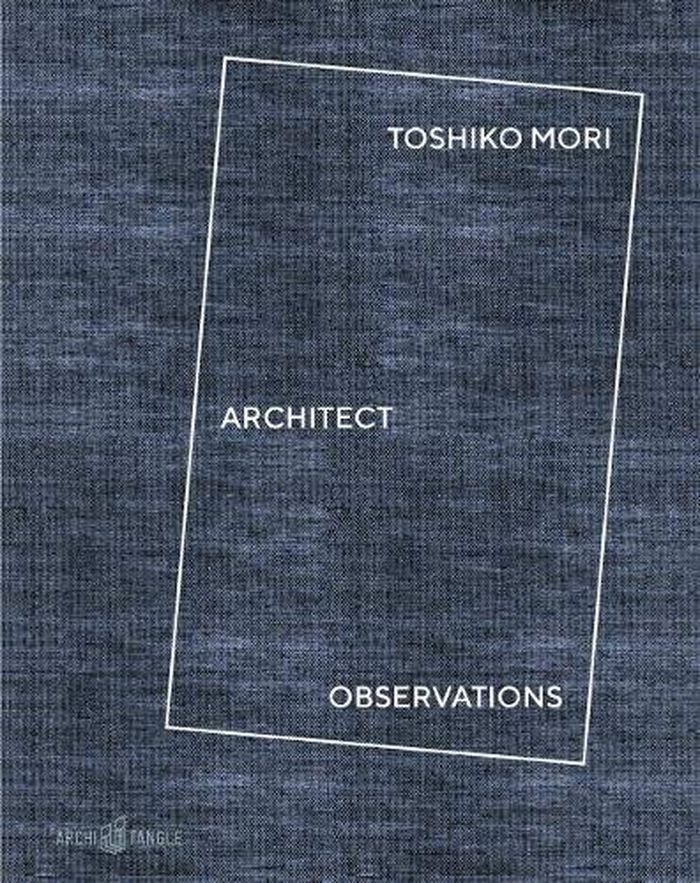
Toshiko Mori Architect: Observations
Actions:
Price:
$73.95
(available to order)
Summary:
Selected research projects and architecture exploring the role of design within complex social, political and environmental conditions Toshiko Mori is a New York-based architect and Professor in the Practice of Architecture at the Harvard University Graduate School of Design for many years. As a long-time member of the World Economic Forum's Global Agenda Council on the Future of Cities, Mori led research and inquiry into sustainable architecture, enhancing cities' livability, and creating efficient urban services. Mori is also on the board of Dassault Systems, a company connecting technology to environment and life science. She has also founded the platform VisionArc, a think tank dedicated to exploring the role of design within complex social and environmental issues. This book will focus on TMA's projects based on research, and the impact of socially valuable projects to society. The book will illustrate how the observation of the architect operates as opposed to how the imagination of the architect manifests itself.
Toshiko Mori Architect: Observations
Actions:
Price:
$73.95
(available to order)
Summary:
Selected research projects and architecture exploring the role of design within complex social, political and environmental conditions Toshiko Mori is a New York-based architect and Professor in the Practice of Architecture at the Harvard University Graduate School of Design for many years. As a long-time member of the World Economic Forum's Global Agenda Council on the Future of Cities, Mori led research and inquiry into sustainable architecture, enhancing cities' livability, and creating efficient urban services. Mori is also on the board of Dassault Systems, a company connecting technology to environment and life science. She has also founded the platform VisionArc, a think tank dedicated to exploring the role of design within complex social and environmental issues. This book will focus on TMA's projects based on research, and the impact of socially valuable projects to society. The book will illustrate how the observation of the architect operates as opposed to how the imagination of the architect manifests itself.
Form:
books
books
Publication:
November 2020
November 2020
Subject:
Architecture Monographs
Architecture Monographs
Form:
journals and magazines
journals and magazines
Price:
$20.00
(available to order)
Summary:
''Pairs'' is a student-led journal at the Harvard GSD dedicated to conversations about design that are down to earth and unguarded. Each issue is conceptualized by an editorial team that proposes guests and objects to be in dialogue with one another. ''Pairs'' is non-thematic, meant instead for provisional thoughts and ideas in progress. Each issue seeks to organize a(...)
$20.00
(available to order)
Summary:
''Pairs'' is a student-led journal at the Harvard GSD dedicated to conversations about design that are down to earth and unguarded. Each issue is conceptualized by an editorial team that proposes guests and objects to be in dialogue with one another. ''Pairs'' is non-thematic, meant instead for provisional thoughts and ideas in progress. Each issue seeks to organize a(...)
Title:
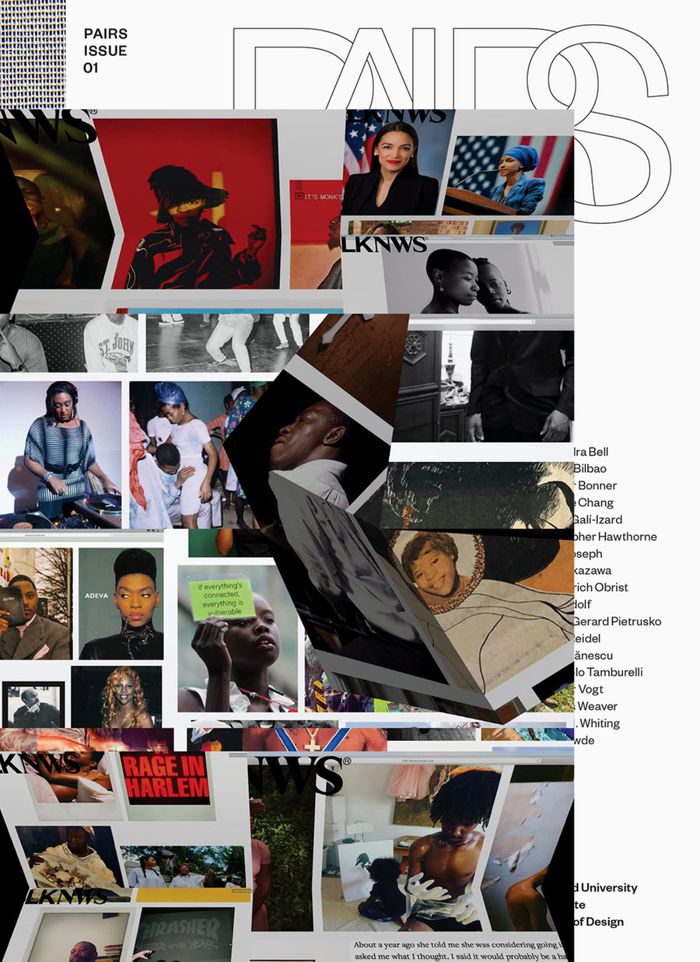
Pairs 01
Actions:
Price:
$20.00
(available to order)
Summary:
''Pairs'' is a student-led journal at the Harvard GSD dedicated to conversations about design that are down to earth and unguarded. Each issue is conceptualized by an editorial team that proposes guests and objects to be in dialogue with one another. ''Pairs'' is non-thematic, meant instead for provisional thoughts and ideas in progress. Each issue seeks to organize a diversity of threads and concerns that are perceived to be relevant to our moment. Thus, ''Pairs'' creates a space for understanding and a greater degree of exchange, both between the design disciplines and with a larger public. This inaugural issue of ''Pairs'' contains conversations with designers, academics and critics that take on the present from a variety of perspectives. There are reflections on major personal, disciplinary, or political turning points. There are reevaluations of moments in the past that shed light on social questions at the top of our minds. There are also discussions on gardening, book-making, publishing, and the conversation itself.
Pairs 01
Actions:
Price:
$20.00
(available to order)
Summary:
''Pairs'' is a student-led journal at the Harvard GSD dedicated to conversations about design that are down to earth and unguarded. Each issue is conceptualized by an editorial team that proposes guests and objects to be in dialogue with one another. ''Pairs'' is non-thematic, meant instead for provisional thoughts and ideas in progress. Each issue seeks to organize a diversity of threads and concerns that are perceived to be relevant to our moment. Thus, ''Pairs'' creates a space for understanding and a greater degree of exchange, both between the design disciplines and with a larger public. This inaugural issue of ''Pairs'' contains conversations with designers, academics and critics that take on the present from a variety of perspectives. There are reflections on major personal, disciplinary, or political turning points. There are reevaluations of moments in the past that shed light on social questions at the top of our minds. There are also discussions on gardening, book-making, publishing, and the conversation itself.
Form:
journals and magazines
journals and magazines
Publication:
February 2021
February 2021
Subject:
Magazines
Magazines


