


1664 Results
Form:
books
books
Actions:
Price:
$40.00
(available to order)
Summary:
In ''Street Archives and City Life'', Emily Callaci maps a new terrain of political and cultural production in mid- to late twentieth-century Tanzanian urban landscapes. While the postcolonial Tanzanian ruling party (TANU) adopted a policy of rural socialism known as Ujamaa between 1967 and 1985, an influx of youth migrants to the city of Dar es Salaam generated(...)
$40.00
(available to order)
Summary:
In ''Street Archives and City Life'', Emily Callaci maps a new terrain of political and cultural production in mid- to late twentieth-century Tanzanian urban landscapes. While the postcolonial Tanzanian ruling party (TANU) adopted a policy of rural socialism known as Ujamaa between 1967 and 1985, an influx of youth migrants to the city of Dar es Salaam generated(...)
Title:
Street archives and city life: popular intellectuals in postcolonial Tanzania
Actions:
Price:
$40.00
(available to order)
Summary:
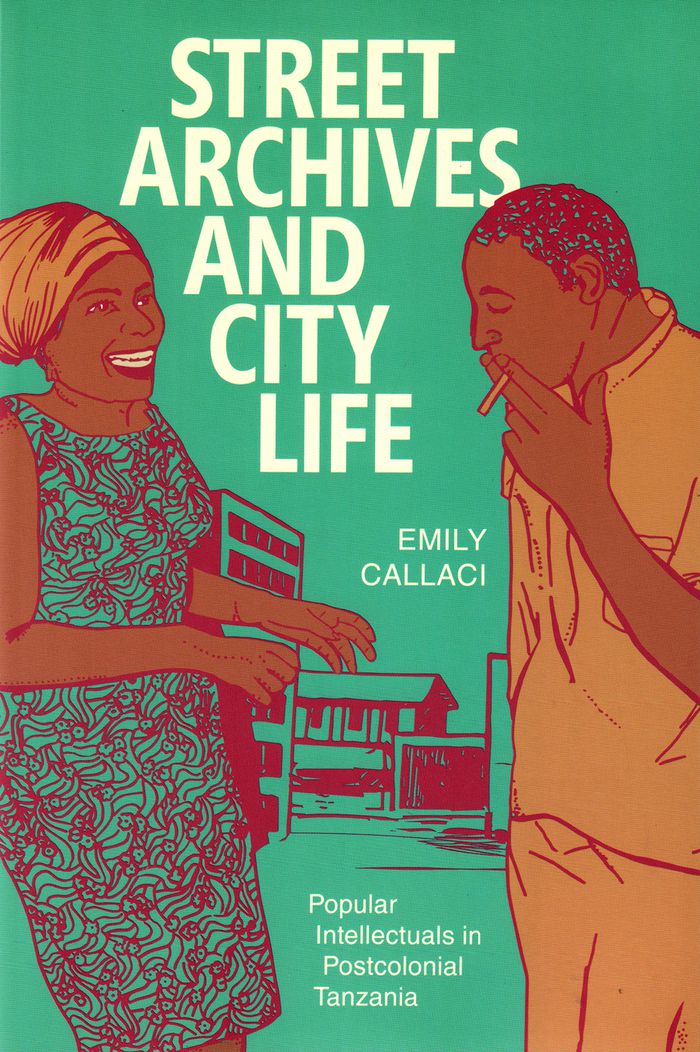
In ''Street Archives and City Life'', Emily Callaci maps a new terrain of political and cultural production in mid- to late twentieth-century Tanzanian urban landscapes. While the postcolonial Tanzanian ruling party (TANU) adopted a policy of rural socialism known as Ujamaa between 1967 and 1985, an influx of youth migrants to the city of Dar es Salaam generated innovative forms of urbanism through the production and circulation of what Callaci calls street archives. These urban intellectuals neither supported nor contested the ruling party's anti-city philosophy; rather, they navigated the complexities of inhabiting unplanned African cities during economic crisis and social transformation through various forms of popular texts that included women's Christian advice literature, newspaper columns, self-published pulp fiction novellas, and song lyrics. Through these textual networks, Callaci shows how youth migrants and urban intellectuals in Dar es Salaam fashioned a collective ethos of postcolonial African citizenship. This spirit ushered in a revolution rooted in the city and its networks—an urban revolution that arose in spite of the nation-state's pro-rural ideology.
Street archives and city life: popular intellectuals in postcolonial Tanzania
Actions:
Price:
$40.00
(available to order)
Summary:
In ''Street Archives and City Life'', Emily Callaci maps a new terrain of political and cultural production in mid- to late twentieth-century Tanzanian urban landscapes. While the postcolonial Tanzanian ruling party (TANU) adopted a policy of rural socialism known as Ujamaa between 1967 and 1985, an influx of youth migrants to the city of Dar es Salaam generated innovative forms of urbanism through the production and circulation of what Callaci calls street archives. These urban intellectuals neither supported nor contested the ruling party's anti-city philosophy; rather, they navigated the complexities of inhabiting unplanned African cities during economic crisis and social transformation through various forms of popular texts that included women's Christian advice literature, newspaper columns, self-published pulp fiction novellas, and song lyrics. Through these textual networks, Callaci shows how youth migrants and urban intellectuals in Dar es Salaam fashioned a collective ethos of postcolonial African citizenship. This spirit ushered in a revolution rooted in the city and its networks—an urban revolution that arose in spite of the nation-state's pro-rural ideology.
Form:
books
books
Publication:
November 2017
November 2017
Subject:
History until 1900, Middle East
History until 1900, Middle East
Form:
books
books
Actions:
Price:
$69.95
(available to order)
Summary:
Cities ruled the first half of the 20th century; the second half belonged to the suburbs. Will cities become dominant again? Can the recent decline of many suburbs be slowed? "Tomorrow’s cities, tomorrow’s suburbs" predicts a surprising outcome in the decades-long tug-of-war between urban hubs and suburban outposts. Planning scholars William H. Lucy and David L.(...)
$69.95
(available to order)
Summary:
Cities ruled the first half of the 20th century; the second half belonged to the suburbs. Will cities become dominant again? Can the recent decline of many suburbs be slowed? "Tomorrow’s cities, tomorrow’s suburbs" predicts a surprising outcome in the decades-long tug-of-war between urban hubs and suburban outposts. Planning scholars William H. Lucy and David L.(...)
Subject:
Urban Theory
Urban Theory
Publication:
February 2006, Chicago, Washington D.C.
February 2006, Chicago, Washington D.C.
Title:
Tomorrow's cities, tomorrow's suburbs
Actions:
Price:
$69.95
(available to order)
Summary:
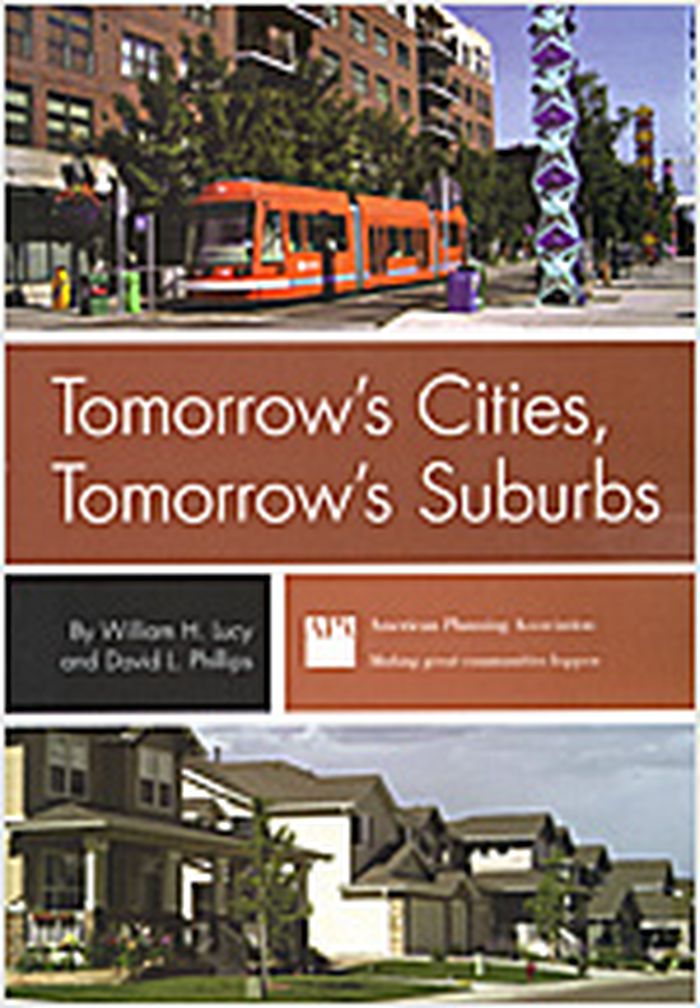
Cities ruled the first half of the 20th century; the second half belonged to the suburbs. Will cities become dominant again? Can the recent decline of many suburbs be slowed? "Tomorrow’s cities, tomorrow’s suburbs" predicts a surprising outcome in the decades-long tug-of-war between urban hubs and suburban outposts. Planning scholars William H. Lucy and David L. Phillips document signs of resurgence in cities and interpret omens of decline in many suburbs. They offer an extensive analysis of the 2000 census, with insights into the influence of income disparities, housing age and size, racial segregation, immigration, and poverty. They also examine popular perceptions—and misperceptions—about safety and danger in cities, suburbs, and exurbs that affect settlement patterns. "Tomorrow’s cities, tomorrow’s suburbs" offers evidence that the decline of cities can continue to be reversed, tempered by a warning of a mid-life crisis looming in the suburbs. It also offers practical policies for local action, steps that planners, elected officials, and citizens can take to create an environment in which both cities and suburbs can thrive.
Tomorrow's cities, tomorrow's suburbs
Actions:
Price:
$69.95
(available to order)
Summary:
Cities ruled the first half of the 20th century; the second half belonged to the suburbs. Will cities become dominant again? Can the recent decline of many suburbs be slowed? "Tomorrow’s cities, tomorrow’s suburbs" predicts a surprising outcome in the decades-long tug-of-war between urban hubs and suburban outposts. Planning scholars William H. Lucy and David L. Phillips document signs of resurgence in cities and interpret omens of decline in many suburbs. They offer an extensive analysis of the 2000 census, with insights into the influence of income disparities, housing age and size, racial segregation, immigration, and poverty. They also examine popular perceptions—and misperceptions—about safety and danger in cities, suburbs, and exurbs that affect settlement patterns. "Tomorrow’s cities, tomorrow’s suburbs" offers evidence that the decline of cities can continue to be reversed, tempered by a warning of a mid-life crisis looming in the suburbs. It also offers practical policies for local action, steps that planners, elected officials, and citizens can take to create an environment in which both cities and suburbs can thrive.
Form:
books
books
Publication:
February 2006, Chicago, Washington D.C.
February 2006, Chicago, Washington D.C.
Subject:
Urban Theory
Urban Theory
Form:
books
books
Actions:
Price:
$24.99
(available to order)
Summary:
Only in the last decade have climatologists developed an accurate picture of yearly climate conditions in historical times. This development confirmed a long-standing suspicion: that the world endured a 500-year cold snap -- The Little Ice Age -- that lasted roughly from A.D. 1300 until 1850. "The little ice age" tells the story of the turbulent, unpredictable and often(...)
$24.99
(available to order)
Summary:
Only in the last decade have climatologists developed an accurate picture of yearly climate conditions in historical times. This development confirmed a long-standing suspicion: that the world endured a 500-year cold snap -- The Little Ice Age -- that lasted roughly from A.D. 1300 until 1850. "The little ice age" tells the story of the turbulent, unpredictable and often(...)
Title:
The little ice age: How climate made history 1300-1850
Actions:
Price:
$24.99
(available to order)
Summary:
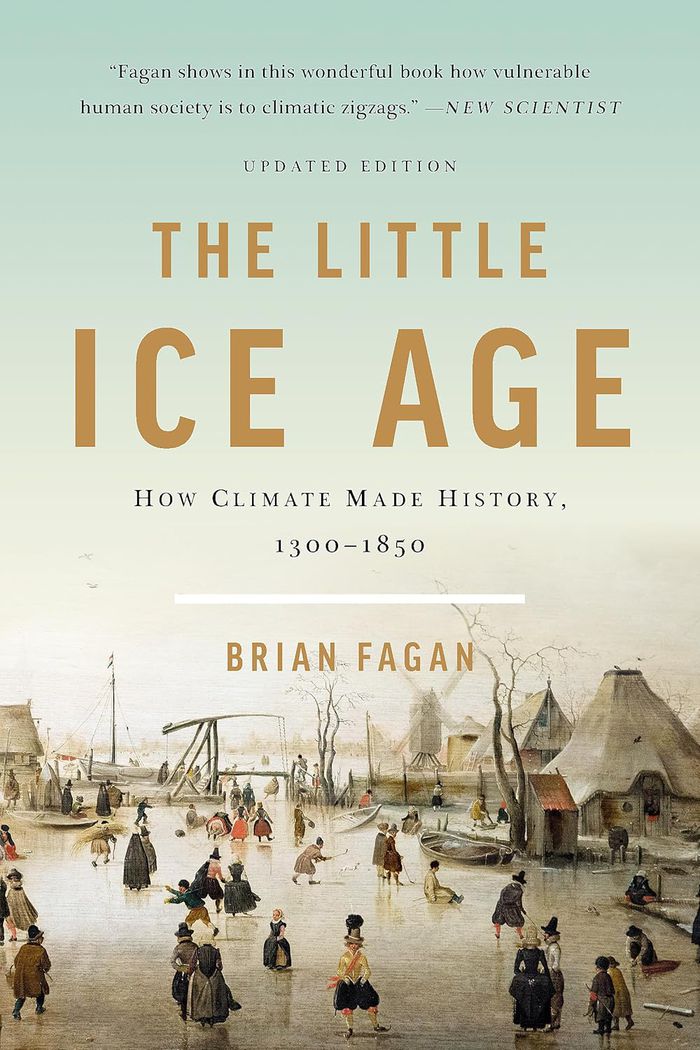
Only in the last decade have climatologists developed an accurate picture of yearly climate conditions in historical times. This development confirmed a long-standing suspicion: that the world endured a 500-year cold snap -- The Little Ice Age -- that lasted roughly from A.D. 1300 until 1850. "The little ice age" tells the story of the turbulent, unpredictable and often very cold years of modern European history, how climate altered historical events, and what they mean in the context of today's global warming. With its basis in cutting-edge science, "The little ice age" offers a new perspective on familiar events. Renowned archaeologist Brian Fagan shows how the increasing cold affected Norse exploration; how changing sea temperatures caused English and Basque fishermen to follow vast shoals of cod all the way to the New World; how a generations-long subsistence crisis in France contributed to social disintegration and ultimately revolution; and how English efforts to improve farm productivity in the face of a deteriorating climate helped pave the way for the Industrial Revolution and hence for global warming.
The little ice age: How climate made history 1300-1850
Actions:
Price:
$24.99
(available to order)
Summary:
Only in the last decade have climatologists developed an accurate picture of yearly climate conditions in historical times. This development confirmed a long-standing suspicion: that the world endured a 500-year cold snap -- The Little Ice Age -- that lasted roughly from A.D. 1300 until 1850. "The little ice age" tells the story of the turbulent, unpredictable and often very cold years of modern European history, how climate altered historical events, and what they mean in the context of today's global warming. With its basis in cutting-edge science, "The little ice age" offers a new perspective on familiar events. Renowned archaeologist Brian Fagan shows how the increasing cold affected Norse exploration; how changing sea temperatures caused English and Basque fishermen to follow vast shoals of cod all the way to the New World; how a generations-long subsistence crisis in France contributed to social disintegration and ultimately revolution; and how English efforts to improve farm productivity in the face of a deteriorating climate helped pave the way for the Industrial Revolution and hence for global warming.
Form:
books
books
Publication:
November 2019
November 2019
Subject:
Current Exhibitions
Current Exhibitions
Form:
books
books
Actions:
Price:
$41.95
(available in store)
Summary:
In Bangladesh, climate change causes frequent flooding, forcing countless people to find new homes. In response, Bangladeshi architect Marina Tabassum (born 1968) and her team have developed the Khudi Bari (small house): a low-cost structure that can be assembled, disassembled, transported and reassembled in another location by the inhabitants themselves. This publication(...)
$41.95
(available in store)
Summary:
In Bangladesh, climate change causes frequent flooding, forcing countless people to find new homes. In response, Bangladeshi architect Marina Tabassum (born 1968) and her team have developed the Khudi Bari (small house): a low-cost structure that can be assembled, disassembled, transported and reassembled in another location by the inhabitants themselves. This publication(...)
Subject:
Architecture Monographs
Architecture Monographs
Publication:
September 2025
September 2025
Title:
Khudi Barri: A Social Project by Marina Tabassum Architects from Dhaka to Weil am Rhein
Actions:
Price:
$41.95
(available in store)
Summary:
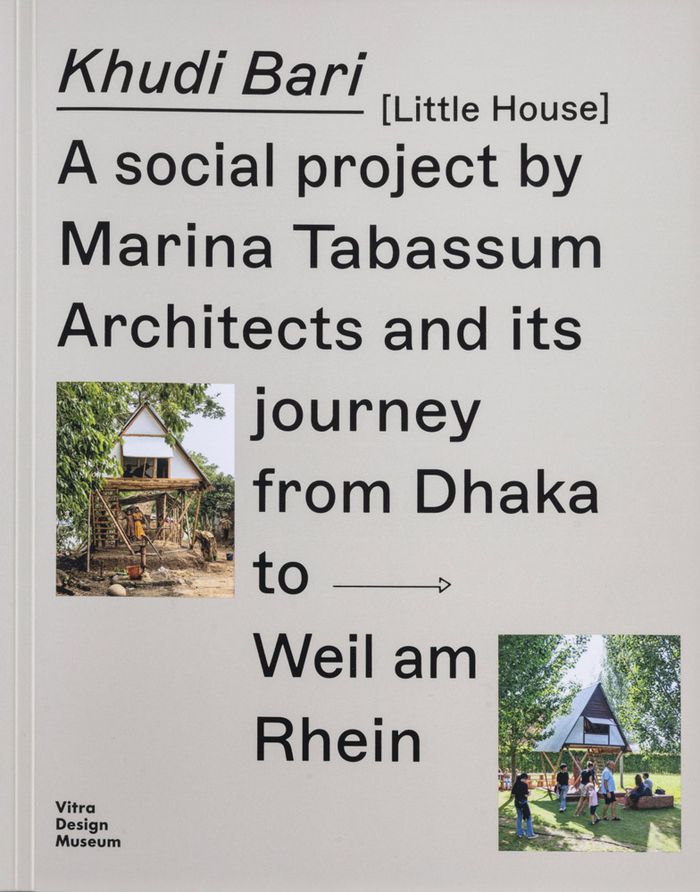
In Bangladesh, climate change causes frequent flooding, forcing countless people to find new homes. In response, Bangladeshi architect Marina Tabassum (born 1968) and her team have developed the Khudi Bari (small house): a low-cost structure that can be assembled, disassembled, transported and reassembled in another location by the inhabitants themselves. This publication contains texts, photographs and illustrations of a Khudi Bari erected on the Vitra Campus in Weil am Rhein, Germany, as an example of a concrete response to problems exacerbated by the climate crisis. Says Tabassum: "Inspiration for this mobile house is rooted in the vernacular style of dwelling that can be found in Bangladesh. These structures are created in the manner of a flatpack system and are generally built along the majestic Padma, Jamuna and Meghna rivers. The houses have a wooden frame structure and corrugated metal facades and roofs, which can be dismantled and relocated in the aftermath of riverbank erosion and reassembled by their owners once they have found a new place to build."
Khudi Barri: A Social Project by Marina Tabassum Architects from Dhaka to Weil am Rhein
Actions:
Price:
$41.95
(available in store)
Summary:
In Bangladesh, climate change causes frequent flooding, forcing countless people to find new homes. In response, Bangladeshi architect Marina Tabassum (born 1968) and her team have developed the Khudi Bari (small house): a low-cost structure that can be assembled, disassembled, transported and reassembled in another location by the inhabitants themselves. This publication contains texts, photographs and illustrations of a Khudi Bari erected on the Vitra Campus in Weil am Rhein, Germany, as an example of a concrete response to problems exacerbated by the climate crisis. Says Tabassum: "Inspiration for this mobile house is rooted in the vernacular style of dwelling that can be found in Bangladesh. These structures are created in the manner of a flatpack system and are generally built along the majestic Padma, Jamuna and Meghna rivers. The houses have a wooden frame structure and corrugated metal facades and roofs, which can be dismantled and relocated in the aftermath of riverbank erosion and reassembled by their owners once they have found a new place to build."
Form:
books
books
Publication:
September 2025
September 2025
Subject:
Architecture Monographs
Architecture Monographs
Form:
books
books
Actions:
Price:
$105.00
(available to order)
Summary:
In The Psychologizing of Modernity, Mark Jarzombek examines the impact of psychology on twentieth-century aesthetics. Analysing the interface between psychology, art history and avant-gardist practices, he(...)
$105.00
(available to order)
Summary:
In The Psychologizing of Modernity, Mark Jarzombek examines the impact of psychology on twentieth-century aesthetics. Analysing the interface between psychology, art history and avant-gardist practices, he(...)
Title:
The psychologizing of modernity
Actions:
Price:
$105.00
(available to order)
Summary:
In The Psychologizing of Modernity, Mark Jarzombek examines the impact of psychology on twentieth-century aesthetics. Analysing the interface between psychology, art history and avant-gardist practices, he also reflects on the longevity of the myth of aesthetic individuality as it infiltrated not only avant-garde art, but also history writing. The principal focus of this study is pre-World War II Germany, where theories of empathy and Entartung emerged; and post-war America, where artists, critics and historians gradually shifted from their reliance on psychology to philosophy, and, most recently, to theory. Included are discussions of writers such as Heinrich Wölfflin, Ludwig Volkmann, John Dewey, Vincent Scully and Richard Arnheim, among others. The Psychologizing of Modernity is a broad and erudite study of the evolution of modern aesthetic thinking in the fields of art and architectural history. Chapter Contents Introduction; 1. The Art of Psychologizing; 2. The Theater of Self and the Crisis of Historiography; 3. The Body Ethos; 4. The visualist ethos; 5. The social ethos; 6. The literary ethos; 7. Shadows and mirrors; Conclusion.
The psychologizing of modernity
Actions:
Price:
$105.00
(available to order)
Summary:
In The Psychologizing of Modernity, Mark Jarzombek examines the impact of psychology on twentieth-century aesthetics. Analysing the interface between psychology, art history and avant-gardist practices, he also reflects on the longevity of the myth of aesthetic individuality as it infiltrated not only avant-garde art, but also history writing. The principal focus of this study is pre-World War II Germany, where theories of empathy and Entartung emerged; and post-war America, where artists, critics and historians gradually shifted from their reliance on psychology to philosophy, and, most recently, to theory. Included are discussions of writers such as Heinrich Wölfflin, Ludwig Volkmann, John Dewey, Vincent Scully and Richard Arnheim, among others. The Psychologizing of Modernity is a broad and erudite study of the evolution of modern aesthetic thinking in the fields of art and architectural history. Chapter Contents Introduction; 1. The Art of Psychologizing; 2. The Theater of Self and the Crisis of Historiography; 3. The Body Ethos; 4. The visualist ethos; 5. The social ethos; 6. The literary ethos; 7. Shadows and mirrors; Conclusion.
Form:
books
books
Publication:
November 1998, Cambridge
November 1998, Cambridge
Subject:
Architectural Theory
Architectural Theory
Form:
books
books
Actions:
Price:
$44.95
(available to order)
Summary:
Focusing on early nineteenth-century England, and on the works and texts of the inventor of paper photography, William Henry Fox Talbot, Singular Images, Failed Copies historicizes the conceptualization of photography in that era as part of a major historical change. Treating photography not merely as a medium or a system of representation but also as an epistemology,(...)
$44.95
(available to order)
Summary:
Focusing on early nineteenth-century England, and on the works and texts of the inventor of paper photography, William Henry Fox Talbot, Singular Images, Failed Copies historicizes the conceptualization of photography in that era as part of a major historical change. Treating photography not merely as a medium or a system of representation but also as an epistemology,(...)
Title:
Singular images, failed copies: William Henry Fox Talbot and the early photograph
Actions:
Price:
$44.95
(available to order)
Summary:
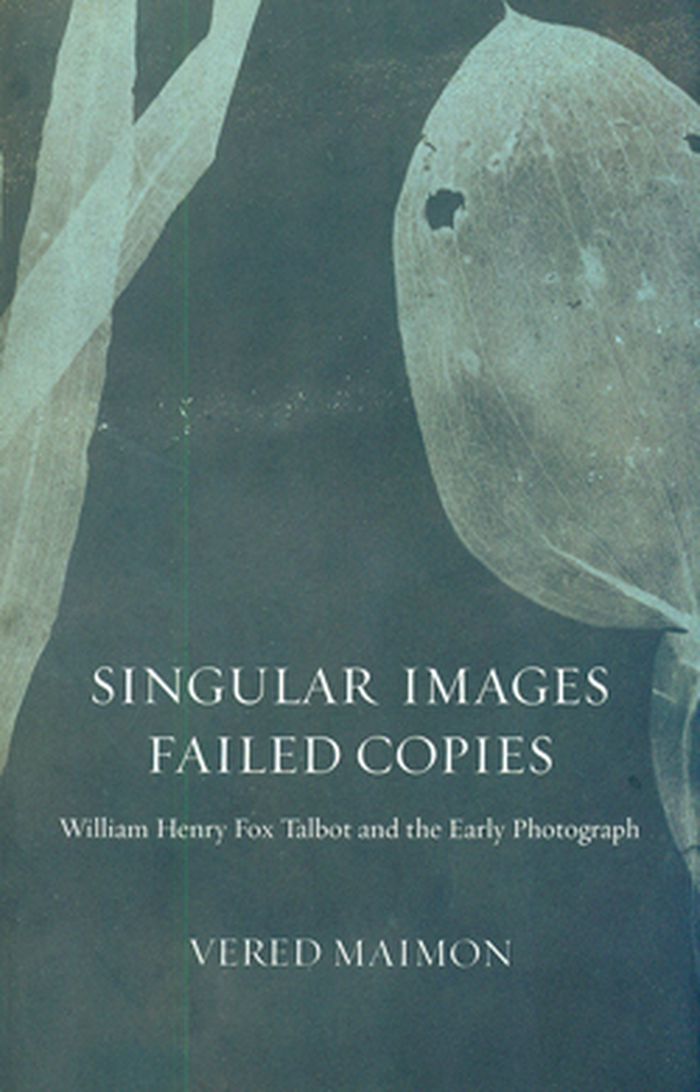
Focusing on early nineteenth-century England, and on the works and texts of the inventor of paper photography, William Henry Fox Talbot, Singular Images, Failed Copies historicizes the conceptualization of photography in that era as part of a major historical change. Treating photography not merely as a medium or a system of representation but also as an epistemology, Vered Maimon challenges today's prevalent association of the early photograph with the camera obscura. Instead, she points to material, formal, and conceptual differences between those two types of images by considering the philosophical and aesthetic premises linked with early photography. Through this analysis she argues that the emphasis in Talbot's accounts on the removal of the artist's hand in favor of the pencil of nature did not mark a shift from manual to mechanical and more accurate or objective systems of representation. In Singular Images, Failed Copies, Maimon shows that the perception of the photographic image in the 1830s and 1840s was in fact symptomatic of a crisis in the epistemological framework that had informed philosophical, scientific, and aesthetic thought for two centuries.
Singular images, failed copies: William Henry Fox Talbot and the early photograph
Actions:
Price:
$44.95
(available to order)
Summary:
Focusing on early nineteenth-century England, and on the works and texts of the inventor of paper photography, William Henry Fox Talbot, Singular Images, Failed Copies historicizes the conceptualization of photography in that era as part of a major historical change. Treating photography not merely as a medium or a system of representation but also as an epistemology, Vered Maimon challenges today's prevalent association of the early photograph with the camera obscura. Instead, she points to material, formal, and conceptual differences between those two types of images by considering the philosophical and aesthetic premises linked with early photography. Through this analysis she argues that the emphasis in Talbot's accounts on the removal of the artist's hand in favor of the pencil of nature did not mark a shift from manual to mechanical and more accurate or objective systems of representation. In Singular Images, Failed Copies, Maimon shows that the perception of the photographic image in the 1830s and 1840s was in fact symptomatic of a crisis in the epistemological framework that had informed philosophical, scientific, and aesthetic thought for two centuries.
Form:
books
books
Publication:
December 2015
December 2015
Subject:
Theory of Photography
Theory of Photography
Form:
books
books
Actions:
Price:
$56.95
(available in store)
Summary:
With its emphasis on permanence and stability, architecture at first resists an easy pairing with live performance, usually considered ephemeral and elusive. But architecture and performance share a core concern: the interplay of bodies and space. 'Bodybuilding' examines the use of live performance by architects. Looking past the unbuilt, utopian projects of the early(...)
$56.95
(available in store)
Summary:
With its emphasis on permanence and stability, architecture at first resists an easy pairing with live performance, usually considered ephemeral and elusive. But architecture and performance share a core concern: the interplay of bodies and space. 'Bodybuilding' examines the use of live performance by architects. Looking past the unbuilt, utopian projects of the early(...)
Subject:
Architectural Theory
Architectural Theory
Publication:
January 2019
January 2019
Title:
Bodybuilding: architecture and performance
Actions:
Price:
$56.95
(available in store)
Summary:
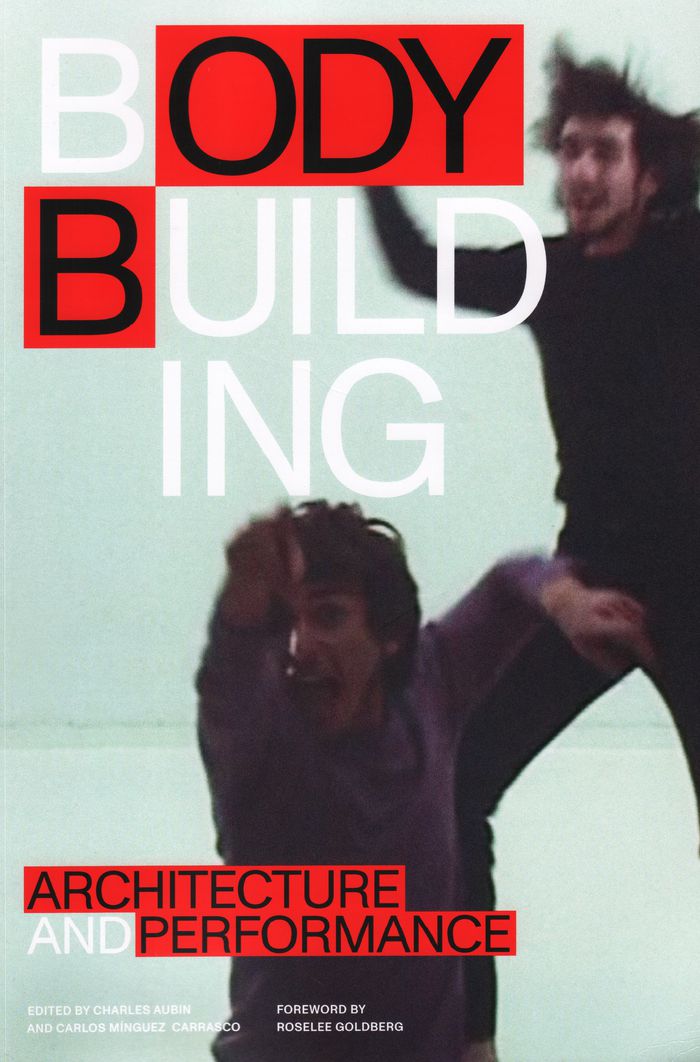
With its emphasis on permanence and stability, architecture at first resists an easy pairing with live performance, usually considered ephemeral and elusive. But architecture and performance share a core concern: the interplay of bodies and space. 'Bodybuilding' examines the use of live performance by architects. Looking past the unbuilt, utopian projects of the early modernists or the postwar avant-garde, the authors unearth an alternative canon of architects who actually employ performance to fortify the process of building, or else to explore architecture’s enmeshment with labor, security, race, migration, the environment, gentrification, and public assembly. For these architects, performance can be a tool, a method, or a heuristic device; in every case, performance is a blade that cuts into the matter of architecture. With rates of construction plummeting after the financial crisis of 2007–08, newly minted architects have had to find alternative ways to continue working within the field. 'Bodybuilding' grounds these new practices within a century of precedents, and insists that performance is a critical tool to rethink architecture’s agency, goals, and aesthetics.
Bodybuilding: architecture and performance
Actions:
Price:
$56.95
(available in store)
Summary:
With its emphasis on permanence and stability, architecture at first resists an easy pairing with live performance, usually considered ephemeral and elusive. But architecture and performance share a core concern: the interplay of bodies and space. 'Bodybuilding' examines the use of live performance by architects. Looking past the unbuilt, utopian projects of the early modernists or the postwar avant-garde, the authors unearth an alternative canon of architects who actually employ performance to fortify the process of building, or else to explore architecture’s enmeshment with labor, security, race, migration, the environment, gentrification, and public assembly. For these architects, performance can be a tool, a method, or a heuristic device; in every case, performance is a blade that cuts into the matter of architecture. With rates of construction plummeting after the financial crisis of 2007–08, newly minted architects have had to find alternative ways to continue working within the field. 'Bodybuilding' grounds these new practices within a century of precedents, and insists that performance is a critical tool to rethink architecture’s agency, goals, and aesthetics.
Form:
books
books
Publication:
January 2019
January 2019
Subject:
Architectural Theory
Architectural Theory
Form:
books
books
Actions:
Price:
$53.50
(available to order)
Summary:
Want to keep up with emerging design thinking and issues worldwide? "Design Studio" is a new thematic series that distils the most topical work and ideas from schools and practices globally. The first volume launches with a statement: "Everything needs to change". Exploring architecture and the climate emergency, editors Sofie Pelsmakers (author of Environmental Design(...)
$53.50
(available to order)
Summary:
Want to keep up with emerging design thinking and issues worldwide? "Design Studio" is a new thematic series that distils the most topical work and ideas from schools and practices globally. The first volume launches with a statement: "Everything needs to change". Exploring architecture and the climate emergency, editors Sofie Pelsmakers (author of Environmental Design(...)
Title:
Design Studio vol.1: Everything needs to change. Architecture and the climate emergency
Actions:
Price:
$53.50
(available to order)
Summary:
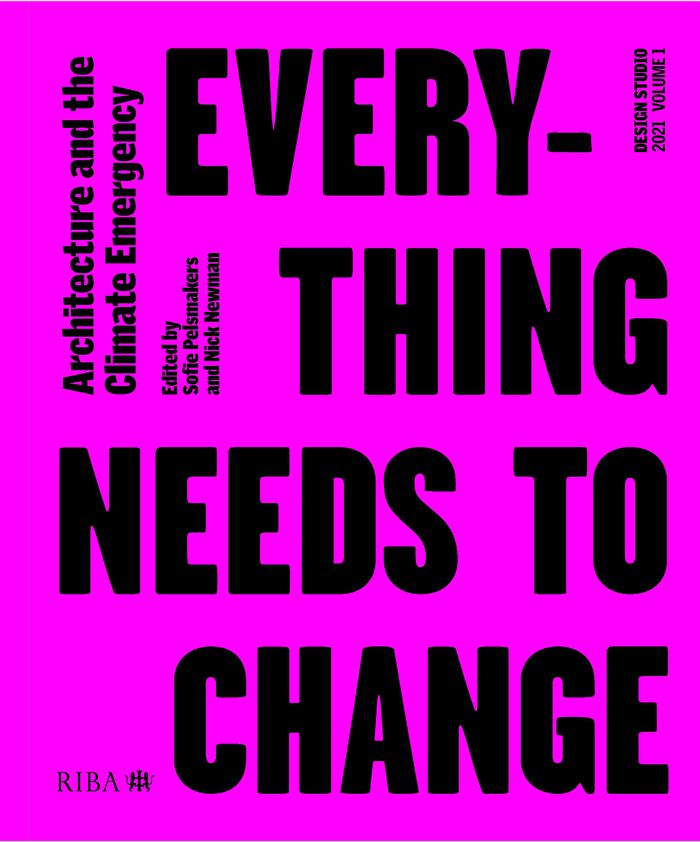
Want to keep up with emerging design thinking and issues worldwide? "Design Studio" is a new thematic series that distils the most topical work and ideas from schools and practices globally. The first volume launches with a statement: "Everything needs to change". Exploring architecture and the climate emergency, editors Sofie Pelsmakers (author of Environmental Design Sourcebook) and Nick Newman (climate activist and Director at Studio Bark), are channelling the message of Greta Thunberg to inspire, enthuse and inform the next generation of architects. Featuring articles, building profiles and case studies from a range of leading voices, it explores solutions to climatic, environmental and social challenges. It urges readers to radically rethink what it means to be an architect in an era of climate crisis, and what the role of the architect is or can be. Discover how using local materials, working with nature, radical design processes, transformative learning and activism can help us find hope in the burning world. This first volume is produced in four unique fluorescent colours – green, red, yellow and purple – to be your own poster for change.
Design Studio vol.1: Everything needs to change. Architecture and the climate emergency
Actions:
Price:
$53.50
(available to order)
Summary:
Want to keep up with emerging design thinking and issues worldwide? "Design Studio" is a new thematic series that distils the most topical work and ideas from schools and practices globally. The first volume launches with a statement: "Everything needs to change". Exploring architecture and the climate emergency, editors Sofie Pelsmakers (author of Environmental Design Sourcebook) and Nick Newman (climate activist and Director at Studio Bark), are channelling the message of Greta Thunberg to inspire, enthuse and inform the next generation of architects. Featuring articles, building profiles and case studies from a range of leading voices, it explores solutions to climatic, environmental and social challenges. It urges readers to radically rethink what it means to be an architect in an era of climate crisis, and what the role of the architect is or can be. Discover how using local materials, working with nature, radical design processes, transformative learning and activism can help us find hope in the burning world. This first volume is produced in four unique fluorescent colours – green, red, yellow and purple – to be your own poster for change.
Form:
books
books
Publication:
May 2021
May 2021
Subject:
Contemporary Architecture
Contemporary Architecture
Form:
books
books
Actions:
Price:
$36.95
(available to order)
Summary:
The term 'geoengineering' refers to technologies that counteract the effects of anthropogenic climate change by deliberately intervening in Earth systems. In the midst of a climate crisis, and with disparate views on whether planetary-scale design is the appropriate response at all, 'The Planet After Geoengineering' employs a speculative fiction approach to think with and(...)
$36.95
(available to order)
Summary:
The term 'geoengineering' refers to technologies that counteract the effects of anthropogenic climate change by deliberately intervening in Earth systems. In the midst of a climate crisis, and with disparate views on whether planetary-scale design is the appropriate response at all, 'The Planet After Geoengineering' employs a speculative fiction approach to think with and(...)
Subject:
Environment and environmental theory
Environment and environmental theory
Publication:
July 2021
July 2021
Title:
The planet after geoengineering
Actions:
Price:
$36.95
(available to order)
Summary:
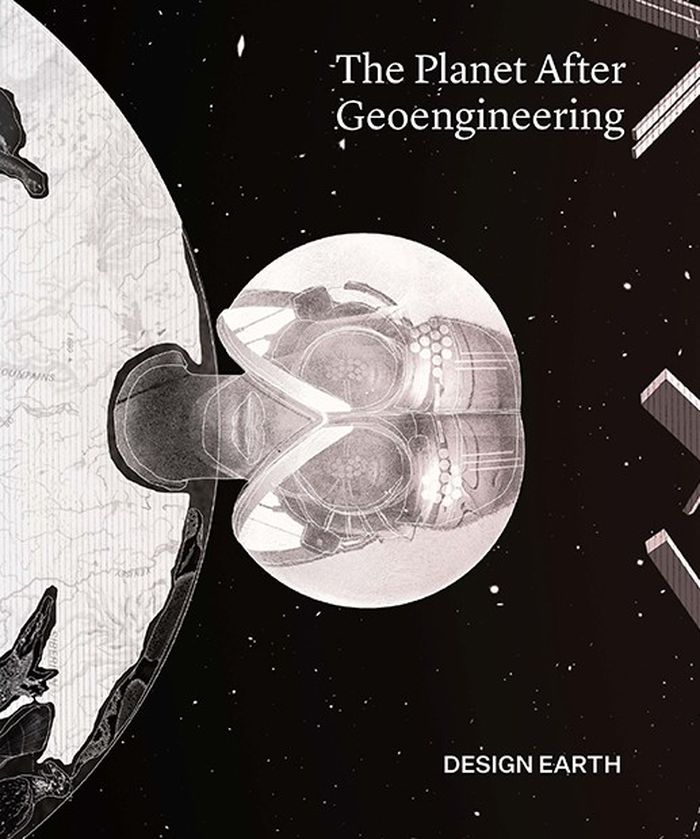
The term 'geoengineering' refers to technologies that counteract the effects of anthropogenic climate change by deliberately intervening in Earth systems. In the midst of a climate crisis, and with disparate views on whether planetary-scale design is the appropriate response at all, 'The Planet After Geoengineering' employs a speculative fiction approach to think with and against geoengineering as a form of planetary management. The graphic novel makes climate engineering and its controversies visible in a series of five stories that are collectively assembled into a planetary section from the deep underground to outer space. Each geostory - Petrified Carbon, Arctic Albedo, Sky River, Sulfur Storm, and Dust Cloud - depicts possible future Earths that we come to inhabit on the heels of a geoengineering intervention all while situating such promisory visions within a genealogy of climate-control projects from nineteenth-century rainmaking machines and volcanic eruptions to Cold War military plans. Such fabrications of an engineerable earth open a space to forge a new geo-politics that includes the actual Earth - its dimensions, processes, and lifeforms - as constitutive of design and the planet.
The planet after geoengineering
Actions:
Price:
$36.95
(available to order)
Summary:
The term 'geoengineering' refers to technologies that counteract the effects of anthropogenic climate change by deliberately intervening in Earth systems. In the midst of a climate crisis, and with disparate views on whether planetary-scale design is the appropriate response at all, 'The Planet After Geoengineering' employs a speculative fiction approach to think with and against geoengineering as a form of planetary management. The graphic novel makes climate engineering and its controversies visible in a series of five stories that are collectively assembled into a planetary section from the deep underground to outer space. Each geostory - Petrified Carbon, Arctic Albedo, Sky River, Sulfur Storm, and Dust Cloud - depicts possible future Earths that we come to inhabit on the heels of a geoengineering intervention all while situating such promisory visions within a genealogy of climate-control projects from nineteenth-century rainmaking machines and volcanic eruptions to Cold War military plans. Such fabrications of an engineerable earth open a space to forge a new geo-politics that includes the actual Earth - its dimensions, processes, and lifeforms - as constitutive of design and the planet.
Form:
books
books
Publication:
July 2021
July 2021
Subject:
Environment and environmental theory
Environment and environmental theory
Form:
books
books
Price:
$79.95
(available to order)
Summary:
Energy performance feedback is an essential tool in addressing the current climate crisis. However, this is not simply another theoretical text about energy performance in buildings. This book is for anyone who wants to better understand how energy is used in buildings, and how to drive down operational energy use – whether you’re an architect, student, client, building(...)
$79.95
(available to order)
Summary:
Energy performance feedback is an essential tool in addressing the current climate crisis. However, this is not simply another theoretical text about energy performance in buildings. This book is for anyone who wants to better understand how energy is used in buildings, and how to drive down operational energy use – whether you’re an architect, student, client, building(...)
Subject:
Green Architecture
Green Architecture
Publication:
April 2021
April 2021
Title:
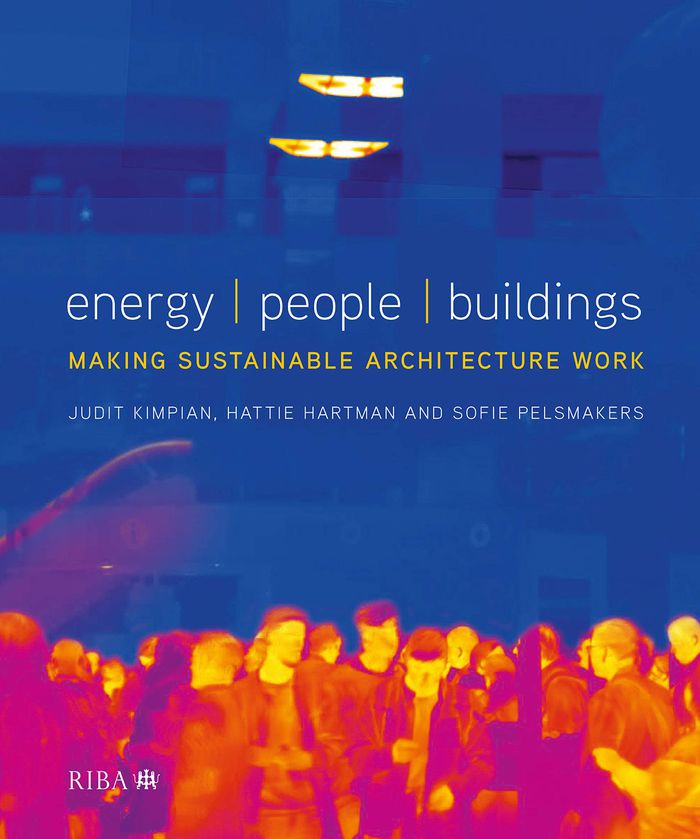
Energy, people, buildings: making sustainable architecture work
Actions:
Price:
$79.95
(available to order)
Summary:
Energy performance feedback is an essential tool in addressing the current climate crisis. However, this is not simply another theoretical text about energy performance in buildings. This book is for anyone who wants to better understand how energy is used in buildings, and how to drive down operational energy use – whether you’re an architect, student, client, building services engineer, contractor, building operator or other stakeholder. Focusing on evidence from feedback on buildings in use, it explains what it takes to get them to perform as expected, as well as the reasons why they often fail. "Energy, people, buildings" draws extensively on the findings of studies, UK government-funded building performance evaluations and on original research into seven case studies from across the UK and abroad that have achieved exemplary energy use through building performance feedback. Providing a clear roadmap to understanding aspects that impact building users’ comfort and satisfaction, it also outlines the factors behind energy use and how to track it across the life of a project to ensure that your building performs as intended.
Energy, people, buildings: making sustainable architecture work
Actions:
Price:
$79.95
(available to order)
Summary:
Energy performance feedback is an essential tool in addressing the current climate crisis. However, this is not simply another theoretical text about energy performance in buildings. This book is for anyone who wants to better understand how energy is used in buildings, and how to drive down operational energy use – whether you’re an architect, student, client, building services engineer, contractor, building operator or other stakeholder. Focusing on evidence from feedback on buildings in use, it explains what it takes to get them to perform as expected, as well as the reasons why they often fail. "Energy, people, buildings" draws extensively on the findings of studies, UK government-funded building performance evaluations and on original research into seven case studies from across the UK and abroad that have achieved exemplary energy use through building performance feedback. Providing a clear roadmap to understanding aspects that impact building users’ comfort and satisfaction, it also outlines the factors behind energy use and how to track it across the life of a project to ensure that your building performs as intended.
Form:
books
books
Publication:
April 2021
April 2021
Subject:
Green Architecture
Green Architecture


