


183 Results
Form:
books
books
Actions:
Price:
$41.95
(available to order)
Summary:
Le néolibéralisme ne doit pas être conçu comme une doctrine ou une politique économique, mais comme une logique ou une rationalité qui s'est progressivement emparée des États. Son mode opératoire consiste à introduire partout les valeurs du marché pour transformer toute chose et tout être en entité économique. Alors que le libéralisme traditionnel définissait un domaine(...)
$41.95
(available to order)
Summary:
Le néolibéralisme ne doit pas être conçu comme une doctrine ou une politique économique, mais comme une logique ou une rationalité qui s'est progressivement emparée des États. Son mode opératoire consiste à introduire partout les valeurs du marché pour transformer toute chose et tout être en entité économique. Alors que le libéralisme traditionnel définissait un domaine(...)
Title:
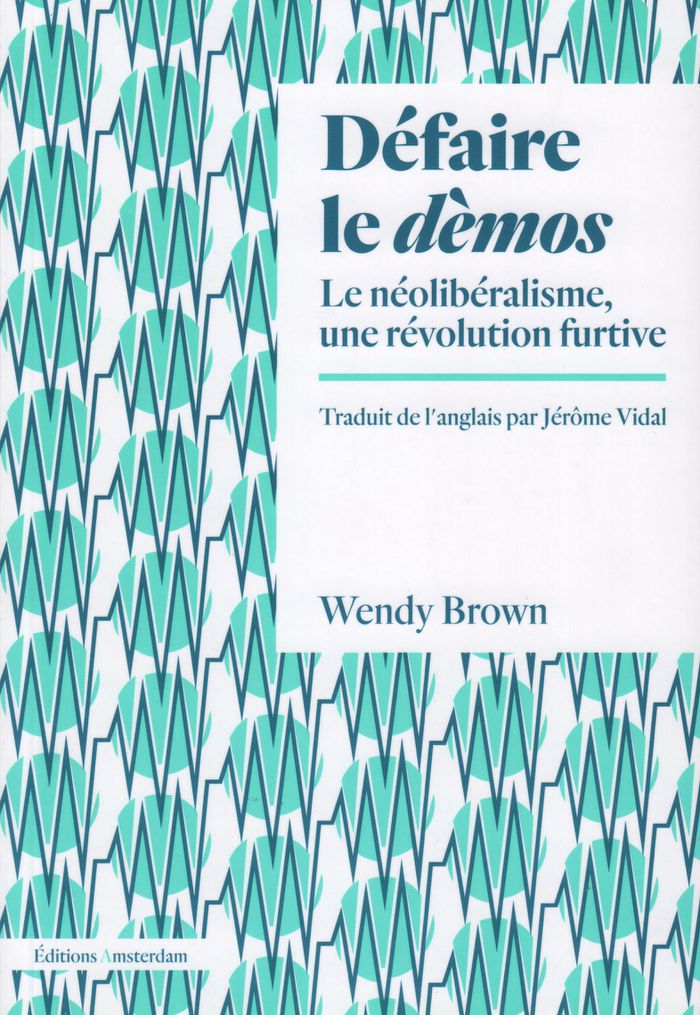
Défaire le dèmos : le néolibéralisme, une révolution furtive
Actions:
Price:
$41.95
(available to order)
Summary:
Le néolibéralisme ne doit pas être conçu comme une doctrine ou une politique économique, mais comme une logique ou une rationalité qui s'est progressivement emparée des États. Son mode opératoire consiste à introduire partout les valeurs du marché pour transformer toute chose et tout être en entité économique. Alors que le libéralisme traditionnel définissait un domaine propre de l'économie de marché, le néolibéralisme tend vers l'économisation intégrale de la vie. Wendy Brown l'illustre brillamment en étudiant, par exemple, les récentes transformations du droit et du secteur éducatif. Repartant des cours pionniers de Michel Foucault, elle montre comment la rationalité néolibérale implique une transformation de la politique en gouvernance et des citoyens en capital humain financiarisé. Ainsi cette dernière menace-t-elle les fondements du projet démocratique et l'idéal d'un gouvernement du peuple par lui-même.
Défaire le dèmos : le néolibéralisme, une révolution furtive
Actions:
Price:
$41.95
(available to order)
Summary:
Le néolibéralisme ne doit pas être conçu comme une doctrine ou une politique économique, mais comme une logique ou une rationalité qui s'est progressivement emparée des États. Son mode opératoire consiste à introduire partout les valeurs du marché pour transformer toute chose et tout être en entité économique. Alors que le libéralisme traditionnel définissait un domaine propre de l'économie de marché, le néolibéralisme tend vers l'économisation intégrale de la vie. Wendy Brown l'illustre brillamment en étudiant, par exemple, les récentes transformations du droit et du secteur éducatif. Repartant des cours pionniers de Michel Foucault, elle montre comment la rationalité néolibérale implique une transformation de la politique en gouvernance et des citoyens en capital humain financiarisé. Ainsi cette dernière menace-t-elle les fondements du projet démocratique et l'idéal d'un gouvernement du peuple par lui-même.
Form:
books
books
Publication:
September 2018
September 2018
Subject:
Critical Theory
Critical Theory
Form:
books
books
Title:
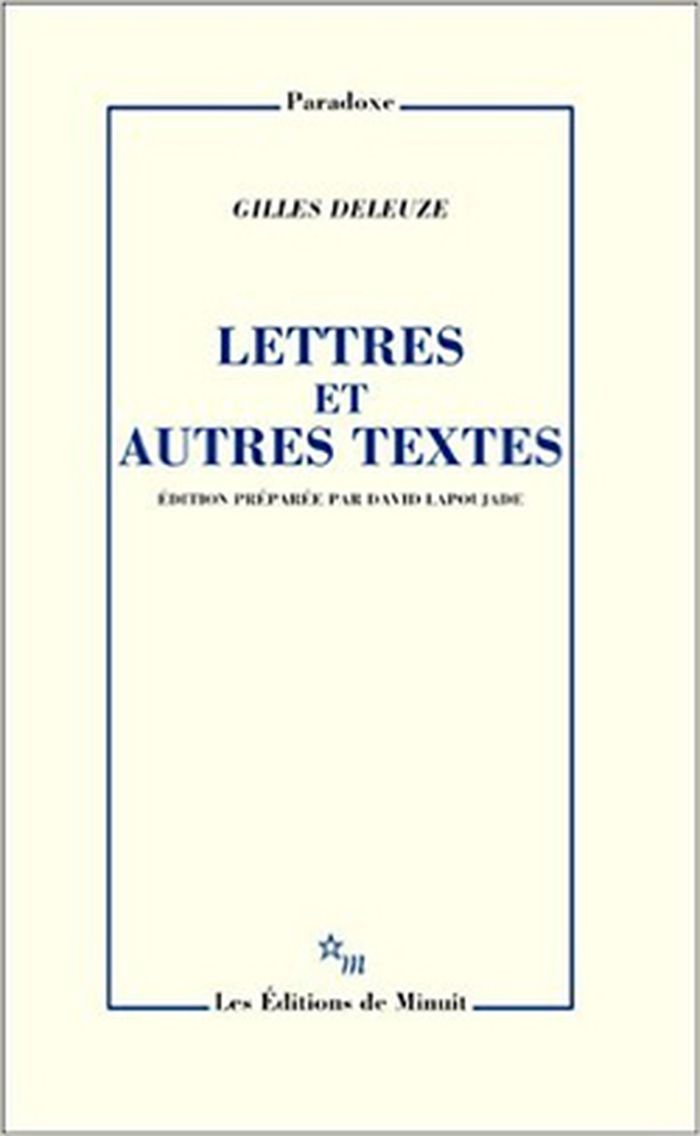
Lettres et autres textes
Lettres et autres textes
Actions:
Price:
$36.95
(available to order)
Summary:
Lettres et autres textes est le troisième et dernier volume des textes posthumes de Gilles Deleuze, publié à l’occasion du vingtième anniversaire de sa disparition. Il regroupe de nombreuses lettres adressées à ses contemporains (Michel Foucault, Pierre Klossowski, François Châtelet ou Clément Rosset). Particulièrement importantes à cet égard sont les lettres adressées à(...)
$36.95
(available to order)
Summary:
Lettres et autres textes est le troisième et dernier volume des textes posthumes de Gilles Deleuze, publié à l’occasion du vingtième anniversaire de sa disparition. Il regroupe de nombreuses lettres adressées à ses contemporains (Michel Foucault, Pierre Klossowski, François Châtelet ou Clément Rosset). Particulièrement importantes à cet égard sont les lettres adressées à(...)
Title:
Lettres et autres textes
Actions:
Price:
$36.95
(available to order)
Summary:
Lettres et autres textes est le troisième et dernier volume des textes posthumes de Gilles Deleuze, publié à l’occasion du vingtième anniversaire de sa disparition. Il regroupe de nombreuses lettres adressées à ses contemporains (Michel Foucault, Pierre Klossowski, François Châtelet ou Clément Rosset). Particulièrement importantes à cet égard sont les lettres adressées à Félix Guattari, qui constituent un témoignage irremplaçable sur leur « travail à deux », de L’Anti-Œdipe jusqu’à Qu’est-ce que la philosophie ? On y trouve aussi des lettres plus tardives adressées à des étudiants qui l’interrogent sur son œuvre et lui permettent de l’éclairer d’un regard nouveau. Y figurent également un ensemble de textes introuvables ou inédits, comme certains essais de jeunesse, quelques dessins insolites, ou un long entretien de 1973 sur L’Anti-Œdipe avec Guattari.
Lettres et autres textes
Actions:
Price:
$36.95
(available to order)
Summary:
Lettres et autres textes est le troisième et dernier volume des textes posthumes de Gilles Deleuze, publié à l’occasion du vingtième anniversaire de sa disparition. Il regroupe de nombreuses lettres adressées à ses contemporains (Michel Foucault, Pierre Klossowski, François Châtelet ou Clément Rosset). Particulièrement importantes à cet égard sont les lettres adressées à Félix Guattari, qui constituent un témoignage irremplaçable sur leur « travail à deux », de L’Anti-Œdipe jusqu’à Qu’est-ce que la philosophie ? On y trouve aussi des lettres plus tardives adressées à des étudiants qui l’interrogent sur son œuvre et lui permettent de l’éclairer d’un regard nouveau. Y figurent également un ensemble de textes introuvables ou inédits, comme certains essais de jeunesse, quelques dessins insolites, ou un long entretien de 1973 sur L’Anti-Œdipe avec Guattari.
Form:
books
books
Publication:
December 2015
December 2015
Subject:
Critical Theory
Critical Theory
Form:
books
books
Price:
$34.95
(available to order)
Summary:
Dans Le Pouvoir des mots, Judith Butler analyse les récents débats, souvent passionnés, sur la violence verbale dirigée contre les minorités, sur la pornographie et sur l’interdiction faite aux homosexuels membres de l’armée américaine de se déclarer tels. Il s’agit pour elle de montrer le danger qu’il y a à confier à l’État le soin de définir le champ du dicible et de(...)
$34.95
(available to order)
Summary:
Dans Le Pouvoir des mots, Judith Butler analyse les récents débats, souvent passionnés, sur la violence verbale dirigée contre les minorités, sur la pornographie et sur l’interdiction faite aux homosexuels membres de l’armée américaine de se déclarer tels. Il s’agit pour elle de montrer le danger qu’il y a à confier à l’État le soin de définir le champ du dicible et de(...)
Title:
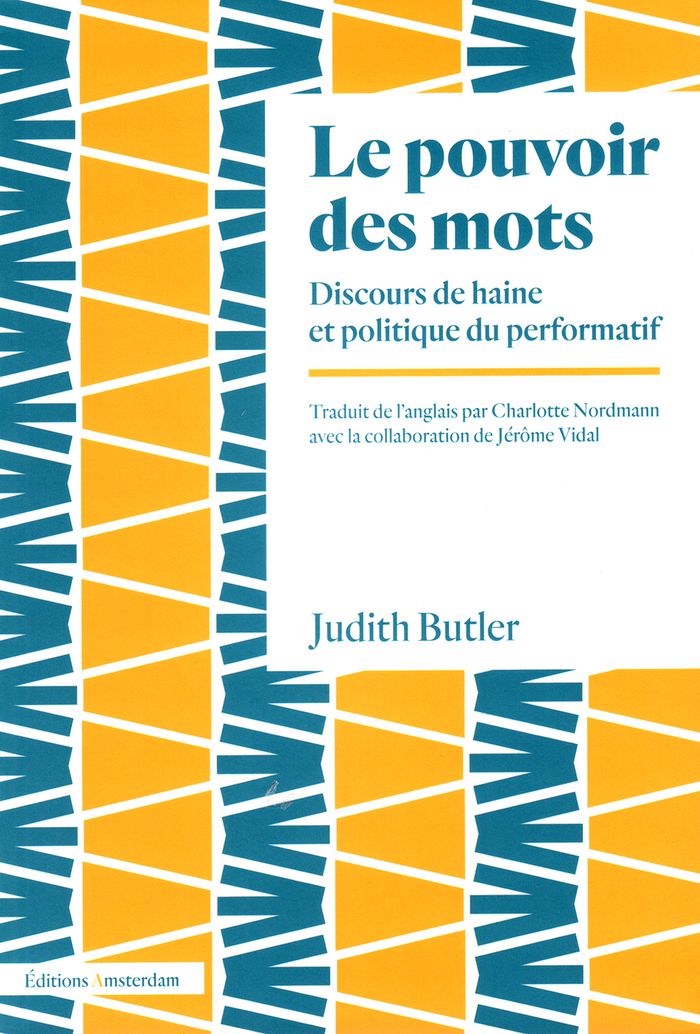
Le pouvoir des mots : discours de haine et politique du performatif
Actions:
Price:
$34.95
(available to order)
Summary:
Dans Le Pouvoir des mots, Judith Butler analyse les récents débats, souvent passionnés, sur la violence verbale dirigée contre les minorités, sur la pornographie et sur l’interdiction faite aux homosexuels membres de l’armée américaine de se déclarer tels. Il s’agit pour elle de montrer le danger qu’il y a à confier à l’État le soin de définir le champ du dicible et de l’indicible. Dans un dialogue critique avec J. L. Austin, le fondateur de la théorie du discours performatif, mais aussi avec Sigmund Freud, Michel Foucault, Pierre Bourdieu, Jacques Derrida et Catharine MacKinnon, elle s’efforce d’établir l’ambivalence de la violence verbale (du hate speech) et des discours homophobes, sexistes ou racistes : s’ils peuvent briser les personnes auxquelles ils sont adressés, ils peuvent aussi être retournés et ouvrir l’espace d’une lutte politique et d’une subversion des identités.
Le pouvoir des mots : discours de haine et politique du performatif
Actions:
Price:
$34.95
(available to order)
Summary:
Dans Le Pouvoir des mots, Judith Butler analyse les récents débats, souvent passionnés, sur la violence verbale dirigée contre les minorités, sur la pornographie et sur l’interdiction faite aux homosexuels membres de l’armée américaine de se déclarer tels. Il s’agit pour elle de montrer le danger qu’il y a à confier à l’État le soin de définir le champ du dicible et de l’indicible. Dans un dialogue critique avec J. L. Austin, le fondateur de la théorie du discours performatif, mais aussi avec Sigmund Freud, Michel Foucault, Pierre Bourdieu, Jacques Derrida et Catharine MacKinnon, elle s’efforce d’établir l’ambivalence de la violence verbale (du hate speech) et des discours homophobes, sexistes ou racistes : s’ils peuvent briser les personnes auxquelles ils sont adressés, ils peuvent aussi être retournés et ouvrir l’espace d’une lutte politique et d’une subversion des identités.
Form:
books
books
Publication:
November 2017
November 2017
Subject:
Critical Theory
Critical Theory
Form:
books
books

Title:
(Mis)Reading Masquerades
(Mis)Reading Masquerades
Actions:
Price:
$52.00
(available to order)
Summary:
This publication focuses on the notion of Masquerade. For the past two years, "If I Can’t Dance, I Don’t Want To Be Part Of Your Revolution" has been exploring the cultural, social and political meanings of this concept from a critical and interdisciplinary perspective together with more than fifty artists, curators, writers and theoreticians. This book comprises a(...)
$52.00
(available to order)
Summary:
This publication focuses on the notion of Masquerade. For the past two years, "If I Can’t Dance, I Don’t Want To Be Part Of Your Revolution" has been exploring the cultural, social and political meanings of this concept from a critical and interdisciplinary perspective together with more than fifty artists, curators, writers and theoreticians. This book comprises a(...)
Title:
(Mis)Reading Masquerades
Actions:
Price:
$52.00
(available to order)
Summary:
This publication focuses on the notion of Masquerade. For the past two years, "If I Can’t Dance, I Don’t Want To Be Part Of Your Revolution" has been exploring the cultural, social and political meanings of this concept from a critical and interdisciplinary perspective together with more than fifty artists, curators, writers and theoreticians. This book comprises a selection of theoretical texts drawn from different fields of knowledge that address questions such as transgression, gender identity and subversion, gesture, the carnivalesque, the construction of subjectivity, authorship, mimesis, and alterity. With : Giorgio Agamben, Mikhail Bakhtin, Roland Barthes, Walter Benjamin, Homi K. Bhabha, Judith Butler, Gilles Deleuze & Felix Guattari, Jacques Derrida, Frantz Fanon, Michel Foucault, Francoise Frontisi-Ducroux, René Girard, Philippe-Alain Michaud, Fernando Pessoa, Peggy Phelan, Beatriz Preciado, Joan Riviere, Dieter Roelstraete, Suely Rolnik, Peter Stallybrass & Allon White, Michael Taussig.
(Mis)Reading Masquerades
Actions:
Price:
$52.00
(available to order)
Summary:
This publication focuses on the notion of Masquerade. For the past two years, "If I Can’t Dance, I Don’t Want To Be Part Of Your Revolution" has been exploring the cultural, social and political meanings of this concept from a critical and interdisciplinary perspective together with more than fifty artists, curators, writers and theoreticians. This book comprises a selection of theoretical texts drawn from different fields of knowledge that address questions such as transgression, gender identity and subversion, gesture, the carnivalesque, the construction of subjectivity, authorship, mimesis, and alterity. With : Giorgio Agamben, Mikhail Bakhtin, Roland Barthes, Walter Benjamin, Homi K. Bhabha, Judith Butler, Gilles Deleuze & Felix Guattari, Jacques Derrida, Frantz Fanon, Michel Foucault, Francoise Frontisi-Ducroux, René Girard, Philippe-Alain Michaud, Fernando Pessoa, Peggy Phelan, Beatriz Preciado, Joan Riviere, Dieter Roelstraete, Suely Rolnik, Peter Stallybrass & Allon White, Michael Taussig.
Form:
books
books
Publication:
May 2010
May 2010
Subject:
Critical Theory
Critical Theory
Form:
books
books
Price:
$25.95
(available in store)
Summary:
This publication contests the tendency, still dominant in most social science, to reduce human geography to a reflective mirror, or, as Marx called it, an "unnecessary complication." Beginning with a critique of historicism and its constraining effects on the geographical imagination, Edward Soja builds on the work of Foucault, Berger, Giddens, Berman, Jameson and, above(...)
$25.95
(available in store)
Summary:
This publication contests the tendency, still dominant in most social science, to reduce human geography to a reflective mirror, or, as Marx called it, an "unnecessary complication." Beginning with a critique of historicism and its constraining effects on the geographical imagination, Edward Soja builds on the work of Foucault, Berger, Giddens, Berman, Jameson and, above(...)
Title:
Postmodern geographies: the reassertion of space in critical social theory
Actions:
Price:
$25.95
(available in store)
Summary:
This publication contests the tendency, still dominant in most social science, to reduce human geography to a reflective mirror, or, as Marx called it, an "unnecessary complication." Beginning with a critique of historicism and its constraining effects on the geographical imagination, Edward Soja builds on the work of Foucault, Berger, Giddens, Berman, Jameson and, above all, Henri Lefebvre, to argue for a historical and geographical materialism, a radical rethinking of the dialectics of space, time and social being. The author charts the respatialization of social theory from the still unfolding encounter between Western Marxism and modern geography, through the current debates on the emergence of a postfordist regime of "flexible accumulation." The postmodern geography of Los Angeles, exposed in a provocative pair of essays, serves as a model in his account of the contemporary struggle for control over the social production of space.
Postmodern geographies: the reassertion of space in critical social theory
Actions:
Price:
$25.95
(available in store)
Summary:
This publication contests the tendency, still dominant in most social science, to reduce human geography to a reflective mirror, or, as Marx called it, an "unnecessary complication." Beginning with a critique of historicism and its constraining effects on the geographical imagination, Edward Soja builds on the work of Foucault, Berger, Giddens, Berman, Jameson and, above all, Henri Lefebvre, to argue for a historical and geographical materialism, a radical rethinking of the dialectics of space, time and social being. The author charts the respatialization of social theory from the still unfolding encounter between Western Marxism and modern geography, through the current debates on the emergence of a postfordist regime of "flexible accumulation." The postmodern geography of Los Angeles, exposed in a provocative pair of essays, serves as a model in his account of the contemporary struggle for control over the social production of space.
Form:
books
books
Publication:
January 2011
January 2011
Subject:
Critical Theory
Critical Theory
Form:
books
books
Price:
$24.95
(available to order)
Summary:
L’orthodoxie économiste s’obstine à imposer le modèle d’un individu décideur rationnel, qui maximise ses revenus à force de calculs régis par le souci de son intérêt bien entendu. Opérant un changement d’échelle radical, « L’économie contre elle-même » soutient plutôt que le néolibéralisme se fonde aux niveaux infra- et trans-individuel, sur une interaction complexe entre(...)
$24.95
(available to order)
Summary:
L’orthodoxie économiste s’obstine à imposer le modèle d’un individu décideur rationnel, qui maximise ses revenus à force de calculs régis par le souci de son intérêt bien entendu. Opérant un changement d’échelle radical, « L’économie contre elle-même » soutient plutôt que le néolibéralisme se fonde aux niveaux infra- et trans-individuel, sur une interaction complexe entre(...)
Title:
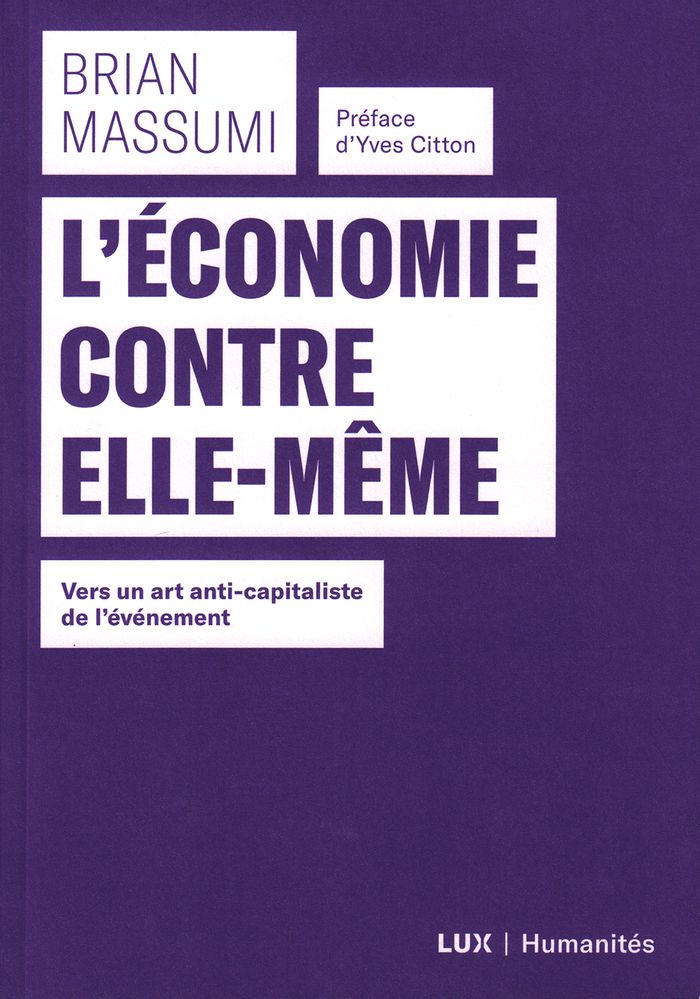
L'économie contre elle-même : vers un art anti-capitaliste de l'événement
Actions:
Price:
$24.95
(available to order)
Summary:
L’orthodoxie économiste s’obstine à imposer le modèle d’un individu décideur rationnel, qui maximise ses revenus à force de calculs régis par le souci de son intérêt bien entendu. Opérant un changement d’échelle radical, « L’économie contre elle-même » soutient plutôt que le néolibéralisme se fonde aux niveaux infra- et trans-individuel, sur une interaction complexe entre rationnel et affectif. Brian Massumi insiste en effet sur la manière dont, en deçà du niveau individuel, les tendances et contre-tendances affectives d’un individu résonnent avec celles des autres pour amorcer et orienter l’action. Cette plongée vers l’infra-économie des affects entraîne une recomposition conceptuelle de toutes les dynamiques sociales : là se dessinent les mouvements des corps sensibles et se constitue la volonté, mais surtout, là se crée l’action de transformation sociale. Empruntant à Hume, Foucault, Deleuze, Spinoza et Luhmann, L’économie contre elle-même a l’ambition de déployer une nouvelle théorie de l’économie politique.
L'économie contre elle-même : vers un art anti-capitaliste de l'événement
Actions:
Price:
$24.95
(available to order)
Summary:
L’orthodoxie économiste s’obstine à imposer le modèle d’un individu décideur rationnel, qui maximise ses revenus à force de calculs régis par le souci de son intérêt bien entendu. Opérant un changement d’échelle radical, « L’économie contre elle-même » soutient plutôt que le néolibéralisme se fonde aux niveaux infra- et trans-individuel, sur une interaction complexe entre rationnel et affectif. Brian Massumi insiste en effet sur la manière dont, en deçà du niveau individuel, les tendances et contre-tendances affectives d’un individu résonnent avec celles des autres pour amorcer et orienter l’action. Cette plongée vers l’infra-économie des affects entraîne une recomposition conceptuelle de toutes les dynamiques sociales : là se dessinent les mouvements des corps sensibles et se constitue la volonté, mais surtout, là se crée l’action de transformation sociale. Empruntant à Hume, Foucault, Deleuze, Spinoza et Luhmann, L’économie contre elle-même a l’ambition de déployer une nouvelle théorie de l’économie politique.
Form:
books
books
Publication:
May 2018
May 2018
Subject:
Art Theory
Art Theory
Form:
books
books
Price:
$34.99
(available in store)
Summary:
''Fortress Power'' presents a genealogy of fortification as a material and political technology intent on obstruction, tracing its implementation across battlefields, borders, and urban environments. Drawing on the influential work of philosophers Michel Foucault and Giorgio Agamben, Derek S. Denman places the fortress alongside the archetypes of the prison and the camp,(...)
$34.99
(available in store)
Summary:
''Fortress Power'' presents a genealogy of fortification as a material and political technology intent on obstruction, tracing its implementation across battlefields, borders, and urban environments. Drawing on the influential work of philosophers Michel Foucault and Giorgio Agamben, Derek S. Denman places the fortress alongside the archetypes of the prison and the camp,(...)
Title:
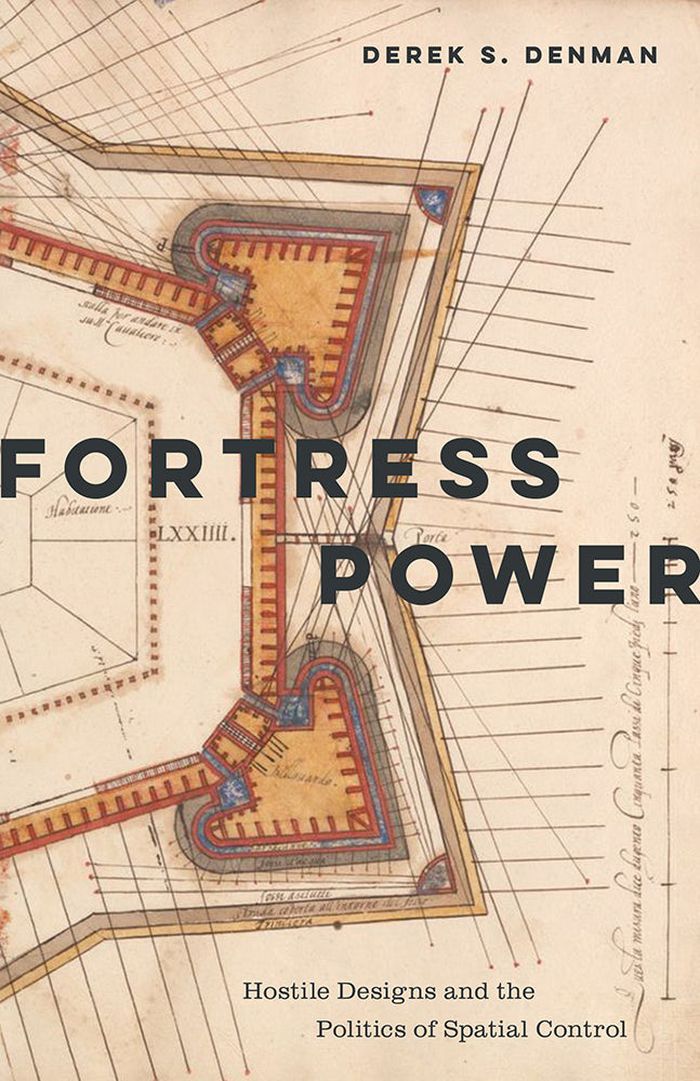
Fortress power: Hostile designs and the politics of spatial control
Actions:
Price:
$34.99
(available in store)
Summary:
''Fortress Power'' presents a genealogy of fortification as a material and political technology intent on obstruction, tracing its implementation across battlefields, borders, and urban environments. Drawing on the influential work of philosophers Michel Foucault and Giorgio Agamben, Derek S. Denman places the fortress alongside the archetypes of the prison and the camp, citing them as paradigmatic of how space is transformed into a tool of domination and control. Focusing on the defensive architecture of bastion fortresses, urban design, and border landscapes, ''Fortress Power'' charts the rise of a form of governance grounded in hostility, extending the scope of its subject from a piece of military construction to a much broader political concept. Detailing how power manifests in everything from city centers to international boundaries, the book analyzes the logic of fortification as it moves through various contexts in the advancement of surveillance, exploitation, warfare, and political authority.
Fortress power: Hostile designs and the politics of spatial control
Actions:
Price:
$34.99
(available in store)
Summary:
''Fortress Power'' presents a genealogy of fortification as a material and political technology intent on obstruction, tracing its implementation across battlefields, borders, and urban environments. Drawing on the influential work of philosophers Michel Foucault and Giorgio Agamben, Derek S. Denman places the fortress alongside the archetypes of the prison and the camp, citing them as paradigmatic of how space is transformed into a tool of domination and control. Focusing on the defensive architecture of bastion fortresses, urban design, and border landscapes, ''Fortress Power'' charts the rise of a form of governance grounded in hostility, extending the scope of its subject from a piece of military construction to a much broader political concept. Detailing how power manifests in everything from city centers to international boundaries, the book analyzes the logic of fortification as it moves through various contexts in the advancement of surveillance, exploitation, warfare, and political authority.
Form:
books
books
Publication:
July 2025
July 2025
Subject:
Architectural Theory
Architectural Theory
Form:
books
books

Title:
Cabinet 46: punishment
Cabinet 46: punishment
Actions:
Price:
$12.00
(available to order)
Summary:
From the rule of "an eye for an eye" in the Code of Hammurabi and the Old Testament to the rise of the reforming "penitentiary" in the nineteenth century, from Kant's notion of the right of retaliation to historical-philosophical explorations by Michel Foucault and John Rawls, the question of punishment has long been central to religious, political and philosophical(...)
$12.00
(available to order)
Summary:
From the rule of "an eye for an eye" in the Code of Hammurabi and the Old Testament to the rise of the reforming "penitentiary" in the nineteenth century, from Kant's notion of the right of retaliation to historical-philosophical explorations by Michel Foucault and John Rawls, the question of punishment has long been central to religious, political and philosophical(...)
Title:
Cabinet 46: punishment
Actions:
Price:
$12.00
(available to order)
Summary:
From the rule of "an eye for an eye" in the Code of Hammurabi and the Old Testament to the rise of the reforming "penitentiary" in the nineteenth century, from Kant's notion of the right of retaliation to historical-philosophical explorations by Michel Foucault and John Rawls, the question of punishment has long been central to religious, political and philosophical discourse. Cabinet issue 46, with a special section on Punishment, features Gregory Whitehead on the legacy of Philip Zimbardo's controversial "prison experiments" at Stanford University; Justin E.H. Smith on punishment and sacrifice; Johan Lindqvist on music and torture; and a multi-generational conversation about corporal punishment in the home. Elsewhere in the issue: an interview with Robert N. Proctor on how diamonds were made into the most precious of gems; George Prochnik on the history of tattoos; and Marius Kwint on the Cornell Brain Club.
Cabinet 46: punishment
Actions:
Price:
$12.00
(available to order)
Summary:
From the rule of "an eye for an eye" in the Code of Hammurabi and the Old Testament to the rise of the reforming "penitentiary" in the nineteenth century, from Kant's notion of the right of retaliation to historical-philosophical explorations by Michel Foucault and John Rawls, the question of punishment has long been central to religious, political and philosophical discourse. Cabinet issue 46, with a special section on Punishment, features Gregory Whitehead on the legacy of Philip Zimbardo's controversial "prison experiments" at Stanford University; Justin E.H. Smith on punishment and sacrifice; Johan Lindqvist on music and torture; and a multi-generational conversation about corporal punishment in the home. Elsewhere in the issue: an interview with Robert N. Proctor on how diamonds were made into the most precious of gems; George Prochnik on the history of tattoos; and Marius Kwint on the Cornell Brain Club.
Form:
books
books
Publication:
September 2012
September 2012
Subject:
Magazines
Magazines
Form:
books
books
Price:
$35.95
(available to order)
Summary:
De quand date la naissance de l’observateur moderne? L’histoire culturelle et la théorie de l’art ont souvent identifié deux points d’origine : la révolution picturale des années 1860 et l’invention de la photographie quelques décennies plus tôt. Pour Jonathan Crary, c’est au tournant du XIXe siècle que s’opère, non pas une mutation de l’imagerie, mais une transformation(...)
$35.95
(available to order)
Summary:
De quand date la naissance de l’observateur moderne? L’histoire culturelle et la théorie de l’art ont souvent identifié deux points d’origine : la révolution picturale des années 1860 et l’invention de la photographie quelques décennies plus tôt. Pour Jonathan Crary, c’est au tournant du XIXe siècle que s’opère, non pas une mutation de l’imagerie, mais une transformation(...)
Title:
Techniques de l'observateur: vision et modernité au XIXe siècle
Actions:
Price:
$35.95
(available to order)
Summary:
De quand date la naissance de l’observateur moderne? L’histoire culturelle et la théorie de l’art ont souvent identifié deux points d’origine : la révolution picturale des années 1860 et l’invention de la photographie quelques décennies plus tôt. Pour Jonathan Crary, c’est au tournant du XIXe siècle que s’opère, non pas une mutation de l’imagerie, mais une transformation de la subjectivité, lorsque la figure de l’observateur investit le champ esthétique, la médecine et la philosophie. Bien que vieille de deux siècles, cette discrète révolution dans la culture visuelle occidentale est encore la nôtre. Elle accompagne l’essor de la société disciplinaire tout en préparant l’avènement de la société du spectacle – ainsi que de leurs prolongements actuels. En relisant Michel Foucault, Guy Debord et les penseurs critiques de la modernité, Crary nous invite à un voyage intellectuel érudit et provoquant parmi les arts et les savoirs qui l’ont construite. 'Techniques de l’observateur' opère un retour aux sources historiques de notre attention visuelle et de ses enjeux subjectifs et politiques.
Techniques de l'observateur: vision et modernité au XIXe siècle
Actions:
Price:
$35.95
(available to order)
Summary:
De quand date la naissance de l’observateur moderne? L’histoire culturelle et la théorie de l’art ont souvent identifié deux points d’origine : la révolution picturale des années 1860 et l’invention de la photographie quelques décennies plus tôt. Pour Jonathan Crary, c’est au tournant du XIXe siècle que s’opère, non pas une mutation de l’imagerie, mais une transformation de la subjectivité, lorsque la figure de l’observateur investit le champ esthétique, la médecine et la philosophie. Bien que vieille de deux siècles, cette discrète révolution dans la culture visuelle occidentale est encore la nôtre. Elle accompagne l’essor de la société disciplinaire tout en préparant l’avènement de la société du spectacle – ainsi que de leurs prolongements actuels. En relisant Michel Foucault, Guy Debord et les penseurs critiques de la modernité, Crary nous invite à un voyage intellectuel érudit et provoquant parmi les arts et les savoirs qui l’ont construite. 'Techniques de l’observateur' opère un retour aux sources historiques de notre attention visuelle et de ses enjeux subjectifs et politiques.
Form:
books
books
Publication:
October 2016
October 2016
Subject:
Critical Theory
Critical Theory
Form:
books
books
Actions:
Price:
$26.00
(available to order)
Summary:
A fresh interpretation of Jeremy Bentham, finding that his “radical foolery” embodied a social ethics that was revolutionary for its time. Jeremy Bentham (1748–1832) is best remembered today as the founder of utilitarianism (a philosophy infamously abused by the Victorians) and the conceiver of the Panopticon, the circular prison house in which all prisoners could be(...)
$26.00
(available to order)
Summary:
A fresh interpretation of Jeremy Bentham, finding that his “radical foolery” embodied a social ethics that was revolutionary for its time. Jeremy Bentham (1748–1832) is best remembered today as the founder of utilitarianism (a philosophy infamously abused by the Victorians) and the conceiver of the Panopticon, the circular prison house in which all prisoners could be(...)
Title:
The radical fool of capitalism: on Jeremy Bentham, the Panopticon, and the auto-icon
Actions:
Price:
$26.00
(available to order)
Summary:
A fresh interpretation of Jeremy Bentham, finding that his “radical foolery” embodied a social ethics that was revolutionary for its time. Jeremy Bentham (1748–1832) is best remembered today as the founder of utilitarianism (a philosophy infamously abused by the Victorians) and the conceiver of the Panopticon, the circular prison house in which all prisoners could be seen by an unseen observer—later seized upon by Michel Foucault as the apotheosis of the neoliberal control society. In this volume in the Untimely Meditation series, Christian Welzbacher offers a new interpretation of Bentham, arguing that his “radical foolery” (paraphrasing Goethe's characterization of Bentham) actually embodied a social ethics that was new for its time and demands proper historical contextualization rather than retroactive analysis from the vantage point of late capitalism. Welzbacher provides just such an analysis, offering an account of the two great utilitarian projects that occupied Bentham all his life: the Panopticon and the Auto-Icon.
The radical fool of capitalism: on Jeremy Bentham, the Panopticon, and the auto-icon
Actions:
Price:
$26.00
(available to order)
Summary:
A fresh interpretation of Jeremy Bentham, finding that his “radical foolery” embodied a social ethics that was revolutionary for its time. Jeremy Bentham (1748–1832) is best remembered today as the founder of utilitarianism (a philosophy infamously abused by the Victorians) and the conceiver of the Panopticon, the circular prison house in which all prisoners could be seen by an unseen observer—later seized upon by Michel Foucault as the apotheosis of the neoliberal control society. In this volume in the Untimely Meditation series, Christian Welzbacher offers a new interpretation of Bentham, arguing that his “radical foolery” (paraphrasing Goethe's characterization of Bentham) actually embodied a social ethics that was new for its time and demands proper historical contextualization rather than retroactive analysis from the vantage point of late capitalism. Welzbacher provides just such an analysis, offering an account of the two great utilitarian projects that occupied Bentham all his life: the Panopticon and the Auto-Icon.
Form:
books
books
Publication:
April 2018
April 2018
Subject:
Critical Theory
Critical Theory


