


1608 Results
Form:
books
books
Actions:
Price:
$54.95
(available in store)
Summary:
Cet ouvrage exauce enfin le vœu de Le Corbusier de voir éditées les six conférences qu'il prononça à Rio de Janeiro en août 1936. Après les dix conférences de Buenos Aires, en 1929, publiées dans Précisions sur un état présent de l'architecture et de l'urbanisme (1930), cet inédit est le deuxième recueil de conférences de l'architecte. Et, comme ce fut le cas à Alger,(...)
$54.95
(available in store)
Summary:
Cet ouvrage exauce enfin le vœu de Le Corbusier de voir éditées les six conférences qu'il prononça à Rio de Janeiro en août 1936. Après les dix conférences de Buenos Aires, en 1929, publiées dans Précisions sur un état présent de l'architecture et de l'urbanisme (1930), cet inédit est le deuxième recueil de conférences de l'architecte. Et, comme ce fut le cas à Alger,(...)
Title:
Le Corbusier : conférences de Rio - 1936
Actions:
Price:
$54.95
(available in store)
Summary:
Cet ouvrage exauce enfin le vœu de Le Corbusier de voir éditées les six conférences qu'il prononça à Rio de Janeiro en août 1936. Après les dix conférences de Buenos Aires, en 1929, publiées dans Précisions sur un état présent de l'architecture et de l'urbanisme (1930), cet inédit est le deuxième recueil de conférences de l'architecte. Et, comme ce fut le cas à Alger, Moscou, Bruxelles, Athènes, Paris, Stockholm, Rome, Buenos Aires, São Paulo ou Montevideo, ces conférences jouèrent un rôle central dans la propagation de ses idées sur l'architecture et l'urbanisme. L'importance de ce recueil tient au fait qu'il permet de mesurer le chemin parcouru par Le Corbusier entre 1929 et 1936, l'évolution de sa " technique " de conférencier - comme il la nomme - et celle de ses idées au cours de ces années particulièrement critiques pour l'Europe et pour le monde. Enfin, à travers les propos transcrits, la reproduction des dessins et des projections, on peut non seulement suivre la manière dont Le Corbusier transmettait son message, mais aussi reconstituer le temps et le rythme des conférences, les commentaires qu'il improvisait en restituent l'ambiance et les moments d'intensité.
Le Corbusier : conférences de Rio - 1936
Actions:
Price:
$54.95
(available in store)
Summary:
Cet ouvrage exauce enfin le vœu de Le Corbusier de voir éditées les six conférences qu'il prononça à Rio de Janeiro en août 1936. Après les dix conférences de Buenos Aires, en 1929, publiées dans Précisions sur un état présent de l'architecture et de l'urbanisme (1930), cet inédit est le deuxième recueil de conférences de l'architecte. Et, comme ce fut le cas à Alger, Moscou, Bruxelles, Athènes, Paris, Stockholm, Rome, Buenos Aires, São Paulo ou Montevideo, ces conférences jouèrent un rôle central dans la propagation de ses idées sur l'architecture et l'urbanisme. L'importance de ce recueil tient au fait qu'il permet de mesurer le chemin parcouru par Le Corbusier entre 1929 et 1936, l'évolution de sa " technique " de conférencier - comme il la nomme - et celle de ses idées au cours de ces années particulièrement critiques pour l'Europe et pour le monde. Enfin, à travers les propos transcrits, la reproduction des dessins et des projections, on peut non seulement suivre la manière dont Le Corbusier transmettait son message, mais aussi reconstituer le temps et le rythme des conférences, les commentaires qu'il improvisait en restituent l'ambiance et les moments d'intensité.
Form:
books
books
Publication:
September 2006, Paris
September 2006, Paris
Subject:
Architectural Theory
Architectural Theory
Form:
books
books

Actions:
Price:
$62.00
(available to order)
Summary:
Far from passive containers or neutral fields where particular objects are to be desired, bought, and sold, department stores constitute spaces formative for both shopping behaviour and culture. In the constantly changing environment, in an interplay between retail strategies and responses to customer behaviour, a negotiation is going on of what and who is of importance,(...)
$62.00
(available to order)
Summary:
Far from passive containers or neutral fields where particular objects are to be desired, bought, and sold, department stores constitute spaces formative for both shopping behaviour and culture. In the constantly changing environment, in an interplay between retail strategies and responses to customer behaviour, a negotiation is going on of what and who is of importance,(...)
Title:
Structuring fashion: department stores as situating practice
Actions:
Price:
$62.00
(available to order)
Summary:
Far from passive containers or neutral fields where particular objects are to be desired, bought, and sold, department stores constitute spaces formative for both shopping behaviour and culture. In the constantly changing environment, in an interplay between retail strategies and responses to customer behaviour, a negotiation is going on of what and who is of importance, who is to be given exposure, and what needs to be hidden. As such, department stores form intricate examples of how shopping spaces are sites of negotiation of public culture, and of reproducing or creating norms and ideas in society. Inspired by the work of Baudrillard and Butler, Wigley, and Williamson, this book investigates how department stores work as situating structures, in which we not only find what we want, but what we should want, who we are, how our society is arranged, and our role in it - an investigation that challenges our understanding of architecture and planning as well as of society in general. Daniel Koch is a researcher and teacher at the School of Architecture, Royal Institute of Technology, Stockholm, Sweden. Structural Fashion is his doctoral dissertation that develops and improves the theories of his former work on spatial systems as producers of meaning, refocusing the main inquiry onto departement stores.
Structuring fashion: department stores as situating practice
Actions:
Price:
$62.00
(available to order)
Summary:
Far from passive containers or neutral fields where particular objects are to be desired, bought, and sold, department stores constitute spaces formative for both shopping behaviour and culture. In the constantly changing environment, in an interplay between retail strategies and responses to customer behaviour, a negotiation is going on of what and who is of importance, who is to be given exposure, and what needs to be hidden. As such, department stores form intricate examples of how shopping spaces are sites of negotiation of public culture, and of reproducing or creating norms and ideas in society. Inspired by the work of Baudrillard and Butler, Wigley, and Williamson, this book investigates how department stores work as situating structures, in which we not only find what we want, but what we should want, who we are, how our society is arranged, and our role in it - an investigation that challenges our understanding of architecture and planning as well as of society in general. Daniel Koch is a researcher and teacher at the School of Architecture, Royal Institute of Technology, Stockholm, Sweden. Structural Fashion is his doctoral dissertation that develops and improves the theories of his former work on spatial systems as producers of meaning, refocusing the main inquiry onto departement stores.
Form:
books
books
Publication:
January 1900, Stockholm
January 1900, Stockholm
Subject:
Fashion Design
Fashion Design
Form:
books
books
Actions:
Price:
$46.95
(available to order)
Summary:
The author, Gerhard Mack, explores the architecture of each individual museum in detail, and highlights current tendencies in museum building in his seminal essay "Time Rediscovered". This is complemented by an introduction by Harald Szeemann, who(...)
$46.95
(available to order)
Summary:
The author, Gerhard Mack, explores the architecture of each individual museum in detail, and highlights current tendencies in museum building in his seminal essay "Time Rediscovered". This is complemented by an introduction by Harald Szeemann, who(...)
Title:
Art museums into the 21st century
Actions:
Price:
$46.95
(available to order)
Summary:
The author, Gerhard Mack, explores the architecture of each individual museum in detail, and highlights current tendencies in museum building in his seminal essay "Time Rediscovered". This is complemented by an introduction by Harald Szeemann, who as curator of the Kunsthaus in Zürich, was appointed director for Fine Arts at the Biennale in Venice this year. The museums examined in this book are Kunsthaus in Bregenz, the Museum of the Beyeler Fondation near Basel, the Guggenheim Museum in Bilbao, the Getty Center in Los Angeles and the Moderna und Arkitektur Museet in Stockholm all opening within a year of one another. The Tate Gallery of Modern Art which is being built by Herzog & de Meuron in a former power station on the Thames in London is to be completed in May 1999. Conversations with the architects Frank O. Gehry, Jacques Herzog, Richard Meier, Rafael Moneo, Jean Nouvel, Renzo Piano and Peter Zumthor reveal the wide spectrum of design concerns in contemporary museum design and building. In the Pavilion at the Beyeler Fondation, the interaction of nature, light and the presentation of art is an impressive experience. Jean Nouvel perceives the museum as a public place, bringing the various areas of 'urban chaos' into contact with each other. A total of eight projects are presented.
Art museums into the 21st century
Actions:
Price:
$46.95
(available to order)
Summary:
The author, Gerhard Mack, explores the architecture of each individual museum in detail, and highlights current tendencies in museum building in his seminal essay "Time Rediscovered". This is complemented by an introduction by Harald Szeemann, who as curator of the Kunsthaus in Zürich, was appointed director for Fine Arts at the Biennale in Venice this year. The museums examined in this book are Kunsthaus in Bregenz, the Museum of the Beyeler Fondation near Basel, the Guggenheim Museum in Bilbao, the Getty Center in Los Angeles and the Moderna und Arkitektur Museet in Stockholm all opening within a year of one another. The Tate Gallery of Modern Art which is being built by Herzog & de Meuron in a former power station on the Thames in London is to be completed in May 1999. Conversations with the architects Frank O. Gehry, Jacques Herzog, Richard Meier, Rafael Moneo, Jean Nouvel, Renzo Piano and Peter Zumthor reveal the wide spectrum of design concerns in contemporary museum design and building. In the Pavilion at the Beyeler Fondation, the interaction of nature, light and the presentation of art is an impressive experience. Jean Nouvel perceives the museum as a public place, bringing the various areas of 'urban chaos' into contact with each other. A total of eight projects are presented.
Form:
books
books
Publication:
January 1900, Basel
January 1900, Basel
Subject:
Museums and Universal Exhibitions
Museums and Universal Exhibitions
Form:
books
books
Actions:
Price:
$41.95
(available to order)
Summary:
Beginning with the inception of the U.S. embassy building program in 1926, and continuing through the 1996 competition for a new embassy in Berlin, "The Architecture of Diplomacy" examines a remarkable(...)
$41.95
(available to order)
Summary:
Beginning with the inception of the U.S. embassy building program in 1926, and continuing through the 1996 competition for a new embassy in Berlin, "The Architecture of Diplomacy" examines a remarkable(...)
Subject:
Commercial interiors, Building types
Commercial interiors, Building types
Publication:
August 1998, New York
August 1998, New York
Title:
The architecture of diplomacy : building America's embassies
Actions:
Price:
$41.95
(available to order)
Summary:
Beginning with the inception of the U.S. embassy building program in 1926, and continuing through the 1996 competition for a new embassy in Berlin, "The Architecture of Diplomacy" examines a remarkable yet little-known chapter in architectural history. It focuses on the 1950s, when modernism became linked with the idea of freedom and the State Department's Office of Foreign Buildings Operations began to showcase modern architecture in its embassies. Architects could build abroad in styles never sanctioned at home, resulting in unusual and sometimes outlandish designs intended to express an "open" America overseas. Indeed, the embassy building program was part of the nation's larger effort to establish and assert its superpower status following World War II. Terrorist threats and espionage scandals also shaped the worldwide building program, and continue to affect it today. "The Architecture of Diplomacy" features the stories behind the Rio de Janiero and Havana embassies by Harrison & Abramovitz, Ralph Rapson's designs for Stockholm and Copenhagen, Gordon Bunshaft's work in Germany, Eero Saarinen's constructions in London and Oslo, and Edward Durell Stone's embassy in New Delhi. Other architects involved in the program included Arquitectonica; Pietro Belluschi; Marcel Breuer; Walter Gropius; Kallmann, McKinnell & Wood; Richard Neutra; and Skidmore, Owings & Merrill. Author Jane C. Loeffler obtained access to original correspondence, drawings, and photographs that have never been published.
The architecture of diplomacy : building America's embassies
Actions:
Price:
$41.95
(available to order)
Summary:
Beginning with the inception of the U.S. embassy building program in 1926, and continuing through the 1996 competition for a new embassy in Berlin, "The Architecture of Diplomacy" examines a remarkable yet little-known chapter in architectural history. It focuses on the 1950s, when modernism became linked with the idea of freedom and the State Department's Office of Foreign Buildings Operations began to showcase modern architecture in its embassies. Architects could build abroad in styles never sanctioned at home, resulting in unusual and sometimes outlandish designs intended to express an "open" America overseas. Indeed, the embassy building program was part of the nation's larger effort to establish and assert its superpower status following World War II. Terrorist threats and espionage scandals also shaped the worldwide building program, and continue to affect it today. "The Architecture of Diplomacy" features the stories behind the Rio de Janiero and Havana embassies by Harrison & Abramovitz, Ralph Rapson's designs for Stockholm and Copenhagen, Gordon Bunshaft's work in Germany, Eero Saarinen's constructions in London and Oslo, and Edward Durell Stone's embassy in New Delhi. Other architects involved in the program included Arquitectonica; Pietro Belluschi; Marcel Breuer; Walter Gropius; Kallmann, McKinnell & Wood; Richard Neutra; and Skidmore, Owings & Merrill. Author Jane C. Loeffler obtained access to original correspondence, drawings, and photographs that have never been published.
Form:
books
books
Publication:
August 1998, New York
August 1998, New York
Subject:
Commercial interiors, Building types
Commercial interiors, Building types
Form:
books
books
Actions:
Price:
$46.95
(available to order)
Summary:
The internationally acclaimed architect Rafael Moneo is known to be a courageous architect. His major works include the Houston Museum of Fine Art, Davis Art Museum at Wellesley College, the Stockholm Museum of Modern Art and Architecture, and the Potzdammer Platz Hotel in Berlin. Now Moneo will be known as a daring critic as well. In this book he looks at eight of his(...)
$46.95
(available to order)
Summary:
The internationally acclaimed architect Rafael Moneo is known to be a courageous architect. His major works include the Houston Museum of Fine Art, Davis Art Museum at Wellesley College, the Stockholm Museum of Modern Art and Architecture, and the Potzdammer Platz Hotel in Berlin. Now Moneo will be known as a daring critic as well. In this book he looks at eight of his(...)
Title:
Theoretical anxiety and design strategies in the work of eight contemporary architects
Actions:
Price:
$46.95
(available to order)
Summary:
The internationally acclaimed architect Rafael Moneo is known to be a courageous architect. His major works include the Houston Museum of Fine Art, Davis Art Museum at Wellesley College, the Stockholm Museum of Modern Art and Architecture, and the Potzdammer Platz Hotel in Berlin. Now Moneo will be known as a daring critic as well. In this book he looks at eight of his contemporaries -- all architects of international stature -- and discusses the theoretical positions, technical innovations, and design contributions of each. Moneo's discussion of these eight architects -- James Stirling, Robert Venturi, Aldo Rossi, Peter Eisenman, Alvaro Siza, Frank Gehry, Rem Koolhaas, and the partnership of Jacques Herzog and Pierre De Meuron -- has the colloquial, engaging tone of a series of lectures on modern architecture by a master architect; the reader hears not the dispassionate theorizing of an academic, but Moneo's own deeply held convictions as he considers the work of his contemporaries. Discussing each of the eight architects in turn, Moneo first gives an introductory profile, emphasizing intentions, theoretical concerns, and construction procedures. He then turns to the work, offering detailed critical analyses of the works he considers to be crucial for an informed understanding of this architect's work. The many images he uses to illustrate his points resemble the rapid-fire flash of slides in a lecture, but Moneo's perspective is unique among lecturers. These profiles are not what Moneo calls the "tacit treatises" that can be found on the shelves of a university library, but lively encounters of architectural equals. More than 500 illustrations accompany the text.
Theoretical anxiety and design strategies in the work of eight contemporary architects
Actions:
Price:
$46.95
(available to order)
Summary:
The internationally acclaimed architect Rafael Moneo is known to be a courageous architect. His major works include the Houston Museum of Fine Art, Davis Art Museum at Wellesley College, the Stockholm Museum of Modern Art and Architecture, and the Potzdammer Platz Hotel in Berlin. Now Moneo will be known as a daring critic as well. In this book he looks at eight of his contemporaries -- all architects of international stature -- and discusses the theoretical positions, technical innovations, and design contributions of each. Moneo's discussion of these eight architects -- James Stirling, Robert Venturi, Aldo Rossi, Peter Eisenman, Alvaro Siza, Frank Gehry, Rem Koolhaas, and the partnership of Jacques Herzog and Pierre De Meuron -- has the colloquial, engaging tone of a series of lectures on modern architecture by a master architect; the reader hears not the dispassionate theorizing of an academic, but Moneo's own deeply held convictions as he considers the work of his contemporaries. Discussing each of the eight architects in turn, Moneo first gives an introductory profile, emphasizing intentions, theoretical concerns, and construction procedures. He then turns to the work, offering detailed critical analyses of the works he considers to be crucial for an informed understanding of this architect's work. The many images he uses to illustrate his points resemble the rapid-fire flash of slides in a lecture, but Moneo's perspective is unique among lecturers. These profiles are not what Moneo calls the "tacit treatises" that can be found on the shelves of a university library, but lively encounters of architectural equals. More than 500 illustrations accompany the text.
Form:
books
books
Publication:
May 2004, Cambridge, Mass.
May 2004, Cambridge, Mass.
Subject:
Architectural Theory
Architectural Theory
Form:
books
books
Title:
Gunnar Asplund
Gunnar Asplund
Actions:
Price:
$99.95
(available to order)
Summary:
Although a contemporary of Walter Gropius and Le Corbusier, Asplund pursued an architecture that does not fit easily into their view of Modernism as a movement that rejected the applied styles and ornamentation of the nineteenth century. Instead, Asplund was at ease with classical or vernacular elements blending with modernist ideals, and displayed a sensitive(...)
$99.95
(available to order)
Summary:
Although a contemporary of Walter Gropius and Le Corbusier, Asplund pursued an architecture that does not fit easily into their view of Modernism as a movement that rejected the applied styles and ornamentation of the nineteenth century. Instead, Asplund was at ease with classical or vernacular elements blending with modernist ideals, and displayed a sensitive(...)
Title:
Gunnar Asplund
Actions:
Price:
$99.95
(available to order)
Summary:
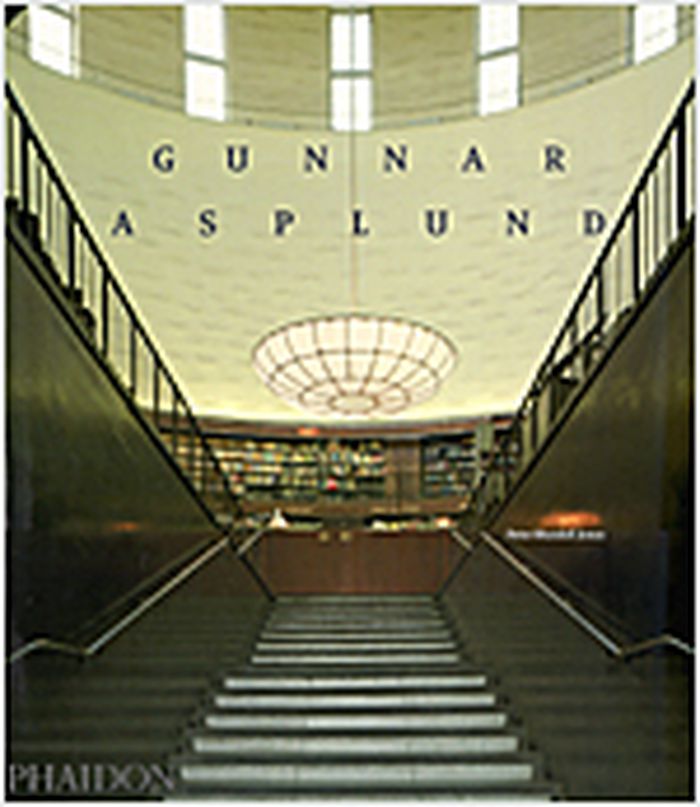
Although a contemporary of Walter Gropius and Le Corbusier, Asplund pursued an architecture that does not fit easily into their view of Modernism as a movement that rejected the applied styles and ornamentation of the nineteenth century. Instead, Asplund was at ease with classical or vernacular elements blending with modernist ideals, and displayed a sensitive understanding of the relationship between architecture and its surrounding landscape. His abilities are amply demonstrated in masterpieces like the Woodland Cemetery. In 1915 Asplund and Sigurd Lewerentz won the competition to plan a new cemetery for Stockholm. Their romantic plan, in which a symbolically straight, narrow pathway abruptly curves blindly away into the forest, and with open fields capped by burial-mound-like hillocks, earned both of them further commissions for buildings within the cemetery. Asplund’s Woodland Chapel of 1920 is tucked into the forest and uses classical elements such as Doric columns, but sparingly and in unusual ways, while manipulating scale in ways that further the spiritual and contemplative nature of the building. The Crematorium and Monument Hall of 1935 are dignified and powerful, unornamented but not austere, to offer comfort to those who use them. The Gothenburg Law Courts, another critical work which was finally completed in 1937, shows how Asplund relates the architecture of Modernism to a historical plan and façade. Buildings such as the architect’s own summer house at Stennäs and the crematoria at Kviberg and Skövde, dating from the later part of his life when he had begun to embrace Modernism, still show traditional classical and vernacular influences and are evidence that not all forms of Modernism constituted a fresh start.
Gunnar Asplund
Actions:
Price:
$99.95
(available to order)
Summary:
Although a contemporary of Walter Gropius and Le Corbusier, Asplund pursued an architecture that does not fit easily into their view of Modernism as a movement that rejected the applied styles and ornamentation of the nineteenth century. Instead, Asplund was at ease with classical or vernacular elements blending with modernist ideals, and displayed a sensitive understanding of the relationship between architecture and its surrounding landscape. His abilities are amply demonstrated in masterpieces like the Woodland Cemetery. In 1915 Asplund and Sigurd Lewerentz won the competition to plan a new cemetery for Stockholm. Their romantic plan, in which a symbolically straight, narrow pathway abruptly curves blindly away into the forest, and with open fields capped by burial-mound-like hillocks, earned both of them further commissions for buildings within the cemetery. Asplund’s Woodland Chapel of 1920 is tucked into the forest and uses classical elements such as Doric columns, but sparingly and in unusual ways, while manipulating scale in ways that further the spiritual and contemplative nature of the building. The Crematorium and Monument Hall of 1935 are dignified and powerful, unornamented but not austere, to offer comfort to those who use them. The Gothenburg Law Courts, another critical work which was finally completed in 1937, shows how Asplund relates the architecture of Modernism to a historical plan and façade. Buildings such as the architect’s own summer house at Stennäs and the crematoria at Kviberg and Skövde, dating from the later part of his life when he had begun to embrace Modernism, still show traditional classical and vernacular influences and are evidence that not all forms of Modernism constituted a fresh start.
Form:
books
books
Publication:
October 2004, London
October 2004, London
Subject:
Architecture Monographs
Architecture Monographs
Form:
books
books
Actions:
Price:
$53.95
(available in store)
Summary:
Pour la deuxième édition de la Biennale d'Architecture d'Orléans six commissaires ont été invités à conter les récits des solitudes à travers le monde, là où l'architecture est encore une forme d'engagement dans le réel et une « promesse » pour les libertés : Des rêves vus de près revient sur la résistance du groupe brésilien Arquitetura Nova face à la dictature(...)
$53.95
(available in store)
Summary:
Pour la deuxième édition de la Biennale d'Architecture d'Orléans six commissaires ont été invités à conter les récits des solitudes à travers le monde, là où l'architecture est encore une forme d'engagement dans le réel et une « promesse » pour les libertés : Des rêves vus de près revient sur la résistance du groupe brésilien Arquitetura Nova face à la dictature(...)
Title:
Nos années de solitude, Biennale d'Architecture d'Orléans
Actions:
Price:
$53.95
(available in store)
Summary:
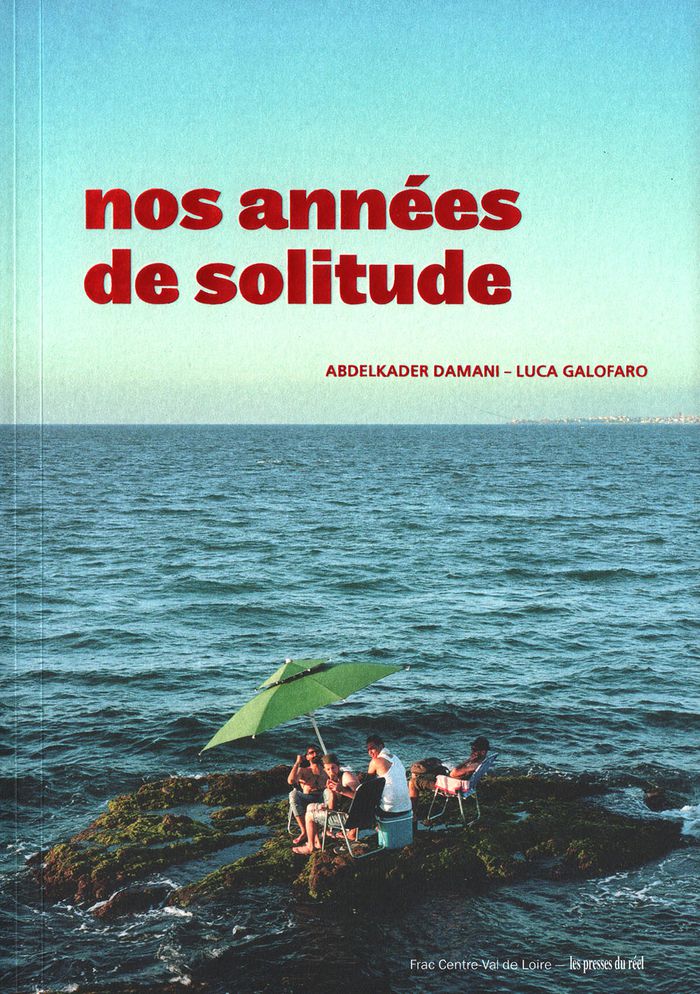
Pour la deuxième édition de la Biennale d'Architecture d'Orléans six commissaires ont été invités à conter les récits des solitudes à travers le monde, là où l'architecture est encore une forme d'engagement dans le réel et une « promesse » pour les libertés : Des rêves vus de près revient sur la résistance du groupe brésilien Arquitetura Nova face à la dictature brésilienne (1964-1985) ; Mes réalisations parleront pour moi offre une lecture de l'œuvre algérienne de l'architecte français Fernand Pouillon ; L'étrangère sur terreréunit des artistes et architectes arabes dont l'œuvre participe aux mouvements arabes d'émancipation face aux discours et aux systèmes autoritaires ; De la solitude à la désolation livre une analyse sans concession du Mexique actuel ; l'installation collective L'architecture comme animal mutant est un dispositif d'hybridation où toute créature architecturale se libère de son créateur. Avec AAU Anastas, Rand Abdul Jabbar, Absalon, Yóllotl Alvarado & Tania Ximena, Atelier Manferdini, BairBalliet, Ila Bêka & Louise Lemoine, Daphné Bengoa, André Bloc, Santiago Borja, John Cage, Bertrand Cavalier, Nidhal Chamekh, Paloma Contreras Lomas, Abraham Cruzvillegas, Design Earth, Hernan Diaz Alonso, f-architecture collaborative, Miguel Fernández de Castro, Bernard Gachet, Griffin Enright, Günter Günschel, Zaha Hadid, Susan Hefuna, John Hejduk, Anne Huffschmid & Jan-Holger Hennies, Damjan Jovanovic, Alberto Kalach, Ferda Kolatan, Lacaton & Vassal, Karen Lohrmann & Stefano de Martino, Jumana Manna, Fabian Marcaccio, Chris Marker, Ahmed Mater, Lucy McRae, MTL Collective, Julie Nioche, Objectile, Driss Ouadahi, P-A-T-T-E-R-N-S, Florencia Pita & Co, Ricardo Porro, Fernand Pouillon, Casey Rehm, Ruy Klein, Beniamino Servino, Servo LA-Stockholm, Sigil Collective, Takk, Pascale Marthine Tayou, Testa & Weiser, Laure Tixier & Hervé Rousseau, Usina_Ctah, Tom Wiscombe, Ezra Wube, Liam Young, Ala Younis.
Nos années de solitude, Biennale d'Architecture d'Orléans
Actions:
Price:
$53.95
(available in store)
Summary:
Pour la deuxième édition de la Biennale d'Architecture d'Orléans six commissaires ont été invités à conter les récits des solitudes à travers le monde, là où l'architecture est encore une forme d'engagement dans le réel et une « promesse » pour les libertés : Des rêves vus de près revient sur la résistance du groupe brésilien Arquitetura Nova face à la dictature brésilienne (1964-1985) ; Mes réalisations parleront pour moi offre une lecture de l'œuvre algérienne de l'architecte français Fernand Pouillon ; L'étrangère sur terreréunit des artistes et architectes arabes dont l'œuvre participe aux mouvements arabes d'émancipation face aux discours et aux systèmes autoritaires ; De la solitude à la désolation livre une analyse sans concession du Mexique actuel ; l'installation collective L'architecture comme animal mutant est un dispositif d'hybridation où toute créature architecturale se libère de son créateur. Avec AAU Anastas, Rand Abdul Jabbar, Absalon, Yóllotl Alvarado & Tania Ximena, Atelier Manferdini, BairBalliet, Ila Bêka & Louise Lemoine, Daphné Bengoa, André Bloc, Santiago Borja, John Cage, Bertrand Cavalier, Nidhal Chamekh, Paloma Contreras Lomas, Abraham Cruzvillegas, Design Earth, Hernan Diaz Alonso, f-architecture collaborative, Miguel Fernández de Castro, Bernard Gachet, Griffin Enright, Günter Günschel, Zaha Hadid, Susan Hefuna, John Hejduk, Anne Huffschmid & Jan-Holger Hennies, Damjan Jovanovic, Alberto Kalach, Ferda Kolatan, Lacaton & Vassal, Karen Lohrmann & Stefano de Martino, Jumana Manna, Fabian Marcaccio, Chris Marker, Ahmed Mater, Lucy McRae, MTL Collective, Julie Nioche, Objectile, Driss Ouadahi, P-A-T-T-E-R-N-S, Florencia Pita & Co, Ricardo Porro, Fernand Pouillon, Casey Rehm, Ruy Klein, Beniamino Servino, Servo LA-Stockholm, Sigil Collective, Takk, Pascale Marthine Tayou, Testa & Weiser, Laure Tixier & Hervé Rousseau, Usina_Ctah, Tom Wiscombe, Ezra Wube, Liam Young, Ala Younis.
Form:
books
books
Publication:
December 2019
December 2019
Subject:
Biennial
Biennial
Form:
books
books
Price:
$49.95
(available to order)
Summary:
"Last Landscapes" is an exploration of the cult and celebration of death, loss and memory. It traces the history and design of burial places throughout Europe and the USA, ranging from the picturesque tradition of the village churchyard to tightly packed ‘cities of the dead’, such as the Jewish Cemetery in Prague and Père Lachaise in Paris. Other landscapes that feature(...)
$49.95
(available to order)
Summary:
"Last Landscapes" is an exploration of the cult and celebration of death, loss and memory. It traces the history and design of burial places throughout Europe and the USA, ranging from the picturesque tradition of the village churchyard to tightly packed ‘cities of the dead’, such as the Jewish Cemetery in Prague and Père Lachaise in Paris. Other landscapes that feature(...)
Title:
Last landscapes : the architecture of the cemetery in the west
Actions:
Price:
$49.95
(available to order)
Summary:
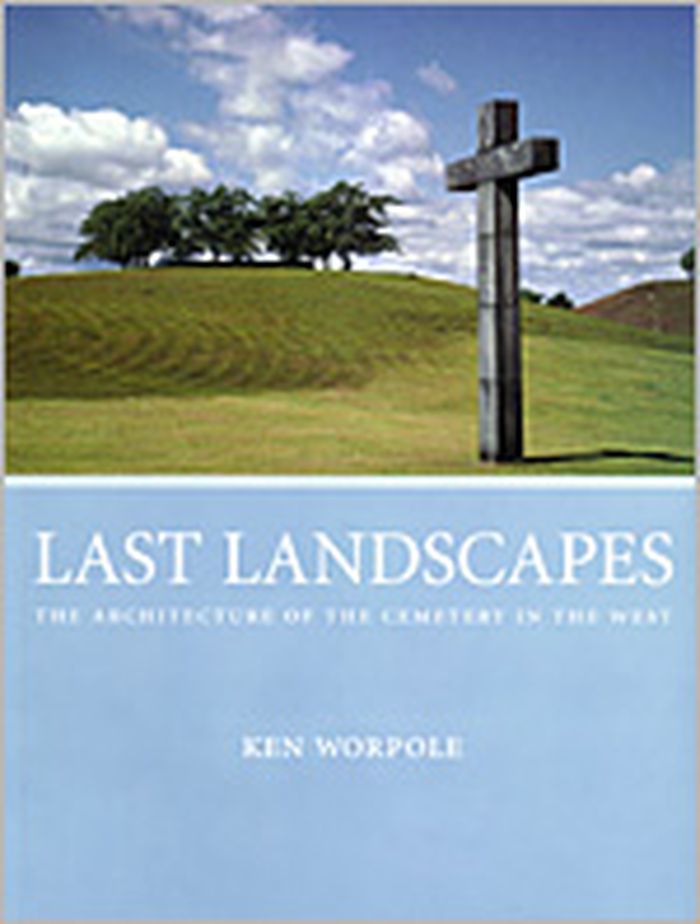
"Last Landscapes" is an exploration of the cult and celebration of death, loss and memory. It traces the history and design of burial places throughout Europe and the USA, ranging from the picturesque tradition of the village churchyard to tightly packed ‘cities of the dead’, such as the Jewish Cemetery in Prague and Père Lachaise in Paris. Other landscapes that feature in this book include the war cemeteries of northern France, Viking burial islands in central Sweden, Etruscan tombs and early Christian catacombs in Italy, the 17th-century Portuguese–Jewish cemetery 'Beth Haim' at Ouderkerk in the Netherlands, Forest Lawns in California, Derek Jarman’s garden in Kent and the Stockholm Woodland Cemetery. It is a fact that architecture ‘began with the tomb', yet, as Ken Worpole shows us in Last Landscapes, many historic cemeteries have been demolished or abandoned in recent times (notably the case with Jewish cemeteries in Eastern Europe), and there has been an increasing loss of inscription and memorialization in the modern urban cemetery. Too often cemeteries today are both poorly designed and physically and culturally marginalized. Worse, cremation denies a full architectural response to the mystery and solemnity of death. The author explores how modes of disposal – burial, cremation, inhumation in mausoleums and wall tombs – vary across Europe and North America, according to religious and other cultural influences. And Last Landscapes raises profound questions as to how, in an age of mass cremation, architects and landscape designers might create meaningful structures and settings in the absence of a body, since for most of history the human body itself has provided the fundamental structural scale. This evocative book also contemplates other forms of memorialization within modern societies, from sculptures to parks, most notably the extraordinary Duisberg Park, set in a former giant steelworks in Germany’s Ruhr Valley.
Last landscapes : the architecture of the cemetery in the west
Actions:
Price:
$49.95
(available to order)
Summary:
"Last Landscapes" is an exploration of the cult and celebration of death, loss and memory. It traces the history and design of burial places throughout Europe and the USA, ranging from the picturesque tradition of the village churchyard to tightly packed ‘cities of the dead’, such as the Jewish Cemetery in Prague and Père Lachaise in Paris. Other landscapes that feature in this book include the war cemeteries of northern France, Viking burial islands in central Sweden, Etruscan tombs and early Christian catacombs in Italy, the 17th-century Portuguese–Jewish cemetery 'Beth Haim' at Ouderkerk in the Netherlands, Forest Lawns in California, Derek Jarman’s garden in Kent and the Stockholm Woodland Cemetery. It is a fact that architecture ‘began with the tomb', yet, as Ken Worpole shows us in Last Landscapes, many historic cemeteries have been demolished or abandoned in recent times (notably the case with Jewish cemeteries in Eastern Europe), and there has been an increasing loss of inscription and memorialization in the modern urban cemetery. Too often cemeteries today are both poorly designed and physically and culturally marginalized. Worse, cremation denies a full architectural response to the mystery and solemnity of death. The author explores how modes of disposal – burial, cremation, inhumation in mausoleums and wall tombs – vary across Europe and North America, according to religious and other cultural influences. And Last Landscapes raises profound questions as to how, in an age of mass cremation, architects and landscape designers might create meaningful structures and settings in the absence of a body, since for most of history the human body itself has provided the fundamental structural scale. This evocative book also contemplates other forms of memorialization within modern societies, from sculptures to parks, most notably the extraordinary Duisberg Park, set in a former giant steelworks in Germany’s Ruhr Valley.
Form:
books
books
Publication:
June 2003, London
June 2003, London
Subject:
Gardens
Gardens


