


1734 Results
Form:
books
books
Actions:
Price:
$31.95
(available to order)
Summary:
For hundreds of years, the shorefront of Manhattan Island served as the country’s center of trade, shipping, and commerce. With its maritime links across the oceans, along the Atlantic coast, and inland to the Midwest and New England, Manhattan became a global city and home to the world’s busiest port. It was a world of docks, ships, tugboats, and ferries, filled with(...)
$31.95
(available to order)
Summary:
For hundreds of years, the shorefront of Manhattan Island served as the country’s center of trade, shipping, and commerce. With its maritime links across the oceans, along the Atlantic coast, and inland to the Midwest and New England, Manhattan became a global city and home to the world’s busiest port. It was a world of docks, ships, tugboats, and ferries, filled with(...)
Title:
Waterfront Manhattan: from Henry Hudson to the High Line
Actions:
Price:
$31.95
(available to order)
Summary:
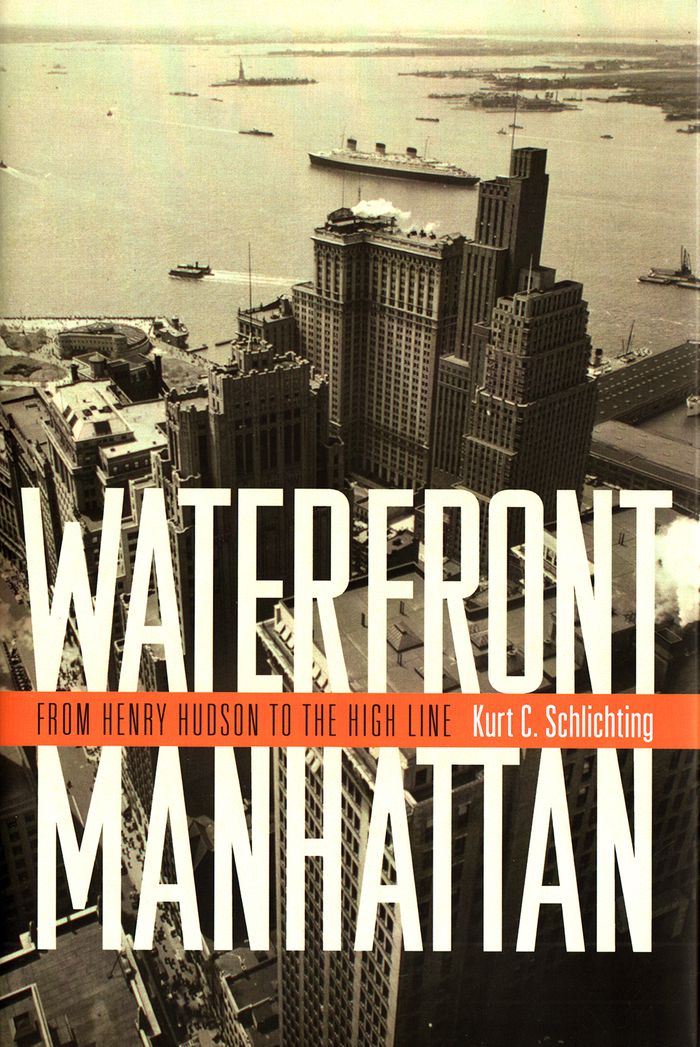
For hundreds of years, the shorefront of Manhattan Island served as the country’s center of trade, shipping, and commerce. With its maritime links across the oceans, along the Atlantic coast, and inland to the Midwest and New England, Manhattan became a global city and home to the world’s busiest port. It was a world of docks, ships, tugboats, and ferries, filled with cargo and freight, a place where millions of immigrants entered the Promised Land. In "Waterfront Manhattan", Kurt C. Schlichting tells the story of the Manhattan waterfront as a struggle between public and private control of New York’s priceless asset. Nature provided New York with a sheltered harbor but presented the city with a challenge: to find the necessary capital to build and expand the maritime infrastructure.
Waterfront Manhattan: from Henry Hudson to the High Line
Actions:
Price:
$31.95
(available to order)
Summary:
For hundreds of years, the shorefront of Manhattan Island served as the country’s center of trade, shipping, and commerce. With its maritime links across the oceans, along the Atlantic coast, and inland to the Midwest and New England, Manhattan became a global city and home to the world’s busiest port. It was a world of docks, ships, tugboats, and ferries, filled with cargo and freight, a place where millions of immigrants entered the Promised Land. In "Waterfront Manhattan", Kurt C. Schlichting tells the story of the Manhattan waterfront as a struggle between public and private control of New York’s priceless asset. Nature provided New York with a sheltered harbor but presented the city with a challenge: to find the necessary capital to build and expand the maritime infrastructure.
Form:
books
books
Publication:
April 2018
April 2018
Subject:
Architecture since 1900, Europe
Architecture since 1900, Europe
Form:
books
books
Price:
$55.00
(available in store)
Summary:
In No More Play: Conversations on Urban Speculation in Los Angeles and Beyond , American architect Michael Maltzan traces the transformations that have taken place in the city of Los Angeles since the early 1990s. Through a series of conversations with the city's leading artists and intellectuals, Maltzan explores such issues as real-estate speculation and future urban(...)
$55.00
(available in store)
Summary:
In No More Play: Conversations on Urban Speculation in Los Angeles and Beyond , American architect Michael Maltzan traces the transformations that have taken place in the city of Los Angeles since the early 1990s. Through a series of conversations with the city's leading artists and intellectuals, Maltzan explores such issues as real-estate speculation and future urban(...)
Title:
No more play: conversations on urban speculation in Los Angeles and beyond
Actions:
Price:
$55.00
(available in store)
Summary:
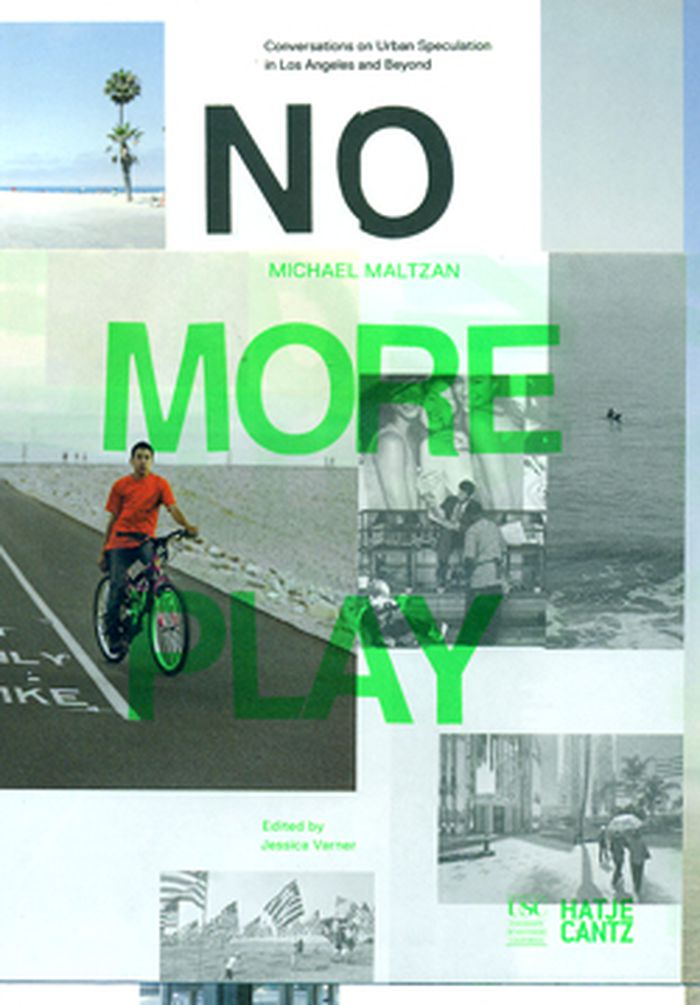
In No More Play: Conversations on Urban Speculation in Los Angeles and Beyond , American architect Michael Maltzan traces the transformations that have taken place in the city of Los Angeles since the early 1990s. Through a series of conversations with the city's leading artists and intellectuals, Maltzan explores such issues as real-estate speculation and future urban development, infrastructure, resources, site density, urban experience, political structure, commerce and community, attempting to transform our understanding of how each affects present-day Los Angeles. Intended to facilitate further dialogue on how to define the “City of Angels” at a moment when its identity is in significant flux, the book includes contributions by Iwan Baan, Catherine Opie, Sarah Whiting, Charles Waldheim, Matthew Coolidge, Geoff Manaugh, Mirko Zardini, Edward Soja, James Flanigan, Charles Jencks and Qingyun Ma.
No more play: conversations on urban speculation in Los Angeles and beyond
Actions:
Price:
$55.00
(available in store)
Summary:
In No More Play: Conversations on Urban Speculation in Los Angeles and Beyond , American architect Michael Maltzan traces the transformations that have taken place in the city of Los Angeles since the early 1990s. Through a series of conversations with the city's leading artists and intellectuals, Maltzan explores such issues as real-estate speculation and future urban development, infrastructure, resources, site density, urban experience, political structure, commerce and community, attempting to transform our understanding of how each affects present-day Los Angeles. Intended to facilitate further dialogue on how to define the “City of Angels” at a moment when its identity is in significant flux, the book includes contributions by Iwan Baan, Catherine Opie, Sarah Whiting, Charles Waldheim, Matthew Coolidge, Geoff Manaugh, Mirko Zardini, Edward Soja, James Flanigan, Charles Jencks and Qingyun Ma.
Form:
books
books
Publication:
July 2011
July 2011
Subject:
Urban Theory
Urban Theory
Form:
books
books
Title:
The digital condition
The digital condition
Actions:
Price:
$27.95
(available to order)
Summary:
Our daily lives, our culture, and our politics are now shaped by the digital condition, in which greater numbers of people are engaged in negotiating meaning in ever more dimensions of life, from the trivial to the profound. They are making use of a complex communication infrastructure, currently dominated by social mass media such as Twitter and Facebook, on which they(...)
$27.95
(available to order)
Summary:
Our daily lives, our culture, and our politics are now shaped by the digital condition, in which greater numbers of people are engaged in negotiating meaning in ever more dimensions of life, from the trivial to the profound. They are making use of a complex communication infrastructure, currently dominated by social mass media such as Twitter and Facebook, on which they(...)
Title:
The digital condition
Actions:
Price:
$27.95
(available to order)
Summary:
Our daily lives, our culture, and our politics are now shaped by the digital condition, in which greater numbers of people are engaged in negotiating meaning in ever more dimensions of life, from the trivial to the profound. They are making use of a complex communication infrastructure, currently dominated by social mass media such as Twitter and Facebook, on which they have come to depend.Amidst a confusing plurality, Felix Stalder argues that there are three key constituents of this condition: the use of existing cultural materials for one’s own production, the way in which new meaning is established as a collective endeavor, and the underlying role of algorithms and automated decision-making processes that give shape to massive volumes of data. These three characteristics define what Stalder calls “the digital condition.”
The digital condition
Actions:
Price:
$27.95
(available to order)
Summary:
Our daily lives, our culture, and our politics are now shaped by the digital condition, in which greater numbers of people are engaged in negotiating meaning in ever more dimensions of life, from the trivial to the profound. They are making use of a complex communication infrastructure, currently dominated by social mass media such as Twitter and Facebook, on which they have come to depend.Amidst a confusing plurality, Felix Stalder argues that there are three key constituents of this condition: the use of existing cultural materials for one’s own production, the way in which new meaning is established as a collective endeavor, and the underlying role of algorithms and automated decision-making processes that give shape to massive volumes of data. These three characteristics define what Stalder calls “the digital condition.”
Form:
books
books
Publication:
December 2017
December 2017
Subject:
Archive, library and the digital
Archive, library and the digital
Form:
books
books
Title:
How to study public life
How to study public life
Actions:
Price:
$35.00
(available to order)
Summary:
How do we accommodate a growing urban population in a way that is sustainable, equitable, and inviting? This question is becoming increasingly urgent to answer as we face diminishing fossil-fuel resources and the effects of a changing climate while global cities continue to compete to be the most vibrant centers of culture, knowledge, and finance. Jan Gehl has been(...)
$35.00
(available to order)
Summary:
How do we accommodate a growing urban population in a way that is sustainable, equitable, and inviting? This question is becoming increasingly urgent to answer as we face diminishing fossil-fuel resources and the effects of a changing climate while global cities continue to compete to be the most vibrant centers of culture, knowledge, and finance. Jan Gehl has been(...)
Title:
How to study public life
Actions:
Price:
$35.00
(available to order)
Summary:
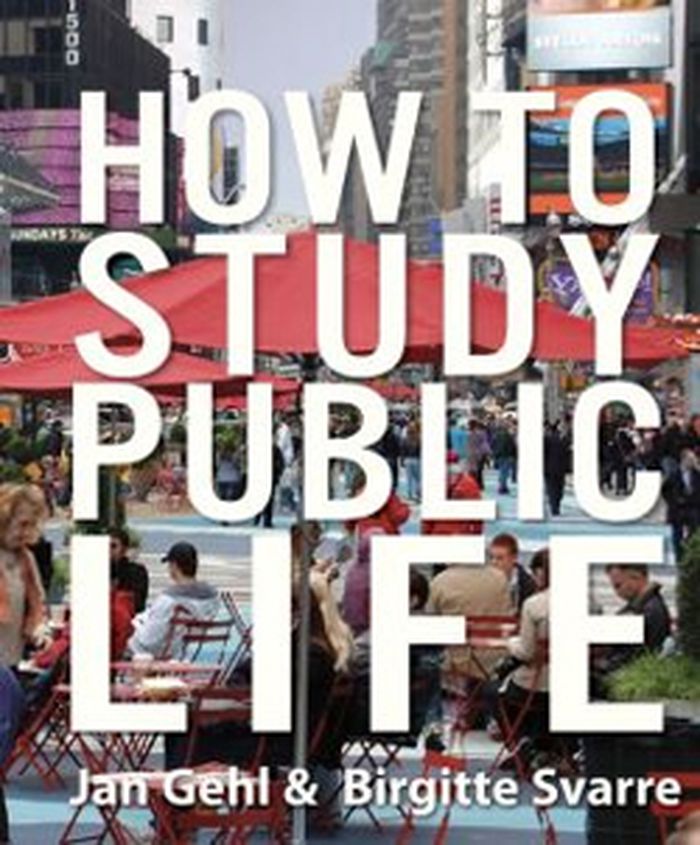
How do we accommodate a growing urban population in a way that is sustainable, equitable, and inviting? This question is becoming increasingly urgent to answer as we face diminishing fossil-fuel resources and the effects of a changing climate while global cities continue to compete to be the most vibrant centers of culture, knowledge, and finance. Jan Gehl has been examining this question since the 1960s, when few urban designers or planners were thinking about designing cities for people. But given the unpredictable, complex and ephemeral nature of life in cities, how can we best design public infrastructure—vital to cities for getting from place to place, or staying in place—for human use? Studying city life and understanding the factors that encourage or discourage use is the key to designing inviting public space.
How to study public life
Actions:
Price:
$35.00
(available to order)
Summary:
How do we accommodate a growing urban population in a way that is sustainable, equitable, and inviting? This question is becoming increasingly urgent to answer as we face diminishing fossil-fuel resources and the effects of a changing climate while global cities continue to compete to be the most vibrant centers of culture, knowledge, and finance. Jan Gehl has been examining this question since the 1960s, when few urban designers or planners were thinking about designing cities for people. But given the unpredictable, complex and ephemeral nature of life in cities, how can we best design public infrastructure—vital to cities for getting from place to place, or staying in place—for human use? Studying city life and understanding the factors that encourage or discourage use is the key to designing inviting public space.
Form:
books
books
Publication:
December 2013
December 2013
Subject:
Urban Theory
Urban Theory
Form:
books
books
Actions:
Price:
$64.95
(available in store)
Summary:
"Many norths: spatial practice in a polar territory" charts the unique spatial realities of Canada’s Arctic region, an immense territory populated with small, dispersed communities. The region has undergone dramatic transformations in the name of sovereignty, aboriginal affairs management, resources, and trade, among others. For most of the Arctic’s modern history,(...)
$64.95
(available in store)
Summary:
"Many norths: spatial practice in a polar territory" charts the unique spatial realities of Canada’s Arctic region, an immense territory populated with small, dispersed communities. The region has undergone dramatic transformations in the name of sovereignty, aboriginal affairs management, resources, and trade, among others. For most of the Arctic’s modern history,(...)
Title:
Many norths: spatial practice in a polar territory
Actions:
Price:
$64.95
(available in store)
Summary:
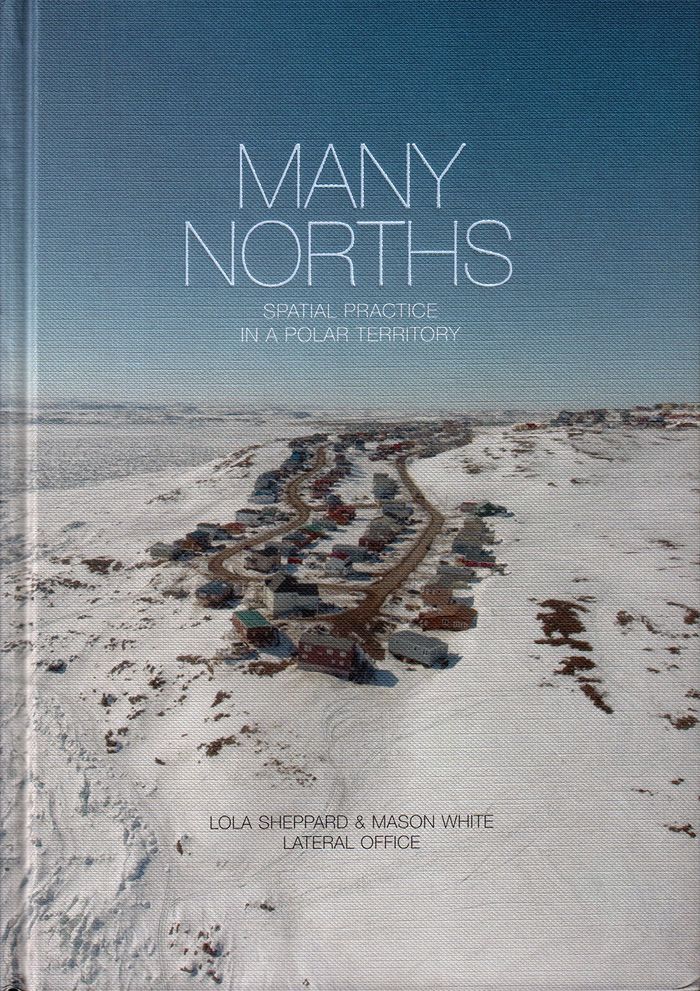
"Many norths: spatial practice in a polar territory" charts the unique spatial realities of Canada’s Arctic region, an immense territory populated with small, dispersed communities. The region has undergone dramatic transformations in the name of sovereignty, aboriginal affairs management, resources, and trade, among others. For most of the Arctic’s modern history, architecture, infrastructure, and settlements have been the tools of colonialism. Today, tradition and modernity are intertwined. Northerners have demonstrated remarkable adaptation and resilience as powerful climatic, social, and economic pressures collide. This unprecedented book documents—through the themes of urbanism, architecture, mobility, monitoring, and resources—the multiplicity of norths that appear and the spatial practices employed to negotiate it. Using innovative drawings, maps, timelines, as well as essays and interviews, Many Norths reveals a distinct northern vernacular.
Many norths: spatial practice in a polar territory
Actions:
Price:
$64.95
(available in store)
Summary:
"Many norths: spatial practice in a polar territory" charts the unique spatial realities of Canada’s Arctic region, an immense territory populated with small, dispersed communities. The region has undergone dramatic transformations in the name of sovereignty, aboriginal affairs management, resources, and trade, among others. For most of the Arctic’s modern history, architecture, infrastructure, and settlements have been the tools of colonialism. Today, tradition and modernity are intertwined. Northerners have demonstrated remarkable adaptation and resilience as powerful climatic, social, and economic pressures collide. This unprecedented book documents—through the themes of urbanism, architecture, mobility, monitoring, and resources—the multiplicity of norths that appear and the spatial practices employed to negotiate it. Using innovative drawings, maps, timelines, as well as essays and interviews, Many Norths reveals a distinct northern vernacular.
Form:
books
books
Publication:
June 2017
June 2017
Subject:
Architecture in Canada
Architecture in Canada
Form:
books
books
Price:
$82.95
(available to order)
Summary:
When the motor car first came to England in the 1890s, it was a luxury item with little practical purpose - drivers couldn't travel very far or very quickly without paved roads or traffic laws. Thus began a transformation that has affected the architecture, infrastructure, and even the natural environment of the country. "Carscapes" relates the history of the car's impact(...)
$82.95
(available to order)
Summary:
When the motor car first came to England in the 1890s, it was a luxury item with little practical purpose - drivers couldn't travel very far or very quickly without paved roads or traffic laws. Thus began a transformation that has affected the architecture, infrastructure, and even the natural environment of the country. "Carscapes" relates the history of the car's impact(...)
Subject:
Transportation, Tourism, Migration
Transportation, Tourism, Migration
Publication:
November 2012
November 2012
Title:
Carscapes : the motor car, architecture and landscape in England
Actions:
Price:
$82.95
(available to order)
Summary:
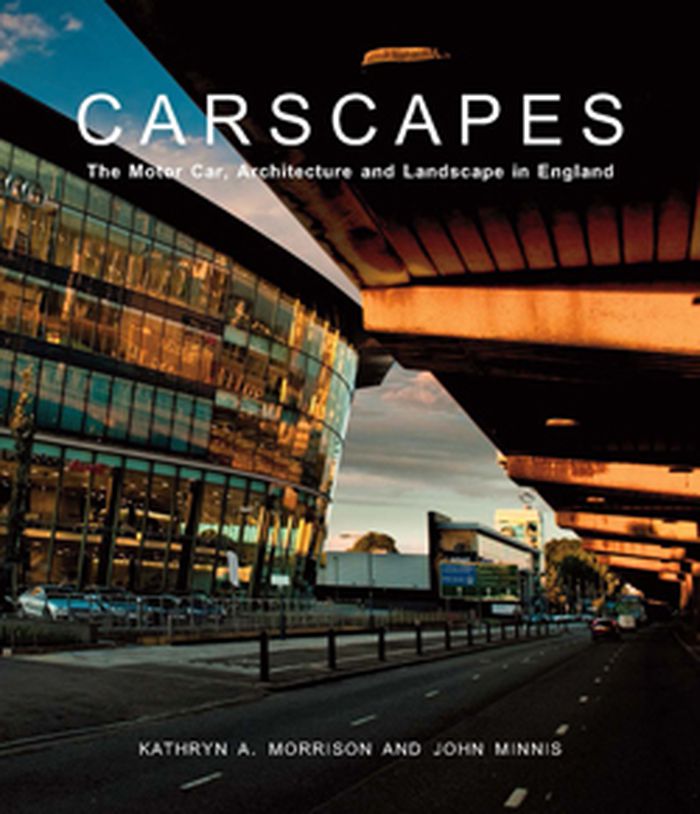
When the motor car first came to England in the 1890s, it was a luxury item with little practical purpose - drivers couldn't travel very far or very quickly without paved roads or traffic laws. Thus began a transformation that has affected the architecture, infrastructure, and even the natural environment of the country. "Carscapes" relates the history of the car's impact on the physical environment of England from its early beginnings to the modern motorway network, focusing especially on its architectural influence. The authors offer a detailed look at the litany of structures designed specifically to accommodate cars: garages, gas stations, car parks, factories, and showrooms. Presenting a comprehensive study of these buildings, along with highways, bridges, and signage, "Carscapes" reveals the many overlooked ways in which automobiles have shaped the modern English landscape.
Carscapes : the motor car, architecture and landscape in England
Actions:
Price:
$82.95
(available to order)
Summary:
When the motor car first came to England in the 1890s, it was a luxury item with little practical purpose - drivers couldn't travel very far or very quickly without paved roads or traffic laws. Thus began a transformation that has affected the architecture, infrastructure, and even the natural environment of the country. "Carscapes" relates the history of the car's impact on the physical environment of England from its early beginnings to the modern motorway network, focusing especially on its architectural influence. The authors offer a detailed look at the litany of structures designed specifically to accommodate cars: garages, gas stations, car parks, factories, and showrooms. Presenting a comprehensive study of these buildings, along with highways, bridges, and signage, "Carscapes" reveals the many overlooked ways in which automobiles have shaped the modern English landscape.
Form:
books
books
Publication:
November 2012
November 2012
Subject:
Transportation, Tourism, Migration
Transportation, Tourism, Migration
Form:
books
books
Actions:
Price:
$49.00
(available in store)
Summary:
Through a collection of essays and case studies, ''Water Works'' shows over sixty careful responses to flooding, draught, pollution, extraction and other issues around freshwater. Divided into seven themes: Purity, Wild, Scale, Representation, Violence, Infrastructure and Commerce, ''Water Works'' allows us to learn from places and makers that build on the intricate(...)
$49.00
(available in store)
Summary:
Through a collection of essays and case studies, ''Water Works'' shows over sixty careful responses to flooding, draught, pollution, extraction and other issues around freshwater. Divided into seven themes: Purity, Wild, Scale, Representation, Violence, Infrastructure and Commerce, ''Water Works'' allows us to learn from places and makers that build on the intricate(...)
Title:
Water works: Eco-social design
Actions:
Price:
$49.00
(available in store)
Summary:
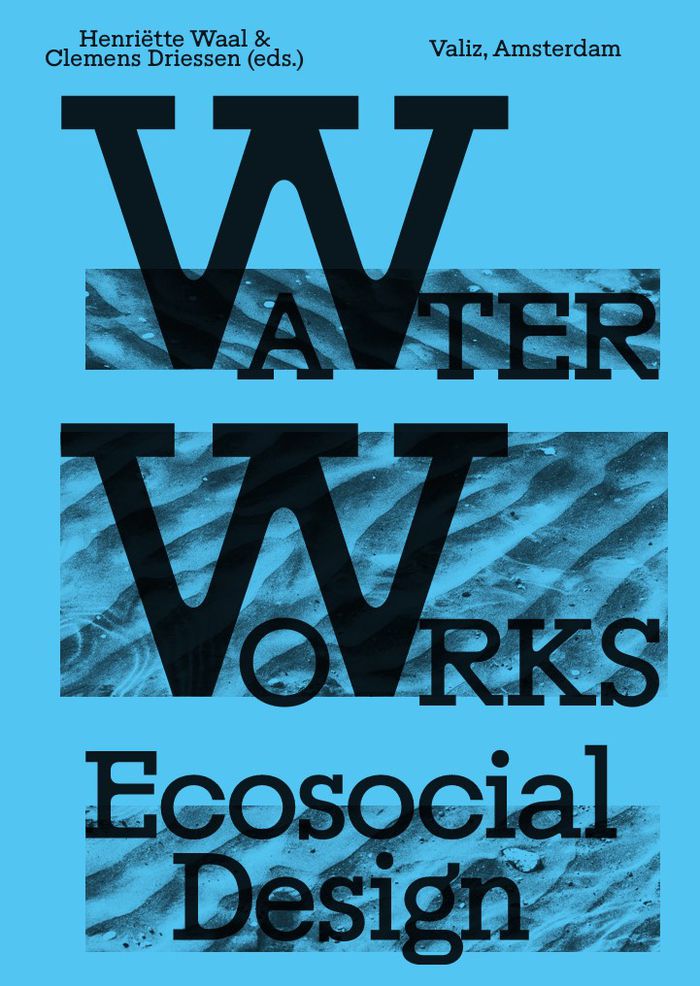
Through a collection of essays and case studies, ''Water Works'' shows over sixty careful responses to flooding, draught, pollution, extraction and other issues around freshwater. Divided into seven themes: Purity, Wild, Scale, Representation, Violence, Infrastructure and Commerce, ''Water Works'' allows us to learn from places and makers that build on the intricate relationships between people and other life forms, materials and (infra)structures. Critically blending knowledge derived from craft, art, science and ecology, these works ask: what are sensible ways to embrace and connect with water? Through wading, floating, testing and tasting, how can we generate more desirable ecosocial relations? In facing large-scale engineering, climate change, privatization and other forms of water violence, these works are an invitation to design together with water as a site and medium for ecosocial renewal.
Water works: Eco-social design
Actions:
Price:
$49.00
(available in store)
Summary:
Through a collection of essays and case studies, ''Water Works'' shows over sixty careful responses to flooding, draught, pollution, extraction and other issues around freshwater. Divided into seven themes: Purity, Wild, Scale, Representation, Violence, Infrastructure and Commerce, ''Water Works'' allows us to learn from places and makers that build on the intricate relationships between people and other life forms, materials and (infra)structures. Critically blending knowledge derived from craft, art, science and ecology, these works ask: what are sensible ways to embrace and connect with water? Through wading, floating, testing and tasting, how can we generate more desirable ecosocial relations? In facing large-scale engineering, climate change, privatization and other forms of water violence, these works are an invitation to design together with water as a site and medium for ecosocial renewal.
Form:
books
books
Publication:
November 2025
November 2025
Subject:
Green Architecture
Green Architecture
Form:
books
books
Title:
Nicola Buonomo: Luoghi
Nicola Buonomo: Luoghi
Actions:
Price:
$69.95
(available in store)
Summary:
In his debut monograph, "Luoghi", Nicola Buonomo deepens his engagement with nine familiar places. Ranging from his grandmother's backyard to a sand production facility nearby, these are all within a few kilometers of Nicola’s home in Northern Sicily, Italy. The photographs display a subtly dissonant relationship between man-made infrastructure and the natural world.(...)
$69.95
(available in store)
Summary:
In his debut monograph, "Luoghi", Nicola Buonomo deepens his engagement with nine familiar places. Ranging from his grandmother's backyard to a sand production facility nearby, these are all within a few kilometers of Nicola’s home in Northern Sicily, Italy. The photographs display a subtly dissonant relationship between man-made infrastructure and the natural world.(...)
Title:
Nicola Buonomo: Luoghi
Actions:
Price:
$69.95
(available in store)
Summary:
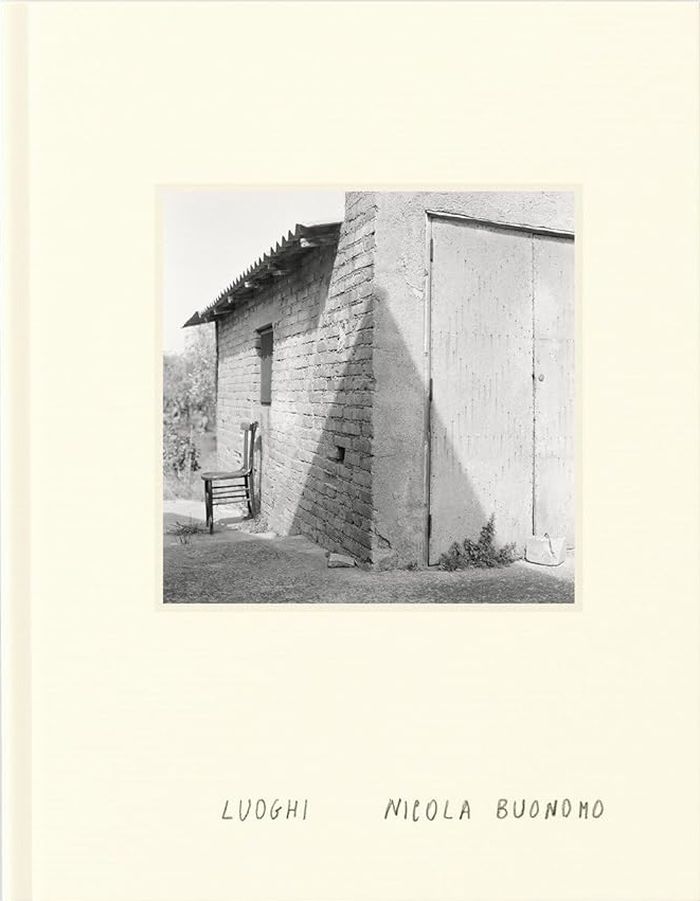
In his debut monograph, "Luoghi", Nicola Buonomo deepens his engagement with nine familiar places. Ranging from his grandmother's backyard to a sand production facility nearby, these are all within a few kilometers of Nicola’s home in Northern Sicily, Italy. The photographs display a subtly dissonant relationship between man-made infrastructure and the natural world. Nicola first defined a clear perimeter for each area, outside of which he could not photograph. In creating these limitations, he ambitiously sought to exhaust most of the possibilities of his gaze within them- prompting a repetitive style of shooting. Sometimes photographing a single subject many times, Nicola forced himself to find new relationships with what he already knew well. In this attempt to enrich his relationship with the familiar, Nicola’s process became synonymous with the final work.
Nicola Buonomo: Luoghi
Actions:
Price:
$69.95
(available in store)
Summary:
In his debut monograph, "Luoghi", Nicola Buonomo deepens his engagement with nine familiar places. Ranging from his grandmother's backyard to a sand production facility nearby, these are all within a few kilometers of Nicola’s home in Northern Sicily, Italy. The photographs display a subtly dissonant relationship between man-made infrastructure and the natural world. Nicola first defined a clear perimeter for each area, outside of which he could not photograph. In creating these limitations, he ambitiously sought to exhaust most of the possibilities of his gaze within them- prompting a repetitive style of shooting. Sometimes photographing a single subject many times, Nicola forced himself to find new relationships with what he already knew well. In this attempt to enrich his relationship with the familiar, Nicola’s process became synonymous with the final work.
Form:
books
books
Publication:
September 2025
September 2025
Subject:
Photography monographs
Photography monographs
Form:
books
books
Title:
Passing through moving in and getting away with it: Gordon Matta-Clark New York city graffiti
Passing through moving in and getting away with it: Gordon Matta-Clark New York city graffiti
Actions:
Price:
$128.99
(available in store)
Summary:
From 1972 to 1973, Gordon Matta-Clark took over fifteen hundred photographs of gra?ti in New York City. These pictures are some of the earliest documentation of an emerging art form, and are an under-recognized body of work from Matta-Clark—an artist who used the city’s crumbling infrastructure to reveal the social and political implications of architecture and urban(...)
$128.99
(available in store)
Summary:
From 1972 to 1973, Gordon Matta-Clark took over fifteen hundred photographs of gra?ti in New York City. These pictures are some of the earliest documentation of an emerging art form, and are an under-recognized body of work from Matta-Clark—an artist who used the city’s crumbling infrastructure to reveal the social and political implications of architecture and urban(...)
Title:
Passing through moving in and getting away with it: Gordon Matta-Clark New York city graffiti
Actions:
Price:
$128.99
(available in store)
Summary:
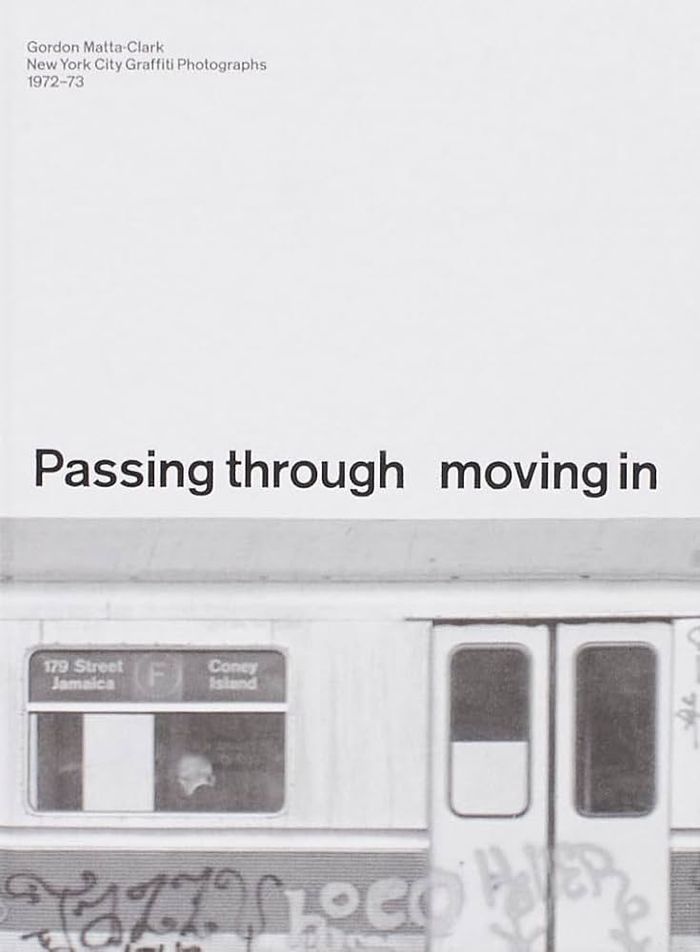
From 1972 to 1973, Gordon Matta-Clark took over fifteen hundred photographs of gra?ti in New York City. These pictures are some of the earliest documentation of an emerging art form, and are an under-recognized body of work from Matta-Clark—an artist who used the city’s crumbling infrastructure to reveal the social and political implications of architecture and urban design. This publication features every frame from every roll of film Matta-Clark shot, organized according to the sequence of contact sheets in the artist’s archive. Taken together, these pictures demonstrate Matta-Clark’s obsession with the gra?ti that had exploded across the city’s walls, subways, and buses, and show him growing bolder as he moved from photographing on the streets and subway platforms, to trespassing in outer borough train yards.
Passing through moving in and getting away with it: Gordon Matta-Clark New York city graffiti
Actions:
Price:
$128.99
(available in store)
Summary:
From 1972 to 1973, Gordon Matta-Clark took over fifteen hundred photographs of gra?ti in New York City. These pictures are some of the earliest documentation of an emerging art form, and are an under-recognized body of work from Matta-Clark—an artist who used the city’s crumbling infrastructure to reveal the social and political implications of architecture and urban design. This publication features every frame from every roll of film Matta-Clark shot, organized according to the sequence of contact sheets in the artist’s archive. Taken together, these pictures demonstrate Matta-Clark’s obsession with the gra?ti that had exploded across the city’s walls, subways, and buses, and show him growing bolder as he moved from photographing on the streets and subway platforms, to trespassing in outer borough train yards.
Form:
books
books
Publication:
September 2025
September 2025
Subject:
Photography monographs
Photography monographs
Form:
journals and magazines
journals and magazines
Title:
Trans 48: Pseudo
Trans 48: Pseudo
Actions:
Price:
$44.95
(available in store)
Summary:
Unfolding across five parts, this issue frames the notion of pseudo along and beyond its ties with the "fake". While part one, "Simulation," blends the artificial with the familiar – whether in scale models or controlled biomes – the following part, "Promise," explores how futures are staged to organise the present. "Role" examines how identities become naturalized(...)
$44.95
(available in store)
Summary:
Unfolding across five parts, this issue frames the notion of pseudo along and beyond its ties with the "fake". While part one, "Simulation," blends the artificial with the familiar – whether in scale models or controlled biomes – the following part, "Promise," explores how futures are staged to organise the present. "Role" examines how identities become naturalized(...)
Subject:
Magazines
Magazines
Publication:
March 2026
March 2026
Title:
Trans 48: Pseudo
Actions:
Price:
$44.95
(available in store)
Summary:
Unfolding across five parts, this issue frames the notion of pseudo along and beyond its ties with the "fake". While part one, "Simulation," blends the artificial with the familiar – whether in scale models or controlled biomes – the following part, "Promise," explores how futures are staged to organise the present. "Role" examines how identities become naturalized through space, claiming to be neutral, caring or traditional. "Scam" investigates architecture and urbanism as credible deceptive practices, where authenticity is fabricated and images pave the way for a collective participation in illusions. "Construction" examines how territorial interventions, such as camps, corridors, or quarries, produce political realities and stabilise power, turning narration into infrastructure. Ultimately, pseudo emerges as a condition that both shifts and suspends reality: not fully true, yet never entirely false.
Trans 48: Pseudo
Actions:
Price:
$44.95
(available in store)
Summary:
Unfolding across five parts, this issue frames the notion of pseudo along and beyond its ties with the "fake". While part one, "Simulation," blends the artificial with the familiar – whether in scale models or controlled biomes – the following part, "Promise," explores how futures are staged to organise the present. "Role" examines how identities become naturalized through space, claiming to be neutral, caring or traditional. "Scam" investigates architecture and urbanism as credible deceptive practices, where authenticity is fabricated and images pave the way for a collective participation in illusions. "Construction" examines how territorial interventions, such as camps, corridors, or quarries, produce political realities and stabilise power, turning narration into infrastructure. Ultimately, pseudo emerges as a condition that both shifts and suspends reality: not fully true, yet never entirely false.
Form:
journals and magazines
journals and magazines
Publication:
March 2026
March 2026
Subject:
Magazines
Magazines


