


1623 Results
Form:
books
books
Actions:
Price:
$60.00
(available to order)
Summary:
Garden design in the twentieth century ranges from Victorian-era examples to the age of Land Art. This span results in an extraordinarily varied survey—from Europe to South America, from Japan to the United States—including work by garden and landscape designers whose names are familiar to both lovers and scholars of the modern garden: Robinson, Jekyll, Jensen, Farrand,(...)
$60.00
(available to order)
Summary:
Garden design in the twentieth century ranges from Victorian-era examples to the age of Land Art. This span results in an extraordinarily varied survey—from Europe to South America, from Japan to the United States—including work by garden and landscape designers whose names are familiar to both lovers and scholars of the modern garden: Robinson, Jekyll, Jensen, Farrand,(...)
Title:
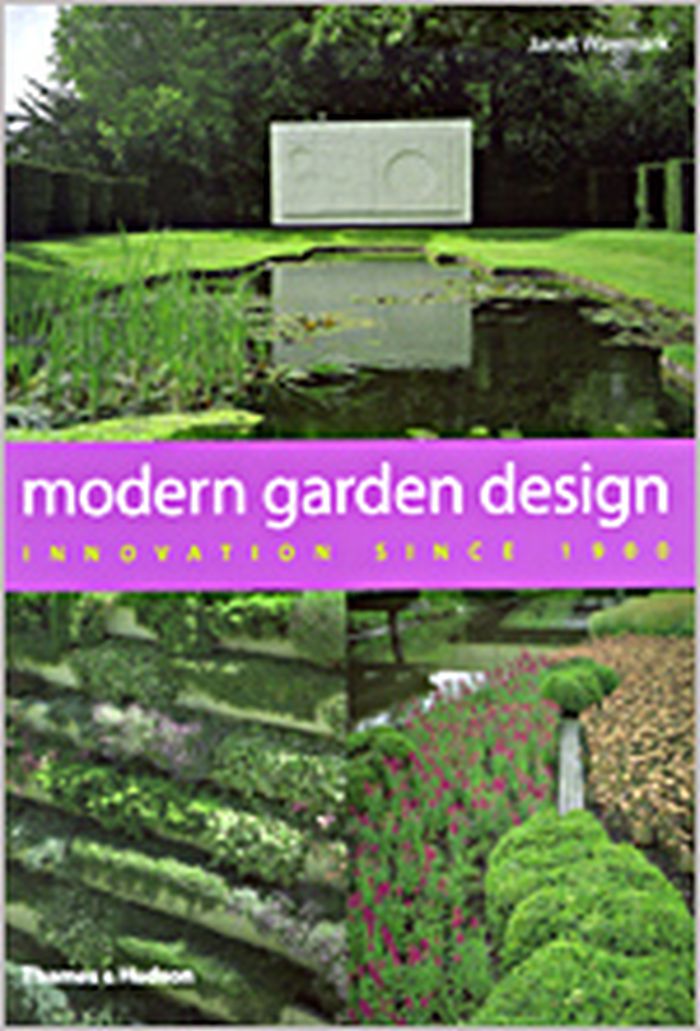
Modern garden design : innovation since 1900
Actions:
Price:
$60.00
(available to order)
Summary:
Garden design in the twentieth century ranges from Victorian-era examples to the age of Land Art. This span results in an extraordinarily varied survey—from Europe to South America, from Japan to the United States—including work by garden and landscape designers whose names are familiar to both lovers and scholars of the modern garden: Robinson, Jekyll, Jensen, Farrand, Sessions, Mawson, Church, Sørensen, and Jellicoe. Janet Waymark traces the revolutionary changes brought about in the postwar period by the Harvard Rebels—Eckbo, Rose, and Kiley—and examines the impact of Noguchi, Burle Marx, Barragán, and others, as well as the powerful international influence of Scandinavian landscape architects and designers. The garden city is also given close attention, from its beginnings in late Victorian Britain, through the Greenbelt Towns in the American Midwest, to the latest regeneration of urban centers worldwide. A long line of artists and architects of international renown have earned a place in the history of the modern garden: Monet, Le Corbusier, Mondrian, Wright, Mies van der Rohe, and Gaudí, among others. Land artists, such as Michael Heizer, Robert Smithson, Patricia Johanson, and Kathryn Gustafson in America and Richard Long, Andy Goldsworthy, and Ian Hamilton Finlay in the UK, have brought new ways of thinking about landscape and the garden into the twenty-first century.
Modern garden design : innovation since 1900
Actions:
Price:
$60.00
(available to order)
Summary:
Garden design in the twentieth century ranges from Victorian-era examples to the age of Land Art. This span results in an extraordinarily varied survey—from Europe to South America, from Japan to the United States—including work by garden and landscape designers whose names are familiar to both lovers and scholars of the modern garden: Robinson, Jekyll, Jensen, Farrand, Sessions, Mawson, Church, Sørensen, and Jellicoe. Janet Waymark traces the revolutionary changes brought about in the postwar period by the Harvard Rebels—Eckbo, Rose, and Kiley—and examines the impact of Noguchi, Burle Marx, Barragán, and others, as well as the powerful international influence of Scandinavian landscape architects and designers. The garden city is also given close attention, from its beginnings in late Victorian Britain, through the Greenbelt Towns in the American Midwest, to the latest regeneration of urban centers worldwide. A long line of artists and architects of international renown have earned a place in the history of the modern garden: Monet, Le Corbusier, Mondrian, Wright, Mies van der Rohe, and Gaudí, among others. Land artists, such as Michael Heizer, Robert Smithson, Patricia Johanson, and Kathryn Gustafson in America and Richard Long, Andy Goldsworthy, and Ian Hamilton Finlay in the UK, have brought new ways of thinking about landscape and the garden into the twenty-first century.
Form:
books
books
Publication:
May 2003, New York
May 2003, New York
Subject:
Gardens
Gardens
Form:
books
books

Actions:
Price:
$24.95
(available to order)
Summary:
Industrialization created cities of Dickensian squalor that were crowded, smoky, dirty, and disease-ridden. By the beginning of the twentieth century, urban visionaries were looking for ways to improve living and working conditions in industrial cities. In "Invented Edens", Robert Kargon and Arthur Molella trace the arc of one form of urban design, which they term the(...)
$24.95
(available to order)
Summary:
Industrialization created cities of Dickensian squalor that were crowded, smoky, dirty, and disease-ridden. By the beginning of the twentieth century, urban visionaries were looking for ways to improve living and working conditions in industrial cities. In "Invented Edens", Robert Kargon and Arthur Molella trace the arc of one form of urban design, which they term the(...)
Subject:
Green Architecture
Green Architecture
Publication:
October 2005, Cambridge (MA), London
October 2005, Cambridge (MA), London
Title:
Invented Edens : techno-cities of the twentieth century
Actions:
Price:
$24.95
(available to order)
Summary:
Industrialization created cities of Dickensian squalor that were crowded, smoky, dirty, and disease-ridden. By the beginning of the twentieth century, urban visionaries were looking for ways to improve living and working conditions in industrial cities. In "Invented Edens", Robert Kargon and Arthur Molella trace the arc of one form of urban design, which they term the techno-city : a planned city developed in conjunction with large industrial or technological enterprises, blending the technological and the pastoral, the mill town and the garden city. Techno-cities of the twentieth century range from factory towns in Mussolini's Italy to the Disney creation of Celebration, Florida. Kargon and Molella show that the techno-city represents an experiment in integrating modern technology into the world of ideal life. Techno-cities mirror society's understanding of current technologies and, at the same time, seek to regain the lost virtues of the edenic pre-industrial village. The idea of the techno-city transcended ideologies, crossed national borders, and spanned the entire twentieth century. Kargon and Molella map the concept through a series of exemplars. These include Norris, Tennessee, home to the Tennessee Valley Authority; Torviscosa, Italy, built by Italy's Fascist government to accommodate synthetic textile manufacturing (and featured in an early short by Michelangelo Antonioni); Ciudad Guayana, Venezuela, planned by a team from MIT and Harvard; and, finally, Disney's Celebration - perhaps the ultimate techno-city, a fantasy city reflecting an era in which virtual experiences are rapidly replacing actual ones.
Invented Edens : techno-cities of the twentieth century
Actions:
Price:
$24.95
(available to order)
Summary:
Industrialization created cities of Dickensian squalor that were crowded, smoky, dirty, and disease-ridden. By the beginning of the twentieth century, urban visionaries were looking for ways to improve living and working conditions in industrial cities. In "Invented Edens", Robert Kargon and Arthur Molella trace the arc of one form of urban design, which they term the techno-city : a planned city developed in conjunction with large industrial or technological enterprises, blending the technological and the pastoral, the mill town and the garden city. Techno-cities of the twentieth century range from factory towns in Mussolini's Italy to the Disney creation of Celebration, Florida. Kargon and Molella show that the techno-city represents an experiment in integrating modern technology into the world of ideal life. Techno-cities mirror society's understanding of current technologies and, at the same time, seek to regain the lost virtues of the edenic pre-industrial village. The idea of the techno-city transcended ideologies, crossed national borders, and spanned the entire twentieth century. Kargon and Molella map the concept through a series of exemplars. These include Norris, Tennessee, home to the Tennessee Valley Authority; Torviscosa, Italy, built by Italy's Fascist government to accommodate synthetic textile manufacturing (and featured in an early short by Michelangelo Antonioni); Ciudad Guayana, Venezuela, planned by a team from MIT and Harvard; and, finally, Disney's Celebration - perhaps the ultimate techno-city, a fantasy city reflecting an era in which virtual experiences are rapidly replacing actual ones.
Form:
books
books
Publication:
October 2005, Cambridge (MA), London
October 2005, Cambridge (MA), London
Subject:
Green Architecture
Green Architecture
Form:
books
books
Price:
$75.95
(available to order)
Summary:
Valerio Olgiati has worked as an architect in Los Angeles, Zurich, and, since 2008, in Flims. He has been a visiting professor at the Eidgenössische Technische Hochschule (Swiss Federal Institute of Technology) in Zurich, the AA in London, and at Cornell University in Ithaca, New York. Since 2002 he has been professor at the Accademia di architettura in Mendrisio and(...)
$75.95
(available to order)
Summary:
Valerio Olgiati has worked as an architect in Los Angeles, Zurich, and, since 2008, in Flims. He has been a visiting professor at the Eidgenössische Technische Hochschule (Swiss Federal Institute of Technology) in Zurich, the AA in London, and at Cornell University in Ithaca, New York. Since 2002 he has been professor at the Accademia di architettura in Mendrisio and(...)
Title:
Dado : built and inhabited by Rudolph Olgiati and Valerio Olgiati
Actions:
Price:
$75.95
(available to order)
Summary:
Valerio Olgiati has worked as an architect in Los Angeles, Zurich, and, since 2008, in Flims. He has been a visiting professor at the Eidgenössische Technische Hochschule (Swiss Federal Institute of Technology) in Zurich, the AA in London, and at Cornell University in Ithaca, New York. Since 2002 he has been professor at the Accademia di architettura in Mendrisio and since autumn 2009 he has held the Kenzo Tange Chair at Harvard. The unmistakable straight lines and independence of his buildings has brought him international attention. The Olgiati’s family estate is located in the historical town center of Flims. Rudolf Olgiati (1910–95) purchased the property, known as Dado, in 1930 and throughout his life used it to realize his architectural thoughts and ideas. Today, the son is living in his father’s house, and in 2008 he set up his much-admired architectural firm on the former site of the barn. This publication portrays the life and work of both architects using the example of the house and studio - that is, through the transformations they have undergone at the hands of their residents over a period of nearly eighty years. It shows personal furniture and objects, the individual layout and design of the spaces, and hence the penchants and attitudes of the two architects. At the same time this unusual portrait documents not only the relationship between father and son but also the characters of two generations and their understanding of architecture and aesthetics.
Dado : built and inhabited by Rudolph Olgiati and Valerio Olgiati
Actions:
Price:
$75.95
(available to order)
Summary:
Valerio Olgiati has worked as an architect in Los Angeles, Zurich, and, since 2008, in Flims. He has been a visiting professor at the Eidgenössische Technische Hochschule (Swiss Federal Institute of Technology) in Zurich, the AA in London, and at Cornell University in Ithaca, New York. Since 2002 he has been professor at the Accademia di architettura in Mendrisio and since autumn 2009 he has held the Kenzo Tange Chair at Harvard. The unmistakable straight lines and independence of his buildings has brought him international attention. The Olgiati’s family estate is located in the historical town center of Flims. Rudolf Olgiati (1910–95) purchased the property, known as Dado, in 1930 and throughout his life used it to realize his architectural thoughts and ideas. Today, the son is living in his father’s house, and in 2008 he set up his much-admired architectural firm on the former site of the barn. This publication portrays the life and work of both architects using the example of the house and studio - that is, through the transformations they have undergone at the hands of their residents over a period of nearly eighty years. It shows personal furniture and objects, the individual layout and design of the spaces, and hence the penchants and attitudes of the two architects. At the same time this unusual portrait documents not only the relationship between father and son but also the characters of two generations and their understanding of architecture and aesthetics.
Form:
books
books
Publication:
March 2010
March 2010
Subject:
Architecture Monographs
Architecture Monographs
Form:
books
books
Actions:
Price:
$31.00
(available to order)
Summary:
Today on almost every desk in every office sits a computer. Eighty years ago, desktops were equipped with a nonelectronic data processing machine: a card file. In this publication, Markus Krajewski traces the evolution of this proto-computer of rearrangeable parts (file cards) that became ubiquitous in offices between the world wars. The story begins with Konrad(...)
$31.00
(available to order)
Summary:
Today on almost every desk in every office sits a computer. Eighty years ago, desktops were equipped with a nonelectronic data processing machine: a card file. In this publication, Markus Krajewski traces the evolution of this proto-computer of rearrangeable parts (file cards) that became ubiquitous in offices between the world wars. The story begins with Konrad(...)
Title:
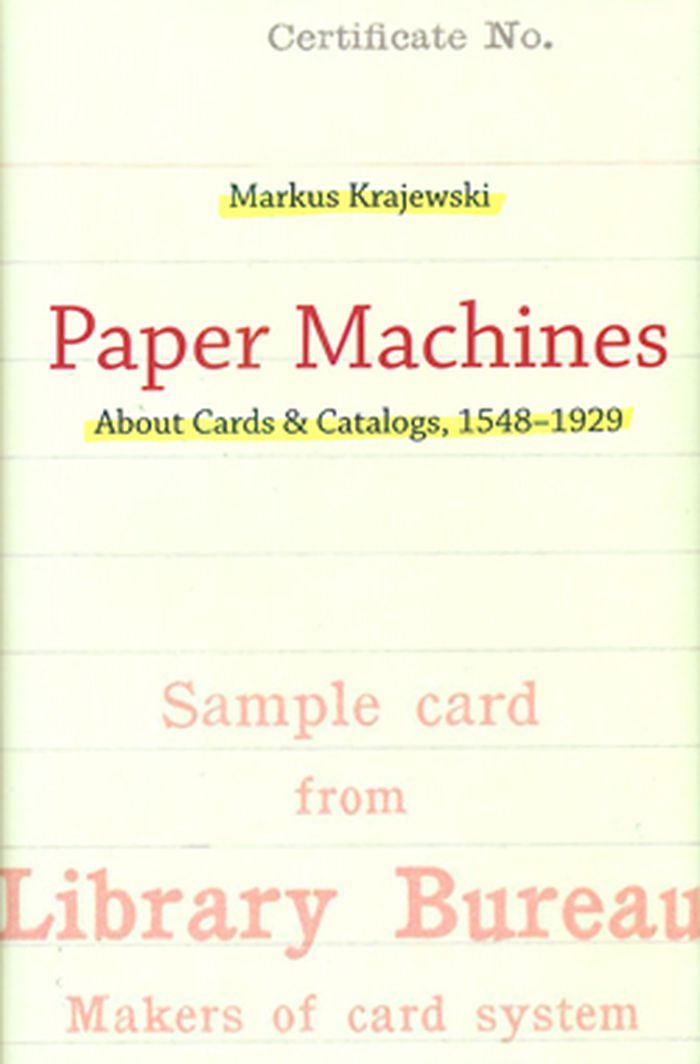
Paper machines : about cards & catalogs, 1548-1929
Actions:
Price:
$31.00
(available to order)
Summary:
Today on almost every desk in every office sits a computer. Eighty years ago, desktops were equipped with a nonelectronic data processing machine: a card file. In this publication, Markus Krajewski traces the evolution of this proto-computer of rearrangeable parts (file cards) that became ubiquitous in offices between the world wars. The story begins with Konrad Gessner, a sixteenth-century Swiss polymath who described a new method of processing data: to cut up a sheet of handwritten notes into slips of paper, with one fact or topic per slip, and arrange as desired. In the late eighteenth century, the card catalog became the librarian's answer to the threat of information overload. Then, at the turn of the twentieth century, business adopted the technology of the card catalog as a bookkeeping tool. Krajewski explores this conceptual development and casts the card file as a "universal paper machine" that accomplishes the basic operations of Turing's universal discrete machine: storing, processing, and transferring data. In telling his story, Krajewski takes the reader on a number of illuminating detours, telling us, for example, that the card catalog and the numbered street address emerged at the same time in the same city (Vienna), and that Harvard University's home-grown cataloging system grew out of a librarian's laziness; and that Melvil Dewey (originator of the Dewey Decimal System) helped bring about the technology transfer of card files to business.
Paper machines : about cards & catalogs, 1548-1929
Actions:
Price:
$31.00
(available to order)
Summary:
Today on almost every desk in every office sits a computer. Eighty years ago, desktops were equipped with a nonelectronic data processing machine: a card file. In this publication, Markus Krajewski traces the evolution of this proto-computer of rearrangeable parts (file cards) that became ubiquitous in offices between the world wars. The story begins with Konrad Gessner, a sixteenth-century Swiss polymath who described a new method of processing data: to cut up a sheet of handwritten notes into slips of paper, with one fact or topic per slip, and arrange as desired. In the late eighteenth century, the card catalog became the librarian's answer to the threat of information overload. Then, at the turn of the twentieth century, business adopted the technology of the card catalog as a bookkeeping tool. Krajewski explores this conceptual development and casts the card file as a "universal paper machine" that accomplishes the basic operations of Turing's universal discrete machine: storing, processing, and transferring data. In telling his story, Krajewski takes the reader on a number of illuminating detours, telling us, for example, that the card catalog and the numbered street address emerged at the same time in the same city (Vienna), and that Harvard University's home-grown cataloging system grew out of a librarian's laziness; and that Melvil Dewey (originator of the Dewey Decimal System) helped bring about the technology transfer of card files to business.
Form:
books
books
Publication:
October 2011
October 2011
Subject:
Archive, library and the digital
Archive, library and the digital
Form:
books
books
Actions:
Price:
$41.95
(available to order)
Summary:
During the economic boom of the 1990's, art museums expanded dramatically in size, scope, and ambition. They came to be seen as new civic centers : on the one hand as places of entertainment, leisure, and commerce, on the other as socially therapeutic institutions. But museums were also criticized for everything from elitism to looting or illegally exporting works from(...)
$41.95
(available to order)
Summary:
During the economic boom of the 1990's, art museums expanded dramatically in size, scope, and ambition. They came to be seen as new civic centers : on the one hand as places of entertainment, leisure, and commerce, on the other as socially therapeutic institutions. But museums were also criticized for everything from elitism to looting or illegally exporting works from(...)
Subject:
Museums and Universal Exhibitions
Museums and Universal Exhibitions
Publication:
January 2004, Princeton / Cambridge, Mass.
January 2004, Princeton / Cambridge, Mass.
Title:
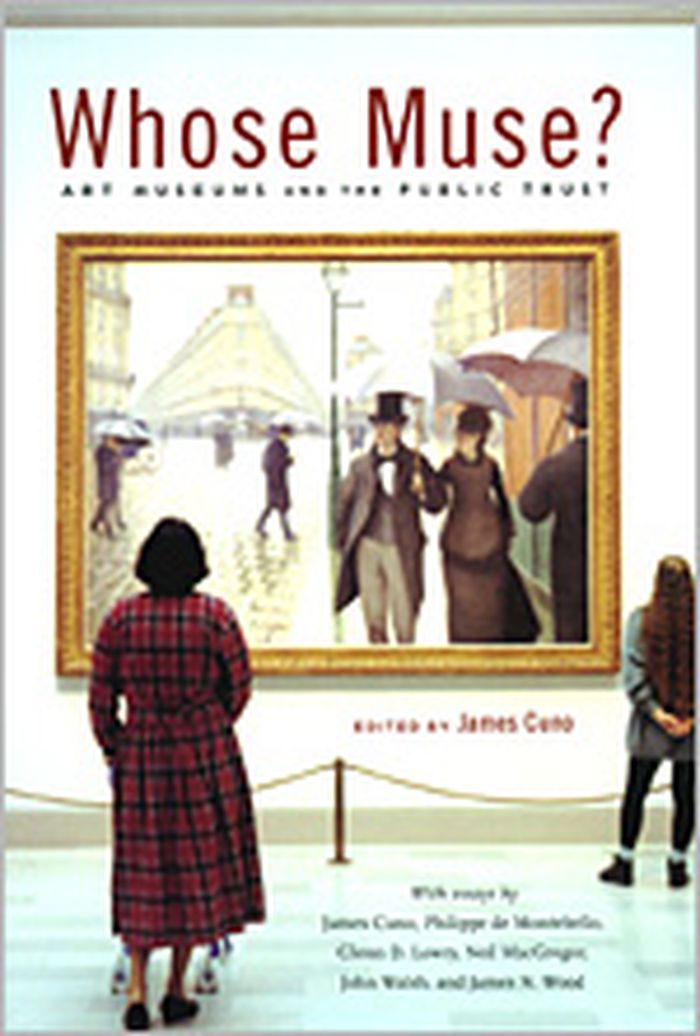
Whose muse? : art museums and the public trust
Actions:
Price:
$41.95
(available to order)
Summary:
During the economic boom of the 1990's, art museums expanded dramatically in size, scope, and ambition. They came to be seen as new civic centers : on the one hand as places of entertainment, leisure, and commerce, on the other as socially therapeutic institutions. But museums were also criticized for everything from elitism to looting or illegally exporting works from other countries, to exhibiting works offensive to the public taste. "Whose Muse?" brings together five directors of leading American and British art museums who together offer a forward-looking alternative to such prevailing views. While their approaches differ, certain themes recur : as museums have become increasingly complex and costly to manage, and as government support has waned, the temptation is great to follow policies driven not by a mission but by the market. However, the directors concur that public trust can be upheld only if museums continue to see their core mission as building collections that reflect a nation's artistic legacy and providing informed and unfettered access to them. The book, based on a lecture series of the same title held in 2000-2001 by the Harvard Program for Art Museum Directors, also includes an introduction by Cuno and a fascinating - and surprisingly frank - roundtable discussion among the participating directors. A rare collection of sustained reflections by prominent museum directors on the current state of affairs in their profession, this book is without equal. It will be read widely not only by museum professionals, trustees, critics, and scholars, but also by the art-loving public itself.
Whose muse? : art museums and the public trust
Actions:
Price:
$41.95
(available to order)
Summary:
During the economic boom of the 1990's, art museums expanded dramatically in size, scope, and ambition. They came to be seen as new civic centers : on the one hand as places of entertainment, leisure, and commerce, on the other as socially therapeutic institutions. But museums were also criticized for everything from elitism to looting or illegally exporting works from other countries, to exhibiting works offensive to the public taste. "Whose Muse?" brings together five directors of leading American and British art museums who together offer a forward-looking alternative to such prevailing views. While their approaches differ, certain themes recur : as museums have become increasingly complex and costly to manage, and as government support has waned, the temptation is great to follow policies driven not by a mission but by the market. However, the directors concur that public trust can be upheld only if museums continue to see their core mission as building collections that reflect a nation's artistic legacy and providing informed and unfettered access to them. The book, based on a lecture series of the same title held in 2000-2001 by the Harvard Program for Art Museum Directors, also includes an introduction by Cuno and a fascinating - and surprisingly frank - roundtable discussion among the participating directors. A rare collection of sustained reflections by prominent museum directors on the current state of affairs in their profession, this book is without equal. It will be read widely not only by museum professionals, trustees, critics, and scholars, but also by the art-loving public itself.
Form:
books
books
Publication:
January 2004, Princeton / Cambridge, Mass.
January 2004, Princeton / Cambridge, Mass.
Subject:
Museums and Universal Exhibitions
Museums and Universal Exhibitions
Form:
books
books
Actions:
Holdings:
Description:
191 pages : illustrations (chiefly color), plans ; 24 cm
Description:
191 pages : illustrations (chiefly color), plans ; 24 cm
Author:
Subject:
Publication:
Antony : Éditions Le Moniteur, [2021], ©2021
Antony : Éditions Le Moniteur, [2021], ©2021
Title:
L'intelligence artificielle au service de l'architecture / Stanislas Chaillou.
Actions:
Holdings:
Description:
191 pages : illustrations (chiefly color), plans ; 24 cm
L'intelligence artificielle au service de l'architecture / Stanislas Chaillou.
Actions:
Holdings:
Description:
191 pages : illustrations (chiefly color), plans ; 24 cm
Form:
books
books
Publication:
Antony : Éditions Le Moniteur, [2021], ©2021
Antony : Éditions Le Moniteur, [2021], ©2021
Author:
Subject:
Form:
books
books
Price:
$57.95
(available to order)
Summary:
Maine-Montparnasse et la Défense sont des opération emblématiques représentatives de la nouvelle définition du rapport entre ville et architecture qui se met en place après la guerre. La concentration démographique, la décentralisation des industries et l'avènement du secteur tertiaire obligent à remodeler des structures urbaines inadaptées à la circulation, aux modes de(...)
$57.95
(available to order)
Summary:
Maine-Montparnasse et la Défense sont des opération emblématiques représentatives de la nouvelle définition du rapport entre ville et architecture qui se met en place après la guerre. La concentration démographique, la décentralisation des industries et l'avènement du secteur tertiaire obligent à remodeler des structures urbaines inadaptées à la circulation, aux modes de(...)
Title:
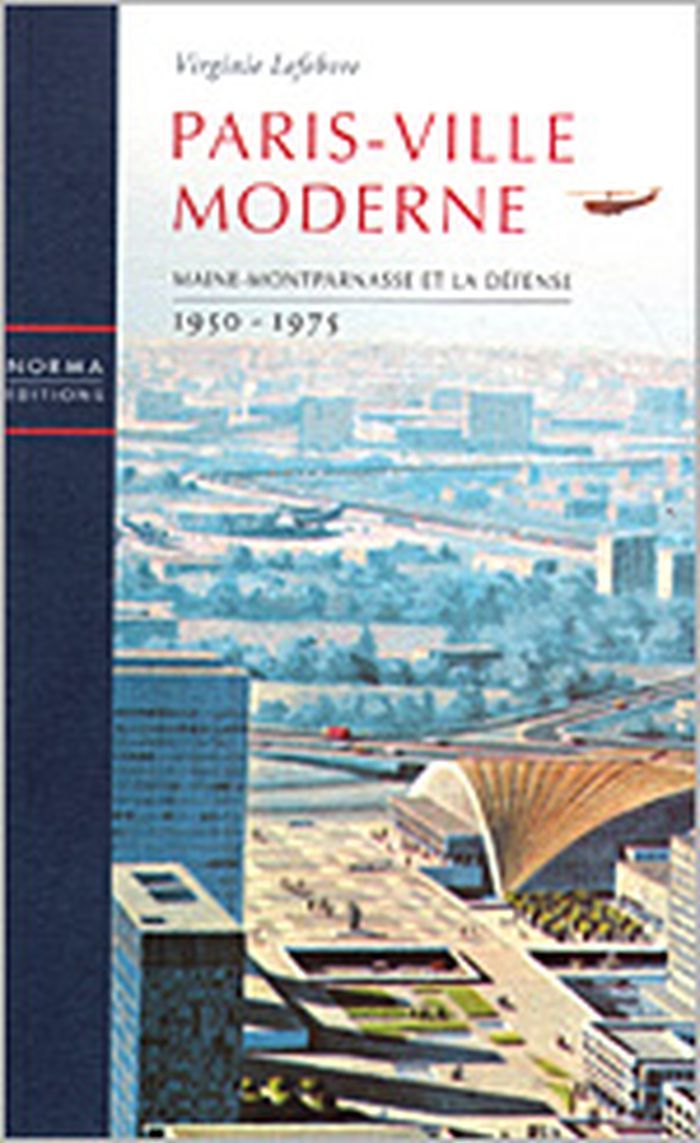
Paris - ville moderne : Maine-Montparnasse et la Défense 1950-1975
Actions:
Price:
$57.95
(available to order)
Summary:
Maine-Montparnasse et la Défense sont des opération emblématiques représentatives de la nouvelle définition du rapport entre ville et architecture qui se met en place après la guerre. La concentration démographique, la décentralisation des industries et l'avènement du secteur tertiaire obligent à remodeler des structures urbaines inadaptées à la circulation, aux modes de déplacement et à la vitesse, préoccupations majeures des années 50. Cette nécessité de modernisation va de pair avec une montée de l'interventionnisme étatique qui a débuté sous le gouvernement de Vichy, en réaction à l'urbanisme incontrôlé de la périphérie parisienne. À partir de 1959, des plans directeurs successifs établissent les inventaires des opérations à entreprendre : destruction d'îlots insalubres, percement d'axes de circulation, remembrements. Cette politique, qui fait table rase du passé, trouve ses fondements aussi bien dans les thèses rationnalistes développées par Le Corbusier dans la Charte d'Athènes et dans les conclusions du rapport Buchanan pour Londres, que dans les projets utopiques d'Hugh Ferriss ou de Norman Bel Geddes. La dalle, sol artificiel maîtrisé par la technique, apparaît comme le socle idéal de la ville du futur. Des premiers dessins très schématiques, montrant les systèmes de circulation, sur lesquels les immeubles apparaissent de manière abstraite, aux réalisations du milieu des années 70, on voit à travers les phases successives de ces projets le concept d'une ville sur dalle naître, évoluer, puis disparaître, marquant la fin d'une époque optimiste où l'on croyait possible de modifier les conditions de la vie urbaine. Virginie Lefebvre, architecte, docteur en histoire de l'art est lecturer à la Graduate School of Design de l'Université de Harvard et membre du groupe de recherche sur l'architecture et les infrastructures (GRAI).
Paris - ville moderne : Maine-Montparnasse et la Défense 1950-1975
Actions:
Price:
$57.95
(available to order)
Summary:
Maine-Montparnasse et la Défense sont des opération emblématiques représentatives de la nouvelle définition du rapport entre ville et architecture qui se met en place après la guerre. La concentration démographique, la décentralisation des industries et l'avènement du secteur tertiaire obligent à remodeler des structures urbaines inadaptées à la circulation, aux modes de déplacement et à la vitesse, préoccupations majeures des années 50. Cette nécessité de modernisation va de pair avec une montée de l'interventionnisme étatique qui a débuté sous le gouvernement de Vichy, en réaction à l'urbanisme incontrôlé de la périphérie parisienne. À partir de 1959, des plans directeurs successifs établissent les inventaires des opérations à entreprendre : destruction d'îlots insalubres, percement d'axes de circulation, remembrements. Cette politique, qui fait table rase du passé, trouve ses fondements aussi bien dans les thèses rationnalistes développées par Le Corbusier dans la Charte d'Athènes et dans les conclusions du rapport Buchanan pour Londres, que dans les projets utopiques d'Hugh Ferriss ou de Norman Bel Geddes. La dalle, sol artificiel maîtrisé par la technique, apparaît comme le socle idéal de la ville du futur. Des premiers dessins très schématiques, montrant les systèmes de circulation, sur lesquels les immeubles apparaissent de manière abstraite, aux réalisations du milieu des années 70, on voit à travers les phases successives de ces projets le concept d'une ville sur dalle naître, évoluer, puis disparaître, marquant la fin d'une époque optimiste où l'on croyait possible de modifier les conditions de la vie urbaine. Virginie Lefebvre, architecte, docteur en histoire de l'art est lecturer à la Graduate School of Design de l'Université de Harvard et membre du groupe de recherche sur l'architecture et les infrastructures (GRAI).
Form:
books
books
Publication:
October 2003, Paris
October 2003, Paris
Subject:
Urban Theory
Urban Theory
Form:
books
books
Title:
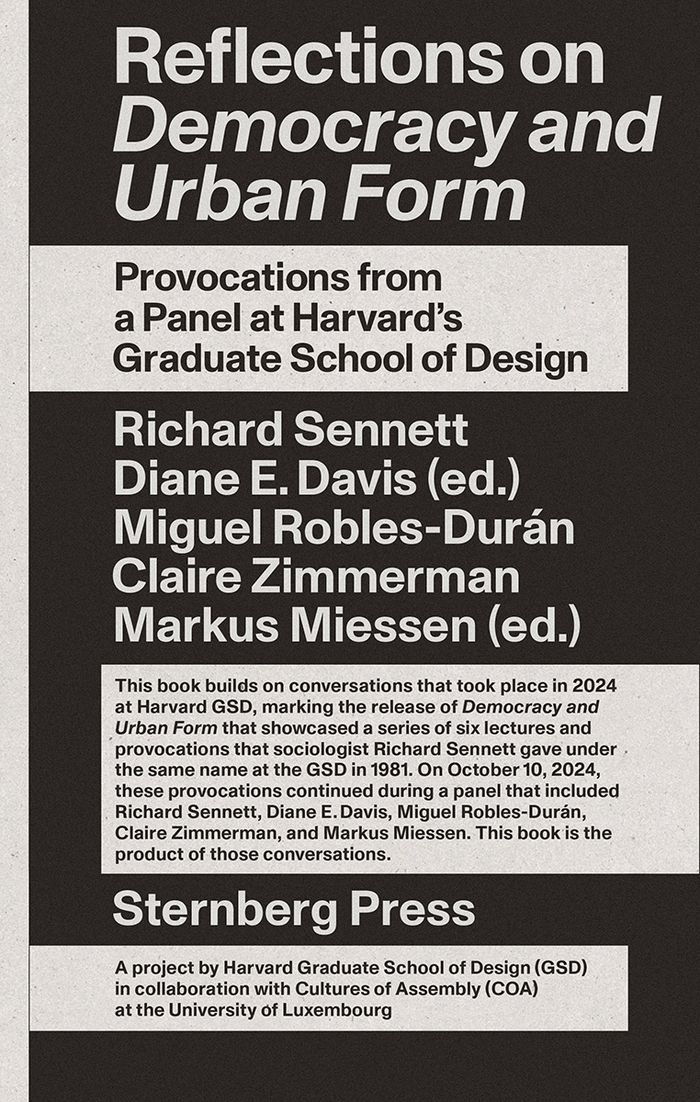
Reflections on democracy and urban form: Provocations from a panel at Harvard's Graduate School
Reflections on democracy and urban form: Provocations from a panel at Harvard's Graduate School
Actions:
Price:
$24.95
(available in store)
Summary:
This book builds on conversations that took place in the Fall of 2024 at Harvard’s Graduate School of Design marking the release of the book ''Democracy and Urban Form'', a co-publication by Harvard Design Press and Sternberg Press. The original book showcased a series of six lectures that the sociologist Richard Sennett gave under the same name at the GSD in the fall of(...)
$24.95
(available in store)
Summary:
This book builds on conversations that took place in the Fall of 2024 at Harvard’s Graduate School of Design marking the release of the book ''Democracy and Urban Form'', a co-publication by Harvard Design Press and Sternberg Press. The original book showcased a series of six lectures that the sociologist Richard Sennett gave under the same name at the GSD in the fall of(...)
Title:
Reflections on democracy and urban form: Provocations from a panel at Harvard's Graduate School
Actions:
Price:
$24.95
(available in store)
Summary:
This book builds on conversations that took place in the Fall of 2024 at Harvard’s Graduate School of Design marking the release of the book ''Democracy and Urban Form'', a co-publication by Harvard Design Press and Sternberg Press. The original book showcased a series of six lectures that the sociologist Richard Sennett gave under the same name at the GSD in the fall of 1981. The original lectures, which happened more than forty years ago, addressed a much different political climate. Even so, Richard’s core insights into the connections between democracy and justice, matters of architecture and urban design, the growth of cities, cosmopolitanism, inclusion, free speech, and other related matters remain just as relevant today. In the spirit of reflecting on these urgencies, the GSD invited the political philosopher Michael Sandel to deliver a lecture that drew on themes from the new edition of his book ''Democracy’s Discontent''. In his opening talk, which took place on the evening of Wednesday, October 9, Sandel encouraged the audience to consider what might account for the polarization that imperils democracy today, as well as what might be done about it? Beyond analyzing the forces that were about to decide the 2024 election, he proposed a bold project of civic renewal to reimagine the economy and empower citizens as participants in a shared public life. On Thursday, October 10, these provocations continued during a panel discussion that included Richard Sennett, Diane Davis, Claire Zimmerman, Markus Miessen, and Miguel Robles-Durán. All reflected on Sandel’s talk, as well as on the state of democracy as it related more specifically to architecture and the design and planning of cities and metropolitan regions.
Reflections on democracy and urban form: Provocations from a panel at Harvard's Graduate School
Actions:
Price:
$24.95
(available in store)
Summary:
This book builds on conversations that took place in the Fall of 2024 at Harvard’s Graduate School of Design marking the release of the book ''Democracy and Urban Form'', a co-publication by Harvard Design Press and Sternberg Press. The original book showcased a series of six lectures that the sociologist Richard Sennett gave under the same name at the GSD in the fall of 1981. The original lectures, which happened more than forty years ago, addressed a much different political climate. Even so, Richard’s core insights into the connections between democracy and justice, matters of architecture and urban design, the growth of cities, cosmopolitanism, inclusion, free speech, and other related matters remain just as relevant today. In the spirit of reflecting on these urgencies, the GSD invited the political philosopher Michael Sandel to deliver a lecture that drew on themes from the new edition of his book ''Democracy’s Discontent''. In his opening talk, which took place on the evening of Wednesday, October 9, Sandel encouraged the audience to consider what might account for the polarization that imperils democracy today, as well as what might be done about it? Beyond analyzing the forces that were about to decide the 2024 election, he proposed a bold project of civic renewal to reimagine the economy and empower citizens as participants in a shared public life. On Thursday, October 10, these provocations continued during a panel discussion that included Richard Sennett, Diane Davis, Claire Zimmerman, Markus Miessen, and Miguel Robles-Durán. All reflected on Sandel’s talk, as well as on the state of democracy as it related more specifically to architecture and the design and planning of cities and metropolitan regions.
Form:
books
books
Publication:
August 2026
August 2026
Subject:
Urban Theory
Urban Theory
Form:
books
books
Title:
Kengo Kuma: New works
Kengo Kuma: New works
Actions:
Price:
$99.00
(available in store)
Summary:
Kengo Kuma is one of Japan’s leading architects and professor emeritus at the University of Tokyo. A prolific writer and philosopher, he proposes architecture that introduces new relationships between nature, technology, and human beings. This book, Kuma’s second monograph following ''Kengo Kuma: Complete Works'', surveys forty projects arranged according to building use,(...)
$99.00
(available in store)
Summary:
Kengo Kuma is one of Japan’s leading architects and professor emeritus at the University of Tokyo. A prolific writer and philosopher, he proposes architecture that introduces new relationships between nature, technology, and human beings. This book, Kuma’s second monograph following ''Kengo Kuma: Complete Works'', surveys forty projects arranged according to building use,(...)
Title:
Kengo Kuma: New works
Actions:
Price:
$99.00
(available in store)
Summary:
Kengo Kuma is one of Japan’s leading architects and professor emeritus at the University of Tokyo. A prolific writer and philosopher, he proposes architecture that introduces new relationships between nature, technology, and human beings. This book, Kuma’s second monograph following ''Kengo Kuma: Complete Works'', surveys forty projects arranged according to building use, with a timely focus on those that respond to natural disasters and the pandemic, build on the importance of local communities, and address our need to come together with others. The projects range in scale and ambition, from Japan’s Olympic Stadium—where Kuma used timber from every region in the country to build the nation’s largest arena—to a small community center in Yusuhara, and a fairytale museum in Denmark. Each celebrates Kuma’s skill using natural materials, as he pushes them to their limits to create exciting and surprising forms. Take for instance, The Exchange, a community center in Sydney, which has wooden “threads” which wrap around the building, giving the impression of a bird’s nest and the UCCA Clay Museum in Yixing, China, with an undulating organic form that mimics a mountain, covered with 3,600 handmade, clay terracotta tiles. In the book’s introductory essay, designer and Harvard University professor Grace La considers Kuma’s evolution since his previous monograph and explores the themes of his work and how they relate to the architecture world today. The projects included in ''Kengo Kuma: New Works''—stadiums and cultural centers, museums and houses, cafés and parks, temples and pavilions—have been chosen by Kuma himself as best representative of this stage in his career. None appear in his previous book.
Kengo Kuma: New works
Actions:
Price:
$99.00
(available in store)
Summary:
Kengo Kuma is one of Japan’s leading architects and professor emeritus at the University of Tokyo. A prolific writer and philosopher, he proposes architecture that introduces new relationships between nature, technology, and human beings. This book, Kuma’s second monograph following ''Kengo Kuma: Complete Works'', surveys forty projects arranged according to building use, with a timely focus on those that respond to natural disasters and the pandemic, build on the importance of local communities, and address our need to come together with others. The projects range in scale and ambition, from Japan’s Olympic Stadium—where Kuma used timber from every region in the country to build the nation’s largest arena—to a small community center in Yusuhara, and a fairytale museum in Denmark. Each celebrates Kuma’s skill using natural materials, as he pushes them to their limits to create exciting and surprising forms. Take for instance, The Exchange, a community center in Sydney, which has wooden “threads” which wrap around the building, giving the impression of a bird’s nest and the UCCA Clay Museum in Yixing, China, with an undulating organic form that mimics a mountain, covered with 3,600 handmade, clay terracotta tiles. In the book’s introductory essay, designer and Harvard University professor Grace La considers Kuma’s evolution since his previous monograph and explores the themes of his work and how they relate to the architecture world today. The projects included in ''Kengo Kuma: New Works''—stadiums and cultural centers, museums and houses, cafés and parks, temples and pavilions—have been chosen by Kuma himself as best representative of this stage in his career. None appear in his previous book.
Form:
books
books
Publication:
September 2026
September 2026
Subject:
Architecture Monographs
Architecture Monographs
Form:
books
books

Actions:
Price:
$39.99
(available to order)
Summary:
The National Mall in Washington, D.C., has held an important place in the American psyche since the early nineteenth century. Home to monuments and museums dedicated to the ideals upon which the United States rests, the Mall serves as a gathering place for public protest and celebration. But as the nation ages and the population diversifies, demands for additional(...)
$39.99
(available to order)
Summary:
The National Mall in Washington, D.C., has held an important place in the American psyche since the early nineteenth century. Home to monuments and museums dedicated to the ideals upon which the United States rests, the Mall serves as a gathering place for public protest and celebration. But as the nation ages and the population diversifies, demands for additional(...)
Title:
The national mail: rethinking Washington's monumental core
Actions:
Price:
$39.99
(available to order)
Summary:
The National Mall in Washington, D.C., has held an important place in the American psyche since the early nineteenth century. Home to monuments and museums dedicated to the ideals upon which the United States rests, the Mall serves as a gathering place for public protest and celebration. But as the nation ages and the population diversifies, demands for additional structures and uses have sparked debates over the Mall's future and the necessity of preserving its legacy and the vision of its designers. The National Mall addresses these issues with a novel and compelling collection of essays, the work of leading design professionals, historians, and social scientists. Supplemented by eye-catching illustrations and photographs, this cross-disciplinary examination follows the discussion over the Mall's design and use, from its conceptual origins as part of Pierre Charles L'Enfant's vision for the capital to the 1902 McMillan Plan to the present day and beyond. It assesses how architectural, societal, and political changes have altered the park-like space between the Capitol and the Lincoln Memorial and explores the influence that disparate interest groups and creeping corporatism have already had on -- and are likely to exert upon -- America's public square. The National Mall presents an overarching account of how a democratic society plans, creates, and expands a national ceremonial space, opening the way for a broadly based inquiry into the Mall as it was, is, and will become. Urban planners, architectural and design historians, and engaged citizens will be challenged and well served by the thoughtful essays collected by Nathan Glazer and Cynthia R. Field. Nathan Glazer is an emeritus professor of sociology and education at Harvard University. He is the author or editor of many books on public policy and urban problems, among them The Public Face of Architecture and From a Cause to a Style: Modernist Architecture's Encounter with the American City. Cynthia R. Field is the architectural historian emerita at the Smithsonian Institution and a faculty member at the Corcoran College of Art. She is the coauthor of The Castle: An Illustrated History of the Smithsonian Building.
The national mail: rethinking Washington's monumental core
Actions:
Price:
$39.99
(available to order)
Summary:
The National Mall in Washington, D.C., has held an important place in the American psyche since the early nineteenth century. Home to monuments and museums dedicated to the ideals upon which the United States rests, the Mall serves as a gathering place for public protest and celebration. But as the nation ages and the population diversifies, demands for additional structures and uses have sparked debates over the Mall's future and the necessity of preserving its legacy and the vision of its designers. The National Mall addresses these issues with a novel and compelling collection of essays, the work of leading design professionals, historians, and social scientists. Supplemented by eye-catching illustrations and photographs, this cross-disciplinary examination follows the discussion over the Mall's design and use, from its conceptual origins as part of Pierre Charles L'Enfant's vision for the capital to the 1902 McMillan Plan to the present day and beyond. It assesses how architectural, societal, and political changes have altered the park-like space between the Capitol and the Lincoln Memorial and explores the influence that disparate interest groups and creeping corporatism have already had on -- and are likely to exert upon -- America's public square. The National Mall presents an overarching account of how a democratic society plans, creates, and expands a national ceremonial space, opening the way for a broadly based inquiry into the Mall as it was, is, and will become. Urban planners, architectural and design historians, and engaged citizens will be challenged and well served by the thoughtful essays collected by Nathan Glazer and Cynthia R. Field. Nathan Glazer is an emeritus professor of sociology and education at Harvard University. He is the author or editor of many books on public policy and urban problems, among them The Public Face of Architecture and From a Cause to a Style: Modernist Architecture's Encounter with the American City. Cynthia R. Field is the architectural historian emerita at the Smithsonian Institution and a faculty member at the Corcoran College of Art. She is the coauthor of The Castle: An Illustrated History of the Smithsonian Building.
Form:
books
books
Publication:
April 2008, Baltimore
April 2008, Baltimore
Subject:
Urban Theory
Urban Theory


