


1664 Results
Form:
books
books
Actions:
Price:
$62.00
(available in store)
Summary:
his is a book about socio-spatial dynamics, the intertwinement of design and politics, and the agency of the architect(s) in rethinking collectivity and collective practices in architecture. In response to the commodification of housing and the ongoing global housing crisis, the publication addresses access to adequate housing as a fundamental human right. It looks at(...)
$62.00
(available in store)
Summary:
his is a book about socio-spatial dynamics, the intertwinement of design and politics, and the agency of the architect(s) in rethinking collectivity and collective practices in architecture. In response to the commodification of housing and the ongoing global housing crisis, the publication addresses access to adequate housing as a fundamental human right. It looks at(...)
Publication:
March 2025
March 2025
Title:
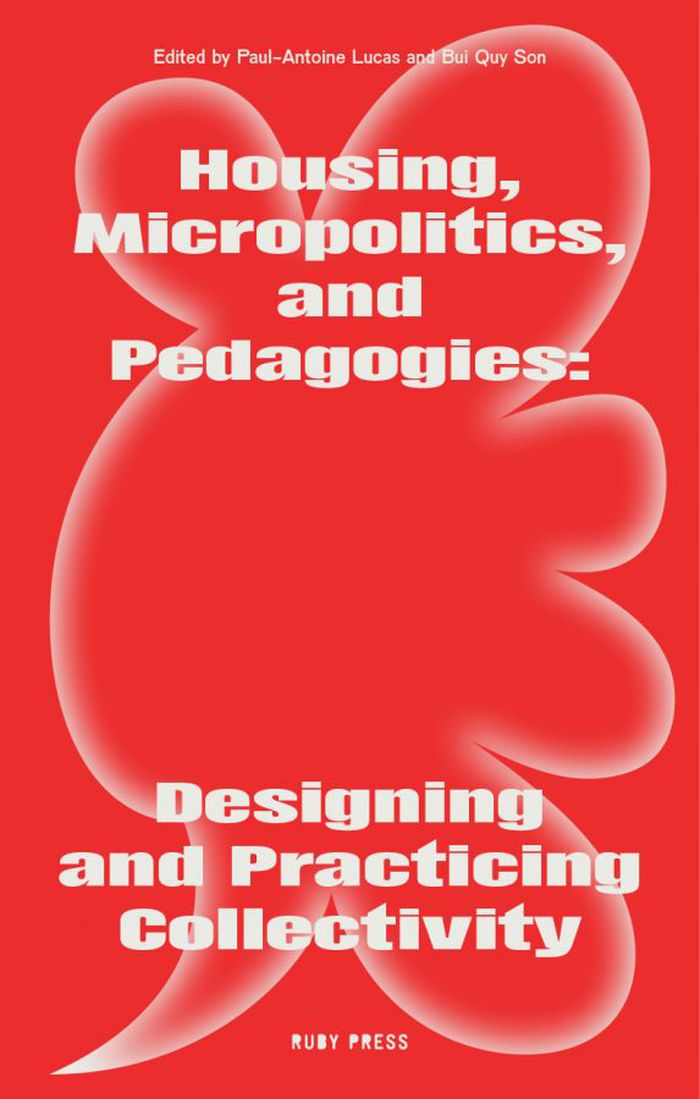
Housing, Micropolitics, and Pedagogies: Designing and Practicing Collectivity
Actions:
Price:
$62.00
(available in store)
Summary:
his is a book about socio-spatial dynamics, the intertwinement of design and politics, and the agency of the architect(s) in rethinking collectivity and collective practices in architecture. In response to the commodification of housing and the ongoing global housing crisis, the publication addresses access to adequate housing as a fundamental human right. It looks at historical and contemporary socially-oriented housing precedents in Norway and Europe to imagine twenty-first- century not-for-profit housing alternatives in Oslo for marginalized populations and diversified family configurations. Beyond formalism, it also argues that innovative architectural solutions in a perspective of systemic societal change need to come from design processes rooted in community, cooperation, and equity. In a later section, the book expands on how radical, emancipatory pedagogies in architecture can facilitate critical thinking and action. The different visions of collectivity put forth here urge spatial practitioners, activists, and students to deeply engage with social justice by means of design and education. With contributions by Paul-Antoine Lucas, Bui Quy Son, Céline Zimmer, Patricia Lucena Ventura, Nagy Makhlouf, Aurélie M. Nzuzi De Mol, Rosaura Noemy Hernandez Romero, María Mazzanti.
Housing, Micropolitics, and Pedagogies: Designing and Practicing Collectivity
Actions:
Price:
$62.00
(available in store)
Summary:
his is a book about socio-spatial dynamics, the intertwinement of design and politics, and the agency of the architect(s) in rethinking collectivity and collective practices in architecture. In response to the commodification of housing and the ongoing global housing crisis, the publication addresses access to adequate housing as a fundamental human right. It looks at historical and contemporary socially-oriented housing precedents in Norway and Europe to imagine twenty-first- century not-for-profit housing alternatives in Oslo for marginalized populations and diversified family configurations. Beyond formalism, it also argues that innovative architectural solutions in a perspective of systemic societal change need to come from design processes rooted in community, cooperation, and equity. In a later section, the book expands on how radical, emancipatory pedagogies in architecture can facilitate critical thinking and action. The different visions of collectivity put forth here urge spatial practitioners, activists, and students to deeply engage with social justice by means of design and education. With contributions by Paul-Antoine Lucas, Bui Quy Son, Céline Zimmer, Patricia Lucena Ventura, Nagy Makhlouf, Aurélie M. Nzuzi De Mol, Rosaura Noemy Hernandez Romero, María Mazzanti.
Form:
books
books
Publication:
March 2025
March 2025
Form:
books
books
Actions:
Price:
$57.95
(available to order)
Summary:
Architecture and environmental design are among the last professional fields to develop a sustained and nuanced discussion concerning ethics. Hemmed in by politics and powerful clients on one side and the often unscrupulous practices of the construction industry on the other, environmental designers have been traditionally reluctant to address ethical issues head on. And(...)
$57.95
(available to order)
Summary:
Architecture and environmental design are among the last professional fields to develop a sustained and nuanced discussion concerning ethics. Hemmed in by politics and powerful clients on one side and the often unscrupulous practices of the construction industry on the other, environmental designers have been traditionally reluctant to address ethical issues head on. And(...)
Subject:
Architectural Theory
Architectural Theory
Publication:
September 2007, Hanover and London
September 2007, Hanover and London
Title:
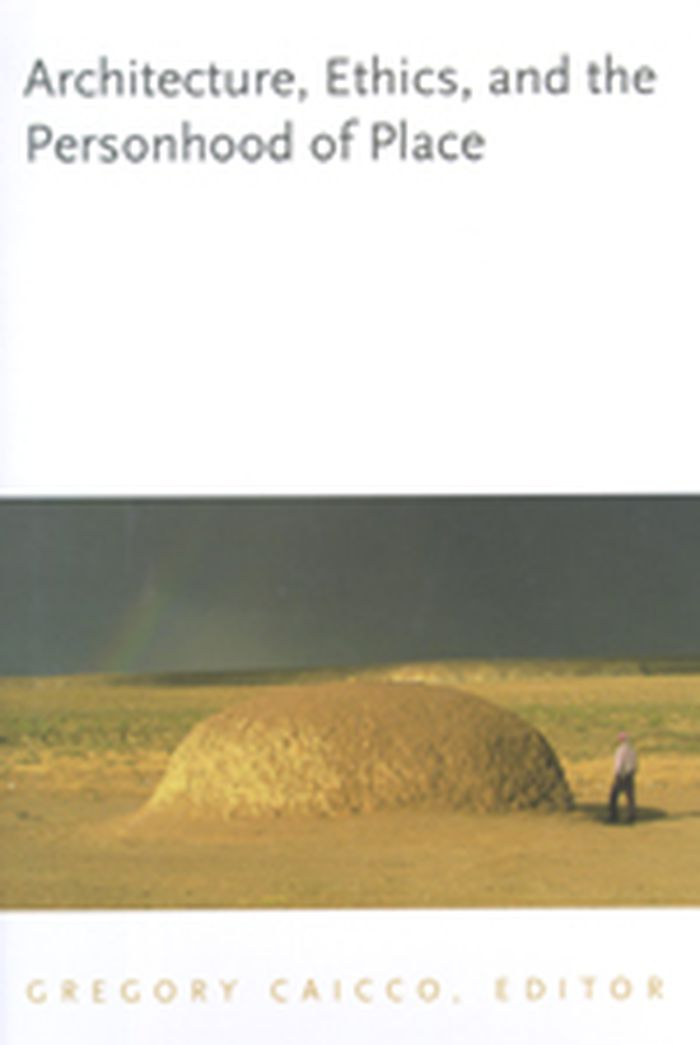
Architecture, ethics, and the personhood of place
Actions:
Price:
$57.95
(available to order)
Summary:
Architecture and environmental design are among the last professional fields to develop a sustained and nuanced discussion concerning ethics. Hemmed in by politics and powerful clients on one side and the often unscrupulous practices of the construction industry on the other, environmental designers have been traditionally reluctant to address ethical issues head on. And yet the rapid urbanization of the world's population continues to swell into new megacities, each less healthy, welcoming, secure, or environmentally sustainable than the next. Green, carbon-reduced, and sustainable building practices are important ways architects have recently responded to the symptoms of the crisis, but are these efforts really addressing the core issues? Taking the Din� (Navajo) "Hogan Song"�a song used to protect and nourish the personhood of newly constructed dwellings�as their inspiration, the architects, philosophers, poets, and other contemporary scholars contributing to this volume demonstrate that a deeper, more radical change in our relationship to the built world needs to occur. While offering a careful critique of modernist, corporate, or techno-enthralled design practices, these essays investigate an alternative "relational ecology" whose wisdom draws from ancient and often-marginalized voices, if not the whisperings of the earth itself.
Architecture, ethics, and the personhood of place
Actions:
Price:
$57.95
(available to order)
Summary:
Architecture and environmental design are among the last professional fields to develop a sustained and nuanced discussion concerning ethics. Hemmed in by politics and powerful clients on one side and the often unscrupulous practices of the construction industry on the other, environmental designers have been traditionally reluctant to address ethical issues head on. And yet the rapid urbanization of the world's population continues to swell into new megacities, each less healthy, welcoming, secure, or environmentally sustainable than the next. Green, carbon-reduced, and sustainable building practices are important ways architects have recently responded to the symptoms of the crisis, but are these efforts really addressing the core issues? Taking the Din� (Navajo) "Hogan Song"�a song used to protect and nourish the personhood of newly constructed dwellings�as their inspiration, the architects, philosophers, poets, and other contemporary scholars contributing to this volume demonstrate that a deeper, more radical change in our relationship to the built world needs to occur. While offering a careful critique of modernist, corporate, or techno-enthralled design practices, these essays investigate an alternative "relational ecology" whose wisdom draws from ancient and often-marginalized voices, if not the whisperings of the earth itself.
Form:
books
books
Publication:
September 2007, Hanover and London
September 2007, Hanover and London
Subject:
Architectural Theory
Architectural Theory
Form:
books
books
Actions:
Price:
$22.95
(available to order)
Summary:
In response to the contentious process surrounding the selection of a design for the World Trade Center site, the use of spectacular buildings to brand cities and institutions, and the dizzying transformations of the skylines of Shanghai and Dubai, public awareness of architecture and design has perhaps never been higher. At the same time, architecture itself is(...)
$22.95
(available to order)
Summary:
In response to the contentious process surrounding the selection of a design for the World Trade Center site, the use of spectacular buildings to brand cities and institutions, and the dizzying transformations of the skylines of Shanghai and Dubai, public awareness of architecture and design has perhaps never been higher. At the same time, architecture itself is(...)
Title:
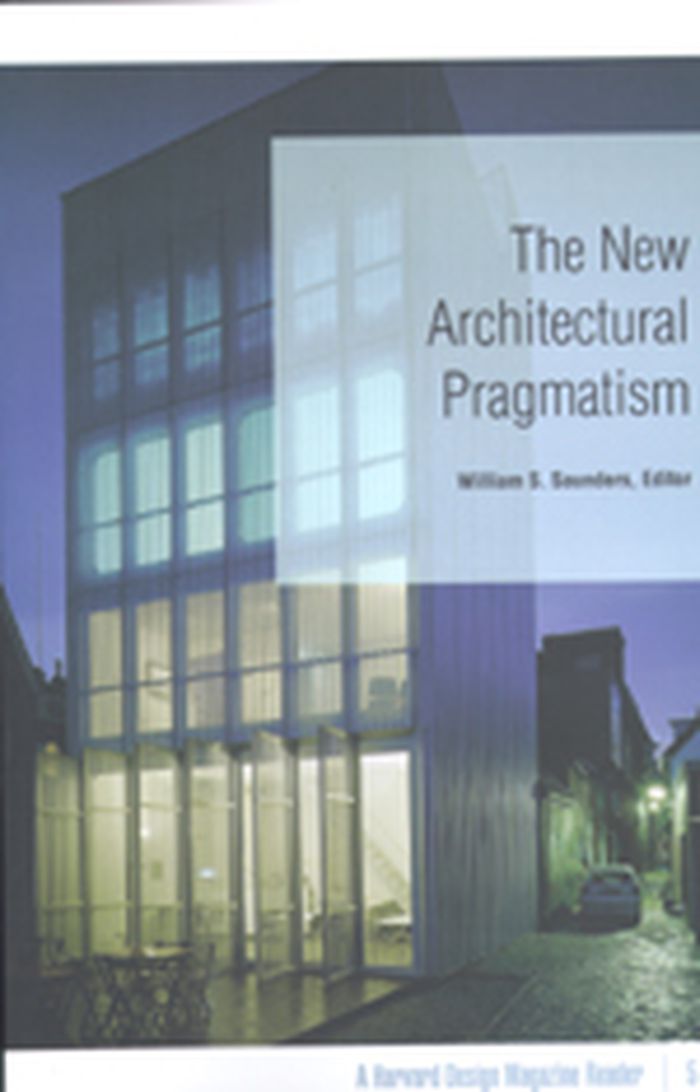
The new architectural pragmatism
Actions:
Price:
$22.95
(available to order)
Summary:
In response to the contentious process surrounding the selection of a design for the World Trade Center site, the use of spectacular buildings to brand cities and institutions, and the dizzying transformations of the skylines of Shanghai and Dubai, public awareness of architecture and design has perhaps never been higher. At the same time, architecture itself is undergoing an identity crisis as it confronts fundamental issues: the effect of digital technology on design, the pervasive impact of global capitalism, and whether to embrace or resist popular media and taste. The New Architectural Pragmatism collects the most provocative, penetrating, and influential attempts by leading theorists and practitioners in the field to define what architectural practice should be at the beginning of the twenty-first century. Written in the aftermath of modernism’s utopian impulse and postmodernism’s detached playfulness, the essays gathered here express and critique a new spirit of cultural and political engagement with contemporary society. Interrogating the architect’s social responsibility, the contributors deliberate about how much we should ask of architecture and suggest that in the coming century, architecture must be at once flexible and robust, responsive and self-directed.
The new architectural pragmatism
Actions:
Price:
$22.95
(available to order)
Summary:
In response to the contentious process surrounding the selection of a design for the World Trade Center site, the use of spectacular buildings to brand cities and institutions, and the dizzying transformations of the skylines of Shanghai and Dubai, public awareness of architecture and design has perhaps never been higher. At the same time, architecture itself is undergoing an identity crisis as it confronts fundamental issues: the effect of digital technology on design, the pervasive impact of global capitalism, and whether to embrace or resist popular media and taste. The New Architectural Pragmatism collects the most provocative, penetrating, and influential attempts by leading theorists and practitioners in the field to define what architectural practice should be at the beginning of the twenty-first century. Written in the aftermath of modernism’s utopian impulse and postmodernism’s detached playfulness, the essays gathered here express and critique a new spirit of cultural and political engagement with contemporary society. Interrogating the architect’s social responsibility, the contributors deliberate about how much we should ask of architecture and suggest that in the coming century, architecture must be at once flexible and robust, responsive and self-directed.
Form:
books
books
Publication:
November 2007, Minneapolis
November 2007, Minneapolis
Subject:
Architectural Theory
Architectural Theory
Form:
books
books
Actions:
Price:
$83.95
(available to order)
Summary:
Originally self-published in 1985, Paul Graham’s renowned series, ‘Beyond Caring’, was made in the waiting rooms and corridors of the Social Security and Unemployment offices around the UK, documenting the long waits, queues and poor conditions of an overburdened system, to produce a powerful series of photographs conveying the hardship people experienced. Denied official(...)
$83.95
(available to order)
Summary:
Originally self-published in 1985, Paul Graham’s renowned series, ‘Beyond Caring’, was made in the waiting rooms and corridors of the Social Security and Unemployment offices around the UK, documenting the long waits, queues and poor conditions of an overburdened system, to produce a powerful series of photographs conveying the hardship people experienced. Denied official(...)
Title:
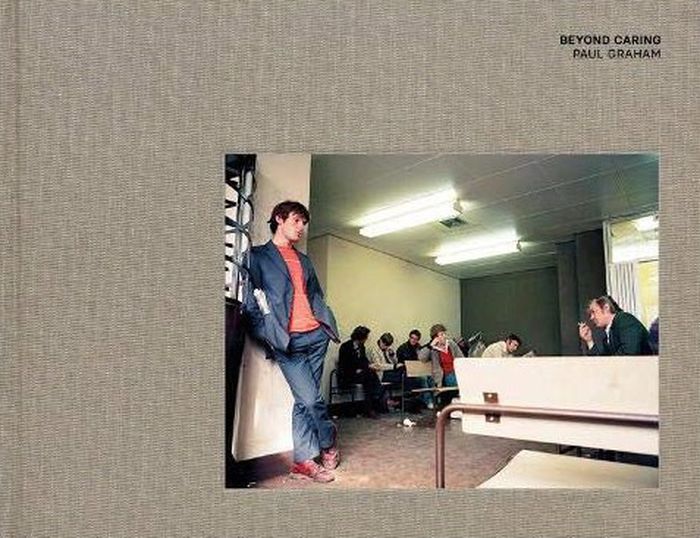
Paul Graham: Beyond caring, New edition
Actions:
Price:
$83.95
(available to order)
Summary:
Originally self-published in 1985, Paul Graham’s renowned series, ‘Beyond Caring’, was made in the waiting rooms and corridors of the Social Security and Unemployment offices around the UK, documenting the long waits, queues and poor conditions of an overburdened system, to produce a powerful series of photographs conveying the hardship people experienced. Denied official permission to make the work, Graham’s photographs were taken discreetly, usually without looking through the camera, resulting in a spatial disorientation that emphasised the unmoored distress of vulnerable citizens. The work shocked many on its release – leading Magnum photographers were outraged by its use of colour in a classic documentary topic, while others celebrated how it straddled the world of activism and art (it was exhibited at both Trade Union conferences and the Museum of Modern Art, New York). Graham forged a fresh form of engaged photography, mixing elements of social documentary, ‘new colour’ and reportage to create a striking body of work that endures to this day. Many decades have passed since their making in 1984, but these images have grown not only in photographic importance, but also as a unique historic record of the mid-1980s unemployment crisis in the UK.
Paul Graham: Beyond caring, New edition
Actions:
Price:
$83.95
(available to order)
Summary:
Originally self-published in 1985, Paul Graham’s renowned series, ‘Beyond Caring’, was made in the waiting rooms and corridors of the Social Security and Unemployment offices around the UK, documenting the long waits, queues and poor conditions of an overburdened system, to produce a powerful series of photographs conveying the hardship people experienced. Denied official permission to make the work, Graham’s photographs were taken discreetly, usually without looking through the camera, resulting in a spatial disorientation that emphasised the unmoored distress of vulnerable citizens. The work shocked many on its release – leading Magnum photographers were outraged by its use of colour in a classic documentary topic, while others celebrated how it straddled the world of activism and art (it was exhibited at both Trade Union conferences and the Museum of Modern Art, New York). Graham forged a fresh form of engaged photography, mixing elements of social documentary, ‘new colour’ and reportage to create a striking body of work that endures to this day. Many decades have passed since their making in 1984, but these images have grown not only in photographic importance, but also as a unique historic record of the mid-1980s unemployment crisis in the UK.
Form:
books
books
Publication:
June 2021
June 2021
Subject:
Photography monographs
Photography monographs
Form:
books
books
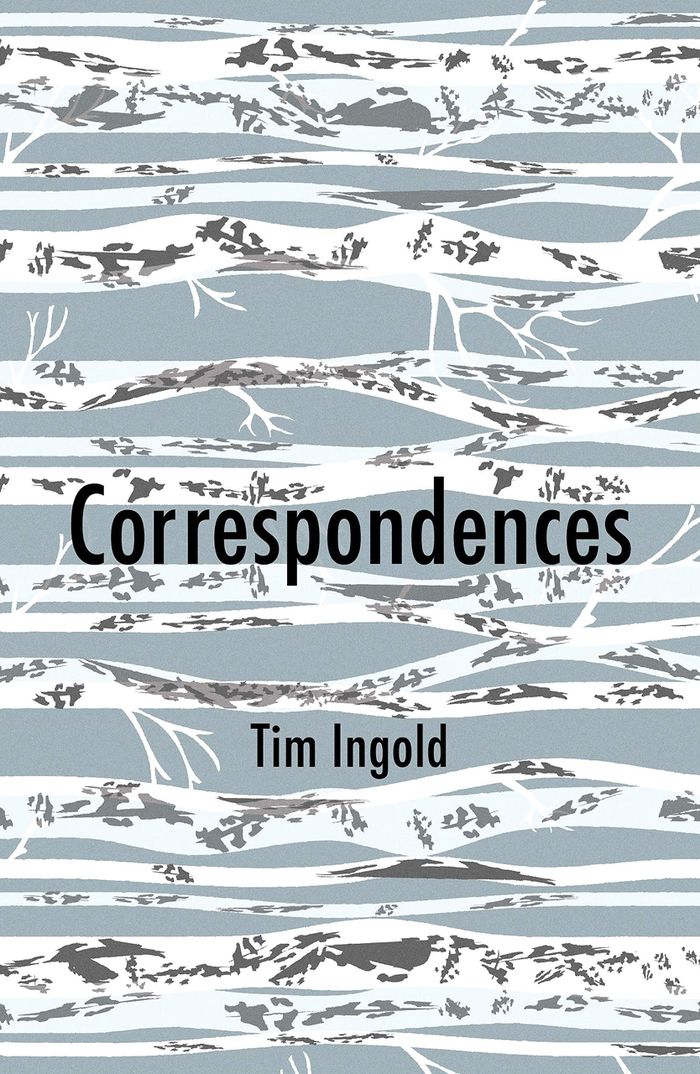
Title:
Correspondences
Correspondences
Actions:
Price:
$23.95
(available in store)
Summary:
We inhabit a world of more than humans. For life to flourish, we must listen to the calls this world makes on us, and respond with care, sensitivity and judgement. That is what it means to correspond, to join our lives with those of the beings, matters and elements with whom, and with which, we dwell upon the earth. In this book, anthropologist Tim Ingold corresponds(...)
$23.95
(available in store)
Summary:
We inhabit a world of more than humans. For life to flourish, we must listen to the calls this world makes on us, and respond with care, sensitivity and judgement. That is what it means to correspond, to join our lives with those of the beings, matters and elements with whom, and with which, we dwell upon the earth. In this book, anthropologist Tim Ingold corresponds(...)
Title:
Correspondences
Actions:
Price:
$23.95
(available in store)
Summary:
We inhabit a world of more than humans. For life to flourish, we must listen to the calls this world makes on us, and respond with care, sensitivity and judgement. That is what it means to correspond, to join our lives with those of the beings, matters and elements with whom, and with which, we dwell upon the earth. In this book, anthropologist Tim Ingold corresponds with landscapes and forests, oceans and skies, monuments and artworks. To each he brings the same spontaneity of thought and observation, the same intimacy and lightness of touch, but also the same affection, longing and care that, in the days when we used to write letters by hand, we would bring to our correspondences with one another. The result is a profound yet accessible inquiry into ways of attending to the world around us, into the relation between art and life, and into the craft of writing itself. At a time of environmental crisis, when words so often seem to fail us, Ingold points to how the practice of correspondence can help restore our kinship with a stricken earth.
Correspondences
Actions:
Price:
$23.95
(available in store)
Summary:
We inhabit a world of more than humans. For life to flourish, we must listen to the calls this world makes on us, and respond with care, sensitivity and judgement. That is what it means to correspond, to join our lives with those of the beings, matters and elements with whom, and with which, we dwell upon the earth. In this book, anthropologist Tim Ingold corresponds with landscapes and forests, oceans and skies, monuments and artworks. To each he brings the same spontaneity of thought and observation, the same intimacy and lightness of touch, but also the same affection, longing and care that, in the days when we used to write letters by hand, we would bring to our correspondences with one another. The result is a profound yet accessible inquiry into ways of attending to the world around us, into the relation between art and life, and into the craft of writing itself. At a time of environmental crisis, when words so often seem to fail us, Ingold points to how the practice of correspondence can help restore our kinship with a stricken earth.
Form:
books
books
Publication:
December 2020
December 2020
Subject:
Landscape Theory
Landscape Theory
Form:
books
books
Actions:
Price:
$19.95
(available in store)
Summary:
Untrammelled neoliberalism and the inexorable force of production have produced a 21st century crisis of community: a narcissistic cult of authenticity and mass turning-inward are among the pathologies engendered by it. We are individuals afloat in an atomised society, where the loss of the symbolic structures inherent in ritual behaviour has led to overdependence on the(...)
$19.95
(available in store)
Summary:
Untrammelled neoliberalism and the inexorable force of production have produced a 21st century crisis of community: a narcissistic cult of authenticity and mass turning-inward are among the pathologies engendered by it. We are individuals afloat in an atomised society, where the loss of the symbolic structures inherent in ritual behaviour has led to overdependence on the(...)
Title:
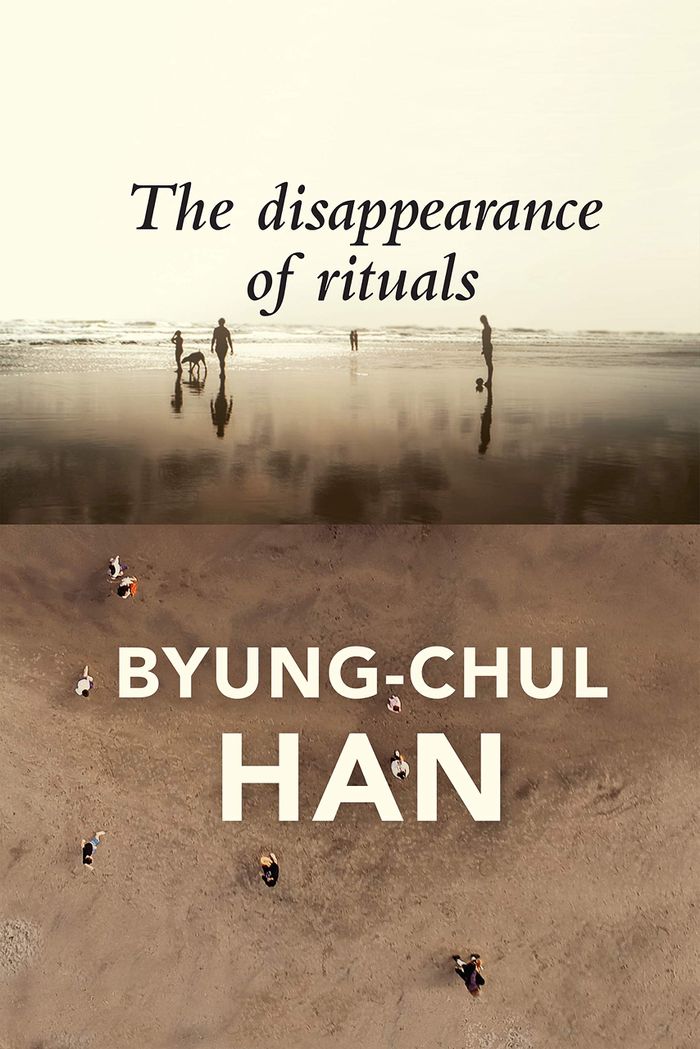
The disappearance of rituals: A topology of the present
Actions:
Price:
$19.95
(available in store)
Summary:
Untrammelled neoliberalism and the inexorable force of production have produced a 21st century crisis of community: a narcissistic cult of authenticity and mass turning-inward are among the pathologies engendered by it. We are individuals afloat in an atomised society, where the loss of the symbolic structures inherent in ritual behaviour has led to overdependence on the contingent to steer identity. Avoiding saccharine nostalgia for the rituals of the past, Han provides a genealogy of their disappearance as a means of diagnosing the pathologies of the present. He juxtaposes a community without communication – where the intensity of togetherness in silent recognition provides structure and meaning – to today’s communication without community, which does away with collective feelings and leaves individuals exposed to exploitation and manipulation by neoliberal psycho-politics. The community that is invoked everywhere today is an atrophied and commoditized community that lacks the symbolic power to bind people together. For Han, it is only the mutual praxis of recognition borne by the ritualistic sharing of the symbolic between members of a community which creates the footholds of objectivity allowing us to make sense of time.
The disappearance of rituals: A topology of the present
Actions:
Price:
$19.95
(available in store)
Summary:
Untrammelled neoliberalism and the inexorable force of production have produced a 21st century crisis of community: a narcissistic cult of authenticity and mass turning-inward are among the pathologies engendered by it. We are individuals afloat in an atomised society, where the loss of the symbolic structures inherent in ritual behaviour has led to overdependence on the contingent to steer identity. Avoiding saccharine nostalgia for the rituals of the past, Han provides a genealogy of their disappearance as a means of diagnosing the pathologies of the present. He juxtaposes a community without communication – where the intensity of togetherness in silent recognition provides structure and meaning – to today’s communication without community, which does away with collective feelings and leaves individuals exposed to exploitation and manipulation by neoliberal psycho-politics. The community that is invoked everywhere today is an atrophied and commoditized community that lacks the symbolic power to bind people together. For Han, it is only the mutual praxis of recognition borne by the ritualistic sharing of the symbolic between members of a community which creates the footholds of objectivity allowing us to make sense of time.
Form:
books
books
Publication:
October 2020
October 2020
Subject:
Critical Theory
Critical Theory
Form:
books
books
Price:
$35.00
(available to order)
Summary:
Over the past century, American demographics and social norms have shifted dramatically. More people are living alone, marrying later in life, and having smaller families. At the same time, their lifestyles are changing, whether by choice or by force, to become more virtual, more mobile, and less stable. But despite the ways that today's America is different and more(...)
$35.00
(available to order)
Summary:
Over the past century, American demographics and social norms have shifted dramatically. More people are living alone, marrying later in life, and having smaller families. At the same time, their lifestyles are changing, whether by choice or by force, to become more virtual, more mobile, and less stable. But despite the ways that today's America is different and more(...)
Title:
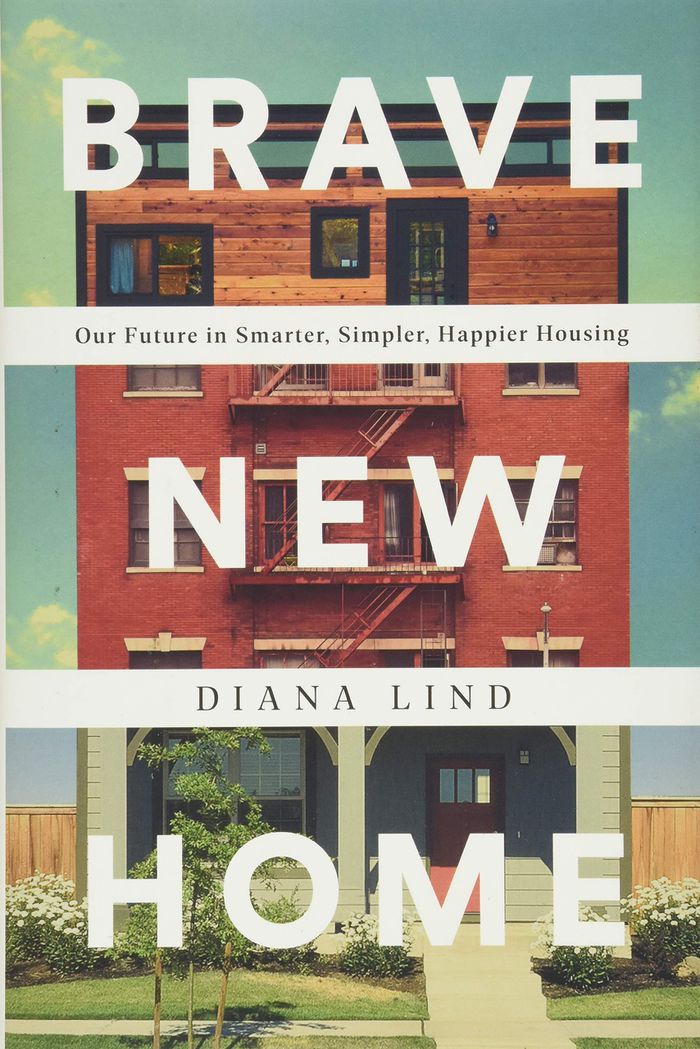
Brave New Home: Our future in smarter, simpler, happier housing
Actions:
Price:
$35.00
(available to order)
Summary:
Over the past century, American demographics and social norms have shifted dramatically. More people are living alone, marrying later in life, and having smaller families. At the same time, their lifestyles are changing, whether by choice or by force, to become more virtual, more mobile, and less stable. But despite the ways that today's America is different and more diverse, housing still looks stuck in the 1950s. In ''Brave new home,'' Diana Lind shows why a country full of single-family houses is bad for us and our planet, and details the new efforts underway that better reflect the way we live now, to ensure that the way we live next is both less lonely and more affordable. Lind takes readers into the homes and communities that are seeking alternatives to the American norm, from multi-generational living, in-law suites, and co-living to microapartments, tiny houses, and new rural communities. Drawing on Lind's expertise and the stories of Americans caught in or forging their own paths outside of our cookie-cutter housing trap, ''Brave new home'' offers a diagnosis of the current American housing crisis and a radical re-imagining of future possibilities.
Brave New Home: Our future in smarter, simpler, happier housing
Actions:
Price:
$35.00
(available to order)
Summary:
Over the past century, American demographics and social norms have shifted dramatically. More people are living alone, marrying later in life, and having smaller families. At the same time, their lifestyles are changing, whether by choice or by force, to become more virtual, more mobile, and less stable. But despite the ways that today's America is different and more diverse, housing still looks stuck in the 1950s. In ''Brave new home,'' Diana Lind shows why a country full of single-family houses is bad for us and our planet, and details the new efforts underway that better reflect the way we live now, to ensure that the way we live next is both less lonely and more affordable. Lind takes readers into the homes and communities that are seeking alternatives to the American norm, from multi-generational living, in-law suites, and co-living to microapartments, tiny houses, and new rural communities. Drawing on Lind's expertise and the stories of Americans caught in or forging their own paths outside of our cookie-cutter housing trap, ''Brave new home'' offers a diagnosis of the current American housing crisis and a radical re-imagining of future possibilities.
Form:
books
books
Publication:
October 2020
October 2020
Subject:
Architectural Theory
Architectural Theory
Form:
books
books

Actions:
Price:
$66.00
(available to order)
Summary:
Natural, renewable, reusable, and aesthetically pleasing, wood is the consummate building material. Thanks to incredible advances in both application and sustainability, it is being used across the world to create new and surprising styles. This global survey features exquisite photography that captures a wide range of twenty-first century construction in residential,(...)
$66.00
(available to order)
Summary:
Natural, renewable, reusable, and aesthetically pleasing, wood is the consummate building material. Thanks to incredible advances in both application and sustainability, it is being used across the world to create new and surprising styles. This global survey features exquisite photography that captures a wide range of twenty-first century construction in residential,(...)
Title:
Building with wood: the new timber architecture
Actions:
Price:
$66.00
(available to order)
Summary:
Natural, renewable, reusable, and aesthetically pleasing, wood is the consummate building material. Thanks to incredible advances in both application and sustainability, it is being used across the world to create new and surprising styles. This global survey features exquisite photography that captures a wide range of twenty-first century construction in residential, public, cultural, educational, commercial, and entertainment-related spaces. From the Mount Fuji World Heritage Center in Shizuoka, Japan and the Eystur Town Hall in the Faroe Islands to the College of Forestry at Oregon State University, each building is featured in double-page spreads with colour photographs that allow readers to appreciate timber’s intrinsic qualities against a variety of backgrounds, scales, and typologies. Plans and building specifications are accompanied by the latest developments in research and design. Eco-friendly and robust, timber’s applications are almost unlimited, extending to the tallest skyscrapers, and to every livable corner of our planet. This volume offers encouraging proof that architects around the world are responding to the climate crisis in ways that not only preserve the earth, but also provide pleasing environments in which to live, work, and play.
Building with wood: the new timber architecture
Actions:
Price:
$66.00
(available to order)
Summary:
Natural, renewable, reusable, and aesthetically pleasing, wood is the consummate building material. Thanks to incredible advances in both application and sustainability, it is being used across the world to create new and surprising styles. This global survey features exquisite photography that captures a wide range of twenty-first century construction in residential, public, cultural, educational, commercial, and entertainment-related spaces. From the Mount Fuji World Heritage Center in Shizuoka, Japan and the Eystur Town Hall in the Faroe Islands to the College of Forestry at Oregon State University, each building is featured in double-page spreads with colour photographs that allow readers to appreciate timber’s intrinsic qualities against a variety of backgrounds, scales, and typologies. Plans and building specifications are accompanied by the latest developments in research and design. Eco-friendly and robust, timber’s applications are almost unlimited, extending to the tallest skyscrapers, and to every livable corner of our planet. This volume offers encouraging proof that architects around the world are responding to the climate crisis in ways that not only preserve the earth, but also provide pleasing environments in which to live, work, and play.
Form:
books
books
Publication:
July 2023
July 2023
Subject:
Timber Construction
Timber Construction
Form:
books
books
Actions:
Price:
$32.95
(available to order)
Summary:
Dystopic imagery has figured prominently in modern depictions of the urban landscape. The city is often portrayed as a terrifying world of darkness, crisis, and catastrophe. Noir Urbanisms traces the history of the modern city through its critical representations in art, cinema, print journalism, literature, sociology, and architecture. It focuses on visual forms of(...)
$32.95
(available to order)
Summary:
Dystopic imagery has figured prominently in modern depictions of the urban landscape. The city is often portrayed as a terrifying world of darkness, crisis, and catastrophe. Noir Urbanisms traces the history of the modern city through its critical representations in art, cinema, print journalism, literature, sociology, and architecture. It focuses on visual forms of(...)
Title:
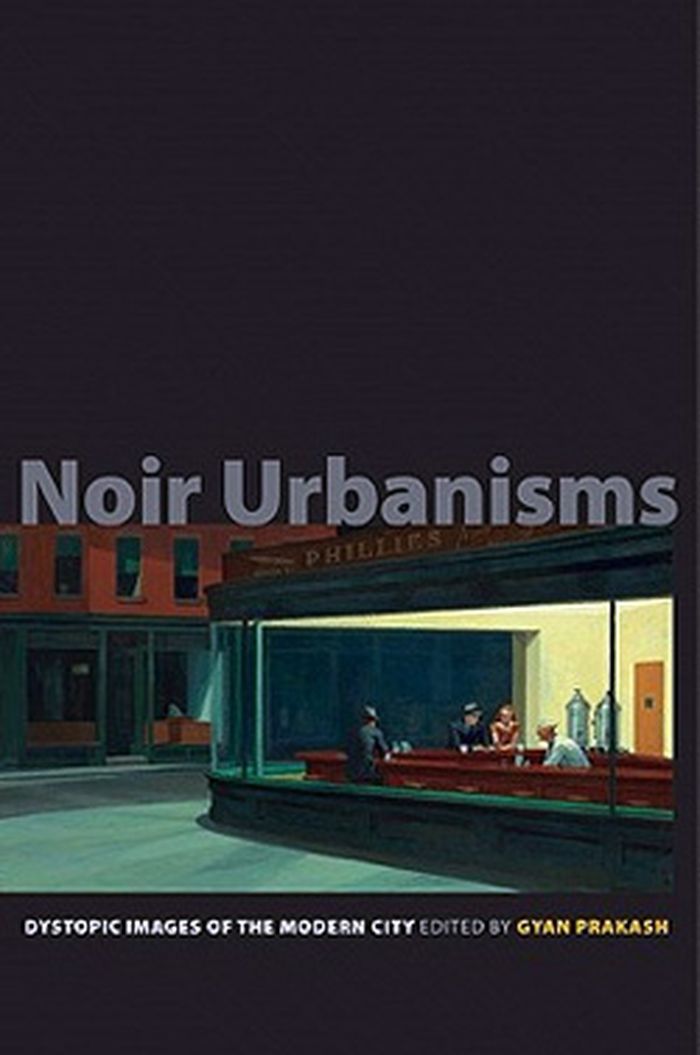
Noir urbanisms: Dystopic images of the modern city
Actions:
Price:
$32.95
(available to order)
Summary:
Dystopic imagery has figured prominently in modern depictions of the urban landscape. The city is often portrayed as a terrifying world of darkness, crisis, and catastrophe. Noir Urbanisms traces the history of the modern city through its critical representations in art, cinema, print journalism, literature, sociology, and architecture. It focuses on visual forms of dystopic representation--because the history of the modern city is inseparable from the production and circulation of images--and examines their strengths and limits as urban criticism. Contributors explore dystopic images of the modern city in Germany, Mexico, Japan, India, South Africa, China, and the United States. Their topics include Weimar representations of urban dystopia in Fritz Lang's 1927 film Metropolis; 1960s modernist architecture in Mexico City; Hollywood film noir of the 1940s and 1950s; the recurring fictional destruction of Tokyo in postwar Japan's sci-fi doom culture; the urban fringe in Bombay cinema; fictional explorations of urban dystopia in postapartheid Johannesburg; and Delhi's out-of-control and media-saturated urbanism in the 1980s and 1990s. What emerges in Noir Urbanisms is the unsettling and disorienting alchemy between dark representations and the modern urban experience.
Noir urbanisms: Dystopic images of the modern city
Actions:
Price:
$32.95
(available to order)
Summary:
Dystopic imagery has figured prominently in modern depictions of the urban landscape. The city is often portrayed as a terrifying world of darkness, crisis, and catastrophe. Noir Urbanisms traces the history of the modern city through its critical representations in art, cinema, print journalism, literature, sociology, and architecture. It focuses on visual forms of dystopic representation--because the history of the modern city is inseparable from the production and circulation of images--and examines their strengths and limits as urban criticism. Contributors explore dystopic images of the modern city in Germany, Mexico, Japan, India, South Africa, China, and the United States. Their topics include Weimar representations of urban dystopia in Fritz Lang's 1927 film Metropolis; 1960s modernist architecture in Mexico City; Hollywood film noir of the 1940s and 1950s; the recurring fictional destruction of Tokyo in postwar Japan's sci-fi doom culture; the urban fringe in Bombay cinema; fictional explorations of urban dystopia in postapartheid Johannesburg; and Delhi's out-of-control and media-saturated urbanism in the 1980s and 1990s. What emerges in Noir Urbanisms is the unsettling and disorienting alchemy between dark representations and the modern urban experience.
Form:
books
books
Publication:
October 2010
October 2010
Subject:
Architecture and Film, Set Design
Architecture and Film, Set Design
Form:
books
books
Actions:
Price:
$45.00
(available to order)
Summary:
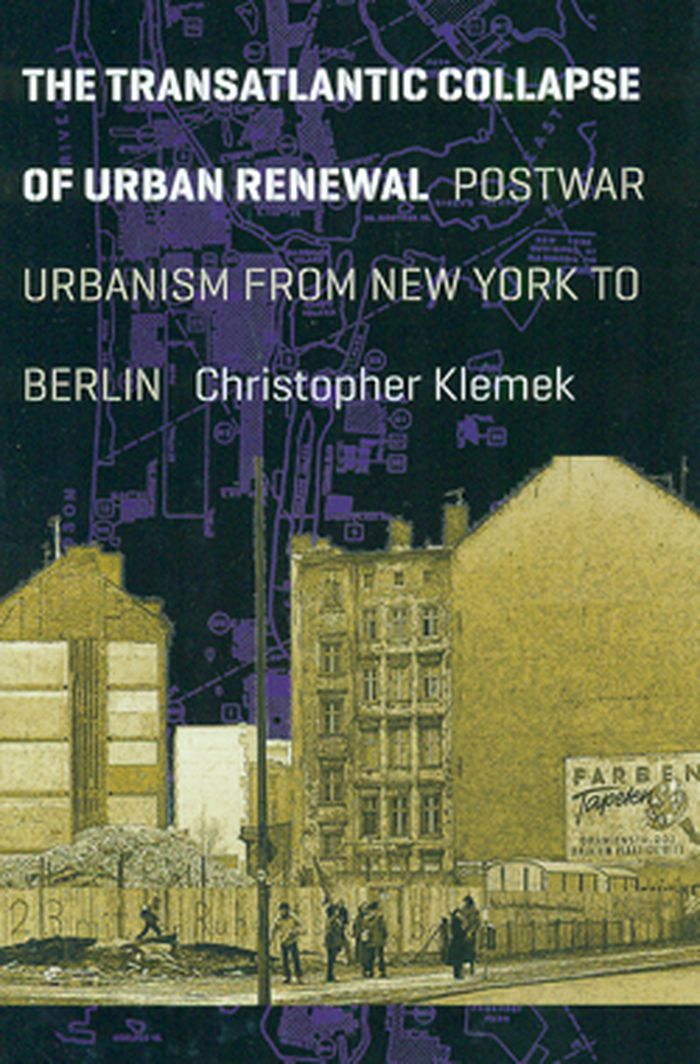
The Transatlantic Collapse of Urban Renewal examines how postwar thinkers from both sides of the Atlantic considered urban landscapes radically changed by the political and physical realities of sprawl, urban decay, and urban renewal. With a sweep that encompasses New York, London, Berlin, Philadelphia, and Toronto, among others, Christopher Klemek traces changing(...)
$45.00
(available to order)
Summary:
The Transatlantic Collapse of Urban Renewal examines how postwar thinkers from both sides of the Atlantic considered urban landscapes radically changed by the political and physical realities of sprawl, urban decay, and urban renewal. With a sweep that encompasses New York, London, Berlin, Philadelphia, and Toronto, among others, Christopher Klemek traces changing(...)
Title:
The transatlantic collapse of urban renewal: postwar urbanism from New York to Berlin
Actions:
Price:
$45.00
(available to order)
Summary:
The Transatlantic Collapse of Urban Renewal examines how postwar thinkers from both sides of the Atlantic considered urban landscapes radically changed by the political and physical realities of sprawl, urban decay, and urban renewal. With a sweep that encompasses New York, London, Berlin, Philadelphia, and Toronto, among others, Christopher Klemek traces changing responses to the challenging issues that most affected the lives of the world’s cities. In the postwar decades, the principles of modernist planning came to be challenged—in the grassroots revolts against the building of freeways through urban neighborhoods, for instance, or by academic critiques of slum clearance policy agendas—and then began to collapse entirely. Over the 1960s, several alternative views of city life emerged among neighborhood activists, New Left social scientists, and neoconservative critics. Ultimately, while a pessimistic view of urban crisis may have won out in the United States and Great Britain, Klemek demonstrates that other countries more successfully harmonized urban renewal and its alternatives. This much anticipated book provides one of the first truly international perspectives on issues central to historians and planners alike, making it essential reading for anyone engaged with either field.
The transatlantic collapse of urban renewal: postwar urbanism from New York to Berlin
Actions:
Price:
$45.00
(available to order)
Summary:
The Transatlantic Collapse of Urban Renewal examines how postwar thinkers from both sides of the Atlantic considered urban landscapes radically changed by the political and physical realities of sprawl, urban decay, and urban renewal. With a sweep that encompasses New York, London, Berlin, Philadelphia, and Toronto, among others, Christopher Klemek traces changing responses to the challenging issues that most affected the lives of the world’s cities. In the postwar decades, the principles of modernist planning came to be challenged—in the grassroots revolts against the building of freeways through urban neighborhoods, for instance, or by academic critiques of slum clearance policy agendas—and then began to collapse entirely. Over the 1960s, several alternative views of city life emerged among neighborhood activists, New Left social scientists, and neoconservative critics. Ultimately, while a pessimistic view of urban crisis may have won out in the United States and Great Britain, Klemek demonstrates that other countries more successfully harmonized urban renewal and its alternatives. This much anticipated book provides one of the first truly international perspectives on issues central to historians and planners alike, making it essential reading for anyone engaged with either field.
Form:
books
books
Publication:
June 2011
June 2011
Subject:
Urban Theory
Urban Theory


