


1664 Results
Form:
books
books
Actions:
Price:
$23.50
(available to order)
Summary:
Has COVID-19 ushered in the end of the office? Or is it the office’s final triumph? For decades, futurologists have prophesied a boundaryless working world, freed from the cramped confines of the office. During the COVID-19 crisis, employees around the globe got a taste of it. Confined by lockdown to their homes, they met, mingled, collaborated, and created(...)
$23.50
(available to order)
Summary:
Has COVID-19 ushered in the end of the office? Or is it the office’s final triumph? For decades, futurologists have prophesied a boundaryless working world, freed from the cramped confines of the office. During the COVID-19 crisis, employees around the globe got a taste of it. Confined by lockdown to their homes, they met, mingled, collaborated, and created(...)
Title:
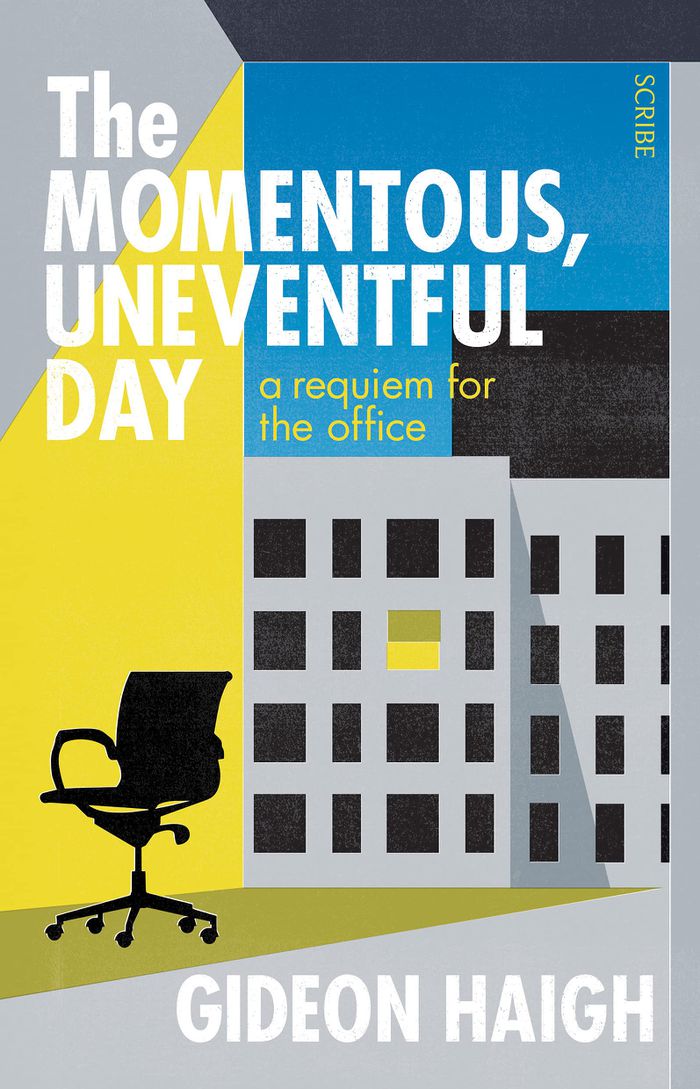
The momentous, uneventful day: A requiem for the office
Actions:
Price:
$23.50
(available to order)
Summary:
Has COVID-19 ushered in the end of the office? Or is it the office’s final triumph? For decades, futurologists have prophesied a boundaryless working world, freed from the cramped confines of the office. During the COVID-19 crisis, employees around the globe got a taste of it. Confined by lockdown to their homes, they met, mingled, collaborated, and created electronically. At length, they returned to something approaching normality. Or had they glimpsed the normal to come? In''The momentous, uneventful day,'' Gideon Haigh reflects on our ambivalent relationship to office work and office life, how we ended up with the offices we have, how they have reflected our best and worst instincts, and how these might be affected by a world in a time of contagion. Like the factory in the nineteenth century, the office was the characteristic building form of the twentieth, reshaping our cities, redirecting our lives. We all have a stake in how it will change in the twenty-first. Enlivened by copious citations from literature, film, memoir, and corporate history, and interspersed with relevant images,''The momentous, uneventful day'' is the ideal companion for a lively current debate about the role offices will play in the future.
The momentous, uneventful day: A requiem for the office
Actions:
Price:
$23.50
(available to order)
Summary:
Has COVID-19 ushered in the end of the office? Or is it the office’s final triumph? For decades, futurologists have prophesied a boundaryless working world, freed from the cramped confines of the office. During the COVID-19 crisis, employees around the globe got a taste of it. Confined by lockdown to their homes, they met, mingled, collaborated, and created electronically. At length, they returned to something approaching normality. Or had they glimpsed the normal to come? In''The momentous, uneventful day,'' Gideon Haigh reflects on our ambivalent relationship to office work and office life, how we ended up with the offices we have, how they have reflected our best and worst instincts, and how these might be affected by a world in a time of contagion. Like the factory in the nineteenth century, the office was the characteristic building form of the twentieth, reshaping our cities, redirecting our lives. We all have a stake in how it will change in the twenty-first. Enlivened by copious citations from literature, film, memoir, and corporate history, and interspersed with relevant images,''The momentous, uneventful day'' is the ideal companion for a lively current debate about the role offices will play in the future.
Form:
books
books
Publication:
September 2021
September 2021
Subject:
Critical Theory
Critical Theory
Form:
books
books
Actions:
Price:
$47.95
(available to order)
Summary:
Builders, Housewives and the Construction of Modern Athens reassesses the explosive growth of postwar Athens through its most distinctive building type, the polykatoikía, and its different connotations through the decades: from a monotonous and ugly element of the city to the role it might play in the urban sustainability. Sprawling beneath the Acropolis, modern Athens(...)
$47.95
(available to order)
Summary:
Builders, Housewives and the Construction of Modern Athens reassesses the explosive growth of postwar Athens through its most distinctive building type, the polykatoikía, and its different connotations through the decades: from a monotonous and ugly element of the city to the role it might play in the urban sustainability. Sprawling beneath the Acropolis, modern Athens(...)
Title:
Builders, housewives, and the construction of modern Athens
Actions:
Price:
$47.95
(available to order)
Summary:
Builders, Housewives and the Construction of Modern Athens reassesses the explosive growth of postwar Athens through its most distinctive building type, the polykatoikía, and its different connotations through the decades: from a monotonous and ugly element of the city to the role it might play in the urban sustainability. Sprawling beneath the Acropolis, modern Athens is commonly viewed in negative terms: congested, ugly and monotonous. Builders, Housewives and the Construction of Modern Athens questions this stereotype, reassessing the explosive growth of postwar Athens through its most distinctive building type: the polykatoikía (a small-scale multistory apartment block). Theocharopoulou re-evaluates the polykatoikía as a low-tech, easily constructible innovation that stimulated the postwar urban economy, triggering the city's social mid-twentieth-century transformation. The interiors of the polykatoikía apartments reflect a desire for modernity as marketed to housewives through film and magazines. Regular builders became unlikely allies in designing these polykatoikía interiors, enabling inhabitants to exert agency over their daily lives and the shape of the postwar city. This revised edition of Theocharopoulou's study draws on popular media as well as urban and regional planning theory, cultural studies and anthropology to examine the evolution of this phenomenon. Written in the light of Greece's recent financial crisis, the book's updated Postscript considers the role polykatoikía might play in building an equitable and sustainable twenty-first-century city.
Builders, housewives, and the construction of modern Athens
Actions:
Price:
$47.95
(available to order)
Summary:
Builders, Housewives and the Construction of Modern Athens reassesses the explosive growth of postwar Athens through its most distinctive building type, the polykatoikía, and its different connotations through the decades: from a monotonous and ugly element of the city to the role it might play in the urban sustainability. Sprawling beneath the Acropolis, modern Athens is commonly viewed in negative terms: congested, ugly and monotonous. Builders, Housewives and the Construction of Modern Athens questions this stereotype, reassessing the explosive growth of postwar Athens through its most distinctive building type: the polykatoikía (a small-scale multistory apartment block). Theocharopoulou re-evaluates the polykatoikía as a low-tech, easily constructible innovation that stimulated the postwar urban economy, triggering the city's social mid-twentieth-century transformation. The interiors of the polykatoikía apartments reflect a desire for modernity as marketed to housewives through film and magazines. Regular builders became unlikely allies in designing these polykatoikía interiors, enabling inhabitants to exert agency over their daily lives and the shape of the postwar city. This revised edition of Theocharopoulou's study draws on popular media as well as urban and regional planning theory, cultural studies and anthropology to examine the evolution of this phenomenon. Written in the light of Greece's recent financial crisis, the book's updated Postscript considers the role polykatoikía might play in building an equitable and sustainable twenty-first-century city.
Form:
books
books
Publication:
September 2022
September 2022
Subject:
Urban Theory
Urban Theory
Form:
books
books
Title:
Making a better world : public housing, the Red Scare, and the direction of modern Los Angeles
Making a better world : public housing, the Red Scare, and the direction of modern Los Angeles
Actions:
Price:
$29.95
(available to order)
Summary:
During the 1990s, Los Angeles - like many other cities across America - began demolishing public housing projects that had come to symbolize decades of failed urban policies. But public housing was not always regarded with such disdain. In the years surrounding World War II, it had been a popular New Deal program, viewed as a force for positive social change and supported(...)
$29.95
(available to order)
Summary:
During the 1990s, Los Angeles - like many other cities across America - began demolishing public housing projects that had come to symbolize decades of failed urban policies. But public housing was not always regarded with such disdain. In the years surrounding World War II, it had been a popular New Deal program, viewed as a force for positive social change and supported(...)
Title:
Making a better world : public housing, the Red Scare, and the direction of modern Los Angeles
Actions:
Price:
$29.95
(available to order)
Summary:
During the 1990s, Los Angeles - like many other cities across America - began demolishing public housing projects that had come to symbolize decades of failed urban policies. But public housing was not always regarded with such disdain. In the years surrounding World War II, it had been a popular New Deal program, viewed as a force for positive social change and supported by a broad coalition of civic, labor, religious, and community organizations. Socially conscious architects and planners developed innovative and livable projects that embodied the latest theories in urban design. With sharp historical perspective, "Making a better world" traces the rise and fall of a public housing ethic in Los Angeles and its impact on the city’s built environment. In the caustic political atmosphere of Joseph McCarthy’s America, public housing opponents accused the city’s housing authority of communist infiltration, effectively eliminating the left from debates over the city’s development. In place of public housing, conservative forces promoted a pro-private growth agenda that redefined urban renewal and reshaped modern Los Angeles. No conventional public housing projects have been constructed in Los Angeles since 1955. In this era of skyrocketing housing prices, especially in urban areas, Don Parson’s examination not only gives us the recent history of a city but also opens up a new debate on a current national crisis in providing shelter for low-income Americans. Foreword by Kevin Starr.
Making a better world : public housing, the Red Scare, and the direction of modern Los Angeles
Actions:
Price:
$29.95
(available to order)
Summary:
During the 1990s, Los Angeles - like many other cities across America - began demolishing public housing projects that had come to symbolize decades of failed urban policies. But public housing was not always regarded with such disdain. In the years surrounding World War II, it had been a popular New Deal program, viewed as a force for positive social change and supported by a broad coalition of civic, labor, religious, and community organizations. Socially conscious architects and planners developed innovative and livable projects that embodied the latest theories in urban design. With sharp historical perspective, "Making a better world" traces the rise and fall of a public housing ethic in Los Angeles and its impact on the city’s built environment. In the caustic political atmosphere of Joseph McCarthy’s America, public housing opponents accused the city’s housing authority of communist infiltration, effectively eliminating the left from debates over the city’s development. In place of public housing, conservative forces promoted a pro-private growth agenda that redefined urban renewal and reshaped modern Los Angeles. No conventional public housing projects have been constructed in Los Angeles since 1955. In this era of skyrocketing housing prices, especially in urban areas, Don Parson’s examination not only gives us the recent history of a city but also opens up a new debate on a current national crisis in providing shelter for low-income Americans. Foreword by Kevin Starr.
Form:
books
books
Publication:
January 2005, Minneapolis
January 2005, Minneapolis
Subject:
Urban Theory
Urban Theory
Form:
journals and magazines
journals and magazines
Title:
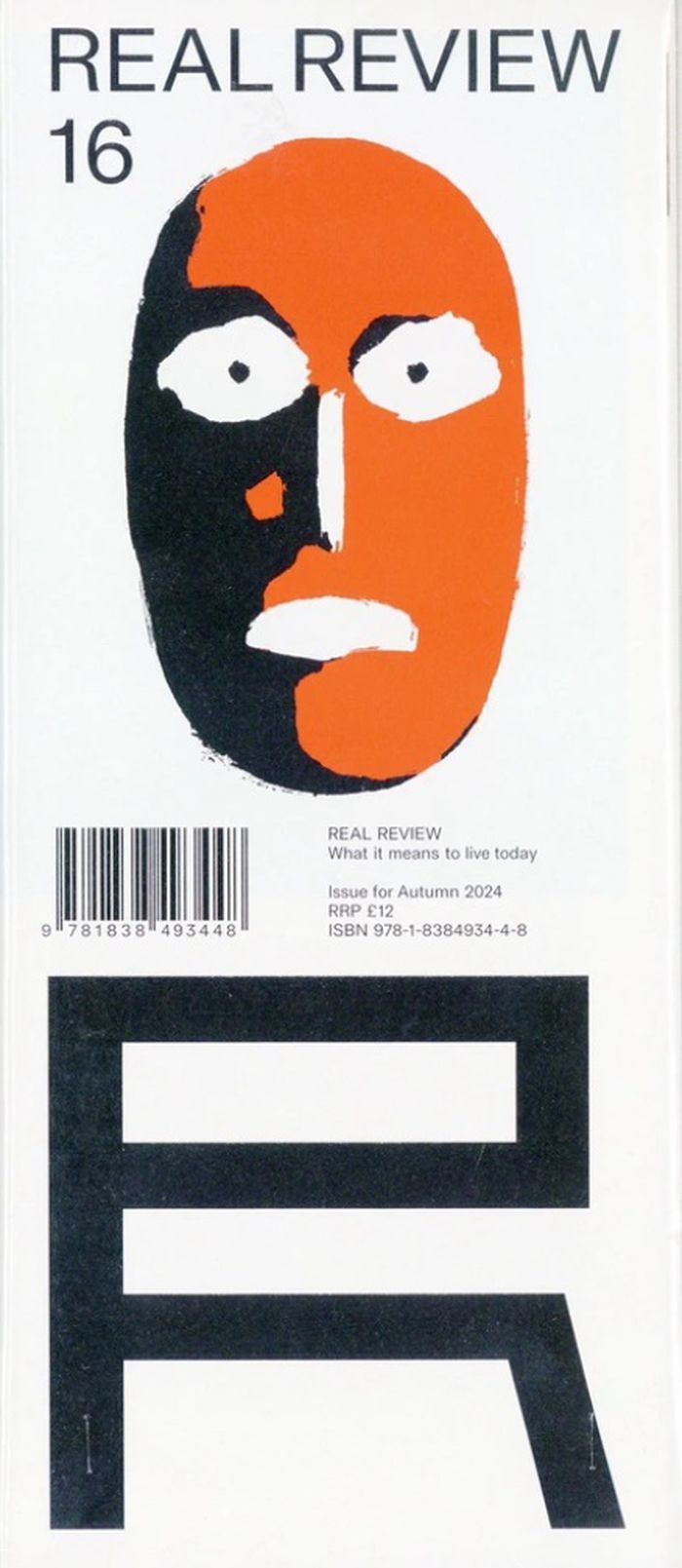
Real Review 16 Autumn 2024
Real Review 16 Autumn 2024
Actions:
Price:
$26.00
(available in store)
Summary:
There is no snow on Mount Fuji. Any hack will tell you the phase change is here, the restructuring of the world is underway. That would be a relief, like a broken fever. But they are wrong. We are still waiting. This period is merely the static on the skin, the rising pressure and building tension before the impending climax of a deluge. We live under a lavender sky,(...)
$26.00
(available in store)
Summary:
There is no snow on Mount Fuji. Any hack will tell you the phase change is here, the restructuring of the world is underway. That would be a relief, like a broken fever. But they are wrong. We are still waiting. This period is merely the static on the skin, the rising pressure and building tension before the impending climax of a deluge. We live under a lavender sky,(...)
Title:
Real Review 16 Autumn 2024
Actions:
Price:
$26.00
(available in store)
Summary:
There is no snow on Mount Fuji. Any hack will tell you the phase change is here, the restructuring of the world is underway. That would be a relief, like a broken fever. But they are wrong. We are still waiting. This period is merely the static on the skin, the rising pressure and building tension before the impending climax of a deluge. We live under a lavender sky, silver and green; this is the time of unsettled air, heavy with that metallic smell of the earth. Soon the wind will awake, driving the rain forward like a cloud of smoke. The tremendous powers by which our lives are encompassed are stirring. How can we prepare for this transformation? We interview professor Jonathan White on the future as a political idea. Artist Dozie Kanu presents a flyer for higher education, while Opioid Crisis Lookbook speculates on semiotics. Peter Saville reviews the mood with Jack Self, who reviews voice notes, moral killing, and the Star Trek universe. Isabelle Bucklow binge-watches tech demos. Satoshi Fujiwara captures law enforcement hardware. Ruba Al-Sweel reviews the non-commercial image, while Martina Rocca and Izzy Farmiloe review the production of culture. Carmen Winant documents the last safe abortion, Felix Mcnamara writes notes on minutiae, John Sunyer attends a run club, plus much more.
Real Review 16 Autumn 2024
Actions:
Price:
$26.00
(available in store)
Summary:
There is no snow on Mount Fuji. Any hack will tell you the phase change is here, the restructuring of the world is underway. That would be a relief, like a broken fever. But they are wrong. We are still waiting. This period is merely the static on the skin, the rising pressure and building tension before the impending climax of a deluge. We live under a lavender sky, silver and green; this is the time of unsettled air, heavy with that metallic smell of the earth. Soon the wind will awake, driving the rain forward like a cloud of smoke. The tremendous powers by which our lives are encompassed are stirring. How can we prepare for this transformation? We interview professor Jonathan White on the future as a political idea. Artist Dozie Kanu presents a flyer for higher education, while Opioid Crisis Lookbook speculates on semiotics. Peter Saville reviews the mood with Jack Self, who reviews voice notes, moral killing, and the Star Trek universe. Isabelle Bucklow binge-watches tech demos. Satoshi Fujiwara captures law enforcement hardware. Ruba Al-Sweel reviews the non-commercial image, while Martina Rocca and Izzy Farmiloe review the production of culture. Carmen Winant documents the last safe abortion, Felix Mcnamara writes notes on minutiae, John Sunyer attends a run club, plus much more.
Form:
journals and magazines
journals and magazines
Publication:
March 2025
March 2025
Subject:
Magazines
Magazines
Form:
books
books
Title:
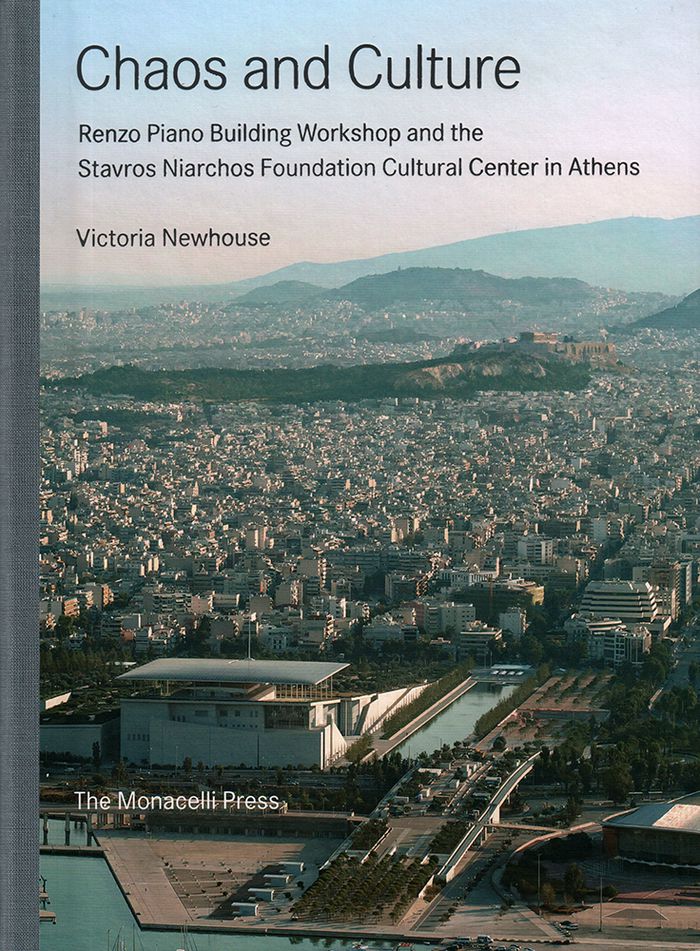
Chaos and culture: Renzo Piano Building Workshop and the Stavros Niarchos Foundation Cultural center
Chaos and culture: Renzo Piano Building Workshop and the Stavros Niarchos Foundation Cultural center
Actions:
Price:
$66.00
(available to order)
Summary:
In 2006 the Stavros Niarchos Foundation announced its gift of a new cultural center in Athens to house both Greek National Library and the Greek National Opera House within a forty-acre landscaped public park. Two years later, with designers and engineers in place and the project underway, the Greek economy collapsed. In "Chaos and culture", Victoria Newhouse weaves a(...)
$66.00
(available to order)
Summary:
In 2006 the Stavros Niarchos Foundation announced its gift of a new cultural center in Athens to house both Greek National Library and the Greek National Opera House within a forty-acre landscaped public park. Two years later, with designers and engineers in place and the project underway, the Greek economy collapsed. In "Chaos and culture", Victoria Newhouse weaves a(...)
Title:
Chaos and culture: Renzo Piano Building Workshop and the Stavros Niarchos Foundation Cultural center
Actions:
Price:
$66.00
(available to order)
Summary:
In 2006 the Stavros Niarchos Foundation announced its gift of a new cultural center in Athens to house both Greek National Library and the Greek National Opera House within a forty-acre landscaped public park. Two years later, with designers and engineers in place and the project underway, the Greek economy collapsed. In "Chaos and culture", Victoria Newhouse weaves a fascinating narrative of how a philanthropist and an extraordinary design team became convinced that architecture could serve as a beacon of hope amid Greece’s economic crisis and political upheaval. With meticulous methodology of primary research, interviews with designers, and historic context, Newhouse describes the decade-long process leading to the creation of the Stavros Niarchos Foundation Cultural Center (SNFCC), an $800 million dollar project that became the symbol of recovery and survival. The Stavros Niarchos Foundation Cultural Center (SNFCC) cannot but assume unusual cultural significance, standing as it does on a hill in view of the Parthenon (to the north) and Faliro Bay (to the south). Newhouse further situates the project within the modern history of Athens, beginning with Greece’s independence in 1832, and reaches back much earlier to describe two-thousand-year old cemeteries unearthed on the site. Aerial views by the photographer Iwan Baan are among the 200 photographs and drawings documenting the process and context of the SNFCC.
Chaos and culture: Renzo Piano Building Workshop and the Stavros Niarchos Foundation Cultural center
Actions:
Price:
$66.00
(available to order)
Summary:
In 2006 the Stavros Niarchos Foundation announced its gift of a new cultural center in Athens to house both Greek National Library and the Greek National Opera House within a forty-acre landscaped public park. Two years later, with designers and engineers in place and the project underway, the Greek economy collapsed. In "Chaos and culture", Victoria Newhouse weaves a fascinating narrative of how a philanthropist and an extraordinary design team became convinced that architecture could serve as a beacon of hope amid Greece’s economic crisis and political upheaval. With meticulous methodology of primary research, interviews with designers, and historic context, Newhouse describes the decade-long process leading to the creation of the Stavros Niarchos Foundation Cultural Center (SNFCC), an $800 million dollar project that became the symbol of recovery and survival. The Stavros Niarchos Foundation Cultural Center (SNFCC) cannot but assume unusual cultural significance, standing as it does on a hill in view of the Parthenon (to the north) and Faliro Bay (to the south). Newhouse further situates the project within the modern history of Athens, beginning with Greece’s independence in 1832, and reaches back much earlier to describe two-thousand-year old cemeteries unearthed on the site. Aerial views by the photographer Iwan Baan are among the 200 photographs and drawings documenting the process and context of the SNFCC.
Form:
books
books
Publication:
May 2017
May 2017
Subject:
Architecture Monographs
Architecture Monographs
Form:
books
books
Actions:
Price:
$36.95
(available to order)
Summary:
Activism is a critical point of contention for institutions and genealogies of contemporary art around the world. Yet artists have consistently engaged in activist discourse, lending their skills to social movements, and regularly participating in civil and social rights campaigns while also boycotting cultural institutions and exerting significant pressure on them. This(...)
$36.95
(available to order)
Summary:
Activism is a critical point of contention for institutions and genealogies of contemporary art around the world. Yet artists have consistently engaged in activist discourse, lending their skills to social movements, and regularly participating in civil and social rights campaigns while also boycotting cultural institutions and exerting significant pressure on them. This(...)
Title:
Activism: Whitechapel Documents of Contemporary Art
Actions:
Price:
$36.95
(available to order)
Summary:
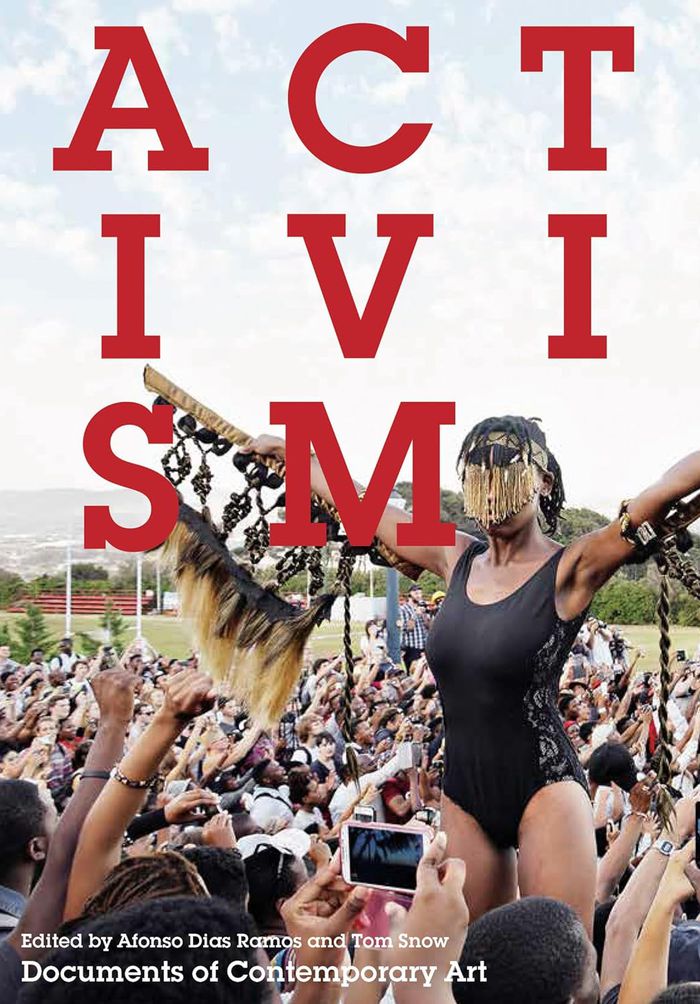
Activism is a critical point of contention for institutions and genealogies of contemporary art around the world. Yet artists have consistently engaged in activist discourse, lending their skills to social movements, and regularly participating in civil and social rights campaigns while also boycotting cultural institutions and exerting significant pressure on them. This timely volume, edited by Tom Snow and Afonso Ramos, addresses an extraordinary moment in debates over the institutional frameworks and networks of art including large-scale direct actions, as well as a radical rethinking of art venues and urban spaces according to racial, class, or gender-based disparities, including demonstrations against the extractive and exploitative practices of neoliberal accumulation and climate catastrophe. From ACT UP and its affiliate groups since the dawn of the AIDS crisis to the counter-spectacle and street theatrics of the so-called Arab Spring and Occupy, to ongoing protest movements such as Black Lives Matter, Rhodes Must Fall, and Decolonize This Place, activist aesthetics has proven increasingly difficult to define under traditional classifications. Resurgent campaigns for decolonial reckoning, ecological justice, gender equality, indigenous rights and antiracist pedagogies indicate that the role of activism in contemporary art practice urges a critical reassessment. One pressing question is whether contemporary art’s most radical politics now takes place outside, against, or in spite of, conventional sites of display such as museums, biennials, and galleries.
Activism: Whitechapel Documents of Contemporary Art
Actions:
Price:
$36.95
(available to order)
Summary:
Activism is a critical point of contention for institutions and genealogies of contemporary art around the world. Yet artists have consistently engaged in activist discourse, lending their skills to social movements, and regularly participating in civil and social rights campaigns while also boycotting cultural institutions and exerting significant pressure on them. This timely volume, edited by Tom Snow and Afonso Ramos, addresses an extraordinary moment in debates over the institutional frameworks and networks of art including large-scale direct actions, as well as a radical rethinking of art venues and urban spaces according to racial, class, or gender-based disparities, including demonstrations against the extractive and exploitative practices of neoliberal accumulation and climate catastrophe. From ACT UP and its affiliate groups since the dawn of the AIDS crisis to the counter-spectacle and street theatrics of the so-called Arab Spring and Occupy, to ongoing protest movements such as Black Lives Matter, Rhodes Must Fall, and Decolonize This Place, activist aesthetics has proven increasingly difficult to define under traditional classifications. Resurgent campaigns for decolonial reckoning, ecological justice, gender equality, indigenous rights and antiracist pedagogies indicate that the role of activism in contemporary art practice urges a critical reassessment. One pressing question is whether contemporary art’s most radical politics now takes place outside, against, or in spite of, conventional sites of display such as museums, biennials, and galleries.
Form:
books
books
Publication:
October 2023
October 2023
Subject:
Art Theory
Art Theory
Form:
books
books
Price:
$51.50
(available in store)
Summary:
The city of Homs, like so many places in Syria, has suffered mass destruction since the war began in 2011. So far, the architectural response to the crisis has focused on ''cultural heritage'', ancient architecture, and the external displacement of refugees, often neglecting the everyday lives of Syrians and the buildings that make up their homes and communities. In(...)
$51.50
(available in store)
Summary:
The city of Homs, like so many places in Syria, has suffered mass destruction since the war began in 2011. So far, the architectural response to the crisis has focused on ''cultural heritage'', ancient architecture, and the external displacement of refugees, often neglecting the everyday lives of Syrians and the buildings that make up their homes and communities. In(...)
Title:
Domicide: Architecture, war and the destruction of home in Syria
Actions:
Price:
$51.50
(available in store)
Summary:
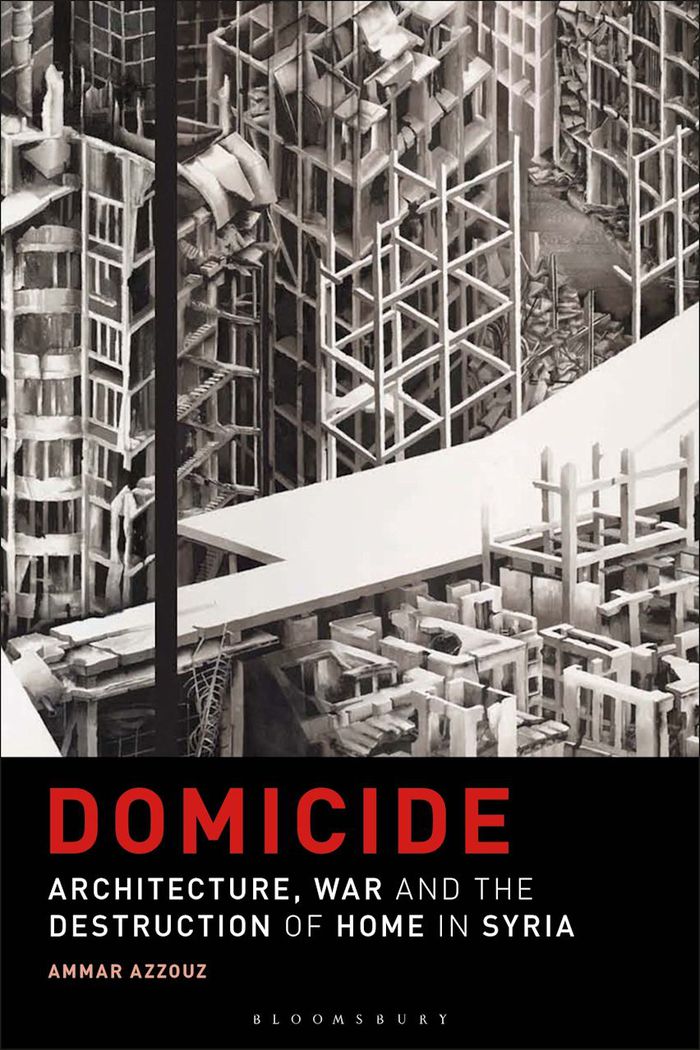
The city of Homs, like so many places in Syria, has suffered mass destruction since the war began in 2011. So far, the architectural response to the crisis has focused on ''cultural heritage'', ancient architecture, and the external displacement of refugees, often neglecting the everyday lives of Syrians and the buildings that make up their homes and communities. In ''Domicide'', Ammar Azzouz uses the notion of the 'home' to address the destruction in cities like Homs, the displacement of Syrian people both externally and internally, and to explore how cities can be rebuilt without causing further damage to the communities that live there. Drawing on interviews with those working in the built environment professions, both inside and outside of Syria, but also Syrians from other backgrounds who have become architects in their own way as they were forced to repair and rebuild their homes by themselves, Domicide offers fresh insight into the role of the architect during time of war, and explores how the future reconstruction of cities should mirror the wants and needs, the traditions and ways of living, of local communities. Focusing on Homs but offering a blueprint for other urban areas of conflict across Syria and the wider world, the book is essential reading for researchers in architecture, urban planning, heritage studies and conflict studies.
Domicide: Architecture, war and the destruction of home in Syria
Actions:
Price:
$51.50
(available in store)
Summary:
The city of Homs, like so many places in Syria, has suffered mass destruction since the war began in 2011. So far, the architectural response to the crisis has focused on ''cultural heritage'', ancient architecture, and the external displacement of refugees, often neglecting the everyday lives of Syrians and the buildings that make up their homes and communities. In ''Domicide'', Ammar Azzouz uses the notion of the 'home' to address the destruction in cities like Homs, the displacement of Syrian people both externally and internally, and to explore how cities can be rebuilt without causing further damage to the communities that live there. Drawing on interviews with those working in the built environment professions, both inside and outside of Syria, but also Syrians from other backgrounds who have become architects in their own way as they were forced to repair and rebuild their homes by themselves, Domicide offers fresh insight into the role of the architect during time of war, and explores how the future reconstruction of cities should mirror the wants and needs, the traditions and ways of living, of local communities. Focusing on Homs but offering a blueprint for other urban areas of conflict across Syria and the wider world, the book is essential reading for researchers in architecture, urban planning, heritage studies and conflict studies.
Form:
books
books
Publication:
January 2025
January 2025
Subject:
Architectural Theory
Architectural Theory
Form:
books
books
Title:
The care manifesto
The care manifesto
Actions:
Price:
$19.95
(available to order)
Summary:
''The care manifesto'' puts care at the heart of the debates of our current crisis: from intimate care--childcare, healthcare, elder care--to care for the natural world. We live in a world where carelessness reigns, but it does not have to be this way. ''The care manifesto'' puts forth a vision for a truly caring world. The authors want to reimagine the role of care(...)
$19.95
(available to order)
Summary:
''The care manifesto'' puts care at the heart of the debates of our current crisis: from intimate care--childcare, healthcare, elder care--to care for the natural world. We live in a world where carelessness reigns, but it does not have to be this way. ''The care manifesto'' puts forth a vision for a truly caring world. The authors want to reimagine the role of care(...)
Title:
The care manifesto
Actions:
Price:
$19.95
(available to order)
Summary:
''The care manifesto'' puts care at the heart of the debates of our current crisis: from intimate care--childcare, healthcare, elder care--to care for the natural world. We live in a world where carelessness reigns, but it does not have to be this way. ''The care manifesto'' puts forth a vision for a truly caring world. The authors want to reimagine the role of care in our everyday lives, making it the organising principle in every dimension and at every scale of life. We are all dependent on each other, and only by nurturing these interdependencies can we cultivate a world in which each and every one of us can not only live but thrive. ''The care manifesto'' demands that we must put care at the heart of the state and the economy. A caring government must promote collective joy, not the satisfaction of individual desire. This means the transformation of how we organise work through co-operatives, localism and nationalisation. It proposes the expansion of our understanding of kinship for a more 'promiscuous care'. It calls for caring places through the reclamation of public space, to make a more convivial city. It sets out an agenda for the environment, most urgent of all, putting care at the centre of our relationship to the natural world.
The care manifesto
Actions:
Price:
$19.95
(available to order)
Summary:
''The care manifesto'' puts care at the heart of the debates of our current crisis: from intimate care--childcare, healthcare, elder care--to care for the natural world. We live in a world where carelessness reigns, but it does not have to be this way. ''The care manifesto'' puts forth a vision for a truly caring world. The authors want to reimagine the role of care in our everyday lives, making it the organising principle in every dimension and at every scale of life. We are all dependent on each other, and only by nurturing these interdependencies can we cultivate a world in which each and every one of us can not only live but thrive. ''The care manifesto'' demands that we must put care at the heart of the state and the economy. A caring government must promote collective joy, not the satisfaction of individual desire. This means the transformation of how we organise work through co-operatives, localism and nationalisation. It proposes the expansion of our understanding of kinship for a more 'promiscuous care'. It calls for caring places through the reclamation of public space, to make a more convivial city. It sets out an agenda for the environment, most urgent of all, putting care at the centre of our relationship to the natural world.
Form:
books
books
Publication:
September 2020
September 2020
Subject:
Social
Social
Form:
books
books
Actions:
Price:
$25.95
(available to order)
Summary:
We are living in the Anthropocene—an era of dramatic and violent climate change featuring warming oceans, melting icecaps, extreme weather events, habitat loss, species extinction, and more. What will life be like in a climate-changed world? In ''Tomorrow’s parties,'' science fiction authors speculate how we might be able to live and even thrive through the advancing(...)
$25.95
(available to order)
Summary:
We are living in the Anthropocene—an era of dramatic and violent climate change featuring warming oceans, melting icecaps, extreme weather events, habitat loss, species extinction, and more. What will life be like in a climate-changed world? In ''Tomorrow’s parties,'' science fiction authors speculate how we might be able to live and even thrive through the advancing(...)
Title:
Tomorrow's parties: Life in the Anthropocene
Actions:
Price:
$25.95
(available to order)
Summary:
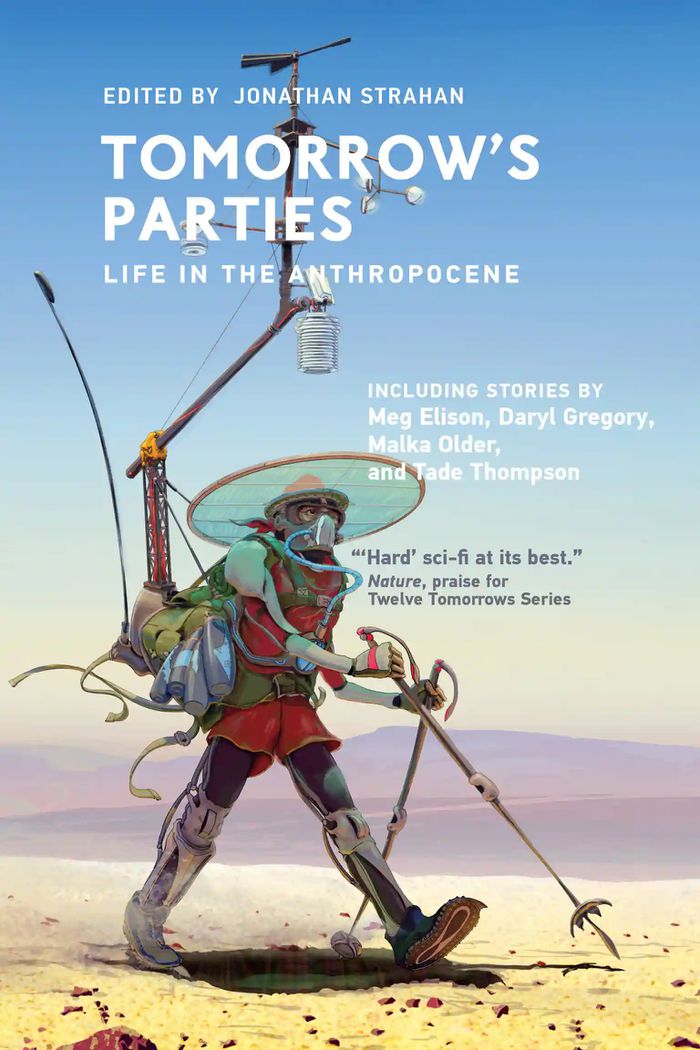
We are living in the Anthropocene—an era of dramatic and violent climate change featuring warming oceans, melting icecaps, extreme weather events, habitat loss, species extinction, and more. What will life be like in a climate-changed world? In ''Tomorrow’s parties,'' science fiction authors speculate how we might be able to live and even thrive through the advancing Anthropocene. In ten original stories by writers from around the world, an interview with celebrated writer Kim Stanley Robinson, and a series of intricate and elegant artworks by Sean Bodley, ''Tomorrow’s parties'' takes rational optimism as a moral imperative, or at least a pragmatic alternative to despair. In these stories—by writers from the United Kingdom, the United States, Nigeria, China, Bangladesh, and Australia—a young man steals from delivery drones; a political community lives on an island made of ocean-borne plastic waste; and a climate change denier tries to unmask ''crisis actors.'' Climate-changed life also has its pleasures and epiphanies, as when a father in Africa works to make his son’s dreams of ''Viking adventure'' a reality, and an IT professional dispatched to a distant village encounters a marvelous predigital fungal network. Contributors include Pascall Prize for Criticism winner James Bradley, Hugo Award winners Greg Egan and Sarah Gailey, Philip K Dick Award winner Meg Elison, and New York Times bestselling author Daryl Gregory.
Tomorrow's parties: Life in the Anthropocene
Actions:
Price:
$25.95
(available to order)
Summary:
We are living in the Anthropocene—an era of dramatic and violent climate change featuring warming oceans, melting icecaps, extreme weather events, habitat loss, species extinction, and more. What will life be like in a climate-changed world? In ''Tomorrow’s parties,'' science fiction authors speculate how we might be able to live and even thrive through the advancing Anthropocene. In ten original stories by writers from around the world, an interview with celebrated writer Kim Stanley Robinson, and a series of intricate and elegant artworks by Sean Bodley, ''Tomorrow’s parties'' takes rational optimism as a moral imperative, or at least a pragmatic alternative to despair. In these stories—by writers from the United Kingdom, the United States, Nigeria, China, Bangladesh, and Australia—a young man steals from delivery drones; a political community lives on an island made of ocean-borne plastic waste; and a climate change denier tries to unmask ''crisis actors.'' Climate-changed life also has its pleasures and epiphanies, as when a father in Africa works to make his son’s dreams of ''Viking adventure'' a reality, and an IT professional dispatched to a distant village encounters a marvelous predigital fungal network. Contributors include Pascall Prize for Criticism winner James Bradley, Hugo Award winners Greg Egan and Sarah Gailey, Philip K Dick Award winner Meg Elison, and New York Times bestselling author Daryl Gregory.
Form:
books
books
Publication:
August 2022
August 2022
Subject:
Literature and poetry
Literature and poetry
Form:
books
books
Price:
$34.95
(available to order)
Summary:
This anthology by members of the Mohawk Warrior Society uncovers a hidden history and paints a bold portrait of the spectacular experience of Kanien'kehá:ka survival and self-defense. Providing extensive documentation, context, and analysis, the book features foundational writings by prolific visual artist and polemicist Louis Karoniaktajeh Hall (1918–1993)—such as his(...)
$34.95
(available to order)
Summary:
This anthology by members of the Mohawk Warrior Society uncovers a hidden history and paints a bold portrait of the spectacular experience of Kanien'kehá:ka survival and self-defense. Providing extensive documentation, context, and analysis, the book features foundational writings by prolific visual artist and polemicist Louis Karoniaktajeh Hall (1918–1993)—such as his(...)
Title:
The Mohawk Warrior Society: auto-history of the Rotisken'rhakéhte
Actions:
Price:
$34.95
(available to order)
Summary:
This anthology by members of the Mohawk Warrior Society uncovers a hidden history and paints a bold portrait of the spectacular experience of Kanien'kehá:ka survival and self-defense. Providing extensive documentation, context, and analysis, the book features foundational writings by prolific visual artist and polemicist Louis Karoniaktajeh Hall (1918–1993)—such as his landmark 1979 pamphlet, The Warrior’s Handbook, as well as selections of his pioneering artwork. This book contains new oral history by key figures of the Rotisken'rhakéhte's revival in the 1970s, and tells the story of the Warriors’ famous flag, their armed occupation of Ganienkeh in 1974, and the role of their constitution, the Great Peace, in guiding their commitment to freedom and independence. We hear directly the story of how the Kanien'kehá:ka Longhouse became one the most militant resistance groups in North America, gaining international attention with the Oka Crisis of 1990. This auto-history of the Rotisken'rhakéhte is complemented by a Mohawk history timeline from colonization to the present, a glossary of Mohawk political philosophy, and a new map of Iroquoia in Mohawk language. At last, the Mohawk Warriors can tell their own story with their own voices, and to serve as an example and inspiration for future generations struggling against the environmental, cultural, and social devastation cast upon the modern world.
The Mohawk Warrior Society: auto-history of the Rotisken'rhakéhte
Actions:
Price:
$34.95
(available to order)
Summary:
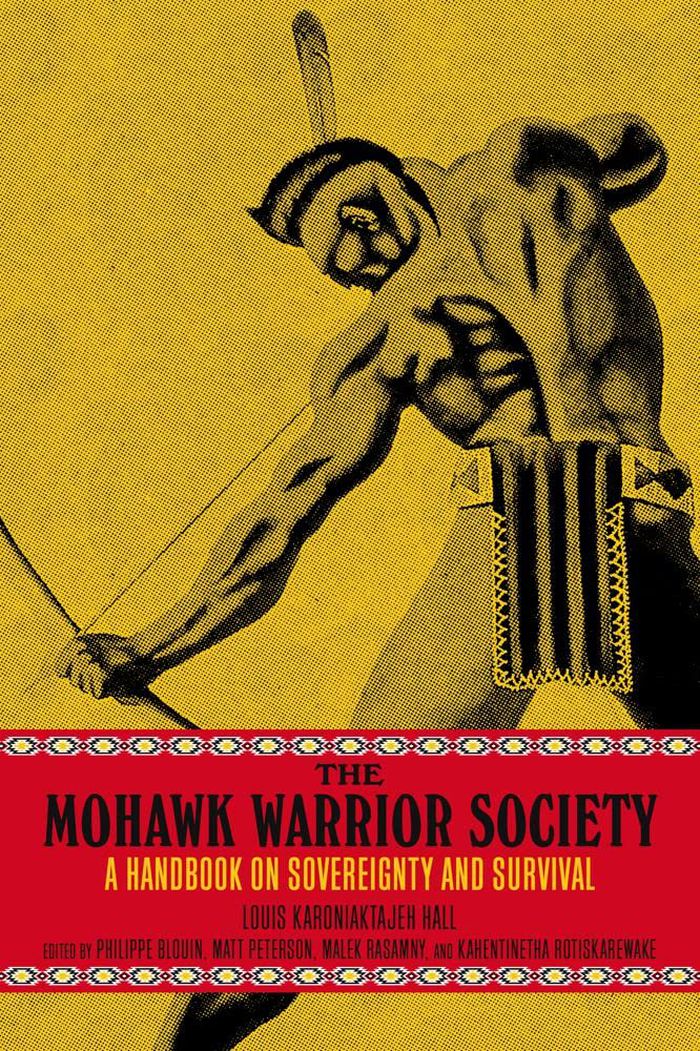
This anthology by members of the Mohawk Warrior Society uncovers a hidden history and paints a bold portrait of the spectacular experience of Kanien'kehá:ka survival and self-defense. Providing extensive documentation, context, and analysis, the book features foundational writings by prolific visual artist and polemicist Louis Karoniaktajeh Hall (1918–1993)—such as his landmark 1979 pamphlet, The Warrior’s Handbook, as well as selections of his pioneering artwork. This book contains new oral history by key figures of the Rotisken'rhakéhte's revival in the 1970s, and tells the story of the Warriors’ famous flag, their armed occupation of Ganienkeh in 1974, and the role of their constitution, the Great Peace, in guiding their commitment to freedom and independence. We hear directly the story of how the Kanien'kehá:ka Longhouse became one the most militant resistance groups in North America, gaining international attention with the Oka Crisis of 1990. This auto-history of the Rotisken'rhakéhte is complemented by a Mohawk history timeline from colonization to the present, a glossary of Mohawk political philosophy, and a new map of Iroquoia in Mohawk language. At last, the Mohawk Warriors can tell their own story with their own voices, and to serve as an example and inspiration for future generations struggling against the environmental, cultural, and social devastation cast upon the modern world.
Form:
books
books
Publication:
January 2023
January 2023


