


1662 Results
Form:
books
books
Price:
$26.95
(available in store)
Summary:
In 2006, even though he could barely type, China's most famous artist started blogging. For more than three years, Ai Weiwei turned out a steady stream of scathing social commentary, criticism of government policy, thoughts on art and architecture, and autobiographical writings. He wrote about the Sichuan earthquake (and posted a list of the schoolchildren who died(...)
$26.95
(available in store)
Summary:
In 2006, even though he could barely type, China's most famous artist started blogging. For more than three years, Ai Weiwei turned out a steady stream of scathing social commentary, criticism of government policy, thoughts on art and architecture, and autobiographical writings. He wrote about the Sichuan earthquake (and posted a list of the schoolchildren who died(...)
Title:
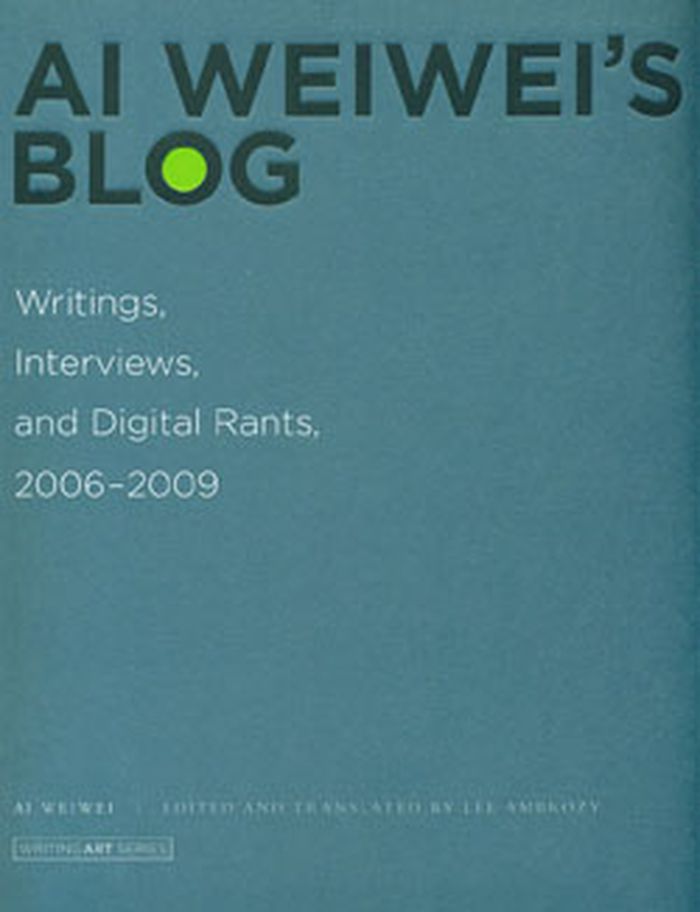
Ai Weiwei's blog : writings, interviews, and digital rants, 2006-2009
Actions:
Price:
$26.95
(available in store)
Summary:
In 2006, even though he could barely type, China's most famous artist started blogging. For more than three years, Ai Weiwei turned out a steady stream of scathing social commentary, criticism of government policy, thoughts on art and architecture, and autobiographical writings. He wrote about the Sichuan earthquake (and posted a list of the schoolchildren who died because of the government’s "tofu-dregs engineering"), reminisced about Andy Warhol and the East Village art scene, described the irony of being investigated for "fraud" by the Ministry of Public Security, made a modest proposal for tax collection. Then, on June 1, 2009, Chinese authorities shut down the blog. This book offers a collection of Ai's online writings translated into English - the most complete, public documentation of the original Chinese blog available in any language. The New York Times has called Ai "a figure of Warholian celebrity." He is a leading figure on the international art scene, a regular in museums and biennials, but in China he is a manifold and controversial presence : artist, architect, curator, social critic, justice-seeker. He was a consultant on the design of the famous "Bird’s Nest" stadium but called for an Olympic boycott; he received a Chinese Contemporary Art "lifetime achievement award" in 2008 but was beaten by the police in connection with his "citizen investigation" of earthquake casualties in 2009. This publication documents Ai's passion, his genius, his hubris, his righteous anger, and his vision for China.
Ai Weiwei's blog : writings, interviews, and digital rants, 2006-2009
Actions:
Price:
$26.95
(available in store)
Summary:
In 2006, even though he could barely type, China's most famous artist started blogging. For more than three years, Ai Weiwei turned out a steady stream of scathing social commentary, criticism of government policy, thoughts on art and architecture, and autobiographical writings. He wrote about the Sichuan earthquake (and posted a list of the schoolchildren who died because of the government’s "tofu-dregs engineering"), reminisced about Andy Warhol and the East Village art scene, described the irony of being investigated for "fraud" by the Ministry of Public Security, made a modest proposal for tax collection. Then, on June 1, 2009, Chinese authorities shut down the blog. This book offers a collection of Ai's online writings translated into English - the most complete, public documentation of the original Chinese blog available in any language. The New York Times has called Ai "a figure of Warholian celebrity." He is a leading figure on the international art scene, a regular in museums and biennials, but in China he is a manifold and controversial presence : artist, architect, curator, social critic, justice-seeker. He was a consultant on the design of the famous "Bird’s Nest" stadium but called for an Olympic boycott; he received a Chinese Contemporary Art "lifetime achievement award" in 2008 but was beaten by the police in connection with his "citizen investigation" of earthquake casualties in 2009. This publication documents Ai's passion, his genius, his hubris, his righteous anger, and his vision for China.
Form:
books
books
Publication:
March 2011
March 2011
Subject:
Contemporary Art Monographs
Contemporary Art Monographs
Form:
books
books
Price:
$54.95
(available to order)
Summary:
Après avoir détruit sa maison-oeuvre-laboratoire en céramique blanche de Garches, Jean-Pierre Raynaud a exposé au CAPC-musée d’Art contemporain de Bordeaux les gravats, telles des reliques, dans des poubelles métalliques en usage dans les blocs opératoires. Pour lui, en effet, l’oeuvre d’art est un but et son unique raison d’être. « Le but n’est pas de faire des oeuvres(...)
$54.95
(available to order)
Summary:
Après avoir détruit sa maison-oeuvre-laboratoire en céramique blanche de Garches, Jean-Pierre Raynaud a exposé au CAPC-musée d’Art contemporain de Bordeaux les gravats, telles des reliques, dans des poubelles métalliques en usage dans les blocs opératoires. Pour lui, en effet, l’oeuvre d’art est un but et son unique raison d’être. « Le but n’est pas de faire des oeuvres(...)
Title:
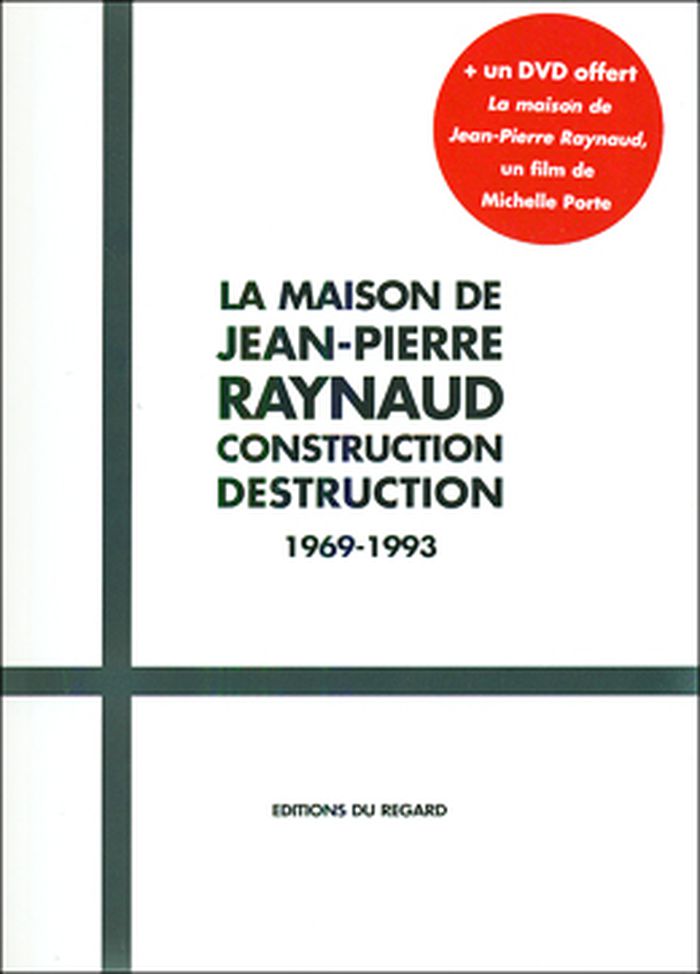
La maison de Jean-Pierre Raynaud contruction destruction 1969-1993
Actions:
Price:
$54.95
(available to order)
Summary:
Après avoir détruit sa maison-oeuvre-laboratoire en céramique blanche de Garches, Jean-Pierre Raynaud a exposé au CAPC-musée d’Art contemporain de Bordeaux les gravats, telles des reliques, dans des poubelles métalliques en usage dans les blocs opératoires. Pour lui, en effet, l’oeuvre d’art est un but et son unique raison d’être. « Le but n’est pas de faire des oeuvres d’art, il est de vivre l’oeuvre d’art comme un but ». « En 23 ans, la maison a connu cinq stades successifs. Et je tenais beaucoup à en assurer moi-même les métamorphoses. Quand j’ai pris conscience, en 1988, qu’elle était réellement terminée, cela a été un choc terrible, comme l’aboutissement d’une recherche, la fin d’une vie. Je n’ai pas voulu accepter que ma relation avec elle prenne fin, aussi, durant quatre ans, j’ai réfléchi sur le sens de cette « oeuvre » qui m’échouait comme si je devais en être le gardien jusqu’à ma mort. J’ai réalisé qu’étant unique elle méritait plus d’audace et d’égard que cette architecture parfaite, figée qu’elle était devenue, ce qui est le propre des objets d’art, il me fallait lui faire subir un sort exceptionnel, digne d’elle. Je décidai de la métamorphoser, de l’emporter ailleurs, de lui faire vivre une expérience absolue. Pour cela, elle devait se soumettre à une ultime transformation : la démolition ». Jean-Pierre Raynaud, 1993. Le livre retrace l'histoire de la maison, de sa construction à sa destruction. Il est accompagné du film de Michelle Porte (33 min).
La maison de Jean-Pierre Raynaud contruction destruction 1969-1993
Actions:
Price:
$54.95
(available to order)
Summary:
Après avoir détruit sa maison-oeuvre-laboratoire en céramique blanche de Garches, Jean-Pierre Raynaud a exposé au CAPC-musée d’Art contemporain de Bordeaux les gravats, telles des reliques, dans des poubelles métalliques en usage dans les blocs opératoires. Pour lui, en effet, l’oeuvre d’art est un but et son unique raison d’être. « Le but n’est pas de faire des oeuvres d’art, il est de vivre l’oeuvre d’art comme un but ». « En 23 ans, la maison a connu cinq stades successifs. Et je tenais beaucoup à en assurer moi-même les métamorphoses. Quand j’ai pris conscience, en 1988, qu’elle était réellement terminée, cela a été un choc terrible, comme l’aboutissement d’une recherche, la fin d’une vie. Je n’ai pas voulu accepter que ma relation avec elle prenne fin, aussi, durant quatre ans, j’ai réfléchi sur le sens de cette « oeuvre » qui m’échouait comme si je devais en être le gardien jusqu’à ma mort. J’ai réalisé qu’étant unique elle méritait plus d’audace et d’égard que cette architecture parfaite, figée qu’elle était devenue, ce qui est le propre des objets d’art, il me fallait lui faire subir un sort exceptionnel, digne d’elle. Je décidai de la métamorphoser, de l’emporter ailleurs, de lui faire vivre une expérience absolue. Pour cela, elle devait se soumettre à une ultime transformation : la démolition ». Jean-Pierre Raynaud, 1993. Le livre retrace l'histoire de la maison, de sa construction à sa destruction. Il est accompagné du film de Michelle Porte (33 min).
Form:
books
books
Publication:
December 2011
December 2011
Subject:
Contemporary Art Monographs
Contemporary Art Monographs
Form:
books
books
Price:
$41.50
(available to order)
Summary:
What would it mean today to think or to imagine, to design or to construct, in relation not to "things made" but to "things in the making"? This question, first posed by the philosopher William James, was the point of departure for "The Pragmatist Imagination". The volume brings together position statements, theoretical speculations, and critical commentary by 33 leading(...)
$41.50
(available to order)
Summary:
What would it mean today to think or to imagine, to design or to construct, in relation not to "things made" but to "things in the making"? This question, first posed by the philosopher William James, was the point of departure for "The Pragmatist Imagination". The volume brings together position statements, theoretical speculations, and critical commentary by 33 leading(...)
Subject:
Contemporary Art Monographs
Contemporary Art Monographs
Publication:
November 2001, New York
November 2001, New York
Title:
The pragmatist imagination : thinking about things in the making
Actions:
Price:
$41.50
(available to order)
Summary:
What would it mean today to think or to imagine, to design or to construct, in relation not to "things made" but to "things in the making"? This question, first posed by the philosopher William James, was the point of departure for "The Pragmatist Imagination". The volume brings together position statements, theoretical speculations, and critical commentary by 33 leading thinkers and makers from over a dozen disciplines. Based on the proceedings of an international workshop held at Columbia University under the auspices of the Buell Center for the Study of American Architecture in spring 2000, a preamble to the much-ballyhooed conference at the Museum of Modern Art in November, 2000, the contributions traverse a set of burning questions about the future, ranging from the relationship between art and experience to the impact of new technologies on human consciousness, from transformations in everyday life to problems of public space, and from the destiny of the nation-state to emergent forms of transnationalism. The authors include Stanley Aronowitz, Marshall Berman, Casey Nelson Blake, Sandra Buckley, Teresa Caldeira, Jean-Louis Cohen, Jonathan Crary, Rosalyn Deutsche, Kenneth Frampton, Gerald E. Frug, Peter Galison, Elizabeth Grosz, Andreas Huyssen, Isaac Joseph, David Lapoujade, Reinhold Martin, Brian Massumi, Mary McLeod, Paul Miller a.k.a. DJ Spooky, Chantal Mouffe, Joan Ockman, John Rajchman, Martha Rosler, Hashim Sarkis, Saskia Sassen, Sandhya Shukla, Richard Shusterman, Abdoumaliq Simone, Anders Stephanson, Bernard Tschumi, Nadia Urbinati, Mabel Wilson, and Gwendolyn Wright. The book includes an introduction by John Rajchman and an afterword by Casey Nelson Blake.
The pragmatist imagination : thinking about things in the making
Actions:
Price:
$41.50
(available to order)
Summary:
What would it mean today to think or to imagine, to design or to construct, in relation not to "things made" but to "things in the making"? This question, first posed by the philosopher William James, was the point of departure for "The Pragmatist Imagination". The volume brings together position statements, theoretical speculations, and critical commentary by 33 leading thinkers and makers from over a dozen disciplines. Based on the proceedings of an international workshop held at Columbia University under the auspices of the Buell Center for the Study of American Architecture in spring 2000, a preamble to the much-ballyhooed conference at the Museum of Modern Art in November, 2000, the contributions traverse a set of burning questions about the future, ranging from the relationship between art and experience to the impact of new technologies on human consciousness, from transformations in everyday life to problems of public space, and from the destiny of the nation-state to emergent forms of transnationalism. The authors include Stanley Aronowitz, Marshall Berman, Casey Nelson Blake, Sandra Buckley, Teresa Caldeira, Jean-Louis Cohen, Jonathan Crary, Rosalyn Deutsche, Kenneth Frampton, Gerald E. Frug, Peter Galison, Elizabeth Grosz, Andreas Huyssen, Isaac Joseph, David Lapoujade, Reinhold Martin, Brian Massumi, Mary McLeod, Paul Miller a.k.a. DJ Spooky, Chantal Mouffe, Joan Ockman, John Rajchman, Martha Rosler, Hashim Sarkis, Saskia Sassen, Sandhya Shukla, Richard Shusterman, Abdoumaliq Simone, Anders Stephanson, Bernard Tschumi, Nadia Urbinati, Mabel Wilson, and Gwendolyn Wright. The book includes an introduction by John Rajchman and an afterword by Casey Nelson Blake.
Form:
books
books
Publication:
November 2001, New York
November 2001, New York
Subject:
Contemporary Art Monographs
Contemporary Art Monographs
Form:
books
books
Title:
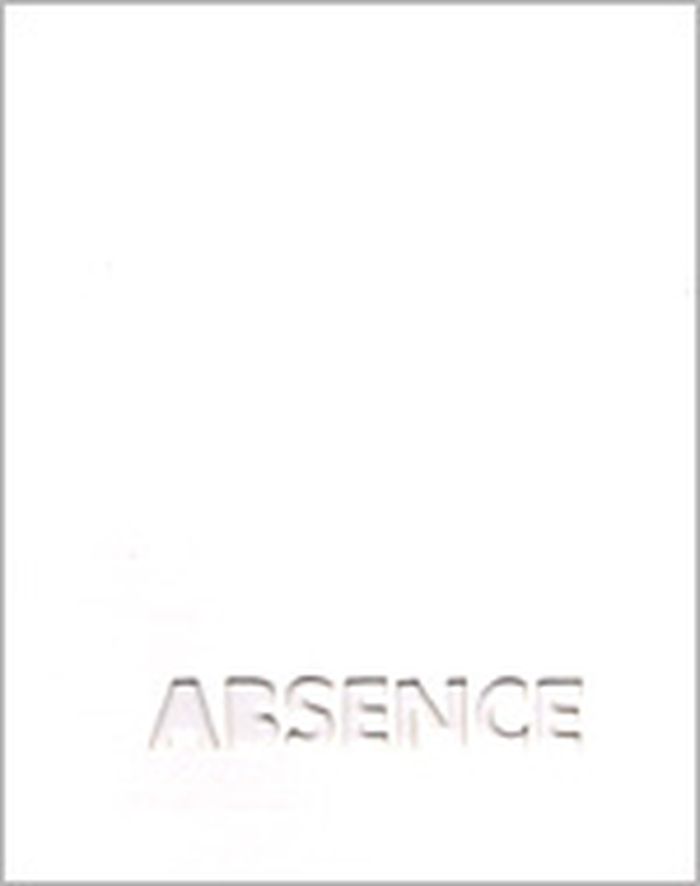
Absence : J. Meejin Yoon
Absence : J. Meejin Yoon
Actions:
Price:
$45.00
(available to order)
Summary:
Both a book and a sculptural object, "Absence" is a memorial to the twin towers of the World Trade Center. Yoon, an architect and designer who is currently an Assistant Professor of Architecture at the Massachusetts Institute of Technology, chose not to produce a traditional design proposal for the World Trade Center Memorial Competition. Instead she created a(...)
$45.00
(available to order)
Summary:
Both a book and a sculptural object, "Absence" is a memorial to the twin towers of the World Trade Center. Yoon, an architect and designer who is currently an Assistant Professor of Architecture at the Massachusetts Institute of Technology, chose not to produce a traditional design proposal for the World Trade Center Memorial Competition. Instead she created a(...)
Title:
Absence : J. Meejin Yoon
Actions:
Price:
$45.00
(available to order)
Summary:
Both a book and a sculptural object, "Absence" is a memorial to the twin towers of the World Trade Center. Yoon, an architect and designer who is currently an Assistant Professor of Architecture at the Massachusetts Institute of Technology, chose not to produce a traditional design proposal for the World Trade Center Memorial Competition. Instead she created a non-architectural, non site-specific space of remembrance : a portable personal memorial in the form of book. At almost two pounds, "Absence" has a considerable physical presence, but it is in every way the ghost of a presence, and it is this ghostliness that gives it its particular emotional weight. A solid white block of thick stock cardboard pages, the book’s only "text" consists of one pinhole and two identical squares die-cut into each of its one hundred and twenty pages – one for each story of the towers including the antenna mast. These removed elements lead the reader floor by floor through the missing buildings towards the final page where the footprint of the entire site of the World Trade Center is die-cut into a delicate lattice of absent structures. Of all of the proposed monuments and grand designs for the twin towers to emerge in the last two years, "Absence" is remarkable for its employment of an under-used strategy : restraint. The simplicity of Yoon’s materials and her use of repetition speak, without words, about unspeakable loss. As a scale model of a vanished architectural site, it operates on a larger cultural level by commemorating the site itself. Unpaginated.
Absence : J. Meejin Yoon
Actions:
Price:
$45.00
(available to order)
Summary:
Both a book and a sculptural object, "Absence" is a memorial to the twin towers of the World Trade Center. Yoon, an architect and designer who is currently an Assistant Professor of Architecture at the Massachusetts Institute of Technology, chose not to produce a traditional design proposal for the World Trade Center Memorial Competition. Instead she created a non-architectural, non site-specific space of remembrance : a portable personal memorial in the form of book. At almost two pounds, "Absence" has a considerable physical presence, but it is in every way the ghost of a presence, and it is this ghostliness that gives it its particular emotional weight. A solid white block of thick stock cardboard pages, the book’s only "text" consists of one pinhole and two identical squares die-cut into each of its one hundred and twenty pages – one for each story of the towers including the antenna mast. These removed elements lead the reader floor by floor through the missing buildings towards the final page where the footprint of the entire site of the World Trade Center is die-cut into a delicate lattice of absent structures. Of all of the proposed monuments and grand designs for the twin towers to emerge in the last two years, "Absence" is remarkable for its employment of an under-used strategy : restraint. The simplicity of Yoon’s materials and her use of repetition speak, without words, about unspeakable loss. As a scale model of a vanished architectural site, it operates on a larger cultural level by commemorating the site itself. Unpaginated.
Form:
books
books
Publication:
September 2003, New York
September 2003, New York
Subject:
Contemporary Art Monographs
Contemporary Art Monographs
Form:
books
books
Price:
$37.50
(available to order)
Summary:
The relationship between the body and electronic technology, extensively theorized through the 1980s and 1990s, has reached a new technosensual comfort zone in the early twenty-first century. In "Sensorium", contemporary artists and writers explore the implications of the techno-human interface. Ten artists, chosen by an international team of curators, offer their own(...)
$37.50
(available to order)
Summary:
The relationship between the body and electronic technology, extensively theorized through the 1980s and 1990s, has reached a new technosensual comfort zone in the early twenty-first century. In "Sensorium", contemporary artists and writers explore the implications of the techno-human interface. Ten artists, chosen by an international team of curators, offer their own(...)
Subject:
Contemporary Art Monographs
Contemporary Art Monographs
Publication:
October 2006, Cambridge, Mass.
October 2006, Cambridge, Mass.
Title:
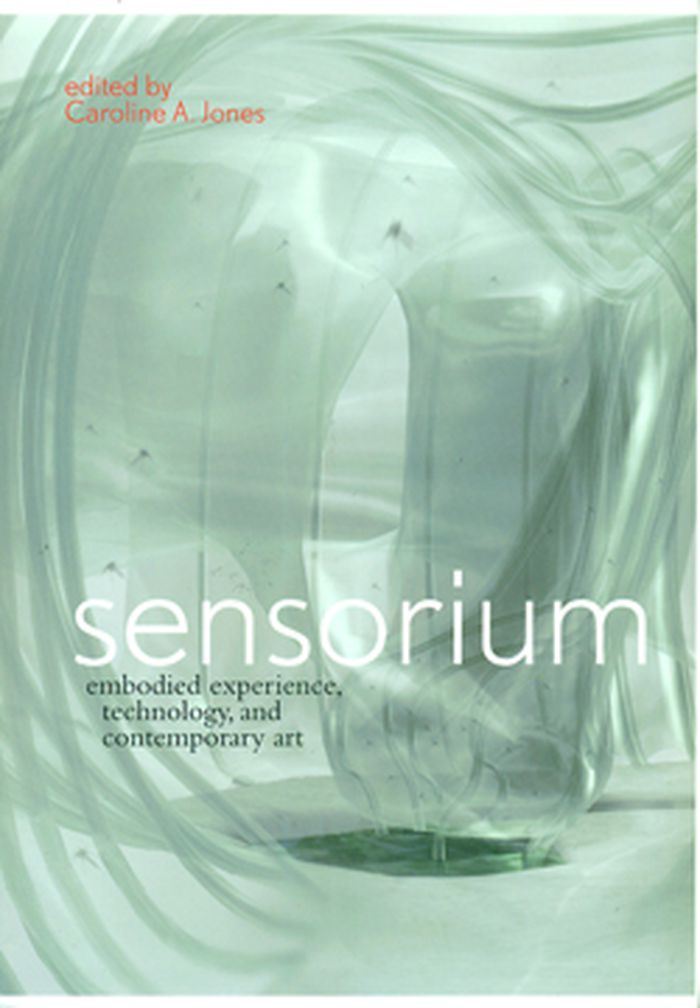
Sensorium : embodied experience, technology, and contemporary art
Actions:
Price:
$37.50
(available to order)
Summary:
The relationship between the body and electronic technology, extensively theorized through the 1980s and 1990s, has reached a new technosensual comfort zone in the early twenty-first century. In "Sensorium", contemporary artists and writers explore the implications of the techno-human interface. Ten artists, chosen by an international team of curators, offer their own edgy investigations of embodied technology and the technologized body. These range from Matthieu Briand's experiment in "controlled schizophrenia" and Janet Cardiff and Georges Bures Miller's uneasy psychological soundscapes to Bruce Nauman's uncanny night visions and François Roche's destabilized architecture. The art in "Sensorium" - which accompanies an exhibition at the MIT List Visual Arts Center - captures the aesthetic attitude of this hybrid moment, when modernist segmentation of the senses is giving way to dramatic multisensory mixes or transpositions. Artwork by each artist appears with an analytical essay by a curator, all of it prefaced by an anchoring essay on "The Mediated Sensorium" by Caroline Jones. In the second half of "Sensorium", scholars, scientists, and writers contribute entries to an "Abecedarius of the New Sensorium." These short, playful pieces include Bruno Latour on "Air," Barbara Maria Stafford on "Hedonics," Michel Foucault (from a little-known 1966 radio lecture) on the "Utopian Body," Donna Haraway on "Compoundings," and Neal Stephenson on the "Viral." Sensorium is both forensic and diagnostic, viewing the culture of the technologized body from the inside, by means of contemporary artists' provocations, and from a distance, in essays that situate it historically and intellectually.
Sensorium : embodied experience, technology, and contemporary art
Actions:
Price:
$37.50
(available to order)
Summary:
The relationship between the body and electronic technology, extensively theorized through the 1980s and 1990s, has reached a new technosensual comfort zone in the early twenty-first century. In "Sensorium", contemporary artists and writers explore the implications of the techno-human interface. Ten artists, chosen by an international team of curators, offer their own edgy investigations of embodied technology and the technologized body. These range from Matthieu Briand's experiment in "controlled schizophrenia" and Janet Cardiff and Georges Bures Miller's uneasy psychological soundscapes to Bruce Nauman's uncanny night visions and François Roche's destabilized architecture. The art in "Sensorium" - which accompanies an exhibition at the MIT List Visual Arts Center - captures the aesthetic attitude of this hybrid moment, when modernist segmentation of the senses is giving way to dramatic multisensory mixes or transpositions. Artwork by each artist appears with an analytical essay by a curator, all of it prefaced by an anchoring essay on "The Mediated Sensorium" by Caroline Jones. In the second half of "Sensorium", scholars, scientists, and writers contribute entries to an "Abecedarius of the New Sensorium." These short, playful pieces include Bruno Latour on "Air," Barbara Maria Stafford on "Hedonics," Michel Foucault (from a little-known 1966 radio lecture) on the "Utopian Body," Donna Haraway on "Compoundings," and Neal Stephenson on the "Viral." Sensorium is both forensic and diagnostic, viewing the culture of the technologized body from the inside, by means of contemporary artists' provocations, and from a distance, in essays that situate it historically and intellectually.
Form:
books
books
Publication:
October 2006, Cambridge, Mass.
October 2006, Cambridge, Mass.
Subject:
Contemporary Art Monographs
Contemporary Art Monographs
Form:
books
books
Actions:
Price:
$48.95
(available to order)
Summary:
Although highly regarded during his short life--and honored by artists and architects today--the American artist Gordon Matta-Clark (1943-78) has been largely ignored within the history of art. Matta-Clark is best remembered for site-specific projects known as(...)
$48.95
(available to order)
Summary:
Although highly regarded during his short life--and honored by artists and architects today--the American artist Gordon Matta-Clark (1943-78) has been largely ignored within the history of art. Matta-Clark is best remembered for site-specific projects known as(...)
Publication:
October 2001
October 2001
Title:
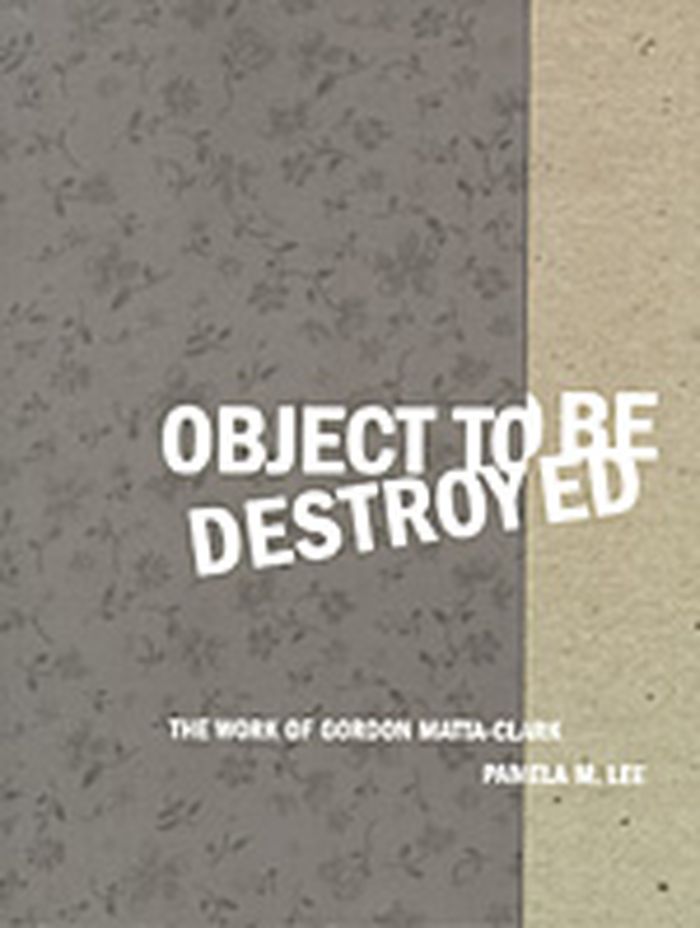
Object to be destroyed : the work of Gordon Matta-Clark
Actions:
Price:
$48.95
(available to order)
Summary:
Although highly regarded during his short life--and honored by artists and architects today--the American artist Gordon Matta-Clark (1943-78) has been largely ignored within the history of art. Matta-Clark is best remembered for site-specific projects known as "building cuts." Sculptural transformations of architecture produced through direct cuts into buildings scheduled for demolition, these works now exist only as sculptural fragments, photographs, and film and video documentations. Matta-Clark is also remembered as a catalytic force in the creation of SoHo in the early 1970s. Through loft activities, site projects at the exhibition space 112 Greene Street, and his work at the restaurant Food, he participated in the production of a new social and artistic space. In this first critical account of Matta-Clark's work, Lee considers it in the context of the art of the 1970s--particularly site-specific, conceptual, and minimalist practices--and its confrontation with issues of community, property, the alienation of urban space, the "right to the city," and the ideologies of progress that have defined modern building programs.
Object to be destroyed : the work of Gordon Matta-Clark
Actions:
Price:
$48.95
(available to order)
Summary:
Although highly regarded during his short life--and honored by artists and architects today--the American artist Gordon Matta-Clark (1943-78) has been largely ignored within the history of art. Matta-Clark is best remembered for site-specific projects known as "building cuts." Sculptural transformations of architecture produced through direct cuts into buildings scheduled for demolition, these works now exist only as sculptural fragments, photographs, and film and video documentations. Matta-Clark is also remembered as a catalytic force in the creation of SoHo in the early 1970s. Through loft activities, site projects at the exhibition space 112 Greene Street, and his work at the restaurant Food, he participated in the production of a new social and artistic space. In this first critical account of Matta-Clark's work, Lee considers it in the context of the art of the 1970s--particularly site-specific, conceptual, and minimalist practices--and its confrontation with issues of community, property, the alienation of urban space, the "right to the city," and the ideologies of progress that have defined modern building programs.
Form:
books
books
Publication:
October 2001
October 2001
Form:
books
books
Actions:
Price:
$53.95
(available to order)
Summary:
With his astounding building cuts and intersects, Gordon Matta-Clark (1943-1978) opened up elegant geometries in the very structures that seem most substantial and most authoritative in urban existence, revealing the alienations of the urban fabric as convenient fictions and allowing life to flow into the most inhospitable and self-contained of buildings. One of his(...)
$53.95
(available to order)
Summary:
With his astounding building cuts and intersects, Gordon Matta-Clark (1943-1978) opened up elegant geometries in the very structures that seem most substantial and most authoritative in urban existence, revealing the alienations of the urban fabric as convenient fictions and allowing life to flow into the most inhospitable and self-contained of buildings. One of his(...)
Publication:
November 2011
November 2011
Title:
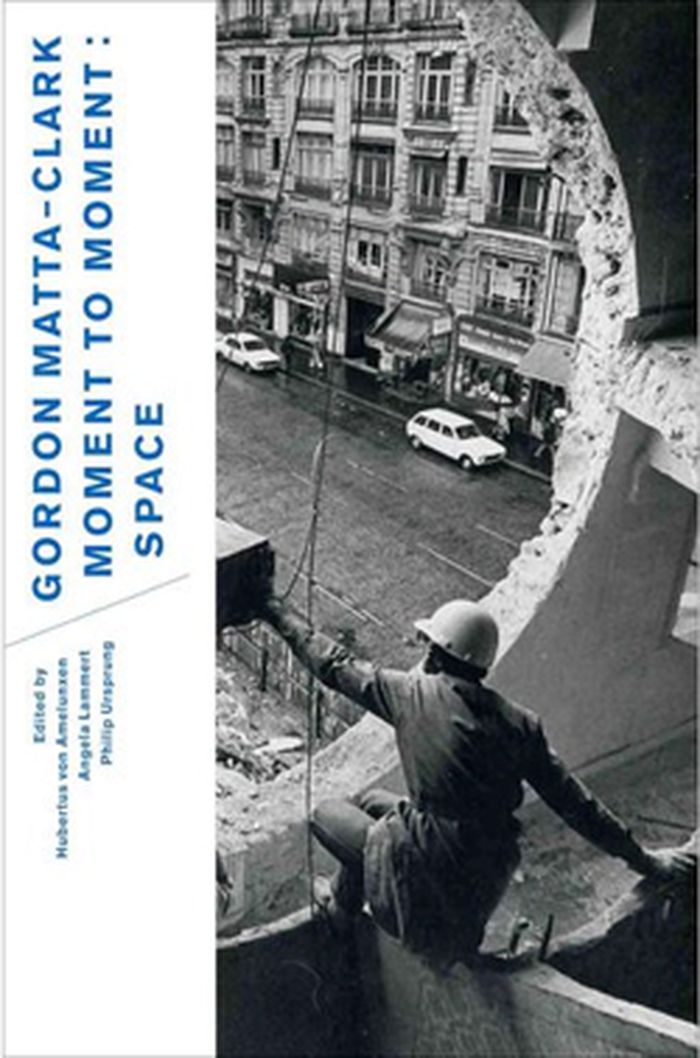
Gordon Matta-Clark, moment to moment : space
Actions:
Price:
$53.95
(available to order)
Summary:
With his astounding building cuts and intersects, Gordon Matta-Clark (1943-1978) opened up elegant geometries in the very structures that seem most substantial and most authoritative in urban existence, revealing the alienations of the urban fabric as convenient fictions and allowing life to flow into the most inhospitable and self-contained of buildings. One of his favorite responses to a work came from a Parisian concierge: “I see the purpose for that hole - it is an experiment in bringing light and air into spaces that never had enough of either.” Throughout his all-too-brief career, Matta-Clark undertook civic aeration on many fronts, cofounding the now legendary Food Restaurant in 1971, buying up empty lots in Queens and evolving his theory of “anarchitecture” in films, photomontages and numerous writings and drawings. Anarchitecture redefined negative space in art as a political act, distinguishing itself from architecture by imagining a cure for its most pernicious effects. Gordon Matta-Clark : Moment to Moment offers a comprehensive overview of this courageous and liberating artist with a wealth of documentation and reproductions from across Matta-Clark's oeuvre, as well as critical commentary from Philip Ursprung, Angela Lammert, Hubertus von Amelunxen, Dan Graham and others.
Gordon Matta-Clark, moment to moment : space
Actions:
Price:
$53.95
(available to order)
Summary:
With his astounding building cuts and intersects, Gordon Matta-Clark (1943-1978) opened up elegant geometries in the very structures that seem most substantial and most authoritative in urban existence, revealing the alienations of the urban fabric as convenient fictions and allowing life to flow into the most inhospitable and self-contained of buildings. One of his favorite responses to a work came from a Parisian concierge: “I see the purpose for that hole - it is an experiment in bringing light and air into spaces that never had enough of either.” Throughout his all-too-brief career, Matta-Clark undertook civic aeration on many fronts, cofounding the now legendary Food Restaurant in 1971, buying up empty lots in Queens and evolving his theory of “anarchitecture” in films, photomontages and numerous writings and drawings. Anarchitecture redefined negative space in art as a political act, distinguishing itself from architecture by imagining a cure for its most pernicious effects. Gordon Matta-Clark : Moment to Moment offers a comprehensive overview of this courageous and liberating artist with a wealth of documentation and reproductions from across Matta-Clark's oeuvre, as well as critical commentary from Philip Ursprung, Angela Lammert, Hubertus von Amelunxen, Dan Graham and others.
Form:
books
books
Publication:
November 2011
November 2011
Form:
books
books
Actions:
Price:
$60.00
(available to order)
Summary:
Gordon Matta-Clark died at only 35 of pancreatic cancer and has since become a cult figure of late 20th-century art. Trained in architecture at Cornell, he went on to question the field’s conventions in vivid projects—performance and recycling pieces, space and texture works and word games—some of which excised holes into existing buildings or assembled deeds to New York(...)
$60.00
(available to order)
Summary:
Gordon Matta-Clark died at only 35 of pancreatic cancer and has since become a cult figure of late 20th-century art. Trained in architecture at Cornell, he went on to question the field’s conventions in vivid projects—performance and recycling pieces, space and texture works and word games—some of which excised holes into existing buildings or assembled deeds to New York(...)
Publication:
August 2016
August 2016
Title:
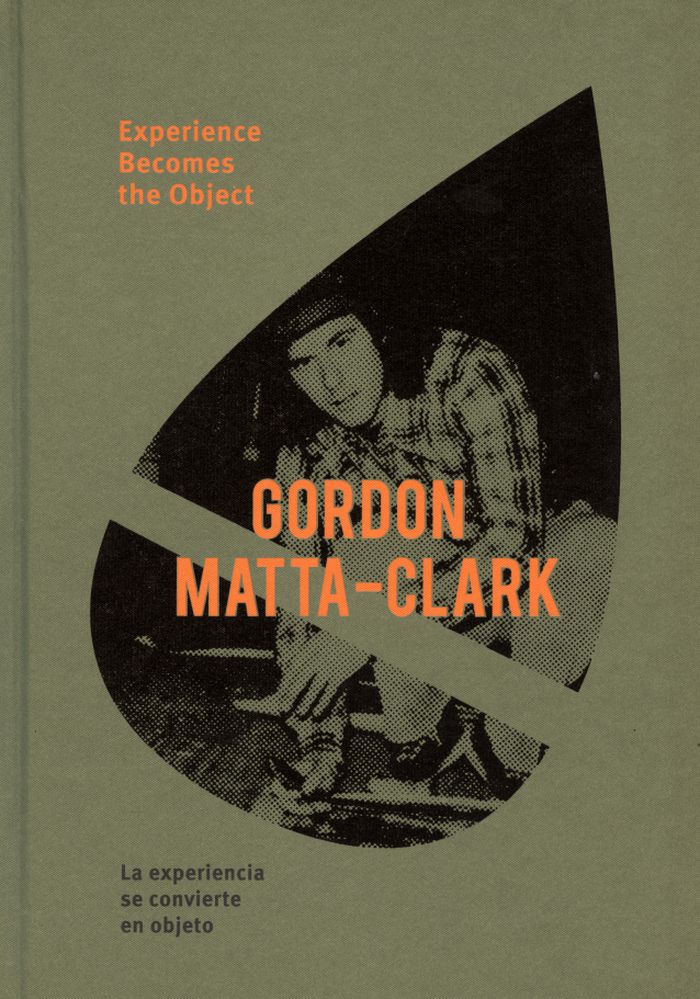
Gordon Matta-Clark: Experience becomes the object
Actions:
Price:
$60.00
(available to order)
Summary:
Gordon Matta-Clark died at only 35 of pancreatic cancer and has since become a cult figure of late 20th-century art. Trained in architecture at Cornell, he went on to question the field’s conventions in vivid projects—performance and recycling pieces, space and texture works and word games—some of which excised holes into existing buildings or assembled deeds to New York City alleys and curbs. The artist used a variety of media to document his work, including film, video and photography. His work and words, while sophisticated enough to make him an "artist’s artist," and colossal and outgoing enough to draw public attention and affection, were always also grounded in social or political convictions. In the early 1970s, Matta-Clark developed the idea of "anarchitecture," which encompassed his interest in voids, gaps and left-over spaces. Gordon Matta-Clark: Experience Becomes the Object collects five essays and ten individual interviews with various friends and family members of Matta-Clark’s. Together, they outline a biographical profile and offer an analysis of the historical period in which the artist developed his short but successful career. New, never-before-published material and photographs as well as an exclusive link to the documentary Crosswords: Matta-Clark’s Friends by Matias Cardone are also included.
Gordon Matta-Clark: Experience becomes the object
Actions:
Price:
$60.00
(available to order)
Summary:
Gordon Matta-Clark died at only 35 of pancreatic cancer and has since become a cult figure of late 20th-century art. Trained in architecture at Cornell, he went on to question the field’s conventions in vivid projects—performance and recycling pieces, space and texture works and word games—some of which excised holes into existing buildings or assembled deeds to New York City alleys and curbs. The artist used a variety of media to document his work, including film, video and photography. His work and words, while sophisticated enough to make him an "artist’s artist," and colossal and outgoing enough to draw public attention and affection, were always also grounded in social or political convictions. In the early 1970s, Matta-Clark developed the idea of "anarchitecture," which encompassed his interest in voids, gaps and left-over spaces. Gordon Matta-Clark: Experience Becomes the Object collects five essays and ten individual interviews with various friends and family members of Matta-Clark’s. Together, they outline a biographical profile and offer an analysis of the historical period in which the artist developed his short but successful career. New, never-before-published material and photographs as well as an exclusive link to the documentary Crosswords: Matta-Clark’s Friends by Matias Cardone are also included.
Form:
books
books
Publication:
August 2016
August 2016
Form:
books
books
Actions:
Price:
$32.95
(available to order)
Summary:
This volume is a revised and expanded version of a special issue of the journal October (Winter 1997) that was devoted to the work of the Situationist International (SI). The first section of the issue contained previously unpublished critical texts, and the second section contained translations of primary texts that had previously been unavailable in English. The(...)
$32.95
(available to order)
Summary:
This volume is a revised and expanded version of a special issue of the journal October (Winter 1997) that was devoted to the work of the Situationist International (SI). The first section of the issue contained previously unpublished critical texts, and the second section contained translations of primary texts that had previously been unavailable in English. The(...)
Publication:
April 2009, Cambridge, Massachusetts
April 2009, Cambridge, Massachusetts
Title:
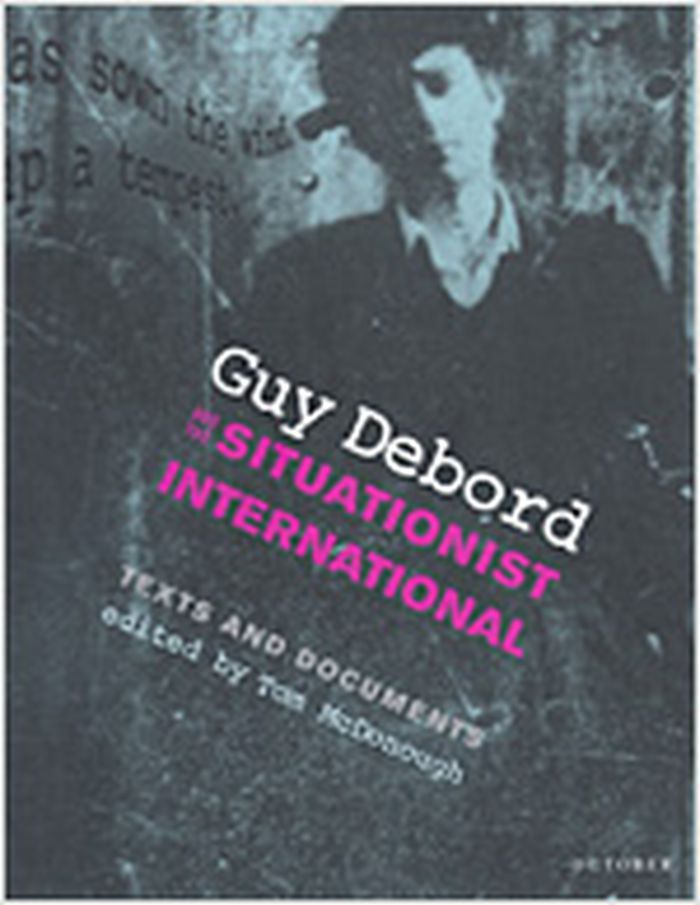
Guy Debord and the situationist international
Actions:
Price:
$32.95
(available to order)
Summary:
This volume is a revised and expanded version of a special issue of the journal October (Winter 1997) that was devoted to the work of the Situationist International (SI). The first section of the issue contained previously unpublished critical texts, and the second section contained translations of primary texts that had previously been unavailable in English. The emphasis was on the SI’s profound engagement with the art and cultural politics of their time (1957–1972), with a strong argument for their primarily political and activist stance by two former members of the group, T. J. Clark and Donald Nicholson-Smith. Guy Debord and the Situationist International supplements both sections. It reprints important, hard to find essays by Giorgio Agamben, Libero Andreotti, Jonathan Crary, Thomas Y. Levin, Greil Marcus, and Tom McDonough and doubles the number of translations of primary texts, which now encompass a broader and more representative range of the SI’s writings on culture and language. In a field still dominated by hagiography, the critical texts were selected for their willingness to confront critically the history and legacy of the SI. They examine the group within the broader framework of the historical and neo-avant-gardes and, beyond that, the postwar world in general. The translations trace the SI’s reflections on the legacy of the avant-garde in art and architecture, particularly on the linguistic and spatial significance of montage aesthetics. Many of the translated works are by Guy Debord (1932–1994), the impresario of the SI, especially known for his book "The Society of the Spectacle".
Guy Debord and the situationist international
Actions:
Price:
$32.95
(available to order)
Summary:
This volume is a revised and expanded version of a special issue of the journal October (Winter 1997) that was devoted to the work of the Situationist International (SI). The first section of the issue contained previously unpublished critical texts, and the second section contained translations of primary texts that had previously been unavailable in English. The emphasis was on the SI’s profound engagement with the art and cultural politics of their time (1957–1972), with a strong argument for their primarily political and activist stance by two former members of the group, T. J. Clark and Donald Nicholson-Smith. Guy Debord and the Situationist International supplements both sections. It reprints important, hard to find essays by Giorgio Agamben, Libero Andreotti, Jonathan Crary, Thomas Y. Levin, Greil Marcus, and Tom McDonough and doubles the number of translations of primary texts, which now encompass a broader and more representative range of the SI’s writings on culture and language. In a field still dominated by hagiography, the critical texts were selected for their willingness to confront critically the history and legacy of the SI. They examine the group within the broader framework of the historical and neo-avant-gardes and, beyond that, the postwar world in general. The translations trace the SI’s reflections on the legacy of the avant-garde in art and architecture, particularly on the linguistic and spatial significance of montage aesthetics. Many of the translated works are by Guy Debord (1932–1994), the impresario of the SI, especially known for his book "The Society of the Spectacle".
Form:
books
books
Publication:
April 2009, Cambridge, Massachusetts
April 2009, Cambridge, Massachusetts
Form:
books
books
Actions:
Price:
$64.00
(available in store)
Summary:
Gordon Matta-Clark has never been an easy artist to categorize or to explain. Although trained as an architect, he has been described as a sculptor, a photographer, an organizer of performances, and a writer of manifestos, but he is best known for "un-building" abandoned structures. In the brief span of his career, from 1968 to his early death in 1978, he created an(...)
$64.00
(available in store)
Summary:
Gordon Matta-Clark has never been an easy artist to categorize or to explain. Although trained as an architect, he has been described as a sculptor, a photographer, an organizer of performances, and a writer of manifestos, but he is best known for "un-building" abandoned structures. In the brief span of his career, from 1968 to his early death in 1978, he created an(...)
Subject:
Contemporary Art Monographs
Contemporary Art Monographs
Publication:
October 2022
October 2022
Title:
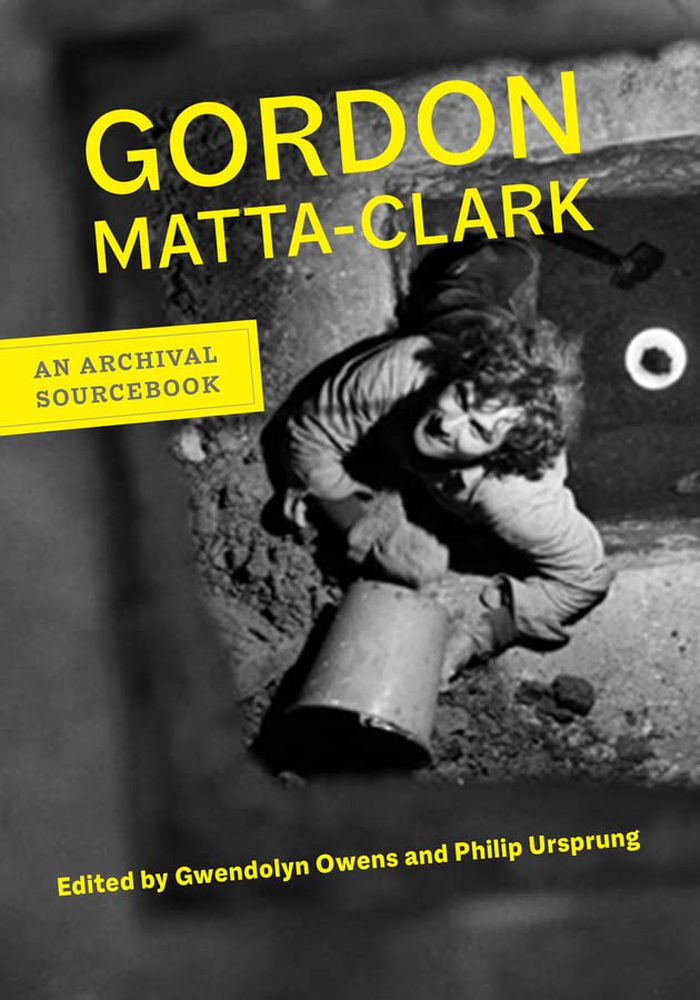
Gordon Matta-Clark: An archival sourcebook
Actions:
Price:
$64.00
(available in store)
Summary:
Gordon Matta-Clark has never been an easy artist to categorize or to explain. Although trained as an architect, he has been described as a sculptor, a photographer, an organizer of performances, and a writer of manifestos, but he is best known for "un-building" abandoned structures. In the brief span of his career, from 1968 to his early death in 1978, he created an oeuvre that has made him an enduring cult figure. In 2002, when Matta-Clark’s widow, Jane Crawford, put his archive on deposit at the Canadian Centre for Architecture in Montreal, it revealed a new voice in the ongoing discussion of artist/architect Matta-Clark’s work: his own. Gwendolyn Owens and Philip Ursprung’s careful selection and ordering of letters, interviews, statements, and the now-famous art cards from the CCA as well as other sources deepens our understanding of one of the most original thinkers of his generation. This publication creates a multidimensional portrait that provides an opportunity for readers to explore and enjoy the complexity and contradiction that was Gordon Matta-Clark.
Gordon Matta-Clark: An archival sourcebook
Actions:
Price:
$64.00
(available in store)
Summary:
Gordon Matta-Clark has never been an easy artist to categorize or to explain. Although trained as an architect, he has been described as a sculptor, a photographer, an organizer of performances, and a writer of manifestos, but he is best known for "un-building" abandoned structures. In the brief span of his career, from 1968 to his early death in 1978, he created an oeuvre that has made him an enduring cult figure. In 2002, when Matta-Clark’s widow, Jane Crawford, put his archive on deposit at the Canadian Centre for Architecture in Montreal, it revealed a new voice in the ongoing discussion of artist/architect Matta-Clark’s work: his own. Gwendolyn Owens and Philip Ursprung’s careful selection and ordering of letters, interviews, statements, and the now-famous art cards from the CCA as well as other sources deepens our understanding of one of the most original thinkers of his generation. This publication creates a multidimensional portrait that provides an opportunity for readers to explore and enjoy the complexity and contradiction that was Gordon Matta-Clark.
Form:
books
books
Publication:
October 2022
October 2022
Subject:
Contemporary Art Monographs
Contemporary Art Monographs


