


1734 Results
Form:
books
books
Title:
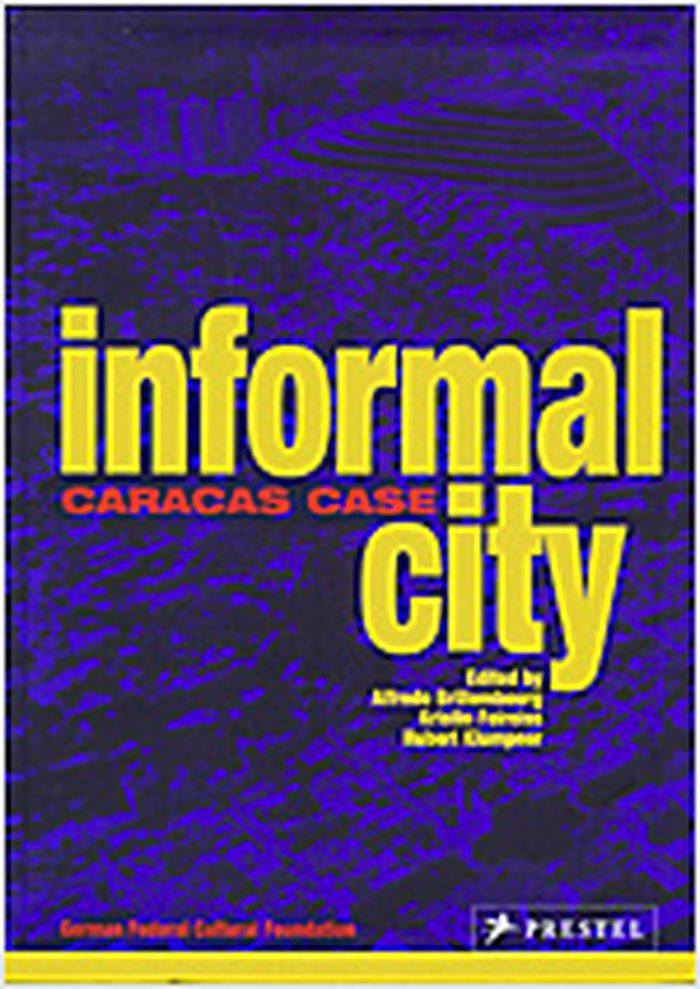
Informal city : Caracas case
Informal city : Caracas case
Actions:
Price:
$77.00
(available to order)
Summary:
This urban research project examines the often overlooked areas known as "barrios," "shantytowns," or "slums" and assesses their validity as an architectural phenomenon in their own right. The hills outside Caracas are dotted with transient, dilapidated structures which are home to thousands of people who create their own socio-economic environment, one which has a(...)
$77.00
(available to order)
Summary:
This urban research project examines the often overlooked areas known as "barrios," "shantytowns," or "slums" and assesses their validity as an architectural phenomenon in their own right. The hills outside Caracas are dotted with transient, dilapidated structures which are home to thousands of people who create their own socio-economic environment, one which has a(...)
Subject:
Urban Theory
Urban Theory
Publication:
August 2005, Munich / Berlin / London / New York
August 2005, Munich / Berlin / London / New York
Title:
Informal city : Caracas case
Actions:
Price:
$77.00
(available to order)
Summary:
This urban research project examines the often overlooked areas known as "barrios," "shantytowns," or "slums" and assesses their validity as an architectural phenomenon in their own right. The hills outside Caracas are dotted with transient, dilapidated structures which are home to thousands of people who create their own socio-economic environment, one which has a unique place in the city's infrastructure. This publication can be understood as a handbook of informal urban and cultural practice. Its validity extends far beyond Caracas and encompasses nearly all Latin American metropolises. Its essays question the value of traditional Western-style socio-economic and socio-political structures, present a new form of urbanism as a subject for discussion, and show the need for a profound change in our understanding of urban culture, especially in today's era, which is characterized by increasing insecurity and uncertainty. This project was jointly initiated by the "Federal Cultural Foundation" of Germany and the "Urban Think Tank" in Caracas, Venezuela.
Informal city : Caracas case
Actions:
Price:
$77.00
(available to order)
Summary:
This urban research project examines the often overlooked areas known as "barrios," "shantytowns," or "slums" and assesses their validity as an architectural phenomenon in their own right. The hills outside Caracas are dotted with transient, dilapidated structures which are home to thousands of people who create their own socio-economic environment, one which has a unique place in the city's infrastructure. This publication can be understood as a handbook of informal urban and cultural practice. Its validity extends far beyond Caracas and encompasses nearly all Latin American metropolises. Its essays question the value of traditional Western-style socio-economic and socio-political structures, present a new form of urbanism as a subject for discussion, and show the need for a profound change in our understanding of urban culture, especially in today's era, which is characterized by increasing insecurity and uncertainty. This project was jointly initiated by the "Federal Cultural Foundation" of Germany and the "Urban Think Tank" in Caracas, Venezuela.
Form:
books
books
Publication:
August 2005, Munich / Berlin / London / New York
August 2005, Munich / Berlin / London / New York
Subject:
Urban Theory
Urban Theory
Form:
books
books
Actions:
Price:
$82.00
(available in store)
Summary:
Published on the occasion of Burtynsky’s largest and most comprehensive exhibition to date at the Saatchi Gallery in London, ''Extraction/Abstraction'' looks deeply at the key subjects and signature images spanning his 45-year career. The catalog and related exhibition present a dichotomy of Burtynsky’s image-making imperative: the lucid and informed documentation of(...)
$82.00
(available in store)
Summary:
Published on the occasion of Burtynsky’s largest and most comprehensive exhibition to date at the Saatchi Gallery in London, ''Extraction/Abstraction'' looks deeply at the key subjects and signature images spanning his 45-year career. The catalog and related exhibition present a dichotomy of Burtynsky’s image-making imperative: the lucid and informed documentation of(...)
Subject:
Photography monographs
Photography monographs
Publication:
July 2024
July 2024
Title:
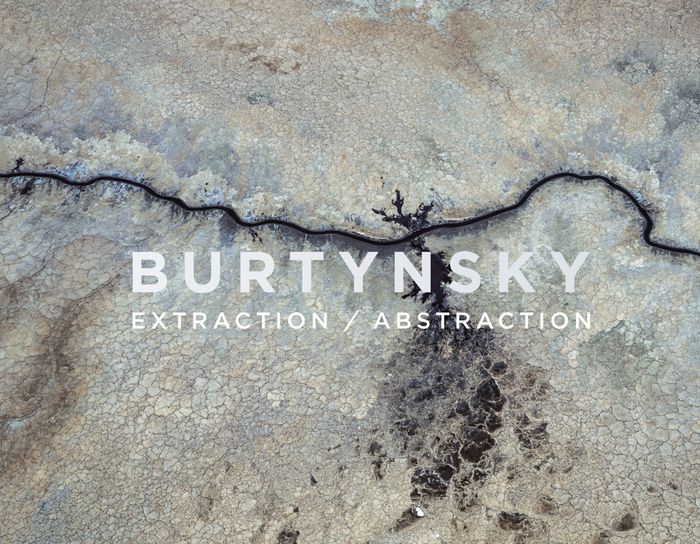
Edward Burtynsky: Extraction/Abstraction
Actions:
Price:
$82.00
(available in store)
Summary:
Published on the occasion of Burtynsky’s largest and most comprehensive exhibition to date at the Saatchi Gallery in London, ''Extraction/Abstraction'' looks deeply at the key subjects and signature images spanning his 45-year career. The catalog and related exhibition present a dichotomy of Burtynsky’s image-making imperative: the lucid and informed documentation of large-scale extractive processes, and how, through his practice, Burtynsky transforms the landscape of industry into complete abstraction. Other essential themes in his oeuvre, such as agriculture, manufacturing, infrastructure and waste, also find their rightful place here. With more than 130 color plates, the book also has a special section, the “Process Archive,” featuring previously unpublished, behind-the-scenes photographs showing Burtynsky at work on the ground and in the air throughout his career. The archive provides a glimpse into the artist’s progression through the evolution of the medium itself, from mid-20th-century large-format analog cameras through to 21st-century high-resolution digital technologies, including explorations into photogrammetry and augmented reality.
Edward Burtynsky: Extraction/Abstraction
Actions:
Price:
$82.00
(available in store)
Summary:
Published on the occasion of Burtynsky’s largest and most comprehensive exhibition to date at the Saatchi Gallery in London, ''Extraction/Abstraction'' looks deeply at the key subjects and signature images spanning his 45-year career. The catalog and related exhibition present a dichotomy of Burtynsky’s image-making imperative: the lucid and informed documentation of large-scale extractive processes, and how, through his practice, Burtynsky transforms the landscape of industry into complete abstraction. Other essential themes in his oeuvre, such as agriculture, manufacturing, infrastructure and waste, also find their rightful place here. With more than 130 color plates, the book also has a special section, the “Process Archive,” featuring previously unpublished, behind-the-scenes photographs showing Burtynsky at work on the ground and in the air throughout his career. The archive provides a glimpse into the artist’s progression through the evolution of the medium itself, from mid-20th-century large-format analog cameras through to 21st-century high-resolution digital technologies, including explorations into photogrammetry and augmented reality.
Form:
books
books
Publication:
July 2024
July 2024
Subject:
Photography monographs
Photography monographs
Form:
books
books
Actions:
Price:
$67.95
(available to order)
Summary:
Following the legacy of Rosalind Krauss, EXPANDED FIELD: Installation Architecture Beyond Art by Ila Berman and Douglas Burnham explores the realm of art and architecture across a broad terrain of installation practices, revealing a critical territory that, despite its exuberant proliferation, has been historically defined as a negativity: the progeny of that which is(...)
$67.95
(available to order)
Summary:
Following the legacy of Rosalind Krauss, EXPANDED FIELD: Installation Architecture Beyond Art by Ila Berman and Douglas Burnham explores the realm of art and architecture across a broad terrain of installation practices, revealing a critical territory that, despite its exuberant proliferation, has been historically defined as a negativity: the progeny of that which is(...)
Title:
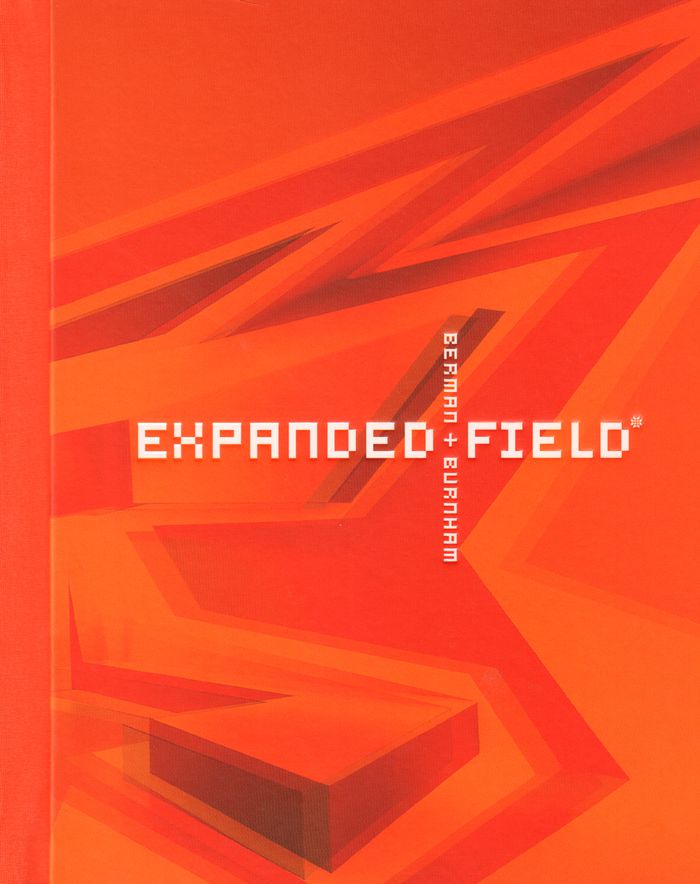
Expanded field: architectural installation beyond art
Actions:
Price:
$67.95
(available to order)
Summary:
Following the legacy of Rosalind Krauss, EXPANDED FIELD: Installation Architecture Beyond Art by Ila Berman and Douglas Burnham explores the realm of art and architecture across a broad terrain of installation practices, revealing a critical territory that, despite its exuberant proliferation, has been historically defined as a negativity: the progeny of that which is both not-architecture and not-art. Within this book, a wide range of art and architectural works are positioned and mapped as constellations within a newly expanded field suspended between Architecture, Interiors, Sculpture, and Landscape. These four terms are the initial reference points used to elaborate a more extensive taxonomical framework defining twelve distinct territories where the analytical drawings and photographic indexes of seventy-five installation projects are situated. The expanded field diagram is a conceptual framework that operates on many levels. It acts as a lens through which to theorize and classify the trajectories of current installation practices and serves as an infrastructure to organize the content of the book.
Expanded field: architectural installation beyond art
Actions:
Price:
$67.95
(available to order)
Summary:
Following the legacy of Rosalind Krauss, EXPANDED FIELD: Installation Architecture Beyond Art by Ila Berman and Douglas Burnham explores the realm of art and architecture across a broad terrain of installation practices, revealing a critical territory that, despite its exuberant proliferation, has been historically defined as a negativity: the progeny of that which is both not-architecture and not-art. Within this book, a wide range of art and architectural works are positioned and mapped as constellations within a newly expanded field suspended between Architecture, Interiors, Sculpture, and Landscape. These four terms are the initial reference points used to elaborate a more extensive taxonomical framework defining twelve distinct territories where the analytical drawings and photographic indexes of seventy-five installation projects are situated. The expanded field diagram is a conceptual framework that operates on many levels. It acts as a lens through which to theorize and classify the trajectories of current installation practices and serves as an infrastructure to organize the content of the book.
Form:
books
books
Publication:
June 2016
June 2016
Subject:
Display
Display
Form:
journals and magazines
journals and magazines
Title:
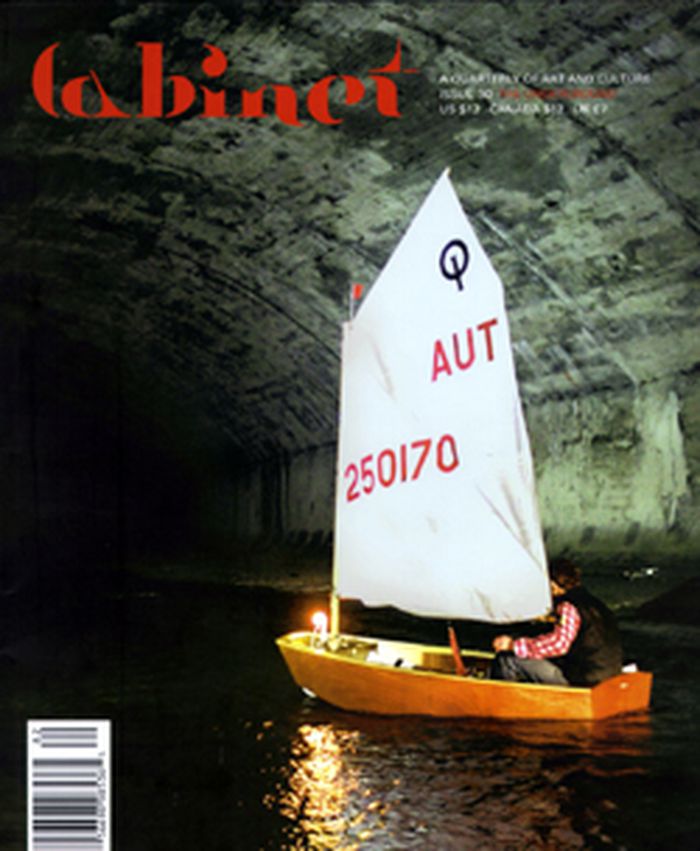
Cabinet 30: The Underground
Cabinet 30: The Underground
Actions:
Price:
$13.00
(available in store)
Summary:
Site of hidden infrastructure, source of material and energy, home to clandestine activity, buried landscape of darkness and silence: the physical and emotional space of the underground is at once prosaic and uncanny, rich with both functional potential and metaphorical meaning. Cabinet issue 30, with its special section on The Underground, features Irene Cheng on Thomas(...)
$13.00
(available in store)
Summary:
Site of hidden infrastructure, source of material and energy, home to clandestine activity, buried landscape of darkness and silence: the physical and emotional space of the underground is at once prosaic and uncanny, rich with both functional potential and metaphorical meaning. Cabinet issue 30, with its special section on The Underground, features Irene Cheng on Thomas(...)
Title:
Cabinet 30: The Underground
Actions:
Price:
$13.00
(available in store)
Summary:
Site of hidden infrastructure, source of material and energy, home to clandestine activity, buried landscape of darkness and silence: the physical and emotional space of the underground is at once prosaic and uncanny, rich with both functional potential and metaphorical meaning. Cabinet issue 30, with its special section on The Underground, features Irene Cheng on Thomas W. Knox's 1876 book Underground, or Life Below the Surface and the vogue for underground tourism; an interview with Michel Siffre, a scientist who spent six months isolated in utter darkness in a cave; Jeffrey Kastner on the metaphor of the mole in revolutionary texts; and essays on the evolution of the mining industry, subterranean storage and political resistance movements. Elsewhere in the issue: Christopher Turner on the history of Day-glo; Christine Wertheim on the fabricated Australian Modernist poet Ern Malley; Tirdad Zolghadr on in-flight magazines; and Moyra Davey on the color maroon. This issue also features artist projects by Josiah McElheny and San Keller.
Cabinet 30: The Underground
Actions:
Price:
$13.00
(available in store)
Summary:
Site of hidden infrastructure, source of material and energy, home to clandestine activity, buried landscape of darkness and silence: the physical and emotional space of the underground is at once prosaic and uncanny, rich with both functional potential and metaphorical meaning. Cabinet issue 30, with its special section on The Underground, features Irene Cheng on Thomas W. Knox's 1876 book Underground, or Life Below the Surface and the vogue for underground tourism; an interview with Michel Siffre, a scientist who spent six months isolated in utter darkness in a cave; Jeffrey Kastner on the metaphor of the mole in revolutionary texts; and essays on the evolution of the mining industry, subterranean storage and political resistance movements. Elsewhere in the issue: Christopher Turner on the history of Day-glo; Christine Wertheim on the fabricated Australian Modernist poet Ern Malley; Tirdad Zolghadr on in-flight magazines; and Moyra Davey on the color maroon. This issue also features artist projects by Josiah McElheny and San Keller.
Form:
journals and magazines
journals and magazines
Publication:
September 2008, Brooklyn
September 2008, Brooklyn
Subject:
Magazines
Magazines
Form:
books
books
Price:
$27.50
(available to order)
Summary:
Los Angeles is a city that has long thrived on the continual re-creation of its own myth. In this extraordinary work, Norman Klein examines the process of memory erasure in LA. Using a provocative mixture of fact and fiction, the book takes us on an "anti-tour" of downtown LA, examines life for Vietnamese immigrants in the City of Dreams, imagines Walter Benjamin as a Los(...)
$27.50
(available to order)
Summary:
Los Angeles is a city that has long thrived on the continual re-creation of its own myth. In this extraordinary work, Norman Klein examines the process of memory erasure in LA. Using a provocative mixture of fact and fiction, the book takes us on an "anti-tour" of downtown LA, examines life for Vietnamese immigrants in the City of Dreams, imagines Walter Benjamin as a Los(...)
Title:
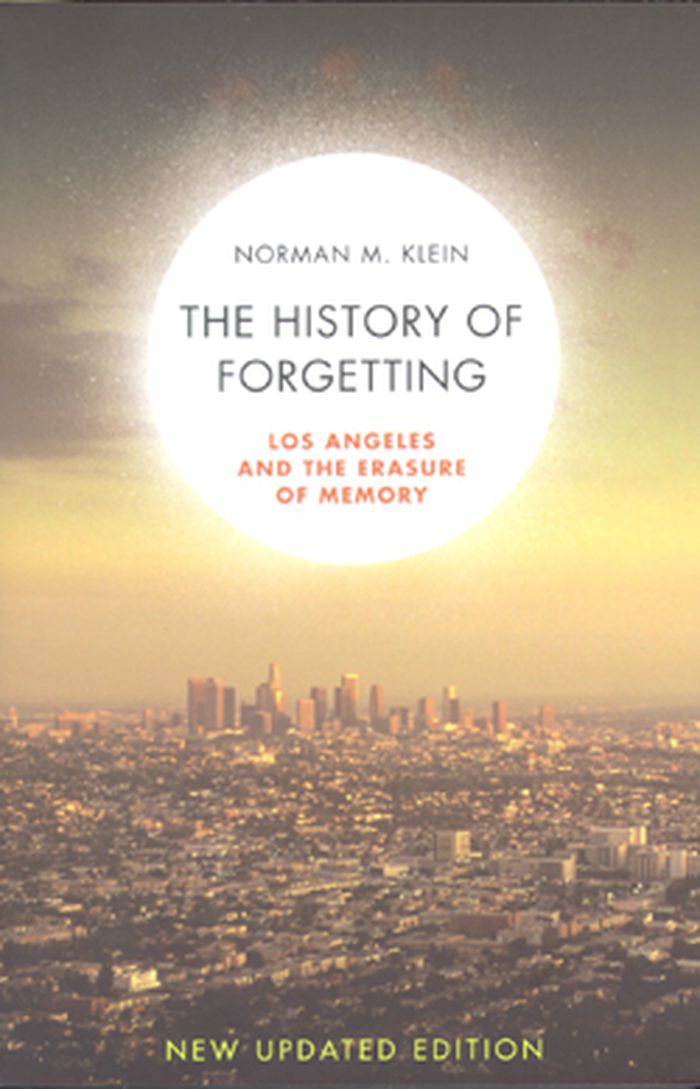
The history of forgetting: Los Angeles and the erasure of the memory
Actions:
Price:
$27.50
(available to order)
Summary:
Los Angeles is a city that has long thrived on the continual re-creation of its own myth. In this extraordinary work, Norman Klein examines the process of memory erasure in LA. Using a provocative mixture of fact and fiction, the book takes us on an "anti-tour" of downtown LA, examines life for Vietnamese immigrants in the City of Dreams, imagines Walter Benjamin as a Los Angeleno, and finally looks at the way information technology has recreated the city, turning cyberspace into the last suburb. In this new edition, Norman Klein explores the evolution of the Latino majority, how the Pacific economy is changing the structure of urban life, the impact of collapsing infrastructure in the city, and the restructuring of those very districts that had been "forgotten." Norman M. Klein is a critic and historian of mass culture, author of most recently, The Vatican to Vegas: The History of Special Effects. He teaches at the California Institute of the Arts in Los Angeles.
The history of forgetting: Los Angeles and the erasure of the memory
Actions:
Price:
$27.50
(available to order)
Summary:
Los Angeles is a city that has long thrived on the continual re-creation of its own myth. In this extraordinary work, Norman Klein examines the process of memory erasure in LA. Using a provocative mixture of fact and fiction, the book takes us on an "anti-tour" of downtown LA, examines life for Vietnamese immigrants in the City of Dreams, imagines Walter Benjamin as a Los Angeleno, and finally looks at the way information technology has recreated the city, turning cyberspace into the last suburb. In this new edition, Norman Klein explores the evolution of the Latino majority, how the Pacific economy is changing the structure of urban life, the impact of collapsing infrastructure in the city, and the restructuring of those very districts that had been "forgotten." Norman M. Klein is a critic and historian of mass culture, author of most recently, The Vatican to Vegas: The History of Special Effects. He teaches at the California Institute of the Arts in Los Angeles.
Form:
books
books
Publication:
August 2008, London, New York
August 2008, London, New York
Subject:
Urban Theory
Urban Theory
Form:
books
books
Actions:
Price:
$81.50
(available to order)
Summary:
The years around 1700 were marked by transformations in European and colonial capital cities. This era saw the creation not only of palatial complexes and urban spaces appropriate to autocratic power, but also of essential infrastructure such as roads, ports, and fortifications. In addition, many of the civic structures and background buildings that form the familiar(...)
$81.50
(available to order)
Summary:
The years around 1700 were marked by transformations in European and colonial capital cities. This era saw the creation not only of palatial complexes and urban spaces appropriate to autocratic power, but also of essential infrastructure such as roads, ports, and fortifications. In addition, many of the civic structures and background buildings that form the familiar(...)
Title:
Circa 1700 : architecture in Europe and the Americas
Actions:
Price:
$81.50
(available to order)
Summary:
The years around 1700 were marked by transformations in European and colonial capital cities. This era saw the creation not only of palatial complexes and urban spaces appropriate to autocratic power, but also of essential infrastructure such as roads, ports, and fortifications. In addition, many of the civic structures and background buildings that form the familiar urban images of the eighteenth century date from this period. In all of this activity, architects and architectural ideas, formed mostly in Italy and influenced by the baroque architecture of Rome, especially the late works of Francesco Borromini and Gian Lorenzo Bernini, played a central role. Twelve contributors provide a comprehensive look at the design, renewal, and expansion of capitals and countries including Naples, Rome, Vienna, Stockholm, Saint Petersburg, England, Amsterdam, Cádiz, Lisbon, Quebec City, and Lima. The result is a fascinating cross section that allows a comparative reading of baroque architecture: from country to country, from region to region, and from the Old World to the New.
Circa 1700 : architecture in Europe and the Americas
Actions:
Price:
$81.50
(available to order)
Summary:
The years around 1700 were marked by transformations in European and colonial capital cities. This era saw the creation not only of palatial complexes and urban spaces appropriate to autocratic power, but also of essential infrastructure such as roads, ports, and fortifications. In addition, many of the civic structures and background buildings that form the familiar urban images of the eighteenth century date from this period. In all of this activity, architects and architectural ideas, formed mostly in Italy and influenced by the baroque architecture of Rome, especially the late works of Francesco Borromini and Gian Lorenzo Bernini, played a central role. Twelve contributors provide a comprehensive look at the design, renewal, and expansion of capitals and countries including Naples, Rome, Vienna, Stockholm, Saint Petersburg, England, Amsterdam, Cádiz, Lisbon, Quebec City, and Lima. The result is a fascinating cross section that allows a comparative reading of baroque architecture: from country to country, from region to region, and from the Old World to the New.
Form:
books
books
Publication:
January 1900, Washington
January 1900, Washington
Subject:
History until 1900
History until 1900
Form:
books
books
Actions:
Price:
$29.95
(available to order)
Summary:
Lake Ontario has profoundly influenced the historical evolution of North America. For centuries it has enabled and enriched the societies that crowded its edges, from fertile agricultural landscapes to energy production systems to sprawling cities. In "The lives of Lake Ontario" Daniel Macfarlane details the lake’s relationship with the Indigenous nations, settler(...)
$29.95
(available to order)
Summary:
Lake Ontario has profoundly influenced the historical evolution of North America. For centuries it has enabled and enriched the societies that crowded its edges, from fertile agricultural landscapes to energy production systems to sprawling cities. In "The lives of Lake Ontario" Daniel Macfarlane details the lake’s relationship with the Indigenous nations, settler(...)
Title:
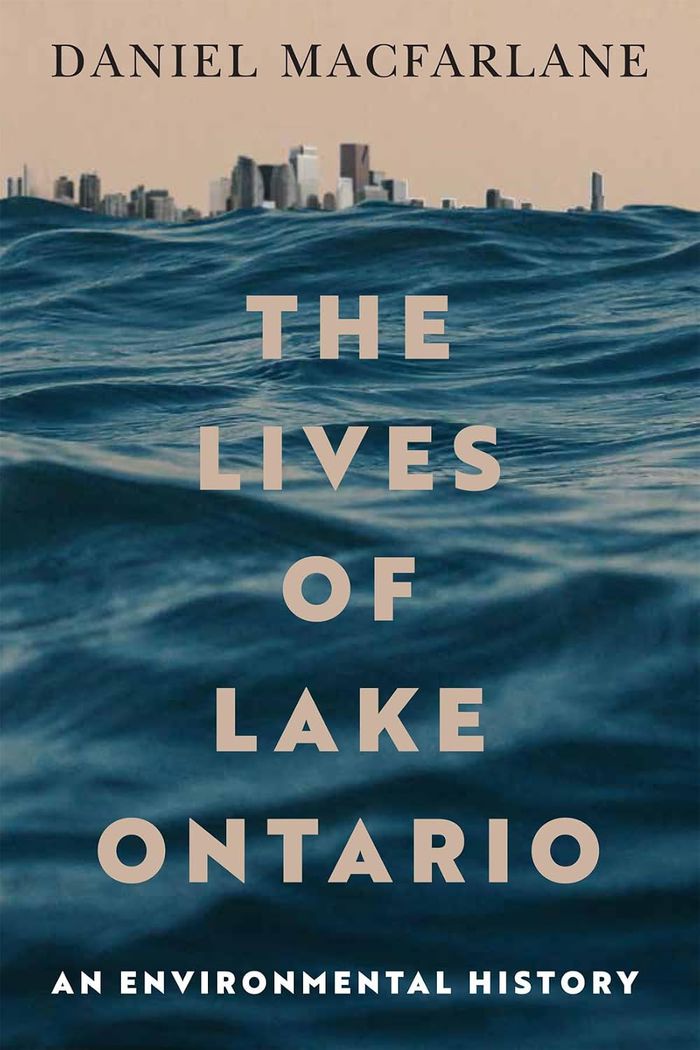
The lives of Lake Ontario: An environmental history
Actions:
Price:
$29.95
(available to order)
Summary:
Lake Ontario has profoundly influenced the historical evolution of North America. For centuries it has enabled and enriched the societies that crowded its edges, from fertile agricultural landscapes to energy production systems to sprawling cities. In "The lives of Lake Ontario" Daniel Macfarlane details the lake’s relationship with the Indigenous nations, settler cultures, and modern countries that have occupied its shores. He examines the myriad ways Canada and the United States have used and abused this resource: through dams and canals, drinking water and sewage, trash and pollution, fish and foreign species, industry and manufacturing, urbanization and infrastructure, population growth and biodiversity loss. Serving as both bridge and buffer between the two countries, Lake Ontario came to host Canada’s largest megalopolis. Yet its transborder exploitation exacted a tremendous ecological cost, leading people to abandon the lake. Innovative regulations in the later twentieth century, such as the Great Lakes Water Quality Agreements, have partially improved Lake Ontario’s health.
The lives of Lake Ontario: An environmental history
Actions:
Price:
$29.95
(available to order)
Summary:
Lake Ontario has profoundly influenced the historical evolution of North America. For centuries it has enabled and enriched the societies that crowded its edges, from fertile agricultural landscapes to energy production systems to sprawling cities. In "The lives of Lake Ontario" Daniel Macfarlane details the lake’s relationship with the Indigenous nations, settler cultures, and modern countries that have occupied its shores. He examines the myriad ways Canada and the United States have used and abused this resource: through dams and canals, drinking water and sewage, trash and pollution, fish and foreign species, industry and manufacturing, urbanization and infrastructure, population growth and biodiversity loss. Serving as both bridge and buffer between the two countries, Lake Ontario came to host Canada’s largest megalopolis. Yet its transborder exploitation exacted a tremendous ecological cost, leading people to abandon the lake. Innovative regulations in the later twentieth century, such as the Great Lakes Water Quality Agreements, have partially improved Lake Ontario’s health.
Form:
books
books
Publication:
March 2026
March 2026
Subject:
Architecture in Canada
Architecture in Canada
Form:
books
books
Actions:
Price:
$75.00
(available to order)
Summary:
The classical architectural and planning schemes conceived by Canada’s Anglo-settler elite in the early twentieth century embodied a prescriptive vision of power and grandeur for the country and its people on a scale almost unimaginable today. This provocative collection of essays examines the classical design precepts that shaped much of Canada’s built environment –(...)
$75.00
(available to order)
Summary:
The classical architectural and planning schemes conceived by Canada’s Anglo-settler elite in the early twentieth century embodied a prescriptive vision of power and grandeur for the country and its people on a scale almost unimaginable today. This provocative collection of essays examines the classical design precepts that shaped much of Canada’s built environment –(...)
Title:
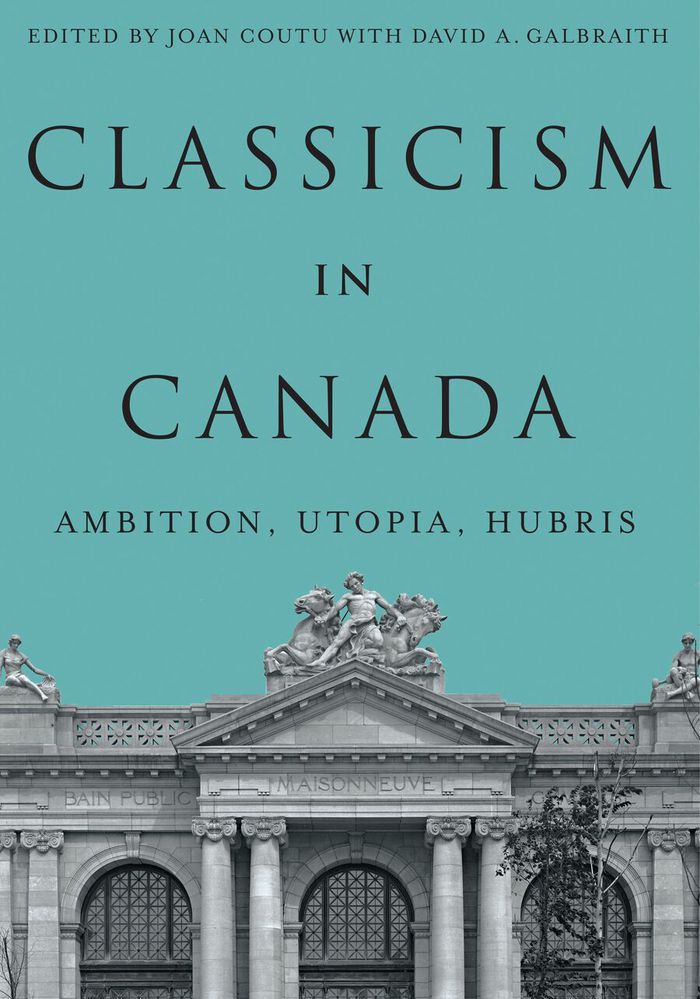
Classicism in Canada: Ambition, utopia, hubris
Actions:
Price:
$75.00
(available to order)
Summary:
The classical architectural and planning schemes conceived by Canada’s Anglo-settler elite in the early twentieth century embodied a prescriptive vision of power and grandeur for the country and its people on a scale almost unimaginable today. This provocative collection of essays examines the classical design precepts that shaped much of Canada’s built environment – leaving an imprint for how we continue to experience place today. "Classicism in Canada" brings together essays by planning, architectural, art, political, and social historians. Drawing on primary sources and the physical sites themselves, the contributors probe the meaning of a style that melded the École des Beaux-Arts with the sensibilities of the City Beautiful movement and that was rooted in assumptions about order and historical continuity. The transformation of built space and land was motivated by pragmatism, aesthetics, and an ideological infrastructure that reverberated with utopian zeal as much as it was driven by racial discrimination and Indigenous erasure.
Classicism in Canada: Ambition, utopia, hubris
Actions:
Price:
$75.00
(available to order)
Summary:
The classical architectural and planning schemes conceived by Canada’s Anglo-settler elite in the early twentieth century embodied a prescriptive vision of power and grandeur for the country and its people on a scale almost unimaginable today. This provocative collection of essays examines the classical design precepts that shaped much of Canada’s built environment – leaving an imprint for how we continue to experience place today. "Classicism in Canada" brings together essays by planning, architectural, art, political, and social historians. Drawing on primary sources and the physical sites themselves, the contributors probe the meaning of a style that melded the École des Beaux-Arts with the sensibilities of the City Beautiful movement and that was rooted in assumptions about order and historical continuity. The transformation of built space and land was motivated by pragmatism, aesthetics, and an ideological infrastructure that reverberated with utopian zeal as much as it was driven by racial discrimination and Indigenous erasure.
Form:
books
books
Publication:
August 2026
August 2026
Subject:
Architecture in Canada
Architecture in Canada
Form:
books
books
Actions:
Price:
$55.95
(available to order)
Summary:
This is the first serious publication in which the architects present themselves as a group. This new brand of monograph stands in good stead with a contradictory world in which architects have to be chameleonic one moment and instantly recognizable the next, and their architecture both technocratic and popular. In their essays Crimson broach such issues as the changing(...)
$55.95
(available to order)
Summary:
This is the first serious publication in which the architects present themselves as a group. This new brand of monograph stands in good stead with a contradictory world in which architects have to be chameleonic one moment and instantly recognizable the next, and their architecture both technocratic and popular. In their essays Crimson broach such issues as the changing(...)
Title:
Profession architect : De Architekten Cie.
Actions:
Price:
$55.95
(available to order)
Summary:
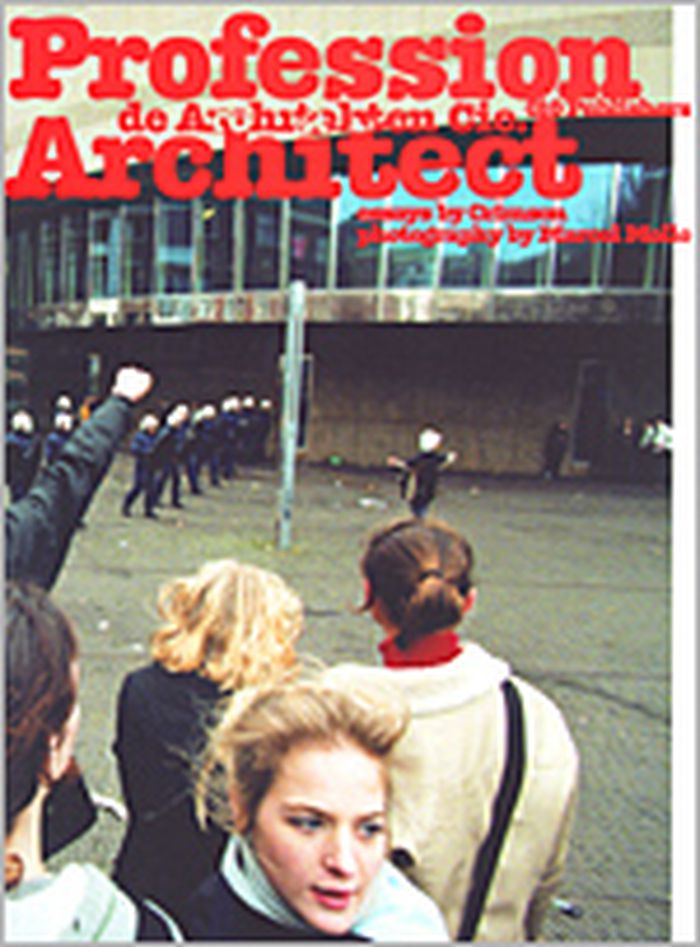
This is the first serious publication in which the architects present themselves as a group. This new brand of monograph stands in good stead with a contradictory world in which architects have to be chameleonic one moment and instantly recognizable the next, and their architecture both technocratic and popular. In their essays Crimson broach such issues as the changing role of government as patron, client and everything in-between. Another phenomenon to feel the heat of the Crimson spotlight is the increasing demand for soft qualities in architecture and urban design. Market players in particular expect architects to design experiences. At the same time architects have to operate within hard confines that are ever narrowing in a country getting fuller all the time, not just of infrastructure and buildings but more particularly of rules and regulations. In his photographs Marcel Molle gives a focused look at the messy reality of a building in use.
Profession architect : De Architekten Cie.
Actions:
Price:
$55.95
(available to order)
Summary:
This is the first serious publication in which the architects present themselves as a group. This new brand of monograph stands in good stead with a contradictory world in which architects have to be chameleonic one moment and instantly recognizable the next, and their architecture both technocratic and popular. In their essays Crimson broach such issues as the changing role of government as patron, client and everything in-between. Another phenomenon to feel the heat of the Crimson spotlight is the increasing demand for soft qualities in architecture and urban design. Market players in particular expect architects to design experiences. At the same time architects have to operate within hard confines that are ever narrowing in a country getting fuller all the time, not just of infrastructure and buildings but more particularly of rules and regulations. In his photographs Marcel Molle gives a focused look at the messy reality of a building in use.
Form:
books
books
Publication:
November 2002, Rotterdam
November 2002, Rotterdam
Subject:
Architecture Monographs
Architecture Monographs
Form:
books
books
Price:
$64.95
(available to order)
Summary:
China is the largest consumer of cement and concrete in the world, the use of which has peaked in the first two decades of the twenty-first century. Used for the construction of extensive infrastructure and buildings, over the last twenty years renowned Chinese architects have been working in and studying the constructive limits and spatial and superficial effects of(...)
$64.95
(available to order)
Summary:
China is the largest consumer of cement and concrete in the world, the use of which has peaked in the first two decades of the twenty-first century. Used for the construction of extensive infrastructure and buildings, over the last twenty years renowned Chinese architects have been working in and studying the constructive limits and spatial and superficial effects of(...)
Title:
Chinese brutalism today: concrete and avant-garde architecture
Actions:
Price:
$64.95
(available to order)
Summary:
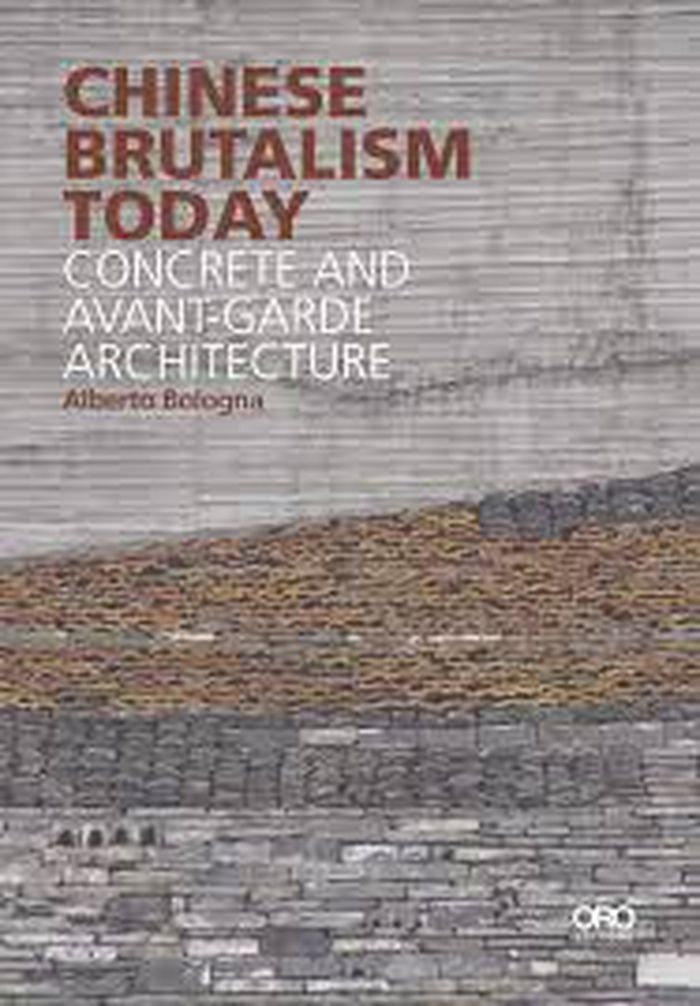
China is the largest consumer of cement and concrete in the world, the use of which has peaked in the first two decades of the twenty-first century. Used for the construction of extensive infrastructure and buildings, over the last twenty years renowned Chinese architects have been working in and studying the constructive limits and spatial and superficial effects of exposed concrete. In the process, they have created a wave of avant-garde architecture in China. Chinese Brutalism Today investigates the compositional, formal, and ornamental reasons for this architecture and its different surface finishes, from rough to smooth. This new wave of Chinese Brutalism is, in large part, a regional evolution and development closely linked to local construction processes and the available labor force. The finished tectonics represent not only a way to read the architecture, but also reveals the complex decision-making processes and planning that led from the conception to construction of these buildings.
Chinese brutalism today: concrete and avant-garde architecture
Actions:
Price:
$64.95
(available to order)
Summary:
China is the largest consumer of cement and concrete in the world, the use of which has peaked in the first two decades of the twenty-first century. Used for the construction of extensive infrastructure and buildings, over the last twenty years renowned Chinese architects have been working in and studying the constructive limits and spatial and superficial effects of exposed concrete. In the process, they have created a wave of avant-garde architecture in China. Chinese Brutalism Today investigates the compositional, formal, and ornamental reasons for this architecture and its different surface finishes, from rough to smooth. This new wave of Chinese Brutalism is, in large part, a regional evolution and development closely linked to local construction processes and the available labor force. The finished tectonics represent not only a way to read the architecture, but also reveals the complex decision-making processes and planning that led from the conception to construction of these buildings.
Form:
books
books
Publication:
November 2019
November 2019
Subject:
Brutalism
Brutalism


