


1759 Results
Form:
books
books
Actions:
Holdings:
Description:
xxvi, 377 pages : illustrations (some color) ; 24 cm
Description:
xxvi, 377 pages : illustrations (some color) ; 24 cm
Author:
Subject:
Publication:
Chicago : University of Chicago Press, ©1994.
Chicago : University of Chicago Press, ©1994.
Title:
The villas of Pliny from antiquity to posterity / Pierre de la Ruffinière du Prey.
Actions:
Holdings:
Description:
xxvi, 377 pages : illustrations (some color) ; 24 cm
The villas of Pliny from antiquity to posterity / Pierre de la Ruffinière du Prey.
Actions:
Holdings:
Description:
xxvi, 377 pages : illustrations (some color) ; 24 cm
Form:
books
books
Publication:
Chicago : University of Chicago Press, ©1994.
Chicago : University of Chicago Press, ©1994.
Author:
Subject:
Form:
books
books
Actions:
Holdings:
Description:
12 unnumbered pages, 168 pages : colour illustrations ; 27 cm
Description:
12 unnumbered pages, 168 pages : colour illustrations ; 27 cm
Author:
Subject:
Publication:
London : V & A Publishing, 2018.
London : V & A Publishing, 2018.
Title:
The future starts here / edited by Rory Hyde and Mariana Pestana with Kieran Long.
Actions:
Holdings:
Description:
12 unnumbered pages, 168 pages : colour illustrations ; 27 cm
The future starts here / edited by Rory Hyde and Mariana Pestana with Kieran Long.
Actions:
Holdings:
Description:
12 unnumbered pages, 168 pages : colour illustrations ; 27 cm
Form:
books
books
Publication:
London : V & A Publishing, 2018.
London : V & A Publishing, 2018.
Author:
Subject:
Form:
books
books
Title:
Discrimination by Design : A Feminist Critique of the Man-Made Environment / Leslie Kanes Weisman.
Discrimination by Design : A Feminist Critique of the Man-Made Environment / Leslie Kanes Weisman.
Actions:
Holdings:
Description:
x, 190 pages : illustrations ; 24 cm
Description:
x, 190 pages : illustrations ; 24 cm
Author:
Subject:
Publication:
Urbana : University of Illinois Press, ©1992.
Urbana : University of Illinois Press, ©1992.
Title:
Discrimination by Design : A Feminist Critique of the Man-Made Environment / Leslie Kanes Weisman.
Actions:
Holdings:
Description:
x, 190 pages : illustrations ; 24 cm
Discrimination by Design : A Feminist Critique of the Man-Made Environment / Leslie Kanes Weisman.
Actions:
Holdings:
Description:
x, 190 pages : illustrations ; 24 cm
Form:
books
books
Publication:
Urbana : University of Illinois Press, ©1992.
Urbana : University of Illinois Press, ©1992.
Author:
Subject:
Form:
books
books

Price:
$54.95
(available to order)
Summary:
Looking to expose the ways in which Fuller's synergetics can be seen in the ancient iconographies of the past in almost every human culture, this book also shows how the 'wholes' of Fuller's figures may find artistic applications within the future.
$54.95
(available to order)
Summary:
Looking to expose the ways in which Fuller's synergetics can be seen in the ancient iconographies of the past in almost every human culture, this book also shows how the 'wholes' of Fuller's figures may find artistic applications within the future.
Subject:
Architecture Monographs
Architecture Monographs
Publication:
June 2007, Cambridge, United Kingdom
June 2007, Cambridge, United Kingdom
Title:
American Dreamer : Bucky Fuller and the sacred geometry of nature
Actions:
Price:
$54.95
(available to order)
Summary:
Looking to expose the ways in which Fuller's synergetics can be seen in the ancient iconographies of the past in almost every human culture, this book also shows how the 'wholes' of Fuller's figures may find artistic applications within the future.
American Dreamer : Bucky Fuller and the sacred geometry of nature
Actions:
Price:
$54.95
(available to order)
Summary:
Looking to expose the ways in which Fuller's synergetics can be seen in the ancient iconographies of the past in almost every human culture, this book also shows how the 'wholes' of Fuller's figures may find artistic applications within the future.
Form:
books
books
Publication:
June 2007, Cambridge, United Kingdom
June 2007, Cambridge, United Kingdom
Subject:
Architecture Monographs
Architecture Monographs
Form:
books
books
Actions:
Price:
$25.99
(available in store)
Summary:
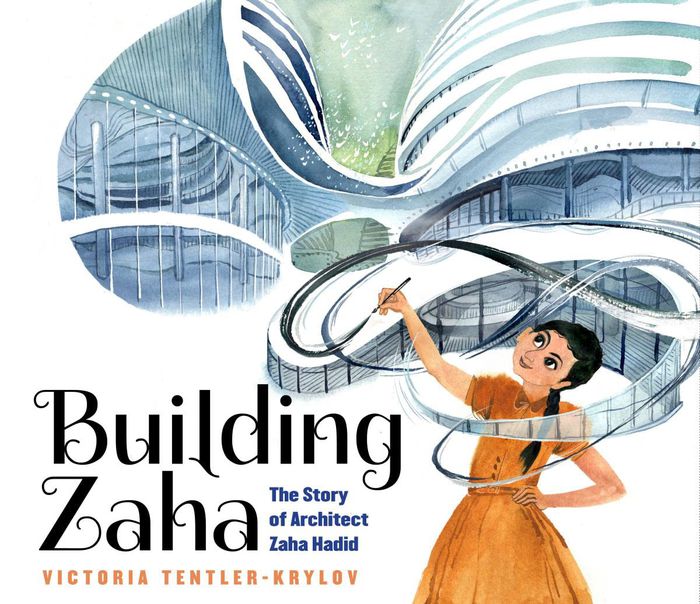
An inspiring picture book biography about British Iraqi architect Zaha Hadid, who was a pioneer in her field against all odds, told by debut author-illustrator Victoria Tentler-Krylov. The city of Baghdad was full of thinkers, artists, and scientists, the littlest among them Zaha Hadid. Zaha knew from a young age that she wanted to be an architect. She set goals for(...)
$25.99
(available in store)
Summary:
An inspiring picture book biography about British Iraqi architect Zaha Hadid, who was a pioneer in her field against all odds, told by debut author-illustrator Victoria Tentler-Krylov. The city of Baghdad was full of thinkers, artists, and scientists, the littlest among them Zaha Hadid. Zaha knew from a young age that she wanted to be an architect. She set goals for(...)
Title:
Building Zaha: The story of architect Zaha Hadid
Actions:
Price:
$25.99
(available in store)
Summary:
An inspiring picture book biography about British Iraqi architect Zaha Hadid, who was a pioneer in her field against all odds, told by debut author-illustrator Victoria Tentler-Krylov. The city of Baghdad was full of thinkers, artists, and scientists, the littlest among them Zaha Hadid. Zaha knew from a young age that she wanted to be an architect. She set goals for herself and followed them against all odds. A woman in a man's world, and a person of color in a white field, Zaha was met with resistance at every turn. When critics called her a diva and claimed her ideas were unbuildable, she didn't let their judgments stop her from setting goals and achieving them one by one, finding innovative ways to build projects that became famous the world over. She persisted, she followed her dreams, and she succeeded.
Building Zaha: The story of architect Zaha Hadid
Actions:
Price:
$25.99
(available in store)
Summary:
An inspiring picture book biography about British Iraqi architect Zaha Hadid, who was a pioneer in her field against all odds, told by debut author-illustrator Victoria Tentler-Krylov. The city of Baghdad was full of thinkers, artists, and scientists, the littlest among them Zaha Hadid. Zaha knew from a young age that she wanted to be an architect. She set goals for herself and followed them against all odds. A woman in a man's world, and a person of color in a white field, Zaha was met with resistance at every turn. When critics called her a diva and claimed her ideas were unbuildable, she didn't let their judgments stop her from setting goals and achieving them one by one, finding innovative ways to build projects that became famous the world over. She persisted, she followed her dreams, and she succeeded.
Form:
books
books
Publication:
December 2020
December 2020
Subject:
Children's Books
Children's Books
Form:
books
books
Actions:
Price:
$72.00
(available to order)
Summary:
Mapping London: Making Sense of the City is a beautiful, compelling anthology of over six centuries of London maps, tracing the mesmerizing evolution of the city and exploring the hopes and fears of its inhabitants as history unfolds. The book is a cartographic journey, charting the influence of Roman city planning, Saxon feudalism, Medieval tumult, imperial hubris,(...)
$72.00
(available to order)
Summary:
Mapping London: Making Sense of the City is a beautiful, compelling anthology of over six centuries of London maps, tracing the mesmerizing evolution of the city and exploring the hopes and fears of its inhabitants as history unfolds. The book is a cartographic journey, charting the influence of Roman city planning, Saxon feudalism, Medieval tumult, imperial hubris,(...)
Title:
Mapping London: making sense of the city
Actions:
Price:
$72.00
(available to order)
Summary:
Mapping London: Making Sense of the City is a beautiful, compelling anthology of over six centuries of London maps, tracing the mesmerizing evolution of the city and exploring the hopes and fears of its inhabitants as history unfolds. The book is a cartographic journey, charting the influence of Roman city planning, Saxon feudalism, Medieval tumult, imperial hubris, contemporary town planning and more on this great metropolis. In this comprehensive survey the maps are allowed to speak for themselves, revealing not only their political and social context, but also the dreams of their makers and the drama of their creation. Often these maps are objects of great skill and beauty and the names of the greatest of their makers are still revered today. A lavishly illustrated hardback book, Mapping London explores the city through the ages in all its labyrinthine glory.
Mapping London: making sense of the city
Actions:
Price:
$72.00
(available to order)
Summary:
Mapping London: Making Sense of the City is a beautiful, compelling anthology of over six centuries of London maps, tracing the mesmerizing evolution of the city and exploring the hopes and fears of its inhabitants as history unfolds. The book is a cartographic journey, charting the influence of Roman city planning, Saxon feudalism, Medieval tumult, imperial hubris, contemporary town planning and more on this great metropolis. In this comprehensive survey the maps are allowed to speak for themselves, revealing not only their political and social context, but also the dreams of their makers and the drama of their creation. Often these maps are objects of great skill and beauty and the names of the greatest of their makers are still revered today. A lavishly illustrated hardback book, Mapping London explores the city through the ages in all its labyrinthine glory.
Form:
books
books
Publication:
January 2008, London
January 2008, London
Subject:
Architectural Plans and Cartography
Architectural Plans and Cartography
Form:
books
books
Title:
The art-architecture complex
The art-architecture complex
Actions:
Price:
$33.50
(available to order)
Summary:
Hal Foster argues that a fusion of architecture and art is a defining feature of contemporary culture. While architects such as Zaha Hadid and Herzog and de Meuron draw on art to reanimate design, architecture has inspired fundamental transformations in painting, sculpture and film, which are also explored here. The book includes an extensive conversation with Richard(...)
$33.50
(available to order)
Summary:
Hal Foster argues that a fusion of architecture and art is a defining feature of contemporary culture. While architects such as Zaha Hadid and Herzog and de Meuron draw on art to reanimate design, architecture has inspired fundamental transformations in painting, sculpture and film, which are also explored here. The book includes an extensive conversation with Richard(...)
Title:
The art-architecture complex
Actions:
Price:
$33.50
(available to order)
Summary:
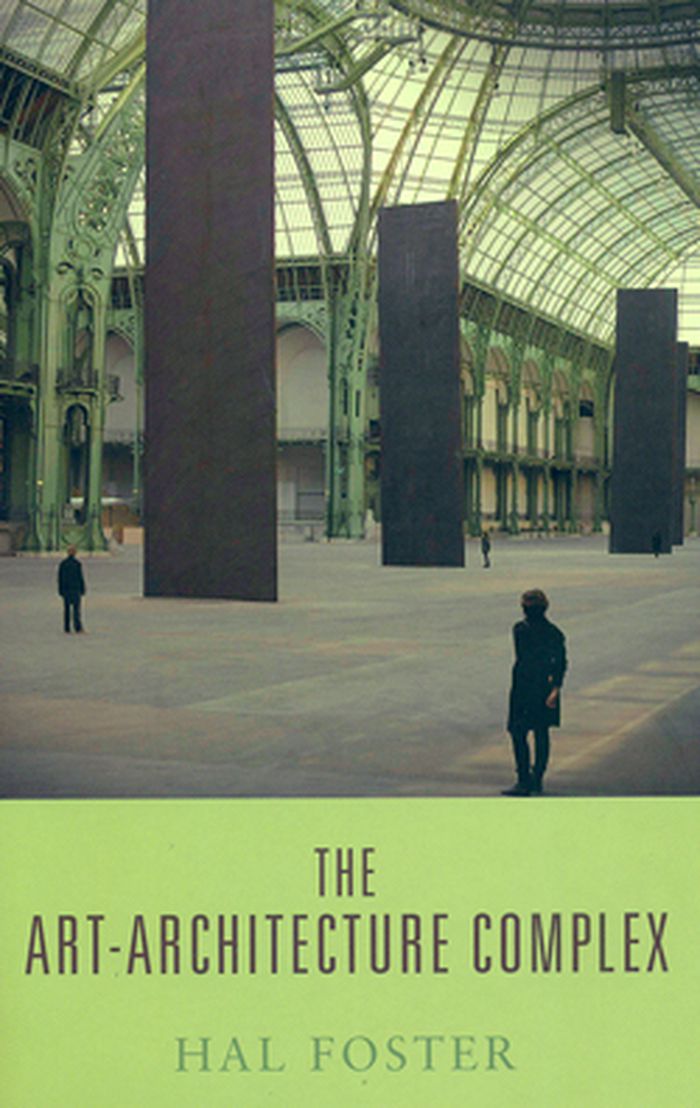
Hal Foster argues that a fusion of architecture and art is a defining feature of contemporary culture. While architects such as Zaha Hadid and Herzog and de Meuron draw on art to reanimate design, architecture has inspired fundamental transformations in painting, sculpture and film, which are also explored here. The book includes an extensive conversation with Richard Serra. At the same time Foster points to a “global style” of architecture, as practiced by Norman Foster, Richard Rogers and Renzo Piano, that is analogous to the “international style” of Le Corbusier, Gropius and Mies—a global style that, more than any art, conveys the look of modernity today, both its dreams and its delusions. In these ways Foster demonstrates that “the art-architecture complex” is a key indicator of broader social and economic trajectories and in urgent need of analysis and debate.
The art-architecture complex
Actions:
Price:
$33.50
(available to order)
Summary:
Hal Foster argues that a fusion of architecture and art is a defining feature of contemporary culture. While architects such as Zaha Hadid and Herzog and de Meuron draw on art to reanimate design, architecture has inspired fundamental transformations in painting, sculpture and film, which are also explored here. The book includes an extensive conversation with Richard Serra. At the same time Foster points to a “global style” of architecture, as practiced by Norman Foster, Richard Rogers and Renzo Piano, that is analogous to the “international style” of Le Corbusier, Gropius and Mies—a global style that, more than any art, conveys the look of modernity today, both its dreams and its delusions. In these ways Foster demonstrates that “the art-architecture complex” is a key indicator of broader social and economic trajectories and in urgent need of analysis and debate.
Form:
books
books
Publication:
October 2011
October 2011
Subject:
Architectural Theory
Architectural Theory
Form:
books
books
Actions:
Holdings:
Description:
223 pages : illustrations (some color) ; 27 cm
Description:
223 pages : illustrations (some color) ; 27 cm
Author:
Subject:
Publication:
New York : Princeton Architectural Press, ©2000.
New York : Princeton Architectural Press, ©2000.
Title:
The modern garden / Jane Brown ; with special photography by Sofia Brignone and Alan Ward.
Actions:
Holdings:
Description:
223 pages : illustrations (some color) ; 27 cm
The modern garden / Jane Brown ; with special photography by Sofia Brignone and Alan Ward.
Actions:
Holdings:
Description:
223 pages : illustrations (some color) ; 27 cm
Form:
books
books
Publication:
New York : Princeton Architectural Press, ©2000.
New York : Princeton Architectural Press, ©2000.
Author:
Subject:
Form:
books
books
Actions:
Holdings:
Description:
124 pages : illustrations ; 19 cm
Description:
124 pages : illustrations ; 19 cm
Author:
Subject:
Publication:
[Houston, Tex.] : Rothko Chapel ; New Haven : Distributed by Yale University Press, ©2010.
[Houston, Tex.] : Rothko Chapel ; New Haven : Distributed by Yale University Press, ©2010.
Title:
The Rothko Chapel : writings on art and the threshold of the divine / Dominique de Menil ; forewords by Fariha de Menil Friedrich and Christopher Rothko ; introduction by Emilee Dawn Whitehurst ; [edited by Polly Koch, Diane Lovejoy, and Frances Carter Stephens].
Actions:
Holdings:
Description:
124 pages : illustrations ; 19 cm
The Rothko Chapel : writings on art and the threshold of the divine / Dominique de Menil ; forewords by Fariha de Menil Friedrich and Christopher Rothko ; introduction by Emilee Dawn Whitehurst ; [edited by Polly Koch, Diane Lovejoy, and Frances Carter Stephens].
Actions:
Holdings:
Description:
124 pages : illustrations ; 19 cm
Form:
books
books
Publication:
[Houston, Tex.] : Rothko Chapel ; New Haven : Distributed by Yale University Press, ©2010.
[Houston, Tex.] : Rothko Chapel ; New Haven : Distributed by Yale University Press, ©2010.
Author:
Subject:
Form:
books
books

Actions:
Price:
$15.00
(available to order)
Summary:
This publication is an hommage to the 1967 World Fair in Montéal, Québec, ''Man and His World''. Archival texts and images describe the various pavillions from 1968 to 1984.
$15.00
(available to order)
Summary:
This publication is an hommage to the 1967 World Fair in Montéal, Québec, ''Man and His World''. Archival texts and images describe the various pavillions from 1968 to 1984.
Title:
Man and his world, the pursuit of a dream 1968-1984
Actions:
Price:
$15.00
(available to order)
Summary:
This publication is an hommage to the 1967 World Fair in Montéal, Québec, ''Man and His World''. Archival texts and images describe the various pavillions from 1968 to 1984.
Man and his world, the pursuit of a dream 1968-1984
Actions:
Price:
$15.00
(available to order)
Summary:
This publication is an hommage to the 1967 World Fair in Montéal, Québec, ''Man and His World''. Archival texts and images describe the various pavillions from 1968 to 1984.
Form:
books
books
Publication:
July 2019
July 2019


