


1699 Results
Form:
books
books
Price:
$28.95
(available to order)
Summary:
American ruins have become increasingly prominent, whether in discussions of “urban blight” and home foreclosures, in commemorations of 9/11, or in postapocalyptic movies. In this book, Nick Yablon argues that the association between American cities and ruins dates back to a much earlier period in the nation’s history. Recovering numerous scenes of urban desolation—from(...)
$28.95
(available to order)
Summary:
American ruins have become increasingly prominent, whether in discussions of “urban blight” and home foreclosures, in commemorations of 9/11, or in postapocalyptic movies. In this book, Nick Yablon argues that the association between American cities and ruins dates back to a much earlier period in the nation’s history. Recovering numerous scenes of urban desolation—from(...)
Title:
Untimely ruins : an archaeology of American urban modernity, 1819-1919
Actions:
Price:
$28.95
(available to order)
Summary:
American ruins have become increasingly prominent, whether in discussions of “urban blight” and home foreclosures, in commemorations of 9/11, or in postapocalyptic movies. In this book, Nick Yablon argues that the association between American cities and ruins dates back to a much earlier period in the nation’s history. Recovering numerous scenes of urban desolation—from failed banks, abandoned towns, and dilapidated tenements to the crumbling skyscrapers and bridges envisioned in science fiction and cartoons—this publication challenges the myth that ruins were absent or insignificant objects in nineteenth-century America. The first book to document an American cult of the ruin, it traces its deviations as well as derivations from European conventions. Unlike classical and Gothic ruins, which decayed gracefully over centuries and inspired philosophical meditations about the fate of civilizations, America’s ruins were often “untimely,” appearing unpredictably and disappearing before they could accrue an aura of age. As modern ruins of steel and iron, they stimulated critical reflections about contemporary cities, and the unfamiliar kinds of experience they enabled. Unearthing evocative sources everywhere from the archives of amateur photographers to the contents of time-capsules, this title exposes crucial debates about the economic, technological, and cultural transformations known as urban modernity.
Untimely ruins : an archaeology of American urban modernity, 1819-1919
Actions:
Price:
$28.95
(available to order)
Summary:
American ruins have become increasingly prominent, whether in discussions of “urban blight” and home foreclosures, in commemorations of 9/11, or in postapocalyptic movies. In this book, Nick Yablon argues that the association between American cities and ruins dates back to a much earlier period in the nation’s history. Recovering numerous scenes of urban desolation—from failed banks, abandoned towns, and dilapidated tenements to the crumbling skyscrapers and bridges envisioned in science fiction and cartoons—this publication challenges the myth that ruins were absent or insignificant objects in nineteenth-century America. The first book to document an American cult of the ruin, it traces its deviations as well as derivations from European conventions. Unlike classical and Gothic ruins, which decayed gracefully over centuries and inspired philosophical meditations about the fate of civilizations, America’s ruins were often “untimely,” appearing unpredictably and disappearing before they could accrue an aura of age. As modern ruins of steel and iron, they stimulated critical reflections about contemporary cities, and the unfamiliar kinds of experience they enabled. Unearthing evocative sources everywhere from the archives of amateur photographers to the contents of time-capsules, this title exposes crucial debates about the economic, technological, and cultural transformations known as urban modernity.
Form:
books
books
Publication:
February 2010, Chicago
February 2010, Chicago
Subject:
Urban Theory
Urban Theory
Form:
books
books
Actions:
Price:
$30.00
(available to order)
Summary:
The 12 artists in Phantasmagoria: Specters of Absence--Christian Boltanski, Jim Campbell, Michel Delacroix, Laurent Grasso, Jeppe Hein, William Kentridge, Rafael Lozano-Hemmer, Teresa Margolles, Oscar Munoz, Julie Nord, Rosangela Renno and Regina Silveira--draw on forms of representation associated with phantasmagoria and reframe them around contemporary notions of(...)
$30.00
(available to order)
Summary:
The 12 artists in Phantasmagoria: Specters of Absence--Christian Boltanski, Jim Campbell, Michel Delacroix, Laurent Grasso, Jeppe Hein, William Kentridge, Rafael Lozano-Hemmer, Teresa Margolles, Oscar Munoz, Julie Nord, Rosangela Renno and Regina Silveira--draw on forms of representation associated with phantasmagoria and reframe them around contemporary notions of(...)
Title:
Phantasmagoria : Specters of absence
Actions:
Price:
$30.00
(available to order)
Summary:
The 12 artists in Phantasmagoria: Specters of Absence--Christian Boltanski, Jim Campbell, Michel Delacroix, Laurent Grasso, Jeppe Hein, William Kentridge, Rafael Lozano-Hemmer, Teresa Margolles, Oscar Munoz, Julie Nord, Rosangela Renno and Regina Silveira--draw on forms of representation associated with phantasmagoria and reframe them around contemporary notions of absence and loss, using spectral effects and immaterial media such as shadows, fog, mist and breath. A "phantasmagoria" was a pre-cinematic theatrical show, devised in France in the late eighteenth century, which gained popularity throughout Europe in the nineteenth century. Long before blockbuster art exhibitions, crowds were wowed by these traveling shows, in which stories were performed with magic lanterns and rear projections that created dancing shadows and frightening melodramatic effects. These lively, interactive events incorporated narrative, mythology and theater in a single art form; they entertained a wide audience and provided a space to consider the otherworldly, mobilizing viewers' anxieties regarding death and the afterlife. This catalogue, produced for the traveling exhibition of the same name, includes a text by curator Jose Roca and his interviews with the 12 artists, as well as a newly commissioned short-fiction piece by Bruce Sterling. The exhibition is co-organized by the Museo de Arte del Banco de la Republica, Bogota, Columbia.
Phantasmagoria : Specters of absence
Actions:
Price:
$30.00
(available to order)
Summary:
The 12 artists in Phantasmagoria: Specters of Absence--Christian Boltanski, Jim Campbell, Michel Delacroix, Laurent Grasso, Jeppe Hein, William Kentridge, Rafael Lozano-Hemmer, Teresa Margolles, Oscar Munoz, Julie Nord, Rosangela Renno and Regina Silveira--draw on forms of representation associated with phantasmagoria and reframe them around contemporary notions of absence and loss, using spectral effects and immaterial media such as shadows, fog, mist and breath. A "phantasmagoria" was a pre-cinematic theatrical show, devised in France in the late eighteenth century, which gained popularity throughout Europe in the nineteenth century. Long before blockbuster art exhibitions, crowds were wowed by these traveling shows, in which stories were performed with magic lanterns and rear projections that created dancing shadows and frightening melodramatic effects. These lively, interactive events incorporated narrative, mythology and theater in a single art form; they entertained a wide audience and provided a space to consider the otherworldly, mobilizing viewers' anxieties regarding death and the afterlife. This catalogue, produced for the traveling exhibition of the same name, includes a text by curator Jose Roca and his interviews with the 12 artists, as well as a newly commissioned short-fiction piece by Bruce Sterling. The exhibition is co-organized by the Museo de Arte del Banco de la Republica, Bogota, Columbia.
Form:
books
books
Publication:
October 2007, New York
October 2007, New York
Subject:
Contemporary Art Monographs
Contemporary Art Monographs
Form:
books
books
Title:
Dieu & cie
Dieu & cie
Actions:
Price:
$66.95
(available in store)
Summary:
Formé à l’architecture à l’École des beaux-arts, François Dallegret se passionne très tôt pour le design automobile, la technologie, l’art et les médias. De Paris à New York puis à Montréal, sa trajectoire croise divers champs de la création où il noue des relations fécondes avec notamment Paco Rabanne, Iris Clert, Reyner Banham ou Harry Shunk et János Kender. À la fois(...)
$66.95
(available in store)
Summary:
Formé à l’architecture à l’École des beaux-arts, François Dallegret se passionne très tôt pour le design automobile, la technologie, l’art et les médias. De Paris à New York puis à Montréal, sa trajectoire croise divers champs de la création où il noue des relations fécondes avec notamment Paco Rabanne, Iris Clert, Reyner Banham ou Harry Shunk et János Kender. À la fois(...)
Title:
Dieu & cie
Actions:
Price:
$66.95
(available in store)
Summary:
Formé à l’architecture à l’École des beaux-arts, François Dallegret se passionne très tôt pour le design automobile, la technologie, l’art et les médias. De Paris à New York puis à Montréal, sa trajectoire croise divers champs de la création où il noue des relations fécondes avec notamment Paco Rabanne, Iris Clert, Reyner Banham ou Harry Shunk et János Kender. À la fois sérieux et ironiques, ses dessins empruntent les codes graphiques les plus rigoureux de la représentation architecturale pour mieux les détourner et les mettre au service d’une libération tant de l’espace que du corps, tout en proposant une critique caustique des modes d’habiter contemporains. Au sein de son atelier GOD & CO – à la fois contraction de « Go Dallegret » et traduction de « Dieu & Cie », le nom d’un savon au miel qu’il érige en ready-made – il invente toutes sortes d’objets, de machines ou d’environnements où la technologie est poussée à ses extrémités les plus cybernétiques pour équiper l’hédoniste contemporain. Mais cet univers alternatif – qu’il nomme Art Fiction – n’est pas seulement fictionnel. À l’occasion de commandes d’espaces publics, d’équipements commerciaux et récréatifs, l’oeuvre de François Dallegret n’a cessé d’infuser notre réalité concrète, autant pour la divertir que pour la subvertir.
Dieu & cie
Actions:
Price:
$66.95
(available in store)
Summary:
Formé à l’architecture à l’École des beaux-arts, François Dallegret se passionne très tôt pour le design automobile, la technologie, l’art et les médias. De Paris à New York puis à Montréal, sa trajectoire croise divers champs de la création où il noue des relations fécondes avec notamment Paco Rabanne, Iris Clert, Reyner Banham ou Harry Shunk et János Kender. À la fois sérieux et ironiques, ses dessins empruntent les codes graphiques les plus rigoureux de la représentation architecturale pour mieux les détourner et les mettre au service d’une libération tant de l’espace que du corps, tout en proposant une critique caustique des modes d’habiter contemporains. Au sein de son atelier GOD & CO – à la fois contraction de « Go Dallegret » et traduction de « Dieu & Cie », le nom d’un savon au miel qu’il érige en ready-made – il invente toutes sortes d’objets, de machines ou d’environnements où la technologie est poussée à ses extrémités les plus cybernétiques pour équiper l’hédoniste contemporain. Mais cet univers alternatif – qu’il nomme Art Fiction – n’est pas seulement fictionnel. À l’occasion de commandes d’espaces publics, d’équipements commerciaux et récréatifs, l’oeuvre de François Dallegret n’a cessé d’infuser notre réalité concrète, autant pour la divertir que pour la subvertir.
Form:
books
books
Publication:
June 2025
June 2025
Subject:
Design Monographs
Design Monographs
Form:
books
books
Actions:
Price:
$46.95
(available in store)
Summary:
''History of light'' delves into the fascinating life of František Drtikol (1883–1961), an important figure in early-twentieth-century photography who is all but forgotten in contemporary times. A dandy from a small mining town, a world-famous photographer whose business went bankrupt, a master of the nude who never had much luck with women, a mystic and a Buddhist who(...)
$46.95
(available in store)
Summary:
''History of light'' delves into the fascinating life of František Drtikol (1883–1961), an important figure in early-twentieth-century photography who is all but forgotten in contemporary times. A dandy from a small mining town, a world-famous photographer whose business went bankrupt, a master of the nude who never had much luck with women, a mystic and a Buddhist who(...)
Title:
History of light: František Drtikol
Actions:
Price:
$46.95
(available in store)
Summary:
''History of light'' delves into the fascinating life of František Drtikol (1883–1961), an important figure in early-twentieth-century photography who is all but forgotten in contemporary times. A dandy from a small mining town, a world-famous photographer whose business went bankrupt, a master of the nude who never had much luck with women, a mystic and a Buddhist who believed in communism—a man whose numerous contradictions were evident externally and synthesized internally. A unique blend of fiction and biography, this novel vividly portrays Drtikol’s life, tracing the diverse stages of his career and offering detailed, almost encyclopedic insights into the times and places pivotal to his journey. Acclaimed Czech author Jan Nemec narrates the story in the uncommon second-person singular, speaking directly to his subject. Fresco-like, this novel is an artistic and spiritual Bildungsroman that covers over half a century, bringing to life the silver mines of Príbram, Jugendstil Munich, and the Bohemianism of the First Czechoslovak Republic. Drtikol’s role as a photographer is set against the turbulent history of Central Europe through the two World Wars, and the events of those five decades form a riveting backdrop for an exploration of the artist’s work.
History of light: František Drtikol
Actions:
Price:
$46.95
(available in store)
Summary:
''History of light'' delves into the fascinating life of František Drtikol (1883–1961), an important figure in early-twentieth-century photography who is all but forgotten in contemporary times. A dandy from a small mining town, a world-famous photographer whose business went bankrupt, a master of the nude who never had much luck with women, a mystic and a Buddhist who believed in communism—a man whose numerous contradictions were evident externally and synthesized internally. A unique blend of fiction and biography, this novel vividly portrays Drtikol’s life, tracing the diverse stages of his career and offering detailed, almost encyclopedic insights into the times and places pivotal to his journey. Acclaimed Czech author Jan Nemec narrates the story in the uncommon second-person singular, speaking directly to his subject. Fresco-like, this novel is an artistic and spiritual Bildungsroman that covers over half a century, bringing to life the silver mines of Príbram, Jugendstil Munich, and the Bohemianism of the First Czechoslovak Republic. Drtikol’s role as a photographer is set against the turbulent history of Central Europe through the two World Wars, and the events of those five decades form a riveting backdrop for an exploration of the artist’s work.
Form:
books
books
Publication:
July 2025
July 2025
Subject:
Theory of Photography
Theory of Photography
Form:
books
books
Title:
Dan Graham
Dan Graham
Actions:
Price:
$59.95
(available to order)
Summary:
Dan Graham is among the most influential of the Conceptual artists who emerged in America during the mid 1960s. A pioneer in performance and video art in the 1970s, Graham later turned his attention to architectural projects designed for social interaction in public spaces, among them The Children’s Pavilion (1989) with Jeff Wall. Writing has always been a major aspect(...)
$59.95
(available to order)
Summary:
Dan Graham is among the most influential of the Conceptual artists who emerged in America during the mid 1960s. A pioneer in performance and video art in the 1970s, Graham later turned his attention to architectural projects designed for social interaction in public spaces, among them The Children’s Pavilion (1989) with Jeff Wall. Writing has always been a major aspect(...)
Subject:
Contemporary Art Monographs
Contemporary Art Monographs
Publication:
May 2001, London
May 2001, London
Title:
Dan Graham
Actions:
Price:
$59.95
(available to order)
Summary:
Dan Graham is among the most influential of the Conceptual artists who emerged in America during the mid 1960s. A pioneer in performance and video art in the 1970s, Graham later turned his attention to architectural projects designed for social interaction in public spaces, among them The Children’s Pavilion (1989) with Jeff Wall. Writing has always been a major aspect of Graham’s work. His texts range from early Conceptual art pieces inserted in mass-market magazines, to writing on his fellow artists, to analyses of popular culture, from Dean Martin to the post-Punk era. Well-known also among architects and urban theorists, during the 1990s Graham has been offered major public commissions throughout North America and Europe. London-based curator Mark Francis discusses with the artist how his public participation-based work has evolved. Brussels-based critic Birgit Pelzer draws on her extensive knowledge of Graham’s work and writings. New York-based architectural theorist Beatriz Colomina focuses on Graham’s Alteration to a Suburban House (1978). The artist has chosen an extract from the science fiction novel Ubik by Philip K Dick, whose writings were a formative influence. A substantial Artist’s Writings section, key to understanding Dan Graham, completes the book.
Dan Graham
Actions:
Price:
$59.95
(available to order)
Summary:
Dan Graham is among the most influential of the Conceptual artists who emerged in America during the mid 1960s. A pioneer in performance and video art in the 1970s, Graham later turned his attention to architectural projects designed for social interaction in public spaces, among them The Children’s Pavilion (1989) with Jeff Wall. Writing has always been a major aspect of Graham’s work. His texts range from early Conceptual art pieces inserted in mass-market magazines, to writing on his fellow artists, to analyses of popular culture, from Dean Martin to the post-Punk era. Well-known also among architects and urban theorists, during the 1990s Graham has been offered major public commissions throughout North America and Europe. London-based curator Mark Francis discusses with the artist how his public participation-based work has evolved. Brussels-based critic Birgit Pelzer draws on her extensive knowledge of Graham’s work and writings. New York-based architectural theorist Beatriz Colomina focuses on Graham’s Alteration to a Suburban House (1978). The artist has chosen an extract from the science fiction novel Ubik by Philip K Dick, whose writings were a formative influence. A substantial Artist’s Writings section, key to understanding Dan Graham, completes the book.
Form:
books
books
Publication:
May 2001, London
May 2001, London
Subject:
Contemporary Art Monographs
Contemporary Art Monographs
Form:
books
books
Actions:
Price:
$35.95
(available to order)
Summary:
Many societies have imagined going to live in space. What they want to do once they get up there—whether conquering the unknown, establishing space ''colonies,'' privatising the moon’s resources—reveals more than expected. In this fascinating radical history of space exploration, Fred Scharmen shows that often science and fiction have combined in the imagined dreams of(...)
$35.95
(available to order)
Summary:
Many societies have imagined going to live in space. What they want to do once they get up there—whether conquering the unknown, establishing space ''colonies,'' privatising the moon’s resources—reveals more than expected. In this fascinating radical history of space exploration, Fred Scharmen shows that often science and fiction have combined in the imagined dreams of(...)
Title:
Space forces: a critical history of life in outer space
Actions:
Price:
$35.95
(available to order)
Summary:
Many societies have imagined going to live in space. What they want to do once they get up there—whether conquering the unknown, establishing space ''colonies,'' privatising the moon’s resources—reveals more than expected. In this fascinating radical history of space exploration, Fred Scharmen shows that often science and fiction have combined in the imagined dreams of life in outer space, but these visions have real implications for life back on earth. For the Russian Cosmists of the 1890s space was a place to pursue human perfection away from the Earth. For others, such as Wernher Von Braun, it was an engineering task that combined, in the Space Race, the Cold War, and during World War II, with destructive geopolitics. Arthur C. Clarke, in his speculative books, offered an alternative vision of wonder that is indifferent to human interaction. Meanwhile NASA planned and managed the space station like an earthbound corporation. Today, the market has arrived into outer space and exploration is the plaything of superrich technology billionaires, who plan to privatise the mineral wealth for themselves. Are other worlds really possible? Bringing these figures and ideas together reveals a completely different story of our relationship with outer space, as well as the dangers of our current direction of extractive capitalism and colonisation.
Space forces: a critical history of life in outer space
Actions:
Price:
$35.95
(available to order)
Summary:
Many societies have imagined going to live in space. What they want to do once they get up there—whether conquering the unknown, establishing space ''colonies,'' privatising the moon’s resources—reveals more than expected. In this fascinating radical history of space exploration, Fred Scharmen shows that often science and fiction have combined in the imagined dreams of life in outer space, but these visions have real implications for life back on earth. For the Russian Cosmists of the 1890s space was a place to pursue human perfection away from the Earth. For others, such as Wernher Von Braun, it was an engineering task that combined, in the Space Race, the Cold War, and during World War II, with destructive geopolitics. Arthur C. Clarke, in his speculative books, offered an alternative vision of wonder that is indifferent to human interaction. Meanwhile NASA planned and managed the space station like an earthbound corporation. Today, the market has arrived into outer space and exploration is the plaything of superrich technology billionaires, who plan to privatise the mineral wealth for themselves. Are other worlds really possible? Bringing these figures and ideas together reveals a completely different story of our relationship with outer space, as well as the dangers of our current direction of extractive capitalism and colonisation.
Form:
books
books
Publication:
November 2021
November 2021
Subject:
Architectural Theory
Architectural Theory
Form:
books
books
Holdings:
Description:
xviii, 422 pages ; 21 cm
Description:
xviii, 422 pages ; 21 cm
Author:
Subject:
Publication:
New York : B\D\W\Y, Broadway Books, [2017], ©2016
New York : B\D\W\Y, Broadway Books, [2017], ©2016
Title:
Evicted : poverty and profit in the American city / Matthew Desmond.
Actions:
Holdings:
Description:
xviii, 422 pages ; 21 cm
Evicted : poverty and profit in the American city / Matthew Desmond.
Actions:
Holdings:
Description:
xviii, 422 pages ; 21 cm
Form:
books
books
Publication:
New York : B\D\W\Y, Broadway Books, [2017], ©2016
New York : B\D\W\Y, Broadway Books, [2017], ©2016
Author:
Subject:
Form:
books
books
Actions:
Price:
$49.95
(available to order)
Summary:
Over the past decade, a seismic shift in economic and political forces has transformed life in the second-largest city on the West Coast, situated at the most heavily trafficked international border crossing in the world. Tijuana’s newfound wealth and haphazard expansion have changed patterns of migration for the city’s many artists, who once routinely moved north to Los(...)
$49.95
(available to order)
Summary:
Over the past decade, a seismic shift in economic and political forces has transformed life in the second-largest city on the West Coast, situated at the most heavily trafficked international border crossing in the world. Tijuana’s newfound wealth and haphazard expansion have changed patterns of migration for the city’s many artists, who once routinely moved north to Los(...)
Title:
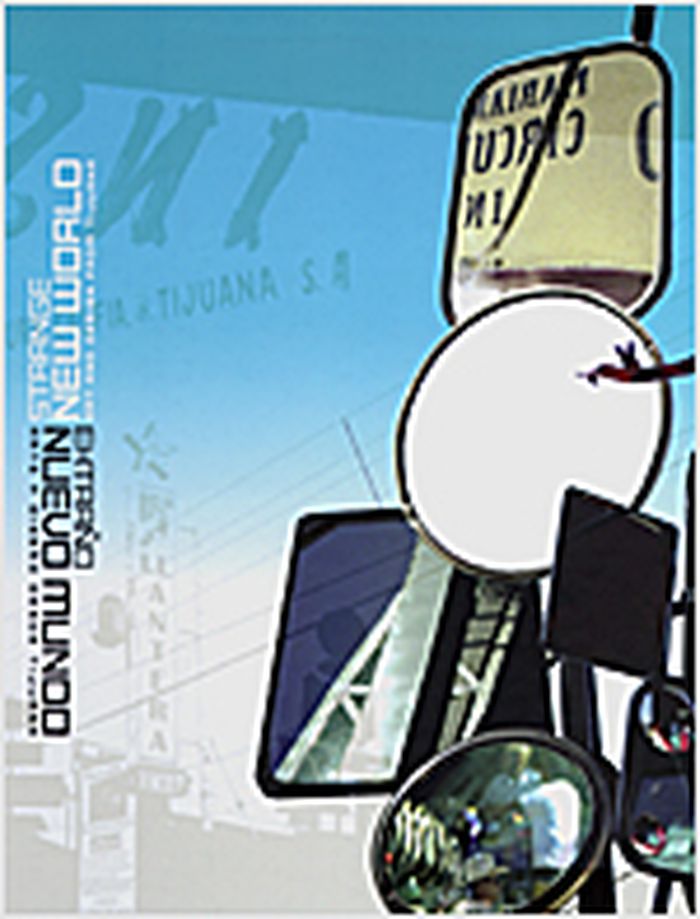
Strange new world : art and design from Tijuana
Actions:
Price:
$49.95
(available to order)
Summary:
Over the past decade, a seismic shift in economic and political forces has transformed life in the second-largest city on the West Coast, situated at the most heavily trafficked international border crossing in the world. Tijuana’s newfound wealth and haphazard expansion have changed patterns of migration for the city’s many artists, who once routinely moved north to Los Angeles but are now staying or returning, and being joined by friends from Mexico City and beyond. This flourishing, strengthening artistic community has responded to the city’s accelerated evolution with a broad range of work, from painting to conceptually driven installations; from street-level digital video to ambitious photo-documentation, filmmaking and political work; from architectural proposals to product design associated with the "Nortec" musical movement. The work gathered in "Strange new world" embraces Tijuana as a paradigm of a new postmodern form of urbanization shaped by the pressures of economic globalization and cultural transnationalism since 1994. It struggles to make sense of new realities changing the ways in which people live in cities around the globe. Like Aldous Huxley's Brave New World, it is part science fiction, part political commentary and part artistic revolution and cultural critique. Arranged around the concepts of the urban theorist Michael Smith, it features work by ERRE, Einar and Jamex de la Torre and Yvonne Venegas, among others.
Strange new world : art and design from Tijuana
Actions:
Price:
$49.95
(available to order)
Summary:
Over the past decade, a seismic shift in economic and political forces has transformed life in the second-largest city on the West Coast, situated at the most heavily trafficked international border crossing in the world. Tijuana’s newfound wealth and haphazard expansion have changed patterns of migration for the city’s many artists, who once routinely moved north to Los Angeles but are now staying or returning, and being joined by friends from Mexico City and beyond. This flourishing, strengthening artistic community has responded to the city’s accelerated evolution with a broad range of work, from painting to conceptually driven installations; from street-level digital video to ambitious photo-documentation, filmmaking and political work; from architectural proposals to product design associated with the "Nortec" musical movement. The work gathered in "Strange new world" embraces Tijuana as a paradigm of a new postmodern form of urbanization shaped by the pressures of economic globalization and cultural transnationalism since 1994. It struggles to make sense of new realities changing the ways in which people live in cities around the globe. Like Aldous Huxley's Brave New World, it is part science fiction, part political commentary and part artistic revolution and cultural critique. Arranged around the concepts of the urban theorist Michael Smith, it features work by ERRE, Einar and Jamex de la Torre and Yvonne Venegas, among others.
Form:
books
books
Publication:
August 2006, La Jolla
August 2006, La Jolla
Subject:
Contemporary Art Monographs
Contemporary Art Monographs
Form:
books
books
Title:
Arcade 20.3 spring 2002
Arcade 20.3 spring 2002
Actions:
Price:
$7.95
(available to order)
Summary:
A hodge-podge: fiction, photos, poetry, catalogs, historical facts, a cartoon—the narrowly objective hard by the expansively subjective. The plurality of genres pleased me. Any account of our territory bereft of, say, facts, poetry, projections, wild speculation, polemics, or sketchy memory, would seem to me to be fatally compromised. As the Office for Soft Architecture(...)
$7.95
(available to order)
Summary:
A hodge-podge: fiction, photos, poetry, catalogs, historical facts, a cartoon—the narrowly objective hard by the expansively subjective. The plurality of genres pleased me. Any account of our territory bereft of, say, facts, poetry, projections, wild speculation, polemics, or sketchy memory, would seem to me to be fatally compromised. As the Office for Soft Architecture(...)
Title:
Arcade 20.3 spring 2002
Actions:
Price:
$7.95
(available to order)
Summary:
A hodge-podge: fiction, photos, poetry, catalogs, historical facts, a cartoon—the narrowly objective hard by the expansively subjective. The plurality of genres pleased me. Any account of our territory bereft of, say, facts, poetry, projections, wild speculation, polemics, or sketchy memory, would seem to me to be fatally compromised. As the Office for Soft Architecture puts it in their Fourth Walk: “[We] painted the place in the polis of the sour heat and the pulse beneath our coats, the specific entry of our exhalations and words into the atmosphere…Our method was patience. We would slowly absorb each image until we were what we had deliberately chosen to become. Of course then we ourselves were the documents; we acquired a fragility. Hello my Delicate we would repeat when we met by chance in the streets under the rows of posters Hello my Delicate.” Matthew Stadler is a novelist and essayist whose writing about design has appeared in Nest magazine, Wiederhal, Frieze, The Guardian, and The Seattle Times. He is the editor of Clear Cut Press, a new publishing and distribution company based in Astoria, OR. editor@clearcutpress.com. Tae Won Yu is an artist working in Olympia, Washington. His previous projects include designs for Built To Spill, photographs for Nest magazine, and illlustrations for The Stranger.
Arcade 20.3 spring 2002
Actions:
Price:
$7.95
(available to order)
Summary:
A hodge-podge: fiction, photos, poetry, catalogs, historical facts, a cartoon—the narrowly objective hard by the expansively subjective. The plurality of genres pleased me. Any account of our territory bereft of, say, facts, poetry, projections, wild speculation, polemics, or sketchy memory, would seem to me to be fatally compromised. As the Office for Soft Architecture puts it in their Fourth Walk: “[We] painted the place in the polis of the sour heat and the pulse beneath our coats, the specific entry of our exhalations and words into the atmosphere…Our method was patience. We would slowly absorb each image until we were what we had deliberately chosen to become. Of course then we ourselves were the documents; we acquired a fragility. Hello my Delicate we would repeat when we met by chance in the streets under the rows of posters Hello my Delicate.” Matthew Stadler is a novelist and essayist whose writing about design has appeared in Nest magazine, Wiederhal, Frieze, The Guardian, and The Seattle Times. He is the editor of Clear Cut Press, a new publishing and distribution company based in Astoria, OR. editor@clearcutpress.com. Tae Won Yu is an artist working in Olympia, Washington. His previous projects include designs for Built To Spill, photographs for Nest magazine, and illlustrations for The Stranger.
Form:
books
books
Publication:
March 2002, Seattle
March 2002, Seattle
Subject:
sale books
sale books
Form:
books
books
Actions:
Price:
$44.25
(available to order)
Summary:
The towns and cities that we inhabit are the survivors of a much larger world that was never built--of visions of the future that remain on paper due to lack of funds, political changes, or because they were technically ahead of their time. How might the world look today had the realities of history been different? And how close will the architecture of the future be to(...)
$44.25
(available to order)
Summary:
The towns and cities that we inhabit are the survivors of a much larger world that was never built--of visions of the future that remain on paper due to lack of funds, political changes, or because they were technically ahead of their time. How might the world look today had the realities of history been different? And how close will the architecture of the future be to(...)
Subject:
Architecture and the imaginary
Architecture and the imaginary
Publication:
May 2004, London
May 2004, London
Title:
Fantasy architecture 1500-2036
Actions:
Price:
$44.25
(available to order)
Summary:
The towns and cities that we inhabit are the survivors of a much larger world that was never built--of visions of the future that remain on paper due to lack of funds, political changes, or because they were technically ahead of their time. How might the world look today had the realities of history been different? And how close will the architecture of the future be to that already familiar from science fiction films and the fantastic virtual environments of computer games? "Fantasy Architecture" proposes answers to these questions by focusing on 130 imagined buildings, structures, and schemes from the late medieval period to the present. Artists and architects include Robert Adam, Archigram, Charles Barry, Étienne-Louis Boullée, William Chambers, FAT, Foreign Office Architects, Foster and Partners, Ernö Goldfinger, Louis Hellman, Inigo Jones, Berthold Lubetkin, Edwin Lutyens, Eric Mendelsohn, Nils Norman, Claes Oldenburg, Joseph Paxton, Sir John Soane, Softroom and Paolo Soleri.~Essayists include Neil Bingham, previously Assistant Curator of the Royal Institute of British Architecture (RIBA) Drawings Collections, London and author of monographs on Christopher Nicholson and C.A. Busby; Clare Carolin, Exhibitions Curator at the Hayward Gallery in London; Rob Wilson, Curator at the RIBA Gallery; and architect Peter Cook, professor at the Bartlett School of Architecture and former member of the group Archigram, who offers a personal text.
Fantasy architecture 1500-2036
Actions:
Price:
$44.25
(available to order)
Summary:
The towns and cities that we inhabit are the survivors of a much larger world that was never built--of visions of the future that remain on paper due to lack of funds, political changes, or because they were technically ahead of their time. How might the world look today had the realities of history been different? And how close will the architecture of the future be to that already familiar from science fiction films and the fantastic virtual environments of computer games? "Fantasy Architecture" proposes answers to these questions by focusing on 130 imagined buildings, structures, and schemes from the late medieval period to the present. Artists and architects include Robert Adam, Archigram, Charles Barry, Étienne-Louis Boullée, William Chambers, FAT, Foreign Office Architects, Foster and Partners, Ernö Goldfinger, Louis Hellman, Inigo Jones, Berthold Lubetkin, Edwin Lutyens, Eric Mendelsohn, Nils Norman, Claes Oldenburg, Joseph Paxton, Sir John Soane, Softroom and Paolo Soleri.~Essayists include Neil Bingham, previously Assistant Curator of the Royal Institute of British Architecture (RIBA) Drawings Collections, London and author of monographs on Christopher Nicholson and C.A. Busby; Clare Carolin, Exhibitions Curator at the Hayward Gallery in London; Rob Wilson, Curator at the RIBA Gallery; and architect Peter Cook, professor at the Bartlett School of Architecture and former member of the group Archigram, who offers a personal text.
Form:
books
books
Publication:
May 2004, London
May 2004, London
Subject:
Architecture and the imaginary
Architecture and the imaginary


