


1759 Results
Form:
books
books

Actions:
Price:
$39.95
(available to order)
Summary:
One of the pioneers of incorporating the green movement into home design, David Pearson now offers a complete guide for creating an eco-home. Informative, clear, and with factual advice, tips, and color photos, "Designing your natural home" takes readers through each step of the process, from defining the scope of the project to choosing materials and building methods to(...)
$39.95
(available to order)
Summary:
One of the pioneers of incorporating the green movement into home design, David Pearson now offers a complete guide for creating an eco-home. Informative, clear, and with factual advice, tips, and color photos, "Designing your natural home" takes readers through each step of the process, from defining the scope of the project to choosing materials and building methods to(...)
Title:
Designing your natural home : a practical guide
Actions:
Price:
$39.95
(available to order)
Summary:
One of the pioneers of incorporating the green movement into home design, David Pearson now offers a complete guide for creating an eco-home. Informative, clear, and with factual advice, tips, and color photos, "Designing your natural home" takes readers through each step of the process, from defining the scope of the project to choosing materials and building methods to decorating the new abode. Along with practical, how-to information, photo essays present examples of natural design. The ten homes featured in this book exemplify different solutions for every situation and budget, from apartments to sprawling dwellings. Readers will learn how to make the most of small spaces, find a builder, draw up plans, purchase low energy appliances, and much more. Whether they're renovating an existing space, expanding a house, or starting from scratch, readers will be inspired to create the natural home of their dreams with this indispensable guide and source for fresh ideas.
Designing your natural home : a practical guide
Actions:
Price:
$39.95
(available to order)
Summary:
One of the pioneers of incorporating the green movement into home design, David Pearson now offers a complete guide for creating an eco-home. Informative, clear, and with factual advice, tips, and color photos, "Designing your natural home" takes readers through each step of the process, from defining the scope of the project to choosing materials and building methods to decorating the new abode. Along with practical, how-to information, photo essays present examples of natural design. The ten homes featured in this book exemplify different solutions for every situation and budget, from apartments to sprawling dwellings. Readers will learn how to make the most of small spaces, find a builder, draw up plans, purchase low energy appliances, and much more. Whether they're renovating an existing space, expanding a house, or starting from scratch, readers will be inspired to create the natural home of their dreams with this indispensable guide and source for fresh ideas.
Form:
books
books
Publication:
January 1900, New York
January 1900, New York
Subject:
Green Architecture
Green Architecture
Form:
books
books

Actions:
Price:
$22.00
(available to order)
Summary:
David Levi Strauss is a writer whose visual and intellectual sensibilities are both acute and expansive. His trenchant writings on photography and photographers have been collected for this volume from a broad range of magazines, including Aperture, Artforum, and The Nation. In "Between the eyes: essays on photography and politics", Strauss tackles subjects as diverse as(...)
$22.00
(available to order)
Summary:
David Levi Strauss is a writer whose visual and intellectual sensibilities are both acute and expansive. His trenchant writings on photography and photographers have been collected for this volume from a broad range of magazines, including Aperture, Artforum, and The Nation. In "Between the eyes: essays on photography and politics", Strauss tackles subjects as diverse as(...)
Subject:
Theory of Photography
Theory of Photography
Publication:
August 2005, New York
August 2005, New York
Title:
Between the eyes : essays on photography and politics
Actions:
Price:
$22.00
(available to order)
Summary:
David Levi Strauss is a writer whose visual and intellectual sensibilities are both acute and expansive. His trenchant writings on photography and photographers have been collected for this volume from a broad range of magazines, including Aperture, Artforum, and The Nation. In "Between the eyes: essays on photography and politics", Strauss tackles subjects as diverse as "Photography and propaganda," the imagery of dreams, Sebastião Salgado’s epic social documents, and the deeply personal photographic revelations of Francesca Woodman. The timely issue of photographic legitimacy is addressed in the essay "Photography and belief," and in "The highest degree of illusion," Strauss discusses the media frenzy surrounding the events of September 11. As our world is shaped more and more by images and their slipperiness, what he calls a media "pandemonium" in its root meaning of "the place of all howling demons," we need a mind and voice like Levi Strauss's to bring clarity to our vision.
Between the eyes : essays on photography and politics
Actions:
Price:
$22.00
(available to order)
Summary:
David Levi Strauss is a writer whose visual and intellectual sensibilities are both acute and expansive. His trenchant writings on photography and photographers have been collected for this volume from a broad range of magazines, including Aperture, Artforum, and The Nation. In "Between the eyes: essays on photography and politics", Strauss tackles subjects as diverse as "Photography and propaganda," the imagery of dreams, Sebastião Salgado’s epic social documents, and the deeply personal photographic revelations of Francesca Woodman. The timely issue of photographic legitimacy is addressed in the essay "Photography and belief," and in "The highest degree of illusion," Strauss discusses the media frenzy surrounding the events of September 11. As our world is shaped more and more by images and their slipperiness, what he calls a media "pandemonium" in its root meaning of "the place of all howling demons," we need a mind and voice like Levi Strauss's to bring clarity to our vision.
Form:
books
books
Publication:
August 2005, New York
August 2005, New York
Subject:
Theory of Photography
Theory of Photography
Form:
books
books
Actions:
Price:
$20.00
(available to order)
Summary:
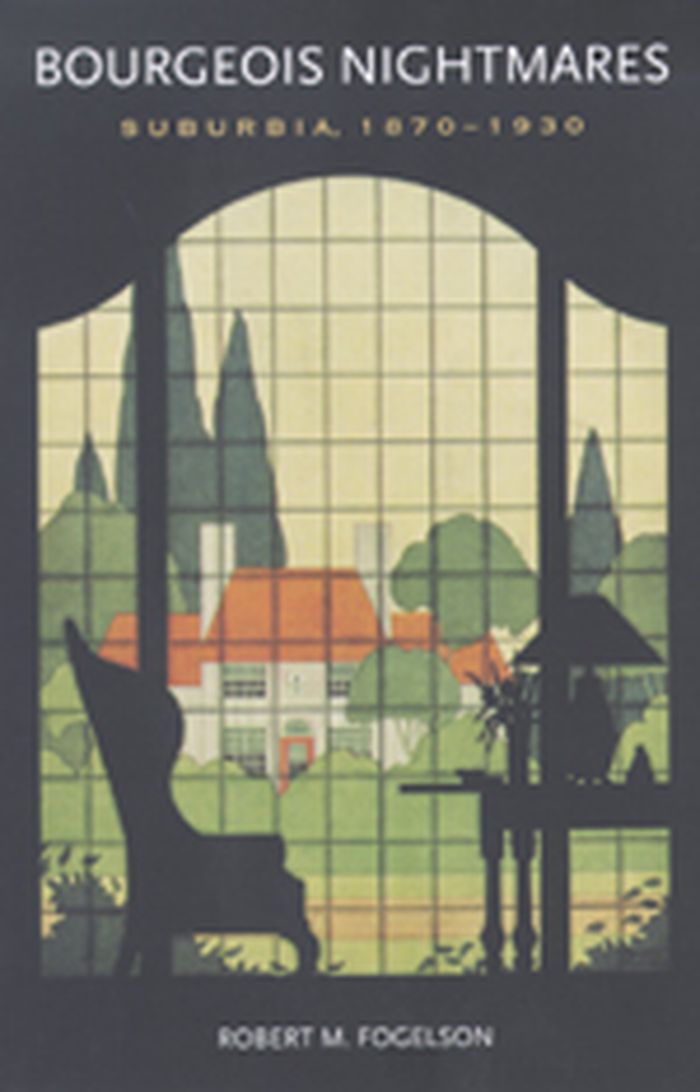
The quintessential American suburbs, with their gracious single-family homes, large green lawns, and leaf-shaded streets, reflected not only residents’ dreams but nightmares, not only hopes but fears: fear of others, of racial minorities and low income groups, fear of themselves, fear of the market, and, above all, fear of change. These fears, and the restrictive(...)
$20.00
(available to order)
Summary:
The quintessential American suburbs, with their gracious single-family homes, large green lawns, and leaf-shaded streets, reflected not only residents’ dreams but nightmares, not only hopes but fears: fear of others, of racial minorities and low income groups, fear of themselves, fear of the market, and, above all, fear of change. These fears, and the restrictive(...)
Title:
Bourgeois Nightmares : Suburbia, 1870-1930
Actions:
Price:
$20.00
(available to order)
Summary:
The quintessential American suburbs, with their gracious single-family homes, large green lawns, and leaf-shaded streets, reflected not only residents’ dreams but nightmares, not only hopes but fears: fear of others, of racial minorities and low income groups, fear of themselves, fear of the market, and, above all, fear of change. These fears, and the restrictive covenants that embodied them, are the subject of Robert M. Fogelson’s fascinating new book. As Fogelson reveals, suburban subdividers attempted to cope with the deep-seated fears of unwanted change, especially the encroachment of “undesirable” people and activities, by imposing a wide range of restrictions on the lots. These restrictions ranged from mandating minimum costs and architectural styles for the houses to forbidding the owners to sell or lease their property to any member of a host of racial, ethnic, and religious groups. These restrictions, many of which are still commonly employed, tell us as much about the complexities of American society today as about its complexities a century ago.
Bourgeois Nightmares : Suburbia, 1870-1930
Actions:
Price:
$20.00
(available to order)
Summary:
The quintessential American suburbs, with their gracious single-family homes, large green lawns, and leaf-shaded streets, reflected not only residents’ dreams but nightmares, not only hopes but fears: fear of others, of racial minorities and low income groups, fear of themselves, fear of the market, and, above all, fear of change. These fears, and the restrictive covenants that embodied them, are the subject of Robert M. Fogelson’s fascinating new book. As Fogelson reveals, suburban subdividers attempted to cope with the deep-seated fears of unwanted change, especially the encroachment of “undesirable” people and activities, by imposing a wide range of restrictions on the lots. These restrictions ranged from mandating minimum costs and architectural styles for the houses to forbidding the owners to sell or lease their property to any member of a host of racial, ethnic, and religious groups. These restrictions, many of which are still commonly employed, tell us as much about the complexities of American society today as about its complexities a century ago.
Form:
books
books
Publication:
September 2007, New Haven London
September 2007, New Haven London
Subject:
Suburbs
Suburbs
Form:
books
books
Actions:
Price:
$72.00
(available to order)
Summary:
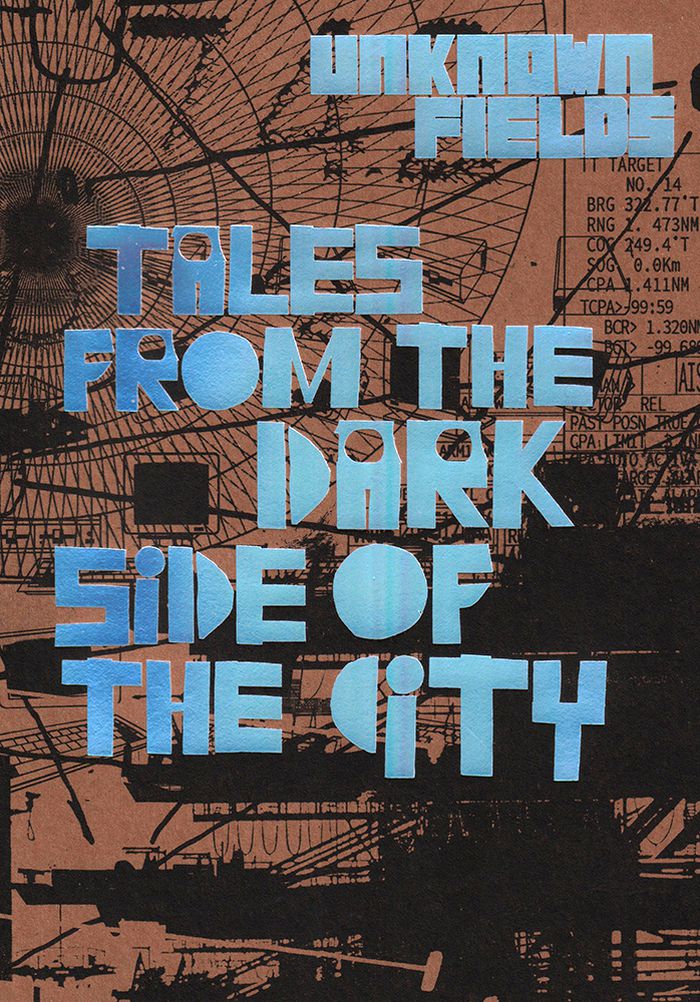
Unknown Fields is a nomadic design studio that ventures out on expeditions into the shadows cast by the contemporary city, to uncover the industrial ecologies and precarious wilderness its technology and culture set in motion. "Tales from the dark side of the city" is a book series that forms an atlas to the territories and stories of a city that stretches across the(...)
$72.00
(available to order)
Summary:
Unknown Fields is a nomadic design studio that ventures out on expeditions into the shadows cast by the contemporary city, to uncover the industrial ecologies and precarious wilderness its technology and culture set in motion. "Tales from the dark side of the city" is a book series that forms an atlas to the territories and stories of a city that stretches across the(...)
Title:
Tales from the dark side of the city, box set
Actions:
Price:
$72.00
(available to order)
Summary:
Unknown Fields is a nomadic design studio that ventures out on expeditions into the shadows cast by the contemporary city, to uncover the industrial ecologies and precarious wilderness its technology and culture set in motion. "Tales from the dark side of the city" is a book series that forms an atlas to the territories and stories of a city that stretches across the entire planet, a city that sits between documentary and fiction, a city of dislocated sites, of drone footage and hidden-camera investigations, of interviews and speculative narratives, of toxic objects and distributed matter from distant grounds. They are a collection of tales from the constellation of elsewheres that are conjured into being by the city’s wants and needs, fears and dreams. The series includes stories developed from expeditions through Bolivia and the Atacama Desert, the Western Australian Outback, the South China Sea and Inner Mongolia, the gemfields of Madagascar, Far North Alaska and the black sites of the United States.
Tales from the dark side of the city, box set
Actions:
Price:
$72.00
(available to order)
Summary:
Unknown Fields is a nomadic design studio that ventures out on expeditions into the shadows cast by the contemporary city, to uncover the industrial ecologies and precarious wilderness its technology and culture set in motion. "Tales from the dark side of the city" is a book series that forms an atlas to the territories and stories of a city that stretches across the entire planet, a city that sits between documentary and fiction, a city of dislocated sites, of drone footage and hidden-camera investigations, of interviews and speculative narratives, of toxic objects and distributed matter from distant grounds. They are a collection of tales from the constellation of elsewheres that are conjured into being by the city’s wants and needs, fears and dreams. The series includes stories developed from expeditions through Bolivia and the Atacama Desert, the Western Australian Outback, the South China Sea and Inner Mongolia, the gemfields of Madagascar, Far North Alaska and the black sites of the United States.
Form:
books
books
Publication:
November 2016
November 2016
Form:
books
books

Title:
Space colonies
Space colonies
Actions:
Price:
$21.50
(available to order)
Summary:
At the beginning of the 1970s, American physicist Gerard K. O’Neill developed the first ideas for colonizing space. Shortly thereafter, Stewart Brand, cyber-communard and editor of the Whole Earth Catalog, took up these ideas and published the book Space Colonies in 1977. Space Colonies, an edition of Brand’s CoEvolution Quarterly, funded by the proceeds of the Whole(...)
$21.50
(available to order)
Summary:
At the beginning of the 1970s, American physicist Gerard K. O’Neill developed the first ideas for colonizing space. Shortly thereafter, Stewart Brand, cyber-communard and editor of the Whole Earth Catalog, took up these ideas and published the book Space Colonies in 1977. Space Colonies, an edition of Brand’s CoEvolution Quarterly, funded by the proceeds of the Whole(...)
Title:
Space colonies
Actions:
Price:
$21.50
(available to order)
Summary:
At the beginning of the 1970s, American physicist Gerard K. O’Neill developed the first ideas for colonizing space. Shortly thereafter, Stewart Brand, cyber-communard and editor of the Whole Earth Catalog, took up these ideas and published the book Space Colonies in 1977. Space Colonies, an edition of Brand’s CoEvolution Quarterly, funded by the proceeds of the Whole Earth Catalog, took up the question of whether space might be colonized by the year 2000. Artist Fabian Reimann takes up Brand and O’Neill’s particular strain of techno-utopianism in Space Colonies: A Galactic Freeman’s Journal. In his photo-essay Reimann assembles historical, present-day and speculative material, combining these with fictional and factual stories to create a composite of different images of the world. With global ecological disaster an even more pressing issue than it was in 1977, and the colonization of space still touted by some as a last-ditch resort, Reimann looks back at the dreams and nightmares of the 1970s with a sophisticated visual humor.
Space colonies
Actions:
Price:
$21.50
(available to order)
Summary:
At the beginning of the 1970s, American physicist Gerard K. O’Neill developed the first ideas for colonizing space. Shortly thereafter, Stewart Brand, cyber-communard and editor of the Whole Earth Catalog, took up these ideas and published the book Space Colonies in 1977. Space Colonies, an edition of Brand’s CoEvolution Quarterly, funded by the proceeds of the Whole Earth Catalog, took up the question of whether space might be colonized by the year 2000. Artist Fabian Reimann takes up Brand and O’Neill’s particular strain of techno-utopianism in Space Colonies: A Galactic Freeman’s Journal. In his photo-essay Reimann assembles historical, present-day and speculative material, combining these with fictional and factual stories to create a composite of different images of the world. With global ecological disaster an even more pressing issue than it was in 1977, and the colonization of space still touted by some as a last-ditch resort, Reimann looks back at the dreams and nightmares of the 1970s with a sophisticated visual humor.
Form:
books
books
Publication:
August 2017
August 2017
Subject:
Journeys
Journeys
Form:
books
books
Title:
The poetics of space
The poetics of space
Actions:
Price:
$25.99
(available in store)
Summary:
Since its initial publication in 1958, The Poetics of Space has been a muse to philosophers, architects, writers, psychologists, critics, and readers alike. The rare work of irresistibly inviting philosophy, Bachelard’s seminal work brims with quiet revelations and stirring, mysterious imagery. This lyrical journey takes as its premise the emergence of the poetic image(...)
$25.99
(available in store)
Summary:
Since its initial publication in 1958, The Poetics of Space has been a muse to philosophers, architects, writers, psychologists, critics, and readers alike. The rare work of irresistibly inviting philosophy, Bachelard’s seminal work brims with quiet revelations and stirring, mysterious imagery. This lyrical journey takes as its premise the emergence of the poetic image(...)
Title:
The poetics of space
Actions:
Price:
$25.99
(available in store)
Summary:
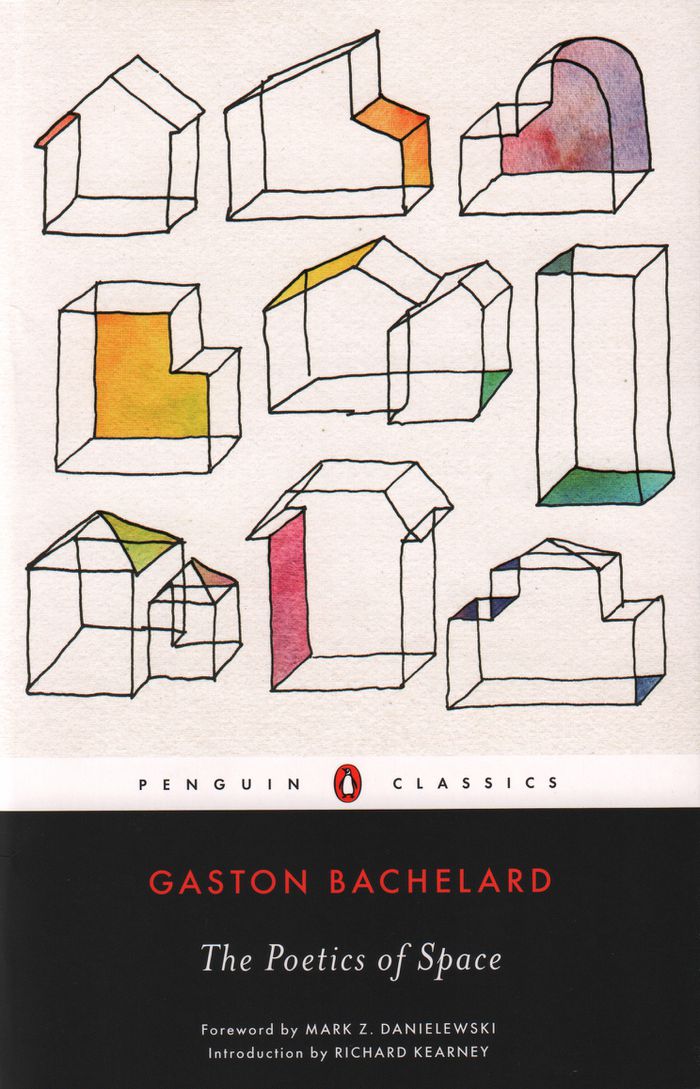
Since its initial publication in 1958, The Poetics of Space has been a muse to philosophers, architects, writers, psychologists, critics, and readers alike. The rare work of irresistibly inviting philosophy, Bachelard’s seminal work brims with quiet revelations and stirring, mysterious imagery. This lyrical journey takes as its premise the emergence of the poetic image and finds an ideal metaphor in the intimate spaces of our homes. Guiding us through a stream of meditations on poetry, art, and the blooming of consciousness itself, Bachelard examines the domestic places that shape and hold our dreams and memories. Houses and rooms; cellars and attics; drawers, chests, and wardrobes; nests and shells; nooks and corners: No space is too vast or too small to be filled by our thoughts and our reveries. In Bachelard’s enchanting spaces, “We are never real historians, but always near poets, and our emotion is perhaps nothing but an expression of a poetry that was lost.”
The poetics of space
Actions:
Price:
$25.99
(available in store)
Summary:
Since its initial publication in 1958, The Poetics of Space has been a muse to philosophers, architects, writers, psychologists, critics, and readers alike. The rare work of irresistibly inviting philosophy, Bachelard’s seminal work brims with quiet revelations and stirring, mysterious imagery. This lyrical journey takes as its premise the emergence of the poetic image and finds an ideal metaphor in the intimate spaces of our homes. Guiding us through a stream of meditations on poetry, art, and the blooming of consciousness itself, Bachelard examines the domestic places that shape and hold our dreams and memories. Houses and rooms; cellars and attics; drawers, chests, and wardrobes; nests and shells; nooks and corners: No space is too vast or too small to be filled by our thoughts and our reveries. In Bachelard’s enchanting spaces, “We are never real historians, but always near poets, and our emotion is perhaps nothing but an expression of a poetry that was lost.”
Form:
books
books
Publication:
December 2014
December 2014
Subject:
Literature and poetry
Literature and poetry
Form:
books
books
Price:
$27.50
(available to order)
Summary:
Los Angeles is a city that has long thrived on the continual re-creation of its own myth. In this extraordinary work, Norman Klein examines the process of memory erasure in LA. Using a provocative mixture of fact and fiction, the book takes us on an "anti-tour" of downtown LA, examines life for Vietnamese immigrants in the City of Dreams, imagines Walter Benjamin as a Los(...)
$27.50
(available to order)
Summary:
Los Angeles is a city that has long thrived on the continual re-creation of its own myth. In this extraordinary work, Norman Klein examines the process of memory erasure in LA. Using a provocative mixture of fact and fiction, the book takes us on an "anti-tour" of downtown LA, examines life for Vietnamese immigrants in the City of Dreams, imagines Walter Benjamin as a Los(...)
Title:
The history of forgetting: Los Angeles and the erasure of the memory
Actions:
Price:
$27.50
(available to order)
Summary:
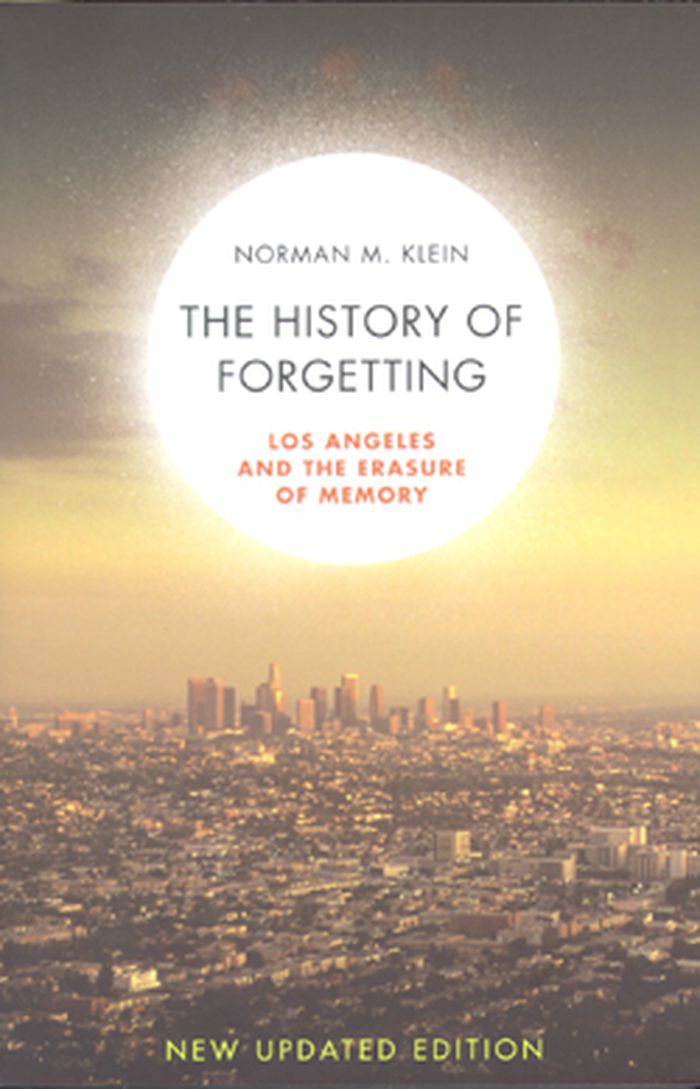
Los Angeles is a city that has long thrived on the continual re-creation of its own myth. In this extraordinary work, Norman Klein examines the process of memory erasure in LA. Using a provocative mixture of fact and fiction, the book takes us on an "anti-tour" of downtown LA, examines life for Vietnamese immigrants in the City of Dreams, imagines Walter Benjamin as a Los Angeleno, and finally looks at the way information technology has recreated the city, turning cyberspace into the last suburb. In this new edition, Norman Klein explores the evolution of the Latino majority, how the Pacific economy is changing the structure of urban life, the impact of collapsing infrastructure in the city, and the restructuring of those very districts that had been "forgotten." Norman M. Klein is a critic and historian of mass culture, author of most recently, The Vatican to Vegas: The History of Special Effects. He teaches at the California Institute of the Arts in Los Angeles.
The history of forgetting: Los Angeles and the erasure of the memory
Actions:
Price:
$27.50
(available to order)
Summary:
Los Angeles is a city that has long thrived on the continual re-creation of its own myth. In this extraordinary work, Norman Klein examines the process of memory erasure in LA. Using a provocative mixture of fact and fiction, the book takes us on an "anti-tour" of downtown LA, examines life for Vietnamese immigrants in the City of Dreams, imagines Walter Benjamin as a Los Angeleno, and finally looks at the way information technology has recreated the city, turning cyberspace into the last suburb. In this new edition, Norman Klein explores the evolution of the Latino majority, how the Pacific economy is changing the structure of urban life, the impact of collapsing infrastructure in the city, and the restructuring of those very districts that had been "forgotten." Norman M. Klein is a critic and historian of mass culture, author of most recently, The Vatican to Vegas: The History of Special Effects. He teaches at the California Institute of the Arts in Los Angeles.
Form:
books
books
Publication:
August 2008, London, New York
August 2008, London, New York
Subject:
Urban Theory
Urban Theory
Form:
books
books

Actions:
Price:
$42.95
(available to order)
Summary:
Bruno Taut was the leading architectural theorist in Germany during the years 1914–1920. The architectural and social premises which he developed in this seminal period were to be of paramount importance in the subsequent development of modern architecture in Germany in the 1920s. The German example, in turn, was to become a model for the international modern movement.(...)
$42.95
(available to order)
Summary:
Bruno Taut was the leading architectural theorist in Germany during the years 1914–1920. The architectural and social premises which he developed in this seminal period were to be of paramount importance in the subsequent development of modern architecture in Germany in the 1920s. The German example, in turn, was to become a model for the international modern movement.(...)
Title:
Bruno Taut and the architecture of activism
Actions:
Price:
$42.95
(available to order)
Summary:
Bruno Taut was the leading architectural theorist in Germany during the years 1914–1920. The architectural and social premises which he developed in this seminal period were to be of paramount importance in the subsequent development of modern architecture in Germany in the 1920s. The German example, in turn, was to become a model for the international modern movement. Whereas the history of the modern movement in architecture has generally been written in terms of functionalism, and the availability of materials and technology, the author suggests that many of the roots of modern architecture were mystical and irrational, and were concerned less with function and purpose and more with millenarian dreams of the a society which might be achieved through the meditation of the architecture. Boyd Whyte also suggests that there were political reasons behind this type of architecture and why it failed to achieve its aim of improving the physical and social condition of society.
Bruno Taut and the architecture of activism
Actions:
Price:
$42.95
(available to order)
Summary:
Bruno Taut was the leading architectural theorist in Germany during the years 1914–1920. The architectural and social premises which he developed in this seminal period were to be of paramount importance in the subsequent development of modern architecture in Germany in the 1920s. The German example, in turn, was to become a model for the international modern movement. Whereas the history of the modern movement in architecture has generally been written in terms of functionalism, and the availability of materials and technology, the author suggests that many of the roots of modern architecture were mystical and irrational, and were concerned less with function and purpose and more with millenarian dreams of the a society which might be achieved through the meditation of the architecture. Boyd Whyte also suggests that there were political reasons behind this type of architecture and why it failed to achieve its aim of improving the physical and social condition of society.
Form:
books
books
Publication:
February 2010
February 2010
Subject:
Architectural Theory
Architectural Theory
Form:
books
books
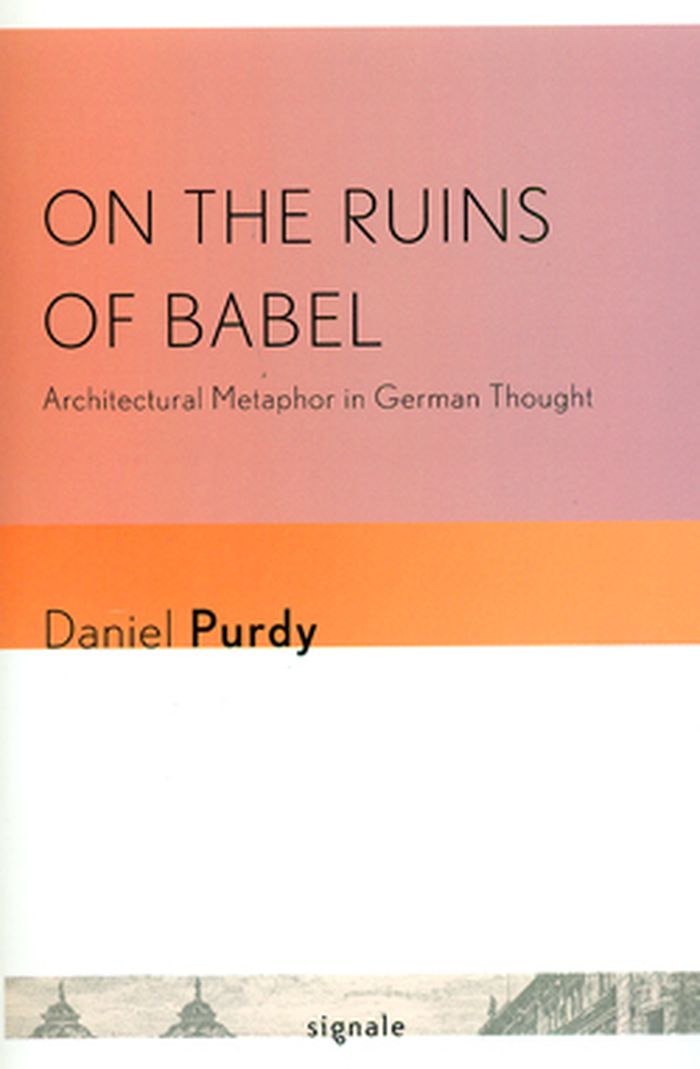
Price:
$43.95
(available to order)
Summary:
In this publication, Daniel Purdy surveys the volatile state of architectural theory in the Enlightenment, brought on by the newly emerged scientific critiques of Renaissance cosmology, then shows how German writers redeployed Renaissance terminology so that "harmony," "unity," "synthesis," "foundation," and "orderliness" became states of consciousness, rather than(...)
$43.95
(available to order)
Summary:
In this publication, Daniel Purdy surveys the volatile state of architectural theory in the Enlightenment, brought on by the newly emerged scientific critiques of Renaissance cosmology, then shows how German writers redeployed Renaissance terminology so that "harmony," "unity," "synthesis," "foundation," and "orderliness" became states of consciousness, rather than(...)
Title:
On the ruins of Babel : architectural metaphor in German thought
Actions:
Price:
$43.95
(available to order)
Summary:
In this publication, Daniel Purdy surveys the volatile state of architectural theory in the Enlightenment, brought on by the newly emerged scientific critiques of Renaissance cosmology, then shows how German writers redeployed Renaissance terminology so that "harmony," "unity," "synthesis," "foundation," and "orderliness" became states of consciousness, rather than terms used to describe the built world. Purdy's distinctly new interpretation of German theory reveals how metaphors constitute interior life as an architectural space to be designed, constructed, renovated, or demolished. He elucidates the close affinity between Hegel's Romantic aesthetic of space and Daniel Libeskind's deconstruction of monumental architecture in Berlin's Jewish Museum. Through a careful reading of Walter Benjamin's writing on architecture as myth, Purdy details how classical architecture shaped Benjamin's modernist interpretations of urban life, particularly his elaboration on Freud's archaeology of the unconscious. Benjamin's essays on dreams and architecture turn the individualist sensibility of the Enlightenment into a collective and mythic identification between humans and buildings.
On the ruins of Babel : architectural metaphor in German thought
Actions:
Price:
$43.95
(available to order)
Summary:
In this publication, Daniel Purdy surveys the volatile state of architectural theory in the Enlightenment, brought on by the newly emerged scientific critiques of Renaissance cosmology, then shows how German writers redeployed Renaissance terminology so that "harmony," "unity," "synthesis," "foundation," and "orderliness" became states of consciousness, rather than terms used to describe the built world. Purdy's distinctly new interpretation of German theory reveals how metaphors constitute interior life as an architectural space to be designed, constructed, renovated, or demolished. He elucidates the close affinity between Hegel's Romantic aesthetic of space and Daniel Libeskind's deconstruction of monumental architecture in Berlin's Jewish Museum. Through a careful reading of Walter Benjamin's writing on architecture as myth, Purdy details how classical architecture shaped Benjamin's modernist interpretations of urban life, particularly his elaboration on Freud's archaeology of the unconscious. Benjamin's essays on dreams and architecture turn the individualist sensibility of the Enlightenment into a collective and mythic identification between humans and buildings.
Form:
books
books
Publication:
December 2010
December 2010
Subject:
Architectural Theory
Architectural Theory
Form:
books
books

Title:
Does yellow run forever?
Does yellow run forever?
Actions:
Price:
$66.95
(available to order)
Summary:
Paul Graham’s Does Yellow Run Forever? comprises a series of photographs touching upon the ephemeral question of what we seek and value in life – love, wealth, beauty, clear-eyed reality or an inner dream world? The work weaves in and out of three groups of images: photographs of rainbows from Western Ireland, a sleeping dreamer, and gold stores in the United States.(...)
$66.95
(available to order)
Summary:
Paul Graham’s Does Yellow Run Forever? comprises a series of photographs touching upon the ephemeral question of what we seek and value in life – love, wealth, beauty, clear-eyed reality or an inner dream world? The work weaves in and out of three groups of images: photographs of rainbows from Western Ireland, a sleeping dreamer, and gold stores in the United States.(...)
Title:
Does yellow run forever?
Actions:
Price:
$66.95
(available to order)
Summary:
Paul Graham’s Does Yellow Run Forever? comprises a series of photographs touching upon the ephemeral question of what we seek and value in life – love, wealth, beauty, clear-eyed reality or an inner dream world? The work weaves in and out of three groups of images: photographs of rainbows from Western Ireland, a sleeping dreamer, and gold stores in the United States. The imagery leads us from reality to dream and illusion, between fact and spectral phenomena, each entwined one within the other. Does Yellow Run Forever? refuses to reduce the world to a knowable schema, but instead embraces the puzzle - that there are no singular meanings, direct answers, or gold waiting at the end of the rainbow. Yet, there are startling visions in the everyday, be they ‘beautiful’ or ‘ugly’, that there are dreams worth dreaming, magical scenes to be seen, and true moments of wonder to be found as we shiver the mirror of life.
Does yellow run forever?
Actions:
Price:
$66.95
(available to order)
Summary:
Paul Graham’s Does Yellow Run Forever? comprises a series of photographs touching upon the ephemeral question of what we seek and value in life – love, wealth, beauty, clear-eyed reality or an inner dream world? The work weaves in and out of three groups of images: photographs of rainbows from Western Ireland, a sleeping dreamer, and gold stores in the United States. The imagery leads us from reality to dream and illusion, between fact and spectral phenomena, each entwined one within the other. Does Yellow Run Forever? refuses to reduce the world to a knowable schema, but instead embraces the puzzle - that there are no singular meanings, direct answers, or gold waiting at the end of the rainbow. Yet, there are startling visions in the everyday, be they ‘beautiful’ or ‘ugly’, that there are dreams worth dreaming, magical scenes to be seen, and true moments of wonder to be found as we shiver the mirror of life.
Form:
books
books
Publication:
November 2014
November 2014
Subject:
Photography monographs
Photography monographs


