


1699 Results
Form:
books
books
Actions:
Price:
$34.95
(available to order)
Summary:
'There is no alternative to free market liberalism and managerialism', is the orthodoxy of the twenty-first century. All too often, ordinary people across the world are being told that the problem of organization is already solved, or that it is being solved somewhere else, or that it need not concern them because they have no choices. This dictionary provides those who(...)
$34.95
(available to order)
Summary:
'There is no alternative to free market liberalism and managerialism', is the orthodoxy of the twenty-first century. All too often, ordinary people across the world are being told that the problem of organization is already solved, or that it is being solved somewhere else, or that it need not concern them because they have no choices. This dictionary provides those who(...)
Subject:
Architectural Theory
Architectural Theory
Publication:
July 2007, London, New York
July 2007, London, New York
Title:
The dictionary of alternatives: utopianism & organization
Actions:
Price:
$34.95
(available to order)
Summary:
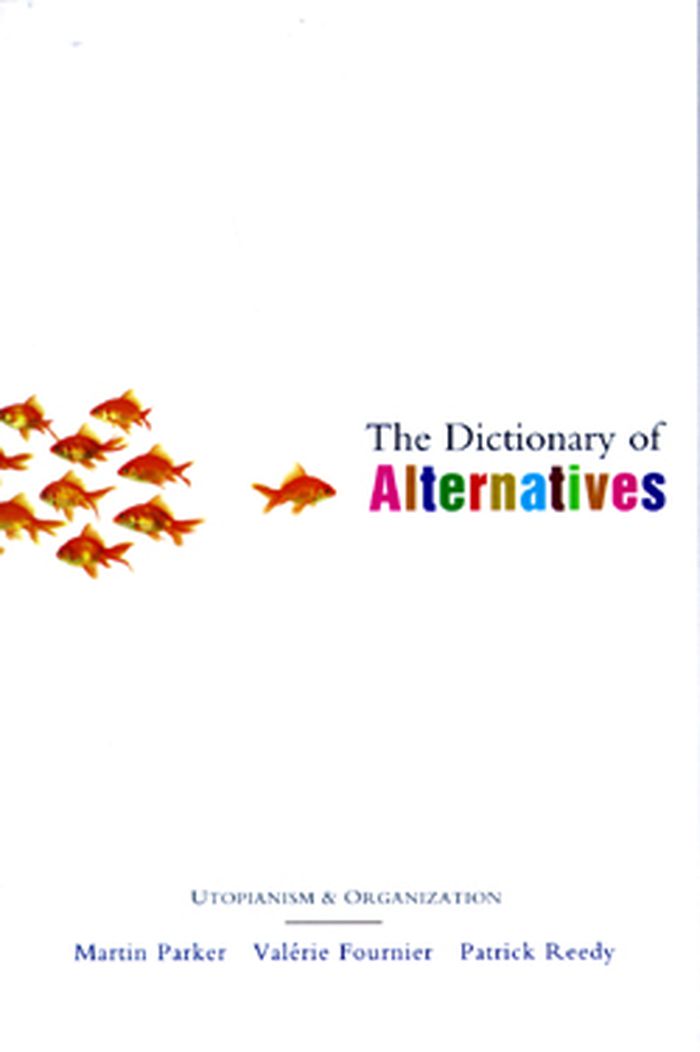
'There is no alternative to free market liberalism and managerialism', is the orthodoxy of the twenty-first century. All too often, ordinary people across the world are being told that the problem of organization is already solved, or that it is being solved somewhere else, or that it need not concern them because they have no choices. This dictionary provides those who disagree with the evidence. Using hundreds of entries and cross-references, it proves that there are many alternatives to the way that we currently organize ourselves. These alternatives could be expressed as fictional utopias, they could be excavated from the past, or they could be described in terms of the contemporary politics of anti-corporate protest, environmentalism, feminism and localism. Part reference work, part source book, and part polemic, this dictionary provides a rich understanding of the ways in which fiction, history and today's politics provide different ways of thinking about how we can and should organize for the coming century. Martin Parker is Professor of Organisation and Culture in the Management Centre at the University of Leicester. Valérie Fournier is Senior Lecturer in Organisation Studies in the Management Centre at the University of Leicester. Patrick Reedy lectures in organizational behaviour and human resource management at the Business School of the University of Newcastle upon Tyne.
The dictionary of alternatives: utopianism & organization
Actions:
Price:
$34.95
(available to order)
Summary:
'There is no alternative to free market liberalism and managerialism', is the orthodoxy of the twenty-first century. All too often, ordinary people across the world are being told that the problem of organization is already solved, or that it is being solved somewhere else, or that it need not concern them because they have no choices. This dictionary provides those who disagree with the evidence. Using hundreds of entries and cross-references, it proves that there are many alternatives to the way that we currently organize ourselves. These alternatives could be expressed as fictional utopias, they could be excavated from the past, or they could be described in terms of the contemporary politics of anti-corporate protest, environmentalism, feminism and localism. Part reference work, part source book, and part polemic, this dictionary provides a rich understanding of the ways in which fiction, history and today's politics provide different ways of thinking about how we can and should organize for the coming century. Martin Parker is Professor of Organisation and Culture in the Management Centre at the University of Leicester. Valérie Fournier is Senior Lecturer in Organisation Studies in the Management Centre at the University of Leicester. Patrick Reedy lectures in organizational behaviour and human resource management at the Business School of the University of Newcastle upon Tyne.
Form:
books
books
Publication:
July 2007, London, New York
July 2007, London, New York
Subject:
Architectural Theory
Architectural Theory
Form:
books
books

Title:
Mute magazine graphic design
Mute magazine graphic design
Actions:
Price:
$37.00
(available to order)
Summary:
In the early 1990s, long before the internet became an integral part of life, a handful of pioneering magazines took it upon themselves to imagine the web into existence. Using fiction, interviews, speculative theory and experimental graphic design, these titles helped create a lexicon and iconography every bit as powerful as the architecture of the World Wide Web.(...)
$37.00
(available to order)
Summary:
In the early 1990s, long before the internet became an integral part of life, a handful of pioneering magazines took it upon themselves to imagine the web into existence. Using fiction, interviews, speculative theory and experimental graphic design, these titles helped create a lexicon and iconography every bit as powerful as the architecture of the World Wide Web.(...)
Subject:
Graphic Design and Typography
Graphic Design and Typography
Publication:
August 2008, London
August 2008, London
Title:
Mute magazine graphic design
Actions:
Price:
$37.00
(available to order)
Summary:
In the early 1990s, long before the internet became an integral part of life, a handful of pioneering magazines took it upon themselves to imagine the web into existence. Using fiction, interviews, speculative theory and experimental graphic design, these titles helped create a lexicon and iconography every bit as powerful as the architecture of the World Wide Web. London-based Mute occupied a central position here, wielding an influence vastly disproportionate to its size. The product of a period of intense creative ferment, Mute engaged boldly with allcomers. The magazine offered a platform to authors Bruce Sterling, Arthur Kroker, Mark Dery, Geert Lovink, Hari Kunzru, James Flint and Lev Manovich, just as it did to artists Keith Tyson, VNS Matrix and the Bureau of Inverse Technology. As new technologies forced a collapse of disciplinary boundaries and the intermingling of communities, Mute became part of a dynamic London scene, featuring many of the artists, writers and photographers who came to epitomise London’s status as a creative hotbed. The resulting collection of magazines defines an era, telling the fascinating tale of one publisher's relationship with the ‘digital revolution’ – the nineties’ very own Big Bang. This book presents a full overview of the magazine over a decade, showing its entire output – logos, covers and spreads. Using generous illustrations and in-depth captions, it details recurrent graphic themes and places Mute's evolution in perspective
Mute magazine graphic design
Actions:
Price:
$37.00
(available to order)
Summary:
In the early 1990s, long before the internet became an integral part of life, a handful of pioneering magazines took it upon themselves to imagine the web into existence. Using fiction, interviews, speculative theory and experimental graphic design, these titles helped create a lexicon and iconography every bit as powerful as the architecture of the World Wide Web. London-based Mute occupied a central position here, wielding an influence vastly disproportionate to its size. The product of a period of intense creative ferment, Mute engaged boldly with allcomers. The magazine offered a platform to authors Bruce Sterling, Arthur Kroker, Mark Dery, Geert Lovink, Hari Kunzru, James Flint and Lev Manovich, just as it did to artists Keith Tyson, VNS Matrix and the Bureau of Inverse Technology. As new technologies forced a collapse of disciplinary boundaries and the intermingling of communities, Mute became part of a dynamic London scene, featuring many of the artists, writers and photographers who came to epitomise London’s status as a creative hotbed. The resulting collection of magazines defines an era, telling the fascinating tale of one publisher's relationship with the ‘digital revolution’ – the nineties’ very own Big Bang. This book presents a full overview of the magazine over a decade, showing its entire output – logos, covers and spreads. Using generous illustrations and in-depth captions, it details recurrent graphic themes and places Mute's evolution in perspective
Form:
books
books
Publication:
August 2008, London
August 2008, London
Subject:
Graphic Design and Typography
Graphic Design and Typography
Form:
books
books

Actions:
Price:
$25.95
(available to order)
Summary:
We are living in the Anthropocene—an era of dramatic and violent climate change featuring warming oceans, melting icecaps, extreme weather events, habitat loss, species extinction, and more. What will life be like in a climate-changed world? In ''Tomorrow’s parties,'' science fiction authors speculate how we might be able to live and even thrive through the advancing(...)
$25.95
(available to order)
Summary:
We are living in the Anthropocene—an era of dramatic and violent climate change featuring warming oceans, melting icecaps, extreme weather events, habitat loss, species extinction, and more. What will life be like in a climate-changed world? In ''Tomorrow’s parties,'' science fiction authors speculate how we might be able to live and even thrive through the advancing(...)
Title:
Tomorrow's parties: Life in the Anthropocene
Actions:
Price:
$25.95
(available to order)
Summary:
We are living in the Anthropocene—an era of dramatic and violent climate change featuring warming oceans, melting icecaps, extreme weather events, habitat loss, species extinction, and more. What will life be like in a climate-changed world? In ''Tomorrow’s parties,'' science fiction authors speculate how we might be able to live and even thrive through the advancing Anthropocene. In ten original stories by writers from around the world, an interview with celebrated writer Kim Stanley Robinson, and a series of intricate and elegant artworks by Sean Bodley, ''Tomorrow’s parties'' takes rational optimism as a moral imperative, or at least a pragmatic alternative to despair. In these stories—by writers from the United Kingdom, the United States, Nigeria, China, Bangladesh, and Australia—a young man steals from delivery drones; a political community lives on an island made of ocean-borne plastic waste; and a climate change denier tries to unmask ''crisis actors.'' Climate-changed life also has its pleasures and epiphanies, as when a father in Africa works to make his son’s dreams of ''Viking adventure'' a reality, and an IT professional dispatched to a distant village encounters a marvelous predigital fungal network. Contributors include Pascall Prize for Criticism winner James Bradley, Hugo Award winners Greg Egan and Sarah Gailey, Philip K Dick Award winner Meg Elison, and New York Times bestselling author Daryl Gregory.
Tomorrow's parties: Life in the Anthropocene
Actions:
Price:
$25.95
(available to order)
Summary:
We are living in the Anthropocene—an era of dramatic and violent climate change featuring warming oceans, melting icecaps, extreme weather events, habitat loss, species extinction, and more. What will life be like in a climate-changed world? In ''Tomorrow’s parties,'' science fiction authors speculate how we might be able to live and even thrive through the advancing Anthropocene. In ten original stories by writers from around the world, an interview with celebrated writer Kim Stanley Robinson, and a series of intricate and elegant artworks by Sean Bodley, ''Tomorrow’s parties'' takes rational optimism as a moral imperative, or at least a pragmatic alternative to despair. In these stories—by writers from the United Kingdom, the United States, Nigeria, China, Bangladesh, and Australia—a young man steals from delivery drones; a political community lives on an island made of ocean-borne plastic waste; and a climate change denier tries to unmask ''crisis actors.'' Climate-changed life also has its pleasures and epiphanies, as when a father in Africa works to make his son’s dreams of ''Viking adventure'' a reality, and an IT professional dispatched to a distant village encounters a marvelous predigital fungal network. Contributors include Pascall Prize for Criticism winner James Bradley, Hugo Award winners Greg Egan and Sarah Gailey, Philip K Dick Award winner Meg Elison, and New York Times bestselling author Daryl Gregory.
Form:
books
books
Publication:
August 2022
August 2022
Subject:
Literature and poetry
Literature and poetry
Form:
books
books
Title:
American architects and their books to 1848 / edited by Kenneth Hafertepe and James F. O'Gorman.
American architects and their books to 1848 / edited by Kenneth Hafertepe and James F. O'Gorman.
Actions:
Holdings:
Description:
xxii, 231 pages : illustrations, portraits ; 25 cm.
Description:
xxii, 231 pages : illustrations, portraits ; 25 cm.
Author:
Subject:
Publication:
Amherst : University of Massachusetts Press, ©2001.
Amherst : University of Massachusetts Press, ©2001.
Title:
American architects and their books to 1848 / edited by Kenneth Hafertepe and James F. O'Gorman.
Actions:
Holdings:
Description:
xxii, 231 pages : illustrations, portraits ; 25 cm.
American architects and their books to 1848 / edited by Kenneth Hafertepe and James F. O'Gorman.
Actions:
Holdings:
Description:
xxii, 231 pages : illustrations, portraits ; 25 cm.
Form:
books
books
Publication:
Amherst : University of Massachusetts Press, ©2001.
Amherst : University of Massachusetts Press, ©2001.
Author:
Subject:
Form:
books
books
Actions:
Price:
$24.00
(available to order)
Summary:
In recent years, Marcel Dzama (born 1974) has expanded his widely acclaimed drawing practice to incorporate theatrical realizations of his magical, myth-laden cosmology in three-dimensional dioramas and films. This publication provides a kind of sketchbook companion or dossier on the making of his latest film, A Game of Chess . This work draws on the importance of chess(...)
$24.00
(available to order)
Summary:
In recent years, Marcel Dzama (born 1974) has expanded his widely acclaimed drawing practice to incorporate theatrical realizations of his magical, myth-laden cosmology in three-dimensional dioramas and films. This publication provides a kind of sketchbook companion or dossier on the making of his latest film, A Game of Chess . This work draws on the importance of chess(...)
Title:
Marcel Dzama : behind every curtain
Actions:
Price:
$24.00
(available to order)
Summary:
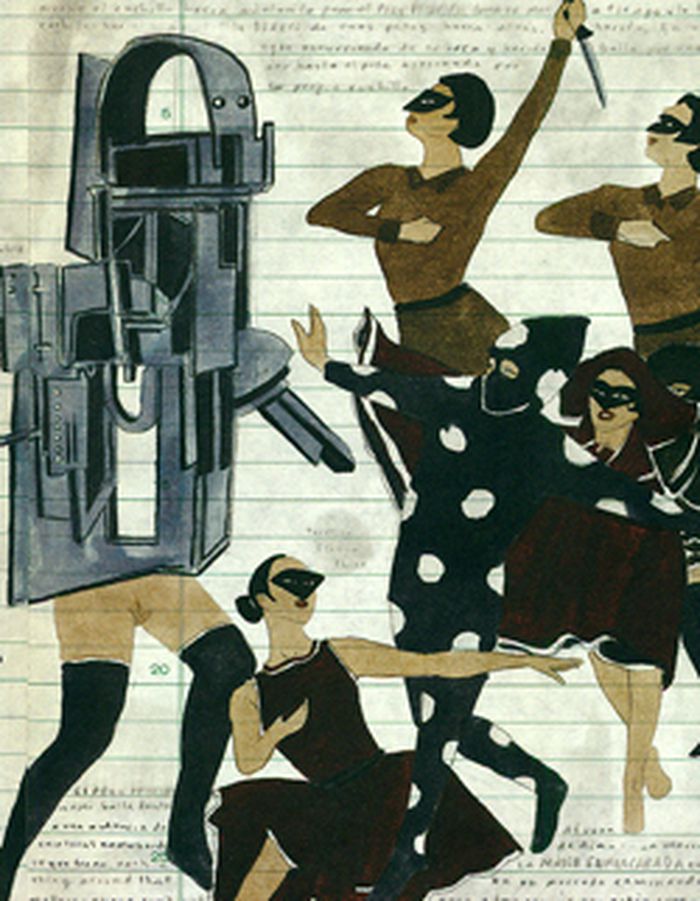
In recent years, Marcel Dzama (born 1974) has expanded his widely acclaimed drawing practice to incorporate theatrical realizations of his magical, myth-laden cosmology in three-dimensional dioramas and films. This publication provides a kind of sketchbook companion or dossier on the making of his latest film, A Game of Chess . This work draws on the importance of chess for the early twentieth-century avant-garde (Man Ray, Duchamp, Picabia) and the game's curious overlap with dance, in films and ballets by René Clair and - of especial significance for Dzama - Oskar Schlemmer, whose 1922 Triadic Ballet included puppet-like masked figures performing on a checkered surface. In Dzama's film, characters based on chess pieces, clad in costumes made from papier-mâché, plaster and fiberglass and wearing elaborate masks, dance across a checkered board to engage their opponents in fatal skirmishes. Distinctions between reality and fiction collapse as both costumed and “real-life” characters in the film are killed. The filming and the creation of the costumes for A Game of Chess were carried out in Guadalajara, Mexico, and the influence of local crafts and religious traditions can also be felt throughout this body of work. Published on the occasion of Dzama's sixth solo exhibition at David Zwirner, this artist's book is packed with full-bleed drawings, sculptures, dioramas and film and production stills that give vivid testimony to the craft and thoroughness of his immensely popular art.
Marcel Dzama : behind every curtain
Actions:
Price:
$24.00
(available to order)
Summary:
In recent years, Marcel Dzama (born 1974) has expanded his widely acclaimed drawing practice to incorporate theatrical realizations of his magical, myth-laden cosmology in three-dimensional dioramas and films. This publication provides a kind of sketchbook companion or dossier on the making of his latest film, A Game of Chess . This work draws on the importance of chess for the early twentieth-century avant-garde (Man Ray, Duchamp, Picabia) and the game's curious overlap with dance, in films and ballets by René Clair and - of especial significance for Dzama - Oskar Schlemmer, whose 1922 Triadic Ballet included puppet-like masked figures performing on a checkered surface. In Dzama's film, characters based on chess pieces, clad in costumes made from papier-mâché, plaster and fiberglass and wearing elaborate masks, dance across a checkered board to engage their opponents in fatal skirmishes. Distinctions between reality and fiction collapse as both costumed and “real-life” characters in the film are killed. The filming and the creation of the costumes for A Game of Chess were carried out in Guadalajara, Mexico, and the influence of local crafts and religious traditions can also be felt throughout this body of work. Published on the occasion of Dzama's sixth solo exhibition at David Zwirner, this artist's book is packed with full-bleed drawings, sculptures, dioramas and film and production stills that give vivid testimony to the craft and thoroughness of his immensely popular art.
Form:
books
books
Publication:
July 2011
July 2011
Subject:
Contemporary Art Monographs
Contemporary Art Monographs
Form:
books
books
Actions:
Price:
$44.95
(available to order)
Summary:
For Rebecca Bushnell, English gardening books tell a tale of the human love for plants and our will to make them do as we wish. These books evoke the desires of gardeners: they show us gardeners who, like poets, imagine not just what is but what should be. In particular, the earliest English garden books, such as Thomas Hill’s The Gardeners Labyrinth or Hugh Platt’s(...)
$44.95
(available to order)
Summary:
For Rebecca Bushnell, English gardening books tell a tale of the human love for plants and our will to make them do as we wish. These books evoke the desires of gardeners: they show us gardeners who, like poets, imagine not just what is but what should be. In particular, the earliest English garden books, such as Thomas Hill’s The Gardeners Labyrinth or Hugh Platt’s(...)
Title:
Green desire : imagining early modern English gardens
Actions:
Price:
$44.95
(available to order)
Summary:
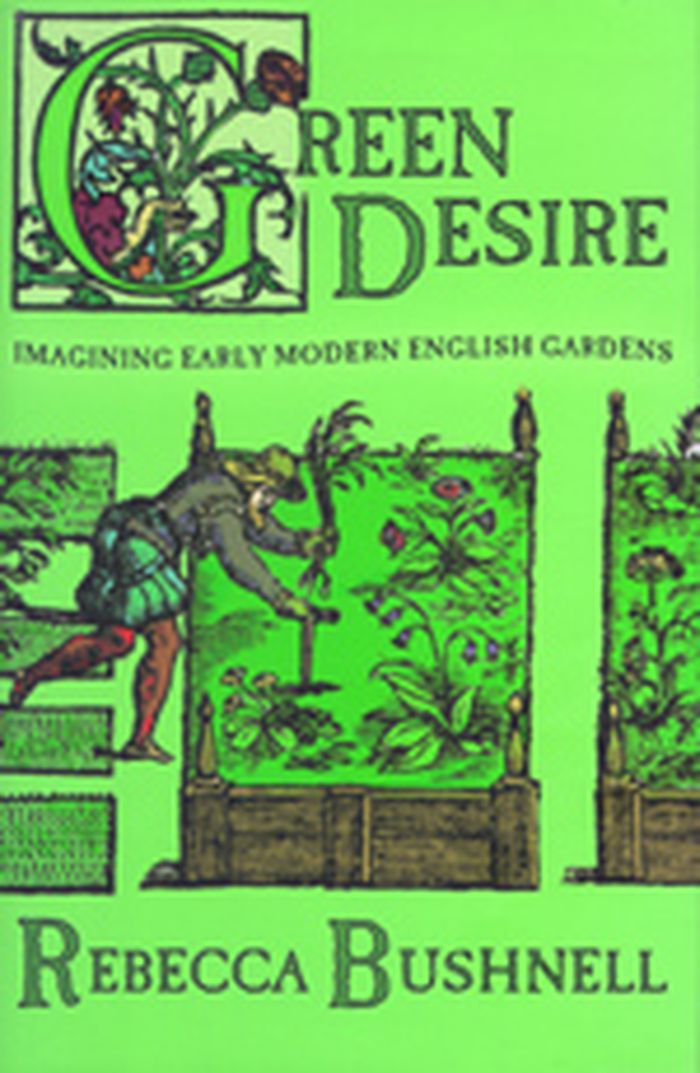
For Rebecca Bushnell, English gardening books tell a tale of the human love for plants and our will to make them do as we wish. These books evoke the desires of gardeners: they show us gardeners who, like poets, imagine not just what is but what should be. In particular, the earliest English garden books, such as Thomas Hill’s The Gardeners Labyrinth or Hugh Platt’s Floraes Paradise, mix magical practices with mundane recipes even when the authors insist that they rely completely on their own experience in these matters. Like early modern “books of secrets,” early gardening manuals often promise the reader power to alter the essential properties of plants: to make the gillyflower double, to change the lily’s hue, or to grow a cherry without a stone. "Green Desire" describes the innovative design of the old manuals, examining how writers and printers marketed them as fiction as well as practical advice for aspiring gardeners. Along with this attention to the delights of reading, it analyzes the strange dignity and pleasure of garden labor and the division of men’s and women’s roles in creating garden art. The book ends by recounting the heated debate over how much people could do to create marvels in their own gardens. For writers and readers alike, these green desires inspired dreams of power and self-improvement, fantasies of beauty achieved without work, and hopes for order in an unpredictable world.
Green desire : imagining early modern English gardens
Actions:
Price:
$44.95
(available to order)
Summary:
For Rebecca Bushnell, English gardening books tell a tale of the human love for plants and our will to make them do as we wish. These books evoke the desires of gardeners: they show us gardeners who, like poets, imagine not just what is but what should be. In particular, the earliest English garden books, such as Thomas Hill’s The Gardeners Labyrinth or Hugh Platt’s Floraes Paradise, mix magical practices with mundane recipes even when the authors insist that they rely completely on their own experience in these matters. Like early modern “books of secrets,” early gardening manuals often promise the reader power to alter the essential properties of plants: to make the gillyflower double, to change the lily’s hue, or to grow a cherry without a stone. "Green Desire" describes the innovative design of the old manuals, examining how writers and printers marketed them as fiction as well as practical advice for aspiring gardeners. Along with this attention to the delights of reading, it analyzes the strange dignity and pleasure of garden labor and the division of men’s and women’s roles in creating garden art. The book ends by recounting the heated debate over how much people could do to create marvels in their own gardens. For writers and readers alike, these green desires inspired dreams of power and self-improvement, fantasies of beauty achieved without work, and hopes for order in an unpredictable world.
Form:
books
books
Publication:
October 2003, Ithaca, New York
October 2003, Ithaca, New York
Subject:
Landscape Theory
Landscape Theory
Form:
books
books
Title:
The stairway to the sun & dance of the comets: four fairy tales of home and one of astral pantomime
The stairway to the sun & dance of the comets: four fairy tales of home and one of astral pantomime
Actions:
Price:
$17.95
(available to order)
Summary:
"The Stairway to the Sun & Dance of the Comets" brings together two short books, originally published in 1903, by the anti-erotic godfather of German science fiction, Paul Scheerbart. "The Stairway to the Sun" consists of four fairy tales of sun, sea, animals, and storm, each set in a different, fantastical locale: from the giant fever-dream palace of an astral star to a(...)
$17.95
(available to order)
Summary:
"The Stairway to the Sun & Dance of the Comets" brings together two short books, originally published in 1903, by the anti-erotic godfather of German science fiction, Paul Scheerbart. "The Stairway to the Sun" consists of four fairy tales of sun, sea, animals, and storm, each set in a different, fantastical locale: from the giant fever-dream palace of an astral star to a(...)
Title:
The stairway to the sun & dance of the comets: four fairy tales of home and one of astral pantomime
Actions:
Price:
$17.95
(available to order)
Summary:
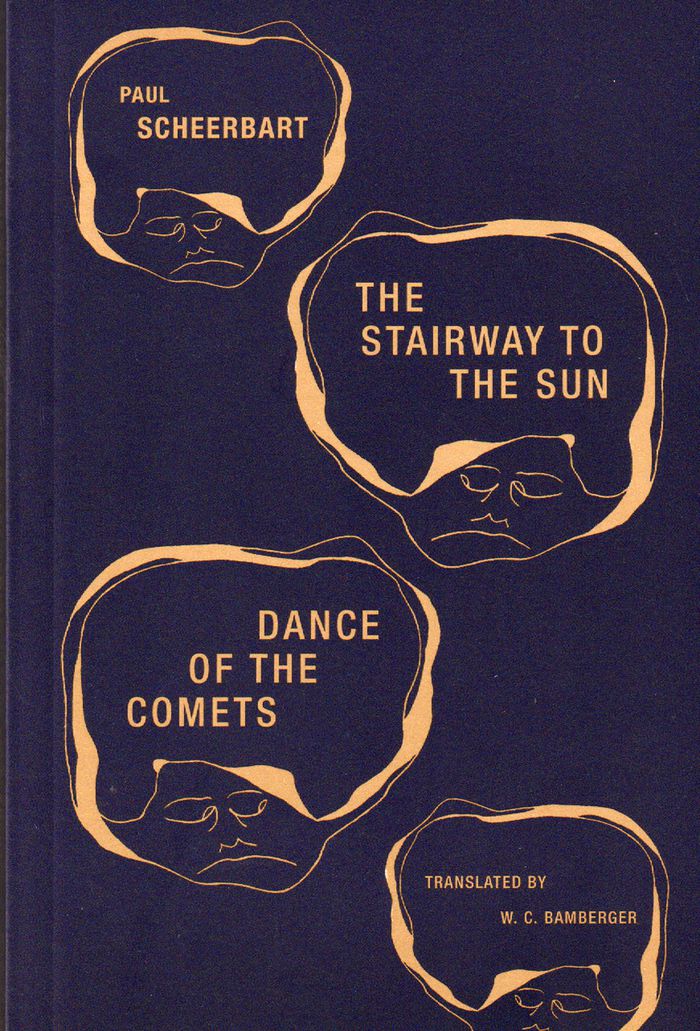
"The Stairway to the Sun & Dance of the Comets" brings together two short books, originally published in 1903, by the anti-erotic godfather of German science fiction, Paul Scheerbart. "The Stairway to the Sun" consists of four fairy tales of sun, sea, animals, and storm, each set in a different, fantastical locale: from the giant fever-dream palace of an astral star to a dwarf’s glass underwater lair in the jellyfish kingdom. Scheerbart’s sad, whimsical tales provide gentle, simple, though unexpected morals that outline his work as a whole: treat animals as one would treat oneself, mutual admiration will never lead to harm, and if one is able to remember that the world is grand, one will never be sad in one’s own life. "Dance of the Comets", though published as an “Astral Pantomime,” was originally conceived as a scenario for a ballet, and one that Richard Strauss had planned to score in 1900 (and which Gustav Mahler even accepted for the Vienna Opera). Though the project was never realized, Scheerbart’s written choreography of dance, gesture, costume, feather dusters, violet moon hair, and a variety of stars and planets outlines a symbolic sequence of events in which everyone—enthusiastic maid, temperamental king, indifferent executioner, foolish poet—seeks, joins, and in some cases, becomes a celestial body: a “dance” toward higher aspirations and a staging of Scheerbart’s lifelong yearning for a home in the universe.
The stairway to the sun & dance of the comets: four fairy tales of home and one of astral pantomime
Actions:
Price:
$17.95
(available to order)
Summary:
"The Stairway to the Sun & Dance of the Comets" brings together two short books, originally published in 1903, by the anti-erotic godfather of German science fiction, Paul Scheerbart. "The Stairway to the Sun" consists of four fairy tales of sun, sea, animals, and storm, each set in a different, fantastical locale: from the giant fever-dream palace of an astral star to a dwarf’s glass underwater lair in the jellyfish kingdom. Scheerbart’s sad, whimsical tales provide gentle, simple, though unexpected morals that outline his work as a whole: treat animals as one would treat oneself, mutual admiration will never lead to harm, and if one is able to remember that the world is grand, one will never be sad in one’s own life. "Dance of the Comets", though published as an “Astral Pantomime,” was originally conceived as a scenario for a ballet, and one that Richard Strauss had planned to score in 1900 (and which Gustav Mahler even accepted for the Vienna Opera). Though the project was never realized, Scheerbart’s written choreography of dance, gesture, costume, feather dusters, violet moon hair, and a variety of stars and planets outlines a symbolic sequence of events in which everyone—enthusiastic maid, temperamental king, indifferent executioner, foolish poet—seeks, joins, and in some cases, becomes a celestial body: a “dance” toward higher aspirations and a staging of Scheerbart’s lifelong yearning for a home in the universe.
Form:
books
books
Publication:
October 2016
October 2016
Subject:
Critical Theory
Critical Theory
Form:
books
books
Actions:
Price:
$60.00
(available in store)
Summary:
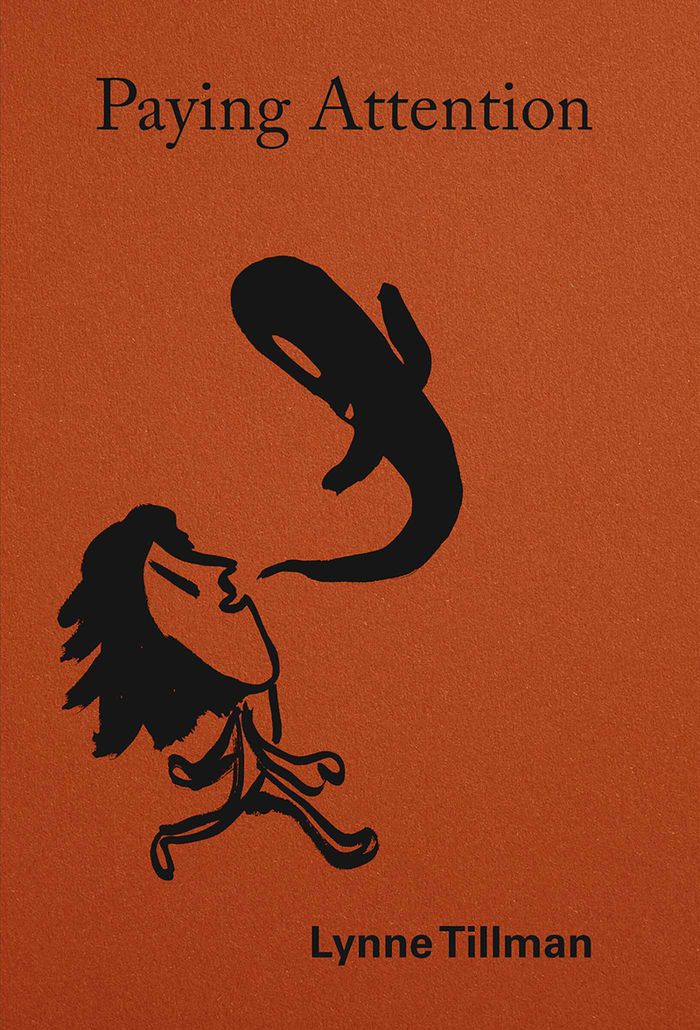
''Paying Attention'' gathers nearly seventy of the best and varied examples of Lynne Tillman’s writings in reference to art and culture published over the course of forty years. In essays that operate outside typical categories or genres, Tillman reflects on forms including film, painting, photography, poetry, and fiction, as well as notions of fame, originality, embodied(...)
$60.00
(available in store)
Summary:
''Paying Attention'' gathers nearly seventy of the best and varied examples of Lynne Tillman’s writings in reference to art and culture published over the course of forty years. In essays that operate outside typical categories or genres, Tillman reflects on forms including film, painting, photography, poetry, and fiction, as well as notions of fame, originality, embodied(...)
Title:
Lynne Tillman: Paying attention
Actions:
Price:
$60.00
(available in store)
Summary:
''Paying Attention'' gathers nearly seventy of the best and varied examples of Lynne Tillman’s writings in reference to art and culture published over the course of forty years. In essays that operate outside typical categories or genres, Tillman reflects on forms including film, painting, photography, poetry, and fiction, as well as notions of fame, originality, embodied viewing and thinking, collective activity, aging, illness, American identity, cultural politics, modernity, strangeness, and time. Such is the stuff that relates art to life, and life to art. Collected mainly from museum and gallery catalogues, artists’ books and monographs, her column in ''Frieze'', and magazines including ''Aperture'' and ''Artforum'', these meditations on artists and writers, in the broadest sense of these labels, collide as a portrait of our cultural moment. Tillman’s inventive use of language and lateral thought, her ability to evoke conditions of the larger world in often just two thousand words on a specific artwork or individual, make her one of the most significant critics of our time. As she acknowledges, in a piece on the artist Robert Gober, “In writing on art, words reach for other words, phrases, idioms, and through them more images and ideas leap out.” In her introduction, Elizabeth Schambelan notes that a hallmark of Tillman’s writing alongside artists is an “elegant rendering of complexity,” and in approaching Tillman’s body of work and thought, Schambelan herself deftly imbricates the art, voice, and language of criticism.
Lynne Tillman: Paying attention
Actions:
Price:
$60.00
(available in store)
Summary:
''Paying Attention'' gathers nearly seventy of the best and varied examples of Lynne Tillman’s writings in reference to art and culture published over the course of forty years. In essays that operate outside typical categories or genres, Tillman reflects on forms including film, painting, photography, poetry, and fiction, as well as notions of fame, originality, embodied viewing and thinking, collective activity, aging, illness, American identity, cultural politics, modernity, strangeness, and time. Such is the stuff that relates art to life, and life to art. Collected mainly from museum and gallery catalogues, artists’ books and monographs, her column in ''Frieze'', and magazines including ''Aperture'' and ''Artforum'', these meditations on artists and writers, in the broadest sense of these labels, collide as a portrait of our cultural moment. Tillman’s inventive use of language and lateral thought, her ability to evoke conditions of the larger world in often just two thousand words on a specific artwork or individual, make her one of the most significant critics of our time. As she acknowledges, in a piece on the artist Robert Gober, “In writing on art, words reach for other words, phrases, idioms, and through them more images and ideas leap out.” In her introduction, Elizabeth Schambelan notes that a hallmark of Tillman’s writing alongside artists is an “elegant rendering of complexity,” and in approaching Tillman’s body of work and thought, Schambelan herself deftly imbricates the art, voice, and language of criticism.
Form:
books
books
Publication:
April 2026
April 2026
Subject:
Art Theory
Art Theory
Form:
books
books
Actions:
Price:
$43.95
(available to order)
Summary:
This third volume in the Chora series continues to explore diverse historical and critical issues in architecture. Attempting to discover architectural alternatives based on concepts of aesthetics, technology, or sociology, the contributors offer refreshing interdisciplinary explorations of architectural tradition. The thirteen essays in(...)
$43.95
(available to order)
Summary:
This third volume in the Chora series continues to explore diverse historical and critical issues in architecture. Attempting to discover architectural alternatives based on concepts of aesthetics, technology, or sociology, the contributors offer refreshing interdisciplinary explorations of architectural tradition. The thirteen essays in(...)
Subject:
Architectural Theory
Architectural Theory
Publication:
February 1999, Montréal
February 1999, Montréal
Title:
Chora 3 : intervals in the philosophy of architecture
Actions:
Price:
$43.95
(available to order)
Summary:
This third volume in the Chora series continues to explore diverse historical and critical issues in architecture. Attempting to discover architectural alternatives based on concepts of aesthetics, technology, or sociology, the contributors offer refreshing interdisciplinary explorations of architectural tradition. The thirteen essays in this collection include historical subjects as well as speculative theoretical "projects" that blur conventional boundaries between history and fiction. Ricardo Castro provides an original reading of the Kogi culture in Colombia; Maria Karvouni explores philological and architectonic connections between the Greek demas (the political individual) and domus (the house); Mark Rozahegy speculates on relationships between architecture and memory; Myriam Blais discusses technical inventions by sixteenth-century French architect Philibert de l'Orme; Alberto Pérez-Gómez examines the late sixteenth-century reconstruction of the Temple of Jerusalem by Juan Bautista Villalpando; Janine Debanné offers a new perspective on Guarino Guarini's Chapel of the Holy Shroud in Turin; Katja Grillner examines the early seventeenth-century writings of Salomon de Caus and his built work in Heidelberg; David Winterton reflects on Charles-François Viel's "Letters"; Franca Trubiano looks at Jean-Jacques Lequeu's controversial Civil Architecture; Henrik Reeh considers the work of Sigfried Kracauer, a disciple of Walter Benjamin; Irena Zantovská Murray reflects on work by artist Jana Sterbak; artist Ellen Zweig presents a textual project that demonstrates the charged poetic space created by film makers such as Antonioni and Hitchcock; and Swedish writer and architect Sören Thurell asks a riddle about architecture and its mimetic origins.
Chora 3 : intervals in the philosophy of architecture
Actions:
Price:
$43.95
(available to order)
Summary:
This third volume in the Chora series continues to explore diverse historical and critical issues in architecture. Attempting to discover architectural alternatives based on concepts of aesthetics, technology, or sociology, the contributors offer refreshing interdisciplinary explorations of architectural tradition. The thirteen essays in this collection include historical subjects as well as speculative theoretical "projects" that blur conventional boundaries between history and fiction. Ricardo Castro provides an original reading of the Kogi culture in Colombia; Maria Karvouni explores philological and architectonic connections between the Greek demas (the political individual) and domus (the house); Mark Rozahegy speculates on relationships between architecture and memory; Myriam Blais discusses technical inventions by sixteenth-century French architect Philibert de l'Orme; Alberto Pérez-Gómez examines the late sixteenth-century reconstruction of the Temple of Jerusalem by Juan Bautista Villalpando; Janine Debanné offers a new perspective on Guarino Guarini's Chapel of the Holy Shroud in Turin; Katja Grillner examines the early seventeenth-century writings of Salomon de Caus and his built work in Heidelberg; David Winterton reflects on Charles-François Viel's "Letters"; Franca Trubiano looks at Jean-Jacques Lequeu's controversial Civil Architecture; Henrik Reeh considers the work of Sigfried Kracauer, a disciple of Walter Benjamin; Irena Zantovská Murray reflects on work by artist Jana Sterbak; artist Ellen Zweig presents a textual project that demonstrates the charged poetic space created by film makers such as Antonioni and Hitchcock; and Swedish writer and architect Sören Thurell asks a riddle about architecture and its mimetic origins.
Form:
books
books
Publication:
February 1999, Montréal
February 1999, Montréal
Subject:
Architectural Theory
Architectural Theory
Form:
books
books
Actions:
Price:
$39.95
(available to order)
Summary:
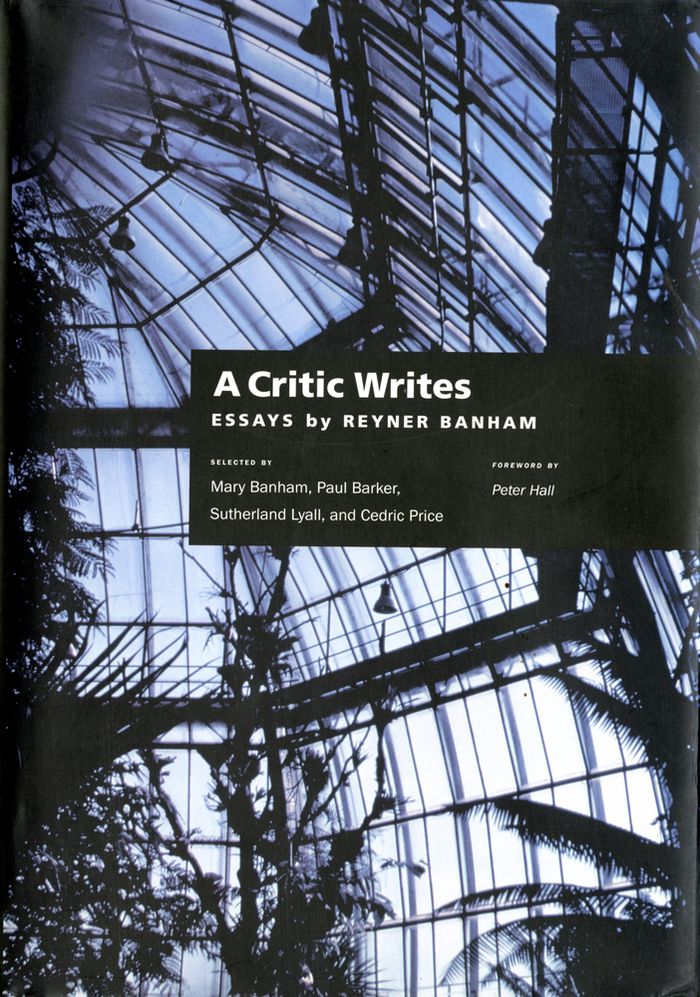
Few twentieth-century writers on architecture and design have enjoyed the renown of Reyner Banham. Born and trained in England and a U.S. resident starting in 1976, Banham wrote incisively about American and European buildings and culture. Now readers can enjoy a chronological cross-section of essays, polemics, and reviews drawn from more than three decades of Banham's(...)
$39.95
(available to order)
Summary:
Few twentieth-century writers on architecture and design have enjoyed the renown of Reyner Banham. Born and trained in England and a U.S. resident starting in 1976, Banham wrote incisively about American and European buildings and culture. Now readers can enjoy a chronological cross-section of essays, polemics, and reviews drawn from more than three decades of Banham's(...)
Title:
A critic writes : essays by Reyner Banham
Actions:
Price:
$39.95
(available to order)
Summary:
Few twentieth-century writers on architecture and design have enjoyed the renown of Reyner Banham. Born and trained in England and a U.S. resident starting in 1976, Banham wrote incisively about American and European buildings and culture. Now readers can enjoy a chronological cross-section of essays, polemics, and reviews drawn from more than three decades of Banham's writings. The volume, which includes discussions of Italian Futurism, Adolf Loos, Paul Scheerbart, and the Bauhaus as well as explorations of contemporary architecture by Frank Gehry, James Stirling, and Norman Foster, conveys the full range of Banham's belief in industrial and technological development as the motor of architectural evolution. Banham's interests and passions ranged from architecture and the culture of pop art to urban and industrial design. In brilliant analyses of automobile styling, mobile homes, science fiction films, and the American predilection for gadgets, he anticipated many of the preoccupations of contemporary cultural studies. Los Angeles, the city that Banham commemorated in a book and a film, receives extensive attention in essays on the Santa Monica Pier, the Getty Museum, Forest Lawn cemetery, and the ubiquitous freeway system. Eminently readable, provocative, and entertaining, this book is certain to consolidate Banham's reputation among architects and students of contemporary culture. For those acquainted with his writing, it offers welcome surprises as well as familiar delights. For those encountering Banham for the first time, it comprises the perfect introduction.
A critic writes : essays by Reyner Banham
Actions:
Price:
$39.95
(available to order)
Summary:
Few twentieth-century writers on architecture and design have enjoyed the renown of Reyner Banham. Born and trained in England and a U.S. resident starting in 1976, Banham wrote incisively about American and European buildings and culture. Now readers can enjoy a chronological cross-section of essays, polemics, and reviews drawn from more than three decades of Banham's writings. The volume, which includes discussions of Italian Futurism, Adolf Loos, Paul Scheerbart, and the Bauhaus as well as explorations of contemporary architecture by Frank Gehry, James Stirling, and Norman Foster, conveys the full range of Banham's belief in industrial and technological development as the motor of architectural evolution. Banham's interests and passions ranged from architecture and the culture of pop art to urban and industrial design. In brilliant analyses of automobile styling, mobile homes, science fiction films, and the American predilection for gadgets, he anticipated many of the preoccupations of contemporary cultural studies. Los Angeles, the city that Banham commemorated in a book and a film, receives extensive attention in essays on the Santa Monica Pier, the Getty Museum, Forest Lawn cemetery, and the ubiquitous freeway system. Eminently readable, provocative, and entertaining, this book is certain to consolidate Banham's reputation among architects and students of contemporary culture. For those acquainted with his writing, it offers welcome surprises as well as familiar delights. For those encountering Banham for the first time, it comprises the perfect introduction.
Form:
books
books
Publication:
April 1999, Berkeley
April 1999, Berkeley
Subject:
Architectural Theory
Architectural Theory


