


7608 Results
Form:
books
books
Price:
$51.95
(available to order)
Summary:
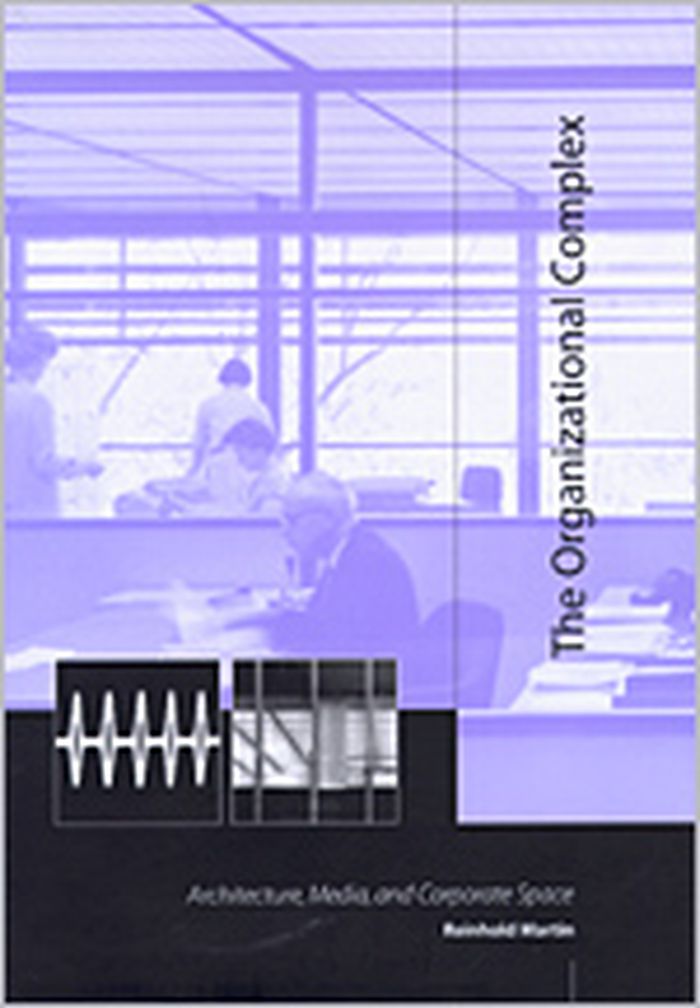
"The Organizational Complex" is a historical and theoretical analysis of corporate architecture in the United States after the Second World War. Its title refers to the aesthetic and technological extension of the military-industrial complex, in which architecture, computers, and corporations formed a network of objects, images, and discourses that realigned social(...)
$51.95
(available to order)
Summary:
"The Organizational Complex" is a historical and theoretical analysis of corporate architecture in the United States after the Second World War. Its title refers to the aesthetic and technological extension of the military-industrial complex, in which architecture, computers, and corporations formed a network of objects, images, and discourses that realigned social(...)
Subject:
Architectural Theory
Architectural Theory
Publication:
July 2003, Cambridge, Massachusetts
July 2003, Cambridge, Massachusetts
Title:
The organizational complex : architecture, media, and corporate space
Actions:
Price:
$51.95
(available to order)
Summary:
"The Organizational Complex" is a historical and theoretical analysis of corporate architecture in the United States after the Second World War. Its title refers to the aesthetic and technological extension of the military-industrial complex, in which architecture, computers, and corporations formed a network of objects, images, and discourses that realigned social relations and transformed the postwar landscape. In-depth case studies of architect Eero Saarinen's work for General Motors, IBM, and Bell Laboratories and analyses of office buildings designed by Skidmore, Owings & Merrill trace the emergence of a systems-based model of organization in architecture, in which the modular curtain wall acts as both an organizational device and a carrier of the corporate image. Such an image--of the corporation as a flexible, integrated system--is seen to correspond with a "humanization" of corporate life, as corporations decentralize both spatially and administratively. Parallel analyses follow the assimilation of cybernetics into aesthetics in the writings of artist and visual theorist Gyorgy Kepes, as art merges with techno-science in the service of a dynamic new "pattern-seeing." Image and system thus converge in the organizational complex, while top-down power dissolves into networked, pattern-based control. Architecture, as one among many media technologies, supplies the patterns--images of organic integration designed to regulate new and unstable human-machine assemblages.
The organizational complex : architecture, media, and corporate space
Actions:
Price:
$51.95
(available to order)
Summary:
"The Organizational Complex" is a historical and theoretical analysis of corporate architecture in the United States after the Second World War. Its title refers to the aesthetic and technological extension of the military-industrial complex, in which architecture, computers, and corporations formed a network of objects, images, and discourses that realigned social relations and transformed the postwar landscape. In-depth case studies of architect Eero Saarinen's work for General Motors, IBM, and Bell Laboratories and analyses of office buildings designed by Skidmore, Owings & Merrill trace the emergence of a systems-based model of organization in architecture, in which the modular curtain wall acts as both an organizational device and a carrier of the corporate image. Such an image--of the corporation as a flexible, integrated system--is seen to correspond with a "humanization" of corporate life, as corporations decentralize both spatially and administratively. Parallel analyses follow the assimilation of cybernetics into aesthetics in the writings of artist and visual theorist Gyorgy Kepes, as art merges with techno-science in the service of a dynamic new "pattern-seeing." Image and system thus converge in the organizational complex, while top-down power dissolves into networked, pattern-based control. Architecture, as one among many media technologies, supplies the patterns--images of organic integration designed to regulate new and unstable human-machine assemblages.
Form:
books
books
Publication:
July 2003, Cambridge, Massachusetts
July 2003, Cambridge, Massachusetts
Subject:
Architectural Theory
Architectural Theory
Form:
books
books
Actions:
Price:
$62.00
(available to order)
Summary:
Through a series of close readings of two major figures of the modern movement, Adolf Loos and Le Corbusier, Beatriz Colomina argues that architecture only becomes modern in its engagement with the mass media, and that in so doing it radically displaces the(...)
$62.00
(available to order)
Summary:
Through a series of close readings of two major figures of the modern movement, Adolf Loos and Le Corbusier, Beatriz Colomina argues that architecture only becomes modern in its engagement with the mass media, and that in so doing it radically displaces the(...)
Title:
Privacy and publicity : modern architecture as mass media
Actions:
Price:
$62.00
(available to order)
Summary:
Through a series of close readings of two major figures of the modern movement, Adolf Loos and Le Corbusier, Beatriz Colomina argues that architecture only becomes modern in its engagement with the mass media, and that in so doing it radically displaces the traditional sense of space and subjectivity. "Privacy and Publicity" questions certain ideological assumptions underlying the received view of modern architecture and reconsiders the methodology of architectural criticism itself. Where conventional criticism portrays modern architecture as a high artistic practice in opposition to mass culture, Colomina sees the emerging systems of communication that have come to define twentieth-century culture -- the mass media -- as the true site within which modern architecture was produced. She considers architectural discourse as the intersection of a number of systems of representation such as drawings, models, photographs, books, films, and advertisements. This does not mean abandoning the architectural object, the building, but rather looking at it in a different way. The building is understood here in the same way as all the media that frame it, as a mechanism of representation in its own right.
Privacy and publicity : modern architecture as mass media
Actions:
Price:
$62.00
(available to order)
Summary:
Through a series of close readings of two major figures of the modern movement, Adolf Loos and Le Corbusier, Beatriz Colomina argues that architecture only becomes modern in its engagement with the mass media, and that in so doing it radically displaces the traditional sense of space and subjectivity. "Privacy and Publicity" questions certain ideological assumptions underlying the received view of modern architecture and reconsiders the methodology of architectural criticism itself. Where conventional criticism portrays modern architecture as a high artistic practice in opposition to mass culture, Colomina sees the emerging systems of communication that have come to define twentieth-century culture -- the mass media -- as the true site within which modern architecture was produced. She considers architectural discourse as the intersection of a number of systems of representation such as drawings, models, photographs, books, films, and advertisements. This does not mean abandoning the architectural object, the building, but rather looking at it in a different way. The building is understood here in the same way as all the media that frame it, as a mechanism of representation in its own right.
Form:
books
books
Publication:
April 1996, Cambridge
April 1996, Cambridge
Subject:
Architectural Theory
Architectural Theory
Form:
books
books
Actions:
Price:
$29.95
(available to order)
Summary:
Like the flute melody from ''Hinterland Who's Who,'' the 1970s haunt Canadian cultural memory. Though the decade often feels lost to history, ''Hinterland Remixed'' focuses on boldly innovative works as well as popular film, television, and music to show that Canada never fully left the 1970s behind. Andrew Burke reveals how contemporary artists and filmmakers have(...)
$29.95
(available to order)
Summary:
Like the flute melody from ''Hinterland Who's Who,'' the 1970s haunt Canadian cultural memory. Though the decade often feels lost to history, ''Hinterland Remixed'' focuses on boldly innovative works as well as popular film, television, and music to show that Canada never fully left the 1970s behind. Andrew Burke reveals how contemporary artists and filmmakers have(...)
Title:
Hinterland remixed: media, memory and the Canadian 1970s
Actions:
Price:
$29.95
(available to order)
Summary:
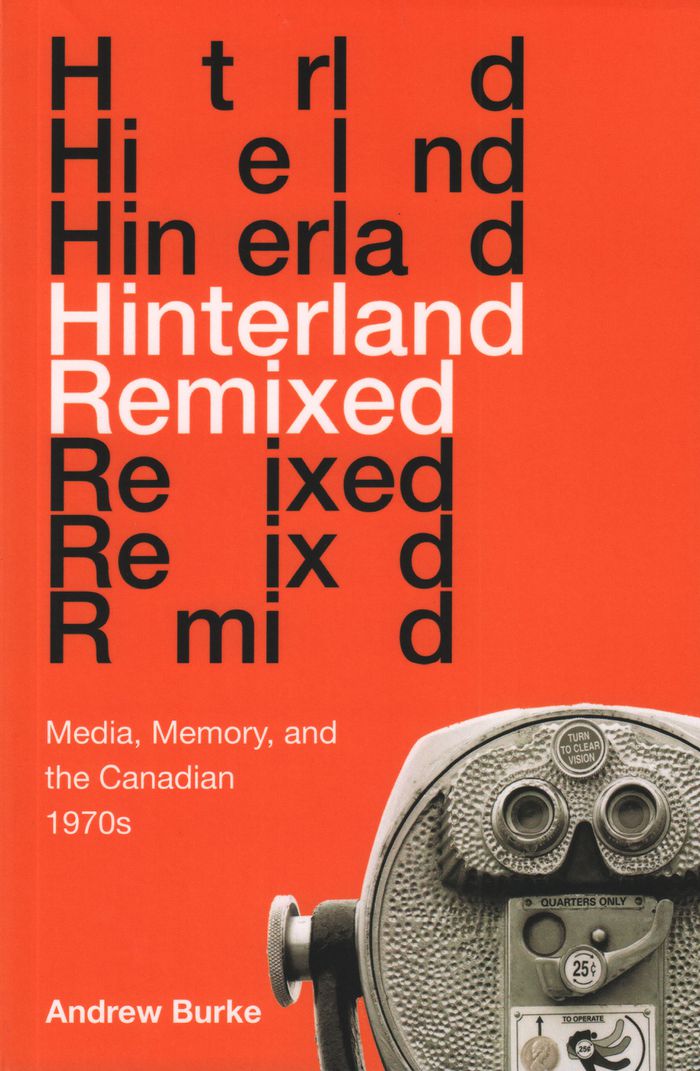
Like the flute melody from ''Hinterland Who's Who,'' the 1970s haunt Canadian cultural memory. Though the decade often feels lost to history, ''Hinterland Remixed'' focuses on boldly innovative works as well as popular film, television, and music to show that Canada never fully left the 1970s behind. Andrew Burke reveals how contemporary artists and filmmakers have revisited the era's cinematic and televisual residues to uncover what has been lost over the years. Investigating how the traces of an analogue past circulate in a digital age, Burke digs through the remnants of 1970s Canadiana and examines key audiovisual works from this overlooked decade, uncovering the period's aspirations, desires, fears, and anxieties. He then looks to contemporary projects that remix, remediate, and reanimate the period. Exploring an idiosyncratic selection of works, this book asks key questions about nation, nostalgia, media, and memory.
Hinterland remixed: media, memory and the Canadian 1970s
Actions:
Price:
$29.95
(available to order)
Summary:
Like the flute melody from ''Hinterland Who's Who,'' the 1970s haunt Canadian cultural memory. Though the decade often feels lost to history, ''Hinterland Remixed'' focuses on boldly innovative works as well as popular film, television, and music to show that Canada never fully left the 1970s behind. Andrew Burke reveals how contemporary artists and filmmakers have revisited the era's cinematic and televisual residues to uncover what has been lost over the years. Investigating how the traces of an analogue past circulate in a digital age, Burke digs through the remnants of 1970s Canadiana and examines key audiovisual works from this overlooked decade, uncovering the period's aspirations, desires, fears, and anxieties. He then looks to contemporary projects that remix, remediate, and reanimate the period. Exploring an idiosyncratic selection of works, this book asks key questions about nation, nostalgia, media, and memory.
Form:
books
books
Publication:
November 2019
November 2019
Subject:
Architecture in Canada
Architecture in Canada
Form:
books
books
Actions:
Price:
$28.95
(available to order)
Summary:
How do we think?” N. Katherine Hayles poses this question at the beginning of this bracing exploration of the idea that we think through, with, and alongside media. As the age of print passes and new technologies appear every day, this proposition has become far more complicated, particularly for the traditionally print-based disciplines in the humanities and qualitative(...)
$28.95
(available to order)
Summary:
How do we think?” N. Katherine Hayles poses this question at the beginning of this bracing exploration of the idea that we think through, with, and alongside media. As the age of print passes and new technologies appear every day, this proposition has become far more complicated, particularly for the traditionally print-based disciplines in the humanities and qualitative(...)
Title:
How we think : digital media and contemporary technogenesis
Actions:
Price:
$28.95
(available to order)
Summary:
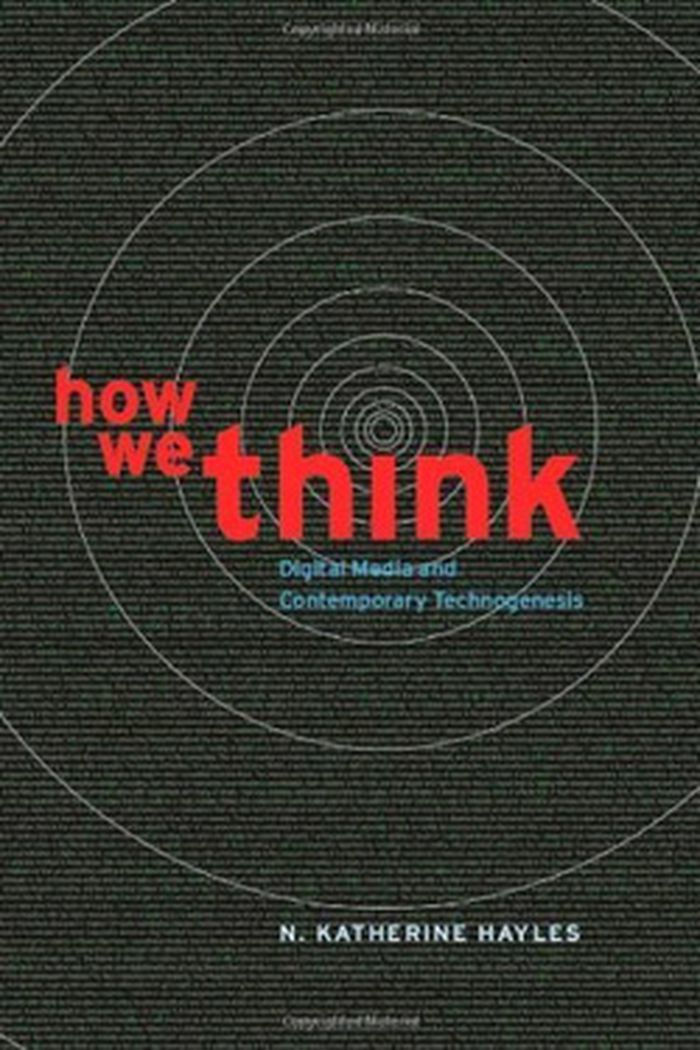
How do we think?” N. Katherine Hayles poses this question at the beginning of this bracing exploration of the idea that we think through, with, and alongside media. As the age of print passes and new technologies appear every day, this proposition has become far more complicated, particularly for the traditionally print-based disciplines in the humanities and qualitative social sciences. With a rift growing between digital scholarship and its print-based counterpart, Hayles argues for contemporary technogenesis — the belief that humans and technics are coevolving — and advocates for what she calls comparative media studies, a new approach to locating digital work within print traditions and vice versa.
How we think : digital media and contemporary technogenesis
Actions:
Price:
$28.95
(available to order)
Summary:
How do we think?” N. Katherine Hayles poses this question at the beginning of this bracing exploration of the idea that we think through, with, and alongside media. As the age of print passes and new technologies appear every day, this proposition has become far more complicated, particularly for the traditionally print-based disciplines in the humanities and qualitative social sciences. With a rift growing between digital scholarship and its print-based counterpart, Hayles argues for contemporary technogenesis — the belief that humans and technics are coevolving — and advocates for what she calls comparative media studies, a new approach to locating digital work within print traditions and vice versa.
Form:
books
books
Publication:
May 2012
May 2012
Subject:
Epistemology
Epistemology
Form:
books
books
Actions:
Price:
$30.95
(available to order)
Summary:
Paper Knowledge is a remarkable book about the mundane: the library card, the promissory note, the movie ticket, the PDF (Portable Document Format). It is a media history of the document. Drawing examples from the 1870s, the 1930s, the 1960s, and today, Lisa Gitelman thinks across the media that the document form has come to inhabit over the last 150 years, including(...)
$30.95
(available to order)
Summary:
Paper Knowledge is a remarkable book about the mundane: the library card, the promissory note, the movie ticket, the PDF (Portable Document Format). It is a media history of the document. Drawing examples from the 1870s, the 1930s, the 1960s, and today, Lisa Gitelman thinks across the media that the document form has come to inhabit over the last 150 years, including(...)
Title:
Paper knowledge: toward a media history of documents
Actions:
Price:
$30.95
(available to order)
Summary:
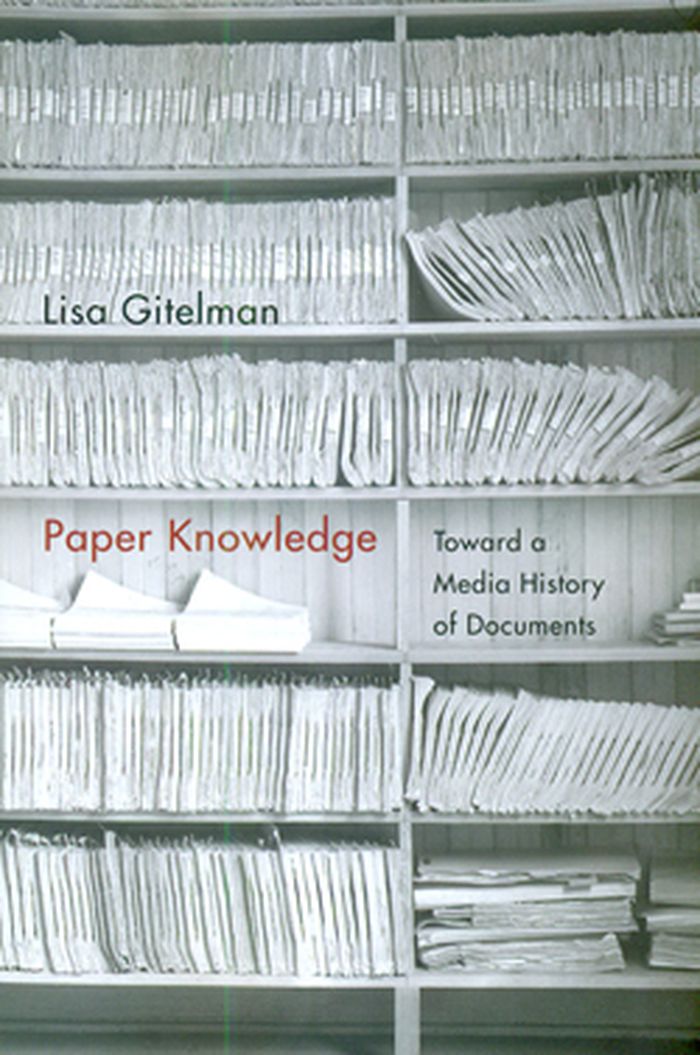
Paper Knowledge is a remarkable book about the mundane: the library card, the promissory note, the movie ticket, the PDF (Portable Document Format). It is a media history of the document. Drawing examples from the 1870s, the 1930s, the 1960s, and today, Lisa Gitelman thinks across the media that the document form has come to inhabit over the last 150 years, including letterpress printing, typing and carbon paper, mimeograph, microfilm, offset printing, photocopying, and scanning.
Paper knowledge: toward a media history of documents
Actions:
Price:
$30.95
(available to order)
Summary:
Paper Knowledge is a remarkable book about the mundane: the library card, the promissory note, the movie ticket, the PDF (Portable Document Format). It is a media history of the document. Drawing examples from the 1870s, the 1930s, the 1960s, and today, Lisa Gitelman thinks across the media that the document form has come to inhabit over the last 150 years, including letterpress printing, typing and carbon paper, mimeograph, microfilm, offset printing, photocopying, and scanning.
Form:
books
books
Publication:
March 2014
March 2014
Subject:
Archive, library and the digital
Archive, library and the digital
Form:
books
books
Actions:
Price:
$32.95
(available to order)
Summary:
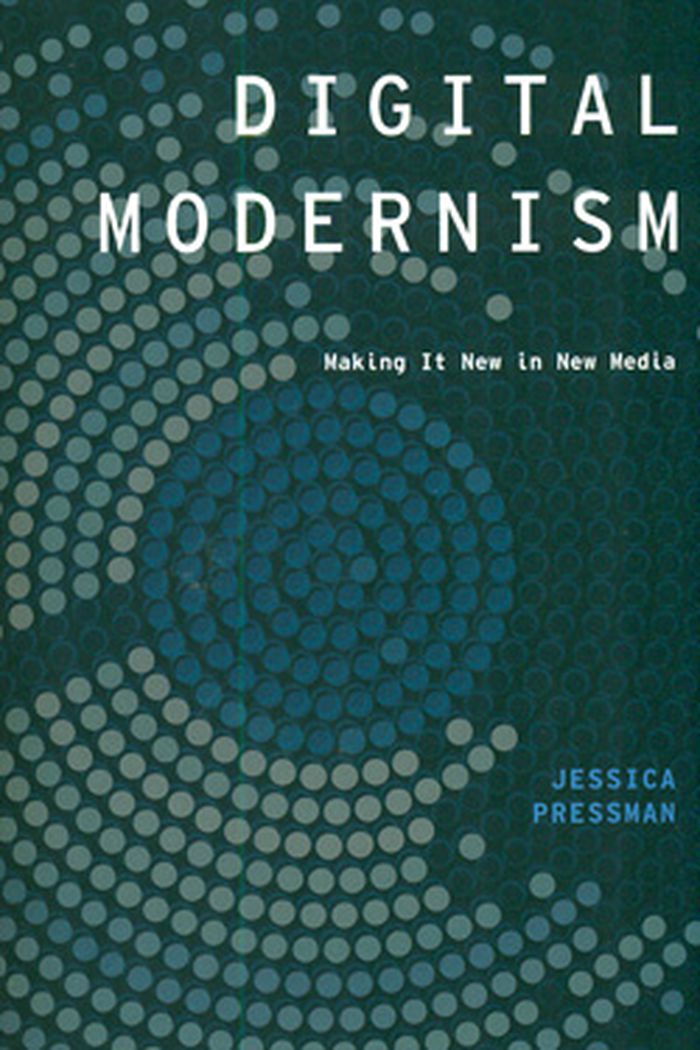
Digital Modernism examines how and why some of the most innovative works of online electronic literature adapt and allude to literary modernism. Digital literature has been celebrated as a postmodern form that grows out of contemporary technologies, subjectivities, and aesthetics, but this book provides an alternative genealogy. Exemplary cases show electronic literature(...)
$32.95
(available to order)
Summary:
Digital Modernism examines how and why some of the most innovative works of online electronic literature adapt and allude to literary modernism. Digital literature has been celebrated as a postmodern form that grows out of contemporary technologies, subjectivities, and aesthetics, but this book provides an alternative genealogy. Exemplary cases show electronic literature(...)
Title:
Digital modernism: making it new in new media
Actions:
Price:
$32.95
(available to order)
Summary:
Digital Modernism examines how and why some of the most innovative works of online electronic literature adapt and allude to literary modernism. Digital literature has been celebrated as a postmodern form that grows out of contemporary technologies, subjectivities, and aesthetics, but this book provides an alternative genealogy. Exemplary cases show electronic literature looking back to modernism for inspiration and source material (in content, form, and ideology) through which to critique contemporary culture. In so doing, this literature renews and reframes, rather than rejects, a literary tradition that it also reconfigures to center around media.
Digital modernism: making it new in new media
Actions:
Price:
$32.95
(available to order)
Summary:
Digital Modernism examines how and why some of the most innovative works of online electronic literature adapt and allude to literary modernism. Digital literature has been celebrated as a postmodern form that grows out of contemporary technologies, subjectivities, and aesthetics, but this book provides an alternative genealogy. Exemplary cases show electronic literature looking back to modernism for inspiration and source material (in content, form, and ideology) through which to critique contemporary culture. In so doing, this literature renews and reframes, rather than rejects, a literary tradition that it also reconfigures to center around media.
Form:
books
books
Publication:
July 2014
July 2014
Subject:
Art Theory
Art Theory
Form:
books
books
Price:
$31.25
(available to order)
Summary:
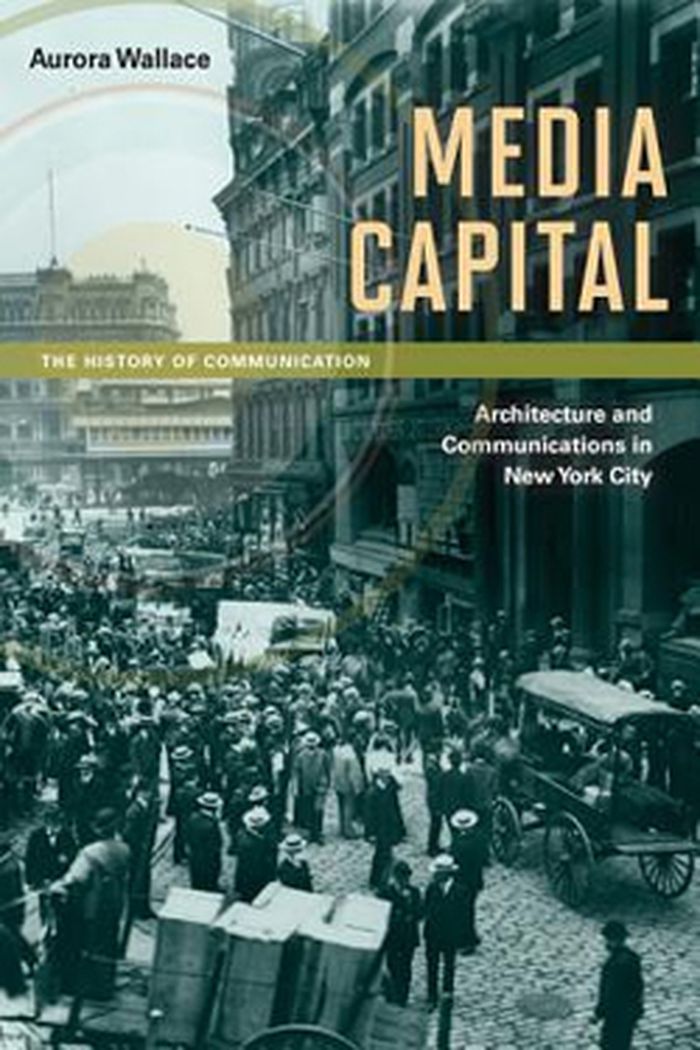
This book illustrates how the media have continued to use the city as a space in which to inscribe and assert their power. With a unique focus on corporate headquarters as embodiments of the values of the press and as signposts for understanding media culture, Media Capital demonstrates the mutually supporting relationship between the media and urban space.
$31.25
(available to order)
Summary:
This book illustrates how the media have continued to use the city as a space in which to inscribe and assert their power. With a unique focus on corporate headquarters as embodiments of the values of the press and as signposts for understanding media culture, Media Capital demonstrates the mutually supporting relationship between the media and urban space.
Title:
Media capital : architecture and communications in New York city
Actions:
Price:
$31.25
(available to order)
Summary:
This book illustrates how the media have continued to use the city as a space in which to inscribe and assert their power. With a unique focus on corporate headquarters as embodiments of the values of the press and as signposts for understanding media culture, Media Capital demonstrates the mutually supporting relationship between the media and urban space.
Media capital : architecture and communications in New York city
Actions:
Price:
$31.25
(available to order)
Summary:
This book illustrates how the media have continued to use the city as a space in which to inscribe and assert their power. With a unique focus on corporate headquarters as embodiments of the values of the press and as signposts for understanding media culture, Media Capital demonstrates the mutually supporting relationship between the media and urban space.
Form:
books
books
Publication:
February 2012
February 2012
Subject:
Architectural Theory
Architectural Theory
Form:
books
books
Actions:
Subject:
Publication:
Droste Effect 2016
Droste Effect 2016
Form:
books
books
Publication:
Droste Effect 2016
Droste Effect 2016
Subject:
Form:
video
video
Actions:
Holdings:
Description:
1 videocassette (11 min.) : sd., col., ; 1/2 in.
Description:
1 videocassette (11 min.) : sd., col., ; 1/2 in.
Author:
Subject:
Publication:
Los Angeles : J. Paul Getty Trust, c1996.
Los Angeles : J. Paul Getty Trust, c1996.
Title:
Protecting cultural objects in the global information society / produced by the Media Staff ; Lane Wipff, director ; Jim Rawitsch, writer ; Jerry Maybrook, producer.
Actions:
Holdings:
Description:
1 videocassette (11 min.) : sd., col., ; 1/2 in.
Protecting cultural objects in the global information society / produced by the Media Staff ; Lane Wipff, director ; Jim Rawitsch, writer ; Jerry Maybrook, producer.
Actions:
Holdings:
Description:
1 videocassette (11 min.) : sd., col., ; 1/2 in.
Form:
video
video
Publication:
Los Angeles : J. Paul Getty Trust, c1996.
Los Angeles : J. Paul Getty Trust, c1996.
Author:
Subject:
Form:
books
books
Actions:
Subject:
Publication:
Ethereum Foundation 2024
Ethereum Foundation 2024
Form:
books
books
Publication:
Ethereum Foundation 2024
Ethereum Foundation 2024
Subject:


