


12614 Results
Form:
events
events
Actions:
Description:
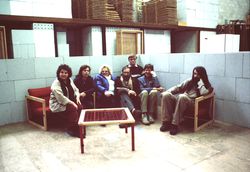
Following an intense period of work in the mid-1970s with Portugal’s post-revolutionary housing initiatives, in the early 1980s Álvaro Siza contributed projects to two of the most important urban renewal programs in Europe: Berlin’s IBA and The Hague’s Stadsvernieuwing als Kulturel Aktiviteit (Urban Renewal as a Cultural Activity). This lecture will examine the(...)
Following an intense period of work in the mid-1970s with Portugal’s post-revolutionary housing initiatives, in the early 1980s Álvaro Siza contributed projects to two of the most important urban renewal programs in Europe: Berlin’s IBA and The Hague’s Stadsvernieuwing als Kulturel Aktiviteit (Urban Renewal as a Cultural Activity). This lecture will examine the(...)
Date:
26 November 2015
26 November 2015
Title:
Álvaro Siza’s Archaeology of the Ordinary
Actions:
Description:
Following an intense period of work in the mid-1970s with Portugal’s post-revolutionary housing initiatives, in the early 1980s Álvaro Siza contributed projects to two of the most important urban renewal programs in Europe: Berlin’s IBA and The Hague’s Stadsvernieuwing als Kulturel Aktiviteit (Urban Renewal as a Cultural Activity). This lecture will examine the(...)
Álvaro Siza’s Archaeology of the Ordinary
Actions:
Description:
Following an intense period of work in the mid-1970s with Portugal’s post-revolutionary housing initiatives, in the early 1980s Álvaro Siza contributed projects to two of the most important urban renewal programs in Europe: Berlin’s IBA and The Hague’s Stadsvernieuwing als Kulturel Aktiviteit (Urban Renewal as a Cultural Activity). This lecture will examine the(...)
Form:
events
events
Date:
26 November 2015
26 November 2015
Form:
events
events
Actions:
Description:
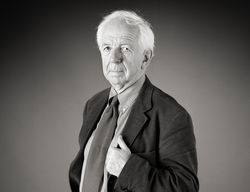
Hubert Damisch, 2003-2004 CCA Mellon Senior Fellow, examines Blur – the cloud building created by New York architects Diller + Scofidio on lake Neuchâtel in Switzerland, which is the most recent and radical expression of the desire for fluidity and evanescence in architecture – and the consequences that it might have on the future of structural thought. Damisch examines(...)
Hubert Damisch, 2003-2004 CCA Mellon Senior Fellow, examines Blur – the cloud building created by New York architects Diller + Scofidio on lake Neuchâtel in Switzerland, which is the most recent and radical expression of the desire for fluidity and evanescence in architecture – and the consequences that it might have on the future of structural thought. Damisch examines(...)
Location:
Paul Desmarais Theatre
Paul Desmarais Theatre
Date:
8 May 2003
8 May 2003
Title:
Hubert Damisch: “Effacer l’architecture?”
Actions:
Description:
Hubert Damisch, 2003-2004 CCA Mellon Senior Fellow, examines Blur – the cloud building created by New York architects Diller + Scofidio on lake Neuchâtel in Switzerland, which is the most recent and radical expression of the desire for fluidity and evanescence in architecture – and the consequences that it might have on the future of structural thought. Damisch examines(...)
Hubert Damisch: “Effacer l’architecture?”
Actions:
Description:
Hubert Damisch, 2003-2004 CCA Mellon Senior Fellow, examines Blur – the cloud building created by New York architects Diller + Scofidio on lake Neuchâtel in Switzerland, which is the most recent and radical expression of the desire for fluidity and evanescence in architecture – and the consequences that it might have on the future of structural thought. Damisch examines(...)
Form:
events
events
Date:
8 May 2003
8 May 2003
Location:
Paul Desmarais Theatre
Paul Desmarais Theatre
Form:
exhibitions
exhibitions
Title:
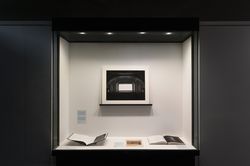
Mirrors / Miroirs
Mirrors / Miroirs
Actions:
Description:
Mirrors/ Miroirs is conceived through an indirect dialogue with the exhibition Besides, History: Go Hasegawa, Kersten Geers, David Van Severen, a project rooted in the shared references and resonances between the work of two contemporary practices in the presence of history. If Besides, History is premised on impressions of one office’s work registered through(...)
Mirrors/ Miroirs is conceived through an indirect dialogue with the exhibition Besides, History: Go Hasegawa, Kersten Geers, David Van Severen, a project rooted in the shared references and resonances between the work of two contemporary practices in the presence of history. If Besides, History is premised on impressions of one office’s work registered through(...)
Location:
Hall cases
Hall cases
Date:
22 June 2017 to 14 January 2018
22 June 2017 to 14 January 2018
Title:
Mirrors / Miroirs
Actions:
Description:
Mirrors/ Miroirs is conceived through an indirect dialogue with the exhibition Besides, History: Go Hasegawa, Kersten Geers, David Van Severen, a project rooted in the shared references and resonances between the work of two contemporary practices in the presence of history. If Besides, History is premised on impressions of one office’s work registered through(...)
Mirrors / Miroirs
Actions:
Description:
Mirrors/ Miroirs is conceived through an indirect dialogue with the exhibition Besides, History: Go Hasegawa, Kersten Geers, David Van Severen, a project rooted in the shared references and resonances between the work of two contemporary practices in the presence of history. If Besides, History is premised on impressions of one office’s work registered through(...)
Form:
exhibitions
exhibitions
Date:
22 June 2017 to
14 January 2018
22 June 2017 to
14 January 2018
Location:
Hall cases
Hall cases
Form:
events
events
Title:
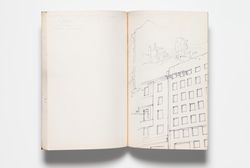
Visiting Scholar Seminar: Gregorio Carboni Maestri
Portugal: Architecture, Tendenza, Revolution
Visiting Scholar Seminar: Gregorio Carboni Maestri
Portugal: Architecture, Tendenza, Revolution
Actions:
Description:
Visiting Scholar Gregorio Carboni Maestri presents his research. From the 1930s to the late 1980s, Portuguese architecture was formed through a frustrated relationship with modernity and through a crucial dialogue with Italy. This talk addresses how Portuguese architecture observed and reacted to Italian models such as rationalism in the 1930s, postwar neorealism, and(...)
Visiting Scholar Gregorio Carboni Maestri presents his research. From the 1930s to the late 1980s, Portuguese architecture was formed through a frustrated relationship with modernity and through a crucial dialogue with Italy. This talk addresses how Portuguese architecture observed and reacted to Italian models such as rationalism in the 1930s, postwar neorealism, and(...)
Location:
Shaughnessy House Keyword(s):
Gregorio Carboni Maestri, Visiting Scholar, Portugal, Tendenza
Shaughnessy House Keyword(s):
Gregorio Carboni Maestri, Visiting Scholar, Portugal, Tendenza
Date:
3 August 2017, 6pm
3 August 2017, 6pm
Title:
Visiting Scholar Seminar: Gregorio Carboni Maestri
Actions:
Description:
Visiting Scholar Gregorio Carboni Maestri presents his research. From the 1930s to the late 1980s, Portuguese architecture was formed through a frustrated relationship with modernity and through a crucial dialogue with Italy. This talk addresses how Portuguese architecture observed and reacted to Italian models such as rationalism in the 1930s, postwar neorealism, and(...)
Visiting Scholar Seminar: Gregorio Carboni Maestri
Actions:
Description:
Visiting Scholar Gregorio Carboni Maestri presents his research. From the 1930s to the late 1980s, Portuguese architecture was formed through a frustrated relationship with modernity and through a crucial dialogue with Italy. This talk addresses how Portuguese architecture observed and reacted to Italian models such as rationalism in the 1930s, postwar neorealism, and(...)
Form:
events
events
Date:
3 August 2017
6pm
3 August 2017
6pm
Location:
Shaughnessy House Keyword(s):
Gregorio Carboni Maestri, Visiting Scholar, Portugal, Tendenza
Shaughnessy House Keyword(s):
Gregorio Carboni Maestri, Visiting Scholar, Portugal, Tendenza
Form:
events
events
Actions:
Description:
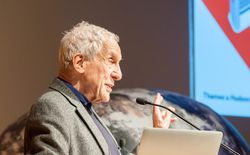
In this conversation, Kenneth Frampton (Columbia University) will discuss approaches to architectural history today with Esra Akcan (Cornell University) and Mark Jarzombek (Massachusetts Institute of Technology). What does it mean to write a global history of architecture now? What is the relationship between such a history and urgent contemporary concerns? During a(...)
In this conversation, Kenneth Frampton (Columbia University) will discuss approaches to architectural history today with Esra Akcan (Cornell University) and Mark Jarzombek (Massachusetts Institute of Technology). What does it mean to write a global history of architecture now? What is the relationship between such a history and urgent contemporary concerns? During a(...)
Date:
6 April 2017
6 April 2017
Title:
A Conversation with Kenneth Frampton: Can There Be a Global Architectural History Today?
Actions:
Description:
In this conversation, Kenneth Frampton (Columbia University) will discuss approaches to architectural history today with Esra Akcan (Cornell University) and Mark Jarzombek (Massachusetts Institute of Technology). What does it mean to write a global history of architecture now? What is the relationship between such a history and urgent contemporary concerns? During a(...)
A Conversation with Kenneth Frampton: Can There Be a Global Architectural History Today?
Actions:
Description:
In this conversation, Kenneth Frampton (Columbia University) will discuss approaches to architectural history today with Esra Akcan (Cornell University) and Mark Jarzombek (Massachusetts Institute of Technology). What does it mean to write a global history of architecture now? What is the relationship between such a history and urgent contemporary concerns? During a(...)
Form:
events
events
Date:
6 April 2017
6 April 2017
Form:
events
events
Actions:
Description:
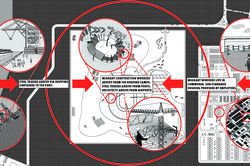
Mabel O. Wilson and Jordan Carver present the ongoing advocacy project Who Builds Your Architecture? (WBYA?), which asks architects and allied fields to better understand how the production of buildings connects their practices to migrant construction workers who build their designs. WBYA?, a group of designers, scholars, and activists based in New York City, has(...)
Mabel O. Wilson and Jordan Carver present the ongoing advocacy project Who Builds Your Architecture? (WBYA?), which asks architects and allied fields to better understand how the production of buildings connects their practices to migrant construction workers who build their designs. WBYA?, a group of designers, scholars, and activists based in New York City, has(...)
Date:
28 January 2016
28 January 2016
Title:
Practicing Advocacy: Who Builds Your Architecture?
Actions:
Description:
Mabel O. Wilson and Jordan Carver present the ongoing advocacy project Who Builds Your Architecture? (WBYA?), which asks architects and allied fields to better understand how the production of buildings connects their practices to migrant construction workers who build their designs. WBYA?, a group of designers, scholars, and activists based in New York City, has(...)
Practicing Advocacy: Who Builds Your Architecture?
Actions:
Description:
Mabel O. Wilson and Jordan Carver present the ongoing advocacy project Who Builds Your Architecture? (WBYA?), which asks architects and allied fields to better understand how the production of buildings connects their practices to migrant construction workers who build their designs. WBYA?, a group of designers, scholars, and activists based in New York City, has(...)
Form:
events
events
Date:
28 January 2016
28 January 2016
Form:
drawings, textual records, works of art
Quantity:
2 album(s)
drawings, textual records, works of art
Quantity:
2 album(s)
Actions:
Reference number:
DR1974:0002:037:001-031
Description:
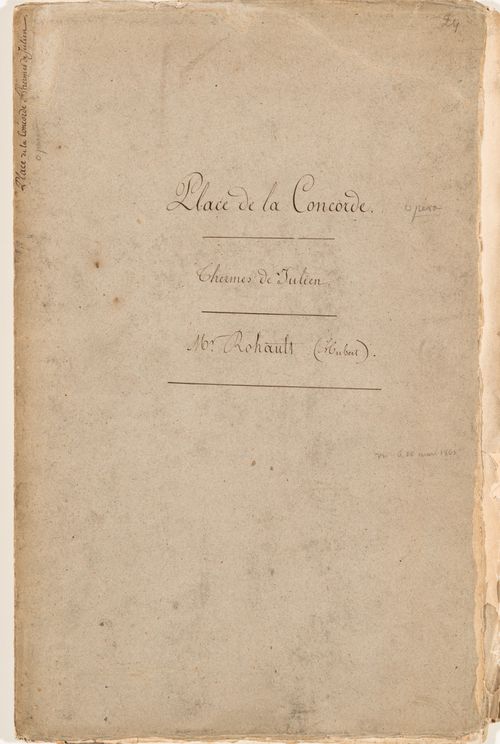
- This album contains drawings, prints and manuscripts chiefly related to two projects: the restoration of the Thermes de Julien and the development of the place de la Concorde, then known as place Louis XV. The ruins of the baths are documented in five drawings by Hubert Rohault de Fleury. The portfolio of manuscripts includes letters from the "Préfecture du Départment de la Seine" appointing Hubert Rohault de Fleury and Etienne Goddes to direct the restoration of the baths, a report by Rohault de Fleury and Goddes, and subsequent letters. The report includes a description of the baths, historical research, suggestions for earth removal and the purchase of adjacent buildings to be demolished. Both proposals made by Hubert Rohault de Fleury to the "Ministre de l'interior" for place Louis XV include central fountains and streets bisecting the square into four quadrants, each with fenced lawns and central fountains. One proposal shows the outer corner of each quadrant bordered by colonnades and loggias overlooking the "jardins des Tuileries", while the other proposal shows promenades bordered by a row of sculptures (DR1974:0002:037:004 - DR1974:0002:037:013). Also by Hubert Rohault de Fleury are several sketches for urban squares and five sketches for fountains, probably for place Louis XV (DR1974:0002:037:003, DR1974:0002:037:014 R/V - DR1974:0002:037:018 R/V). Projects by other architects for place Louis XV in the album include: a print by an unknown engraver of a project by Poyet for place Louis XV, including an opera house; engravings by Ollivier and Hibon of plans and fountains for place Louis XVI by Destouches and by Lusson; a lithograph by Roux of an obelisk with a fountain, probably a proposal for the base of the obelisk from Luxor. - Material unrelated to the Thermes de Julien and place Louis XV in this album includes one sheet of sketches of plans and elevations of unidentified buildings (DR1974:0002:037:001:045 R/V) and a plan showing the location of trees on the edge of place du Cirque Olympique, Paris (DR1974:0002:037:025). In addition to place Louis XVI, the engravings by Hibon and Ollivier depict a fountain for the ville de Toulouse designed by either Etienne Jacques or Etienne Jules Tierry and details of the acanthus foliage finial of the "Lanterne de Démosthénes", often known as the Choragic monument of Lysicrates, Greece (DR1974:0002:037:020 and DR1974:0002:037:021).
DR1974:0002:037:001-031
Description:
- This album contains drawings, prints and manuscripts chiefly related to two projects: the restoration of the Thermes de Julien and the development of the place de la Concorde, then known as place Louis XV. The ruins of the baths are documented in five drawings by Hubert Rohault de Fleury. The portfolio of manuscripts includes letters from the "Préfecture du Départment de la Seine" appointing Hubert Rohault de Fleury and Etienne Goddes to direct the restoration of the baths, a report by Rohault de Fleury and Goddes, and subsequent letters. The report includes a description of the baths, historical research, suggestions for earth removal and the purchase of adjacent buildings to be demolished. Both proposals made by Hubert Rohault de Fleury to the "Ministre de l'interior" for place Louis XV include central fountains and streets bisecting the square into four quadrants, each with fenced lawns and central fountains. One proposal shows the outer corner of each quadrant bordered by colonnades and loggias overlooking the "jardins des Tuileries", while the other proposal shows promenades bordered by a row of sculptures (DR1974:0002:037:004 - DR1974:0002:037:013). Also by Hubert Rohault de Fleury are several sketches for urban squares and five sketches for fountains, probably for place Louis XV (DR1974:0002:037:003, DR1974:0002:037:014 R/V - DR1974:0002:037:018 R/V). Projects by other architects for place Louis XV in the album include: a print by an unknown engraver of a project by Poyet for place Louis XV, including an opera house; engravings by Ollivier and Hibon of plans and fountains for place Louis XVI by Destouches and by Lusson; a lithograph by Roux of an obelisk with a fountain, probably a proposal for the base of the obelisk from Luxor. - Material unrelated to the Thermes de Julien and place Louis XV in this album includes one sheet of sketches of plans and elevations of unidentified buildings (DR1974:0002:037:001:045 R/V) and a plan showing the location of trees on the edge of place du Cirque Olympique, Paris (DR1974:0002:037:025). In addition to place Louis XVI, the engravings by Hibon and Ollivier depict a fountain for the ville de Toulouse designed by either Etienne Jacques or Etienne Jules Tierry and details of the acanthus foliage finial of the "Lanterne de Démosthénes", often known as the Choragic monument of Lysicrates, Greece (DR1974:0002:037:020 and DR1974:0002:037:021).
People:
Subject:
architecture, urban planning
architecture, urban planning
Date:
1754-1875
1754-1875
Title:
Album of drawings, prints and documents for place de la Concorde and the restoration of the Thermes de Julien, Paris
Actions:
DR1974:0002:037:001-031
Description:
- This album contains drawings, prints and manuscripts chiefly related to two projects: the restoration of the Thermes de Julien and the development of the place de la Concorde, then known as place Louis XV. The ruins of the baths are documented in five drawings by Hubert Rohault de Fleury. The portfolio of manuscripts includes letters from the "Préfecture du Départment de la Seine" appointing Hubert Rohault de Fleury and Etienne Goddes to direct the restoration of the baths, a report by Rohault de Fleury and Goddes, and subsequent letters. The report includes a description of the baths, historical research, suggestions for earth removal and the purchase of adjacent buildings to be demolished. Both proposals made by Hubert Rohault de Fleury to the "Ministre de l'interior" for place Louis XV include central fountains and streets bisecting the square into four quadrants, each with fenced lawns and central fountains. One proposal shows the outer corner of each quadrant bordered by colonnades and loggias overlooking the "jardins des Tuileries", while the other proposal shows promenades bordered by a row of sculptures (DR1974:0002:037:004 - DR1974:0002:037:013). Also by Hubert Rohault de Fleury are several sketches for urban squares and five sketches for fountains, probably for place Louis XV (DR1974:0002:037:003, DR1974:0002:037:014 R/V - DR1974:0002:037:018 R/V). Projects by other architects for place Louis XV in the album include: a print by an unknown engraver of a project by Poyet for place Louis XV, including an opera house; engravings by Ollivier and Hibon of plans and fountains for place Louis XVI by Destouches and by Lusson; a lithograph by Roux of an obelisk with a fountain, probably a proposal for the base of the obelisk from Luxor. - Material unrelated to the Thermes de Julien and place Louis XV in this album includes one sheet of sketches of plans and elevations of unidentified buildings (DR1974:0002:037:001:045 R/V) and a plan showing the location of trees on the edge of place du Cirque Olympique, Paris (DR1974:0002:037:025). In addition to place Louis XVI, the engravings by Hibon and Ollivier depict a fountain for the ville de Toulouse designed by either Etienne Jacques or Etienne Jules Tierry and details of the acanthus foliage finial of the "Lanterne de Démosthénes", often known as the Choragic monument of Lysicrates, Greece (DR1974:0002:037:020 and DR1974:0002:037:021).
Album of drawings, prints and documents for place de la Concorde and the restoration of the Thermes de Julien, Paris
Actions:
DR1974:0002:037:001-031
Description:
- This album contains drawings, prints and manuscripts chiefly related to two projects: the restoration of the Thermes de Julien and the development of the place de la Concorde, then known as place Louis XV. The ruins of the baths are documented in five drawings by Hubert Rohault de Fleury. The portfolio of manuscripts includes letters from the "Préfecture du Départment de la Seine" appointing Hubert Rohault de Fleury and Etienne Goddes to direct the restoration of the baths, a report by Rohault de Fleury and Goddes, and subsequent letters. The report includes a description of the baths, historical research, suggestions for earth removal and the purchase of adjacent buildings to be demolished. Both proposals made by Hubert Rohault de Fleury to the "Ministre de l'interior" for place Louis XV include central fountains and streets bisecting the square into four quadrants, each with fenced lawns and central fountains. One proposal shows the outer corner of each quadrant bordered by colonnades and loggias overlooking the "jardins des Tuileries", while the other proposal shows promenades bordered by a row of sculptures (DR1974:0002:037:004 - DR1974:0002:037:013). Also by Hubert Rohault de Fleury are several sketches for urban squares and five sketches for fountains, probably for place Louis XV (DR1974:0002:037:003, DR1974:0002:037:014 R/V - DR1974:0002:037:018 R/V). Projects by other architects for place Louis XV in the album include: a print by an unknown engraver of a project by Poyet for place Louis XV, including an opera house; engravings by Ollivier and Hibon of plans and fountains for place Louis XVI by Destouches and by Lusson; a lithograph by Roux of an obelisk with a fountain, probably a proposal for the base of the obelisk from Luxor. - Material unrelated to the Thermes de Julien and place Louis XV in this album includes one sheet of sketches of plans and elevations of unidentified buildings (DR1974:0002:037:001:045 R/V) and a plan showing the location of trees on the edge of place du Cirque Olympique, Paris (DR1974:0002:037:025). In addition to place Louis XVI, the engravings by Hibon and Ollivier depict a fountain for the ville de Toulouse designed by either Etienne Jacques or Etienne Jules Tierry and details of the acanthus foliage finial of the "Lanterne de Démosthénes", often known as the Choragic monument of Lysicrates, Greece (DR1974:0002:037:020 and DR1974:0002:037:021).
Form:
drawings, textual records, works of art
Quantity:
2 album(s)
drawings, textual records, works of art
Quantity:
2 album(s)
Date:
1754-1875
1754-1875
People:
Subject:
architecture, urban planning
architecture, urban planning
Form:
events
events
Title:
Learning from… Toronto
Learning from… Toronto
Actions:
Description:
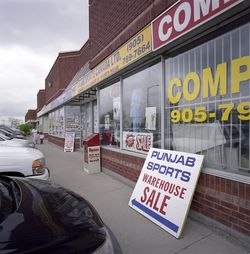
Ian Chodikoff, architect, urban designer, and editor of Canadian Architect magazine, presents his research on the contemporary suburb and how the influences of ethnic diversity and multiculturalism affect architecture and urban design within the suburban landscape across the Greater Toronto Area (GTA). Today’s suburbs are more ethnically diverse, globally connected and(...)
Ian Chodikoff, architect, urban designer, and editor of Canadian Architect magazine, presents his research on the contemporary suburb and how the influences of ethnic diversity and multiculturalism affect architecture and urban design within the suburban landscape across the Greater Toronto Area (GTA). Today’s suburbs are more ethnically diverse, globally connected and(...)
Location:
Paul Desmarais Theatre
Paul Desmarais Theatre
Date:
4 March 2010 , 7pm
4 March 2010 , 7pm
Title:
Learning from… Toronto
Actions:
Description:
Ian Chodikoff, architect, urban designer, and editor of Canadian Architect magazine, presents his research on the contemporary suburb and how the influences of ethnic diversity and multiculturalism affect architecture and urban design within the suburban landscape across the Greater Toronto Area (GTA). Today’s suburbs are more ethnically diverse, globally connected and(...)
Learning from… Toronto
Actions:
Description:
Ian Chodikoff, architect, urban designer, and editor of Canadian Architect magazine, presents his research on the contemporary suburb and how the influences of ethnic diversity and multiculturalism affect architecture and urban design within the suburban landscape across the Greater Toronto Area (GTA). Today’s suburbs are more ethnically diverse, globally connected and(...)
Form:
events
events
Date:
4 March 2010
7pm
4 March 2010
7pm
Location:
Paul Desmarais Theatre
Paul Desmarais Theatre
Level of archival description:
Sub-series
Sub-series
Reference number:
CI001.S2.D5
Description:
Charles Rohault de Fleury was architect for the Muséum national d'histoire naturelle from 1833 to 1862. His work for the Muséum is represented in the CCA collection by a diverse group of prints and drawings. In addition to documenting his built and unbuilt projects, the inclusion of prints and drawings of museum and zoo buildings by other architects record, if only partially, the resources available to Charles in designing his buildings. This reference material provides insight into the influences on Charles' work as well as the nature of the design process itself. His built works, with the exception of the 1854 addition to the greenhouses, are illustrated in a book of prints with a brief accompanying text - "Muséum d'histoire naturelle: serres chaudes, galeries de minéralogie, etc. etc." (published 1837) (DR1974:0002:004:001; a second copy is held by the CCA library) (1). While prints are included for the Galerie de minéralogie et de géologie, the monkey house and the reservoirs, the majority of the prints are of the greenhouses (serres chaudes) begun 1833 (2). Known for their technological innovations in iron construction, these greenhouses utilized the first multi-storey load-bearing cast-iron façades for the central pavilions as well as space frame roof structures and prefabricated parts. This structural system is well documented in the prints in the CCA collection. The design was apparently inspired by the English greenhouses - a plate of which are included in the book - that Charles saw on a tour of England. The use of prestressed beams and curved roofs in the lateral wings attest to this influence. Charles' greenhouses, in turn, influenced the design of other greenhouses in Europe especially those at the Jardins Botanique in Liège and Ghent, Belgium (3). Although Joseph Paxton saw the greenhouses in 1833, it is unclear if they had an impact on the design of the Crystal Palace constructed 1850-1851 (4). The innovations of Charles' greenhouses continued to be acknowledged into the 20th century. Giedion in "Space, Time and Architecture", while erroneously attributing them to Rouhault (5)(6), refers to the greenhouses as "the prototype of all large iron-framed conservatories" (7). In addition to the greenhouses for the Muséum, the CCA collection includes three proposals (dated 1841) for a private greenhouse designed by Charles Rohault de Fleury (DR1974:0002:002:008 - DR1974:0002:002:013). The designs utilize the same curved roofs as the wings of the greenhouses at the Muséum combined with classically detailed stonework. An different aspect of Charles' work for the Muséum national d'histoire naturelle is represented in the album of unexecuted proposals -the only design drawings for the Muséum in the collection - for a Galerie de zoologie (DR1974:0002:024:001-079). Building on the typology of his earlier classical Galerie de minéralogie et de géologie (constructed 1833 -1841), the proposals, which date from between 1838 and 1862, illustrate a gradual enrichment of Charles' classical architectural vocabulary (8). They vary in their spatial configurations and façade treatments ranging from austere colonnaded designs with little ornament to more elaborate ones with richly encrusted facades, complex rooflines and more dramatic interior spaces characteristic of the Second Empire. The majority of the proposals consist of preliminary drawings illustrating the essential formal, spatial and ornamental aspects of the building. One proposal, dated January 1846, is substantially more developed than the others; in addition to general plans, sections and elevations, more detailed drawings are included for the layout of spaces, the elaboration of the facades, the configuration of the structure and even the designs for the specimen display cases. It is also worth noting that this album includes several plans outlining Rohault de Fleury's ideas for the overall development of the Muséum national d'histoire naturelle. In 1846, an album of prints of the Museo di fiscia e storia naturelle in Florence (DR1974:0002:005:001-018) was presented to Charles by the Grand Duke of Tuscany in response to his request for tracings of that building. These prints were probably used as reference material for the design of the new Galerie de zoologie described above. The portfolio of record drawings (ca. 1862) of the zoos in Antwerp, Brussels, Marseille and Amsterdam (DR1974:0002:018:001-027) is probably a dummy for a publication on zoological gardens as well as background documentation for the renovation and expansion of the zoo at the Muséum national d'histoire naturelle in Paris. Both drawings of the facilities for the animals and visitors and general plans of the zoological gardens are included. The Paris zoo project was apparently never undertaken. (1) These prints were reused in the "Oeuvre de C. Rohault de Fleury, architecte" (published 1884) (DR1974:0002:029:001-044). (2) Rohault de Fleury's greenhouses were destroyed in the Prussian bombardments of 1870. The greenhouses, which now stand in their place, are similar in layout and appearance to the original design, but their structural system is different. (3) John Hix, 'The Glass House' (Cambridge, Mass.: The MIT Press, 1981), p. 115. (4) Ibid., p. 115. (5) This error has been repeated by other authors including Henry-Russell Hitchcock, 'Architecture: Nineteenth and Twentieth Centuries' (Baltimore, Maryland: Penguin Books, 1968), p. 120. (6) Leonardo Benevolo, 'History of Modern Architecture' Volume 1: The tradition of modern architecture (Cambridge, Mass.: The M.I.T. Press, 1971), p. 22. (7) Sigfried Giedion, 'Space, Time and Architecture; the growth of a new tradition' (Cambridge: Harvard University Press, 1941), p. 181. (8) Barry Bergdoll, "Charles Rohault de Fleury: Part two: Muséum d'Histoire Naturelle and Studies on analogous Constructions in Europe", 'CCA Research Report", n.d., p. 1.
CI001.S2.D5
Description:
Charles Rohault de Fleury was architect for the Muséum national d'histoire naturelle from 1833 to 1862. His work for the Muséum is represented in the CCA collection by a diverse group of prints and drawings. In addition to documenting his built and unbuilt projects, the inclusion of prints and drawings of museum and zoo buildings by other architects record, if only partially, the resources available to Charles in designing his buildings. This reference material provides insight into the influences on Charles' work as well as the nature of the design process itself. His built works, with the exception of the 1854 addition to the greenhouses, are illustrated in a book of prints with a brief accompanying text - "Muséum d'histoire naturelle: serres chaudes, galeries de minéralogie, etc. etc." (published 1837) (DR1974:0002:004:001; a second copy is held by the CCA library) (1). While prints are included for the Galerie de minéralogie et de géologie, the monkey house and the reservoirs, the majority of the prints are of the greenhouses (serres chaudes) begun 1833 (2). Known for their technological innovations in iron construction, these greenhouses utilized the first multi-storey load-bearing cast-iron façades for the central pavilions as well as space frame roof structures and prefabricated parts. This structural system is well documented in the prints in the CCA collection. The design was apparently inspired by the English greenhouses - a plate of which are included in the book - that Charles saw on a tour of England. The use of prestressed beams and curved roofs in the lateral wings attest to this influence. Charles' greenhouses, in turn, influenced the design of other greenhouses in Europe especially those at the Jardins Botanique in Liège and Ghent, Belgium (3). Although Joseph Paxton saw the greenhouses in 1833, it is unclear if they had an impact on the design of the Crystal Palace constructed 1850-1851 (4). The innovations of Charles' greenhouses continued to be acknowledged into the 20th century. Giedion in "Space, Time and Architecture", while erroneously attributing them to Rouhault (5)(6), refers to the greenhouses as "the prototype of all large iron-framed conservatories" (7). In addition to the greenhouses for the Muséum, the CCA collection includes three proposals (dated 1841) for a private greenhouse designed by Charles Rohault de Fleury (DR1974:0002:002:008 - DR1974:0002:002:013). The designs utilize the same curved roofs as the wings of the greenhouses at the Muséum combined with classically detailed stonework. An different aspect of Charles' work for the Muséum national d'histoire naturelle is represented in the album of unexecuted proposals -the only design drawings for the Muséum in the collection - for a Galerie de zoologie (DR1974:0002:024:001-079). Building on the typology of his earlier classical Galerie de minéralogie et de géologie (constructed 1833 -1841), the proposals, which date from between 1838 and 1862, illustrate a gradual enrichment of Charles' classical architectural vocabulary (8). They vary in their spatial configurations and façade treatments ranging from austere colonnaded designs with little ornament to more elaborate ones with richly encrusted facades, complex rooflines and more dramatic interior spaces characteristic of the Second Empire. The majority of the proposals consist of preliminary drawings illustrating the essential formal, spatial and ornamental aspects of the building. One proposal, dated January 1846, is substantially more developed than the others; in addition to general plans, sections and elevations, more detailed drawings are included for the layout of spaces, the elaboration of the facades, the configuration of the structure and even the designs for the specimen display cases. It is also worth noting that this album includes several plans outlining Rohault de Fleury's ideas for the overall development of the Muséum national d'histoire naturelle. In 1846, an album of prints of the Museo di fiscia e storia naturelle in Florence (DR1974:0002:005:001-018) was presented to Charles by the Grand Duke of Tuscany in response to his request for tracings of that building. These prints were probably used as reference material for the design of the new Galerie de zoologie described above. The portfolio of record drawings (ca. 1862) of the zoos in Antwerp, Brussels, Marseille and Amsterdam (DR1974:0002:018:001-027) is probably a dummy for a publication on zoological gardens as well as background documentation for the renovation and expansion of the zoo at the Muséum national d'histoire naturelle in Paris. Both drawings of the facilities for the animals and visitors and general plans of the zoological gardens are included. The Paris zoo project was apparently never undertaken. (1) These prints were reused in the "Oeuvre de C. Rohault de Fleury, architecte" (published 1884) (DR1974:0002:029:001-044). (2) Rohault de Fleury's greenhouses were destroyed in the Prussian bombardments of 1870. The greenhouses, which now stand in their place, are similar in layout and appearance to the original design, but their structural system is different. (3) John Hix, 'The Glass House' (Cambridge, Mass.: The MIT Press, 1981), p. 115. (4) Ibid., p. 115. (5) This error has been repeated by other authors including Henry-Russell Hitchcock, 'Architecture: Nineteenth and Twentieth Centuries' (Baltimore, Maryland: Penguin Books, 1968), p. 120. (6) Leonardo Benevolo, 'History of Modern Architecture' Volume 1: The tradition of modern architecture (Cambridge, Mass.: The M.I.T. Press, 1971), p. 22. (7) Sigfried Giedion, 'Space, Time and Architecture; the growth of a new tradition' (Cambridge: Harvard University Press, 1941), p. 181. (8) Barry Bergdoll, "Charles Rohault de Fleury: Part two: Muséum d'Histoire Naturelle and Studies on analogous Constructions in Europe", 'CCA Research Report", n.d., p. 1.
People:
Date:
[1837-ca. 1862]
[1837-ca. 1862]
Title:
Muséum nationale d'histoire naturelle
CI001.S2.D5
Description:
Charles Rohault de Fleury was architect for the Muséum national d'histoire naturelle from 1833 to 1862. His work for the Muséum is represented in the CCA collection by a diverse group of prints and drawings. In addition to documenting his built and unbuilt projects, the inclusion of prints and drawings of museum and zoo buildings by other architects record, if only partially, the resources available to Charles in designing his buildings. This reference material provides insight into the influences on Charles' work as well as the nature of the design process itself. His built works, with the exception of the 1854 addition to the greenhouses, are illustrated in a book of prints with a brief accompanying text - "Muséum d'histoire naturelle: serres chaudes, galeries de minéralogie, etc. etc." (published 1837) (DR1974:0002:004:001; a second copy is held by the CCA library) (1). While prints are included for the Galerie de minéralogie et de géologie, the monkey house and the reservoirs, the majority of the prints are of the greenhouses (serres chaudes) begun 1833 (2). Known for their technological innovations in iron construction, these greenhouses utilized the first multi-storey load-bearing cast-iron façades for the central pavilions as well as space frame roof structures and prefabricated parts. This structural system is well documented in the prints in the CCA collection. The design was apparently inspired by the English greenhouses - a plate of which are included in the book - that Charles saw on a tour of England. The use of prestressed beams and curved roofs in the lateral wings attest to this influence. Charles' greenhouses, in turn, influenced the design of other greenhouses in Europe especially those at the Jardins Botanique in Liège and Ghent, Belgium (3). Although Joseph Paxton saw the greenhouses in 1833, it is unclear if they had an impact on the design of the Crystal Palace constructed 1850-1851 (4). The innovations of Charles' greenhouses continued to be acknowledged into the 20th century. Giedion in "Space, Time and Architecture", while erroneously attributing them to Rouhault (5)(6), refers to the greenhouses as "the prototype of all large iron-framed conservatories" (7). In addition to the greenhouses for the Muséum, the CCA collection includes three proposals (dated 1841) for a private greenhouse designed by Charles Rohault de Fleury (DR1974:0002:002:008 - DR1974:0002:002:013). The designs utilize the same curved roofs as the wings of the greenhouses at the Muséum combined with classically detailed stonework. An different aspect of Charles' work for the Muséum national d'histoire naturelle is represented in the album of unexecuted proposals -the only design drawings for the Muséum in the collection - for a Galerie de zoologie (DR1974:0002:024:001-079). Building on the typology of his earlier classical Galerie de minéralogie et de géologie (constructed 1833 -1841), the proposals, which date from between 1838 and 1862, illustrate a gradual enrichment of Charles' classical architectural vocabulary (8). They vary in their spatial configurations and façade treatments ranging from austere colonnaded designs with little ornament to more elaborate ones with richly encrusted facades, complex rooflines and more dramatic interior spaces characteristic of the Second Empire. The majority of the proposals consist of preliminary drawings illustrating the essential formal, spatial and ornamental aspects of the building. One proposal, dated January 1846, is substantially more developed than the others; in addition to general plans, sections and elevations, more detailed drawings are included for the layout of spaces, the elaboration of the facades, the configuration of the structure and even the designs for the specimen display cases. It is also worth noting that this album includes several plans outlining Rohault de Fleury's ideas for the overall development of the Muséum national d'histoire naturelle. In 1846, an album of prints of the Museo di fiscia e storia naturelle in Florence (DR1974:0002:005:001-018) was presented to Charles by the Grand Duke of Tuscany in response to his request for tracings of that building. These prints were probably used as reference material for the design of the new Galerie de zoologie described above. The portfolio of record drawings (ca. 1862) of the zoos in Antwerp, Brussels, Marseille and Amsterdam (DR1974:0002:018:001-027) is probably a dummy for a publication on zoological gardens as well as background documentation for the renovation and expansion of the zoo at the Muséum national d'histoire naturelle in Paris. Both drawings of the facilities for the animals and visitors and general plans of the zoological gardens are included. The Paris zoo project was apparently never undertaken. (1) These prints were reused in the "Oeuvre de C. Rohault de Fleury, architecte" (published 1884) (DR1974:0002:029:001-044). (2) Rohault de Fleury's greenhouses were destroyed in the Prussian bombardments of 1870. The greenhouses, which now stand in their place, are similar in layout and appearance to the original design, but their structural system is different. (3) John Hix, 'The Glass House' (Cambridge, Mass.: The MIT Press, 1981), p. 115. (4) Ibid., p. 115. (5) This error has been repeated by other authors including Henry-Russell Hitchcock, 'Architecture: Nineteenth and Twentieth Centuries' (Baltimore, Maryland: Penguin Books, 1968), p. 120. (6) Leonardo Benevolo, 'History of Modern Architecture' Volume 1: The tradition of modern architecture (Cambridge, Mass.: The M.I.T. Press, 1971), p. 22. (7) Sigfried Giedion, 'Space, Time and Architecture; the growth of a new tradition' (Cambridge: Harvard University Press, 1941), p. 181. (8) Barry Bergdoll, "Charles Rohault de Fleury: Part two: Muséum d'Histoire Naturelle and Studies on analogous Constructions in Europe", 'CCA Research Report", n.d., p. 1.
Muséum nationale d'histoire naturelle
CI001.S2.D5
Description:
Charles Rohault de Fleury was architect for the Muséum national d'histoire naturelle from 1833 to 1862. His work for the Muséum is represented in the CCA collection by a diverse group of prints and drawings. In addition to documenting his built and unbuilt projects, the inclusion of prints and drawings of museum and zoo buildings by other architects record, if only partially, the resources available to Charles in designing his buildings. This reference material provides insight into the influences on Charles' work as well as the nature of the design process itself. His built works, with the exception of the 1854 addition to the greenhouses, are illustrated in a book of prints with a brief accompanying text - "Muséum d'histoire naturelle: serres chaudes, galeries de minéralogie, etc. etc." (published 1837) (DR1974:0002:004:001; a second copy is held by the CCA library) (1). While prints are included for the Galerie de minéralogie et de géologie, the monkey house and the reservoirs, the majority of the prints are of the greenhouses (serres chaudes) begun 1833 (2). Known for their technological innovations in iron construction, these greenhouses utilized the first multi-storey load-bearing cast-iron façades for the central pavilions as well as space frame roof structures and prefabricated parts. This structural system is well documented in the prints in the CCA collection. The design was apparently inspired by the English greenhouses - a plate of which are included in the book - that Charles saw on a tour of England. The use of prestressed beams and curved roofs in the lateral wings attest to this influence. Charles' greenhouses, in turn, influenced the design of other greenhouses in Europe especially those at the Jardins Botanique in Liège and Ghent, Belgium (3). Although Joseph Paxton saw the greenhouses in 1833, it is unclear if they had an impact on the design of the Crystal Palace constructed 1850-1851 (4). The innovations of Charles' greenhouses continued to be acknowledged into the 20th century. Giedion in "Space, Time and Architecture", while erroneously attributing them to Rouhault (5)(6), refers to the greenhouses as "the prototype of all large iron-framed conservatories" (7). In addition to the greenhouses for the Muséum, the CCA collection includes three proposals (dated 1841) for a private greenhouse designed by Charles Rohault de Fleury (DR1974:0002:002:008 - DR1974:0002:002:013). The designs utilize the same curved roofs as the wings of the greenhouses at the Muséum combined with classically detailed stonework. An different aspect of Charles' work for the Muséum national d'histoire naturelle is represented in the album of unexecuted proposals -the only design drawings for the Muséum in the collection - for a Galerie de zoologie (DR1974:0002:024:001-079). Building on the typology of his earlier classical Galerie de minéralogie et de géologie (constructed 1833 -1841), the proposals, which date from between 1838 and 1862, illustrate a gradual enrichment of Charles' classical architectural vocabulary (8). They vary in their spatial configurations and façade treatments ranging from austere colonnaded designs with little ornament to more elaborate ones with richly encrusted facades, complex rooflines and more dramatic interior spaces characteristic of the Second Empire. The majority of the proposals consist of preliminary drawings illustrating the essential formal, spatial and ornamental aspects of the building. One proposal, dated January 1846, is substantially more developed than the others; in addition to general plans, sections and elevations, more detailed drawings are included for the layout of spaces, the elaboration of the facades, the configuration of the structure and even the designs for the specimen display cases. It is also worth noting that this album includes several plans outlining Rohault de Fleury's ideas for the overall development of the Muséum national d'histoire naturelle. In 1846, an album of prints of the Museo di fiscia e storia naturelle in Florence (DR1974:0002:005:001-018) was presented to Charles by the Grand Duke of Tuscany in response to his request for tracings of that building. These prints were probably used as reference material for the design of the new Galerie de zoologie described above. The portfolio of record drawings (ca. 1862) of the zoos in Antwerp, Brussels, Marseille and Amsterdam (DR1974:0002:018:001-027) is probably a dummy for a publication on zoological gardens as well as background documentation for the renovation and expansion of the zoo at the Muséum national d'histoire naturelle in Paris. Both drawings of the facilities for the animals and visitors and general plans of the zoological gardens are included. The Paris zoo project was apparently never undertaken. (1) These prints were reused in the "Oeuvre de C. Rohault de Fleury, architecte" (published 1884) (DR1974:0002:029:001-044). (2) Rohault de Fleury's greenhouses were destroyed in the Prussian bombardments of 1870. The greenhouses, which now stand in their place, are similar in layout and appearance to the original design, but their structural system is different. (3) John Hix, 'The Glass House' (Cambridge, Mass.: The MIT Press, 1981), p. 115. (4) Ibid., p. 115. (5) This error has been repeated by other authors including Henry-Russell Hitchcock, 'Architecture: Nineteenth and Twentieth Centuries' (Baltimore, Maryland: Penguin Books, 1968), p. 120. (6) Leonardo Benevolo, 'History of Modern Architecture' Volume 1: The tradition of modern architecture (Cambridge, Mass.: The M.I.T. Press, 1971), p. 22. (7) Sigfried Giedion, 'Space, Time and Architecture; the growth of a new tradition' (Cambridge: Harvard University Press, 1941), p. 181. (8) Barry Bergdoll, "Charles Rohault de Fleury: Part two: Muséum d'Histoire Naturelle and Studies on analogous Constructions in Europe", 'CCA Research Report", n.d., p. 1.
Level of archival description:
File 5
File 5
Date:
[1837-ca. 1862]
[1837-ca. 1862]
People:
Form:
archives
Level of archival description:
Fonds
archives
Level of archival description:
Fonds
Reference number:
AP177
Synopsis:
The RUR Architecture Kansai-kan of the National Diet Library project records, circa 1996, document the New York based firm’s competition entry for the Kansai Science City branch of Japan’s National Diet Library. Records show integration of landscape in the building’s design, exploration of the relationship between structure and surface, and a multimedia approach to building design. Records include 169 digital files, mostly CAD models and images; 42 drawings and printed renderings; and 5 models and casts.
AP177
Synopsis:
The RUR Architecture Kansai-kan of the National Diet Library project records, circa 1996, document the New York based firm’s competition entry for the Kansai Science City branch of Japan’s National Diet Library. Records show integration of landscape in the building’s design, exploration of the relationship between structure and surface, and a multimedia approach to building design. Records include 169 digital files, mostly CAD models and images; 42 drawings and printed renderings; and 5 models and casts.
People:
Date:
1996-2015
1996-2015
Title:
RUR Architecture Kansai-kan of the National Diet Library project records
Actions:
AP177
Synopsis:
The RUR Architecture Kansai-kan of the National Diet Library project records, circa 1996, document the New York based firm’s competition entry for the Kansai Science City branch of Japan’s National Diet Library. Records show integration of landscape in the building’s design, exploration of the relationship between structure and surface, and a multimedia approach to building design. Records include 169 digital files, mostly CAD models and images; 42 drawings and printed renderings; and 5 models and casts.
RUR Architecture Kansai-kan of the National Diet Library project records
Actions:
AP177
Synopsis:
The RUR Architecture Kansai-kan of the National Diet Library project records, circa 1996, document the New York based firm’s competition entry for the Kansai Science City branch of Japan’s National Diet Library. Records show integration of landscape in the building’s design, exploration of the relationship between structure and surface, and a multimedia approach to building design. Records include 169 digital files, mostly CAD models and images; 42 drawings and printed renderings; and 5 models and casts.
Form:
archives
Level of archival description:
Fonds
archives
Level of archival description:
Fonds
Date:
1996-2015
1996-2015
People:


