


1759 Results
Form:
books
books
Actions:
Holdings:
Description:
xiii, 482 pages, 16 unnumbered pages of plates : illustrations ; 24 cm
Description:
xiii, 482 pages, 16 unnumbered pages of plates : illustrations ; 24 cm
Author:
Subject:
Publication:
New Haven : Yale University Press, 2012.
New Haven : Yale University Press, 2012.
Title:
Hitler's Berlin : abused city / Thomas Friedrich ; translated by Stewart Spencer.
Actions:
Holdings:
Description:
xiii, 482 pages, 16 unnumbered pages of plates : illustrations ; 24 cm
Hitler's Berlin : abused city / Thomas Friedrich ; translated by Stewart Spencer.
Actions:
Holdings:
Description:
xiii, 482 pages, 16 unnumbered pages of plates : illustrations ; 24 cm
Form:
books
books
Publication:
New Haven : Yale University Press, 2012.
New Haven : Yale University Press, 2012.
Author:
Subject:
Form:
books
books

Actions:
Price:
$60.00
(available to order)
Summary:
In 1900, Swedish design reformer and social theorist Ellen Key published The Century of the Child, presaging the coming century as a period of intensified focus and progressive thinking around the rights, development and well-being of children. Taking inspiration from Key-and looking back through the twentieth century-this volume, published to accompany an exhibition at(...)
$60.00
(available to order)
Summary:
In 1900, Swedish design reformer and social theorist Ellen Key published The Century of the Child, presaging the coming century as a period of intensified focus and progressive thinking around the rights, development and well-being of children. Taking inspiration from Key-and looking back through the twentieth century-this volume, published to accompany an exhibition at(...)
Title:
Century of the child: growing by design 1900-2000
Actions:
Price:
$60.00
(available to order)
Summary:
In 1900, Swedish design reformer and social theorist Ellen Key published The Century of the Child, presaging the coming century as a period of intensified focus and progressive thinking around the rights, development and well-being of children. Taking inspiration from Key-and looking back through the twentieth century-this volume, published to accompany an exhibition at The Museum of Modern Art, examines individual and collective visions for the material world of children, from utopian dreams for the "citizens of the future" to the dark realities of political conflict and exploitation. Surveying more than 100 years of toys, clothing, playgrounds, schools, children's hospitals, nurseries, furniture, posters, animation and books, this illustrated catalogue illuminates how progressive design has enhanced the physical, intellectual, and emotional development of children and, conversely, how models of children's play have informed experimental aesthetics and imaginative design thinking-engendering, in the process, reappraisals of some of the iconic names in twentieth-century design and enriching the unfolding narrative of modern design with other, less familiar figures.
Century of the child: growing by design 1900-2000
Actions:
Price:
$60.00
(available to order)
Summary:
In 1900, Swedish design reformer and social theorist Ellen Key published The Century of the Child, presaging the coming century as a period of intensified focus and progressive thinking around the rights, development and well-being of children. Taking inspiration from Key-and looking back through the twentieth century-this volume, published to accompany an exhibition at The Museum of Modern Art, examines individual and collective visions for the material world of children, from utopian dreams for the "citizens of the future" to the dark realities of political conflict and exploitation. Surveying more than 100 years of toys, clothing, playgrounds, schools, children's hospitals, nurseries, furniture, posters, animation and books, this illustrated catalogue illuminates how progressive design has enhanced the physical, intellectual, and emotional development of children and, conversely, how models of children's play have informed experimental aesthetics and imaginative design thinking-engendering, in the process, reappraisals of some of the iconic names in twentieth-century design and enriching the unfolding narrative of modern design with other, less familiar figures.
Form:
books
books
Publication:
July 2012
July 2012
Subject:
Design, Periods and Styles
Design, Periods and Styles
Form:
books
books
Actions:
Price:
$28.50
(available to order)
Summary:
Americans still build millions of dream houses in neighborhoods that sustain Victorian stereotypes of the home as "woman's place" and the city as "man's world." Urban historian and architect Dolores Hayden tallies the personal and social costs of an American "architecture of gender" for the two-earner family, the single-parent family, and single people. Many societies(...)
$28.50
(available to order)
Summary:
Americans still build millions of dream houses in neighborhoods that sustain Victorian stereotypes of the home as "woman's place" and the city as "man's world." Urban historian and architect Dolores Hayden tallies the personal and social costs of an American "architecture of gender" for the two-earner family, the single-parent family, and single people. Many societies(...)
Title:
Redesigning the American dream : gender, housing, and family life, revised and expanded
Actions:
Price:
$28.50
(available to order)
Summary:
Americans still build millions of dream houses in neighborhoods that sustain Victorian stereotypes of the home as "woman's place" and the city as "man's world." Urban historian and architect Dolores Hayden tallies the personal and social costs of an American "architecture of gender" for the two-earner family, the single-parent family, and single people. Many societies have struggled with the architectural and urban consequences of women's paid employment: Hayden traces three models of home in historical perspective — the haven strategy in the United States, the industrial strategy in the former USSR, and the neighborhood strategy in European social democracies — to document alternative ways to reconstruct neighborhoods. Updated and still relevant today as the New Urbanist architects have taken up Hayden's critique of suburban space, this award-winning book is essential reading for architects, planners, public officials, and activists interested in women's social and economic equality.
Redesigning the American dream : gender, housing, and family life, revised and expanded
Actions:
Price:
$28.50
(available to order)
Summary:
Americans still build millions of dream houses in neighborhoods that sustain Victorian stereotypes of the home as "woman's place" and the city as "man's world." Urban historian and architect Dolores Hayden tallies the personal and social costs of an American "architecture of gender" for the two-earner family, the single-parent family, and single people. Many societies have struggled with the architectural and urban consequences of women's paid employment: Hayden traces three models of home in historical perspective — the haven strategy in the United States, the industrial strategy in the former USSR, and the neighborhood strategy in European social democracies — to document alternative ways to reconstruct neighborhoods. Updated and still relevant today as the New Urbanist architects have taken up Hayden's critique of suburban space, this award-winning book is essential reading for architects, planners, public officials, and activists interested in women's social and economic equality.
Form:
books
books
Publication:
August 2002, New York
August 2002, New York
Subject:
Gender Theory in Architecture
Gender Theory in Architecture
Form:
books
books

Actions:
Price:
$24.95
(available to order)
Summary:
Conceived in the 1960s, Walt Disney's original plans for his Experimental Prototype Community of Tomorrow (EPCOT) outlined a utopian laboratory for domestic technology, where families would live, work, and play in an integrated environment. Like many of his contemporaries, Disney imagined homes that would attend to their inhabitants' every need, and he regarded the home(...)
$24.95
(available to order)
Summary:
Conceived in the 1960s, Walt Disney's original plans for his Experimental Prototype Community of Tomorrow (EPCOT) outlined a utopian laboratory for domestic technology, where families would live, work, and play in an integrated environment. Like many of his contemporaries, Disney imagined homes that would attend to their inhabitants' every need, and he regarded the home(...)
Title:
A small world: smart houses and the dream of the perfect day
Actions:
Price:
$24.95
(available to order)
Summary:
Conceived in the 1960s, Walt Disney's original plans for his Experimental Prototype Community of Tomorrow (EPCOT) outlined a utopian laboratory for domestic technology, where families would live, work, and play in an integrated environment. Like many of his contemporaries, Disney imagined homes that would attend to their inhabitants' every need, and he regarded the home as a site of unending technological progress. This fixation on "space-age" technology, with its promise of domestic bliss, marked an important mid-twentieth-century shift in understandings of the American home. In A Small World, Davin Heckman considers how domestic technologies that free people to enjoy leisure time in the home have come to be understood as necessary parts of everyday life.
A small world: smart houses and the dream of the perfect day
Actions:
Price:
$24.95
(available to order)
Summary:
Conceived in the 1960s, Walt Disney's original plans for his Experimental Prototype Community of Tomorrow (EPCOT) outlined a utopian laboratory for domestic technology, where families would live, work, and play in an integrated environment. Like many of his contemporaries, Disney imagined homes that would attend to their inhabitants' every need, and he regarded the home as a site of unending technological progress. This fixation on "space-age" technology, with its promise of domestic bliss, marked an important mid-twentieth-century shift in understandings of the American home. In A Small World, Davin Heckman considers how domestic technologies that free people to enjoy leisure time in the home have come to be understood as necessary parts of everyday life.
Form:
books
books
Publication:
March 2008, Durham
March 2008, Durham
Subject:
Miniature Architecture
Miniature Architecture
Form:
books
books
Actions:
Price:
$27.50
(available to order)
Summary:
The American suburban dream house-a single-family, detached dwelling, frequently clustered in tight rows and cul-de-sacs-has been attacked for some time as homogeneous and barren, yet the suburbs are home to half of the American population. Architectural historian John Archer suggests the endurance of the ideal house is deeply rooted in the notions of privacy, property,(...)
$27.50
(available to order)
Summary:
The American suburban dream house-a single-family, detached dwelling, frequently clustered in tight rows and cul-de-sacs-has been attacked for some time as homogeneous and barren, yet the suburbs are home to half of the American population. Architectural historian John Archer suggests the endurance of the ideal house is deeply rooted in the notions of privacy, property,(...)
Title:
Architecture and suburbia: from english villa to American dream house, 1690-2000
Actions:
Price:
$27.50
(available to order)
Summary:
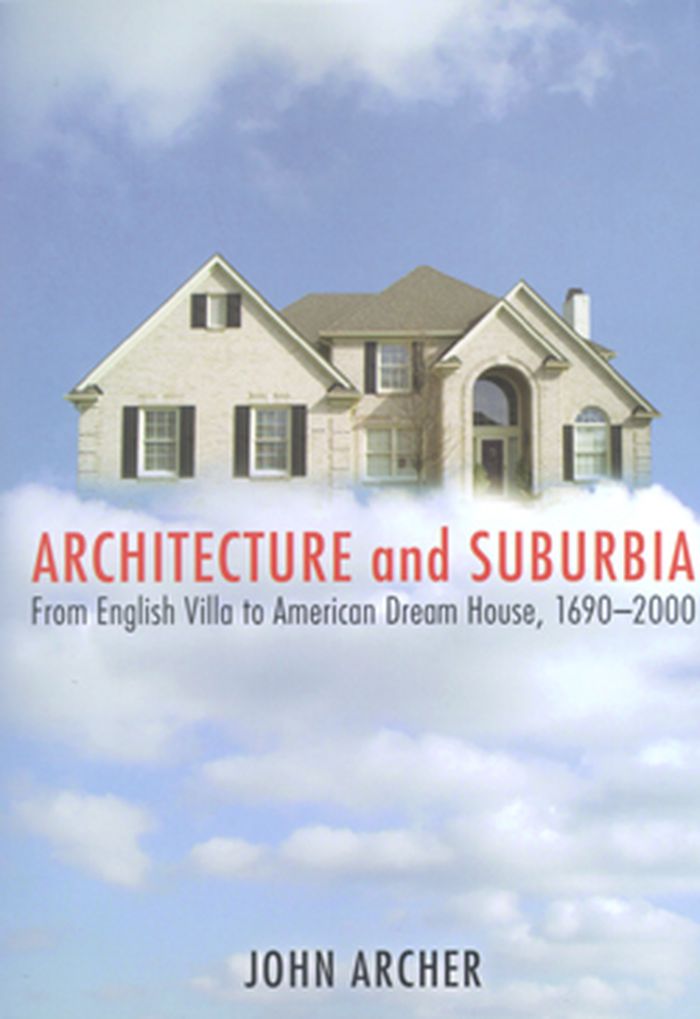
The American suburban dream house-a single-family, detached dwelling, frequently clustered in tight rows and cul-de-sacs-has been attacked for some time as homogeneous and barren, yet the suburbs are home to half of the American population. Architectural historian John Archer suggests the endurance of the ideal house is deeply rooted in the notions of privacy, property, and selfhood that were introduced in late seventeenth-century England and became the foundation of the American nation and identity. Spanning four centuries, Architecture and Suburbia explores phenomena ranging from household furnishings and routines to the proliferation of the dream house in parallel with Cold War politics. Beginning with John Locke, whose Enlightenment philosophy imagined individuals capable of self-fulfillment, Archer examines the eighteenth-century British bourgeois villa and the earliest London suburbs. He recounts how early American homeowners used houses to establish social status and how twentieth-century Americans continued to flock to single-family houses in the suburbs, encouraged by patriotism, fueled by consumerism, and resisting disdain by disaffected youths, designers, and intellectuals. Finally, he recognizes “hybridized” or increasingly diverse American suburbs as the dynamic basis for a strengthened social fabric. From Enlightenment philosophy to rap lyrics, from the rise of a mercantile economy to discussions over neighborhoods, sprawl, and gated communities, Archer addresses the past, present, and future of the American dream house. John Archer is professor of cultural studies and comparative literature at the University of Minnesota. His book The Literature of British Domestic Architecture, 1715-1842, is the standard reference on the subject, and he also contributed to the Encyclopedia of Urban America and the Encyclopedia of Twentieth-Century Architecture.
Architecture and suburbia: from english villa to American dream house, 1690-2000
Actions:
Price:
$27.50
(available to order)
Summary:
The American suburban dream house-a single-family, detached dwelling, frequently clustered in tight rows and cul-de-sacs-has been attacked for some time as homogeneous and barren, yet the suburbs are home to half of the American population. Architectural historian John Archer suggests the endurance of the ideal house is deeply rooted in the notions of privacy, property, and selfhood that were introduced in late seventeenth-century England and became the foundation of the American nation and identity. Spanning four centuries, Architecture and Suburbia explores phenomena ranging from household furnishings and routines to the proliferation of the dream house in parallel with Cold War politics. Beginning with John Locke, whose Enlightenment philosophy imagined individuals capable of self-fulfillment, Archer examines the eighteenth-century British bourgeois villa and the earliest London suburbs. He recounts how early American homeowners used houses to establish social status and how twentieth-century Americans continued to flock to single-family houses in the suburbs, encouraged by patriotism, fueled by consumerism, and resisting disdain by disaffected youths, designers, and intellectuals. Finally, he recognizes “hybridized” or increasingly diverse American suburbs as the dynamic basis for a strengthened social fabric. From Enlightenment philosophy to rap lyrics, from the rise of a mercantile economy to discussions over neighborhoods, sprawl, and gated communities, Archer addresses the past, present, and future of the American dream house. John Archer is professor of cultural studies and comparative literature at the University of Minnesota. His book The Literature of British Domestic Architecture, 1715-1842, is the standard reference on the subject, and he also contributed to the Encyclopedia of Urban America and the Encyclopedia of Twentieth-Century Architecture.
Form:
books
books
Publication:
February 2008, Minneapolis, London
February 2008, Minneapolis, London
Subject:
Suburbs
Suburbs
Form:
books
books
Actions:
Price:
$65.00
(available to order)
Summary:
A presentation of the mid-century modern California style, offering a new perspective on the work of Edward h. Fickett. The mid-century houses of this architect are coveted today, were ubiquitous during their time, and have always demonstrated a presciently deep understanding of the use of indigenous, cost-efficient materials and the integration of interior space with(...)
$65.00
(available to order)
Summary:
A presentation of the mid-century modern California style, offering a new perspective on the work of Edward h. Fickett. The mid-century houses of this architect are coveted today, were ubiquitous during their time, and have always demonstrated a presciently deep understanding of the use of indigenous, cost-efficient materials and the integration of interior space with(...)
Title:
California moderne and the mid-century dream: the architecture of edward h.fickett
Actions:
Price:
$65.00
(available to order)
Summary:
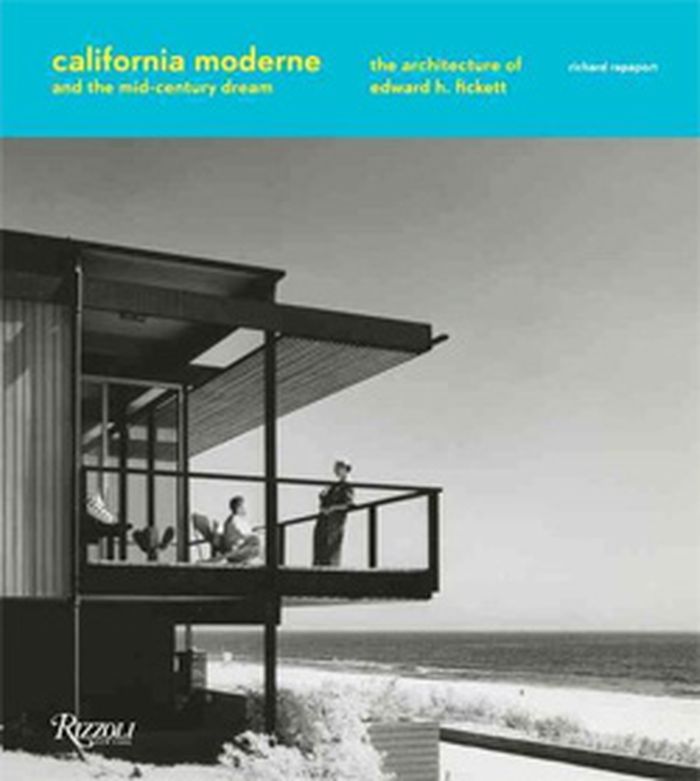
A presentation of the mid-century modern California style, offering a new perspective on the work of Edward h. Fickett. The mid-century houses of this architect are coveted today, were ubiquitous during their time, and have always demonstrated a presciently deep understanding of the use of indigenous, cost-efficient materials and the integration of interior space with Southern California's Mediterranean climate.
California moderne and the mid-century dream: the architecture of edward h.fickett
Actions:
Price:
$65.00
(available to order)
Summary:
A presentation of the mid-century modern California style, offering a new perspective on the work of Edward h. Fickett. The mid-century houses of this architect are coveted today, were ubiquitous during their time, and have always demonstrated a presciently deep understanding of the use of indigenous, cost-efficient materials and the integration of interior space with Southern California's Mediterranean climate.
Form:
books
books
Publication:
May 2014
May 2014
Subject:
Residential Architecture
Residential Architecture
Form:
books
books
Holdings:
Description:
xii, 299 pages : illustrations (some color) ; 29 cm
Description:
xii, 299 pages : illustrations (some color) ; 29 cm
Author:
Subject:
Publication:
New Haven : Published for the Paul Mellon Centre for Studies in British Art by Yale University Press, ©2002.
New Haven : Published for the Paul Mellon Centre for Studies in British Art by Yale University Press, ©2002.
Title:
Nicholas Hawksmoor : rebuilding ancient wonders / Vaughan Hart.
Actions:
Holdings:
Description:
xii, 299 pages : illustrations (some color) ; 29 cm
Nicholas Hawksmoor : rebuilding ancient wonders / Vaughan Hart.
Actions:
Holdings:
Description:
xii, 299 pages : illustrations (some color) ; 29 cm
Form:
books
books
Publication:
New Haven : Published for the Paul Mellon Centre for Studies in British Art by Yale University Press, ©2002.
New Haven : Published for the Paul Mellon Centre for Studies in British Art by Yale University Press, ©2002.
Author:
Subject:
Form:
books
books
Actions:
Price:
$29.95
(available to order)
Summary:
The Cold War was the war that never happened. Nonetheless, it spurred the most significant buildup of military contingency this country has ever known: from the bunkers of Greenbrier, West Virginia, to the "proving grounds" of Nevada, where entire cities were built only to be vaporized. The Cold War was waged on a territory that knew no boundaries but left few traces.(...)
$29.95
(available to order)
Summary:
The Cold War was the war that never happened. Nonetheless, it spurred the most significant buildup of military contingency this country has ever known: from the bunkers of Greenbrier, West Virginia, to the "proving grounds" of Nevada, where entire cities were built only to be vaporized. The Cold War was waged on a territory that knew no boundaries but left few traces.(...)
Title:
Survival city : adventures among the ruins of atomic America
Actions:
Price:
$29.95
(available to order)
Summary:
The Cold War was the war that never happened. Nonetheless, it spurred the most significant buildup of military contingency this country has ever known: from the bunkers of Greenbrier, West Virginia, to the "proving grounds" of Nevada, where entire cities were built only to be vaporized. The Cold War was waged on a territory that knew no boundaries but left few traces. In this fascinating--and at turns frightening and comical--travelogue to the hidden battlefields of the Cold War, Tom Vanderbilt travels the Interstate (itself a product of the Cold War) to uncover the sites of Cold War architecture and reflect on their lasting heritage. In the process, Vanderbilt shows us what the Cold War landscape looked like, how architecture tried to adapt to the threat of mass destruction, how cities coped with the knowledge that they were nuclear targets, and finally what remains of the Cold War theater today, both its visible and invisible legacies. Ultimately, Vanderbilt gives us a deep look into our cultural soul, the dreams and fears that drove us for the last half of the 20th century.
Survival city : adventures among the ruins of atomic America
Actions:
Price:
$29.95
(available to order)
Summary:
The Cold War was the war that never happened. Nonetheless, it spurred the most significant buildup of military contingency this country has ever known: from the bunkers of Greenbrier, West Virginia, to the "proving grounds" of Nevada, where entire cities were built only to be vaporized. The Cold War was waged on a territory that knew no boundaries but left few traces. In this fascinating--and at turns frightening and comical--travelogue to the hidden battlefields of the Cold War, Tom Vanderbilt travels the Interstate (itself a product of the Cold War) to uncover the sites of Cold War architecture and reflect on their lasting heritage. In the process, Vanderbilt shows us what the Cold War landscape looked like, how architecture tried to adapt to the threat of mass destruction, how cities coped with the knowledge that they were nuclear targets, and finally what remains of the Cold War theater today, both its visible and invisible legacies. Ultimately, Vanderbilt gives us a deep look into our cultural soul, the dreams and fears that drove us for the last half of the 20th century.
Form:
books
books
Publication:
March 2002, New York
March 2002, New York
Subject:
Architectural Theory
Architectural Theory
Form:
books
books

Title:
1000 Chairs
1000 Chairs
Actions:
Price:
$17.95
(available to order)
Summary:
More than any other piece of furniture, the chair has been subjected to the wildest dreams of the designers. The particular curve of a back-rest, or the twist of a leg, the angle of a seat or the colour of the entire artefact all reflect the stylistic consciousness of each era. From Gerrit Rietveld and Alvar Aalto via Verner Panton to Eva Zeisel; from Art Nouveau to(...)
$17.95
(available to order)
Summary:
More than any other piece of furniture, the chair has been subjected to the wildest dreams of the designers. The particular curve of a back-rest, or the twist of a leg, the angle of a seat or the colour of the entire artefact all reflect the stylistic consciousness of each era. From Gerrit Rietveld and Alvar Aalto via Verner Panton to Eva Zeisel; from Art Nouveau to(...)
Title:
1000 Chairs
Actions:
Price:
$17.95
(available to order)
Summary:
More than any other piece of furniture, the chair has been subjected to the wildest dreams of the designers. The particular curve of a back-rest, or the twist of a leg, the angle of a seat or the colour of the entire artefact all reflect the stylistic consciousness of each era. From Gerrit Rietveld and Alvar Aalto via Verner Panton to Eva Zeisel; from Art Nouveau to International Style, from Pop Art to Postmodernism, the phenomenon of the chair is so complex that it requires a reference work as comprehensive as this to do it full justice. They are all here: Thonet's bentwood chairs and Hoffmann's sitting-machines, Marcel Breuer's Wassily chair and Ron Arad's avant-garde armchairs. The book, a slightly abbreviated version of our classic title "1000 Chairs", devotes one page to each chair, displayed on its own as pure form, with biographical and historical information about the chairs and their designers. A special treat for anyone who loves design and a must for collectors!
1000 Chairs
Actions:
Price:
$17.95
(available to order)
Summary:
More than any other piece of furniture, the chair has been subjected to the wildest dreams of the designers. The particular curve of a back-rest, or the twist of a leg, the angle of a seat or the colour of the entire artefact all reflect the stylistic consciousness of each era. From Gerrit Rietveld and Alvar Aalto via Verner Panton to Eva Zeisel; from Art Nouveau to International Style, from Pop Art to Postmodernism, the phenomenon of the chair is so complex that it requires a reference work as comprehensive as this to do it full justice. They are all here: Thonet's bentwood chairs and Hoffmann's sitting-machines, Marcel Breuer's Wassily chair and Ron Arad's avant-garde armchairs. The book, a slightly abbreviated version of our classic title "1000 Chairs", devotes one page to each chair, displayed on its own as pure form, with biographical and historical information about the chairs and their designers. A special treat for anyone who loves design and a must for collectors!
Form:
books
books
Publication:
May 2005, Cologne
May 2005, Cologne
Subject:
Interior Design
Interior Design
Form:
books
books
Actions:
Price:
$44.95
(available in store)
Summary:
This book tells the remarkable story of a cartoonist who made his dream come true in a building made of brick, glass and wood. The well-known cartoonist Joost Swarte designed the new Toneelschuur theatre in the historic city centre of Haarlem completely in his own characteristic style. The Delft firm of architects Mecanoo elaborated his outline drawing and turned his(...)
$44.95
(available in store)
Summary:
This book tells the remarkable story of a cartoonist who made his dream come true in a building made of brick, glass and wood. The well-known cartoonist Joost Swarte designed the new Toneelschuur theatre in the historic city centre of Haarlem completely in his own characteristic style. The Delft firm of architects Mecanoo elaborated his outline drawing and turned his(...)
Subject:
Architecture Monographs
Architecture Monographs
Publication:
January 2003, Rotterdam
January 2003, Rotterdam
Title:
Toneelschuur : Joost Swarte / Mecanoo Architects
Actions:
Price:
$44.95
(available in store)
Summary:
This book tells the remarkable story of a cartoonist who made his dream come true in a building made of brick, glass and wood. The well-known cartoonist Joost Swarte designed the new Toneelschuur theatre in the historic city centre of Haarlem completely in his own characteristic style. The Delft firm of architects Mecanoo elaborated his outline drawing and turned his sketch into a functional building. This book documents the unique and experimental project with sketches, drawings and photographs of the building, interior and many details. Henze Boekhout has recorded the new Toneelschuur theatre in a series of photographs, and Jan Tromp describes how the most beautiful theatre in the Netherlands was finally built after years of lobbying. Henk Döll provides a first-hand account of the unusual cooperation between artist and architect, and Paul Hefting writes on folly, play and utopian dreams, the elements that play a role in both Joost Swarte's drawings and the Toneelschuur theatre that has now materialised. The book is designed by Lex Reitsma.
Toneelschuur : Joost Swarte / Mecanoo Architects
Actions:
Price:
$44.95
(available in store)
Summary:
This book tells the remarkable story of a cartoonist who made his dream come true in a building made of brick, glass and wood. The well-known cartoonist Joost Swarte designed the new Toneelschuur theatre in the historic city centre of Haarlem completely in his own characteristic style. The Delft firm of architects Mecanoo elaborated his outline drawing and turned his sketch into a functional building. This book documents the unique and experimental project with sketches, drawings and photographs of the building, interior and many details. Henze Boekhout has recorded the new Toneelschuur theatre in a series of photographs, and Jan Tromp describes how the most beautiful theatre in the Netherlands was finally built after years of lobbying. Henk Döll provides a first-hand account of the unusual cooperation between artist and architect, and Paul Hefting writes on folly, play and utopian dreams, the elements that play a role in both Joost Swarte's drawings and the Toneelschuur theatre that has now materialised. The book is designed by Lex Reitsma.
Form:
books
books
Publication:
January 2003, Rotterdam
January 2003, Rotterdam
Subject:
Architecture Monographs
Architecture Monographs


