


206 Results
Form:
books
books
Title:
Cultivated building materials: industrialized natural resources for architecture and construction
Cultivated building materials: industrialized natural resources for architecture and construction
Actions:
Price:
$89.95
(available to order)
Summary:
The 21st century faces a radical change in how we produce construction materials – a shift towards cultivating, breeding, raising, farming, or growing future resources. This book presents innovative industrialized production methods for cultivated building materials, like cement grown by bacteria, bricks made of mushroom mycelium, or bamboo fibers as reinforcement for(...)
$89.95
(available to order)
Summary:
The 21st century faces a radical change in how we produce construction materials – a shift towards cultivating, breeding, raising, farming, or growing future resources. This book presents innovative industrialized production methods for cultivated building materials, like cement grown by bacteria, bricks made of mushroom mycelium, or bamboo fibers as reinforcement for(...)
Title:
Cultivated building materials: industrialized natural resources for architecture and construction
Actions:
Price:
$89.95
(available to order)
Summary:
The 21st century faces a radical change in how we produce construction materials – a shift towards cultivating, breeding, raising, farming, or growing future resources. This book presents innovative industrialized production methods for cultivated building materials, like cement grown by bacteria, bricks made of mushroom mycelium, or bamboo fibers as reinforcement for concrete. Spanning from scientific research to product development and architectural application, this book builds a bridge between the academic and the professional world of architecture. The book describes the challenges, strategies, and goals in the first part, followed by a second part on bamboo, A cultivated building material and a number of examples in the third part which form the bridge from cultivated materials to building products.
Cultivated building materials: industrialized natural resources for architecture and construction
Actions:
Price:
$89.95
(available to order)
Summary:
The 21st century faces a radical change in how we produce construction materials – a shift towards cultivating, breeding, raising, farming, or growing future resources. This book presents innovative industrialized production methods for cultivated building materials, like cement grown by bacteria, bricks made of mushroom mycelium, or bamboo fibers as reinforcement for concrete. Spanning from scientific research to product development and architectural application, this book builds a bridge between the academic and the professional world of architecture. The book describes the challenges, strategies, and goals in the first part, followed by a second part on bamboo, A cultivated building material and a number of examples in the third part which form the bridge from cultivated materials to building products.
Form:
books
books
Publication:
June 2017
June 2017
Subject:
Materials and Lighting
Materials and Lighting
Form:
books
books
Actions:
Price:
$35.00
(available in store)
Summary:
Perhaps China's most internationally acclaimed architect, Yung Ho Chang is particularly concerned with architecture's role in expressing and reflecting the indigenous culture. He advocates the wide use of bamboo as a building material in Chinese urban design, as put forth in his Bamboo City, exhibited at the Venice Biennale in 2000, but while he focuses attention on the(...)
$35.00
(available in store)
Summary:
Perhaps China's most internationally acclaimed architect, Yung Ho Chang is particularly concerned with architecture's role in expressing and reflecting the indigenous culture. He advocates the wide use of bamboo as a building material in Chinese urban design, as put forth in his Bamboo City, exhibited at the Venice Biennale in 2000, but while he focuses attention on the(...)
Subject:
Architecture Monographs
Architecture Monographs
Publication:
April 2003, New York
April 2003, New York
Title:
Yung Ho Chang / Atelier Feichang Jianzu : a Chinese practice
Actions:
Price:
$35.00
(available in store)
Summary:
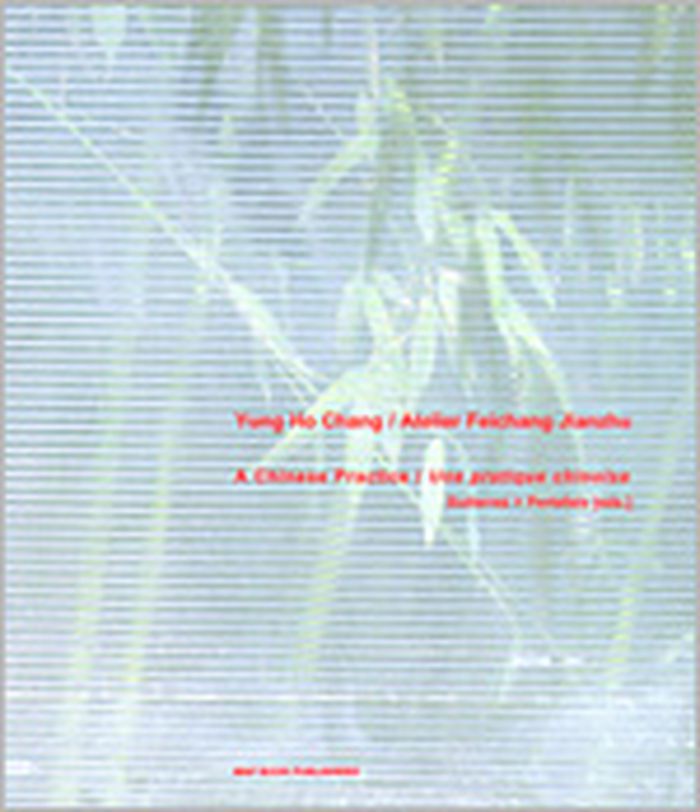
Perhaps China's most internationally acclaimed architect, Yung Ho Chang is particularly concerned with architecture's role in expressing and reflecting the indigenous culture. He advocates the wide use of bamboo as a building material in Chinese urban design, as put forth in his Bamboo City, exhibited at the Venice Biennale in 2000, but while he focuses attention on the changes taking place in Beijing, he is mindful of the globalizing context in which the city is developing. In the past decade, Chang and his Atelier FCIZ (fei chang jan zhu, or unusual architecture), which he founded in the early 1990s as Beijing's first private architectural firm, have created a wide range of intellectually provocative urban projects in China that continue to receive acclaim.
Yung Ho Chang / Atelier Feichang Jianzu : a Chinese practice
Actions:
Price:
$35.00
(available in store)
Summary:
Perhaps China's most internationally acclaimed architect, Yung Ho Chang is particularly concerned with architecture's role in expressing and reflecting the indigenous culture. He advocates the wide use of bamboo as a building material in Chinese urban design, as put forth in his Bamboo City, exhibited at the Venice Biennale in 2000, but while he focuses attention on the changes taking place in Beijing, he is mindful of the globalizing context in which the city is developing. In the past decade, Chang and his Atelier FCIZ (fei chang jan zhu, or unusual architecture), which he founded in the early 1990s as Beijing's first private architectural firm, have created a wide range of intellectually provocative urban projects in China that continue to receive acclaim.
Form:
books
books
Publication:
April 2003, New York
April 2003, New York
Subject:
Architecture Monographs
Architecture Monographs
Form:
books
books
Actions:
Price:
$47.95
(available to order)
Summary:
Natural Architecture Now features all-new site-specific installations by an international list of contributors. From an engineered oasis and climbing structure in Joshua Tree National Park to an intricate bamboo installation on top of the Metropolitan Museum of Art, each project points a way forward for architects to engineer a new organic simplicity of structure and form.
$47.95
(available to order)
Summary:
Natural Architecture Now features all-new site-specific installations by an international list of contributors. From an engineered oasis and climbing structure in Joshua Tree National Park to an intricate bamboo installation on top of the Metropolitan Museum of Art, each project points a way forward for architects to engineer a new organic simplicity of structure and form.
Title:
Natural architecture now : new projects form outside the boundaries of design
Actions:
Price:
$47.95
(available to order)
Summary:
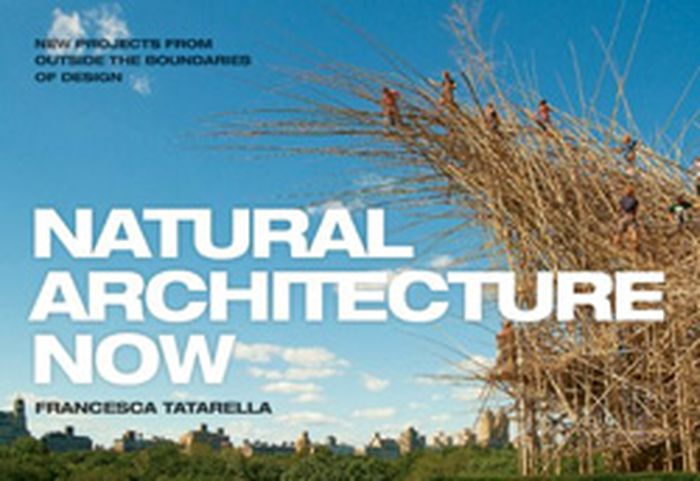
Natural Architecture Now features all-new site-specific installations by an international list of contributors. From an engineered oasis and climbing structure in Joshua Tree National Park to an intricate bamboo installation on top of the Metropolitan Museum of Art, each project points a way forward for architects to engineer a new organic simplicity of structure and form.
Natural architecture now : new projects form outside the boundaries of design
Actions:
Price:
$47.95
(available to order)
Summary:
Natural Architecture Now features all-new site-specific installations by an international list of contributors. From an engineered oasis and climbing structure in Joshua Tree National Park to an intricate bamboo installation on top of the Metropolitan Museum of Art, each project points a way forward for architects to engineer a new organic simplicity of structure and form.
Form:
books
books
Publication:
March 2014
March 2014
Subject:
Green Architecture
Green Architecture
Form:
books
books
Title:
Chinese architecture today
Chinese architecture today
Actions:
Price:
$78.95
(available to order)
Summary:
China is not only a playground for international architectural practices, but has its own active architectural scene between international influences and China's rich building tradition. Twenty-six projects focus on this diverse output. The range of examples includes the reuse of historic factory buildings, experimental new buildings and new applications of old building(...)
$78.95
(available to order)
Summary:
China is not only a playground for international architectural practices, but has its own active architectural scene between international influences and China's rich building tradition. Twenty-six projects focus on this diverse output. The range of examples includes the reuse of historic factory buildings, experimental new buildings and new applications of old building(...)
Title:
Chinese architecture today
Actions:
Price:
$78.95
(available to order)
Summary:
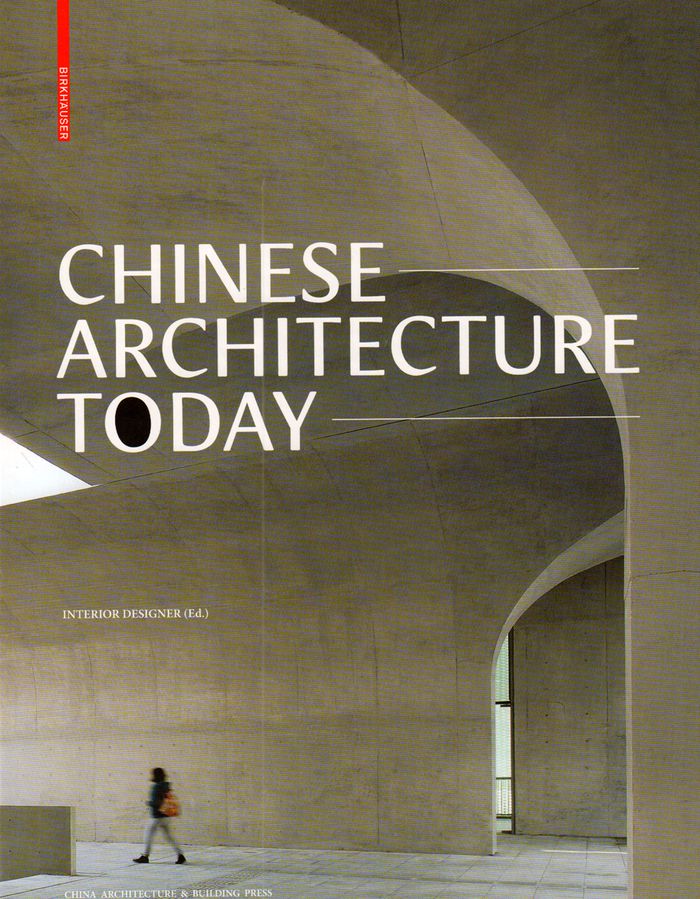
China is not only a playground for international architectural practices, but has its own active architectural scene between international influences and China's rich building tradition. Twenty-six projects focus on this diverse output. The range of examples includes the reuse of historic factory buildings, experimental new buildings and new applications of old building materials such as bamboo.
Chinese architecture today
Actions:
Price:
$78.95
(available to order)
Summary:
China is not only a playground for international architectural practices, but has its own active architectural scene between international influences and China's rich building tradition. Twenty-six projects focus on this diverse output. The range of examples includes the reuse of historic factory buildings, experimental new buildings and new applications of old building materials such as bamboo.
Form:
books
books
Publication:
May 2016
May 2016
Subject:
Contemporary Asian Architecture
Contemporary Asian Architecture
Form:
books
books
Actions:
Price:
$49.99
(available to order)
Summary:
The thread holding this wondrous book together is Hideyuki Oka (1905 - 1995), one of the masters of Japanese graphic design and advertising. The pieces shown in the 200-plus magnificent photos here (almost all full-color) are from Oka's personal collection of traditional packaging, using all natural materials such as bamboo, rice straw, hemp twine, paper, ceramics and leaves.
$49.99
(available to order)
Summary:
The thread holding this wondrous book together is Hideyuki Oka (1905 - 1995), one of the masters of Japanese graphic design and advertising. The pieces shown in the 200-plus magnificent photos here (almost all full-color) are from Oka's personal collection of traditional packaging, using all natural materials such as bamboo, rice straw, hemp twine, paper, ceramics and leaves.
Title:
Tsutsumu: traditional japanese packaging
Actions:
Price:
$49.99
(available to order)
Summary:
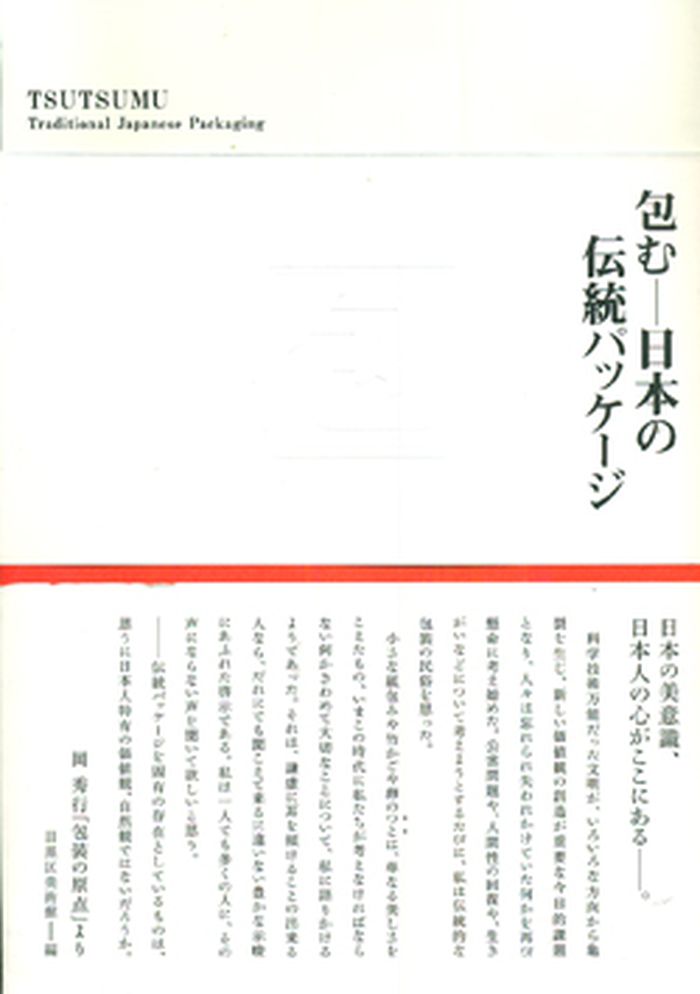
The thread holding this wondrous book together is Hideyuki Oka (1905 - 1995), one of the masters of Japanese graphic design and advertising. The pieces shown in the 200-plus magnificent photos here (almost all full-color) are from Oka's personal collection of traditional packaging, using all natural materials such as bamboo, rice straw, hemp twine, paper, ceramics and leaves.
Tsutsumu: traditional japanese packaging
Actions:
Price:
$49.99
(available to order)
Summary:
The thread holding this wondrous book together is Hideyuki Oka (1905 - 1995), one of the masters of Japanese graphic design and advertising. The pieces shown in the 200-plus magnificent photos here (almost all full-color) are from Oka's personal collection of traditional packaging, using all natural materials such as bamboo, rice straw, hemp twine, paper, ceramics and leaves.
Form:
books
books
Publication:
October 2011
October 2011
Subject:
Paper and packaging design
Paper and packaging design
Form:
books
books
Actions:
Price:
$85.00
(available to order)
Summary:
In his first book in ten years, Franco Maria Ricci presents a collection of photographs celebrating the art and mystery of mazes throughout the ages. Franco Maria Ricci -publisher, art collector, bibliophile, garden designer, visionary - presents this collection of beautiful, haunting photographs chronicling his latest project: a massive bamboo labyrinth near(...)
$85.00
(available to order)
Summary:
In his first book in ten years, Franco Maria Ricci presents a collection of photographs celebrating the art and mystery of mazes throughout the ages. Franco Maria Ricci -publisher, art collector, bibliophile, garden designer, visionary - presents this collection of beautiful, haunting photographs chronicling his latest project: a massive bamboo labyrinth near(...)
Title:
Labyrinths : the art of the maze
Actions:
Price:
$85.00
(available to order)
Summary:
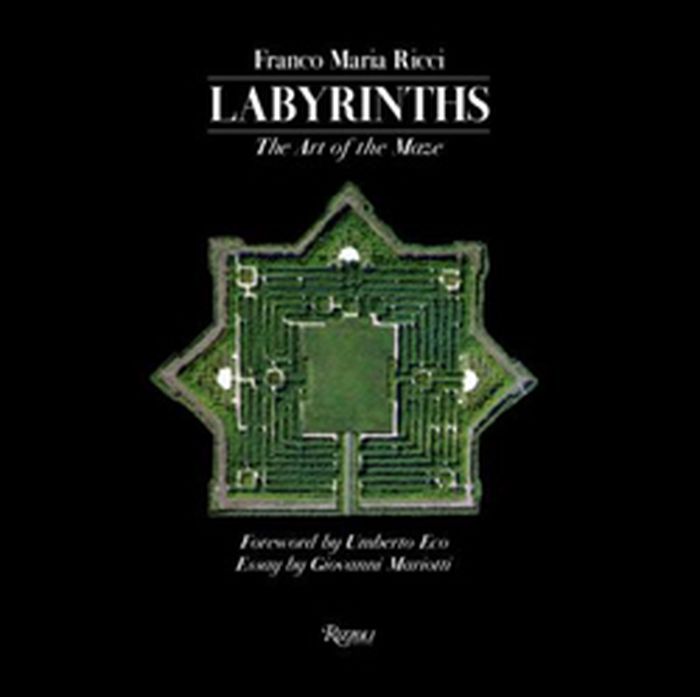
In his first book in ten years, Franco Maria Ricci presents a collection of photographs celebrating the art and mystery of mazes throughout the ages. Franco Maria Ricci -publisher, art collector, bibliophile, garden designer, visionary - presents this collection of beautiful, haunting photographs chronicling his latest project: a massive bamboo labyrinth near Fontanellato, Italy, scheduled to open in 2014.
Labyrinths : the art of the maze
Actions:
Price:
$85.00
(available to order)
Summary:
In his first book in ten years, Franco Maria Ricci presents a collection of photographs celebrating the art and mystery of mazes throughout the ages. Franco Maria Ricci -publisher, art collector, bibliophile, garden designer, visionary - presents this collection of beautiful, haunting photographs chronicling his latest project: a massive bamboo labyrinth near Fontanellato, Italy, scheduled to open in 2014.
Form:
books
books
Publication:
October 2013
October 2013
Subject:
Gardens
Gardens
Form:
books
books
Actions:
Price:
$44.00
(available in store)
Summary:
Bringing together scholars of Chinese art, cinema, culture, performance, and more, this volume shares groundbreaking research on the objects and practices of everyday life in Mao’s China, from bamboo and bricks to dance and film. With engaging narratives and probing analysis, the contributors make a place for China’s experience in the history of global material culture(...)
$44.00
(available in store)
Summary:
Bringing together scholars of Chinese art, cinema, culture, performance, and more, this volume shares groundbreaking research on the objects and practices of everyday life in Mao’s China, from bamboo and bricks to dance and film. With engaging narratives and probing analysis, the contributors make a place for China’s experience in the history of global material culture(...)
Publication:
December 2022
December 2022
Title:
Material contradictions in Mao's China
Actions:
Price:
$44.00
(available in store)
Summary:
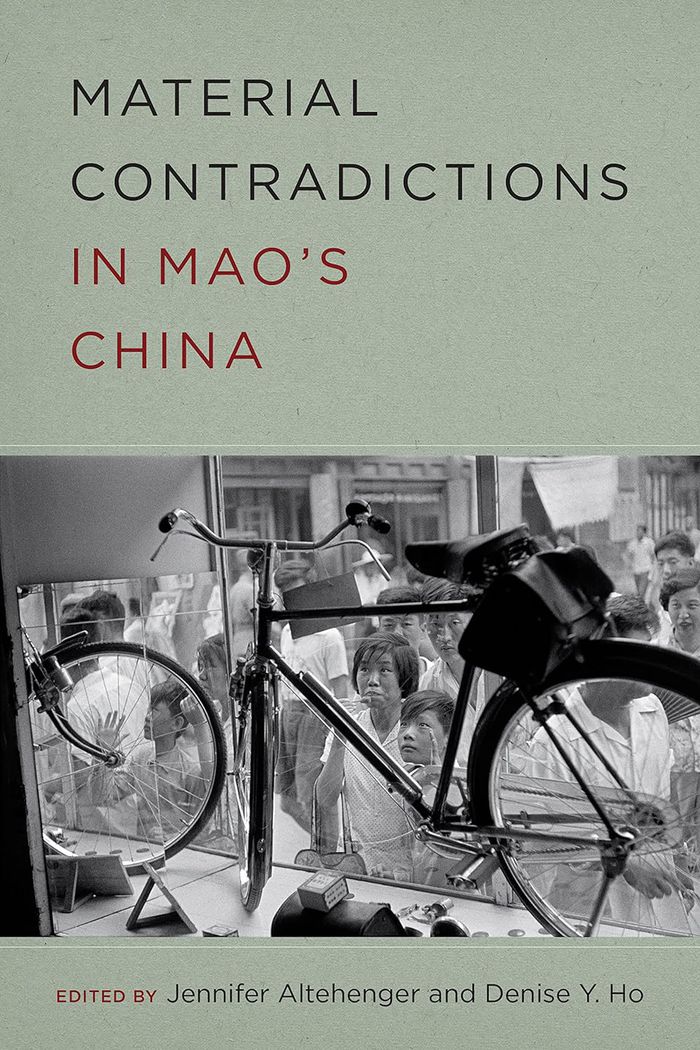
Bringing together scholars of Chinese art, cinema, culture, performance, and more, this volume shares groundbreaking research on the objects and practices of everyday life in Mao’s China, from bamboo and bricks to dance and film. With engaging narratives and probing analysis, the contributors make a place for China’s experience in the history of global material culture and the study of socialist modernity.
Material contradictions in Mao's China
Actions:
Price:
$44.00
(available in store)
Summary:
Bringing together scholars of Chinese art, cinema, culture, performance, and more, this volume shares groundbreaking research on the objects and practices of everyday life in Mao’s China, from bamboo and bricks to dance and film. With engaging narratives and probing analysis, the contributors make a place for China’s experience in the history of global material culture and the study of socialist modernity.
Form:
books
books
Publication:
December 2022
December 2022
Form:
books
books
Title:
Kengo Kuma: Substance
Kengo Kuma: Substance
Actions:
Price:
$100.00
(available in store)
Summary:
Kengo Kuma’s work masterfully engages experimentation, traditional Japanese design, and advanced technology. This results in highly innovative yet beautifully simple, evocative, and human-scaled structures. ''Kengo Kuma: Substance'' features thirty-five ambitious, small-scall projects, from around the world, ranging from captivating wood pavilions, ethereal metal(...)
$100.00
(available in store)
Summary:
Kengo Kuma’s work masterfully engages experimentation, traditional Japanese design, and advanced technology. This results in highly innovative yet beautifully simple, evocative, and human-scaled structures. ''Kengo Kuma: Substance'' features thirty-five ambitious, small-scall projects, from around the world, ranging from captivating wood pavilions, ethereal metal(...)
Title:
Kengo Kuma: Substance
Actions:
Price:
$100.00
(available in store)
Summary:
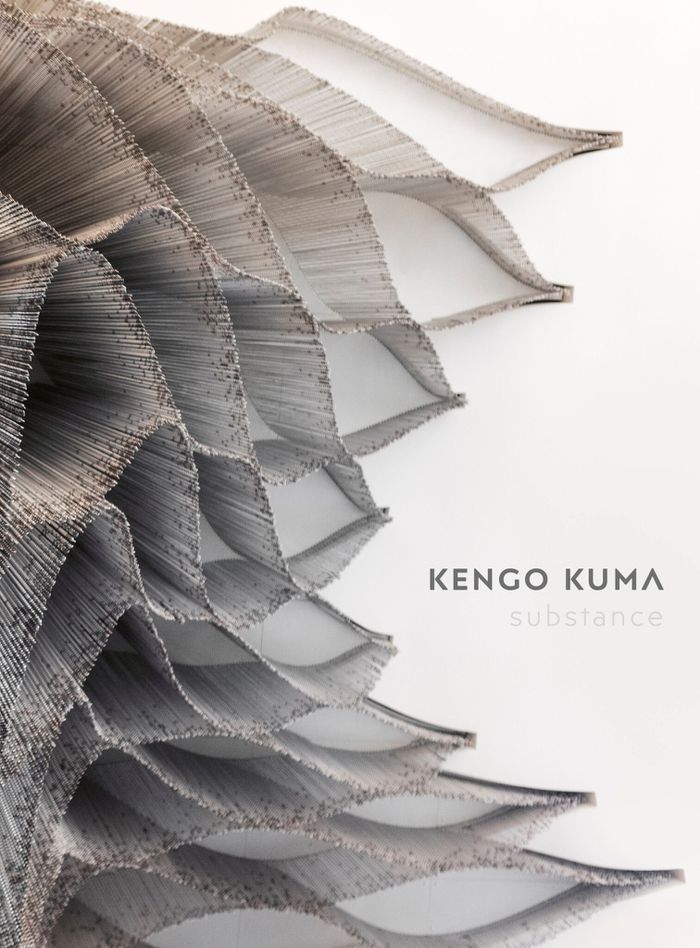
Kengo Kuma’s work masterfully engages experimentation, traditional Japanese design, and advanced technology. This results in highly innovative yet beautifully simple, evocative, and human-scaled structures. ''Kengo Kuma: Substance'' features thirty-five ambitious, small-scall projects, from around the world, ranging from captivating wood pavilions, ethereal metal installations, and sculptural woven structures to experiential stone monuments, intricate bamboo tea houses, and luminous shape-shifting domes.
Kengo Kuma: Substance
Actions:
Price:
$100.00
(available in store)
Summary:
Kengo Kuma’s work masterfully engages experimentation, traditional Japanese design, and advanced technology. This results in highly innovative yet beautifully simple, evocative, and human-scaled structures. ''Kengo Kuma: Substance'' features thirty-five ambitious, small-scall projects, from around the world, ranging from captivating wood pavilions, ethereal metal installations, and sculptural woven structures to experiential stone monuments, intricate bamboo tea houses, and luminous shape-shifting domes.
Form:
books
books
Publication:
December 2025
December 2025
Subject:
Architecture Monographs
Architecture Monographs
Form:
books
books
Price:
$63.95
(available in store)
Summary:
Posing philosophical questions at the outset, the publication “Being Chinese in Architecture” features seven different projects by Rocco Design in Greater China. The work ranges from single house to residential complex, hotel, cultural building to urban planning - Distorted Courtyard House by the Great Wall, Bamboo Pavilion at Berlin/Hong Kong, Giu-gen-tong Villa in(...)
$63.95
(available in store)
Summary:
Posing philosophical questions at the outset, the publication “Being Chinese in Architecture” features seven different projects by Rocco Design in Greater China. The work ranges from single house to residential complex, hotel, cultural building to urban planning - Distorted Courtyard House by the Great Wall, Bamboo Pavilion at Berlin/Hong Kong, Giu-gen-tong Villa in(...)
Publication:
January 2004, Hong Kong
January 2004, Hong Kong
Title:
Being Chinese in architecture : recent works in China by Rocco Design
Actions:
Price:
$63.95
(available in store)
Summary:
Posing philosophical questions at the outset, the publication “Being Chinese in Architecture” features seven different projects by Rocco Design in Greater China. The work ranges from single house to residential complex, hotel, cultural building to urban planning - Distorted Courtyard House by the Great Wall, Bamboo Pavilion at Berlin/Hong Kong, Giu-gen-tong Villa in Shanghai, Boao Canal Village, Hotel project in Chengdu, Beijing Central Business District, and the new winning project Museum of Guangdong.
Being Chinese in architecture : recent works in China by Rocco Design
Actions:
Price:
$63.95
(available in store)
Summary:
Posing philosophical questions at the outset, the publication “Being Chinese in Architecture” features seven different projects by Rocco Design in Greater China. The work ranges from single house to residential complex, hotel, cultural building to urban planning - Distorted Courtyard House by the Great Wall, Bamboo Pavilion at Berlin/Hong Kong, Giu-gen-tong Villa in Shanghai, Boao Canal Village, Hotel project in Chengdu, Beijing Central Business District, and the new winning project Museum of Guangdong.
Form:
books
books
Publication:
January 2004, Hong Kong
January 2004, Hong Kong
Form:
books
books
Actions:
Price:
$180.00
(available to order)
Summary:
Vernacular architecture is architecture without architects; designed based on local needs, these buildings make use of natural resources and demonstrate diverse architectural forms, design elements unique to their culture, and ingenious construction techniques. From bamboo garden pavilions in China to homes made from reeds in southern Iraq, and mud dwellings in Mali to(...)
$180.00
(available to order)
Summary:
Vernacular architecture is architecture without architects; designed based on local needs, these buildings make use of natural resources and demonstrate diverse architectural forms, design elements unique to their culture, and ingenious construction techniques. From bamboo garden pavilions in China to homes made from reeds in southern Iraq, and mud dwellings in Mali to(...)
Title:
Habitat: vernacular architecture for a changing planet
Actions:
Price:
$180.00
(available to order)
Summary:
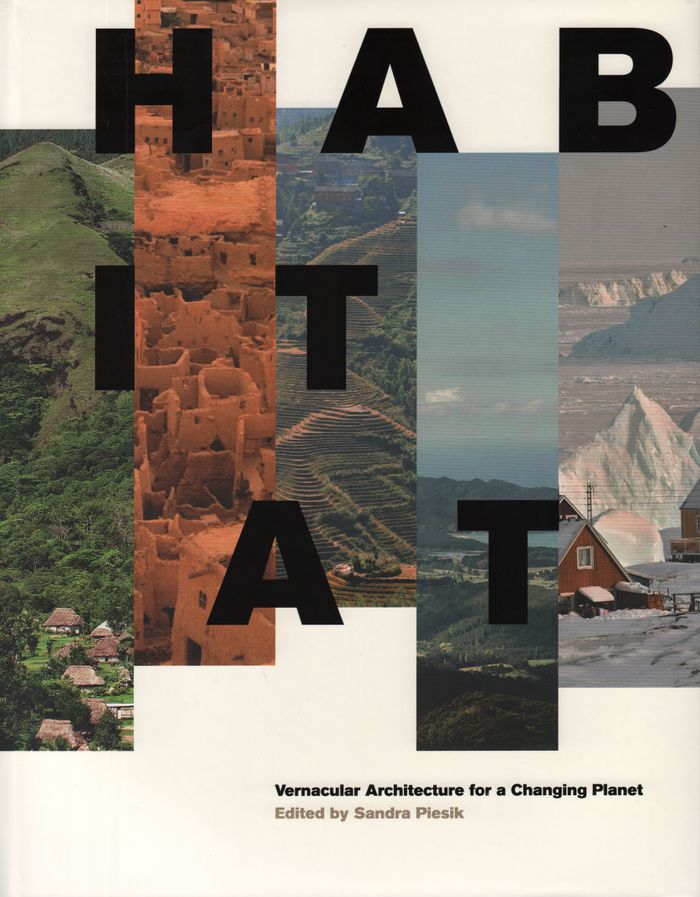
Vernacular architecture is architecture without architects; designed based on local needs, these buildings make use of natural resources and demonstrate diverse architectural forms, design elements unique to their culture, and ingenious construction techniques. From bamboo garden pavilions in China to homes made from reeds in southern Iraq, and mud dwellings in Mali to pine huts in Siberia, Habitat showcases the diverse and indigenous materials that can be used to build innovative, sustainable structures.
Habitat: vernacular architecture for a changing planet
Actions:
Price:
$180.00
(available to order)
Summary:
Vernacular architecture is architecture without architects; designed based on local needs, these buildings make use of natural resources and demonstrate diverse architectural forms, design elements unique to their culture, and ingenious construction techniques. From bamboo garden pavilions in China to homes made from reeds in southern Iraq, and mud dwellings in Mali to pine huts in Siberia, Habitat showcases the diverse and indigenous materials that can be used to build innovative, sustainable structures.
Form:
books
books
Publication:
November 2017
November 2017
Subject:
Contemporary Architecture
Contemporary Architecture


