


530 Results
Form:
textual records
textual records
Title:
Compte rendu du cas juridique de la Ville de Montréal contre James Morgan à la Cour du banc du roi
Compte rendu du cas juridique de la Ville de Montréal contre James Morgan à la Cour du banc du roi
Actions:
Reference number:
ARCH6373
Description:
Compte rendu du cas juridique de la Ville de Montréal contre James Morgan à la Cour du banc du roi, Montréal, pour l'audition de l'appel interjeté à la Cour suprême du Canada, Ottawa, [après le 8 août 1919]. Coupures de journaux. Devis estimatif et calcul des frais de démolition du garage, 1921. Notes de Cormier au sujet de l'affaire, incluant son opinion sur l'impossibilité de la proposition de transformer le garage en appartements. Correspondance avec L. E. Beaulieu, avocat; Léon-Mercier Gouin, avocat; J. C. Lamothe, avocat, et Omer Lapierre, shérif du district de Montréal, au sujet du procès et des honoraires dus à Cormier.
ARCH6373
Description:
Compte rendu du cas juridique de la Ville de Montréal contre James Morgan à la Cour du banc du roi, Montréal, pour l'audition de l'appel interjeté à la Cour suprême du Canada, Ottawa, [après le 8 août 1919]. Coupures de journaux. Devis estimatif et calcul des frais de démolition du garage, 1921. Notes de Cormier au sujet de l'affaire, incluant son opinion sur l'impossibilité de la proposition de transformer le garage en appartements. Correspondance avec L. E. Beaulieu, avocat; Léon-Mercier Gouin, avocat; J. C. Lamothe, avocat, et Omer Lapierre, shérif du district de Montréal, au sujet du procès et des honoraires dus à Cormier.
People:
Date:
1921, 1925-1926
1921, 1925-1926
Title:
Compte rendu du cas juridique de la Ville de Montréal contre James Morgan à la Cour du banc du roi
Actions:
ARCH6373
Description:
Compte rendu du cas juridique de la Ville de Montréal contre James Morgan à la Cour du banc du roi, Montréal, pour l'audition de l'appel interjeté à la Cour suprême du Canada, Ottawa, [après le 8 août 1919]. Coupures de journaux. Devis estimatif et calcul des frais de démolition du garage, 1921. Notes de Cormier au sujet de l'affaire, incluant son opinion sur l'impossibilité de la proposition de transformer le garage en appartements. Correspondance avec L. E. Beaulieu, avocat; Léon-Mercier Gouin, avocat; J. C. Lamothe, avocat, et Omer Lapierre, shérif du district de Montréal, au sujet du procès et des honoraires dus à Cormier.
Compte rendu du cas juridique de la Ville de Montréal contre James Morgan à la Cour du banc du roi
Actions:
ARCH6373
Description:
Compte rendu du cas juridique de la Ville de Montréal contre James Morgan à la Cour du banc du roi, Montréal, pour l'audition de l'appel interjeté à la Cour suprême du Canada, Ottawa, [après le 8 août 1919]. Coupures de journaux. Devis estimatif et calcul des frais de démolition du garage, 1921. Notes de Cormier au sujet de l'affaire, incluant son opinion sur l'impossibilité de la proposition de transformer le garage en appartements. Correspondance avec L. E. Beaulieu, avocat; Léon-Mercier Gouin, avocat; J. C. Lamothe, avocat, et Omer Lapierre, shérif du district de Montréal, au sujet du procès et des honoraires dus à Cormier.
Form:
textual records
textual records
Date:
1921, 1925-1926
1921, 1925-1926
People:
Level of archival description:
Project
Project
Reference number:
AP178.S1.1968.PR03
Description:
This project series documents the Arranjo Urbanístico para a Av. D. Afonso Henriques, in Porto, Portugal. The avenue is also known as Avenida da Ponte. While the records were held in the office’s archives this project was assigned the number 32/60. The office assigned the date 1968 for this project. The project consisted of an urban plan for this historic part of the city. It was done in relation to the Edifício de Escritórios na Av. D. Afonso Henriques (see project series AP178.S1.1968.PR02 described in this fonds). In the 1940s, demolition created a rupture with the remaining buildings, including the Porto Cathedral. Since the 1950s, there have been several studies and proposals to rearrange this part of the city. Siza’s plan was the first to be accepted by the city council in 1968. The project consisted of a new layout for the Avenue D. Afonso Henriques, the connection between the Luis I Bridge to the D. Pedro Square and the São Bento Railway Station. The intention of the project was also to reduce traffic. The project was not realized. Siza also proposed a new design in 2001 for the site across the avenue from this one, known as Avenida da Ponte II. This included a museum, library, stores, parking, and houses. This project related to the building Casa Dos 24 Fernando Távora. The scheme was not realized. Documenting the Arranjo Urbanistico are studies and site plans. For correspondence, project documentation and drawings related to this project see project series Edifício de Escritórios na Av. D. Afonso Henriques, Avenida da Ponte AP178.S1.1968.PR02.
AP178.S1.1968.PR03
Description:
This project series documents the Arranjo Urbanístico para a Av. D. Afonso Henriques, in Porto, Portugal. The avenue is also known as Avenida da Ponte. While the records were held in the office’s archives this project was assigned the number 32/60. The office assigned the date 1968 for this project. The project consisted of an urban plan for this historic part of the city. It was done in relation to the Edifício de Escritórios na Av. D. Afonso Henriques (see project series AP178.S1.1968.PR02 described in this fonds). In the 1940s, demolition created a rupture with the remaining buildings, including the Porto Cathedral. Since the 1950s, there have been several studies and proposals to rearrange this part of the city. Siza’s plan was the first to be accepted by the city council in 1968. The project consisted of a new layout for the Avenue D. Afonso Henriques, the connection between the Luis I Bridge to the D. Pedro Square and the São Bento Railway Station. The intention of the project was also to reduce traffic. The project was not realized. Siza also proposed a new design in 2001 for the site across the avenue from this one, known as Avenida da Ponte II. This included a museum, library, stores, parking, and houses. This project related to the building Casa Dos 24 Fernando Távora. The scheme was not realized. Documenting the Arranjo Urbanistico are studies and site plans. For correspondence, project documentation and drawings related to this project see project series Edifício de Escritórios na Av. D. Afonso Henriques, Avenida da Ponte AP178.S1.1968.PR02.
People:
Date:
1968
1968
Title:
Arranjo Urbanístico para a Av. D. Afonso Henriques, Avenida da Ponte, [Urban planning for Av. D. Afonso Henriques, "Avenida da Ponte"], Porto, Portugal (1968)
Actions:
AP178.S1.1968.PR03
Description:
This project series documents the Arranjo Urbanístico para a Av. D. Afonso Henriques, in Porto, Portugal. The avenue is also known as Avenida da Ponte. While the records were held in the office’s archives this project was assigned the number 32/60. The office assigned the date 1968 for this project. The project consisted of an urban plan for this historic part of the city. It was done in relation to the Edifício de Escritórios na Av. D. Afonso Henriques (see project series AP178.S1.1968.PR02 described in this fonds). In the 1940s, demolition created a rupture with the remaining buildings, including the Porto Cathedral. Since the 1950s, there have been several studies and proposals to rearrange this part of the city. Siza’s plan was the first to be accepted by the city council in 1968. The project consisted of a new layout for the Avenue D. Afonso Henriques, the connection between the Luis I Bridge to the D. Pedro Square and the São Bento Railway Station. The intention of the project was also to reduce traffic. The project was not realized. Siza also proposed a new design in 2001 for the site across the avenue from this one, known as Avenida da Ponte II. This included a museum, library, stores, parking, and houses. This project related to the building Casa Dos 24 Fernando Távora. The scheme was not realized. Documenting the Arranjo Urbanistico are studies and site plans. For correspondence, project documentation and drawings related to this project see project series Edifício de Escritórios na Av. D. Afonso Henriques, Avenida da Ponte AP178.S1.1968.PR02.
Arranjo Urbanístico para a Av. D. Afonso Henriques, Avenida da Ponte, [Urban planning for Av. D. Afonso Henriques, "Avenida da Ponte"], Porto, Portugal (1968)
Actions:
AP178.S1.1968.PR03
Description:
This project series documents the Arranjo Urbanístico para a Av. D. Afonso Henriques, in Porto, Portugal. The avenue is also known as Avenida da Ponte. While the records were held in the office’s archives this project was assigned the number 32/60. The office assigned the date 1968 for this project. The project consisted of an urban plan for this historic part of the city. It was done in relation to the Edifício de Escritórios na Av. D. Afonso Henriques (see project series AP178.S1.1968.PR02 described in this fonds). In the 1940s, demolition created a rupture with the remaining buildings, including the Porto Cathedral. Since the 1950s, there have been several studies and proposals to rearrange this part of the city. Siza’s plan was the first to be accepted by the city council in 1968. The project consisted of a new layout for the Avenue D. Afonso Henriques, the connection between the Luis I Bridge to the D. Pedro Square and the São Bento Railway Station. The intention of the project was also to reduce traffic. The project was not realized. Siza also proposed a new design in 2001 for the site across the avenue from this one, known as Avenida da Ponte II. This included a museum, library, stores, parking, and houses. This project related to the building Casa Dos 24 Fernando Távora. The scheme was not realized. Documenting the Arranjo Urbanistico are studies and site plans. For correspondence, project documentation and drawings related to this project see project series Edifício de Escritórios na Av. D. Afonso Henriques, Avenida da Ponte AP178.S1.1968.PR02.
Level of archival description:
Project
Project
Date:
1968
1968
People:
Form:
drawings
drawings
Actions:
Reference number:
DR2012:0012:046:015
Description:
Includes plans and sections for two separate architectural projects. The roll is labelled "Cité des rivières, Sherbrooke 2003" and is related to Place des Moulins, Esplanade Frontenac, Sherbrooke,Québec, 2003. Plan titles include "Démolition du sous-sol - vue en plan du sous-sol et localisation des vestiges archéologiques et services" and "Plan de localisation et limite des travaux". One of the plans is labelled "SHEV-318-10-501 (March 2003)" and the roll contains plans from a separate project that was used as "reference for SHEV-318". This second project is titled "Store No. 42 for Steinberg`s Ltd., Sherbrooke, Québec" and is by arcitect M.W. Roth, August 1954.
DR2012:0012:046:015
Description:
Includes plans and sections for two separate architectural projects. The roll is labelled "Cité des rivières, Sherbrooke 2003" and is related to Place des Moulins, Esplanade Frontenac, Sherbrooke,Québec, 2003. Plan titles include "Démolition du sous-sol - vue en plan du sous-sol et localisation des vestiges archéologiques et services" and "Plan de localisation et limite des travaux". One of the plans is labelled "SHEV-318-10-501 (March 2003)" and the roll contains plans from a separate project that was used as "reference for SHEV-318". This second project is titled "Store No. 42 for Steinberg`s Ltd., Sherbrooke, Québec" and is by arcitect M.W. Roth, August 1954.
People:
Date:
1954-2003
1954-2003
Title:
Plans and sections for two separate architectural projects, Place des Moulins, Esplanade Frontenac, Sherbrooke, Québec
Actions:
DR2012:0012:046:015
Description:
Includes plans and sections for two separate architectural projects. The roll is labelled "Cité des rivières, Sherbrooke 2003" and is related to Place des Moulins, Esplanade Frontenac, Sherbrooke,Québec, 2003. Plan titles include "Démolition du sous-sol - vue en plan du sous-sol et localisation des vestiges archéologiques et services" and "Plan de localisation et limite des travaux". One of the plans is labelled "SHEV-318-10-501 (March 2003)" and the roll contains plans from a separate project that was used as "reference for SHEV-318". This second project is titled "Store No. 42 for Steinberg`s Ltd., Sherbrooke, Québec" and is by arcitect M.W. Roth, August 1954.
Plans and sections for two separate architectural projects, Place des Moulins, Esplanade Frontenac, Sherbrooke, Québec
Actions:
DR2012:0012:046:015
Description:
Includes plans and sections for two separate architectural projects. The roll is labelled "Cité des rivières, Sherbrooke 2003" and is related to Place des Moulins, Esplanade Frontenac, Sherbrooke,Québec, 2003. Plan titles include "Démolition du sous-sol - vue en plan du sous-sol et localisation des vestiges archéologiques et services" and "Plan de localisation et limite des travaux". One of the plans is labelled "SHEV-318-10-501 (March 2003)" and the roll contains plans from a separate project that was used as "reference for SHEV-318". This second project is titled "Store No. 42 for Steinberg`s Ltd., Sherbrooke, Québec" and is by arcitect M.W. Roth, August 1954.
Form:
drawings
drawings
Date:
1954-2003
1954-2003
People:
Level of archival description:
Project
Project
Actions:
Reference number:
AP075.S1.2006.PR01
Description:
Project series documents Cornelia Hahn Oberlander's landscape project for the restauration of the Evergreen Building, a ten-story office tower on West Pender Street, in Vancouver, British Columbia. The building was previously known as the Laxton Building. The project consisted in renovations work to the building, design by architect Arthur Erickson in the 1980. Oberlander herself worked with Erickson at the time. After helping to save the building from demolition in the early 2000s, Oberlander worked as a landscape consultant for Omicron Architecture Engineering Construction Co. in 2006-2007. She was consulted for the restoration of the landscaping at the street level and the replanting of the planted balconies she had created while working with Erickson. As the building facade consisted in a stepped facade with an alternance of zigzag floor plates and straight floor plates, Oberlander chose cascading plants for the zigzag floors and upright planting for the straight floors. "Since the plants were brought to the structure's edges, the geometries of the building were dramatically amplified." [1] The Evergreen Building received a heritage status in the mid-2000s. This project series contains only materials related to the 2006-2007 renovations project. The project series comprises sketches, design development drawings, including site plans, plantings plans and landscape elevations, and buildings plans used as reference. The project series is also documented through corrsepondence, including correspondence with architects and contractors, specifications, plant lists, digital files of a presentation on the existing site condition, financial material, and research material for the project. Source: [1] Herrington, Susan. Cornelia Hahn Oberlander: Making the Modern Landscape, University of Virginia Press, 2014, 304 pages, p. 139.
AP075.S1.2006.PR01
Description:
Project series documents Cornelia Hahn Oberlander's landscape project for the restauration of the Evergreen Building, a ten-story office tower on West Pender Street, in Vancouver, British Columbia. The building was previously known as the Laxton Building. The project consisted in renovations work to the building, design by architect Arthur Erickson in the 1980. Oberlander herself worked with Erickson at the time. After helping to save the building from demolition in the early 2000s, Oberlander worked as a landscape consultant for Omicron Architecture Engineering Construction Co. in 2006-2007. She was consulted for the restoration of the landscaping at the street level and the replanting of the planted balconies she had created while working with Erickson. As the building facade consisted in a stepped facade with an alternance of zigzag floor plates and straight floor plates, Oberlander chose cascading plants for the zigzag floors and upright planting for the straight floors. "Since the plants were brought to the structure's edges, the geometries of the building were dramatically amplified." [1] The Evergreen Building received a heritage status in the mid-2000s. This project series contains only materials related to the 2006-2007 renovations project. The project series comprises sketches, design development drawings, including site plans, plantings plans and landscape elevations, and buildings plans used as reference. The project series is also documented through corrsepondence, including correspondence with architects and contractors, specifications, plant lists, digital files of a presentation on the existing site condition, financial material, and research material for the project. Source: [1] Herrington, Susan. Cornelia Hahn Oberlander: Making the Modern Landscape, University of Virginia Press, 2014, 304 pages, p. 139.
People:
Date:
2006-2007
2006-2007
Title:
Evergreen Building restoration, Vancouver, British Columbia (2006)
Actions:
AP075.S1.2006.PR01
Description:
Project series documents Cornelia Hahn Oberlander's landscape project for the restauration of the Evergreen Building, a ten-story office tower on West Pender Street, in Vancouver, British Columbia. The building was previously known as the Laxton Building. The project consisted in renovations work to the building, design by architect Arthur Erickson in the 1980. Oberlander herself worked with Erickson at the time. After helping to save the building from demolition in the early 2000s, Oberlander worked as a landscape consultant for Omicron Architecture Engineering Construction Co. in 2006-2007. She was consulted for the restoration of the landscaping at the street level and the replanting of the planted balconies she had created while working with Erickson. As the building facade consisted in a stepped facade with an alternance of zigzag floor plates and straight floor plates, Oberlander chose cascading plants for the zigzag floors and upright planting for the straight floors. "Since the plants were brought to the structure's edges, the geometries of the building were dramatically amplified." [1] The Evergreen Building received a heritage status in the mid-2000s. This project series contains only materials related to the 2006-2007 renovations project. The project series comprises sketches, design development drawings, including site plans, plantings plans and landscape elevations, and buildings plans used as reference. The project series is also documented through corrsepondence, including correspondence with architects and contractors, specifications, plant lists, digital files of a presentation on the existing site condition, financial material, and research material for the project. Source: [1] Herrington, Susan. Cornelia Hahn Oberlander: Making the Modern Landscape, University of Virginia Press, 2014, 304 pages, p. 139.
Evergreen Building restoration, Vancouver, British Columbia (2006)
Actions:
AP075.S1.2006.PR01
Description:
Project series documents Cornelia Hahn Oberlander's landscape project for the restauration of the Evergreen Building, a ten-story office tower on West Pender Street, in Vancouver, British Columbia. The building was previously known as the Laxton Building. The project consisted in renovations work to the building, design by architect Arthur Erickson in the 1980. Oberlander herself worked with Erickson at the time. After helping to save the building from demolition in the early 2000s, Oberlander worked as a landscape consultant for Omicron Architecture Engineering Construction Co. in 2006-2007. She was consulted for the restoration of the landscaping at the street level and the replanting of the planted balconies she had created while working with Erickson. As the building facade consisted in a stepped facade with an alternance of zigzag floor plates and straight floor plates, Oberlander chose cascading plants for the zigzag floors and upright planting for the straight floors. "Since the plants were brought to the structure's edges, the geometries of the building were dramatically amplified." [1] The Evergreen Building received a heritage status in the mid-2000s. This project series contains only materials related to the 2006-2007 renovations project. The project series comprises sketches, design development drawings, including site plans, plantings plans and landscape elevations, and buildings plans used as reference. The project series is also documented through corrsepondence, including correspondence with architects and contractors, specifications, plant lists, digital files of a presentation on the existing site condition, financial material, and research material for the project. Source: [1] Herrington, Susan. Cornelia Hahn Oberlander: Making the Modern Landscape, University of Virginia Press, 2014, 304 pages, p. 139.
Level of archival description:
Project
Project
Date:
2006-2007
2006-2007
People:
Level of archival description:
Project
Project
Reference number:
AP178.S1.1995.PR07
Description:
This project series documents the Renovação e extensão do Museu Stedelijk in Amsterdam, The Netherlands. While the records were held in the office’s archives this project was assigned the number 57/90. The office assigned the date 1995 to this project. At the beginning of the nineties, Rem Koolhaas, Wim Quist, Carel Weeber, and Robert Venturi were invited to propose a design for the extension and renovations of the Stedelijk Museum. Robert Venturi was the architect selected, but the project was suspended in 1993 due to the infeasibility of the program and budget restrictions. The following year, five applicants, including Siza, were asked to present a new design to a committee. In December 1995, Siza was officially announced as the new design architect for the project by the city of Amsterdam. The firm A+D+P was selected as the executive architect. Siza's first proposal was presented in 1998. His master plan included the demolition of the Marmottenhuis, the renovation of the 19th-century patios, and the relocation of the public toilets to the basement in order to create exhibition halls. The master plan also included the construction of three new wings and two underground passages to connect the newer and older buildings. A new wing, located to one side of Sandbergplein, included offices in the basement and on the ground floor as well as exhibition halls on the first floor. A new building surrounding the museum garden included storage space in the basement, a restaurant on the ground floor, and exhibition halls at the first floor. Construction work was projected to start in June 2000, however due to budget restrictions the project was not realized and a new competition was held in 2004. The firm Benthem Crouwel Architects realized the project. Documenting this project are sketches, studies, preliminary drawings, plans, and working drawings. Textual materials include project documentation and correspondence. Photographic materials document the models and project site.
AP178.S1.1995.PR07
Description:
This project series documents the Renovação e extensão do Museu Stedelijk in Amsterdam, The Netherlands. While the records were held in the office’s archives this project was assigned the number 57/90. The office assigned the date 1995 to this project. At the beginning of the nineties, Rem Koolhaas, Wim Quist, Carel Weeber, and Robert Venturi were invited to propose a design for the extension and renovations of the Stedelijk Museum. Robert Venturi was the architect selected, but the project was suspended in 1993 due to the infeasibility of the program and budget restrictions. The following year, five applicants, including Siza, were asked to present a new design to a committee. In December 1995, Siza was officially announced as the new design architect for the project by the city of Amsterdam. The firm A+D+P was selected as the executive architect. Siza's first proposal was presented in 1998. His master plan included the demolition of the Marmottenhuis, the renovation of the 19th-century patios, and the relocation of the public toilets to the basement in order to create exhibition halls. The master plan also included the construction of three new wings and two underground passages to connect the newer and older buildings. A new wing, located to one side of Sandbergplein, included offices in the basement and on the ground floor as well as exhibition halls on the first floor. A new building surrounding the museum garden included storage space in the basement, a restaurant on the ground floor, and exhibition halls at the first floor. Construction work was projected to start in June 2000, however due to budget restrictions the project was not realized and a new competition was held in 2004. The firm Benthem Crouwel Architects realized the project. Documenting this project are sketches, studies, preliminary drawings, plans, and working drawings. Textual materials include project documentation and correspondence. Photographic materials document the models and project site.
People:
Date:
1989-2002
1989-2002
Title:
Renovação e extensão do Museu Stedelijk [Restoration and extension of Stedelijk Museum], Amsterdam, The Netherlands (1995)
Actions:
AP178.S1.1995.PR07
Description:
This project series documents the Renovação e extensão do Museu Stedelijk in Amsterdam, The Netherlands. While the records were held in the office’s archives this project was assigned the number 57/90. The office assigned the date 1995 to this project. At the beginning of the nineties, Rem Koolhaas, Wim Quist, Carel Weeber, and Robert Venturi were invited to propose a design for the extension and renovations of the Stedelijk Museum. Robert Venturi was the architect selected, but the project was suspended in 1993 due to the infeasibility of the program and budget restrictions. The following year, five applicants, including Siza, were asked to present a new design to a committee. In December 1995, Siza was officially announced as the new design architect for the project by the city of Amsterdam. The firm A+D+P was selected as the executive architect. Siza's first proposal was presented in 1998. His master plan included the demolition of the Marmottenhuis, the renovation of the 19th-century patios, and the relocation of the public toilets to the basement in order to create exhibition halls. The master plan also included the construction of three new wings and two underground passages to connect the newer and older buildings. A new wing, located to one side of Sandbergplein, included offices in the basement and on the ground floor as well as exhibition halls on the first floor. A new building surrounding the museum garden included storage space in the basement, a restaurant on the ground floor, and exhibition halls at the first floor. Construction work was projected to start in June 2000, however due to budget restrictions the project was not realized and a new competition was held in 2004. The firm Benthem Crouwel Architects realized the project. Documenting this project are sketches, studies, preliminary drawings, plans, and working drawings. Textual materials include project documentation and correspondence. Photographic materials document the models and project site.
Renovação e extensão do Museu Stedelijk [Restoration and extension of Stedelijk Museum], Amsterdam, The Netherlands (1995)
Actions:
AP178.S1.1995.PR07
Description:
This project series documents the Renovação e extensão do Museu Stedelijk in Amsterdam, The Netherlands. While the records were held in the office’s archives this project was assigned the number 57/90. The office assigned the date 1995 to this project. At the beginning of the nineties, Rem Koolhaas, Wim Quist, Carel Weeber, and Robert Venturi were invited to propose a design for the extension and renovations of the Stedelijk Museum. Robert Venturi was the architect selected, but the project was suspended in 1993 due to the infeasibility of the program and budget restrictions. The following year, five applicants, including Siza, were asked to present a new design to a committee. In December 1995, Siza was officially announced as the new design architect for the project by the city of Amsterdam. The firm A+D+P was selected as the executive architect. Siza's first proposal was presented in 1998. His master plan included the demolition of the Marmottenhuis, the renovation of the 19th-century patios, and the relocation of the public toilets to the basement in order to create exhibition halls. The master plan also included the construction of three new wings and two underground passages to connect the newer and older buildings. A new wing, located to one side of Sandbergplein, included offices in the basement and on the ground floor as well as exhibition halls on the first floor. A new building surrounding the museum garden included storage space in the basement, a restaurant on the ground floor, and exhibition halls at the first floor. Construction work was projected to start in June 2000, however due to budget restrictions the project was not realized and a new competition was held in 2004. The firm Benthem Crouwel Architects realized the project. Documenting this project are sketches, studies, preliminary drawings, plans, and working drawings. Textual materials include project documentation and correspondence. Photographic materials document the models and project site.
Level of archival description:
Project
Project
Date:
1989-2002
1989-2002
People:
Level of archival description:
Project
Project
Reference number:
AP178.S1.1968.PR02
Description:
This project series documents the Edifício de Escritórios na Av. D. Afonso Henriques, in Porto, also referred to as Avenida da Ponte I. While the records were held in the office’s archives this project was assigned the number 31/60. In the past the office identified the project as number 121. The office assigned the dates 1968-1974 for this project. The Edifício de Escritórios na Av. D. Afonso Henriques consisted of a building with offices, stores, and parking. Located on a historic site, the intention for the Edifício de Escritórios was to integrate the building into the existing urban landscape. The building was never realized. This project was done in relation to the Arranjo Urbanístico para a Av. D. Afonso Henriques, which was an urban renewal program in Porto. In the 1940s, waves of demolition in the old town created a rupture with the remaining buildings, including the Porto Cathedral. Since the 1950s, there have been several studies and proposals to revitalize this part of the city. Siza’s plan was the first to be accepted by the city council in 1968. Please see project series AP178.S1.1968.PR03, also described in this fonds, for further documentation. Siza also proposed a new design in 2001 for the site across the avenue from this one, known as Avenida da Ponte II. This included a museum, library, stores, parking, and houses. This project related to the building Casa Dos 24 Fernando Távora. The scheme was not realized. Documenting this project series are drawings, photographic materials and textual documentation. Among the drawings are plans, profiles, elevations, sections, cadastral maps and working details. Photographic materials document the model, site and residents of the neighborhood. Textual materials include project documentation, as well as correspondence with the city of Porto and suppliers. Note that materials related to the Arranjo Urbanístico para a Av. D. Afonso Henriques (project series AP178.S1.1968.PR03 in this fonds) are also found among these materials.
AP178.S1.1968.PR02
Description:
This project series documents the Edifício de Escritórios na Av. D. Afonso Henriques, in Porto, also referred to as Avenida da Ponte I. While the records were held in the office’s archives this project was assigned the number 31/60. In the past the office identified the project as number 121. The office assigned the dates 1968-1974 for this project. The Edifício de Escritórios na Av. D. Afonso Henriques consisted of a building with offices, stores, and parking. Located on a historic site, the intention for the Edifício de Escritórios was to integrate the building into the existing urban landscape. The building was never realized. This project was done in relation to the Arranjo Urbanístico para a Av. D. Afonso Henriques, which was an urban renewal program in Porto. In the 1940s, waves of demolition in the old town created a rupture with the remaining buildings, including the Porto Cathedral. Since the 1950s, there have been several studies and proposals to revitalize this part of the city. Siza’s plan was the first to be accepted by the city council in 1968. Please see project series AP178.S1.1968.PR03, also described in this fonds, for further documentation. Siza also proposed a new design in 2001 for the site across the avenue from this one, known as Avenida da Ponte II. This included a museum, library, stores, parking, and houses. This project related to the building Casa Dos 24 Fernando Távora. The scheme was not realized. Documenting this project series are drawings, photographic materials and textual documentation. Among the drawings are plans, profiles, elevations, sections, cadastral maps and working details. Photographic materials document the model, site and residents of the neighborhood. Textual materials include project documentation, as well as correspondence with the city of Porto and suppliers. Note that materials related to the Arranjo Urbanístico para a Av. D. Afonso Henriques (project series AP178.S1.1968.PR03 in this fonds) are also found among these materials.
People:
Date:
1968-1981
1968-1981
Title:
Edifício de Escritórios na Av. D. Afonso Henriques, Avenida da Ponte [Office building, Av. D. Afonso Henriques], Porto, Portugal (1968-1981)
Actions:
AP178.S1.1968.PR02
Description:
This project series documents the Edifício de Escritórios na Av. D. Afonso Henriques, in Porto, also referred to as Avenida da Ponte I. While the records were held in the office’s archives this project was assigned the number 31/60. In the past the office identified the project as number 121. The office assigned the dates 1968-1974 for this project. The Edifício de Escritórios na Av. D. Afonso Henriques consisted of a building with offices, stores, and parking. Located on a historic site, the intention for the Edifício de Escritórios was to integrate the building into the existing urban landscape. The building was never realized. This project was done in relation to the Arranjo Urbanístico para a Av. D. Afonso Henriques, which was an urban renewal program in Porto. In the 1940s, waves of demolition in the old town created a rupture with the remaining buildings, including the Porto Cathedral. Since the 1950s, there have been several studies and proposals to revitalize this part of the city. Siza’s plan was the first to be accepted by the city council in 1968. Please see project series AP178.S1.1968.PR03, also described in this fonds, for further documentation. Siza also proposed a new design in 2001 for the site across the avenue from this one, known as Avenida da Ponte II. This included a museum, library, stores, parking, and houses. This project related to the building Casa Dos 24 Fernando Távora. The scheme was not realized. Documenting this project series are drawings, photographic materials and textual documentation. Among the drawings are plans, profiles, elevations, sections, cadastral maps and working details. Photographic materials document the model, site and residents of the neighborhood. Textual materials include project documentation, as well as correspondence with the city of Porto and suppliers. Note that materials related to the Arranjo Urbanístico para a Av. D. Afonso Henriques (project series AP178.S1.1968.PR03 in this fonds) are also found among these materials.
Edifício de Escritórios na Av. D. Afonso Henriques, Avenida da Ponte [Office building, Av. D. Afonso Henriques], Porto, Portugal (1968-1981)
Actions:
AP178.S1.1968.PR02
Description:
This project series documents the Edifício de Escritórios na Av. D. Afonso Henriques, in Porto, also referred to as Avenida da Ponte I. While the records were held in the office’s archives this project was assigned the number 31/60. In the past the office identified the project as number 121. The office assigned the dates 1968-1974 for this project. The Edifício de Escritórios na Av. D. Afonso Henriques consisted of a building with offices, stores, and parking. Located on a historic site, the intention for the Edifício de Escritórios was to integrate the building into the existing urban landscape. The building was never realized. This project was done in relation to the Arranjo Urbanístico para a Av. D. Afonso Henriques, which was an urban renewal program in Porto. In the 1940s, waves of demolition in the old town created a rupture with the remaining buildings, including the Porto Cathedral. Since the 1950s, there have been several studies and proposals to revitalize this part of the city. Siza’s plan was the first to be accepted by the city council in 1968. Please see project series AP178.S1.1968.PR03, also described in this fonds, for further documentation. Siza also proposed a new design in 2001 for the site across the avenue from this one, known as Avenida da Ponte II. This included a museum, library, stores, parking, and houses. This project related to the building Casa Dos 24 Fernando Távora. The scheme was not realized. Documenting this project series are drawings, photographic materials and textual documentation. Among the drawings are plans, profiles, elevations, sections, cadastral maps and working details. Photographic materials document the model, site and residents of the neighborhood. Textual materials include project documentation, as well as correspondence with the city of Porto and suppliers. Note that materials related to the Arranjo Urbanístico para a Av. D. Afonso Henriques (project series AP178.S1.1968.PR03 in this fonds) are also found among these materials.
Level of archival description:
Project
Project
Date:
1968-1981
1968-1981
People:
Level of archival description:
Project
Project
Reference number:
AP143.S4.D106
Description:
In 1993, the CCA invited Peter Eisenman to design an installation for the exhibition 'Cities of Artificial Excavation: The Work of Peter Eisenman, 1978-1988'. The exhibition was presented at the CCA from 2 March to 29 May 1994. The drawings and models of this group document the development of Eisenman's installation design from late 1993 through March 1994, as well as the various processes used by the architect in his investigation of the 'Cities of Artificial Excavation'. Material in this file was produced between 1993 and 1994. File contains conceptual drawings, design development drawings, installation drawings, measured drawings, presentation drawings, publication drawings, record drawings, textual records, and models. Documents by Eisenman's office include material for schemes A and B, the first and second proposals for the installation, as well as material for the exhibition installation. Material for scheme A includes conceptual drawings (DR1994:0030:001-005), hardline design development drawings (DR1994:0030:006-011), design development computer-aided drawings (DR1994:0030:012-027), and fully developed drawings (DR1994:0030:028-034). Material for scheme B, a design which is closer to the final project, includes hardline drawings (DR1994:0030:035-044) and computer-aided drawings (DR1994:0030:045-069). Material for the exhibition installation includes: computer-aided drawings (DR1994:0030:070-196), which were generated to construct models for the installation, notably a preliminary model (DR1994:0035) and the final model (DR1994:0036), which was used for planning the exhibition layout; hardline drawings which are the final drawings for the installation (DR1994:0030:262-265); a preliminary exhibition layout (DR1994:0030:280); and Iris colour prints of computer-aided conceptual axonometrics (DR1994:0030:281-282). Three working models show different stages of the design development (DR1994:0031 - DR1994:0034). File contains photographs of the completed installation by Richard Pare (DR1994:0037:001-028), fragments of the installation preserved after its demolition (DR1994:0038:001-0028) and paint samples (DR1994:0038:035-037). File contains Cities of Artificial Excavation exhibition Catalogue Cover Design layouts and trial proofs. This group of material by Eisenman's office includes freehand drawings and collages for early proposals for the cover (DR1994:0029:001-003), ink drawings on Mylar of the floor plans of the four principal projects presented in the exhibition traced from diazotypes (diazotypes: DR1994:0029:014-019; ink drawings: DR1994:0029:004-010), and Iris colour prints of computer-aided drawings which Eisenman's staff used to test different colour schemes (DR1994:0029:020-030). Offset prints for the cover proposing different colour schemes were used to select the cover design used for publication (DR1994:0029:036-039).
AP143.S4.D106
Description:
In 1993, the CCA invited Peter Eisenman to design an installation for the exhibition 'Cities of Artificial Excavation: The Work of Peter Eisenman, 1978-1988'. The exhibition was presented at the CCA from 2 March to 29 May 1994. The drawings and models of this group document the development of Eisenman's installation design from late 1993 through March 1994, as well as the various processes used by the architect in his investigation of the 'Cities of Artificial Excavation'. Material in this file was produced between 1993 and 1994. File contains conceptual drawings, design development drawings, installation drawings, measured drawings, presentation drawings, publication drawings, record drawings, textual records, and models. Documents by Eisenman's office include material for schemes A and B, the first and second proposals for the installation, as well as material for the exhibition installation. Material for scheme A includes conceptual drawings (DR1994:0030:001-005), hardline design development drawings (DR1994:0030:006-011), design development computer-aided drawings (DR1994:0030:012-027), and fully developed drawings (DR1994:0030:028-034). Material for scheme B, a design which is closer to the final project, includes hardline drawings (DR1994:0030:035-044) and computer-aided drawings (DR1994:0030:045-069). Material for the exhibition installation includes: computer-aided drawings (DR1994:0030:070-196), which were generated to construct models for the installation, notably a preliminary model (DR1994:0035) and the final model (DR1994:0036), which was used for planning the exhibition layout; hardline drawings which are the final drawings for the installation (DR1994:0030:262-265); a preliminary exhibition layout (DR1994:0030:280); and Iris colour prints of computer-aided conceptual axonometrics (DR1994:0030:281-282). Three working models show different stages of the design development (DR1994:0031 - DR1994:0034). File contains photographs of the completed installation by Richard Pare (DR1994:0037:001-028), fragments of the installation preserved after its demolition (DR1994:0038:001-0028) and paint samples (DR1994:0038:035-037). File contains Cities of Artificial Excavation exhibition Catalogue Cover Design layouts and trial proofs. This group of material by Eisenman's office includes freehand drawings and collages for early proposals for the cover (DR1994:0029:001-003), ink drawings on Mylar of the floor plans of the four principal projects presented in the exhibition traced from diazotypes (diazotypes: DR1994:0029:014-019; ink drawings: DR1994:0029:004-010), and Iris colour prints of computer-aided drawings which Eisenman's staff used to test different colour schemes (DR1994:0029:020-030). Offset prints for the cover proposing different colour schemes were used to select the cover design used for publication (DR1994:0029:036-039).
People:
Date:
1993-1994
1993-1994
Title:
Cities of Artificial Excavation: The Work of Peter Eisenman, 1978-1988 (1994)
Actions:
AP143.S4.D106
Description:
In 1993, the CCA invited Peter Eisenman to design an installation for the exhibition 'Cities of Artificial Excavation: The Work of Peter Eisenman, 1978-1988'. The exhibition was presented at the CCA from 2 March to 29 May 1994. The drawings and models of this group document the development of Eisenman's installation design from late 1993 through March 1994, as well as the various processes used by the architect in his investigation of the 'Cities of Artificial Excavation'. Material in this file was produced between 1993 and 1994. File contains conceptual drawings, design development drawings, installation drawings, measured drawings, presentation drawings, publication drawings, record drawings, textual records, and models. Documents by Eisenman's office include material for schemes A and B, the first and second proposals for the installation, as well as material for the exhibition installation. Material for scheme A includes conceptual drawings (DR1994:0030:001-005), hardline design development drawings (DR1994:0030:006-011), design development computer-aided drawings (DR1994:0030:012-027), and fully developed drawings (DR1994:0030:028-034). Material for scheme B, a design which is closer to the final project, includes hardline drawings (DR1994:0030:035-044) and computer-aided drawings (DR1994:0030:045-069). Material for the exhibition installation includes: computer-aided drawings (DR1994:0030:070-196), which were generated to construct models for the installation, notably a preliminary model (DR1994:0035) and the final model (DR1994:0036), which was used for planning the exhibition layout; hardline drawings which are the final drawings for the installation (DR1994:0030:262-265); a preliminary exhibition layout (DR1994:0030:280); and Iris colour prints of computer-aided conceptual axonometrics (DR1994:0030:281-282). Three working models show different stages of the design development (DR1994:0031 - DR1994:0034). File contains photographs of the completed installation by Richard Pare (DR1994:0037:001-028), fragments of the installation preserved after its demolition (DR1994:0038:001-0028) and paint samples (DR1994:0038:035-037). File contains Cities of Artificial Excavation exhibition Catalogue Cover Design layouts and trial proofs. This group of material by Eisenman's office includes freehand drawings and collages for early proposals for the cover (DR1994:0029:001-003), ink drawings on Mylar of the floor plans of the four principal projects presented in the exhibition traced from diazotypes (diazotypes: DR1994:0029:014-019; ink drawings: DR1994:0029:004-010), and Iris colour prints of computer-aided drawings which Eisenman's staff used to test different colour schemes (DR1994:0029:020-030). Offset prints for the cover proposing different colour schemes were used to select the cover design used for publication (DR1994:0029:036-039).
Cities of Artificial Excavation: The Work of Peter Eisenman, 1978-1988 (1994)
Actions:
AP143.S4.D106
Description:
In 1993, the CCA invited Peter Eisenman to design an installation for the exhibition 'Cities of Artificial Excavation: The Work of Peter Eisenman, 1978-1988'. The exhibition was presented at the CCA from 2 March to 29 May 1994. The drawings and models of this group document the development of Eisenman's installation design from late 1993 through March 1994, as well as the various processes used by the architect in his investigation of the 'Cities of Artificial Excavation'. Material in this file was produced between 1993 and 1994. File contains conceptual drawings, design development drawings, installation drawings, measured drawings, presentation drawings, publication drawings, record drawings, textual records, and models. Documents by Eisenman's office include material for schemes A and B, the first and second proposals for the installation, as well as material for the exhibition installation. Material for scheme A includes conceptual drawings (DR1994:0030:001-005), hardline design development drawings (DR1994:0030:006-011), design development computer-aided drawings (DR1994:0030:012-027), and fully developed drawings (DR1994:0030:028-034). Material for scheme B, a design which is closer to the final project, includes hardline drawings (DR1994:0030:035-044) and computer-aided drawings (DR1994:0030:045-069). Material for the exhibition installation includes: computer-aided drawings (DR1994:0030:070-196), which were generated to construct models for the installation, notably a preliminary model (DR1994:0035) and the final model (DR1994:0036), which was used for planning the exhibition layout; hardline drawings which are the final drawings for the installation (DR1994:0030:262-265); a preliminary exhibition layout (DR1994:0030:280); and Iris colour prints of computer-aided conceptual axonometrics (DR1994:0030:281-282). Three working models show different stages of the design development (DR1994:0031 - DR1994:0034). File contains photographs of the completed installation by Richard Pare (DR1994:0037:001-028), fragments of the installation preserved after its demolition (DR1994:0038:001-0028) and paint samples (DR1994:0038:035-037). File contains Cities of Artificial Excavation exhibition Catalogue Cover Design layouts and trial proofs. This group of material by Eisenman's office includes freehand drawings and collages for early proposals for the cover (DR1994:0029:001-003), ink drawings on Mylar of the floor plans of the four principal projects presented in the exhibition traced from diazotypes (diazotypes: DR1994:0029:014-019; ink drawings: DR1994:0029:004-010), and Iris colour prints of computer-aided drawings which Eisenman's staff used to test different colour schemes (DR1994:0029:020-030). Offset prints for the cover proposing different colour schemes were used to select the cover design used for publication (DR1994:0029:036-039).
Level of archival description:
File 106
File 106
Date:
1993-1994
1993-1994
People:
Level of archival description:
Project
Project
Actions:
Reference number:
AP143.S4.D108
Description:
The project series documents the executed project for Cites of Artificial Excavation, Madrid, Spain. Material in was produced between 1994 and 1995. In 1993, the CCA invited Peter Eisenman to design an installation for the exhibition 'Cities of Artificial Excavation: The Work of Peter Eisenman, 1978-1988'. The exhibition was presented at the CCA from 2 March to 29 May 1994. The drawings and models in this project series document the development of Eisenman's installation design from late 1993 through March 1994, as well as the various processes used by the architect in his investigation of the 'Cities of Artificial Excavation'. Eisenman uses a computer to superimpose, distort and multiply a Greek cross, while simultaneously modifying its plan and section. The computer enables the architect to generate geometric figures that are extremely difficult to produce by traditional means. It also constitutes a new phase in Eisenman's research into the depersonalization of the creative process, a central concern of his 'Cities of Artificial Excavation' (1978-1988). The Greek cross was one of the elements of the grid developed for the 'Museum of Artifical Excavation', and part of the project he submitted for the Internationale Bauausstellung in Berlin (1980-1986). The project series contains material by Eisenman's office including material for schemes A and B, the first and second proposals for the installation, as well as material for the exhibition installation. Material for scheme A includes conceptual drawings (DR1994:0030:001-005), hardline design development drawings (DR1994:0030:006-011), design development computer-aided drawings (DR1994:0030:012-027), and fully developed drawings (DR1994:0030:028-034). Material for scheme B, a design which is closer to the final project, includes hardline drawings (DR1994:0030:035-044) and computer-aided drawings (DR1994:0030:045-069). Material for the exhibition installation includes: computer-aided drawings (DR1994:0030:070-196) which were generated to construct models for the installation, notably a preliminary model (DR1994:0035) and the final model (DR1994:0036) which was used for planning the exhibition layout; hardline drawings which are the final drawings for the installation (DR1994:0030:262-265); a preliminary exhibition layout (DR1994:0030:280); and Iris colour prints of computer-aided conceptual axonometrics (DR1994:0030:281-282). Three working models show different stages of the design development (DR1994:0031 - DR1994:0034). Also included are photographs of the completed installation by Richard Pare (DR1994:0037:001-028), fragments of the installation preserved after its demolition (DR1994:0038:001-0028), and paint samples (DR1994:0038:035-037). The project series contains design development drawings, working drawings, photographic materials, publication drawings, reference drawings, textual records, and models.
AP143.S4.D108
Description:
The project series documents the executed project for Cites of Artificial Excavation, Madrid, Spain. Material in was produced between 1994 and 1995. In 1993, the CCA invited Peter Eisenman to design an installation for the exhibition 'Cities of Artificial Excavation: The Work of Peter Eisenman, 1978-1988'. The exhibition was presented at the CCA from 2 March to 29 May 1994. The drawings and models in this project series document the development of Eisenman's installation design from late 1993 through March 1994, as well as the various processes used by the architect in his investigation of the 'Cities of Artificial Excavation'. Eisenman uses a computer to superimpose, distort and multiply a Greek cross, while simultaneously modifying its plan and section. The computer enables the architect to generate geometric figures that are extremely difficult to produce by traditional means. It also constitutes a new phase in Eisenman's research into the depersonalization of the creative process, a central concern of his 'Cities of Artificial Excavation' (1978-1988). The Greek cross was one of the elements of the grid developed for the 'Museum of Artifical Excavation', and part of the project he submitted for the Internationale Bauausstellung in Berlin (1980-1986). The project series contains material by Eisenman's office including material for schemes A and B, the first and second proposals for the installation, as well as material for the exhibition installation. Material for scheme A includes conceptual drawings (DR1994:0030:001-005), hardline design development drawings (DR1994:0030:006-011), design development computer-aided drawings (DR1994:0030:012-027), and fully developed drawings (DR1994:0030:028-034). Material for scheme B, a design which is closer to the final project, includes hardline drawings (DR1994:0030:035-044) and computer-aided drawings (DR1994:0030:045-069). Material for the exhibition installation includes: computer-aided drawings (DR1994:0030:070-196) which were generated to construct models for the installation, notably a preliminary model (DR1994:0035) and the final model (DR1994:0036) which was used for planning the exhibition layout; hardline drawings which are the final drawings for the installation (DR1994:0030:262-265); a preliminary exhibition layout (DR1994:0030:280); and Iris colour prints of computer-aided conceptual axonometrics (DR1994:0030:281-282). Three working models show different stages of the design development (DR1994:0031 - DR1994:0034). Also included are photographs of the completed installation by Richard Pare (DR1994:0037:001-028), fragments of the installation preserved after its demolition (DR1994:0038:001-0028), and paint samples (DR1994:0038:035-037). The project series contains design development drawings, working drawings, photographic materials, publication drawings, reference drawings, textual records, and models.
People:
Date:
1994-1995
1994-1995
Title:
Cities of Artificial Excavation, Madrid
Actions:
AP143.S4.D108
Description:
The project series documents the executed project for Cites of Artificial Excavation, Madrid, Spain. Material in was produced between 1994 and 1995. In 1993, the CCA invited Peter Eisenman to design an installation for the exhibition 'Cities of Artificial Excavation: The Work of Peter Eisenman, 1978-1988'. The exhibition was presented at the CCA from 2 March to 29 May 1994. The drawings and models in this project series document the development of Eisenman's installation design from late 1993 through March 1994, as well as the various processes used by the architect in his investigation of the 'Cities of Artificial Excavation'. Eisenman uses a computer to superimpose, distort and multiply a Greek cross, while simultaneously modifying its plan and section. The computer enables the architect to generate geometric figures that are extremely difficult to produce by traditional means. It also constitutes a new phase in Eisenman's research into the depersonalization of the creative process, a central concern of his 'Cities of Artificial Excavation' (1978-1988). The Greek cross was one of the elements of the grid developed for the 'Museum of Artifical Excavation', and part of the project he submitted for the Internationale Bauausstellung in Berlin (1980-1986). The project series contains material by Eisenman's office including material for schemes A and B, the first and second proposals for the installation, as well as material for the exhibition installation. Material for scheme A includes conceptual drawings (DR1994:0030:001-005), hardline design development drawings (DR1994:0030:006-011), design development computer-aided drawings (DR1994:0030:012-027), and fully developed drawings (DR1994:0030:028-034). Material for scheme B, a design which is closer to the final project, includes hardline drawings (DR1994:0030:035-044) and computer-aided drawings (DR1994:0030:045-069). Material for the exhibition installation includes: computer-aided drawings (DR1994:0030:070-196) which were generated to construct models for the installation, notably a preliminary model (DR1994:0035) and the final model (DR1994:0036) which was used for planning the exhibition layout; hardline drawings which are the final drawings for the installation (DR1994:0030:262-265); a preliminary exhibition layout (DR1994:0030:280); and Iris colour prints of computer-aided conceptual axonometrics (DR1994:0030:281-282). Three working models show different stages of the design development (DR1994:0031 - DR1994:0034). Also included are photographs of the completed installation by Richard Pare (DR1994:0037:001-028), fragments of the installation preserved after its demolition (DR1994:0038:001-0028), and paint samples (DR1994:0038:035-037). The project series contains design development drawings, working drawings, photographic materials, publication drawings, reference drawings, textual records, and models.
Cities of Artificial Excavation, Madrid
Actions:
AP143.S4.D108
Description:
The project series documents the executed project for Cites of Artificial Excavation, Madrid, Spain. Material in was produced between 1994 and 1995. In 1993, the CCA invited Peter Eisenman to design an installation for the exhibition 'Cities of Artificial Excavation: The Work of Peter Eisenman, 1978-1988'. The exhibition was presented at the CCA from 2 March to 29 May 1994. The drawings and models in this project series document the development of Eisenman's installation design from late 1993 through March 1994, as well as the various processes used by the architect in his investigation of the 'Cities of Artificial Excavation'. Eisenman uses a computer to superimpose, distort and multiply a Greek cross, while simultaneously modifying its plan and section. The computer enables the architect to generate geometric figures that are extremely difficult to produce by traditional means. It also constitutes a new phase in Eisenman's research into the depersonalization of the creative process, a central concern of his 'Cities of Artificial Excavation' (1978-1988). The Greek cross was one of the elements of the grid developed for the 'Museum of Artifical Excavation', and part of the project he submitted for the Internationale Bauausstellung in Berlin (1980-1986). The project series contains material by Eisenman's office including material for schemes A and B, the first and second proposals for the installation, as well as material for the exhibition installation. Material for scheme A includes conceptual drawings (DR1994:0030:001-005), hardline design development drawings (DR1994:0030:006-011), design development computer-aided drawings (DR1994:0030:012-027), and fully developed drawings (DR1994:0030:028-034). Material for scheme B, a design which is closer to the final project, includes hardline drawings (DR1994:0030:035-044) and computer-aided drawings (DR1994:0030:045-069). Material for the exhibition installation includes: computer-aided drawings (DR1994:0030:070-196) which were generated to construct models for the installation, notably a preliminary model (DR1994:0035) and the final model (DR1994:0036) which was used for planning the exhibition layout; hardline drawings which are the final drawings for the installation (DR1994:0030:262-265); a preliminary exhibition layout (DR1994:0030:280); and Iris colour prints of computer-aided conceptual axonometrics (DR1994:0030:281-282). Three working models show different stages of the design development (DR1994:0031 - DR1994:0034). Also included are photographs of the completed installation by Richard Pare (DR1994:0037:001-028), fragments of the installation preserved after its demolition (DR1994:0038:001-0028), and paint samples (DR1994:0038:035-037). The project series contains design development drawings, working drawings, photographic materials, publication drawings, reference drawings, textual records, and models.
Level of archival description:
File 108
File 108
Date:
1994-1995
1994-1995
People:
Form:
archives
Level of archival description:
Fonds
archives
Level of archival description:
Fonds
Title:
Milton Parc fonds
Milton Parc fonds
Actions:
Reference number:
AP025
Synopsis:
The Milton Parc fonds, 1969 – 1989, documents the Société du patrimoine urbaine de Montréal’s (SPUM) planning, design and renovation of Montreal’s historic Milton Parc neighbourhood. Recognized as one of the largest co-operative rehabilitation projects completed in Canada, the Milton Parc housing project (1979-1982) renovated over 135 historic buildings and 597 dwelling units within Milton Parc’s 6-block radius. The fonds consists of the following materials: approximately 600 drawings, 85 l.m. of textual records, 0.6 l.m. of slides, 0.6 l.m.of photographs, 8 posters, 3 seals, 2 models, 2 rubber stamps, and 2 audio cassettes.
AP025
Synopsis:
The Milton Parc fonds, 1969 – 1989, documents the Société du patrimoine urbaine de Montréal’s (SPUM) planning, design and renovation of Montreal’s historic Milton Parc neighbourhood. Recognized as one of the largest co-operative rehabilitation projects completed in Canada, the Milton Parc housing project (1979-1982) renovated over 135 historic buildings and 597 dwelling units within Milton Parc’s 6-block radius. The fonds consists of the following materials: approximately 600 drawings, 85 l.m. of textual records, 0.6 l.m. of slides, 0.6 l.m.of photographs, 8 posters, 3 seals, 2 models, 2 rubber stamps, and 2 audio cassettes.
People:
Date:
1962-1989
1962-1989
Title:
Milton Parc fonds
Actions:
AP025
Synopsis:
The Milton Parc fonds, 1969 – 1989, documents the Société du patrimoine urbaine de Montréal’s (SPUM) planning, design and renovation of Montreal’s historic Milton Parc neighbourhood. Recognized as one of the largest co-operative rehabilitation projects completed in Canada, the Milton Parc housing project (1979-1982) renovated over 135 historic buildings and 597 dwelling units within Milton Parc’s 6-block radius. The fonds consists of the following materials: approximately 600 drawings, 85 l.m. of textual records, 0.6 l.m. of slides, 0.6 l.m.of photographs, 8 posters, 3 seals, 2 models, 2 rubber stamps, and 2 audio cassettes.
Milton Parc fonds
Actions:
AP025
Synopsis:
The Milton Parc fonds, 1969 – 1989, documents the Société du patrimoine urbaine de Montréal’s (SPUM) planning, design and renovation of Montreal’s historic Milton Parc neighbourhood. Recognized as one of the largest co-operative rehabilitation projects completed in Canada, the Milton Parc housing project (1979-1982) renovated over 135 historic buildings and 597 dwelling units within Milton Parc’s 6-block radius. The fonds consists of the following materials: approximately 600 drawings, 85 l.m. of textual records, 0.6 l.m. of slides, 0.6 l.m.of photographs, 8 posters, 3 seals, 2 models, 2 rubber stamps, and 2 audio cassettes.
Form:
archives
Level of archival description:
Fonds
archives
Level of archival description:
Fonds
Date:
1962-1989
1962-1989
People:
Form:
exhibitions
exhibitions
Actions:
Description:
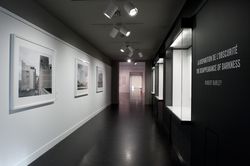
The exhibition Robert Burley: The Disappearance of Darkness presents a series of photographs by Canadian artist Robert Burley, documenting the decline of traditional photographic equipment manufacturing brought on by new technologies. Since 2005, digital photographic technology has increasingly displaced its analog predecessor, resulting in a plummeting demand for(...)
The exhibition Robert Burley: The Disappearance of Darkness presents a series of photographs by Canadian artist Robert Burley, documenting the decline of traditional photographic equipment manufacturing brought on by new technologies. Since 2005, digital photographic technology has increasingly displaced its analog predecessor, resulting in a plummeting demand for(...)
Location:
Hall cases
Hall cases
Date:
11 September 2009 to 15 November 2009
11 September 2009 to 15 November 2009
Title:
Robert Burley: The Disappearance of Darkness
Actions:
Description:
The exhibition Robert Burley: The Disappearance of Darkness presents a series of photographs by Canadian artist Robert Burley, documenting the decline of traditional photographic equipment manufacturing brought on by new technologies. Since 2005, digital photographic technology has increasingly displaced its analog predecessor, resulting in a plummeting demand for(...)
Robert Burley: The Disappearance of Darkness
Actions:
Description:
The exhibition Robert Burley: The Disappearance of Darkness presents a series of photographs by Canadian artist Robert Burley, documenting the decline of traditional photographic equipment manufacturing brought on by new technologies. Since 2005, digital photographic technology has increasingly displaced its analog predecessor, resulting in a plummeting demand for(...)
Form:
exhibitions
exhibitions
Date:
11 September 2009 to
15 November 2009
11 September 2009 to
15 November 2009
Location:
Hall cases
Hall cases


