


176 Results
Form:
books
books
Actions:
Holdings:
Description:
308 : illustrations (some color) ; 30 cm
Description:
308 : illustrations (some color) ; 30 cm
Author:
Subject:
Publication:
Baltimore, Md. : Baltimore Museum of Art ; New York : Abbeville Press, ©1993.
Baltimore, Md. : Baltimore Museum of Art ; New York : Abbeville Press, ©1993.
Title:
Classical taste in America 1800-1840 / Wendy A. Cooper.
Actions:
Holdings:
Description:
308 : illustrations (some color) ; 30 cm
Classical taste in America 1800-1840 / Wendy A. Cooper.
Actions:
Holdings:
Description:
308 : illustrations (some color) ; 30 cm
Form:
books
books
Publication:
Baltimore, Md. : Baltimore Museum of Art ; New York : Abbeville Press, ©1993.
Baltimore, Md. : Baltimore Museum of Art ; New York : Abbeville Press, ©1993.
Author:
Subject:
Form:
books
books
Price:
$100.00
(available to order)
Summary:
Throughout the 1920s and ’30s, the Higher Art and Technical Studios in Moscow, more commonly known as Vkhutemas, adopted what it called the ''objective method'' to facilitate instruction on a mass scale. The school was the first to implement mass art and technology education, which was seen as essential to the Soviet Union’s dominant modernist paradigm. With ''Avant-Garde(...)
$100.00
(available to order)
Summary:
Throughout the 1920s and ’30s, the Higher Art and Technical Studios in Moscow, more commonly known as Vkhutemas, adopted what it called the ''objective method'' to facilitate instruction on a mass scale. The school was the first to implement mass art and technology education, which was seen as essential to the Soviet Union’s dominant modernist paradigm. With ''Avant-Garde(...)
Title:
Avant-garde as method: Vkhutemas and the pedagogy of space 1920-1930
Actions:
Price:
$100.00
(available to order)
Summary:
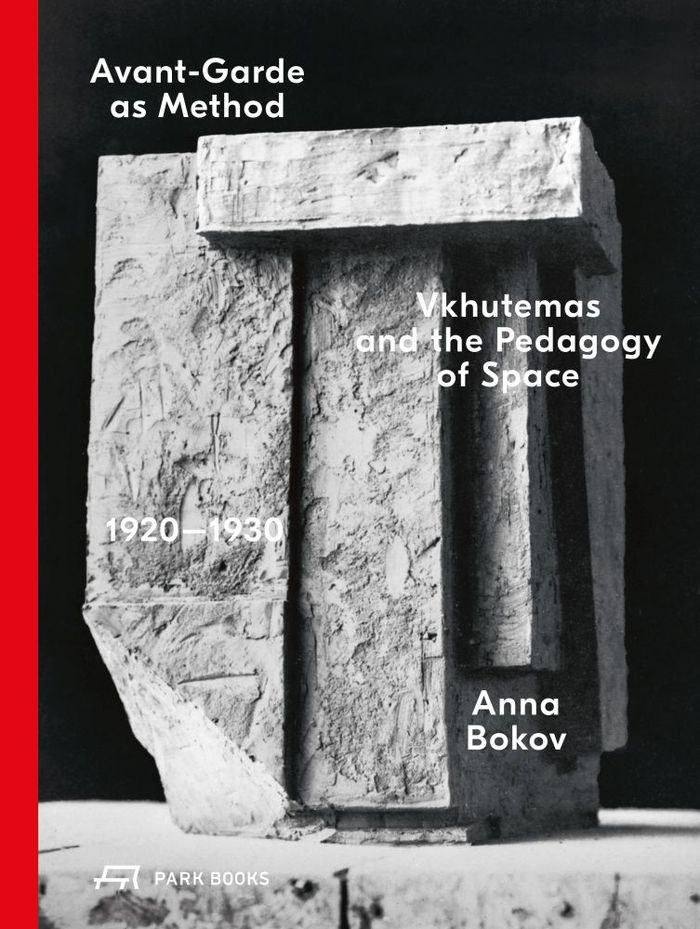
Throughout the 1920s and ’30s, the Higher Art and Technical Studios in Moscow, more commonly known as Vkhutemas, adopted what it called the ''objective method'' to facilitate instruction on a mass scale. The school was the first to implement mass art and technology education, which was seen as essential to the Soviet Union’s dominant modernist paradigm. With ''Avant-Garde as method,'' architect and historian Anna Bokov explores the nature of art and technology education in the Soviet Union. The pedagogical program at Vkhutemas, she shows, combined longstanding academic ideas and practices with more nascent industrial era ones to initiate a new type of pedagogy that took an explorative approach and drew its strength from continuous feedback and exchange between students and educators. Elaborating on the ways the Vkhutemas curriculum challenged established canons of academic tradition by replacing it with open-ended inquiry, Bokov then shows how this came to be articulated in architectural and urban projects within the school’s advanced studios.
Avant-garde as method: Vkhutemas and the pedagogy of space 1920-1930
Actions:
Price:
$100.00
(available to order)
Summary:
Throughout the 1920s and ’30s, the Higher Art and Technical Studios in Moscow, more commonly known as Vkhutemas, adopted what it called the ''objective method'' to facilitate instruction on a mass scale. The school was the first to implement mass art and technology education, which was seen as essential to the Soviet Union’s dominant modernist paradigm. With ''Avant-Garde as method,'' architect and historian Anna Bokov explores the nature of art and technology education in the Soviet Union. The pedagogical program at Vkhutemas, she shows, combined longstanding academic ideas and practices with more nascent industrial era ones to initiate a new type of pedagogy that took an explorative approach and drew its strength from continuous feedback and exchange between students and educators. Elaborating on the ways the Vkhutemas curriculum challenged established canons of academic tradition by replacing it with open-ended inquiry, Bokov then shows how this came to be articulated in architectural and urban projects within the school’s advanced studios.
Form:
books
books
Publication:
April 2020
April 2020
Subject:
Modernism
Modernism
Form:
books
books
Title:
City economics
City economics
Actions:
Price:
$74.95
(available to order)
Summary:
This introductory textbook on the economics of cities is aimed at students of urban and regional policy as well as of undergraduate economics. It deals with standard topics, including automobiles, mass transit, pollution, housing, and education but it also discusses non-standard topics such as segregation, water supply, sewers, garbage, fire prevention, housing codes,(...)
$74.95
(available to order)
Summary:
This introductory textbook on the economics of cities is aimed at students of urban and regional policy as well as of undergraduate economics. It deals with standard topics, including automobiles, mass transit, pollution, housing, and education but it also discusses non-standard topics such as segregation, water supply, sewers, garbage, fire prevention, housing codes,(...)
Title:
City economics
Actions:
Price:
$74.95
(available to order)
Summary:
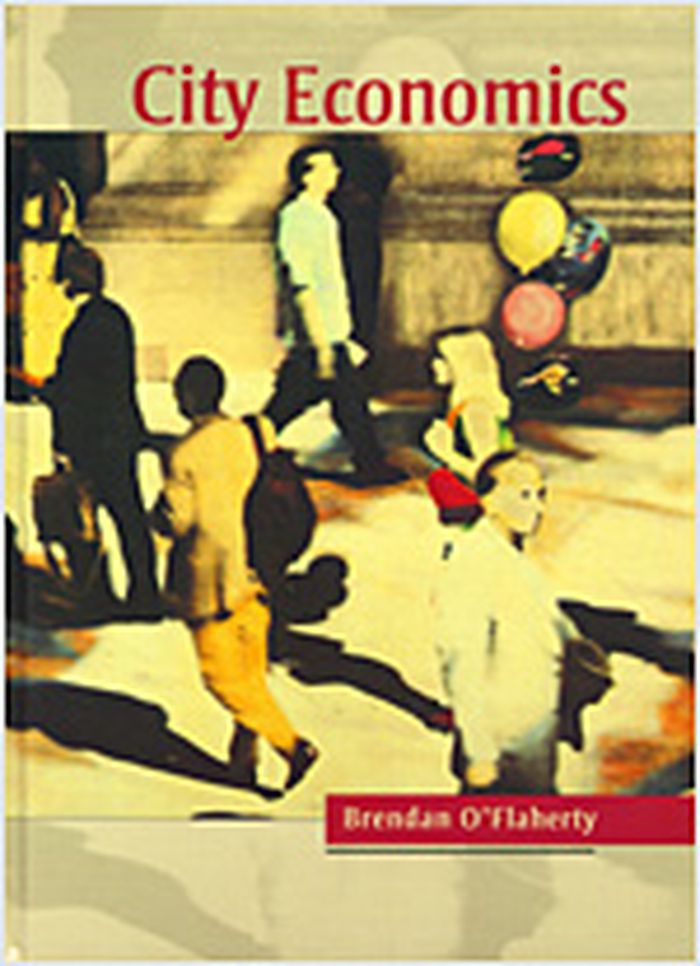
This introductory textbook on the economics of cities is aimed at students of urban and regional policy as well as of undergraduate economics. It deals with standard topics, including automobiles, mass transit, pollution, housing, and education but it also discusses non-standard topics such as segregation, water supply, sewers, garbage, fire prevention, housing codes, homelessness, crime, illicit drugs, and economic development.
City economics
Actions:
Price:
$74.95
(available to order)
Summary:
This introductory textbook on the economics of cities is aimed at students of urban and regional policy as well as of undergraduate economics. It deals with standard topics, including automobiles, mass transit, pollution, housing, and education but it also discusses non-standard topics such as segregation, water supply, sewers, garbage, fire prevention, housing codes, homelessness, crime, illicit drugs, and economic development.
Form:
books
books
Publication:
October 2005, Cambridge, Mass.
October 2005, Cambridge, Mass.
Subject:
Urban Theory
Urban Theory
Form:
books
books
Title:
The university is now on air, broadcasting modern architecture. Eight episodes by Joaquim Moreno
The university is now on air, broadcasting modern architecture. Eight episodes by Joaquim Moreno
Actions:
Price:
$45.00
(available in store)
Summary:
"The university is now on air, broadcasting modern architecture" examines a key experiment by The Open University to mobilize new media environments for distance and adult education. Eight episodes written by Joaquim Moreno, conversations with Tim Benton, Nick Levinson, Adrian Forty, Joseph Rykwert, and Stephen Bayley, and contributions by Nick Beech, Laura Carter, Ben(...)
$45.00
(available in store)
Summary:
"The university is now on air, broadcasting modern architecture" examines a key experiment by The Open University to mobilize new media environments for distance and adult education. Eight episodes written by Joaquim Moreno, conversations with Tim Benton, Nick Levinson, Adrian Forty, Joseph Rykwert, and Stephen Bayley, and contributions by Nick Beech, Laura Carter, Ben(...)
Title:
The university is now on air, broadcasting modern architecture. Eight episodes by Joaquim Moreno
Actions:
Price:
$45.00
(available in store)
Summary:
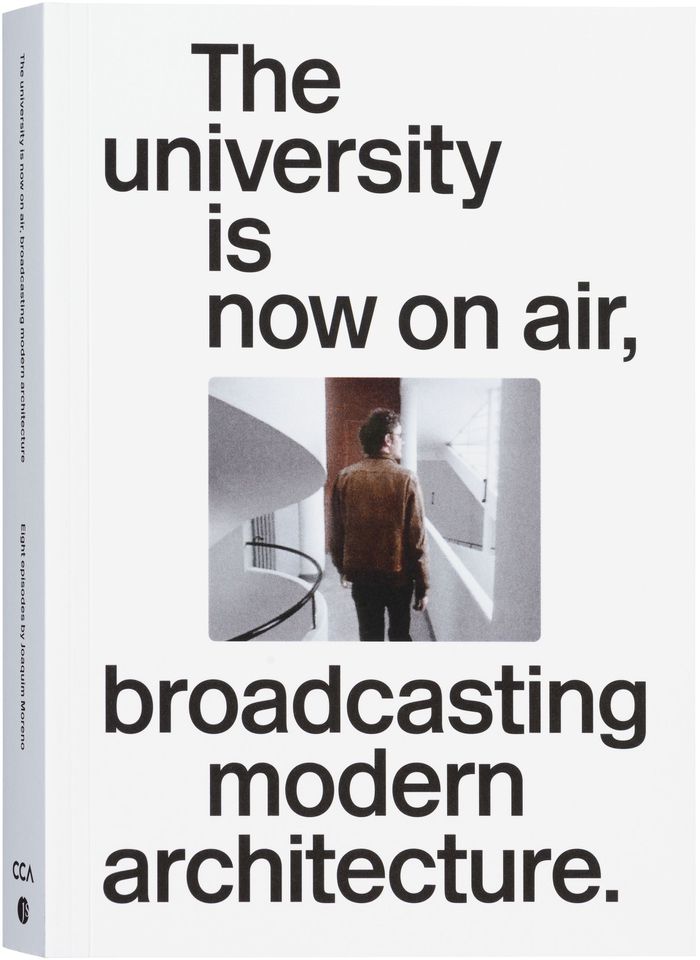
"The university is now on air, broadcasting modern architecture" examines a key experiment by The Open University to mobilize new media environments for distance and adult education. Eight episodes written by Joaquim Moreno, conversations with Tim Benton, Nick Levinson, Adrian Forty, Joseph Rykwert, and Stephen Bayley, and contributions by Nick Beech, Laura Carter, Ben Highmore, and Joseph Bedford, offer a close reading of the course A305, History of Architecture ad Design 1890-1939, which was taught through television and radio broadcasts, aired on the BBC between 1975 and 1982. As current models for producing and transmitting knowledge are being brought into question, "The university is now on air, broadcasting modern architecture" traces a radical attempt at rethinking the mandate of higher education through mass media.
The university is now on air, broadcasting modern architecture. Eight episodes by Joaquim Moreno
Actions:
Price:
$45.00
(available in store)
Summary:
"The university is now on air, broadcasting modern architecture" examines a key experiment by The Open University to mobilize new media environments for distance and adult education. Eight episodes written by Joaquim Moreno, conversations with Tim Benton, Nick Levinson, Adrian Forty, Joseph Rykwert, and Stephen Bayley, and contributions by Nick Beech, Laura Carter, Ben Highmore, and Joseph Bedford, offer a close reading of the course A305, History of Architecture ad Design 1890-1939, which was taught through television and radio broadcasts, aired on the BBC between 1975 and 1982. As current models for producing and transmitting knowledge are being brought into question, "The university is now on air, broadcasting modern architecture" traces a radical attempt at rethinking the mandate of higher education through mass media.
Form:
books
books
Publication:
May 2018
May 2018
Subject:
CCA Publications
CCA Publications
Form:
books
books
Actions:
Price:
$84.00
(available to order)
Summary:
Otto Neurath’s famous "Modern man in the making," first published by Alfred A. Knopf in 1939, captures and describes the state of the world in the 1930s by using text and figurative illustrations. From 1925 on, Neurath and his team had worked on a new visual language termed "Isotype" (International System of Typographic Picture Education). At a time that saw new mass(...)
$84.00
(available to order)
Summary:
Otto Neurath’s famous "Modern man in the making," first published by Alfred A. Knopf in 1939, captures and describes the state of the world in the 1930s by using text and figurative illustrations. From 1925 on, Neurath and his team had worked on a new visual language termed "Isotype" (International System of Typographic Picture Education). At a time that saw new mass(...)
Title:
Modern man in the making. Facsimile
Actions:
Price:
$84.00
(available to order)
Summary:
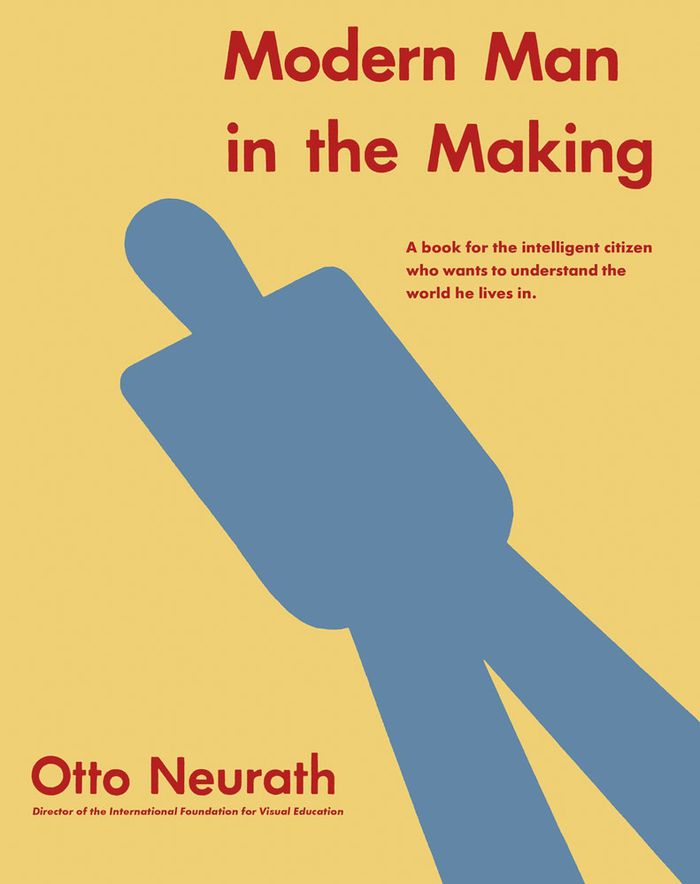
Otto Neurath’s famous "Modern man in the making," first published by Alfred A. Knopf in 1939, captures and describes the state of the world in the 1930s by using text and figurative illustrations. From 1925 on, Neurath and his team had worked on a new visual language termed "Isotype" (International System of Typographic Picture Education). At a time that saw new mass media making hitherto unthinkable amounts of information available, Neurath felt the need for a systematic visualization explaining facts, statistical data and comparative numbers in simple ways. The book can be seen as one of the most influential predecessors of today’s infographics. In the visuals, each symbol and color represents a certain group of objects or people, often compared repetitively over a certain time span. The topics covered in the book include diverse social issues of the time like mortality, health, employment, trade, education, mobility, migration and demographics. "Modern man in the making" shows Neurath’s democratic endeavor to make knowledge intelligible and available to all. It is a reminder of graphic art’s ability to inform and create context instead of presenting aesthetic qualities only. The book has inspired generations of designers and has led to sometimes peculiar imitations and further developments.
Modern man in the making. Facsimile
Actions:
Price:
$84.00
(available to order)
Summary:
Otto Neurath’s famous "Modern man in the making," first published by Alfred A. Knopf in 1939, captures and describes the state of the world in the 1930s by using text and figurative illustrations. From 1925 on, Neurath and his team had worked on a new visual language termed "Isotype" (International System of Typographic Picture Education). At a time that saw new mass media making hitherto unthinkable amounts of information available, Neurath felt the need for a systematic visualization explaining facts, statistical data and comparative numbers in simple ways. The book can be seen as one of the most influential predecessors of today’s infographics. In the visuals, each symbol and color represents a certain group of objects or people, often compared repetitively over a certain time span. The topics covered in the book include diverse social issues of the time like mortality, health, employment, trade, education, mobility, migration and demographics. "Modern man in the making" shows Neurath’s democratic endeavor to make knowledge intelligible and available to all. It is a reminder of graphic art’s ability to inform and create context instead of presenting aesthetic qualities only. The book has inspired generations of designers and has led to sometimes peculiar imitations and further developments.
Form:
books
books
Publication:
April 2024
April 2024
Subject:
Graphic Designers, Monographs
Graphic Designers, Monographs
Form:
books
books
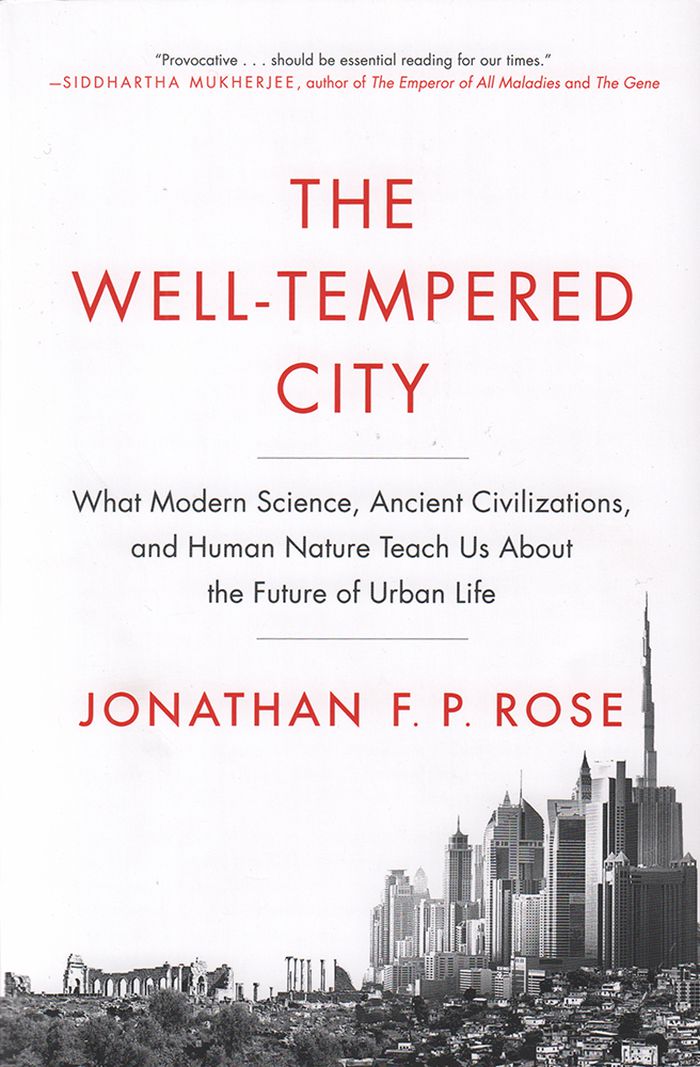
Title:
The well-tempered city
The well-tempered city
Actions:
Price:
$21.99
(available to order)
Summary:
Cities are birthplaces of civilization; centers of culture, trade, and progress; cauldrons of opportunity—and the home of eighty percent of the world’s population by 2050. As the 21st century progresses, metropolitan areas will bear the brunt of global megatrends such as climate change, natural resource depletion, population growth, income inequality, mass migrations,(...)
$21.99
(available to order)
Summary:
Cities are birthplaces of civilization; centers of culture, trade, and progress; cauldrons of opportunity—and the home of eighty percent of the world’s population by 2050. As the 21st century progresses, metropolitan areas will bear the brunt of global megatrends such as climate change, natural resource depletion, population growth, income inequality, mass migrations,(...)
Title:
The well-tempered city
Actions:
Price:
$21.99
(available to order)
Summary:
Cities are birthplaces of civilization; centers of culture, trade, and progress; cauldrons of opportunity—and the home of eighty percent of the world’s population by 2050. As the 21st century progresses, metropolitan areas will bear the brunt of global megatrends such as climate change, natural resource depletion, population growth, income inequality, mass migrations, education and health disparities, among many others. In The Well-Tempered City, Jonathan F. P. Rose—the man who “repairs the fabric of cities”—distills a lifetime of interdisciplinary research and firsthand experience into a five-pronged model for how to design and reshape our cities with the goal of equalizing their landscape of opportunity. Drawing from the musical concept of “temperament” as a way to achieve harmony, Rose argues that well-tempered cities can be infused with systems that bend the arc of their development toward equality, resilience, adaptability, well-being, and the ever-unfolding harmony between civilization and nature. These goals may never be fully achieved, but our cities will be richer and happier if we aspire to them, and if we infuse our every plan and constructive step with this intention.
The well-tempered city
Actions:
Price:
$21.99
(available to order)
Summary:
Cities are birthplaces of civilization; centers of culture, trade, and progress; cauldrons of opportunity—and the home of eighty percent of the world’s population by 2050. As the 21st century progresses, metropolitan areas will bear the brunt of global megatrends such as climate change, natural resource depletion, population growth, income inequality, mass migrations, education and health disparities, among many others. In The Well-Tempered City, Jonathan F. P. Rose—the man who “repairs the fabric of cities”—distills a lifetime of interdisciplinary research and firsthand experience into a five-pronged model for how to design and reshape our cities with the goal of equalizing their landscape of opportunity. Drawing from the musical concept of “temperament” as a way to achieve harmony, Rose argues that well-tempered cities can be infused with systems that bend the arc of their development toward equality, resilience, adaptability, well-being, and the ever-unfolding harmony between civilization and nature. These goals may never be fully achieved, but our cities will be richer and happier if we aspire to them, and if we infuse our every plan and constructive step with this intention.
Form:
books
books
Publication:
October 2017
October 2017
Subject:
Urban Theory
Urban Theory


