


176 Results
Form:
books
books
Holdings:
Description:
194 pages ; 19 cm
Description:
194 pages ; 19 cm
Author:
Subject:
Publication:
Paris : L'échappée, 2020.
Paris : L'échappée, 2020.
Title:
Béton : arme de construction massive du capitalisme / Anselm Jappe.
Actions:
Holdings:
Description:
194 pages ; 19 cm
Béton : arme de construction massive du capitalisme / Anselm Jappe.
Actions:
Holdings:
Description:
194 pages ; 19 cm
Form:
books
books
Publication:
Paris : L'échappée, 2020.
Paris : L'échappée, 2020.
Author:
Subject:
Form:
books
books
Title:
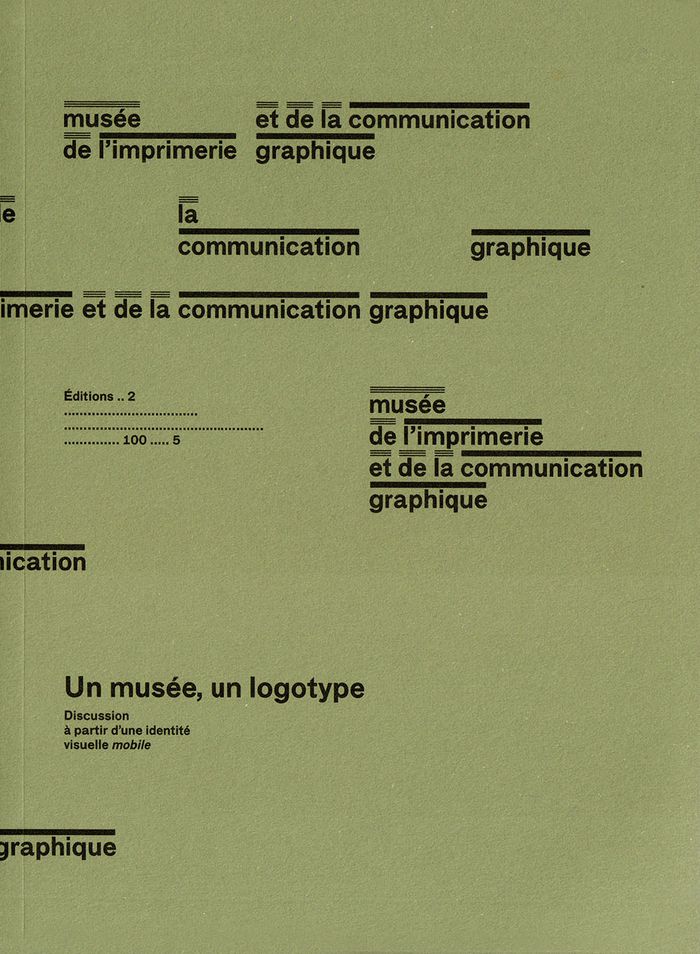
Un musée, un logotype
Un musée, un logotype
Actions:
Price:
$29.95
(available to order)
Summary:
Bureau 205, bureau de design graphique, a conçu l'identité visuelle du musée de l'Imprimerie et de la Communication graphique. Elle a cela de particulier qu'elle prend appui sur un logotype mobile, socle du langage visuel que les designers développent depuis 2013. Car, à l'image de son logotype, cette identité n'est pas figée mais continue à se construire au fil des(...)
$29.95
(available to order)
Summary:
Bureau 205, bureau de design graphique, a conçu l'identité visuelle du musée de l'Imprimerie et de la Communication graphique. Elle a cela de particulier qu'elle prend appui sur un logotype mobile, socle du langage visuel que les designers développent depuis 2013. Car, à l'image de son logotype, cette identité n'est pas figée mais continue à se construire au fil des(...)
Title:
Un musée, un logotype
Actions:
Price:
$29.95
(available to order)
Summary:
Bureau 205, bureau de design graphique, a conçu l'identité visuelle du musée de l'Imprimerie et de la Communication graphique. Elle a cela de particulier qu'elle prend appui sur un logotype mobile, socle du langage visuel que les designers développent depuis 2013. Car, à l'image de son logotype, cette identité n'est pas figée mais continue à se construire au fil des événements et expositions : un processus ouvert et itératif qui projette le musée de l'Imprimerie dans le domaine de la communication graphique. À partir de ce travail, c'est la question du statut d'une identité visuelle pour une institution qui est posée. Les designers s'interrogent sur le rôle d'une charte graphique et de son obsolescence programmée si l'identité n'est pas réfléchie pour pouvoir évoluer avec les besoins auxquels elle est censée s'adapter. Une réflexion nécessaire à une époque où flexibilité et réorganisation sont, de fait, imposées.
Un musée, un logotype
Actions:
Price:
$29.95
(available to order)
Summary:
Bureau 205, bureau de design graphique, a conçu l'identité visuelle du musée de l'Imprimerie et de la Communication graphique. Elle a cela de particulier qu'elle prend appui sur un logotype mobile, socle du langage visuel que les designers développent depuis 2013. Car, à l'image de son logotype, cette identité n'est pas figée mais continue à se construire au fil des événements et expositions : un processus ouvert et itératif qui projette le musée de l'Imprimerie dans le domaine de la communication graphique. À partir de ce travail, c'est la question du statut d'une identité visuelle pour une institution qui est posée. Les designers s'interrogent sur le rôle d'une charte graphique et de son obsolescence programmée si l'identité n'est pas réfléchie pour pouvoir évoluer avec les besoins auxquels elle est censée s'adapter. Une réflexion nécessaire à une époque où flexibilité et réorganisation sont, de fait, imposées.
Form:
books
books
Publication:
December 2017
December 2017
Subject:
Graphic Design and Typography
Graphic Design and Typography
Form:
books
books
Actions:
Price:
$44.00
(available to order)
Summary:
Nous ne pouvons plus continuer à fabriquer la ville de demain avec une logique architecturale qui voudrait qu'un bâtiment = un usage. La permanence propre à l'architecture et au bâti contraste avec la mouvance de la société contemporaine. Le patrimoine construit ne peut pas être traité comme un objet de consommation, parce qu'il mobilise trop d'énergie, de ressources et(...)
$44.00
(available to order)
Summary:
Nous ne pouvons plus continuer à fabriquer la ville de demain avec une logique architecturale qui voudrait qu'un bâtiment = un usage. La permanence propre à l'architecture et au bâti contraste avec la mouvance de la société contemporaine. Le patrimoine construit ne peut pas être traité comme un objet de consommation, parce qu'il mobilise trop d'énergie, de ressources et(...)
Subject:
Contemporary Architecture
Contemporary Architecture
Publication:
May 2022
May 2022
Title:
Architecture évolutive réversible : Formes et dispositifs
Actions:
Price:
$44.00
(available to order)
Summary:
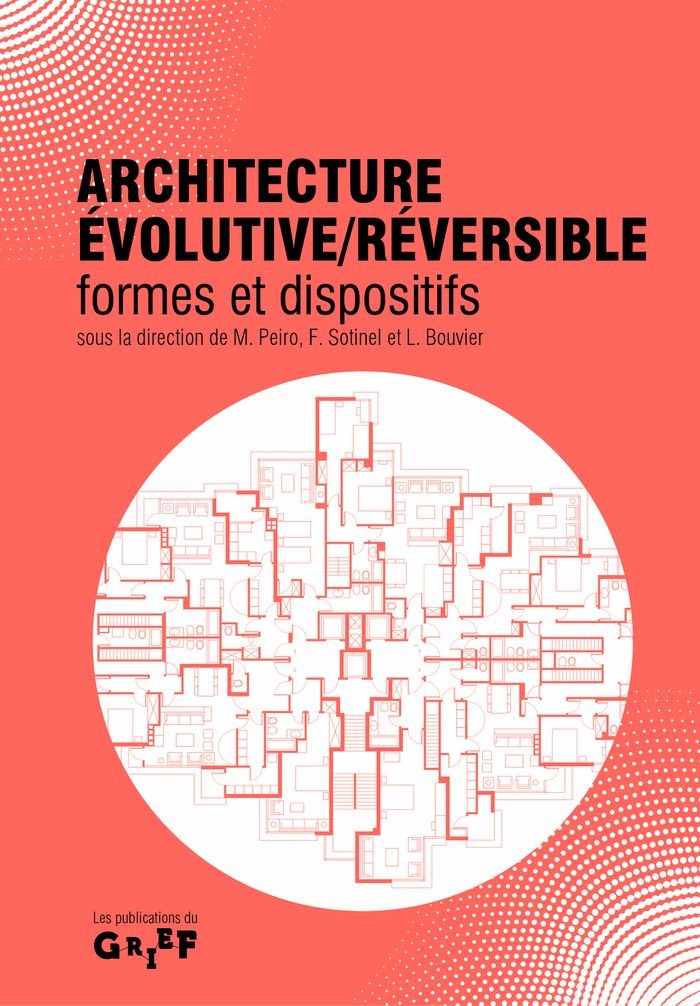
Nous ne pouvons plus continuer à fabriquer la ville de demain avec une logique architecturale qui voudrait qu'un bâtiment = un usage. La permanence propre à l'architecture et au bâti contraste avec la mouvance de la société contemporaine. Le patrimoine construit ne peut pas être traité comme un objet de consommation, parce qu'il mobilise trop d'énergie, de ressources et de temps. Pour être vraiment durable, comment s'adapter à cette future obsolescence ? Comment tendre vers une architecture atemporelle ? Fabriquer l'architecture comme un objet totalement réversible présente le risque de produire une architecture sans ancrage, sans histoire, incapable de considérer toutes les problématiques qui doivent intervenir dans le processus de création. Dans le prolongement d'un colloque organisé par le Groupe de Recherche sur l'Invention et l'Évolution des Formes (Grief) et par l'École Nationale Supérieure d'Architecture de Bretagne en 2020, cet ouvrage ouvre des pistes de réflexion investies par une quinzaine d'auteurs, architectes ou chercheurs.
Architecture évolutive réversible : Formes et dispositifs
Actions:
Price:
$44.00
(available to order)
Summary:
Nous ne pouvons plus continuer à fabriquer la ville de demain avec une logique architecturale qui voudrait qu'un bâtiment = un usage. La permanence propre à l'architecture et au bâti contraste avec la mouvance de la société contemporaine. Le patrimoine construit ne peut pas être traité comme un objet de consommation, parce qu'il mobilise trop d'énergie, de ressources et de temps. Pour être vraiment durable, comment s'adapter à cette future obsolescence ? Comment tendre vers une architecture atemporelle ? Fabriquer l'architecture comme un objet totalement réversible présente le risque de produire une architecture sans ancrage, sans histoire, incapable de considérer toutes les problématiques qui doivent intervenir dans le processus de création. Dans le prolongement d'un colloque organisé par le Groupe de Recherche sur l'Invention et l'Évolution des Formes (Grief) et par l'École Nationale Supérieure d'Architecture de Bretagne en 2020, cet ouvrage ouvre des pistes de réflexion investies par une quinzaine d'auteurs, architectes ou chercheurs.
Form:
books
books
Publication:
May 2022
May 2022
Subject:
Contemporary Architecture
Contemporary Architecture
Form:
books
books

Price:
$25.00
(available to order)
Summary:
This volume explores the curious afterlives of the floppy disk in the 21st century through the work of those involved with the medium today. The book reflects on notions of obsolescence, media preservation and nostalgia, and challenges these by showing the endurance and versatility of this familiar piece of technology. From floppy filmmakers to floppy painters and beyond:(...)
$25.00
(available to order)
Summary:
This volume explores the curious afterlives of the floppy disk in the 21st century through the work of those involved with the medium today. The book reflects on notions of obsolescence, media preservation and nostalgia, and challenges these by showing the endurance and versatility of this familiar piece of technology. From floppy filmmakers to floppy painters and beyond:(...)
Subject:
Archive, library and the digital
Archive, library and the digital
Publication:
November 2022
November 2022
Title:
Floppy disk fever: The curious afterlives of a flexible medium
Actions:
Price:
$25.00
(available to order)
Summary:
This volume explores the curious afterlives of the floppy disk in the 21st century through the work of those involved with the medium today. The book reflects on notions of obsolescence, media preservation and nostalgia, and challenges these by showing the endurance and versatility of this familiar piece of technology. From floppy filmmakers to floppy painters and beyond: what drives people to continue working with the medium that is typically deemed obsolete? What challenges and affordances does it provide? And what does the future hold in store for the familiar black square? By looking at the current presence of past technology we can assess our present-day situation and speculate on the future developments of our media landscape. After all, the technology of the past is also part of our future. This volume features interviews with key players in the contemporary floppy-disk world, including not only artists and filmmakers using floppy disks in their practice but also businessmen, archivists and museum proprietors working to preserve the medium.
Floppy disk fever: The curious afterlives of a flexible medium
Actions:
Price:
$25.00
(available to order)
Summary:
This volume explores the curious afterlives of the floppy disk in the 21st century through the work of those involved with the medium today. The book reflects on notions of obsolescence, media preservation and nostalgia, and challenges these by showing the endurance and versatility of this familiar piece of technology. From floppy filmmakers to floppy painters and beyond: what drives people to continue working with the medium that is typically deemed obsolete? What challenges and affordances does it provide? And what does the future hold in store for the familiar black square? By looking at the current presence of past technology we can assess our present-day situation and speculate on the future developments of our media landscape. After all, the technology of the past is also part of our future. This volume features interviews with key players in the contemporary floppy-disk world, including not only artists and filmmakers using floppy disks in their practice but also businessmen, archivists and museum proprietors working to preserve the medium.
Form:
books
books
Publication:
November 2022
November 2022
Subject:
Archive, library and the digital
Archive, library and the digital
Form:
books
books
Actions:
Price:
$39.00
(available to order)
Summary:
Writing in the context of two Polaroid Corporation bankruptcies, not to mention the obsolescence of its film, Peter Buse argues that Polaroid was, and is, distinguished by its process—by the fact that, as the New York Times put it in 1947, “the camera does the rest.” Polaroid was often dismissed as a toy, but Buse takes it seriously, showing how it(...)
$39.00
(available to order)
Summary:
Writing in the context of two Polaroid Corporation bankruptcies, not to mention the obsolescence of its film, Peter Buse argues that Polaroid was, and is, distinguished by its process—by the fact that, as the New York Times put it in 1947, “the camera does the rest.” Polaroid was often dismissed as a toy, but Buse takes it seriously, showing how it(...)
Title:
The camera does the rest: how Polaroid changed photography
Actions:
Price:
$39.00
(available to order)
Summary:
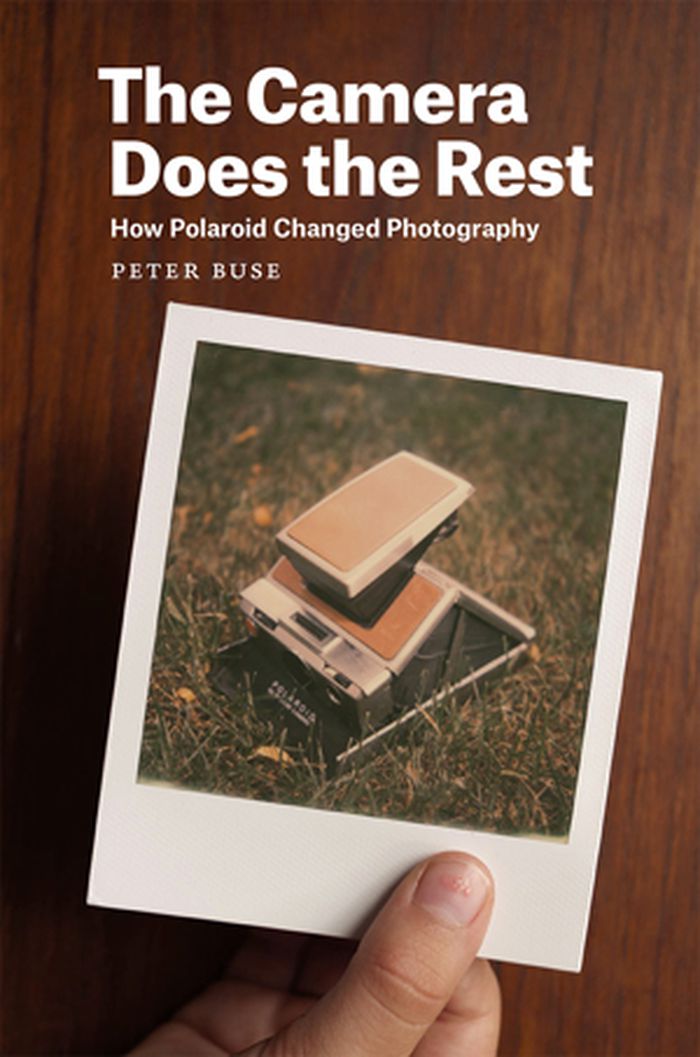
Writing in the context of two Polaroid Corporation bankruptcies, not to mention the obsolescence of its film, Peter Buse argues that Polaroid was, and is, distinguished by its process—by the fact that, as the New York Times put it in 1947, “the camera does the rest.” Polaroid was often dismissed as a toy, but Buse takes it seriously, showing how it encouraged photographic play as well as new forms of artistic practice. Drawing on unprecedented access to the archives of the Polaroid Corporation, Buse reveals Polaroid as photography at its most intimate, where the photographer, photograph, and subject sit in close proximity in both time and space—making Polaroid not only the perfect party camera but also the tool for frankly salacious pictures taking. Along the way, Buse tells the story of the Polaroid Corporation and its ultimately doomed hard-copy wager against the rising tide of digital imaging technology. He explores the continuities and the differences between Polaroid and digital, reflecting on what Polaroid can tell us about how we snap photos today. Richly illustrated, The Camera Does the Rest will delight historians, art critics, analog fanatics, photographers, and all those who miss the thrill of waiting to see what develops.
The camera does the rest: how Polaroid changed photography
Actions:
Price:
$39.00
(available to order)
Summary:
Writing in the context of two Polaroid Corporation bankruptcies, not to mention the obsolescence of its film, Peter Buse argues that Polaroid was, and is, distinguished by its process—by the fact that, as the New York Times put it in 1947, “the camera does the rest.” Polaroid was often dismissed as a toy, but Buse takes it seriously, showing how it encouraged photographic play as well as new forms of artistic practice. Drawing on unprecedented access to the archives of the Polaroid Corporation, Buse reveals Polaroid as photography at its most intimate, where the photographer, photograph, and subject sit in close proximity in both time and space—making Polaroid not only the perfect party camera but also the tool for frankly salacious pictures taking. Along the way, Buse tells the story of the Polaroid Corporation and its ultimately doomed hard-copy wager against the rising tide of digital imaging technology. He explores the continuities and the differences between Polaroid and digital, reflecting on what Polaroid can tell us about how we snap photos today. Richly illustrated, The Camera Does the Rest will delight historians, art critics, analog fanatics, photographers, and all those who miss the thrill of waiting to see what develops.
Form:
books
books
Publication:
April 2016
April 2016
Subject:
Theory of Photography
Theory of Photography
Form:
books
books

Price:
$55.50
(available to order)
Summary:
Human obsolescence is imminent. The factories of the future will be dark, staffed by armies of tireless robots. The hospitals of the future will have fewer doctors, depending instead on cloud-based AI to diagnose patients and recommend treatments. The homes of the future will anticipate our wants and needs and provide all the entertainment, food, and distraction we could(...)
$55.50
(available to order)
Summary:
Human obsolescence is imminent. The factories of the future will be dark, staffed by armies of tireless robots. The hospitals of the future will have fewer doctors, depending instead on cloud-based AI to diagnose patients and recommend treatments. The homes of the future will anticipate our wants and needs and provide all the entertainment, food, and distraction we could(...)
Title:
Automation and utopia: human flourishing in a world without work
Actions:
Price:
$55.50
(available to order)
Summary:
Human obsolescence is imminent. The factories of the future will be dark, staffed by armies of tireless robots. The hospitals of the future will have fewer doctors, depending instead on cloud-based AI to diagnose patients and recommend treatments. The homes of the future will anticipate our wants and needs and provide all the entertainment, food, and distraction we could ever desire. To many, this is a depressing prognosis, an image of civilization replaced by its machines. But what if an automated future is something to be welcomed rather than feared? Work is a source of misery and oppression for most people, so shouldn’t we do what we can to hasten its demise? Automation and Utopia makes the case for a world in which, free from need or want, we can spend our time inventing and playing games and exploring virtual realities that are more deeply engaging and absorbing than any we have experienced before, allowing us to achieve idealized forms of human flourishing. The idea that we should “give up” and retreat to the virtual may seem shocking, even distasteful. But John Danaher urges us to embrace the possibilities of this new existence. The rise of automating technologies presents a utopian moment for humankind, providing both the motive and the means to build a better future.
Automation and utopia: human flourishing in a world without work
Actions:
Price:
$55.50
(available to order)
Summary:
Human obsolescence is imminent. The factories of the future will be dark, staffed by armies of tireless robots. The hospitals of the future will have fewer doctors, depending instead on cloud-based AI to diagnose patients and recommend treatments. The homes of the future will anticipate our wants and needs and provide all the entertainment, food, and distraction we could ever desire. To many, this is a depressing prognosis, an image of civilization replaced by its machines. But what if an automated future is something to be welcomed rather than feared? Work is a source of misery and oppression for most people, so shouldn’t we do what we can to hasten its demise? Automation and Utopia makes the case for a world in which, free from need or want, we can spend our time inventing and playing games and exploring virtual realities that are more deeply engaging and absorbing than any we have experienced before, allowing us to achieve idealized forms of human flourishing. The idea that we should “give up” and retreat to the virtual may seem shocking, even distasteful. But John Danaher urges us to embrace the possibilities of this new existence. The rise of automating technologies presents a utopian moment for humankind, providing both the motive and the means to build a better future.
Form:
books
books
Publication:
September 2019
September 2019
Subject:
Architectural Theory
Architectural Theory


