


1778 Results
Form:
journals and magazines
journals and magazines
Title:
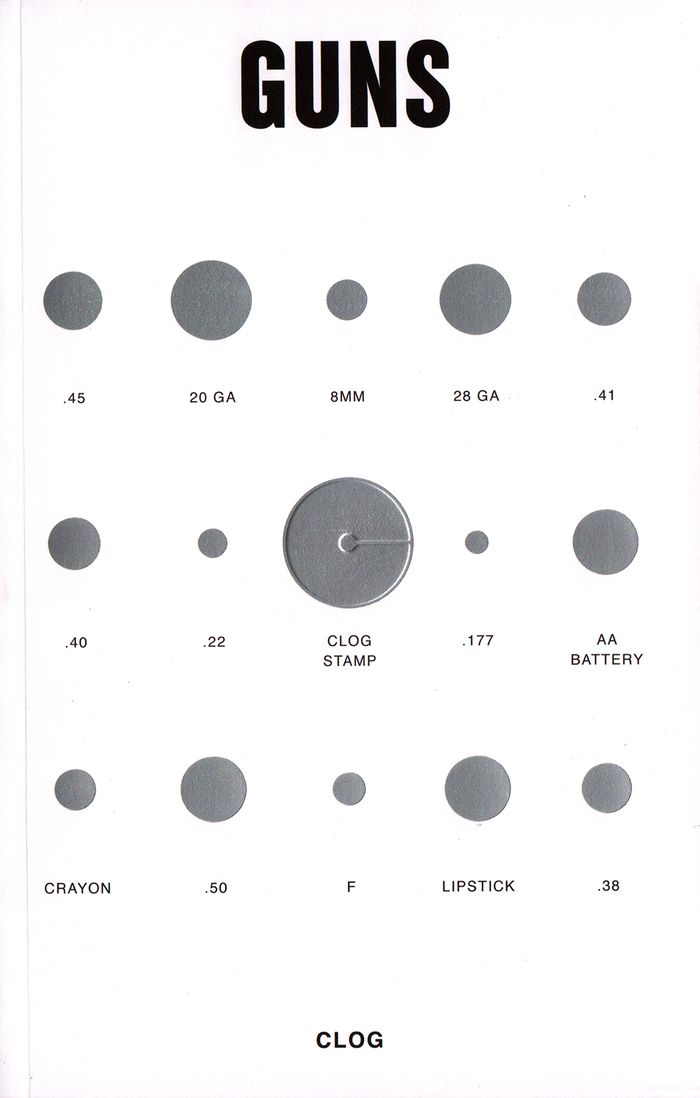
CLOG 15: Guns
CLOG 15: Guns
Actions:
Price:
$32.00
(available to order)
Summary:
For nearly a thousand years, the gun has played a key role in shaping histories, societies, and lives. Incalculable sums of creativity, innovation, and design have been dedicated to this tool which continues to evolve in unexpected ways. While the gun has always been valued for its usefulness in hunting, sport, and war, it has also been appreciated—even fetishized—for its(...)
$32.00
(available to order)
Summary:
For nearly a thousand years, the gun has played a key role in shaping histories, societies, and lives. Incalculable sums of creativity, innovation, and design have been dedicated to this tool which continues to evolve in unexpected ways. While the gun has always been valued for its usefulness in hunting, sport, and war, it has also been appreciated—even fetishized—for its(...)
Title:
CLOG 15: Guns
Actions:
Price:
$32.00
(available to order)
Summary:
For nearly a thousand years, the gun has played a key role in shaping histories, societies, and lives. Incalculable sums of creativity, innovation, and design have been dedicated to this tool which continues to evolve in unexpected ways. While the gun has always been valued for its usefulness in hunting, sport, and war, it has also been appreciated—even fetishized—for its aesthetic appeal. Nevertheless, the gun is an object whose primary function is to kill. Its destructive and deadly purpose imbues the gun with a unique potency—both symbolic and real. Hence, it can be difficult, if not impossible, to consider the gun as just another tool or designed object. Over time, social, political, and economic forces—particularly in the United States—have created a context that often forces individuals into “pro-gun” and “anti-gun” factions, leaving little room to critically study the gun as an object or consider the complexity of various perspectives. Today, it is estimated that there are approximately 875 million small arms throughout the world. As this number continues to climb and the surrounding debate only grows more polarized, it is time to holistically examine the past, present, and future of the gun
CLOG 15: Guns
Actions:
Price:
$32.00
(available to order)
Summary:
For nearly a thousand years, the gun has played a key role in shaping histories, societies, and lives. Incalculable sums of creativity, innovation, and design have been dedicated to this tool which continues to evolve in unexpected ways. While the gun has always been valued for its usefulness in hunting, sport, and war, it has also been appreciated—even fetishized—for its aesthetic appeal. Nevertheless, the gun is an object whose primary function is to kill. Its destructive and deadly purpose imbues the gun with a unique potency—both symbolic and real. Hence, it can be difficult, if not impossible, to consider the gun as just another tool or designed object. Over time, social, political, and economic forces—particularly in the United States—have created a context that often forces individuals into “pro-gun” and “anti-gun” factions, leaving little room to critically study the gun as an object or consider the complexity of various perspectives. Today, it is estimated that there are approximately 875 million small arms throughout the world. As this number continues to climb and the surrounding debate only grows more polarized, it is time to holistically examine the past, present, and future of the gun
Form:
journals and magazines
journals and magazines
Publication:
November 2017
November 2017
Subject:
Magazines
Magazines
Form:
books
books
Title:
Open Space: people space
Open Space: people space
Actions:
Price:
$86.50
(available to order)
Summary:
Highly visual and containing contributions from leading names in landscape, architecture and design, this volume provides a rare insight into people’s engagement with the outdoor environment; looking at the ways in which the design of spaces and places meets people’s needs and desires in the twenty-first century. Embracing issues of social inclusion, recreation, and(...)
$86.50
(available to order)
Summary:
Highly visual and containing contributions from leading names in landscape, architecture and design, this volume provides a rare insight into people’s engagement with the outdoor environment; looking at the ways in which the design of spaces and places meets people’s needs and desires in the twenty-first century. Embracing issues of social inclusion, recreation, and(...)
Subject:
Landscape Theory
Landscape Theory
Publication:
September 2007, London, New York
September 2007, London, New York
Title:
Open Space: people space
Actions:
Price:
$86.50
(available to order)
Summary:
Highly visual and containing contributions from leading names in landscape, architecture and design, this volume provides a rare insight into people’s engagement with the outdoor environment; looking at the ways in which the design of spaces and places meets people’s needs and desires in the twenty-first century. Embracing issues of social inclusion, recreation, and environmental quality, the editors explore innovative ways to develop an understanding of how the landscape, urban or rural, can contribute to health and quality of life. Open Space: People Space examines the nature and value of people’s access to outdoor environments. Led by Edinburgh’s OPENspace research centre, the debate focuses on current research to support good design for open space and brings expertise from a range of disciplines to look at: - an analysis of policy and planning issues and challenges - understanding the nature and experience of exclusion - the development of evidence-based inclusive design -innovative research approaches which focus on people’s access to open space and the implications of that experience. Invaluable to policy makers, researchers, urban designers, landscape architects, planners, managers and students, it is also essential reading for those working in child development, health care and community development.
Open Space: people space
Actions:
Price:
$86.50
(available to order)
Summary:
Highly visual and containing contributions from leading names in landscape, architecture and design, this volume provides a rare insight into people’s engagement with the outdoor environment; looking at the ways in which the design of spaces and places meets people’s needs and desires in the twenty-first century. Embracing issues of social inclusion, recreation, and environmental quality, the editors explore innovative ways to develop an understanding of how the landscape, urban or rural, can contribute to health and quality of life. Open Space: People Space examines the nature and value of people’s access to outdoor environments. Led by Edinburgh’s OPENspace research centre, the debate focuses on current research to support good design for open space and brings expertise from a range of disciplines to look at: - an analysis of policy and planning issues and challenges - understanding the nature and experience of exclusion - the development of evidence-based inclusive design -innovative research approaches which focus on people’s access to open space and the implications of that experience. Invaluable to policy makers, researchers, urban designers, landscape architects, planners, managers and students, it is also essential reading for those working in child development, health care and community development.
Form:
books
books
Publication:
September 2007, London, New York
September 2007, London, New York
Subject:
Landscape Theory
Landscape Theory
Form:
books
books
Actions:
Price:
$97.90
(available to order)
Summary:
The social and material production of urban nature has recently emerged as an important area in urban studies, human/environmental interactions and social studies. This has been prompted by the recognition that the material conditions that comprise urban environments are not independent from social, political, and economic processes, or from the cultural construction of(...)
$97.90
(available to order)
Summary:
The social and material production of urban nature has recently emerged as an important area in urban studies, human/environmental interactions and social studies. This has been prompted by the recognition that the material conditions that comprise urban environments are not independent from social, political, and economic processes, or from the cultural construction of(...)
Subject:
Green Architecture
Green Architecture
Publication:
January 1900, London, New York
January 1900, London, New York
Title:
In the nature of cities: urban political ecology and the politics of urban metabolism
Actions:
Price:
$97.90
(available to order)
Summary:
The social and material production of urban nature has recently emerged as an important area in urban studies, human/environmental interactions and social studies. This has been prompted by the recognition that the material conditions that comprise urban environments are not independent from social, political, and economic processes, or from the cultural construction of what constitutes the ‘urban’ or the ‘natural’. Through both theoretical and empirical analysis, this groundbreaking collection offers an integrated and relational approach to untangling the interconnected processes involved in forming urban landscapes. The essays in this book attest that the re-entry of the ecological agenda into urban theory is vital both in terms of understanding contemporary urbanization processes, and of engaging in a meaningful environmental politics. They debate the central themes of whose nature is, or becomes, urbanized, and the uneven power relations through which this socio-metabolic transformation takes place. Including urban case studies, international research and contributions from prominent urban scholars, this volume will enable students, scholars and researchers of geographical, environmental and urban studies to better understand how interrelated, everyday economic, political and cultural processes form and transform urban environments.
In the nature of cities: urban political ecology and the politics of urban metabolism
Actions:
Price:
$97.90
(available to order)
Summary:
The social and material production of urban nature has recently emerged as an important area in urban studies, human/environmental interactions and social studies. This has been prompted by the recognition that the material conditions that comprise urban environments are not independent from social, political, and economic processes, or from the cultural construction of what constitutes the ‘urban’ or the ‘natural’. Through both theoretical and empirical analysis, this groundbreaking collection offers an integrated and relational approach to untangling the interconnected processes involved in forming urban landscapes. The essays in this book attest that the re-entry of the ecological agenda into urban theory is vital both in terms of understanding contemporary urbanization processes, and of engaging in a meaningful environmental politics. They debate the central themes of whose nature is, or becomes, urbanized, and the uneven power relations through which this socio-metabolic transformation takes place. Including urban case studies, international research and contributions from prominent urban scholars, this volume will enable students, scholars and researchers of geographical, environmental and urban studies to better understand how interrelated, everyday economic, political and cultural processes form and transform urban environments.
Form:
books
books
Publication:
January 1900, London, New York
January 1900, London, New York
Subject:
Green Architecture
Green Architecture
Form:
books
books
Actions:
Price:
$54.00
(available to order)
Summary:
This third AD by the guest-editors of the highly successful Emergence and Techniques and Technologies in Morphogenetic Design titles shifts the morpho-ecological design project into the realm of performance. Whereas the dictionary definition of performance - to `carry out an action' or `to fulfill a task' - invokes a tired utilitarian debate, Hensel and Menges inject the(...)
$54.00
(available to order)
Summary:
This third AD by the guest-editors of the highly successful Emergence and Techniques and Technologies in Morphogenetic Design titles shifts the morpho-ecological design project into the realm of performance. Whereas the dictionary definition of performance - to `carry out an action' or `to fulfill a task' - invokes a tired utilitarian debate, Hensel and Menges inject the(...)
Title:
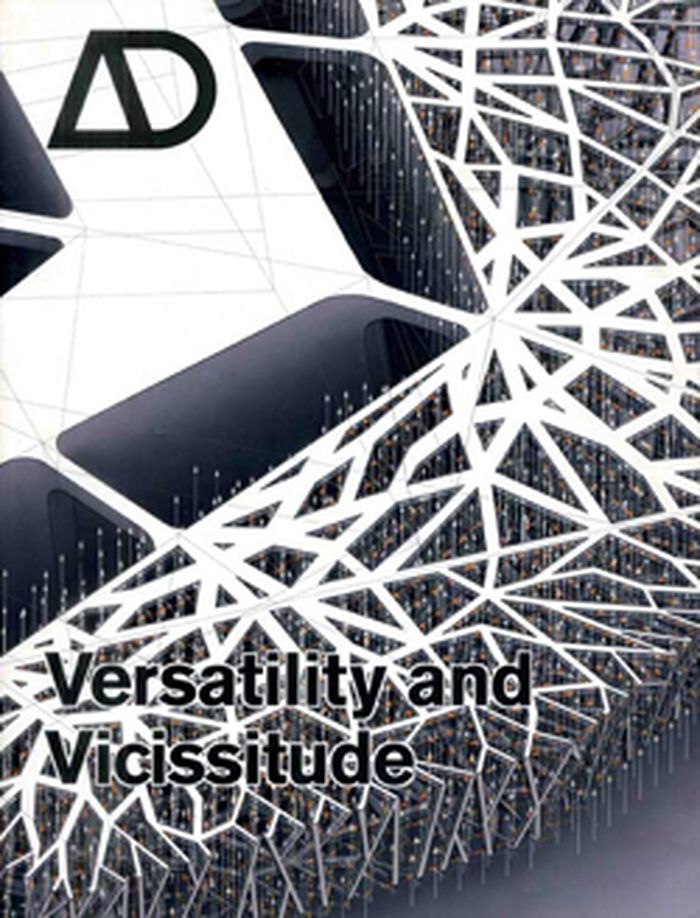
Architectural Design Versatility and Vicissitude
Actions:
Price:
$54.00
(available to order)
Summary:
This third AD by the guest-editors of the highly successful Emergence and Techniques and Technologies in Morphogenetic Design titles shifts the morpho-ecological design project into the realm of performance. Whereas the dictionary definition of performance - to `carry out an action' or `to fulfill a task' - invokes a tired utilitarian debate, Hensel and Menges inject the meaning of the word `performance' with an entirely new life. In this context, form is redefined not as the shape of a material object alone, but as the multitude of effects, a milieu of conditions, modulations and microclimates that emanate from an object's exchange with its specific environment; a dynamic relationship that is perceived and interacted with by a subject. A synergetic employment of performance and morpho-ecological techniques combine to create integral design solutions that will render an alternative model for sustainability. This issue presents historical precursors and precedents for this approach, as well as the current state of the art of morpho-ecological design. Key contributors include: Klaus Bollinger and Manfred Grohmann of Bollinger & Grohmann, Aleksandra Jaeschke, OCEAN, Professor Remo Pedreschi, Defne Sunguroglu, Peter Trummer and Michael Weinstock.
Architectural Design Versatility and Vicissitude
Actions:
Price:
$54.00
(available to order)
Summary:
This third AD by the guest-editors of the highly successful Emergence and Techniques and Technologies in Morphogenetic Design titles shifts the morpho-ecological design project into the realm of performance. Whereas the dictionary definition of performance - to `carry out an action' or `to fulfill a task' - invokes a tired utilitarian debate, Hensel and Menges inject the meaning of the word `performance' with an entirely new life. In this context, form is redefined not as the shape of a material object alone, but as the multitude of effects, a milieu of conditions, modulations and microclimates that emanate from an object's exchange with its specific environment; a dynamic relationship that is perceived and interacted with by a subject. A synergetic employment of performance and morpho-ecological techniques combine to create integral design solutions that will render an alternative model for sustainability. This issue presents historical precursors and precedents for this approach, as well as the current state of the art of morpho-ecological design. Key contributors include: Klaus Bollinger and Manfred Grohmann of Bollinger & Grohmann, Aleksandra Jaeschke, OCEAN, Professor Remo Pedreschi, Defne Sunguroglu, Peter Trummer and Michael Weinstock.
Form:
books
books
Publication:
March 2008, London
March 2008, London
Subject:
Green Architecture
Green Architecture
Form:
books
books
Actions:
Price:
$24.95
(available in store)
Summary:
“Of course, we all want to be happy.” So wrote the Roman statesman, orator, and philosopher Marcus Tullius Cicero. He and his fellow Greek and Roman philosophers agreed that the secret to happiness—or what they called the “good life”—is pursuing the “greatest good.” The only problem is that they couldn’t agree on what the greatest good is. Cicero addressed this dilemma by(...)
$24.95
(available in store)
Summary:
“Of course, we all want to be happy.” So wrote the Roman statesman, orator, and philosopher Marcus Tullius Cicero. He and his fellow Greek and Roman philosophers agreed that the secret to happiness—or what they called the “good life”—is pursuing the “greatest good.” The only problem is that they couldn’t agree on what the greatest good is. Cicero addressed this dilemma by(...)
Title:
How to find happiness: An ancient guide to the good life
Actions:
Price:
$24.95
(available in store)
Summary:
“Of course, we all want to be happy.” So wrote the Roman statesman, orator, and philosopher Marcus Tullius Cicero. He and his fellow Greek and Roman philosophers agreed that the secret to happiness—or what they called the “good life”—is pursuing the “greatest good.” The only problem is that they couldn’t agree on what the greatest good is. Cicero addressed this dilemma by composing a set of dialogues, ''On the Greatest Good and Evil'' (''De finibus bonorum et malorum''), in which he pitted advocates of different philosophical approaches to happiness against one another. Notably, these include the Epicureans (who believe that the greatest good is pleasure) and the Stoics (according to whom it is moral virtue). Rather than choosing sides, Cicero considers the pros and cons of the different philosophies, ultimately leaving it to his readers to make up their own minds. In ''How to Find Happiness'', Katharina Volk offers a vivid new translation of selections from Cicero’s work, complete with an introduction and the original Latin text on facing pages. The result is a lively and engaging debate that invites each of us to discover our own path to happiness.
How to find happiness: An ancient guide to the good life
Actions:
Price:
$24.95
(available in store)
Summary:
“Of course, we all want to be happy.” So wrote the Roman statesman, orator, and philosopher Marcus Tullius Cicero. He and his fellow Greek and Roman philosophers agreed that the secret to happiness—or what they called the “good life”—is pursuing the “greatest good.” The only problem is that they couldn’t agree on what the greatest good is. Cicero addressed this dilemma by composing a set of dialogues, ''On the Greatest Good and Evil'' (''De finibus bonorum et malorum''), in which he pitted advocates of different philosophical approaches to happiness against one another. Notably, these include the Epicureans (who believe that the greatest good is pleasure) and the Stoics (according to whom it is moral virtue). Rather than choosing sides, Cicero considers the pros and cons of the different philosophies, ultimately leaving it to his readers to make up their own minds. In ''How to Find Happiness'', Katharina Volk offers a vivid new translation of selections from Cicero’s work, complete with an introduction and the original Latin text on facing pages. The result is a lively and engaging debate that invites each of us to discover our own path to happiness.
Form:
books
books
Publication:
March 2026
March 2026
Subject:
Critical Theory
Critical Theory
Form:
books
books
Actions:
Price:
$28.95
(available to order)
Summary:
This reader in Whitechapel's Documents of Contemporary Art series investigates the interchange between art and design. Since the Pop and Minimalist eras--as the work of artists ranging from Andy Warhol to Dan Graham demonstrates--the traditional boundaries between art and architectural, graphic, and product design have dissolved in critically significant ways. Design and(...)
$28.95
(available to order)
Summary:
This reader in Whitechapel's Documents of Contemporary Art series investigates the interchange between art and design. Since the Pop and Minimalist eras--as the work of artists ranging from Andy Warhol to Dan Graham demonstrates--the traditional boundaries between art and architectural, graphic, and product design have dissolved in critically significant ways. Design and(...)
Title:
Design and art: Documents of contemporary art
Actions:
Price:
$28.95
(available to order)
Summary:
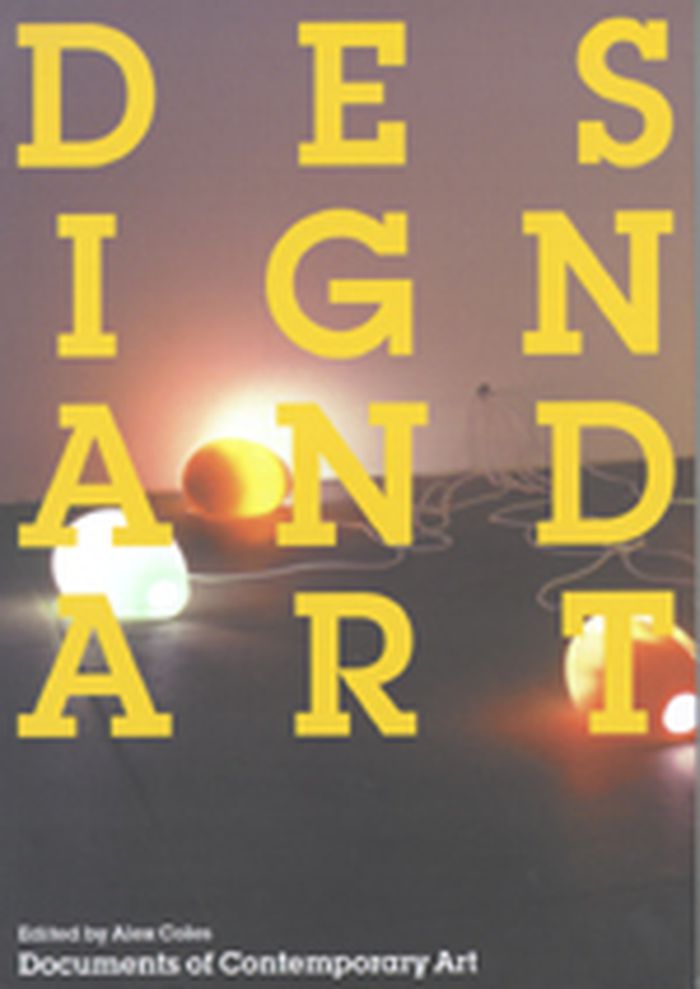
This reader in Whitechapel's Documents of Contemporary Art series investigates the interchange between art and design. Since the Pop and Minimalist eras--as the work of artists ranging from Andy Warhol to Dan Graham demonstrates--the traditional boundaries between art and architectural, graphic, and product design have dissolved in critically significant ways. Design and Art traces the rise of the "design-art" phenomenon through the writings of critics and practitioners active in both fields. The texts include writings by Paul Rand, Hal Foster, Miwon Kwon, and others that set the parameters of the debate; utopian visions, including those of architect Peter Cook and writer Douglas Coupland; project descriptions by artists (among them Tobias Rehberger and Jorge Pardo) juxtaposed with theoretical writings; surveys of group practices by such collectives as N55 and Superflex; and views of the artist as mediator--a role assumed in the past to be the province of the designer--as seen in work by Frederick Kiesler, Ed Ruscha, and others. Finally, a book that doesn't privilege either the art world or the design world but puts them in dialogue with each other.
Design and art: Documents of contemporary art
Actions:
Price:
$28.95
(available to order)
Summary:
This reader in Whitechapel's Documents of Contemporary Art series investigates the interchange between art and design. Since the Pop and Minimalist eras--as the work of artists ranging from Andy Warhol to Dan Graham demonstrates--the traditional boundaries between art and architectural, graphic, and product design have dissolved in critically significant ways. Design and Art traces the rise of the "design-art" phenomenon through the writings of critics and practitioners active in both fields. The texts include writings by Paul Rand, Hal Foster, Miwon Kwon, and others that set the parameters of the debate; utopian visions, including those of architect Peter Cook and writer Douglas Coupland; project descriptions by artists (among them Tobias Rehberger and Jorge Pardo) juxtaposed with theoretical writings; surveys of group practices by such collectives as N55 and Superflex; and views of the artist as mediator--a role assumed in the past to be the province of the designer--as seen in work by Frederick Kiesler, Ed Ruscha, and others. Finally, a book that doesn't privilege either the art world or the design world but puts them in dialogue with each other.
Form:
books
books
Publication:
March 2007, Cambridge / London
March 2007, Cambridge / London
Subject:
Art Theory
Art Theory
Form:
books
books
Price:
$49.95
(available to order)
Summary:
Photographic images can, apart from their capacity to show, convey an experience, a quality that has seldom been recognized. In this book, the artist and photographer Maarten Vanvolsem explains how the strip technique can tell a different story of time and space in photographic images, a story that leads to new expressions and experiences of time and movement. The strip(...)
$49.95
(available to order)
Summary:
Photographic images can, apart from their capacity to show, convey an experience, a quality that has seldom been recognized. In this book, the artist and photographer Maarten Vanvolsem explains how the strip technique can tell a different story of time and space in photographic images, a story that leads to new expressions and experiences of time and movement. The strip(...)
Title:
The art of strip photography : making still images with a moving camera
Actions:
Price:
$49.95
(available to order)
Summary:
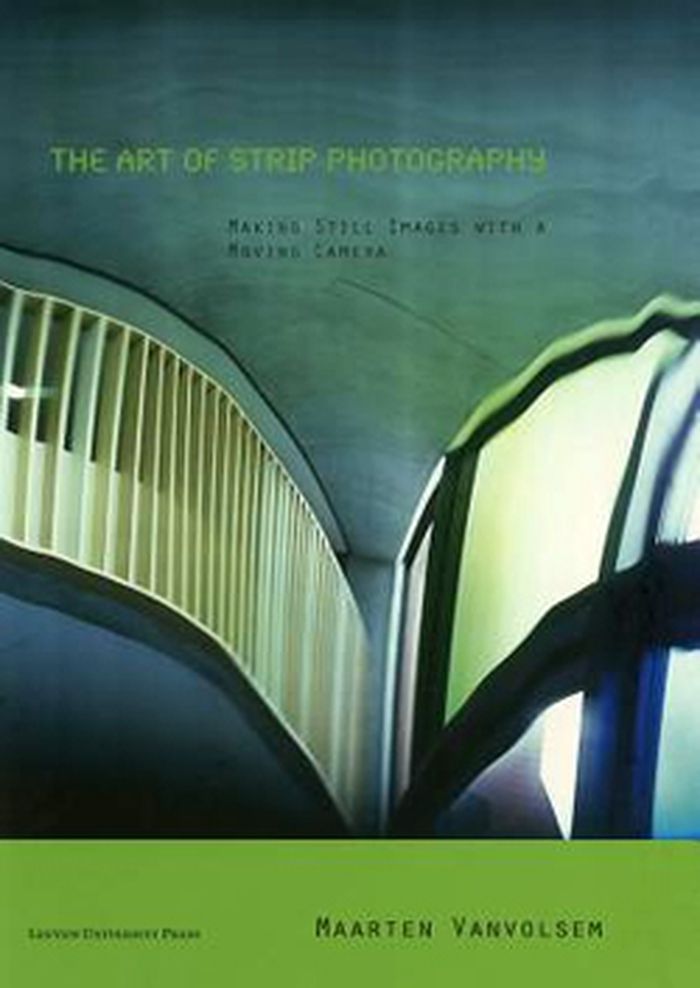
Photographic images can, apart from their capacity to show, convey an experience, a quality that has seldom been recognized. In this book, the artist and photographer Maarten Vanvolsem explains how the strip technique can tell a different story of time and space in photographic images, a story that leads to new expressions and experiences of time and movement. The strip technique itself seems to be neglected in the debate on time and photography, although it has a long history — from Muybridge to the photo booth. Its use is widespread and, especially in recent years, more and more artists have rediscovered the technique. Based on an historical overview, a knowledge and understanding of the technique, and experiments with the building of cameras, this book will propose a new use of this forgotten art: a use in which the temporal terms "speed," “rhythm,” and “pace” are of more value than terms so often associated with photography such as “freeze,” “split second,” or “capture.” Within the book one can find more than thirty artists using the strip technique for their artistic practice. Vanvolsem shows how the technique may be used to rediscover the time-based possibilities of the photographic image.
The art of strip photography : making still images with a moving camera
Actions:
Price:
$49.95
(available to order)
Summary:
Photographic images can, apart from their capacity to show, convey an experience, a quality that has seldom been recognized. In this book, the artist and photographer Maarten Vanvolsem explains how the strip technique can tell a different story of time and space in photographic images, a story that leads to new expressions and experiences of time and movement. The strip technique itself seems to be neglected in the debate on time and photography, although it has a long history — from Muybridge to the photo booth. Its use is widespread and, especially in recent years, more and more artists have rediscovered the technique. Based on an historical overview, a knowledge and understanding of the technique, and experiments with the building of cameras, this book will propose a new use of this forgotten art: a use in which the temporal terms "speed," “rhythm,” and “pace” are of more value than terms so often associated with photography such as “freeze,” “split second,” or “capture.” Within the book one can find more than thirty artists using the strip technique for their artistic practice. Vanvolsem shows how the technique may be used to rediscover the time-based possibilities of the photographic image.
Form:
books
books
Publication:
February 2011
February 2011
Subject:
Theory of Photography
Theory of Photography
Form:
books
books
Actions:
Price:
$70.50
(available to order)
Summary:
Architects have long operated based on the assumption that a building is 'complete' once construction has finished. Striving to create a perfect building, they wish for it to stay in its original state indefinitely, viewing any subsequent alterations as unintended effects or the results of degeneration. The ideal is for a piece of architecture to remain permanently(...)
$70.50
(available to order)
Summary:
Architects have long operated based on the assumption that a building is 'complete' once construction has finished. Striving to create a perfect building, they wish for it to stay in its original state indefinitely, viewing any subsequent alterations as unintended effects or the results of degeneration. The ideal is for a piece of architecture to remain permanently(...)
Title:
Allure of the incomplete, imperfect, and impermanent: designing and appreciating architecture as nature
Actions:
Price:
$70.50
(available to order)
Summary:
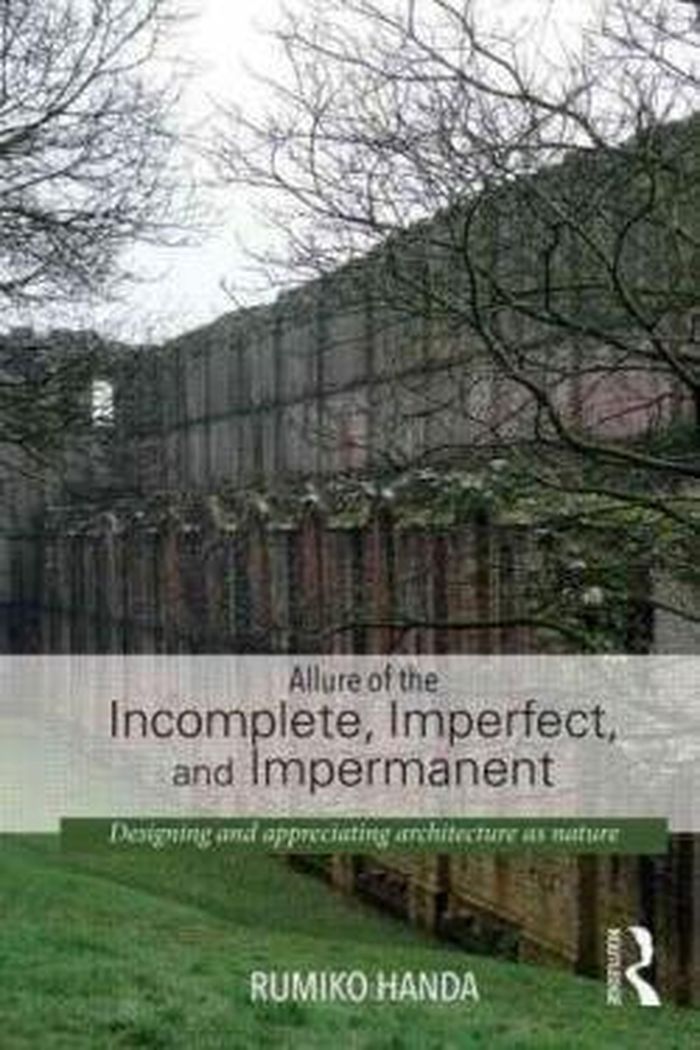
Architects have long operated based on the assumption that a building is 'complete' once construction has finished. Striving to create a perfect building, they wish for it to stay in its original state indefinitely, viewing any subsequent alterations as unintended effects or the results of degeneration. The ideal is for a piece of architecture to remain permanently perfect and complete. This contrasts sharply with reality where changes take place as people move in, requirements change, events happen, and building materials are subject to wear and tear. Rumiko Handa argues it is time to correct this imbalance. Using examples ranging from the Roman Coliseum to Japanese tea rooms, she draws attention to an area that is usually ignored: the allure of incomplete, imperfect and impermanent architecture. By focusing on what happens to buildings after they are ‘complete’, she shows that the ‘afterlife’ is in fact the very ‘life’ of a building. However, the book goes beyond theoretical debate. Addressing professionals as well as architecture students and educators, it persuades architects of the necessity to anticipate possible future changes and to incorporate these into their original designs.
Allure of the incomplete, imperfect, and impermanent: designing and appreciating architecture as nature
Actions:
Price:
$70.50
(available to order)
Summary:
Architects have long operated based on the assumption that a building is 'complete' once construction has finished. Striving to create a perfect building, they wish for it to stay in its original state indefinitely, viewing any subsequent alterations as unintended effects or the results of degeneration. The ideal is for a piece of architecture to remain permanently perfect and complete. This contrasts sharply with reality where changes take place as people move in, requirements change, events happen, and building materials are subject to wear and tear. Rumiko Handa argues it is time to correct this imbalance. Using examples ranging from the Roman Coliseum to Japanese tea rooms, she draws attention to an area that is usually ignored: the allure of incomplete, imperfect and impermanent architecture. By focusing on what happens to buildings after they are ‘complete’, she shows that the ‘afterlife’ is in fact the very ‘life’ of a building. However, the book goes beyond theoretical debate. Addressing professionals as well as architecture students and educators, it persuades architects of the necessity to anticipate possible future changes and to incorporate these into their original designs.
Form:
books
books
Publication:
January 2015
January 2015
Subject:
Landscape Theory
Landscape Theory
Form:
books
books
Actions:
Price:
$70.00
(available to order)
Summary:
Maurice R. Stein and Larry Miller’s 'Blueprint for Counter Education' is one of the defining (but neglected) works of radical pedagogy of the Vietnam War era. Originally published as a boxed set by Doubleday in 1970, the book was accompanied by large graphic posters that could serve as a portable learning environment for a new process-based model of education, and a(...)
$70.00
(available to order)
Summary:
Maurice R. Stein and Larry Miller’s 'Blueprint for Counter Education' is one of the defining (but neglected) works of radical pedagogy of the Vietnam War era. Originally published as a boxed set by Doubleday in 1970, the book was accompanied by large graphic posters that could serve as a portable learning environment for a new process-based model of education, and a(...)
Title:
Blueprint for counter education
Actions:
Price:
$70.00
(available to order)
Summary:
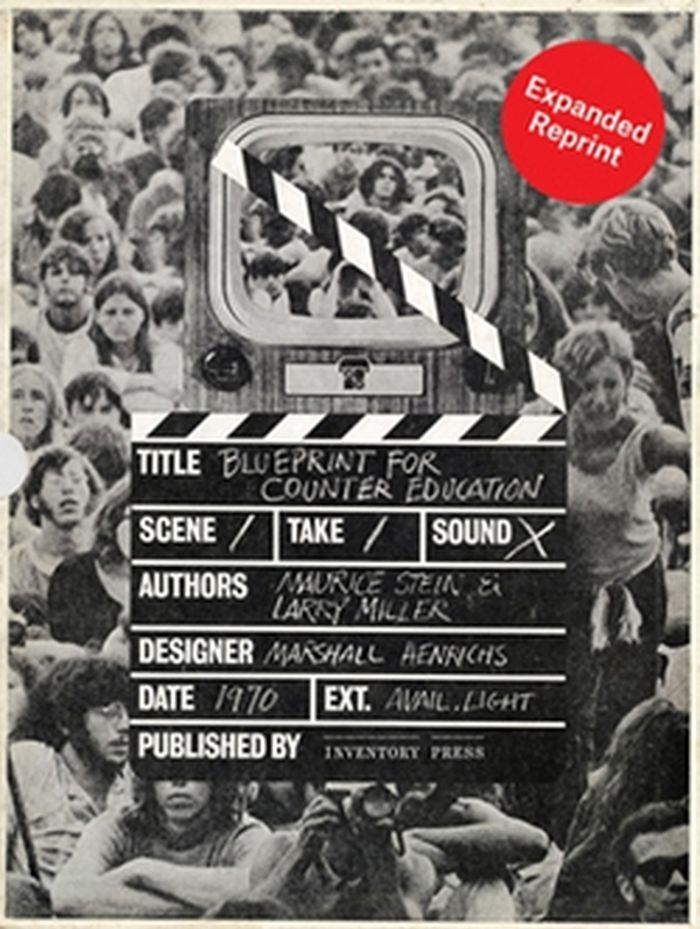
Maurice R. Stein and Larry Miller’s 'Blueprint for Counter Education' is one of the defining (but neglected) works of radical pedagogy of the Vietnam War era. Originally published as a boxed set by Doubleday in 1970, the book was accompanied by large graphic posters that could serve as a portable learning environment for a new process-based model of education, and a bibliography and checklist that map patterns and relationships between radical thought and artistic practices—from the modernist avant-gardes to postmodernism, from the Bauhaus to Black Mountain College, from Theodor Adorno and Walter Benjamin to Buckminster Fuller and Norman O. Brown—with Herbert Marcuse and Marshall McLuhan serving as points of anchorage. 'Blueprint for Counter Education' thus serves as a vital synthesis of the numerous intellectual currents in the countercultural debate on the radical reform of schools, universities and ways of learning. To accompany this new facsimile edition of the book and posters, an 80-page booklet features a conversation with the original Blueprint creators, Maurice R. Stein, Larry Miller and designer Marshall Henrichs, as well as essays from Jeffrey Schnapp, Paul Cronin and notes on the design by Adam Michaels of Project Projects.
Blueprint for counter education
Actions:
Price:
$70.00
(available to order)
Summary:
Maurice R. Stein and Larry Miller’s 'Blueprint for Counter Education' is one of the defining (but neglected) works of radical pedagogy of the Vietnam War era. Originally published as a boxed set by Doubleday in 1970, the book was accompanied by large graphic posters that could serve as a portable learning environment for a new process-based model of education, and a bibliography and checklist that map patterns and relationships between radical thought and artistic practices—from the modernist avant-gardes to postmodernism, from the Bauhaus to Black Mountain College, from Theodor Adorno and Walter Benjamin to Buckminster Fuller and Norman O. Brown—with Herbert Marcuse and Marshall McLuhan serving as points of anchorage. 'Blueprint for Counter Education' thus serves as a vital synthesis of the numerous intellectual currents in the countercultural debate on the radical reform of schools, universities and ways of learning. To accompany this new facsimile edition of the book and posters, an 80-page booklet features a conversation with the original Blueprint creators, Maurice R. Stein, Larry Miller and designer Marshall Henrichs, as well as essays from Jeffrey Schnapp, Paul Cronin and notes on the design by Adam Michaels of Project Projects.
Form:
books
books
Publication:
February 2016
February 2016
Subject:
Museology
Museology
Form:
books
books
Actions:
Price:
$44.95
(available in store)
Summary:
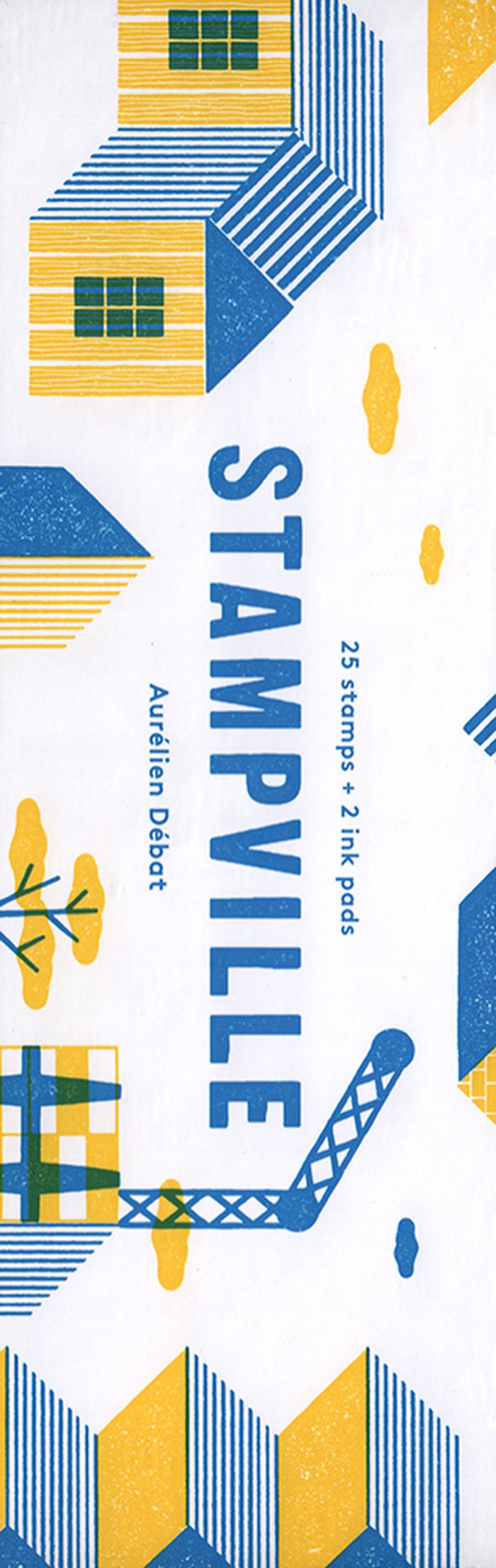
'Stampville' contains twenty-five woodbacked stamps in an assortment of shapes and textures, all the essential building blocks needed to create a simple house, a whimsical village, or a towering architectural marvel-the combinations are infinite and immediately gratifying.
$44.95
(available in store)
Summary:
'Stampville' contains twenty-five woodbacked stamps in an assortment of shapes and textures, all the essential building blocks needed to create a simple house, a whimsical village, or a towering architectural marvel-the combinations are infinite and immediately gratifying.
Title:
Stampville: 25 stamps with 2 ink pads
Actions:
Price:
$44.95
(available in store)
Summary:
'Stampville' contains twenty-five woodbacked stamps in an assortment of shapes and textures, all the essential building blocks needed to create a simple house, a whimsical village, or a towering architectural marvel-the combinations are infinite and immediately gratifying.
Stampville: 25 stamps with 2 ink pads
Actions:
Price:
$44.95
(available in store)
Summary:
'Stampville' contains twenty-five woodbacked stamps in an assortment of shapes and textures, all the essential building blocks needed to create a simple house, a whimsical village, or a towering architectural marvel-the combinations are infinite and immediately gratifying.
Form:
books
books
Publication:
May 2017
May 2017
Subject:
Toys
Toys


