


33494 Results
Form:
textual records
textual records
Reference number:
AP197.S1.SS9.001
Description:
This box contains notes, drafts, articles, book reviews and lectures by Kenneth Frampton. The materials are organized alphabetically by either title or the architect's last name, from A-Z. The contents are mostly older texts by Frampton, circa 1960-1990. Subjects and architects explored in these texts include: Raimund Abraham; Tadao Ando; contemporary architecture; the modern urban form; Gustave Eiffel; English neoclassicism; Louis Kahn; John Hejduk; Herman Hertzberger; postmodern theory; Steven Holl; industrialization; Le Corbusier; El Lissitzky; modernism; Palais Royale; Carlo Scarpa; James Stirling; Team 10; technology; and Otto Wagner.
AP197.S1.SS9.001
Description:
This box contains notes, drafts, articles, book reviews and lectures by Kenneth Frampton. The materials are organized alphabetically by either title or the architect's last name, from A-Z. The contents are mostly older texts by Frampton, circa 1960-1990. Subjects and architects explored in these texts include: Raimund Abraham; Tadao Ando; contemporary architecture; the modern urban form; Gustave Eiffel; English neoclassicism; Louis Kahn; John Hejduk; Herman Hertzberger; postmodern theory; Steven Holl; industrialization; Le Corbusier; El Lissitzky; modernism; Palais Royale; Carlo Scarpa; James Stirling; Team 10; technology; and Otto Wagner.
People:
Date:
circa 1964-1990
circa 1964-1990
Title:
Kenneth Frampton texts, articles and notes (A-Z)
Actions:
AP197.S1.SS9.001
Description:
This box contains notes, drafts, articles, book reviews and lectures by Kenneth Frampton. The materials are organized alphabetically by either title or the architect's last name, from A-Z. The contents are mostly older texts by Frampton, circa 1960-1990. Subjects and architects explored in these texts include: Raimund Abraham; Tadao Ando; contemporary architecture; the modern urban form; Gustave Eiffel; English neoclassicism; Louis Kahn; John Hejduk; Herman Hertzberger; postmodern theory; Steven Holl; industrialization; Le Corbusier; El Lissitzky; modernism; Palais Royale; Carlo Scarpa; James Stirling; Team 10; technology; and Otto Wagner.
Kenneth Frampton texts, articles and notes (A-Z)
Actions:
AP197.S1.SS9.001
Description:
This box contains notes, drafts, articles, book reviews and lectures by Kenneth Frampton. The materials are organized alphabetically by either title or the architect's last name, from A-Z. The contents are mostly older texts by Frampton, circa 1960-1990. Subjects and architects explored in these texts include: Raimund Abraham; Tadao Ando; contemporary architecture; the modern urban form; Gustave Eiffel; English neoclassicism; Louis Kahn; John Hejduk; Herman Hertzberger; postmodern theory; Steven Holl; industrialization; Le Corbusier; El Lissitzky; modernism; Palais Royale; Carlo Scarpa; James Stirling; Team 10; technology; and Otto Wagner.
Form:
textual records
textual records
Date:
circa 1964-1990
circa 1964-1990
People:
Form:
textual records
textual records
Reference number:
AP197.S1.SS9.004
Description:
The box is comprised of notes, drafts, articles and lectures by Kenneth Frampton. The materials are organized alphabetetically by either title or the architect's last name, from MO-Z. Subjects and architects explored in these texts include: William Morris; Robert Moses; Lewis Mumford; Glenn Murcutt; Museum of Modern Art; New York architecture; Oppositions and after; Felix Partner; Claude Perrault; Dimitri Pikionis; Alberto Ponis; purism; the rise and fall of the vernacular; the Rotterdam report; Scarborough College; SHIM Sutcliffe; Alvaro Siza; Luigi Snozzi; Spain's architecture; James Stirling; the street; style; Team 10; O.M. Ungers; and Harry Wolf.
AP197.S1.SS9.004
Description:
The box is comprised of notes, drafts, articles and lectures by Kenneth Frampton. The materials are organized alphabetetically by either title or the architect's last name, from MO-Z. Subjects and architects explored in these texts include: William Morris; Robert Moses; Lewis Mumford; Glenn Murcutt; Museum of Modern Art; New York architecture; Oppositions and after; Felix Partner; Claude Perrault; Dimitri Pikionis; Alberto Ponis; purism; the rise and fall of the vernacular; the Rotterdam report; Scarborough College; SHIM Sutcliffe; Alvaro Siza; Luigi Snozzi; Spain's architecture; James Stirling; the street; style; Team 10; O.M. Ungers; and Harry Wolf.
People:
Date:
circa 1967-2015
circa 1967-2015
Title:
Kenneth Frampton texts, articles and notes MO-Z
Actions:
AP197.S1.SS9.004
Description:
The box is comprised of notes, drafts, articles and lectures by Kenneth Frampton. The materials are organized alphabetetically by either title or the architect's last name, from MO-Z. Subjects and architects explored in these texts include: William Morris; Robert Moses; Lewis Mumford; Glenn Murcutt; Museum of Modern Art; New York architecture; Oppositions and after; Felix Partner; Claude Perrault; Dimitri Pikionis; Alberto Ponis; purism; the rise and fall of the vernacular; the Rotterdam report; Scarborough College; SHIM Sutcliffe; Alvaro Siza; Luigi Snozzi; Spain's architecture; James Stirling; the street; style; Team 10; O.M. Ungers; and Harry Wolf.
Kenneth Frampton texts, articles and notes MO-Z
Actions:
AP197.S1.SS9.004
Description:
The box is comprised of notes, drafts, articles and lectures by Kenneth Frampton. The materials are organized alphabetetically by either title or the architect's last name, from MO-Z. Subjects and architects explored in these texts include: William Morris; Robert Moses; Lewis Mumford; Glenn Murcutt; Museum of Modern Art; New York architecture; Oppositions and after; Felix Partner; Claude Perrault; Dimitri Pikionis; Alberto Ponis; purism; the rise and fall of the vernacular; the Rotterdam report; Scarborough College; SHIM Sutcliffe; Alvaro Siza; Luigi Snozzi; Spain's architecture; James Stirling; the street; style; Team 10; O.M. Ungers; and Harry Wolf.
Form:
textual records
textual records
Date:
circa 1967-2015
circa 1967-2015
People:
Form:
textual records
textual records
Actions:
Reference number:
AP197.S1.SS9.013
Description:
The box contains drafts, final copies, notes and correspondence for various articles, interviews, keynote addresses, and lectures by Kenneth Frampton. The materials are organized in alphabetical order, from CO-FR.The largest portion of the box is comprised of: a dossier on DO.CO, MO.MO which includes correspondence, pamphlets, programs and newsletters; drafts and correspondence for "the Evolution of 20th Century: a Synoptic Account;" and transcripts of interviews with Kenneth Frampton. Other subjects and architects explored in these texts include the work of Charles Correa, Czech architecture and the avant-garde, Peter Felix, and Norman Foster.
AP197.S1.SS9.013
Description:
The box contains drafts, final copies, notes and correspondence for various articles, interviews, keynote addresses, and lectures by Kenneth Frampton. The materials are organized in alphabetical order, from CO-FR.The largest portion of the box is comprised of: a dossier on DO.CO, MO.MO which includes correspondence, pamphlets, programs and newsletters; drafts and correspondence for "the Evolution of 20th Century: a Synoptic Account;" and transcripts of interviews with Kenneth Frampton. Other subjects and architects explored in these texts include the work of Charles Correa, Czech architecture and the avant-garde, Peter Felix, and Norman Foster.
People:
Date:
circa 1965-2015
circa 1965-2015
Title:
Kenneth Frampton writings (CO-FR)
Actions:
AP197.S1.SS9.013
Description:
The box contains drafts, final copies, notes and correspondence for various articles, interviews, keynote addresses, and lectures by Kenneth Frampton. The materials are organized in alphabetical order, from CO-FR.The largest portion of the box is comprised of: a dossier on DO.CO, MO.MO which includes correspondence, pamphlets, programs and newsletters; drafts and correspondence for "the Evolution of 20th Century: a Synoptic Account;" and transcripts of interviews with Kenneth Frampton. Other subjects and architects explored in these texts include the work of Charles Correa, Czech architecture and the avant-garde, Peter Felix, and Norman Foster.
Kenneth Frampton writings (CO-FR)
Actions:
AP197.S1.SS9.013
Description:
The box contains drafts, final copies, notes and correspondence for various articles, interviews, keynote addresses, and lectures by Kenneth Frampton. The materials are organized in alphabetical order, from CO-FR.The largest portion of the box is comprised of: a dossier on DO.CO, MO.MO which includes correspondence, pamphlets, programs and newsletters; drafts and correspondence for "the Evolution of 20th Century: a Synoptic Account;" and transcripts of interviews with Kenneth Frampton. Other subjects and architects explored in these texts include the work of Charles Correa, Czech architecture and the avant-garde, Peter Felix, and Norman Foster.
Form:
textual records
textual records
Date:
circa 1965-2015
circa 1965-2015
People:
Form:
textual records
textual records
Title:
Kenneth Frampton writings M
Kenneth Frampton writings M
Actions:
Reference number:
AP197.S1.SS9.017
Description:
The box contains drafts, final copies, correspondence and notes for various articles, interviews, keynote addresses, and lectures by Kenneth Frampton. The materials are organized in alphabetical order for the letter M. The largest portions of the box consist of various articles and drafts for "Megaform as Urban Landscape" and several articles, drafts, correspondence and notes on Richard Meier. Other subjects and architects explored include Christoph Maekler, Fumihiko Maki, Elgin Marbles, Roberto Burle Marx, Robert Maxwell, mediatic representation of architecture, Erich Mendelsohn, Vedran Mimica, modernism and modern architecture and Raphael Moneo.
AP197.S1.SS9.017
Description:
The box contains drafts, final copies, correspondence and notes for various articles, interviews, keynote addresses, and lectures by Kenneth Frampton. The materials are organized in alphabetical order for the letter M. The largest portions of the box consist of various articles and drafts for "Megaform as Urban Landscape" and several articles, drafts, correspondence and notes on Richard Meier. Other subjects and architects explored include Christoph Maekler, Fumihiko Maki, Elgin Marbles, Roberto Burle Marx, Robert Maxwell, mediatic representation of architecture, Erich Mendelsohn, Vedran Mimica, modernism and modern architecture and Raphael Moneo.
People:
Date:
circa 1980-2016
circa 1980-2016
Title:
Kenneth Frampton writings M
Actions:
AP197.S1.SS9.017
Description:
The box contains drafts, final copies, correspondence and notes for various articles, interviews, keynote addresses, and lectures by Kenneth Frampton. The materials are organized in alphabetical order for the letter M. The largest portions of the box consist of various articles and drafts for "Megaform as Urban Landscape" and several articles, drafts, correspondence and notes on Richard Meier. Other subjects and architects explored include Christoph Maekler, Fumihiko Maki, Elgin Marbles, Roberto Burle Marx, Robert Maxwell, mediatic representation of architecture, Erich Mendelsohn, Vedran Mimica, modernism and modern architecture and Raphael Moneo.
Kenneth Frampton writings M
Actions:
AP197.S1.SS9.017
Description:
The box contains drafts, final copies, correspondence and notes for various articles, interviews, keynote addresses, and lectures by Kenneth Frampton. The materials are organized in alphabetical order for the letter M. The largest portions of the box consist of various articles and drafts for "Megaform as Urban Landscape" and several articles, drafts, correspondence and notes on Richard Meier. Other subjects and architects explored include Christoph Maekler, Fumihiko Maki, Elgin Marbles, Roberto Burle Marx, Robert Maxwell, mediatic representation of architecture, Erich Mendelsohn, Vedran Mimica, modernism and modern architecture and Raphael Moneo.
Form:
textual records
textual records
Date:
circa 1980-2016
circa 1980-2016
People:
Form:
drawings, textual records
drawings, textual records
Title:
Documentation préparatoire à la fabrication du document de présentation exigé par le concours
Documentation préparatoire à la fabrication du document de présentation exigé par le concours
Actions:
Reference number:
ARCH167816
Description:
25 feuillets:Documentation préparatoire à la fabrication du document de présentation exigé par le concours 1 dessin: Installation, mine de plastique sur mylar 23 x 31 cm 15 feuillets: photocopies d'un livre non-identifié 21,5 x 25,5 cm 1 dossier aux couleurs du Comité d'organisation des Jeux Olympiques de Calgary contenant: -106 feuillets: Correspondance et brouillons de lettres, comprenant: description de projet, liste des architectes participant au concours et contrat 10 octobre 1986- 6 avril 1988 -7 photocopies: coupures de presse 21,5 x 35,5 cm 2 invitations à des inaugurations 19 15 cm Rapport annuel des jeux olympiques de Calgary pour l'année 1986 Programmation des jeux 1 page: Bulletin semestriel de l'IRAC "En Bref", un extrait 3 cartes d'affaire 1 facture
ARCH167816
Description:
25 feuillets:Documentation préparatoire à la fabrication du document de présentation exigé par le concours 1 dessin: Installation, mine de plastique sur mylar 23 x 31 cm 15 feuillets: photocopies d'un livre non-identifié 21,5 x 25,5 cm 1 dossier aux couleurs du Comité d'organisation des Jeux Olympiques de Calgary contenant: -106 feuillets: Correspondance et brouillons de lettres, comprenant: description de projet, liste des architectes participant au concours et contrat 10 octobre 1986- 6 avril 1988 -7 photocopies: coupures de presse 21,5 x 35,5 cm 2 invitations à des inaugurations 19 15 cm Rapport annuel des jeux olympiques de Calgary pour l'année 1986 Programmation des jeux 1 page: Bulletin semestriel de l'IRAC "En Bref", un extrait 3 cartes d'affaire 1 facture
People:
Title:
Documentation préparatoire à la fabrication du document de présentation exigé par le concours
Actions:
ARCH167816
Description:
25 feuillets:Documentation préparatoire à la fabrication du document de présentation exigé par le concours 1 dessin: Installation, mine de plastique sur mylar 23 x 31 cm 15 feuillets: photocopies d'un livre non-identifié 21,5 x 25,5 cm 1 dossier aux couleurs du Comité d'organisation des Jeux Olympiques de Calgary contenant: -106 feuillets: Correspondance et brouillons de lettres, comprenant: description de projet, liste des architectes participant au concours et contrat 10 octobre 1986- 6 avril 1988 -7 photocopies: coupures de presse 21,5 x 35,5 cm 2 invitations à des inaugurations 19 15 cm Rapport annuel des jeux olympiques de Calgary pour l'année 1986 Programmation des jeux 1 page: Bulletin semestriel de l'IRAC "En Bref", un extrait 3 cartes d'affaire 1 facture
Documentation préparatoire à la fabrication du document de présentation exigé par le concours
Actions:
ARCH167816
Description:
25 feuillets:Documentation préparatoire à la fabrication du document de présentation exigé par le concours 1 dessin: Installation, mine de plastique sur mylar 23 x 31 cm 15 feuillets: photocopies d'un livre non-identifié 21,5 x 25,5 cm 1 dossier aux couleurs du Comité d'organisation des Jeux Olympiques de Calgary contenant: -106 feuillets: Correspondance et brouillons de lettres, comprenant: description de projet, liste des architectes participant au concours et contrat 10 octobre 1986- 6 avril 1988 -7 photocopies: coupures de presse 21,5 x 35,5 cm 2 invitations à des inaugurations 19 15 cm Rapport annuel des jeux olympiques de Calgary pour l'année 1986 Programmation des jeux 1 page: Bulletin semestriel de l'IRAC "En Bref", un extrait 3 cartes d'affaire 1 facture
Form:
drawings, textual records
drawings, textual records
People:
Form:
drawings, textual records
drawings, textual records
Actions:
Reference number:
AP018.S1.1969.PR01.044
Description:
This is a box of correspondence on possible benefactors, a museum location report, documentation on the opening of Stage I, project summaries and proposals, press kit materials, correspondence with Henry Moore, meeting minutes, design notes and calculations for Areas B and C, correspondence and reports on Phase 3, and drawings of graphics and signs for the gallery. It should be noted that these materials span the scope of multiple Art Gallery of Ontario projects completed by Parkin Architects Planners. They have been left together here to reflect their original order and context.
AP018.S1.1969.PR01.044
Description:
This is a box of correspondence on possible benefactors, a museum location report, documentation on the opening of Stage I, project summaries and proposals, press kit materials, correspondence with Henry Moore, meeting minutes, design notes and calculations for Areas B and C, correspondence and reports on Phase 3, and drawings of graphics and signs for the gallery. It should be noted that these materials span the scope of multiple Art Gallery of Ontario projects completed by Parkin Architects Planners. They have been left together here to reflect their original order and context.
People:
Date:
1968-1986
1968-1986
Title:
Project documentation, Henry Moore Sculpture Centre, Art Gallery of Ontario, Stage I Expansion, Toronto
Actions:
AP018.S1.1969.PR01.044
Description:
This is a box of correspondence on possible benefactors, a museum location report, documentation on the opening of Stage I, project summaries and proposals, press kit materials, correspondence with Henry Moore, meeting minutes, design notes and calculations for Areas B and C, correspondence and reports on Phase 3, and drawings of graphics and signs for the gallery. It should be noted that these materials span the scope of multiple Art Gallery of Ontario projects completed by Parkin Architects Planners. They have been left together here to reflect their original order and context.
Project documentation, Henry Moore Sculpture Centre, Art Gallery of Ontario, Stage I Expansion, Toronto
Actions:
AP018.S1.1969.PR01.044
Description:
This is a box of correspondence on possible benefactors, a museum location report, documentation on the opening of Stage I, project summaries and proposals, press kit materials, correspondence with Henry Moore, meeting minutes, design notes and calculations for Areas B and C, correspondence and reports on Phase 3, and drawings of graphics and signs for the gallery. It should be noted that these materials span the scope of multiple Art Gallery of Ontario projects completed by Parkin Architects Planners. They have been left together here to reflect their original order and context.
Form:
drawings, textual records
drawings, textual records
Date:
1968-1986
1968-1986
People:
Form:
events
events
Description:
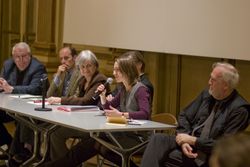
Front to Rear: Architecture and Planning during World War II, held at the Institute of Fine Arts, New York University, brings together research investigating a wide range of architectural activities, taking place in diverse geographical locations, and occurring between the bombings of Guernica in 1937 and Hiroshima in 1945. World War II was a key moment in the process of(...)
Front to Rear: Architecture and Planning during World War II, held at the Institute of Fine Arts, New York University, brings together research investigating a wide range of architectural activities, taking place in diverse geographical locations, and occurring between the bombings of Guernica in 1937 and Hiroshima in 1945. World War II was a key moment in the process of(...)
Location:
Institute of Fine Arts, New York University
Institute of Fine Arts, New York University
Date:
7 March 2009 to 8 March 2009
7 March 2009 to 8 March 2009
Title:
Front to Rear: Architecture and Planning during World War II
Actions:
Description:
Front to Rear: Architecture and Planning during World War II, held at the Institute of Fine Arts, New York University, brings together research investigating a wide range of architectural activities, taking place in diverse geographical locations, and occurring between the bombings of Guernica in 1937 and Hiroshima in 1945. World War II was a key moment in the process of(...)
Front to Rear: Architecture and Planning during World War II
Actions:
Description:
Front to Rear: Architecture and Planning during World War II, held at the Institute of Fine Arts, New York University, brings together research investigating a wide range of architectural activities, taking place in diverse geographical locations, and occurring between the bombings of Guernica in 1937 and Hiroshima in 1945. World War II was a key moment in the process of(...)
Form:
events
events
Date:
7 March 2009 to
8 March 2009
7 March 2009 to
8 March 2009
Location:
Institute of Fine Arts, New York University
Institute of Fine Arts, New York University
Level of archival description:
Project
Project
Actions:
Reference number:
CI005.S1.1942.PR1
Description:
Dissatisfied with the original plans by architect Van Nieuwenhuyzen for the construction of the Spaarbank, the Rotterdam Town Plan Advisory Bureau commissioned Oud to instead design the bank in 1942 with Van Nieuwenhuyzen acting as adviser. Oud presented his original design in 1942: it featured a five-storey building with a facade of glazed brick, a frosted glass ceiling in the main hall and chromium- and metal- plated window frames. Oud limited his use of decorations in his revised plan, assigning artist, Aart van den IJssel, to create symbolic animal sculptures. Oud also designed some of its furniture (Taverne et al. 2001, 437-439). Project series includes photographs of the furniture for the Spaarbank as well as plans.
CI005.S1.1942.PR1
Description:
Dissatisfied with the original plans by architect Van Nieuwenhuyzen for the construction of the Spaarbank, the Rotterdam Town Plan Advisory Bureau commissioned Oud to instead design the bank in 1942 with Van Nieuwenhuyzen acting as adviser. Oud presented his original design in 1942: it featured a five-storey building with a facade of glazed brick, a frosted glass ceiling in the main hall and chromium- and metal- plated window frames. Oud limited his use of decorations in his revised plan, assigning artist, Aart van den IJssel, to create symbolic animal sculptures. Oud also designed some of its furniture (Taverne et al. 2001, 437-439). Project series includes photographs of the furniture for the Spaarbank as well as plans.
People:
Date:
1942-1957
1942-1957
Title:
The Spaarbank (Central Savings Bank), Rotterdam, Netherlands (1942-1957)
Actions:
CI005.S1.1942.PR1
Description:
Dissatisfied with the original plans by architect Van Nieuwenhuyzen for the construction of the Spaarbank, the Rotterdam Town Plan Advisory Bureau commissioned Oud to instead design the bank in 1942 with Van Nieuwenhuyzen acting as adviser. Oud presented his original design in 1942: it featured a five-storey building with a facade of glazed brick, a frosted glass ceiling in the main hall and chromium- and metal- plated window frames. Oud limited his use of decorations in his revised plan, assigning artist, Aart van den IJssel, to create symbolic animal sculptures. Oud also designed some of its furniture (Taverne et al. 2001, 437-439). Project series includes photographs of the furniture for the Spaarbank as well as plans.
The Spaarbank (Central Savings Bank), Rotterdam, Netherlands (1942-1957)
Actions:
CI005.S1.1942.PR1
Description:
Dissatisfied with the original plans by architect Van Nieuwenhuyzen for the construction of the Spaarbank, the Rotterdam Town Plan Advisory Bureau commissioned Oud to instead design the bank in 1942 with Van Nieuwenhuyzen acting as adviser. Oud presented his original design in 1942: it featured a five-storey building with a facade of glazed brick, a frosted glass ceiling in the main hall and chromium- and metal- plated window frames. Oud limited his use of decorations in his revised plan, assigning artist, Aart van den IJssel, to create symbolic animal sculptures. Oud also designed some of its furniture (Taverne et al. 2001, 437-439). Project series includes photographs of the furniture for the Spaarbank as well as plans.
Level of archival description:
project
project
Date:
1942-1957
1942-1957
People:
Level of archival description:
Series
Series
Title:
Audio-Visual Materials
Audio-Visual Materials
Actions:
Reference number:
AP144.S8
Description:
Series contains audio-visual materials, including audio reels, audiocassettes, a film reel and videocassettes that document Cedric Price's projects, lectures, presentations, gallery talks, and interviews. Audiocassettes also include recordings of lectures presented at the AA, office design chats, conversations with clients (Generator, 1977-78), design notes, and site visits. Series also includes audio-visual materials from other sources, such as BBC radio and television broadcasts, as well as commercially-produced material such as 'Insite: the Video Magazine for Architects' (1986-87). Also included is a set consisting of 24 slides and one audiocassette by Cedric Price, titled 'Technology is the Answer but What Was the Question', (Pidgeon Audio Visual). Material in this series was produced between 1966 and 1987.
AP144.S8
Description:
Series contains audio-visual materials, including audio reels, audiocassettes, a film reel and videocassettes that document Cedric Price's projects, lectures, presentations, gallery talks, and interviews. Audiocassettes also include recordings of lectures presented at the AA, office design chats, conversations with clients (Generator, 1977-78), design notes, and site visits. Series also includes audio-visual materials from other sources, such as BBC radio and television broadcasts, as well as commercially-produced material such as 'Insite: the Video Magazine for Architects' (1986-87). Also included is a set consisting of 24 slides and one audiocassette by Cedric Price, titled 'Technology is the Answer but What Was the Question', (Pidgeon Audio Visual). Material in this series was produced between 1966 and 1987.
People:
Date:
1966-1987
1966-1987
Title:
Audio-Visual Materials
Actions:
AP144.S8
Description:
Series contains audio-visual materials, including audio reels, audiocassettes, a film reel and videocassettes that document Cedric Price's projects, lectures, presentations, gallery talks, and interviews. Audiocassettes also include recordings of lectures presented at the AA, office design chats, conversations with clients (Generator, 1977-78), design notes, and site visits. Series also includes audio-visual materials from other sources, such as BBC radio and television broadcasts, as well as commercially-produced material such as 'Insite: the Video Magazine for Architects' (1986-87). Also included is a set consisting of 24 slides and one audiocassette by Cedric Price, titled 'Technology is the Answer but What Was the Question', (Pidgeon Audio Visual). Material in this series was produced between 1966 and 1987.
Audio-Visual Materials
Actions:
AP144.S8
Description:
Series contains audio-visual materials, including audio reels, audiocassettes, a film reel and videocassettes that document Cedric Price's projects, lectures, presentations, gallery talks, and interviews. Audiocassettes also include recordings of lectures presented at the AA, office design chats, conversations with clients (Generator, 1977-78), design notes, and site visits. Series also includes audio-visual materials from other sources, such as BBC radio and television broadcasts, as well as commercially-produced material such as 'Insite: the Video Magazine for Architects' (1986-87). Also included is a set consisting of 24 slides and one audiocassette by Cedric Price, titled 'Technology is the Answer but What Was the Question', (Pidgeon Audio Visual). Material in this series was produced between 1966 and 1987.
Level of archival description:
Series
Series
Date:
1966-1987
1966-1987
People:
Level of archival description:
Project
Project
Title:
Place Ville Marie
Place Ville Marie
Actions:
Reference number:
AP137.D2
Description:
File documents Place Ville Marie, Montréal, Québec, a large urban development project consisting of an open plaza, a 43-storey cruciform-shaped aluminum-clad office tower (Royal Bank of Canada Building), an underground pedestrian walkway with shopping promenades and cinemas, and two smaller commercial / office buildings that bordered the plaza - a 3-storey building on Cathcart St. and a 13-storey building fronting Mansfield St. File contains design development, working, and shop drawings, and a presentation panel produced between 1958-64. The design development drawings include drawings from the I.M. Pei office in New York (indicated by N.Y. after the drawing number), and the office of the Montreal architects (indicated by an M after the drawing number).
AP137.D2
Description:
File documents Place Ville Marie, Montréal, Québec, a large urban development project consisting of an open plaza, a 43-storey cruciform-shaped aluminum-clad office tower (Royal Bank of Canada Building), an underground pedestrian walkway with shopping promenades and cinemas, and two smaller commercial / office buildings that bordered the plaza - a 3-storey building on Cathcart St. and a 13-storey building fronting Mansfield St. File contains design development, working, and shop drawings, and a presentation panel produced between 1958-64. The design development drawings include drawings from the I.M. Pei office in New York (indicated by N.Y. after the drawing number), and the office of the Montreal architects (indicated by an M after the drawing number).
People:
Date:
1958-1964
1958-1964
Title:
Place Ville Marie
Actions:
AP137.D2
Description:
File documents Place Ville Marie, Montréal, Québec, a large urban development project consisting of an open plaza, a 43-storey cruciform-shaped aluminum-clad office tower (Royal Bank of Canada Building), an underground pedestrian walkway with shopping promenades and cinemas, and two smaller commercial / office buildings that bordered the plaza - a 3-storey building on Cathcart St. and a 13-storey building fronting Mansfield St. File contains design development, working, and shop drawings, and a presentation panel produced between 1958-64. The design development drawings include drawings from the I.M. Pei office in New York (indicated by N.Y. after the drawing number), and the office of the Montreal architects (indicated by an M after the drawing number).
Place Ville Marie
Actions:
AP137.D2
Description:
File documents Place Ville Marie, Montréal, Québec, a large urban development project consisting of an open plaza, a 43-storey cruciform-shaped aluminum-clad office tower (Royal Bank of Canada Building), an underground pedestrian walkway with shopping promenades and cinemas, and two smaller commercial / office buildings that bordered the plaza - a 3-storey building on Cathcart St. and a 13-storey building fronting Mansfield St. File contains design development, working, and shop drawings, and a presentation panel produced between 1958-64. The design development drawings include drawings from the I.M. Pei office in New York (indicated by N.Y. after the drawing number), and the office of the Montreal architects (indicated by an M after the drawing number).
Level of archival description:
File 2
File 2
Date:
1958-1964
1958-1964
People:


