


33566 Results
Form:
drawings
drawings
Actions:
Reference number:
DR1996:0002
Description:
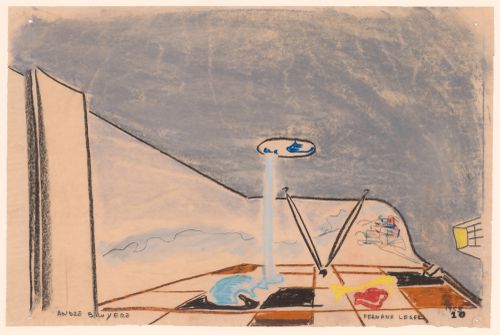
- Two groups of four pastel drawings were originally produced in connection with the Village Polychrome project. The architect André Bruyère had retained one group, while the other was given to the patron and client, Francisco de Assis Chateaubriand Bandeira de Melo, who then donated it to the Sao Paolo Museum of Modern Art. Bruyère subsequently gave one of the four drawings in his group to a friend. The three remaining drawings from Bruyère's group are in the CCA Prints and Drawings collection (DR1996:0001 - DR1996:0003) ("Projet de Village Polychrome, Biot, France"). - The sliding wall, shown on the left, can be used to partially enclose the terrace ("Village d'artistes sur la Côte d'Azur", p. 83).
DR1996:0002
Description:
- Two groups of four pastel drawings were originally produced in connection with the Village Polychrome project. The architect André Bruyère had retained one group, while the other was given to the patron and client, Francisco de Assis Chateaubriand Bandeira de Melo, who then donated it to the Sao Paolo Museum of Modern Art. Bruyère subsequently gave one of the four drawings in his group to a friend. The three remaining drawings from Bruyère's group are in the CCA Prints and Drawings collection (DR1996:0001 - DR1996:0003) ("Projet de Village Polychrome, Biot, France"). - The sliding wall, shown on the left, can be used to partially enclose the terrace ("Village d'artistes sur la Côte d'Azur", p. 83).
People:
Subject:
interior design
interior design
Date:
1953
1953
Title:
Perspective for a guest villa showing the terrace, Village Polychrome, near Biot, France
Actions:
DR1996:0002
Description:
- Two groups of four pastel drawings were originally produced in connection with the Village Polychrome project. The architect André Bruyère had retained one group, while the other was given to the patron and client, Francisco de Assis Chateaubriand Bandeira de Melo, who then donated it to the Sao Paolo Museum of Modern Art. Bruyère subsequently gave one of the four drawings in his group to a friend. The three remaining drawings from Bruyère's group are in the CCA Prints and Drawings collection (DR1996:0001 - DR1996:0003) ("Projet de Village Polychrome, Biot, France"). - The sliding wall, shown on the left, can be used to partially enclose the terrace ("Village d'artistes sur la Côte d'Azur", p. 83).
Perspective for a guest villa showing the terrace, Village Polychrome, near Biot, France
Actions:
DR1996:0002
Description:
- Two groups of four pastel drawings were originally produced in connection with the Village Polychrome project. The architect André Bruyère had retained one group, while the other was given to the patron and client, Francisco de Assis Chateaubriand Bandeira de Melo, who then donated it to the Sao Paolo Museum of Modern Art. Bruyère subsequently gave one of the four drawings in his group to a friend. The three remaining drawings from Bruyère's group are in the CCA Prints and Drawings collection (DR1996:0001 - DR1996:0003) ("Projet de Village Polychrome, Biot, France"). - The sliding wall, shown on the left, can be used to partially enclose the terrace ("Village d'artistes sur la Côte d'Azur", p. 83).
Form:
drawings
drawings
Date:
1953
1953
People:
Subject:
interior design
interior design
Form:
drawings
drawings
Actions:
Reference number:
DR1996:0011
Description:
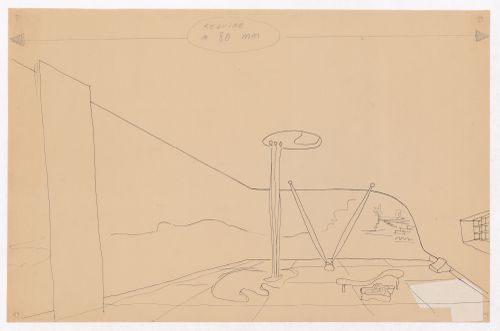
- Two groups of four pastel drawings were originally produced in connection with the Village Polychrome project. The architect André Bruyère had retained one group, while the other was given to the patron and client, Francisco de Assis Chateaubriand Bandeira de Melo, who then donated it to the Sao Paolo Museum of Modern Art. Bruyère subsequently gave one of the four drawings in his group to a friend. The three remaining drawings from Bruyère's group are in the CCA Prints and Drawings collection (DR1996:0001 - DR1996:0003) ("Projet de Village Polychrome, Biot, France"). - The sliding wall, shown on the left, can be used to partially enclose the terrace ("Village d'artistes sur la Côte d'Azur", p. 83).
DR1996:0011
Description:
- Two groups of four pastel drawings were originally produced in connection with the Village Polychrome project. The architect André Bruyère had retained one group, while the other was given to the patron and client, Francisco de Assis Chateaubriand Bandeira de Melo, who then donated it to the Sao Paolo Museum of Modern Art. Bruyère subsequently gave one of the four drawings in his group to a friend. The three remaining drawings from Bruyère's group are in the CCA Prints and Drawings collection (DR1996:0001 - DR1996:0003) ("Projet de Village Polychrome, Biot, France"). - The sliding wall, shown on the left, can be used to partially enclose the terrace ("Village d'artistes sur la Côte d'Azur", p. 83).
People:
Subject:
interior design
interior design
Date:
1952-1953
1952-1953
Title:
Perspective for a guest villa showing the terrace, Village Polychrome, near Biot, France
Actions:
DR1996:0011
Description:
- Two groups of four pastel drawings were originally produced in connection with the Village Polychrome project. The architect André Bruyère had retained one group, while the other was given to the patron and client, Francisco de Assis Chateaubriand Bandeira de Melo, who then donated it to the Sao Paolo Museum of Modern Art. Bruyère subsequently gave one of the four drawings in his group to a friend. The three remaining drawings from Bruyère's group are in the CCA Prints and Drawings collection (DR1996:0001 - DR1996:0003) ("Projet de Village Polychrome, Biot, France"). - The sliding wall, shown on the left, can be used to partially enclose the terrace ("Village d'artistes sur la Côte d'Azur", p. 83).
Perspective for a guest villa showing the terrace, Village Polychrome, near Biot, France
Actions:
DR1996:0011
Description:
- Two groups of four pastel drawings were originally produced in connection with the Village Polychrome project. The architect André Bruyère had retained one group, while the other was given to the patron and client, Francisco de Assis Chateaubriand Bandeira de Melo, who then donated it to the Sao Paolo Museum of Modern Art. Bruyère subsequently gave one of the four drawings in his group to a friend. The three remaining drawings from Bruyère's group are in the CCA Prints and Drawings collection (DR1996:0001 - DR1996:0003) ("Projet de Village Polychrome, Biot, France"). - The sliding wall, shown on the left, can be used to partially enclose the terrace ("Village d'artistes sur la Côte d'Azur", p. 83).
Form:
drawings
drawings
Date:
1952-1953
1952-1953
People:
Subject:
interior design
interior design
Form:
drawings
drawings
Actions:
Reference number:
DR1987:0358
Description:
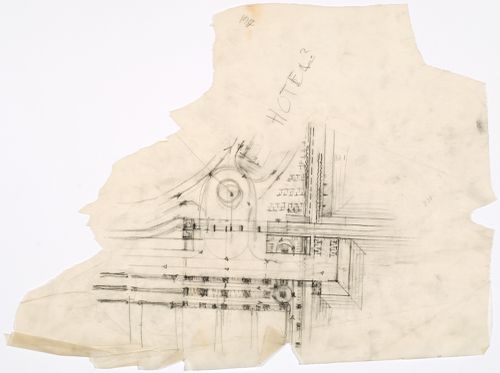
- This drawing shows the lower right corner of the airport, including amphibian landing, station, part of the hangars, parking lot and underground viaduct. The circulation pattern of taxiing airplanes is indicated, as is the route to be followed by automobiles leaving the highway and entering the parking lot. This drawing is part of a series of eight drawings in which the architect works out the circulation pattern of airplanes (DR1987:0347 - DR1987:0349, DR1987:0352 - DR1987:0354, DR1987:0358 and DR1987:0390). This may be the most advanced of this group, that is, the most closely resembling the version represented in the submitted competition drawings (DR1987:0359 - DR1987:0360).
DR1987:0358
Description:
- This drawing shows the lower right corner of the airport, including amphibian landing, station, part of the hangars, parking lot and underground viaduct. The circulation pattern of taxiing airplanes is indicated, as is the route to be followed by automobiles leaving the highway and entering the parking lot. This drawing is part of a series of eight drawings in which the architect works out the circulation pattern of airplanes (DR1987:0347 - DR1987:0349, DR1987:0352 - DR1987:0354, DR1987:0358 and DR1987:0390). This may be the most advanced of this group, that is, the most closely resembling the version represented in the submitted competition drawings (DR1987:0359 - DR1987:0360).
People:
Subject:
architecture
architecture
Date:
1929
1929
Title:
Lehigh Airports Competition Entry: Detail for airport plan showing airplane and automobile circulation patterns
Actions:
DR1987:0358
Description:
- This drawing shows the lower right corner of the airport, including amphibian landing, station, part of the hangars, parking lot and underground viaduct. The circulation pattern of taxiing airplanes is indicated, as is the route to be followed by automobiles leaving the highway and entering the parking lot. This drawing is part of a series of eight drawings in which the architect works out the circulation pattern of airplanes (DR1987:0347 - DR1987:0349, DR1987:0352 - DR1987:0354, DR1987:0358 and DR1987:0390). This may be the most advanced of this group, that is, the most closely resembling the version represented in the submitted competition drawings (DR1987:0359 - DR1987:0360).
Lehigh Airports Competition Entry: Detail for airport plan showing airplane and automobile circulation patterns
Actions:
DR1987:0358
Description:
- This drawing shows the lower right corner of the airport, including amphibian landing, station, part of the hangars, parking lot and underground viaduct. The circulation pattern of taxiing airplanes is indicated, as is the route to be followed by automobiles leaving the highway and entering the parking lot. This drawing is part of a series of eight drawings in which the architect works out the circulation pattern of airplanes (DR1987:0347 - DR1987:0349, DR1987:0352 - DR1987:0354, DR1987:0358 and DR1987:0390). This may be the most advanced of this group, that is, the most closely resembling the version represented in the submitted competition drawings (DR1987:0359 - DR1987:0360).
Form:
drawings
drawings
Date:
1929
1929
People:
Subject:
architecture
architecture
Form:
photographs
photographs
Actions:
Reference number:
PH1979:0162.01:001-015
Description:
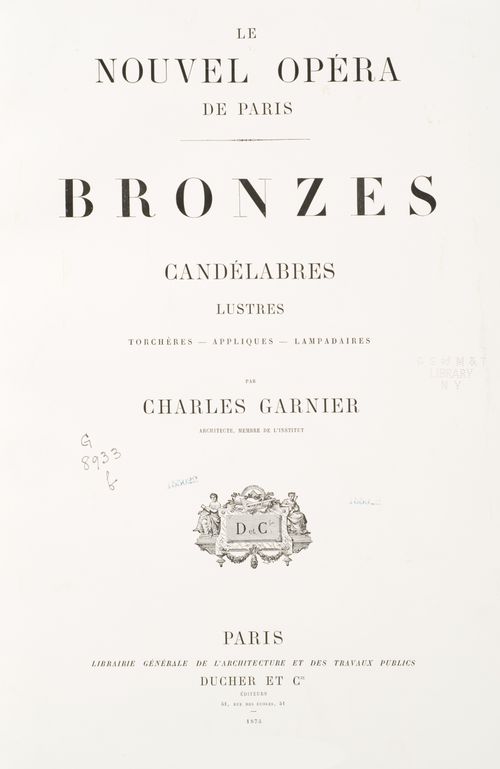
Album has title page titled as follows: Le/Nouvel Opéra/de Paris/Bronzes/Candélabres/Lustres/Torchères - Appliques - Lampadaires/par/Charles Garnier/Architecte, Membre de L'Institut/D & Cie./Paris/Librairie Générale de l'Architecture et des Travaux Publics/Ducher et Cie/Éditeurs/51, rue des Écoles, 51/1875 The album comprises a list of plates (Table des planches): Lustres 1. - Grand foyer 2. - Salle 3. - Foyer de la danse Torchères 4. - Balustrades extérieures (H. Chabaud, statuaire) 5. - Balustrades extérieures (H. Chabaud, statuaire) Candélabres 6. - Grand vestibule d'entrée 7. - Perron extérieur 8. - Trottoir extérieur 9. - Descente à couvert 10. - Rampe douce du pavillon du chef de l'État 11. - Loggia 12. - Grand escalier. - Sur les consoles 13. - Au-dessous des voûtes rampantes 14. - Petit salon du foyer. - Sur les meubles 15. - Escaliers secondaires. - Sur les gaînes
PH1979:0162.01:001-015
Description:
Album has title page titled as follows: Le/Nouvel Opéra/de Paris/Bronzes/Candélabres/Lustres/Torchères - Appliques - Lampadaires/par/Charles Garnier/Architecte, Membre de L'Institut/D & Cie./Paris/Librairie Générale de l'Architecture et des Travaux Publics/Ducher et Cie/Éditeurs/51, rue des Écoles, 51/1875 The album comprises a list of plates (Table des planches): Lustres 1. - Grand foyer 2. - Salle 3. - Foyer de la danse Torchères 4. - Balustrades extérieures (H. Chabaud, statuaire) 5. - Balustrades extérieures (H. Chabaud, statuaire) Candélabres 6. - Grand vestibule d'entrée 7. - Perron extérieur 8. - Trottoir extérieur 9. - Descente à couvert 10. - Rampe douce du pavillon du chef de l'État 11. - Loggia 12. - Grand escalier. - Sur les consoles 13. - Au-dessous des voûtes rampantes 14. - Petit salon du foyer. - Sur les meubles 15. - Escaliers secondaires. - Sur les gaînes
People:
Date:
published 1875
published 1875
Title:
Album titled "Le nouvel Opéra de Paris: Bronzes, candélabres, lustres, torchères, appliques, lampadaires par Charles Garnier"
Actions:
PH1979:0162.01:001-015
Description:
Album has title page titled as follows: Le/Nouvel Opéra/de Paris/Bronzes/Candélabres/Lustres/Torchères - Appliques - Lampadaires/par/Charles Garnier/Architecte, Membre de L'Institut/D & Cie./Paris/Librairie Générale de l'Architecture et des Travaux Publics/Ducher et Cie/Éditeurs/51, rue des Écoles, 51/1875 The album comprises a list of plates (Table des planches): Lustres 1. - Grand foyer 2. - Salle 3. - Foyer de la danse Torchères 4. - Balustrades extérieures (H. Chabaud, statuaire) 5. - Balustrades extérieures (H. Chabaud, statuaire) Candélabres 6. - Grand vestibule d'entrée 7. - Perron extérieur 8. - Trottoir extérieur 9. - Descente à couvert 10. - Rampe douce du pavillon du chef de l'État 11. - Loggia 12. - Grand escalier. - Sur les consoles 13. - Au-dessous des voûtes rampantes 14. - Petit salon du foyer. - Sur les meubles 15. - Escaliers secondaires. - Sur les gaînes
Album titled "Le nouvel Opéra de Paris: Bronzes, candélabres, lustres, torchères, appliques, lampadaires par Charles Garnier"
Actions:
PH1979:0162.01:001-015
Description:
Album has title page titled as follows: Le/Nouvel Opéra/de Paris/Bronzes/Candélabres/Lustres/Torchères - Appliques - Lampadaires/par/Charles Garnier/Architecte, Membre de L'Institut/D & Cie./Paris/Librairie Générale de l'Architecture et des Travaux Publics/Ducher et Cie/Éditeurs/51, rue des Écoles, 51/1875 The album comprises a list of plates (Table des planches): Lustres 1. - Grand foyer 2. - Salle 3. - Foyer de la danse Torchères 4. - Balustrades extérieures (H. Chabaud, statuaire) 5. - Balustrades extérieures (H. Chabaud, statuaire) Candélabres 6. - Grand vestibule d'entrée 7. - Perron extérieur 8. - Trottoir extérieur 9. - Descente à couvert 10. - Rampe douce du pavillon du chef de l'État 11. - Loggia 12. - Grand escalier. - Sur les consoles 13. - Au-dessous des voûtes rampantes 14. - Petit salon du foyer. - Sur les meubles 15. - Escaliers secondaires. - Sur les gaînes
Form:
photographs
photographs
Date:
published 1875
published 1875
People:
Form:
events
events
Description:
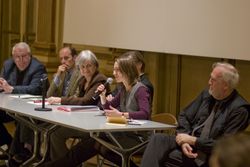
Front to Rear: Architecture and Planning during World War II, held at the Institute of Fine Arts, New York University, brings together research investigating a wide range of architectural activities, taking place in diverse geographical locations, and occurring between the bombings of Guernica in 1937 and Hiroshima in 1945. World War II was a key moment in the process of(...)
Front to Rear: Architecture and Planning during World War II, held at the Institute of Fine Arts, New York University, brings together research investigating a wide range of architectural activities, taking place in diverse geographical locations, and occurring between the bombings of Guernica in 1937 and Hiroshima in 1945. World War II was a key moment in the process of(...)
Location:
Institute of Fine Arts, New York University
Institute of Fine Arts, New York University
Date:
7 March 2009 to 8 March 2009
7 March 2009 to 8 March 2009
Title:
Front to Rear: Architecture and Planning during World War II
Actions:
Description:
Front to Rear: Architecture and Planning during World War II, held at the Institute of Fine Arts, New York University, brings together research investigating a wide range of architectural activities, taking place in diverse geographical locations, and occurring between the bombings of Guernica in 1937 and Hiroshima in 1945. World War II was a key moment in the process of(...)
Front to Rear: Architecture and Planning during World War II
Actions:
Description:
Front to Rear: Architecture and Planning during World War II, held at the Institute of Fine Arts, New York University, brings together research investigating a wide range of architectural activities, taking place in diverse geographical locations, and occurring between the bombings of Guernica in 1937 and Hiroshima in 1945. World War II was a key moment in the process of(...)
Form:
events
events
Date:
7 March 2009 to
8 March 2009
7 March 2009 to
8 March 2009
Location:
Institute of Fine Arts, New York University
Institute of Fine Arts, New York University
Level of archival description:
Project
Project
Actions:
Reference number:
CI005.S1.1942.PR1
Description:
Dissatisfied with the original plans by architect Van Nieuwenhuyzen for the construction of the Spaarbank, the Rotterdam Town Plan Advisory Bureau commissioned Oud to instead design the bank in 1942 with Van Nieuwenhuyzen acting as adviser. Oud presented his original design in 1942: it featured a five-storey building with a facade of glazed brick, a frosted glass ceiling in the main hall and chromium- and metal- plated window frames. Oud limited his use of decorations in his revised plan, assigning artist, Aart van den IJssel, to create symbolic animal sculptures. Oud also designed some of its furniture (Taverne et al. 2001, 437-439). Project series includes photographs of the furniture for the Spaarbank as well as plans.
CI005.S1.1942.PR1
Description:
Dissatisfied with the original plans by architect Van Nieuwenhuyzen for the construction of the Spaarbank, the Rotterdam Town Plan Advisory Bureau commissioned Oud to instead design the bank in 1942 with Van Nieuwenhuyzen acting as adviser. Oud presented his original design in 1942: it featured a five-storey building with a facade of glazed brick, a frosted glass ceiling in the main hall and chromium- and metal- plated window frames. Oud limited his use of decorations in his revised plan, assigning artist, Aart van den IJssel, to create symbolic animal sculptures. Oud also designed some of its furniture (Taverne et al. 2001, 437-439). Project series includes photographs of the furniture for the Spaarbank as well as plans.
People:
Date:
1942-1957
1942-1957
Title:
The Spaarbank (Central Savings Bank), Rotterdam, Netherlands (1942-1957)
Actions:
CI005.S1.1942.PR1
Description:
Dissatisfied with the original plans by architect Van Nieuwenhuyzen for the construction of the Spaarbank, the Rotterdam Town Plan Advisory Bureau commissioned Oud to instead design the bank in 1942 with Van Nieuwenhuyzen acting as adviser. Oud presented his original design in 1942: it featured a five-storey building with a facade of glazed brick, a frosted glass ceiling in the main hall and chromium- and metal- plated window frames. Oud limited his use of decorations in his revised plan, assigning artist, Aart van den IJssel, to create symbolic animal sculptures. Oud also designed some of its furniture (Taverne et al. 2001, 437-439). Project series includes photographs of the furniture for the Spaarbank as well as plans.
The Spaarbank (Central Savings Bank), Rotterdam, Netherlands (1942-1957)
Actions:
CI005.S1.1942.PR1
Description:
Dissatisfied with the original plans by architect Van Nieuwenhuyzen for the construction of the Spaarbank, the Rotterdam Town Plan Advisory Bureau commissioned Oud to instead design the bank in 1942 with Van Nieuwenhuyzen acting as adviser. Oud presented his original design in 1942: it featured a five-storey building with a facade of glazed brick, a frosted glass ceiling in the main hall and chromium- and metal- plated window frames. Oud limited his use of decorations in his revised plan, assigning artist, Aart van den IJssel, to create symbolic animal sculptures. Oud also designed some of its furniture (Taverne et al. 2001, 437-439). Project series includes photographs of the furniture for the Spaarbank as well as plans.
Level of archival description:
project
project
Date:
1942-1957
1942-1957
People:
Level of archival description:
Series
Series
Title:
Audio-Visual Materials
Audio-Visual Materials
Actions:
Reference number:
AP144.S8
Description:
Series contains audio-visual materials, including audio reels, audiocassettes, a film reel and videocassettes that document Cedric Price's projects, lectures, presentations, gallery talks, and interviews. Audiocassettes also include recordings of lectures presented at the AA, office design chats, conversations with clients (Generator, 1977-78), design notes, and site visits. Series also includes audio-visual materials from other sources, such as BBC radio and television broadcasts, as well as commercially-produced material such as 'Insite: the Video Magazine for Architects' (1986-87). Also included is a set consisting of 24 slides and one audiocassette by Cedric Price, titled 'Technology is the Answer but What Was the Question', (Pidgeon Audio Visual). Material in this series was produced between 1966 and 1987.
AP144.S8
Description:
Series contains audio-visual materials, including audio reels, audiocassettes, a film reel and videocassettes that document Cedric Price's projects, lectures, presentations, gallery talks, and interviews. Audiocassettes also include recordings of lectures presented at the AA, office design chats, conversations with clients (Generator, 1977-78), design notes, and site visits. Series also includes audio-visual materials from other sources, such as BBC radio and television broadcasts, as well as commercially-produced material such as 'Insite: the Video Magazine for Architects' (1986-87). Also included is a set consisting of 24 slides and one audiocassette by Cedric Price, titled 'Technology is the Answer but What Was the Question', (Pidgeon Audio Visual). Material in this series was produced between 1966 and 1987.
People:
Date:
1966-1987
1966-1987
Title:
Audio-Visual Materials
Actions:
AP144.S8
Description:
Series contains audio-visual materials, including audio reels, audiocassettes, a film reel and videocassettes that document Cedric Price's projects, lectures, presentations, gallery talks, and interviews. Audiocassettes also include recordings of lectures presented at the AA, office design chats, conversations with clients (Generator, 1977-78), design notes, and site visits. Series also includes audio-visual materials from other sources, such as BBC radio and television broadcasts, as well as commercially-produced material such as 'Insite: the Video Magazine for Architects' (1986-87). Also included is a set consisting of 24 slides and one audiocassette by Cedric Price, titled 'Technology is the Answer but What Was the Question', (Pidgeon Audio Visual). Material in this series was produced between 1966 and 1987.
Audio-Visual Materials
Actions:
AP144.S8
Description:
Series contains audio-visual materials, including audio reels, audiocassettes, a film reel and videocassettes that document Cedric Price's projects, lectures, presentations, gallery talks, and interviews. Audiocassettes also include recordings of lectures presented at the AA, office design chats, conversations with clients (Generator, 1977-78), design notes, and site visits. Series also includes audio-visual materials from other sources, such as BBC radio and television broadcasts, as well as commercially-produced material such as 'Insite: the Video Magazine for Architects' (1986-87). Also included is a set consisting of 24 slides and one audiocassette by Cedric Price, titled 'Technology is the Answer but What Was the Question', (Pidgeon Audio Visual). Material in this series was produced between 1966 and 1987.
Level of archival description:
Series
Series
Date:
1966-1987
1966-1987
People:
Level of archival description:
Project
Project
Title:
Place Ville Marie
Place Ville Marie
Actions:
Reference number:
AP137.D2
Description:
File documents Place Ville Marie, Montréal, Québec, a large urban development project consisting of an open plaza, a 43-storey cruciform-shaped aluminum-clad office tower (Royal Bank of Canada Building), an underground pedestrian walkway with shopping promenades and cinemas, and two smaller commercial / office buildings that bordered the plaza - a 3-storey building on Cathcart St. and a 13-storey building fronting Mansfield St. File contains design development, working, and shop drawings, and a presentation panel produced between 1958-64. The design development drawings include drawings from the I.M. Pei office in New York (indicated by N.Y. after the drawing number), and the office of the Montreal architects (indicated by an M after the drawing number).
AP137.D2
Description:
File documents Place Ville Marie, Montréal, Québec, a large urban development project consisting of an open plaza, a 43-storey cruciform-shaped aluminum-clad office tower (Royal Bank of Canada Building), an underground pedestrian walkway with shopping promenades and cinemas, and two smaller commercial / office buildings that bordered the plaza - a 3-storey building on Cathcart St. and a 13-storey building fronting Mansfield St. File contains design development, working, and shop drawings, and a presentation panel produced between 1958-64. The design development drawings include drawings from the I.M. Pei office in New York (indicated by N.Y. after the drawing number), and the office of the Montreal architects (indicated by an M after the drawing number).
People:
Date:
1958-1964
1958-1964
Title:
Place Ville Marie
Actions:
AP137.D2
Description:
File documents Place Ville Marie, Montréal, Québec, a large urban development project consisting of an open plaza, a 43-storey cruciform-shaped aluminum-clad office tower (Royal Bank of Canada Building), an underground pedestrian walkway with shopping promenades and cinemas, and two smaller commercial / office buildings that bordered the plaza - a 3-storey building on Cathcart St. and a 13-storey building fronting Mansfield St. File contains design development, working, and shop drawings, and a presentation panel produced between 1958-64. The design development drawings include drawings from the I.M. Pei office in New York (indicated by N.Y. after the drawing number), and the office of the Montreal architects (indicated by an M after the drawing number).
Place Ville Marie
Actions:
AP137.D2
Description:
File documents Place Ville Marie, Montréal, Québec, a large urban development project consisting of an open plaza, a 43-storey cruciform-shaped aluminum-clad office tower (Royal Bank of Canada Building), an underground pedestrian walkway with shopping promenades and cinemas, and two smaller commercial / office buildings that bordered the plaza - a 3-storey building on Cathcart St. and a 13-storey building fronting Mansfield St. File contains design development, working, and shop drawings, and a presentation panel produced between 1958-64. The design development drawings include drawings from the I.M. Pei office in New York (indicated by N.Y. after the drawing number), and the office of the Montreal architects (indicated by an M after the drawing number).
Level of archival description:
File 2
File 2
Date:
1958-1964
1958-1964
People:
Level of archival description:
Project
Project
Actions:
Reference number:
AP164.S1.2004.D2
Description:
The project series documents the competition entry for the library and botanical garden for the University of Alcalá de Henares, Spain. The firm identified the project as number 180. As described by the architects, the project “[…] concentrates on building two heads, different from each other, Library and Dining hall, shortening the fronts of the central building which are without interest and evidently expensive to undertake a functional and economic work. The project is therefore converted into a basic restoration of the old hangars and the construction of two new low cost buildings which also can be constructed when necessary or depending on economic availability” (ARCH270975). Documenting the project are models, conceptual, design development and presentation drawings, textual records and photographic materials.
AP164.S1.2004.D2
Description:
The project series documents the competition entry for the library and botanical garden for the University of Alcalá de Henares, Spain. The firm identified the project as number 180. As described by the architects, the project “[…] concentrates on building two heads, different from each other, Library and Dining hall, shortening the fronts of the central building which are without interest and evidently expensive to undertake a functional and economic work. The project is therefore converted into a basic restoration of the old hangars and the construction of two new low cost buildings which also can be constructed when necessary or depending on economic availability” (ARCH270975). Documenting the project are models, conceptual, design development and presentation drawings, textual records and photographic materials.
People:
Date:
circa 2003-2004
circa 2003-2004
Title:
Edificio de equipamiento, Alcalá de Henares, Spain (2004)
Actions:
AP164.S1.2004.D2
Description:
The project series documents the competition entry for the library and botanical garden for the University of Alcalá de Henares, Spain. The firm identified the project as number 180. As described by the architects, the project “[…] concentrates on building two heads, different from each other, Library and Dining hall, shortening the fronts of the central building which are without interest and evidently expensive to undertake a functional and economic work. The project is therefore converted into a basic restoration of the old hangars and the construction of two new low cost buildings which also can be constructed when necessary or depending on economic availability” (ARCH270975). Documenting the project are models, conceptual, design development and presentation drawings, textual records and photographic materials.
Edificio de equipamiento, Alcalá de Henares, Spain (2004)
Actions:
AP164.S1.2004.D2
Description:
The project series documents the competition entry for the library and botanical garden for the University of Alcalá de Henares, Spain. The firm identified the project as number 180. As described by the architects, the project “[…] concentrates on building two heads, different from each other, Library and Dining hall, shortening the fronts of the central building which are without interest and evidently expensive to undertake a functional and economic work. The project is therefore converted into a basic restoration of the old hangars and the construction of two new low cost buildings which also can be constructed when necessary or depending on economic availability” (ARCH270975). Documenting the project are models, conceptual, design development and presentation drawings, textual records and photographic materials.
Level of archival description:
Project
Project
Date:
circa 2003-2004
circa 2003-2004
People:
Level of archival description:
Project
Project
Reference number:
CI005.S1.1918.PR2
Description:
Emilie Knappert commissioned De Vonk Holiday Hostel as a home for working class girls – a project undertaken with the support of the charitable cooperation of the Vereeniging Buitenbedrijf foundation. Oud was recommended for the design by architect, H.P. Berlage, who was unable to undertake the commission. Oud worked with existing designs to systematize and streamline the existing plans and to create a highly symmetrical building. Contemporaries viewed the building as exemplifying the aesthetic of monumentality. The design was conceived of, collaboratively, with artists Van Doesburg and Harm Kamerlingh Onnes (Taverne et al. 2001, 139-143). The project series includes photographs of the window designed by Onnes and of the entrance with the tiled floor, designed by Van Doesburg.
CI005.S1.1918.PR2
Description:
Emilie Knappert commissioned De Vonk Holiday Hostel as a home for working class girls – a project undertaken with the support of the charitable cooperation of the Vereeniging Buitenbedrijf foundation. Oud was recommended for the design by architect, H.P. Berlage, who was unable to undertake the commission. Oud worked with existing designs to systematize and streamline the existing plans and to create a highly symmetrical building. Contemporaries viewed the building as exemplifying the aesthetic of monumentality. The design was conceived of, collaboratively, with artists Van Doesburg and Harm Kamerlingh Onnes (Taverne et al. 2001, 139-143). The project series includes photographs of the window designed by Onnes and of the entrance with the tiled floor, designed by Van Doesburg.
People:
Date:
1918
1918
Title:
De Vonk Holiday Hostel, Noordwijkerhout, Netherlands (1917-1919)
Actions:
CI005.S1.1918.PR2
Description:
Emilie Knappert commissioned De Vonk Holiday Hostel as a home for working class girls – a project undertaken with the support of the charitable cooperation of the Vereeniging Buitenbedrijf foundation. Oud was recommended for the design by architect, H.P. Berlage, who was unable to undertake the commission. Oud worked with existing designs to systematize and streamline the existing plans and to create a highly symmetrical building. Contemporaries viewed the building as exemplifying the aesthetic of monumentality. The design was conceived of, collaboratively, with artists Van Doesburg and Harm Kamerlingh Onnes (Taverne et al. 2001, 139-143). The project series includes photographs of the window designed by Onnes and of the entrance with the tiled floor, designed by Van Doesburg.
De Vonk Holiday Hostel, Noordwijkerhout, Netherlands (1917-1919)
Actions:
CI005.S1.1918.PR2
Description:
Emilie Knappert commissioned De Vonk Holiday Hostel as a home for working class girls – a project undertaken with the support of the charitable cooperation of the Vereeniging Buitenbedrijf foundation. Oud was recommended for the design by architect, H.P. Berlage, who was unable to undertake the commission. Oud worked with existing designs to systematize and streamline the existing plans and to create a highly symmetrical building. Contemporaries viewed the building as exemplifying the aesthetic of monumentality. The design was conceived of, collaboratively, with artists Van Doesburg and Harm Kamerlingh Onnes (Taverne et al. 2001, 139-143). The project series includes photographs of the window designed by Onnes and of the entrance with the tiled floor, designed by Van Doesburg.
Level of archival description:
project
project
Date:
1918
1918
People:


