


9271 Results
Form:
photographs
photographs
Actions:
Reference number:
ARCH256360
ARCH256360
People:
Date:
1967
1967
Form:
photographs
photographs
Date:
1967
1967
People:
Form:
photographs
photographs
Actions:
Reference number:
ARCH256452
ARCH256452
People:
Date:
1967
1967
Title:
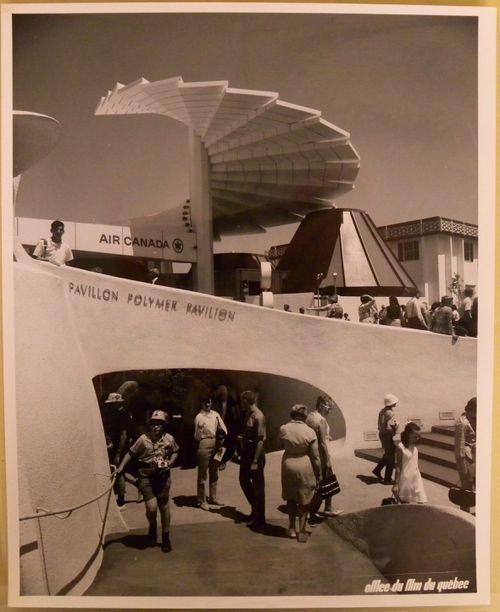
Partial view of the Polymer and Air Canada's Pavilions, Expo 67, Montréal, Québec
Actions:
ARCH256452
Partial view of the Polymer and Air Canada's Pavilions, Expo 67, Montréal, Québec
Actions:
ARCH256452
Form:
photographs
photographs
Date:
1967
1967
People:
Form:
photographs
photographs
Actions:
Reference number:
ARCH256139
ARCH256139
People:
Date:
1967
1967
Form:
photographs
photographs
Date:
1967
1967
People:
Level of archival description:
Sub-series
Sub-series
Title:
Virtools files
Virtools files
Actions:
Reference number:
AP167.S1.SS3
Description:
Sub-series 3, Virtools files, 1995—2013, contains files generated and coordinated by Virtools, a 3D visualization software used to make the Muscle move, respond to users, and play sound. It includes Virtools files, HTML files, audiovisual files (MP3s, WAVs and MPEGs), JPEGs, and applications. There are also a small number of CAD files, including 3DS, Maya, and AutoCad formats. The Virtools proprietary formats include composition files (.cmo), player files (.vmo), object files (.nmo) and scripts files (.nms). Virtools object files and scripts files may be combined and saved as composition files using Virtools Dev, CAD-like software that also coordinates sound and movement. (Virtools Dev is located in file AP167.S1.SS3.002, Virtools software and NSA Muscle composition and player files.) From Virtools Dev, a composition file can be exported to HTML or a player file. The HTML exports no longer work due to a missing JavaScript plugin. Player files and composition files can be played back in the Virtools player; the player also allows the user to interact with player files and behaves much like a video game interface. See file AP167.S1.SS3.008, NSA Muscle interface. Of note, the Virtools player file containing the NSA Muscle interface used at the Architecture non standard exhibition at the Centre George Pompidou is located in this sub-series. See item muscle.bat in file AP167.S1.SS3.008, NSA Muscle interface. There are also a number of other Virtools player files that allow the user to alter and interact with a virtual representation of a structure, which demonstrate ONL’s experimentation with the intersection of architecture and video game design. See file AP 167.S1.SS3.001, Early Virtools experimentation and architecture games.
AP167.S1.SS3
Description:
Sub-series 3, Virtools files, 1995—2013, contains files generated and coordinated by Virtools, a 3D visualization software used to make the Muscle move, respond to users, and play sound. It includes Virtools files, HTML files, audiovisual files (MP3s, WAVs and MPEGs), JPEGs, and applications. There are also a small number of CAD files, including 3DS, Maya, and AutoCad formats. The Virtools proprietary formats include composition files (.cmo), player files (.vmo), object files (.nmo) and scripts files (.nms). Virtools object files and scripts files may be combined and saved as composition files using Virtools Dev, CAD-like software that also coordinates sound and movement. (Virtools Dev is located in file AP167.S1.SS3.002, Virtools software and NSA Muscle composition and player files.) From Virtools Dev, a composition file can be exported to HTML or a player file. The HTML exports no longer work due to a missing JavaScript plugin. Player files and composition files can be played back in the Virtools player; the player also allows the user to interact with player files and behaves much like a video game interface. See file AP167.S1.SS3.008, NSA Muscle interface. Of note, the Virtools player file containing the NSA Muscle interface used at the Architecture non standard exhibition at the Centre George Pompidou is located in this sub-series. See item muscle.bat in file AP167.S1.SS3.008, NSA Muscle interface. There are also a number of other Virtools player files that allow the user to alter and interact with a virtual representation of a structure, which demonstrate ONL’s experimentation with the intersection of architecture and video game design. See file AP 167.S1.SS3.001, Early Virtools experimentation and architecture games.
People:
Date:
1995-2013
1995-2013
Title:
Virtools files
Actions:
AP167.S1.SS3
Description:
Sub-series 3, Virtools files, 1995—2013, contains files generated and coordinated by Virtools, a 3D visualization software used to make the Muscle move, respond to users, and play sound. It includes Virtools files, HTML files, audiovisual files (MP3s, WAVs and MPEGs), JPEGs, and applications. There are also a small number of CAD files, including 3DS, Maya, and AutoCad formats. The Virtools proprietary formats include composition files (.cmo), player files (.vmo), object files (.nmo) and scripts files (.nms). Virtools object files and scripts files may be combined and saved as composition files using Virtools Dev, CAD-like software that also coordinates sound and movement. (Virtools Dev is located in file AP167.S1.SS3.002, Virtools software and NSA Muscle composition and player files.) From Virtools Dev, a composition file can be exported to HTML or a player file. The HTML exports no longer work due to a missing JavaScript plugin. Player files and composition files can be played back in the Virtools player; the player also allows the user to interact with player files and behaves much like a video game interface. See file AP167.S1.SS3.008, NSA Muscle interface. Of note, the Virtools player file containing the NSA Muscle interface used at the Architecture non standard exhibition at the Centre George Pompidou is located in this sub-series. See item muscle.bat in file AP167.S1.SS3.008, NSA Muscle interface. There are also a number of other Virtools player files that allow the user to alter and interact with a virtual representation of a structure, which demonstrate ONL’s experimentation with the intersection of architecture and video game design. See file AP 167.S1.SS3.001, Early Virtools experimentation and architecture games.
Virtools files
Actions:
AP167.S1.SS3
Description:
Sub-series 3, Virtools files, 1995—2013, contains files generated and coordinated by Virtools, a 3D visualization software used to make the Muscle move, respond to users, and play sound. It includes Virtools files, HTML files, audiovisual files (MP3s, WAVs and MPEGs), JPEGs, and applications. There are also a small number of CAD files, including 3DS, Maya, and AutoCad formats. The Virtools proprietary formats include composition files (.cmo), player files (.vmo), object files (.nmo) and scripts files (.nms). Virtools object files and scripts files may be combined and saved as composition files using Virtools Dev, CAD-like software that also coordinates sound and movement. (Virtools Dev is located in file AP167.S1.SS3.002, Virtools software and NSA Muscle composition and player files.) From Virtools Dev, a composition file can be exported to HTML or a player file. The HTML exports no longer work due to a missing JavaScript plugin. Player files and composition files can be played back in the Virtools player; the player also allows the user to interact with player files and behaves much like a video game interface. See file AP167.S1.SS3.008, NSA Muscle interface. Of note, the Virtools player file containing the NSA Muscle interface used at the Architecture non standard exhibition at the Centre George Pompidou is located in this sub-series. See item muscle.bat in file AP167.S1.SS3.008, NSA Muscle interface. There are also a number of other Virtools player files that allow the user to alter and interact with a virtual representation of a structure, which demonstrate ONL’s experimentation with the intersection of architecture and video game design. See file AP 167.S1.SS3.001, Early Virtools experimentation and architecture games.
Level of archival description:
Subseries
Subseries
Date:
1995-2013
1995-2013
People:
Form:
photographs
photographs
Title:
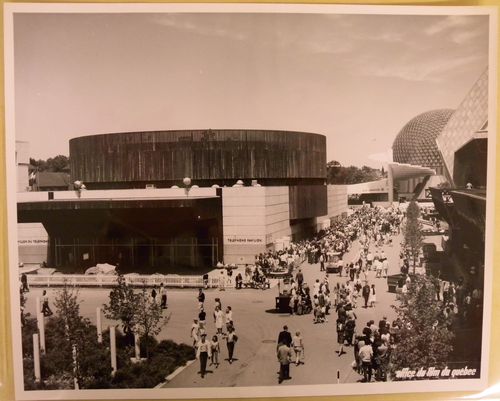
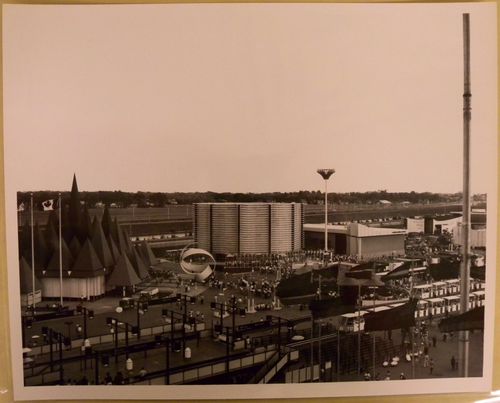
View of the Telephone Pavilion with the Air Canada Pavilion in background, Expo 67, Montréal, Québec
View of the Telephone Pavilion with the Air Canada Pavilion in background, Expo 67, Montréal, Québec
Actions:
Reference number:
ARCH256456
ARCH256456
People:
Date:
1967
1967
Form:
photographs
photographs
Date:
1967
1967
People:
Form:
photographs
photographs
Actions:
Reference number:
ARCH256489
ARCH256489
People:
Date:
1967
1967
Form:
photographs
photographs
Date:
1967
1967
People:
Form:
events
events
Title:
Building Knowledge
Building Knowledge
Actions:
Description:
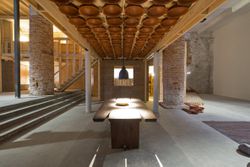
This lecture discusses a range of projects from Anupama Kundoo’s practice, research, and teaching. In these distinct but complementary areas of her work, she attempts to build collective knowledge in collaboration with engineers, masons, craftsmen, infrastructure providers, residents, material suppliers, and all other stakeholders involved in constructing and occupying(...)
This lecture discusses a range of projects from Anupama Kundoo’s practice, research, and teaching. In these distinct but complementary areas of her work, she attempts to build collective knowledge in collaboration with engineers, masons, craftsmen, infrastructure providers, residents, material suppliers, and all other stakeholders involved in constructing and occupying(...)
Location:
Paul-Desmarais Theatre
Paul-Desmarais Theatre
Date:
16 April 2015 , 6pm
16 April 2015 , 6pm
Title:
Building Knowledge
Actions:
Description:
This lecture discusses a range of projects from Anupama Kundoo’s practice, research, and teaching. In these distinct but complementary areas of her work, she attempts to build collective knowledge in collaboration with engineers, masons, craftsmen, infrastructure providers, residents, material suppliers, and all other stakeholders involved in constructing and occupying(...)
Building Knowledge
Actions:
Description:
This lecture discusses a range of projects from Anupama Kundoo’s practice, research, and teaching. In these distinct but complementary areas of her work, she attempts to build collective knowledge in collaboration with engineers, masons, craftsmen, infrastructure providers, residents, material suppliers, and all other stakeholders involved in constructing and occupying(...)
Form:
events
events
Date:
16 April 2015
6pm
16 April 2015
6pm
Location:
Paul-Desmarais Theatre
Paul-Desmarais Theatre
Form:
drawings
drawings
Reference number:
DR1967:0010:002
Description:
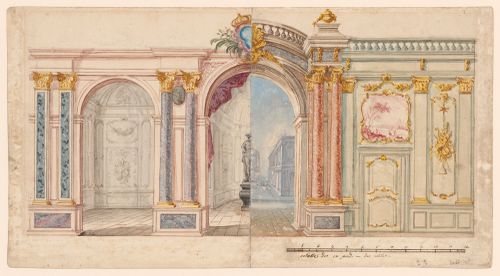
- The two halves of this drawing show alternate stage sets from which the patron could make his choice. It is unclear whether this design was for a painted trompe-l'oeil stage backdrop and/or a constructed stage set. The deep unified space and low vanishing point of the central piazza/hemicycle interior indicates that this section is probably a painted trompe-l'oeil, however, the curtain pulled back within the central arch and the inscribed scale suggest that some of the architectural elements may have been constructed (Fuhring, 161 and 570). An etching of the Hermes is laid down on the left variant of the central portion of the drawing. The prickings indicate that the overall design was intended to be executed, and the crown above the central cartouche indicates a possible royal connection.
DR1967:0010:002
Description:
- The two halves of this drawing show alternate stage sets from which the patron could make his choice. It is unclear whether this design was for a painted trompe-l'oeil stage backdrop and/or a constructed stage set. The deep unified space and low vanishing point of the central piazza/hemicycle interior indicates that this section is probably a painted trompe-l'oeil, however, the curtain pulled back within the central arch and the inscribed scale suggest that some of the architectural elements may have been constructed (Fuhring, 161 and 570). An etching of the Hermes is laid down on the left variant of the central portion of the drawing. The prickings indicate that the overall design was intended to be executed, and the crown above the central cartouche indicates a possible royal connection.
People:
Subject:
theatre design
theatre design
Date:
probably between 1745-1775
probably between 1745-1775
Title:
Presentation drawing for a stage set with alternate designs
Actions:
DR1967:0010:002
Description:
- The two halves of this drawing show alternate stage sets from which the patron could make his choice. It is unclear whether this design was for a painted trompe-l'oeil stage backdrop and/or a constructed stage set. The deep unified space and low vanishing point of the central piazza/hemicycle interior indicates that this section is probably a painted trompe-l'oeil, however, the curtain pulled back within the central arch and the inscribed scale suggest that some of the architectural elements may have been constructed (Fuhring, 161 and 570). An etching of the Hermes is laid down on the left variant of the central portion of the drawing. The prickings indicate that the overall design was intended to be executed, and the crown above the central cartouche indicates a possible royal connection.
Presentation drawing for a stage set with alternate designs
Actions:
DR1967:0010:002
Description:
- The two halves of this drawing show alternate stage sets from which the patron could make his choice. It is unclear whether this design was for a painted trompe-l'oeil stage backdrop and/or a constructed stage set. The deep unified space and low vanishing point of the central piazza/hemicycle interior indicates that this section is probably a painted trompe-l'oeil, however, the curtain pulled back within the central arch and the inscribed scale suggest that some of the architectural elements may have been constructed (Fuhring, 161 and 570). An etching of the Hermes is laid down on the left variant of the central portion of the drawing. The prickings indicate that the overall design was intended to be executed, and the crown above the central cartouche indicates a possible royal connection.
Form:
drawings
drawings
Date:
probably between 1745-1775
probably between 1745-1775
People:
Subject:
theatre design
theatre design
Form:
drawings
drawings
Title:
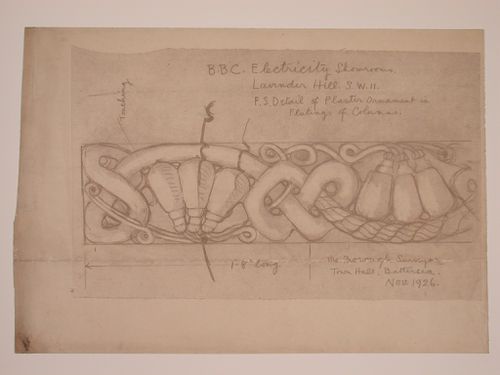
Detail for the plasterwork between the fluting of the columns for Electric House, Battersea Borough
Detail for the plasterwork between the fluting of the columns for Electric House, Battersea Borough
Actions:
Reference number:
DR1988:0395
Description:
- This reprographic copy shows a design for plaster ornament consisting of a frieze of lightbulbs with electrical cords and swags. - This work is part of an incomplete group of possibly working reprographic copies for Electric House, Battersea Borough, designed by the borough architect, Henry Hyams. The group also includes some reprographic copies which may have been used for publication purposes. - The style of many of these drawings and reprographic copies by Henry Hyams (DR1988:0332 - DR1988:0414) suggests that they were possibly for periodical illustrations. Hyams contributed articles to the periodicals 'The Builder' and 'The Architect'. Two objects in the CCA collections can be directly linked to an article published prior to 1926 in 'The Architect'; a reprographic copy (DR1988:0357) and a drawing (DR1988:0364) (Who's Who in Architecture, 161).
DR1988:0395
Description:
- This reprographic copy shows a design for plaster ornament consisting of a frieze of lightbulbs with electrical cords and swags. - This work is part of an incomplete group of possibly working reprographic copies for Electric House, Battersea Borough, designed by the borough architect, Henry Hyams. The group also includes some reprographic copies which may have been used for publication purposes. - The style of many of these drawings and reprographic copies by Henry Hyams (DR1988:0332 - DR1988:0414) suggests that they were possibly for periodical illustrations. Hyams contributed articles to the periodicals 'The Builder' and 'The Architect'. Two objects in the CCA collections can be directly linked to an article published prior to 1926 in 'The Architect'; a reprographic copy (DR1988:0357) and a drawing (DR1988:0364) (Who's Who in Architecture, 161).
People:
Subject:
architecture, interior design
architecture, interior design
Date:
printed November 1926
printed November 1926
Title:
Detail for the plasterwork between the fluting of the columns for Electric House, Battersea Borough
Actions:
DR1988:0395
Description:
- This reprographic copy shows a design for plaster ornament consisting of a frieze of lightbulbs with electrical cords and swags. - This work is part of an incomplete group of possibly working reprographic copies for Electric House, Battersea Borough, designed by the borough architect, Henry Hyams. The group also includes some reprographic copies which may have been used for publication purposes. - The style of many of these drawings and reprographic copies by Henry Hyams (DR1988:0332 - DR1988:0414) suggests that they were possibly for periodical illustrations. Hyams contributed articles to the periodicals 'The Builder' and 'The Architect'. Two objects in the CCA collections can be directly linked to an article published prior to 1926 in 'The Architect'; a reprographic copy (DR1988:0357) and a drawing (DR1988:0364) (Who's Who in Architecture, 161).
Detail for the plasterwork between the fluting of the columns for Electric House, Battersea Borough
Actions:
DR1988:0395
Description:
- This reprographic copy shows a design for plaster ornament consisting of a frieze of lightbulbs with electrical cords and swags. - This work is part of an incomplete group of possibly working reprographic copies for Electric House, Battersea Borough, designed by the borough architect, Henry Hyams. The group also includes some reprographic copies which may have been used for publication purposes. - The style of many of these drawings and reprographic copies by Henry Hyams (DR1988:0332 - DR1988:0414) suggests that they were possibly for periodical illustrations. Hyams contributed articles to the periodicals 'The Builder' and 'The Architect'. Two objects in the CCA collections can be directly linked to an article published prior to 1926 in 'The Architect'; a reprographic copy (DR1988:0357) and a drawing (DR1988:0364) (Who's Who in Architecture, 161).
Form:
drawings
drawings
Date:
printed November 1926
printed November 1926
People:
Subject:
architecture, interior design
architecture, interior design
Form:
photographs
photographs
Actions:
Reference number:
ARCH256260
Description:
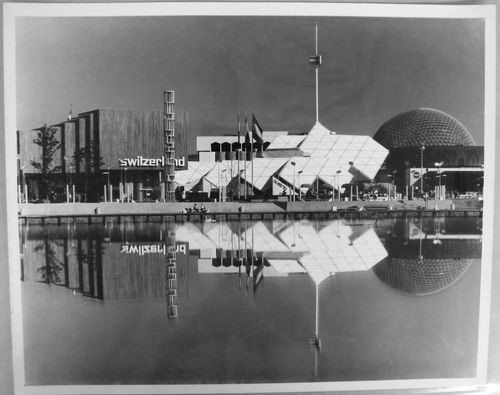
"Designed to resemble the planes of a finely-cut jewel, the Austrian pavilion is very much an aluminum pavilion. Its intricate structure was effected by extremely accurate positioning of over 60 variations of triangular aluminum panels into their supporting extruded framework."--Description.
ARCH256260
Description:
"Designed to resemble the planes of a finely-cut jewel, the Austrian pavilion is very much an aluminum pavilion. Its intricate structure was effected by extremely accurate positioning of over 60 variations of triangular aluminum panels into their supporting extruded framework."--Description.
People:
Date:
1967
1967
Title:
View of the Swiss, Austrian and Telephone Pavilions, Expo 67, Montréal, Québec
Actions:
ARCH256260
Description:
"Designed to resemble the planes of a finely-cut jewel, the Austrian pavilion is very much an aluminum pavilion. Its intricate structure was effected by extremely accurate positioning of over 60 variations of triangular aluminum panels into their supporting extruded framework."--Description.
View of the Swiss, Austrian and Telephone Pavilions, Expo 67, Montréal, Québec
Actions:
ARCH256260
Description:
"Designed to resemble the planes of a finely-cut jewel, the Austrian pavilion is very much an aluminum pavilion. Its intricate structure was effected by extremely accurate positioning of over 60 variations of triangular aluminum panels into their supporting extruded framework."--Description.
Form:
photographs
photographs
Date:
1967
1967
People:


