


13007 Results
Form:
photographs
photographs
Actions:
Reference number:
PH2018:0005:006
Description:
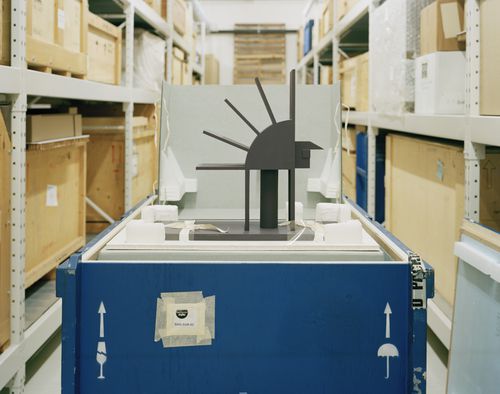
Photograph by Stefano Graziani of the following work: John Hejduk, presentation model for the House of the Painter, 1984, 51.3 x 25.4 x 61.0 cm, DR1998:0105, John Hejduk fonds, Canadian Centre for Architecture, © CCA, Montréal Questioning Pictures is a 36 photograph project commissioned by Fondazione Prada, Milan. Artist Stefano Graziani investigates archival and conservation systems in a number of museums. Through photographing museum objects, Graziani, focusing on the relationship between photographs, the museum objects and the power structures at play within institutions. The museums include the Canadian Centre for Architecture (CCA) in Montréal, Canada; Sir John Soane’s Museum in London, UK; the Kunstmuseum Basel, Switzerland; Museum Insel Hombroich in Neuss, Germany; the Museo di Castelvecchio in Verona, Italy; and the Plaster Cast Gallery at Museo Canova in Possagno, Italy.
PH2018:0005:006
Description:
Photograph by Stefano Graziani of the following work: John Hejduk, presentation model for the House of the Painter, 1984, 51.3 x 25.4 x 61.0 cm, DR1998:0105, John Hejduk fonds, Canadian Centre for Architecture, © CCA, Montréal Questioning Pictures is a 36 photograph project commissioned by Fondazione Prada, Milan. Artist Stefano Graziani investigates archival and conservation systems in a number of museums. Through photographing museum objects, Graziani, focusing on the relationship between photographs, the museum objects and the power structures at play within institutions. The museums include the Canadian Centre for Architecture (CCA) in Montréal, Canada; Sir John Soane’s Museum in London, UK; the Kunstmuseum Basel, Switzerland; Museum Insel Hombroich in Neuss, Germany; the Museo di Castelvecchio in Verona, Italy; and the Plaster Cast Gallery at Museo Canova in Possagno, Italy.
People:
Date:
2017
2017
Title:
Questioning Pictures: Photograph of presentation model for the House of the Painter by John Hejduk, 1984
Actions:
PH2018:0005:006
Description:
Photograph by Stefano Graziani of the following work: John Hejduk, presentation model for the House of the Painter, 1984, 51.3 x 25.4 x 61.0 cm, DR1998:0105, John Hejduk fonds, Canadian Centre for Architecture, © CCA, Montréal Questioning Pictures is a 36 photograph project commissioned by Fondazione Prada, Milan. Artist Stefano Graziani investigates archival and conservation systems in a number of museums. Through photographing museum objects, Graziani, focusing on the relationship between photographs, the museum objects and the power structures at play within institutions. The museums include the Canadian Centre for Architecture (CCA) in Montréal, Canada; Sir John Soane’s Museum in London, UK; the Kunstmuseum Basel, Switzerland; Museum Insel Hombroich in Neuss, Germany; the Museo di Castelvecchio in Verona, Italy; and the Plaster Cast Gallery at Museo Canova in Possagno, Italy.
Questioning Pictures: Photograph of presentation model for the House of the Painter by John Hejduk, 1984
Actions:
PH2018:0005:006
Description:
Photograph by Stefano Graziani of the following work: John Hejduk, presentation model for the House of the Painter, 1984, 51.3 x 25.4 x 61.0 cm, DR1998:0105, John Hejduk fonds, Canadian Centre for Architecture, © CCA, Montréal Questioning Pictures is a 36 photograph project commissioned by Fondazione Prada, Milan. Artist Stefano Graziani investigates archival and conservation systems in a number of museums. Through photographing museum objects, Graziani, focusing on the relationship between photographs, the museum objects and the power structures at play within institutions. The museums include the Canadian Centre for Architecture (CCA) in Montréal, Canada; Sir John Soane’s Museum in London, UK; the Kunstmuseum Basel, Switzerland; Museum Insel Hombroich in Neuss, Germany; the Museo di Castelvecchio in Verona, Italy; and the Plaster Cast Gallery at Museo Canova in Possagno, Italy.
Form:
photographs
photographs
Date:
2017
2017
People:
Form:
works of art
works of art
Actions:
Reference number:
DR1974:0002:002:091
DR1974:0002:002:091
People:
Subject:
architecture
architecture
Date:
printed before 23 June 1853
printed before 23 June 1853
Form:
works of art
works of art
Date:
printed before 23 June 1853
printed before 23 June 1853
People:
Subject:
architecture
architecture
Form:
drawings
drawings
Actions:
Reference number:
AP099.S1.D9.026
AP099.S1.D9.026
People:
Date:
circa 1932
circa 1932
Form:
drawings
drawings
Date:
circa 1932
circa 1932
People:
Form:
drawings
drawings
Actions:
Reference number:
DR2012:0012:070:001
Description:
File containing drawings, notes, and photocopies of drawings related to the Factories, signposts, houses, flags – a popular celebration [Usines, poteaux, maisons, drapeaux - célébrations d'un quartier populaire] project.
DR2012:0012:070:001
Description:
File containing drawings, notes, and photocopies of drawings related to the Factories, signposts, houses, flags – a popular celebration [Usines, poteaux, maisons, drapeaux - célébrations d'un quartier populaire] project.
People:
Date:
2000
2000
Title:
Notes and drawings, Factories, signposts, houses, flags - a popular celebration
Actions:
DR2012:0012:070:001
Description:
File containing drawings, notes, and photocopies of drawings related to the Factories, signposts, houses, flags – a popular celebration [Usines, poteaux, maisons, drapeaux - célébrations d'un quartier populaire] project.
Notes and drawings, Factories, signposts, houses, flags - a popular celebration
Actions:
DR2012:0012:070:001
Description:
File containing drawings, notes, and photocopies of drawings related to the Factories, signposts, houses, flags – a popular celebration [Usines, poteaux, maisons, drapeaux - célébrations d'un quartier populaire] project.
Form:
drawings
drawings
Date:
2000
2000
People:
Form:
photographs
photographs
Actions:
Reference number:
PH2019:0002:193
PH2019:0002:193
People:
Date:
1930
1930
Title:
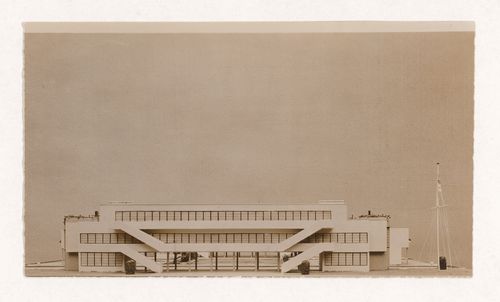
View of a model for a project for La Lainière de Roubaix's worker's houses
Actions:
PH2019:0002:193
View of a model for a project for La Lainière de Roubaix's worker's houses
Actions:
PH2019:0002:193
Form:
photographs
photographs
Date:
1930
1930
People:
Form:
photographs
photographs
Actions:
Reference number:
PH1981:1195
PH1981:1195
People:
Subject:
architecture
architecture
Date:
before 1878
before 1878
Form:
photographs
photographs
Date:
before 1878
before 1878
People:
Subject:
architecture
architecture
Form:
models
models
Actions:
Reference number:
DR2019:0003:001
Description:
Group of 4 models made of wood and cardboard.
DR2019:0003:001
Description:
Group of 4 models made of wood and cardboard.
People:
Date:
2000
2000
Title:
Models, Factories, signposts, houses, flags - a popular celebration
Actions:
DR2019:0003:001
Description:
Group of 4 models made of wood and cardboard.
Models, Factories, signposts, houses, flags - a popular celebration
Actions:
DR2019:0003:001
Description:
Group of 4 models made of wood and cardboard.
Form:
models
models
Date:
2000
2000
People:
Form:
photographs
photographs
Actions:
Reference number:
PH1984:0977:614
Description:
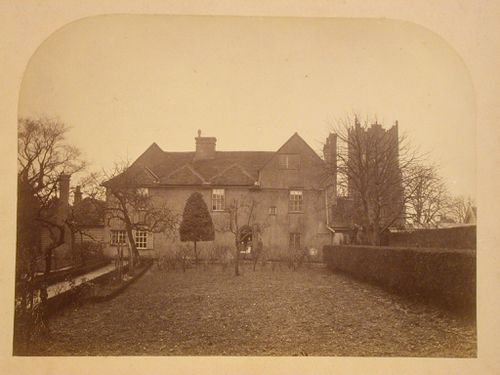
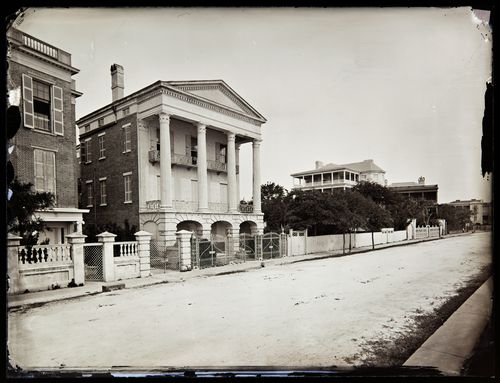
The photographs shows the house before the 1886 Charleston earthquake, in which the giant portico was demolished, leaving only its base. The photograph shows the house with the Tower of the Winds portico intact, featuring four Corinthian Capitals modelled after the Tower of the Winds, a time keeping tower, in Athens Greece. After the earthquake, the columns were buried in the back yard.
PH1984:0977:614
Description:
The photographs shows the house before the 1886 Charleston earthquake, in which the giant portico was demolished, leaving only its base. The photograph shows the house with the Tower of the Winds portico intact, featuring four Corinthian Capitals modelled after the Tower of the Winds, a time keeping tower, in Athens Greece. After the earthquake, the columns were buried in the back yard.
People:
Date:
ca. 1860-1886
ca. 1860-1886
Title:
View of the William Ravenel house, 13 East Battery, Charleston, South Carolina, United States of America
Actions:
PH1984:0977:614
Description:
The photographs shows the house before the 1886 Charleston earthquake, in which the giant portico was demolished, leaving only its base. The photograph shows the house with the Tower of the Winds portico intact, featuring four Corinthian Capitals modelled after the Tower of the Winds, a time keeping tower, in Athens Greece. After the earthquake, the columns were buried in the back yard.
View of the William Ravenel house, 13 East Battery, Charleston, South Carolina, United States of America
Actions:
PH1984:0977:614
Description:
The photographs shows the house before the 1886 Charleston earthquake, in which the giant portico was demolished, leaving only its base. The photograph shows the house with the Tower of the Winds portico intact, featuring four Corinthian Capitals modelled after the Tower of the Winds, a time keeping tower, in Athens Greece. After the earthquake, the columns were buried in the back yard.
Form:
photographs
photographs
Date:
ca. 1860-1886
ca. 1860-1886
People:
Form:
textual records, graphic materials
Quantity:
33 textual record(s) and ephemera
textual records, graphic materials
Quantity:
33 textual record(s) and ephemera
Actions:
Reference number:
DR1995:0001:001-034
Description:
- This group of correspondence was compiled by George Jacobsen who commissioned Frank Lloyd Wright to design a house for his property in Hudson, Québec. The group includes letters, telegrams and numbers 13, 14, and an unnumbered edition of "A Taliesin Square-Paper", published by Taliesin Press. The correspondence discusses both the designs for the house and the trip Jacobsen made to Taliesin West, Arizona. Although the house was never constructed, Wright sent two different designs. The first was based on his design for the 1942 Vigo Sundt House, and the second, a hexagonal module, was similar to the 1941 Roy Peterson House (Shubert and Whatley).
DR1995:0001:001-034
Description:
- This group of correspondence was compiled by George Jacobsen who commissioned Frank Lloyd Wright to design a house for his property in Hudson, Québec. The group includes letters, telegrams and numbers 13, 14, and an unnumbered edition of "A Taliesin Square-Paper", published by Taliesin Press. The correspondence discusses both the designs for the house and the trip Jacobsen made to Taliesin West, Arizona. Although the house was never constructed, Wright sent two different designs. The first was based on his design for the 1942 Vigo Sundt House, and the second, a hexagonal module, was similar to the 1941 Roy Peterson House (Shubert and Whatley).
People:
Subject:
architecture, interior design, topographic
architecture, interior design, topographic
Date:
correspondence composed between 8 January 1949 and 28 April 1952
correspondence composed between 8 January 1949 and 28 April 1952
Title:
Correspondence between Frank Lloyd Wright and George Jacobsen for the designs for the George Jacobsen House, Hudson, Québec
Actions:
DR1995:0001:001-034
Description:
- This group of correspondence was compiled by George Jacobsen who commissioned Frank Lloyd Wright to design a house for his property in Hudson, Québec. The group includes letters, telegrams and numbers 13, 14, and an unnumbered edition of "A Taliesin Square-Paper", published by Taliesin Press. The correspondence discusses both the designs for the house and the trip Jacobsen made to Taliesin West, Arizona. Although the house was never constructed, Wright sent two different designs. The first was based on his design for the 1942 Vigo Sundt House, and the second, a hexagonal module, was similar to the 1941 Roy Peterson House (Shubert and Whatley).
Correspondence between Frank Lloyd Wright and George Jacobsen for the designs for the George Jacobsen House, Hudson, Québec
Actions:
DR1995:0001:001-034
Description:
- This group of correspondence was compiled by George Jacobsen who commissioned Frank Lloyd Wright to design a house for his property in Hudson, Québec. The group includes letters, telegrams and numbers 13, 14, and an unnumbered edition of "A Taliesin Square-Paper", published by Taliesin Press. The correspondence discusses both the designs for the house and the trip Jacobsen made to Taliesin West, Arizona. Although the house was never constructed, Wright sent two different designs. The first was based on his design for the 1942 Vigo Sundt House, and the second, a hexagonal module, was similar to the 1941 Roy Peterson House (Shubert and Whatley).
Form:
textual records, graphic materials
Quantity:
33 textual record(s) and ephemera
textual records, graphic materials
Quantity:
33 textual record(s) and ephemera
Date:
correspondence composed between 8 January 1949 and 28 April 1952
correspondence composed between 8 January 1949 and 28 April 1952
People:
Subject:
architecture, interior design, topographic
architecture, interior design, topographic
Form:
drawings
drawings
Actions:
Reference number:
AR1996:1001:296
Description:
- Drawings AR1996:1001:256, AR1996:1001:259 and AR1996:1001:295 - AR1996:1001:297 are for a balustrade and stairs for a chapel on rue St.-Sulpice, Montréal. All five drawings have been identified as part of Notre-Dame de Montréal, given that rue St.-Sulpice runs along the east side of the church. Further documentation of these drawings should include determining if the balustrade and stairs were constructed, whether they are extant, and if they are an integral part of the church.
AR1996:1001:296
Description:
- Drawings AR1996:1001:256, AR1996:1001:259 and AR1996:1001:295 - AR1996:1001:297 are for a balustrade and stairs for a chapel on rue St.-Sulpice, Montréal. All five drawings have been identified as part of Notre-Dame de Montréal, given that rue St.-Sulpice runs along the east side of the church. Further documentation of these drawings should include determining if the balustrade and stairs were constructed, whether they are extant, and if they are an integral part of the church.
People:
Subject:
architecture
architecture
Date:
1932 ?
1932 ?
Title:
Plans and elevations for a decorative element for the top of a newel post for chapel stairs for Notre-Dame de Montréal, apparently for the renovations of 1929-1949; verso: Partial floor plan for a house, Montréal [?]
Actions:
AR1996:1001:296
Description:
- Drawings AR1996:1001:256, AR1996:1001:259 and AR1996:1001:295 - AR1996:1001:297 are for a balustrade and stairs for a chapel on rue St.-Sulpice, Montréal. All five drawings have been identified as part of Notre-Dame de Montréal, given that rue St.-Sulpice runs along the east side of the church. Further documentation of these drawings should include determining if the balustrade and stairs were constructed, whether they are extant, and if they are an integral part of the church.
Plans and elevations for a decorative element for the top of a newel post for chapel stairs for Notre-Dame de Montréal, apparently for the renovations of 1929-1949; verso: Partial floor plan for a house, Montréal [?]
Actions:
AR1996:1001:296
Description:
- Drawings AR1996:1001:256, AR1996:1001:259 and AR1996:1001:295 - AR1996:1001:297 are for a balustrade and stairs for a chapel on rue St.-Sulpice, Montréal. All five drawings have been identified as part of Notre-Dame de Montréal, given that rue St.-Sulpice runs along the east side of the church. Further documentation of these drawings should include determining if the balustrade and stairs were constructed, whether they are extant, and if they are an integral part of the church.
Form:
drawings
drawings
Date:
1932 ?
1932 ?
People:
Subject:
architecture
architecture


