


1778 Results
Form:
books
books
Actions:
Price:
$71.50
(available to order)
Summary:
In Renaissance Rome, ancient ruins were preserved as often as they were mined for their materials. Although the question of what to preserve and how continued to be subject to debate, preservation acquired renewed force and urgency in the fifteenth and sixteenth centuries as the new papal capital rose upon the ruins of the ancient city. Preservation practices became more(...)
$71.50
(available to order)
Summary:
In Renaissance Rome, ancient ruins were preserved as often as they were mined for their materials. Although the question of what to preserve and how continued to be subject to debate, preservation acquired renewed force and urgency in the fifteenth and sixteenth centuries as the new papal capital rose upon the ruins of the ancient city. Preservation practices became more(...)
Title:
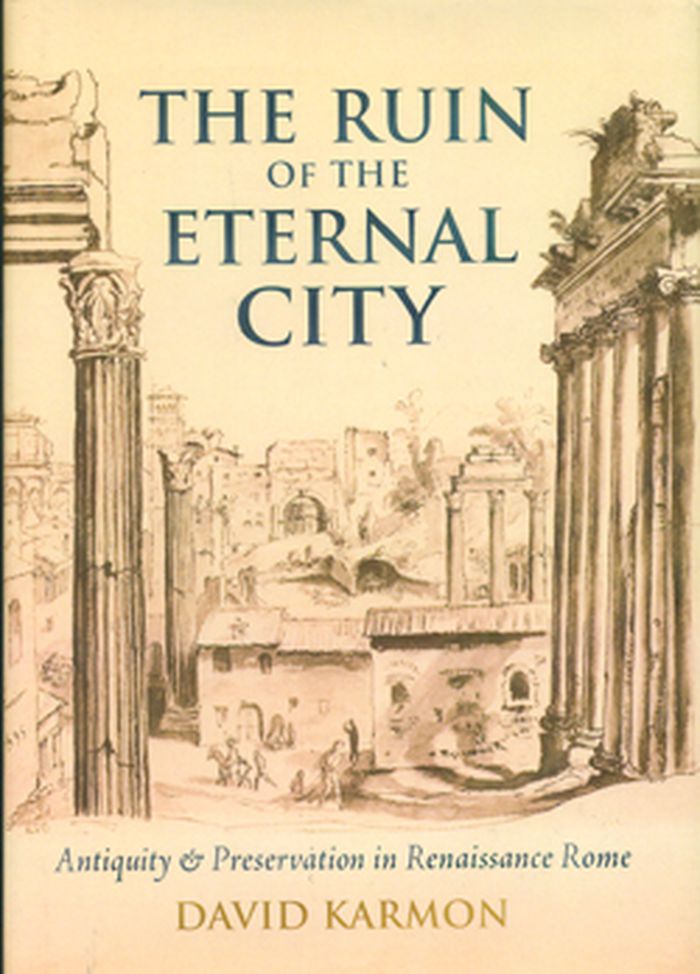
The ruin of the eternal city : Antiquity & preservation in renaissance Rome
Actions:
Price:
$71.50
(available to order)
Summary:
In Renaissance Rome, ancient ruins were preserved as often as they were mined for their materials. Although the question of what to preserve and how continued to be subject to debate, preservation acquired renewed force and urgency in the fifteenth and sixteenth centuries as the new papal capital rose upon the ruins of the ancient city. Preservation practices became more focused and effective in Renaissance Rome than ever before. "The Ruin of the Eternal City" offers a new interpretation of the ongoing life of ancient buildings within the expanding early modern city. While historians and archaeologists have long affirmed that early modern builders disregarded the protection of antiquity, this study provides the first systematic analysis of preservation problems as perceived by the Renaissance popes, the civic magistrates, and ordinary citizens. Based on new evidence and recent conservation theory, this compelling study explores how civic officials balanced the defense of specific sites against the pressing demands imposed by population growth, circulation, and notions of urban decorum. Above all, the preservation of antiquity remained an indispensable tool to advance competing political agendas in the papal capital. A broad range of preservation policies and practices are examined at the half-ruined Colosseum, the intact Pantheon, and the little-known but essential Renaissance bridge known as the Ponte Santa Maria.
The ruin of the eternal city : Antiquity & preservation in renaissance Rome
Actions:
Price:
$71.50
(available to order)
Summary:
In Renaissance Rome, ancient ruins were preserved as often as they were mined for their materials. Although the question of what to preserve and how continued to be subject to debate, preservation acquired renewed force and urgency in the fifteenth and sixteenth centuries as the new papal capital rose upon the ruins of the ancient city. Preservation practices became more focused and effective in Renaissance Rome than ever before. "The Ruin of the Eternal City" offers a new interpretation of the ongoing life of ancient buildings within the expanding early modern city. While historians and archaeologists have long affirmed that early modern builders disregarded the protection of antiquity, this study provides the first systematic analysis of preservation problems as perceived by the Renaissance popes, the civic magistrates, and ordinary citizens. Based on new evidence and recent conservation theory, this compelling study explores how civic officials balanced the defense of specific sites against the pressing demands imposed by population growth, circulation, and notions of urban decorum. Above all, the preservation of antiquity remained an indispensable tool to advance competing political agendas in the papal capital. A broad range of preservation policies and practices are examined at the half-ruined Colosseum, the intact Pantheon, and the little-known but essential Renaissance bridge known as the Ponte Santa Maria.
Form:
books
books
Publication:
April 2011
April 2011
Subject:
History until 1900, Classicism
History until 1900, Classicism
Form:
books
books
Actions:
Price:
$33.95
(available to order)
Summary:
American cities, once economic and social launch pads for their residents, are all too often plagued by poverty and decay. One need only to look at the ruins of Detroit to see how far some once-great cities have fallen, or to Boston and San Francisco for evidence that such decline is reversible. In Boom Towns, Stephen J.K. Walters diagnoses the root causes of urban(...)
$33.95
(available to order)
Summary:
American cities, once economic and social launch pads for their residents, are all too often plagued by poverty and decay. One need only to look at the ruins of Detroit to see how far some once-great cities have fallen, or to Boston and San Francisco for evidence that such decline is reversible. In Boom Towns, Stephen J.K. Walters diagnoses the root causes of urban(...)
Title:
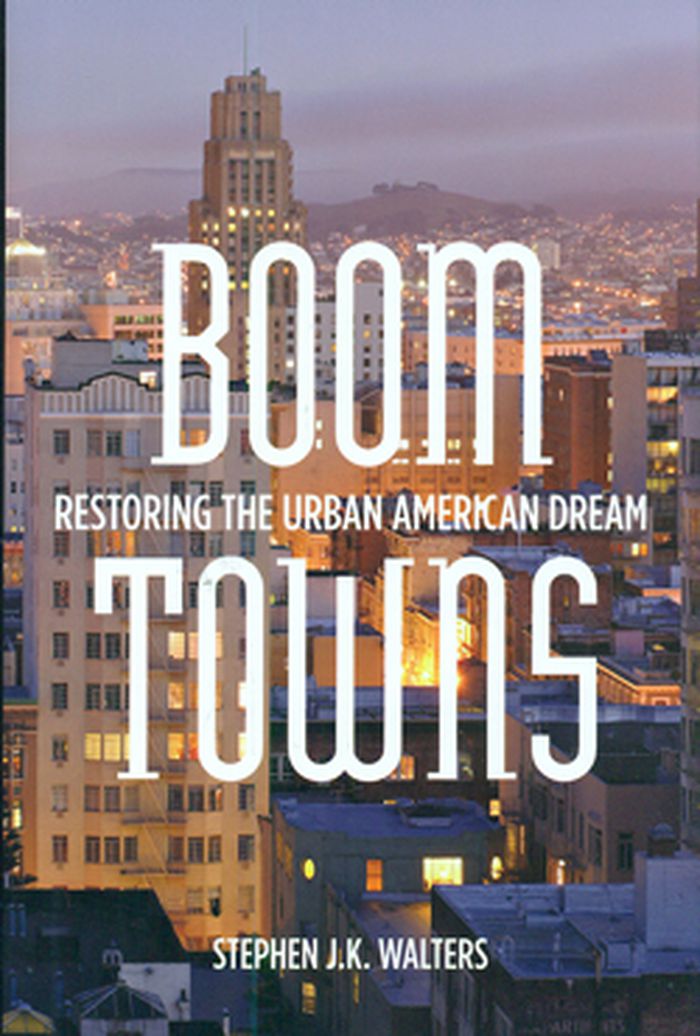
Boom towns: restoring the urban american dream
Actions:
Price:
$33.95
(available to order)
Summary:
American cities, once economic and social launch pads for their residents, are all too often plagued by poverty and decay. One need only to look at the ruins of Detroit to see how far some once-great cities have fallen, or to Boston and San Francisco for evidence that such decline is reversible. In Boom Towns, Stephen J.K. Walters diagnoses the root causes of urban decline in order to prescribe remedies that will enable cities to thrive once again. Arguing that commonplace explanations for urban decay misunderstand the nature our towns, Walters reconceives of cities as dense accumulations of capital in all of its forms — places that attract people by making their labor more productive and their leisure more pleasurable. Policymakers, therefore, must properly define and enforce property rights in order to prevent the flight of capital and the resulting demise of urban centers. Using vivid evocations of iconic towns and the people who crucially affected their destinies, Walters shows how public policy measures which aim to revitalize often do more harm than good. He then outlines a more promising set of policies to remedy the capital shortage that continues to afflict many cities and needlessly limit their residents' opportunities. With its fresh interpretation of one of the American quandaries of our day, Boom Towns offers a novel contribution to the debate about American cities and a program for their restoration.
Boom towns: restoring the urban american dream
Actions:
Price:
$33.95
(available to order)
Summary:
American cities, once economic and social launch pads for their residents, are all too often plagued by poverty and decay. One need only to look at the ruins of Detroit to see how far some once-great cities have fallen, or to Boston and San Francisco for evidence that such decline is reversible. In Boom Towns, Stephen J.K. Walters diagnoses the root causes of urban decline in order to prescribe remedies that will enable cities to thrive once again. Arguing that commonplace explanations for urban decay misunderstand the nature our towns, Walters reconceives of cities as dense accumulations of capital in all of its forms — places that attract people by making their labor more productive and their leisure more pleasurable. Policymakers, therefore, must properly define and enforce property rights in order to prevent the flight of capital and the resulting demise of urban centers. Using vivid evocations of iconic towns and the people who crucially affected their destinies, Walters shows how public policy measures which aim to revitalize often do more harm than good. He then outlines a more promising set of policies to remedy the capital shortage that continues to afflict many cities and needlessly limit their residents' opportunities. With its fresh interpretation of one of the American quandaries of our day, Boom Towns offers a novel contribution to the debate about American cities and a program for their restoration.
Form:
books
books
Publication:
September 2014
September 2014
Subject:
Urban Theory
Urban Theory
Form:
books
books
Actions:
Holdings:
Description:
433 pages, 8 unnumbered pages of plates : illustrations (some color), maps, plans (some color) ; 24 cm.
Description:
433 pages, 8 unnumbered pages of plates : illustrations (some color), maps, plans (some color) ; 24 cm.
Author:
Subject:
Publication:
Paris : Publications de la Sorbonne : Comité d'histoire de la Ville de Paris, 2012.
Paris : Publications de la Sorbonne : Comité d'histoire de la Ville de Paris, 2012.
Title:
Agrandir Paris, 1860-1970 / sous la direction de Florence Bourillon et Annie Fourcaut.
Actions:
Holdings:
Description:
433 pages, 8 unnumbered pages of plates : illustrations (some color), maps, plans (some color) ; 24 cm.
Agrandir Paris, 1860-1970 / sous la direction de Florence Bourillon et Annie Fourcaut.
Actions:
Holdings:
Description:
433 pages, 8 unnumbered pages of plates : illustrations (some color), maps, plans (some color) ; 24 cm.
Form:
books
books
Publication:
Paris : Publications de la Sorbonne : Comité d'histoire de la Ville de Paris, 2012.
Paris : Publications de la Sorbonne : Comité d'histoire de la Ville de Paris, 2012.
Author:
Subject:
Form:
books
books
Actions:
Price:
$58.95
(available in store)
Summary:
"In 2005, more than ever, architecture is annihilating places, banalizing them, violating them. Sometimes it replaces the landscape, creates it in its own image, which is nothing but another way of effacing it÷ At a time when we rush across the world faster and faster, when we listen to and watch the same global networks, share feelings about the same disasters, when we(...)
$58.95
(available in store)
Summary:
"In 2005, more than ever, architecture is annihilating places, banalizing them, violating them. Sometimes it replaces the landscape, creates it in its own image, which is nothing but another way of effacing it÷ At a time when we rush across the world faster and faster, when we listen to and watch the same global networks, share feelings about the same disasters, when we(...)
Title:
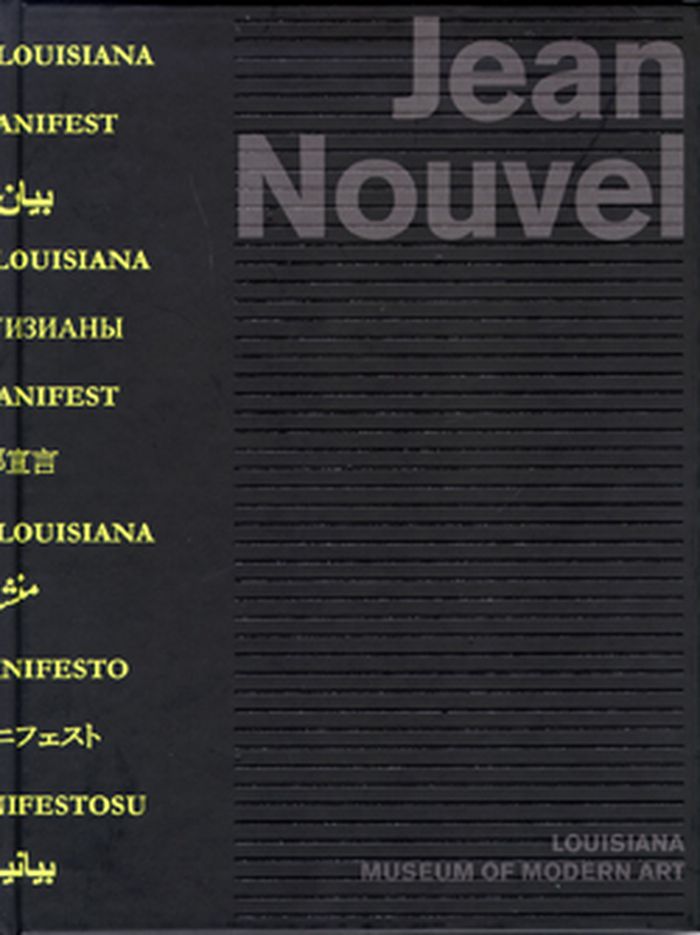
Jean Nouvel: Louisiana museum of modern art
Actions:
Price:
$58.95
(available in store)
Summary:
"In 2005, more than ever, architecture is annihilating places, banalizing them, violating them. Sometimes it replaces the landscape, creates it in its own image, which is nothing but another way of effacing it÷ At a time when we rush across the world faster and faster, when we listen to and watch the same global networks, share feelings about the same disasters, when we dance to the same hits, watch the same matches, when they flood us with the same films, in which the star is global, when the president of one country wants to rule the world, when we shop in cloned shopping centers, work behind the same eternal curtain walls÷and when whatever good might come of this forms no part of global priorities÷the global economy is accentuating the effects of the dominant architecture, the type that claims Îwe don't need context.' And yet debate on this galloping frenzy does not exist: architectural criticism, invoking the limits of the discipline, is content with aesthetic and stylistic reflections devoid of any analysis of the real, and ignores the crucial historical clash that--more insistently every day--sets a global architecture against an architecture of situations, generic architecture against an architecture of specificity." So says the international architecture star Jean Nouvel in his manifesto, published here in 12 languages, along with images of his recently completed Louisiana Museum of Modern Art, Denmark.
Jean Nouvel: Louisiana museum of modern art
Actions:
Price:
$58.95
(available in store)
Summary:
"In 2005, more than ever, architecture is annihilating places, banalizing them, violating them. Sometimes it replaces the landscape, creates it in its own image, which is nothing but another way of effacing it÷ At a time when we rush across the world faster and faster, when we listen to and watch the same global networks, share feelings about the same disasters, when we dance to the same hits, watch the same matches, when they flood us with the same films, in which the star is global, when the president of one country wants to rule the world, when we shop in cloned shopping centers, work behind the same eternal curtain walls÷and when whatever good might come of this forms no part of global priorities÷the global economy is accentuating the effects of the dominant architecture, the type that claims Îwe don't need context.' And yet debate on this galloping frenzy does not exist: architectural criticism, invoking the limits of the discipline, is content with aesthetic and stylistic reflections devoid of any analysis of the real, and ignores the crucial historical clash that--more insistently every day--sets a global architecture against an architecture of situations, generic architecture against an architecture of specificity." So says the international architecture star Jean Nouvel in his manifesto, published here in 12 languages, along with images of his recently completed Louisiana Museum of Modern Art, Denmark.
Form:
books
books
Publication:
August 2006, Louisiana
August 2006, Louisiana
Subject:
Architecture Monographs
Architecture Monographs
Form:
books
books
Actions:
Holdings:
Description:
123 pages : illustrations ; 24 cm
Description:
123 pages : illustrations ; 24 cm
Author:
Subject:
Publication:
Saarbrücken : VDM Verl. Dr. Müller, [200-?]
Saarbrücken : VDM Verl. Dr. Müller, [200-?]
Title:
Nationale Identität und Schweizer Heimeligkeit made by Peter Zumthor : Architektur und Identitätskontruktionen zwischen Klischees und Image / Katja Marek.
Actions:
Holdings:
Description:
123 pages : illustrations ; 24 cm
Nationale Identität und Schweizer Heimeligkeit made by Peter Zumthor : Architektur und Identitätskontruktionen zwischen Klischees und Image / Katja Marek.
Actions:
Holdings:
Description:
123 pages : illustrations ; 24 cm
Form:
books
books
Publication:
Saarbrücken : VDM Verl. Dr. Müller, [200-?]
Saarbrücken : VDM Verl. Dr. Müller, [200-?]
Author:
Subject:
Form:
books
books
Actions:
Holdings:
Description:
xxx, 353 pages : illustrations, maps, charts ; 23 cm
Description:
xxx, 353 pages : illustrations, maps, charts ; 23 cm
Author:
Subject:
Publication:
Québec (Québec) : Presses de l'Université du Québec, [2022], ©2022
Québec (Québec) : Presses de l'Université du Québec, [2022], ©2022
Title:
Une économie écologique pour le Québec : comment opérationnaliser une nécessaire transition / sous la direction de Alejandra Zaga Mendez, Jean-François Bissonnette et Jérôme Dupras ; préface de Thomas Mulcair ; avec la collaboration de Joseph Ament [et 36 autres].
Actions:
Holdings:
Description:
xxx, 353 pages : illustrations, maps, charts ; 23 cm
Une économie écologique pour le Québec : comment opérationnaliser une nécessaire transition / sous la direction de Alejandra Zaga Mendez, Jean-François Bissonnette et Jérôme Dupras ; préface de Thomas Mulcair ; avec la collaboration de Joseph Ament [et 36 autres].
Actions:
Holdings:
Description:
xxx, 353 pages : illustrations, maps, charts ; 23 cm
Form:
books
books
Publication:
Québec (Québec) : Presses de l'Université du Québec, [2022], ©2022
Québec (Québec) : Presses de l'Université du Québec, [2022], ©2022
Author:
Subject:
Form:
books
books
Actions:
Price:
$23.95
(available to order)
Summary:
More than ever, architectural design is seen as a means to promote commercial goals rather than as an end in itself. Frank Gehry’s Guggenheim Museum in Bilbao, for example, simply cannot be considered apart from its intended role as a catalyst for the economic revitalization of Bilbao and its ability to attract tourist dollars, regardless of its architectural merits. A(...)
$23.95
(available to order)
Summary:
More than ever, architectural design is seen as a means to promote commercial goals rather than as an end in itself. Frank Gehry’s Guggenheim Museum in Bilbao, for example, simply cannot be considered apart from its intended role as a catalyst for the economic revitalization of Bilbao and its ability to attract tourist dollars, regardless of its architectural merits. A(...)
Subject:
Architectural Theory
Architectural Theory
Publication:
November 2005, Minneapolis, London
November 2005, Minneapolis, London
Title:
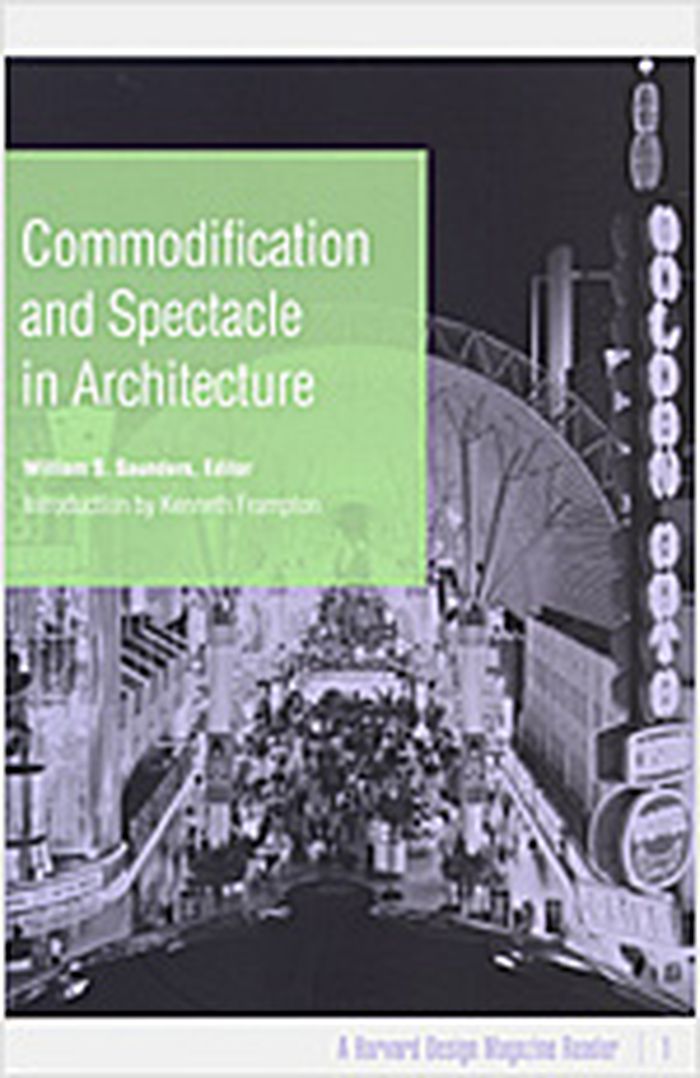
Commodification and spectacle in architecture
Actions:
Price:
$23.95
(available to order)
Summary:
More than ever, architectural design is seen as a means to promote commercial goals rather than as an end in itself. Frank Gehry’s Guggenheim Museum in Bilbao, for example, simply cannot be considered apart from its intended role as a catalyst for the economic revitalization of Bilbao and its ability to attract tourist dollars, regardless of its architectural merits. A built environment intended to seduce consumers is more likely to offer instant gratification than to invite independent thought and reflection. But how harmful, if at all, is this unprecedented commercialization of architecture? Framed with an introduction by Kenneth Frampton, the contributions to "Commodification and spectacle in architecture" stake out a variety of positions in the debate over the extent to which it is possible—or desirable—to escape from, resist, or suggest plausible alternatives to the dominant culture of consumer capitalism. Rejecting any dreamy nostalgia for an idealized present or past in which design is completely divorced from commerce—and, in some cases, celebrating the pleasures of spectacle—the individual essays range from indictments of particular architects and critiques of the profession to broader concerns about what the phenomenon of commodification means for the practice of democracy and the health of society. Bringing together an impressive and varied group of critics and practitioners, "Commodification and spectacle in architecture" will help to sharpen the discussion of how design can respond to our hypercommodified culture.
Commodification and spectacle in architecture
Actions:
Price:
$23.95
(available to order)
Summary:
More than ever, architectural design is seen as a means to promote commercial goals rather than as an end in itself. Frank Gehry’s Guggenheim Museum in Bilbao, for example, simply cannot be considered apart from its intended role as a catalyst for the economic revitalization of Bilbao and its ability to attract tourist dollars, regardless of its architectural merits. A built environment intended to seduce consumers is more likely to offer instant gratification than to invite independent thought and reflection. But how harmful, if at all, is this unprecedented commercialization of architecture? Framed with an introduction by Kenneth Frampton, the contributions to "Commodification and spectacle in architecture" stake out a variety of positions in the debate over the extent to which it is possible—or desirable—to escape from, resist, or suggest plausible alternatives to the dominant culture of consumer capitalism. Rejecting any dreamy nostalgia for an idealized present or past in which design is completely divorced from commerce—and, in some cases, celebrating the pleasures of spectacle—the individual essays range from indictments of particular architects and critiques of the profession to broader concerns about what the phenomenon of commodification means for the practice of democracy and the health of society. Bringing together an impressive and varied group of critics and practitioners, "Commodification and spectacle in architecture" will help to sharpen the discussion of how design can respond to our hypercommodified culture.
Form:
books
books
Publication:
November 2005, Minneapolis, London
November 2005, Minneapolis, London
Subject:
Architectural Theory
Architectural Theory
Form:
books
books
![[Re] reading Perspecta : the first 50 years of the Yale Architectural Journal](/img-bookstore/U2zEypAg4vNoqdQ07aKvxPIdXbM=/700x919/MIG-13694.jpg)
Actions:
Price:
$93.95
(available to order)
Summary:
"Perspecta", the oldest and most respected student-edited architectural journal in the United States, marks its fiftieth anniversary with this selection of influential and provocative pieces published in its pages from the 1950s through the 1990s. The essays and portfolios in "[Re]Reading Perspecta" trace the development of architectural culture and discourse over the(...)
$93.95
(available to order)
Summary:
"Perspecta", the oldest and most respected student-edited architectural journal in the United States, marks its fiftieth anniversary with this selection of influential and provocative pieces published in its pages from the 1950s through the 1990s. The essays and portfolios in "[Re]Reading Perspecta" trace the development of architectural culture and discourse over the(...)
Subject:
Architectural Theory
Architectural Theory
Publication:
May 2004, Cambridge, Massachusetts
May 2004, Cambridge, Massachusetts
Title:
[Re] reading Perspecta : the first 50 years of the Yale Architectural Journal
Actions:
Price:
$93.95
(available to order)
Summary:
"Perspecta", the oldest and most respected student-edited architectural journal in the United States, marks its fiftieth anniversary with this selection of influential and provocative pieces published in its pages from the 1950s through the 1990s. The essays and portfolios in "[Re]Reading Perspecta" trace the development of architectural culture and discourse over the past fifty years and bear witness to the influential role played by "Perspecta" in a time of crucial debate about the function and future of architecture. This collection (with over 800 pages and 900 images) presents engaging and stimulating essays published in "Perspecta", written by such well-known historians, theorists, and architects as Vincent Scully, Colin Rowe, Roland Barthes, Karsten Harries, K. Michael Hays, Allan Greenberg, Sibyl Moholy-Nagy, John Hejduk, Francesco Dal Co, Bernard Tschumi, and Mark Wigley. "[Re]Reading Perspecta" also assembles the best examples of the richly-illustrated portfolios of projects published over the years, including work by Paul Rudolph, Louis Kahn, Robert Venturi, Eero Saarinen, Charles Moore, Philip Johnson, Peter Eisenman, John Hejduk, Steven Holl, Thomas Leeser, Hani Rashid, and others. The editors introduce each section with essays that offer historical context and critical commentary. "[Re]Reading Perspecta" also includes essays by Kenneth Frampton, K. Michael Hays, Joan Ockman, and Sandy Isenstadt on the history of "Perspecta" and its role in architectural discourse. This selection of the best of "Perspecta" covers a broad and lively spectrum of American architectural design, history, theory, and criticism.
[Re] reading Perspecta : the first 50 years of the Yale Architectural Journal
Actions:
Price:
$93.95
(available to order)
Summary:
"Perspecta", the oldest and most respected student-edited architectural journal in the United States, marks its fiftieth anniversary with this selection of influential and provocative pieces published in its pages from the 1950s through the 1990s. The essays and portfolios in "[Re]Reading Perspecta" trace the development of architectural culture and discourse over the past fifty years and bear witness to the influential role played by "Perspecta" in a time of crucial debate about the function and future of architecture. This collection (with over 800 pages and 900 images) presents engaging and stimulating essays published in "Perspecta", written by such well-known historians, theorists, and architects as Vincent Scully, Colin Rowe, Roland Barthes, Karsten Harries, K. Michael Hays, Allan Greenberg, Sibyl Moholy-Nagy, John Hejduk, Francesco Dal Co, Bernard Tschumi, and Mark Wigley. "[Re]Reading Perspecta" also assembles the best examples of the richly-illustrated portfolios of projects published over the years, including work by Paul Rudolph, Louis Kahn, Robert Venturi, Eero Saarinen, Charles Moore, Philip Johnson, Peter Eisenman, John Hejduk, Steven Holl, Thomas Leeser, Hani Rashid, and others. The editors introduce each section with essays that offer historical context and critical commentary. "[Re]Reading Perspecta" also includes essays by Kenneth Frampton, K. Michael Hays, Joan Ockman, and Sandy Isenstadt on the history of "Perspecta" and its role in architectural discourse. This selection of the best of "Perspecta" covers a broad and lively spectrum of American architectural design, history, theory, and criticism.
Form:
books
books
Publication:
May 2004, Cambridge, Massachusetts
May 2004, Cambridge, Massachusetts
Subject:
Architectural Theory
Architectural Theory
Form:
books
books
Actions:
Price:
$44.95
(available to order)
Summary:
For Rebecca Bushnell, English gardening books tell a tale of the human love for plants and our will to make them do as we wish. These books evoke the desires of gardeners: they show us gardeners who, like poets, imagine not just what is but what should be. In particular, the earliest English garden books, such as Thomas Hill’s The Gardeners Labyrinth or Hugh Platt’s(...)
$44.95
(available to order)
Summary:
For Rebecca Bushnell, English gardening books tell a tale of the human love for plants and our will to make them do as we wish. These books evoke the desires of gardeners: they show us gardeners who, like poets, imagine not just what is but what should be. In particular, the earliest English garden books, such as Thomas Hill’s The Gardeners Labyrinth or Hugh Platt’s(...)
Title:
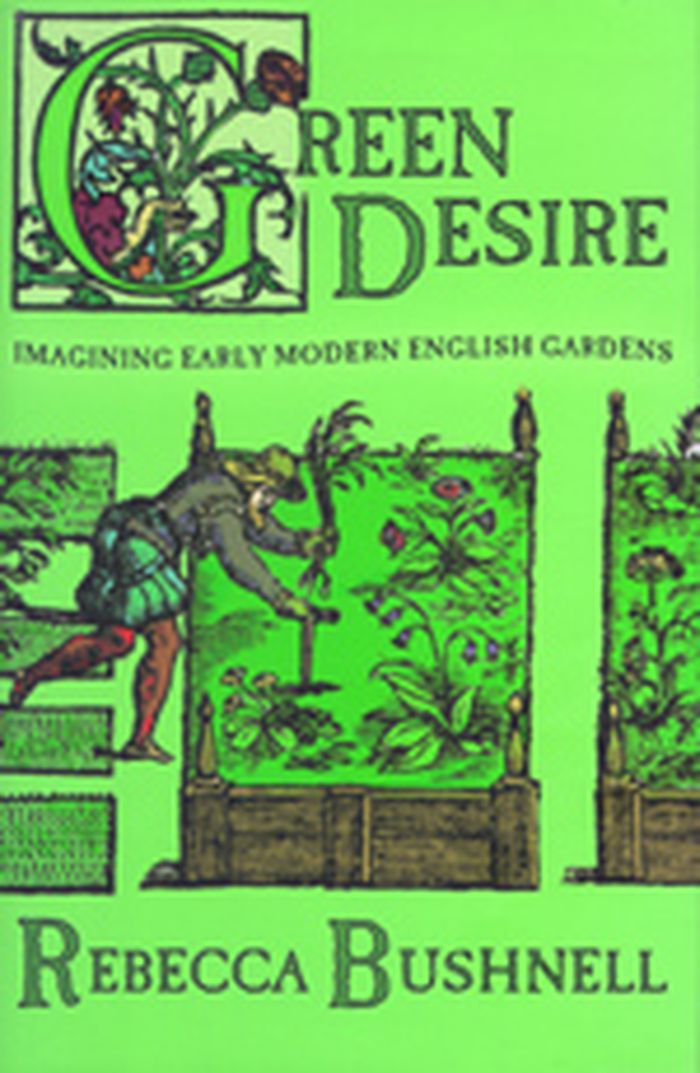
Green desire : imagining early modern English gardens
Actions:
Price:
$44.95
(available to order)
Summary:
For Rebecca Bushnell, English gardening books tell a tale of the human love for plants and our will to make them do as we wish. These books evoke the desires of gardeners: they show us gardeners who, like poets, imagine not just what is but what should be. In particular, the earliest English garden books, such as Thomas Hill’s The Gardeners Labyrinth or Hugh Platt’s Floraes Paradise, mix magical practices with mundane recipes even when the authors insist that they rely completely on their own experience in these matters. Like early modern “books of secrets,” early gardening manuals often promise the reader power to alter the essential properties of plants: to make the gillyflower double, to change the lily’s hue, or to grow a cherry without a stone. "Green Desire" describes the innovative design of the old manuals, examining how writers and printers marketed them as fiction as well as practical advice for aspiring gardeners. Along with this attention to the delights of reading, it analyzes the strange dignity and pleasure of garden labor and the division of men’s and women’s roles in creating garden art. The book ends by recounting the heated debate over how much people could do to create marvels in their own gardens. For writers and readers alike, these green desires inspired dreams of power and self-improvement, fantasies of beauty achieved without work, and hopes for order in an unpredictable world.
Green desire : imagining early modern English gardens
Actions:
Price:
$44.95
(available to order)
Summary:
For Rebecca Bushnell, English gardening books tell a tale of the human love for plants and our will to make them do as we wish. These books evoke the desires of gardeners: they show us gardeners who, like poets, imagine not just what is but what should be. In particular, the earliest English garden books, such as Thomas Hill’s The Gardeners Labyrinth or Hugh Platt’s Floraes Paradise, mix magical practices with mundane recipes even when the authors insist that they rely completely on their own experience in these matters. Like early modern “books of secrets,” early gardening manuals often promise the reader power to alter the essential properties of plants: to make the gillyflower double, to change the lily’s hue, or to grow a cherry without a stone. "Green Desire" describes the innovative design of the old manuals, examining how writers and printers marketed them as fiction as well as practical advice for aspiring gardeners. Along with this attention to the delights of reading, it analyzes the strange dignity and pleasure of garden labor and the division of men’s and women’s roles in creating garden art. The book ends by recounting the heated debate over how much people could do to create marvels in their own gardens. For writers and readers alike, these green desires inspired dreams of power and self-improvement, fantasies of beauty achieved without work, and hopes for order in an unpredictable world.
Form:
books
books
Publication:
October 2003, Ithaca, New York
October 2003, Ithaca, New York
Subject:
Landscape Theory
Landscape Theory
Form:
books
books

Actions:
Price:
$29.95
(available to order)
Summary:
Moving the critical debate about photography away from its current Euro-American centre of gravity, "Photography’s Other Histories" breaks with the notion that photographic history is best seen as the explosion of a Western technology advanced by the work of singular individuals. This collection presents a different account, describing photography as a globally(...)
$29.95
(available to order)
Summary:
Moving the critical debate about photography away from its current Euro-American centre of gravity, "Photography’s Other Histories" breaks with the notion that photographic history is best seen as the explosion of a Western technology advanced by the work of singular individuals. This collection presents a different account, describing photography as a globally(...)
Subject:
Theory of Photography
Theory of Photography
Publication:
March 2003, Durham, N.C.
March 2003, Durham, N.C.
Title:
Photography's other histories
Actions:
Price:
$29.95
(available to order)
Summary:
Moving the critical debate about photography away from its current Euro-American centre of gravity, "Photography’s Other Histories" breaks with the notion that photographic history is best seen as the explosion of a Western technology advanced by the work of singular individuals. This collection presents a different account, describing photography as a globally disseminated and locally appropriated medium. Essays firmly grounded in photographic practice — in the actual making of pictures — suggest the extraordinary diversity of nonwestern photography "Photography’s Other Histories" explores from a variety of geographic, cultural, and historic perspectives the role of photography in raising historical consciousness. It includes two first-person pieces by indigenous Australians and one by a Seminole/Muskogee/Diné artist. Some of the essays analyze representations of colonial subjects—from the limited ways Westerners have depicted Navajos to Japanese photos recording the occupation of Manchuria and from the changing nature of the "contract" between Aboriginal subjects and photographers to the surprising range of cultural influences evident in the photographs colonialist F. R. Barton took in New Guinea in the late 1800s and early 1900s. Focusing on photographic self-fashioning and the development of vernacular modernisms, other essays highlight the visionary quality of much popular photography. Case studies centered in early-twentieth-century Peru and contemporary India, Kenya, and Nigeria chronicle the diverse practices that have flourished in postcolonial societies. "Photography’s Other Histories" recasts popular photography around the world, as not simply reproducing culture but creating it.
Photography's other histories
Actions:
Price:
$29.95
(available to order)
Summary:
Moving the critical debate about photography away from its current Euro-American centre of gravity, "Photography’s Other Histories" breaks with the notion that photographic history is best seen as the explosion of a Western technology advanced by the work of singular individuals. This collection presents a different account, describing photography as a globally disseminated and locally appropriated medium. Essays firmly grounded in photographic practice — in the actual making of pictures — suggest the extraordinary diversity of nonwestern photography "Photography’s Other Histories" explores from a variety of geographic, cultural, and historic perspectives the role of photography in raising historical consciousness. It includes two first-person pieces by indigenous Australians and one by a Seminole/Muskogee/Diné artist. Some of the essays analyze representations of colonial subjects—from the limited ways Westerners have depicted Navajos to Japanese photos recording the occupation of Manchuria and from the changing nature of the "contract" between Aboriginal subjects and photographers to the surprising range of cultural influences evident in the photographs colonialist F. R. Barton took in New Guinea in the late 1800s and early 1900s. Focusing on photographic self-fashioning and the development of vernacular modernisms, other essays highlight the visionary quality of much popular photography. Case studies centered in early-twentieth-century Peru and contemporary India, Kenya, and Nigeria chronicle the diverse practices that have flourished in postcolonial societies. "Photography’s Other Histories" recasts popular photography around the world, as not simply reproducing culture but creating it.
Form:
books
books
Publication:
March 2003, Durham, N.C.
March 2003, Durham, N.C.
Subject:
Theory of Photography
Theory of Photography


