


44145 Results
Level of archival description:
Sub-series
Sub-series
Actions:
Reference number:
AP178.S1.1988.PR07.SS4
Description:
This project series documents the restoration of the Castro & Melo building in Lisbon, Portugal. While the records were held in the office’s archives this project was assigned the number 58/80 N 8/9. The office assigned the date 1988-1998 for this project. The Edificio Castro e Melo was part of Bloco A and identified as building 8/9 in the reconstruction plan of Siza. The structure of the building, originally built in the18th century in order to resist earthquakes, was rebuilt in concrete. Archival research was done in order to reproduce as much as possible the original style of the building. The interior of the building was reorganized to introduce dwellings. The first and second floors were kept as they were originally for stores and storerooms. The third and fourth floors were built for offices. The fifth, sixth and seventh floors were rearranged to introduce apartments to the building. The eighth floor was used for the technical equipment of the building. In 1996, Siza received the Secil prize for this building. Drawings include studies, working drawings, mechanical drawings, and details of finishes. Textual material includes project documentation, studies, and correspondence. Photographic material include images of studies, details of the interior and exterior, as well as construction work. It is important to mention that documentation can also be found in subseries Master plans and exterior spaces (AP178.S1.1988.PR07.SS1) and Bloco A (AP178.S1.1988.PR07.SS2).
AP178.S1.1988.PR07.SS4
Description:
This project series documents the restoration of the Castro & Melo building in Lisbon, Portugal. While the records were held in the office’s archives this project was assigned the number 58/80 N 8/9. The office assigned the date 1988-1998 for this project. The Edificio Castro e Melo was part of Bloco A and identified as building 8/9 in the reconstruction plan of Siza. The structure of the building, originally built in the18th century in order to resist earthquakes, was rebuilt in concrete. Archival research was done in order to reproduce as much as possible the original style of the building. The interior of the building was reorganized to introduce dwellings. The first and second floors were kept as they were originally for stores and storerooms. The third and fourth floors were built for offices. The fifth, sixth and seventh floors were rearranged to introduce apartments to the building. The eighth floor was used for the technical equipment of the building. In 1996, Siza received the Secil prize for this building. Drawings include studies, working drawings, mechanical drawings, and details of finishes. Textual material includes project documentation, studies, and correspondence. Photographic material include images of studies, details of the interior and exterior, as well as construction work. It is important to mention that documentation can also be found in subseries Master plans and exterior spaces (AP178.S1.1988.PR07.SS1) and Bloco A (AP178.S1.1988.PR07.SS2).
People:
Date:
1988-1998
1988-1998
Title:
Edifício Castro e Melo, Bloco A, Reconstrução do Chiado [Castro & Melo building, Block A, Reconstruction of the Chiado] Lisbon, Portugal, 1988-1998
Actions:
AP178.S1.1988.PR07.SS4
Description:
This project series documents the restoration of the Castro & Melo building in Lisbon, Portugal. While the records were held in the office’s archives this project was assigned the number 58/80 N 8/9. The office assigned the date 1988-1998 for this project. The Edificio Castro e Melo was part of Bloco A and identified as building 8/9 in the reconstruction plan of Siza. The structure of the building, originally built in the18th century in order to resist earthquakes, was rebuilt in concrete. Archival research was done in order to reproduce as much as possible the original style of the building. The interior of the building was reorganized to introduce dwellings. The first and second floors were kept as they were originally for stores and storerooms. The third and fourth floors were built for offices. The fifth, sixth and seventh floors were rearranged to introduce apartments to the building. The eighth floor was used for the technical equipment of the building. In 1996, Siza received the Secil prize for this building. Drawings include studies, working drawings, mechanical drawings, and details of finishes. Textual material includes project documentation, studies, and correspondence. Photographic material include images of studies, details of the interior and exterior, as well as construction work. It is important to mention that documentation can also be found in subseries Master plans and exterior spaces (AP178.S1.1988.PR07.SS1) and Bloco A (AP178.S1.1988.PR07.SS2).
Edifício Castro e Melo, Bloco A, Reconstrução do Chiado [Castro & Melo building, Block A, Reconstruction of the Chiado] Lisbon, Portugal, 1988-1998
Actions:
AP178.S1.1988.PR07.SS4
Description:
This project series documents the restoration of the Castro & Melo building in Lisbon, Portugal. While the records were held in the office’s archives this project was assigned the number 58/80 N 8/9. The office assigned the date 1988-1998 for this project. The Edificio Castro e Melo was part of Bloco A and identified as building 8/9 in the reconstruction plan of Siza. The structure of the building, originally built in the18th century in order to resist earthquakes, was rebuilt in concrete. Archival research was done in order to reproduce as much as possible the original style of the building. The interior of the building was reorganized to introduce dwellings. The first and second floors were kept as they were originally for stores and storerooms. The third and fourth floors were built for offices. The fifth, sixth and seventh floors were rearranged to introduce apartments to the building. The eighth floor was used for the technical equipment of the building. In 1996, Siza received the Secil prize for this building. Drawings include studies, working drawings, mechanical drawings, and details of finishes. Textual material includes project documentation, studies, and correspondence. Photographic material include images of studies, details of the interior and exterior, as well as construction work. It is important to mention that documentation can also be found in subseries Master plans and exterior spaces (AP178.S1.1988.PR07.SS1) and Bloco A (AP178.S1.1988.PR07.SS2).
Level of archival description:
Project
Project
Date:
1988-1998
1988-1998
People:
Level of archival description:
Sub-series
Sub-series
Reference number:
AP154.S1.1973.PR01.SS2
Description:
Sub-series AP154.S1.1973.PR01.SS2 Addition from Pasanella + Klein Stolzman + Berg (2007) contains records donated by Pasanella + Klein Stolzman + Berg in 2007. The sub-series documents interior design and renovation projects by Pasanella + Klein or Pasanella + Klein Stolzman + Berg dating from approximately 1978 to 2007. Some of the projects in this subseries have been identified by Tom Stetz as being related to Article 26 of the 1980 lease agreement between the landlord Teachers Insurance and Annuity Association of America and the tenant Joseph E. Seagram and Sons. A copy of the lease agreement is present among the textual records of this subseries. Renovation projects documented in this sub-series include interior design projects for the 5th and 6th floors, proposed modifications for the "Picasso Alley" area, and unrealized schemes for an elevator and wheelchair ramp for the plaza. There are also some original drawings for furniture designs. The sub-series also inlcudes digital files containing font typefaces for the building's display alphabet. A substantial part of the subseries is composed of documents from the 1950 and 1960s that are related to the original design and construction of the Seagram Building. These documents include twelve rolls containing approximately 500 copies of working drawings from the period 1955-1963. The original design is further documented by a 1955 outline of specifications for work and materials.
AP154.S1.1973.PR01.SS2
Description:
Sub-series AP154.S1.1973.PR01.SS2 Addition from Pasanella + Klein Stolzman + Berg (2007) contains records donated by Pasanella + Klein Stolzman + Berg in 2007. The sub-series documents interior design and renovation projects by Pasanella + Klein or Pasanella + Klein Stolzman + Berg dating from approximately 1978 to 2007. Some of the projects in this subseries have been identified by Tom Stetz as being related to Article 26 of the 1980 lease agreement between the landlord Teachers Insurance and Annuity Association of America and the tenant Joseph E. Seagram and Sons. A copy of the lease agreement is present among the textual records of this subseries. Renovation projects documented in this sub-series include interior design projects for the 5th and 6th floors, proposed modifications for the "Picasso Alley" area, and unrealized schemes for an elevator and wheelchair ramp for the plaza. There are also some original drawings for furniture designs. The sub-series also inlcudes digital files containing font typefaces for the building's display alphabet. A substantial part of the subseries is composed of documents from the 1950 and 1960s that are related to the original design and construction of the Seagram Building. These documents include twelve rolls containing approximately 500 copies of working drawings from the period 1955-1963. The original design is further documented by a 1955 outline of specifications for work and materials.
People:
Date:
1955-2007
1955-2007
Title:
Addition from Pasanella + Klein Stolzman + Berg (2007)
Actions:
AP154.S1.1973.PR01.SS2
Description:
Sub-series AP154.S1.1973.PR01.SS2 Addition from Pasanella + Klein Stolzman + Berg (2007) contains records donated by Pasanella + Klein Stolzman + Berg in 2007. The sub-series documents interior design and renovation projects by Pasanella + Klein or Pasanella + Klein Stolzman + Berg dating from approximately 1978 to 2007. Some of the projects in this subseries have been identified by Tom Stetz as being related to Article 26 of the 1980 lease agreement between the landlord Teachers Insurance and Annuity Association of America and the tenant Joseph E. Seagram and Sons. A copy of the lease agreement is present among the textual records of this subseries. Renovation projects documented in this sub-series include interior design projects for the 5th and 6th floors, proposed modifications for the "Picasso Alley" area, and unrealized schemes for an elevator and wheelchair ramp for the plaza. There are also some original drawings for furniture designs. The sub-series also inlcudes digital files containing font typefaces for the building's display alphabet. A substantial part of the subseries is composed of documents from the 1950 and 1960s that are related to the original design and construction of the Seagram Building. These documents include twelve rolls containing approximately 500 copies of working drawings from the period 1955-1963. The original design is further documented by a 1955 outline of specifications for work and materials.
Addition from Pasanella + Klein Stolzman + Berg (2007)
Actions:
AP154.S1.1973.PR01.SS2
Description:
Sub-series AP154.S1.1973.PR01.SS2 Addition from Pasanella + Klein Stolzman + Berg (2007) contains records donated by Pasanella + Klein Stolzman + Berg in 2007. The sub-series documents interior design and renovation projects by Pasanella + Klein or Pasanella + Klein Stolzman + Berg dating from approximately 1978 to 2007. Some of the projects in this subseries have been identified by Tom Stetz as being related to Article 26 of the 1980 lease agreement between the landlord Teachers Insurance and Annuity Association of America and the tenant Joseph E. Seagram and Sons. A copy of the lease agreement is present among the textual records of this subseries. Renovation projects documented in this sub-series include interior design projects for the 5th and 6th floors, proposed modifications for the "Picasso Alley" area, and unrealized schemes for an elevator and wheelchair ramp for the plaza. There are also some original drawings for furniture designs. The sub-series also inlcudes digital files containing font typefaces for the building's display alphabet. A substantial part of the subseries is composed of documents from the 1950 and 1960s that are related to the original design and construction of the Seagram Building. These documents include twelve rolls containing approximately 500 copies of working drawings from the period 1955-1963. The original design is further documented by a 1955 outline of specifications for work and materials.
Level of archival description:
Project
Project
Date:
1955-2007
1955-2007
People:
Level of archival description:
Series
Series
Title:
Audiovisual material
Audiovisual material
Actions:
Reference number:
AP165.S5
Description:
The Audiovisual material series, 1990 – 2002, consists of 175 video recordings that document various aspects of Hoberman’s work in transformable design, as well as the operations of his company Hoberman Associates, Inc. This includes broadcast footage featuring Hoberman, media coverage of installations and exhibitions, interviews with Hoberman, promotional material produced by Hoberman Associates Inc., documentary footage of toy and business-related activities, and home videos. Material consists of analog and digital recording techniques on a variety of formats including MiniDV cassettes, Betacam SP cassettes, DVCAM cassettes, U-matic cassettes, Hi-8 cassettes, Betacam cassettes and Digital Betacam cassettes. The majority of the records date from the mid to late 90’s to early 2000’s. Video recordings in this series are about Hoberman and/or were produced by his company, Hoberman Associates, Inc. It includes television programs featuring Hoberman, media coverage relating to specific projects such as the Iris Dome and other expanding geodesic spheres, promotional videos for toy products, documentary footage of international business operations, and media coverage of notable events such as the installation and inauguration of the Hoberman Arch at the 2002 Olympics in Salt Lake City and footage of Bill Clinton with the Hoberman sphere. While there are some completed broadcast productions in the series, the majority of the material is comprised of audio-visual production elements including raw footage, rushes, cuts, rough edits, masters, and compilations.
AP165.S5
Description:
The Audiovisual material series, 1990 – 2002, consists of 175 video recordings that document various aspects of Hoberman’s work in transformable design, as well as the operations of his company Hoberman Associates, Inc. This includes broadcast footage featuring Hoberman, media coverage of installations and exhibitions, interviews with Hoberman, promotional material produced by Hoberman Associates Inc., documentary footage of toy and business-related activities, and home videos. Material consists of analog and digital recording techniques on a variety of formats including MiniDV cassettes, Betacam SP cassettes, DVCAM cassettes, U-matic cassettes, Hi-8 cassettes, Betacam cassettes and Digital Betacam cassettes. The majority of the records date from the mid to late 90’s to early 2000’s. Video recordings in this series are about Hoberman and/or were produced by his company, Hoberman Associates, Inc. It includes television programs featuring Hoberman, media coverage relating to specific projects such as the Iris Dome and other expanding geodesic spheres, promotional videos for toy products, documentary footage of international business operations, and media coverage of notable events such as the installation and inauguration of the Hoberman Arch at the 2002 Olympics in Salt Lake City and footage of Bill Clinton with the Hoberman sphere. While there are some completed broadcast productions in the series, the majority of the material is comprised of audio-visual production elements including raw footage, rushes, cuts, rough edits, masters, and compilations.
People:
Date:
1990-2002
1990-2002
Title:
Audiovisual material
Actions:
AP165.S5
Description:
The Audiovisual material series, 1990 – 2002, consists of 175 video recordings that document various aspects of Hoberman’s work in transformable design, as well as the operations of his company Hoberman Associates, Inc. This includes broadcast footage featuring Hoberman, media coverage of installations and exhibitions, interviews with Hoberman, promotional material produced by Hoberman Associates Inc., documentary footage of toy and business-related activities, and home videos. Material consists of analog and digital recording techniques on a variety of formats including MiniDV cassettes, Betacam SP cassettes, DVCAM cassettes, U-matic cassettes, Hi-8 cassettes, Betacam cassettes and Digital Betacam cassettes. The majority of the records date from the mid to late 90’s to early 2000’s. Video recordings in this series are about Hoberman and/or were produced by his company, Hoberman Associates, Inc. It includes television programs featuring Hoberman, media coverage relating to specific projects such as the Iris Dome and other expanding geodesic spheres, promotional videos for toy products, documentary footage of international business operations, and media coverage of notable events such as the installation and inauguration of the Hoberman Arch at the 2002 Olympics in Salt Lake City and footage of Bill Clinton with the Hoberman sphere. While there are some completed broadcast productions in the series, the majority of the material is comprised of audio-visual production elements including raw footage, rushes, cuts, rough edits, masters, and compilations.
Audiovisual material
Actions:
AP165.S5
Description:
The Audiovisual material series, 1990 – 2002, consists of 175 video recordings that document various aspects of Hoberman’s work in transformable design, as well as the operations of his company Hoberman Associates, Inc. This includes broadcast footage featuring Hoberman, media coverage of installations and exhibitions, interviews with Hoberman, promotional material produced by Hoberman Associates Inc., documentary footage of toy and business-related activities, and home videos. Material consists of analog and digital recording techniques on a variety of formats including MiniDV cassettes, Betacam SP cassettes, DVCAM cassettes, U-matic cassettes, Hi-8 cassettes, Betacam cassettes and Digital Betacam cassettes. The majority of the records date from the mid to late 90’s to early 2000’s. Video recordings in this series are about Hoberman and/or were produced by his company, Hoberman Associates, Inc. It includes television programs featuring Hoberman, media coverage relating to specific projects such as the Iris Dome and other expanding geodesic spheres, promotional videos for toy products, documentary footage of international business operations, and media coverage of notable events such as the installation and inauguration of the Hoberman Arch at the 2002 Olympics in Salt Lake City and footage of Bill Clinton with the Hoberman sphere. While there are some completed broadcast productions in the series, the majority of the material is comprised of audio-visual production elements including raw footage, rushes, cuts, rough edits, masters, and compilations.
Level of archival description:
Series 5
Series 5
Date:
1990-2002
1990-2002
People:
Level of archival description:
Project
Project
Actions:
Reference number:
AP056.S1.2000.PR06
Description:
This project series documents the design for McGill University and Génome Québec Innovation Centre in Montréal from 2000-2002. The office identified the project number as 2000-25. "This project was conceived to act as a networking site for research initiatives in the fields of genomics and proteomics. It accommodated five distinct research groups within a 92,000 square-foot facility: the Montreal Genome Centre, the Montreal Proteomics Centre, the Génome Québec Expertise Centre, the Montreal Bone Research Centre, and 5 bio-business incubators. The plan balanced specialized laboratory and office space with three key interactive spaces – the public passage through the building which linked the city to the campus, the atrium which provided an interactive social space for the facility, and the teleconference room. The laboratories, where raw data was gathered, were located on the east, while the bioinformatics offices for data analysis were located on the west. The intent was to create a building that acted as an instrument for knowledge, and to position the public spaces strategically and symbolically as reminders that the work of science was directly connected to humanity."[1] The project is recorded through drawings dating from around 2002. These are mostly original drawings and include sketches, plans, sections, elevations, perspectives, and details. [1]"McGill University and Génome Québec Innovation Centre." KPMB. Accessed July 2019. http://www.kpmb.com/project/mcgill-university-and-genome-quebec-innovation-centre/
AP056.S1.2000.PR06
Description:
This project series documents the design for McGill University and Génome Québec Innovation Centre in Montréal from 2000-2002. The office identified the project number as 2000-25. "This project was conceived to act as a networking site for research initiatives in the fields of genomics and proteomics. It accommodated five distinct research groups within a 92,000 square-foot facility: the Montreal Genome Centre, the Montreal Proteomics Centre, the Génome Québec Expertise Centre, the Montreal Bone Research Centre, and 5 bio-business incubators. The plan balanced specialized laboratory and office space with three key interactive spaces – the public passage through the building which linked the city to the campus, the atrium which provided an interactive social space for the facility, and the teleconference room. The laboratories, where raw data was gathered, were located on the east, while the bioinformatics offices for data analysis were located on the west. The intent was to create a building that acted as an instrument for knowledge, and to position the public spaces strategically and symbolically as reminders that the work of science was directly connected to humanity."[1] The project is recorded through drawings dating from around 2002. These are mostly original drawings and include sketches, plans, sections, elevations, perspectives, and details. [1]"McGill University and Génome Québec Innovation Centre." KPMB. Accessed July 2019. http://www.kpmb.com/project/mcgill-university-and-genome-quebec-innovation-centre/
People:
Date:
circa 2002
circa 2002
Title:
McGill University and Génome Québec Innovation Centre, Montréal (2000-2002)
Actions:
AP056.S1.2000.PR06
Description:
This project series documents the design for McGill University and Génome Québec Innovation Centre in Montréal from 2000-2002. The office identified the project number as 2000-25. "This project was conceived to act as a networking site for research initiatives in the fields of genomics and proteomics. It accommodated five distinct research groups within a 92,000 square-foot facility: the Montreal Genome Centre, the Montreal Proteomics Centre, the Génome Québec Expertise Centre, the Montreal Bone Research Centre, and 5 bio-business incubators. The plan balanced specialized laboratory and office space with three key interactive spaces – the public passage through the building which linked the city to the campus, the atrium which provided an interactive social space for the facility, and the teleconference room. The laboratories, where raw data was gathered, were located on the east, while the bioinformatics offices for data analysis were located on the west. The intent was to create a building that acted as an instrument for knowledge, and to position the public spaces strategically and symbolically as reminders that the work of science was directly connected to humanity."[1] The project is recorded through drawings dating from around 2002. These are mostly original drawings and include sketches, plans, sections, elevations, perspectives, and details. [1]"McGill University and Génome Québec Innovation Centre." KPMB. Accessed July 2019. http://www.kpmb.com/project/mcgill-university-and-genome-quebec-innovation-centre/
McGill University and Génome Québec Innovation Centre, Montréal (2000-2002)
Actions:
AP056.S1.2000.PR06
Description:
This project series documents the design for McGill University and Génome Québec Innovation Centre in Montréal from 2000-2002. The office identified the project number as 2000-25. "This project was conceived to act as a networking site for research initiatives in the fields of genomics and proteomics. It accommodated five distinct research groups within a 92,000 square-foot facility: the Montreal Genome Centre, the Montreal Proteomics Centre, the Génome Québec Expertise Centre, the Montreal Bone Research Centre, and 5 bio-business incubators. The plan balanced specialized laboratory and office space with three key interactive spaces – the public passage through the building which linked the city to the campus, the atrium which provided an interactive social space for the facility, and the teleconference room. The laboratories, where raw data was gathered, were located on the east, while the bioinformatics offices for data analysis were located on the west. The intent was to create a building that acted as an instrument for knowledge, and to position the public spaces strategically and symbolically as reminders that the work of science was directly connected to humanity."[1] The project is recorded through drawings dating from around 2002. These are mostly original drawings and include sketches, plans, sections, elevations, perspectives, and details. [1]"McGill University and Génome Québec Innovation Centre." KPMB. Accessed July 2019. http://www.kpmb.com/project/mcgill-university-and-genome-quebec-innovation-centre/
Level of archival description:
Project
Project
Date:
circa 2002
circa 2002
People:
Form:
photographs
photographs
Actions:
Reference number:
PH2018:0005:002
Description:
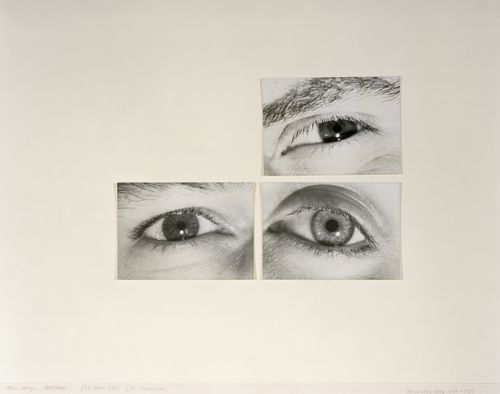
Photograph by Stefano Graziani of the following work: Gordon Matta-Clark, Eyes, 1970-1978, gelatin silver prints, 12.6 x 17.7 cm (each image), PHCON2002:0016:012:050, Estate of Gordon Matta-Clark on deposit at the Canadian Centre for Architecture, © Estate of Gordon Matta-Clark Questioning Pictures is a 36 photograph project commissioned by Fondazione Prada, Milan. Artist Stefano Graziani investigates archival and conservation systems in a number of museums. Through photographing museum objects, Graziani, focusing on the relationship between photographs, the museum objects and the power structures at play within institutions. The museums include the Canadian Centre for Architecture (CCA) in Montréal, Canada; Sir John Soane’s Museum in London, UK; the Kunstmuseum Basel, Switzerland; Museum Insel Hombroich in Neuss, Germany; the Museo di Castelvecchio in Verona, Italy; and the Plaster Cast Gallery at Museo Canova in Possagno, Italy.
PH2018:0005:002
Description:
Photograph by Stefano Graziani of the following work: Gordon Matta-Clark, Eyes, 1970-1978, gelatin silver prints, 12.6 x 17.7 cm (each image), PHCON2002:0016:012:050, Estate of Gordon Matta-Clark on deposit at the Canadian Centre for Architecture, © Estate of Gordon Matta-Clark Questioning Pictures is a 36 photograph project commissioned by Fondazione Prada, Milan. Artist Stefano Graziani investigates archival and conservation systems in a number of museums. Through photographing museum objects, Graziani, focusing on the relationship between photographs, the museum objects and the power structures at play within institutions. The museums include the Canadian Centre for Architecture (CCA) in Montréal, Canada; Sir John Soane’s Museum in London, UK; the Kunstmuseum Basel, Switzerland; Museum Insel Hombroich in Neuss, Germany; the Museo di Castelvecchio in Verona, Italy; and the Plaster Cast Gallery at Museo Canova in Possagno, Italy.
People:
Date:
2017
2017
Title:
Questioning Pictures: Photograph of three gelatin silver prints of eyes by Gordon Matta-Clark, 1970-1978
Actions:
PH2018:0005:002
Description:
Photograph by Stefano Graziani of the following work: Gordon Matta-Clark, Eyes, 1970-1978, gelatin silver prints, 12.6 x 17.7 cm (each image), PHCON2002:0016:012:050, Estate of Gordon Matta-Clark on deposit at the Canadian Centre for Architecture, © Estate of Gordon Matta-Clark Questioning Pictures is a 36 photograph project commissioned by Fondazione Prada, Milan. Artist Stefano Graziani investigates archival and conservation systems in a number of museums. Through photographing museum objects, Graziani, focusing on the relationship between photographs, the museum objects and the power structures at play within institutions. The museums include the Canadian Centre for Architecture (CCA) in Montréal, Canada; Sir John Soane’s Museum in London, UK; the Kunstmuseum Basel, Switzerland; Museum Insel Hombroich in Neuss, Germany; the Museo di Castelvecchio in Verona, Italy; and the Plaster Cast Gallery at Museo Canova in Possagno, Italy.
Questioning Pictures: Photograph of three gelatin silver prints of eyes by Gordon Matta-Clark, 1970-1978
Actions:
PH2018:0005:002
Description:
Photograph by Stefano Graziani of the following work: Gordon Matta-Clark, Eyes, 1970-1978, gelatin silver prints, 12.6 x 17.7 cm (each image), PHCON2002:0016:012:050, Estate of Gordon Matta-Clark on deposit at the Canadian Centre for Architecture, © Estate of Gordon Matta-Clark Questioning Pictures is a 36 photograph project commissioned by Fondazione Prada, Milan. Artist Stefano Graziani investigates archival and conservation systems in a number of museums. Through photographing museum objects, Graziani, focusing on the relationship between photographs, the museum objects and the power structures at play within institutions. The museums include the Canadian Centre for Architecture (CCA) in Montréal, Canada; Sir John Soane’s Museum in London, UK; the Kunstmuseum Basel, Switzerland; Museum Insel Hombroich in Neuss, Germany; the Museo di Castelvecchio in Verona, Italy; and the Plaster Cast Gallery at Museo Canova in Possagno, Italy.
Form:
photographs
photographs
Date:
2017
2017
People:
Form:
photographs
photographs
Actions:
Reference number:
PH2018:0005:004
Description:
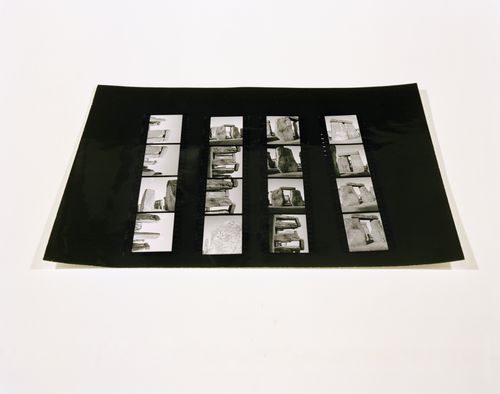
Photograph by Stefano Graziani of the following work: Gordon Matta-Clark, Stonehenge, 1973, contact sheet, 25.5 x 20.5 cm, PHCON2002:0016:012:04, Estate of Gordon Matta-Clark on deposit at the Canadian Centre for Architecture, © Estate of Gordon Matta-Clark Questioning Pictures is a 36 photograph project commissioned by Fondazione Prada, Milan. Artist Stefano Graziani investigates archival and conservation systems in a number of museums. Through photographing museum objects, Graziani, focusing on the relationship between photographs, the museum objects and the power structures at play within institutions. The museums include the Canadian Centre for Architecture (CCA) in Montréal, Canada; Sir John Soane’s Museum in London, UK; the Kunstmuseum Basel, Switzerland; Museum Insel Hombroich in Neuss, Germany; the Museo di Castelvecchio in Verona, Italy; and the Plaster Cast Gallery at Museo Canova in Possagno, Italy.
PH2018:0005:004
Description:
Photograph by Stefano Graziani of the following work: Gordon Matta-Clark, Stonehenge, 1973, contact sheet, 25.5 x 20.5 cm, PHCON2002:0016:012:04, Estate of Gordon Matta-Clark on deposit at the Canadian Centre for Architecture, © Estate of Gordon Matta-Clark Questioning Pictures is a 36 photograph project commissioned by Fondazione Prada, Milan. Artist Stefano Graziani investigates archival and conservation systems in a number of museums. Through photographing museum objects, Graziani, focusing on the relationship between photographs, the museum objects and the power structures at play within institutions. The museums include the Canadian Centre for Architecture (CCA) in Montréal, Canada; Sir John Soane’s Museum in London, UK; the Kunstmuseum Basel, Switzerland; Museum Insel Hombroich in Neuss, Germany; the Museo di Castelvecchio in Verona, Italy; and the Plaster Cast Gallery at Museo Canova in Possagno, Italy.
People:
Date:
2017
2017
Title:
Questioning Pictures: Photograph of gelatin silver print contact sheet of Stonehenge by Gordon Matta-Clark, 1973
Actions:
PH2018:0005:004
Description:
Photograph by Stefano Graziani of the following work: Gordon Matta-Clark, Stonehenge, 1973, contact sheet, 25.5 x 20.5 cm, PHCON2002:0016:012:04, Estate of Gordon Matta-Clark on deposit at the Canadian Centre for Architecture, © Estate of Gordon Matta-Clark Questioning Pictures is a 36 photograph project commissioned by Fondazione Prada, Milan. Artist Stefano Graziani investigates archival and conservation systems in a number of museums. Through photographing museum objects, Graziani, focusing on the relationship between photographs, the museum objects and the power structures at play within institutions. The museums include the Canadian Centre for Architecture (CCA) in Montréal, Canada; Sir John Soane’s Museum in London, UK; the Kunstmuseum Basel, Switzerland; Museum Insel Hombroich in Neuss, Germany; the Museo di Castelvecchio in Verona, Italy; and the Plaster Cast Gallery at Museo Canova in Possagno, Italy.
Questioning Pictures: Photograph of gelatin silver print contact sheet of Stonehenge by Gordon Matta-Clark, 1973
Actions:
PH2018:0005:004
Description:
Photograph by Stefano Graziani of the following work: Gordon Matta-Clark, Stonehenge, 1973, contact sheet, 25.5 x 20.5 cm, PHCON2002:0016:012:04, Estate of Gordon Matta-Clark on deposit at the Canadian Centre for Architecture, © Estate of Gordon Matta-Clark Questioning Pictures is a 36 photograph project commissioned by Fondazione Prada, Milan. Artist Stefano Graziani investigates archival and conservation systems in a number of museums. Through photographing museum objects, Graziani, focusing on the relationship between photographs, the museum objects and the power structures at play within institutions. The museums include the Canadian Centre for Architecture (CCA) in Montréal, Canada; Sir John Soane’s Museum in London, UK; the Kunstmuseum Basel, Switzerland; Museum Insel Hombroich in Neuss, Germany; the Museo di Castelvecchio in Verona, Italy; and the Plaster Cast Gallery at Museo Canova in Possagno, Italy.
Form:
photographs
photographs
Date:
2017
2017
People:
Form:
photographs
photographs
Actions:
Reference number:
PH2018:0005:015
Description:
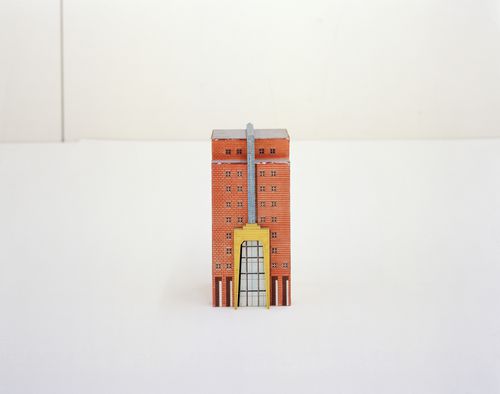
Photograph by Stefano Graziani of the following work: Aldo Rossi, study model for the tower of the services centre of the Parco tecnologico, Verbania, 1933, 22.0 x 6.0 x 6.0 cm, AP142.S1.D228.P4, Aldo Rossi fonds, Canadian Centre for Architecture, © Fondazione Aldo Rossi Questioning Pictures is a 36 photograph project commissioned by Fondazione Prada, Milan. Artist Stefano Graziani investigates archival and conservation systems in a number of museums. Through photographing museum objects, Graziani, focusing on the relationship between photographs, the museum objects and the power structures at play within institutions. The museums include the Canadian Centre for Architecture (CCA) in Montréal, Canada; Sir John Soane’s Museum in London, UK; the Kunstmuseum Basel, Switzerland; Museum Insel Hombroich in Neuss, Germany; the Museo di Castelvecchio in Verona, Italy; and the Plaster Cast Gallery at Museo Canova in Possagno, Italy.
PH2018:0005:015
Description:
Photograph by Stefano Graziani of the following work: Aldo Rossi, study model for the tower of the services centre of the Parco tecnologico, Verbania, 1933, 22.0 x 6.0 x 6.0 cm, AP142.S1.D228.P4, Aldo Rossi fonds, Canadian Centre for Architecture, © Fondazione Aldo Rossi Questioning Pictures is a 36 photograph project commissioned by Fondazione Prada, Milan. Artist Stefano Graziani investigates archival and conservation systems in a number of museums. Through photographing museum objects, Graziani, focusing on the relationship between photographs, the museum objects and the power structures at play within institutions. The museums include the Canadian Centre for Architecture (CCA) in Montréal, Canada; Sir John Soane’s Museum in London, UK; the Kunstmuseum Basel, Switzerland; Museum Insel Hombroich in Neuss, Germany; the Museo di Castelvecchio in Verona, Italy; and the Plaster Cast Gallery at Museo Canova in Possagno, Italy.
People:
Date:
2017
2017
Title:
Questioning Pictures: Photograph of study model for the tower of the services centre of the Parco tecnologico by Aldo Rossio, 1933
Actions:
PH2018:0005:015
Description:
Photograph by Stefano Graziani of the following work: Aldo Rossi, study model for the tower of the services centre of the Parco tecnologico, Verbania, 1933, 22.0 x 6.0 x 6.0 cm, AP142.S1.D228.P4, Aldo Rossi fonds, Canadian Centre for Architecture, © Fondazione Aldo Rossi Questioning Pictures is a 36 photograph project commissioned by Fondazione Prada, Milan. Artist Stefano Graziani investigates archival and conservation systems in a number of museums. Through photographing museum objects, Graziani, focusing on the relationship between photographs, the museum objects and the power structures at play within institutions. The museums include the Canadian Centre for Architecture (CCA) in Montréal, Canada; Sir John Soane’s Museum in London, UK; the Kunstmuseum Basel, Switzerland; Museum Insel Hombroich in Neuss, Germany; the Museo di Castelvecchio in Verona, Italy; and the Plaster Cast Gallery at Museo Canova in Possagno, Italy.
Questioning Pictures: Photograph of study model for the tower of the services centre of the Parco tecnologico by Aldo Rossio, 1933
Actions:
PH2018:0005:015
Description:
Photograph by Stefano Graziani of the following work: Aldo Rossi, study model for the tower of the services centre of the Parco tecnologico, Verbania, 1933, 22.0 x 6.0 x 6.0 cm, AP142.S1.D228.P4, Aldo Rossi fonds, Canadian Centre for Architecture, © Fondazione Aldo Rossi Questioning Pictures is a 36 photograph project commissioned by Fondazione Prada, Milan. Artist Stefano Graziani investigates archival and conservation systems in a number of museums. Through photographing museum objects, Graziani, focusing on the relationship between photographs, the museum objects and the power structures at play within institutions. The museums include the Canadian Centre for Architecture (CCA) in Montréal, Canada; Sir John Soane’s Museum in London, UK; the Kunstmuseum Basel, Switzerland; Museum Insel Hombroich in Neuss, Germany; the Museo di Castelvecchio in Verona, Italy; and the Plaster Cast Gallery at Museo Canova in Possagno, Italy.
Form:
photographs
photographs
Date:
2017
2017
People:
Form:
photographs
photographs
Actions:
Reference number:
PH2018:0005:026
Description:
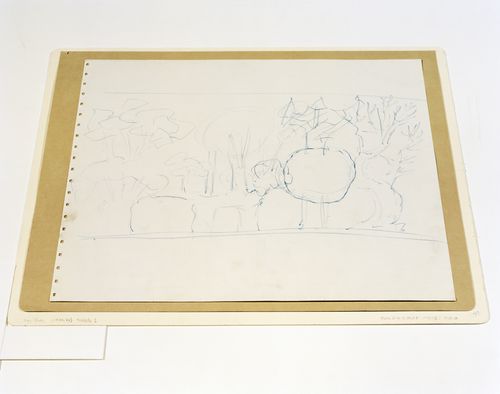
Photograph by Stefano Graziani of the following work: Gordon Matta-Clark, tree study, 1970-1971, blue pencil on paper, 35.6 x 43.2 cm, PHCON2002:0016:060, Gordon Matta-Clark Collection, Canadian Centre for Architecture, Gift of Estate of Gordon Matta-Clark, © Estate of Gordon Matta-Clark Questioning Pictures is a 36 photograph project commissioned by Fondazione Prada, Milan. Artist Stefano Graziani investigates archival and conservation systems in a number of museums. Through photographing museum objects, Graziani, focusing on the relationship between photographs, the museum objects and the power structures at play within institutions. The museums include the Canadian Centre for Architecture (CCA) in Montréal, Canada; Sir John Soane’s Museum in London, UK; the Kunstmuseum Basel, Switzerland; Museum Insel Hombroich in Neuss, Germany; the Museo di Castelvecchio in Verona, Italy; and the Plaster Cast Gallery at Museo Canova in Possagno, Italy.
PH2018:0005:026
Description:
Photograph by Stefano Graziani of the following work: Gordon Matta-Clark, tree study, 1970-1971, blue pencil on paper, 35.6 x 43.2 cm, PHCON2002:0016:060, Gordon Matta-Clark Collection, Canadian Centre for Architecture, Gift of Estate of Gordon Matta-Clark, © Estate of Gordon Matta-Clark Questioning Pictures is a 36 photograph project commissioned by Fondazione Prada, Milan. Artist Stefano Graziani investigates archival and conservation systems in a number of museums. Through photographing museum objects, Graziani, focusing on the relationship between photographs, the museum objects and the power structures at play within institutions. The museums include the Canadian Centre for Architecture (CCA) in Montréal, Canada; Sir John Soane’s Museum in London, UK; the Kunstmuseum Basel, Switzerland; Museum Insel Hombroich in Neuss, Germany; the Museo di Castelvecchio in Verona, Italy; and the Plaster Cast Gallery at Museo Canova in Possagno, Italy.
People:
Date:
2017
2017
Title:
Questioning Pictures: Photograph of Tree study, blue pencil on paper by Gordon Matta-Clark, 1970-1971
Actions:
PH2018:0005:026
Description:
Photograph by Stefano Graziani of the following work: Gordon Matta-Clark, tree study, 1970-1971, blue pencil on paper, 35.6 x 43.2 cm, PHCON2002:0016:060, Gordon Matta-Clark Collection, Canadian Centre for Architecture, Gift of Estate of Gordon Matta-Clark, © Estate of Gordon Matta-Clark Questioning Pictures is a 36 photograph project commissioned by Fondazione Prada, Milan. Artist Stefano Graziani investigates archival and conservation systems in a number of museums. Through photographing museum objects, Graziani, focusing on the relationship between photographs, the museum objects and the power structures at play within institutions. The museums include the Canadian Centre for Architecture (CCA) in Montréal, Canada; Sir John Soane’s Museum in London, UK; the Kunstmuseum Basel, Switzerland; Museum Insel Hombroich in Neuss, Germany; the Museo di Castelvecchio in Verona, Italy; and the Plaster Cast Gallery at Museo Canova in Possagno, Italy.
Questioning Pictures: Photograph of Tree study, blue pencil on paper by Gordon Matta-Clark, 1970-1971
Actions:
PH2018:0005:026
Description:
Photograph by Stefano Graziani of the following work: Gordon Matta-Clark, tree study, 1970-1971, blue pencil on paper, 35.6 x 43.2 cm, PHCON2002:0016:060, Gordon Matta-Clark Collection, Canadian Centre for Architecture, Gift of Estate of Gordon Matta-Clark, © Estate of Gordon Matta-Clark Questioning Pictures is a 36 photograph project commissioned by Fondazione Prada, Milan. Artist Stefano Graziani investigates archival and conservation systems in a number of museums. Through photographing museum objects, Graziani, focusing on the relationship between photographs, the museum objects and the power structures at play within institutions. The museums include the Canadian Centre for Architecture (CCA) in Montréal, Canada; Sir John Soane’s Museum in London, UK; the Kunstmuseum Basel, Switzerland; Museum Insel Hombroich in Neuss, Germany; the Museo di Castelvecchio in Verona, Italy; and the Plaster Cast Gallery at Museo Canova in Possagno, Italy.
Form:
photographs
photographs
Date:
2017
2017
People:
Form:
photographs
photographs
Title:
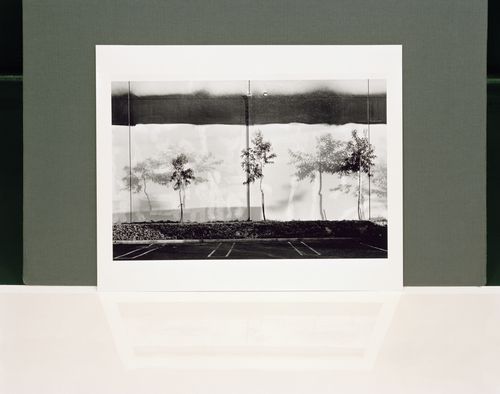
Questioning Pictures: Photograph of West Wall of Smicoa, Gelatin silver print by Lewis Baltz, 1974
Questioning Pictures: Photograph of West Wall of Smicoa, Gelatin silver print by Lewis Baltz, 1974
Actions:
Reference number:
PH2018:0005:027
Description:
Photograph by Stefano Graziani of the following work: Lewis Baltz, West Wall, Semicoa, 333 McCormick, Cosa Mesa from The New Industrial Parks near Irving, California, 1974, gelatin silver print, 20.3 x 24.5 cm, PH2001:0177, Canadian Centre for Architecture, © Estate of Lewis Baltz Questioning Pictures is a 36 photograph project commissioned by Fondazione Prada, Milan. Artist Stefano Graziani investigates archival and conservation systems in a number of museums. Through photographing museum objects, Graziani, focusing on the relationship between photographs, the museum objects and the power structures at play within institutions. The museums include the Canadian Centre for Architecture (CCA) in Montréal, Canada; Sir John Soane’s Museum in London, UK; the Kunstmuseum Basel, Switzerland; Museum Insel Hombroich in Neuss, Germany; the Museo di Castelvecchio in Verona, Italy; and the Plaster Cast Gallery at Museo Canova in Possagno, Italy.
PH2018:0005:027
Description:
Photograph by Stefano Graziani of the following work: Lewis Baltz, West Wall, Semicoa, 333 McCormick, Cosa Mesa from The New Industrial Parks near Irving, California, 1974, gelatin silver print, 20.3 x 24.5 cm, PH2001:0177, Canadian Centre for Architecture, © Estate of Lewis Baltz Questioning Pictures is a 36 photograph project commissioned by Fondazione Prada, Milan. Artist Stefano Graziani investigates archival and conservation systems in a number of museums. Through photographing museum objects, Graziani, focusing on the relationship between photographs, the museum objects and the power structures at play within institutions. The museums include the Canadian Centre for Architecture (CCA) in Montréal, Canada; Sir John Soane’s Museum in London, UK; the Kunstmuseum Basel, Switzerland; Museum Insel Hombroich in Neuss, Germany; the Museo di Castelvecchio in Verona, Italy; and the Plaster Cast Gallery at Museo Canova in Possagno, Italy.
People:
Date:
2017
2017
Title:
Questioning Pictures: Photograph of West Wall of Smicoa, Gelatin silver print by Lewis Baltz, 1974
Actions:
PH2018:0005:027
Description:
Photograph by Stefano Graziani of the following work: Lewis Baltz, West Wall, Semicoa, 333 McCormick, Cosa Mesa from The New Industrial Parks near Irving, California, 1974, gelatin silver print, 20.3 x 24.5 cm, PH2001:0177, Canadian Centre for Architecture, © Estate of Lewis Baltz Questioning Pictures is a 36 photograph project commissioned by Fondazione Prada, Milan. Artist Stefano Graziani investigates archival and conservation systems in a number of museums. Through photographing museum objects, Graziani, focusing on the relationship between photographs, the museum objects and the power structures at play within institutions. The museums include the Canadian Centre for Architecture (CCA) in Montréal, Canada; Sir John Soane’s Museum in London, UK; the Kunstmuseum Basel, Switzerland; Museum Insel Hombroich in Neuss, Germany; the Museo di Castelvecchio in Verona, Italy; and the Plaster Cast Gallery at Museo Canova in Possagno, Italy.
Questioning Pictures: Photograph of West Wall of Smicoa, Gelatin silver print by Lewis Baltz, 1974
Actions:
PH2018:0005:027
Description:
Photograph by Stefano Graziani of the following work: Lewis Baltz, West Wall, Semicoa, 333 McCormick, Cosa Mesa from The New Industrial Parks near Irving, California, 1974, gelatin silver print, 20.3 x 24.5 cm, PH2001:0177, Canadian Centre for Architecture, © Estate of Lewis Baltz Questioning Pictures is a 36 photograph project commissioned by Fondazione Prada, Milan. Artist Stefano Graziani investigates archival and conservation systems in a number of museums. Through photographing museum objects, Graziani, focusing on the relationship between photographs, the museum objects and the power structures at play within institutions. The museums include the Canadian Centre for Architecture (CCA) in Montréal, Canada; Sir John Soane’s Museum in London, UK; the Kunstmuseum Basel, Switzerland; Museum Insel Hombroich in Neuss, Germany; the Museo di Castelvecchio in Verona, Italy; and the Plaster Cast Gallery at Museo Canova in Possagno, Italy.
Form:
photographs
photographs
Date:
2017
2017
People:
Form:
photographs
photographs

Actions:
Reference number:
PH2018:0005:034
Description:
Photograph by Stefano Graziani of the following work: Aldo Rossi, study model for the entrance foyer of the Deutsches Historisches Museum, Berlin, 1987-1990, 12.0 x 25.0 x 25.0 cm, AP145.S1.D122.P18, Aldo Rossi fonds, Canadian Centre for Architecture, © Fondazione Aldo Rossi Questioning Pictures is a 36 photograph project commissioned by Fondazione Prada, Milan. Artist Stefano Graziani investigates archival and conservation systems in a number of museums. Through photographing museum objects, Graziani, focusing on the relationship between photographs, the museum objects and the power structures at play within institutions. The museums include the Canadian Centre for Architecture (CCA) in Montréal, Canada; Sir John Soane’s Museum in London, UK; the Kunstmuseum Basel, Switzerland; Museum Insel Hombroich in Neuss, Germany; the Museo di Castelvecchio in Verona, Italy; and the Plaster Cast Gallery at Museo Canova in Possagno, Italy.
PH2018:0005:034
Description:
Photograph by Stefano Graziani of the following work: Aldo Rossi, study model for the entrance foyer of the Deutsches Historisches Museum, Berlin, 1987-1990, 12.0 x 25.0 x 25.0 cm, AP145.S1.D122.P18, Aldo Rossi fonds, Canadian Centre for Architecture, © Fondazione Aldo Rossi Questioning Pictures is a 36 photograph project commissioned by Fondazione Prada, Milan. Artist Stefano Graziani investigates archival and conservation systems in a number of museums. Through photographing museum objects, Graziani, focusing on the relationship between photographs, the museum objects and the power structures at play within institutions. The museums include the Canadian Centre for Architecture (CCA) in Montréal, Canada; Sir John Soane’s Museum in London, UK; the Kunstmuseum Basel, Switzerland; Museum Insel Hombroich in Neuss, Germany; the Museo di Castelvecchio in Verona, Italy; and the Plaster Cast Gallery at Museo Canova in Possagno, Italy.
People:
Date:
2017
2017
Title:
Questioning Pictures: Photograph of study model for the entrance foyer of the Deutsches Historisches Museum by Aldo Rossi, 1987-1990
Actions:
PH2018:0005:034
Description:
Photograph by Stefano Graziani of the following work: Aldo Rossi, study model for the entrance foyer of the Deutsches Historisches Museum, Berlin, 1987-1990, 12.0 x 25.0 x 25.0 cm, AP145.S1.D122.P18, Aldo Rossi fonds, Canadian Centre for Architecture, © Fondazione Aldo Rossi Questioning Pictures is a 36 photograph project commissioned by Fondazione Prada, Milan. Artist Stefano Graziani investigates archival and conservation systems in a number of museums. Through photographing museum objects, Graziani, focusing on the relationship between photographs, the museum objects and the power structures at play within institutions. The museums include the Canadian Centre for Architecture (CCA) in Montréal, Canada; Sir John Soane’s Museum in London, UK; the Kunstmuseum Basel, Switzerland; Museum Insel Hombroich in Neuss, Germany; the Museo di Castelvecchio in Verona, Italy; and the Plaster Cast Gallery at Museo Canova in Possagno, Italy.
Questioning Pictures: Photograph of study model for the entrance foyer of the Deutsches Historisches Museum by Aldo Rossi, 1987-1990
Actions:
PH2018:0005:034
Description:
Photograph by Stefano Graziani of the following work: Aldo Rossi, study model for the entrance foyer of the Deutsches Historisches Museum, Berlin, 1987-1990, 12.0 x 25.0 x 25.0 cm, AP145.S1.D122.P18, Aldo Rossi fonds, Canadian Centre for Architecture, © Fondazione Aldo Rossi Questioning Pictures is a 36 photograph project commissioned by Fondazione Prada, Milan. Artist Stefano Graziani investigates archival and conservation systems in a number of museums. Through photographing museum objects, Graziani, focusing on the relationship between photographs, the museum objects and the power structures at play within institutions. The museums include the Canadian Centre for Architecture (CCA) in Montréal, Canada; Sir John Soane’s Museum in London, UK; the Kunstmuseum Basel, Switzerland; Museum Insel Hombroich in Neuss, Germany; the Museo di Castelvecchio in Verona, Italy; and the Plaster Cast Gallery at Museo Canova in Possagno, Italy.
Form:
photographs
photographs
Date:
2017
2017
People:


