


1778 Results
Form:
books
books
Price:
$105.00
(available to order)
Summary:
This catalogue is published in conjunction with "Il modo italian - Italian design and avant-garde in the 20th century", an exhibition produced by the Montreal Museum of Fine Arts in collaboration with the Royal Ontario Museum, Toronto, and the Mart – Museo di Arte Moderna e Contemporanea di Trento e Rovereto. Italian design has spanned the whole of the twentieth century,(...)
$105.00
(available to order)
Summary:
This catalogue is published in conjunction with "Il modo italian - Italian design and avant-garde in the 20th century", an exhibition produced by the Montreal Museum of Fine Arts in collaboration with the Royal Ontario Museum, Toronto, and the Mart – Museo di Arte Moderna e Contemporanea di Trento e Rovereto. Italian design has spanned the whole of the twentieth century,(...)
Title:
Il modo italiaono - Italian design and avant-garde in the 20th Century
Actions:
Price:
$105.00
(available to order)
Summary:
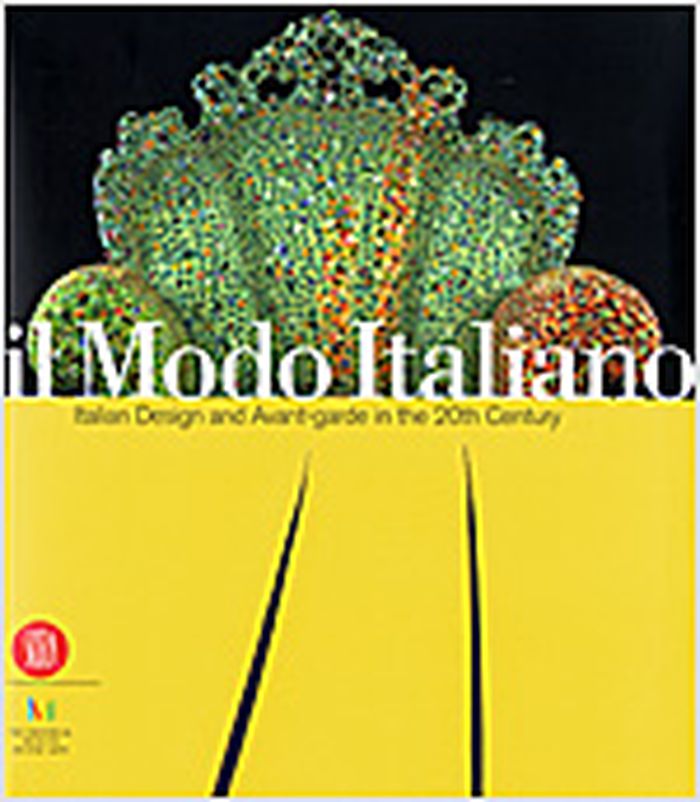
This catalogue is published in conjunction with "Il modo italian - Italian design and avant-garde in the 20th century", an exhibition produced by the Montreal Museum of Fine Arts in collaboration with the Royal Ontario Museum, Toronto, and the Mart – Museo di Arte Moderna e Contemporanea di Trento e Rovereto. Italian design has spanned the whole of the twentieth century, leaving a highly distinctive mark on the way that the form of objects of everyday use is perceived in industrial and contemporary society. This “Italian way” has succeeded, through a complex and hesitant process of industrial innovation and technological updating, in developing an independent and multifaceted culture of design capable of marrying the country’s rich craft tradition with an often fiercely resisted aspiration to modernity made up of flashes of improvisation and irony, and associated with an arduous bent for experimentation. The exhibition, with around 400 works chosen from among the most representative of artistic research and the culture of design in Italy in the twentieth century, is arranged chronologically, with four sections that define the different periods in the philosophical, economic, and aesthetic discourse that has accompanied the recent history of art and design in Italy. The survey brings to light the “philosophies” of design and the “aesthetics” that found a strong and dialectical expression right through the last century in Italy, and that are at the root of the country’s characteristic and lively cultural debate between art and design.
Il modo italiaono - Italian design and avant-garde in the 20th Century
Actions:
Price:
$105.00
(available to order)
Summary:
This catalogue is published in conjunction with "Il modo italian - Italian design and avant-garde in the 20th century", an exhibition produced by the Montreal Museum of Fine Arts in collaboration with the Royal Ontario Museum, Toronto, and the Mart – Museo di Arte Moderna e Contemporanea di Trento e Rovereto. Italian design has spanned the whole of the twentieth century, leaving a highly distinctive mark on the way that the form of objects of everyday use is perceived in industrial and contemporary society. This “Italian way” has succeeded, through a complex and hesitant process of industrial innovation and technological updating, in developing an independent and multifaceted culture of design capable of marrying the country’s rich craft tradition with an often fiercely resisted aspiration to modernity made up of flashes of improvisation and irony, and associated with an arduous bent for experimentation. The exhibition, with around 400 works chosen from among the most representative of artistic research and the culture of design in Italy in the twentieth century, is arranged chronologically, with four sections that define the different periods in the philosophical, economic, and aesthetic discourse that has accompanied the recent history of art and design in Italy. The survey brings to light the “philosophies” of design and the “aesthetics” that found a strong and dialectical expression right through the last century in Italy, and that are at the root of the country’s characteristic and lively cultural debate between art and design.
Form:
books
books
Publication:
May 2006, Milano / Montreal
May 2006, Milano / Montreal
Subject:
Interior Design
Interior Design
Form:
books
books
Actions:
Price:
$60.00
(available in store)
Summary:
The concepts of "Indonesian architecture" and "architecture in Indonesia" are both quite difficult to pin down. For the architecture of this small country incorporates influences from many important cultures--from India, China and the Middle East to countries in the West--and is therefore extremely multifaceted. In fact, one might reasonably ask whether a "real"(...)
$60.00
(available in store)
Summary:
The concepts of "Indonesian architecture" and "architecture in Indonesia" are both quite difficult to pin down. For the architecture of this small country incorporates influences from many important cultures--from India, China and the Middle East to countries in the West--and is therefore extremely multifaceted. In fact, one might reasonably ask whether a "real"(...)
Publication:
July 2007, Rotterdam
July 2007, Rotterdam
Title:
The past in the present : Architecture in Indonesia
Actions:
Price:
$60.00
(available in store)
Summary:
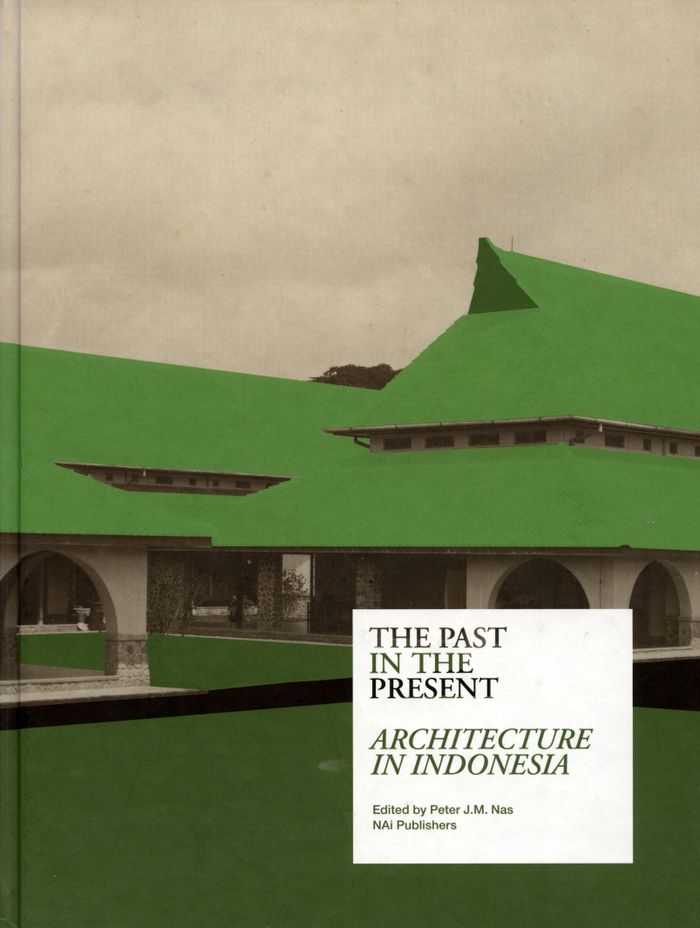
The concepts of "Indonesian architecture" and "architecture in Indonesia" are both quite difficult to pin down. For the architecture of this small country incorporates influences from many important cultures--from India, China and the Middle East to countries in the West--and is therefore extremely multifaceted. In fact, one might reasonably ask whether a "real" Indonesian architecture actually exists, even with reference to the country's vernacular work, which is highly diverse from an ethnic perspective in and of itself. The quest for an authentic Indonesian architecture has in fact been the subject of debate among architects there for many years, especially in regards to the work has been exported to other countries--in particular, its former colonizer, the Netherlands. (In fact, there is even a name for the hybrid style that originated during that era: Indische).This very nicely designed collection of illustrated essays, which features a special section of pictures and drawings of colonial architecture, provides a real sense of the diversity of building in modern-day Indonesia--while at the same time recognizing that such a perspective cannot be productive without taking history into account. With chapters on Modern Indonesian architecture, vernacular traditions, mosques, the effect of the Chinese diaspora, hybrid historic/contemporary Balinese architecture, the colonial period, Indische architecture and Art Deco and more, this publication provides an amazing overview and a long-overdue investigation of Indische work. Preface by Aaron Betsky.
The past in the present : Architecture in Indonesia
Actions:
Price:
$60.00
(available in store)
Summary:
The concepts of "Indonesian architecture" and "architecture in Indonesia" are both quite difficult to pin down. For the architecture of this small country incorporates influences from many important cultures--from India, China and the Middle East to countries in the West--and is therefore extremely multifaceted. In fact, one might reasonably ask whether a "real" Indonesian architecture actually exists, even with reference to the country's vernacular work, which is highly diverse from an ethnic perspective in and of itself. The quest for an authentic Indonesian architecture has in fact been the subject of debate among architects there for many years, especially in regards to the work has been exported to other countries--in particular, its former colonizer, the Netherlands. (In fact, there is even a name for the hybrid style that originated during that era: Indische).This very nicely designed collection of illustrated essays, which features a special section of pictures and drawings of colonial architecture, provides a real sense of the diversity of building in modern-day Indonesia--while at the same time recognizing that such a perspective cannot be productive without taking history into account. With chapters on Modern Indonesian architecture, vernacular traditions, mosques, the effect of the Chinese diaspora, hybrid historic/contemporary Balinese architecture, the colonial period, Indische architecture and Art Deco and more, this publication provides an amazing overview and a long-overdue investigation of Indische work. Preface by Aaron Betsky.
Form:
books
books
Publication:
July 2007, Rotterdam
July 2007, Rotterdam
Form:
books
books
Actions:
Price:
$45.00
(available to order)
Summary:
As digital technology advances at breakneck speed, images are circulating quicker than ever before. But what is the status of the image in the digital era? In this publication, art historian Hubert Burda (born 1940) examines the "iconic turn" in ten themed chapters and conversations with leading cultural theorists. In the first chapter, "The View Through the Window,"(...)
$45.00
(available to order)
Summary:
As digital technology advances at breakneck speed, images are circulating quicker than ever before. But what is the status of the image in the digital era? In this publication, art historian Hubert Burda (born 1940) examines the "iconic turn" in ten themed chapters and conversations with leading cultural theorists. In the first chapter, "The View Through the Window,"(...)
Title:
The digital wunderkammer : 10 chapters on the iconic turn
Actions:
Price:
$45.00
(available to order)
Summary:
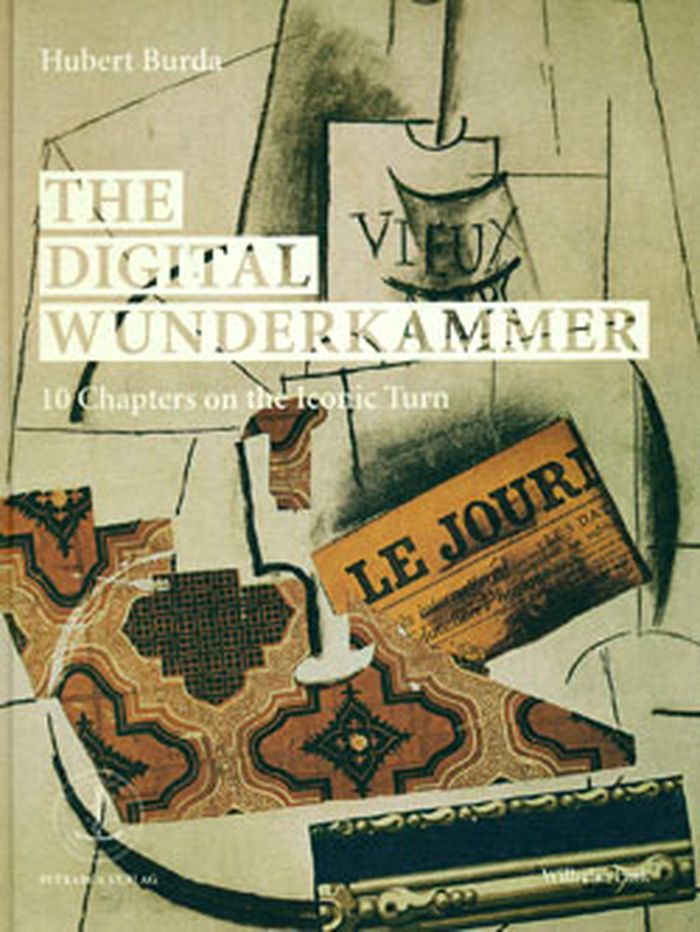
As digital technology advances at breakneck speed, images are circulating quicker than ever before. But what is the status of the image in the digital era? In this publication, art historian Hubert Burda (born 1940) examines the "iconic turn" in ten themed chapters and conversations with leading cultural theorists. In the first chapter, "The View Through the Window," Burda traces the connection between perspectival painting and the television, demonstrating in the second chapter how the image requires a frame, which in turn requires a material vehicle - the topic of the third chapter - that in our era has become a non-material vehicle with its own formal parameters. In the fourth chapter, "The Mobile Image," Burda shows how images have always been linked to portability, but now migrate to an unprecedented degree, so that anyone with a personal device can globally disseminate, say, footage from a concert via Youtube. A discussion of the capacity of individual images to placate or ennervate leads to a seventh chapter on the appetite for the Sublime and the rhetoric and representation of power throughout art history. Following a discussion of the democratization of celebrity culture, Burda proposes that the Google search box is perhaps the most interesting "interface" of our times, analogous to the seventeenth-century cabinet of curiosities (or wunderkammer). Conversations with Friedrich Kittler, Peter Sloterdijk, Bazon Brock, Horst Bredekamp and Hans Belting further extend this imaginative debate on the "iconic turn."
The digital wunderkammer : 10 chapters on the iconic turn
Actions:
Price:
$45.00
(available to order)
Summary:
As digital technology advances at breakneck speed, images are circulating quicker than ever before. But what is the status of the image in the digital era? In this publication, art historian Hubert Burda (born 1940) examines the "iconic turn" in ten themed chapters and conversations with leading cultural theorists. In the first chapter, "The View Through the Window," Burda traces the connection between perspectival painting and the television, demonstrating in the second chapter how the image requires a frame, which in turn requires a material vehicle - the topic of the third chapter - that in our era has become a non-material vehicle with its own formal parameters. In the fourth chapter, "The Mobile Image," Burda shows how images have always been linked to portability, but now migrate to an unprecedented degree, so that anyone with a personal device can globally disseminate, say, footage from a concert via Youtube. A discussion of the capacity of individual images to placate or ennervate leads to a seventh chapter on the appetite for the Sublime and the rhetoric and representation of power throughout art history. Following a discussion of the democratization of celebrity culture, Burda proposes that the Google search box is perhaps the most interesting "interface" of our times, analogous to the seventeenth-century cabinet of curiosities (or wunderkammer). Conversations with Friedrich Kittler, Peter Sloterdijk, Bazon Brock, Horst Bredekamp and Hans Belting further extend this imaginative debate on the "iconic turn."
Form:
books
books
Publication:
August 2011
August 2011
Subject:
Epistemology
Epistemology
Form:
books
books
Actions:
Holdings:
Description:
350 pages ; 24 cm.
Description:
350 pages ; 24 cm.
Author:
Subject:
Publication:
Wavre, Belgium : Mardaga, 2010.
Wavre, Belgium : Mardaga, 2010.
Title:
Urbanisation sans urbanisme : une histoire de la ville diffuse / Bénédicte Grosjean.
Actions:
Holdings:
Description:
350 pages ; 24 cm.
Urbanisation sans urbanisme : une histoire de la ville diffuse / Bénédicte Grosjean.
Actions:
Holdings:
Description:
350 pages ; 24 cm.
Form:
books
books
Publication:
Wavre, Belgium : Mardaga, 2010.
Wavre, Belgium : Mardaga, 2010.
Author:
Subject:
Form:
books
books
Title:
Gens du fleuve, gens de l'île : Hochelaga en Laurentie iroquoienne au XVIe siècle / Roland Viau.
Gens du fleuve, gens de l'île : Hochelaga en Laurentie iroquoienne au XVIe siècle / Roland Viau.
Actions:
Holdings:
Description:
344 pages : illustrations, maps ; 23 cm
Description:
344 pages : illustrations, maps ; 23 cm
Author:
Subject:
Publication:
Montréal (Québec) : Boréal, [2021], ©2021
Montréal (Québec) : Boréal, [2021], ©2021
Title:
Gens du fleuve, gens de l'île : Hochelaga en Laurentie iroquoienne au XVIe siècle / Roland Viau.
Actions:
Holdings:
Description:
344 pages : illustrations, maps ; 23 cm
Gens du fleuve, gens de l'île : Hochelaga en Laurentie iroquoienne au XVIe siècle / Roland Viau.
Actions:
Holdings:
Description:
344 pages : illustrations, maps ; 23 cm
Form:
books
books
Publication:
Montréal (Québec) : Boréal, [2021], ©2021
Montréal (Québec) : Boréal, [2021], ©2021
Author:
Subject:
Form:
books
books
Actions:
Holdings:
Description:
1 vol. (156 p.) : couv. ill. en coul. ; 19 cm.
Description:
1 vol. (156 p.) : couv. ill. en coul. ; 19 cm.
Author:
Subject:
Publication:
Paris : Alternatives, impr. 2014, cop. 2014.
Paris : Alternatives, impr. 2014, cop. 2014.
Title:
Ré-enchanter le monde [Texte imprimé] : l'architecture et la ville face aux grandes transitions / sous la direction de Marie-Hélène Contal ; coordination scientifique et éditoriale de Aliki-Myrto Perysinaki ; avec les contributions de C. Alexander, A. Aravena, B. Aronson ... [et al.] ; [traduction, Édith Ochs].
Actions:
Holdings:
Description:
1 vol. (156 p.) : couv. ill. en coul. ; 19 cm.
Ré-enchanter le monde [Texte imprimé] : l'architecture et la ville face aux grandes transitions / sous la direction de Marie-Hélène Contal ; coordination scientifique et éditoriale de Aliki-Myrto Perysinaki ; avec les contributions de C. Alexander, A. Aravena, B. Aronson ... [et al.] ; [traduction, Édith Ochs].
Actions:
Holdings:
Description:
1 vol. (156 p.) : couv. ill. en coul. ; 19 cm.
Form:
books
books
Publication:
Paris : Alternatives, impr. 2014, cop. 2014.
Paris : Alternatives, impr. 2014, cop. 2014.
Author:
Subject:
Form:
books
books
Title:
Massive change
Massive change
Actions:
Price:
$39.95
(available to order)
Summary:
"Massive Change" is a modern illustrated primer on the new inventions, technologies, and events that are affecting the human race worldwide. The book is a part of a broader research project by Bruce Mau Design intended to provoke debate and discussion about the future of design culture, broadly defined as the “familiar objects and techniques that are transforming our(...)
$39.95
(available to order)
Summary:
"Massive Change" is a modern illustrated primer on the new inventions, technologies, and events that are affecting the human race worldwide. The book is a part of a broader research project by Bruce Mau Design intended to provoke debate and discussion about the future of design culture, broadly defined as the “familiar objects and techniques that are transforming our(...)
Subject:
Graphic Designers, Monographs
Graphic Designers, Monographs
Publication:
November 2004, New York
November 2004, New York
Title:
Massive change
Actions:
Price:
$39.95
(available to order)
Summary:
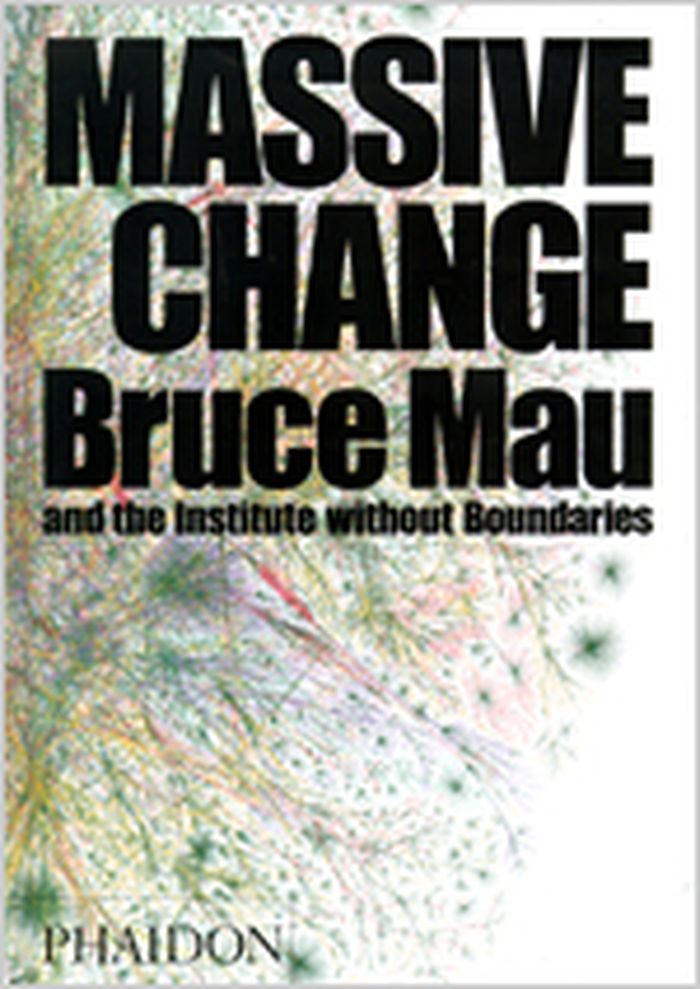
"Massive Change" is a modern illustrated primer on the new inventions, technologies, and events that are affecting the human race worldwide. The book is a part of a broader research project by Bruce Mau Design intended to provoke debate and discussion about the future of design culture, broadly defined as the “familiar objects and techniques that are transforming our lives.” In essays, interviews, and provocative imagery aimed at a broad audience, "Massive Change" explores the changing force of design in the contemporary world, and in doing so expands the definition of design to include the built environment, transportation technologies, revolutionary materials, energy and information systems, and living organisms. The book is divided into 11 heavily illustrated sections covering major areas of change in contemporary society — such as urbanism and architecture, the military, health and living, and wealth and politics. Each section intersperses intriguing documentary images with a general introductory essay, extended captions, and interviews with leading thinkers, including engineers, designers, philosophers, scientists, architects, artists, and writers. Concluding the book is a graphic timeline of significant inventions and world events from 10,000 B.C. to the present. "Massive Change" is a well designed, intelligent, visually provocative exploration of the myriad subjects percolating through popular culture: those we read about in magazines and on Web sites but rarely understand in any meaningful way. It poses the question: “Now that the human race can do almost anything, what will we do next?” Accompanies the internationally touring exhibition produced by Bruce Mau and his Institute without Borders.
Massive change
Actions:
Price:
$39.95
(available to order)
Summary:
"Massive Change" is a modern illustrated primer on the new inventions, technologies, and events that are affecting the human race worldwide. The book is a part of a broader research project by Bruce Mau Design intended to provoke debate and discussion about the future of design culture, broadly defined as the “familiar objects and techniques that are transforming our lives.” In essays, interviews, and provocative imagery aimed at a broad audience, "Massive Change" explores the changing force of design in the contemporary world, and in doing so expands the definition of design to include the built environment, transportation technologies, revolutionary materials, energy and information systems, and living organisms. The book is divided into 11 heavily illustrated sections covering major areas of change in contemporary society — such as urbanism and architecture, the military, health and living, and wealth and politics. Each section intersperses intriguing documentary images with a general introductory essay, extended captions, and interviews with leading thinkers, including engineers, designers, philosophers, scientists, architects, artists, and writers. Concluding the book is a graphic timeline of significant inventions and world events from 10,000 B.C. to the present. "Massive Change" is a well designed, intelligent, visually provocative exploration of the myriad subjects percolating through popular culture: those we read about in magazines and on Web sites but rarely understand in any meaningful way. It poses the question: “Now that the human race can do almost anything, what will we do next?” Accompanies the internationally touring exhibition produced by Bruce Mau and his Institute without Borders.
Form:
books
books
Publication:
November 2004, New York
November 2004, New York
Subject:
Graphic Designers, Monographs
Graphic Designers, Monographs
Form:
books
books
Actions:
Price:
$42.00
(available to order)
Summary:
In recent years building with stone has gained new significance, not only because of its impressive appearance, but also in the debate that has arisen in architecture between the monumental and the transparent. Principally used in façades, but also for interior design, natural stone - and even man-made stone such as concrete and bricks - is now being appreciated for its(...)
$42.00
(available to order)
Summary:
In recent years building with stone has gained new significance, not only because of its impressive appearance, but also in the debate that has arisen in architecture between the monumental and the transparent. Principally used in façades, but also for interior design, natural stone - and even man-made stone such as concrete and bricks - is now being appreciated for its(...)
Title:
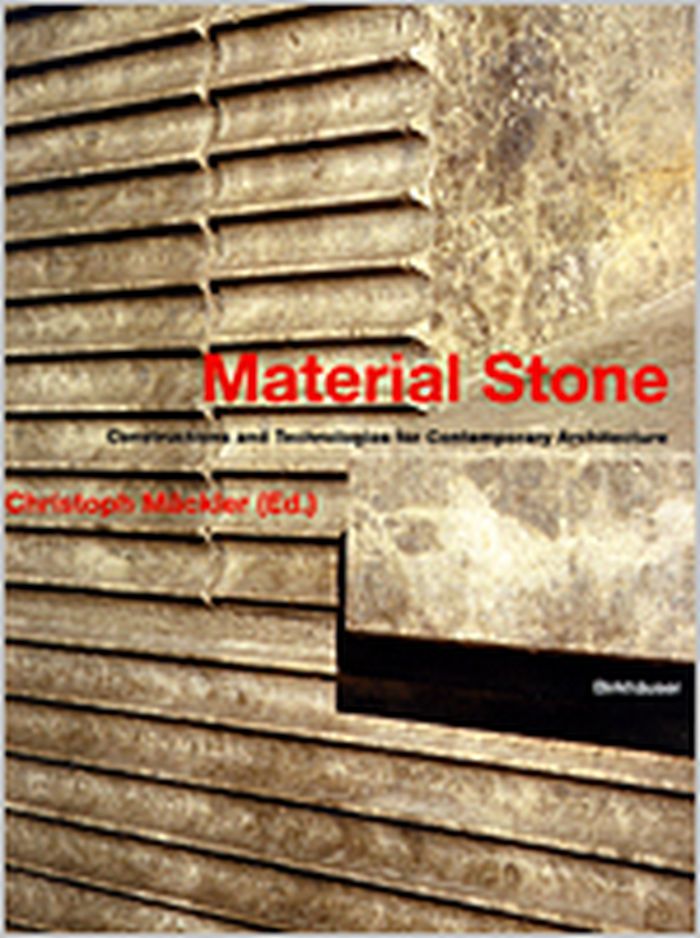
Material stone : Construction and technologies for contemporary architecture
Actions:
Price:
$42.00
(available to order)
Summary:
In recent years building with stone has gained new significance, not only because of its impressive appearance, but also in the debate that has arisen in architecture between the monumental and the transparent. Principally used in façades, but also for interior design, natural stone - and even man-made stone such as concrete and bricks - is now being appreciated for its high-quality performance. For international architects such as Michael Graves, Frank O. Gehry, Mario Botta or Richard Meier, this diverse material plays a major role. This publication examines the use of stone in contemporary architecture, drawing also on the work and experience of such great predecesors as Semper or Hoger. In thematic chapters, it presents the state of the art uses together with information on the extraction and treatment of stone. The emphasis of the book is laid on the many different kinds of natural stone, which come from a wide range of countries. Further chapters elucidate innovative applications of concrete and bricks, also illustrated by international examples. Contributions from Vittorio Magnago Lampugnani, Fritz Neumeyer and Stanislaus von Moos investigate stone as the enduring material of the town, consider its architectural expressiveness throughout history, and explore its significance as a surface material . A comprehensive appendix contains illustrations of some 70 kinds of natural stone, all of which are concisely documented, ensuring that this volume can be used as a reference for anybody interested in natural stone as a building material. Christoph Mäckler has been exploring stone as a building material both in architectural practice and in research for many years.
Material stone : Construction and technologies for contemporary architecture
Actions:
Price:
$42.00
(available to order)
Summary:
In recent years building with stone has gained new significance, not only because of its impressive appearance, but also in the debate that has arisen in architecture between the monumental and the transparent. Principally used in façades, but also for interior design, natural stone - and even man-made stone such as concrete and bricks - is now being appreciated for its high-quality performance. For international architects such as Michael Graves, Frank O. Gehry, Mario Botta or Richard Meier, this diverse material plays a major role. This publication examines the use of stone in contemporary architecture, drawing also on the work and experience of such great predecesors as Semper or Hoger. In thematic chapters, it presents the state of the art uses together with information on the extraction and treatment of stone. The emphasis of the book is laid on the many different kinds of natural stone, which come from a wide range of countries. Further chapters elucidate innovative applications of concrete and bricks, also illustrated by international examples. Contributions from Vittorio Magnago Lampugnani, Fritz Neumeyer and Stanislaus von Moos investigate stone as the enduring material of the town, consider its architectural expressiveness throughout history, and explore its significance as a surface material . A comprehensive appendix contains illustrations of some 70 kinds of natural stone, all of which are concisely documented, ensuring that this volume can be used as a reference for anybody interested in natural stone as a building material. Christoph Mäckler has been exploring stone as a building material both in architectural practice and in research for many years.
Form:
books
books
Publication:
December 2003, Basel
December 2003, Basel
Subject:
Materials and Lighting
Materials and Lighting
Form:
books
books
Title:
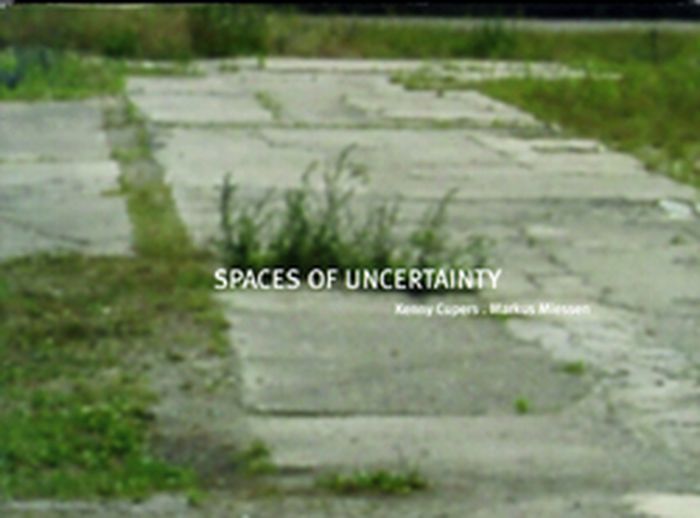
Spaces of uncertainty
Spaces of uncertainty
Actions:
Price:
$42.00
(available to order)
Summary:
"Spaces of Uncertainty" is a publication on issues of contemporary urban space, from the particular view of two young architects, Kenny Cupers and Markus Miessen. Their photographic and theoretic research constitutes a double movement, which opens up the traditional architectural gaze towards the social spectrum of urban spaces, while simultaneously offering an original(...)
$42.00
(available to order)
Summary:
"Spaces of Uncertainty" is a publication on issues of contemporary urban space, from the particular view of two young architects, Kenny Cupers and Markus Miessen. Their photographic and theoretic research constitutes a double movement, which opens up the traditional architectural gaze towards the social spectrum of urban spaces, while simultaneously offering an original(...)
Title:
Spaces of uncertainty
Actions:
Price:
$42.00
(available to order)
Summary:
"Spaces of Uncertainty" is a publication on issues of contemporary urban space, from the particular view of two young architects, Kenny Cupers and Markus Miessen. Their photographic and theoretic research constitutes a double movement, which opens up the traditional architectural gaze towards the social spectrum of urban spaces, while simultaneously offering an original theory of contemporary cultural practice. The issue of public space is one that crosses interdisciplinary boundaries and attracts high interest in the fields of architecture, urbanism, sociology and cultural studies. With Berlin as a case study for a globalised urban condition, the publication aims at a wide international public by providing a broadly conceived theory that approaches the city at the same time as a material phenomenon and as a social and philosophical idea. Public space in its traditional interpretations is unable to follow the heartbeat of today's rapidly changing city. Instead of adding force to an ongoing rhetorical discourse of loss, this publication acknowledges the existence of places beyond traditional definition. With a photographic essay on Berlin, it opens an unexpectedly contemporary view upon this agitated debate. Left with enormous amounts of infill and fallow land, Berlin is a city in which residual space and public space lose their definitions. As playgrounds for micro-political activities, permanent hiding-places or areas for temporary occupation, its residual spaces prove their necessity. Shy and unassuming, these very spaces of uncertainty show their value for public life in the contemporary city. With contributions by Margaret Crawford, Hilde Heynen, Paul Davies, Paul Halliday and Jürgen Mayer H.
Spaces of uncertainty
Actions:
Price:
$42.00
(available to order)
Summary:
"Spaces of Uncertainty" is a publication on issues of contemporary urban space, from the particular view of two young architects, Kenny Cupers and Markus Miessen. Their photographic and theoretic research constitutes a double movement, which opens up the traditional architectural gaze towards the social spectrum of urban spaces, while simultaneously offering an original theory of contemporary cultural practice. The issue of public space is one that crosses interdisciplinary boundaries and attracts high interest in the fields of architecture, urbanism, sociology and cultural studies. With Berlin as a case study for a globalised urban condition, the publication aims at a wide international public by providing a broadly conceived theory that approaches the city at the same time as a material phenomenon and as a social and philosophical idea. Public space in its traditional interpretations is unable to follow the heartbeat of today's rapidly changing city. Instead of adding force to an ongoing rhetorical discourse of loss, this publication acknowledges the existence of places beyond traditional definition. With a photographic essay on Berlin, it opens an unexpectedly contemporary view upon this agitated debate. Left with enormous amounts of infill and fallow land, Berlin is a city in which residual space and public space lose their definitions. As playgrounds for micro-political activities, permanent hiding-places or areas for temporary occupation, its residual spaces prove their necessity. Shy and unassuming, these very spaces of uncertainty show their value for public life in the contemporary city. With contributions by Margaret Crawford, Hilde Heynen, Paul Davies, Paul Halliday and Jürgen Mayer H.
Form:
books
books
Publication:
January 2002, Wuppertal
January 2002, Wuppertal
Subject:
Urban Theory
Urban Theory
Form:
books
books
Actions:
Price:
$42.00
(available in store)
Summary:
The focus of this issue of icamprint is on the 'market' for private archives. After all, collecting and managing the documentation of architecture history to conform to academic and scientific standards is a complex business, and a core task for most icam members. In this context, whether or not the 'originals' by star architects have an artistic value on the market is(...)
$42.00
(available in store)
Summary:
The focus of this issue of icamprint is on the 'market' for private archives. After all, collecting and managing the documentation of architecture history to conform to academic and scientific standards is a complex business, and a core task for most icam members. In this context, whether or not the 'originals' by star architects have an artistic value on the market is(...)
Title:
icam print 02 december 2007 International confederation of architectural museums
Actions:
Price:
$42.00
(available in store)
Summary:
The focus of this issue of icamprint is on the 'market' for private archives. After all, collecting and managing the documentation of architecture history to conform to academic and scientific standards is a complex business, and a core task for most icam members. In this context, whether or not the 'originals' by star architects have an artistic value on the market is only superficially a decisive issue. If one considers the lengths taken by the custodian's of Le Corbusier's estate to secure a suitable new home for what is without doubt a painting of artistic note, and so a market value and with it a place in an art history context, then it is worth waiting to see the place conceded on the art market one day to project-related sketches and drawings by contemporary star architects. The whole history of the conception and realisation of important works of architecture within a context of culture history ought to feature more prominently in the collection policy of icam members to ensure its suitability for research purposes. It remains to be seen what price is attributed to these comprehensive documents, these convolutes, in the competition between private collectors. This notwithstanding, the 'market' for collecting is just as crucial to icam members as the continuing debate on 'originals', and safeguarding them in times of digital architecture production. icamprint will focus increasingly on these and related issues, opening the discussion to all of the member institutions, to develop into an indispensable medium providing orientation on key issues for all icam members.
icam print 02 december 2007 International confederation of architectural museums
Actions:
Price:
$42.00
(available in store)
Summary:
The focus of this issue of icamprint is on the 'market' for private archives. After all, collecting and managing the documentation of architecture history to conform to academic and scientific standards is a complex business, and a core task for most icam members. In this context, whether or not the 'originals' by star architects have an artistic value on the market is only superficially a decisive issue. If one considers the lengths taken by the custodian's of Le Corbusier's estate to secure a suitable new home for what is without doubt a painting of artistic note, and so a market value and with it a place in an art history context, then it is worth waiting to see the place conceded on the art market one day to project-related sketches and drawings by contemporary star architects. The whole history of the conception and realisation of important works of architecture within a context of culture history ought to feature more prominently in the collection policy of icam members to ensure its suitability for research purposes. It remains to be seen what price is attributed to these comprehensive documents, these convolutes, in the competition between private collectors. This notwithstanding, the 'market' for collecting is just as crucial to icam members as the continuing debate on 'originals', and safeguarding them in times of digital architecture production. icamprint will focus increasingly on these and related issues, opening the discussion to all of the member institutions, to develop into an indispensable medium providing orientation on key issues for all icam members.
Form:
books
books
Publication:
October 2007, Vienna
October 2007, Vienna
Subject:
Museology
Museology


