


1822 Results
Form:
books
books
Actions:
Holdings:
Description:
366 pages : illustrations (chiefly color) ; 31 cm
Description:
366 pages : illustrations (chiefly color) ; 31 cm
Author:
Subject:
Publication:
New Haven : Yale University Press, ©2002.
New Haven : Yale University Press, ©2002.
Title:
Chinese architecture / English text edited and expanded by Nancy Steinhardt.
Actions:
Holdings:
Description:
366 pages : illustrations (chiefly color) ; 31 cm
Chinese architecture / English text edited and expanded by Nancy Steinhardt.
Actions:
Holdings:
Description:
366 pages : illustrations (chiefly color) ; 31 cm
Form:
books
books
Publication:
New Haven : Yale University Press, ©2002.
New Haven : Yale University Press, ©2002.
Author:
Subject:
Form:
books
books
Actions:
Price:
$34.50
(available to order)
Summary:
The new ARCAM POCKET, Amsterdam Architecture 2003-06 gives an overview of the projects built in Amsterdam in the period 2003-2006. A jury, comprising development adviser Eric Amory, architect Madeleine Maaskant and architectural theorist Roemer van Toorn, visited all of the buildings realized in this period and has selected 38. Successful insertion projects in existing(...)
$34.50
(available to order)
Summary:
The new ARCAM POCKET, Amsterdam Architecture 2003-06 gives an overview of the projects built in Amsterdam in the period 2003-2006. A jury, comprising development adviser Eric Amory, architect Madeleine Maaskant and architectural theorist Roemer van Toorn, visited all of the buildings realized in this period and has selected 38. Successful insertion projects in existing(...)
Title:
Amsterdam architecture, 2003-2006
Actions:
Price:
$34.50
(available to order)
Summary:
The new ARCAM POCKET, Amsterdam Architecture 2003-06 gives an overview of the projects built in Amsterdam in the period 2003-2006. A jury, comprising development adviser Eric Amory, architect Madeleine Maaskant and architectural theorist Roemer van Toorn, visited all of the buildings realized in this period and has selected 38. Successful insertion projects in existing urban areas such as the nineteenth-century ring, the Westelijke Tuinsteden (western garden suburbs), the Bijlmer and North Amsterdam alternate with projects in new urban areas such as IJburg, the Zuidas (South Axis) and Oostelijke Handelskade. What is striking is the diversity of the projects, ranging from the bridge Nesciobrug (Wilkinson Eyre) to IJburg, the new head office of DWR (Architectuurstudio Hertzberger), the Finish House near Bosbaan (Mecanoo) and the operating station Westerkeersluis (LUX Architecten), to housing complexes by well-known firms such as FARO Architekten, Claus en Kaan Architects, De Architekten Cie. and UN Studio. But also projects by Dedato, Evelo Vandenberg and Jef Reintjens. In an introduction, Roemer van Toorn describes what struck the jury during its tour of Amsterdam's latest buildings: the introverted residential environments, neo-historicism, gadget architecture, monumentality and the return of the urban block. The book contains a handy map and route descriptions for those who wish to go and judge the projects for themselves.
Amsterdam architecture, 2003-2006
Actions:
Price:
$34.50
(available to order)
Summary:
The new ARCAM POCKET, Amsterdam Architecture 2003-06 gives an overview of the projects built in Amsterdam in the period 2003-2006. A jury, comprising development adviser Eric Amory, architect Madeleine Maaskant and architectural theorist Roemer van Toorn, visited all of the buildings realized in this period and has selected 38. Successful insertion projects in existing urban areas such as the nineteenth-century ring, the Westelijke Tuinsteden (western garden suburbs), the Bijlmer and North Amsterdam alternate with projects in new urban areas such as IJburg, the Zuidas (South Axis) and Oostelijke Handelskade. What is striking is the diversity of the projects, ranging from the bridge Nesciobrug (Wilkinson Eyre) to IJburg, the new head office of DWR (Architectuurstudio Hertzberger), the Finish House near Bosbaan (Mecanoo) and the operating station Westerkeersluis (LUX Architecten), to housing complexes by well-known firms such as FARO Architekten, Claus en Kaan Architects, De Architekten Cie. and UN Studio. But also projects by Dedato, Evelo Vandenberg and Jef Reintjens. In an introduction, Roemer van Toorn describes what struck the jury during its tour of Amsterdam's latest buildings: the introverted residential environments, neo-historicism, gadget architecture, monumentality and the return of the urban block. The book contains a handy map and route descriptions for those who wish to go and judge the projects for themselves.
Form:
books
books
Publication:
April 2006, Amsterdam
April 2006, Amsterdam
Subject:
City Guides
City Guides
Form:
books
books
Actions:
Holdings:
Description:
xii, 250 pages : illustrations, maps ; 24 cm.
Description:
xii, 250 pages : illustrations, maps ; 24 cm.
Author:
Subject:
Publication:
Baltimore : Johns Hopkins University Press, 2000.
Baltimore : Johns Hopkins University Press, 2000.
Title:
Preserving cultural landscapes in America / edited by Arnold R. Alanen and Robert Z. Melnick ; foreword by Dolores Hayden.
Actions:
Holdings:
Description:
xii, 250 pages : illustrations, maps ; 24 cm.
Preserving cultural landscapes in America / edited by Arnold R. Alanen and Robert Z. Melnick ; foreword by Dolores Hayden.
Actions:
Holdings:
Description:
xii, 250 pages : illustrations, maps ; 24 cm.
Form:
books
books
Publication:
Baltimore : Johns Hopkins University Press, 2000.
Baltimore : Johns Hopkins University Press, 2000.
Author:
Subject:
Form:
books
books
Actions:
Price:
$85.00
(available to order)
Summary:
In this volume, photographer Roberto Schezen, together with Italian art historian Marcello Fagiolo, explores twelve villas and great gardens of the Lazio region around Rome, including Hadrian's Villa, Villa D'Este, Palazzo Farnese, Villa Lante, Villas Orsini, Fonte Papacqua, Castello Ruspoli, Palazzo Odescalchi, Villa Aldobrandini, Villa Grazioli, Giardino(...)
$85.00
(available to order)
Summary:
In this volume, photographer Roberto Schezen, together with Italian art historian Marcello Fagiolo, explores twelve villas and great gardens of the Lazio region around Rome, including Hadrian's Villa, Villa D'Este, Palazzo Farnese, Villa Lante, Villas Orsini, Fonte Papacqua, Castello Ruspoli, Palazzo Odescalchi, Villa Aldobrandini, Villa Grazioli, Giardino(...)
Title:
Roman gardens : villas of the countryside
Actions:
Price:
$85.00
(available to order)
Summary:
In this volume, photographer Roberto Schezen, together with Italian art historian Marcello Fagiolo, explores twelve villas and great gardens of the Lazio region around Rome, including Hadrian's Villa, Villa D'Este, Palazzo Farnese, Villa Lante, Villas Orsini, Fonte Papacqua, Castello Ruspoli, Palazzo Odescalchi, Villa Aldobrandini, Villa Grazioli, Giardino Caetani (Ninfa), and Giardino Portoghesi. "Roman Gardens: Villas of the Countryside" is the first in a two-volume set. "Roman Gardens: Villas of the City" will be published in 1999.
Roman gardens : villas of the countryside
Actions:
Price:
$85.00
(available to order)
Summary:
In this volume, photographer Roberto Schezen, together with Italian art historian Marcello Fagiolo, explores twelve villas and great gardens of the Lazio region around Rome, including Hadrian's Villa, Villa D'Este, Palazzo Farnese, Villa Lante, Villas Orsini, Fonte Papacqua, Castello Ruspoli, Palazzo Odescalchi, Villa Aldobrandini, Villa Grazioli, Giardino Caetani (Ninfa), and Giardino Portoghesi. "Roman Gardens: Villas of the Countryside" is the first in a two-volume set. "Roman Gardens: Villas of the City" will be published in 1999.
Form:
books
books
Publication:
September 1997, New York
September 1997, New York
Subject:
Gardens
Gardens
Form:
books
books
Price:
$78.95
(available to order)
Summary:
"Landscape architecture and town planning in the Netherlands 99-01" is the fourth in the series of biennal publications reflecting current developments in the disciplines that shape the planned environment in the Netherlands. An independant committee consisting of Tineke Blok, Albert Fien, Alies Rommerts, Max van Rooy, and Harm Veenenbos has selected almost forty(...)
$78.95
(available to order)
Summary:
"Landscape architecture and town planning in the Netherlands 99-01" is the fourth in the series of biennal publications reflecting current developments in the disciplines that shape the planned environment in the Netherlands. An independant committee consisting of Tineke Blok, Albert Fien, Alies Rommerts, Max van Rooy, and Harm Veenenbos has selected almost forty(...)
Title:
Landscape architecture and town planning in the Netherlands 99-01
Actions:
Price:
$78.95
(available to order)
Summary:
"Landscape architecture and town planning in the Netherlands 99-01" is the fourth in the series of biennal publications reflecting current developments in the disciplines that shape the planned environment in the Netherlands. An independant committee consisting of Tineke Blok, Albert Fien, Alies Rommerts, Max van Rooy, and Harm Veenenbos has selected almost forty projects that is one way or another represent best practice: from garden restaurant to skatepark, from courtyard to landfill, from traffic interchange to network city. The selection is preceded by a number of analytical and critical essays on topical subjects.
Landscape architecture and town planning in the Netherlands 99-01
Actions:
Price:
$78.95
(available to order)
Summary:
"Landscape architecture and town planning in the Netherlands 99-01" is the fourth in the series of biennal publications reflecting current developments in the disciplines that shape the planned environment in the Netherlands. An independant committee consisting of Tineke Blok, Albert Fien, Alies Rommerts, Max van Rooy, and Harm Veenenbos has selected almost forty projects that is one way or another represent best practice: from garden restaurant to skatepark, from courtyard to landfill, from traffic interchange to network city. The selection is preceded by a number of analytical and critical essays on topical subjects.
Form:
books
books
Publication:
December 2002, Bussum
December 2002, Bussum
Subject:
Gardens
Gardens
Form:
books
books
Price:
$94.00
(available to order)
Summary:
Gilles Clément confronts the homogenizing effects of globalization with the diversity of life. As a trained gardener, he places our current knowledge of plant utilization and ecology in the service of the "planetary garden," in which plant species from a tremendous variety of cultures are collected, composed, and carefully overseen in their development by the landscape(...)
$94.00
(available to order)
Summary:
Gilles Clément confronts the homogenizing effects of globalization with the diversity of life. As a trained gardener, he places our current knowledge of plant utilization and ecology in the service of the "planetary garden," in which plant species from a tremendous variety of cultures are collected, composed, and carefully overseen in their development by the landscape(...)
Subject:
Landscape Architecture, Monographs
Landscape Architecture, Monographs
Publication:
October 2008, Basel, Boston, Berlin
October 2008, Basel, Boston, Berlin
Title:
Planetary gardens: the landscape architecture of Gilles Clément
Actions:
Price:
$94.00
(available to order)
Summary:
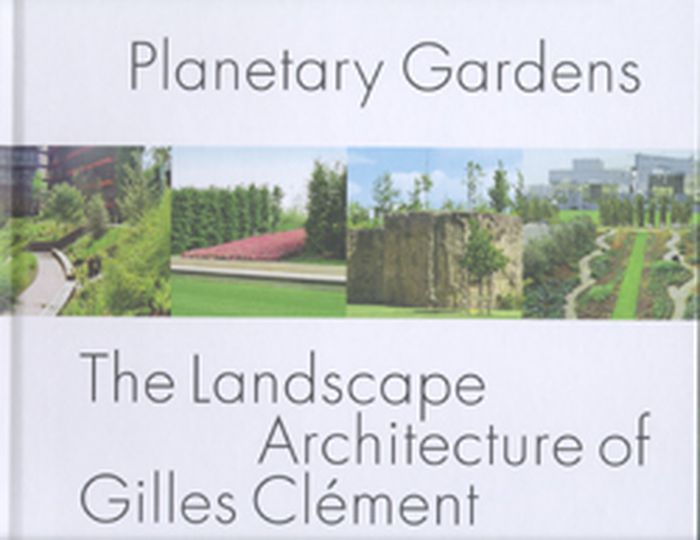
Gilles Clément confronts the homogenizing effects of globalization with the diversity of life. As a trained gardener, he places our current knowledge of plant utilization and ecology in the service of the "planetary garden," in which plant species from a tremendous variety of cultures are collected, composed, and carefully overseen in their development by the landscape designer. Clément has taken this approach, which was developed for private gardens, and worked with celebrated architects – most recently, Jean Nouvel – to apply it in his large city parks, including Parc Citroën, the park at the Grande Arche de La Défense, and the museum park at the Musée du Quai Branly in Paris. The high artistic caliber of his designs is attested by exhibitions and installations at the Canadian Centre for Architecture CCA in Montreal and the Centre Pompidou, where they stand beside the work of Daniel Buren, Nan Goldin, and others. Gilles Clément has been presenting his contribution to landscape architecture for decades in more than thirty publications and numerous lectures throughout the world. This is the first comprehensive English-language monograph on his work.
Planetary gardens: the landscape architecture of Gilles Clément
Actions:
Price:
$94.00
(available to order)
Summary:
Gilles Clément confronts the homogenizing effects of globalization with the diversity of life. As a trained gardener, he places our current knowledge of plant utilization and ecology in the service of the "planetary garden," in which plant species from a tremendous variety of cultures are collected, composed, and carefully overseen in their development by the landscape designer. Clément has taken this approach, which was developed for private gardens, and worked with celebrated architects – most recently, Jean Nouvel – to apply it in his large city parks, including Parc Citroën, the park at the Grande Arche de La Défense, and the museum park at the Musée du Quai Branly in Paris. The high artistic caliber of his designs is attested by exhibitions and installations at the Canadian Centre for Architecture CCA in Montreal and the Centre Pompidou, where they stand beside the work of Daniel Buren, Nan Goldin, and others. Gilles Clément has been presenting his contribution to landscape architecture for decades in more than thirty publications and numerous lectures throughout the world. This is the first comprehensive English-language monograph on his work.
Form:
books
books
Publication:
October 2008, Basel, Boston, Berlin
October 2008, Basel, Boston, Berlin
Subject:
Landscape Architecture, Monographs
Landscape Architecture, Monographs
Form:
books
books
Actions:
Price:
$58.00
(available to order)
Summary:
An intimate look at the personal garden of the Dutch landscape designer renowned for his plantings at the High Line in New York City, and Lurie Garden at Chicago’s Millennium Park. Hummelo—near the village of the same name in Gelderland in the eastern Netherlands—is visited by thousands of gardeners seeking inspiration each year. It is Piet Oudolf’s home, his personal(...)
$58.00
(available to order)
Summary:
An intimate look at the personal garden of the Dutch landscape designer renowned for his plantings at the High Line in New York City, and Lurie Garden at Chicago’s Millennium Park. Hummelo—near the village of the same name in Gelderland in the eastern Netherlands—is visited by thousands of gardeners seeking inspiration each year. It is Piet Oudolf’s home, his personal(...)
Subject:
Landscape Architecture, Monographs
Landscape Architecture, Monographs
Publication:
May 2015
May 2015
Title:
Oudolf Hummelo: a journey through a plantman's life
Actions:
Price:
$58.00
(available to order)
Summary:
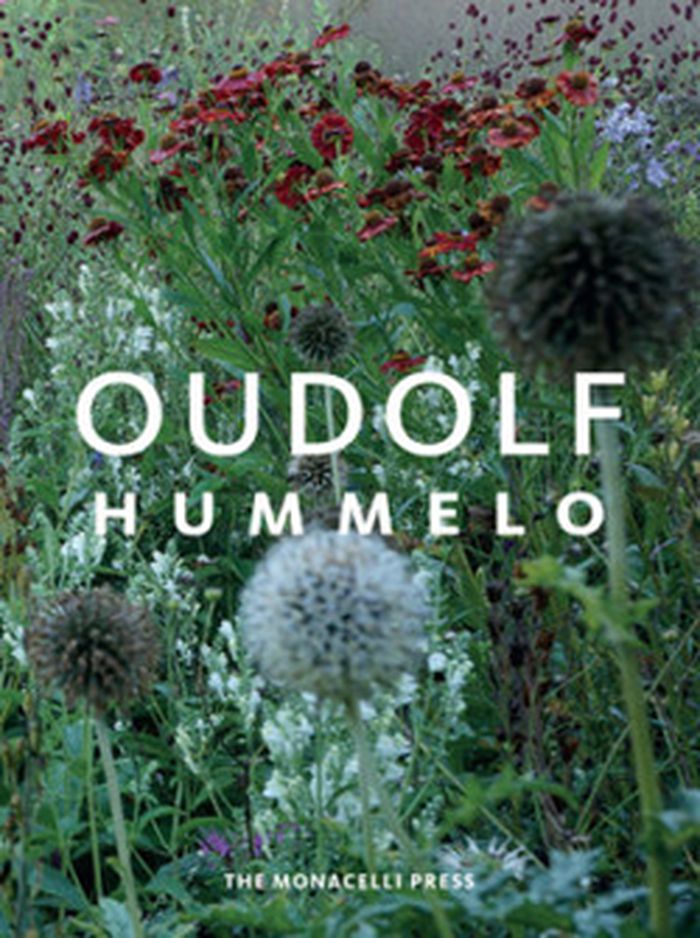
An intimate look at the personal garden of the Dutch landscape designer renowned for his plantings at the High Line in New York City, and Lurie Garden at Chicago’s Millennium Park. Hummelo—near the village of the same name in Gelderland in the eastern Netherlands—is visited by thousands of gardeners seeking inspiration each year. It is Piet Oudolf’s home, his personal garden laboratory, a former nursery run by his wife Anja, and the place where he first tested new designs and created the new varieties of perennials that are now widely available.
Oudolf Hummelo: a journey through a plantman's life
Actions:
Price:
$58.00
(available to order)
Summary:
An intimate look at the personal garden of the Dutch landscape designer renowned for his plantings at the High Line in New York City, and Lurie Garden at Chicago’s Millennium Park. Hummelo—near the village of the same name in Gelderland in the eastern Netherlands—is visited by thousands of gardeners seeking inspiration each year. It is Piet Oudolf’s home, his personal garden laboratory, a former nursery run by his wife Anja, and the place where he first tested new designs and created the new varieties of perennials that are now widely available.
Form:
books
books
Publication:
May 2015
May 2015
Subject:
Landscape Architecture, Monographs
Landscape Architecture, Monographs
Form:
books
books
Actions:
Price:
$49.95
(available to order)
Summary:
Public parks are among the most important open spaces in our cities, and contribute decisively to their character. They fulfil ecological, social and urban design requirements, and upgrade adjacent neighbourhoods and even whole city districts. New parks are being built all over Europe, in the hearts of cities or out in the periphery, as in the case of Invalidenpark in(...)
$49.95
(available to order)
Summary:
Public parks are among the most important open spaces in our cities, and contribute decisively to their character. They fulfil ecological, social and urban design requirements, and upgrade adjacent neighbourhoods and even whole city districts. New parks are being built all over Europe, in the hearts of cities or out in the periphery, as in the case of Invalidenpark in(...)
Subject:
Gardens
Gardens
Publication:
October 2002, Basel
October 2002, Basel
Title:
Parks : green urban spaces in European cities
Actions:
Price:
$49.95
(available to order)
Summary:
Public parks are among the most important open spaces in our cities, and contribute decisively to their character. They fulfil ecological, social and urban design requirements, and upgrade adjacent neighbourhoods and even whole city districts. New parks are being built all over Europe, in the hearts of cities or out in the periphery, as in the case of Invalidenpark in Berlin and Thames Barrier Park in London, respectively. Some, such as Park André-Citroën, Paris, serve purely recreational purposes. Others, namely the sculpture garden of the Kröller-Muller Museum Park in the Netherland, are devoted to art or to botanic abundance, as the Botanical Garden in Barcelona. The creation of such extensive new green spaces is always the subject of public and professional discourse, no matter whether this concerns La Villette in Paris, Duisburg-Nord Lanscape Park in the Ruhr, or the new park at Munich's old airport in Riem. According, the compact survey is rounded off by theoretical discussion. Based on essays published in "Topos - European landscape magazine" between 1993 and today, the resulting collection of familiar and less-known parks from many European countries provides an excellent overview of current approaches to park and park design.
Parks : green urban spaces in European cities
Actions:
Price:
$49.95
(available to order)
Summary:
Public parks are among the most important open spaces in our cities, and contribute decisively to their character. They fulfil ecological, social and urban design requirements, and upgrade adjacent neighbourhoods and even whole city districts. New parks are being built all over Europe, in the hearts of cities or out in the periphery, as in the case of Invalidenpark in Berlin and Thames Barrier Park in London, respectively. Some, such as Park André-Citroën, Paris, serve purely recreational purposes. Others, namely the sculpture garden of the Kröller-Muller Museum Park in the Netherland, are devoted to art or to botanic abundance, as the Botanical Garden in Barcelona. The creation of such extensive new green spaces is always the subject of public and professional discourse, no matter whether this concerns La Villette in Paris, Duisburg-Nord Lanscape Park in the Ruhr, or the new park at Munich's old airport in Riem. According, the compact survey is rounded off by theoretical discussion. Based on essays published in "Topos - European landscape magazine" between 1993 and today, the resulting collection of familiar and less-known parks from many European countries provides an excellent overview of current approaches to park and park design.
Form:
books
books
Publication:
October 2002, Basel
October 2002, Basel
Subject:
Gardens
Gardens
Form:
books
books
Actions:
Holdings:
Description:
lxi, 190 pages : illustrations ; 23 cm
Description:
lxi, 190 pages : illustrations ; 23 cm
Author:
Subject:
Publication:
Minneapolis : University of Minnesota Press, [2014], ©2014
Minneapolis : University of Minnesota Press, [2014], ©2014
Title:
Toward an architecture of enjoyment / Henri Lefebvre ; edited by Łukasz Stanek ; translated by Robert Bononno.
Actions:
Holdings:
Description:
lxi, 190 pages : illustrations ; 23 cm
Toward an architecture of enjoyment / Henri Lefebvre ; edited by Łukasz Stanek ; translated by Robert Bononno.
Actions:
Holdings:
Description:
lxi, 190 pages : illustrations ; 23 cm
Form:
books
books
Publication:
Minneapolis : University of Minnesota Press, [2014], ©2014
Minneapolis : University of Minnesota Press, [2014], ©2014
Author:
Subject:
Form:
books
books
Actions:
Price:
$63.95
(available to order)
Summary:
Conceived as an experiment that would apply the new "science" of city planning to a suburban setting, Forest Hills Gardens was created by the Russell Sage Foundation to provide housing for middle-class commuters as an alternative to cramped flats in New York City. Although it has long been recognized as one of the most influential planned communities in the United(...)
$63.95
(available to order)
Summary:
Conceived as an experiment that would apply the new "science" of city planning to a suburban setting, Forest Hills Gardens was created by the Russell Sage Foundation to provide housing for middle-class commuters as an alternative to cramped flats in New York City. Although it has long been recognized as one of the most influential planned communities in the United(...)
Title:
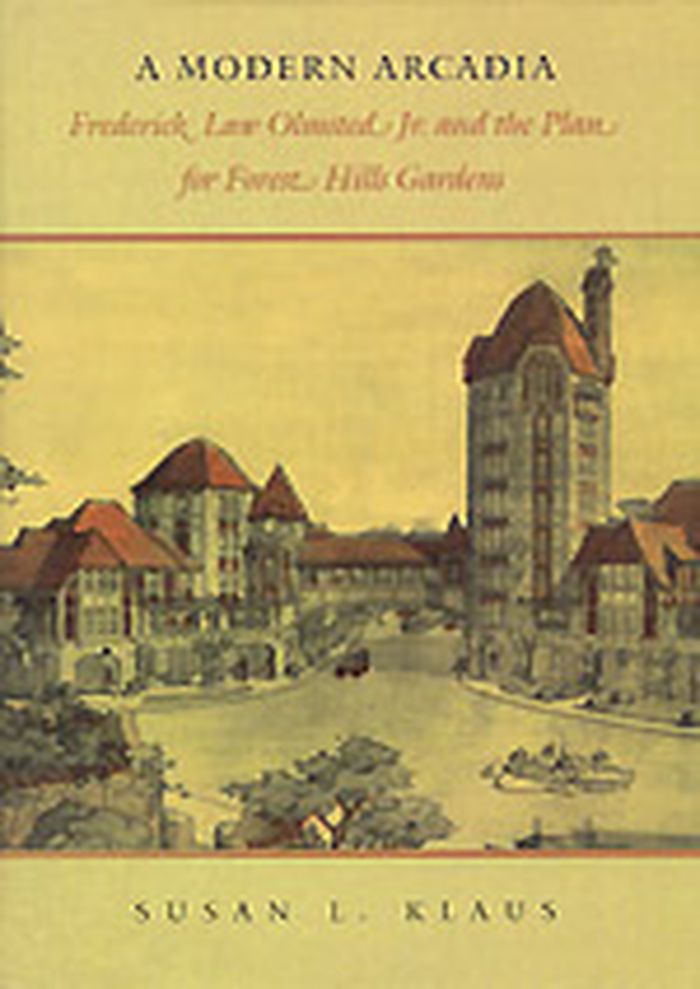
A modern Arcadia : Frederick Law Olmsted Jr. & the plan for Forest Hill Gardens
Actions:
Price:
$63.95
(available to order)
Summary:
Conceived as an experiment that would apply the new "science" of city planning to a suburban setting, Forest Hills Gardens was created by the Russell Sage Foundation to provide housing for middle-class commuters as an alternative to cramped flats in New York City. Although it has long been recognized as one of the most influential planned communities in the United States, this is the first time Forest Hills Gardens has been the subject of a book. Susan L. Klaus's fully illustrated history chronicles the creation of the 142-acre development from its inception in 1909 through its first two decades, offering critical insights into American planning history, landscape architecture, and the social and economic forces that shaped housing in the Progressive Era. Klaus focuses particularly on the creative genius of Frederick Law Olmsted Jr., who served as planner and landscape architect for the project. Drawing on his father's visionary ideas but developing his own perspective, the younger Olmsted redefined planning for the modern era and became one of the founders of the profession of city planning in the United States.
A modern Arcadia : Frederick Law Olmsted Jr. & the plan for Forest Hill Gardens
Actions:
Price:
$63.95
(available to order)
Summary:
Conceived as an experiment that would apply the new "science" of city planning to a suburban setting, Forest Hills Gardens was created by the Russell Sage Foundation to provide housing for middle-class commuters as an alternative to cramped flats in New York City. Although it has long been recognized as one of the most influential planned communities in the United States, this is the first time Forest Hills Gardens has been the subject of a book. Susan L. Klaus's fully illustrated history chronicles the creation of the 142-acre development from its inception in 1909 through its first two decades, offering critical insights into American planning history, landscape architecture, and the social and economic forces that shaped housing in the Progressive Era. Klaus focuses particularly on the creative genius of Frederick Law Olmsted Jr., who served as planner and landscape architect for the project. Drawing on his father's visionary ideas but developing his own perspective, the younger Olmsted redefined planning for the modern era and became one of the founders of the profession of city planning in the United States.
Form:
books
books
Publication:
January 1900, Amherst / Boston
January 1900, Amherst / Boston
Subject:
Gardens
Gardens


