


4522 Results
Form:
drawings
drawings
Actions:
Reference number:
DR1988:0123
Description:
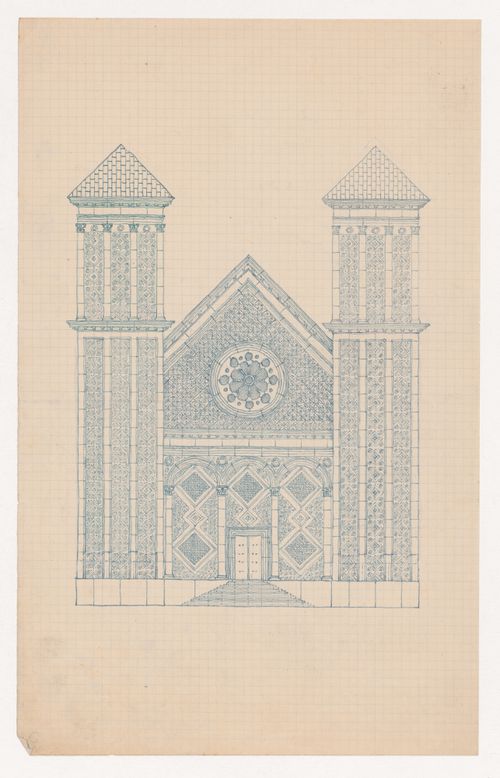
- Design for the façade of a building in a style reminiscent of the Romanesque, with round arches and geometric patterns. The building resembles a church in the tripartite division of its façade into a central section flanked by two towers. The relatively small door suggests that the building is of fantastically large proportions.
DR1988:0123
Description:
- Design for the façade of a building in a style reminiscent of the Romanesque, with round arches and geometric patterns. The building resembles a church in the tripartite division of its façade into a central section flanked by two towers. The relatively small door suggests that the building is of fantastically large proportions.
People:
Subject:
architecture
architecture
Date:
1925 ?
1925 ?
Title:
Design for the west façade of a large church in a Romanesque-inspired style
Actions:
DR1988:0123
Description:
- Design for the façade of a building in a style reminiscent of the Romanesque, with round arches and geometric patterns. The building resembles a church in the tripartite division of its façade into a central section flanked by two towers. The relatively small door suggests that the building is of fantastically large proportions.
Design for the west façade of a large church in a Romanesque-inspired style
Actions:
DR1988:0123
Description:
- Design for the façade of a building in a style reminiscent of the Romanesque, with round arches and geometric patterns. The building resembles a church in the tripartite division of its façade into a central section flanked by two towers. The relatively small door suggests that the building is of fantastically large proportions.
Form:
drawings
drawings
Date:
1925 ?
1925 ?
People:
Subject:
architecture
architecture
Form:
archives
Level of archival description:
Fonds
archives
Level of archival description:
Fonds
Title:
Myron Goldsmith fonds
Myron Goldsmith fonds
Reference number:
AP032
Synopsis:
The Myron Goldsmith fonds consists primarily of 30.4 metres of textual documents, including notebooks, research and reading notes, travel journals, documentation files, correspondence, sketchbooks and personal and office papers. There are also 2,800 original drawings and prints, 10,000 photographs and slides, and 5 architectural models. The material ranges in date from c.1933 to 1996. In shedding light on Goldsmith's student years and working career, the fonds' rich collection of documents also provides material on activities in the architectural profession, architectural education, and architectural and engineering theory and building techniques through the 1940s to the 1990s.
AP032
Synopsis:
The Myron Goldsmith fonds consists primarily of 30.4 metres of textual documents, including notebooks, research and reading notes, travel journals, documentation files, correspondence, sketchbooks and personal and office papers. There are also 2,800 original drawings and prints, 10,000 photographs and slides, and 5 architectural models. The material ranges in date from c.1933 to 1996. In shedding light on Goldsmith's student years and working career, the fonds' rich collection of documents also provides material on activities in the architectural profession, architectural education, and architectural and engineering theory and building techniques through the 1940s to the 1990s.
People:
Date:
1933-1996
1933-1996
Title:
Myron Goldsmith fonds
Actions:
AP032
Synopsis:
The Myron Goldsmith fonds consists primarily of 30.4 metres of textual documents, including notebooks, research and reading notes, travel journals, documentation files, correspondence, sketchbooks and personal and office papers. There are also 2,800 original drawings and prints, 10,000 photographs and slides, and 5 architectural models. The material ranges in date from c.1933 to 1996. In shedding light on Goldsmith's student years and working career, the fonds' rich collection of documents also provides material on activities in the architectural profession, architectural education, and architectural and engineering theory and building techniques through the 1940s to the 1990s.
Myron Goldsmith fonds
Actions:
AP032
Synopsis:
The Myron Goldsmith fonds consists primarily of 30.4 metres of textual documents, including notebooks, research and reading notes, travel journals, documentation files, correspondence, sketchbooks and personal and office papers. There are also 2,800 original drawings and prints, 10,000 photographs and slides, and 5 architectural models. The material ranges in date from c.1933 to 1996. In shedding light on Goldsmith's student years and working career, the fonds' rich collection of documents also provides material on activities in the architectural profession, architectural education, and architectural and engineering theory and building techniques through the 1940s to the 1990s.
Form:
archives
Level of archival description:
Fonds
archives
Level of archival description:
Fonds
Date:
1933-1996
1933-1996
People:
Form:
textual records
textual records
Actions:
Reference number:
ARCH260032
Description:
Proposals in the United States and Canada, including correspondence, concerning: Suffolk County Courthouse; North Carolina State University; Philadelphia World Forum Project (Harborplace Square); Pittsburgh evolving space project; Diker residence, Cannecticut; Rockville, Maryville Treatment Centres; Lincoln Performing Center for the Arts, New York; New York State Urban Development Corporation; 60 Wall Street, New York; New York Trump Tower; West Palm Beach, Florida, Center for the Performing Arts; Russell House, Tacoma Washington (includes colour photos); Tampa, Florida, University Library; Hotel, Vail, Colorado; Addition to Corcoran Gallery, Washington, DC; State Office Building, Columbus, Ohio. Canada: city of Oshawa interior design review; General Motors Head office, Oshawa; Robert McLaughlin Gallery, Oshawa; Roy Thompson Hall; Bank of Canada, Ottawa; National Museum of Man, Ottawa; Saudi Arabian Embassy, Ottawa; Saint Peter's Lutheran Church, Ottawa; Mosque (Saudi Embassy), Ottawa.
ARCH260032
Description:
Proposals in the United States and Canada, including correspondence, concerning: Suffolk County Courthouse; North Carolina State University; Philadelphia World Forum Project (Harborplace Square); Pittsburgh evolving space project; Diker residence, Cannecticut; Rockville, Maryville Treatment Centres; Lincoln Performing Center for the Arts, New York; New York State Urban Development Corporation; 60 Wall Street, New York; New York Trump Tower; West Palm Beach, Florida, Center for the Performing Arts; Russell House, Tacoma Washington (includes colour photos); Tampa, Florida, University Library; Hotel, Vail, Colorado; Addition to Corcoran Gallery, Washington, DC; State Office Building, Columbus, Ohio. Canada: city of Oshawa interior design review; General Motors Head office, Oshawa; Robert McLaughlin Gallery, Oshawa; Roy Thompson Hall; Bank of Canada, Ottawa; National Museum of Man, Ottawa; Saudi Arabian Embassy, Ottawa; Saint Peter's Lutheran Church, Ottawa; Mosque (Saudi Embassy), Ottawa.
People:
Date:
1980-1986
1980-1986
Title:
Proposals in the United States and Canada, including correspondence
Actions:
ARCH260032
Description:
Proposals in the United States and Canada, including correspondence, concerning: Suffolk County Courthouse; North Carolina State University; Philadelphia World Forum Project (Harborplace Square); Pittsburgh evolving space project; Diker residence, Cannecticut; Rockville, Maryville Treatment Centres; Lincoln Performing Center for the Arts, New York; New York State Urban Development Corporation; 60 Wall Street, New York; New York Trump Tower; West Palm Beach, Florida, Center for the Performing Arts; Russell House, Tacoma Washington (includes colour photos); Tampa, Florida, University Library; Hotel, Vail, Colorado; Addition to Corcoran Gallery, Washington, DC; State Office Building, Columbus, Ohio. Canada: city of Oshawa interior design review; General Motors Head office, Oshawa; Robert McLaughlin Gallery, Oshawa; Roy Thompson Hall; Bank of Canada, Ottawa; National Museum of Man, Ottawa; Saudi Arabian Embassy, Ottawa; Saint Peter's Lutheran Church, Ottawa; Mosque (Saudi Embassy), Ottawa.
Proposals in the United States and Canada, including correspondence
Actions:
ARCH260032
Description:
Proposals in the United States and Canada, including correspondence, concerning: Suffolk County Courthouse; North Carolina State University; Philadelphia World Forum Project (Harborplace Square); Pittsburgh evolving space project; Diker residence, Cannecticut; Rockville, Maryville Treatment Centres; Lincoln Performing Center for the Arts, New York; New York State Urban Development Corporation; 60 Wall Street, New York; New York Trump Tower; West Palm Beach, Florida, Center for the Performing Arts; Russell House, Tacoma Washington (includes colour photos); Tampa, Florida, University Library; Hotel, Vail, Colorado; Addition to Corcoran Gallery, Washington, DC; State Office Building, Columbus, Ohio. Canada: city of Oshawa interior design review; General Motors Head office, Oshawa; Robert McLaughlin Gallery, Oshawa; Roy Thompson Hall; Bank of Canada, Ottawa; National Museum of Man, Ottawa; Saudi Arabian Embassy, Ottawa; Saint Peter's Lutheran Church, Ottawa; Mosque (Saudi Embassy), Ottawa.
Form:
textual records
textual records
Date:
1980-1986
1980-1986
People:
Level of archival description:
Project
Project
Reference number:
AP178.S1.1991.PR05
Description:
This project series documents the Urban plan for the city centre of Montreuil, France, also known as Coeur de ville. The office archivist identified this project as 24/90. The office assigned the date 1991 to this project. During the sixties and the seventies, the construction of a mall and office towers created a rupture in the downtown of Montreuil and caused traffic problems. Siza was chosen to find architectural and urban solutions to these challenges. Luis Mendes started as a collaborator at Siza's office and finished as the architect in charge for this project. Several other architects helped during the 20 years of the Coeur de ville project, including Laurent Beaudoin, Emanuelle Beaudoin, Michel Corajoud and Christian Devillers. The concept of substitution urbanization was introduced, in order to repair the rupture created in the sixties and seventies and to introduce urban continuity in Montreuil. The Coeur de ville project proposal included a new spacial reorganization, the Victor Hugo housing building, a theater, and public spaces. In 2006, the buildings C1 and C2 were built. The master plan purposes were to readapt the area to the singularity of the territory, reintroduce the cultural and commercial functions of the area, and to create connections between the districts. Due to a change of municipal administration in the middle of the project, only part of the plan was realized, including two housing buildings and part of the urban renewal. Siza received the Grand Prix spécial du jury de l'urbanisme in 2005 for his contribution to the Coeur de Ville project This project series includes two subseries. Plano Centre Ville de Montreuil and Edificio de Habitaçäo Montreuil (Hamo). The Plano Centre Ville de Montreuil documents the master plans and general documentations of the project. The Edificio de Habitaçäo Montreuil documents the housing project of Siza in Montreuil.
AP178.S1.1991.PR05
Description:
This project series documents the Urban plan for the city centre of Montreuil, France, also known as Coeur de ville. The office archivist identified this project as 24/90. The office assigned the date 1991 to this project. During the sixties and the seventies, the construction of a mall and office towers created a rupture in the downtown of Montreuil and caused traffic problems. Siza was chosen to find architectural and urban solutions to these challenges. Luis Mendes started as a collaborator at Siza's office and finished as the architect in charge for this project. Several other architects helped during the 20 years of the Coeur de ville project, including Laurent Beaudoin, Emanuelle Beaudoin, Michel Corajoud and Christian Devillers. The concept of substitution urbanization was introduced, in order to repair the rupture created in the sixties and seventies and to introduce urban continuity in Montreuil. The Coeur de ville project proposal included a new spacial reorganization, the Victor Hugo housing building, a theater, and public spaces. In 2006, the buildings C1 and C2 were built. The master plan purposes were to readapt the area to the singularity of the territory, reintroduce the cultural and commercial functions of the area, and to create connections between the districts. Due to a change of municipal administration in the middle of the project, only part of the plan was realized, including two housing buildings and part of the urban renewal. Siza received the Grand Prix spécial du jury de l'urbanisme in 2005 for his contribution to the Coeur de Ville project This project series includes two subseries. Plano Centre Ville de Montreuil and Edificio de Habitaçäo Montreuil (Hamo). The Plano Centre Ville de Montreuil documents the master plans and general documentations of the project. The Edificio de Habitaçäo Montreuil documents the housing project of Siza in Montreuil.
People:
Date:
1991-2003
1991-2003
Title:
Coeur de ville, Montreuil, France, (1991)
Actions:
AP178.S1.1991.PR05
Description:
This project series documents the Urban plan for the city centre of Montreuil, France, also known as Coeur de ville. The office archivist identified this project as 24/90. The office assigned the date 1991 to this project. During the sixties and the seventies, the construction of a mall and office towers created a rupture in the downtown of Montreuil and caused traffic problems. Siza was chosen to find architectural and urban solutions to these challenges. Luis Mendes started as a collaborator at Siza's office and finished as the architect in charge for this project. Several other architects helped during the 20 years of the Coeur de ville project, including Laurent Beaudoin, Emanuelle Beaudoin, Michel Corajoud and Christian Devillers. The concept of substitution urbanization was introduced, in order to repair the rupture created in the sixties and seventies and to introduce urban continuity in Montreuil. The Coeur de ville project proposal included a new spacial reorganization, the Victor Hugo housing building, a theater, and public spaces. In 2006, the buildings C1 and C2 were built. The master plan purposes were to readapt the area to the singularity of the territory, reintroduce the cultural and commercial functions of the area, and to create connections between the districts. Due to a change of municipal administration in the middle of the project, only part of the plan was realized, including two housing buildings and part of the urban renewal. Siza received the Grand Prix spécial du jury de l'urbanisme in 2005 for his contribution to the Coeur de Ville project This project series includes two subseries. Plano Centre Ville de Montreuil and Edificio de Habitaçäo Montreuil (Hamo). The Plano Centre Ville de Montreuil documents the master plans and general documentations of the project. The Edificio de Habitaçäo Montreuil documents the housing project of Siza in Montreuil.
Coeur de ville, Montreuil, France, (1991)
Actions:
AP178.S1.1991.PR05
Description:
This project series documents the Urban plan for the city centre of Montreuil, France, also known as Coeur de ville. The office archivist identified this project as 24/90. The office assigned the date 1991 to this project. During the sixties and the seventies, the construction of a mall and office towers created a rupture in the downtown of Montreuil and caused traffic problems. Siza was chosen to find architectural and urban solutions to these challenges. Luis Mendes started as a collaborator at Siza's office and finished as the architect in charge for this project. Several other architects helped during the 20 years of the Coeur de ville project, including Laurent Beaudoin, Emanuelle Beaudoin, Michel Corajoud and Christian Devillers. The concept of substitution urbanization was introduced, in order to repair the rupture created in the sixties and seventies and to introduce urban continuity in Montreuil. The Coeur de ville project proposal included a new spacial reorganization, the Victor Hugo housing building, a theater, and public spaces. In 2006, the buildings C1 and C2 were built. The master plan purposes were to readapt the area to the singularity of the territory, reintroduce the cultural and commercial functions of the area, and to create connections between the districts. Due to a change of municipal administration in the middle of the project, only part of the plan was realized, including two housing buildings and part of the urban renewal. Siza received the Grand Prix spécial du jury de l'urbanisme in 2005 for his contribution to the Coeur de Ville project This project series includes two subseries. Plano Centre Ville de Montreuil and Edificio de Habitaçäo Montreuil (Hamo). The Plano Centre Ville de Montreuil documents the master plans and general documentations of the project. The Edificio de Habitaçäo Montreuil documents the housing project of Siza in Montreuil.
Level of archival description:
Project
Project
Date:
1991-2003
1991-2003
People:
Form:
photographs
photographs
Reference number:
ARCH276526
Description:
3 slide trays - documentation for projects filed under, "Housing." Includes: Oppenheimer Lodge, Manoah Ivy Development, Songhees Housing, Whistler Mountain Condominiums, Medina Housing Project, Sawaber Housing Development, Ghajere Ski Condominiums, Nelson Towers, Anchorage Hotel, Wilshire Gardens, Fort Launderdale Hotel, Victoria Hotel and others.
ARCH276526
Description:
3 slide trays - documentation for projects filed under, "Housing." Includes: Oppenheimer Lodge, Manoah Ivy Development, Songhees Housing, Whistler Mountain Condominiums, Medina Housing Project, Sawaber Housing Development, Ghajere Ski Condominiums, Nelson Towers, Anchorage Hotel, Wilshire Gardens, Fort Launderdale Hotel, Victoria Hotel and others.
People:
Date:
1970s-1980s
1970s-1980s
Title:
Documentation for various housing projects
Actions:
ARCH276526
Description:
3 slide trays - documentation for projects filed under, "Housing." Includes: Oppenheimer Lodge, Manoah Ivy Development, Songhees Housing, Whistler Mountain Condominiums, Medina Housing Project, Sawaber Housing Development, Ghajere Ski Condominiums, Nelson Towers, Anchorage Hotel, Wilshire Gardens, Fort Launderdale Hotel, Victoria Hotel and others.
Documentation for various housing projects
Actions:
ARCH276526
Description:
3 slide trays - documentation for projects filed under, "Housing." Includes: Oppenheimer Lodge, Manoah Ivy Development, Songhees Housing, Whistler Mountain Condominiums, Medina Housing Project, Sawaber Housing Development, Ghajere Ski Condominiums, Nelson Towers, Anchorage Hotel, Wilshire Gardens, Fort Launderdale Hotel, Victoria Hotel and others.
Form:
photographs
photographs
Date:
1970s-1980s
1970s-1980s
People:
Form:
photographs
photographs
Actions:
Reference number:
PH1980:0048.02:037
Description:
- Suzanne K. Williamson indicates that this photograph shows the shelter or third enclosure and the rear of towers "J" and "K" of the Krak de Chevaliers Castle, Ottoman Empire (now Syria) (Nov. 1986). Further research should include verification of this information and identification of the source(s) from which it was obtained.
PH1980:0048.02:037
Description:
- Suzanne K. Williamson indicates that this photograph shows the shelter or third enclosure and the rear of towers "J" and "K" of the Krak de Chevaliers Castle, Ottoman Empire (now Syria) (Nov. 1986). Further research should include verification of this information and identification of the source(s) from which it was obtained.
People:
Subject:
architecture, military
architecture, military
Date:
1859-1860
1859-1860
Title:
View of the ruins of the keep or the third enclosure of the Krak of the Knights Castle, Ottoman Empire (now in Syria)
Actions:
PH1980:0048.02:037
Description:
- Suzanne K. Williamson indicates that this photograph shows the shelter or third enclosure and the rear of towers "J" and "K" of the Krak de Chevaliers Castle, Ottoman Empire (now Syria) (Nov. 1986). Further research should include verification of this information and identification of the source(s) from which it was obtained.
View of the ruins of the keep or the third enclosure of the Krak of the Knights Castle, Ottoman Empire (now in Syria)
Actions:
PH1980:0048.02:037
Description:
- Suzanne K. Williamson indicates that this photograph shows the shelter or third enclosure and the rear of towers "J" and "K" of the Krak de Chevaliers Castle, Ottoman Empire (now Syria) (Nov. 1986). Further research should include verification of this information and identification of the source(s) from which it was obtained.
Form:
photographs
photographs
Date:
1859-1860
1859-1860
People:
Subject:
architecture, military
architecture, military
Form:
events
events
Title:
Talking Pictures
Talking Pictures
Actions:
Description:
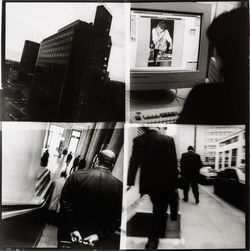
Sophie Dars and Carlo Menon, Stefano Graziani, and Yasufumi Nakamori present strategies for reimagining and employing visual formats such as the photo essay, the photo novel, and the photo exhibition. The event takes place in the framework of an ongoing CCA research project on the relationship between architecture and photography funded by The Andrew W. Mellon(...)
Sophie Dars and Carlo Menon, Stefano Graziani, and Yasufumi Nakamori present strategies for reimagining and employing visual formats such as the photo essay, the photo novel, and the photo exhibition. The event takes place in the framework of an ongoing CCA research project on the relationship between architecture and photography funded by The Andrew W. Mellon(...)
Date:
13 October 2016, 6pm
13 October 2016, 6pm
Title:
Talking Pictures
Actions:
Description:
Sophie Dars and Carlo Menon, Stefano Graziani, and Yasufumi Nakamori present strategies for reimagining and employing visual formats such as the photo essay, the photo novel, and the photo exhibition. The event takes place in the framework of an ongoing CCA research project on the relationship between architecture and photography funded by The Andrew W. Mellon(...)
Talking Pictures
Actions:
Description:
Sophie Dars and Carlo Menon, Stefano Graziani, and Yasufumi Nakamori present strategies for reimagining and employing visual formats such as the photo essay, the photo novel, and the photo exhibition. The event takes place in the framework of an ongoing CCA research project on the relationship between architecture and photography funded by The Andrew W. Mellon(...)
Form:
events
events
Date:
13 October 2016
6pm
13 October 2016
6pm
Level of archival description:
Series
Series
Actions:
Reference number:
CD041.S5
Description:
This series documents nine projects by the firm Vecsei Architects. In 1984, Eva Hollo Vecsei and André Vecsei opened a joint practice, Vecsei Architects. Both architects retired in 2005. Together they worked on several major planning studies, such as Les Hautières du Mont-Royal, Montréal, Québec (circa 1983-1988) and the Genome Centre and the Lorne M. Trottier Building, Montréal (1999-2000), documented in this series. Les Hautières du Mont-Royal was a residential complex adjacent to Montréal's Golden Square Mile, on Cedar Avenue. The project consisted of nine staggering buildings (29 villas) around a landscaped European-style courtyard on a sloping site facing Mount Royal while also preserving a turn of the century landmark situated within the Mount Royal Heritage Site . The project is also known as "Projet Cours Cedar". Through the Genome Centre, McGill University sought to fill a need for a modern and cross-disciplinary research space in genomics and proteomics. Vecsei Architects submitted a joint proposal with Dupuis, Le Tourneaux, architects, and NFOE et associés architectes. Ultimately, KPMB Architects and Fichten Soiferman et Associés, Architectes' proposal was chosen and built. The Lorne M. Trottier Building is a building for popular electrical engineering, computer science and telecommunications programs at McGill University. Vecsei Architects submitted a joint proposal for this project with Julian Jacobs Architectes and Architectes Lemay et associés. Jodoin Lamarre Pratte architectes and Marosi Troy's proposal was chosen and built. Also documented in this series are the following projects: Elementary school for College Marie de France, Montréal, Québec (circa 1984-1986); High-rise office tower, underground commercial centre tied to Montréal’s underground mall and subway network, Christ Church Cathedral, Montréal, Québec (circa 1987-1988); Seniors condominium, Manoir Montefiore, Côte-Saint-Luc, Québec (1988); Ark and artworks for the Beth Zion Synagogue, Côte-Saint-Luc, Québec (1989); Municipal library, Dollard-des-Ormeaux, Québec (circa 1990), Cultural Centre and extension of sport centre, Dollard-des-Ormeaux, Québec (circa 2001-2003); Renovation and new elevation for Schneider house, Montréal, Québec (2002). Collection material in this series was produced between 1983 and 2006. Documents include architectural records, such as presentation, conceptual, and design development drawings, and as well as photographs of facades and interior views. This series also includes digital material (mainly photographs), and a few project proposals and publications. The level of documentation varies greatly from project to project, from a single presentation drawing to complete project proposal.
CD041.S5
Description:
This series documents nine projects by the firm Vecsei Architects. In 1984, Eva Hollo Vecsei and André Vecsei opened a joint practice, Vecsei Architects. Both architects retired in 2005. Together they worked on several major planning studies, such as Les Hautières du Mont-Royal, Montréal, Québec (circa 1983-1988) and the Genome Centre and the Lorne M. Trottier Building, Montréal (1999-2000), documented in this series. Les Hautières du Mont-Royal was a residential complex adjacent to Montréal's Golden Square Mile, on Cedar Avenue. The project consisted of nine staggering buildings (29 villas) around a landscaped European-style courtyard on a sloping site facing Mount Royal while also preserving a turn of the century landmark situated within the Mount Royal Heritage Site . The project is also known as "Projet Cours Cedar". Through the Genome Centre, McGill University sought to fill a need for a modern and cross-disciplinary research space in genomics and proteomics. Vecsei Architects submitted a joint proposal with Dupuis, Le Tourneaux, architects, and NFOE et associés architectes. Ultimately, KPMB Architects and Fichten Soiferman et Associés, Architectes' proposal was chosen and built. The Lorne M. Trottier Building is a building for popular electrical engineering, computer science and telecommunications programs at McGill University. Vecsei Architects submitted a joint proposal for this project with Julian Jacobs Architectes and Architectes Lemay et associés. Jodoin Lamarre Pratte architectes and Marosi Troy's proposal was chosen and built. Also documented in this series are the following projects: Elementary school for College Marie de France, Montréal, Québec (circa 1984-1986); High-rise office tower, underground commercial centre tied to Montréal’s underground mall and subway network, Christ Church Cathedral, Montréal, Québec (circa 1987-1988); Seniors condominium, Manoir Montefiore, Côte-Saint-Luc, Québec (1988); Ark and artworks for the Beth Zion Synagogue, Côte-Saint-Luc, Québec (1989); Municipal library, Dollard-des-Ormeaux, Québec (circa 1990), Cultural Centre and extension of sport centre, Dollard-des-Ormeaux, Québec (circa 2001-2003); Renovation and new elevation for Schneider house, Montréal, Québec (2002). Collection material in this series was produced between 1983 and 2006. Documents include architectural records, such as presentation, conceptual, and design development drawings, and as well as photographs of facades and interior views. This series also includes digital material (mainly photographs), and a few project proposals and publications. The level of documentation varies greatly from project to project, from a single presentation drawing to complete project proposal.
People:
Date:
1983-2006
1983-2006
Title:
Vecsei Architects (1984-2005)
Actions:
CD041.S5
Description:
This series documents nine projects by the firm Vecsei Architects. In 1984, Eva Hollo Vecsei and André Vecsei opened a joint practice, Vecsei Architects. Both architects retired in 2005. Together they worked on several major planning studies, such as Les Hautières du Mont-Royal, Montréal, Québec (circa 1983-1988) and the Genome Centre and the Lorne M. Trottier Building, Montréal (1999-2000), documented in this series. Les Hautières du Mont-Royal was a residential complex adjacent to Montréal's Golden Square Mile, on Cedar Avenue. The project consisted of nine staggering buildings (29 villas) around a landscaped European-style courtyard on a sloping site facing Mount Royal while also preserving a turn of the century landmark situated within the Mount Royal Heritage Site . The project is also known as "Projet Cours Cedar". Through the Genome Centre, McGill University sought to fill a need for a modern and cross-disciplinary research space in genomics and proteomics. Vecsei Architects submitted a joint proposal with Dupuis, Le Tourneaux, architects, and NFOE et associés architectes. Ultimately, KPMB Architects and Fichten Soiferman et Associés, Architectes' proposal was chosen and built. The Lorne M. Trottier Building is a building for popular electrical engineering, computer science and telecommunications programs at McGill University. Vecsei Architects submitted a joint proposal for this project with Julian Jacobs Architectes and Architectes Lemay et associés. Jodoin Lamarre Pratte architectes and Marosi Troy's proposal was chosen and built. Also documented in this series are the following projects: Elementary school for College Marie de France, Montréal, Québec (circa 1984-1986); High-rise office tower, underground commercial centre tied to Montréal’s underground mall and subway network, Christ Church Cathedral, Montréal, Québec (circa 1987-1988); Seniors condominium, Manoir Montefiore, Côte-Saint-Luc, Québec (1988); Ark and artworks for the Beth Zion Synagogue, Côte-Saint-Luc, Québec (1989); Municipal library, Dollard-des-Ormeaux, Québec (circa 1990), Cultural Centre and extension of sport centre, Dollard-des-Ormeaux, Québec (circa 2001-2003); Renovation and new elevation for Schneider house, Montréal, Québec (2002). Collection material in this series was produced between 1983 and 2006. Documents include architectural records, such as presentation, conceptual, and design development drawings, and as well as photographs of facades and interior views. This series also includes digital material (mainly photographs), and a few project proposals and publications. The level of documentation varies greatly from project to project, from a single presentation drawing to complete project proposal.
Vecsei Architects (1984-2005)
Actions:
CD041.S5
Description:
This series documents nine projects by the firm Vecsei Architects. In 1984, Eva Hollo Vecsei and André Vecsei opened a joint practice, Vecsei Architects. Both architects retired in 2005. Together they worked on several major planning studies, such as Les Hautières du Mont-Royal, Montréal, Québec (circa 1983-1988) and the Genome Centre and the Lorne M. Trottier Building, Montréal (1999-2000), documented in this series. Les Hautières du Mont-Royal was a residential complex adjacent to Montréal's Golden Square Mile, on Cedar Avenue. The project consisted of nine staggering buildings (29 villas) around a landscaped European-style courtyard on a sloping site facing Mount Royal while also preserving a turn of the century landmark situated within the Mount Royal Heritage Site . The project is also known as "Projet Cours Cedar". Through the Genome Centre, McGill University sought to fill a need for a modern and cross-disciplinary research space in genomics and proteomics. Vecsei Architects submitted a joint proposal with Dupuis, Le Tourneaux, architects, and NFOE et associés architectes. Ultimately, KPMB Architects and Fichten Soiferman et Associés, Architectes' proposal was chosen and built. The Lorne M. Trottier Building is a building for popular electrical engineering, computer science and telecommunications programs at McGill University. Vecsei Architects submitted a joint proposal for this project with Julian Jacobs Architectes and Architectes Lemay et associés. Jodoin Lamarre Pratte architectes and Marosi Troy's proposal was chosen and built. Also documented in this series are the following projects: Elementary school for College Marie de France, Montréal, Québec (circa 1984-1986); High-rise office tower, underground commercial centre tied to Montréal’s underground mall and subway network, Christ Church Cathedral, Montréal, Québec (circa 1987-1988); Seniors condominium, Manoir Montefiore, Côte-Saint-Luc, Québec (1988); Ark and artworks for the Beth Zion Synagogue, Côte-Saint-Luc, Québec (1989); Municipal library, Dollard-des-Ormeaux, Québec (circa 1990), Cultural Centre and extension of sport centre, Dollard-des-Ormeaux, Québec (circa 2001-2003); Renovation and new elevation for Schneider house, Montréal, Québec (2002). Collection material in this series was produced between 1983 and 2006. Documents include architectural records, such as presentation, conceptual, and design development drawings, and as well as photographs of facades and interior views. This series also includes digital material (mainly photographs), and a few project proposals and publications. The level of documentation varies greatly from project to project, from a single presentation drawing to complete project proposal.
Level of archival description:
Series
Series
Date:
1983-2006
1983-2006
People:
Level of archival description:
Project
Project
Actions:
Reference number:
AP056.S1.1991.PR01
Description:
This project series documents a competition entry for the Vancouver Public Library in Vancouver from 1991-1992. The office identified the project number as 69112. The competition entry, submitted in 1991, consisted of the design of Vancouver's new public library, to be situated on the block between Homer, Georgia, Hamilton and Robson Streets. The project design included a seven-floor library connected by a walkway to an adjacent twenty-floor office tower that would house Public Works Canada. Both buildings had V shaped canopies on their roofs that looked like open books when viewed at an elevation. To the front of the library at ground level was the two-storey Library Concourse; a large hall made of glass windows and stone. The Concourse connected to the Robson Street entrance, and the Library Hall entrance at the corner of Homer and Georgia Streets. The architects described this as a porch-like space to be used for gatherings, public events, exhibits and displays. Moving into the heart of the library, patrons would pass through a cylindrical rotunda which extended upwards through every floor and above the roof terrace. The library would also have 2 levels of underground parking and a basement level with a circular theatre, concession areas and staff work areas. The ground floor would primarily consist of library stacks and tables but also included would be a gift shop, children's area, daycare, staff spaces, and an outdoor play area. The remaining floors were designated for library stacks, staff work areas and services. The top floor would hold administrative offices, built in a U shape around a large terrace. The terrace, complete with gardens, could be used for library events. This building would largely be made of glass windows at its exterior, with a round glass rotunda piercing through its rectangular shape. This project was never built. Although Kuwabara, Payne, McKenna, Blumberg Architects were finalists in this competition, the contract was eventually won and built by architect Moshe Safdie. The project is recorded through drawings, presentation panels, paintings, photographs and a model dating from 1991-1992. The drawings, which are mostly originals, include sketches, plans, sections, elevations, perspectives and isometrics. There are a number of watercolours (some mounted) and drawing panels used as presentation materials which have small texts about the project's design intention. The aquisition records for the 1993 donation of these project materials identify Michael McCann as the artist of 7 paintings in this project series; however it is not clear which 7 paintings were completed by this artist. The photographs show the completed project model, which is also contained in this project series.
AP056.S1.1991.PR01
Description:
This project series documents a competition entry for the Vancouver Public Library in Vancouver from 1991-1992. The office identified the project number as 69112. The competition entry, submitted in 1991, consisted of the design of Vancouver's new public library, to be situated on the block between Homer, Georgia, Hamilton and Robson Streets. The project design included a seven-floor library connected by a walkway to an adjacent twenty-floor office tower that would house Public Works Canada. Both buildings had V shaped canopies on their roofs that looked like open books when viewed at an elevation. To the front of the library at ground level was the two-storey Library Concourse; a large hall made of glass windows and stone. The Concourse connected to the Robson Street entrance, and the Library Hall entrance at the corner of Homer and Georgia Streets. The architects described this as a porch-like space to be used for gatherings, public events, exhibits and displays. Moving into the heart of the library, patrons would pass through a cylindrical rotunda which extended upwards through every floor and above the roof terrace. The library would also have 2 levels of underground parking and a basement level with a circular theatre, concession areas and staff work areas. The ground floor would primarily consist of library stacks and tables but also included would be a gift shop, children's area, daycare, staff spaces, and an outdoor play area. The remaining floors were designated for library stacks, staff work areas and services. The top floor would hold administrative offices, built in a U shape around a large terrace. The terrace, complete with gardens, could be used for library events. This building would largely be made of glass windows at its exterior, with a round glass rotunda piercing through its rectangular shape. This project was never built. Although Kuwabara, Payne, McKenna, Blumberg Architects were finalists in this competition, the contract was eventually won and built by architect Moshe Safdie. The project is recorded through drawings, presentation panels, paintings, photographs and a model dating from 1991-1992. The drawings, which are mostly originals, include sketches, plans, sections, elevations, perspectives and isometrics. There are a number of watercolours (some mounted) and drawing panels used as presentation materials which have small texts about the project's design intention. The aquisition records for the 1993 donation of these project materials identify Michael McCann as the artist of 7 paintings in this project series; however it is not clear which 7 paintings were completed by this artist. The photographs show the completed project model, which is also contained in this project series.
People:
Date:
1991-1992
1991-1992
Title:
Vancouver Public Library Competition, British Columbia (1991)
Actions:
AP056.S1.1991.PR01
Description:
This project series documents a competition entry for the Vancouver Public Library in Vancouver from 1991-1992. The office identified the project number as 69112. The competition entry, submitted in 1991, consisted of the design of Vancouver's new public library, to be situated on the block between Homer, Georgia, Hamilton and Robson Streets. The project design included a seven-floor library connected by a walkway to an adjacent twenty-floor office tower that would house Public Works Canada. Both buildings had V shaped canopies on their roofs that looked like open books when viewed at an elevation. To the front of the library at ground level was the two-storey Library Concourse; a large hall made of glass windows and stone. The Concourse connected to the Robson Street entrance, and the Library Hall entrance at the corner of Homer and Georgia Streets. The architects described this as a porch-like space to be used for gatherings, public events, exhibits and displays. Moving into the heart of the library, patrons would pass through a cylindrical rotunda which extended upwards through every floor and above the roof terrace. The library would also have 2 levels of underground parking and a basement level with a circular theatre, concession areas and staff work areas. The ground floor would primarily consist of library stacks and tables but also included would be a gift shop, children's area, daycare, staff spaces, and an outdoor play area. The remaining floors were designated for library stacks, staff work areas and services. The top floor would hold administrative offices, built in a U shape around a large terrace. The terrace, complete with gardens, could be used for library events. This building would largely be made of glass windows at its exterior, with a round glass rotunda piercing through its rectangular shape. This project was never built. Although Kuwabara, Payne, McKenna, Blumberg Architects were finalists in this competition, the contract was eventually won and built by architect Moshe Safdie. The project is recorded through drawings, presentation panels, paintings, photographs and a model dating from 1991-1992. The drawings, which are mostly originals, include sketches, plans, sections, elevations, perspectives and isometrics. There are a number of watercolours (some mounted) and drawing panels used as presentation materials which have small texts about the project's design intention. The aquisition records for the 1993 donation of these project materials identify Michael McCann as the artist of 7 paintings in this project series; however it is not clear which 7 paintings were completed by this artist. The photographs show the completed project model, which is also contained in this project series.
Vancouver Public Library Competition, British Columbia (1991)
Actions:
AP056.S1.1991.PR01
Description:
This project series documents a competition entry for the Vancouver Public Library in Vancouver from 1991-1992. The office identified the project number as 69112. The competition entry, submitted in 1991, consisted of the design of Vancouver's new public library, to be situated on the block between Homer, Georgia, Hamilton and Robson Streets. The project design included a seven-floor library connected by a walkway to an adjacent twenty-floor office tower that would house Public Works Canada. Both buildings had V shaped canopies on their roofs that looked like open books when viewed at an elevation. To the front of the library at ground level was the two-storey Library Concourse; a large hall made of glass windows and stone. The Concourse connected to the Robson Street entrance, and the Library Hall entrance at the corner of Homer and Georgia Streets. The architects described this as a porch-like space to be used for gatherings, public events, exhibits and displays. Moving into the heart of the library, patrons would pass through a cylindrical rotunda which extended upwards through every floor and above the roof terrace. The library would also have 2 levels of underground parking and a basement level with a circular theatre, concession areas and staff work areas. The ground floor would primarily consist of library stacks and tables but also included would be a gift shop, children's area, daycare, staff spaces, and an outdoor play area. The remaining floors were designated for library stacks, staff work areas and services. The top floor would hold administrative offices, built in a U shape around a large terrace. The terrace, complete with gardens, could be used for library events. This building would largely be made of glass windows at its exterior, with a round glass rotunda piercing through its rectangular shape. This project was never built. Although Kuwabara, Payne, McKenna, Blumberg Architects were finalists in this competition, the contract was eventually won and built by architect Moshe Safdie. The project is recorded through drawings, presentation panels, paintings, photographs and a model dating from 1991-1992. The drawings, which are mostly originals, include sketches, plans, sections, elevations, perspectives and isometrics. There are a number of watercolours (some mounted) and drawing panels used as presentation materials which have small texts about the project's design intention. The aquisition records for the 1993 donation of these project materials identify Michael McCann as the artist of 7 paintings in this project series; however it is not clear which 7 paintings were completed by this artist. The photographs show the completed project model, which is also contained in this project series.
Level of archival description:
Project
Project
Date:
1991-1992
1991-1992
People:
Form:
drawings
Quantity:
15 publication drawing(s)
drawings
Quantity:
15 publication drawing(s)
Reference number:
DR1995:0188:104-123
Description:
some design development drawings, but most developed for publication, including perspectives, some rendered, of Fun Palace interior showing variations, perspectives showing trusses and towers, diagrammatic sections, site maps, layout of presentation panels, and diagrams dated 1974 of volumetric zoning and proposals for South Bank; includes a drawing of Hague Hole, AP144.S2.D25
DR1995:0188:104-123
Description:
some design development drawings, but most developed for publication, including perspectives, some rendered, of Fun Palace interior showing variations, perspectives showing trusses and towers, diagrammatic sections, site maps, layout of presentation panels, and diagrams dated 1974 of volumetric zoning and proposals for South Bank; includes a drawing of Hague Hole, AP144.S2.D25
People:
Title:
Some design development drawings, but most developed for publication
Actions:
DR1995:0188:104-123
Description:
some design development drawings, but most developed for publication, including perspectives, some rendered, of Fun Palace interior showing variations, perspectives showing trusses and towers, diagrammatic sections, site maps, layout of presentation panels, and diagrams dated 1974 of volumetric zoning and proposals for South Bank; includes a drawing of Hague Hole, AP144.S2.D25
Some design development drawings, but most developed for publication
Actions:
DR1995:0188:104-123
Description:
some design development drawings, but most developed for publication, including perspectives, some rendered, of Fun Palace interior showing variations, perspectives showing trusses and towers, diagrammatic sections, site maps, layout of presentation panels, and diagrams dated 1974 of volumetric zoning and proposals for South Bank; includes a drawing of Hague Hole, AP144.S2.D25
Form:
drawings
Quantity:
15 publication drawing(s)
drawings
Quantity:
15 publication drawing(s)
People:


