


28242 Results
Form:
textual records
textual records
Actions:
Reference number:
DR1995:0316:001-001
Description:
clippings, including material relating to the Cedric Price projects: New Aviary, Zoological Society (AP144.S2.D31), Robson Translloyd, London W.1 (AP144.S2.D36), Radome Development (AP144.S2.D40), Auditorium, Claverton Bath (AP144.S2.D41), House, Selsdon (AP144.S2.D42), Tone Vale Hospital, Taunton (AP144.S2.D47), Circlorama (AP144.S2.D51), Barking Flyover (AP144.S2.D57), Whyte Lion Development (AP144.S2.D60), Bath Festival (AP144.S2.D62), BAA/LHA/North (AP144.S2.D65), (AP144.S2.D70 BTDB Computer), Shantasea Development (AP144.S2.D72), BMI/HQ (AP144.S2.D74), Phun City (AP144.S2.D77), Olympia (AP144.S2.D83), Two Tree Island (AP144.S2.D84), McAppy (AP144.S2.D89), River Clyde Competition (AP144.S2.D90), Trucksafe Air Portable Dock Ahoy (AP144.S2.D93), Water Wall (AP144.S2.D94), Scotswhim (AP144.S2.D95), G.T.R. (AP144.S2.D97), Whitehall (AP144.S2.D98), Strike (AP144.S2.D99), Generator (AP144.S2.D100), Domain (AP144.S2.D108), Castel (AP144.S2.D109), CP Aviary (AP144.S2.D113), and for Picstate, Polyark (AP144.S3.D33), and a project for Tunisia
DR1995:0316:001-001
Description:
clippings, including material relating to the Cedric Price projects: New Aviary, Zoological Society (AP144.S2.D31), Robson Translloyd, London W.1 (AP144.S2.D36), Radome Development (AP144.S2.D40), Auditorium, Claverton Bath (AP144.S2.D41), House, Selsdon (AP144.S2.D42), Tone Vale Hospital, Taunton (AP144.S2.D47), Circlorama (AP144.S2.D51), Barking Flyover (AP144.S2.D57), Whyte Lion Development (AP144.S2.D60), Bath Festival (AP144.S2.D62), BAA/LHA/North (AP144.S2.D65), (AP144.S2.D70 BTDB Computer), Shantasea Development (AP144.S2.D72), BMI/HQ (AP144.S2.D74), Phun City (AP144.S2.D77), Olympia (AP144.S2.D83), Two Tree Island (AP144.S2.D84), McAppy (AP144.S2.D89), River Clyde Competition (AP144.S2.D90), Trucksafe Air Portable Dock Ahoy (AP144.S2.D93), Water Wall (AP144.S2.D94), Scotswhim (AP144.S2.D95), G.T.R. (AP144.S2.D97), Whitehall (AP144.S2.D98), Strike (AP144.S2.D99), Generator (AP144.S2.D100), Domain (AP144.S2.D108), Castel (AP144.S2.D109), CP Aviary (AP144.S2.D113), and for Picstate, Polyark (AP144.S3.D33), and a project for Tunisia
People:
Date:
1962-1993
1962-1993
Title:
Press clippings for various projects
Actions:
DR1995:0316:001-001
Description:
clippings, including material relating to the Cedric Price projects: New Aviary, Zoological Society (AP144.S2.D31), Robson Translloyd, London W.1 (AP144.S2.D36), Radome Development (AP144.S2.D40), Auditorium, Claverton Bath (AP144.S2.D41), House, Selsdon (AP144.S2.D42), Tone Vale Hospital, Taunton (AP144.S2.D47), Circlorama (AP144.S2.D51), Barking Flyover (AP144.S2.D57), Whyte Lion Development (AP144.S2.D60), Bath Festival (AP144.S2.D62), BAA/LHA/North (AP144.S2.D65), (AP144.S2.D70 BTDB Computer), Shantasea Development (AP144.S2.D72), BMI/HQ (AP144.S2.D74), Phun City (AP144.S2.D77), Olympia (AP144.S2.D83), Two Tree Island (AP144.S2.D84), McAppy (AP144.S2.D89), River Clyde Competition (AP144.S2.D90), Trucksafe Air Portable Dock Ahoy (AP144.S2.D93), Water Wall (AP144.S2.D94), Scotswhim (AP144.S2.D95), G.T.R. (AP144.S2.D97), Whitehall (AP144.S2.D98), Strike (AP144.S2.D99), Generator (AP144.S2.D100), Domain (AP144.S2.D108), Castel (AP144.S2.D109), CP Aviary (AP144.S2.D113), and for Picstate, Polyark (AP144.S3.D33), and a project for Tunisia
Press clippings for various projects
Actions:
DR1995:0316:001-001
Description:
clippings, including material relating to the Cedric Price projects: New Aviary, Zoological Society (AP144.S2.D31), Robson Translloyd, London W.1 (AP144.S2.D36), Radome Development (AP144.S2.D40), Auditorium, Claverton Bath (AP144.S2.D41), House, Selsdon (AP144.S2.D42), Tone Vale Hospital, Taunton (AP144.S2.D47), Circlorama (AP144.S2.D51), Barking Flyover (AP144.S2.D57), Whyte Lion Development (AP144.S2.D60), Bath Festival (AP144.S2.D62), BAA/LHA/North (AP144.S2.D65), (AP144.S2.D70 BTDB Computer), Shantasea Development (AP144.S2.D72), BMI/HQ (AP144.S2.D74), Phun City (AP144.S2.D77), Olympia (AP144.S2.D83), Two Tree Island (AP144.S2.D84), McAppy (AP144.S2.D89), River Clyde Competition (AP144.S2.D90), Trucksafe Air Portable Dock Ahoy (AP144.S2.D93), Water Wall (AP144.S2.D94), Scotswhim (AP144.S2.D95), G.T.R. (AP144.S2.D97), Whitehall (AP144.S2.D98), Strike (AP144.S2.D99), Generator (AP144.S2.D100), Domain (AP144.S2.D108), Castel (AP144.S2.D109), CP Aviary (AP144.S2.D113), and for Picstate, Polyark (AP144.S3.D33), and a project for Tunisia
Form:
textual records
textual records
Date:
1962-1993
1962-1993
People:
Level of archival description:
Project
Project
Actions:
Reference number:
AP194.S1.1997.PR02
Description:
Project records document the design process for OCEAN North’s competition entry for the Jyväskylä Music and Arts Centre in 1997. The project was titled Terra Cultura by OCEAN North. The competition was to create a multi-usage space that would include a venue for the symphonic orchestra, a music school, exhibition spaces and the possibility to host a variety of small cultural events in the Finnish city of Jyväskylä. The proposed site is in the center of the town, across the street from the Jyväskylä city church and its park, and nearby buildings designed by Alvar Aalto. OCEAN North’s concept presents a topological surface as an extension of the surrounding urban scape with two masses that would host the formal functions of the building (concert hall, music school, exhibition halls). The two volumes, or raised blocks, are divided along a diagonal elevated space, which is the extension of the ground’s topological surface filled and dubbed “Liquid Flow Space” by the design team. In their interview with Greg Lynn, Johan Bettum and Kivi Sotamaa mentioned that the idea for Jyväskylä was that it was a cloud. To reach this goal, the team used CAD software to trace streams of particles as a modelling approach. The masses of linear elements that were generated were further deconstructed and turned into “peels” and rearranged to create the masses of the building. Physical models were also used to test and further what had emerged from the digital design process, with results being fed back into the digital drawings. During the process, Bettum also brought in the idea of the internalisation of the outside, taking inspiration from the Centre Georges Pompidou. Digital records document the creative process with raster and vector images, CAD drawings and models, and few digital textual records describing the project and the program charts. Drawings and models show site and building plans, perspectives and sections; particles streaming and resulting linear masses; peels and sections identified per color; and renderings of aerials, perspectives and elevation views. OCEAN North seems to have mostly used Microstation for modelling, although there are a few files created with form*Z and 3D Studio. Some of the raster images might have been created with these software as well, showing a given stage of the design process and including renderings. There are also screen captures showing the top, front, left and perspective views of 3D models. Adobe Photoshop and Illustrator were also used to create and modify drawings and diagrams. Program charts were created in Microsoft Excel. Sources: Softspace: from a representation of form to a simulation of space, Edited by Sean Lally and Jessica Young. London, New York: Routledge, 2007. Greg Lynn, ed. Archaeology of the Digital 17: OCEAN North, Jyväskylä Music and Arts Centre, Montréal: Canadian Centre for Architecture, 2017. ePub.
AP194.S1.1997.PR02
Description:
Project records document the design process for OCEAN North’s competition entry for the Jyväskylä Music and Arts Centre in 1997. The project was titled Terra Cultura by OCEAN North. The competition was to create a multi-usage space that would include a venue for the symphonic orchestra, a music school, exhibition spaces and the possibility to host a variety of small cultural events in the Finnish city of Jyväskylä. The proposed site is in the center of the town, across the street from the Jyväskylä city church and its park, and nearby buildings designed by Alvar Aalto. OCEAN North’s concept presents a topological surface as an extension of the surrounding urban scape with two masses that would host the formal functions of the building (concert hall, music school, exhibition halls). The two volumes, or raised blocks, are divided along a diagonal elevated space, which is the extension of the ground’s topological surface filled and dubbed “Liquid Flow Space” by the design team. In their interview with Greg Lynn, Johan Bettum and Kivi Sotamaa mentioned that the idea for Jyväskylä was that it was a cloud. To reach this goal, the team used CAD software to trace streams of particles as a modelling approach. The masses of linear elements that were generated were further deconstructed and turned into “peels” and rearranged to create the masses of the building. Physical models were also used to test and further what had emerged from the digital design process, with results being fed back into the digital drawings. During the process, Bettum also brought in the idea of the internalisation of the outside, taking inspiration from the Centre Georges Pompidou. Digital records document the creative process with raster and vector images, CAD drawings and models, and few digital textual records describing the project and the program charts. Drawings and models show site and building plans, perspectives and sections; particles streaming and resulting linear masses; peels and sections identified per color; and renderings of aerials, perspectives and elevation views. OCEAN North seems to have mostly used Microstation for modelling, although there are a few files created with form*Z and 3D Studio. Some of the raster images might have been created with these software as well, showing a given stage of the design process and including renderings. There are also screen captures showing the top, front, left and perspective views of 3D models. Adobe Photoshop and Illustrator were also used to create and modify drawings and diagrams. Program charts were created in Microsoft Excel. Sources: Softspace: from a representation of form to a simulation of space, Edited by Sean Lally and Jessica Young. London, New York: Routledge, 2007. Greg Lynn, ed. Archaeology of the Digital 17: OCEAN North, Jyväskylä Music and Arts Centre, Montréal: Canadian Centre for Architecture, 2017. ePub.
People:
Date:
1997-1998
1997-1998
Title:
Terra Cultura – Jyväskylä Music and Arts Centre, international competition entry, Jyväskylä, Finland (1997)
Actions:
AP194.S1.1997.PR02
Description:
Project records document the design process for OCEAN North’s competition entry for the Jyväskylä Music and Arts Centre in 1997. The project was titled Terra Cultura by OCEAN North. The competition was to create a multi-usage space that would include a venue for the symphonic orchestra, a music school, exhibition spaces and the possibility to host a variety of small cultural events in the Finnish city of Jyväskylä. The proposed site is in the center of the town, across the street from the Jyväskylä city church and its park, and nearby buildings designed by Alvar Aalto. OCEAN North’s concept presents a topological surface as an extension of the surrounding urban scape with two masses that would host the formal functions of the building (concert hall, music school, exhibition halls). The two volumes, or raised blocks, are divided along a diagonal elevated space, which is the extension of the ground’s topological surface filled and dubbed “Liquid Flow Space” by the design team. In their interview with Greg Lynn, Johan Bettum and Kivi Sotamaa mentioned that the idea for Jyväskylä was that it was a cloud. To reach this goal, the team used CAD software to trace streams of particles as a modelling approach. The masses of linear elements that were generated were further deconstructed and turned into “peels” and rearranged to create the masses of the building. Physical models were also used to test and further what had emerged from the digital design process, with results being fed back into the digital drawings. During the process, Bettum also brought in the idea of the internalisation of the outside, taking inspiration from the Centre Georges Pompidou. Digital records document the creative process with raster and vector images, CAD drawings and models, and few digital textual records describing the project and the program charts. Drawings and models show site and building plans, perspectives and sections; particles streaming and resulting linear masses; peels and sections identified per color; and renderings of aerials, perspectives and elevation views. OCEAN North seems to have mostly used Microstation for modelling, although there are a few files created with form*Z and 3D Studio. Some of the raster images might have been created with these software as well, showing a given stage of the design process and including renderings. There are also screen captures showing the top, front, left and perspective views of 3D models. Adobe Photoshop and Illustrator were also used to create and modify drawings and diagrams. Program charts were created in Microsoft Excel. Sources: Softspace: from a representation of form to a simulation of space, Edited by Sean Lally and Jessica Young. London, New York: Routledge, 2007. Greg Lynn, ed. Archaeology of the Digital 17: OCEAN North, Jyväskylä Music and Arts Centre, Montréal: Canadian Centre for Architecture, 2017. ePub.
Terra Cultura – Jyväskylä Music and Arts Centre, international competition entry, Jyväskylä, Finland (1997)
Actions:
AP194.S1.1997.PR02
Description:
Project records document the design process for OCEAN North’s competition entry for the Jyväskylä Music and Arts Centre in 1997. The project was titled Terra Cultura by OCEAN North. The competition was to create a multi-usage space that would include a venue for the symphonic orchestra, a music school, exhibition spaces and the possibility to host a variety of small cultural events in the Finnish city of Jyväskylä. The proposed site is in the center of the town, across the street from the Jyväskylä city church and its park, and nearby buildings designed by Alvar Aalto. OCEAN North’s concept presents a topological surface as an extension of the surrounding urban scape with two masses that would host the formal functions of the building (concert hall, music school, exhibition halls). The two volumes, or raised blocks, are divided along a diagonal elevated space, which is the extension of the ground’s topological surface filled and dubbed “Liquid Flow Space” by the design team. In their interview with Greg Lynn, Johan Bettum and Kivi Sotamaa mentioned that the idea for Jyväskylä was that it was a cloud. To reach this goal, the team used CAD software to trace streams of particles as a modelling approach. The masses of linear elements that were generated were further deconstructed and turned into “peels” and rearranged to create the masses of the building. Physical models were also used to test and further what had emerged from the digital design process, with results being fed back into the digital drawings. During the process, Bettum also brought in the idea of the internalisation of the outside, taking inspiration from the Centre Georges Pompidou. Digital records document the creative process with raster and vector images, CAD drawings and models, and few digital textual records describing the project and the program charts. Drawings and models show site and building plans, perspectives and sections; particles streaming and resulting linear masses; peels and sections identified per color; and renderings of aerials, perspectives and elevation views. OCEAN North seems to have mostly used Microstation for modelling, although there are a few files created with form*Z and 3D Studio. Some of the raster images might have been created with these software as well, showing a given stage of the design process and including renderings. There are also screen captures showing the top, front, left and perspective views of 3D models. Adobe Photoshop and Illustrator were also used to create and modify drawings and diagrams. Program charts were created in Microsoft Excel. Sources: Softspace: from a representation of form to a simulation of space, Edited by Sean Lally and Jessica Young. London, New York: Routledge, 2007. Greg Lynn, ed. Archaeology of the Digital 17: OCEAN North, Jyväskylä Music and Arts Centre, Montréal: Canadian Centre for Architecture, 2017. ePub.
Level of archival description:
Project
Project
Date:
1997-1998
1997-1998
People:
Level of archival description:
Project
Project
Actions:
Reference number:
AP198.S1.1997.PR02
Description:
Project records document the design process for OCEAN North’s competition entry for the Jyväskylä Music and Arts Centre in 1997. The project was titled Terra Cultura by OCEAN North. The international competition called to create a multi-usage space that would include a venue for the symphonic orchestra, a music school, exhibition spaces, and the possibility to host a variety of small cultural events in the Finnish city of Jyväskylä. The proposed site is in the center of the town, across the street from the Jyväskylä city church and its park, and nearby buildings designed by Alvar Aalto. OCEAN North’s concept presents a topological surface as an extension of the surrounding urban scape with two masses that would host the formal functions of the building (concert hall, music school, exhibition halls). The two volumes, or raised blocks, are divided along a diagonal elevated space, which is the extension of the ground’s topological surface filled and dubbed “Liquid Flow Space” by the design team. In their interview with Greg Lynn, Johan Bettum and Kivi Sotamaa mentioned that the idea for Jyväskylä was that it was a cloud. Digital files, in particular, show the process to achieve the projected design. Drawings provide views of streamed particles and of resulting peels. They also include plans, elevations and axonometric views of the structure. Most files are raster or vector images, likely saved from CAD software. A few files are in CAD formats such as Microstation, 3D Studio and form*Z. Digital files also present sine wave analysis and resulting charts for each component of the program. The analysis and charts present the relationships between various components of the building’s program such as the Art Museum, the Concert Halls, the technical space, and the Common facilities. These files are raster images and spreadsheets. Photographs of the site in Jyväskylä and of models built by OCEAN North were digitized and are included with the digital working files. Physical drawings are chiefly floor plans for the building, but also include sections and sketches. Finally, project files include photographic prints of two built models. One of these models, a small model of the conceptual masses of the building structure, is itself in the archive. Photographs show the model in the context of a city scape model. The second model, not part of the archive at CCA, was built at a bigger scale and was an intricate cardboard and wooden stick structure. Sources: Softspace: from a representation of form to a simulation of space, Edited by Sean Lally and Jessica Young. London, New York: Routledge, 2007. Greg Lynn, ed. Archaeology of the Digital 17: OCEAN North, Jyväskylä Music and Arts Centre, Montréal: Canadian Centre for Architecture, 2017. ePub.
AP198.S1.1997.PR02
Description:
Project records document the design process for OCEAN North’s competition entry for the Jyväskylä Music and Arts Centre in 1997. The project was titled Terra Cultura by OCEAN North. The international competition called to create a multi-usage space that would include a venue for the symphonic orchestra, a music school, exhibition spaces, and the possibility to host a variety of small cultural events in the Finnish city of Jyväskylä. The proposed site is in the center of the town, across the street from the Jyväskylä city church and its park, and nearby buildings designed by Alvar Aalto. OCEAN North’s concept presents a topological surface as an extension of the surrounding urban scape with two masses that would host the formal functions of the building (concert hall, music school, exhibition halls). The two volumes, or raised blocks, are divided along a diagonal elevated space, which is the extension of the ground’s topological surface filled and dubbed “Liquid Flow Space” by the design team. In their interview with Greg Lynn, Johan Bettum and Kivi Sotamaa mentioned that the idea for Jyväskylä was that it was a cloud. Digital files, in particular, show the process to achieve the projected design. Drawings provide views of streamed particles and of resulting peels. They also include plans, elevations and axonometric views of the structure. Most files are raster or vector images, likely saved from CAD software. A few files are in CAD formats such as Microstation, 3D Studio and form*Z. Digital files also present sine wave analysis and resulting charts for each component of the program. The analysis and charts present the relationships between various components of the building’s program such as the Art Museum, the Concert Halls, the technical space, and the Common facilities. These files are raster images and spreadsheets. Photographs of the site in Jyväskylä and of models built by OCEAN North were digitized and are included with the digital working files. Physical drawings are chiefly floor plans for the building, but also include sections and sketches. Finally, project files include photographic prints of two built models. One of these models, a small model of the conceptual masses of the building structure, is itself in the archive. Photographs show the model in the context of a city scape model. The second model, not part of the archive at CCA, was built at a bigger scale and was an intricate cardboard and wooden stick structure. Sources: Softspace: from a representation of form to a simulation of space, Edited by Sean Lally and Jessica Young. London, New York: Routledge, 2007. Greg Lynn, ed. Archaeology of the Digital 17: OCEAN North, Jyväskylä Music and Arts Centre, Montréal: Canadian Centre for Architecture, 2017. ePub.
People:
Date:
1997
1997
Title:
Terra Cultura – Jyväskylä Music and Arts Centre, international competition entry
Actions:
AP198.S1.1997.PR02
Description:
Project records document the design process for OCEAN North’s competition entry for the Jyväskylä Music and Arts Centre in 1997. The project was titled Terra Cultura by OCEAN North. The international competition called to create a multi-usage space that would include a venue for the symphonic orchestra, a music school, exhibition spaces, and the possibility to host a variety of small cultural events in the Finnish city of Jyväskylä. The proposed site is in the center of the town, across the street from the Jyväskylä city church and its park, and nearby buildings designed by Alvar Aalto. OCEAN North’s concept presents a topological surface as an extension of the surrounding urban scape with two masses that would host the formal functions of the building (concert hall, music school, exhibition halls). The two volumes, or raised blocks, are divided along a diagonal elevated space, which is the extension of the ground’s topological surface filled and dubbed “Liquid Flow Space” by the design team. In their interview with Greg Lynn, Johan Bettum and Kivi Sotamaa mentioned that the idea for Jyväskylä was that it was a cloud. Digital files, in particular, show the process to achieve the projected design. Drawings provide views of streamed particles and of resulting peels. They also include plans, elevations and axonometric views of the structure. Most files are raster or vector images, likely saved from CAD software. A few files are in CAD formats such as Microstation, 3D Studio and form*Z. Digital files also present sine wave analysis and resulting charts for each component of the program. The analysis and charts present the relationships between various components of the building’s program such as the Art Museum, the Concert Halls, the technical space, and the Common facilities. These files are raster images and spreadsheets. Photographs of the site in Jyväskylä and of models built by OCEAN North were digitized and are included with the digital working files. Physical drawings are chiefly floor plans for the building, but also include sections and sketches. Finally, project files include photographic prints of two built models. One of these models, a small model of the conceptual masses of the building structure, is itself in the archive. Photographs show the model in the context of a city scape model. The second model, not part of the archive at CCA, was built at a bigger scale and was an intricate cardboard and wooden stick structure. Sources: Softspace: from a representation of form to a simulation of space, Edited by Sean Lally and Jessica Young. London, New York: Routledge, 2007. Greg Lynn, ed. Archaeology of the Digital 17: OCEAN North, Jyväskylä Music and Arts Centre, Montréal: Canadian Centre for Architecture, 2017. ePub.
Terra Cultura – Jyväskylä Music and Arts Centre, international competition entry
Actions:
AP198.S1.1997.PR02
Description:
Project records document the design process for OCEAN North’s competition entry for the Jyväskylä Music and Arts Centre in 1997. The project was titled Terra Cultura by OCEAN North. The international competition called to create a multi-usage space that would include a venue for the symphonic orchestra, a music school, exhibition spaces, and the possibility to host a variety of small cultural events in the Finnish city of Jyväskylä. The proposed site is in the center of the town, across the street from the Jyväskylä city church and its park, and nearby buildings designed by Alvar Aalto. OCEAN North’s concept presents a topological surface as an extension of the surrounding urban scape with two masses that would host the formal functions of the building (concert hall, music school, exhibition halls). The two volumes, or raised blocks, are divided along a diagonal elevated space, which is the extension of the ground’s topological surface filled and dubbed “Liquid Flow Space” by the design team. In their interview with Greg Lynn, Johan Bettum and Kivi Sotamaa mentioned that the idea for Jyväskylä was that it was a cloud. Digital files, in particular, show the process to achieve the projected design. Drawings provide views of streamed particles and of resulting peels. They also include plans, elevations and axonometric views of the structure. Most files are raster or vector images, likely saved from CAD software. A few files are in CAD formats such as Microstation, 3D Studio and form*Z. Digital files also present sine wave analysis and resulting charts for each component of the program. The analysis and charts present the relationships between various components of the building’s program such as the Art Museum, the Concert Halls, the technical space, and the Common facilities. These files are raster images and spreadsheets. Photographs of the site in Jyväskylä and of models built by OCEAN North were digitized and are included with the digital working files. Physical drawings are chiefly floor plans for the building, but also include sections and sketches. Finally, project files include photographic prints of two built models. One of these models, a small model of the conceptual masses of the building structure, is itself in the archive. Photographs show the model in the context of a city scape model. The second model, not part of the archive at CCA, was built at a bigger scale and was an intricate cardboard and wooden stick structure. Sources: Softspace: from a representation of form to a simulation of space, Edited by Sean Lally and Jessica Young. London, New York: Routledge, 2007. Greg Lynn, ed. Archaeology of the Digital 17: OCEAN North, Jyväskylä Music and Arts Centre, Montréal: Canadian Centre for Architecture, 2017. ePub.
Level of archival description:
Project
Project
Date:
1997
1997
People:
Form:
textual records
textual records
Actions:
Reference number:
AP140.S2.SS5.P1
Description:
certificates, including Diploma, Award of a Medal for good design in Housing, presented to James Stirling and James Gowan for the Housing redevelopment in Avenham, Preston in 1963; American Institute of Architects, Certificate of Honor, The 1965 R. S. Reynolds Memorial Award, presented to James Stirling and James Gowan and to Leicester University for the Leicester University Engineering Building; Concrete Society Award, presented to James Stirling for the Students' residences, University of St. Andrews, in 1969; American Institute of Architects, Certificate of Honorary Fellowship presented to James Stirling in 1976; National Institute of Arts and Letters, Prize in Architecture, Arnold W. Brunner Award, presented to James Stirling in 1976; Bund Deutscher Architekten BDA, Honorary Membership; Bund Deutscher Architekten BDA, Landesverband Baden-Württemberg, Auszeichnung guter Bauten for the State Gallery Addition and New Chamber Theatre Competition project, presented in 1987; Royal Institute of British Architects, Regional Award 1988, Architecture Award, London Region, for the Clore Gallery in 1988; Bund Deutscher Architekten BDA, Hugo-Häring-Preis, awarded for the State Gallery Addition and New Chamber Theatre Competition project, in 1988; Civic Trust Awards, certificate awarded for the Clore Gallery in 1989.
AP140.S2.SS5.P1
Description:
certificates, including Diploma, Award of a Medal for good design in Housing, presented to James Stirling and James Gowan for the Housing redevelopment in Avenham, Preston in 1963; American Institute of Architects, Certificate of Honor, The 1965 R. S. Reynolds Memorial Award, presented to James Stirling and James Gowan and to Leicester University for the Leicester University Engineering Building; Concrete Society Award, presented to James Stirling for the Students' residences, University of St. Andrews, in 1969; American Institute of Architects, Certificate of Honorary Fellowship presented to James Stirling in 1976; National Institute of Arts and Letters, Prize in Architecture, Arnold W. Brunner Award, presented to James Stirling in 1976; Bund Deutscher Architekten BDA, Honorary Membership; Bund Deutscher Architekten BDA, Landesverband Baden-Württemberg, Auszeichnung guter Bauten for the State Gallery Addition and New Chamber Theatre Competition project, presented in 1987; Royal Institute of British Architects, Regional Award 1988, Architecture Award, London Region, for the Clore Gallery in 1988; Bund Deutscher Architekten BDA, Hugo-Häring-Preis, awarded for the State Gallery Addition and New Chamber Theatre Competition project, in 1988; Civic Trust Awards, certificate awarded for the Clore Gallery in 1989.
People:
Date:
1963-1989
1963-1989
Title:
Certificates, including diploma and a medal, for various awards and honours
Actions:
AP140.S2.SS5.P1
Description:
certificates, including Diploma, Award of a Medal for good design in Housing, presented to James Stirling and James Gowan for the Housing redevelopment in Avenham, Preston in 1963; American Institute of Architects, Certificate of Honor, The 1965 R. S. Reynolds Memorial Award, presented to James Stirling and James Gowan and to Leicester University for the Leicester University Engineering Building; Concrete Society Award, presented to James Stirling for the Students' residences, University of St. Andrews, in 1969; American Institute of Architects, Certificate of Honorary Fellowship presented to James Stirling in 1976; National Institute of Arts and Letters, Prize in Architecture, Arnold W. Brunner Award, presented to James Stirling in 1976; Bund Deutscher Architekten BDA, Honorary Membership; Bund Deutscher Architekten BDA, Landesverband Baden-Württemberg, Auszeichnung guter Bauten for the State Gallery Addition and New Chamber Theatre Competition project, presented in 1987; Royal Institute of British Architects, Regional Award 1988, Architecture Award, London Region, for the Clore Gallery in 1988; Bund Deutscher Architekten BDA, Hugo-Häring-Preis, awarded for the State Gallery Addition and New Chamber Theatre Competition project, in 1988; Civic Trust Awards, certificate awarded for the Clore Gallery in 1989.
Certificates, including diploma and a medal, for various awards and honours
Actions:
AP140.S2.SS5.P1
Description:
certificates, including Diploma, Award of a Medal for good design in Housing, presented to James Stirling and James Gowan for the Housing redevelopment in Avenham, Preston in 1963; American Institute of Architects, Certificate of Honor, The 1965 R. S. Reynolds Memorial Award, presented to James Stirling and James Gowan and to Leicester University for the Leicester University Engineering Building; Concrete Society Award, presented to James Stirling for the Students' residences, University of St. Andrews, in 1969; American Institute of Architects, Certificate of Honorary Fellowship presented to James Stirling in 1976; National Institute of Arts and Letters, Prize in Architecture, Arnold W. Brunner Award, presented to James Stirling in 1976; Bund Deutscher Architekten BDA, Honorary Membership; Bund Deutscher Architekten BDA, Landesverband Baden-Württemberg, Auszeichnung guter Bauten for the State Gallery Addition and New Chamber Theatre Competition project, presented in 1987; Royal Institute of British Architects, Regional Award 1988, Architecture Award, London Region, for the Clore Gallery in 1988; Bund Deutscher Architekten BDA, Hugo-Häring-Preis, awarded for the State Gallery Addition and New Chamber Theatre Competition project, in 1988; Civic Trust Awards, certificate awarded for the Clore Gallery in 1989.
Form:
textual records
textual records
Date:
1963-1989
1963-1989
People:
Form:
events
events
Title:
Learning from... Copenhagen
Learning from... Copenhagen
Actions:
Description:
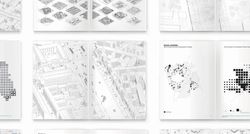
Deane Simpson presents the Atlas of the Copenhagens, a book project addressing an urban territory that has been posited in the media and celebrated by the municipality of Copenhagen as the world’s most sustainable and liveable city. Such claims suggest that Copenhagen is a fitting site to study and engage in a debate on sustainability and liveability. The Atlas operates(...)
Deane Simpson presents the Atlas of the Copenhagens, a book project addressing an urban territory that has been posited in the media and celebrated by the municipality of Copenhagen as the world’s most sustainable and liveable city. Such claims suggest that Copenhagen is a fitting site to study and engage in a debate on sustainability and liveability. The Atlas operates(...)
Location:
Paul-Desmarais Theatre
Paul-Desmarais Theatre
Date:
21 May 2015 , 6pm
21 May 2015 , 6pm
Title:
Learning from... Copenhagen
Actions:
Description:
Deane Simpson presents the Atlas of the Copenhagens, a book project addressing an urban territory that has been posited in the media and celebrated by the municipality of Copenhagen as the world’s most sustainable and liveable city. Such claims suggest that Copenhagen is a fitting site to study and engage in a debate on sustainability and liveability. The Atlas operates(...)
Learning from... Copenhagen
Actions:
Description:
Deane Simpson presents the Atlas of the Copenhagens, a book project addressing an urban territory that has been posited in the media and celebrated by the municipality of Copenhagen as the world’s most sustainable and liveable city. Such claims suggest that Copenhagen is a fitting site to study and engage in a debate on sustainability and liveability. The Atlas operates(...)
Form:
events
events
Date:
21 May 2015
6pm
21 May 2015
6pm
Location:
Paul-Desmarais Theatre
Paul-Desmarais Theatre
Form:
research
research
Title:
Visiting Scholars 1997–1998
Visiting Scholars 1997–1998
Actions:
Description:
Theme: The Baroque Phenomenon beyond Rome Barbara Arciszewska, Yale Center for British Art, New Haven, United States Topic: Continental Baroque and the Emergence of Palladianism in England Hugh Cullum, School of Architecture, University of Cambridge and Cullum and Nightingale Architects, London, United Kingdom Topic: On the Ducal Palace La Venaria Reale near Turin and(...)
Theme: The Baroque Phenomenon beyond Rome Barbara Arciszewska, Yale Center for British Art, New Haven, United States Topic: Continental Baroque and the Emergence of Palladianism in England Hugh Cullum, School of Architecture, University of Cambridge and Cullum and Nightingale Architects, London, United Kingdom Topic: On the Ducal Palace La Venaria Reale near Turin and(...)
Date:
September 1997 to August 1998
September 1997 to August 1998
Title:
Visiting Scholars 1997–1998
Actions:
Description:
Theme: The Baroque Phenomenon beyond Rome Barbara Arciszewska, Yale Center for British Art, New Haven, United States Topic: Continental Baroque and the Emergence of Palladianism in England Hugh Cullum, School of Architecture, University of Cambridge and Cullum and Nightingale Architects, London, United Kingdom Topic: On the Ducal Palace La Venaria Reale near Turin and(...)
Visiting Scholars 1997–1998
Actions:
Description:
Theme: The Baroque Phenomenon beyond Rome Barbara Arciszewska, Yale Center for British Art, New Haven, United States Topic: Continental Baroque and the Emergence of Palladianism in England Hugh Cullum, School of Architecture, University of Cambridge and Cullum and Nightingale Architects, London, United Kingdom Topic: On the Ducal Palace La Venaria Reale near Turin and(...)
Form:
research
research
Date:
September 1997 to
August 1998
September 1997 to
August 1998
Level of archival description:
Project
Project
Title:
BMI/HQ
BMI/HQ
Reference number:
AP144.S2.D74
Description:
File documents the unexecuted design for the headquarters of the Birmingham and Midland Institute (BMI), in Birmingham, England. This project is related to the Shantasea Development (AP144.S2.D72) from which Cedric Price resigned as architect to take on the role of architect for BMI, one of the proposed tenants for the Shantasea project. Cedric Price proposed a municipal and regional "nerve centre" to house seminar and study rooms, workshops, galleries, film, television and music studios, a library, a planetarium, and a theatre. A flexible life-cycle plan (expansion, static, contraction) for the building and the activities would allow BMI to expand in the short and medium term, and to shrink in the long term, when it was assumed that many of its roles would be replaced by the UK's Open University plan (Works II, 42). Work on the project came to a stop in 1970 under a new city council (Architectural Design, June 1971, 368). Existing conditions material consists of maps and a survey of Birmingham. Conceptual sketches and drawings include: annotated diagrammatic plans and sections used to develop the building's massing and the horizontal/vertical relationships between functional areas; axonometric views showing the building's general form/functions; plans used for calculating square footage; diagrams showing visual and physical movement through the building; information and movement charts; and flow charts showing the building's organization. Design development drawings consist of graphs showing how functional areas might be used over time. Design development and working drawings include: diagrammatic plans and sections; exploded axonometric views of the functional relationships between areas; exterior axonometric views; sectional perspectives; space allocation plans; circulation drawings; diagrams showing activities throughout the day; furniture equipment schedules; theatre seating and stair studies; and elevations for exterior cladding. Charts show links between activities/actions; activity distribution; activity/capacity; progress of pre-contract work; and the telephone network. File also includes drawings by engineering consultants Felix Samuely and Partners and Zisman, Bowyer and Partners. Presentation material includes: newspaper clippings and text concerning the project; diagrammatic plans, sections, and charts; and a photo collage of the site; and a text by Cedric Price entitled "The Present Position". Some materials in this file were published in "Cedric Price Supplement No. 3", 'Architectural Design', vol. 41, (June 1971), 364-368, and 'Cedric Price-Works II' (London: Architectural Press, 1984), 36, 42. Material in this file was produced between 1967 and 1971. Zisman Bowyer and Partners appear as the mechanical and electrical consulting engineers; Silk and Frazier as the quantity surveyors; and Versa-Serve Ltd as the catering consultants on this project. File contains cartographic materials, conceptual drawings, design development drawings, panels, photographic materials, presentation drawings, presentation panels, publication drawings, technical drawings, and textual records.
AP144.S2.D74
Description:
File documents the unexecuted design for the headquarters of the Birmingham and Midland Institute (BMI), in Birmingham, England. This project is related to the Shantasea Development (AP144.S2.D72) from which Cedric Price resigned as architect to take on the role of architect for BMI, one of the proposed tenants for the Shantasea project. Cedric Price proposed a municipal and regional "nerve centre" to house seminar and study rooms, workshops, galleries, film, television and music studios, a library, a planetarium, and a theatre. A flexible life-cycle plan (expansion, static, contraction) for the building and the activities would allow BMI to expand in the short and medium term, and to shrink in the long term, when it was assumed that many of its roles would be replaced by the UK's Open University plan (Works II, 42). Work on the project came to a stop in 1970 under a new city council (Architectural Design, June 1971, 368). Existing conditions material consists of maps and a survey of Birmingham. Conceptual sketches and drawings include: annotated diagrammatic plans and sections used to develop the building's massing and the horizontal/vertical relationships between functional areas; axonometric views showing the building's general form/functions; plans used for calculating square footage; diagrams showing visual and physical movement through the building; information and movement charts; and flow charts showing the building's organization. Design development drawings consist of graphs showing how functional areas might be used over time. Design development and working drawings include: diagrammatic plans and sections; exploded axonometric views of the functional relationships between areas; exterior axonometric views; sectional perspectives; space allocation plans; circulation drawings; diagrams showing activities throughout the day; furniture equipment schedules; theatre seating and stair studies; and elevations for exterior cladding. Charts show links between activities/actions; activity distribution; activity/capacity; progress of pre-contract work; and the telephone network. File also includes drawings by engineering consultants Felix Samuely and Partners and Zisman, Bowyer and Partners. Presentation material includes: newspaper clippings and text concerning the project; diagrammatic plans, sections, and charts; and a photo collage of the site; and a text by Cedric Price entitled "The Present Position". Some materials in this file were published in "Cedric Price Supplement No. 3", 'Architectural Design', vol. 41, (June 1971), 364-368, and 'Cedric Price-Works II' (London: Architectural Press, 1984), 36, 42. Material in this file was produced between 1967 and 1971. Zisman Bowyer and Partners appear as the mechanical and electrical consulting engineers; Silk and Frazier as the quantity surveyors; and Versa-Serve Ltd as the catering consultants on this project. File contains cartographic materials, conceptual drawings, design development drawings, panels, photographic materials, presentation drawings, presentation panels, publication drawings, technical drawings, and textual records.
People:
Date:
1967-1971
1967-1971
Title:
BMI/HQ
Actions:
AP144.S2.D74
Description:
File documents the unexecuted design for the headquarters of the Birmingham and Midland Institute (BMI), in Birmingham, England. This project is related to the Shantasea Development (AP144.S2.D72) from which Cedric Price resigned as architect to take on the role of architect for BMI, one of the proposed tenants for the Shantasea project. Cedric Price proposed a municipal and regional "nerve centre" to house seminar and study rooms, workshops, galleries, film, television and music studios, a library, a planetarium, and a theatre. A flexible life-cycle plan (expansion, static, contraction) for the building and the activities would allow BMI to expand in the short and medium term, and to shrink in the long term, when it was assumed that many of its roles would be replaced by the UK's Open University plan (Works II, 42). Work on the project came to a stop in 1970 under a new city council (Architectural Design, June 1971, 368). Existing conditions material consists of maps and a survey of Birmingham. Conceptual sketches and drawings include: annotated diagrammatic plans and sections used to develop the building's massing and the horizontal/vertical relationships between functional areas; axonometric views showing the building's general form/functions; plans used for calculating square footage; diagrams showing visual and physical movement through the building; information and movement charts; and flow charts showing the building's organization. Design development drawings consist of graphs showing how functional areas might be used over time. Design development and working drawings include: diagrammatic plans and sections; exploded axonometric views of the functional relationships between areas; exterior axonometric views; sectional perspectives; space allocation plans; circulation drawings; diagrams showing activities throughout the day; furniture equipment schedules; theatre seating and stair studies; and elevations for exterior cladding. Charts show links between activities/actions; activity distribution; activity/capacity; progress of pre-contract work; and the telephone network. File also includes drawings by engineering consultants Felix Samuely and Partners and Zisman, Bowyer and Partners. Presentation material includes: newspaper clippings and text concerning the project; diagrammatic plans, sections, and charts; and a photo collage of the site; and a text by Cedric Price entitled "The Present Position". Some materials in this file were published in "Cedric Price Supplement No. 3", 'Architectural Design', vol. 41, (June 1971), 364-368, and 'Cedric Price-Works II' (London: Architectural Press, 1984), 36, 42. Material in this file was produced between 1967 and 1971. Zisman Bowyer and Partners appear as the mechanical and electrical consulting engineers; Silk and Frazier as the quantity surveyors; and Versa-Serve Ltd as the catering consultants on this project. File contains cartographic materials, conceptual drawings, design development drawings, panels, photographic materials, presentation drawings, presentation panels, publication drawings, technical drawings, and textual records.
BMI/HQ
Actions:
AP144.S2.D74
Description:
File documents the unexecuted design for the headquarters of the Birmingham and Midland Institute (BMI), in Birmingham, England. This project is related to the Shantasea Development (AP144.S2.D72) from which Cedric Price resigned as architect to take on the role of architect for BMI, one of the proposed tenants for the Shantasea project. Cedric Price proposed a municipal and regional "nerve centre" to house seminar and study rooms, workshops, galleries, film, television and music studios, a library, a planetarium, and a theatre. A flexible life-cycle plan (expansion, static, contraction) for the building and the activities would allow BMI to expand in the short and medium term, and to shrink in the long term, when it was assumed that many of its roles would be replaced by the UK's Open University plan (Works II, 42). Work on the project came to a stop in 1970 under a new city council (Architectural Design, June 1971, 368). Existing conditions material consists of maps and a survey of Birmingham. Conceptual sketches and drawings include: annotated diagrammatic plans and sections used to develop the building's massing and the horizontal/vertical relationships between functional areas; axonometric views showing the building's general form/functions; plans used for calculating square footage; diagrams showing visual and physical movement through the building; information and movement charts; and flow charts showing the building's organization. Design development drawings consist of graphs showing how functional areas might be used over time. Design development and working drawings include: diagrammatic plans and sections; exploded axonometric views of the functional relationships between areas; exterior axonometric views; sectional perspectives; space allocation plans; circulation drawings; diagrams showing activities throughout the day; furniture equipment schedules; theatre seating and stair studies; and elevations for exterior cladding. Charts show links between activities/actions; activity distribution; activity/capacity; progress of pre-contract work; and the telephone network. File also includes drawings by engineering consultants Felix Samuely and Partners and Zisman, Bowyer and Partners. Presentation material includes: newspaper clippings and text concerning the project; diagrammatic plans, sections, and charts; and a photo collage of the site; and a text by Cedric Price entitled "The Present Position". Some materials in this file were published in "Cedric Price Supplement No. 3", 'Architectural Design', vol. 41, (June 1971), 364-368, and 'Cedric Price-Works II' (London: Architectural Press, 1984), 36, 42. Material in this file was produced between 1967 and 1971. Zisman Bowyer and Partners appear as the mechanical and electrical consulting engineers; Silk and Frazier as the quantity surveyors; and Versa-Serve Ltd as the catering consultants on this project. File contains cartographic materials, conceptual drawings, design development drawings, panels, photographic materials, presentation drawings, presentation panels, publication drawings, technical drawings, and textual records.
Level of archival description:
File 74
File 74
Date:
1967-1971
1967-1971
People:
Level of archival description:
Project
Project
Actions:
Reference number:
AP194.S1.1995.PR01
Description:
Project records consist of records documenting the three phases of the Synthetic Landscape project (1995-2000) as worked on by Johan Bettum and OCEAN North. The project was initially developed and submitted in 1995 for the Membrane Design International Competition held in Japan by the Taiyo Kogyo Corporation. The entry showcases a children’s playscape in the setting of Oslo’s Tøyen Park, joining both its urban surroundings and its natural landscape into a synthetic space. Afterwards, the project was exhibited at the Architecture Association (AA) in London, where Johan Bettum and Kivi Sotamaa met. This eventually led to Bettum and Sotamaa collaborating on projects, along with their respective OCEAN teams in Oslo and Helsinki. The Synthetic Landscape project continued as a research project, with a second phase in 1996 and a third phase which ran from 1997 through 2000 and integrated design methods (particle streaming, Channelling Systems) from the work made on the Töölö and Jyväskylä projects. In the third phase, a pavilion was also added to the setting. Aside from one drawing, all records for this project are in a digital format. Drawings and models from phase 1 show parts or the whole of a shell-like structure. A color scheme seems to be associated to the different components of the structure. A report on phases 1 and 2 discusses the use of synthetic and composite materials for the structure, explaining the concept for the site. Phase 2 textual records include a working plan, site charts and program. Additional drawings and models show an evolution in the shape of the landscape. Most records are related to the third phase of Synthetic Landscape. They are largely drawings and models showing textures and coloured grafts used in the design process, section and surfaces studies, as well as site plans. Other files of the third phase consist of animated renderings of Channelling Systems studies within the Synthetic Landscape topology, saved as Quicktime MOV files. Additionally, the third phase of Synthetic Landscape has files related to the FEM (finite element method) analysis process utilized in the project’s engineering. This particular section includes raster images showing vectorial drawings and data appearing to be surface studies. These were likely created with the software Mathematica. The bulk of textual documentation on the project’s scope and outcomes may be found in AP194.S1.1995.PR01.001 for phases 1 and 2, and in AP194.S1.1995.PR01.005 for phase 3. The latter file also contains documentation related to a grant application to The Research Council of Norway; a proposal for a conference and exhibition at the AA; and administrative records such as budgets, correspondence, invoices, progress reports, meeting agendas and minutes. For all project phases, records related to the design process consist of CAD models saved in a variety of modelling formats (iges, fmz, dgn, 3dm, dxf) as well as raster or vector images (tiff, jpeg, png, eps, pict, etc.). In some cases, only these raster or vector images of the original CAD drawings are present in the archive.
AP194.S1.1995.PR01
Description:
Project records consist of records documenting the three phases of the Synthetic Landscape project (1995-2000) as worked on by Johan Bettum and OCEAN North. The project was initially developed and submitted in 1995 for the Membrane Design International Competition held in Japan by the Taiyo Kogyo Corporation. The entry showcases a children’s playscape in the setting of Oslo’s Tøyen Park, joining both its urban surroundings and its natural landscape into a synthetic space. Afterwards, the project was exhibited at the Architecture Association (AA) in London, where Johan Bettum and Kivi Sotamaa met. This eventually led to Bettum and Sotamaa collaborating on projects, along with their respective OCEAN teams in Oslo and Helsinki. The Synthetic Landscape project continued as a research project, with a second phase in 1996 and a third phase which ran from 1997 through 2000 and integrated design methods (particle streaming, Channelling Systems) from the work made on the Töölö and Jyväskylä projects. In the third phase, a pavilion was also added to the setting. Aside from one drawing, all records for this project are in a digital format. Drawings and models from phase 1 show parts or the whole of a shell-like structure. A color scheme seems to be associated to the different components of the structure. A report on phases 1 and 2 discusses the use of synthetic and composite materials for the structure, explaining the concept for the site. Phase 2 textual records include a working plan, site charts and program. Additional drawings and models show an evolution in the shape of the landscape. Most records are related to the third phase of Synthetic Landscape. They are largely drawings and models showing textures and coloured grafts used in the design process, section and surfaces studies, as well as site plans. Other files of the third phase consist of animated renderings of Channelling Systems studies within the Synthetic Landscape topology, saved as Quicktime MOV files. Additionally, the third phase of Synthetic Landscape has files related to the FEM (finite element method) analysis process utilized in the project’s engineering. This particular section includes raster images showing vectorial drawings and data appearing to be surface studies. These were likely created with the software Mathematica. The bulk of textual documentation on the project’s scope and outcomes may be found in AP194.S1.1995.PR01.001 for phases 1 and 2, and in AP194.S1.1995.PR01.005 for phase 3. The latter file also contains documentation related to a grant application to The Research Council of Norway; a proposal for a conference and exhibition at the AA; and administrative records such as budgets, correspondence, invoices, progress reports, meeting agendas and minutes. For all project phases, records related to the design process consist of CAD models saved in a variety of modelling formats (iges, fmz, dgn, 3dm, dxf) as well as raster or vector images (tiff, jpeg, png, eps, pict, etc.). In some cases, only these raster or vector images of the original CAD drawings are present in the archive.
People:
Date:
1995-2000
1995-2000
Title:
Synthetic Landscape research project, Oslo, Norway (1995-2000)
Actions:
AP194.S1.1995.PR01
Description:
Project records consist of records documenting the three phases of the Synthetic Landscape project (1995-2000) as worked on by Johan Bettum and OCEAN North. The project was initially developed and submitted in 1995 for the Membrane Design International Competition held in Japan by the Taiyo Kogyo Corporation. The entry showcases a children’s playscape in the setting of Oslo’s Tøyen Park, joining both its urban surroundings and its natural landscape into a synthetic space. Afterwards, the project was exhibited at the Architecture Association (AA) in London, where Johan Bettum and Kivi Sotamaa met. This eventually led to Bettum and Sotamaa collaborating on projects, along with their respective OCEAN teams in Oslo and Helsinki. The Synthetic Landscape project continued as a research project, with a second phase in 1996 and a third phase which ran from 1997 through 2000 and integrated design methods (particle streaming, Channelling Systems) from the work made on the Töölö and Jyväskylä projects. In the third phase, a pavilion was also added to the setting. Aside from one drawing, all records for this project are in a digital format. Drawings and models from phase 1 show parts or the whole of a shell-like structure. A color scheme seems to be associated to the different components of the structure. A report on phases 1 and 2 discusses the use of synthetic and composite materials for the structure, explaining the concept for the site. Phase 2 textual records include a working plan, site charts and program. Additional drawings and models show an evolution in the shape of the landscape. Most records are related to the third phase of Synthetic Landscape. They are largely drawings and models showing textures and coloured grafts used in the design process, section and surfaces studies, as well as site plans. Other files of the third phase consist of animated renderings of Channelling Systems studies within the Synthetic Landscape topology, saved as Quicktime MOV files. Additionally, the third phase of Synthetic Landscape has files related to the FEM (finite element method) analysis process utilized in the project’s engineering. This particular section includes raster images showing vectorial drawings and data appearing to be surface studies. These were likely created with the software Mathematica. The bulk of textual documentation on the project’s scope and outcomes may be found in AP194.S1.1995.PR01.001 for phases 1 and 2, and in AP194.S1.1995.PR01.005 for phase 3. The latter file also contains documentation related to a grant application to The Research Council of Norway; a proposal for a conference and exhibition at the AA; and administrative records such as budgets, correspondence, invoices, progress reports, meeting agendas and minutes. For all project phases, records related to the design process consist of CAD models saved in a variety of modelling formats (iges, fmz, dgn, 3dm, dxf) as well as raster or vector images (tiff, jpeg, png, eps, pict, etc.). In some cases, only these raster or vector images of the original CAD drawings are present in the archive.
Synthetic Landscape research project, Oslo, Norway (1995-2000)
Actions:
AP194.S1.1995.PR01
Description:
Project records consist of records documenting the three phases of the Synthetic Landscape project (1995-2000) as worked on by Johan Bettum and OCEAN North. The project was initially developed and submitted in 1995 for the Membrane Design International Competition held in Japan by the Taiyo Kogyo Corporation. The entry showcases a children’s playscape in the setting of Oslo’s Tøyen Park, joining both its urban surroundings and its natural landscape into a synthetic space. Afterwards, the project was exhibited at the Architecture Association (AA) in London, where Johan Bettum and Kivi Sotamaa met. This eventually led to Bettum and Sotamaa collaborating on projects, along with their respective OCEAN teams in Oslo and Helsinki. The Synthetic Landscape project continued as a research project, with a second phase in 1996 and a third phase which ran from 1997 through 2000 and integrated design methods (particle streaming, Channelling Systems) from the work made on the Töölö and Jyväskylä projects. In the third phase, a pavilion was also added to the setting. Aside from one drawing, all records for this project are in a digital format. Drawings and models from phase 1 show parts or the whole of a shell-like structure. A color scheme seems to be associated to the different components of the structure. A report on phases 1 and 2 discusses the use of synthetic and composite materials for the structure, explaining the concept for the site. Phase 2 textual records include a working plan, site charts and program. Additional drawings and models show an evolution in the shape of the landscape. Most records are related to the third phase of Synthetic Landscape. They are largely drawings and models showing textures and coloured grafts used in the design process, section and surfaces studies, as well as site plans. Other files of the third phase consist of animated renderings of Channelling Systems studies within the Synthetic Landscape topology, saved as Quicktime MOV files. Additionally, the third phase of Synthetic Landscape has files related to the FEM (finite element method) analysis process utilized in the project’s engineering. This particular section includes raster images showing vectorial drawings and data appearing to be surface studies. These were likely created with the software Mathematica. The bulk of textual documentation on the project’s scope and outcomes may be found in AP194.S1.1995.PR01.001 for phases 1 and 2, and in AP194.S1.1995.PR01.005 for phase 3. The latter file also contains documentation related to a grant application to The Research Council of Norway; a proposal for a conference and exhibition at the AA; and administrative records such as budgets, correspondence, invoices, progress reports, meeting agendas and minutes. For all project phases, records related to the design process consist of CAD models saved in a variety of modelling formats (iges, fmz, dgn, 3dm, dxf) as well as raster or vector images (tiff, jpeg, png, eps, pict, etc.). In some cases, only these raster or vector images of the original CAD drawings are present in the archive.
Level of archival description:
Project
Project
Date:
1995-2000
1995-2000
People:
Form:
archives
Level of archival description:
Fonds
archives
Level of archival description:
Fonds
Title:
Ernest Isbell Barott fonds
Ernest Isbell Barott fonds
Actions:
Reference number:
AP003
Synopsis:
The Ernest Isbell Barott fonds, 1912-1983, documents architect Ernest Isbell Barott’s design and construction of over 380 built projects in Canada. The fonds comprises of materials relating to projects executed by Ernest Isbell Barott during his active years at the firm, 1912-1962, as well as projects exclusively completed by the firm after Barott’s retirement, 1962-1983. Materials in this fonds consist of approximately 11 764 drawings (including reprographic copies), approximately 1795 photographic materials, 8.75 l.m. of textual records, 4 medals, and 1 key.
AP003
Synopsis:
The Ernest Isbell Barott fonds, 1912-1983, documents architect Ernest Isbell Barott’s design and construction of over 380 built projects in Canada. The fonds comprises of materials relating to projects executed by Ernest Isbell Barott during his active years at the firm, 1912-1962, as well as projects exclusively completed by the firm after Barott’s retirement, 1962-1983. Materials in this fonds consist of approximately 11 764 drawings (including reprographic copies), approximately 1795 photographic materials, 8.75 l.m. of textual records, 4 medals, and 1 key.
People:
Date:
1912-1983
1912-1983
Title:
Ernest Isbell Barott fonds
Actions:
AP003
Synopsis:
The Ernest Isbell Barott fonds, 1912-1983, documents architect Ernest Isbell Barott’s design and construction of over 380 built projects in Canada. The fonds comprises of materials relating to projects executed by Ernest Isbell Barott during his active years at the firm, 1912-1962, as well as projects exclusively completed by the firm after Barott’s retirement, 1962-1983. Materials in this fonds consist of approximately 11 764 drawings (including reprographic copies), approximately 1795 photographic materials, 8.75 l.m. of textual records, 4 medals, and 1 key.
Ernest Isbell Barott fonds
Actions:
AP003
Synopsis:
The Ernest Isbell Barott fonds, 1912-1983, documents architect Ernest Isbell Barott’s design and construction of over 380 built projects in Canada. The fonds comprises of materials relating to projects executed by Ernest Isbell Barott during his active years at the firm, 1912-1962, as well as projects exclusively completed by the firm after Barott’s retirement, 1962-1983. Materials in this fonds consist of approximately 11 764 drawings (including reprographic copies), approximately 1795 photographic materials, 8.75 l.m. of textual records, 4 medals, and 1 key.
Form:
archives
Level of archival description:
Fonds
archives
Level of archival description:
Fonds
Date:
1912-1983
1912-1983
People:
Form:
events
events
Title:
Devices of Design
Devices of Design
Actions:
Description:
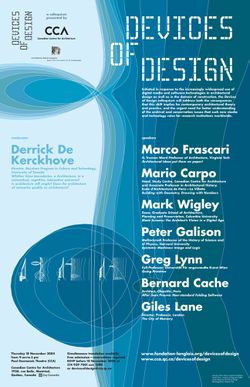
A collaboration between the CCA and the Daniel Langlois Foundation for Art, Science, and Technology, Devices of Design was initiated in response to the increasingly widespread use of digital media and software technologies in architectural design and construction. A colloquium and a subsequent roundtable discussion address both the consequences that this shift implies for(...)
A collaboration between the CCA and the Daniel Langlois Foundation for Art, Science, and Technology, Devices of Design was initiated in response to the increasingly widespread use of digital media and software technologies in architectural design and construction. A colloquium and a subsequent roundtable discussion address both the consequences that this shift implies for(...)
Location:
Paul-Desmarais Theatre
Paul-Desmarais Theatre
Date:
18 November 2004 to 19 November 2004
18 November 2004 to 19 November 2004
Title:
Devices of Design
Actions:
Description:
A collaboration between the CCA and the Daniel Langlois Foundation for Art, Science, and Technology, Devices of Design was initiated in response to the increasingly widespread use of digital media and software technologies in architectural design and construction. A colloquium and a subsequent roundtable discussion address both the consequences that this shift implies for(...)
Devices of Design
Actions:
Description:
A collaboration between the CCA and the Daniel Langlois Foundation for Art, Science, and Technology, Devices of Design was initiated in response to the increasingly widespread use of digital media and software technologies in architectural design and construction. A colloquium and a subsequent roundtable discussion address both the consequences that this shift implies for(...)
Form:
events
events
Date:
18 November 2004 to
19 November 2004
18 November 2004 to
19 November 2004
Location:
Paul-Desmarais Theatre
Paul-Desmarais Theatre


