


9148 Results
Form:
drawings
drawings
Actions:
Reference number:
DR1987:0543:001-005
Description:
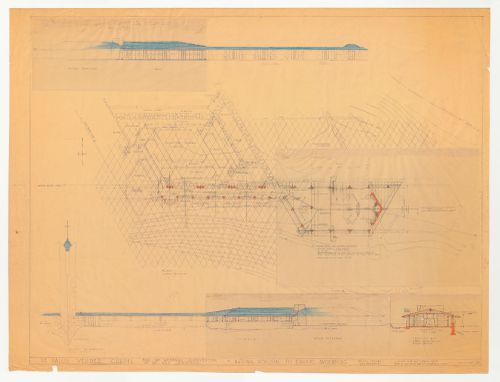
- This design for the cloister, cloister garden, community hall and utility rooms for Wayfarers' Chapel, Palos Verdes, California, shows the campanile and vestry as-built. It includes two proposals for the parish house. The first proposal is for a triangular-plan parish house. The second proposal, which is detailed on the flaps, is for a two-phase project consisting of a much smaller hall to be built immediately, with later additions for utility rooms and a kitchen.
DR1987:0543:001-005
Description:
- This design for the cloister, cloister garden, community hall and utility rooms for Wayfarers' Chapel, Palos Verdes, California, shows the campanile and vestry as-built. It includes two proposals for the parish house. The first proposal is for a triangular-plan parish house. The second proposal, which is detailed on the flaps, is for a two-phase project consisting of a much smaller hall to be built immediately, with later additions for utility rooms and a kitchen.
People:
Subject:
architecture
architecture
Date:
printed after 30 August 1954
printed after 30 August 1954
Title:
Wayfarers' Chapel, Palos Verdes, California: Plan, elevations, and sections for cloister and parish house, including flaps showing an alternate design
Actions:
DR1987:0543:001-005
Description:
- This design for the cloister, cloister garden, community hall and utility rooms for Wayfarers' Chapel, Palos Verdes, California, shows the campanile and vestry as-built. It includes two proposals for the parish house. The first proposal is for a triangular-plan parish house. The second proposal, which is detailed on the flaps, is for a two-phase project consisting of a much smaller hall to be built immediately, with later additions for utility rooms and a kitchen.
Wayfarers' Chapel, Palos Verdes, California: Plan, elevations, and sections for cloister and parish house, including flaps showing an alternate design
Actions:
DR1987:0543:001-005
Description:
- This design for the cloister, cloister garden, community hall and utility rooms for Wayfarers' Chapel, Palos Verdes, California, shows the campanile and vestry as-built. It includes two proposals for the parish house. The first proposal is for a triangular-plan parish house. The second proposal, which is detailed on the flaps, is for a two-phase project consisting of a much smaller hall to be built immediately, with later additions for utility rooms and a kitchen.
Form:
drawings
drawings
Date:
printed after 30 August 1954
printed after 30 August 1954
People:
Subject:
architecture
architecture
Form:
photographs
photographs
Actions:
Reference number:
PH1986:0901:040:002
Description:
- This photograph was taken from the base of the White Pagoda [Bai Ta] (now also known as the White Dagoba), Western Garden [Xi Yuan] (now Beihai Park), Peking (now Beijing), China (Harris, p. 147). The Forbidden City is visible from centre left to centre right and the west wall and a building at the southwest corner of the Ta-kao hsuan Hall (now Dagaoxuan Dian) temple complex are visible at centre left.
PH1986:0901:040:002
Description:
- This photograph was taken from the base of the White Pagoda [Bai Ta] (now also known as the White Dagoba), Western Garden [Xi Yuan] (now Beihai Park), Peking (now Beijing), China (Harris, p. 147). The Forbidden City is visible from centre left to centre right and the west wall and a building at the southwest corner of the Ta-kao hsuan Hall (now Dagaoxuan Dian) temple complex are visible at centre left.
People:
Subject:
architecture, landscape architecture
architecture, landscape architecture
Date:
after 24 October and before 16 November 1860
after 24 October and before 16 November 1860
Title:
View of the Forbidden City (also known as Zijincheng [Purple Forbidden Enclosure] and the Imperial Palace; now the Palace Museum), Peking (now Beijing), China
Actions:
PH1986:0901:040:002
Description:
- This photograph was taken from the base of the White Pagoda [Bai Ta] (now also known as the White Dagoba), Western Garden [Xi Yuan] (now Beihai Park), Peking (now Beijing), China (Harris, p. 147). The Forbidden City is visible from centre left to centre right and the west wall and a building at the southwest corner of the Ta-kao hsuan Hall (now Dagaoxuan Dian) temple complex are visible at centre left.
View of the Forbidden City (also known as Zijincheng [Purple Forbidden Enclosure] and the Imperial Palace; now the Palace Museum), Peking (now Beijing), China
Actions:
PH1986:0901:040:002
Description:
- This photograph was taken from the base of the White Pagoda [Bai Ta] (now also known as the White Dagoba), Western Garden [Xi Yuan] (now Beihai Park), Peking (now Beijing), China (Harris, p. 147). The Forbidden City is visible from centre left to centre right and the west wall and a building at the southwest corner of the Ta-kao hsuan Hall (now Dagaoxuan Dian) temple complex are visible at centre left.
Form:
photographs
photographs
Date:
after 24 October and before 16 November 1860
after 24 October and before 16 November 1860
People:
Subject:
architecture, landscape architecture
architecture, landscape architecture
Form:
photographs
photographs
Actions:
Reference number:
PH1986:0347:002
Description:
- This photograph was taken from the base of the White Pagoda [Bai Ta] (now also known as the White Dagoba), Western Garden [Xi Yuan] (now Beihai Park), Peking (now Beijing), China (Harris, p. 147). The Forbidden City is visible from centre left to centre right and the west wall and a building at the southwest corner of the Ta-kao hsuan Hall (now Dagaoxuan Dian) temple complex are visible at centre left.
PH1986:0347:002
Description:
- This photograph was taken from the base of the White Pagoda [Bai Ta] (now also known as the White Dagoba), Western Garden [Xi Yuan] (now Beihai Park), Peking (now Beijing), China (Harris, p. 147). The Forbidden City is visible from centre left to centre right and the west wall and a building at the southwest corner of the Ta-kao hsuan Hall (now Dagaoxuan Dian) temple complex are visible at centre left.
People:
Subject:
architecture, landscape architecture
architecture, landscape architecture
Date:
after 24 October 1860 and before 16 November 1860
after 24 October 1860 and before 16 November 1860
Title:
View of the Forbidden City (also known as Zijincheng [Purple Forbidden Enclosure] and the Imperial Palace; now the Palace Museum), Peking (now Beijing), China
Actions:
PH1986:0347:002
Description:
- This photograph was taken from the base of the White Pagoda [Bai Ta] (now also known as the White Dagoba), Western Garden [Xi Yuan] (now Beihai Park), Peking (now Beijing), China (Harris, p. 147). The Forbidden City is visible from centre left to centre right and the west wall and a building at the southwest corner of the Ta-kao hsuan Hall (now Dagaoxuan Dian) temple complex are visible at centre left.
View of the Forbidden City (also known as Zijincheng [Purple Forbidden Enclosure] and the Imperial Palace; now the Palace Museum), Peking (now Beijing), China
Actions:
PH1986:0347:002
Description:
- This photograph was taken from the base of the White Pagoda [Bai Ta] (now also known as the White Dagoba), Western Garden [Xi Yuan] (now Beihai Park), Peking (now Beijing), China (Harris, p. 147). The Forbidden City is visible from centre left to centre right and the west wall and a building at the southwest corner of the Ta-kao hsuan Hall (now Dagaoxuan Dian) temple complex are visible at centre left.
Form:
photographs
photographs
Date:
after 24 October 1860 and before 16 November 1860
after 24 October 1860 and before 16 November 1860
People:
Subject:
architecture, landscape architecture
architecture, landscape architecture
Form:
drawings
drawings
Actions:
Reference number:
ARCH288571
Description:
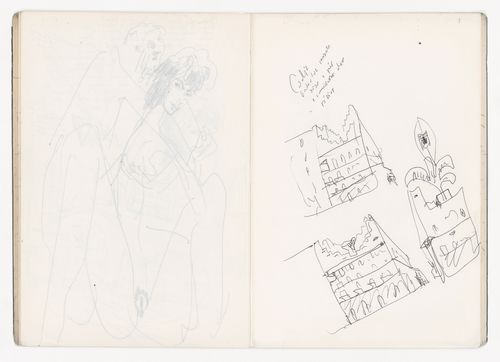
This sketchbook includes sketches for the reconstruction of Portal di Riquer in Alcoy, Spain, and for the reconstruction of the Chiado. It also contains sketches of a garden in Seville, people, and furniture, as well as notes for the Housing in Concepción Arenal in Cadiz, Guardiola house in Puerto de Santa Maria, Santo Domingo de Bonaval Park in Santiago de Compostela, Vilanova de Arousa Sport complex, and Olympic Village Meteorological Centre and MOPU delegation headquarters in Barcelona.
ARCH288571
Description:
This sketchbook includes sketches for the reconstruction of Portal di Riquer in Alcoy, Spain, and for the reconstruction of the Chiado. It also contains sketches of a garden in Seville, people, and furniture, as well as notes for the Housing in Concepción Arenal in Cadiz, Guardiola house in Puerto de Santa Maria, Santo Domingo de Bonaval Park in Santiago de Compostela, Vilanova de Arousa Sport complex, and Olympic Village Meteorological Centre and MOPU delegation headquarters in Barcelona.
People:
Date:
August 1989
August 1989
Title:
Sketchbook 292: Texto Baixa - Fac. Arq.ra Jardins-Madrid- Museu Porto II-Cadiz I -Sevilha Jardim Sicilia-Alcoy
Actions:
ARCH288571
Description:
This sketchbook includes sketches for the reconstruction of Portal di Riquer in Alcoy, Spain, and for the reconstruction of the Chiado. It also contains sketches of a garden in Seville, people, and furniture, as well as notes for the Housing in Concepción Arenal in Cadiz, Guardiola house in Puerto de Santa Maria, Santo Domingo de Bonaval Park in Santiago de Compostela, Vilanova de Arousa Sport complex, and Olympic Village Meteorological Centre and MOPU delegation headquarters in Barcelona.
Sketchbook 292: Texto Baixa - Fac. Arq.ra Jardins-Madrid- Museu Porto II-Cadiz I -Sevilha Jardim Sicilia-Alcoy
Actions:
ARCH288571
Description:
This sketchbook includes sketches for the reconstruction of Portal di Riquer in Alcoy, Spain, and for the reconstruction of the Chiado. It also contains sketches of a garden in Seville, people, and furniture, as well as notes for the Housing in Concepción Arenal in Cadiz, Guardiola house in Puerto de Santa Maria, Santo Domingo de Bonaval Park in Santiago de Compostela, Vilanova de Arousa Sport complex, and Olympic Village Meteorological Centre and MOPU delegation headquarters in Barcelona.
Form:
drawings
drawings
Date:
August 1989
August 1989
People:
Level of archival description:
Project
Project
Actions:
Reference number:
AP018.S1.1982.PR19
Description:
This project series documents the design and construction of the Hôtel de la Délégation in Algiers, Algeria from 1982-1985. The office identified the project number as 8220. This hotel was designed with inspiration from traditional Maghrebian and Middle Eastern architecture but made in the modern style. The site for the project consisted of the hotel, a neighbouring villa, a separate office complex, a roundabout at the entrance, two pools, tennis courts, gardens and, an arcade. The project proposed several variations on the design for the hotel, including an eight-level option and a ten-level option, the latter adding two levels of parking to the bottom of the building. The hotel was built into a hill so floors that were subterranean on one side of the building were above ground on the other. This latter side had terraced pergolas at every level with views over the pool. The hotel had a multi-level atrium that contained elaborate indoor gardens and trees. While the ground floor was made up of conference rooms, banquet halls and the reception area, the other levels mostly contained hotel rooms. This project was commissioned by Lavalin International Inc. for the Algerian government, who are referred to in the records as the Présidence de la République, République Algérienne, Démocratique et Populaire. The project is also referred to as Hôtel Alger in the project documentation. The project is recorded through drawings, photographic materials and textual records dating from 1982-1985. Almost all of the records are in French, with the exception of a few interoffice communications. While there are construction drawings in the project materials, there are also a large number of design drawings showing different schemes and ideas for the hotel. The photographic materials include construction progress photos of the hotel. The textual records consist of correspondence, meeting reports, pre-design records and the project scope, financial documentation, schedules, interoffice letters, construction and detail planning records, specifications and progress reports. Box AP018.S1.1982.PR19.041 in this project series includes an index to the textual materials, which was created by the office.
AP018.S1.1982.PR19
Description:
This project series documents the design and construction of the Hôtel de la Délégation in Algiers, Algeria from 1982-1985. The office identified the project number as 8220. This hotel was designed with inspiration from traditional Maghrebian and Middle Eastern architecture but made in the modern style. The site for the project consisted of the hotel, a neighbouring villa, a separate office complex, a roundabout at the entrance, two pools, tennis courts, gardens and, an arcade. The project proposed several variations on the design for the hotel, including an eight-level option and a ten-level option, the latter adding two levels of parking to the bottom of the building. The hotel was built into a hill so floors that were subterranean on one side of the building were above ground on the other. This latter side had terraced pergolas at every level with views over the pool. The hotel had a multi-level atrium that contained elaborate indoor gardens and trees. While the ground floor was made up of conference rooms, banquet halls and the reception area, the other levels mostly contained hotel rooms. This project was commissioned by Lavalin International Inc. for the Algerian government, who are referred to in the records as the Présidence de la République, République Algérienne, Démocratique et Populaire. The project is also referred to as Hôtel Alger in the project documentation. The project is recorded through drawings, photographic materials and textual records dating from 1982-1985. Almost all of the records are in French, with the exception of a few interoffice communications. While there are construction drawings in the project materials, there are also a large number of design drawings showing different schemes and ideas for the hotel. The photographic materials include construction progress photos of the hotel. The textual records consist of correspondence, meeting reports, pre-design records and the project scope, financial documentation, schedules, interoffice letters, construction and detail planning records, specifications and progress reports. Box AP018.S1.1982.PR19.041 in this project series includes an index to the textual materials, which was created by the office.
People:
Date:
1982-1985
1982-1985
Title:
Hôtel de la Délégation, Algiers, Algeria (1982-1985)
Actions:
AP018.S1.1982.PR19
Description:
This project series documents the design and construction of the Hôtel de la Délégation in Algiers, Algeria from 1982-1985. The office identified the project number as 8220. This hotel was designed with inspiration from traditional Maghrebian and Middle Eastern architecture but made in the modern style. The site for the project consisted of the hotel, a neighbouring villa, a separate office complex, a roundabout at the entrance, two pools, tennis courts, gardens and, an arcade. The project proposed several variations on the design for the hotel, including an eight-level option and a ten-level option, the latter adding two levels of parking to the bottom of the building. The hotel was built into a hill so floors that were subterranean on one side of the building were above ground on the other. This latter side had terraced pergolas at every level with views over the pool. The hotel had a multi-level atrium that contained elaborate indoor gardens and trees. While the ground floor was made up of conference rooms, banquet halls and the reception area, the other levels mostly contained hotel rooms. This project was commissioned by Lavalin International Inc. for the Algerian government, who are referred to in the records as the Présidence de la République, République Algérienne, Démocratique et Populaire. The project is also referred to as Hôtel Alger in the project documentation. The project is recorded through drawings, photographic materials and textual records dating from 1982-1985. Almost all of the records are in French, with the exception of a few interoffice communications. While there are construction drawings in the project materials, there are also a large number of design drawings showing different schemes and ideas for the hotel. The photographic materials include construction progress photos of the hotel. The textual records consist of correspondence, meeting reports, pre-design records and the project scope, financial documentation, schedules, interoffice letters, construction and detail planning records, specifications and progress reports. Box AP018.S1.1982.PR19.041 in this project series includes an index to the textual materials, which was created by the office.
Hôtel de la Délégation, Algiers, Algeria (1982-1985)
Actions:
AP018.S1.1982.PR19
Description:
This project series documents the design and construction of the Hôtel de la Délégation in Algiers, Algeria from 1982-1985. The office identified the project number as 8220. This hotel was designed with inspiration from traditional Maghrebian and Middle Eastern architecture but made in the modern style. The site for the project consisted of the hotel, a neighbouring villa, a separate office complex, a roundabout at the entrance, two pools, tennis courts, gardens and, an arcade. The project proposed several variations on the design for the hotel, including an eight-level option and a ten-level option, the latter adding two levels of parking to the bottom of the building. The hotel was built into a hill so floors that were subterranean on one side of the building were above ground on the other. This latter side had terraced pergolas at every level with views over the pool. The hotel had a multi-level atrium that contained elaborate indoor gardens and trees. While the ground floor was made up of conference rooms, banquet halls and the reception area, the other levels mostly contained hotel rooms. This project was commissioned by Lavalin International Inc. for the Algerian government, who are referred to in the records as the Présidence de la République, République Algérienne, Démocratique et Populaire. The project is also referred to as Hôtel Alger in the project documentation. The project is recorded through drawings, photographic materials and textual records dating from 1982-1985. Almost all of the records are in French, with the exception of a few interoffice communications. While there are construction drawings in the project materials, there are also a large number of design drawings showing different schemes and ideas for the hotel. The photographic materials include construction progress photos of the hotel. The textual records consist of correspondence, meeting reports, pre-design records and the project scope, financial documentation, schedules, interoffice letters, construction and detail planning records, specifications and progress reports. Box AP018.S1.1982.PR19.041 in this project series includes an index to the textual materials, which was created by the office.
Level of archival description:
Project
Project
Date:
1982-1985
1982-1985
People:
Level of archival description:
Project
Project
Actions:
Reference number:
AP075.S1.1994.PR01
Description:
Project series documents Cornelia Hahn Oberlander's project of a roof garden for the New Canadian Embassy at Leipziger Platz in Berlin, Germany. Oberlander worked on this project in from 1999-2005 with architectural firm Kuwabara, Payne, McKenna, Blumberg Architects. Oberlander's work for the project included a terrace at the Ambassador's Level (6th floor) with mounded evergreen white flowering groundcover azaleas, cascading roses hanging along the Leipzigerstrasse facade, and a green roof on top of the building. The concept of the landscaping of the green roof was to represente Canada's land of the north in an abstract form, simulating the river system of the MacKenzie River in the Northwest Territories, linking Alberta to the Arctic Ocean. She used black-glass panels to represente the water. The drainage for the green roof was also connected the drainage infrastructure of the building to recycle the water collected from the roof. The project series includes sketches and design development drawings for the green roof landscaping, planting details and irrigation details, presentation drawings from KPMB and drawings of the building used as reference. The project is also documented through research material, concept notes by Oberlander, correspondence, including with architects, consultants, contractors and clients, proposal, specifications, and press clippings about the project. The project series also includes sample of glass tiles used for the landscaping.
AP075.S1.1994.PR01
Description:
Project series documents Cornelia Hahn Oberlander's project of a roof garden for the New Canadian Embassy at Leipziger Platz in Berlin, Germany. Oberlander worked on this project in from 1999-2005 with architectural firm Kuwabara, Payne, McKenna, Blumberg Architects. Oberlander's work for the project included a terrace at the Ambassador's Level (6th floor) with mounded evergreen white flowering groundcover azaleas, cascading roses hanging along the Leipzigerstrasse facade, and a green roof on top of the building. The concept of the landscaping of the green roof was to represente Canada's land of the north in an abstract form, simulating the river system of the MacKenzie River in the Northwest Territories, linking Alberta to the Arctic Ocean. She used black-glass panels to represente the water. The drainage for the green roof was also connected the drainage infrastructure of the building to recycle the water collected from the roof. The project series includes sketches and design development drawings for the green roof landscaping, planting details and irrigation details, presentation drawings from KPMB and drawings of the building used as reference. The project is also documented through research material, concept notes by Oberlander, correspondence, including with architects, consultants, contractors and clients, proposal, specifications, and press clippings about the project. The project series also includes sample of glass tiles used for the landscaping.
People:
Date:
1994-2005
1994-2005
Title:
New Canadian Embassy in Berlin, Germany (1994-2005)
Actions:
AP075.S1.1994.PR01
Description:
Project series documents Cornelia Hahn Oberlander's project of a roof garden for the New Canadian Embassy at Leipziger Platz in Berlin, Germany. Oberlander worked on this project in from 1999-2005 with architectural firm Kuwabara, Payne, McKenna, Blumberg Architects. Oberlander's work for the project included a terrace at the Ambassador's Level (6th floor) with mounded evergreen white flowering groundcover azaleas, cascading roses hanging along the Leipzigerstrasse facade, and a green roof on top of the building. The concept of the landscaping of the green roof was to represente Canada's land of the north in an abstract form, simulating the river system of the MacKenzie River in the Northwest Territories, linking Alberta to the Arctic Ocean. She used black-glass panels to represente the water. The drainage for the green roof was also connected the drainage infrastructure of the building to recycle the water collected from the roof. The project series includes sketches and design development drawings for the green roof landscaping, planting details and irrigation details, presentation drawings from KPMB and drawings of the building used as reference. The project is also documented through research material, concept notes by Oberlander, correspondence, including with architects, consultants, contractors and clients, proposal, specifications, and press clippings about the project. The project series also includes sample of glass tiles used for the landscaping.
New Canadian Embassy in Berlin, Germany (1994-2005)
Actions:
AP075.S1.1994.PR01
Description:
Project series documents Cornelia Hahn Oberlander's project of a roof garden for the New Canadian Embassy at Leipziger Platz in Berlin, Germany. Oberlander worked on this project in from 1999-2005 with architectural firm Kuwabara, Payne, McKenna, Blumberg Architects. Oberlander's work for the project included a terrace at the Ambassador's Level (6th floor) with mounded evergreen white flowering groundcover azaleas, cascading roses hanging along the Leipzigerstrasse facade, and a green roof on top of the building. The concept of the landscaping of the green roof was to represente Canada's land of the north in an abstract form, simulating the river system of the MacKenzie River in the Northwest Territories, linking Alberta to the Arctic Ocean. She used black-glass panels to represente the water. The drainage for the green roof was also connected the drainage infrastructure of the building to recycle the water collected from the roof. The project series includes sketches and design development drawings for the green roof landscaping, planting details and irrigation details, presentation drawings from KPMB and drawings of the building used as reference. The project is also documented through research material, concept notes by Oberlander, correspondence, including with architects, consultants, contractors and clients, proposal, specifications, and press clippings about the project. The project series also includes sample of glass tiles used for the landscaping.
Level of archival description:
Project
Project
Date:
1994-2005
1994-2005
People:
Form:
drawings
drawings
Actions:
Reference number:
DR2012:0015:023:002-002
Description:
Ring binder containing notes and sketches related to the following events, locations, and/or projects: - A museum construction; - Montreal Museum of Fine Arts; - New York piece; - Tryptich; - Toronto construction; - Kassel piece; - Forgotten city series; - Table and chair; - CCA garden; - Settlers square, Calgary; - In flight ...; - Square Berri; - All the riches in the world; - Canadian tribute to human rights; - Montreal Museum of Contemporary Art [Musée d'art contemporain de Montréal]; - Hampstead; - Jerusalem; - Lenin's tomb; - Engineer's golems.
DR2012:0015:023:002-002
Description:
Ring binder containing notes and sketches related to the following events, locations, and/or projects: - A museum construction; - Montreal Museum of Fine Arts; - New York piece; - Tryptich; - Toronto construction; - Kassel piece; - Forgotten city series; - Table and chair; - CCA garden; - Settlers square, Calgary; - In flight ...; - Square Berri; - All the riches in the world; - Canadian tribute to human rights; - Montreal Museum of Contemporary Art [Musée d'art contemporain de Montréal]; - Hampstead; - Jerusalem; - Lenin's tomb; - Engineer's golems.
People:
Date:
1980-1995
1980-1995
Title:
Notes and sketches by Melvin Charney on his middle and later works
Actions:
DR2012:0015:023:002-002
Description:
Ring binder containing notes and sketches related to the following events, locations, and/or projects: - A museum construction; - Montreal Museum of Fine Arts; - New York piece; - Tryptich; - Toronto construction; - Kassel piece; - Forgotten city series; - Table and chair; - CCA garden; - Settlers square, Calgary; - In flight ...; - Square Berri; - All the riches in the world; - Canadian tribute to human rights; - Montreal Museum of Contemporary Art [Musée d'art contemporain de Montréal]; - Hampstead; - Jerusalem; - Lenin's tomb; - Engineer's golems.
Notes and sketches by Melvin Charney on his middle and later works
Actions:
DR2012:0015:023:002-002
Description:
Ring binder containing notes and sketches related to the following events, locations, and/or projects: - A museum construction; - Montreal Museum of Fine Arts; - New York piece; - Tryptich; - Toronto construction; - Kassel piece; - Forgotten city series; - Table and chair; - CCA garden; - Settlers square, Calgary; - In flight ...; - Square Berri; - All the riches in the world; - Canadian tribute to human rights; - Montreal Museum of Contemporary Art [Musée d'art contemporain de Montréal]; - Hampstead; - Jerusalem; - Lenin's tomb; - Engineer's golems.
Form:
drawings
drawings
Date:
1980-1995
1980-1995
People:
Level of archival description:
Project
Project
Actions:
Reference number:
AP149.S1.2004.PR01
Description:
The project series documents Minimum Cost Housing Group's project of research, design and construction to demonstrate the benefits of urban agriculture as a permanent feature in housing design and urban planning. A first phase of the project, from 2004 to 2007, the study project took place in developping countries in three diffrent sites: Colombo, Sri Lanka; Rosario, Argentina; and Kampala, Uganda. The project was funded by the International Development Research Centre (IDRC) and supported by the ETC-Urban Agriculture Unit in the Netherlands and the Resource centres on Urban Agriculture and Food Security (RUAF). In 2007, a second phase of the project had for objective to implement an urban agriculture production in Montréal. The Minimum Cost Housing Group team created, on McGill Campus, a vegetable garden on the terrace of a parking garage. The project is now known as "Making Edible Campus" and is still on-going. The material in this project series was produced between 2003 and 2010. The project series contains a large collection of working documents and reports submitted to funding institutions, correspondence with collaborators on the three sites, and also photographss of the project in Colombo, Kampala, Rosario sites. Also included are various artefacts related to the sites in the three developping countries and a board game "Gardenpoly" created by the Urban Agriculture seminar students on urban agriculture in Montréal. Promotional panels for the Making Edible Campus are also included.
AP149.S1.2004.PR01
Description:
The project series documents Minimum Cost Housing Group's project of research, design and construction to demonstrate the benefits of urban agriculture as a permanent feature in housing design and urban planning. A first phase of the project, from 2004 to 2007, the study project took place in developping countries in three diffrent sites: Colombo, Sri Lanka; Rosario, Argentina; and Kampala, Uganda. The project was funded by the International Development Research Centre (IDRC) and supported by the ETC-Urban Agriculture Unit in the Netherlands and the Resource centres on Urban Agriculture and Food Security (RUAF). In 2007, a second phase of the project had for objective to implement an urban agriculture production in Montréal. The Minimum Cost Housing Group team created, on McGill Campus, a vegetable garden on the terrace of a parking garage. The project is now known as "Making Edible Campus" and is still on-going. The material in this project series was produced between 2003 and 2010. The project series contains a large collection of working documents and reports submitted to funding institutions, correspondence with collaborators on the three sites, and also photographss of the project in Colombo, Kampala, Rosario sites. Also included are various artefacts related to the sites in the three developping countries and a board game "Gardenpoly" created by the Urban Agriculture seminar students on urban agriculture in Montréal. Promotional panels for the Making Edible Campus are also included.
People:
Date:
2003-2010
2003-2010
Title:
Urban agriculture demonstration
Actions:
AP149.S1.2004.PR01
Description:
The project series documents Minimum Cost Housing Group's project of research, design and construction to demonstrate the benefits of urban agriculture as a permanent feature in housing design and urban planning. A first phase of the project, from 2004 to 2007, the study project took place in developping countries in three diffrent sites: Colombo, Sri Lanka; Rosario, Argentina; and Kampala, Uganda. The project was funded by the International Development Research Centre (IDRC) and supported by the ETC-Urban Agriculture Unit in the Netherlands and the Resource centres on Urban Agriculture and Food Security (RUAF). In 2007, a second phase of the project had for objective to implement an urban agriculture production in Montréal. The Minimum Cost Housing Group team created, on McGill Campus, a vegetable garden on the terrace of a parking garage. The project is now known as "Making Edible Campus" and is still on-going. The material in this project series was produced between 2003 and 2010. The project series contains a large collection of working documents and reports submitted to funding institutions, correspondence with collaborators on the three sites, and also photographss of the project in Colombo, Kampala, Rosario sites. Also included are various artefacts related to the sites in the three developping countries and a board game "Gardenpoly" created by the Urban Agriculture seminar students on urban agriculture in Montréal. Promotional panels for the Making Edible Campus are also included.
Urban agriculture demonstration
Actions:
AP149.S1.2004.PR01
Description:
The project series documents Minimum Cost Housing Group's project of research, design and construction to demonstrate the benefits of urban agriculture as a permanent feature in housing design and urban planning. A first phase of the project, from 2004 to 2007, the study project took place in developping countries in three diffrent sites: Colombo, Sri Lanka; Rosario, Argentina; and Kampala, Uganda. The project was funded by the International Development Research Centre (IDRC) and supported by the ETC-Urban Agriculture Unit in the Netherlands and the Resource centres on Urban Agriculture and Food Security (RUAF). In 2007, a second phase of the project had for objective to implement an urban agriculture production in Montréal. The Minimum Cost Housing Group team created, on McGill Campus, a vegetable garden on the terrace of a parking garage. The project is now known as "Making Edible Campus" and is still on-going. The material in this project series was produced between 2003 and 2010. The project series contains a large collection of working documents and reports submitted to funding institutions, correspondence with collaborators on the three sites, and also photographss of the project in Colombo, Kampala, Rosario sites. Also included are various artefacts related to the sites in the three developping countries and a board game "Gardenpoly" created by the Urban Agriculture seminar students on urban agriculture in Montréal. Promotional panels for the Making Edible Campus are also included.
Level of archival description:
Project
Project
Date:
2003-2010
2003-2010
People:
Form:
exhibitions
exhibitions
Actions:
Description:
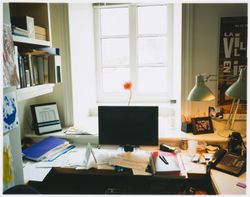
When the Canadian Centre for Architecture building was conceived and designed as an addition to the nineteenth-century Shaughnessy House, it also became an addition to the CCA’s extensive collection. Accordingly, the inaugural exhibitions in the new building in 1989 included a display on the Building and Gardens. The CCA, which plays an influential role in furthering(...)
When the Canadian Centre for Architecture building was conceived and designed as an addition to the nineteenth-century Shaughnessy House, it also became an addition to the CCA’s extensive collection. Accordingly, the inaugural exhibitions in the new building in 1989 included a display on the Building and Gardens. The CCA, which plays an influential role in furthering(...)
Location:
Hall cases
Hall cases
Date:
22 April 2015 to 30 November 2015
22 April 2015 to 30 November 2015
Title:
The CCA in Photographs, 1987–2015
Actions:
Description:
When the Canadian Centre for Architecture building was conceived and designed as an addition to the nineteenth-century Shaughnessy House, it also became an addition to the CCA’s extensive collection. Accordingly, the inaugural exhibitions in the new building in 1989 included a display on the Building and Gardens. The CCA, which plays an influential role in furthering(...)
The CCA in Photographs, 1987–2015
Actions:
Description:
When the Canadian Centre for Architecture building was conceived and designed as an addition to the nineteenth-century Shaughnessy House, it also became an addition to the CCA’s extensive collection. Accordingly, the inaugural exhibitions in the new building in 1989 included a display on the Building and Gardens. The CCA, which plays an influential role in furthering(...)
Form:
exhibitions
exhibitions
Date:
22 April 2015 to
30 November 2015
22 April 2015 to
30 November 2015
Location:
Hall cases
Hall cases
Form:
drawings
drawings
Reference number:
AP178.S2.1989.010
Description:
This sketchbook includes sketches for the reconstruction of Portal di Riquer in Alcoy, Spain, and for the reconstruction of the Chiado. It also contains sketches of a garden in Seville, people, and furniture, as well as notes for the Housing in Concepción Arenal in Cadiz, Guardiola house in Puerto de Santa Maria, Santo Domingo de Bonaval Park in Santiago de Compostela, Vilanova de Arousa Sport complex, and Olympic Village Meteorological Centre and MOPU delegation headquarters in Barcelona.
AP178.S2.1989.010
Description:
This sketchbook includes sketches for the reconstruction of Portal di Riquer in Alcoy, Spain, and for the reconstruction of the Chiado. It also contains sketches of a garden in Seville, people, and furniture, as well as notes for the Housing in Concepción Arenal in Cadiz, Guardiola house in Puerto de Santa Maria, Santo Domingo de Bonaval Park in Santiago de Compostela, Vilanova de Arousa Sport complex, and Olympic Village Meteorological Centre and MOPU delegation headquarters in Barcelona.
People:
Date:
August 1989
August 1989
Title:
Sketchbook 292: Texto Baixa - Fac. Arq.ra Jardins-Madrid- Museu Porto II-Cadiz I -Sevilha Jardim Sicilia-Alcoy
Actions:
AP178.S2.1989.010
Description:
This sketchbook includes sketches for the reconstruction of Portal di Riquer in Alcoy, Spain, and for the reconstruction of the Chiado. It also contains sketches of a garden in Seville, people, and furniture, as well as notes for the Housing in Concepción Arenal in Cadiz, Guardiola house in Puerto de Santa Maria, Santo Domingo de Bonaval Park in Santiago de Compostela, Vilanova de Arousa Sport complex, and Olympic Village Meteorological Centre and MOPU delegation headquarters in Barcelona.
Sketchbook 292: Texto Baixa - Fac. Arq.ra Jardins-Madrid- Museu Porto II-Cadiz I -Sevilha Jardim Sicilia-Alcoy
Actions:
AP178.S2.1989.010
Description:
This sketchbook includes sketches for the reconstruction of Portal di Riquer in Alcoy, Spain, and for the reconstruction of the Chiado. It also contains sketches of a garden in Seville, people, and furniture, as well as notes for the Housing in Concepción Arenal in Cadiz, Guardiola house in Puerto de Santa Maria, Santo Domingo de Bonaval Park in Santiago de Compostela, Vilanova de Arousa Sport complex, and Olympic Village Meteorological Centre and MOPU delegation headquarters in Barcelona.
Form:
drawings
drawings
Date:
August 1989
August 1989
People:


