


2092 Results
Form:
books
books
Actions:
Price:
$58.00
(available in store)
Summary:
"Nanoarchitecture" presents eleven of John Johansen's most inspired visions: a floating conference centre, an apartment building that sprouts from the earth and grows on its own, a levitating auditorium. The projects in "Nanoarchitecture" are presented through a series of idiosyncratic models, drawings, and computer animations suggesting what it would be like to inhabit(...)
$58.00
(available in store)
Summary:
"Nanoarchitecture" presents eleven of John Johansen's most inspired visions: a floating conference centre, an apartment building that sprouts from the earth and grows on its own, a levitating auditorium. The projects in "Nanoarchitecture" are presented through a series of idiosyncratic models, drawings, and computer animations suggesting what it would be like to inhabit(...)
Title:
Nanoarchitecture : a new species of architecture
Actions:
Price:
$58.00
(available in store)
Summary:
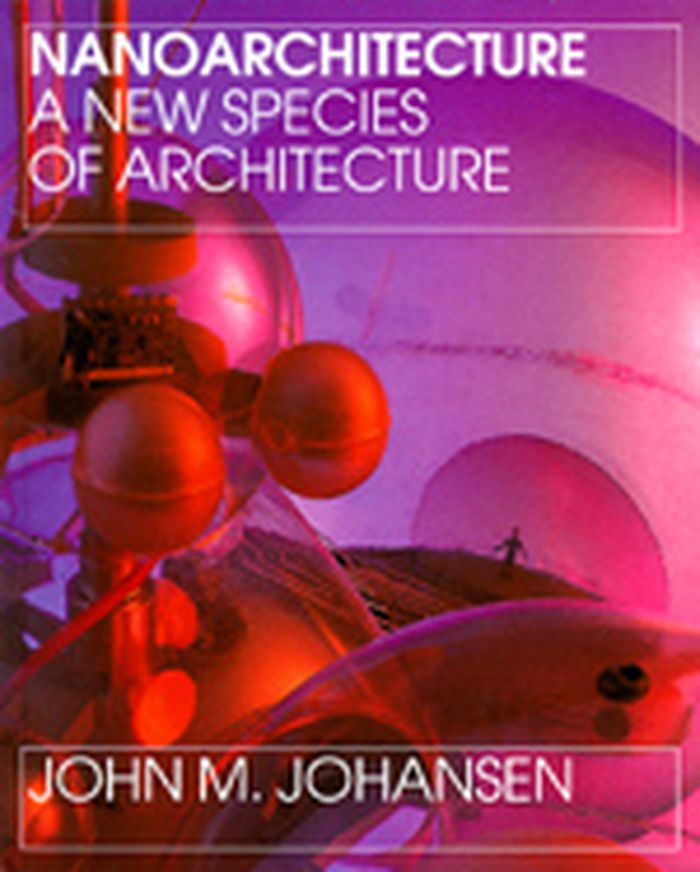
"Nanoarchitecture" presents eleven of John Johansen's most inspired visions: a floating conference centre, an apartment building that sprouts from the earth and grows on its own, a levitating auditorium. The projects in "Nanoarchitecture" are presented through a series of idiosyncratic models, drawings, and computer animations suggesting what it would be like to inhabit these fantastic spaces.
Nanoarchitecture : a new species of architecture
Actions:
Price:
$58.00
(available in store)
Summary:
"Nanoarchitecture" presents eleven of John Johansen's most inspired visions: a floating conference centre, an apartment building that sprouts from the earth and grows on its own, a levitating auditorium. The projects in "Nanoarchitecture" are presented through a series of idiosyncratic models, drawings, and computer animations suggesting what it would be like to inhabit these fantastic spaces.
Form:
books
books
Publication:
March 2002, New York
March 2002, New York
Subject:
Architecture Monographs
Architecture Monographs
Form:
books
books
Title:
Seven great explorations
Seven great explorations
Actions:
Price:
$4.95
(available to order)
Summary:
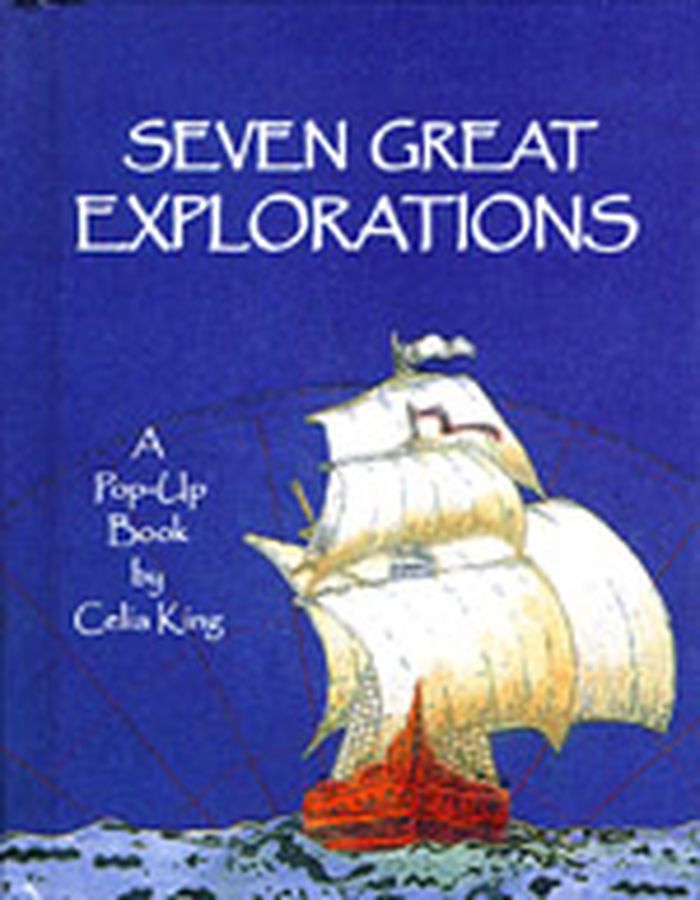
The seven explorations featured in this book tell the stories of the adventurers who mapped the earth and first set foot on the moon. Each explorations is a tale of daring, perseverance, and heroism, and is a benchmark in the course of human civilization. A brief informative text amd Celia King's miniature pop-ups bring each exploration to life.
$4.95
(available to order)
Summary:
The seven explorations featured in this book tell the stories of the adventurers who mapped the earth and first set foot on the moon. Each explorations is a tale of daring, perseverance, and heroism, and is a benchmark in the course of human civilization. A brief informative text amd Celia King's miniature pop-ups bring each exploration to life.
Title:
Seven great explorations
Actions:
Price:
$4.95
(available to order)
Summary:
The seven explorations featured in this book tell the stories of the adventurers who mapped the earth and first set foot on the moon. Each explorations is a tale of daring, perseverance, and heroism, and is a benchmark in the course of human civilization. A brief informative text amd Celia King's miniature pop-ups bring each exploration to life.
Seven great explorations
Actions:
Price:
$4.95
(available to order)
Summary:
The seven explorations featured in this book tell the stories of the adventurers who mapped the earth and first set foot on the moon. Each explorations is a tale of daring, perseverance, and heroism, and is a benchmark in the course of human civilization. A brief informative text amd Celia King's miniature pop-ups bring each exploration to life.
Form:
books
books
Publication:
January 1900, San Francisco
January 1900, San Francisco
Subject:
Children's Books
Children's Books
Form:
books
books
Title:
Glacial period
Glacial period
Actions:
Price:
$16.95
(available to order)
Summary:
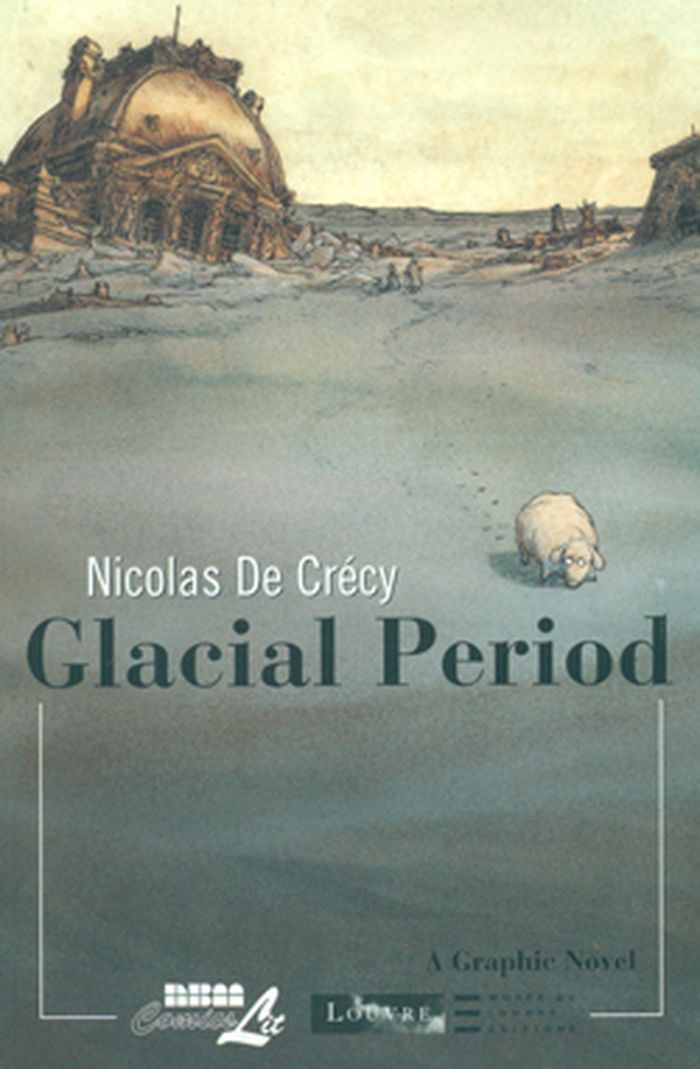
The first in a series of graphic novels created in collaboration with the Louvre, this is a novella that celebrates the collections within the famed Paris museum and allows a showcase for De Crecy's detailed, engaging drawing. The story opens with a team of archeologists exploring the earth thousands of years from now, after a long glacial period.
$16.95
(available to order)
Summary:
The first in a series of graphic novels created in collaboration with the Louvre, this is a novella that celebrates the collections within the famed Paris museum and allows a showcase for De Crecy's detailed, engaging drawing. The story opens with a team of archeologists exploring the earth thousands of years from now, after a long glacial period.
Title:
Glacial period
Actions:
Price:
$16.95
(available to order)
Summary:
The first in a series of graphic novels created in collaboration with the Louvre, this is a novella that celebrates the collections within the famed Paris museum and allows a showcase for De Crecy's detailed, engaging drawing. The story opens with a team of archeologists exploring the earth thousands of years from now, after a long glacial period.
Glacial period
Actions:
Price:
$16.95
(available to order)
Summary:
The first in a series of graphic novels created in collaboration with the Louvre, this is a novella that celebrates the collections within the famed Paris museum and allows a showcase for De Crecy's detailed, engaging drawing. The story opens with a team of archeologists exploring the earth thousands of years from now, after a long glacial period.
Form:
books
books
Publication:
September 2009
September 2009
Subject:
Children's Books
Children's Books
Form:
books
books
Actions:
Holdings:
Description:
254 pages : illustrations (chiefly color) ; 27 cm
Description:
254 pages : illustrations (chiefly color) ; 27 cm
Author:
Subject:
Publication:
London : Koenig Books : Co-edition with Barbican Art Gallery, 2009.
London : Koenig Books : Co-edition with Barbican Art Gallery, 2009.
Title:
Radical nature : art and architecture for a changing planet, 1969-2009 / [edited by Francesco Manacorda and Ariella Yedgar].
Actions:
Holdings:
Description:
254 pages : illustrations (chiefly color) ; 27 cm
Radical nature : art and architecture for a changing planet, 1969-2009 / [edited by Francesco Manacorda and Ariella Yedgar].
Actions:
Holdings:
Description:
254 pages : illustrations (chiefly color) ; 27 cm
Form:
books
books
Publication:
London : Koenig Books : Co-edition with Barbican Art Gallery, 2009.
London : Koenig Books : Co-edition with Barbican Art Gallery, 2009.
Author:
Subject:
Form:
books
books
Actions:
Holdings:
Description:
xix, 233 pages : illustrations (some color) ; 25 x 30 cm
Description:
xix, 233 pages : illustrations (some color) ; 25 x 30 cm
Author:
Subject:
Publication:
Berkeley, Calif. : University of California Press, ©1999.
Berkeley, Calif. : University of California Press, ©1999.
Title:
Farewell, promised land : waking from the California Dream / Robert Dawson and Gray Brechin.
Actions:
Holdings:
Description:
xix, 233 pages : illustrations (some color) ; 25 x 30 cm
Farewell, promised land : waking from the California Dream / Robert Dawson and Gray Brechin.
Actions:
Holdings:
Description:
xix, 233 pages : illustrations (some color) ; 25 x 30 cm
Form:
books
books
Publication:
Berkeley, Calif. : University of California Press, ©1999.
Berkeley, Calif. : University of California Press, ©1999.
Author:
Subject:
Form:
journals and magazines
journals and magazines
Actions:
Price:
$84.00
(available to order)
Summary:
Like light passing through a prism to reveal its many colors, the myriad expressions of the Earth unfold through the seasons. We’ve long moved with their simple and sacred rhythm; they are the primary gateway through which the human engages with cycles of creation, destruction, and renewal. But today we estrange ourselves from the seasons with technology and human-centric(...)
$84.00
(available to order)
Summary:
Like light passing through a prism to reveal its many colors, the myriad expressions of the Earth unfold through the seasons. We’ve long moved with their simple and sacred rhythm; they are the primary gateway through which the human engages with cycles of creation, destruction, and renewal. But today we estrange ourselves from the seasons with technology and human-centric(...)
Subject:
Magazines
Magazines
Publication:
January 2026
January 2026
Title:
Emergence Magazine, Vol.6: Seasons
Actions:
Price:
$84.00
(available to order)
Summary:
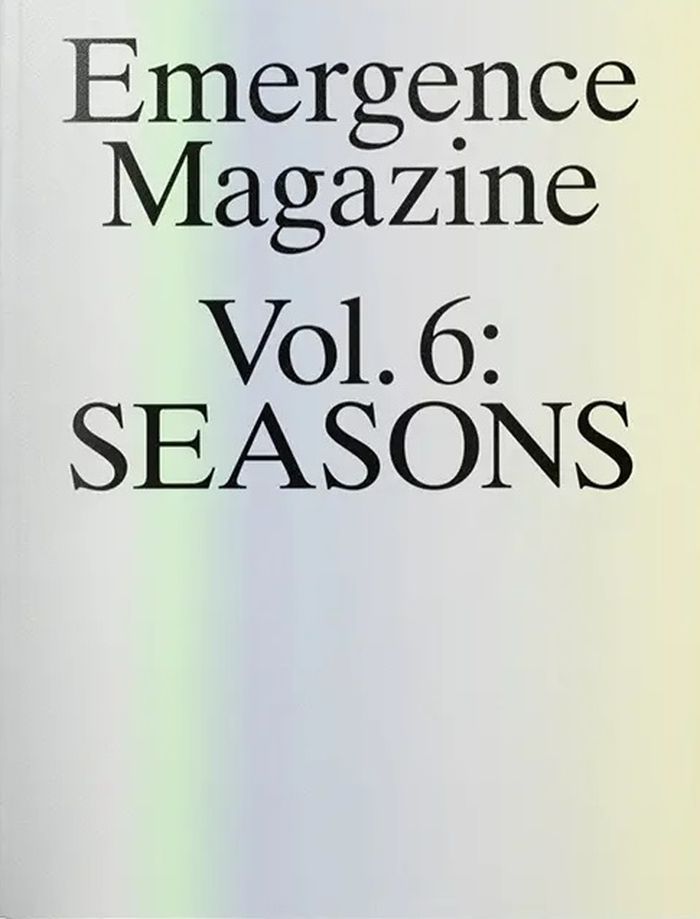
Like light passing through a prism to reveal its many colors, the myriad expressions of the Earth unfold through the seasons. We’ve long moved with their simple and sacred rhythm; they are the primary gateway through which the human engages with cycles of creation, destruction, and renewal. But today we estrange ourselves from the seasons with technology and human-centric myths, while an unraveling climate causes them to grow increasingly unfamiliar. Reflecting a world where snow no longer arrives, annual migrations fall out of time, yet first blossoms still burst, Seasons, our sixth print edition, moves through three themes: requiem, invitation, and celebration—each a contemplation on the paradoxical ways the seasons now beckon us into intimate relationship. This collection of haiku, essays, short fiction, photography, conversations, and poetry, infused with a spectrum of color and light, listens for the turning song of the seasons—for what vanishes and what remains—attentive to these moments that call us into communion with the Earth.
Emergence Magazine, Vol.6: Seasons
Actions:
Price:
$84.00
(available to order)
Summary:
Like light passing through a prism to reveal its many colors, the myriad expressions of the Earth unfold through the seasons. We’ve long moved with their simple and sacred rhythm; they are the primary gateway through which the human engages with cycles of creation, destruction, and renewal. But today we estrange ourselves from the seasons with technology and human-centric myths, while an unraveling climate causes them to grow increasingly unfamiliar. Reflecting a world where snow no longer arrives, annual migrations fall out of time, yet first blossoms still burst, Seasons, our sixth print edition, moves through three themes: requiem, invitation, and celebration—each a contemplation on the paradoxical ways the seasons now beckon us into intimate relationship. This collection of haiku, essays, short fiction, photography, conversations, and poetry, infused with a spectrum of color and light, listens for the turning song of the seasons—for what vanishes and what remains—attentive to these moments that call us into communion with the Earth.
Form:
journals and magazines
journals and magazines
Publication:
January 2026
January 2026
Subject:
Magazines
Magazines
Form:
books
books
Title:
Globus cassus
Globus cassus
Actions:
Price:
$45.95
(available to order)
Summary:
Part flight of fancy, part Star Trek set, part seemingly drug-induced delusion, Globus Cassus is a solution to a global dilemma, which remains the same size while housing an ever-increasing global population. The catalyst for the project as described by its creator, artist Christian Waldvogel: "The rapidly increasing population notice that their planet will soon be too(...)
$45.95
(available to order)
Summary:
Part flight of fancy, part Star Trek set, part seemingly drug-induced delusion, Globus Cassus is a solution to a global dilemma, which remains the same size while housing an ever-increasing global population. The catalyst for the project as described by its creator, artist Christian Waldvogel: "The rapidly increasing population notice that their planet will soon be too(...)
Subject:
Art Theory
Art Theory
Publication:
March 2005, Baden
March 2005, Baden
Title:
Globus cassus
Actions:
Price:
$45.95
(available to order)
Summary:
Part flight of fancy, part Star Trek set, part seemingly drug-induced delusion, Globus Cassus is a solution to a global dilemma, which remains the same size while housing an ever-increasing global population. The catalyst for the project as described by its creator, artist Christian Waldvogel: "The rapidly increasing population notice that their planet will soon be too small. The Earth is dismantled to provide building material. This is taken away to create Globus Cassus, a new, much bigger habitat, thought out from scratch." And so begins the story of converting the Earth into a gigantic hollow structure. The project, precisely worked out and described in detail, breaks through the bounds of architecture to continue the story of our great contemporary Utopias. Globus Cassus is the core of the Swiss contribution to the 9th Architecture Biennale in Venice, and this book examines the novel project through a series of drawings, diagrams, and photographs of three-dimensional models.
Globus cassus
Actions:
Price:
$45.95
(available to order)
Summary:
Part flight of fancy, part Star Trek set, part seemingly drug-induced delusion, Globus Cassus is a solution to a global dilemma, which remains the same size while housing an ever-increasing global population. The catalyst for the project as described by its creator, artist Christian Waldvogel: "The rapidly increasing population notice that their planet will soon be too small. The Earth is dismantled to provide building material. This is taken away to create Globus Cassus, a new, much bigger habitat, thought out from scratch." And so begins the story of converting the Earth into a gigantic hollow structure. The project, precisely worked out and described in detail, breaks through the bounds of architecture to continue the story of our great contemporary Utopias. Globus Cassus is the core of the Swiss contribution to the 9th Architecture Biennale in Venice, and this book examines the novel project through a series of drawings, diagrams, and photographs of three-dimensional models.
Form:
books
books
Publication:
March 2005, Baden
March 2005, Baden
Subject:
Art Theory
Art Theory
Form:
books
books
Actions:
Price:
$19.95
(available to order)
Summary:
The stirring speech given by Peter Sloterdijk in Lucerne in October 2022. From time immemorial, humanity has had to organize their "metabolism with nature." For Marx, the most important factor in this process was labor. When Prometheus, according to the myth, brought fire to earth, another crucial input was added. Fire has been used to cook food and harden tools for(...)
$19.95
(available to order)
Summary:
The stirring speech given by Peter Sloterdijk in Lucerne in October 2022. From time immemorial, humanity has had to organize their "metabolism with nature." For Marx, the most important factor in this process was labor. When Prometheus, according to the myth, brought fire to earth, another crucial input was added. Fire has been used to cook food and harden tools for(...)
Title:
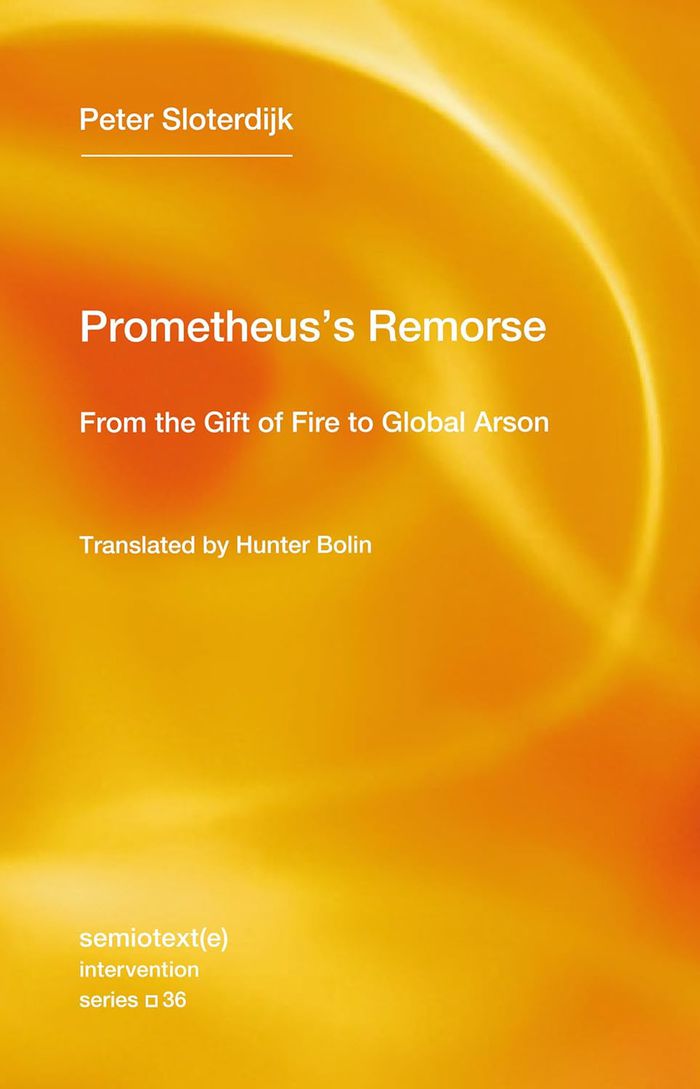
Prometheus's remorse: From the gift of fire to global arson
Actions:
Price:
$19.95
(available to order)
Summary:
The stirring speech given by Peter Sloterdijk in Lucerne in October 2022. From time immemorial, humanity has had to organize their "metabolism with nature." For Marx, the most important factor in this process was labor. When Prometheus, according to the myth, brought fire to earth, another crucial input was added. Fire has been used to cook food and harden tools for hundreds of thousands of years. In this sense, it can be said that all history implies the history of the uses of fire. But whereas trees could only be burnt once, labor and fire shifted with the discovery of underground deposits of coal and oil. Modern humanity, according to Peter Sloterdijk, can be considered a collective of arsonists who set fire to the underground forests and moors. If Prometheus were to return to earth today, he might regret his gift; after all, what looms is nothing less than Ekpyrosis, the demise of the world in fire. And only a new, energetic pacifism can prevent this catastrophe.
Prometheus's remorse: From the gift of fire to global arson
Actions:
Price:
$19.95
(available to order)
Summary:
The stirring speech given by Peter Sloterdijk in Lucerne in October 2022. From time immemorial, humanity has had to organize their "metabolism with nature." For Marx, the most important factor in this process was labor. When Prometheus, according to the myth, brought fire to earth, another crucial input was added. Fire has been used to cook food and harden tools for hundreds of thousands of years. In this sense, it can be said that all history implies the history of the uses of fire. But whereas trees could only be burnt once, labor and fire shifted with the discovery of underground deposits of coal and oil. Modern humanity, according to Peter Sloterdijk, can be considered a collective of arsonists who set fire to the underground forests and moors. If Prometheus were to return to earth today, he might regret his gift; after all, what looms is nothing less than Ekpyrosis, the demise of the world in fire. And only a new, energetic pacifism can prevent this catastrophe.
Form:
books
books
Publication:
March 2024
March 2024
Subject:
Critical Theory
Critical Theory
Form:
books
books
Title:
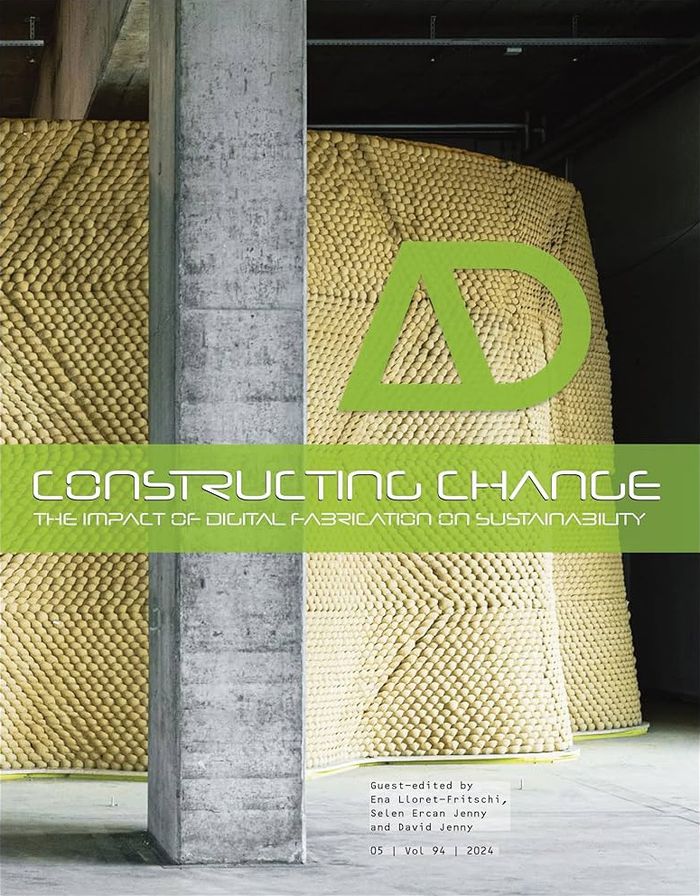
AD 94:05 Constructing change
AD 94:05 Constructing change
Actions:
Price:
$54.00
(available to order)
Summary:
Every year, nearly 100 billion tonnes of raw material globally is extracted from the earth – approximately half of it for construction purposes. The construction industry is responsible for an estimated third of global waste, while reuse of construction materials is not increasing fast enough. The same sector accounts for at least 40 per cent of global carbon-dioxide(...)
$54.00
(available to order)
Summary:
Every year, nearly 100 billion tonnes of raw material globally is extracted from the earth – approximately half of it for construction purposes. The construction industry is responsible for an estimated third of global waste, while reuse of construction materials is not increasing fast enough. The same sector accounts for at least 40 per cent of global carbon-dioxide(...)
Title:
AD 94:05 Constructing change
Actions:
Price:
$54.00
(available to order)
Summary:
Every year, nearly 100 billion tonnes of raw material globally is extracted from the earth – approximately half of it for construction purposes. The construction industry is responsible for an estimated third of global waste, while reuse of construction materials is not increasing fast enough. The same sector accounts for at least 40 per cent of global carbon-dioxide emissions. There is thus an urgent need to showcase how novel approaches in digital fabrication might be able to enhance thesustainability of buildings and transform construction. Featuring specialists from architecture, engineering and materials science, this AD presents innovative research and new construction systems, approaches and trends to demonstrate how existing methods and unique concepts that utilise cutting-edge technologies can, in a short space of time, help us advance towards a culture of sustainable construction. It focuses on digital design and manufacturing, including XR technologies, and highlights unique ways to build with earth or concrete.
AD 94:05 Constructing change
Actions:
Price:
$54.00
(available to order)
Summary:
Every year, nearly 100 billion tonnes of raw material globally is extracted from the earth – approximately half of it for construction purposes. The construction industry is responsible for an estimated third of global waste, while reuse of construction materials is not increasing fast enough. The same sector accounts for at least 40 per cent of global carbon-dioxide emissions. There is thus an urgent need to showcase how novel approaches in digital fabrication might be able to enhance thesustainability of buildings and transform construction. Featuring specialists from architecture, engineering and materials science, this AD presents innovative research and new construction systems, approaches and trends to demonstrate how existing methods and unique concepts that utilise cutting-edge technologies can, in a short space of time, help us advance towards a culture of sustainable construction. It focuses on digital design and manufacturing, including XR technologies, and highlights unique ways to build with earth or concrete.
Form:
books
books
Publication:
September 2024
September 2024
Subject:
Magazines
Magazines
Form:
books
books
Title:
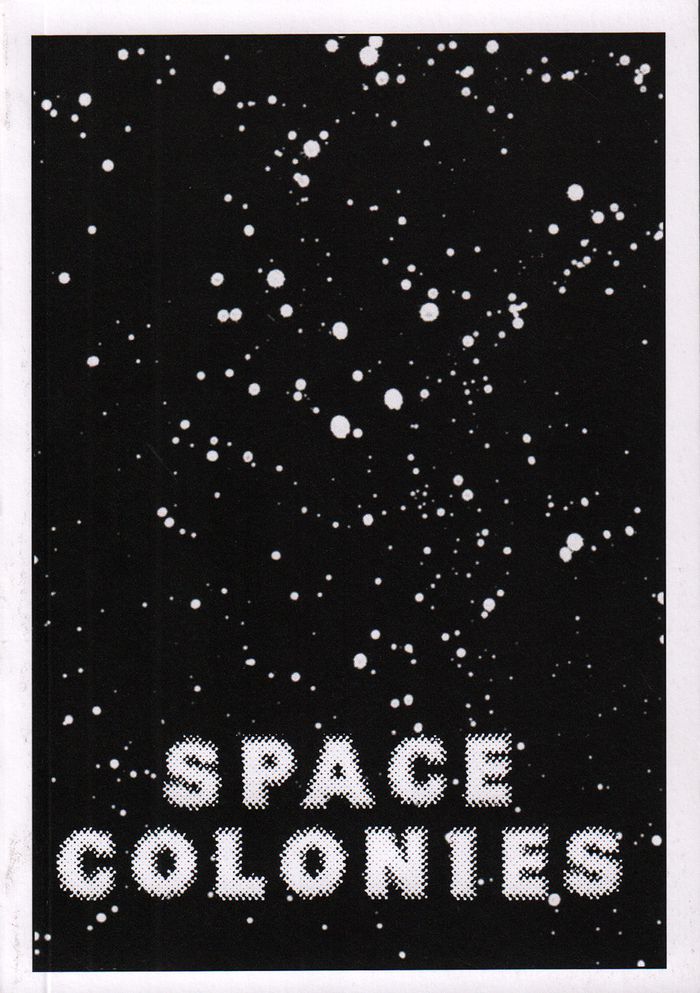
Space colonies
Space colonies
Actions:
Price:
$21.50
(available to order)
Summary:
At the beginning of the 1970s, American physicist Gerard K. O’Neill developed the first ideas for colonizing space. Shortly thereafter, Stewart Brand, cyber-communard and editor of the Whole Earth Catalog, took up these ideas and published the book Space Colonies in 1977. Space Colonies, an edition of Brand’s CoEvolution Quarterly, funded by the proceeds of the Whole(...)
$21.50
(available to order)
Summary:
At the beginning of the 1970s, American physicist Gerard K. O’Neill developed the first ideas for colonizing space. Shortly thereafter, Stewart Brand, cyber-communard and editor of the Whole Earth Catalog, took up these ideas and published the book Space Colonies in 1977. Space Colonies, an edition of Brand’s CoEvolution Quarterly, funded by the proceeds of the Whole(...)
Title:
Space colonies
Actions:
Price:
$21.50
(available to order)
Summary:
At the beginning of the 1970s, American physicist Gerard K. O’Neill developed the first ideas for colonizing space. Shortly thereafter, Stewart Brand, cyber-communard and editor of the Whole Earth Catalog, took up these ideas and published the book Space Colonies in 1977. Space Colonies, an edition of Brand’s CoEvolution Quarterly, funded by the proceeds of the Whole Earth Catalog, took up the question of whether space might be colonized by the year 2000. Artist Fabian Reimann takes up Brand and O’Neill’s particular strain of techno-utopianism in Space Colonies: A Galactic Freeman’s Journal. In his photo-essay Reimann assembles historical, present-day and speculative material, combining these with fictional and factual stories to create a composite of different images of the world. With global ecological disaster an even more pressing issue than it was in 1977, and the colonization of space still touted by some as a last-ditch resort, Reimann looks back at the dreams and nightmares of the 1970s with a sophisticated visual humor.
Space colonies
Actions:
Price:
$21.50
(available to order)
Summary:
At the beginning of the 1970s, American physicist Gerard K. O’Neill developed the first ideas for colonizing space. Shortly thereafter, Stewart Brand, cyber-communard and editor of the Whole Earth Catalog, took up these ideas and published the book Space Colonies in 1977. Space Colonies, an edition of Brand’s CoEvolution Quarterly, funded by the proceeds of the Whole Earth Catalog, took up the question of whether space might be colonized by the year 2000. Artist Fabian Reimann takes up Brand and O’Neill’s particular strain of techno-utopianism in Space Colonies: A Galactic Freeman’s Journal. In his photo-essay Reimann assembles historical, present-day and speculative material, combining these with fictional and factual stories to create a composite of different images of the world. With global ecological disaster an even more pressing issue than it was in 1977, and the colonization of space still touted by some as a last-ditch resort, Reimann looks back at the dreams and nightmares of the 1970s with a sophisticated visual humor.
Form:
books
books
Publication:
August 2017
August 2017
Subject:
Journeys
Journeys


