


1914 Results
Form:
books
books

Price:
$39.95
(available in store)
Summary:
The publication Arts for Living takes a close look at the Abrons Arts Center, a community-art facility on the Lower East Side of New York, as a case study for architecture designed to address issues of public space and community life. The Center was built during the 1970's fiscal crisis and designed by Prentice, Chan and Ohlhausen as a cultural institution with new(...)
$39.95
(available in store)
Summary:
The publication Arts for Living takes a close look at the Abrons Arts Center, a community-art facility on the Lower East Side of New York, as a case study for architecture designed to address issues of public space and community life. The Center was built during the 1970's fiscal crisis and designed by Prentice, Chan and Ohlhausen as a cultural institution with new(...)
Title:
Arts for living: public architecture and architectural education
Actions:
Price:
$39.95
(available in store)
Summary:
The publication Arts for Living takes a close look at the Abrons Arts Center, a community-art facility on the Lower East Side of New York, as a case study for architecture designed to address issues of public space and community life. The Center was built during the 1970's fiscal crisis and designed by Prentice, Chan and Ohlhausen as a cultural institution with new educational facilities intended to enable, foster, and serve the everyday activities of the local low-income population. The notions of public architecture and architecture education will be framed through three topics: the architecture and urban space of the Abrons Arts Center itself; the programming and activities at the Abrons Arts Center within the context of architectural education; and a larger survey of the environment of the Lower East Side, in terms of its cultural, social, and political context.
Arts for living: public architecture and architectural education
Actions:
Price:
$39.95
(available in store)
Summary:
The publication Arts for Living takes a close look at the Abrons Arts Center, a community-art facility on the Lower East Side of New York, as a case study for architecture designed to address issues of public space and community life. The Center was built during the 1970's fiscal crisis and designed by Prentice, Chan and Ohlhausen as a cultural institution with new educational facilities intended to enable, foster, and serve the everyday activities of the local low-income population. The notions of public architecture and architecture education will be framed through three topics: the architecture and urban space of the Abrons Arts Center itself; the programming and activities at the Abrons Arts Center within the context of architectural education; and a larger survey of the environment of the Lower East Side, in terms of its cultural, social, and political context.
Form:
books
books
Publication:
July 2015
July 2015
Subject:
Architectural Theory
Architectural Theory
Form:
books
books
Actions:
Price:
$112.00
(available to order)
Summary:
This two-volume catalogue of the "10th International Architecture Exhibition" presents an anthology of ideas centered around this year's theme: the meta-city. The changes in the physical and social structure of today's city have resulted in a new kind of civilian agglomeration that extends beyond the traditional form, concept, and boundaries of the city, causing profound(...)
$112.00
(available to order)
Summary:
This two-volume catalogue of the "10th International Architecture Exhibition" presents an anthology of ideas centered around this year's theme: the meta-city. The changes in the physical and social structure of today's city have resulted in a new kind of civilian agglomeration that extends beyond the traditional form, concept, and boundaries of the city, causing profound(...)
Subject:
Architecture since 1900, Europe
Architecture since 1900, Europe
Publication:
November 2006, New York
November 2006, New York
Title:
Cities, architecture and society
Actions:
Price:
$112.00
(available to order)
Summary:
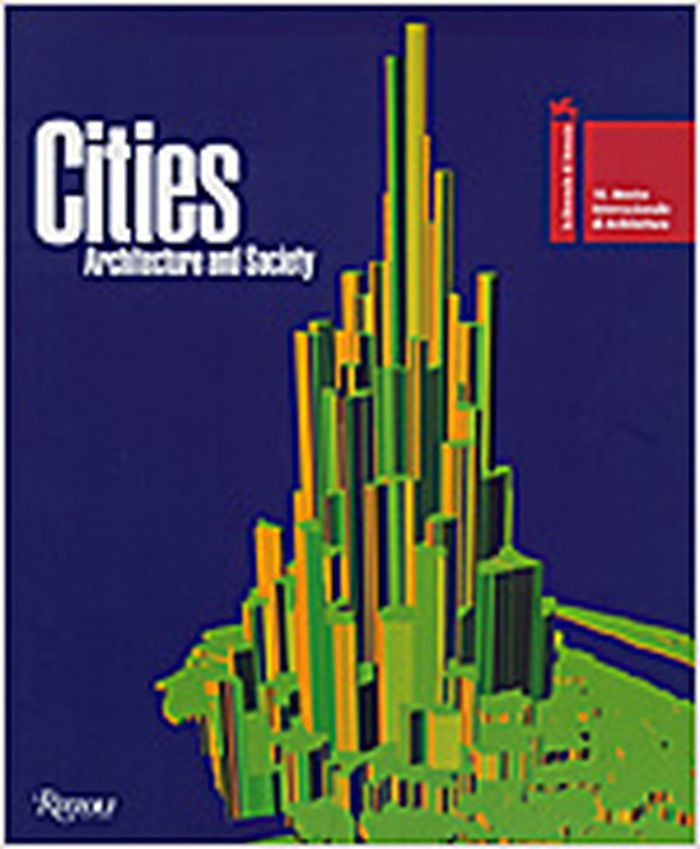
This two-volume catalogue of the "10th International Architecture Exhibition" presents an anthology of ideas centered around this year's theme: the meta-city. The changes in the physical and social structure of today's city have resulted in a new kind of civilian agglomeration that extends beyond the traditional form, concept, and boundaries of the city, causing profound transformations in the composition of its population and working habits. The International Exhibition, curated by Richard Burdett, will focus on the transformations of cities around the world, featuring New York, London, Berlin, Moscow, Tokyo, Shanghai, Mumbai, Mexico City, São Paulo Beirut, Istanbul, Johannesburg, and Lagos. Additionally, the biennale will propound a manifesto for rational development of cities in the 21st century. This book will be the definitive catalogue of what is perhaps the most important architecture exhibition in the world.
Cities, architecture and society
Actions:
Price:
$112.00
(available to order)
Summary:
This two-volume catalogue of the "10th International Architecture Exhibition" presents an anthology of ideas centered around this year's theme: the meta-city. The changes in the physical and social structure of today's city have resulted in a new kind of civilian agglomeration that extends beyond the traditional form, concept, and boundaries of the city, causing profound transformations in the composition of its population and working habits. The International Exhibition, curated by Richard Burdett, will focus on the transformations of cities around the world, featuring New York, London, Berlin, Moscow, Tokyo, Shanghai, Mumbai, Mexico City, São Paulo Beirut, Istanbul, Johannesburg, and Lagos. Additionally, the biennale will propound a manifesto for rational development of cities in the 21st century. This book will be the definitive catalogue of what is perhaps the most important architecture exhibition in the world.
Form:
books
books
Publication:
November 2006, New York
November 2006, New York
Subject:
Architecture since 1900, Europe
Architecture since 1900, Europe
Form:
books
books
Actions:
Price:
$66.95
(available in store)
Summary:
This book chronicles the fourth academic year of the studio led by Kersten Geers at the Academy of Architecture USI in Mendrisio. It was produced as a counterpart to Experiments in Thickness, a book which focused on the work of Giancarlo de Carlo in Urbino. As a means of grappling with that elephant in the room—the modern project—and its perceived failure of good(...)
$66.95
(available in store)
Summary:
This book chronicles the fourth academic year of the studio led by Kersten Geers at the Academy of Architecture USI in Mendrisio. It was produced as a counterpart to Experiments in Thickness, a book which focused on the work of Giancarlo de Carlo in Urbino. As a means of grappling with that elephant in the room—the modern project—and its perceived failure of good(...)
Title:
Everything without content 241: A modernist ending
Actions:
Price:
$66.95
(available in store)
Summary:
This book chronicles the fourth academic year of the studio led by Kersten Geers at the Academy of Architecture USI in Mendrisio. It was produced as a counterpart to Experiments in Thickness, a book which focused on the work of Giancarlo de Carlo in Urbino. As a means of grappling with that elephant in the room—the modern project—and its perceived failure of good intentions, all the projects gathered here are an update of sorts. Abstract overarching narratives were updated as premises for projects in Milan, De Carlo’s campus in Urbino was updated to accommodate current student population, and unrealised projects in Milan were revived to create a radically contemporary urbanity. But this was not an exercise in nostalgia and retrieval of the lost cause, as much as seeking an opportunity in a modernist ending.
Everything without content 241: A modernist ending
Actions:
Price:
$66.95
(available in store)
Summary:
This book chronicles the fourth academic year of the studio led by Kersten Geers at the Academy of Architecture USI in Mendrisio. It was produced as a counterpart to Experiments in Thickness, a book which focused on the work of Giancarlo de Carlo in Urbino. As a means of grappling with that elephant in the room—the modern project—and its perceived failure of good intentions, all the projects gathered here are an update of sorts. Abstract overarching narratives were updated as premises for projects in Milan, De Carlo’s campus in Urbino was updated to accommodate current student population, and unrealised projects in Milan were revived to create a radically contemporary urbanity. But this was not an exercise in nostalgia and retrieval of the lost cause, as much as seeking an opportunity in a modernist ending.
Form:
books
books
Publication:
January 2025
January 2025
Subject:
Contemporary Architecture
Contemporary Architecture
Form:
books
books
Actions:
Price:
$60.00
(available to order)
Summary:
This book features innovative and productive responses, in the form of architectural design and thinking, to the shift in Japan’s social condition under demographic changes that are evident in regional cities. These responses also demonstrate the new wave of architectural practice in Japan, focused on the challenges of degrowth. The shrinking and aging of the population(...)
$60.00
(available to order)
Summary:
This book features innovative and productive responses, in the form of architectural design and thinking, to the shift in Japan’s social condition under demographic changes that are evident in regional cities. These responses also demonstrate the new wave of architectural practice in Japan, focused on the challenges of degrowth. The shrinking and aging of the population(...)
Subject:
Contemporary Asian Architecture
Contemporary Asian Architecture
Publication:
October 2024
October 2024
Title:
Revitalizing Japan: Architecture, Urbanization, and Degrowth
Actions:
Price:
$60.00
(available to order)
Summary:
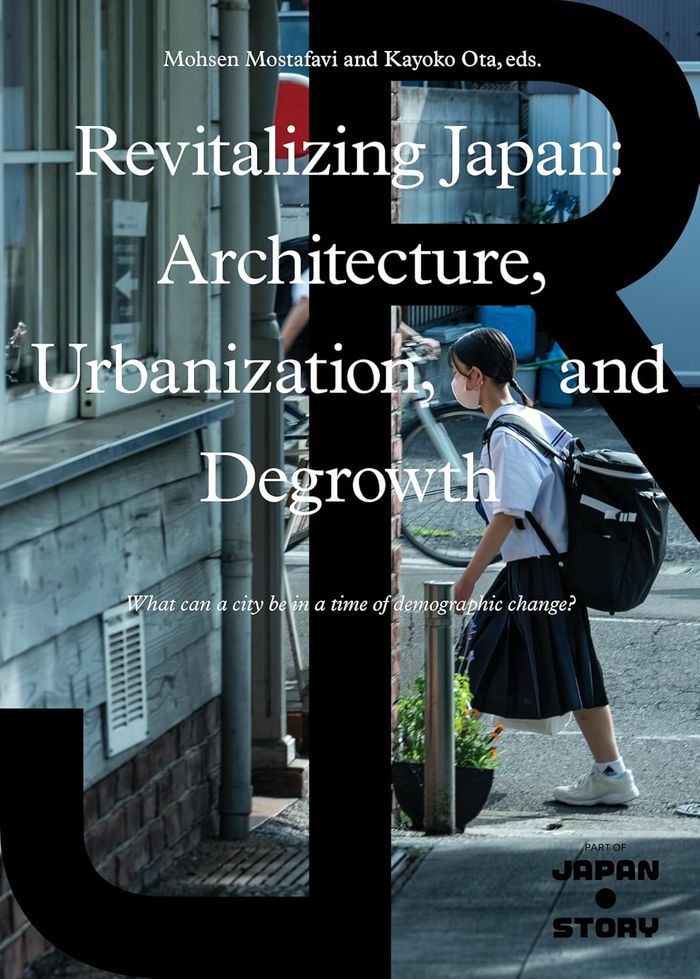
This book features innovative and productive responses, in the form of architectural design and thinking, to the shift in Japan’s social condition under demographic changes that are evident in regional cities. These responses also demonstrate the new wave of architectural practice in Japan, focused on the challenges of degrowth. The shrinking and aging of the population is exacerbating the social decline in the regional cities of Japan. While excluded from the market-driven metropolitan areas, architects of the young generation are beginning to build ways of revitalizing regional cities through innovative design or new ways of practicing. This book features works by seven named or unnamed younger architects in Japan that preempt architectural responses to the post-growth condition, a gripping essay by community designer Ryo Yamazaki, and a captivating photo documentation by Kenta Hasegawa. Keynote essay by Toyo Ito.
Revitalizing Japan: Architecture, Urbanization, and Degrowth
Actions:
Price:
$60.00
(available to order)
Summary:
This book features innovative and productive responses, in the form of architectural design and thinking, to the shift in Japan’s social condition under demographic changes that are evident in regional cities. These responses also demonstrate the new wave of architectural practice in Japan, focused on the challenges of degrowth. The shrinking and aging of the population is exacerbating the social decline in the regional cities of Japan. While excluded from the market-driven metropolitan areas, architects of the young generation are beginning to build ways of revitalizing regional cities through innovative design or new ways of practicing. This book features works by seven named or unnamed younger architects in Japan that preempt architectural responses to the post-growth condition, a gripping essay by community designer Ryo Yamazaki, and a captivating photo documentation by Kenta Hasegawa. Keynote essay by Toyo Ito.
Form:
books
books
Publication:
October 2024
October 2024
Subject:
Contemporary Asian Architecture
Contemporary Asian Architecture
Form:
books
books
Actions:
Price:
$66.00
(available to order)
Summary:
''The Pointillistic City'' explores the multilayer geography of our daily lives—specifically, how we simultaneously live at the scales of addresses, streets, and neighborhoods and how each can be relevant for our well-being. Not unlike the way in which we look at a pointillistic painting, which depicts a full scene through the detailed organization of multiple objects,(...)
$66.00
(available to order)
Summary:
''The Pointillistic City'' explores the multilayer geography of our daily lives—specifically, how we simultaneously live at the scales of addresses, streets, and neighborhoods and how each can be relevant for our well-being. Not unlike the way in which we look at a pointillistic painting, which depicts a full scene through the detailed organization of multiple objects,(...)
Title:
The pointilistic city: How microspatial inequities affect well-being in our communities
Actions:
Price:
$66.00
(available to order)
Summary:
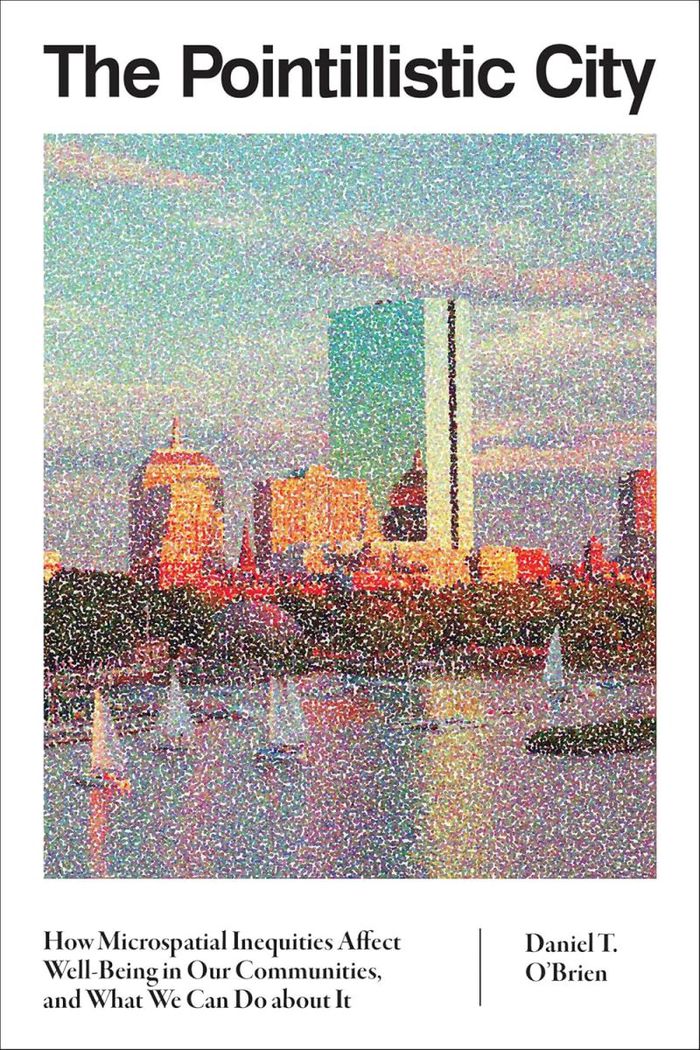
''The Pointillistic City'' explores the multilayer geography of our daily lives—specifically, how we simultaneously live at the scales of addresses, streets, and neighborhoods and how each can be relevant for our well-being. Not unlike the way in which we look at a pointillistic painting, which depicts a full scene through the detailed organization of multiple objects, Daniel T. O'Brien considers the three scales together and the comprehensive understanding of the city they offer. The pointillistic approach to the city contrasts with decades of focus on neighborhoods. As such, it surfaces microspatial inequities, or disparities in experiences between people living in the same neighborhood, even right around the corner from each other. Microspatial inequities have gone largely unnoticed to date, and their recognition offers a new approach to understanding and supporting the diverse population of the city.
The pointilistic city: How microspatial inequities affect well-being in our communities
Actions:
Price:
$66.00
(available to order)
Summary:
''The Pointillistic City'' explores the multilayer geography of our daily lives—specifically, how we simultaneously live at the scales of addresses, streets, and neighborhoods and how each can be relevant for our well-being. Not unlike the way in which we look at a pointillistic painting, which depicts a full scene through the detailed organization of multiple objects, Daniel T. O'Brien considers the three scales together and the comprehensive understanding of the city they offer. The pointillistic approach to the city contrasts with decades of focus on neighborhoods. As such, it surfaces microspatial inequities, or disparities in experiences between people living in the same neighborhood, even right around the corner from each other. Microspatial inequities have gone largely unnoticed to date, and their recognition offers a new approach to understanding and supporting the diverse population of the city.
Form:
books
books
Publication:
January 2025
January 2025
Subject:
Humans and cities
Humans and cities
Form:
books
books
Title:
032C Magazine 46
032C Magazine 46
Actions:
Price:
$34.95
(available in store)
Summary:
This book chronicles the fourth academic year of the studio led by Kersten Geers at the Academy of Architecture USI in Mendrisio. It was produced as a counterpart to Experiments in Thickness, a book which focused on the work of Giancarlo de Carlo in Urbino. As a means of grappling with that elephant in the room—the modern project—and its perceived failure of good(...)
$34.95
(available in store)
Summary:
This book chronicles the fourth academic year of the studio led by Kersten Geers at the Academy of Architecture USI in Mendrisio. It was produced as a counterpart to Experiments in Thickness, a book which focused on the work of Giancarlo de Carlo in Urbino. As a means of grappling with that elephant in the room—the modern project—and its perceived failure of good(...)
Title:
032C Magazine 46
Actions:
Price:
$34.95
(available in store)
Summary:
This book chronicles the fourth academic year of the studio led by Kersten Geers at the Academy of Architecture USI in Mendrisio. It was produced as a counterpart to Experiments in Thickness, a book which focused on the work of Giancarlo de Carlo in Urbino. As a means of grappling with that elephant in the room—the modern project—and its perceived failure of good intentions, all the projects gathered here are an update of sorts. Abstract overarching narratives were updated as premises for projects in Milan, De Carlo’s campus in Urbino was updated to accommodate current student population, and unrealised projects in Milan were revived to create a radically contemporary urbanity. But this was not an exercise in nostalgia and retrieval of the lost cause, as much as seeking an opportunity in a modernist ending.
032C Magazine 46
Actions:
Price:
$34.95
(available in store)
Summary:
This book chronicles the fourth academic year of the studio led by Kersten Geers at the Academy of Architecture USI in Mendrisio. It was produced as a counterpart to Experiments in Thickness, a book which focused on the work of Giancarlo de Carlo in Urbino. As a means of grappling with that elephant in the room—the modern project—and its perceived failure of good intentions, all the projects gathered here are an update of sorts. Abstract overarching narratives were updated as premises for projects in Milan, De Carlo’s campus in Urbino was updated to accommodate current student population, and unrealised projects in Milan were revived to create a radically contemporary urbanity. But this was not an exercise in nostalgia and retrieval of the lost cause, as much as seeking an opportunity in a modernist ending.
Form:
books
books
Publication:
October 2024
October 2024
Subject:
Magazines
Magazines
Form:
books
books
Title:
Who owns the water?
Who owns the water?
Actions:
Price:
$60.00
(available to order)
Summary:
Industrialization and population growth have brought about a global water crisis. Nature can no longer compensate the exploitation of our freshwater and our oceans. One billion people have no reliable access to clean drinking water; two billion live in precarious hygienic conditions. Famine, poverty, epidemics, and infant mortality are closely linked with the water(...)
$60.00
(available to order)
Summary:
Industrialization and population growth have brought about a global water crisis. Nature can no longer compensate the exploitation of our freshwater and our oceans. One billion people have no reliable access to clean drinking water; two billion live in precarious hygienic conditions. Famine, poverty, epidemics, and infant mortality are closely linked with the water(...)
Title:
Who owns the water?
Actions:
Price:
$60.00
(available to order)
Summary:
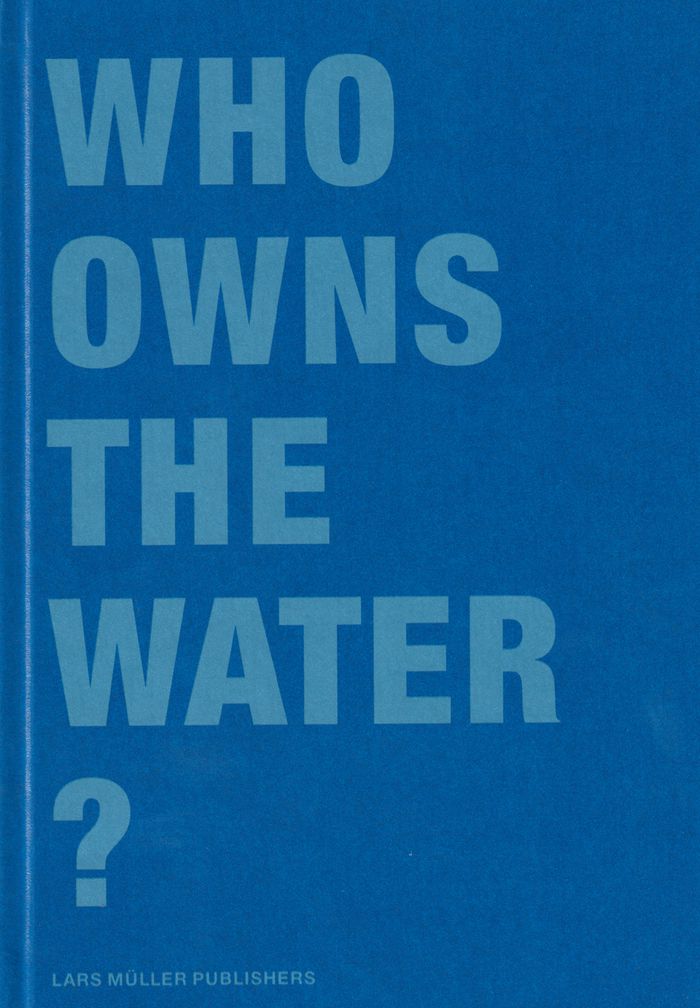
Industrialization and population growth have brought about a global water crisis. Nature can no longer compensate the exploitation of our freshwater and our oceans. One billion people have no reliable access to clean drinking water; two billion live in precarious hygienic conditions. Famine, poverty, epidemics, and infant mortality are closely linked with the water crisis. Social, ecological, political, and economic conflicts obstruct efforts to resolve the global water crisis. Water is an instrument of power. The key question reads: Is water a commodity or is free access to water an inalienable human right? By approaching water from a phenomenological perspective, Who owns the Water? seeks to persuade the reader that an element that is constantly flowing and changing defies all claims to own it, be they political or economic, and is instead the responsibility of the entire international community.
Who owns the water?
Actions:
Price:
$60.00
(available to order)
Summary:
Industrialization and population growth have brought about a global water crisis. Nature can no longer compensate the exploitation of our freshwater and our oceans. One billion people have no reliable access to clean drinking water; two billion live in precarious hygienic conditions. Famine, poverty, epidemics, and infant mortality are closely linked with the water crisis. Social, ecological, political, and economic conflicts obstruct efforts to resolve the global water crisis. Water is an instrument of power. The key question reads: Is water a commodity or is free access to water an inalienable human right? By approaching water from a phenomenological perspective, Who owns the Water? seeks to persuade the reader that an element that is constantly flowing and changing defies all claims to own it, be they political or economic, and is instead the responsibility of the entire international community.
Form:
books
books
Publication:
May 2006
May 2006
Subject:
Green Architecture
Green Architecture
Form:
books
books
Actions:
Price:
$31.95
(available to order)
Summary:
Après le succès de "Cahier d’architecture", ce nouveau titre est axé sur la ville. Plus de la moitié de la population mondiale vit aujourd’hui dans des centres urbains et ce chiffre va en augmentant chaque année, amenant les architectes et urbanistes à évoluer et à proposer de nouvelles solutions. Des cités de l’Antiquité à nos jours, l’auteur présente des villes ou(...)
$31.95
(available to order)
Summary:
Après le succès de "Cahier d’architecture", ce nouveau titre est axé sur la ville. Plus de la moitié de la population mondiale vit aujourd’hui dans des centres urbains et ce chiffre va en augmentant chaque année, amenant les architectes et urbanistes à évoluer et à proposer de nouvelles solutions. Des cités de l’Antiquité à nos jours, l’auteur présente des villes ou(...)
Title:
Cahier d'architecture : la ville
Actions:
Price:
$31.95
(available to order)
Summary:
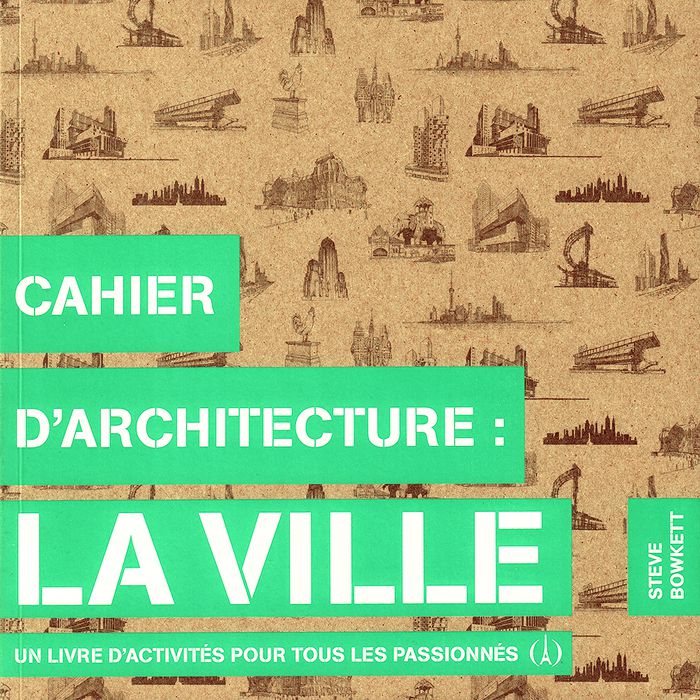
Après le succès de "Cahier d’architecture", ce nouveau titre est axé sur la ville. Plus de la moitié de la population mondiale vit aujourd’hui dans des centres urbains et ce chiffre va en augmentant chaque année, amenant les architectes et urbanistes à évoluer et à proposer de nouvelles solutions. Des cités de l’Antiquité à nos jours, l’auteur présente des villes ou certains de leurs aspects qui permettent par exemple de comprendre l’enjeu de l’éclairage, des transports, des espaces verts et offre une histoire de l’urbanisme. On pourra ainsi imaginer un banc public, créer une devanture, un monument, réaménager Central Park, dessiner un bâtiment d’angle original, une entrée de métro, etc. Ce cahier à dessiner, à compléter, à colorier offre de nombreux exemples de travaux et d’idées d'architectes majeurs qui peuvent être une source d’inspiration pour tous, adolescents, étudiants et architectes.
Cahier d'architecture : la ville
Actions:
Price:
$31.95
(available to order)
Summary:
Après le succès de "Cahier d’architecture", ce nouveau titre est axé sur la ville. Plus de la moitié de la population mondiale vit aujourd’hui dans des centres urbains et ce chiffre va en augmentant chaque année, amenant les architectes et urbanistes à évoluer et à proposer de nouvelles solutions. Des cités de l’Antiquité à nos jours, l’auteur présente des villes ou certains de leurs aspects qui permettent par exemple de comprendre l’enjeu de l’éclairage, des transports, des espaces verts et offre une histoire de l’urbanisme. On pourra ainsi imaginer un banc public, créer une devanture, un monument, réaménager Central Park, dessiner un bâtiment d’angle original, une entrée de métro, etc. Ce cahier à dessiner, à compléter, à colorier offre de nombreux exemples de travaux et d’idées d'architectes majeurs qui peuvent être une source d’inspiration pour tous, adolescents, étudiants et architectes.
Form:
books
books
Publication:
February 2017
February 2017
Subject:
activity books
activity books
Form:
books
books
Title:
A short history of progress
A short history of progress
Actions:
Price:
$19.95
(available to order)
Summary:
Each time history repeats itself, so it's said, the price goes up. The twentieth century was a time of runaway growth in human population, consumption, and technology, placing a colossal load on all natural systems, especially earth, air, and water -- the very elements of life. The most urgent questions of the twenty-first century are: where will this growth lead? can it(...)
$19.95
(available to order)
Summary:
Each time history repeats itself, so it's said, the price goes up. The twentieth century was a time of runaway growth in human population, consumption, and technology, placing a colossal load on all natural systems, especially earth, air, and water -- the very elements of life. The most urgent questions of the twenty-first century are: where will this growth lead? can it(...)
Title:
A short history of progress
Actions:
Price:
$19.95
(available to order)
Summary:
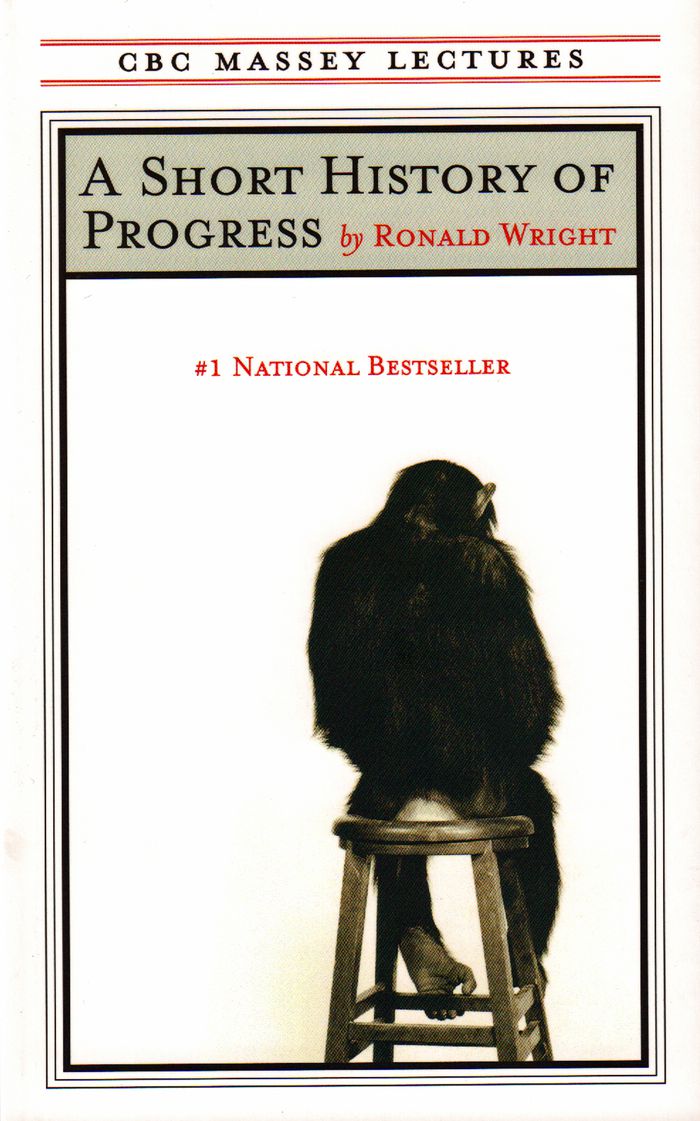
Each time history repeats itself, so it's said, the price goes up. The twentieth century was a time of runaway growth in human population, consumption, and technology, placing a colossal load on all natural systems, especially earth, air, and water -- the very elements of life. The most urgent questions of the twenty-first century are: where will this growth lead? can it be consolidated or sustained? and what kind of world is our present bequeathing to our future? In "A short history of progress" Ronald Wright argues that our modern predicament is as old as civilization, a 10,000-year experiment we have participated in but seldom controlled. Only by understanding the patterns of triumph and disaster that humanity has repeated around the world since the Stone Age can we recognize the experiment's inherent dangers, and, with luck and wisdom, shape its outcome.
A short history of progress
Actions:
Price:
$19.95
(available to order)
Summary:
Each time history repeats itself, so it's said, the price goes up. The twentieth century was a time of runaway growth in human population, consumption, and technology, placing a colossal load on all natural systems, especially earth, air, and water -- the very elements of life. The most urgent questions of the twenty-first century are: where will this growth lead? can it be consolidated or sustained? and what kind of world is our present bequeathing to our future? In "A short history of progress" Ronald Wright argues that our modern predicament is as old as civilization, a 10,000-year experiment we have participated in but seldom controlled. Only by understanding the patterns of triumph and disaster that humanity has repeated around the world since the Stone Age can we recognize the experiment's inherent dangers, and, with luck and wisdom, shape its outcome.
Form:
books
books
Publication:
October 2004
October 2004
Subject:
Environment and environmental theory
Environment and environmental theory
Form:
books
books
Price:
$50.00
(available to order)
Summary:
Sarah Schrank in this book places the celebrated arrival of LA in the richer context of art controversies and political contests over modern art and art spaces in the twentieth century. Challenging historical accounts that situate the city's origins as an art center in the 1960s, she argues that debates over modernism among artists and civic leaders alike made art a(...)
$50.00
(available to order)
Summary:
Sarah Schrank in this book places the celebrated arrival of LA in the richer context of art controversies and political contests over modern art and art spaces in the twentieth century. Challenging historical accounts that situate the city's origins as an art center in the 1960s, she argues that debates over modernism among artists and civic leaders alike made art a(...)
Title:
Art and the city : civic imagination and cultural authority in Los Angeles
Actions:
Price:
$50.00
(available to order)
Summary:
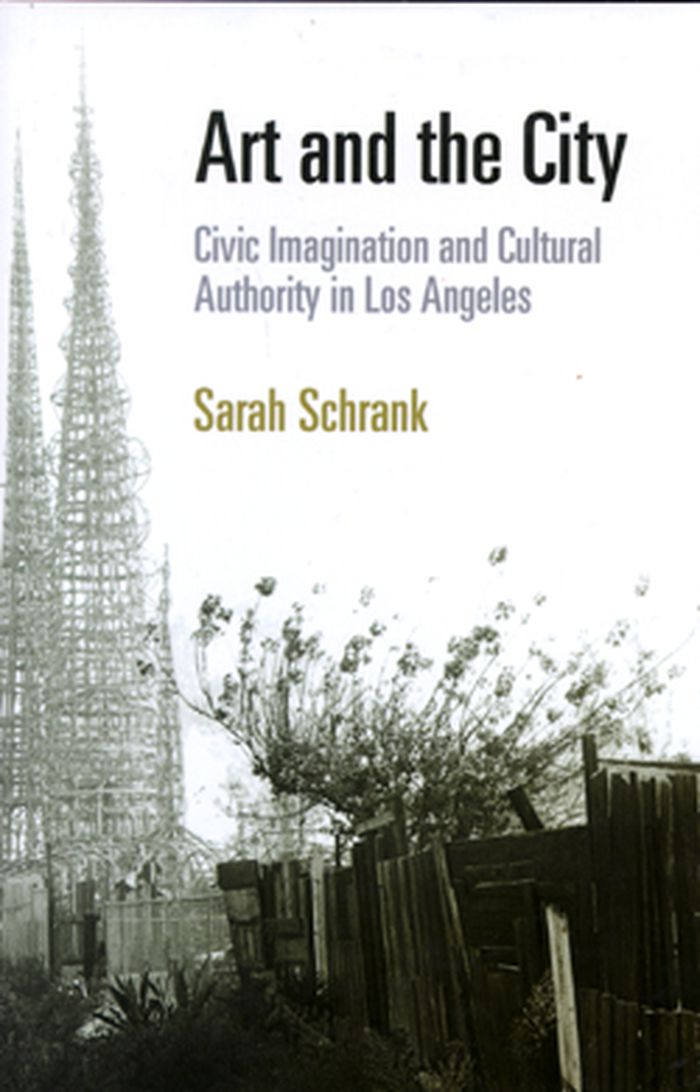
Sarah Schrank in this book places the celebrated arrival of LA in the richer context of art controversies and political contests over modern art and art spaces in the twentieth century. Challenging historical accounts that situate the city's origins as an art center in the 1960s, she argues that debates over modernism among artists and civic leaders alike made art a charged political site as early as the 1910s. The legacy of those early battles reverberated throughout the century. Because of a rich tradition of arts education and the presence of Hollywood, Los Angeles historically hosted a talented population of contemporary artists. However, because of the snug relationship between urban aesthetics and capital investment that underscored the booster goals of the civic arts movement, modern artists were pushed out of public exhibition spaces until after World War II.
Art and the city : civic imagination and cultural authority in Los Angeles
Actions:
Price:
$50.00
(available to order)
Summary:
Sarah Schrank in this book places the celebrated arrival of LA in the richer context of art controversies and political contests over modern art and art spaces in the twentieth century. Challenging historical accounts that situate the city's origins as an art center in the 1960s, she argues that debates over modernism among artists and civic leaders alike made art a charged political site as early as the 1910s. The legacy of those early battles reverberated throughout the century. Because of a rich tradition of arts education and the presence of Hollywood, Los Angeles historically hosted a talented population of contemporary artists. However, because of the snug relationship between urban aesthetics and capital investment that underscored the booster goals of the civic arts movement, modern artists were pushed out of public exhibition spaces until after World War II.
Form:
books
books
Publication:
October 2008, Philadelphia
October 2008, Philadelphia
Subject:
Urban Theory
Urban Theory


