


16899 Results
Form:
exhibitions
exhibitions
Title:
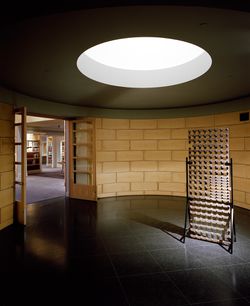
The Idea of the Penitentiary
The Idea of the Penitentiary
Actions:
Description:
This exhibition explores the notion of penitentiary, which worked its way into the consciousness and across the landscape of Europe and North America during the nineteenth century. Drawing upon the growing rationalist tendencies in architecture and social theory during the eighteenth century, proponents of penitentiary emphasised a clear geometry of separation,(...)
This exhibition explores the notion of penitentiary, which worked its way into the consciousness and across the landscape of Europe and North America during the nineteenth century. Drawing upon the growing rationalist tendencies in architecture and social theory during the eighteenth century, proponents of penitentiary emphasised a clear geometry of separation,(...)
Location:
Hall cases
Hall cases
Date:
8 November 1995 to 31 May 1996
8 November 1995 to 31 May 1996
Title:
The Idea of the Penitentiary
Actions:
Description:
This exhibition explores the notion of penitentiary, which worked its way into the consciousness and across the landscape of Europe and North America during the nineteenth century. Drawing upon the growing rationalist tendencies in architecture and social theory during the eighteenth century, proponents of penitentiary emphasised a clear geometry of separation,(...)
The Idea of the Penitentiary
Actions:
Description:
This exhibition explores the notion of penitentiary, which worked its way into the consciousness and across the landscape of Europe and North America during the nineteenth century. Drawing upon the growing rationalist tendencies in architecture and social theory during the eighteenth century, proponents of penitentiary emphasised a clear geometry of separation,(...)
Form:
exhibitions
exhibitions
Date:
8 November 1995 to
31 May 1996
8 November 1995 to
31 May 1996
Location:
Hall cases
Hall cases
Level of archival description:
Project
Project
Reference number:
AP075.S1.1983.PR01
Description:
Project series documents Cornelia Hahn Oberlander's design for the interior and exterior landscape of National Gallery of Canada in Ottawa. Oberlander worked on this project from 1983-1995 with architects Moshe Safdie and John C. Parkin. Oberlander's overall concept for the landscaping was based on the building organizational pattern of a city. She created "a pathway system that connected the front of the National Gallery to Nepean Point behind the gallery." [1] Oberlander landscape design includes the design of three exterior area and a courtyard. Each space is design in relations to the art displayed in the immediate indoor gallery: the Taiga Garden "flanks the gallery's interior glass-and-concrete collonade that leads to the Canadian and Aboriginal Art galleries." [2]; the Minimalist Courtyard relates to the modern art collection gallery; the zigzag-shaped pathway passes between the National War Museum and the new gallery; and interior courtyard links the restored ninetheeth-century Rideau Chapel relocated inside the National Gallery and provides and church-like atmosphere. The project series contains textual records, including specifications, correspondence, documentation, financial documents, plant lists, press clippings about the project, and Oberlander's concept development notes. The project is also recorded through photographic materials, such as slides and photographs of the construction of the building and the landscape work and the photographs of the completed project. The project series also includes conceptual drawings, design develepment drawings, working drawings and presentation drawings, including landscape plans, planting plans, grading and irrigation plans and building plans used as reference. Source: [1] Herrington, Susan. Cornelia Hahn Oberlander: Making the Modern Landscape, University of Virginia Press, 2014, 304 pages, p. 165. [2] Herrington, Susan. Cornelia Hahn Oberlander: Making the Modern Landscape, University of Virginia Press, 2014, 304 pages, p. 166.
AP075.S1.1983.PR01
Description:
Project series documents Cornelia Hahn Oberlander's design for the interior and exterior landscape of National Gallery of Canada in Ottawa. Oberlander worked on this project from 1983-1995 with architects Moshe Safdie and John C. Parkin. Oberlander's overall concept for the landscaping was based on the building organizational pattern of a city. She created "a pathway system that connected the front of the National Gallery to Nepean Point behind the gallery." [1] Oberlander landscape design includes the design of three exterior area and a courtyard. Each space is design in relations to the art displayed in the immediate indoor gallery: the Taiga Garden "flanks the gallery's interior glass-and-concrete collonade that leads to the Canadian and Aboriginal Art galleries." [2]; the Minimalist Courtyard relates to the modern art collection gallery; the zigzag-shaped pathway passes between the National War Museum and the new gallery; and interior courtyard links the restored ninetheeth-century Rideau Chapel relocated inside the National Gallery and provides and church-like atmosphere. The project series contains textual records, including specifications, correspondence, documentation, financial documents, plant lists, press clippings about the project, and Oberlander's concept development notes. The project is also recorded through photographic materials, such as slides and photographs of the construction of the building and the landscape work and the photographs of the completed project. The project series also includes conceptual drawings, design develepment drawings, working drawings and presentation drawings, including landscape plans, planting plans, grading and irrigation plans and building plans used as reference. Source: [1] Herrington, Susan. Cornelia Hahn Oberlander: Making the Modern Landscape, University of Virginia Press, 2014, 304 pages, p. 165. [2] Herrington, Susan. Cornelia Hahn Oberlander: Making the Modern Landscape, University of Virginia Press, 2014, 304 pages, p. 166.
People:
Date:
1983-2005
1983-2005
Title:
National Gallery of Canada, Ottawa, Ontario (1983-1990)
Actions:
AP075.S1.1983.PR01
Description:
Project series documents Cornelia Hahn Oberlander's design for the interior and exterior landscape of National Gallery of Canada in Ottawa. Oberlander worked on this project from 1983-1995 with architects Moshe Safdie and John C. Parkin. Oberlander's overall concept for the landscaping was based on the building organizational pattern of a city. She created "a pathway system that connected the front of the National Gallery to Nepean Point behind the gallery." [1] Oberlander landscape design includes the design of three exterior area and a courtyard. Each space is design in relations to the art displayed in the immediate indoor gallery: the Taiga Garden "flanks the gallery's interior glass-and-concrete collonade that leads to the Canadian and Aboriginal Art galleries." [2]; the Minimalist Courtyard relates to the modern art collection gallery; the zigzag-shaped pathway passes between the National War Museum and the new gallery; and interior courtyard links the restored ninetheeth-century Rideau Chapel relocated inside the National Gallery and provides and church-like atmosphere. The project series contains textual records, including specifications, correspondence, documentation, financial documents, plant lists, press clippings about the project, and Oberlander's concept development notes. The project is also recorded through photographic materials, such as slides and photographs of the construction of the building and the landscape work and the photographs of the completed project. The project series also includes conceptual drawings, design develepment drawings, working drawings and presentation drawings, including landscape plans, planting plans, grading and irrigation plans and building plans used as reference. Source: [1] Herrington, Susan. Cornelia Hahn Oberlander: Making the Modern Landscape, University of Virginia Press, 2014, 304 pages, p. 165. [2] Herrington, Susan. Cornelia Hahn Oberlander: Making the Modern Landscape, University of Virginia Press, 2014, 304 pages, p. 166.
National Gallery of Canada, Ottawa, Ontario (1983-1990)
Actions:
AP075.S1.1983.PR01
Description:
Project series documents Cornelia Hahn Oberlander's design for the interior and exterior landscape of National Gallery of Canada in Ottawa. Oberlander worked on this project from 1983-1995 with architects Moshe Safdie and John C. Parkin. Oberlander's overall concept for the landscaping was based on the building organizational pattern of a city. She created "a pathway system that connected the front of the National Gallery to Nepean Point behind the gallery." [1] Oberlander landscape design includes the design of three exterior area and a courtyard. Each space is design in relations to the art displayed in the immediate indoor gallery: the Taiga Garden "flanks the gallery's interior glass-and-concrete collonade that leads to the Canadian and Aboriginal Art galleries." [2]; the Minimalist Courtyard relates to the modern art collection gallery; the zigzag-shaped pathway passes between the National War Museum and the new gallery; and interior courtyard links the restored ninetheeth-century Rideau Chapel relocated inside the National Gallery and provides and church-like atmosphere. The project series contains textual records, including specifications, correspondence, documentation, financial documents, plant lists, press clippings about the project, and Oberlander's concept development notes. The project is also recorded through photographic materials, such as slides and photographs of the construction of the building and the landscape work and the photographs of the completed project. The project series also includes conceptual drawings, design develepment drawings, working drawings and presentation drawings, including landscape plans, planting plans, grading and irrigation plans and building plans used as reference. Source: [1] Herrington, Susan. Cornelia Hahn Oberlander: Making the Modern Landscape, University of Virginia Press, 2014, 304 pages, p. 165. [2] Herrington, Susan. Cornelia Hahn Oberlander: Making the Modern Landscape, University of Virginia Press, 2014, 304 pages, p. 166.
Level of archival description:
Project
Project
Date:
1983-2005
1983-2005
People:
Form:
textual records
textual records
Actions:
Reference number:
ARCH278393
Description:
It includes the following projects: - Estudio Gordillo (AP164.S1.1999.D6); - Pabellón de gimnasia en el parque del Retiro (AP164.S1.2000.D3); - Barcelona Forum 2004 (AP164.S1.2000.D9); - Casa Marina Collazo (AP164.S1.2001.D3); - Plaza y torre Woermann, Las Palmas (AP164.S1.2001.D7); - New Museum de Arte Contemporáneo, New York (AP164.S1.2003.D1); - Sagüés (AP164.S1.2003.D5); - Laboratorios de ciencias moleculares para la Universidad de Puerto Rico (AP164.S1.2003.D13); - Edificio de equipamiento, Alcalá de Henares (AP164.S1.2004.D2); - EPFL learning center, Lausanne (AP164.S1.2004.D9); - Integración del ferrocarril, Logroño (AP164.S1.2004.D10).
ARCH278393
Description:
It includes the following projects: - Estudio Gordillo (AP164.S1.1999.D6); - Pabellón de gimnasia en el parque del Retiro (AP164.S1.2000.D3); - Barcelona Forum 2004 (AP164.S1.2000.D9); - Casa Marina Collazo (AP164.S1.2001.D3); - Plaza y torre Woermann, Las Palmas (AP164.S1.2001.D7); - New Museum de Arte Contemporáneo, New York (AP164.S1.2003.D1); - Sagüés (AP164.S1.2003.D5); - Laboratorios de ciencias moleculares para la Universidad de Puerto Rico (AP164.S1.2003.D13); - Edificio de equipamiento, Alcalá de Henares (AP164.S1.2004.D2); - EPFL learning center, Lausanne (AP164.S1.2004.D9); - Integración del ferrocarril, Logroño (AP164.S1.2004.D10).
People:
Date:
2004 or after
2004 or after
Title:
Presentation booklets of selected projects by Abalos & Herreros for the exhibition in Las Palmas de Gran Canaria
Actions:
ARCH278393
Description:
It includes the following projects: - Estudio Gordillo (AP164.S1.1999.D6); - Pabellón de gimnasia en el parque del Retiro (AP164.S1.2000.D3); - Barcelona Forum 2004 (AP164.S1.2000.D9); - Casa Marina Collazo (AP164.S1.2001.D3); - Plaza y torre Woermann, Las Palmas (AP164.S1.2001.D7); - New Museum de Arte Contemporáneo, New York (AP164.S1.2003.D1); - Sagüés (AP164.S1.2003.D5); - Laboratorios de ciencias moleculares para la Universidad de Puerto Rico (AP164.S1.2003.D13); - Edificio de equipamiento, Alcalá de Henares (AP164.S1.2004.D2); - EPFL learning center, Lausanne (AP164.S1.2004.D9); - Integración del ferrocarril, Logroño (AP164.S1.2004.D10).
Presentation booklets of selected projects by Abalos & Herreros for the exhibition in Las Palmas de Gran Canaria
Actions:
ARCH278393
Description:
It includes the following projects: - Estudio Gordillo (AP164.S1.1999.D6); - Pabellón de gimnasia en el parque del Retiro (AP164.S1.2000.D3); - Barcelona Forum 2004 (AP164.S1.2000.D9); - Casa Marina Collazo (AP164.S1.2001.D3); - Plaza y torre Woermann, Las Palmas (AP164.S1.2001.D7); - New Museum de Arte Contemporáneo, New York (AP164.S1.2003.D1); - Sagüés (AP164.S1.2003.D5); - Laboratorios de ciencias moleculares para la Universidad de Puerto Rico (AP164.S1.2003.D13); - Edificio de equipamiento, Alcalá de Henares (AP164.S1.2004.D2); - EPFL learning center, Lausanne (AP164.S1.2004.D9); - Integración del ferrocarril, Logroño (AP164.S1.2004.D10).
Form:
textual records
textual records
Date:
2004 or after
2004 or after
People:
Form:
exhibitions
exhibitions
Actions:
Description:
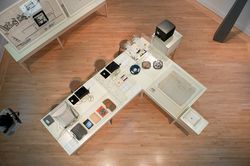
The internet was invented as the ultimate standard; it is literally made of rules. Online content abides by some intentional and unintentional rules, and texture, smell, weight, flavour, and time are flattened together for the screen. Computers appear to instantaneously transform objects into images and meaning into information. 404 ERROR: The object is not online brings(...)
The internet was invented as the ultimate standard; it is literally made of rules. Online content abides by some intentional and unintentional rules, and texture, smell, weight, flavour, and time are flattened together for the screen. Computers appear to instantaneously transform objects into images and meaning into information. 404 ERROR: The object is not online brings(...)
Location:
Octagonal gallery
Octagonal gallery
Date:
11 November 2010 to 6 February 2011
11 November 2010 to 6 February 2011
Title:
404 ERROR: The object is not online
Actions:
Description:
The internet was invented as the ultimate standard; it is literally made of rules. Online content abides by some intentional and unintentional rules, and texture, smell, weight, flavour, and time are flattened together for the screen. Computers appear to instantaneously transform objects into images and meaning into information. 404 ERROR: The object is not online brings(...)
404 ERROR: The object is not online
Actions:
Description:
The internet was invented as the ultimate standard; it is literally made of rules. Online content abides by some intentional and unintentional rules, and texture, smell, weight, flavour, and time are flattened together for the screen. Computers appear to instantaneously transform objects into images and meaning into information. 404 ERROR: The object is not online brings(...)
Form:
exhibitions
exhibitions
Date:
11 November 2010 to
6 February 2011
11 November 2010 to
6 February 2011
Location:
Octagonal gallery
Octagonal gallery
Form:
drawings, textual records
drawings, textual records
Title:
Grand tour
Grand tour
Actions:
Reference number:
ARCH277445
Description:
File's title: 203 Grand Tour (dossier). Contains plans and graphic materials from the following projects: - Barcelona Forum 2004 (AP164.S1.2000.D9); - Estudio Gordillo (AP164.S1.1999.D6); - Pabellón de gimnasia en el parque del Retiro (AP164.S1.2000.D3); - Casa Mora (AP164.S1.2000.D10); - Plaza y torre Woermann, Las Palmas (AP164.S1.2001.D7); - Biblioteca Usera (AP164.S1.1995.D1); - EPFL learning center, Lausanne (AP164.S1.2004.D9); - New Museum de Arte Contemporáneo, New York (AP164.S1.2003.D1); - Sagüés (AP164.S1.2003.D5); - Planta de biometanización y compostaje de residuos urbanos, Pinto (AP164.S1.2000.D6); - Parque Cristina Enea (AP164.S1.2002.D3).
ARCH277445
Description:
File's title: 203 Grand Tour (dossier). Contains plans and graphic materials from the following projects: - Barcelona Forum 2004 (AP164.S1.2000.D9); - Estudio Gordillo (AP164.S1.1999.D6); - Pabellón de gimnasia en el parque del Retiro (AP164.S1.2000.D3); - Casa Mora (AP164.S1.2000.D10); - Plaza y torre Woermann, Las Palmas (AP164.S1.2001.D7); - Biblioteca Usera (AP164.S1.1995.D1); - EPFL learning center, Lausanne (AP164.S1.2004.D9); - New Museum de Arte Contemporáneo, New York (AP164.S1.2003.D1); - Sagüés (AP164.S1.2003.D5); - Planta de biometanización y compostaje de residuos urbanos, Pinto (AP164.S1.2000.D6); - Parque Cristina Enea (AP164.S1.2002.D3).
People:
Date:
ca. 2005
ca. 2005
Title:
Grand tour
Actions:
ARCH277445
Description:
File's title: 203 Grand Tour (dossier). Contains plans and graphic materials from the following projects: - Barcelona Forum 2004 (AP164.S1.2000.D9); - Estudio Gordillo (AP164.S1.1999.D6); - Pabellón de gimnasia en el parque del Retiro (AP164.S1.2000.D3); - Casa Mora (AP164.S1.2000.D10); - Plaza y torre Woermann, Las Palmas (AP164.S1.2001.D7); - Biblioteca Usera (AP164.S1.1995.D1); - EPFL learning center, Lausanne (AP164.S1.2004.D9); - New Museum de Arte Contemporáneo, New York (AP164.S1.2003.D1); - Sagüés (AP164.S1.2003.D5); - Planta de biometanización y compostaje de residuos urbanos, Pinto (AP164.S1.2000.D6); - Parque Cristina Enea (AP164.S1.2002.D3).
Grand tour
Actions:
ARCH277445
Description:
File's title: 203 Grand Tour (dossier). Contains plans and graphic materials from the following projects: - Barcelona Forum 2004 (AP164.S1.2000.D9); - Estudio Gordillo (AP164.S1.1999.D6); - Pabellón de gimnasia en el parque del Retiro (AP164.S1.2000.D3); - Casa Mora (AP164.S1.2000.D10); - Plaza y torre Woermann, Las Palmas (AP164.S1.2001.D7); - Biblioteca Usera (AP164.S1.1995.D1); - EPFL learning center, Lausanne (AP164.S1.2004.D9); - New Museum de Arte Contemporáneo, New York (AP164.S1.2003.D1); - Sagüés (AP164.S1.2003.D5); - Planta de biometanización y compostaje de residuos urbanos, Pinto (AP164.S1.2000.D6); - Parque Cristina Enea (AP164.S1.2002.D3).
Form:
drawings, textual records
drawings, textual records
Date:
ca. 2005
ca. 2005
People:
Form:
photographs
Quantity:
29 file
photographs
Quantity:
29 file
Actions:
Reference number:
ARCH242865
Description:
Images for various articles - listed by author, content, or magazine theme: Diana Agrest Barcelona Karen Bermann Biosphere Jennifer Bloomer Blow-Up (film) Cynthia Davidson - Portraits (of) Durham Crout Diller & Scofidio Dionysus (statue) Disney Duany, Plater-Zyberk (Seaside architecture) Earth Electrotecture Images Feminine Images Huis Ten Bosch Katsura Palace - Japanese Architecture Jeffrey Kipnis - Shirdel (Bahram) , Zago (Andrew), Kipnis - Scottish National Museum Los Angeles Riots Lightness Images Mall of America Mount Fuji Napoleon III - De Morny - Second Republic France Science Photos (Kwinteresque) Telephone Twin Peaks (TV show) War Writing Illustrations (Scott) Wolf Images - Any 14
ARCH242865
Description:
Images for various articles - listed by author, content, or magazine theme: Diana Agrest Barcelona Karen Bermann Biosphere Jennifer Bloomer Blow-Up (film) Cynthia Davidson - Portraits (of) Durham Crout Diller & Scofidio Dionysus (statue) Disney Duany, Plater-Zyberk (Seaside architecture) Earth Electrotecture Images Feminine Images Huis Ten Bosch Katsura Palace - Japanese Architecture Jeffrey Kipnis - Shirdel (Bahram) , Zago (Andrew), Kipnis - Scottish National Museum Los Angeles Riots Lightness Images Mall of America Mount Fuji Napoleon III - De Morny - Second Republic France Science Photos (Kwinteresque) Telephone Twin Peaks (TV show) War Writing Illustrations (Scott) Wolf Images - Any 14
People:
Date:
assembled 1990-2001?
assembled 1990-2001?
Title:
Images for various articles - listed by author, content, or magazine theme
Actions:
ARCH242865
Description:
Images for various articles - listed by author, content, or magazine theme: Diana Agrest Barcelona Karen Bermann Biosphere Jennifer Bloomer Blow-Up (film) Cynthia Davidson - Portraits (of) Durham Crout Diller & Scofidio Dionysus (statue) Disney Duany, Plater-Zyberk (Seaside architecture) Earth Electrotecture Images Feminine Images Huis Ten Bosch Katsura Palace - Japanese Architecture Jeffrey Kipnis - Shirdel (Bahram) , Zago (Andrew), Kipnis - Scottish National Museum Los Angeles Riots Lightness Images Mall of America Mount Fuji Napoleon III - De Morny - Second Republic France Science Photos (Kwinteresque) Telephone Twin Peaks (TV show) War Writing Illustrations (Scott) Wolf Images - Any 14
Images for various articles - listed by author, content, or magazine theme
Actions:
ARCH242865
Description:
Images for various articles - listed by author, content, or magazine theme: Diana Agrest Barcelona Karen Bermann Biosphere Jennifer Bloomer Blow-Up (film) Cynthia Davidson - Portraits (of) Durham Crout Diller & Scofidio Dionysus (statue) Disney Duany, Plater-Zyberk (Seaside architecture) Earth Electrotecture Images Feminine Images Huis Ten Bosch Katsura Palace - Japanese Architecture Jeffrey Kipnis - Shirdel (Bahram) , Zago (Andrew), Kipnis - Scottish National Museum Los Angeles Riots Lightness Images Mall of America Mount Fuji Napoleon III - De Morny - Second Republic France Science Photos (Kwinteresque) Telephone Twin Peaks (TV show) War Writing Illustrations (Scott) Wolf Images - Any 14
Form:
photographs
Quantity:
29 file
photographs
Quantity:
29 file
Date:
assembled 1990-2001?
assembled 1990-2001?
People:
Level of archival description:
Project
Project
Reference number:
AP178.S1.1968.PR02
Description:
This project series documents the Edifício de Escritórios na Av. D. Afonso Henriques, in Porto, also referred to as Avenida da Ponte I. While the records were held in the office’s archives this project was assigned the number 31/60. In the past the office identified the project as number 121. The office assigned the dates 1968-1974 for this project. The Edifício de Escritórios na Av. D. Afonso Henriques consisted of a building with offices, stores, and parking. Located on a historic site, the intention for the Edifício de Escritórios was to integrate the building into the existing urban landscape. The building was never realized. This project was done in relation to the Arranjo Urbanístico para a Av. D. Afonso Henriques, which was an urban renewal program in Porto. In the 1940s, waves of demolition in the old town created a rupture with the remaining buildings, including the Porto Cathedral. Since the 1950s, there have been several studies and proposals to revitalize this part of the city. Siza’s plan was the first to be accepted by the city council in 1968. Please see project series AP178.S1.1968.PR03, also described in this fonds, for further documentation. Siza also proposed a new design in 2001 for the site across the avenue from this one, known as Avenida da Ponte II. This included a museum, library, stores, parking, and houses. This project related to the building Casa Dos 24 Fernando Távora. The scheme was not realized. Documenting this project series are drawings, photographic materials and textual documentation. Among the drawings are plans, profiles, elevations, sections, cadastral maps and working details. Photographic materials document the model, site and residents of the neighborhood. Textual materials include project documentation, as well as correspondence with the city of Porto and suppliers. Note that materials related to the Arranjo Urbanístico para a Av. D. Afonso Henriques (project series AP178.S1.1968.PR03 in this fonds) are also found among these materials.
AP178.S1.1968.PR02
Description:
This project series documents the Edifício de Escritórios na Av. D. Afonso Henriques, in Porto, also referred to as Avenida da Ponte I. While the records were held in the office’s archives this project was assigned the number 31/60. In the past the office identified the project as number 121. The office assigned the dates 1968-1974 for this project. The Edifício de Escritórios na Av. D. Afonso Henriques consisted of a building with offices, stores, and parking. Located on a historic site, the intention for the Edifício de Escritórios was to integrate the building into the existing urban landscape. The building was never realized. This project was done in relation to the Arranjo Urbanístico para a Av. D. Afonso Henriques, which was an urban renewal program in Porto. In the 1940s, waves of demolition in the old town created a rupture with the remaining buildings, including the Porto Cathedral. Since the 1950s, there have been several studies and proposals to revitalize this part of the city. Siza’s plan was the first to be accepted by the city council in 1968. Please see project series AP178.S1.1968.PR03, also described in this fonds, for further documentation. Siza also proposed a new design in 2001 for the site across the avenue from this one, known as Avenida da Ponte II. This included a museum, library, stores, parking, and houses. This project related to the building Casa Dos 24 Fernando Távora. The scheme was not realized. Documenting this project series are drawings, photographic materials and textual documentation. Among the drawings are plans, profiles, elevations, sections, cadastral maps and working details. Photographic materials document the model, site and residents of the neighborhood. Textual materials include project documentation, as well as correspondence with the city of Porto and suppliers. Note that materials related to the Arranjo Urbanístico para a Av. D. Afonso Henriques (project series AP178.S1.1968.PR03 in this fonds) are also found among these materials.
People:
Date:
1968-1981
1968-1981
Title:
Edifício de Escritórios na Av. D. Afonso Henriques, Avenida da Ponte [Office building, Av. D. Afonso Henriques], Porto, Portugal (1968-1981)
Actions:
AP178.S1.1968.PR02
Description:
This project series documents the Edifício de Escritórios na Av. D. Afonso Henriques, in Porto, also referred to as Avenida da Ponte I. While the records were held in the office’s archives this project was assigned the number 31/60. In the past the office identified the project as number 121. The office assigned the dates 1968-1974 for this project. The Edifício de Escritórios na Av. D. Afonso Henriques consisted of a building with offices, stores, and parking. Located on a historic site, the intention for the Edifício de Escritórios was to integrate the building into the existing urban landscape. The building was never realized. This project was done in relation to the Arranjo Urbanístico para a Av. D. Afonso Henriques, which was an urban renewal program in Porto. In the 1940s, waves of demolition in the old town created a rupture with the remaining buildings, including the Porto Cathedral. Since the 1950s, there have been several studies and proposals to revitalize this part of the city. Siza’s plan was the first to be accepted by the city council in 1968. Please see project series AP178.S1.1968.PR03, also described in this fonds, for further documentation. Siza also proposed a new design in 2001 for the site across the avenue from this one, known as Avenida da Ponte II. This included a museum, library, stores, parking, and houses. This project related to the building Casa Dos 24 Fernando Távora. The scheme was not realized. Documenting this project series are drawings, photographic materials and textual documentation. Among the drawings are plans, profiles, elevations, sections, cadastral maps and working details. Photographic materials document the model, site and residents of the neighborhood. Textual materials include project documentation, as well as correspondence with the city of Porto and suppliers. Note that materials related to the Arranjo Urbanístico para a Av. D. Afonso Henriques (project series AP178.S1.1968.PR03 in this fonds) are also found among these materials.
Edifício de Escritórios na Av. D. Afonso Henriques, Avenida da Ponte [Office building, Av. D. Afonso Henriques], Porto, Portugal (1968-1981)
Actions:
AP178.S1.1968.PR02
Description:
This project series documents the Edifício de Escritórios na Av. D. Afonso Henriques, in Porto, also referred to as Avenida da Ponte I. While the records were held in the office’s archives this project was assigned the number 31/60. In the past the office identified the project as number 121. The office assigned the dates 1968-1974 for this project. The Edifício de Escritórios na Av. D. Afonso Henriques consisted of a building with offices, stores, and parking. Located on a historic site, the intention for the Edifício de Escritórios was to integrate the building into the existing urban landscape. The building was never realized. This project was done in relation to the Arranjo Urbanístico para a Av. D. Afonso Henriques, which was an urban renewal program in Porto. In the 1940s, waves of demolition in the old town created a rupture with the remaining buildings, including the Porto Cathedral. Since the 1950s, there have been several studies and proposals to revitalize this part of the city. Siza’s plan was the first to be accepted by the city council in 1968. Please see project series AP178.S1.1968.PR03, also described in this fonds, for further documentation. Siza also proposed a new design in 2001 for the site across the avenue from this one, known as Avenida da Ponte II. This included a museum, library, stores, parking, and houses. This project related to the building Casa Dos 24 Fernando Távora. The scheme was not realized. Documenting this project series are drawings, photographic materials and textual documentation. Among the drawings are plans, profiles, elevations, sections, cadastral maps and working details. Photographic materials document the model, site and residents of the neighborhood. Textual materials include project documentation, as well as correspondence with the city of Porto and suppliers. Note that materials related to the Arranjo Urbanístico para a Av. D. Afonso Henriques (project series AP178.S1.1968.PR03 in this fonds) are also found among these materials.
Level of archival description:
Project
Project
Date:
1968-1981
1968-1981
People:
Form:
drawings
drawings
Reference number:
AP140.S2.SS1.D60.SD1.P9
Description:
Conceptual and design development drawings, including area diagrams, schedules, sketch and schematic site plans, floor plans, sections, elevations, axonometrics for Tate Gallery New Museums and for Clore Gallery
AP140.S2.SS1.D60.SD1.P9
Description:
Conceptual and design development drawings, including area diagrams, schedules, sketch and schematic site plans, floor plans, sections, elevations, axonometrics for Tate Gallery New Museums and for Clore Gallery
People:
Date:
circa 1978-1990
circa 1978-1990
Title:
Area diagrams, schedules, sketct and schematic site plans, floor plans, section and elevation, Clore Gallery, London, United Kingdom
Actions:
AP140.S2.SS1.D60.SD1.P9
Description:
Conceptual and design development drawings, including area diagrams, schedules, sketch and schematic site plans, floor plans, sections, elevations, axonometrics for Tate Gallery New Museums and for Clore Gallery
Area diagrams, schedules, sketct and schematic site plans, floor plans, section and elevation, Clore Gallery, London, United Kingdom
Actions:
AP140.S2.SS1.D60.SD1.P9
Description:
Conceptual and design development drawings, including area diagrams, schedules, sketch and schematic site plans, floor plans, sections, elevations, axonometrics for Tate Gallery New Museums and for Clore Gallery
Form:
drawings
drawings
Date:
circa 1978-1990
circa 1978-1990
People:
Form:
drawings, textual records
drawings, textual records
Actions:
Reference number:
ARCH278384
Description:
File's title: Paneles CAAM. Contains a well two textual records. It includes the following projects: - Biblioteca Usera (AP164.S1.1995.D1); - Estudio Gordillo (AP164.S1.1999.D6); - Pabellón de gimnasia en el parque del Retiro (AP164.S1.2000.D3); - Planta de biometanización y compostaje de residuos urbanos, Pinto (AP164.S1.2000.D6); - Barcelona Forum 2004 (AP164.S1.2000.D9); - Casa Mora (Casa para un coleccionista) (AP164.S1.2000.D10); - Plaza y torre Woermann, Las Palmas (AP164.S1.2001.D7); - Parque Cristina Enea (AP164.S1.2002.D3) - New Museum de Arte Contemporáneo, New York (AP164.S1.2003.D1); - Sagüés (AP164.S1.2003.D5); - EPFL learning center, Lausanne (AP164.S1.2004.D9).
ARCH278384
Description:
File's title: Paneles CAAM. Contains a well two textual records. It includes the following projects: - Biblioteca Usera (AP164.S1.1995.D1); - Estudio Gordillo (AP164.S1.1999.D6); - Pabellón de gimnasia en el parque del Retiro (AP164.S1.2000.D3); - Planta de biometanización y compostaje de residuos urbanos, Pinto (AP164.S1.2000.D6); - Barcelona Forum 2004 (AP164.S1.2000.D9); - Casa Mora (Casa para un coleccionista) (AP164.S1.2000.D10); - Plaza y torre Woermann, Las Palmas (AP164.S1.2001.D7); - Parque Cristina Enea (AP164.S1.2002.D3) - New Museum de Arte Contemporáneo, New York (AP164.S1.2003.D1); - Sagüés (AP164.S1.2003.D5); - EPFL learning center, Lausanne (AP164.S1.2004.D9).
People:
Date:
ca. 2005
ca. 2005
Title:
Sketches and presentation drawings of projects by Abalos & Herreros, Grand Tour, exposición
Actions:
ARCH278384
Description:
File's title: Paneles CAAM. Contains a well two textual records. It includes the following projects: - Biblioteca Usera (AP164.S1.1995.D1); - Estudio Gordillo (AP164.S1.1999.D6); - Pabellón de gimnasia en el parque del Retiro (AP164.S1.2000.D3); - Planta de biometanización y compostaje de residuos urbanos, Pinto (AP164.S1.2000.D6); - Barcelona Forum 2004 (AP164.S1.2000.D9); - Casa Mora (Casa para un coleccionista) (AP164.S1.2000.D10); - Plaza y torre Woermann, Las Palmas (AP164.S1.2001.D7); - Parque Cristina Enea (AP164.S1.2002.D3) - New Museum de Arte Contemporáneo, New York (AP164.S1.2003.D1); - Sagüés (AP164.S1.2003.D5); - EPFL learning center, Lausanne (AP164.S1.2004.D9).
Sketches and presentation drawings of projects by Abalos & Herreros, Grand Tour, exposición
Actions:
ARCH278384
Description:
File's title: Paneles CAAM. Contains a well two textual records. It includes the following projects: - Biblioteca Usera (AP164.S1.1995.D1); - Estudio Gordillo (AP164.S1.1999.D6); - Pabellón de gimnasia en el parque del Retiro (AP164.S1.2000.D3); - Planta de biometanización y compostaje de residuos urbanos, Pinto (AP164.S1.2000.D6); - Barcelona Forum 2004 (AP164.S1.2000.D9); - Casa Mora (Casa para un coleccionista) (AP164.S1.2000.D10); - Plaza y torre Woermann, Las Palmas (AP164.S1.2001.D7); - Parque Cristina Enea (AP164.S1.2002.D3) - New Museum de Arte Contemporáneo, New York (AP164.S1.2003.D1); - Sagüés (AP164.S1.2003.D5); - EPFL learning center, Lausanne (AP164.S1.2004.D9).
Form:
drawings, textual records
drawings, textual records
Date:
ca. 2005
ca. 2005
People:
Form:
exhibitions
exhibitions
Actions:
Description:
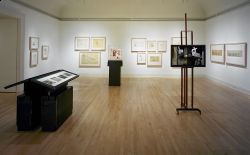
The exhibition addresses a central and timely aspect of the work of Carlo Scarpa: its distinctive approach to contending with the layers of history that mark the fabric of a city and a building. In addressing Scarpa’s ability to weave new work into, and often out of, the disparate fragments of the old, Carlo Scarpa, Architect: Intervening with History begins to unravel(...)
The exhibition addresses a central and timely aspect of the work of Carlo Scarpa: its distinctive approach to contending with the layers of history that mark the fabric of a city and a building. In addressing Scarpa’s ability to weave new work into, and often out of, the disparate fragments of the old, Carlo Scarpa, Architect: Intervening with History begins to unravel(...)
Location:
Main galleries
Main galleries
Date:
26 May 1999 to 31 October 1999
26 May 1999 to 31 October 1999
Title:
Carlo Scarpa, Architect: Intervening with History
Actions:
Description:
The exhibition addresses a central and timely aspect of the work of Carlo Scarpa: its distinctive approach to contending with the layers of history that mark the fabric of a city and a building. In addressing Scarpa’s ability to weave new work into, and often out of, the disparate fragments of the old, Carlo Scarpa, Architect: Intervening with History begins to unravel(...)
Carlo Scarpa, Architect: Intervening with History
Actions:
Description:
The exhibition addresses a central and timely aspect of the work of Carlo Scarpa: its distinctive approach to contending with the layers of history that mark the fabric of a city and a building. In addressing Scarpa’s ability to weave new work into, and often out of, the disparate fragments of the old, Carlo Scarpa, Architect: Intervening with History begins to unravel(...)
Form:
exhibitions
exhibitions
Date:
26 May 1999 to
31 October 1999
26 May 1999 to
31 October 1999
Location:
Main galleries
Main galleries


